語彙集

英単語辞書 | 単語の意味、定義、例文

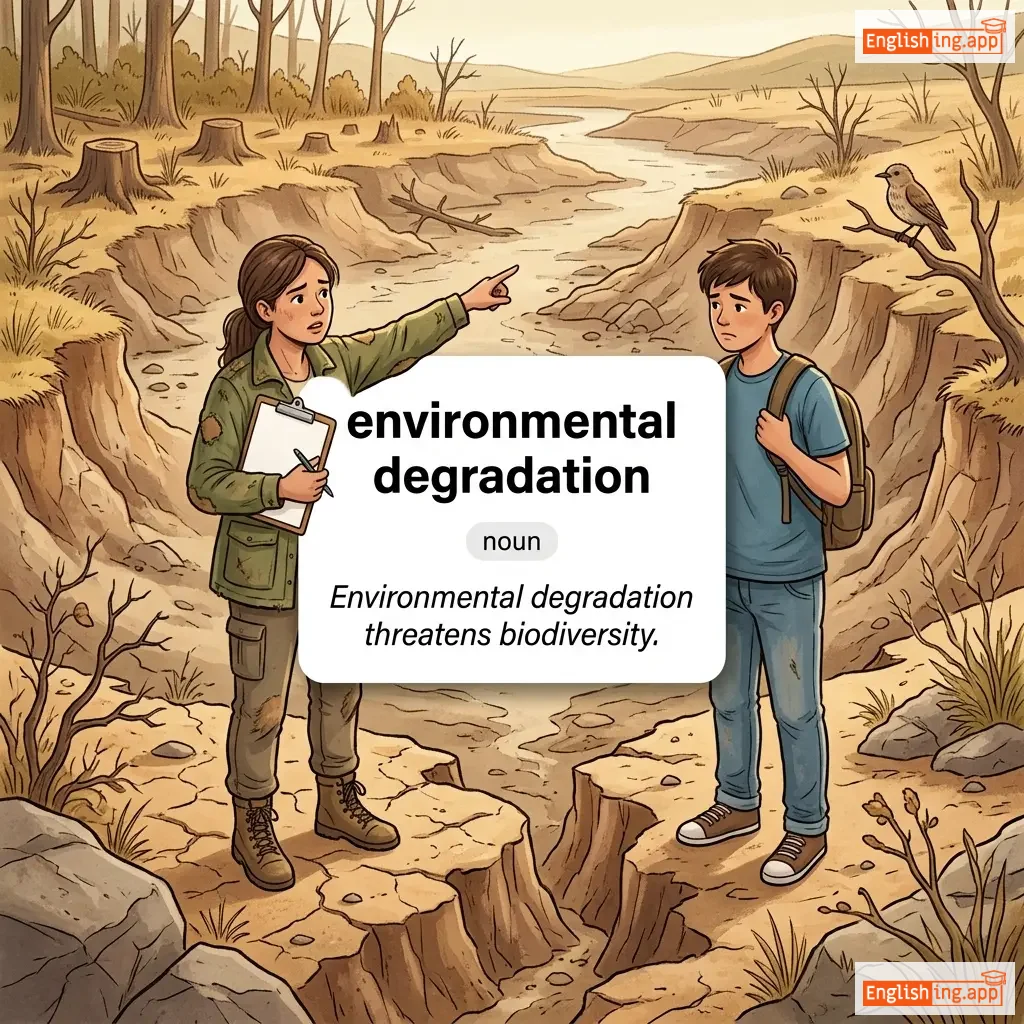
environmental degradation definition card — visual illustration of the meaning
noun
ɪnˌvaɪrənˈmɛntəl ˌdɛɡrəˈdeɪʃən
環境劣化 (kankyō reppaku)

The deterioration of the environment through depletion of resources and destruction of ecosystems.

"Environmental degradation threatens biodiversity."
"環境劣化は生物多様性を脅かしています。" (Kankyō reppaku wa seibutsu tayōsei o odokashiteimasu.)
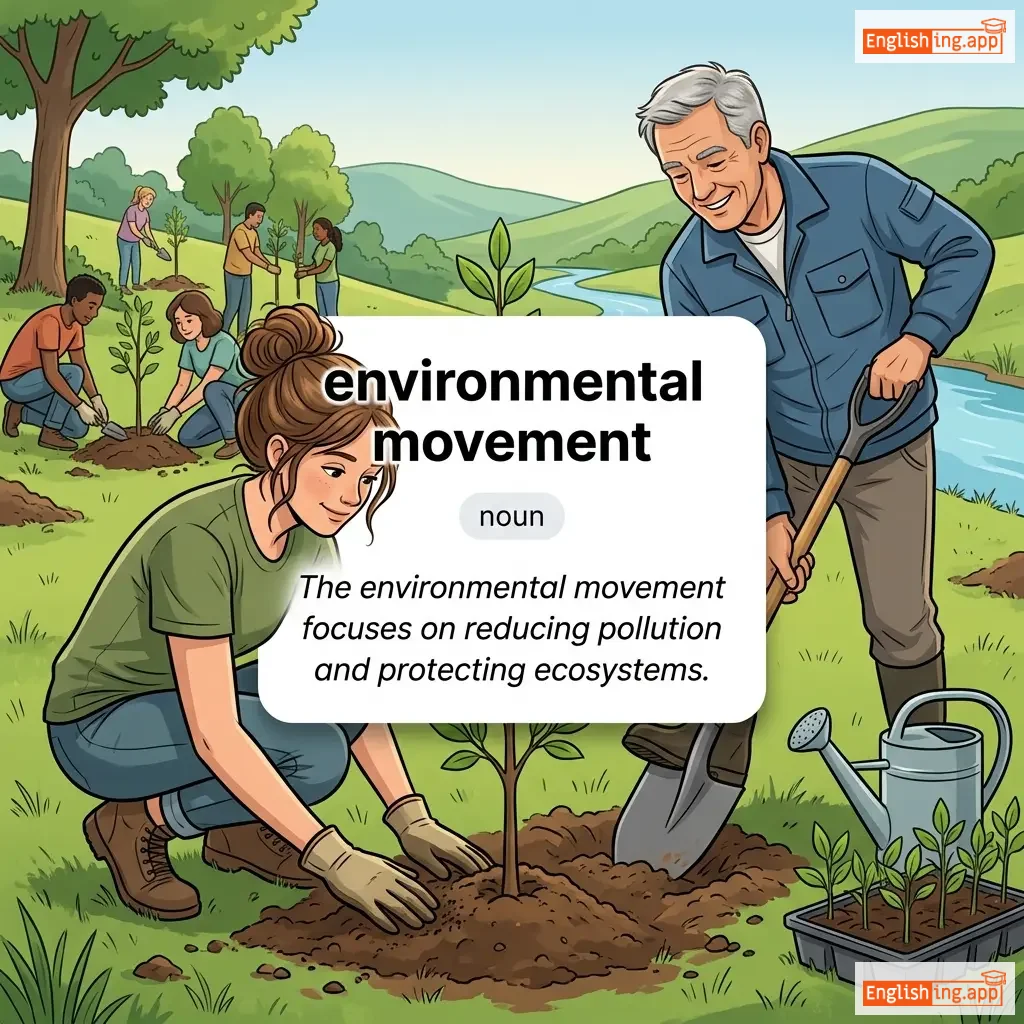
environmental movement definition card — visual illustration of the meaning
noun
/ɪnˌvaɪrənˈmɛntəl ˈmuːvmənt/
環境運動 (kankyou undou)

A social or political movement aimed at protecting the environment and promoting sustainable practices through advocacy, education, and policy changes.

"The environmental movement focuses on reducing pollution and protecting ecosystems."
"環境運動は汚染の削減と生態系の保護に焦点を当てています。" (Kankyou undou wa osen no sakugen to seitai-kei no hogo ni shouten wo ateteimasu.)
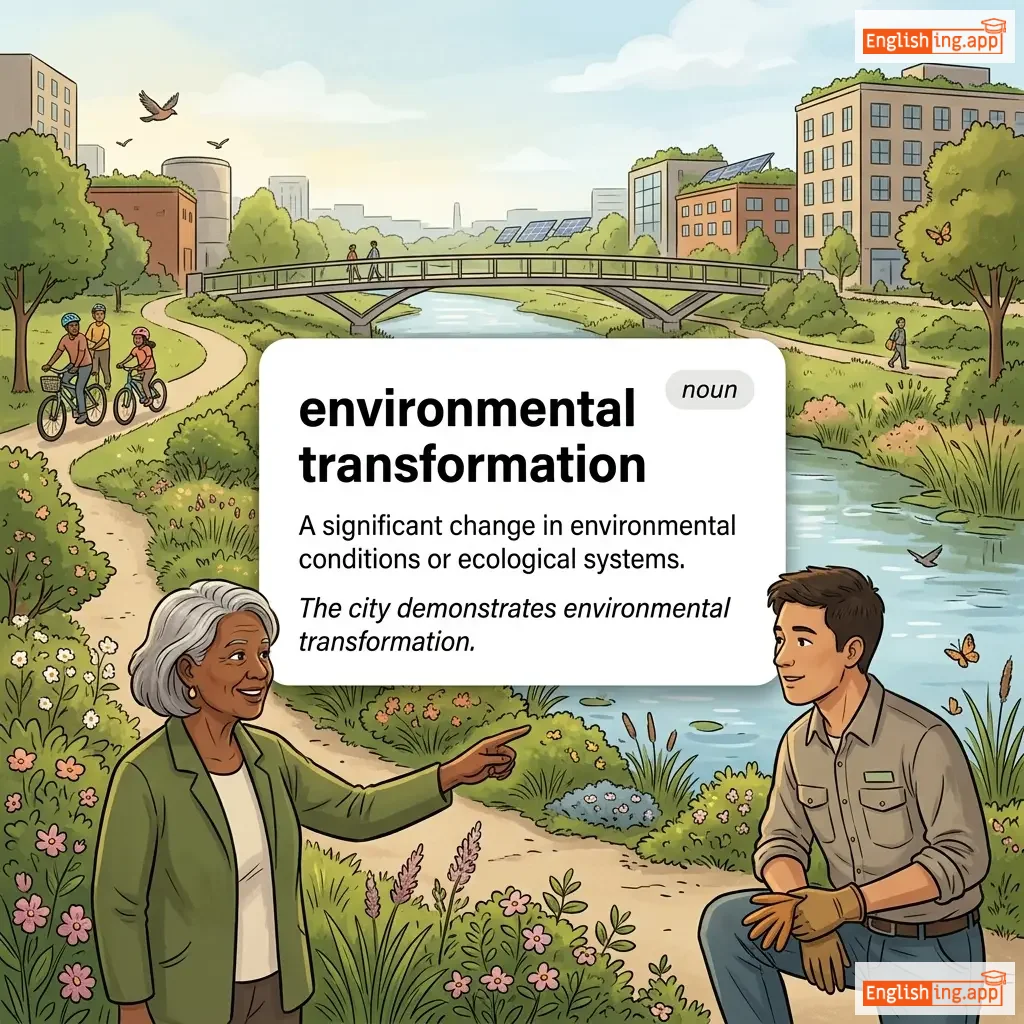
environmental transformation definition card — visual illustration of the meaning
noun
ɪnˌvaɪ.rənˈmen.təl ˌtræns.fəˈmeɪ.ʃən
環境変革 (kankyō henka)

A significant change in environmental conditions or ecological systems.

"The city demonstrates environmental transformation."

"この都市は環境変革を示しています。" (Kono toshi wa kankyō henka o shimeshiteimasu.)
verb
/ɪnˈvɪʒən/
想像する (sōzō suru)

to imagine or picture something in the future; to visualize a possibility or goal

"She envisions a world where everyone has equal access to education."
"彼女はすべての人が平等に教育を受けられる世界を想像しています。" (Kanojo wa subete no hito ga byōdō ni kyōiku o ukerareru sekai o sōzō shiteimasu.)
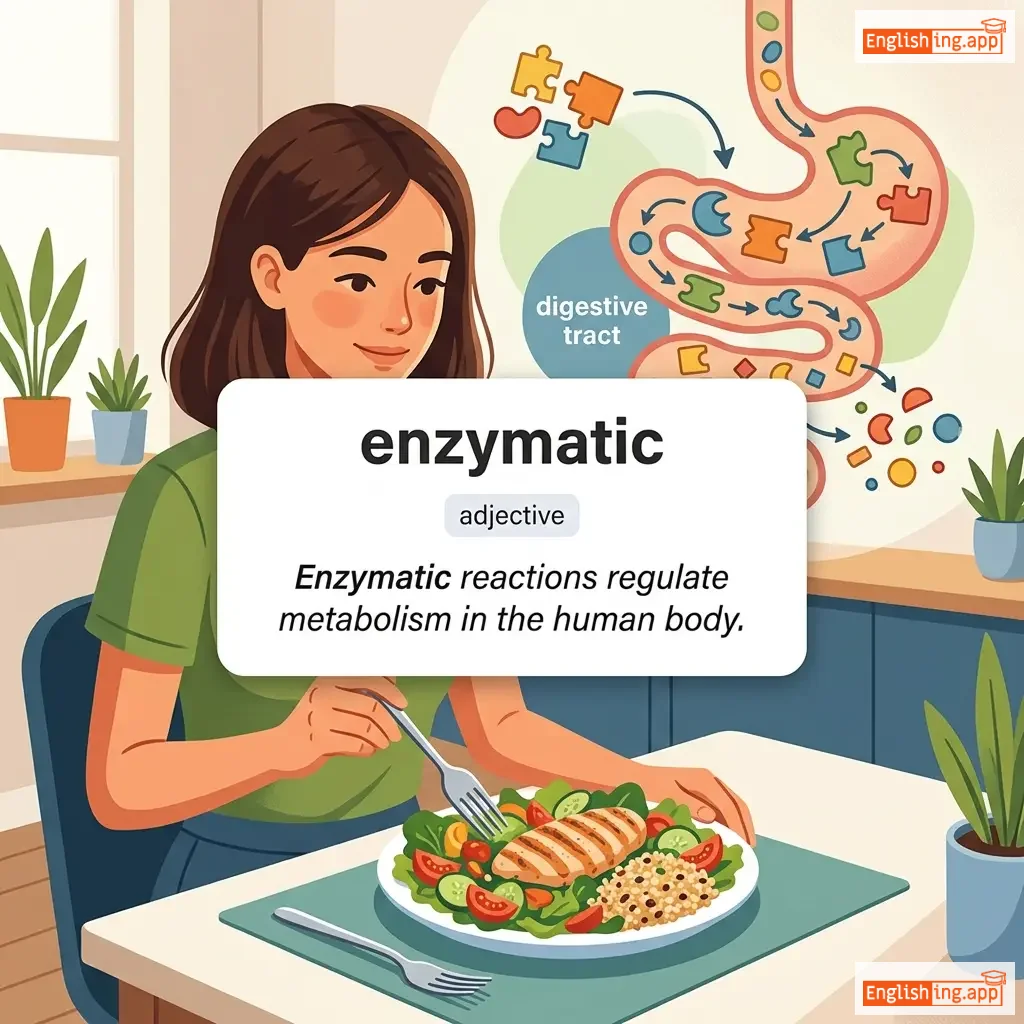
enzymatic definition card — visual illustration of the meaning
adjective
/ˌen.zɪˈmæt.ɪk/
酵素に関連する (kōso ni kanren suru)

Relating to or involving enzymes, which are proteins that catalyze biochemical reactions in living organisms.

"Enzymatic reactions regulate metabolism in the human body."

"酵素反応は人間の体内で代謝を調節します。" (Kōso hannō wa ningen no tainai de taisha o chōsetsu shimasu.)
noun
/ˈiːən/
エオン (eon)

an indefinitely long period of time; an age

"Dinosaurs lived millions of years ago, in a different eon."

"恐竜は何百万年も前に、異なるエオンで生きていました。" (Kyōryū wa nan byakuman-nen mo mae ni, kotonaru eon de ikite imashita.)
noun
/ˈɛpəlɛt/
肩章 (kashou)

An ornamental shoulder piece on a garment, especially on the coat or jacket of a military uniform.

"The general’s uniform had a golden epaulet on each shoulder."

"将軍の制服は、両肩に金色のエポーレットが付いていた。" (Shougun no seifuku wa, ryōkata ni kin'iro no epōretto ga tsuite ita.)
noun
/ˈɛpəlɛt/
肩章 (ken-shou)

A variant spelling of epaulet, also meaning a shoulder ornament, especially on military uniforms.

"The officer’s epaulette shone brightly under the sunlight."
"その将校のエポレットは太陽の下で輝いていました。" (Sono shōkō no eporetto wa taiyō no shita de kagayaite imashita.)
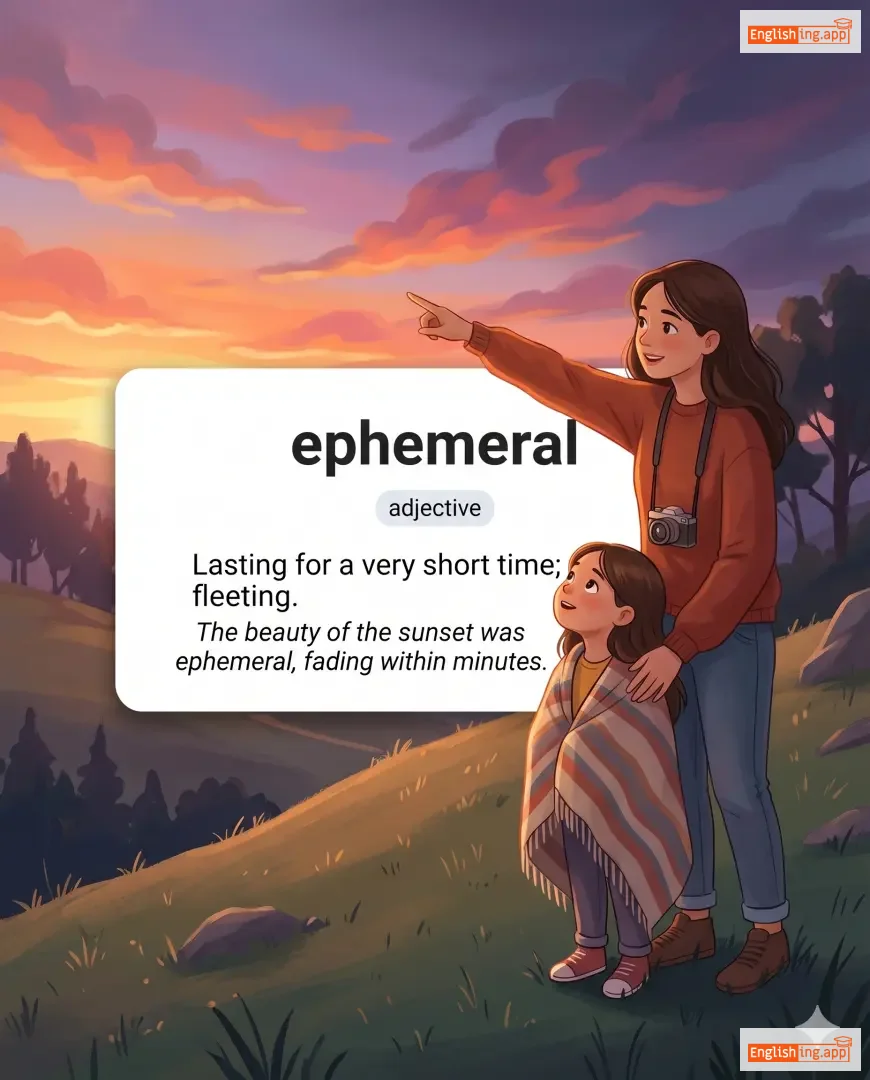
ephemeral definition card — visual illustration of the meaning
adjective
/ɪˈfɛmərəl/
儚い (hakanai)

Lasting for a very short time; fleeting.

"The beauty of the sunset was ephemeral, fading within minutes."

"夕日の美しさは儚く、数分で消えていった。" (Yūhi no utsukushisa wa hakanaku, su-fun de kiete itta.)
noun, adjective
/ˈɛpɪk/
叙事詩 (joshishi)

A long narrative poem or story about heroic deeds; also used to describe something grand or impressive.

"The Iliad is considered one of the greatest epics of ancient literature."

"イリアスは古代文学の中で最も偉大な叙事詩の一つと見なされています。" (Iriasu wa kodai bungaku no naka de mottomo idaina joshishi no hitotsu to minasareteimasu.)
noun
/ˈɛpɪkjʊr/
美食家 (bishokka)

A person who enjoys fine food and drink, often with refined taste.

"As an epicure, she always sought out the finest restaurants in the city."

"美食家として、彼女は常に市内で最高のレストランを探していました。" (Bishokka to shite, kanojo wa jōni shinaide saikō no resutoran o sagashite imashita.)
adjective
/ˌɛpɪkjʊˈriːən/
エピキュリアン (epikyurian)

relating to the enjoyment of fine food, drink, and luxury

"The chef prepared an epicurean feast for the guests."

"シェフはゲストのためにエピキュリアンな饗宴を準備しました。" (Shefu wa gesuto no tame ni epikyuriana kyōen o junbi shimashita.)
noun
/ˈɛpɪˌsaɪkl/
外周上の小円 (gaishū-jō no shōen)

a small circle whose center moves around the circumference of a larger one, used in ancient astronomy

"The concept of the epicycle was used to explain planetary motion."

"エピサイクルの概念は惑星の運動を説明するために使用されました。" (episykuru no gainen wa wakusei no undō o setsumei suru tame ni shiyō saremashita.)
noun
/ˌɛpɪˈsaɪklɔɪd/
エピサイクロイド (episaykuroido)

a curve traced by a point on the circumference of a circle that rolls around the outside of another circle

"The mathematician demonstrated how to draw an epicycloid."

"数学者はエピサイクロイドの描き方を示しました。" (Sūgakusha wa episaykuroido no egikata o shimeshimashita.)
noun
/ˌɛpɪˈdɛmɪk/
幸福 (koufuku)

a widespread occurrence of an infectious disease in a community at a particular time

"The flu epidemic affected thousands of people in the city."

"彼女は賞を受け取ったとき、幸せを隠すことができませんでした。" (Kanojo wa shou o uketotta toki, shiawase o kakusu koto ga dekimasen deshita.)
noun
/ˌɛpɪˈdɜːrmɪs/
皮膚の外層 (hifu no gaisou)

the outer layer of cells covering the body of an organism, especially the skin

"The epidermis protects the body from harmful bacteria."

"エピデルミスは有害な細菌から体を守ります。" (Epidermisu wa yūgaina saikin kara karada o mamorimasu.)
noun
/ˈɛpɪɡræm/
エピグラム (epiguramu)

A short, witty saying or poem that expresses an idea in a clever way.

"Oscar Wilde was famous for his sharp epigrams."

"オスカー・ワイルドは鋭いエピグラムで有名でした。" (Osukā Wairudo wa surudoi epiguramu de yūmei deshita.)
noun
/ˈɛpɪˌlɔːɡ/
エピローグ (epirōgu)

A section at the end of a book, play, or speech that serves as a conclusion.

"The author included an epilogue to explain what happened to the characters later."
"著者は登場人物たちのその後について説明するためにエピローグを追加しました。" (Chosha wa tōjō jinbutsu-tachi no sono-go ni tsuite setsumei suru tame ni epirōgu o tsuika shimashita.)
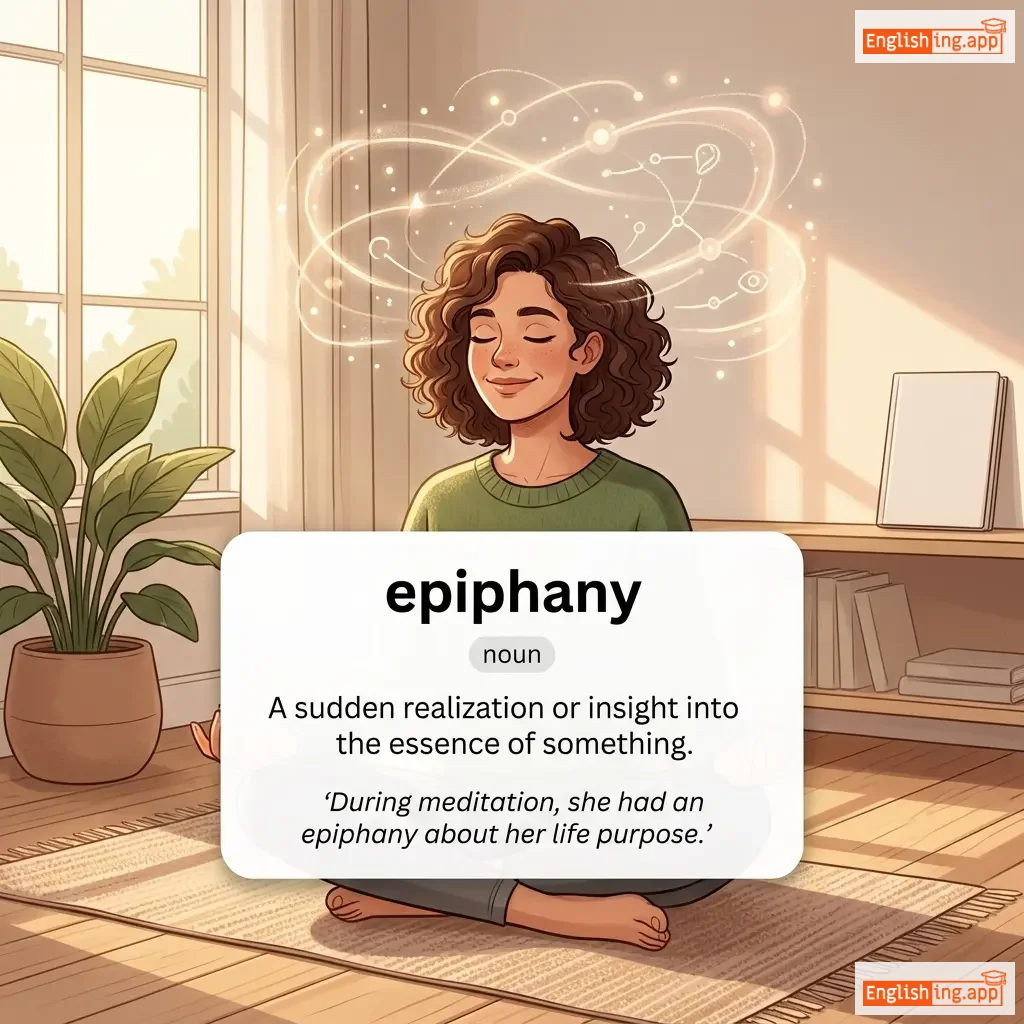
epiphany definition card — visual illustration of the meaning
noun
/ɪˈpɪfəni/
啓示 (keishi)

A sudden realization or insight into the essence of something.

"During meditation, she had an epiphany about her life purpose."

"瞑想中、彼女は自分の人生の目的について啓示を得た。" (Meisō-chū, kanojo wa jibun no jinsei no mokuteki ni tsuite keishi o eta.)
noun
/ˈɛpɪsoʊd/
エピソード (episōdo)

An event or part of a story, or one installment in a series.

"The last episode of the drama was watched by millions."

"そのドラマの最後のエピソードは何百万もの人々によって観られました。" (Sono dorama no saigo no episōdo wa nanbyakumō no hitobito ni yotte miraremashita.)
adjective
/ˌɛpɪˈsɒdɪk/
エピソディック (episodikku)

Happening occasionally or in separate parts; related to episodes.

"Her interest in art was episodic, coming and going over the years."

"彼女の芸術への興味はエピソディックで、何年もの間、来たり行ったりしていました。" (Kanojo no geijutsu e no kyōmi wa episodikku de, nannen mo no aida, kitari ittari shite imashita.)
noun
/ɪˌpɪstəˈmɒlədʒɪst/
認識論者 (ninshikironsha)

A scholar or expert who studies the nature, sources, and limits of knowledge.

"The epistemologist debated how humans can truly know anything with certainty."
"エピステモロジストは、人間がどのようにして確実に何かを知ることができるかについて議論しました。" (Epistemologist wa, ningen ga dono yō ni shite kakujitsu ni nanika o shiru koto ga dekiru ka ni tsuite giron shimashita.)
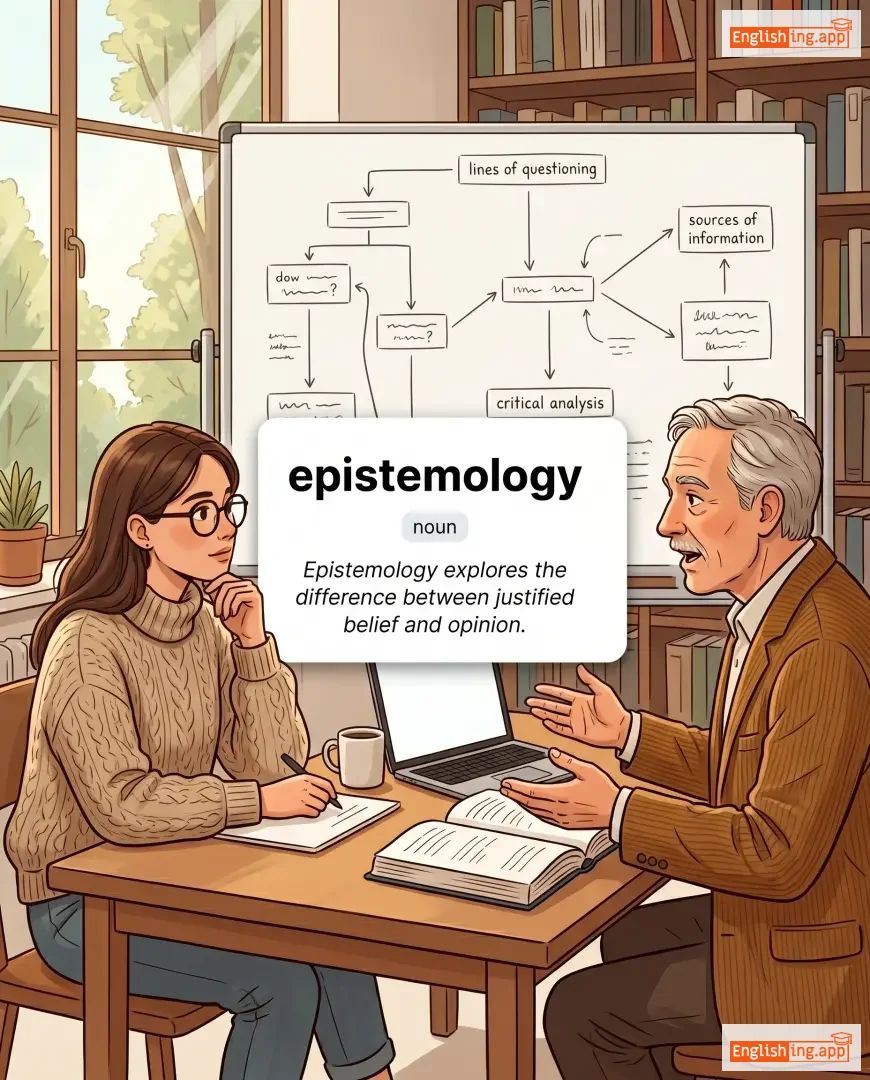
epistemology definition card — visual illustration of the meaning
noun
/ɪˌpɪstəˈmɒlədʒi/
認識論 (ninshikiron)

The branch of philosophy that studies the nature, origin, and scope of knowledge.

"Epistemology explores the difference between justified belief and opinion."

"認識論は正当な信念と意見との違いを探求します。" (Ninshikiron wa seitōna shinnen to iken to no chigai o tankyū shimasu.)
noun
/ɪˈpɪsəl/
書簡 (shokan)

A letter, especially a formal or didactic one; often used for letters in the New Testament.

"He wrote a long epistle to his friend about his travels."

"彼は自分の旅行について友人に長い手紙を書いた。" (Kare wa jibun no ryokō ni tsuite yūjin ni nagai tegami o kaita.)
adjective
/ɪˈpɪstələri/
書簡体 (shokantai)

Related to the writing of letters; expressed in or through letters.

"The novel is written in an epistolary style, consisting of letters between characters."

"その小説は書簡体スタイルで書かれており、登場人物間の手紙で構成されています。" (Sono shousetsu wa shokantai sutairu de kakarete ori, toujou jinbutsu kan no tegami de kousei sareteimasu.)
noun
/ˈɛpɪtɑːf/
墓碑銘 (hakamimei)

A short text written on a tombstone in memory of the deceased.

"The gravestone bore an epitaph honoring the soldier’s bravery."

"墓石にはその兵士の勇気を讃える墓碑銘が刻まれていた。" (Hakoseki ni wa sono heishi no yūki o tataeru hakobimei ga kizama rete ita.)
noun
/ˈɛpɪθɛt/
別名 (betsumei)

A descriptive phrase or word used to characterize someone or something, often as a nickname.

"He earned the epithet ‘The Great’ for his remarkable achievements."
"彼はその素晴らしい業績により‘偉大な’別名を得ました。" (Kare wa sono subarashī gyōseki ni yori ‘Idaina’ betsumei o emashita.)
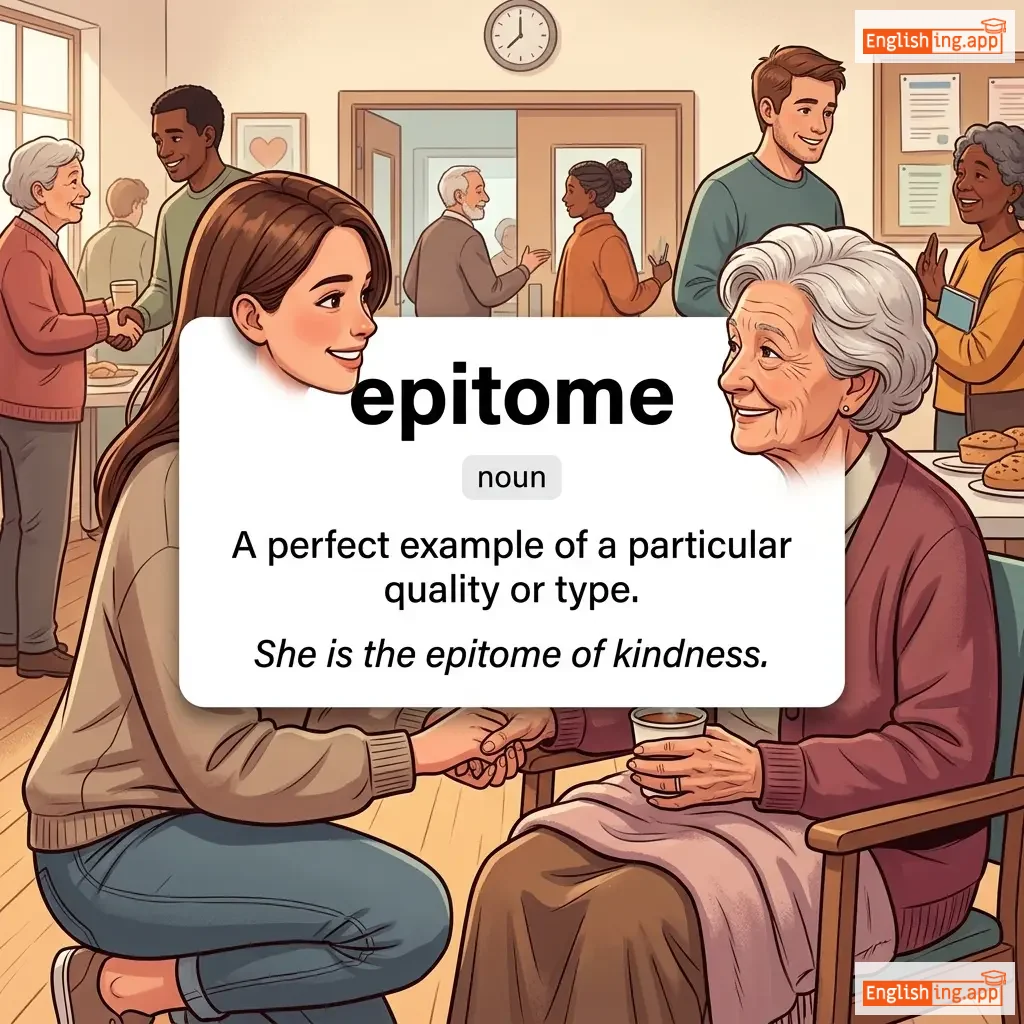
epitome definition card — visual illustration of the meaning
noun
/ɪˈpɪtəmi/
典型 (tenkei)

A perfect example of a particular quality or type.

"She is the epitome of kindness."

"彼女は優しさの典型です。" (Kanojo wa yasashisa no tenkei desu.)
noun
/ˌɛpɪzəʊˈɒtɪk/
動物伝染病 (dōbutsu densenbyō)

An outbreak of disease affecting many animals of one kind at the same time.

"The farmer feared an epizootic might wipe out his cattle."
"農家は、動物伝染病が彼の家畜を壊すかもしれないと恐れていました。" (Nōka wa, dōbutsu densenbyō ga kare no kachiku o kowasu kamoshirenai to osoreteimashita.)
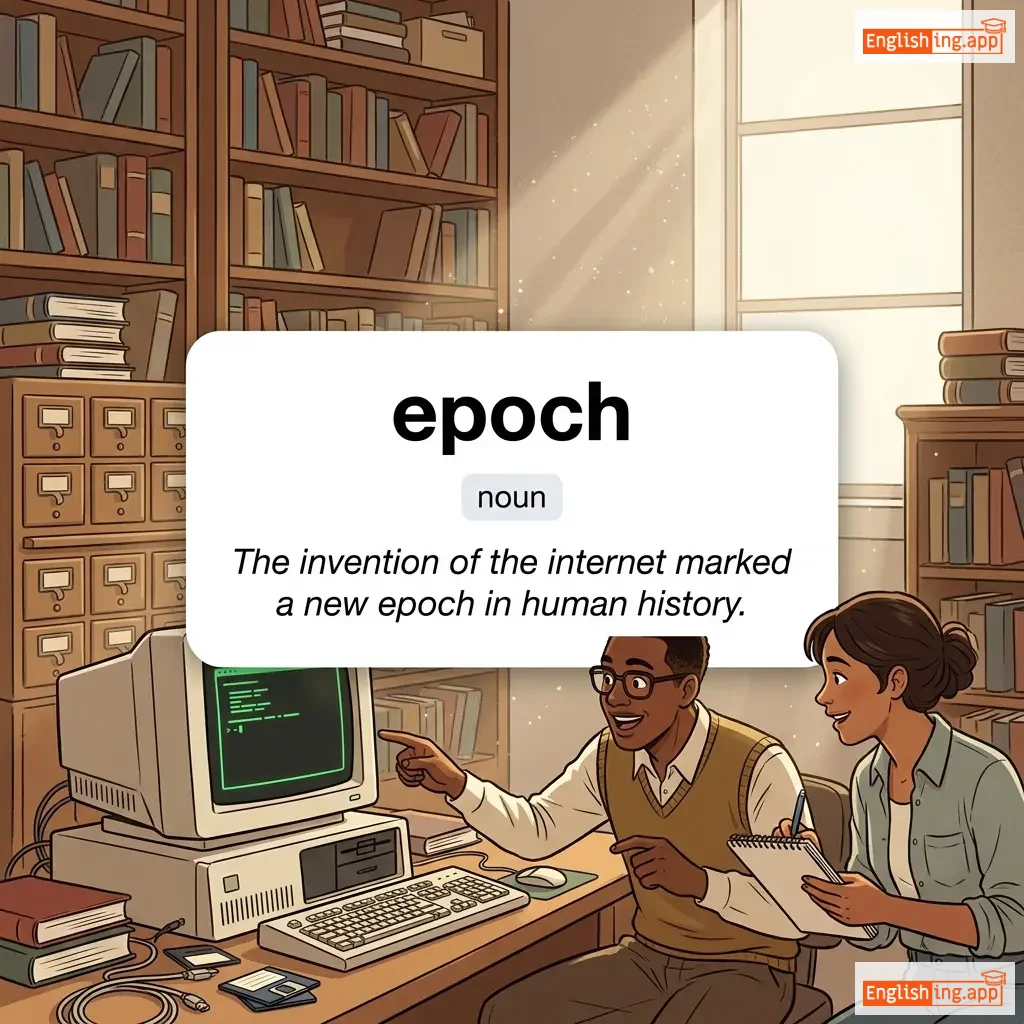
epoch definition card — visual illustration of the meaning
noun
/ˈiːpɒk/
時代 (jidai)

A period of time in history or a person's life, typically one marked by notable events or characteristics.

"The invention of the internet marked a new epoch in human history."

"インターネットの発明は、人類の歴史における新しい時代の始まりを意味している。" (Intānetto no hatsumei wa, jinrui no rekishi ni okeru atarashī jidai no hajimari o imi shite iru.)
noun
/ˈɛpəʊd/
抒情詩の一形式 (shūjōshi no ichikeishiki)

A form of lyric poem written in couplets, often following a strophe and antistrophe in classical Greek poetry.

"The poet concluded his ode with a striking epode."

"詩人は印象的なエポードでオードを締めくくった。" (Shijin wa inshō-teki na epōdo de ōdo o shimekutta.)
noun
/ˈɛpənɪm/
名前の由来となった人 (namae no yurai to natta hito)

A person after whom a discovery, invention, place, or other thing is named.

"Sandwich is an eponym named after the Earl of Sandwich."
"サンドイッチはサンドイッチ伯爵にちなんだエポニムです。" (Sandoicchi wa Sandoicchi Hakushaku ni chinanda eponimu desu.)
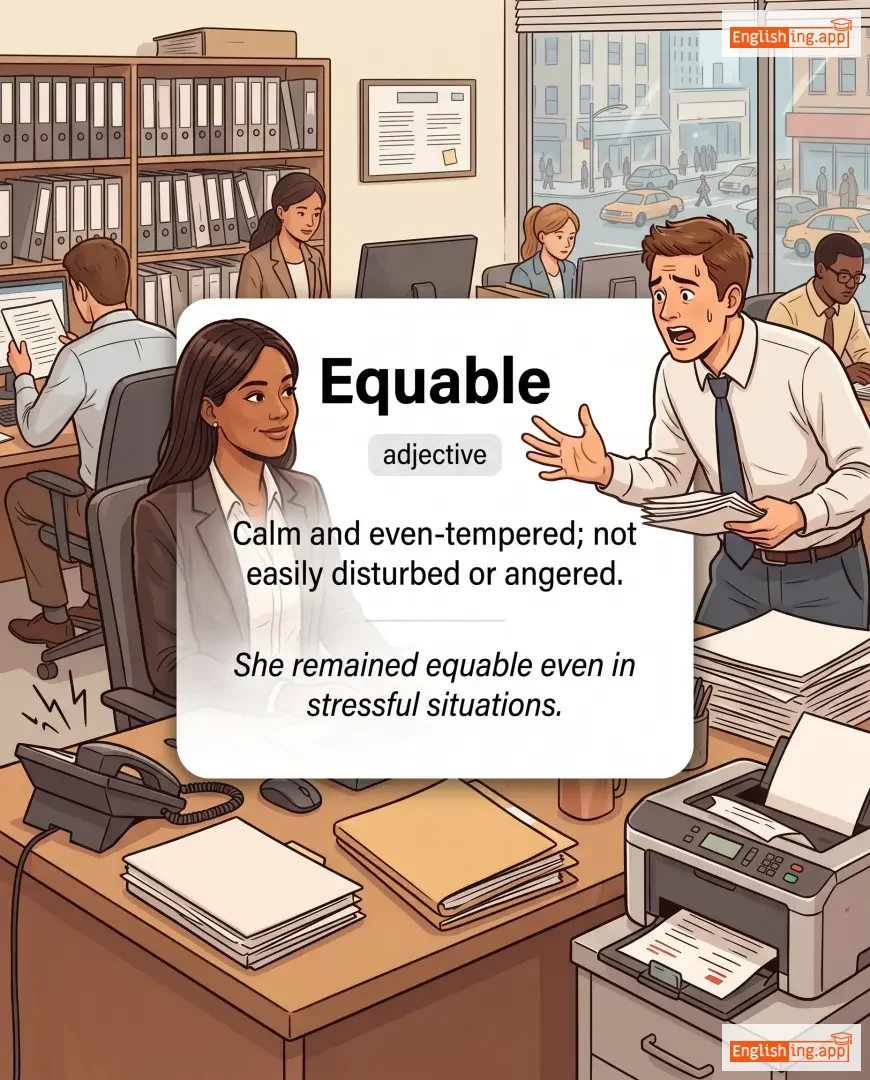
Equable definition card — visual illustration of the meaning
adjective
/ˈɛkwəbl̩/
冷静 (reijou)

Calm and even-tempered; not easily disturbed or angered.

"She remained equable even in stressful situations."
"彼女はストレスの多い状況でも冷静でい続けました。" (Kanojo wa sutoresu no ooi joukyou demo reijou de itsuzukemashita.)
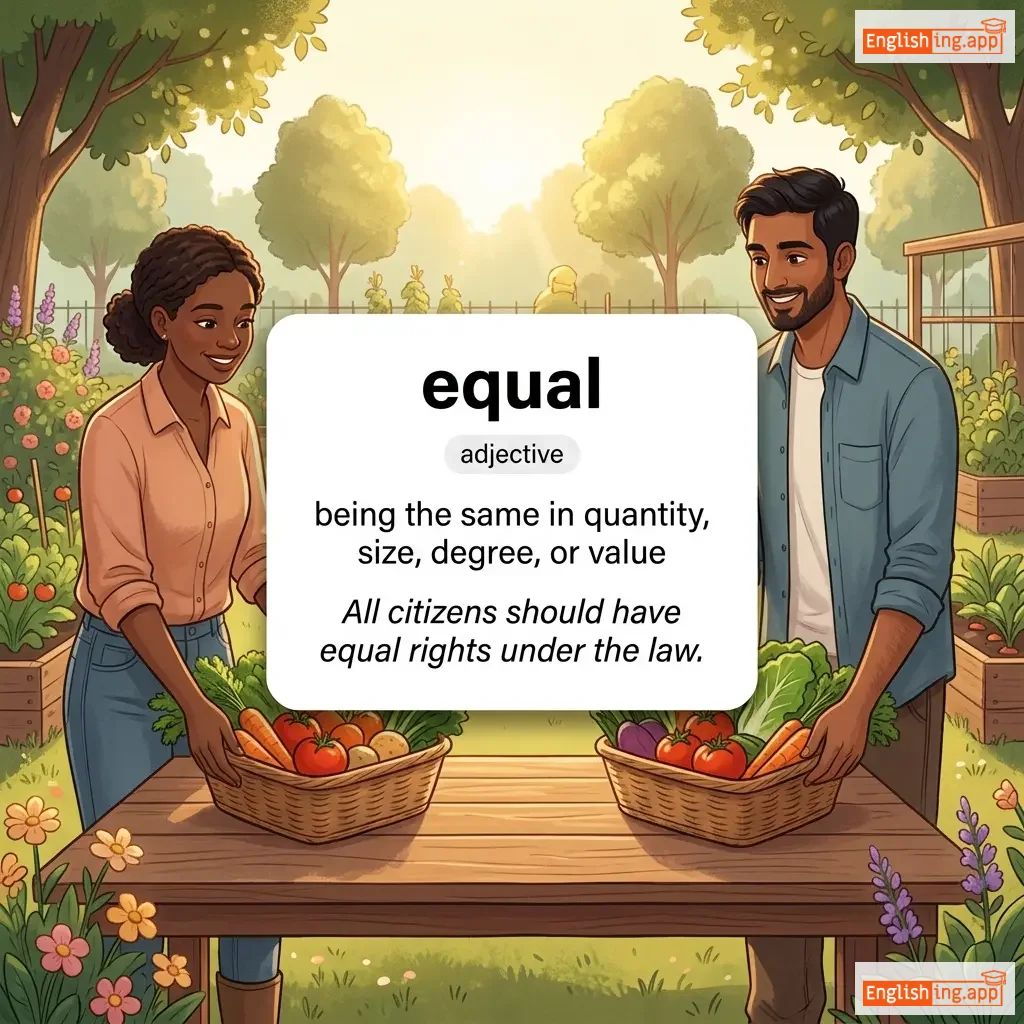
equal definition card — visual illustration of the meaning
adjective
/ˈiːkwəl/
平等 (byoudou)

being the same in quantity, size, degree, or value

"All citizens should have equal rights under the law."
"すべての市民は法の下で平等な権利を持つべきです。" (Subete no shimin wa hō no moto de byōdō na kenri o motsu beki desu.)
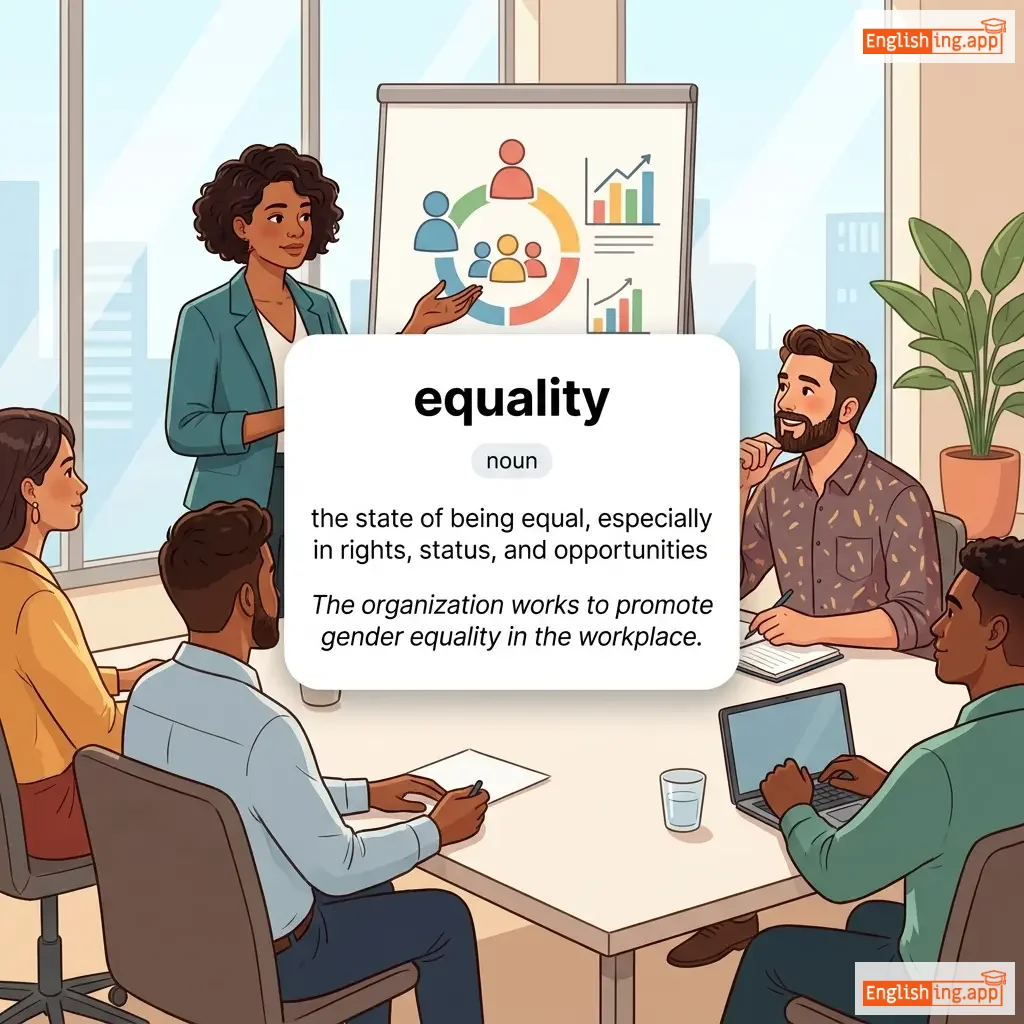
equality definition card — visual illustration of the meaning
noun
/ɪˈkwɒləti/
平等 (byoudou)

the state of being equal, especially in rights, status, and opportunities

"The organization works to promote gender equality in the workplace."

"その組織は職場での男女平等を推進するために働いています。" (Sono soshiki wa shokuba de no danjo byoudou o suishin suru tame ni hataraiteimasu.)
verb
/ˈiːkwəlaɪz/
平等にする (byōdō ni suru)

To make equal or level in status, value, or amount.

"The team equalized the score in the last minute."

"チームは最後の瞬間にスコアを同点にしました。" (Chīmu wa saigo no shunkan ni sukō o dōten ni shimashita.)
adverb
/ˈiːkwəli/
平等に (byoudou ni)

in an equal or fair way; to the same degree

"The prize money was equally divided among the winners."
"賞金は受賞者の間で平等に分けられました。" (Shoukin wa jushousha no aida de byoudou ni wakeraremashita.)
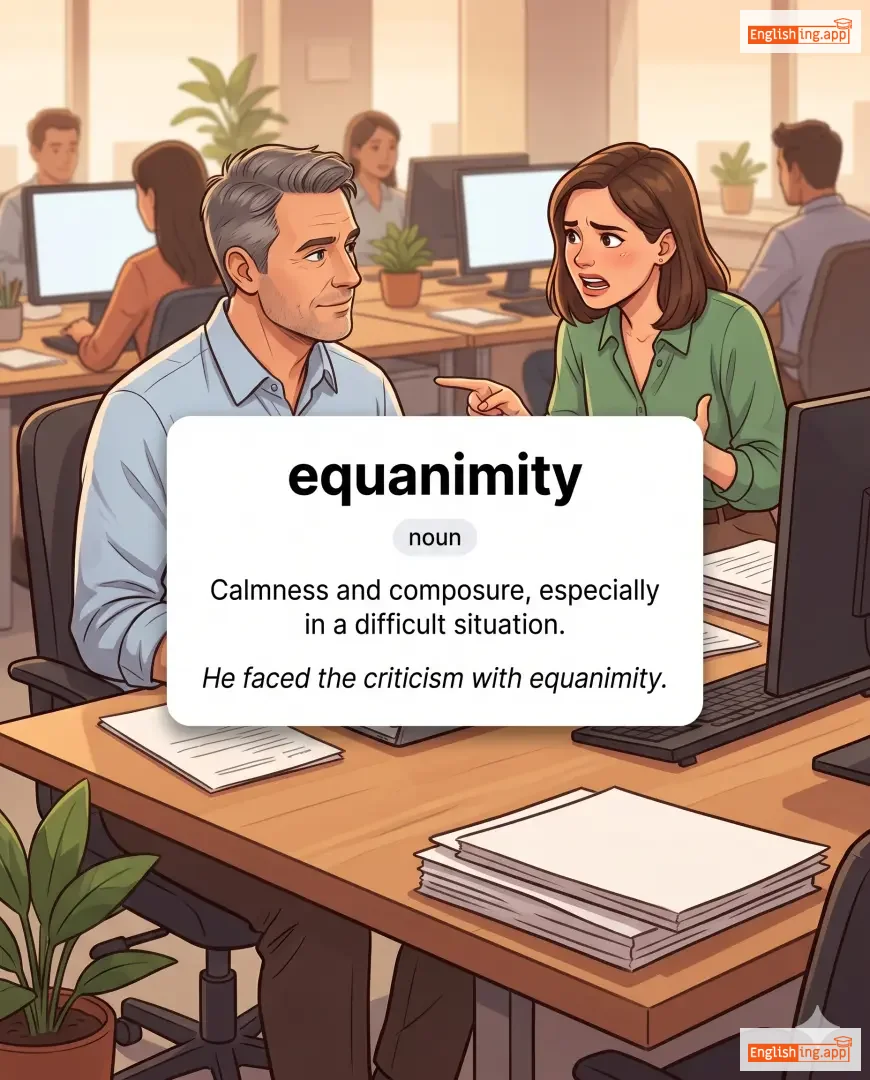
equanimity definition card — visual illustration of the meaning
noun
/ˌekwəˈnɪmɪti/
平静 (heisei)

Calmness and composure, especially in a difficult situation.

"He faced the criticism with equanimity."

"彼は批判に対して平静で接した。" (Kare wa hihan ni taishite heisei de sesshita.)
verb
/ɪˈkweɪt/
等しい (hitoshii)

To consider as equal or equivalent.

"Many people equate wealth with success."

"多くの人々は富と成功を同一視します。" (ōku no hitobito wa tomi to seikō o dōitsu-shimasu.)
noun
/ɪˈkweɪʒən/
方程式 (hōtenshiki)

a mathematical statement that shows the equality of two expressions

"He solved the equation to find the value of x."

"彼はxの値を見つけるために方程式を解いた。" (Kare wa x no atai o mitsukeru tame ni hōtenshiki o toita.)
adjective
/ɪˈkwɛstriən/
馬術の (bajutsu no)

Relating to horse riding or horseback riders.

"She won several equestrian competitions."
"彼女は複数の馬術競技で優勝しました。" (Kanojo wa fukusū no bajutsu kyōgi de yūshō shimashita.)
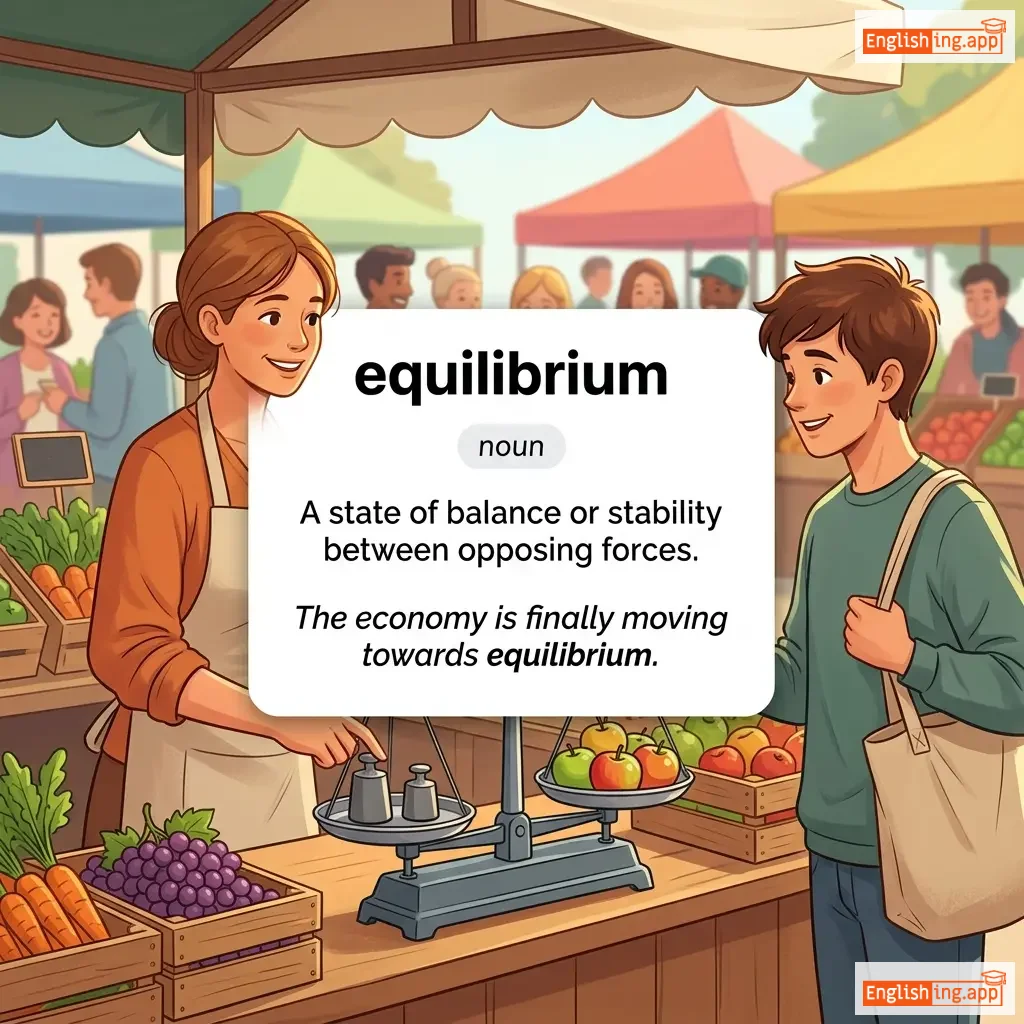
equilibrium definition card — visual illustration of the meaning
noun
/ˌiːkwɪˈlɪbriəm/
均衡 (kinkou)

A state of balance or stability between opposing forces.

"The economy is finally moving towards equilibrium."

"経済はついに均衡に向かって動いています。" (Keizai wa tsuini kinkou ni mukatte ugoiteimasu.)
adjective
/ˈiːkwaɪn/
馬に関連する (uma ni kanren suru)

Relating to or resembling a horse.

"The veterinarian specialized in equine medicine."

"獣医は馬の医療に専門特化していました。" (Jūi wa uma no iryō ni senmon tokka shite imashita.)
noun
/ˈiːkwɪnɒks/
昼夜平衡 (chūya heikō)

The time or date when day and night are of equal length, occurring twice a year.

"The spring equinox marks the beginning of longer days."

"春分は長い日が始まることを示します。" (Shunbun wa nagai hi ga hajimaru koto o shimeshimasu.)
verb
/ɪˈkwɪp/
装備する (soubisuru)

to provide someone or something with the necessary items or skills for a task

"The school equipped its students with modern technology."

"学校は生徒たちに最新の技術を装備させました。" (Gakkou wa seitotachi ni saishin no gijutsu o soubi sagemashita.)
noun
/ˈɛkwɪpɪdʒ/
装備またはアクセサリー付きの馬車 (sōbi mata wa akusesarī tsuki no basha)

Equipment or a carriage with its accessories.

"The nobleman arrived in a grand equipage."

"貴族は豪華な馬車で到着しました。" (Kizoku wa gōka na basha de tōchaku shimashita.)
noun
/ɪˈkwɪpmənt/
機器 (kiki)

the necessary tools, machines, or other items needed for a particular purpose

"The laboratory bought new equipment for research."

"実験室は研究のために新しい機器を購入しました。" (jikken-shitsu wa kenkyū no tame ni atarashī kiki o kōnyū shimashita.)
noun
/ˈɛkwɪpɔɪz/
均衡 (kinkou)

A state of balance or equilibrium.

"Her calmness created an equipoise in the heated debate."
"彼女の落ち着きは熱い議論の中で均衡を作り出しました。" (Kanojo no ochitsuki wa atsui giron no naka de kinkou wo tsukuridashimashita.)
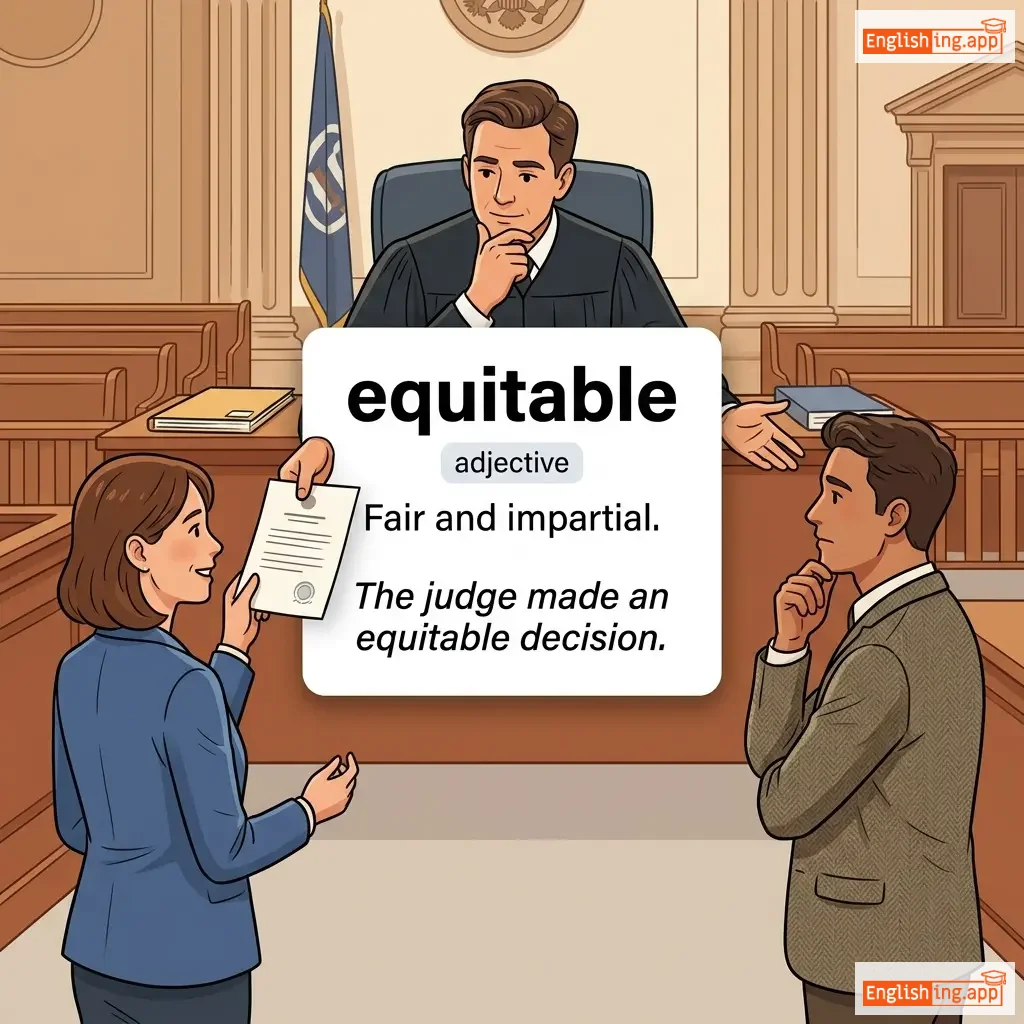
equitable definition card — visual illustration of the meaning
adjective
/ˈɛkwɪtəbl/
公平 (kouhei)

Fair and impartial.

"The judge made an equitable decision."
"裁判官は公平な決定を下した。" (Saibankan wa kouhei na kettei o kudashita.)
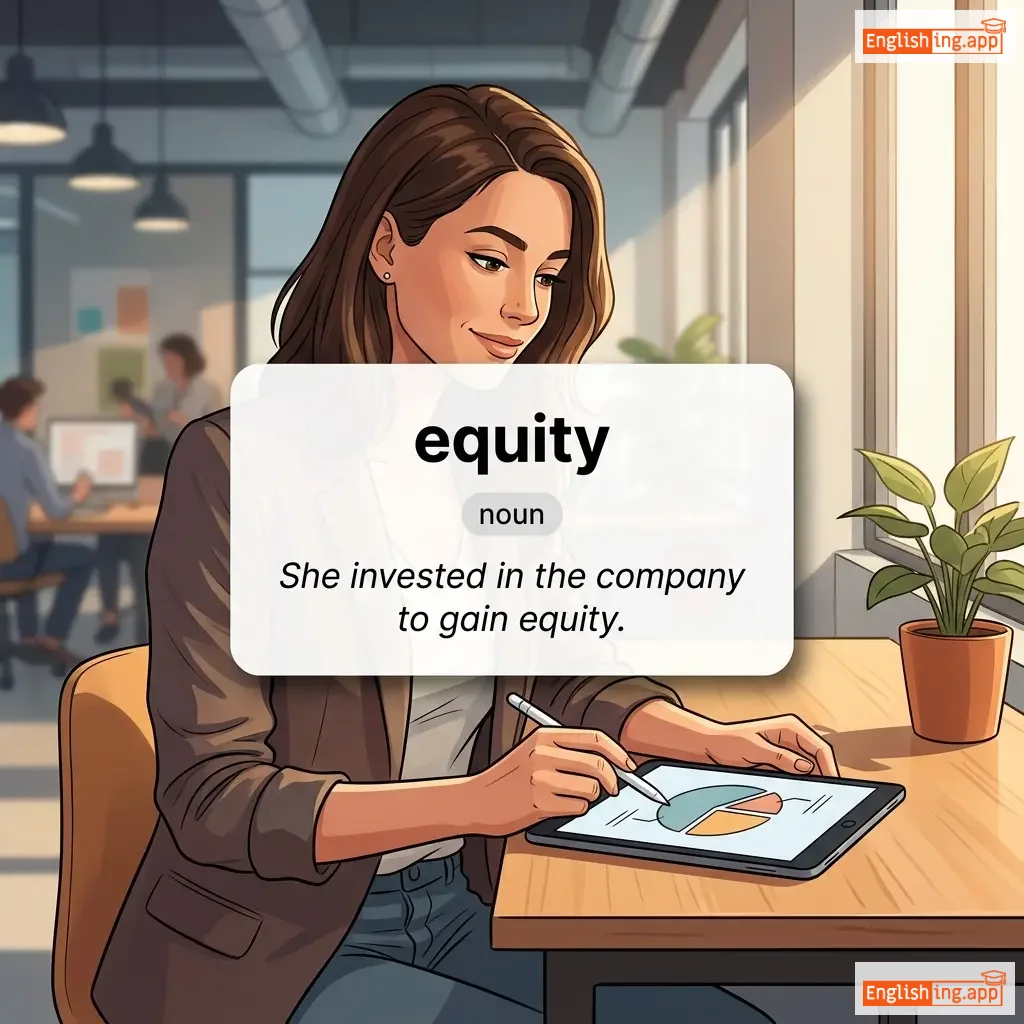
equity definition card — visual illustration of the meaning
noun
/ˈɛkwɪti/
公平; 所有権の一部 (kōhei; shoyūken no ichibu)

The quality of being fair and impartial; ownership interest in a company or property.

"She invested in the company to gain equity."

"彼女は株式を得るために会社に投資しました。" (Kanojo wa kabushiki o eru tame ni kaisha ni tōshi shimashita.)