語彙集

英単語辞書 | 単語の意味、定義、例文

adjective
/daɪˈɒsɪsən/
教区に関する (kyouku ni kansuru)

relating to a diocese or the district under the supervision of a bishop in the Christian Church

"The diocesan council met to discuss church affairs."

"教区評議会は教会の問題を話し合うために集まりました。" (Kyouku hyougikai wa kyoukai no mondai wo hanashiau tame ni atsumarimashita.)
noun
/ˌdaɪəˈrɑːmə/
ジオラマ (diorama)

a three-dimensional model representing a scene, often with miniature figures

"The museum displayed a diorama of an ancient village."

"博物館に古代の村のジオラマが展示されていました。" (Hakubutsukan ni kodai no mura no diorama ga tenji sarete imashita.)
verb
/dɪp/
浸す (shimesu)

to put something quickly into a liquid and take it out again

"She dipped her bread into the soup."

"彼女はパンをスープに浸しました。" (Kanojo wa pan o sūpu ni shimeshima-shita.)
noun
/ˈdɪfθɒŋ/
二重母音 (nijuuboin)

A complex vowel sound that begins with one vowel and glides into another within the same syllable.

"The word 'coin' contains a diphthong."

"'コイン'という単語には二重母音が含まれています。" ('Koin' to iu tango ni wa nijuuboin ga fukuma reteimasu.)
noun
/dɪˈpləʊ.mə/
卒業証書 (sotsugyō shōsho)

an official document showing that a person has completed a course of study or training

"She received her diploma after finishing the nursing program."

"彼女は看護プログラムを修了した後、卒業証書を受け取りました。" (Kanojo wa kango puroguramu o shūryō shita ato, sotsugyō shōsho o uketorimashita.)
noun
/dɪˈpləʊməsi/

The profession, activity, or skill of managing international relations or handling affairs tactfully.

"Effective diplomacy helped avoid the conflict."

noun
/ˈdɪpləmæt/
外交官 (gaikoukan)

An official representing a country abroad; a person skilled in dealing with people tactfully.

"The diplomat negotiated a peace agreement."

"外交官は平和協定の交渉を行いました。" (Gaikoukan wa heiwa kyoutei no koushou wo okonaimashita.)
adjective
/ˌdɪpləˈmætɪk/
外交的な (gaikoutekina)

Concerning diplomacy; having or showing skill in dealing with people in a sensitive and effective way.

"She gave a diplomatic response to avoid offending anyone."
"彼女は誰かを傷つけないように外交的な返答をしました。" (kanojo wa dareka wo kizutsukenai you ni gaikoutekina hento wo shimashita.)
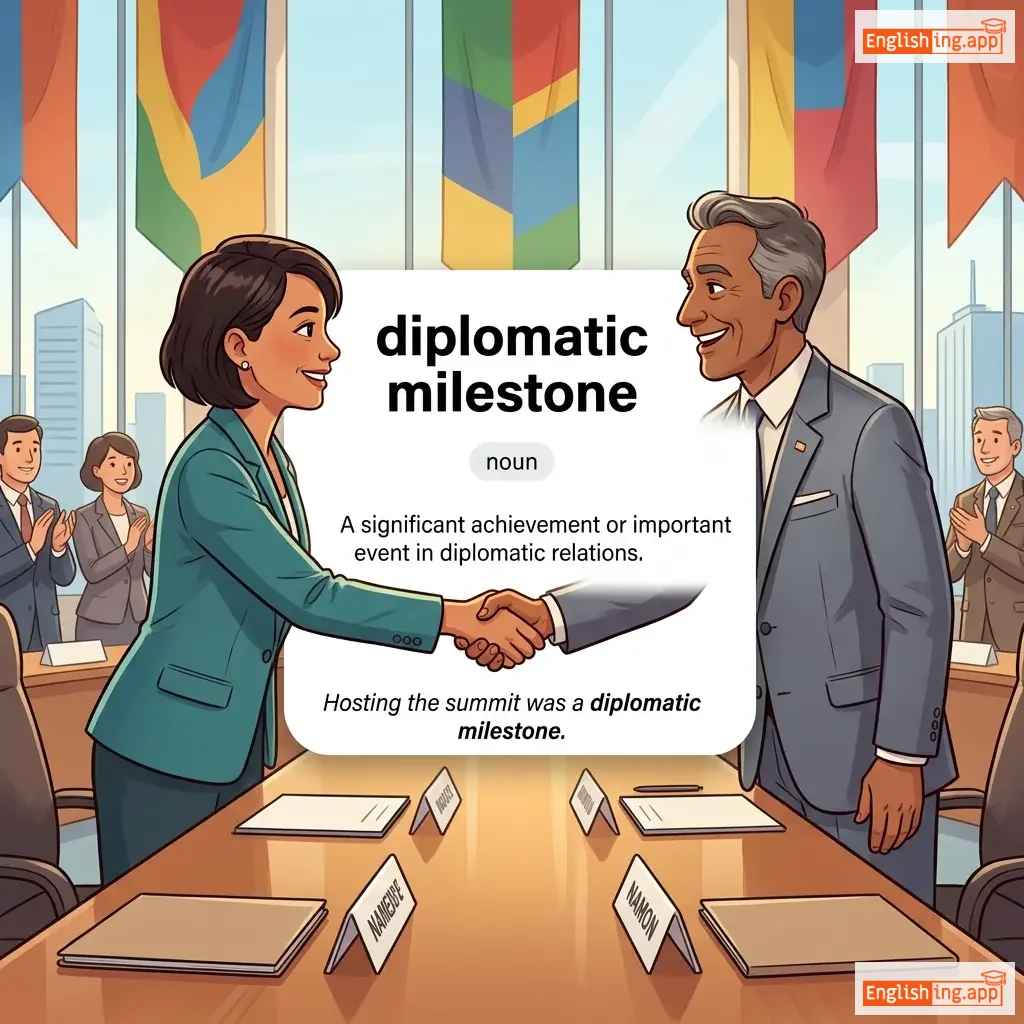
diplomatic milestone definition card — visual illustration of the meaning
noun
/ˌdɪp.ləˈmæt.ɪk ˈmaɪl.stəʊn/
外交上のマイルストーン (gaikou jou no mairusutoon)

A significant achievement or important event in diplomatic relations.

"Hosting the summit was a diplomatic milestone."
"サミットの開催は外交上のマイルストーンでした。" (Samitto no kaisai wa gaikou jou no mairusutoon deshita.)
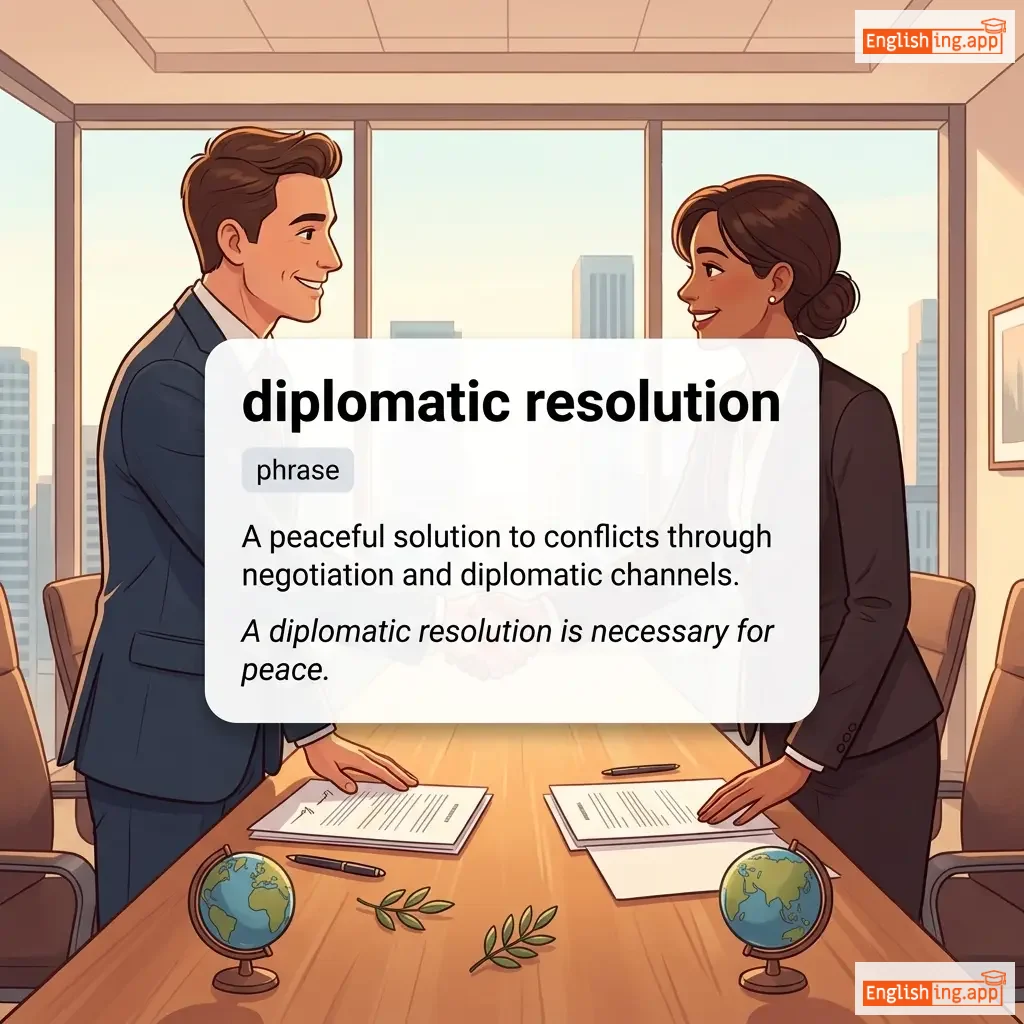
diplomatic resolution definition card — visual illustration of the meaning
phrase
ˌdɪp.ləˈmæt.ɪk rɛz.əˈluː.ʃən
外交的解決 (gaikou teki kaiketsu)

A peaceful solution to conflicts through negotiation and diplomatic channels.

"A diplomatic resolution is necessary for peace."

"平和には外交的解決が必要です。" (Heiwa ni wa gaikou teki kaiketsu ga hitsuyou desu.)
noun
/dɪˈpləʊmətɪst/
外交官 (gaikoukan)

A person skilled in diplomacy; another word for diplomat.

"The diplomatist handled the negotiations with great tact."

"外交官は交渉を巧みに取り扱いました。" (Gaikoukan wa koushou o takumi ni toriatsukaimashita.)
noun
/ˌdɪpsəˈmeɪniæk/
アルコール中毒者 (arukōru chūdokusha)

A person with an uncontrollable craving for alcoholic drinks.

"The novel portrayed the tragic downfall of a dipsomaniac who lost everything to alcohol."

"その小説はアルコールに全てを失ったアルコール中毒者の悲劇的な転落を描いています。" (Sono shōsetsu wa arukōru ni subete o ushinatta arukōru chūdokusha no higekiteki na tenraku o egaiteimasu.)
adjective
/ˈdaɪər/
危機的 (kiki-teki)

Extremely serious or urgent.

"The refugees were in dire need of food and shelter."

"難民は食糧と避難所を切実に必要としていた。" (Nanmin wa shokuryō to hinan-sho o setsujitsu ni hitsuyō to shite ita.)
verb
/dəˈrɛkt/ or /daɪˈrɛkt/
指示する (shiji suru)

to manage or control the course of something; to give instructions

"She directed the team to complete the project on time."

"彼女はチームにプロジェクトを時間通りに終わらせるよう指示しました。" (Kanojo wa chīmu ni purojekuto o jikan dōri ni owaraseru yō shiji shimashita.)
noun
/dəˈrɛkʃən/ or /daɪˈrɛkʃən/
方向, 指示 (houkou, shiji)

the course or path on which someone or something is moving; instructions on what to do

"He asked for directions to the train station."

"彼は駅への行き方を尋ねました。" (Kare wa eki e no ikikata o tazunemashita.)
adverb
/dəˈrɛktli/ or /daɪˈrɛktli/
直接的に (chokusetsuteki ni)

in a straight line or manner; without anything in between

"She spoke directly to the manager about her concerns."

"彼女は自分の懸念について、マネージャーに直接話しました。" (Kanojo wa jibun no shinen ni tsuite, manējā ni chokusetsu hanashimashita.)
noun
/dəˈrɛktər/ or /daɪˈrɛktər/
監督 (kantoku)

a person who manages or oversees a company, department, or film

"The director gave final approval for the new movie script."

"監督は新しい映画の脚本に最終承認を与えました。" (Kantoku wa atarashī eiga no kyakuhon ni saishū shōnin o ataemashita.)
noun
/dɪˈrɛktəri/
ディレクトリ (direkutori)

a book or online resource listing people, businesses, or services with relevant details

"I need to find a plumber in the phone directory."
"電話帳で配管工を探さなければなりません。" (Denwa-chō de haikangō o sagasanakereba narimasen.)
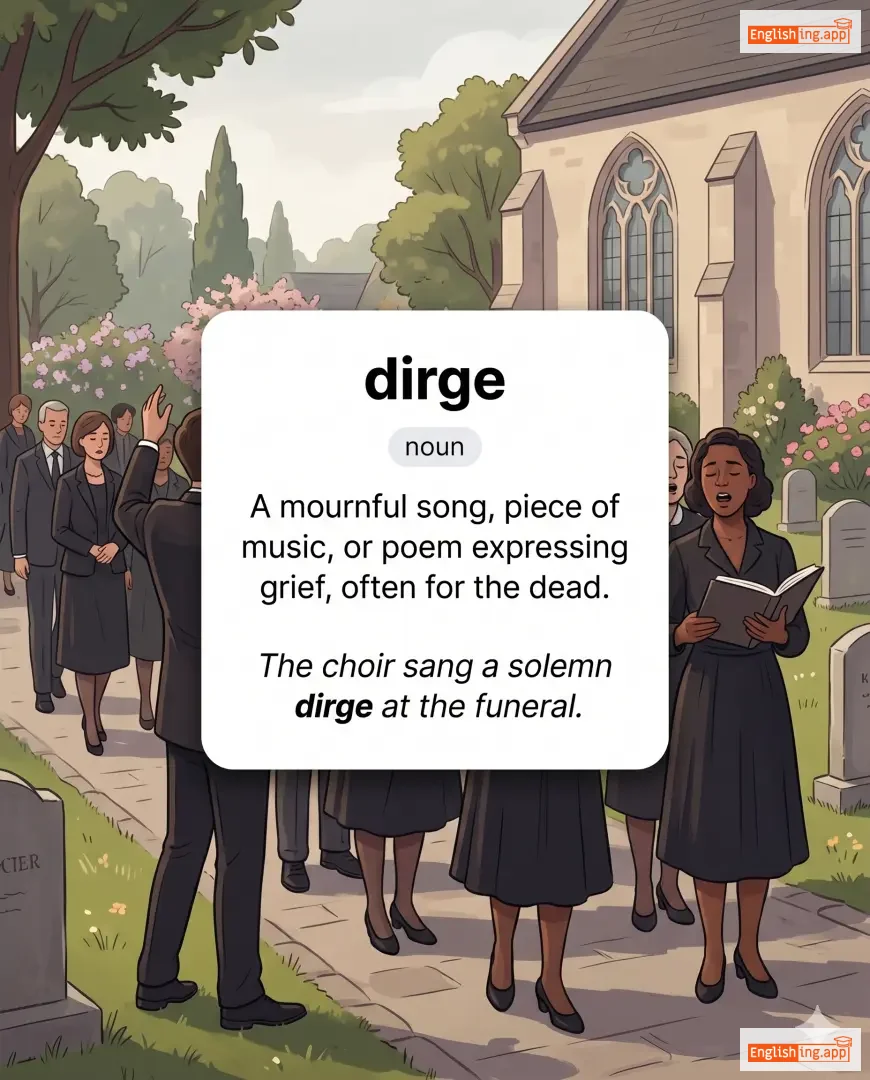
dirge definition card — visual illustration of the meaning
noun
/dɜːrdʒ/
哀歌 (aika)

A mournful song, piece of music, or poem expressing grief, often for the dead.

"The choir sang a solemn dirge at the funeral."

"コーラスは葬式で厳粛な哀歌を歌いました。" (Kōrasu wa sōshiki de genshuku na aika o utaimashita.)
noun
/dɜːrt/
土、汚れ (tsuchi, yogore)

Loose soil or unclean matter; anything that makes a surface unclean.

"Her shoes were covered in dirt after walking through the field."

"畑を歩いた後、彼女の靴は泥だらけだった。" (Hatake o aruita ato, kanojo no kutsu wa dora darake datta.)
adjective
/ˈdɜːr.ti/
汚い (kitanai)

Covered with or containing an unclean substance.

"His shoes were dirty after walking in the mud."

"泥の中を歩いた後、彼の靴は汚れていた。" (Doro no naka o aruita ato, kare no kutsu wa yogorete ita.)
noun
/ˌdɪsəˈbɪləti/
障害 (shougai)

A physical or mental condition that limits a person's movements, senses, or activities.

"The organization supports people living with disability."

"その団体は障害を持つ人々を支援しています。" (Sono dantai wa shougai wo motsu hitobito wo shien shiteimasu.)
verb
/dɪsˈeɪbl/
無効にする (mukou ni suru)

to make something unable to function or operate

"The technician disabled the alarm system temporarily."

"技術者はアラームシステムを一時的に無効にしました。" (Gijutsusha wa araamu shisutemu o ichijiteki ni mukou ni shimashita)
adjective
/dɪsˈeɪbld/
障害者 (shougaisya)

having a physical or mental condition that limits movements, senses, or activities

"The park has special facilities for disabled people."
"公園には障害者用の特別な施設があります。" (Kouen ni wa shougaisya-you no tokubetsuna shisetsu ga arimasu.)
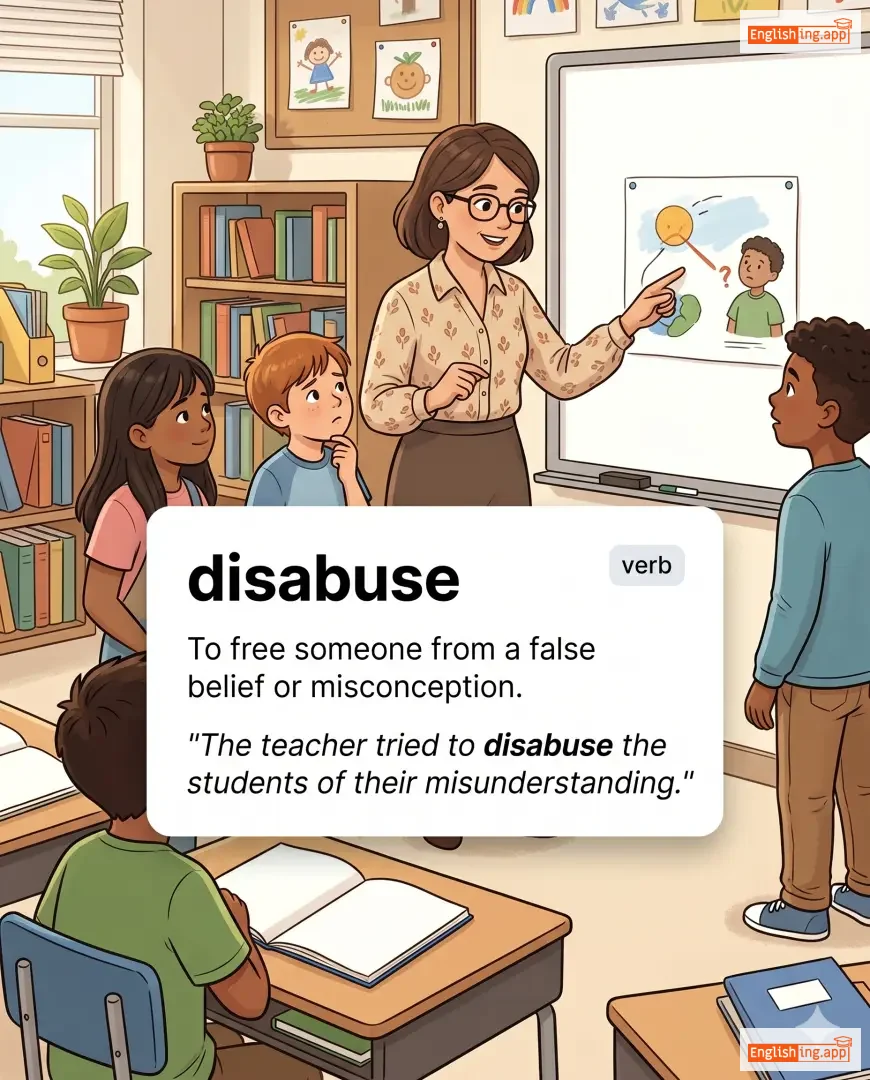
disabuse definition card — visual illustration of the meaning
verb
/ˌdɪsəˈbjuːz/
誤解を解く (gokai wo toku)

To free someone from a false belief or misconception.

"The teacher tried to disabuse the students of their misunderstanding."
"先生は生徒たちの誤解を解こうとしました。" (Sensei wa seito-tachi no gokai wo tokou to shimashita.)
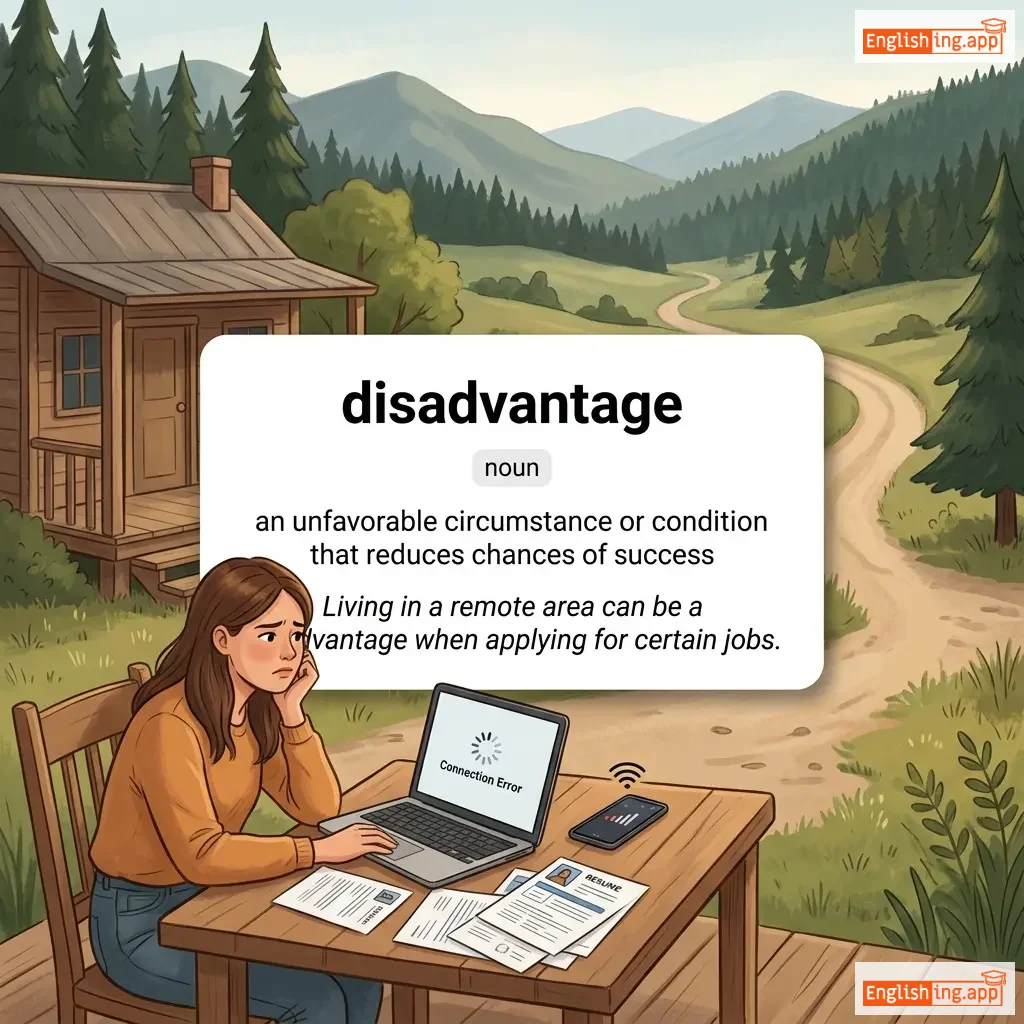
disadvantage definition card — visual illustration of the meaning
noun
/ˌdɪs.ədˈvæn.tɪdʒ/
不利 (furi)

an unfavorable circumstance or condition that reduces chances of success

"Living in a remote area can be a disadvantage when applying for certain jobs."

"遠隔地に住んでいると、特定の職に応募する際に不利になることがあります。" (Enkaku chi ni sunde iru to, tokutei no shoku ni ōbo suru sai ni furi ni naru koto ga arimasu.)
adjective
/ˌdɪsədˈvæntɪdʒd/
恵まれない (megumarenai)

Lacking the basic resources or conditions needed for a good standard of living or equal opportunities.

"The program provides support to disadvantaged children."

"そのプログラムは恵まれない子供たちに支援を提供しています。" (Sono puroguramu wa megumarenai kodomotachi ni shien o teikyō shiteimasu.)
adjective
/ˌdɪsəˈfɛktɪd/
不満な (fuman na)

Dissatisfied and rebellious, especially against authority or leadership.

"The reforms were introduced to calm the disaffected youth."

"改革は不満な若者を落ち着かせるために導入されました。" (Kaizen wa fuman na wakamono o ochitsukase ru tame ni dounyuu saremashita.)
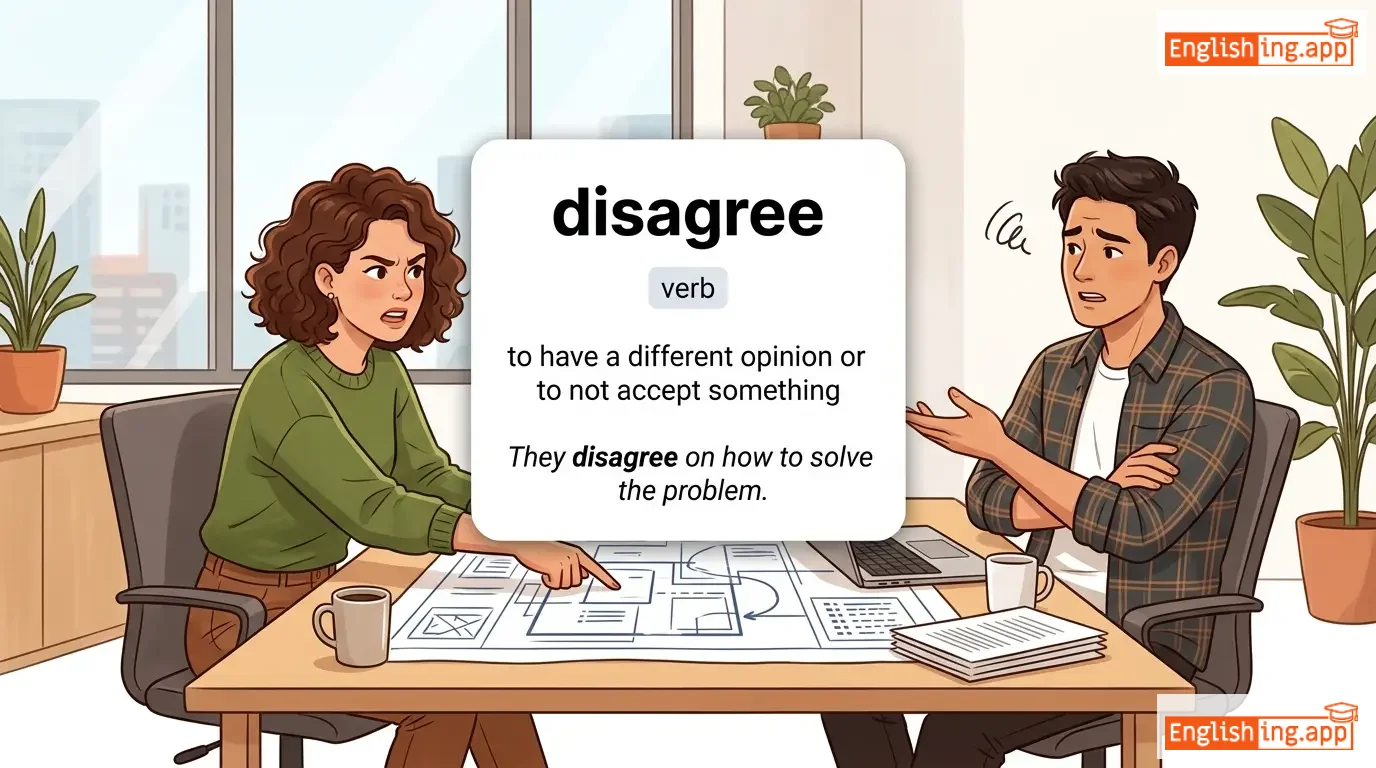
disagree definition card — visual illustration of the meaning
verb
/ˌdɪsəˈɡriː/

to have a different opinion or to not accept something

"They disagree on how to solve the problem."

adjective
/ˌdɪsəˈɡriːəbl/
不快 (fukai)

Unpleasant or offensive; causing discomfort or annoyance.

"The weather was cold and disagreeable."

"天気は寒くて不快だった。" (Tenki wa samukute fukai datta.)
noun
/ˌdɪsəˈɡriːmənt/
不一致 (fuitchi)

a failure to agree or a difference in opinion

"Their disagreement on the issue caused a delay in the project."

"その問題に対する彼らの不一致はプロジェクトの遅延を引き起こしました。" (Sono mondai ni taisuru karera no fuitchi wa purojekuto no chien o hikiokoshimashita.)
verb
/ˌdɪsəˈlaʊ/
許可しない (kyokashinai)

to refuse to allow or accept something

"The referee disallowed the goal for offside."
"審判はオフサイドのためゴールを認めませんでした。" (Shimpan wa offside no tame gōru o mitomemasen deshita.)
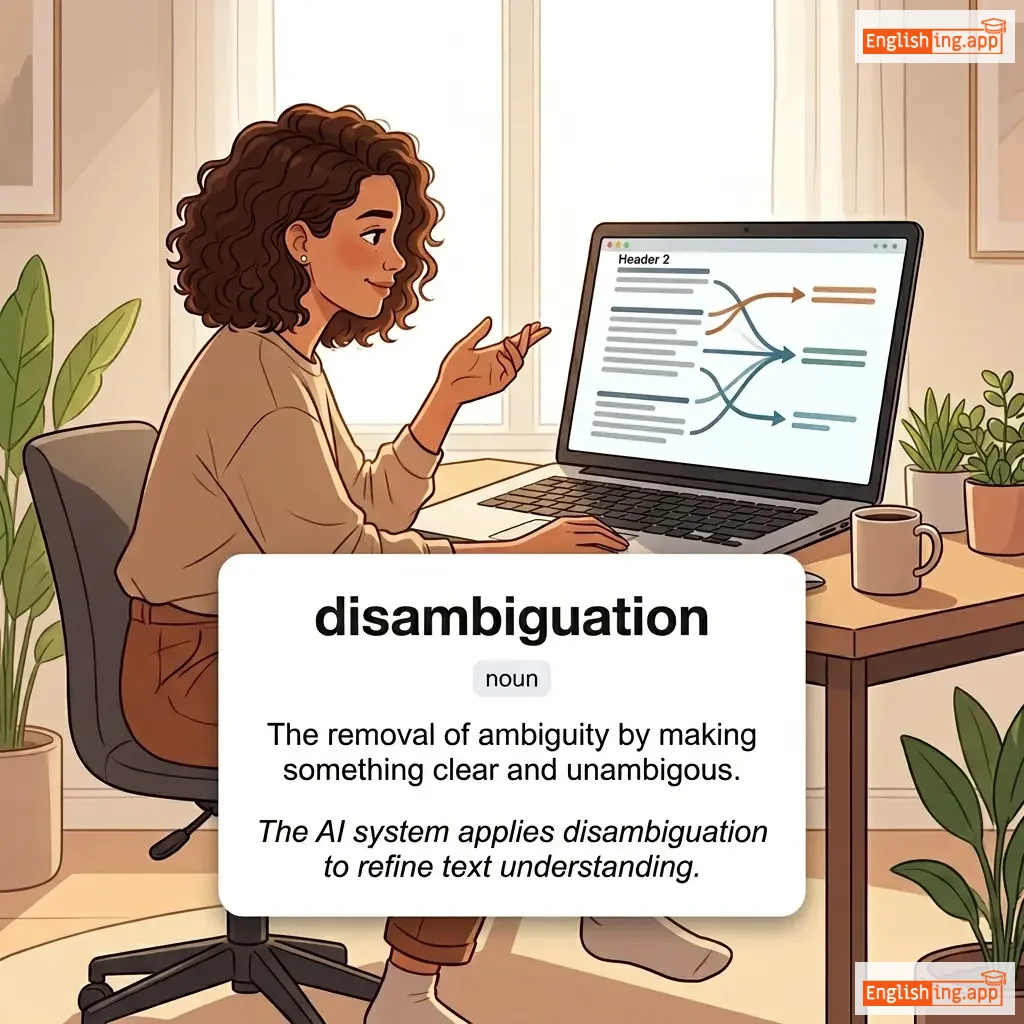
disambiguation definition card — visual illustration of the meaning
noun
ˌdɪs.æmˌbɪɡ.juˈeɪ.ʃən
曖昧さの解消 (disambiguation)

The removal of ambiguity by making something clear and unambiguous.

"The AI system applies disambiguation to refine text understanding."
"AIシステムはテキスト理解を精緻化するためにディスアンビギュエーションを適用します。" (AI shisutemu wa tekisuto rikai wo seichikasu tame ni disambiguation wo tekiyou shimasu.)
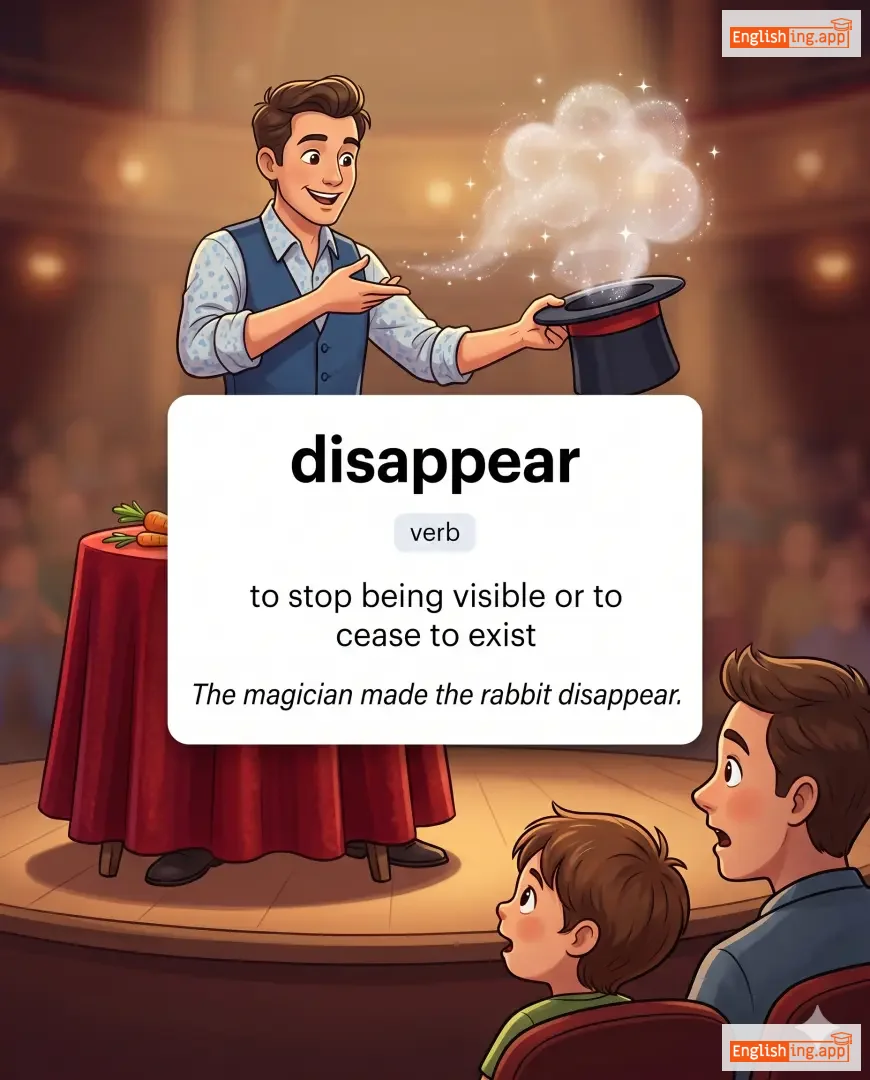
disappear definition card — visual illustration of the meaning
verb
/ˌdɪsəˈpɪər/
消える (kieru)

to stop being visible or to cease to exist

"The magician made the rabbit disappear."
"マジシャンはウサギを消しました。" (Majishan wa usagi o keshimashita.)
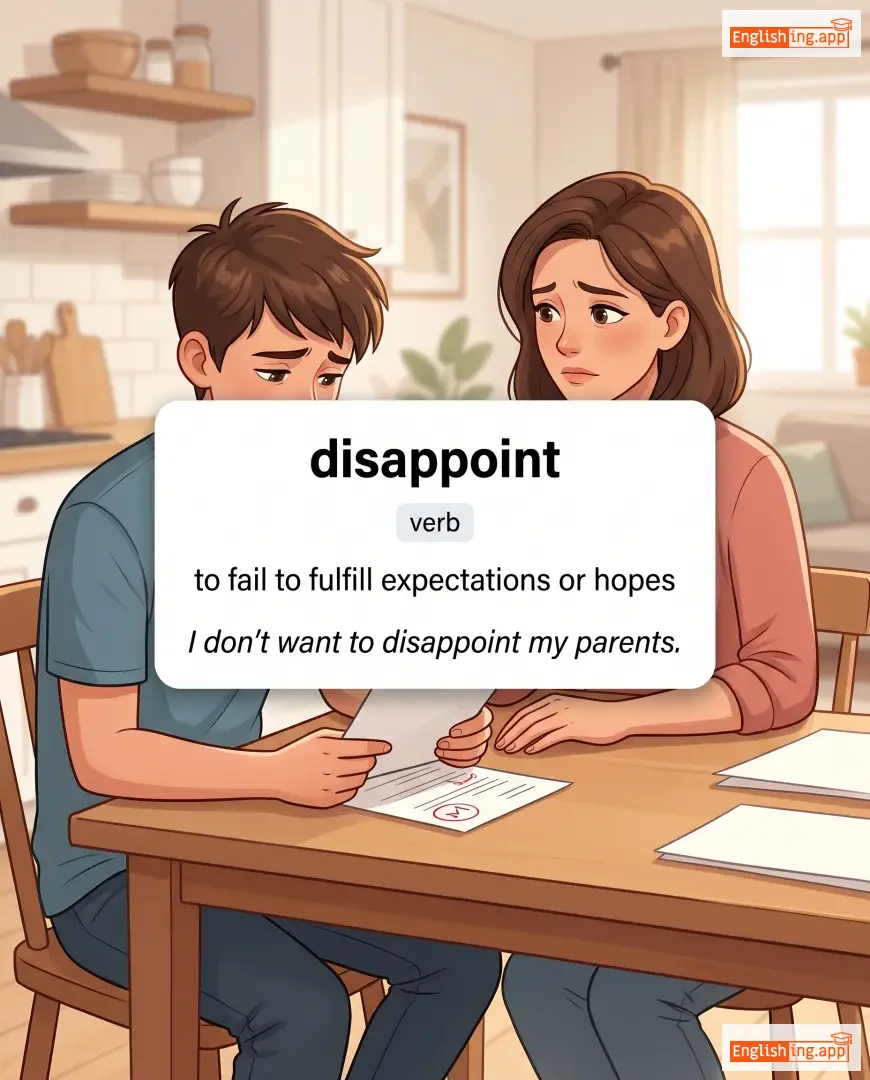
disappoint definition card — visual illustration of the meaning
verb
/ˌdɪsəˈpɔɪnt/
失望する (shitsubou suru)

to fail to fulfill expectations or hopes

"I don’t want to disappoint my parents."

"私は両親を失望させたくない。" (Watashi wa ryoushin wo shitsubou sasetakunai.)
adjective
/ˌdɪsəˈpɔɪntɪd/
失望した (shitsubou shita)

sad or displeased because something has not happened as expected

"She was disappointed with her exam results."

"彼女は試験結果に失望していた。" (Kanojo wa shiken kekka ni shitsubou shite ita.)
noun
/ˌdɪsəˈpɔɪntmənt/
失望 (shitsubou)

the feeling of sadness or displeasure caused by the non-fulfillment of one's hopes or expectations

"Her face showed deep disappointment after hearing the results."

"結果を聞いた後、彼女の顔には深い失望が表れていた。" (Kekka wo kiita ato, kanojo no kao ni wa fukai shitsubou ga arawarete ita.)
noun
/ˌdɪsæprəˈbeɪʃən/
強い非難 (tsuyoi hinan)

strong disapproval, typically on moral grounds

"The policy was met with widespread disapprobation."

"その政策は広範な非難を受けました。" (Sono seisaku wa kōhan na hinan o ukemashita.)
noun
/ˌdɪsəˈpruːvəl/
不賛成 (fusansei)

The expression of an unfavorable opinion or judgment

"Her parents showed clear disapproval of her decision to drop out of college."

"彼女の両親は、大学を中退するという彼女の決定に明確な不賛成を示した。" (Kanojo no ryoushin wa, daigaku o chutai suru to iu kanojo no kettei ni meikaku na fusansei o shimeshita.)
verb
/ˌdɪsəˈpruːv/
反対する (hantai suru)

to have a negative opinion about something; to consider something wrong or bad

"Many parents disapprove of smoking."

"多くの親は喫煙を反対しています。" (Ōku no oya wa kitsuen o hantai shiteimasu.)
verb
/dɪsˈɑːrm/
武装解除する (busou kaijo suru)

to take weapons away from someone; to make someone feel less hostile

"The soldiers were ordered to disarm the rebels."

"兵士たちは反乱者の武装を解除するよう命じられた。" (Heishitachi wa hanransha no busou wo kaijo suru you meijirareta.)
verb
/ˌdɪsəˈreɪndʒ/
乱す (midasu)

to disturb the order or arrangement of something

"The wind disarranged her hair."
"風が彼女の髪を乱した。" (Kaze ga kanojo no kami wo midashita.)
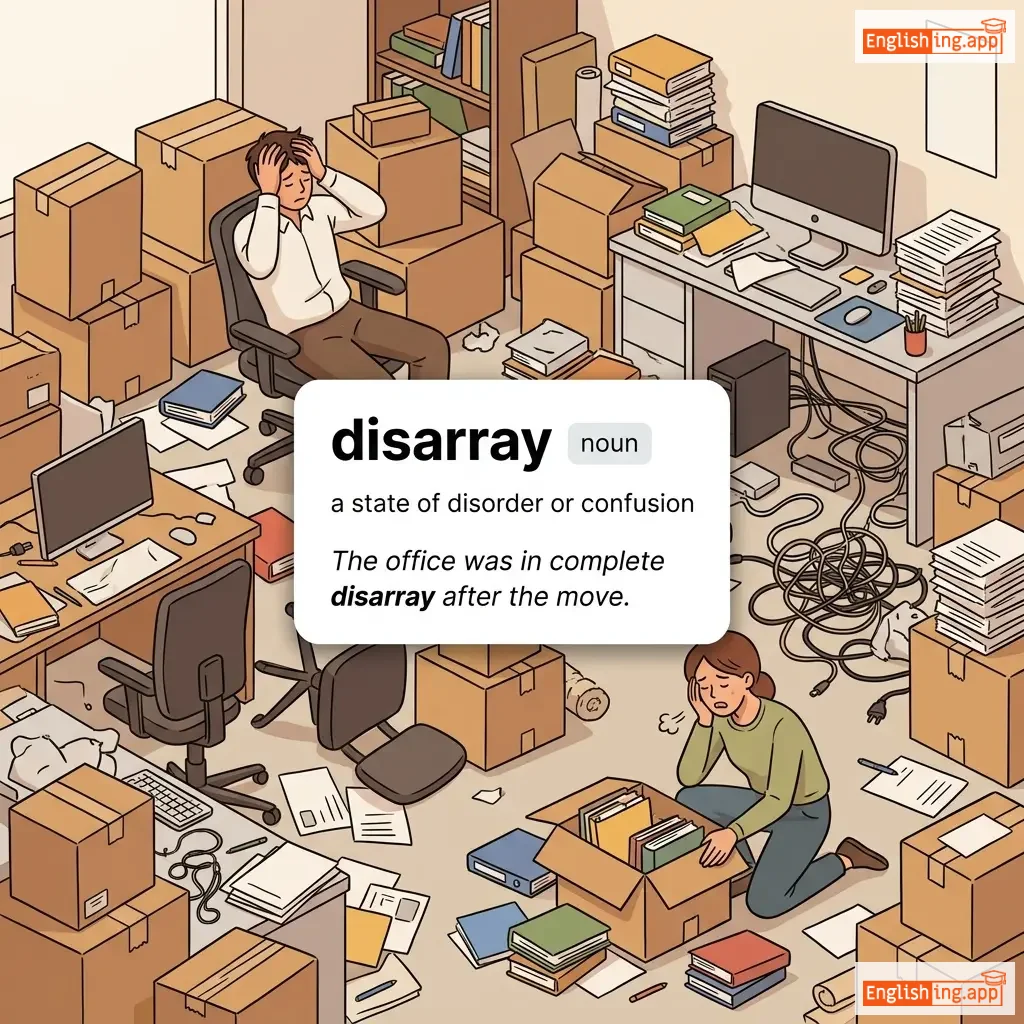
disarray definition card — visual illustration of the meaning
noun
/ˌdɪsəˈreɪ/
混乱 (konran)

a state of disorder or confusion

"The office was in complete disarray after the move."

"引っ越し後、オフィスは完全に混乱していました。" (Hikkoshi go, ofisu wa kanzen ni konran shite imashita.)
verb
/ˌdɪsəˈsɛmbəl/
分解する (bunkai suru)

To take apart something into its separate pieces.

"He had to disassemble the computer to repair it."

"彼は修理のためにコンピュータを分解しなければならなかった。" (Kare wa shūri no tame ni konpyūta o bunkai shinakereba naranakatta.)
noun
/dɪˈzæstər/
災害 (saigai)

A sudden event that causes great damage or loss of life.

"The earthquake was a major disaster."

"地震は大きな災害でした。" (Jishin wa ōkina saigai deshita.)
🌪️

Disastrous

adjective
/dɪˈzæstrəs/

causing great damage or harm

"The flood caused disastrous damage to the city."

verb
/ˌdɪsəˈvaʊ/
否定する (hitei suru)

to deny responsibility for or connection with something

"He disavowed any involvement in the scandal."

"彼はスキャンダルへの関与を否定した。" (Kare wa sukyandaru e no kan'yo o hitei shita.)
noun
/ˌdɪsəˈvaʊəl/
拒否 (kyohi)

the denial of any responsibility, connection, or support

"The politician issued a firm disavowal of the controversial remarks."

"その政治家は物議を醸す発言に対して強い拒否を表明した。" (Sono seijika wa butsugi o kamasu hatsugen ni taishite tsuyoi kyohi o hyōmei shita.)
verb
/dɪsˈbænd/
解散する (kaisansuru)

to break up and stop functioning as a group or organization

"The club decided to disband after twenty years of activity."

"クラブは20年の活動後に解散することを決定した。" (Kurabu wa 20-nen no katsudō go ni kaisan suru koto o kettei shita.)
verb
/dɪsˈbɑːr/
弁護士を法曹界から正式に除外する (bengoshi o hōsōkai kara seishiki ni jogai suru)

to officially remove a lawyer from the legal profession

"The corrupt lawyer was disbarred for unethical conduct."

"腐敗した弁護士は非倫理的な行動により除外されました。" (Fuhai shita bengoshi wa hinritsutekina kōdō ni yori jogai saremashita.)