語彙集

英単語辞書 | 単語の意味、定義、例文

verb
/kənˈvɜːrt/
変換する (henkan suru)

to change something into a different form or purpose

"He converted his garage into a small studio."

"彼は自分のガレージを小さなスタジオに変えました。" (Kare wa jibun no garēji o chīsana sutajio ni kaemashita.)
noun
/kənˈvɜːrtər/
変換器 (henkanki)

a device or person that changes something from one form, system, or use to another; a tool that converts data, energy, or materials

"The engineer used a converter to change AC power into DC power."

"エンジニアは交流電力を直流に変えるために変換器を使いました。" (enjinia wa kouryuu denryoku o chiryuu ni kaeru tame ni henkanki o tsukaimashita)
adjective
/kənˈvɜːrtəbl/
オープンカー、屋根が折りたためる車 (ōpun kā, yane ga oritatameru kuruma)

able to be changed into a different form or use; also a car with a roof that can be folded down

"She drove her new convertible along the coastal road."

"彼女は新しいオープンカーで沿岸道路を走った。" (Kanojo wa atarashī ōpun kā de enkan dōro o hashitta.)
convex definition card — visual illustration of the meaning
adjective
/ˈkɒnvɛks/
凸状の、外向きに丸みを帯びた (totsujō no, gaimuki ni marumi o obita)

curved or rounded outward

"The lens has a convex shape to focus light."

"レンズは光を焦点を合わせるために凸の形状をしています。" (Renzu wa hikari o shōten o awaseru tame ni totsu no keijō o shiteimasu.)
convey definition card — visual illustration of the meaning
verb
/kənˈveɪ/
伝える, 運ぶ (tsutaeru, hakobu)

to communicate or make known; to transport or carry

"He tried to convey his feelings through a letter."

"彼は手紙を通じて感情を伝えようとした。" (Kare wa tegami o tōjite kanjō o tsutaeyō to shita.)
conveyance definition card — visual illustration of the meaning
noun
/kənˈveɪəns/
輸送, 交通手段, 車両 (yusou, koutsuu shudan, sharyou)

the act of transporting or communicating something; a vehicle or means of transport

"The conveyance of goods was delayed due to bad weather."

"悪天候のため、貨物の輸送は遅れました。" (Akutenkou no tame, kamotsu no yusou wa okuremashita.)
verb
/ˈkɒnvɪkt/
有罪判決を下す (yūzai hanketsu wo kudasu)

to find someone guilty of a crime in a court of law

"The court convicted him of theft."
"裁判所は彼を窃盗罪で有罪とした。" (Saibansho wa kare wo settō-zai de yūzai to shita.)
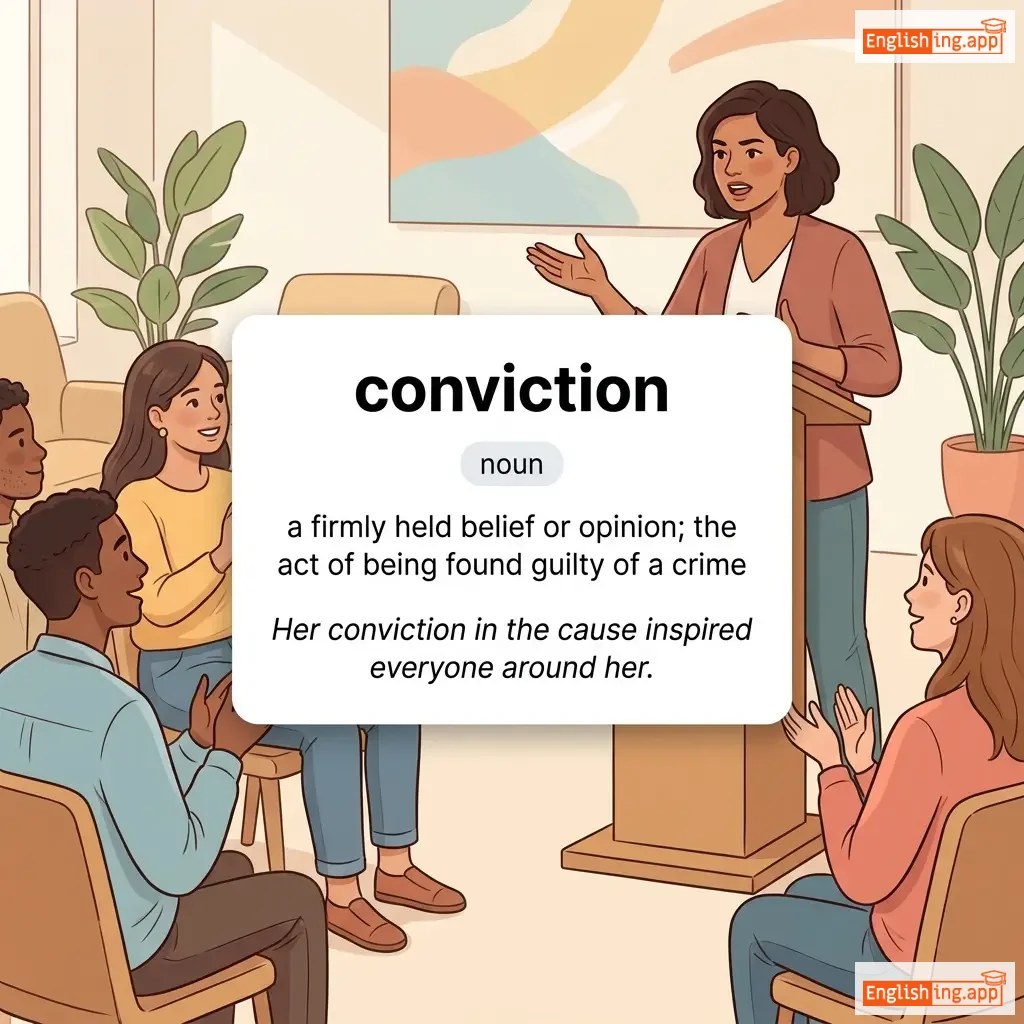
conviction definition card — visual illustration of the meaning
noun
/kənˈvɪkʃən/
確固たる信念, 有罪判決 (kakkotaru shinnen, yūzai hanketsu)

a firmly held belief or opinion; the act of being found guilty of a crime

"Her conviction in the cause inspired everyone around her."

"彼女のその理由への確固たる信念は、周りの全ての人々に刺激を与えました。" (Kanojo no sono riyū e no kakkotaru shinnen wa, mawari no subete no hitobito ni shigeki o ataemashita.)
verb
/kənˈvɪns/
納得させる (nattoku saseru)

to make someone believe or feel certain about something

"She convinced him to attend the meeting."

"彼女は彼に会議に参加するように納得させた。" (Kanojo wa kare ni kaigi ni sanka suru you ni nattoku saseta.)
adjective
/kənˈvɪnst/
確信した (kakushin shita)

completely certain or sure about something

"She was convinced that he was telling the truth."

"彼女は彼が真実を言っていると確信していた。" (Kanojo wa kare ga shinjitsu o itte iru to kakushin shite ita.)
adjective
/kənˈvɪnsɪŋ/
説得力がある (settoryoku ga aru)

having the ability to make someone believe that something is true or real

"Her argument was very convincing."

"彼女の議論は非常に説得力があった。" (Kanojo no giron wa hijō ni settoryoku ga atta.)
convivial definition card — visual illustration of the meaning
adjective
/kənˈvɪviəl/
友好的で生き生きとした、楽しい; 社交的 (yūkō-teki de ikigiki to shita, tanoshī; shakō-teki)

friendly, lively, and enjoyable; sociable

"The party had a convivial atmosphere with music and laughter."

"パーティーは音楽と笑いに満ちたコンヴィヴィアルな雰囲気でした。" (Pātī wa ongaku to warai ni michita konviviaru na fun'iki deshita.)
verb
/kənˈvoʊk/
召集する (shoushuu suru)

to call together or summon a meeting or assembly

"The committee convoked an emergency session to discuss the crisis."

"委員会は危機を議論するために緊急セッションを召集しました。" (Iinkai wa kiki wo giron suru tame ni kinkyu sesshon wo shoushuu shimashita.)
convoluted definition card — visual illustration of the meaning
adjective
/ˈkɒnvəluːtɪd/
複雑で入り組んだ (fukuzatsu de irikunda)

complex, intricate, and difficult to follow

"The plot of the movie was so convoluted that I lost track halfway."

"映画のプロットはとても複雑で、途中で方向を見失ってしまった。" (Eiga no purotto wa totemo fukuzatsu de, tochu de hokou o miushinatte shimatta.)
noun
/ˌkɒnvəˈluːʃən/
コンボリューション、複雑な曲線または構造 (konboryūshon, fukuzatsu na kyokusen mata wa kōzō)

a twist, coil, or a complex and intricate shape or arrangement

"The brain has many convolutions that increase its surface area."

"脳には多くのコンボリューションがあり、その表面積を増加させます。" (Nō ni wa ōku no konboryūshon ga ari, sono hyōmenshiki o zōka sasemasu.)
verb
/kənˈvɑːlv/
一緒に巻いたり、ねじったりする; 巻きつけたり、絡めたりする (Issho ni makitari, nejittari suru; makitsukettari, karamettari suru)

to roll or twist together; to coil or entwine

"The vines convolve around the tree trunk."

"ツルは木の幹の周りを巻きつけます。" (Tsuru wa ki no mikiri no mawari o makitsukemasu.)
noun
/ˈkɒn.vɔɪ/
コンボイ (konboi)

a group of vehicles or ships traveling together, often for protection

"The military convoy moved through the desert at dawn."

"軍のコンボイは夜明けに砂漠を横断しました。" (Gun no konboi wa yoake ni sabaku o ōdan shimashita.)
verb
/kənˈvʌls/
激しく震える; 突然の不随意な収縮に苦しむ (hageshiku furu; totsuzen no fuzui na shūshuku ni kurushimu)

to shake violently; to suffer sudden involuntary contractions

"The patient convulsed during the seizure."

"患者は発作中に震えました。" (Kanja wa hōsachū ni furuemashita.)
noun
/kənˈvʌl.ʃən/
痙攣 (keiren)

a sudden, violent, involuntary contraction of muscles; a seizure

"The medicine helped prevent convulsions in children."
"薬は子供たちの痙攣を防ぐのに役立ちました。" (Kusuri wa kodomotachi no keiren o fusegu no ni yakudachimashita.)
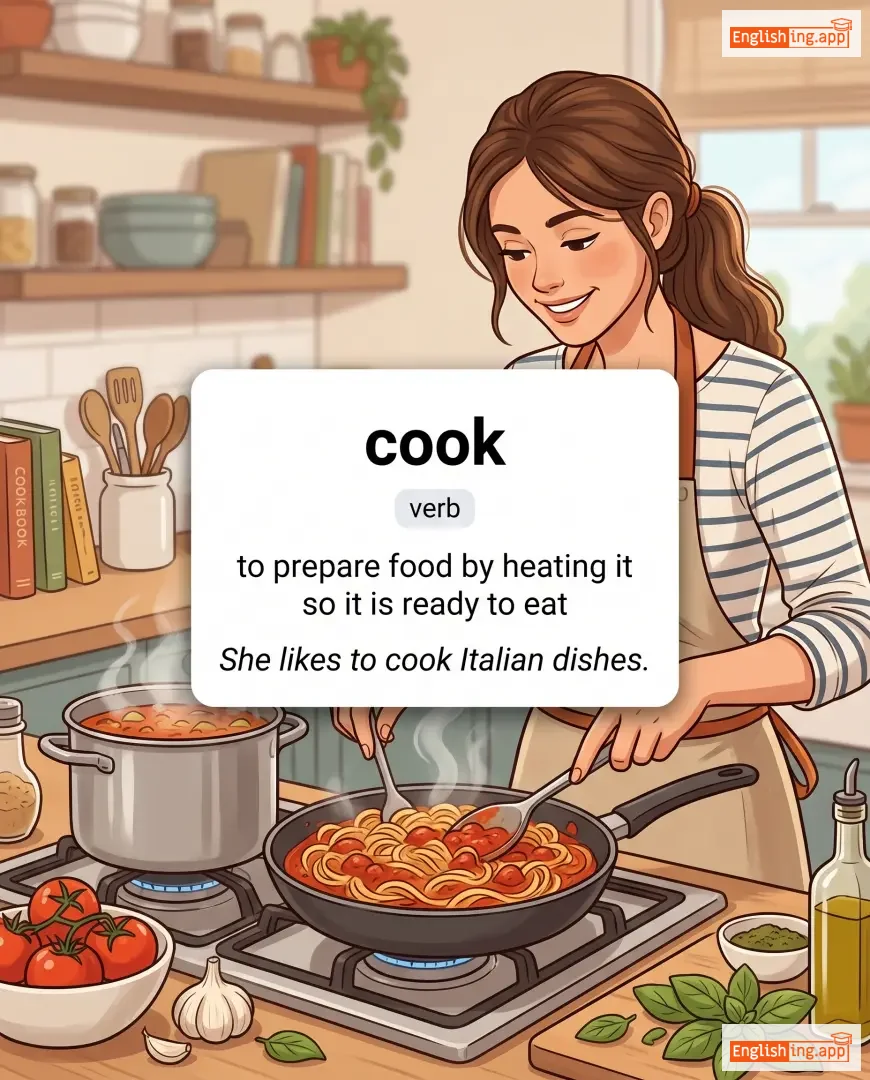
cook definition card — visual illustration of the meaning
👩‍🍳

cook (kuku)

verb
/kʊk/
料理する (ryōri suru)

to prepare food by heating it so it is ready to eat

"She likes to cook Italian dishes."

"彼女はイタリア料理を作るのが好きです。" (Kanojo wa Itaria ryōri o tsukuru no ga suki desu.)
noun
/ˈkʊkər/
調理器; 炊飯器 (chouriki; suihanki)

a device or appliance used for cooking food; a person or thing that cooks

"The rice cooker makes cooking meals much easier."

"炊飯器は料理をとても簡単にします。" (suihanki wa ryouri o totemo kantan ni shimasu)
noun
/ˈkʊki/
クッキー (kukkī)

a small sweet baked food, usually with flour, sugar, and butter

"She offered me a chocolate chip cookie."

"彼女は私にチョコチップクッキーをくれました。" (Kanojo wa watashi ni choko chippu kukkī o kuremashita.)
noun/verb
/ˈkʊkɪŋ/
料理 (ryōri)

the process of preparing food by heating it

"Cooking is one of my favorite hobbies."

"料理は私の好きな趣味の一つです。" (Ryōri wa watashi no sukina shumi no hitotsu desu.)
adjective
/kuːl/
冷たい, 落ち着いた, 印象的 (tsumetai, ochitsuita, inshōteki)

moderately cold; calm and composed; fashionable or impressive

"She kept a cool head during the crisis."

"彼女は危機の中で冷静を保った。" (Kanojo wa kiki no naka de reisei o tamotta.)
noun
/ˈkuː.li/
クーリー (Kūri)

a laborer who does physical work for wages

"The cooly carried heavy bags at the railway station."

"クーリーは駅で重い荷物を運んでいました。" (Kūri wa eki de omoi nimotsu o hakondeimashita.)
noun
/kuːp/
鶏や他の鳥のための小さな囲いまたは小屋 (niwatori ya hoka no tori no tame no chiisana kakoi matawa koya)

a small enclosure or cage for chickens or other birds

"The farmer checked the chickens in the coop every morning."
"農夫は毎朝小屋の中の鶏をチェックしていました。" (Nōfu wa mai asa koya no naka no niwatori o chekku shite imashita.)
verb
/kəʊˈɒpəreɪt/

to work together with others to achieve a common goal

"The two companies agreed to cooperate on the new project."

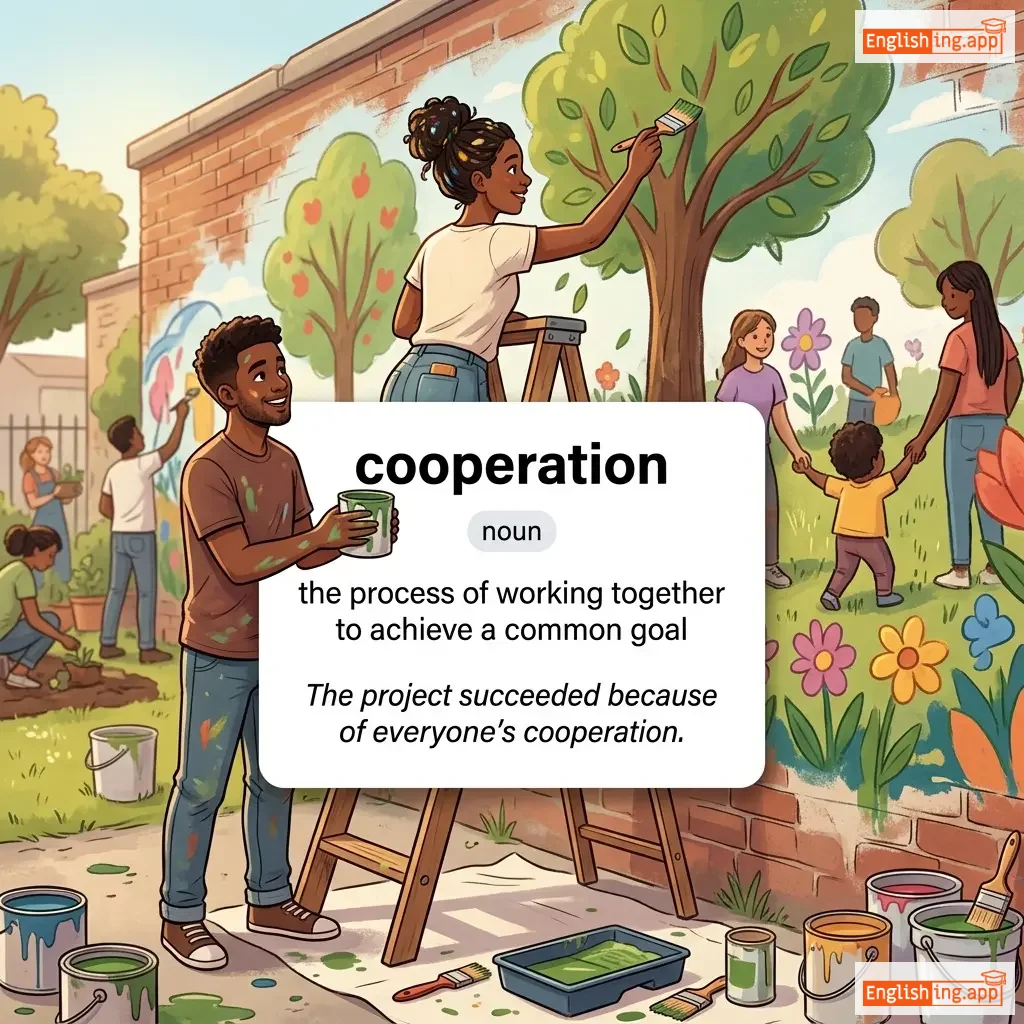
cooperation definition card — visual illustration of the meaning
noun
/koʊˌɒpəˈreɪʃn/
協力 (kyoryoku)

the process of working together to achieve a common goal

"The project succeeded because of everyone’s cooperation."

"プロジェクトは全員の協力のおかげで成功しました。" (purojekuto wa zen'in no kyouryoku no okage de seikou shimashita.)
adjective
/kəʊˈɒpərətɪv/
協力的 (kyōryokuteki)

willing to work or act together with others for a common purpose

"She was very cooperative during the interview process."

"彼女は面接の過程で非常に協力的でした。" (Kanojo wa mensetsu no katei de hijō ni kyōryokuteki deshita.)
verb
/koʊˈɔːrdɪˌneɪt/
調整する (chousei suru)

to organize people or things so that they work together effectively

"We need to coordinate our efforts to finish the project on time."

"私たちはプロジェクトを時間通りに終わらせるために努力を調整する必要があります。" (Watashitachi wa purojekuto o jikan doori ni owaraseru tame ni doryoku o chousei suru hitsuyou ga arimasu.)
noun
/kəʊˌɔːdɪˈneɪʃən/
調整 (chōsei)

the process of organizing different elements to work together effectively

"The coordination between the teams was flawless."

"チーム間の調整は完璧でした。" (Chīmu kan no chōsei wa kanpeki deshita.)
noun
/koʊˈɔːrdɪˌneɪtər/
コーディネーター (ko-dine-ta)

a person who organizes people or activities so that they work well together

"The event coordinator managed everything perfectly."

"イベントのコーディネーターはすべてを完璧に管理しました。" (Ibento no ko-dine-ta wa subete o kanpeki ni kanri shimashita.)
noun
/kɒp/
警官 (keikan)

a police officer (informal)

"The cop stopped the car for speeding."

"警官はスピード違反で車を止めました。" (Keikan wa supīdo ihan de kuruma o tomemashita.)
verb
/koʊp/
対処する (taisho suru)

to deal effectively with something difficult

"She had to cope with a lot of pressure at work."
"彼女は仕事で大きなプレッシャーに対処しなければなりませんでした。" (Kanojo wa shigoto de ōkina purettoshā ni taisho shinakereba narimasen deshita.)
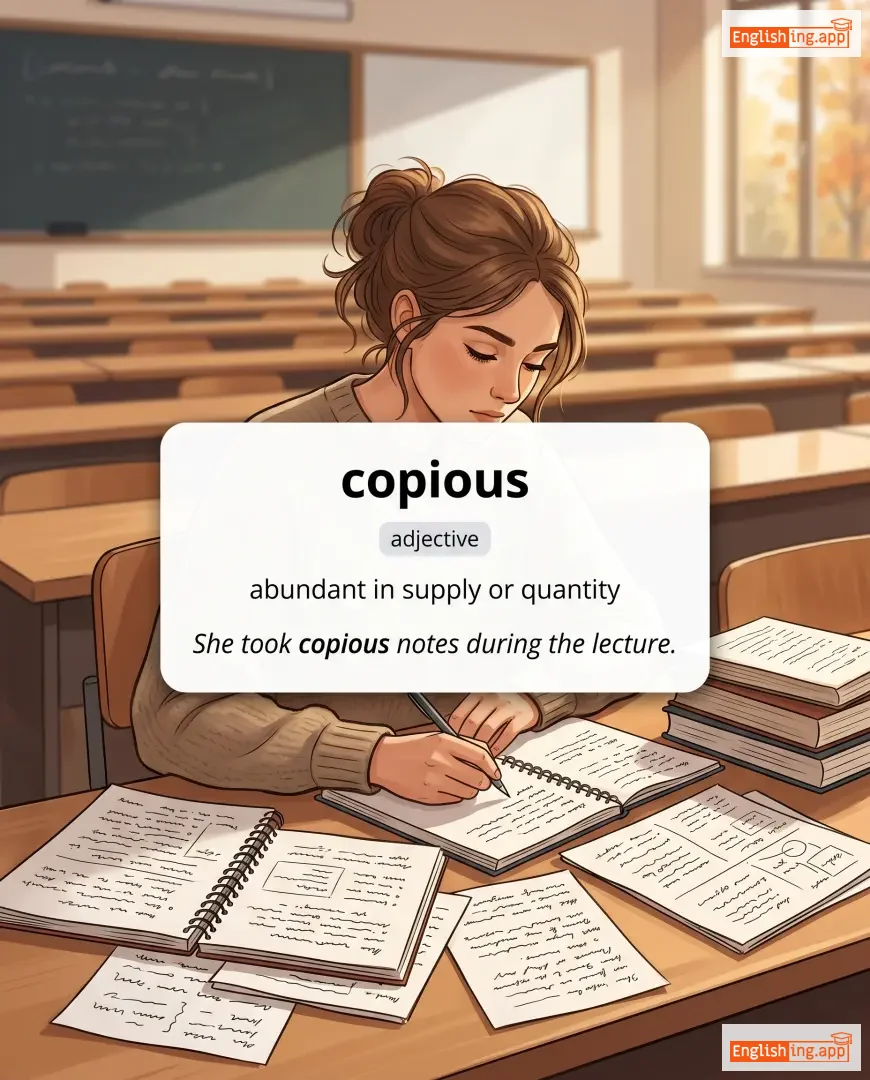
copious definition card — visual illustration of the meaning
adjective
/ˈkoʊpiəs/
豊富 (hōfu)

abundant in supply or quantity

"She took copious notes during the lecture."

"彼女は講義中に豊富なノートを取った。" (Kanojo wa kōgi-chū ni hōfu na nōto o totta.)
noun
/ˈkɒpə/
(dou)

a reddish-brown metal used for electrical wiring, coins, and more

"Copper is a good conductor of electricity."
"銅は良い電気導体です。" (Dou wa yoi denki doutai desu.)
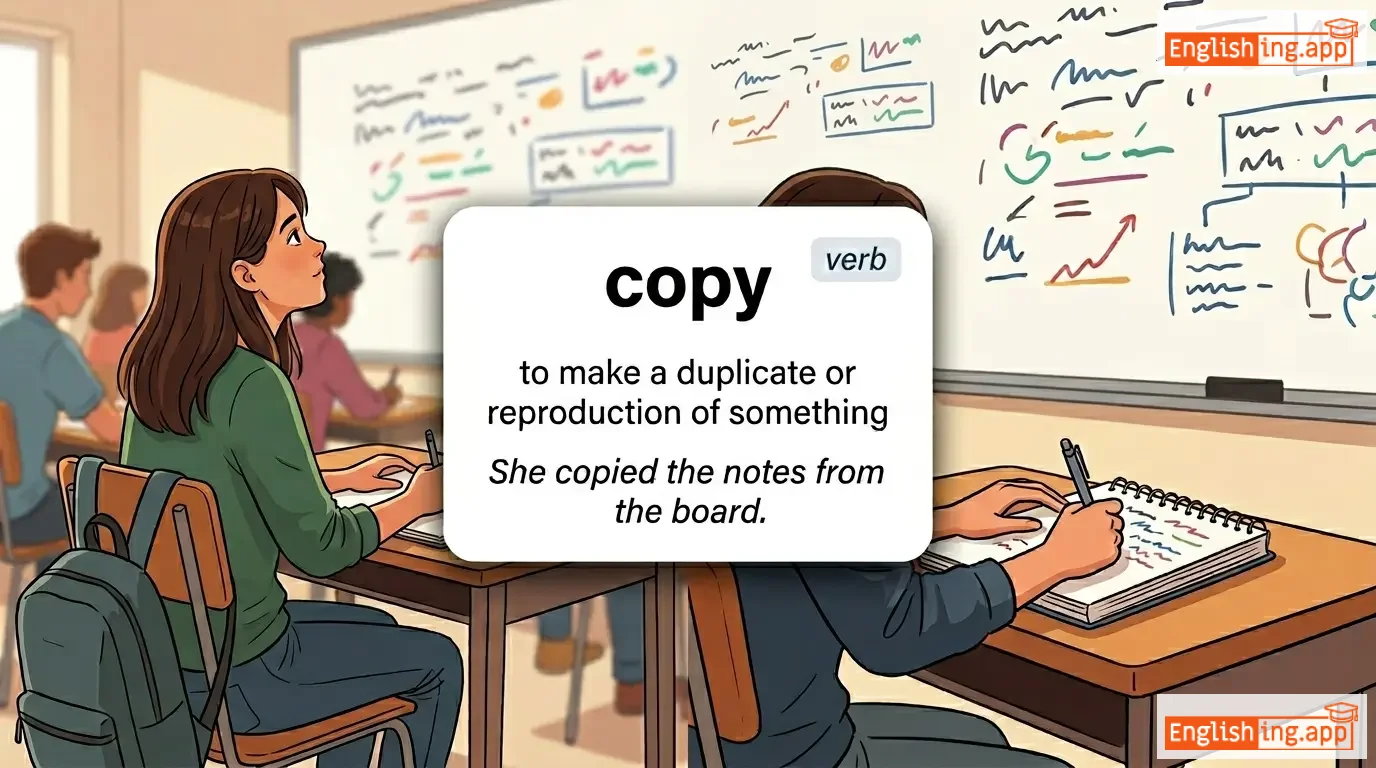
copy definition card — visual illustration of the meaning
verb
/ˈkɒpi/
コピー (kopī)

to make a duplicate or reproduction of something

"She copied the notes from the board."

"彼女はボードからノートをコピーしました。" (Kanojo wa bōdo kara nōto o kopī shimashita.)
noun
/ˈkɒpɪraɪt/
著作権 (chosakuken)

the legal right of the creator of a work to control its use and distribution

"She holds the copyright for the book."

"彼女はその本の著作権を持っています。" (Kanojo wa sono hon no chosakuken o motteimasu.)
coquette definition card — visual illustration of the meaning
noun
/koʊˈkɛt/
コケットな女性 (koketto na josei)

a woman who flirts lightheartedly

"She was a coquette, always charming everyone at the party."

"彼女はコケットで、パーティーで誰にでも魅力を振りまいていました。" (Kanojo wa koketto de, pātii de dare ni demo miryoku o furimaitemashita.)
noun, adjective
/ˈkɒrəl/
珊瑚 (sango)

a hard, rock-like marine organism formed by tiny sea animals; a pinkish-orange color resembling coral

"The coral in the reef provides shelter for many sea creatures."
"珊瑚礁の珊瑚は多くの海の生き物を守ります。" (sangoshou no sango wa ooku no umi no ikimono o mamorimasu)
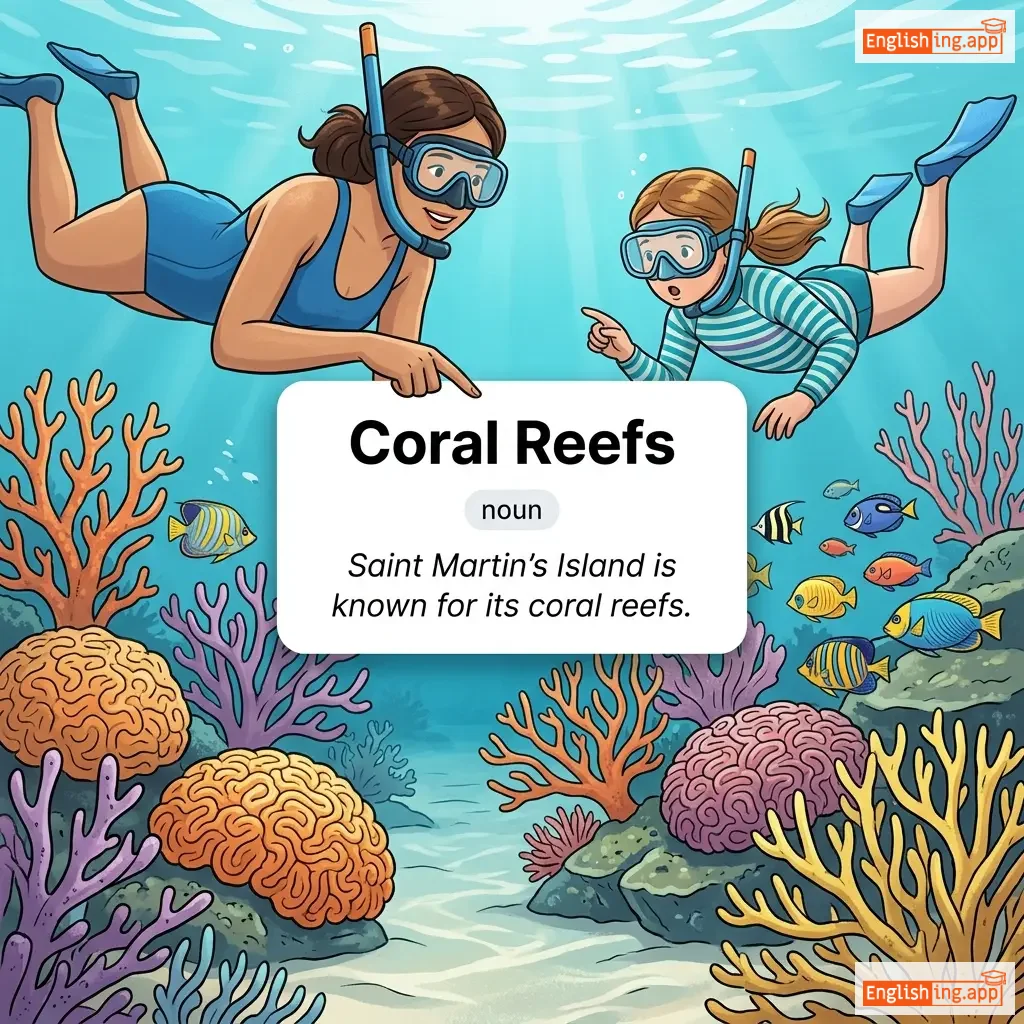
Coral Reefs definition card — visual illustration of the meaning
noun
ˈkɔːrəl ˈriːfs
サンゴ礁 (sango-shou)

Underwater structures made from calcium carbonate secreted by corals, forming diverse marine ecosystems.

"Saint Martin's Island is known for its coral reefs."

"セント・マーチン島はそのサンゴ礁で知られています。" (Sent-Maachin-tou wa sono sango-shou de shirareteimasu.)
noun
/kɔːrd/
ひも (himo)

a long, thin, flexible string or rope

"He tied the package with a strong cord."

"彼は強いひもで荷物を結びました。" (Kare wa tsuyoi himo de nimotsu o musubimashita.)
adjective
/ˈkɔːrdʒəl/
心温かく、親しみやすい (kokoro atatakai, shitashimi yasui)

warm and friendly; heartfelt

"They exchanged cordial greetings after the meeting."

"Kaigi go, karera wa kokoro atatakai aisatsu o kawashimashita." (Kaigi go, karera wa kokoro atatakai aisatsu o kawashimashita.)
noun
/ˌkɔr.diˈæl.ɪ.ti/
友情; 優しさ (yūjō; yasashisa)

sincere affection and kindness; warm and friendly behavior

"The host's cordiality made all the guests feel welcome and comfortable."

"ホストのコーディアリティはすべてのゲストが歓迎され、快適に感じさせました。" (Hosuto no kōdiariti wa subete no gesuto ga kangei sare, kaiteki ni kanjisemashita.)
adverb
/ˈkɔːrdiəli/
心から (kokorokara)

in a warm and friendly manner; sincerely

"You are cordially invited to our wedding ceremony."

"あなたは私たちの結婚式に心から招待されています。" (Anata wa watashitachi no kekkonshiki ni kokorokara shōtai sareteimasu.)
noun
/ˈkɔːrdən/
封鎖線 (fūsasen)

a line or circle of police, soldiers, or guards preventing access

"The police set up a cordon around the crime scene."

"警察は犯罪現場の周りにコルドンを設置しました。" (Keisatsu wa hanzai genba no mawari ni korudon o setchi shimashita.)
noun
/kɔːr/
(kaku)

the central or most important part of something

"Honesty is at the core of their values."

"正直は彼らの価値観の核です。" (Shoujiki wa karera no kachikan no kaku desu.)
noun
/ˌkɔːriˈændər/
コリアンダー (Koriandā)

aromatic herb with feathery leaves used for flavoring food; also refers to the seeds used as spice

"Fresh coriander leaves are sprinkled on top of the curry."

"新鮮なコリアンダーの葉がカレーの上にふりかけられます。" (Shinsen na koriandā no ha ga karē no ue ni furikakeraremasu.)
noun
/kɔˈrɪkə soˈbɔrnə/
カチキの魚 (kachiki no sakana)

a small silvery fish species found in South Asian rivers, commonly used in local cuisine

"Corica soborna is a popular ingredient in traditional Bengali fish curry."

"コリカ ソボルナは伝統的なベンガル魚カレーの人気の材料です。" (Korika Soboruna wa dentouteki na Bengaru sakana kare no ninki no zairyou desu.)
noun
/ˈkɔːrmərənt/
魚を捕まえるために潜る大きな黒い海鳥 (sakana o tsukamaeru tame ni moguru ōkina kuroi umitori)

a large black sea bird that catches fish by diving

"The cormorant perched on the rock, drying its wings after a dive."

"コウモリは岩の上に止まり、ダイブの後に羽を乾かしていました。" (Kōmori wa iwa no ue ni tomari, daibu no ato ni hane o kawakashiteimashita.)