語彙集

英単語辞書 | 単語の意味、定義、例文

noun
/ˈkɒnfɪdænt/
信頼できる友人 (shinrai dekiru yuujin)

A person with whom one shares a secret or private matter, trusting them not to repeat it.

"She found a true confidant in her childhood friend."

"彼女は子供時代の友人の中に本当の信頼できる友人を見つけました。" (Kanojo wa kodomojidai no yuujin no naka ni hontou no shinrai dekiru yuujin o mitsukemashita.)
noun
/ˌkɒnfɪˈdɑːnt/
信頼できる友人 (shinrai dekiru yūjin)

A woman with whom one shares a secret or private matter, trusting her not to repeat it.

"The queen’s maid became her most trusted confidante."

"女王の侍女は最も信頼された友人になった。" (Joō no jijo wa mottomo shinrai sareta yūjin ni natta.)
verb
/kənˈfaɪd/

To tell someone about a secret or private matter while trusting them not to repeat it.

"He confided his worries to his best friend."

noun
/ˈkɒnfɪdəns/
自信 (jishin)

The feeling or belief that one can rely on someone or something; firm trust or self-assurance.

"She spoke with great confidence during the meeting."

"彼女は会議で大きな自信を持って話しました。" (Kanojo wa kaigi de ōkina jishin o motte hanashimashita.)
adjective
/ˈkɒnfɪdənt/
自信 (jishin)

feeling or showing certainty about something; having self-assurance

"She was confident about her ability to succeed."

"彼女は自分の成功する能力に自信を持っていた。" (Kanojo wa jibun no seikou suru nouryoku ni jishin o motte ita.)
adjective
/ˌkɒnfɪˈdɛnʃl/
機密の (kimitsu no)

intended to be kept secret or private

"The lawyer shared confidential documents with her client."

"弁護士はクライアントと機密の文書を共有しました。" (Bengoshi wa kuraianto to kimitsu no bunsho o kyōyū shimashita.)
confidentiality definition card — visual illustration of the meaning
noun
ˌkɒn.fɪ.den.ʃiˈæl.ɪ.ti
機密性 (kimitsusei)

The state of keeping or being kept secret or private

"Confidentiality is crucial in data security."

"機密性はデータセキュリティにおいて重要です。" (Kimitsusei wa dēta sekyuriti ni oite jūyō desu.)
adverb
/ˌkɒnfɪˈdenʃəli/
機密に (kimitsuni)

in a confidential manner; secretly; privately

"The information was shared confidentially between the two managers."

"その情報は2人のマネージャーの間で機密に共有されました。" (Sono jōhō wa futari no manējā no aida de kimitsu ni kyōyū saremashita.)
noun
/kənˌfɪɡəˈreɪʃən/
コンフィギュレーション (konfigyurēshon)

an arrangement of parts or elements in a particular form or structure

"The configuration of the system needs to be adjusted for better performance."
"システムのコンフィギュレーションは、パフォーマンス向上のために調整する必要があります。" (Shisutemu no konfigyurēshon wa, pafōmansu kōjō no tame ni chōsei suru hitsuyō ga arimasu.)
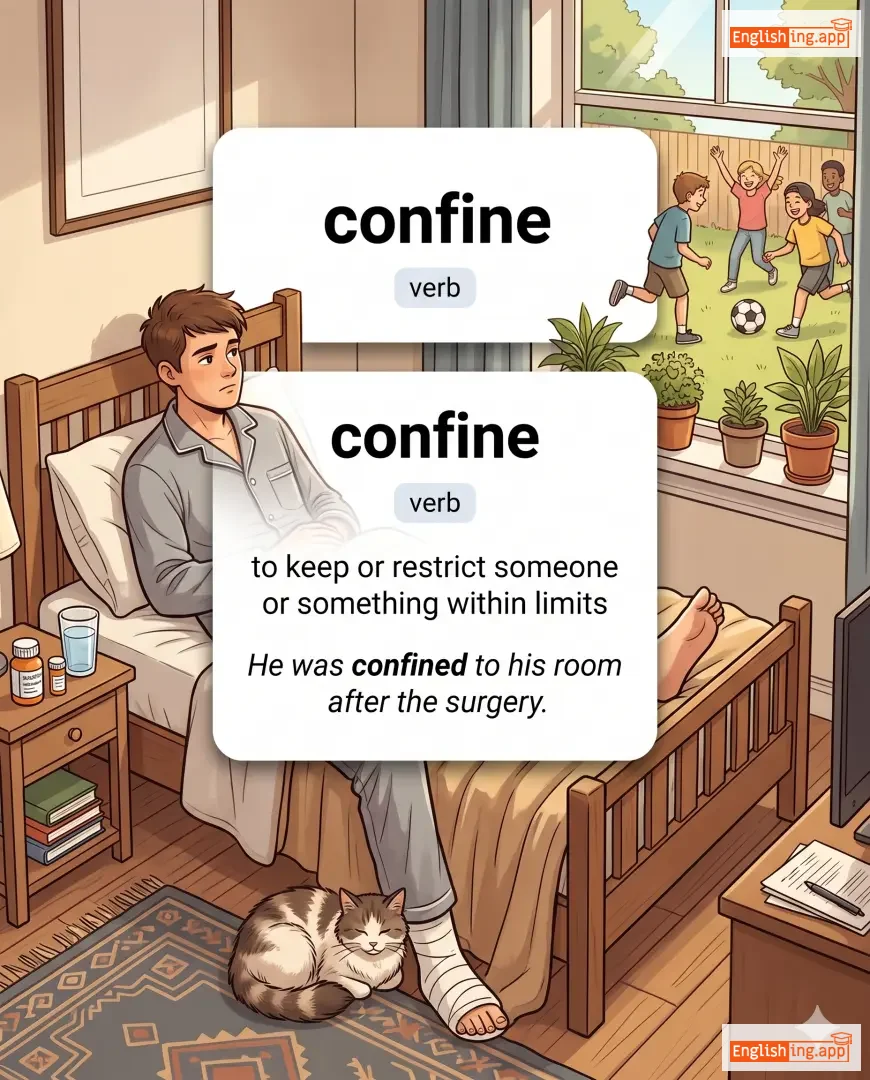
confine definition card — visual illustration of the meaning
verb
/kənˈfaɪn/
閉じ込める (tojimeru)

to keep or restrict someone or something within limits

"He was confined to his room after the surgery."

"彼は手術後、部屋に閉じ込められました。" (Kare wa shujutsu go, heya ni tojimemashita.)
noun
/kənˈfaɪnmənt/
監禁 (kankin)

the state of being confined or restricted

"The prisoner endured years of confinement."

"囚人は何年もの間監禁されていた。" (Shuujin wa nan-nen mo no aida kankin sarete ita.)
verb
/kənˈfɜːrm/
確認する (kakunin suru)

to establish the truth, accuracy, or validity of something

"The hotel will confirm your reservation by email."

"ホテルはメールで予約を確認します。" (Hoteru wa meeru de yoyaku wo kakunin shimasu.)
noun
/kənˌfɜːˈmeɪʃən/
確認 (kakunin)

the action of confirming something or the state of being confirmed

"She received a confirmation email for her appointment."

"彼女は彼女の予約の確認メールを受け取りました。" (Kanojo wa kanojo no yoyaku no kakunin mēru o ukemashita.)
verb
/ˈkɒnfɪskeɪt/

to take something away officially, often as a punishment

"The teacher confiscated the student's phone during class."

noun
/ˌkɒnfləˈɡreɪʃən/
綴り間違い('conflagration'の) (tsuzuri machigai ('conflagration' no))

This is a common misspelling of 'conflagration', which means a large, destructive fire.

"The term 'conflagaration' is often incorrectly used instead of 'conflagration'."

"'Conflagaration'という言葉は、しばしば'conflagration'の代わりに誤って使われます。" ('Conflagaration' to iu kotoba wa, shibashiba 'conflagration' no kawari ni ayamari tsukawaremasu.)
noun
/ˌkɒnfləˈɡreɪʃən/
大規模な破壊的な火災 (daikibo na hakai-tekina kasai)

A large, destructive fire that destroys a great deal of land or property.

"The forest was devastated by a massive conflagration that lasted for days."

"その森は数日間続いた巨大な火災によって壊されました。" (Sono mori wa sūjitsukan tsudzuita kyodaina kasai ni yotte kowasaremashita.)
verb
/kənˈfleɪt/
統合する / 混同する (tōgō suru / kondō suru)

To combine two or more things, often confusingly, into one.

"The article tends to conflate facts with opinions."

"その記事は事実と意見を混同しがちです。" (Sono kiji wa jijitsu to iken o kondō shigachi desu.)
noun
/ˈkɒnflɪkt/
対立 (tairitsu)

A serious disagreement or argument, often a prolonged one.

"The two countries are trying to resolve the conflict through negotiations."

"二国は交渉を通じて対立を解決しようとしています。" (Nikoku wa kōshō o tōjite tairitsu o kaiketsu shiyō to shiteimasu.)
conflict resolution definition card — visual illustration of the meaning
noun
/ˈkɒn.flɪkt ˌrez.əˈluː.ʃən/
紛争解決 (funsō kaiketsu)

The process of finding peaceful solutions to disputes or disagreements between parties.

"Conflict resolution is vital for global peace."
"紛争解決は世界の平和にとって重要です。" (Funsō kaiketsu wa sekai no heiwa ni totte jūyō desu.)
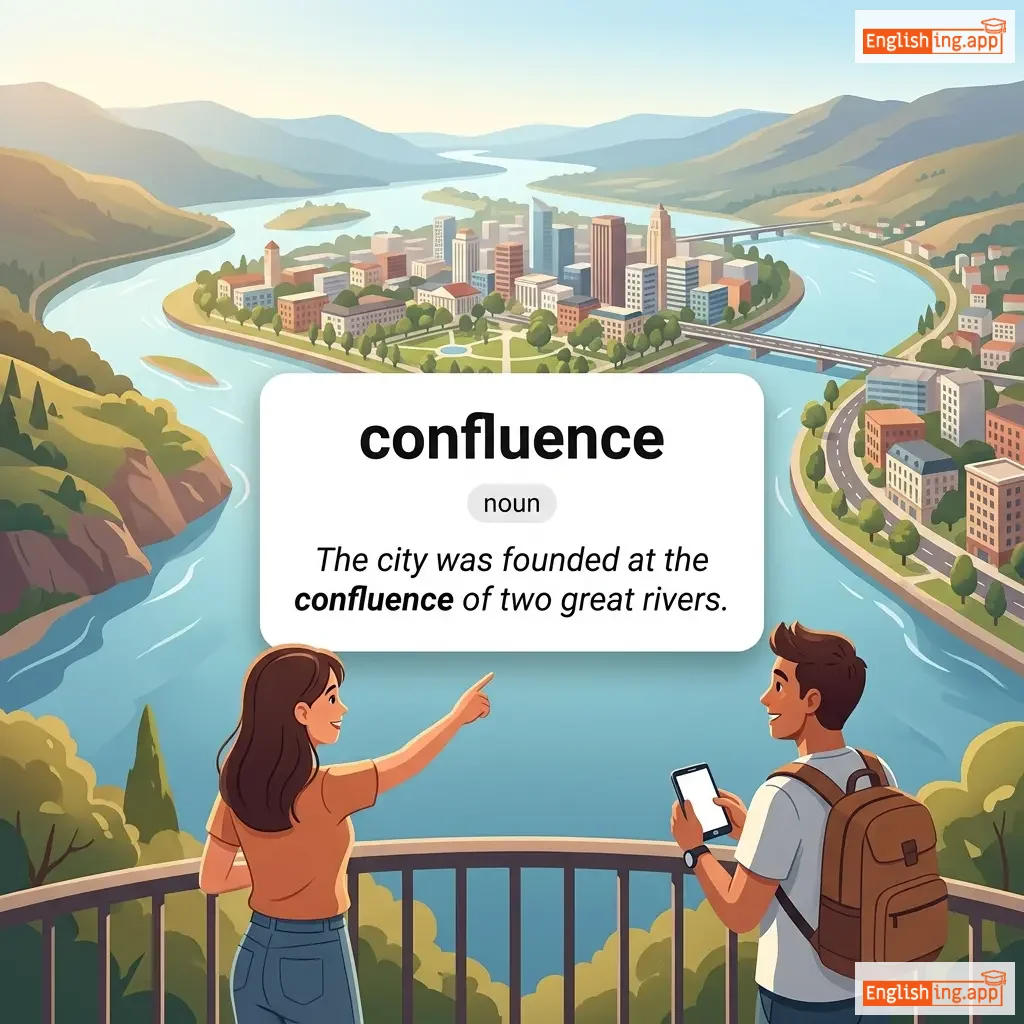
confluence definition card — visual illustration of the meaning
noun
/ˈkɒnfluəns/
合流 (gōryū)

The junction of two rivers; also a situation where people or things come together.

"The city was founded at the confluence of two great rivers."

"この都市は二つの大きな川の合流点に設立されました。" (Kono toshi wa futatsu no ōkina kawa no gōryūten ni setsuritsu saremashita.)
adjective
/ˈkɒnfluənt/
合流 (gōryū)

Flowing together or merging; coming together at one point.

"The confluent streams formed a mighty river."

"合流する小川が力強い川を作った。" (Gōryū suru ogawa ga chikara tsuyoi kawa o tsukutta.)
verb
/kənˈfɔːrm/
従う (shitagau)

To comply with rules, standards, or laws.

"Students must conform to the school regulations."

"学生は学校の規則に従わなければならない。" (Gakusei wa gakkou no kisoku ni shitagawanakereba naranai.)
adjective
/kənˈfɔːrməbl/
適合する (tekigō suru)

Capable of being adapted or consistent with something; compliant.

"His actions were conformable to the rules of the institution."

"彼の行動はその機関の規則に適合していました。" (kare no kōdō wa sono kikān no kisoku ni tekigō shiteimashita.)
noun
/kənˈfɔːrməns/
適合性 (tekigōsei)

The act of conforming to a rule, standard, or law.

"The product was tested for conformance with safety standards."

"製品は安全基準に対する適合性がテストされました。" (Seihin wa anzen kijun ni taisuru tekigōsei ga tesuto saremashita.)
noun
/ˌkɑːnfɔːrˈmeɪʃən/
形態 (keitai)

The shape, structure, or arrangement of something.

"The scientist studied the molecular conformation of the protein."

"科学者はタンパク質の分子構造を研究した。" (Kagakusha wa tanpakushitsu no bunshi kouzou o kenkyū shita.)
noun
/kənˈfɔːrmɪst/
コンフォーミスト (konfōmisuto)

A person who uncritically conforms to established practices or standards.

"She was labeled a conformist for always following the crowd."

"彼女はいつも人々に従っていたため、コンフォーミストとレッテルを貼られた。" (kanojo wa itsumo hitobito ni shitagatte ita tame, konfōmisuto to rettoru o harareta.)
conformity definition card — visual illustration of the meaning
noun
/kənˈfɔːrməti/
適合性 (tekigousei)

Compliance with standards, rules, or laws; behavior in accordance with social norms.

"The students were praised for their conformity to the school regulations."

"生徒たちは学校の規則に従ったことで賞賛されました。" (Seito-tachi wa gakkou no kisoku ni shitagatta koto de shousan saremashita.)
confound definition card — visual illustration of the meaning
verb
/kənˈfaʊnd/

to confuse or surprise someone, often by acting against their expectations

"The magician's trick seemed to confound the entire audience."

verb
/kənˈfrʌnt/
立ち向かう (tachi muka)

to face someone or something directly, especially in a challenge or conflict

"She had to confront her fears before making the speech."

"彼女はスピーチをする前に恐怖と向き合わなければならなかった。" (Kanojo wa supīchi o suru mae ni kyōfu to mukiawanakereba naranakatta.)
noun
/ˌkɒnfrʌnˈteɪʃən/
対立 (tairitsu)

A hostile or argumentative meeting or situation between opposing parties.

"The protest led to a confrontation with the police."

"抗議活動は警察との対立に繋がった。" (Kōgi katsudō wa keisatsu to no tairitsu ni tsunagatta.)
verb
/kənˈfjuːz/
混乱させる (konran saseru)

To make someone unable to think clearly; to bewilder.

"The complex instructions confused the students."

"複雑な指示が学生を混乱させた。" (Fukuzatsu na shiji ga gakusei o konran saseta.)
adjective
/kənˈfjuːzd/
混乱した (konran shita)

unable to think clearly; uncertain or puzzled

"She felt confused by the complicated instructions."

"彼女は複雑な指示に混乱した。" (kanojo wa fukuzatsu na shiji ni konran shita)
adjective
/kənˈfjuːzɪŋ/
紛らわしい (magirawashii)

causing someone to be unable to think clearly or understand; difficult to comprehend

"The instructions were confusing and hard to follow."

"その指示は紛らわしく、従うのが難しかった。" (sono shiji wa magirawashiku shitagau no ga muzukashikatta)
noun
/kənˈfjuːʒən/
混乱 (konran)

a state of being bewildered or unclear in one’s mind

"The sudden change in schedule caused a lot of confusion."

"スケジュールの突然の変更は多くの混乱を引き起こしました。" (Sukējūru no totsuzen no henkō wa ōku no konran o hikiokoshimashita.)
verb
/kənˈdʒiːl/
固まる (katamaru)

to become thick or solid, especially from cooling

"The soup began to congeal after being left on the table."
"スープはテーブルに放置されると固まり始めた。" (Sūpu wa tēburu ni hōchi sareru to katamari hajimeta.)
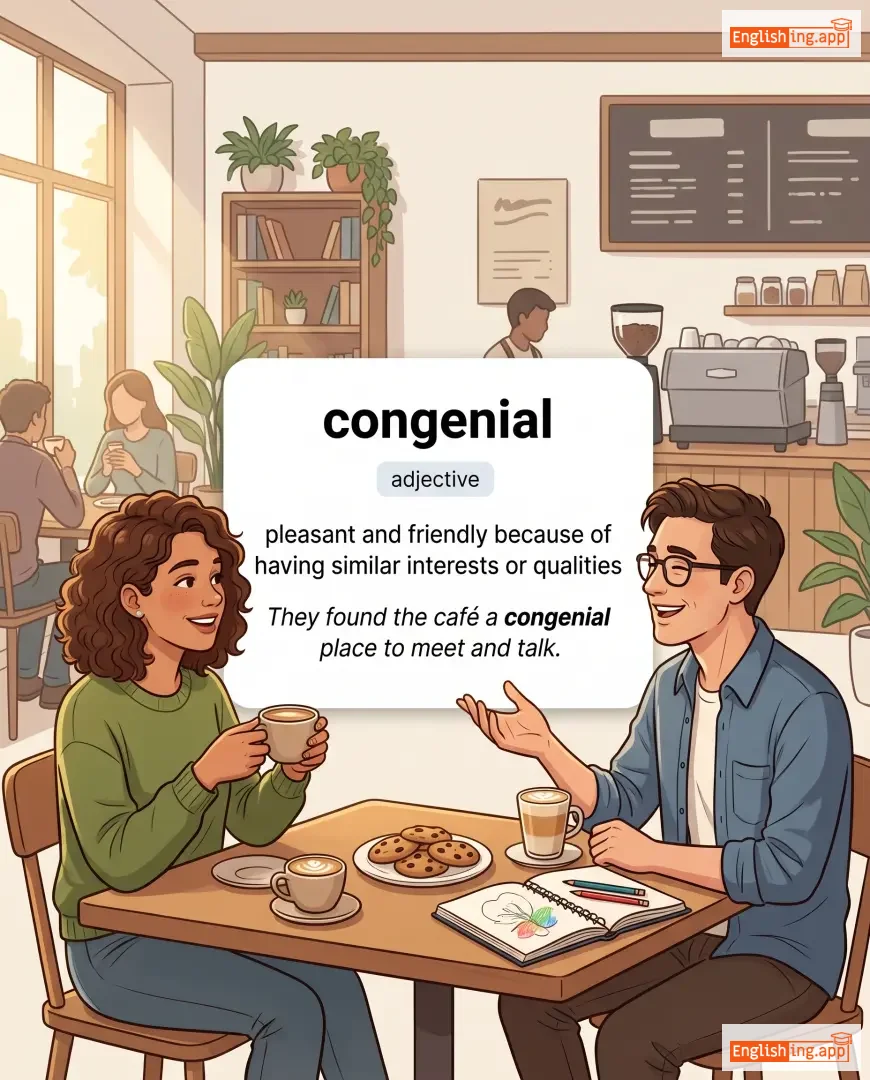
congenial definition card — visual illustration of the meaning
adjective
/kənˈdʒiːniəl/
親しみやすい (shitashimi yasui)

pleasant and friendly because of having similar interests or qualities

"They found the café a congenial place to meet and talk."

"彼らはそのカフェを、会って話すのに適した親しみやすい場所だと感じました。" (Karera wa sono kafe o, atte hanasu no ni tekishita shitashimi yasui basho da to kanjimashita.)
congeniality definition card — visual illustration of the meaning
noun
/kənˌdʒiː.niˈæl.ə.t̬i/
親しみやすさ (shitashimiyasusa)

The quality of being pleasant, friendly, and easy to talk to.

"His congeniality makes him popular among friends."

"彼の親しみやすさは、彼を友人の中で人気者にしています。" (Kare no shitashimiyasusa wa, kare o yūjin no naka de ninki mono ni shiteimasu.)
adjective
/kənˈdʒenɪtl/
先天的 (senten-teki)

existing from birth, usually describing a disease or condition

"The child was born with a congenital heart defect."

"その子供は先天的な心臓疾患を持って生まれました。" (Sono kodomo wa senten-teki na shinzō shikkan o motte umaremashita.)
verb
/kənˈdʒɛst/
混雑 (konzatsu)

To block or overcrowd a space, making movement or flow difficult.

"Heavy traffic can congest the city streets during rush hour."

"渋滞はラッシュアワーに都市の通りを混雑させることができます。" (Jūtai wa rasshu awā ni toshi no tōri o konzatsu saseru koto ga dekimasu.)
adjective
/kənˈdʒɛstɪd/
渋滞 (jūtai)

Blocked up with too much traffic or crowding.

"The road was congested during rush hour."
"ラッシュアワー中、道路は渋滞していました。" (Rasshu awā-chū, dōro wa jūtai shite imashita.)
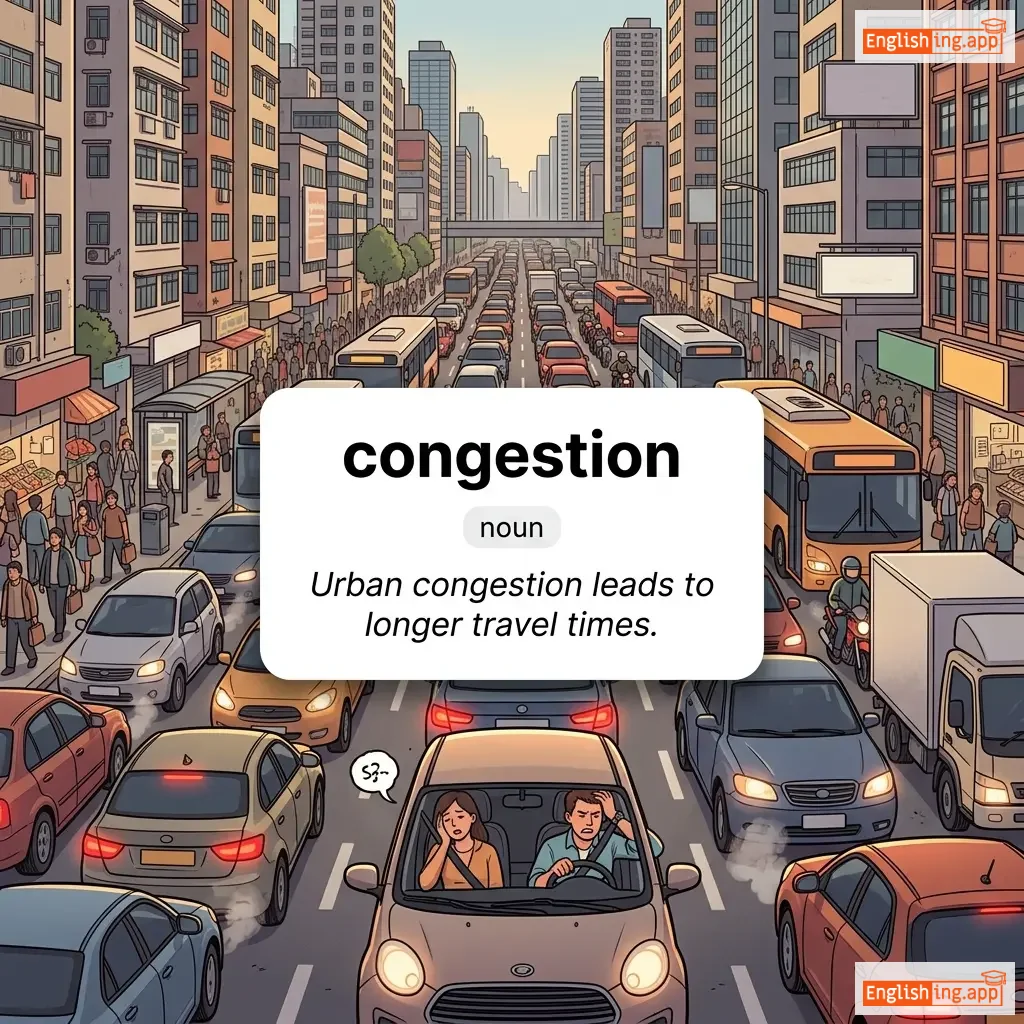
congestion definition card — visual illustration of the meaning
noun
/kənˈdʒes.tʃən/
交通渋滞や過剰な人混み (koutsuu juutai ya kajou na hitogomi)

Traffic jam or overcrowded condition in roads or areas where there is excessive presence of vehicles or people.

"Urban congestion leads to longer travel times."
"都市の渋滞は、長時間の移動時間を引き起こします。" (Toshi no juutai wa, nagajikan no idou jikan wo hikiokoshimasu.)
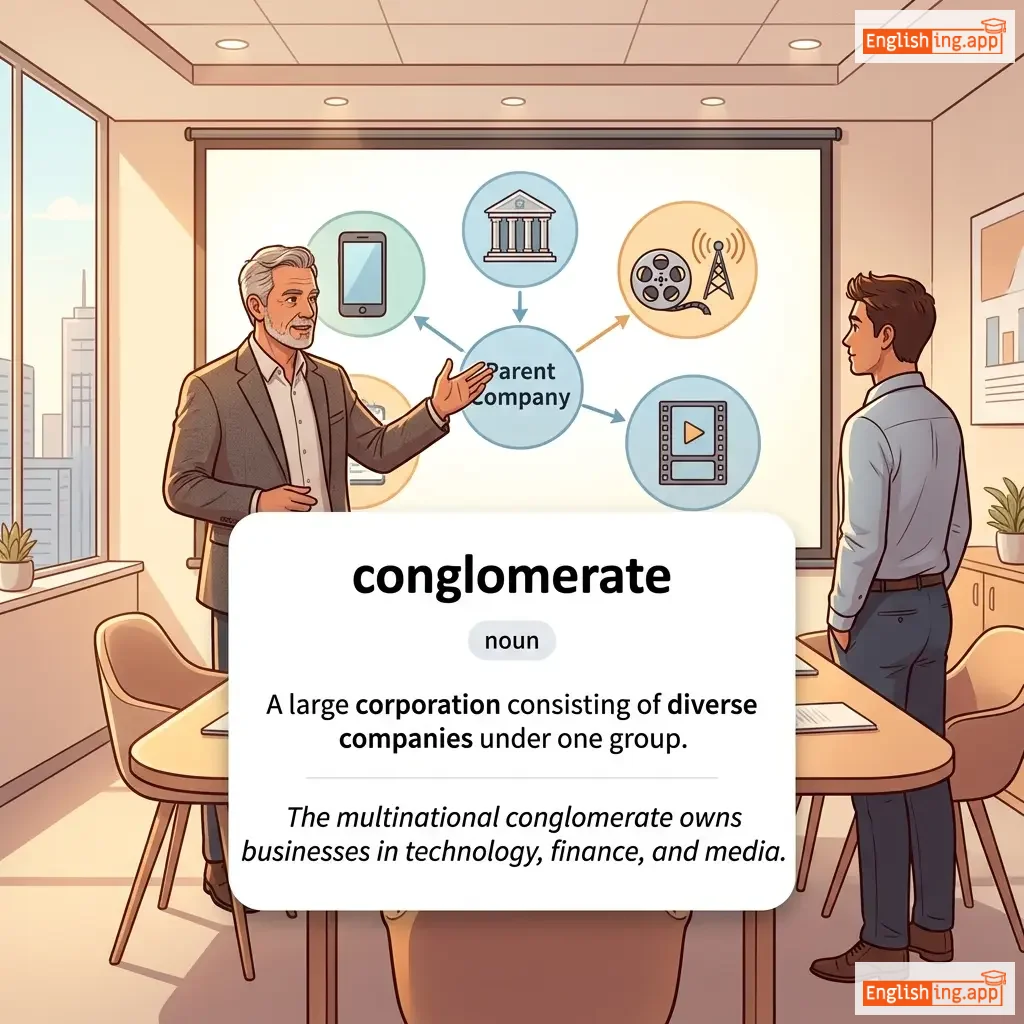
conglomerate definition card — visual illustration of the meaning
noun
/kənˈɡlɒmərət/
さまざまな企業が集まった大企業グループ (samazama na kigyō ga atsumatta daikigyo gurūpu)

A large corporation consisting of diverse companies under one group.

"The multinational conglomerate owns businesses in technology, finance, and media."

"その多国籍コングロマリットは、技術、金融、メディアの分野で事業を展開しています。" (Sono takokuseki kongurōmaritto wa, gijutsu, kin'yū, media no bunya de jigyō o tenkai shiteimasu.)
noun
/kənˌɡlɒməˈreɪʃən/
集合体 (shūgōtai)

A collection or mixture of different things grouped together.

"The market is a conglomeration of small shops and food stalls."

"市場は小さな店と食べ物の屋台の集合体です。" (Ichiba wa chīsana mise to tabemono no yatai no shūgōtai desu.)
verb
/kənˈɡrætʃʊleɪt/
お祝いする (oiwaisuru)

to praise someone for an achievement or for a special occasion

"I want to congratulate you on your promotion."

"私はあなたの昇進を祝いたいです。" (Watashi wa anata no shoushin o iwai tai desu.)
noun
/kənˌɡrætʃəˈleɪʃən/
祝賀 (shukuga)

an expression of praise or joy for someone’s achievement or good fortune

"She sent a congratulation to her friend on winning the award."

"彼女は受賞した友人に祝賀を送った。" (kanojo wa jushou shita yuujin ni shukuga o okutta)
noun
/kənˌɡrætʃ.əˈleɪ.ʃənz/
おめでとう (omedetou)

words expressing praise for an achievement or good wishes on a special occasion

"Congratulations on your promotion! You really deserved this success."
"昇進おめでとう!本当にこの成功に値するよ。" (Shoushin omedetou! Hontou ni kono seikou ni atai suru yo.)
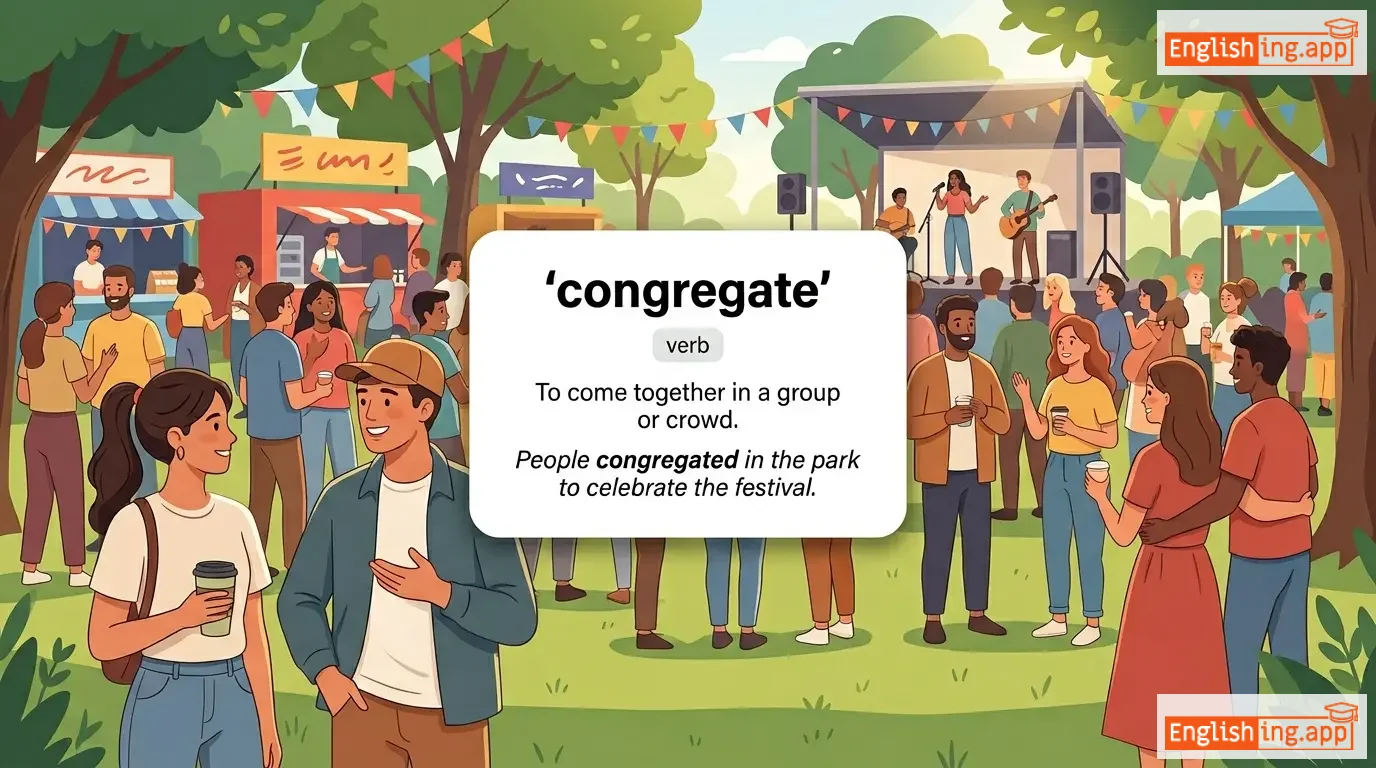
congregate definition card — visual illustration of the meaning
verb
/ˈkɒŋɡrɪˌɡeɪt/
集まる (atsumaru)

To come together in a group or crowd.

"People congregated in the park to celebrate the festival."

"人々は公園でお祭りを祝うために集まりました。" (Hitobito wa kōen de omatsuri o iwau tame ni atsumarimashita.)
noun
/ˌkɒŋɡrɪˈɡeɪʃən/
集会 (shukai)

a group of people assembled for religious worship or a common purpose

"The congregation gathered to hear the sermon."

"集会は説教を聞くために集まりました。" (Shukai wa sekkyou o kiku tame ni atsumarimashita.)
noun
/ˈkɒŋɡrɛs/
会議 (kaigi)

a formal meeting or assembly, especially of representatives for discussion

"The international congress on climate change will be held next year."

"気候変動に関する国際会議は来年開催されます。" (Kikō hendō ni kansuru kokusai kaigi wa rainen kaisai saremasu.)
adjective
/kənˈɡrɛʃənl/
議会の (gikai no)

relating to a congress, especially the US Congress

"The bill received strong congressional support."

"その法案は強力な議会の支持を得た。" (Sono hōan wa kyōryokuna gikai no shiji o eta.)