語彙集

英単語辞書 | 単語の意味、定義、例文

noun
/ˈbuːt.leɪs/
ブーツのひも (buutsu no himo)

a cord or string used to fasten a boot or shoe

"I need to tie my boot-lace before going for a walk."

"散歩に出かける前に、ブーツのひもを結ばなければなりません。" (Sanpo ni dekakeru mae ni, buutsu no himo o musubanakereba narimasen.)
noun
/buːθ/
ブース (bu-su)

a small enclosed space or area used for a specific purpose, such as voting or selling.

"He went into the voting booth to cast his ballot."

"彼は投票ブースに入り、投票をしました。" (Kare wa touhyou bu-su ni hairi, touhyou o shimashita.)
adjective
/ˈbuːtləs/
無駄な (mudana)

Useless or futile; of no benefit.

"His bootless attempt to fix the machine only wasted time."

"機械を修理する彼の無駄な試みは時間を無駄にしただけだった。" (kikai o shuri suru kare no muda na kokoromi wa jikan o muda ni shita dake datta.)
bootstrap definition card — visual illustration of the meaning
verb/noun
ˈbuːt.stræp
外部の資金調達なしで個人資源を使用してビジネスを立ち上げ、発展させる (gaibu no shikin choutatsu nashi de kojin shigen wo shiyou shite bijinesu wo tachiage, hatten saseru)

To start and develop a business using personal resources without external funding.

"He bootstrapped his company with minimal resources."
"彼は最小限のリソースで自分の会社を立ち上げました。" (Kare wa saishōgen no risōsu de jibun no kaisha o tachiagemashita.)
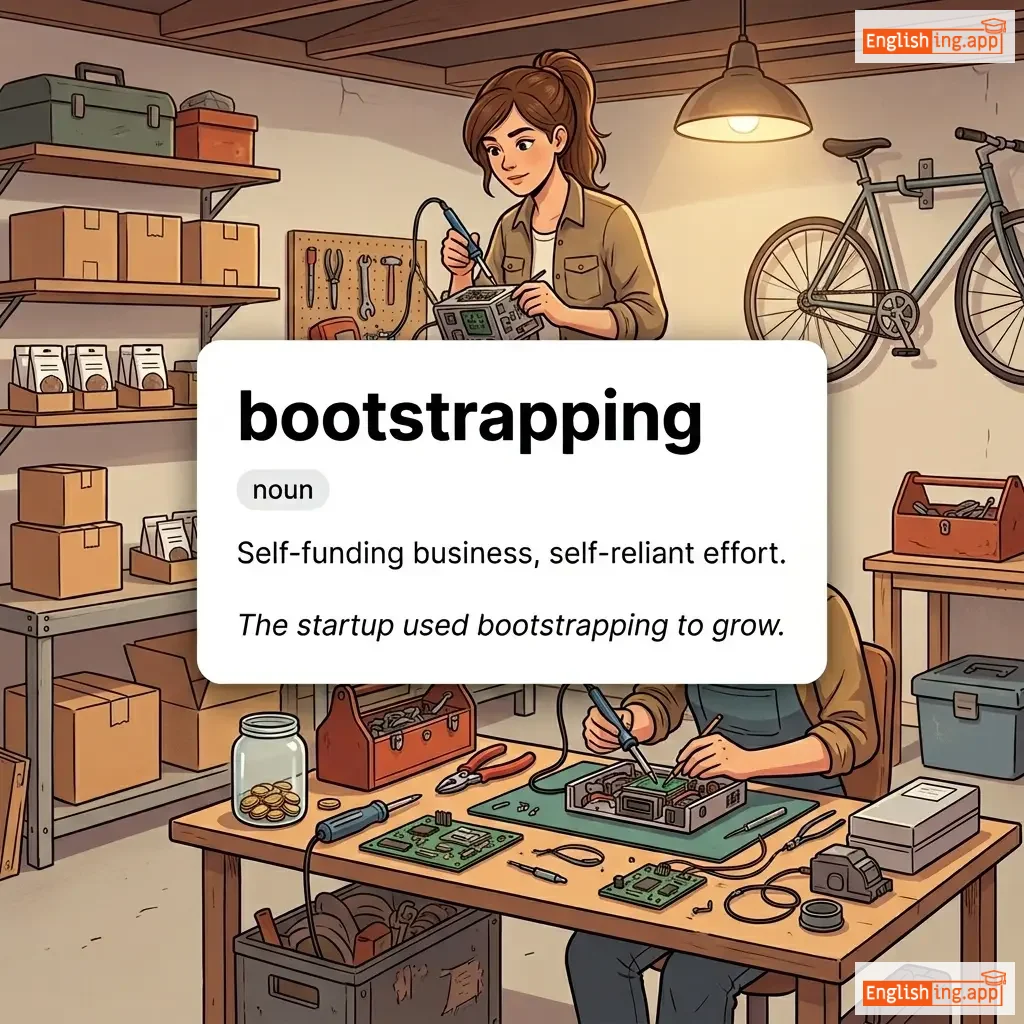
bootstrapping definition card — visual illustration of the meaning
noun
ˈbuːt.stræp.ɪŋ
自己資金調達ビジネス、自己依存の努力 (jiko shikin choutatsu bijinesu, jiko izon no doryoku)

Self-funding business, self-reliant effort.

"The startup used bootstrapping to grow."

"スタートアップはブートストラッピングを利用して成長した。" (Sutātopu wa bootstrapping o riyou shite seichou shita.)
noun, verb
/buːz/
(sake)

alcoholic drink, especially strong liquor; to drink alcohol, often excessively

"They bought some booze for the party."

"彼らはパーティーのために酒を買った。" (karera wa paatii no tame ni sake o katta)
adjective
/ˈbuːzi/
酒気帯びた (shuki obita)

containing or involving a lot of alcohol; slightly drunk from alcohol

"The party became boozy as the night went on."

"夜が更けるにつれて、パーティーは酒気帯びてきた。" (yoru ga fukeru ni tsurete paatii wa shuki obite kita)
noun, verb
/ˈbɔːrdər/
国境 (kokkyou)

A line separating two political or geographical areas.

"Bangladesh shares a long border with India."

"バングラデシュはインドと長い国境を共有しています。" (Banguradeshu wa Indo to nagai kokkyou o kyōyū shiteimasu.)
verb/noun
/bɔːr/
退屈させる (taikutsu saseru)

Verb: To make someone feel uninterested or tired; Noun: A dull or tiresome person.

"The lecture began to bore the students."

"講義は学生を退屈させ始めた。" (Kōgi wa gakusei o taikutsu sasehajimeta.)
adjective
/bɔːrd/
退屈した (taikutsu shita)

feeling weary or uninterested because of lack of activity or excitement

"She felt bored during the long meeting."

"彼女は長い会議の間、退屈していた。" (kanojo wa nagai kaigi no aida taikutsu shite ita)
adjective
/ˈbɔːrɪŋ/
退屈 (taikutsu)

not interesting or exciting; dull.

"The lecture was so boring that several students fell asleep."

"講義は退屈すぎて、何人かの学生が眠ってしまった。" (Kōgi wa taikutsu sugite, nan-nin ka no gakusei ga netotte shimatta.)
verb (past participle of 'bear'), adjective
/bɔːrn/
生まれた (umareta)

To come into life; brought into existence.

"He was born in Dhaka in 1995."

"彼は1995年にダッカで生まれた。" (Kare wa 1995-nen ni Dakkā de umareta.)
noun
/ˈbʌrə, ˈbʊrə/
(ku)

A town, district, or administrative division, especially one with its own local government.

"Brooklyn is a borough of New York City."
"ブルックリンはニューヨーク市の区です。" (Burukkurin wa Nyūyōku-shi no ku desu.)
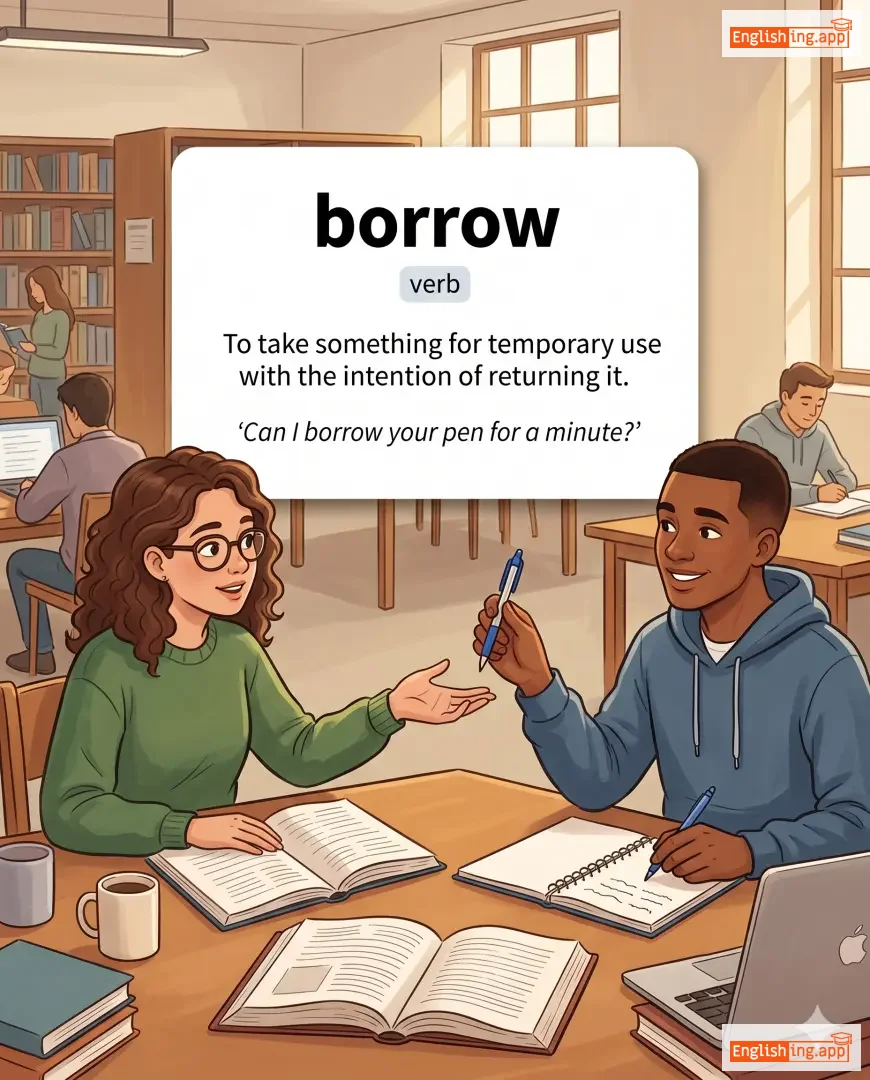
borrow definition card — visual illustration of the meaning
verb
/ˈbɑːroʊ/
借りる (kariru)

To take something for temporary use with the intention of returning it.

"Can I borrow your pen for a minute?"

"一分間、あなたのペンを借りてもいいですか?" (Ippunkan, anata no pen o karitemo ii desu ka?)
noun
/ˈbʊzəm/
(mune)

the human chest, especially a woman’s breast; also used metaphorically to refer to closeness or intimacy

"She kept the secret close to her bosom."

"彼女は秘密を胸にしまっておいた。" (Kanojo wa himitsu o mune ni shimatte oita.)
👨‍💼

boss (ボス)

noun
/bɒs/
ボス (bosu)

a person who is in charge of a worker, group, or organization

"Her boss gave her a new project to complete."

"彼女のボスは彼女に新しいプロジェクトを任せた。" (Kanojo no bosu wa kanojo ni atarashī purojekuto o makaseta.)
adjective
/bəˈtænɪkəl/
植物学的 (shokubutsugakuteki)

relating to plants or plant life

"She works at the botanical garden."

"彼女は植物園で働いています。" (Kanojo wa shokubutsuen de hataraiteimasu.)
verb
/ˈbɒtənaɪz/
植物を研究する (shokubutsu o kenkyuu suru)

to study plants in their natural environment

"They went to the forest to botanize during their vacation."

"彼らは休暇中に森で植物を研究しました。" (Karera wa kyūka-chū ni mori de shokubutsu o kenkyū shimashita.)
noun
/ˈbɒtəni/
植物学 (shokubutsugaku)

the scientific study of plants

"She is studying botany at the university."

"彼女は大学で植物学を学んでいます。" (Kanojo wa daigaku de shokubutsugaku o manandeimasu.)
verb
/bɒtʃ/
失敗する (shippai suru)

to carry out a task badly or carelessly

"He completely botched the repair job."

"彼は修理の仕事を完全に失敗させた。" (Kare wa shūri no shigoto o kanzen ni shippai saseta.)
determiner/pronoun
/boʊθ/
両方 (ryouhou)

referring to two people or things together

"Both of the children were excited about the trip."

"旅行について両方の子供たちは興奮していました。" (Ryokou ni tsuite ryouhou no kodomotachi wa koufun shiteimashita.)
verb
/ˈbɒðər/
邪魔する (jama suru)

to annoy, worry, or cause trouble to someone

"I don't want to bother you while you're working."

"あなたが働いているときに邪魔をしたくありません。" (Anata ga hataraite iru toki ni jama o shitakunai desu.)
noun
/ˈbɒt.əl/
ボトル (botoru)

a container, typically made of glass or plastic, with a narrow neck used to hold liquids

"He poured water into the bottle."

"彼はボトルに水を注いだ。" (Kare wa botoru ni mizu o sosogida.)
adjective
/ˈbɒt.əl ɡriːn/
ボトルグリーン (botoru guriin)

a dark green color similar to that of a green glass bottle

"She wore a beautiful bottle-green dress to the evening party."
"彼女は夜のパーティーに美しいボトルグリーンのドレスを着ていた。" (Kanojo wa yoru no paatii ni utsukushii botoru guriin no doresu o kite ita.)
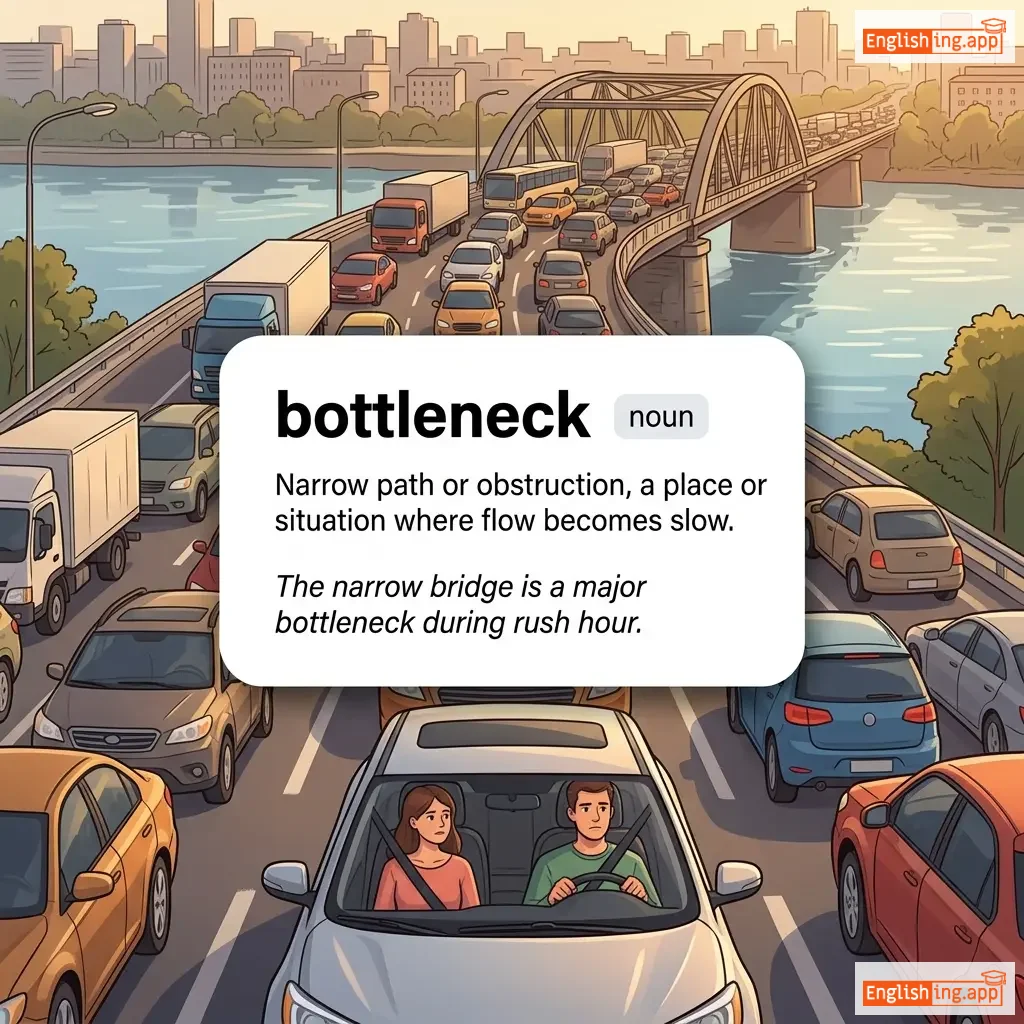
bottleneck definition card — visual illustration of the meaning
noun
/ˈbɒt.əl.nek/
ボトルネック (botorunekku)

Narrow path or obstruction, a place or situation where flow becomes slow.

"The narrow bridge is a major bottleneck during rush hour."

"狭い橋はラッシュアワーの間、主要なボトルネックです。" (Semai hashi wa rasshuawā no aida, shuyō na botorunekku desu.)
noun, adjective
/ˈbɒtəm/
(soko)

The lowest part of something.

"The keys fell to the bottom of the bag."

"鍵はバッグの底に落ちました。" (Kagi wa baggu no soko ni ochimashita.)
noun
/ˌbuː.ɡənˈvɪl.i.ə/
ブーゲンビリア (bugenviriya)

a tropical climbing plant with colorful bracts surrounding small flowers

"The bougainvillea climbing over the garden wall creates a beautiful purple display."

"庭の壁を登るブーゲンビリアが美しい紫色の展示を作り出します。" (Niwa no kabe o noboru būgenbiriya ga utsukushī murasaki-iro no tenji o tsukuri dashimasu.)
noun
/ˈbuː.jɒ̃/
ブイヨン (buion)

A clear, seasoned broth made by simmering meat, fish, or vegetables in water.

"She added vegetables to the bouillon for extra flavor."

"彼女は味を加えるためにブイヨンに野菜を加えました。" (Kanojo wa aji o kuwaeru tame ni buion ni yasai o kuwaemashita.)
verb
/baʊns/
跳ね返る (hane kaeru)

to spring back after hitting something; to rebound.

"The ball bounced off the wall and hit the window."

"ボールは壁に当たって跳ね返り、窓に当たりました。" (Bōru wa kabe ni atatte hane kaeri, mado ni atarimashita.)
verb, noun, adjective
/baʊnd/
制限された / 縛られた (seigen sareta / shibarareta)

To move with large strides or jumps; also refers to being tied, limited, or certain.

"The dog bounded across the field with joy."
"犬は喜んでフィールドを跳ねました。" (Inu wa yorokonde fiirudo o hanemashita.)
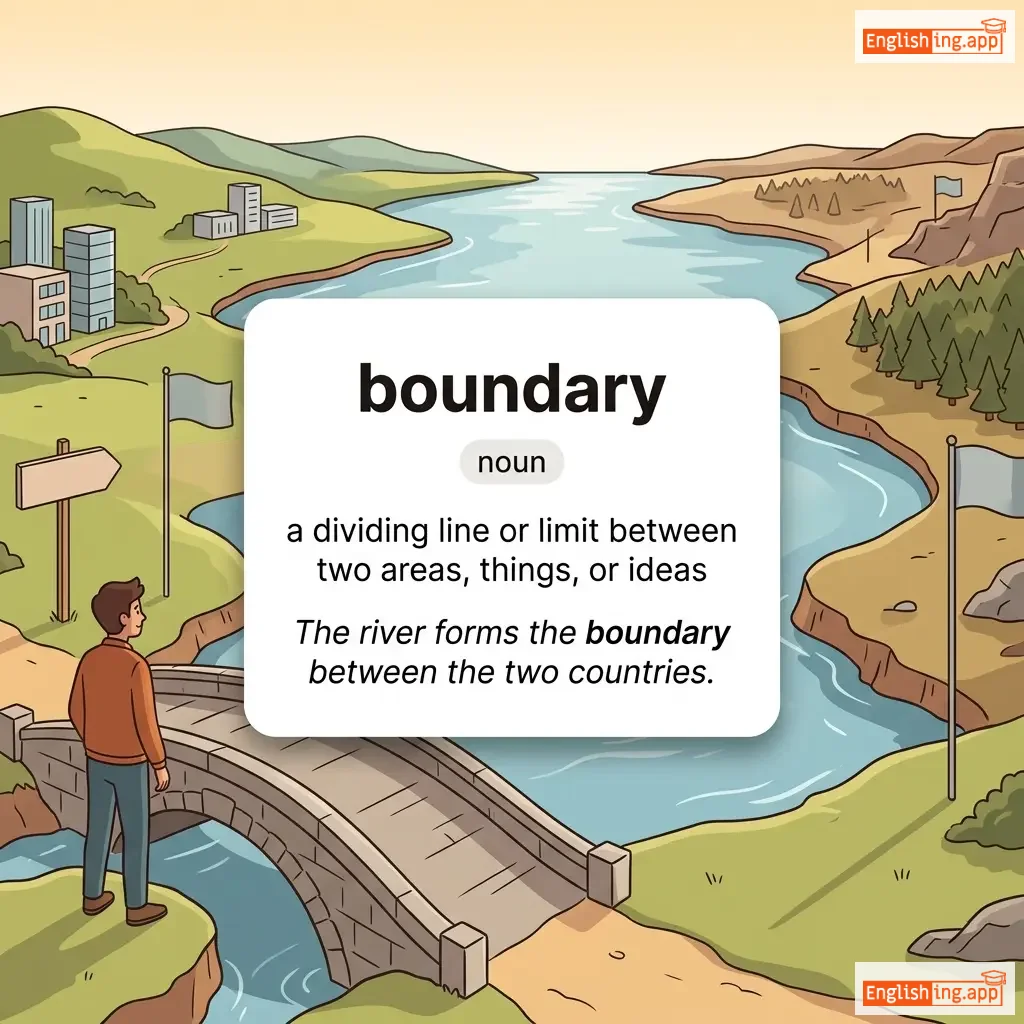
boundary definition card — visual illustration of the meaning
noun
/ˈbaʊn.dri/
境界 (kyoukai)

a dividing line or limit between two areas, things, or ideas

"The river forms the boundary between the two countries."

"その川は二つの国の境界を形成しています。" (Sono kawa wa futatsu no kuni no kyoukai o keisei shiteimasu.)
adjective
/ˈbaʊn.tɪ.fəl/
豊富な / 寛大な (hōfu na / kandaina)

Large in quantity; abundant; generous in giving.

"The farmer was grateful for the bountiful harvest."

"農家は豊富な収穫に感謝していた。" (Nōka wa hōfu na shūkaku ni kansha shite ita.)
noun
/buˈkeɪ/
花束 (hanataba)

A bunch of flowers arranged together, often given as a gift or decoration.

"He gave her a bouquet of roses on her birthday."

"彼は彼女の誕生日にバラの花束を贈った。" (Kare wa kanojo no tanjōbi ni bara no hanataba o okutta.)
adjective, noun
/ˈbʊrʒ.wɑː/
ブルジョア (burujioa)

Relating to the middle class, often with materialistic values or conventional attitudes.

"The novel criticizes the bourgeois lifestyle of the city dwellers."

"その小説は都市住民のブルジョア生活様式を批判している。" (Sono shōsetsu wa toshi jūmin no burujioa seikatsu yōshiki o hihan shite iru.)
noun
/baʊt/
激しい活動の短い期間や、特にスポーツや病気での競争 (hageshī katsudō no mijikai kikan ya, toku ni supōtsu ya byōki de no kyōsō)

a short period of intense activity or a contest, especially in sports or illness

"He had a severe bout of flu last winter."

"彼は昨年の冬にひどいインフルエンザにかかりました。" (Kare wa sakunen no fuyu ni hidoi infuruenza ni kakarimashita.)
noun
/buːˈtiːk/
ブティックショップ (butikku shoppu)

a small shop that sells fashionable clothes or accessories

"She bought a beautiful dress from a boutique downtown."
"彼女はダウンタウンのブティックショップで美しいドレスを買いました。" (Kanojo wa daun taun no butikku shoppu de utsukushii doresu wo kaimashita.)
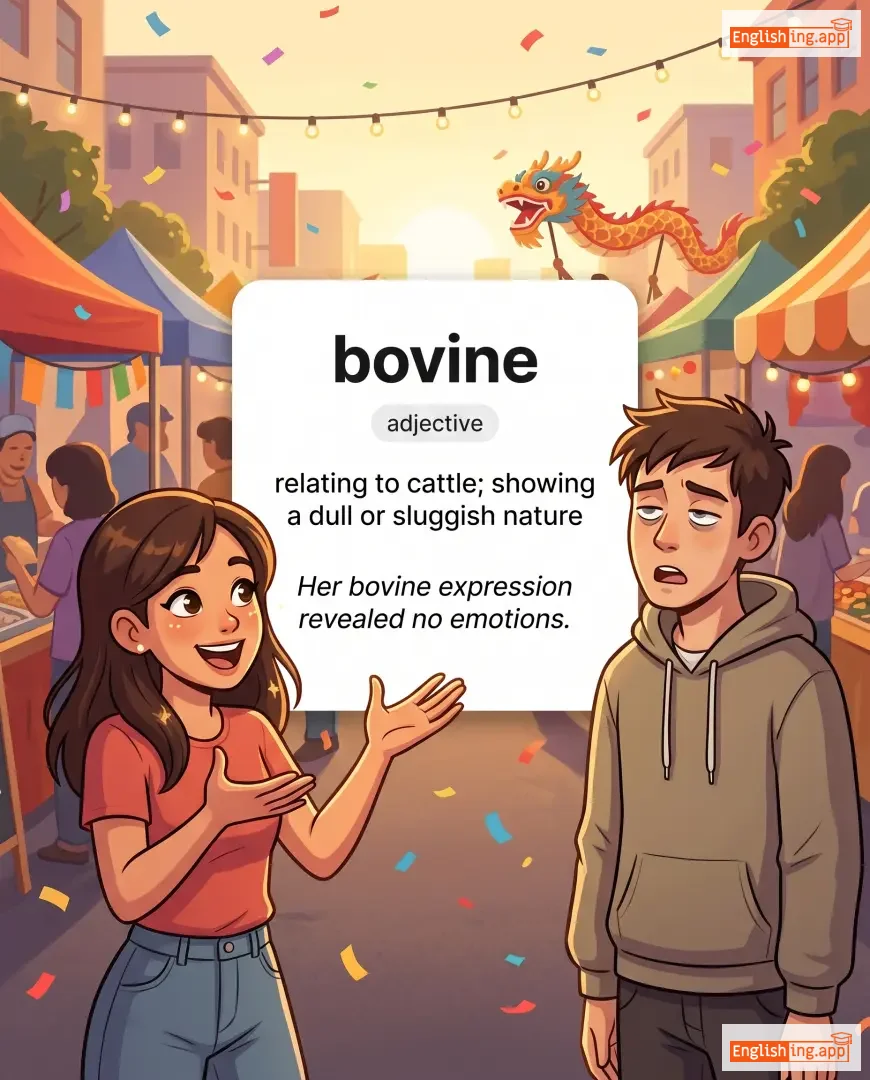
bovine definition card — visual illustration of the meaning
adjective
/ˈboʊvaɪn/
牛に関連する (ushi ni kanren suru)

relating to cattle; showing a dull or sluggish nature

"Her bovine expression revealed no emotions."

"彼女のボバインな表情は感情を示すことはなかった。" (Kanojo no bobain na hyoujou wa kanjou o shimesu koto wa nakatta.)
verb
/baʊ/ (verb), /boʊ/ (noun)
お辞儀 (ojigi)

to bend the upper part of the body forward as a sign of respect or greeting.

"The performer bowed deeply after the show."

"パフォーマーはショーの後に深くお辞儀をしました。" (Pafōmā wa shō no ato ni fukaku ojigi o shimashita.)
verb
/ˈbaʊdləˌraɪz/
不適切な部分を削除する (futekisetsuna bubun o sakujo suru)

to remove or modify parts of a text considered offensive or inappropriate

"The editor bowdlerized the novel to make it suitable for children."

"編集者はその小説を子供向けに適したものにするために修正した。" (Henshū-sha wa sono shōsetsu o kodomomuke ni tekisetsu na mono ni suru tame ni shūsei shita.)
noun
/boʊl/
ボウル (booru)

a round, deep dish used for holding food or liquids

"She poured the soup into a large bowl."

"彼女はスープを大きなボウルに注ぎました。" (Kanojo wa suupu o ookina booru ni sosogimashita.)
noun
/ˈboʊlər/
ボウラー (bowuraa)

a person who delivers the ball in cricket; also a type of hard felt hat with a rounded crown

"The bowler took three wickets in the first over."

"ボウラーは最初のオーバーで3つのウィケットを取った。" (Bowuraa wa saisho no oobaa de mittsu no uiketto o totta.)
noun
/bɑːks/
(hako)

a container with flat sides, typically square or rectangular, used for storing things

"He packed his clothes in a cardboard box."

"彼は服を段ボール箱に詰めました。" (Kare wa fuku o danbōru hako ni tsumemashita.)
noun
/ˈbɒksər/
ボクサー; ボクサーパンツ; ボクサー犬 (bokusa; bokusa pantsu; bokusa inu)

a person who fights in the sport of boxing; a type of short loose-fitting underwear; a breed of medium-to-large dog

"The boxer trained hard every morning before the championship match."

"そのボクサーはチャンピオンシップの前に毎朝厳しく練習した。" (sono bokusa wa chanpionshippu no mae ni mai asa kibishiku renshuu shita)
noun; gerund
/ˈbɒksɪŋ/
ボクシング (bokushingu)

the sport of fighting with fists using padded gloves; the act of putting something into a box

"He has been training hard for a professional boxing match."
"彼はプロのボクシングの試合に向けて厳しく練習している。" (kare wa puro no bokushingu no shiai ni mukete kibishiku renshuu shite iru)
noun
/bɔɪ/
男の子 (otokonoko)

a male child or young male person

"The boy ran across the playground."

"その男の子は遊び場を走り回った。" (Sono otokonoko wa asobiba o hashirimatta.)
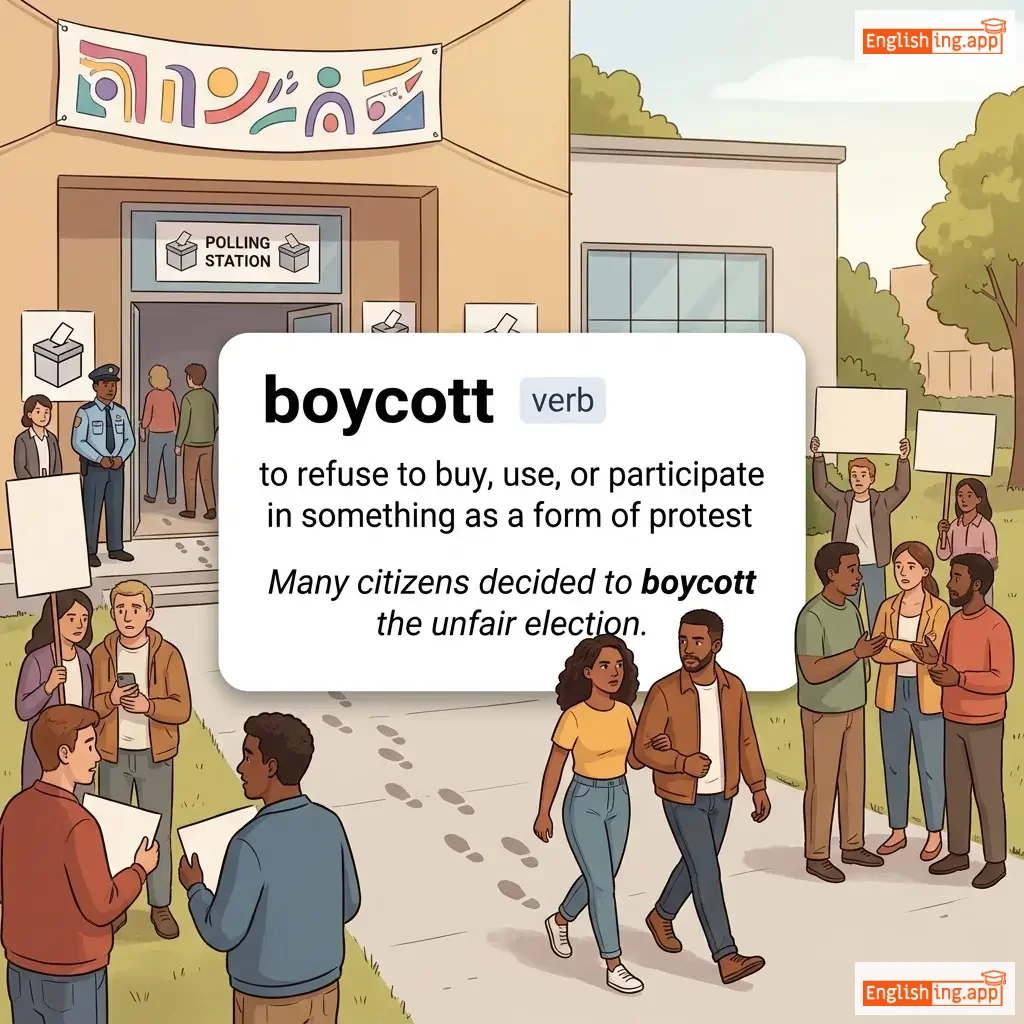
boycott definition card — visual illustration of the meaning
verb
/ˈbɔɪkɒt/
ボイコットする (boikotto suru)

to refuse to buy, use, or participate in something as a form of protest

"Many citizens decided to boycott the unfair election."

"多くの市民が不公正な選挙をボイコットすることを決定しました。" (ooku no shimin ga fukousei na senkyo o boikotto suru koto o kettei shimashita.)
👨‍❤️‍👩

boyfriend

noun
/ˈbɔɪˌfrɛnd/

a man or boy that someone is having a romantic or close relationship with

"She introduced her boyfriend to her parents."

noun
/brɑː/
ブラジャー (burajaa)

a woman's undergarment worn to support and cover the breasts

"She bought a comfortable bra for everyday wear."

"彼女は普段使いのために快適なブラジャーを買った。" (kanojo wa fudanzukai no tame ni kaiteki na burajaa o katta)
noun; verb
/breɪs/
装具;備える (sogu; sonaeru)

a device that supports or strengthens something; to prepare mentally or physically for something difficult

"She braced herself for the strong wind."

"彼女は強い風に備えた。" (kanojo wa tsuyoi kaze ni sonaeta)
noun
/ˈbreɪs.lət/
ブレスレット (buresuretto)

an ornamental band worn around the wrist

"She received a gold bracelet as a birthday gift."

"彼女は誕生日のプレゼントとして金のブレスレットをもらった。" (Kanojo wa tanjōbi no purezento to shite kin no buresuretto o moratta.)