語彙集

英単語辞書 | 単語の意味、定義、例文

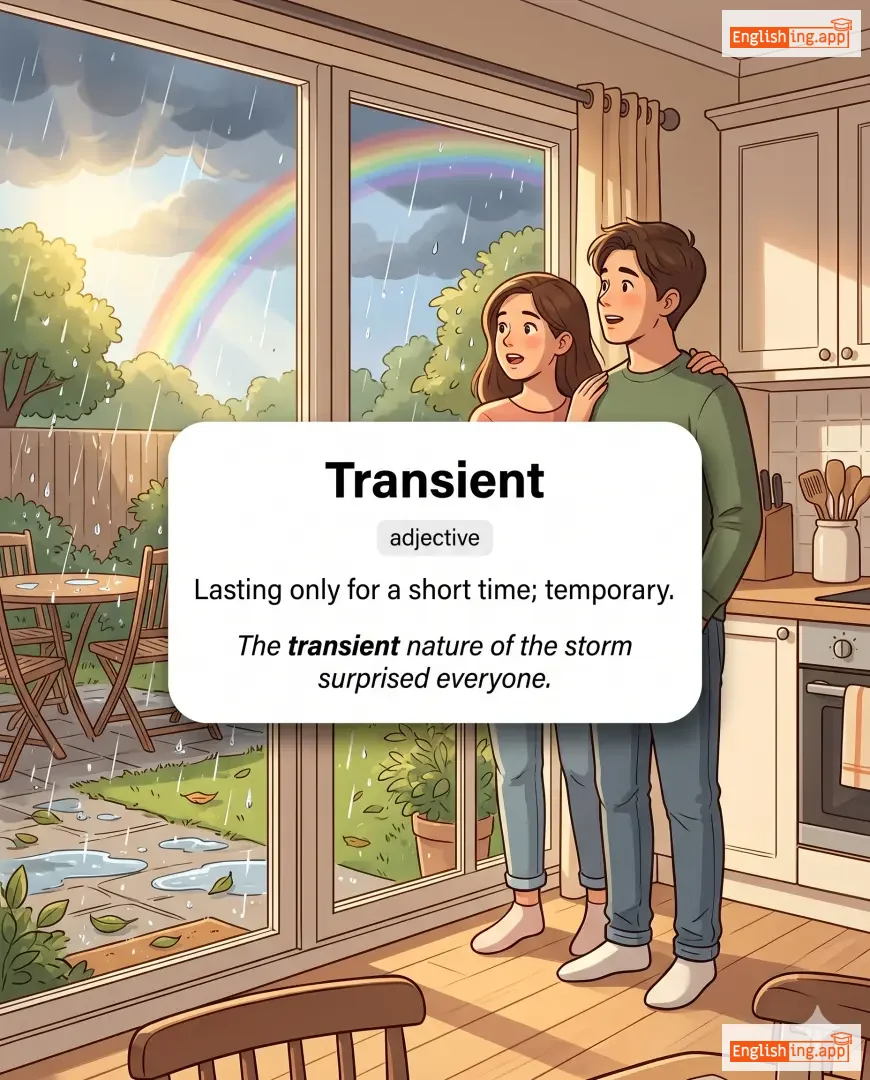
Transient definition card — visual illustration of the meaning
adjective
/ˈtrænziənt/
一時的 (ichijiteki)

Lasting only for a short time; temporary.

"The transient nature of the storm surprised everyone."
"嵐の一時的な性質は皆を驚かせました。" (Arashi no ichijiteki na seishitsu wa mina o odorokasemashita.)
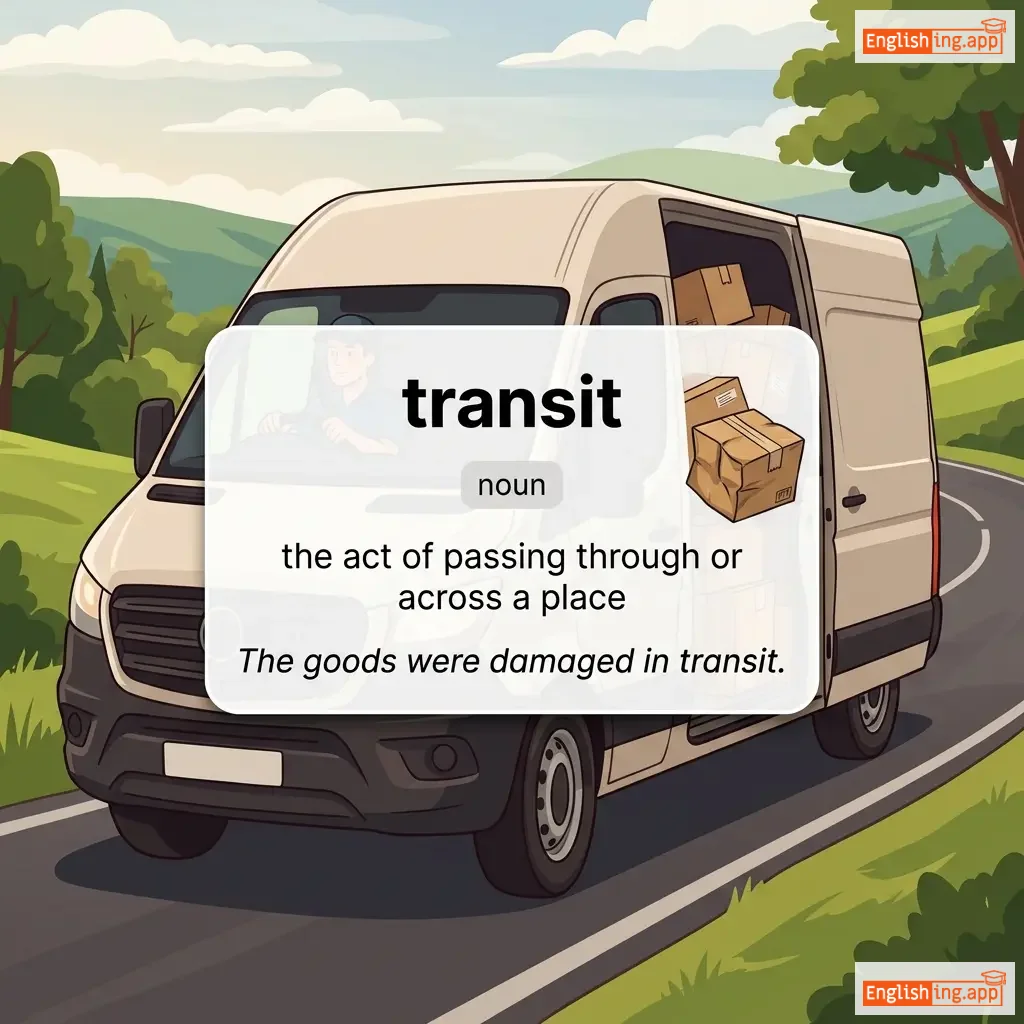
transit definition card — visual illustration of the meaning
noun
/ˈtrænzɪt/
輸送 (yusou)

the act of passing through or across a place

"The goods were damaged in transit."
"商品は輸送中に損傷しました。" (shouhin wa yusou-chuu ni sonshou shimashita.)
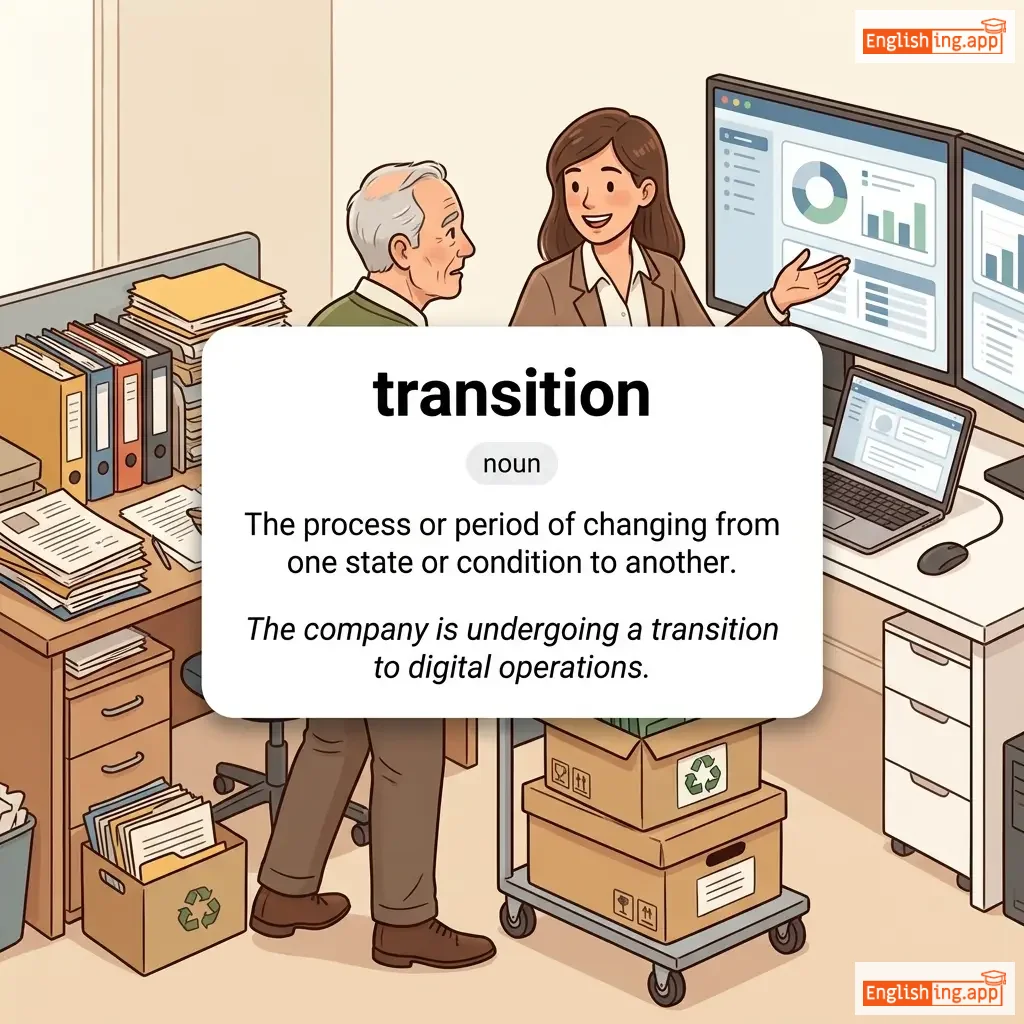
transition definition card — visual illustration of the meaning
noun
/trænˈzɪʃən/
移行 (ikou)

The process or period of changing from one state or condition to another.

"The company is undergoing a transition to digital operations."
"その会社はデジタル運営への移行を進めています。" (Sono kaisha wa dejitaru un'ei e no ikou wo susumeteimasu.)
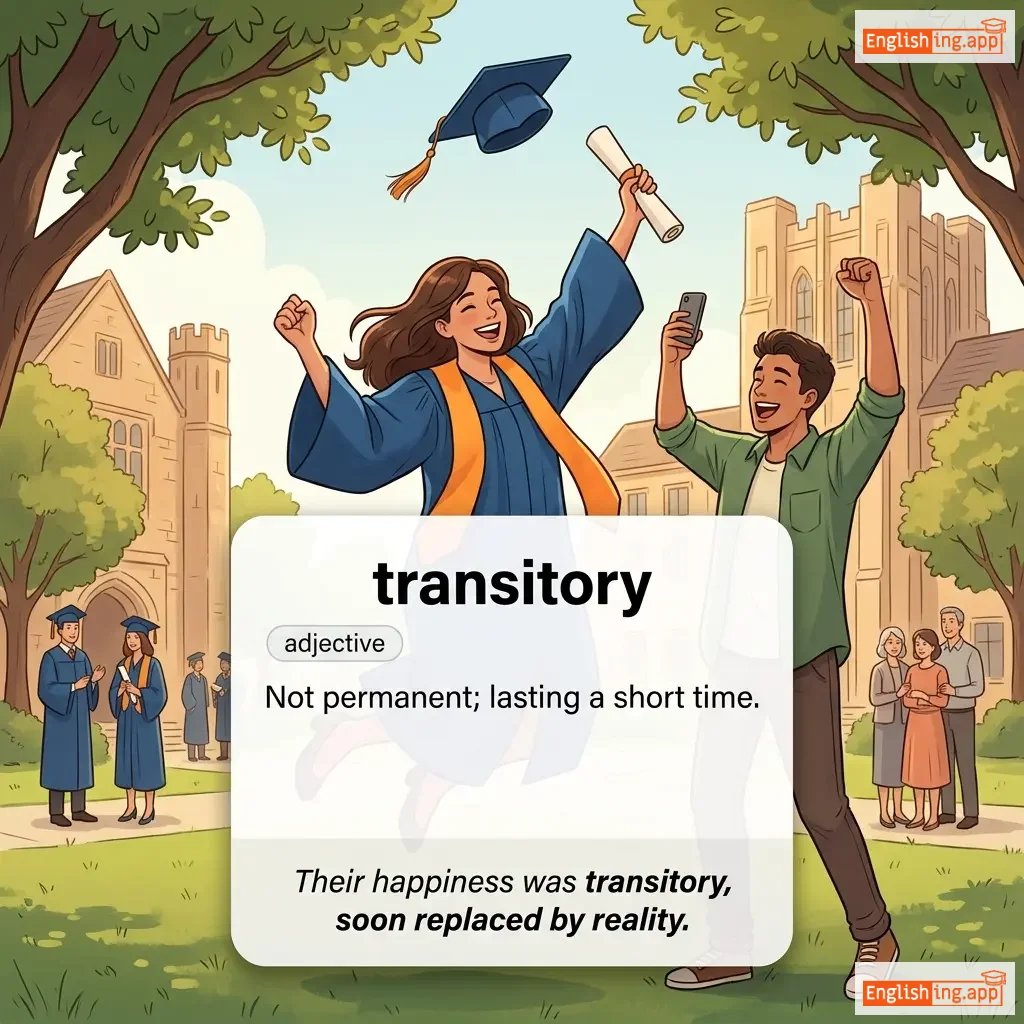
transitory definition card — visual illustration of the meaning
adjective
/ˈtrænzɪtɔːri/
儚い (hakanai)

Not permanent; lasting a short time.

"Their happiness was transitory, soon replaced by reality."

"彼らの幸せは儚く、すぐに現実に取って代わられました。" (Karera no shiawase wa hakanaku, sugu ni genjitsu ni totte kawararemashita.)
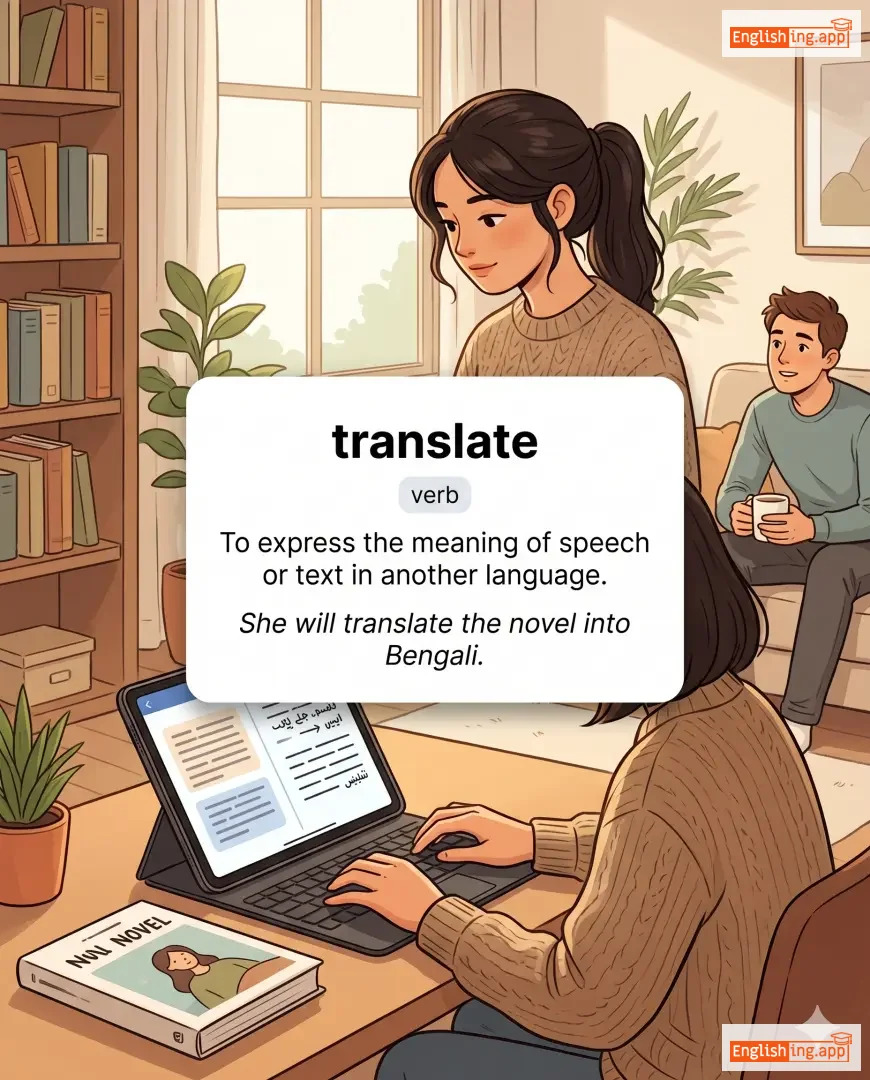
translate definition card — visual illustration of the meaning
verb
/trænsˈleɪt/

To express the meaning of speech or text in another language.

"She will translate the novel into Bengali."

noun
/trænzˈleɪʃən/
翻訳 (hon'yaku)

the process of converting text or speech from one language into another

"She completed the translation of the book within two months."

"彼女は2ヶ月でその本の翻訳を終えました。" (Kanojo wa 2 kagetsu de sono hon no hon'yaku o oemashita.)
noun
/trænzˈleɪtər/
翻訳者 (honyakusha)

a person or tool that converts words or text from one language into another

"The translator helped the tourists understand the guide."

"翻訳者は観光客がガイドを理解するのを助けました。" (Honyakusha wa kankōkyaku ga gaido o rikai suru no o tasukemashita.)
noun
/trænsˈluːsəns/
半透明性 (hantoumeisei)

the quality of allowing light to pass through but not detailed shapes

"The translucence of the curtains filled the room with soft light."
"カーテンの半透明性は部屋を柔らかい光で満たしました。" (Kaaten no hantoumeisei wa heya o yawarakai hikari de mitashimashita.)
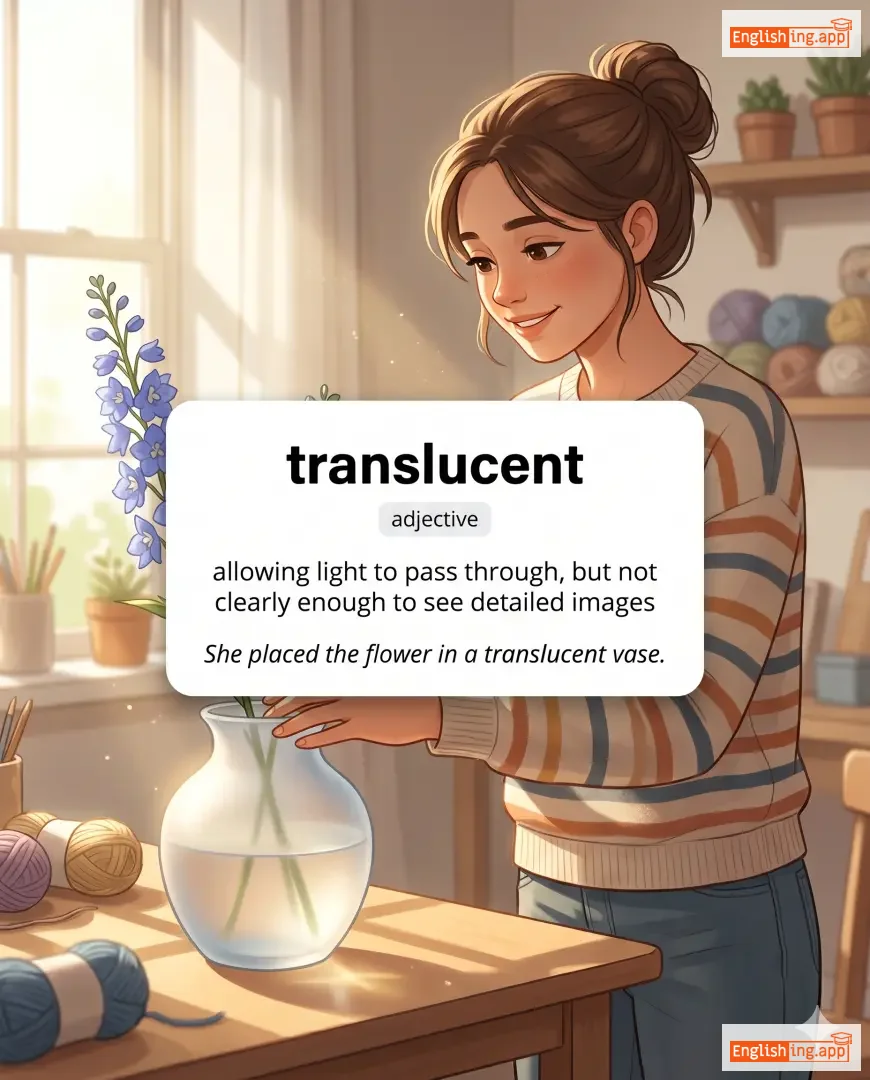
translucent definition card — visual illustration of the meaning
adjective
/trænsˈluːsənt/
半透明 (hantoumei)

allowing light to pass through, but not clearly enough to see detailed images

"She placed the flower in a translucent vase."

"彼女は花を半透明の花瓶に入れた。" (Kanojo wa hana o hantōmei no kabin ni iretā.)
adjective
/trænzˈmɪsəbl/
感染性 (kansensei)

able to be passed or spread from one person or thing to another

"COVID-19 is a highly transmissible disease."

"COVID-19 は非常に感染しやすい病気です。" (COVID-19 wa hijou ni kansenshiyasui byouki desu.)
noun
/trænzˈmɪʃən/
伝送, 送信 (densou, soushin)

the act of sending, passing, or spreading something such as information, energy, or disease

"The transmission of data over the internet is very fast."

"インターネット上でのデータの伝送は非常に速い。" (Inta-netto jou de no deeta no densou wa hijou ni hayai.)
verb
/trænzˈmɪt/
送信する (sōshin suru)

to send or pass something from one place or person to another

"The antenna can transmit signals over a long distance."

"アンテナは長距離にわたって信号を送信することができます。" (Antena wa chōkyori ni watatte shingō o sōshin suru koto ga dekimasu.)
verb
/trænzˈmjuːt/
変換する (henkan suru)

to change in form, nature, or substance

"Alchemy aimed to transmute lead into gold."

"錬金術は鉛を金に変えることを目指していた。" (Renkinjutsu wa namari o kin ni kaeru koto o mezashite ita.)
transparency definition card — visual illustration of the meaning
noun
/trænsˈpærənsi/
透明性 (toumeisei)

the quality of being open and honest; the condition of being easily understood or seen through

"The company is known for its transparency in business practices."

"その会社は、ビジネス慣行における透明性で知られています。" (Sono kaisha wa, bijinesu kankou ni okeru toumeisei de shirareteimasu.)
adjective
/trænsˈpɛrənt/
透明 (tōmei)

allowing light to pass through so that objects behind can be clearly seen

"The glass is transparent enough to see through."
"ガラスは十分透明で、それを通して見ることができます。" (Garasu wa jūbun tōmei de, sore o tōshite miru koto ga dekimasu.)
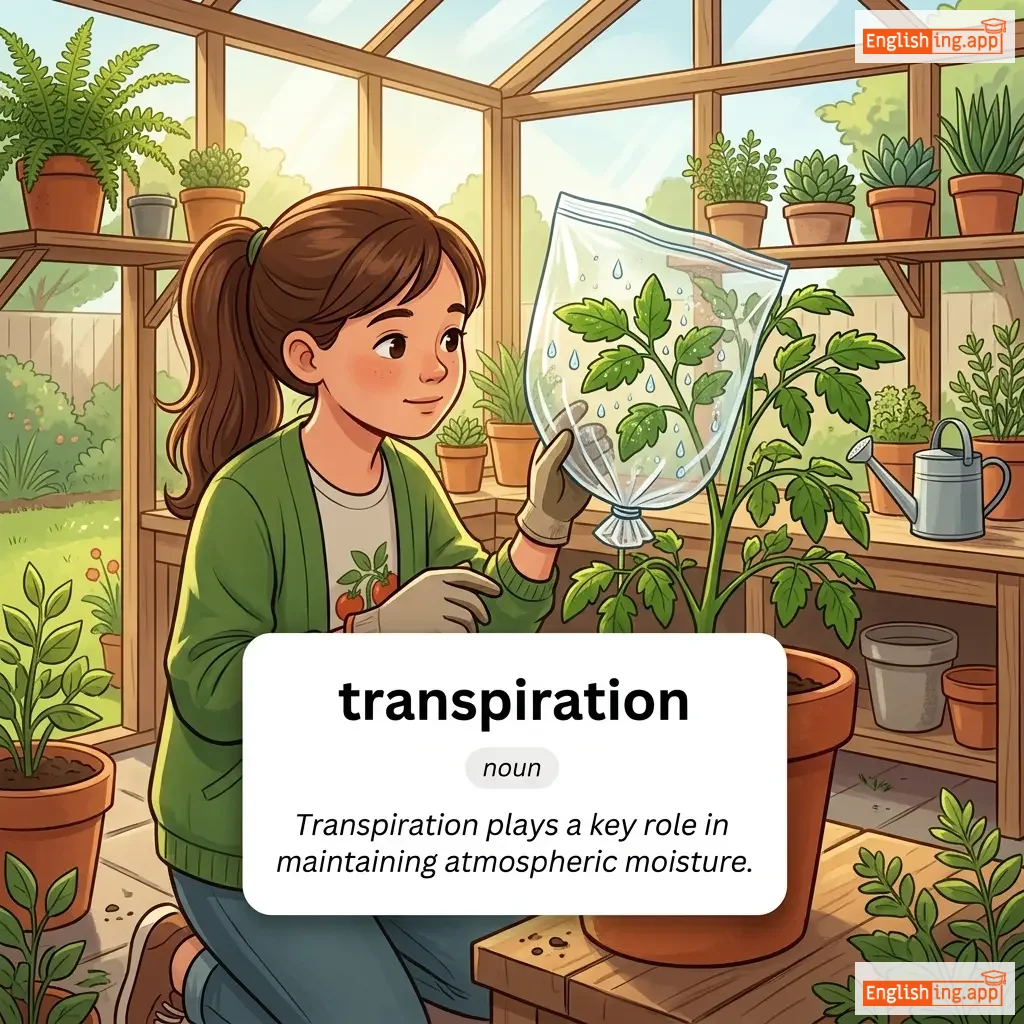
transpiration definition card — visual illustration of the meaning
noun
ˌtræn.spɪˈreɪ.ʃən
蒸散 (jousan)

The process by which moisture is carried through plants from roots to small pores on the underside of leaves, where it changes to vapor and is released to the atmosphere.

"Transpiration plays a key role in maintaining atmospheric moisture."

"蒸散は大気中の湿気を維持するための重要な役割を果たします。" (Jousan wa taiki-chū no shikke o iji suru tame no jūyōna yakuwari o hatashimasu.)
verb
/trænˈspaɪər/
発生する (hassuru)

to occur, happen, or become known

"It transpired that he had lied about his age."

"彼が年齢について嘘をついていたことが明らかになった。" (Kare ga nenrei ni tsuite uso o tsuiteita koto ga akiraka ni natta.)
verb
/ˈtrænsplænt/
移植する (ishoku suru)

to move something, especially a plant or organ, from one place to another

"The doctors transplanted a kidney into the patient."
"医師たちは患者に腎臓を移植しました。" (Ishitachi wa kanja ni jinzō o ishoku shimashita.)
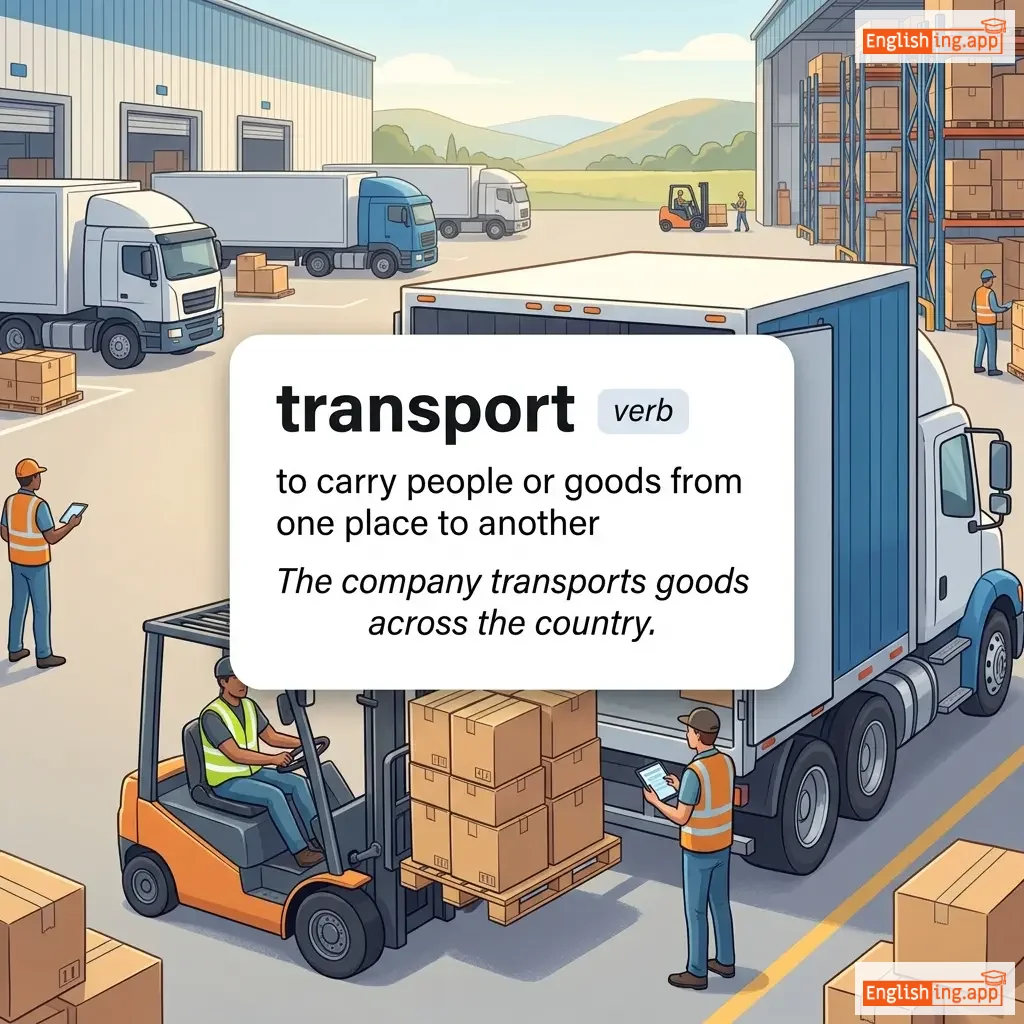
transport definition card — visual illustration of the meaning
verb
/ˈtrænspɔːrt/
輸送 (yusou)

to carry people or goods from one place to another

"The company transports goods across the country."
"その会社は国全体で商品を輸送しています。" (Sono kaisha wa kuni zentai de shouhin wo yusou shiteimasu.)
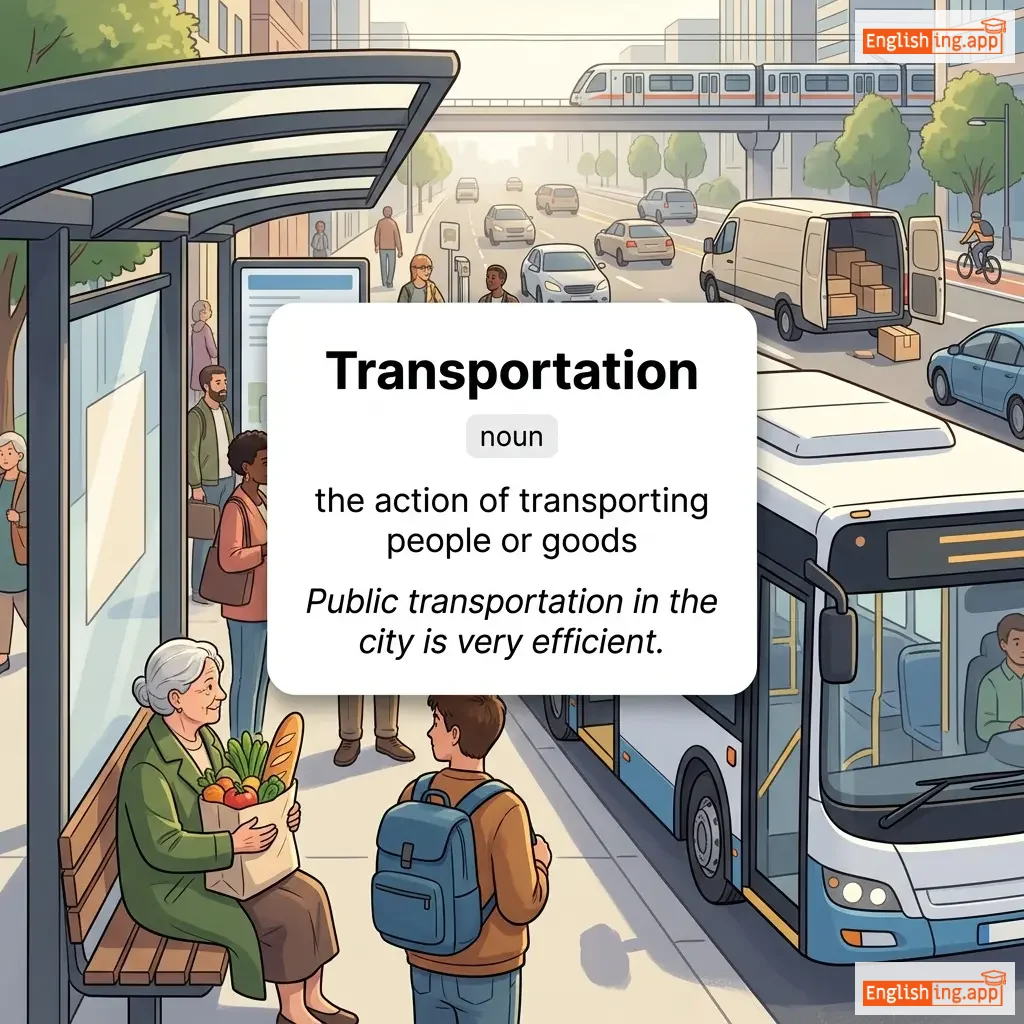
Transportation definition card — visual illustration of the meaning
noun
/ˌtræns.pɔːˈteɪ.ʃən/
輸送 (yusou)

the action of transporting people or goods

"Public transportation in the city is very efficient."

"都市の公共交通機関は非常に効率的です。" (Toshi no koukyou koutsu kikan wa hijou ni kouritsuteki desu.)
verb
/trænˈspoʊz/
転置する (tenchi suru)

to change the order or position of something

"The editor transposed two paragraphs in the article."

"編集者は記事で二つの段落を転置しました。" (Henshūsha wa kiji de futatsu no danraku o tenchi shimashita.)
noun
/ˌtrænspəˈzɪʃən/
転置 (tenchi)

the act of changing the order or position of something

"The transposition of digits caused an error in the calculation."

"数字の転置が計算ミスを引き起こした。" (Sūji no tenchi ga keisan misu o hikiokoshita.)
adjective
/ˈtrænzvɜːrs/
横断的 (oudanteki)

situated or lying across something

"The transverse road connects two highways."

"横断的な道路は二つの高速道路を繋いでいます。" (Oudanteki na douro wa futatsu no kousoku douro o tsunaideimasu.)
verb
/træp/
罠にかける (wana ni kakeru)

to catch or hold something or someone so they cannot escape

"The fox was trapped in a cage."

"狐は檻に閉じ込められていた。" (Kitsune wa ori ni tojikomere rarete ita.)
noun
/ˈtræpɪŋz/
外見 (gaiken)

the outward signs, features, or objects associated with a role, event, or status

"The king appeared with all the trappings of royalty."

"王はすべての王族の外見とともに現れました。" (Ou wa subete no ouzoku no gaiken to tomo ni arawaremashita.)
🗑️

Trash

noun
/træʃ/

waste material; things that are no longer useful or wanted

"Please take out the trash before you go to bed."

noun
/ˈtrɔːmə/
トラウマ (torauma)

a deeply distressing or disturbing experience; physical injury or emotional shock

"The accident left her with lasting emotional trauma."

"その事故は彼女に永続的な感情的トラウマを残した。" (Sono jiko wa kanojo ni eizoku-teki na kanjō-teki torauma o nokoshita.)
adjective
/trɔːˈmætɪk/
衝撃的 (shougeki-teki)

Deeply distressing or disturbing, often related to emotional or physical injury.

"The accident was a traumatic experience for the entire family."

"その事故は家族全員にとって衝撃的な体験でした。" (Sono jiko wa kazoku zen'in ni totte shougeki-teki na taiken deshita.)
travail definition card — visual illustration of the meaning
noun
/trəˈveɪl/
過酷な努力 (kakoku na doryoku)

Painful or laborious effort; suffering or hardship.

"After years of travail, she finally completed her degree."

"長年の過酷な努力の末、彼女はついに学位を取得した。" (Naganen no kakoku na doryoku no sue, kanojo wa tsuini gakui wo shutoku shita.)
verb
/ˈtrævəl/
旅行 (ryokou)

to make a journey, typically to a distant or unfamiliar place

"I love to travel around the world and explore new cultures."
"私は世界中を旅行し、新しい文化を探求するのが好きです。" (Watashi wa sekaijuu o ryokou shi, atarashii bunka o tankyuu suru no ga suki desu.)
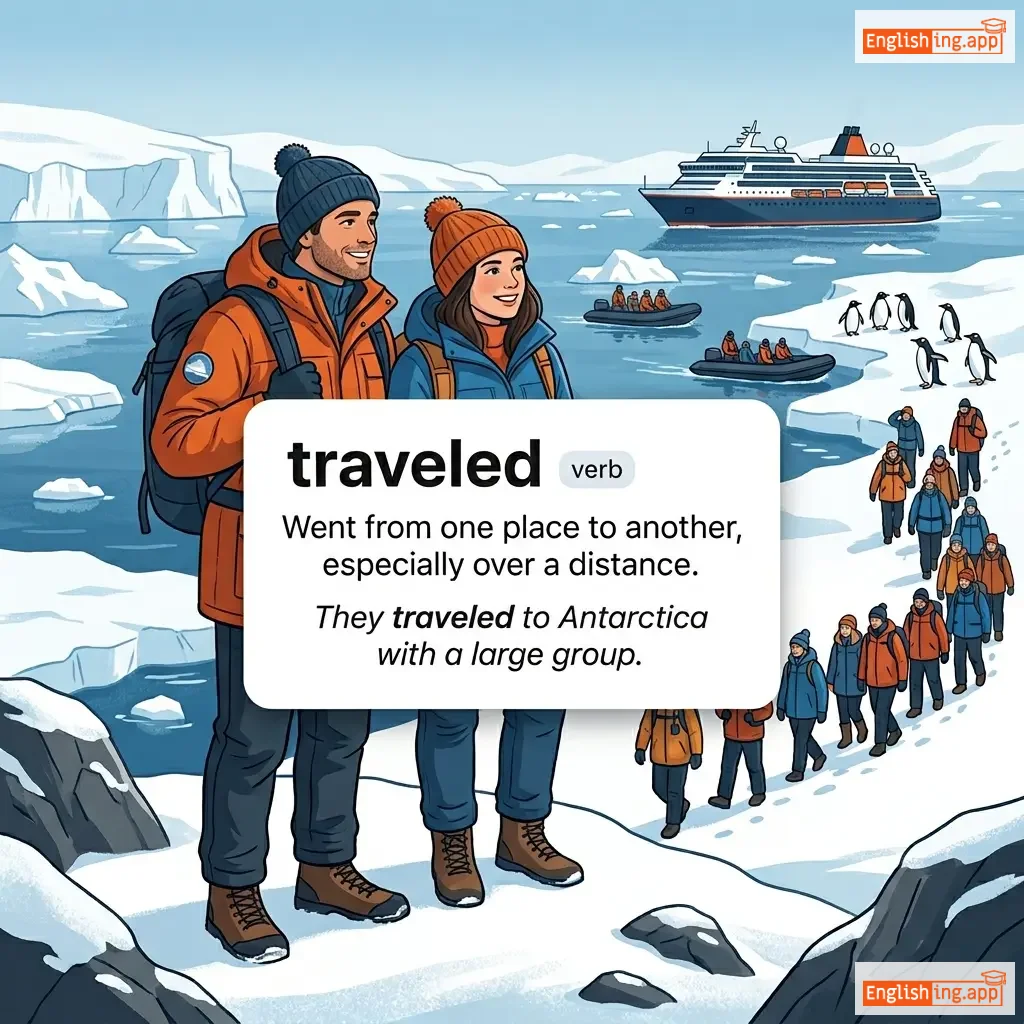
traveled definition card — visual illustration of the meaning
verb
/ˈtrævəld/
旅行する (ryokō suru)

Went from one place to another, especially over a distance.

"They traveled to Antarctica with a large group."

"彼らは大きなグループと一緒に南極大陸へ旅行しました。" (Karera wa ōkina gurūpu to issho ni nankyoku tairiku e ryokō shimashita.)
noun
/ˈtrævələr/
旅行者 (ryokōsha)

a person who is traveling or who often travels

"The traveler rested at a small inn after a long journey."

"旅行者は長い旅の後、小さな宿屋で休憩しました。" (Ryokōsha wa nagai tabi no ato, chiisana yadoya de kyūkei shimashita.)
noun
/ˈtrævələr/
旅行者 (ryokousha)

A person who is on a journey or frequently travels to different places.

"The traveller set out early in the morning to explore new lands."

"旅行者は新しい土地を探検するために朝早く出発した。" (Ryokousha wa atarashii tochi o tanken suru tame ni asa hayaku shuppatsu shita.)
verb
/trəˈvɜːrs/
横断する (oudansuru)

To travel across or through something.

"They traversed the desert on camels."

"彼らはラクダで砂漠を横断した。" (Karera wa rakuda de sabaku o ōdanshita.)
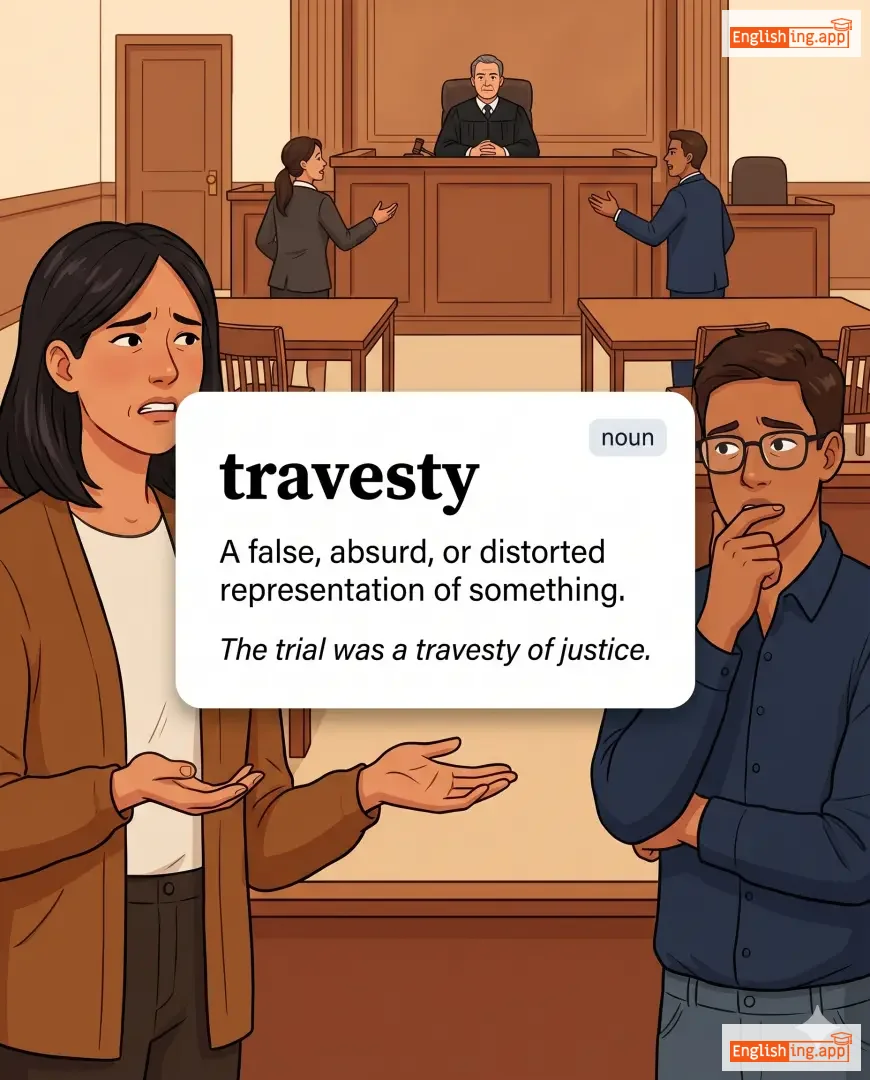
travesty definition card — visual illustration of the meaning
noun
/ˈtrævɪsti/

A false, absurd, or distorted representation of something.

"The trial was a travesty of justice."

noun
/treɪ/
トレイ (torei)

a flat, shallow container used for carrying or holding items

"She brought the tea cups on a silver tray."

"彼女は銀のトレイでティーカップを運びました。" (Kanojo wa gin no torei de tī kappu o hakobimashita.)
adjective
/ˈtrɛtʃərəs/
裏切りの (uragiri no)

Dangerously unstable or deceptive; likely to betray trust.

"The treacherous road made driving difficult."

"裏切りの道路は運転を難しくしました。" (Uragiri no dōro wa unten o muzukashiku shimashita.)
noun
/ˈtrɛtʃəri/
裏切り (uragiri)

Betrayal of trust; deceptive action or nature.

"His treachery was revealed when he sided with the enemy."

"彼の裏切りは、敵側についていることが明らかになった時に明らかになった。" (Kare no uragiri wa, teki-gawa ni tsuiteiru koto ga akiraka ni natta toki ni akiraka ni natta.)
noun
/ˈtriːkəl/
濃厚で甘いシロップ (nōkō de amai shiroppu)

A thick, sweet syrup; excessively sentimental speech or writing.

"She poured treacle over the pancakes."

"彼女はパンケーキにシロップをかけた。" (Kanojo wa pankēki ni shiroppu o kaketa.)
adjective
/ˈtriːkli/
過度に甘いまたは感傷的、蜜のような。 (Kadoni amai mata wa kanshōteki, mitsu no yō na.)

Excessively sweet or sentimental, like treacle.

"The movie was too treacly for my taste."

"その映画は私の味覚には甘すぎました。" (Sono eiga wa watashi no mikaku ni wa amasugimashita.)
verb
/trɛd/
歩く (aruku)

To walk on or along something.

"Be careful not to tread on the flowers."

"花を踏まないように気をつけて。" (Hana o fumanai yō ni ki o tsukete.)
noun
/ˈtriːzən/
裏切り罪 (uragiri zai)

the crime of betraying one's country, especially by attempting to kill or overthrow the sovereign or government

"He was accused of treason against the state."

"彼は国家に対する反逆罪で告発されました。" (Kare wa kokka ni taisuru hangyakuzai de kokuhatsu saremashita.)
adjective
/ˈtriːzənəbl/
反逆的 (hangyakuteki)

Relating to or involving the crime of treason.

"The general was accused of treasonable conduct."

"将軍は反逆的な行為で告発されました。" (Shōgun wa hangyakuteki na kōi de kokuhatsu saremashita.)
noun, verb
/ˈtrɛʒər/
宝物 (takaramono)

a collection of valuable things such as gold, jewels, or anything of great worth; to value something highly

"She kept the necklace as a family treasure."

"彼女はそのネックレスを家族の宝物として大切にしていました。" (Kanojo wa sono nekkuresu o kazoku no takaramono toshite taisetsu ni shite imashita.)
noun
/ˈtrɛʒərər/
財務担当者 (zaimu tantousha)

a person responsible for managing the financial affairs of an organization

"The treasurer presented the annual financial report."

"財務担当者は年次の財務報告書を提出しました。" (Zaimu tantousha wa nenji no zaimu houkokusho o teishutsu shimashita.)
verb
/triːt/
治療する (chiryo suru)

to behave toward someone or something in a particular way

"The doctor treated me with great care during my recovery."

"医者は回復中に私を非常に慎重に治療しました。" (Isha wa kaifuku-chu ni watashi o hijō ni shinchō ni chiryō shimashita.)
treatise definition card — visual illustration of the meaning
noun
/ˈtriːtɪs/
論文 (ronbun)

a formal and systematic written work dealing with a subject in detail

"He wrote a treatise on modern economic theory."

"彼は現代経済理論に関する論文を書いた。" (Kare wa gendai keizai riron ni kansuru ronbun wo kaita.)
noun
/ˈtriːtmənt/
治療 (chiryou)

the action or manner of treating someone or something

"She received excellent treatment at the hospital."

"彼女は病院で優れた治療を受けました。" (Kanojo wa byouin de sugureta chiryou o ukemashita.)
noun
/ˈtriːti/
条約 (jouyaku)

a formally concluded and ratified agreement between states

"The two countries signed a peace treaty."

"二国は平和条約に署名した。" (Nikoku wa heiwa jouyaku ni shomei shita.)
adjective, noun, verb
/ˈtrɛbəl/
トリプル、高い音 (toripuru, takai on)

triple; consisting of three parts; high-pitched sound in music

"The company's profits trebled in just two years."

"会社の利益は2年で3倍になった。" (Kaisha no rieki wa 2-nen de 3-bai ni natta.)