語彙集

英単語辞書 | 単語の意味、定義、例文

noun
/ˈsʌn.deɪ/
日曜日 (nichiyoubi)

The day of the week between Saturday and Monday; often considered a day of rest or worship.

"We usually relax at home on Sunday."

"私たちは通常、日曜日は家でゆっくりします。" (Watashitachi wa tsuujou, nichiyoubi wa ie de yukkuri shimasu.)
verb
/ˈsʌn.dər/
引き裂く (hikisaku)

To split apart or separate, especially with force.

"The war sundered families and friends."

"戦争は家族と友人を引き裂きました。" (Sensou wa kazoku to yuujin o hikisakimashita.)
noun
/ˈsʌnˌdaʊn/
日没 (nichibotsu)

the time in the evening when the sun goes below the horizon

"We planned to reach the village before sundown."
"私たちは日没前に村に到着する予定でした。" (Watashitachi wa nichibotsu mae ni mura ni tōchaku suru yotei deshita.)
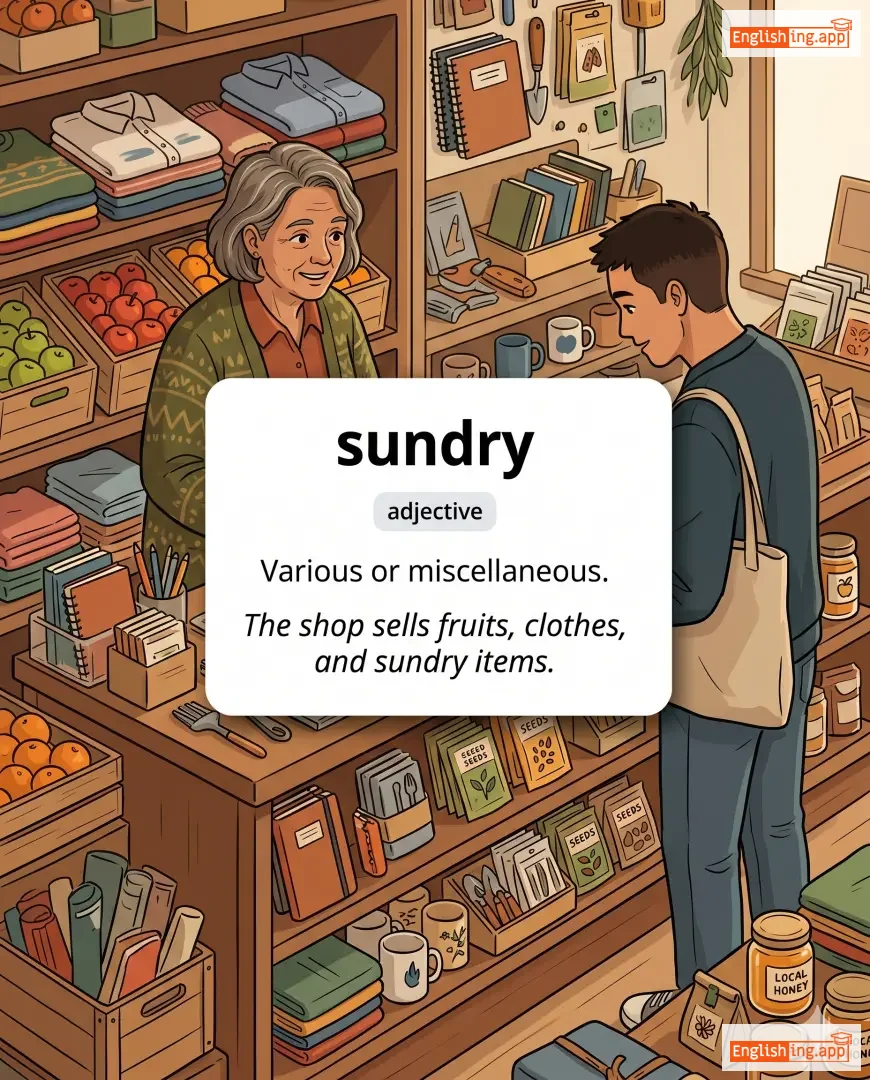
sundry definition card — visual illustration of the meaning
adjective
/ˈsʌn.dri/
雑多な (zattana)

Various or miscellaneous.

"The shop sells fruits, clothes, and sundry items."

"その店は果物、衣類、そして雑多な商品を販売しています。" (Sono mise wa kudamono, irui, soshite zattana shōhin o hanbai shiteimasu.)
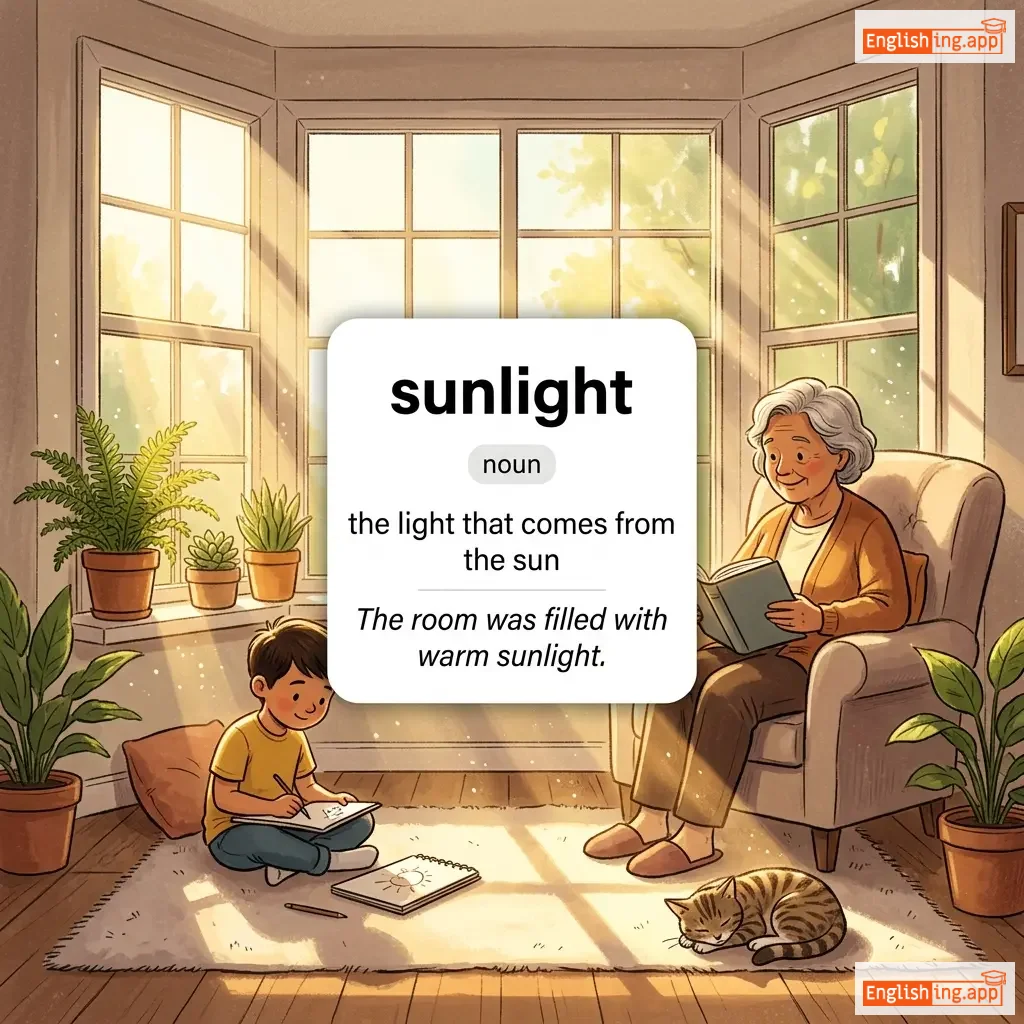
sunlight definition card — visual illustration of the meaning
noun
/ˈsʌn.laɪt/

the light that comes from the sun

"The room was filled with warm sunlight."

noun
/sʌnd raɪs/
日干し米 (Hiboshi-gome)

Rice that has been dried in the sun; parched rice

"The farmers spread the sunned rice on mats to dry completely."

"農民たちは日干し米を完全に乾かすためにマットに広げました。" (Nōmin-tachi wa hiboshi-gome o kanzen ni kawakasu tame ni matto ni hirogemashita.)
adjective
/ˈsʌ.ni/
晴れた (hareta)

bright with sunlight; cheerful or happy in nature

"It was a bright and sunny morning."

"それは明るくて晴れた朝でした。" (Sore wa akarukute hareta asa deshita.)
noun
/ˈsʌn.raɪz/
日の出 (hinode)

The time in the morning when the sun appears over the horizon.

"We woke up early to watch the sunrise over the mountains."

"私たちは山の上で日の出を見るために早起きしました。" (Watashitachi wa yama no ue de hinode o miru tame ni hayaoki shimashita.)
noun
/ˈsʌn.set/
夕日 (yuuhi)

the time in the evening when the sun disappears below the horizon

"The romantic sunset painted the sky in golden colors."

"ロマンチックな夕日が空を黄金色に塗りつけました。" (Romanchikku na yuuhi ga sora wo ougon-iro ni nuritsukemashita.)
noun
/ˈsʌn.stroʊk/
熱中症 (nechusho)

a serious condition caused by overheating from prolonged exposure to high temperatures

"The worker suffered from sunstroke after working outside all day."

"その労働者は一日中外で働いた後、日射病にかかりました。" (Sono roudousha wa ichinichijuu soto de hataraita ato, nisshobyō ni kakarimashita.)
adjective
/ˈsuːpər/
スーパー (suupaa)

excellent; very good

"She did a super job on the project."

"彼女はプロジェクトで素晴らしい仕事をしました。" (Kanojo wa purojekuto de subarashii shigoto o shimashita.)
noun
/ˌsuː.pər.əˈbʌn.dəns/
過剰な豊富さ (Kajou na houfusa)

An excessive or overflowing amount of something.

"The garden was filled with a superabundance of flowers."

"庭は花の過剰な豊富さで満たされていました。" (Niwa wa hana no kajou na houfusa de mitasarete imashita.)
verb
/ˌsuːpərˈæd/
追加する (tsuika suru)

to add something to what has already been added

"The author chose to superadd a new chapter to the revised edition."

"著者は改訂版に新しい章を追加することに決めました。" (Chosha wa kaitei-ban ni atarashii shou wo tsuika suru koto ni kimemashita.)
verb
/ˌsuːpərˈæn.ju.eɪt/
年金付き退職 (nenkin tsuki taishoku)

to retire someone with a pension, usually due to age or long service

"The company decided to superannuate its senior employees after thirty years of service."

"その会社は三十年の勤務後、上級社員を年金付き退職することに決めました。" (Sono kaisha wa sanjū-nen no kinmu go, jōkyū shain o nenkin tsuki taishoku suru koto ni kimemashita.)
adjective
/ˌsuːpərˈæn.ju.eɪ.tɪd/
時代遅れの (jidaiokure no)

old and no longer useful or valid; retired due to age

"The factory was filled with superannuated machines that slowed production."

"工場には生産を遅くする時代遅れの機械が満載でした。" (Kōjō ni wa seisan o osoku suru jidaiokure no kikai ga manzai deshita.)
adjective
/suːˈpɜːrb/
素晴らしい (subarashii)

extremely good; excellent

"The hotel provided superb service during our stay."

"ホテルは私たちの滞在中に素晴らしいサービスを提供しました。" (Hoteru wa watashitachi no taizai-chū ni subarashī sābisu o teikyō shimashita.)
adverb
/suːˈpɜːrbli/
見事に (migotoni)

in an excellent or impressive manner

"She performed superbly in the final match."

"彼女は最後の試合で見事にパフォーマンスをした。" (Kanojo wa saigo no shiai de migotoni pafōmansu o shita.)
adjective
/ˌsuː.pɚˈsɪl.i.əs/
傲慢な (gōman na)

Behaving or looking as though one thinks one is superior to others; arrogant and disdainful.

"She gave him a supercilious smile as if he was beneath her."

"彼女は彼に傲慢な笑顔を見せた、まるで彼が彼女より下のように。" (Kanojo wa kare ni gōman na egao o miseta, marude kare ga kanojo yori shita no yō ni.)
adjective
/ˌsuː.pər.ɪˈrɑː.ɡə.tɔːr.i/
過剰 (kajou)

Going beyond what is required or expected; more than necessary.

"His donation was supererogatory, far beyond what anyone had asked for."
"彼の寄付は過剰で、誰もが求めていた以上のものでした。" (Kare no kifu wa kajou de, dare mo ga motomete ita ijou no mono deshita.)
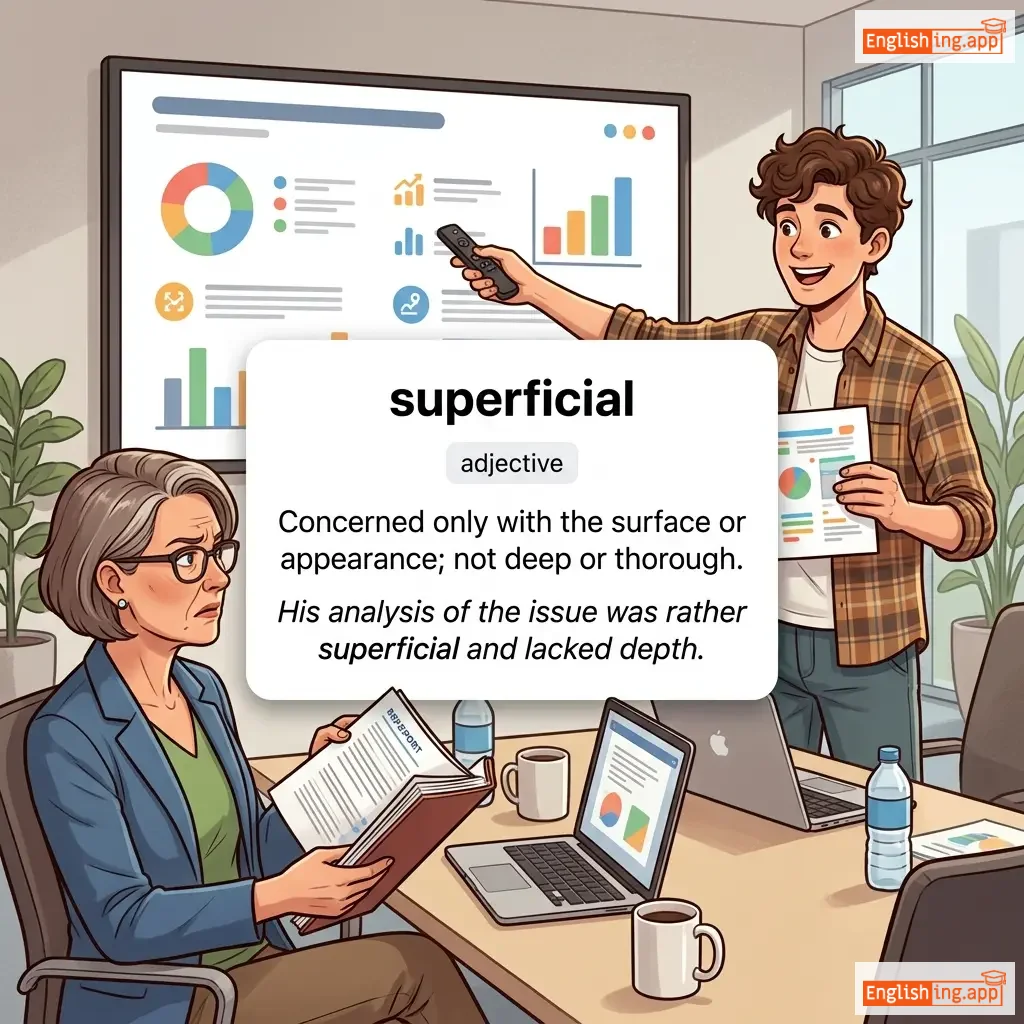
superficial definition card — visual illustration of the meaning
adjective
/ˌsuː.pɚˈfɪʃ.əl/
表面的な (hyoumenteki na)

Concerned only with the surface or appearance; not deep or thorough.

"His analysis of the issue was rather superficial and lacked depth."

"彼の問題の分析はかなり表面的で、深みが欠けていました。" (Kare no mondai no bunseki wa kanari hyoumenteki de, fukami ga kaketeimashita.)
noun
/ˌsuː.pɚˈfluː.ə.t̬i/
過剰 (kajou)

An excessive amount of something; more than what is needed.

"The room was filled with a superfluity of decorations."
"部屋は装飾で過剰に満たされていました。" (Heya wa sōshoku de kajō ni mitasarete imashita.)
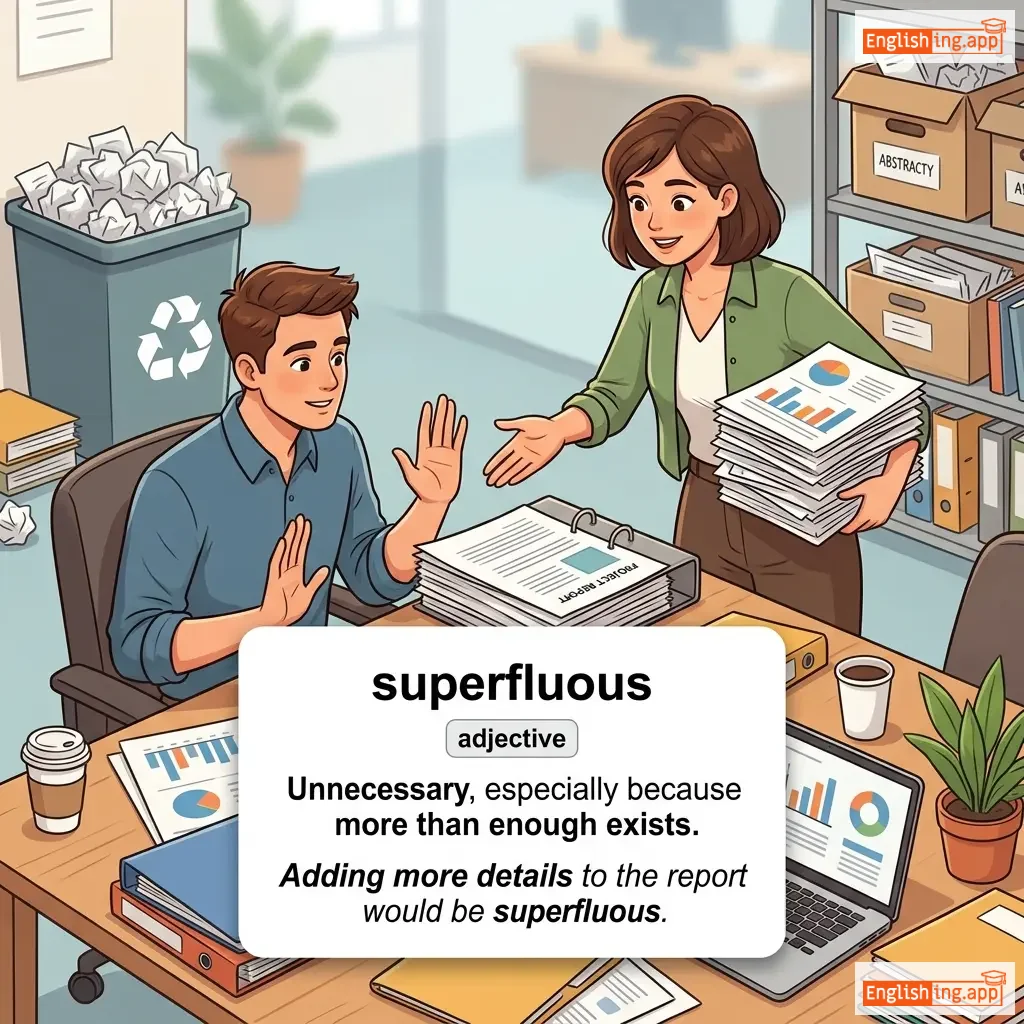
superfluous definition card — visual illustration of the meaning
adjective
/suːˈpɝː.fluː.əs/
余分な (yobun na)

Unnecessary, especially because more than enough exists.

"Adding more details to the report would be superfluous."
"レポートにさらに詳細を加えるのは余分です。" (Repōto ni sara ni shōsai o kuwaeru no wa yobun desu.)
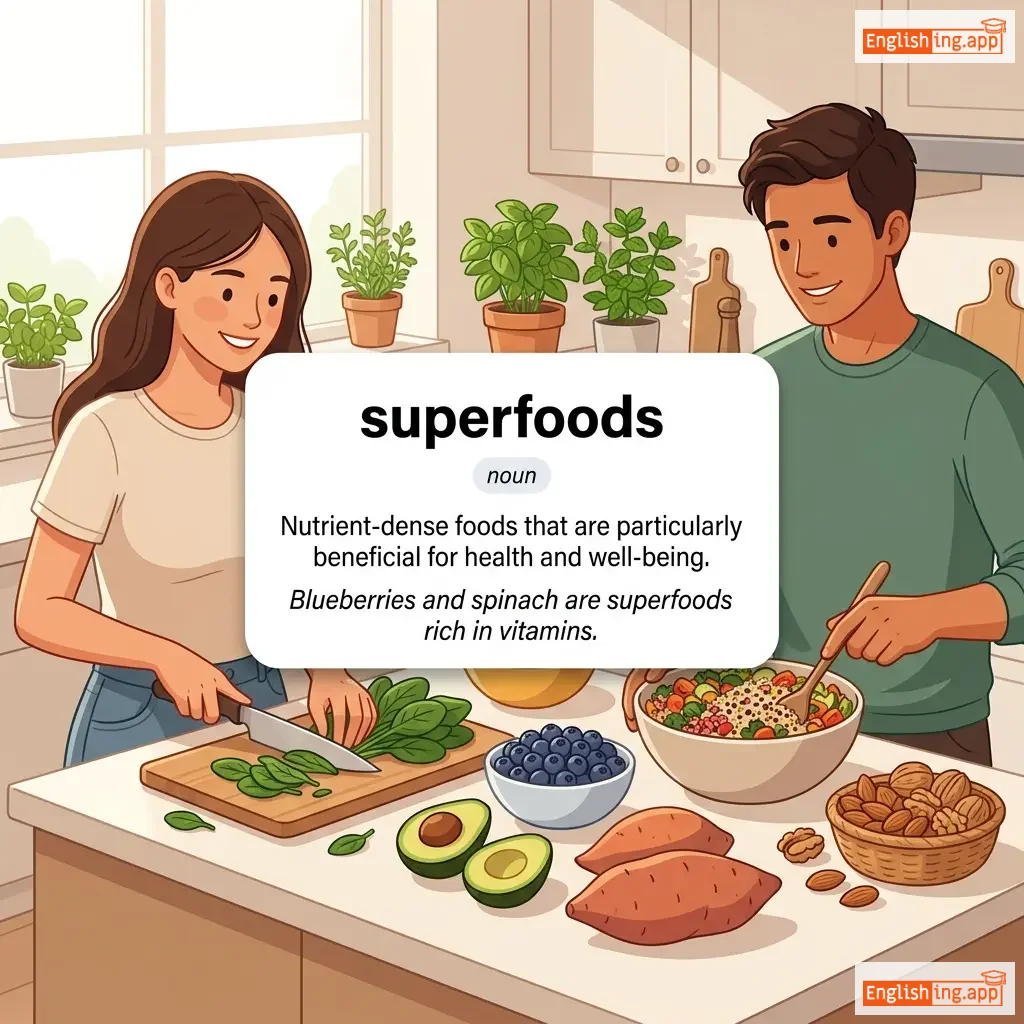
superfoods definition card — visual illustration of the meaning
noun
ˈsuː.pər.fuːdz
スーパーフード (suupaa fuudo)

Nutrient-dense foods that are particularly beneficial for health and well-being.

"Blueberries and spinach are superfoods rich in vitamins."

"ブルーベリーとほうれん草はビタミン豊富なスーパーフードです。" (Burūberī to hōrensō wa bitamin hōfu na suupaa fuudo desu.)
verb
/ˌsuːpərˈhiːt/
過熱する (kanetsu suru)

to heat a substance beyond its normal boiling point without it becoming vapor

"Engineers superheat the steam to increase the efficiency of the turbine."

"エンジニアはタービンの効率を上げるために蒸気を加熱しすぎます。" (Enjinia wa tābin no kōritsu o ageru tame ni jōki o kanetsu shisugimasu.)
verb
/ˌsuːpərɪmˈpoʊz/
重ね合わせる (kasanawaseru)

to place one thing on top of another so that both can be seen

"The editor superimposed text over the image."

"編集者は画像にテキストを重ね合わせました。" (Henshūsha wa gazō ni tekisuto o kasanawasemashita.)
verb
/ˌsuːpərɪnˈtɛnd/
監督する (kantoku suru)

to oversee and direct the work or operation of something

"She was hired to superintend the construction project."

"彼女は建設プロジェクトを監督するために雇われました。" (Kanojo wa kensetsu purojekuto o kantoku suru tame ni yato ware mashita.)
noun
/ˌsuːpərɪnˈtɛndəns/
監督 (kantoku)

the act of overseeing, supervising, or managing

"The superintendence of the school is the principal’s duty."

"学校の監督は校長の責任です。" (Gakkō no kantoku wa kōchō no sekinin desu.)
noun
/ˌsuːpərɪnˈtɛndənt/
監督者 (kantokusha)

a person who oversees, manages, or directs an organization, building, or project

"The superintendent visited the classrooms to check on progress."

"監督者は進捗を確認するために教室を訪れました。" (Kantokusha wa shinchoku o kakunin suru tame ni kyōshitsu o otozuremashita.)
adjective
/suːˈpɪə.ri.ər/
優れた (sugureta)

better in quality, rank, or importance than others

"This product is superior to its competitors in quality."

"この製品は品質において競合他社を凌駕しています。" (Kono seihin wa hinshitsu ni oite kyōgō tasha o ryōga shiteimasu.)
noun
/suː.pɪər.iˈɔːr.ə.ti/
優越性 (yūetsu-sei)

the quality or state of being superior; higher rank or quality

"His superiority in mathematics was evident from his test scores."

"数学における彼の優越性は、彼のテストのスコアから明らかだった。" (sūgaku ni okeru kare no yūetsu-sei wa, kare no tesuto no sukō kara akiraka datta.)
adjective
/suːˈpɜːrlətɪv/
最上級 (saijoukyuu)

Of the highest quality or degree; expressing the extreme form of an adjective or adverb.

"Her performance was superlative, earning her a standing ovation."

"彼女のパフォーマンスは最上級で、スタンディングオベーションを受けました。" (Kanojo no pafōmansu wa saijoukyuu de, sutandingu obēshon o ukemashita.)
noun
/ˈsuː.pəˌmɑː.kɪt/
スーパーマーケット (suupaa maaketto)

a large self-service store selling food and household goods

"She went to the supermarket to buy groceries."

"彼女は食料品を買いにスーパーマーケットに行きました。" (Kanojo wa shokuryouhin o kai ni suupaa maaketto ni ikimashita.)
adjective
/suːˈpɜːrnəl/
天上的 (tenjō no)

Relating to the heavens; celestial or divine.

"The painting captured a supernal beauty that felt otherworldly."

"その絵は、まるで別の世界から来たような天上的な美しさを捉えました。" (Sono e wa, marude betsu no sekai kara kita yō na tenjō-teki na utsukushisa o toraemashita.)
adjective
/ˌsuːpərˈnætʃrəl/
超自然的 (chōshizenteki)

Attributed to some force beyond scientific understanding or the laws of nature.

"They claimed to have witnessed supernatural events in the old house."

"彼らは古い家で超自然的な出来事を目撃したと主張しています。" (Karera wa furui ie de chōshizenteki na dekigoto o mokugeki shita to shuchō shiteimasu.)
adjective
/ˌsuːpərˈnuːmərɛri/
余分な (yobunna)

Exceeding the usual number; extra or unnecessary.

"The play included several supernumerary actors to fill the background scenes."
"その劇は背景のシーンを埋めるためにいくつかの余分な俳優を含んでいました。" (Sono geki wa haikei no shīn o umeru tame ni ikutsuka no yobunna haiyū o fukunde imashita.)
supersede definition card — visual illustration of the meaning
verb
/ˌsuːpərˈsiːd/
置き換える (okikaeru)

To replace or take the place of something because it is more modern or effective.

"This new law will supersede the old regulations."

"この新しい法律は古い規則を置き換えます。" (Kono atarashī hōritsu wa furui kisoku o okikaemasu.)
adjective
/ˌsuː.pəˈsɒn.ɪk/
音速より速い; 音速を超える速度に関連する (onsoku yori hayai; onsoku o koeru sokudo ni kanren suru)

faster than the speed of sound; relating to speeds greater than the speed of sound

"The supersonic jet broke the sound barrier."

"超音速ジェットは音の壁を破った。" (Chōonsoku jetto wa oto no kabe o yabutta)
noun
/ˌsuː.pərˈstɪʃ.ən/
迷信 (mishin)

a belief or practice considered irrational or supernatural

"Breaking a mirror brings seven years of bad luck is a common superstition."
"鏡を壊すと7年間の不運を招く、これは一般的な迷信です。" (kagami o kowasu to 7 nenkan no fūn o maneku, kore wa ippanteki na mishin desu)
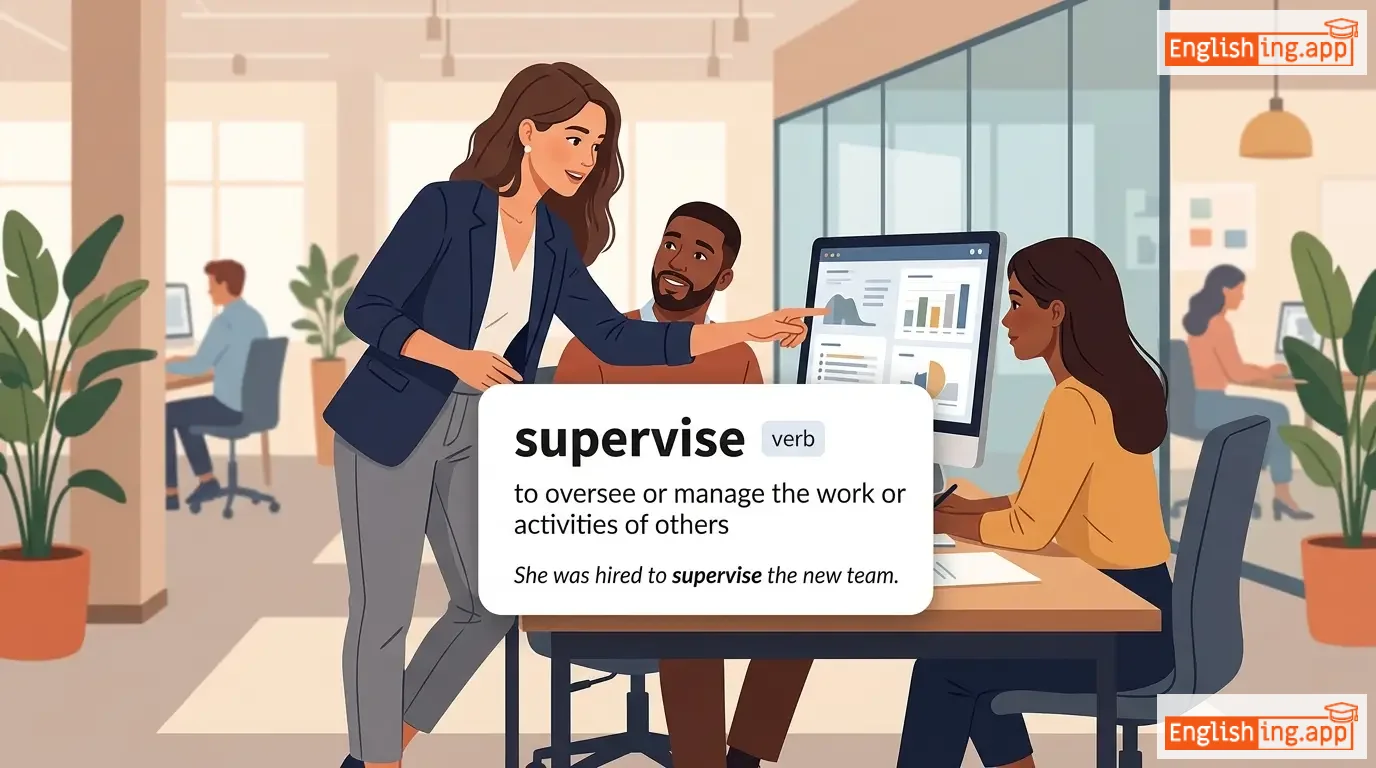
supervise definition card — visual illustration of the meaning
verb
/ˈsuːpərvaɪz/
監督する (kantoku suru)

to oversee or manage the work or activities of others

"She was hired to supervise the new team."

"彼女は新しいチームを監督するために雇われました。" (Kanojo wa atarashī chīmu o kantoku suru tame ni yatowaremashita.)
noun
/ˌsuːpərˈvɪʒən/
監視 (kanshi)

the action or process of overseeing or managing something or someone

"The project was completed under the supervision of an experienced manager."

"そのプロジェクトは経験豊富なマネージャーの監視の下で完了しました。" (Sono purojekuto wa keiken hōfu na manējā no kanshi no moto de kanryō shimashita.)
noun
/ˈsuːpəvaɪzə(r)/
監督者 (kantokusha)

a person who manages or directs the work of others

"The supervisor checked the progress of each employee."
"スーパーバイザーは各従業員の進捗を確認しました。" (Sūpābaizā wa kaku jūgyōin no shinchoku o kakunin shimashita.)
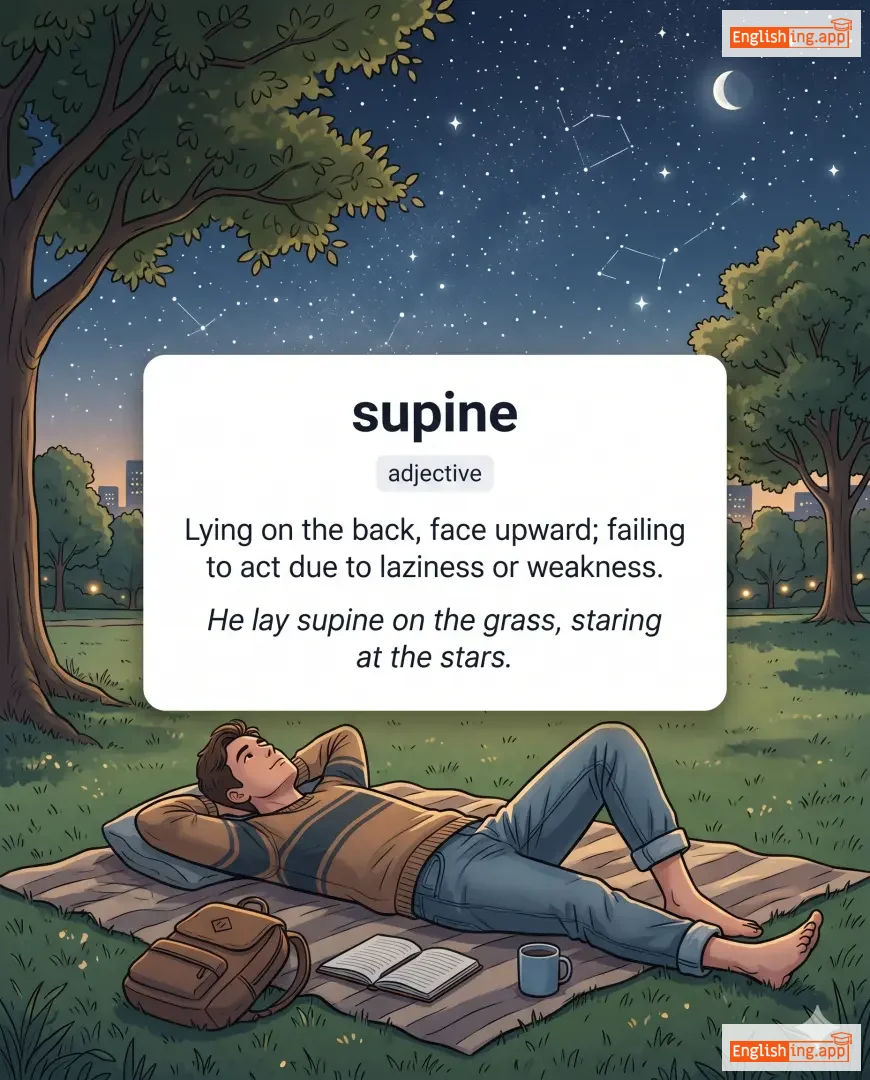
supine definition card — visual illustration of the meaning
adjective
/ˈsuːpaɪn/
仰向けで横たわる (aomuke de yokotawaru)

Lying on the back, face upward; failing to act due to laziness or weakness.

"He lay supine on the grass, staring at the stars."

"彼は草の上に仰向けで横たわり、星を見ていた。" (Kare wa kusa no ue ni aomuke de yokotawari, hoshi o mite ita.)
noun
/ˈsʌp.ər/
晩ご飯 (bangohan)

an evening meal, typically a light or informal one

"We usually have supper around seven o'clock."
"私たちは通常、七時ごろに晩ご飯を食べます。" (Watashitachi wa tsuujou, shichiji goro ni bangohan o tabemasu.)
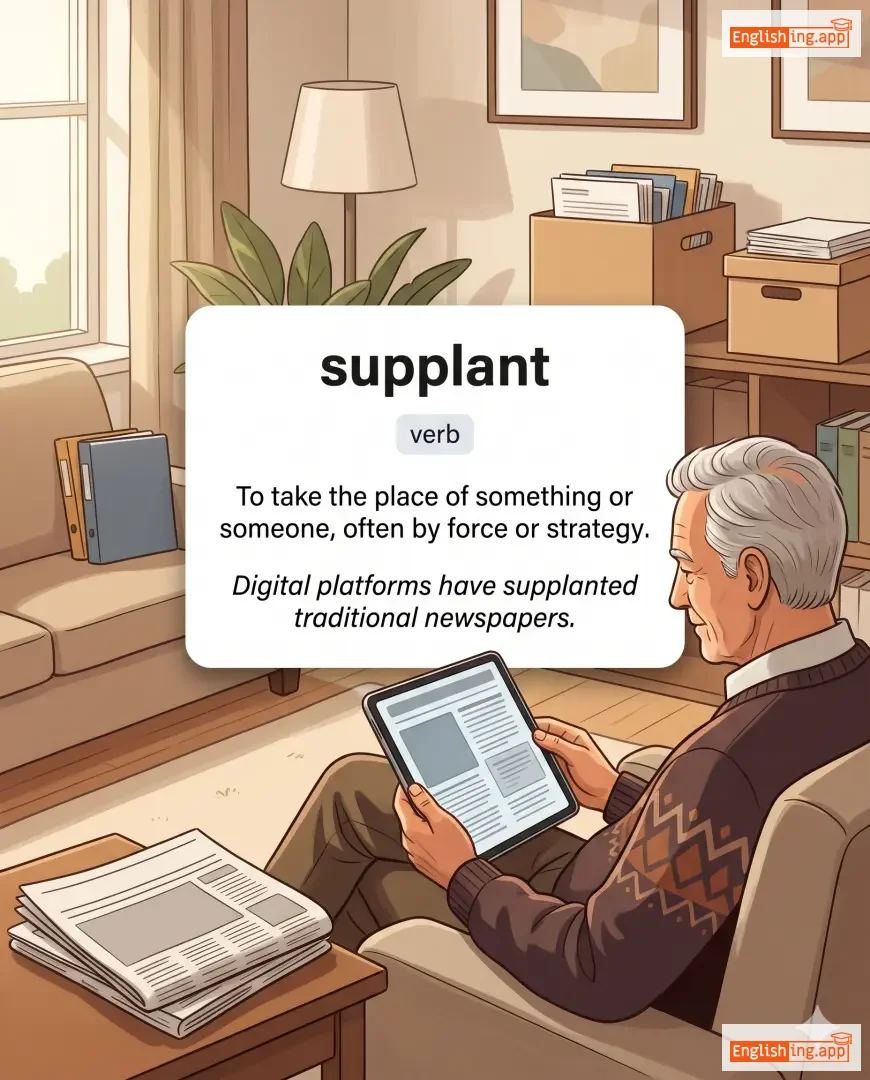
supplant definition card — visual illustration of the meaning
verb
/səˈplænt/
取って代わる (totte kawaru)

To take the place of something or someone, often by force or strategy.

"Digital platforms have supplanted traditional newspapers."

"デジタルプラットフォームは伝統的な新聞を取って代わった。" (Dejitaru purattofōmu wa dentō-teki na shinbun o totte kawatta.)
adjective
/ˈsʌpl/
柔軟な (jūnan na)

Easily bending or moving without breaking; flexible and adaptable.

"The gymnast’s body was remarkably supple."

"その体操選手の体は驚くほど柔軟だった。" (Sono taisō senshu no karada wa odoroku hodo jūnan datta.)
noun/verb
/ˈsʌplɪmənt/
補助食品 (hojosyokuhin)

Something added to complete or enhance; to add extra to make up for a deficiency.

"She takes vitamin supplements to improve her health."

"彼女は健康を改善するためにビタミンサプリメントを取ります。" (Kanojo wa kenko o kaizen suru tame ni bitamin sapurimento o torimasu.)
adjective
/ˌsʌplɪˈmɛntəri/
補足的な (hosokuteki na)

Additional, completing, or enhancing something else.

"The teacher gave supplementary materials to help the students prepare for exams."

"教師は生徒が試験の準備をするために補助教材を提供しました。" (Kyōshi wa seito ga shiken no junbi o suru tame ni hosoku kyōzai o teikyō shimashita.)
suppliant definition card — visual illustration of the meaning
adjective
/ˈsʌpliənt/
請願者 (seigan-sha)

Humbly or earnestly asking for something, especially from a person in authority.

"The suppliant man begged for mercy at the king's feet."
"請願者は王の足元で慈悲を乞いました。" (Seigansha wa ō no ashimoto de jihī o koimashita.)
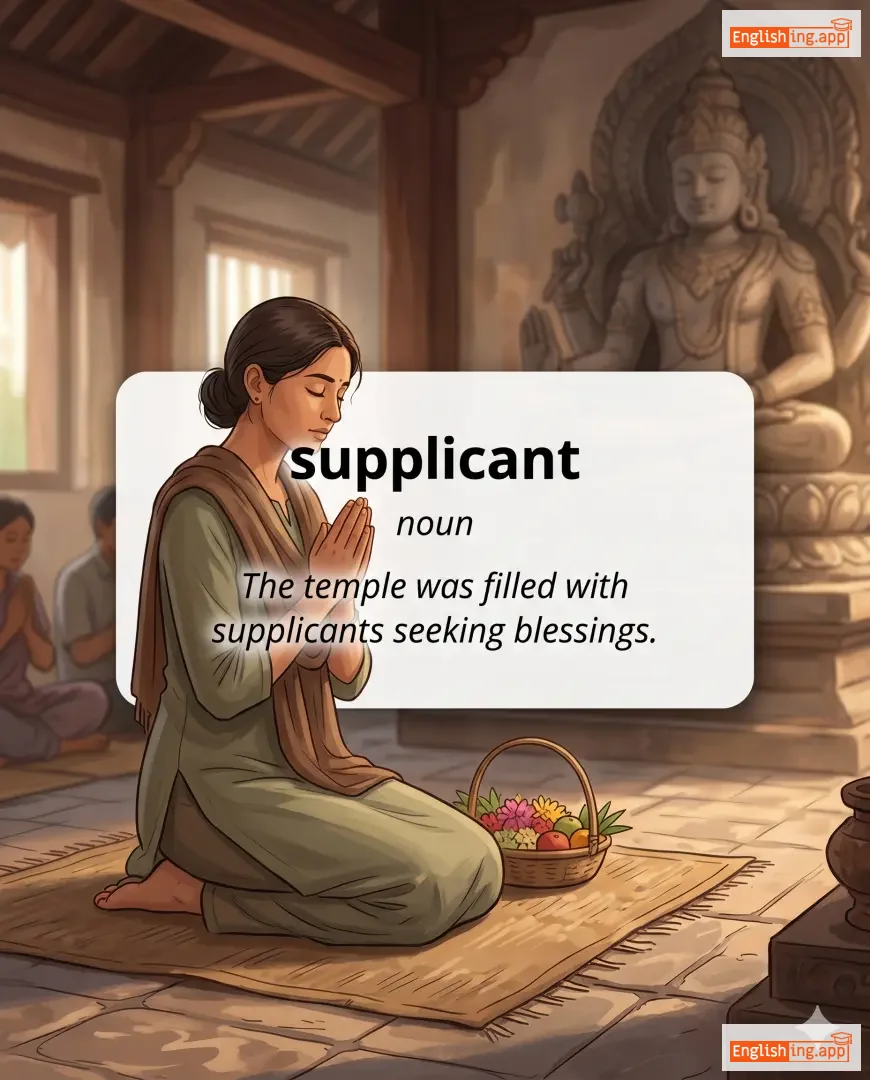
supplicant definition card — visual illustration of the meaning
noun
/ˈsʌplɪkənt/
請願者 (seigan-sha)

A person who humbly or earnestly asks for something, usually from a person of authority.

"The temple was filled with supplicants seeking blessings."

"寺院には祝福を求める請願者で溢れていました。" (Jiin ni wa shukufuku o motomeru seigan-sha de afurete imashita.)
verb
/ˈsʌplɪˌkeɪt/
お願いする (onegai suru)

To ask for something earnestly or humbly, often in a religious context.

"The villagers supplicated the gods for rain during the drought."

"村人たちは干ばつの間、雨を求めて神々にお願いした。" (Murabito-tachi wa kanbatsu no aida, ame o motomete kamigami ni onegai shita.)