語彙集

英単語辞書 | 単語の意味、定義、例文

adjective/noun
/ˈsʌkjələnt/
ジューシーな (juushii na)

Juicy or full of juice; also refers to a plant with thick, fleshy leaves adapted to storing water.

"The steak was so succulent that everyone enjoyed it."

"ステーキはとてもジューシーで、皆が楽しんで食べました。" (Sutēki wa totemo juushii de, mina ga tanoshinde tabemashita.)
⚰️

succumb

verb
/səˈkʌm/

To give in to pressure, temptation, or illness; to yield or fail to resist.

"He finally succumbed to his illness after a long struggle."

determiner
/sʌtʃ/
そんな (sonna)

of the type previously mentioned or specified

"I have never seen such a beautiful painting."

"私はこんな美しい絵を見たことがありません。" (Watashi wa konna utsukushii e o mita koto ga arimasen.)
verb
/sʌk/
吸う (suu)

to draw something into the mouth by using the lips and tongue

"The baby began to suck her thumb."

"赤ちゃんは親指を吸い始めた。" (Akachan wa oyayubi o sui hajimeta.)
verb
/ˈsʌkɪŋ/
吸う (suu)

Drawing in a liquid, air, or other substance through the mouth or a tube by creating a vacuum; also used figuratively for something unpleasant or ineffective

"The baby is sucking on a pacifier."

"赤ちゃんが乳首を吸っています。" (Akachan ga chibusa o sutteimasu.)
verb
/ˈsʌk.əl/
授乳する (junyu suru)

to feed a baby or young animal with milk from the breast or udder

"The mother cat suckled her kittens in the basket."

"母猫はバスケットで子猫にお乳を与えていました。" (Haha neko wa basuketto de koneko ni onochi wo ataete imashita.)
adjective
/ˈsʌdən/
突然 (totsuzen)

occurring or done quickly and unexpectedly

"The sudden change in the weather surprised everyone."

"天気の突然の変化はみんなを驚かせました。" (Tenki no totsuzen no henka wa minna o odorokasemashita.)
adverb
/ˈsʌdənli/
突然 (totsuzen)

in a way that happens quickly and unexpectedly

"The lights suddenly went out during the meeting."

"会議中に突然電気が消えました。" (Kaigichuu ni totsuzen denki ga kiemashita.)
adjective
/ˌsuːdəˈrɪfɪk/
発汗促進剤 (hakkansokushinzai)

causing or increasing sweating

"The doctor prescribed a sudorific drug to help reduce the fever."

"医者は発熱を下げるために発汗を促進する薬を処方しました。" (Isha wa hatsunetsu wo sageru tame ni hakkansokushin suru kusuri wo shohou shimashita.)
verb
/suː/
訴える (uttaeru)

to bring a lawsuit against someone in a court of law

"She decided to sue the company for damages."

"彼女は損害賠償のために会社を訴えることに決めました。" (Kanojo wa songai baishou no tame ni kaisha o uttaeru koto ni kimemashita.)
verb
/ˈsʌfər/
苦しむ (kurushimu)

to experience pain, distress, or hardship

"She suffered from a severe headache all day."

"彼女は一日中ひどい頭痛に苦しんでいました。" (Kanojo wa ichinichijuu hidoi zutsuu ni kurushinde imashita.)
noun
/ˈsʌfərəns/
寛容 (kanyou)

patient endurance of pain, hardship, or delay; passive consent or tolerance

"He lived in poverty with quiet sufferance."

"彼は貧困の中で静かに寛容をもって生きていた。" (Kare wa hinkon no naka de shizuka ni kanyou o motte ikite ita.)
noun
/ˈsʌfərɪŋ/
苦しみ (kurushimi)

the state of undergoing pain, distress, or hardship

"They tried to relieve his suffering with medicine."
"彼らは薬で彼の苦しみを和らげようとした。" (Karera wa kusuri de kare no kurushimi o yawarageyou to shita.)
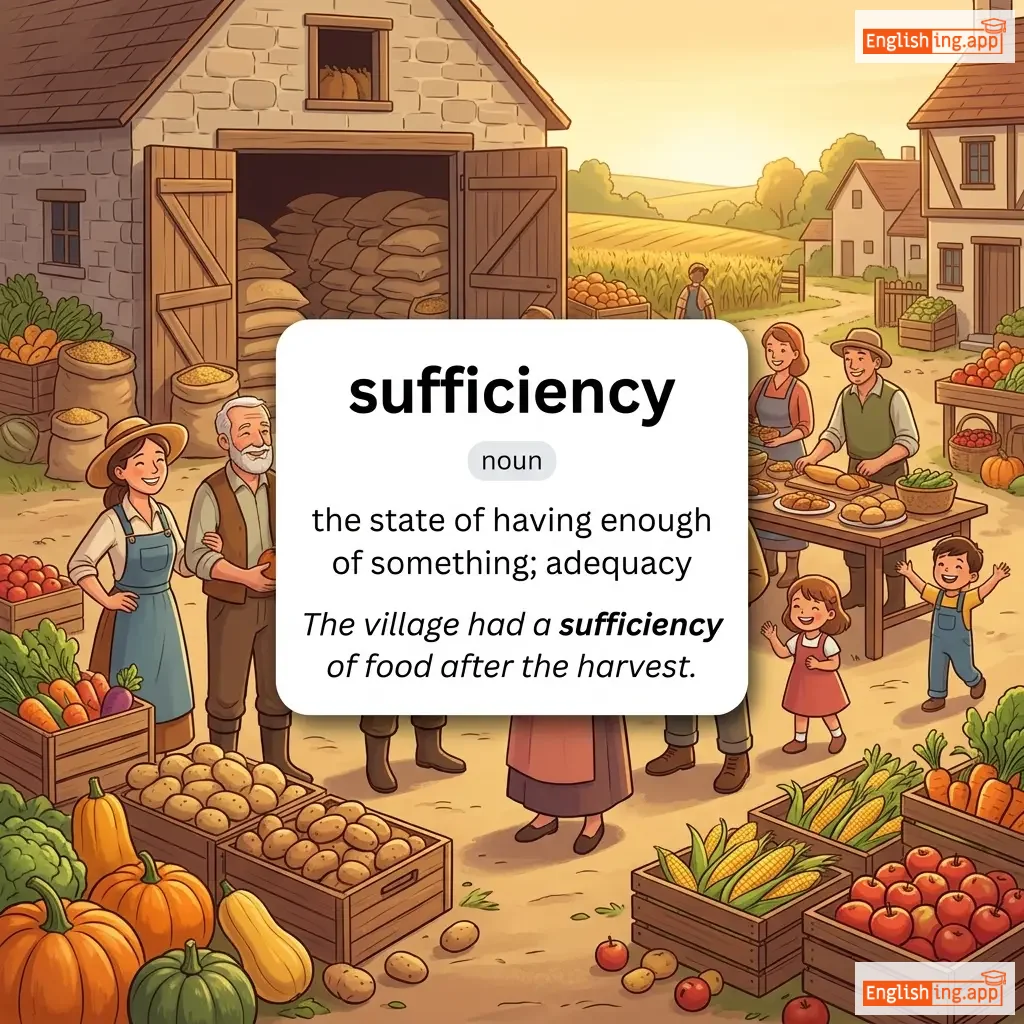
sufficiency definition card — visual illustration of the meaning
noun
/səˈfɪʃənsi/
十分 (juubun)

the state of having enough of something; adequacy

"The village had a sufficiency of food after the harvest."

"収穫後、村には十分な食料がありました。" (Shuukaku go, mura ni wa juubun na shokuryou ga arimashita.)
adjective
/səˈfɪʃənt/
十分な (jūbun na)

enough; adequate for a purpose

"She had sufficient money to buy the dress."

"彼女はドレスを買うために十分なお金を持っていました。" (Kanojo wa doresu o kau tame ni jūbun na okane o motte imashita.)
adverb
/səˈfɪʃəntli/
十分に (jūbun ni)

to an adequate degree or extent

"She studied sufficiently to pass the exam."
"彼女は試験に合格するために十分に勉強した。" (Kanojo wa shiken ni gōkaku suru tame ni jūbun ni benkyō shita.)
😮‍💨

suffocate

verb
/ˈsʌfəkeɪt/

to cause someone to die or have difficulty breathing by depriving them of air

"The child nearly suffocated when trapped in the locked room."

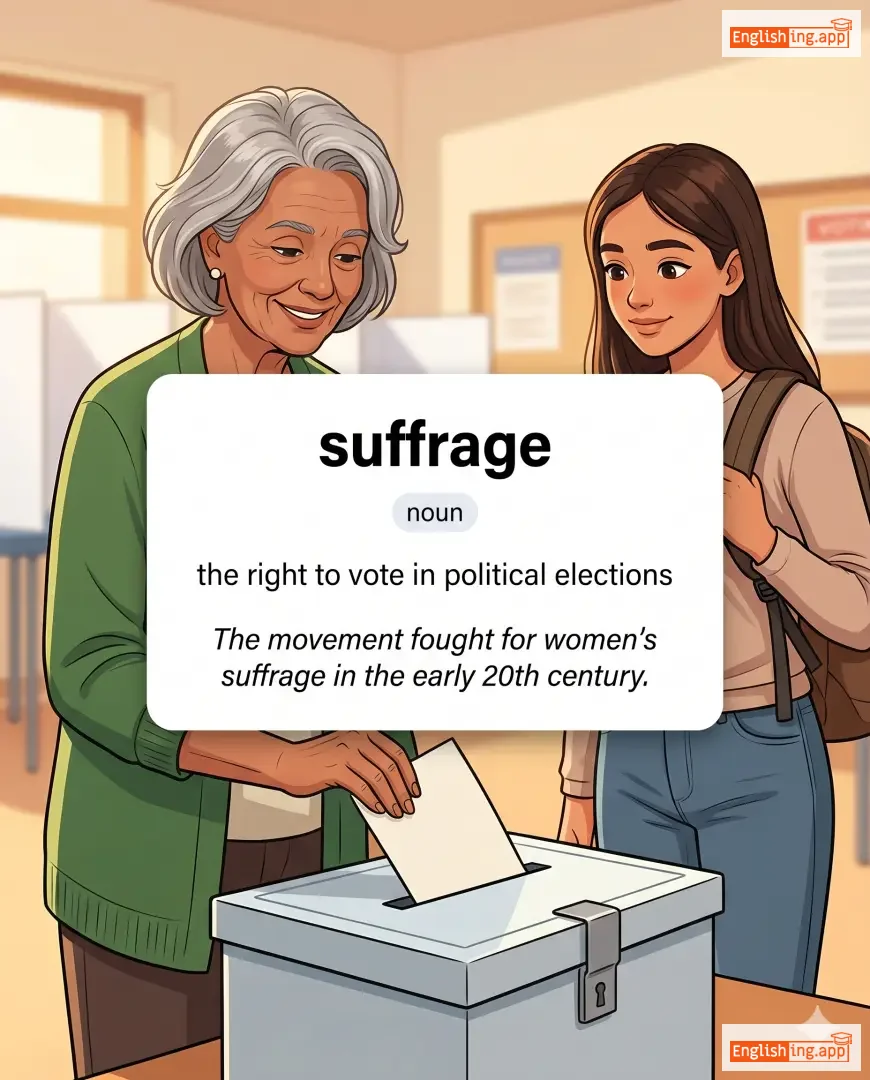
suffrage definition card — visual illustration of the meaning
noun
/ˈsʌfrɪdʒ/
参政権 (sanseiken)

the right to vote in political elections

"The movement fought for women’s suffrage in the early 20th century."

"その運動は20世紀初頭に女性の参政権のために戦った。" (sono undou wa nijusseiki shotou ni josei no sanseiken no tame ni tatakatta.)
noun
/ˈsʌfrədʒɪst/
女性参政権運動家 (josei senseiken undōka)

a person advocating the extension of suffrage, especially to women

"The suffragists organized rallies to demand voting rights for women."

"女性参政権運動家たちは女性の投票権を求めて集会を開いた。" (Josei senseiken undōka-tachi wa josei no tōhyōken o motomete shūkai o hiraita.)
verb
/səˈfjuːz/
広がる (hirogaru)

to gradually spread through or over something

"A warm glow suffused her face as she smiled."

"彼女が微笑んだとき、暖かい輝きが彼女の顔に広がった。" (Kanojo ga hohoenda toki, atatakai kagayaki ga kanojo no kao ni hirogatta.)
noun
/ˈʃʊɡər/
砂糖 (satou)

a sweet substance made from plants or produced synthetically

"She added two spoons of sugar to her tea."

"彼女はお茶に砂糖を二匙加えました。" (Kanojo wa ocha ni satou o nishaku kuwaemashita.)
noun
/ˈʃʊɡ.ər ˈkæn.di/
シュガーキャンディ (shugā kyandi)

crystallized sugar formed into small pieces; rock candy made from sugar syrup

"The children enjoyed eating colorful sugar candy at the festival."

"子供たちは祭りでカラフルなシュガーキャンディを食べて楽しみました。" (Kodomo-tachi wa matsuri de karafuru na shugā kyandi o tabete tanoshimimashita)
verb
/səˈdʒɛst/
提案する (teian suru)

to put forward an idea, plan, or recommendation for consideration

"He suggested going to the new restaurant for dinner."

"彼は新しいレストランで夕食を取ることを提案しました。" (Kare wa atarashī resutoran de yūshoku o toru koto o teian shimashita.)
adjective
/səˈdʒɛstəbəl/
影響されやすい (eikyō sareyasui)

easily influenced by the suggestions of others

"Children are highly suggestible and may believe what they are told."

"子供たちは非常に影響されやすく、言われたことを信じるかもしれません。" (Kodomotachi wa hijō ni eikyō sareyasuku, iwareta koto o shinjiru kamoshiremasen.)
noun
/səˈdʒɛstʃən/
提案 (teian)

an idea or plan put forward for consideration or action

"She gave a suggestion for improving the project."

"彼女はプロジェクト改善のために提案をしました。" (Kanojo wa purojekuto kaizen no tame ni teian o shimashita.)
adjective
/səˈdʒɛstɪv/
示唆的 (shisa-teki)

tending to suggest ideas or images; sometimes implies something sexual or provocative

"The painting was highly suggestive and sparked much debate."

"その絵画は非常に示唆的で、たくさんの議論を引き起こしました。" (Sono kaiga wa hijou ni shisateki de, takusan no giron wo hikiokoshimashita.)
adjective
/ˌsuːɪˈsaɪdəl/
自殺的 (jisatsuteki)

relating to or having thoughts of killing oneself; extremely dangerous or harmful

"The reckless driving was suicidal behavior."

"無謀な運転は自殺的な行動でした。" (Mubō na unten wa jisatsuteki na kōdō deshita.)
noun
/ˈsuːɪˌsaɪd/
自殺 (jisatsu)

the act of intentionally taking one's own life

"The article discusses the rising rates of suicide in young people."

"この記事は若者の自殺率の上昇について議論しています。" (Kono kiji wa wakamono no jisatsuritsu no joushou ni tsuite giron shiteimasu.)
noun
/suːt/
スーツ (su-tsu)

a set of clothes made of the same fabric, usually consisting of trousers and a jacket

"He wore a black suit to the wedding."

"彼は結婚式に黒いスーツを着ていきました。" (Kare wa kekkonshiki ni kuroi sūtsu o kite ikimashita.)
adjective
/ˈsuːtəbl/
適切 (tekisetsu)

appropriate or right for a particular person, purpose, or situation

"This dress is suitable for the wedding."

"このドレスは結婚式に適しています。" (Kono doresu wa kekkonshiki ni tekishiteimasu.)
noun
/ˈsuːt.keɪs/
スーツケース (suutsukeesu)

A portable rectangular container for carrying clothes and personal items when traveling

"She packed her clothes into a suitcase for the trip."

"彼女は旅行のために服をスーツケースに詰めた。" (Kanojo wa ryokou no tame ni fuku o suutsukeesu ni tsumeta.)
noun
/swiːt/
スイート (suīto)

a set of rooms designated for one person's or family's use or for a particular purpose

"They stayed in the presidential suite at the hotel."

"彼らはホテルの大統領スイートに宿泊していました。" (Karera wa hoteru no daitōryō suīto ni shukuhaku shite imashita.)
noun
/ˈsuːtər/
求婚者 (kyuukonsha)

a man who pursues a relationship with a woman, often with the intent to marry

"She had many suitors vying for her attention."
"彼女には彼女の注意を争う求婚者がたくさんいた。" (kanojo ni wa kanojo no chuui o arasou kyuukonsha ga takusan ita)
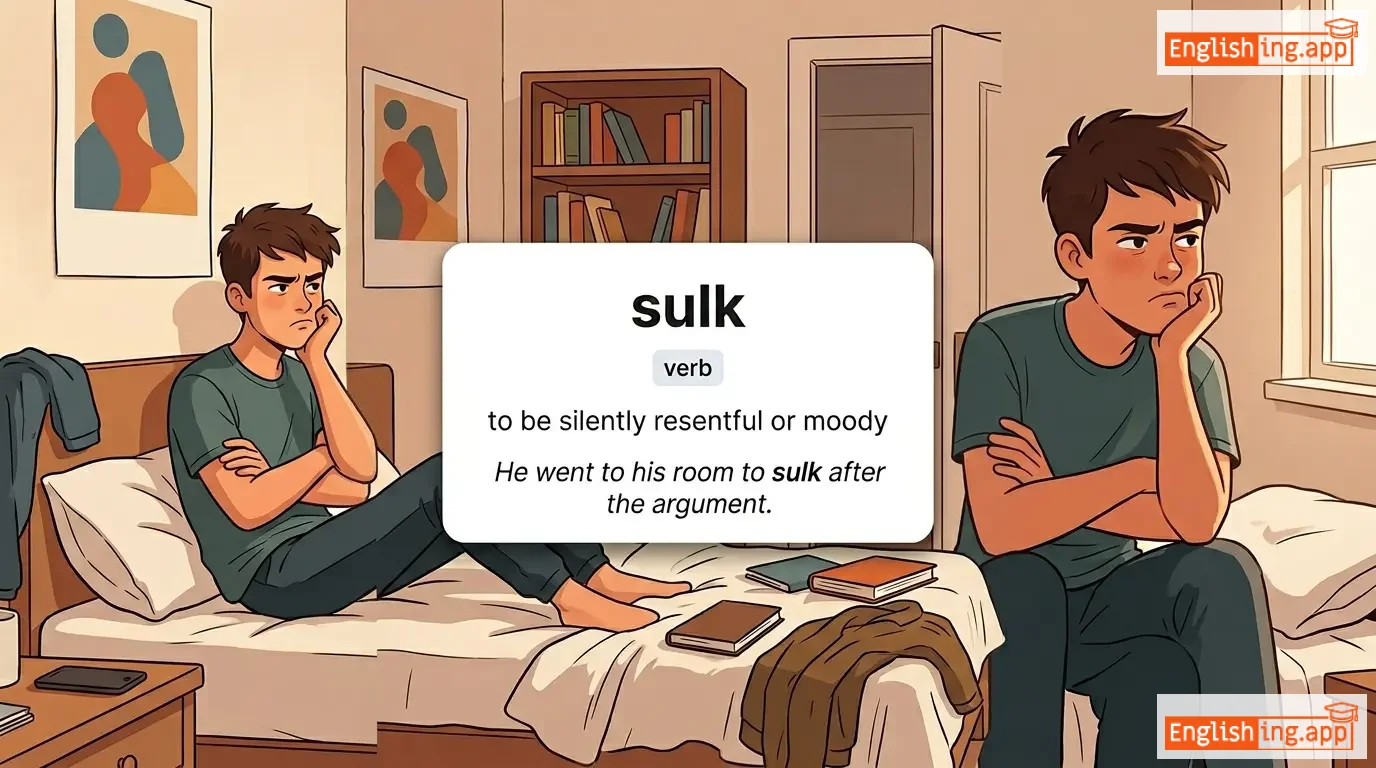
sulk definition card — visual illustration of the meaning
verb
/sʌlk/
すねる (suneru)

to be silently resentful or moody

"He went to his room to sulk after the argument."

"彼は議論の後、部屋に行ってすねました。" (Kare wa giron no ato, heya ni itte sunemashita.)
adjective
/ˈsʌl.ki/
不機嫌で無口; 気分屋 (fukigen de mukuchi; kibunya)

bad-tempered and sullen; moody

"The child became sulky when he couldn't get his favorite toy."

"その子供はお気に入りのおもちゃが手に入らなかったとき、不機嫌になった。" (Sono kodomo wa okiniiri no omocha ga te ni hairanakatta toki, fukigen ni natta.)
adjective
/ˈsʌlən/
むっつりした (muttsuri shita)

bad-tempered and gloomy; silently resentful

"She gave him a sullen look and walked away."

"彼女はむっつりした表情を見せて、立ち去った。" (Kanojo wa muttsuri shita hyōjō o misete, tachisatta.)
verb
/ˈsʌli/
汚す (yogosu)

to damage the purity, integrity, or reputation of something

"The scandal sullied the politician’s reputation."

"スキャンダルは政治家の評判を汚した。" (Sukyandaru wa seijika no hyōban o yogoshita.)
adjective
/ˈsʌltri/
蒸し暑く湿った、魅力的な (mushi atsuku shimetta, miryokuteki na)

Uncomfortably hot and humid; also describes someone attractive in a passionate or sensual way.

"The sultry weather made it hard to focus on work."

"蒸し暑い天気は仕事に集中するのを難しくしました。" (Mushi atsui tenki wa shigoto ni shūchū suru no o muzukashiku shimashita.)
noun
/sʌm/
合計 (goukei)

the total amount resulting from the addition of two or more numbers or items

"The sum of 8 and 12 is 20."

"8と12の合計は20です。" (8 to 12 no goukei wa 20 desu.)
verb
/ˈsʌməraɪz/
要約する (youyaku suru)

To give a brief statement of the main points of something

"She summarized the report in just a few minutes."

"彼女は数分で報告書を要約した。" (Kanojo wa suufun de houkokusho o youyaku shita)
noun
/ˈsʌməri/
要約 (yōyaku)

A brief statement of the main points of something.

"She wrote a summary of the book for her class."

"彼女はクラスのためにその本の要約を書きました。" (Kanojo wa kurasu no tame ni sono hon no yōyaku o kakimashita.)
noun
/sʌˈmeɪʃən/
合計, 要約 (goukei, youyaku)

The process of adding things together; a summary of points.

"The lawyer gave a powerful summation of the case."

"弁護士は事件の強力な要約を行った。" (Bengoshi wa jiken no kyouryoku na youyaku wo okonatta.)
noun
/ˈsʌmər/
(natsu)

the warmest season of the year, between spring and autumn

"We love going to the beach during summer."

"夏はビーチに行くのが大好きです。" (Natsu wa bīchi ni iku no ga daisuki desu.)
summit definition card — visual illustration of the meaning
noun
/ˈsʌmɪt/
頂点, サミット (tōten, samitto)

The highest point of a hill or mountain; a meeting between heads of state or leaders.

"The leaders met at the summit to discuss global issues."

"リーダーたちはサミットで世界的な問題について話し合いました。" (Rīdā-tachi wa samitto de sekaiteki na mondai ni tsuite hanashimashita.)
Summit of the Future definition card — visual illustration of the meaning
noun
/ˈsʌm.ɪt əv ðə ˈfjuː.tʃər/
未来のサミット (Mirai no samitto)

A high-level conference focused on addressing future challenges and opportunities.

"The Summit of the Future addressed global challenges."

"未来のサミットは世界的な課題を取り上げました。" (Mirai no samitto wa sekaiteki na kadai o toriagemashita.)
verb
/ˈsʌmən/

To order someone to come or to gather courage or strength.

"The king summoned his advisors to the court."

adjective
/ˈsʌmp.tʃuˌɛr.i/
贅沢品の個人的な支出を制限する法律または規制に関連する (zeitakuhin no kojinteki na shishutsu o seigen suru hōritsu matawa kisei ni kanren suru)

Relating to laws or regulations intended to limit personal spending on luxury goods.

"In medieval Europe, sumptuary laws restricted the wearing of expensive fabrics to the nobility."

"中世ヨーロッパでは、贅沢品法が高価な布地の着用を貴族に限定していました。" (Chūsei Yōroppa de wa, zeitakuhin-hō ga kōka na nuno no chakuyō o kizoku ni gentei shite imashita.)
adjective
/ˈsʌmp.tʃu.əs/
豪華な (gōka na)

Splendid and expensive-looking; luxurious.

"The guests were treated to a sumptuous banquet."

"ゲストは豪華な晩餐にもてなされました。" (Gesuto wa gōka na bansan ni motenasaremashita.)
noun
/sʌn/
太陽 (taiyo)

the star that provides light and heat to the Earth

"The sun rises in the east and sets in the west."

"太陽は東から昇り、西に沈みます。" (Taiyo wa higashi kara nobori, nishi ni shizumimasu.)
noun
/ˈsʌn.flaʊər/
ひまわり (himawari)

a large yellow flower that turns to face the sun

"The sunflower field looked amazing in the bright sunlight."

"ひまわり畑は明るい日差しの中で素晴らしく見えました。" (himawari batake wa akarui hizashi no naka de subarashiku miemashita)