語彙集

英単語辞書 | 単語の意味、定義、例文

noun, adjective, verb
/səˈbɔːrdənət/ (noun/adjective), /səˈbɔːrdəˌneɪt/ (verb)
部下 (buka)

lower in rank or position; to treat as less important

"He manages ten subordinates in his department."

"彼は自分の部署で10人の部下を管理しています。" (Kare wa jibun no busho de juunin no buka o kanri shiteimasu.)
verb
/səˈbɔːrn/
買収する (baishū suru)

to bribe or induce someone unlawfully to perform an act, especially to commit perjury

"The lawyer was accused of trying to suborn a witness."
"弁護士は証人を買収しようとしたと非難された。" (Bengoshi wa shōnin o baishū shiyō to shita to hinan sareta.)
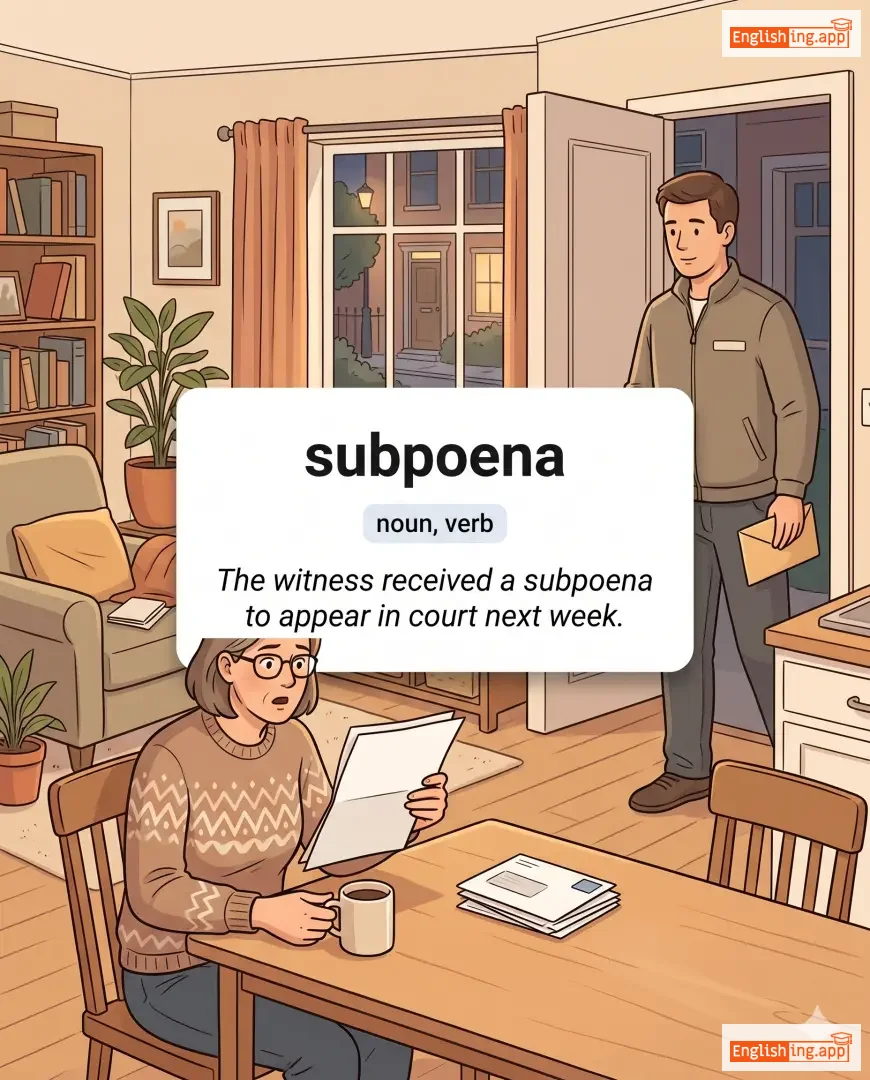
subpoena definition card — visual illustration of the meaning
noun, verb
/səˈpiːnə/
召喚状 (shokanjo)

a legal document ordering someone to attend court; to summon someone with such a document

"The witness received a subpoena to appear in court next week."
"証人は来週法廷に出廷するための召喚状を受け取った。" (Shōnin wa raishū hōtei ni shuttei suru tame no shōkanjō o uketotta.)
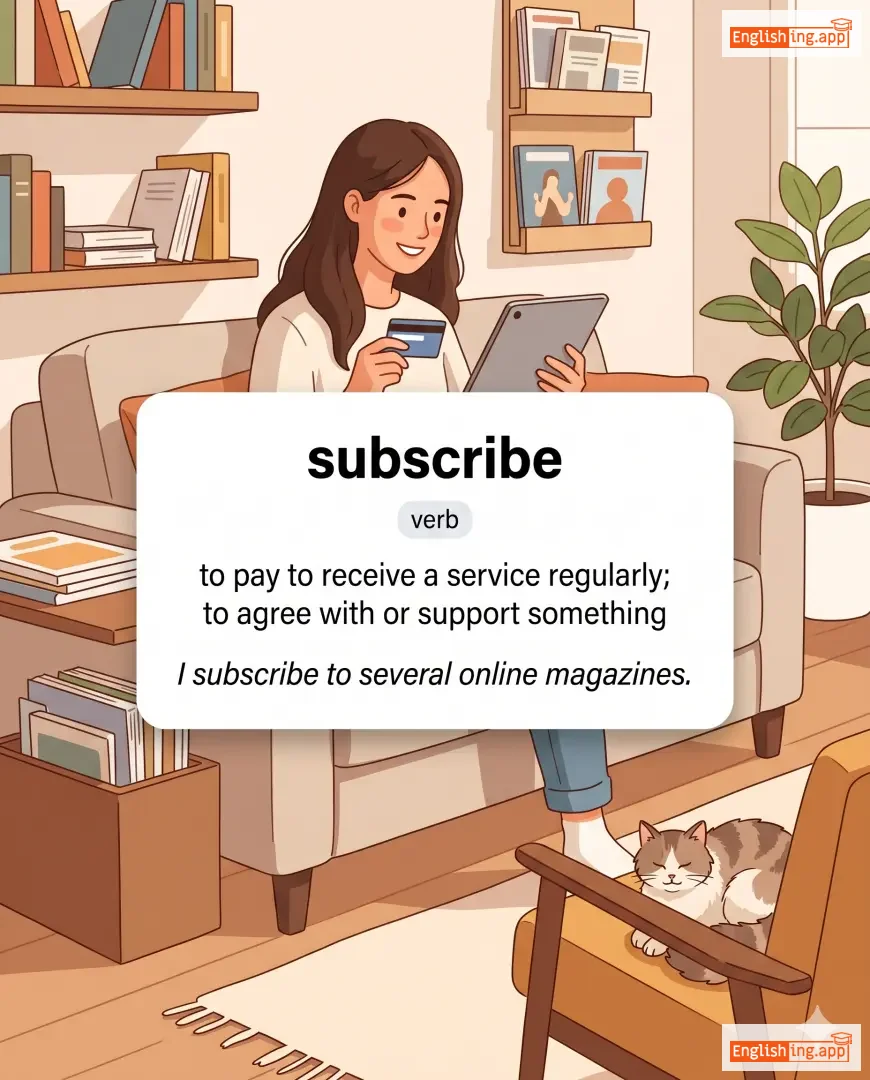
subscribe definition card — visual illustration of the meaning
verb
/səbˈskraɪb/
購読する (kōdoku suru)

to pay to receive a service regularly; to agree with or support something

"I subscribe to several online magazines."

"私はいくつかのオンライン雑誌を購読しています。" (Watashi wa ikutsuka no onrain zasshi o kōdoku shiteimasu.)
noun
/səbˈskraɪbər/
サブスクライバー (sabusukuraibā)

a person who receives or subscribes to a service, magazine, or service

"She is a subscriber to the monthly magazine."

"彼女は月刊誌のサブスクライバーです。" (Kanojo wa gekkanshi no sabusukuraibā desu.)
noun
/səbˈskrɪpʃən/
サブスクリプション (sabascripshon)

the action of subscribing to something

"I paid for a subscription to the online learning platform."
"私はオンライン学習プラットフォームのサブスクリプションを購入しました。" (Watashi wa onrain gakushū purattofōmu no sabascripshon o kōnyū shimashita.)
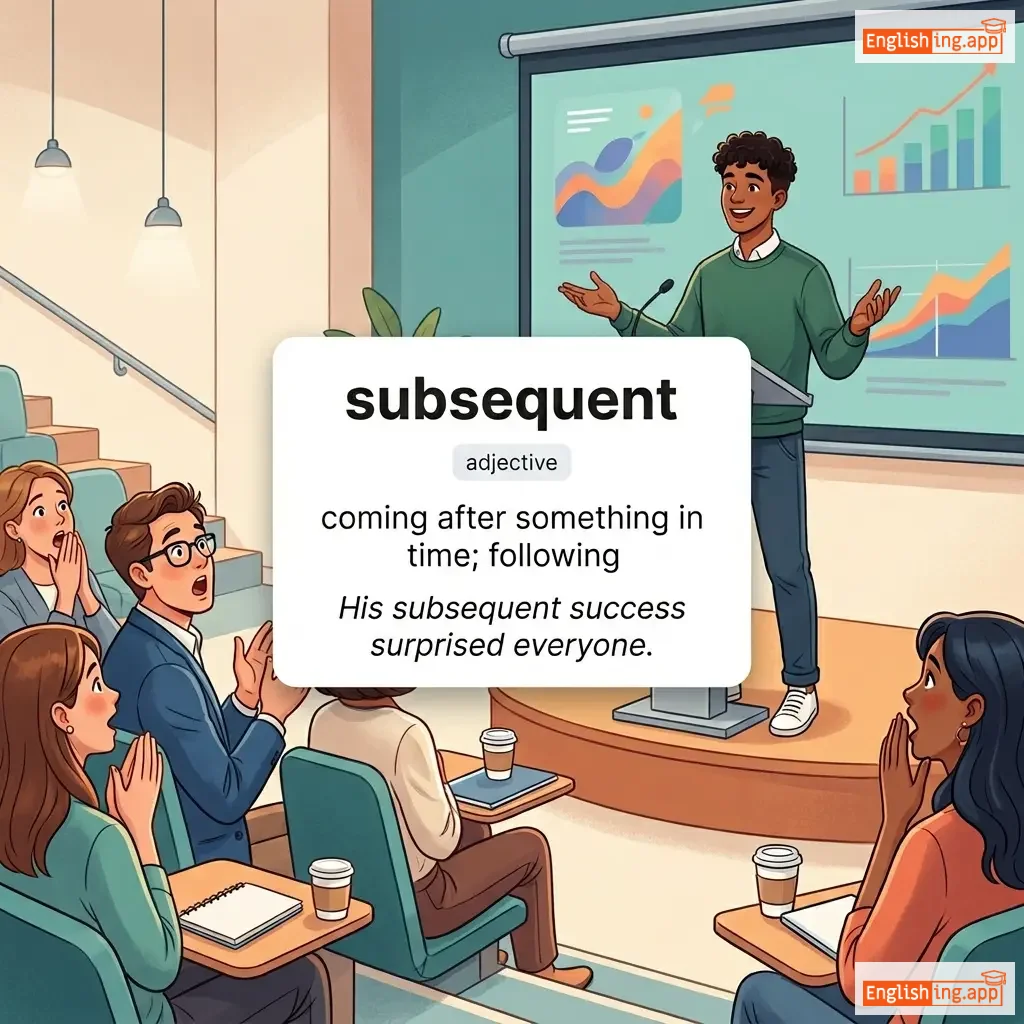
subsequent definition card — visual illustration of the meaning
adjective
/ˈsʌbsɪkwənt/
その後の (sono ato no)

coming after something in time; following

"His subsequent success surprised everyone."

"彼のその後の成功は、皆を驚かせました。" (Kare no sono ato no seikou wa, mina o odoro kasemashita.)
adverb
/ˈsʌbsɪkwəntli/
その後 (sono ato)

at a later time; afterward

"He failed his exam and subsequently had to retake it."

"彼は試験に失敗し、その後再試験を受けなければならなかった。" (Kare wa shiken ni shippai shi, sono ato saishiken wo ukenakereba naranakatta.)
noun
/səbˈsɜːviəns/
従順 (juujun)

the condition of being too willing to obey or serve others

"His subservience to authority annoyed his colleagues."

"権威への従順さが同僚たちを苛立たせた。" (Ken'i e no juujun-sa ga douryou-tachi o iradataseta.)
adjective
/səbˈsɜːviənt/

prepared to obey others unquestioningly; less important than something else

"She was too subservient to challenge his decision."
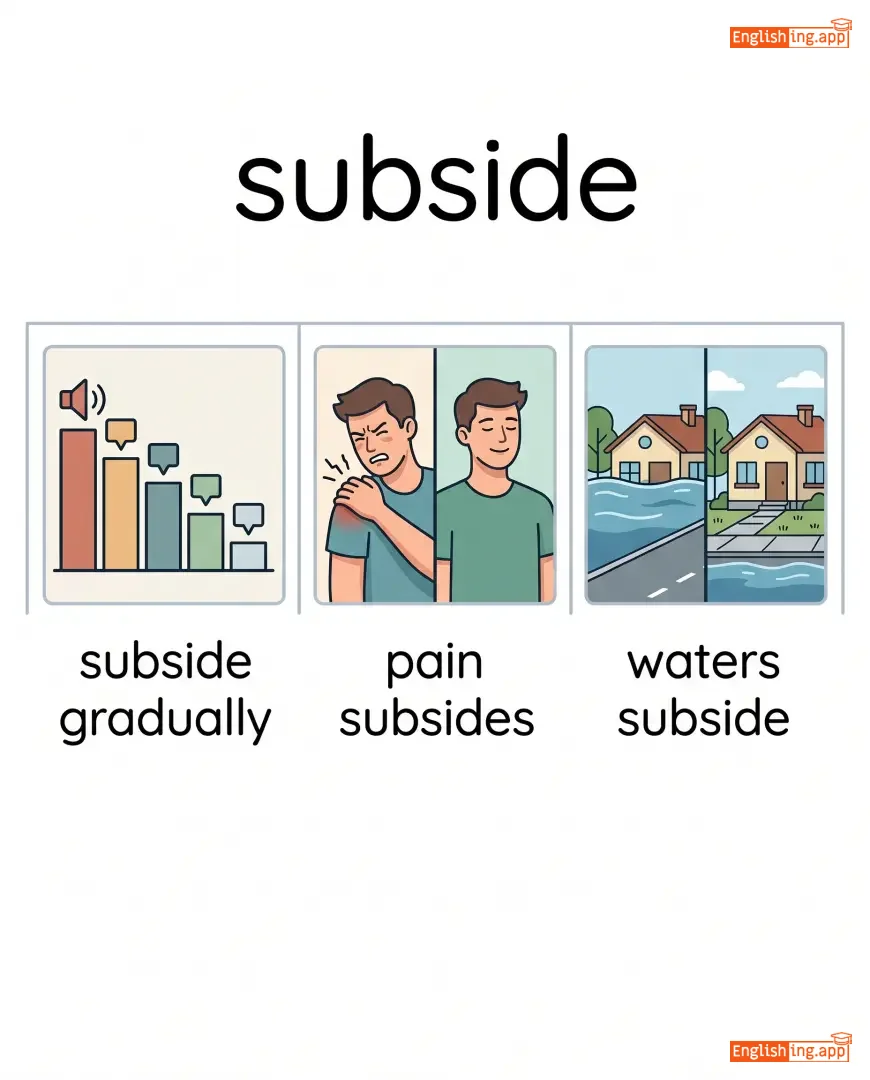
subside definition card — visual illustration of the meaning
verb
/səbˈsaɪd/
収束する (shūsoku suru)

to become less intense, violent, or severe; to sink or fall to a lower level

"After the storm, the floodwaters began to subside."

"嵐の後、洪水は収束し始めました。" (arashi no ato, kōzui wa shūsoku shi hajimemashita.)
noun, adjective
/səbˈsɪdiˌɛri/
子会社 (kogaisya)

a company controlled by a larger company; serving to assist or supplement something

"The multinational owns a subsidiary in Bangladesh."
"多国籍企業はバングラデシュに子会社を所有しています。" (Takokuseki kigyō wa Banguradeshū ni kogaisya o shoyū shiteimasu.)
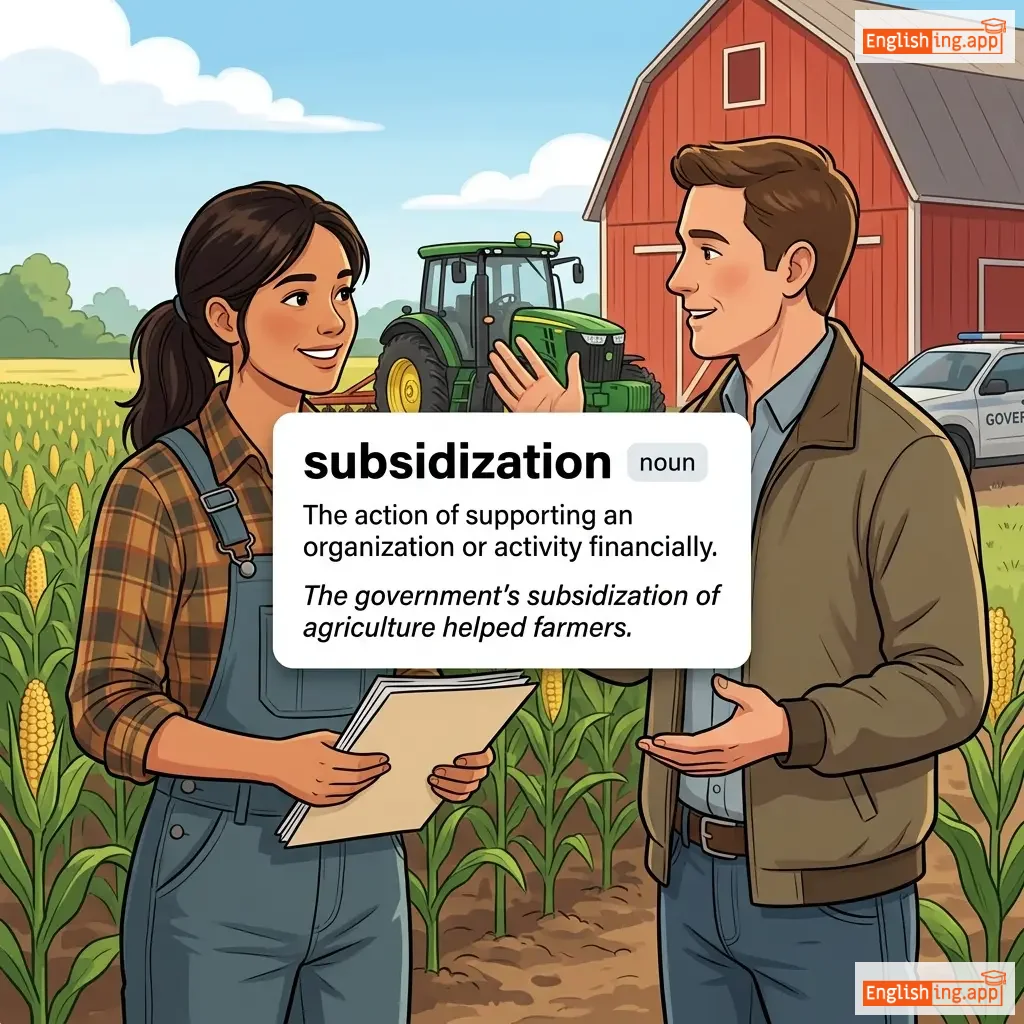
subsidization definition card — visual illustration of the meaning
noun
/ˌsʌbsɪdaɪˈzeɪʃən/
補助金 (hojokin)

The action of supporting an organization or activity financially.

"The government's subsidization of agriculture helped farmers."
"政府の農業への補助金は農家を助けました。" (Seifu no nōgyō e no hojokin wa nōka o tasukemashita.)
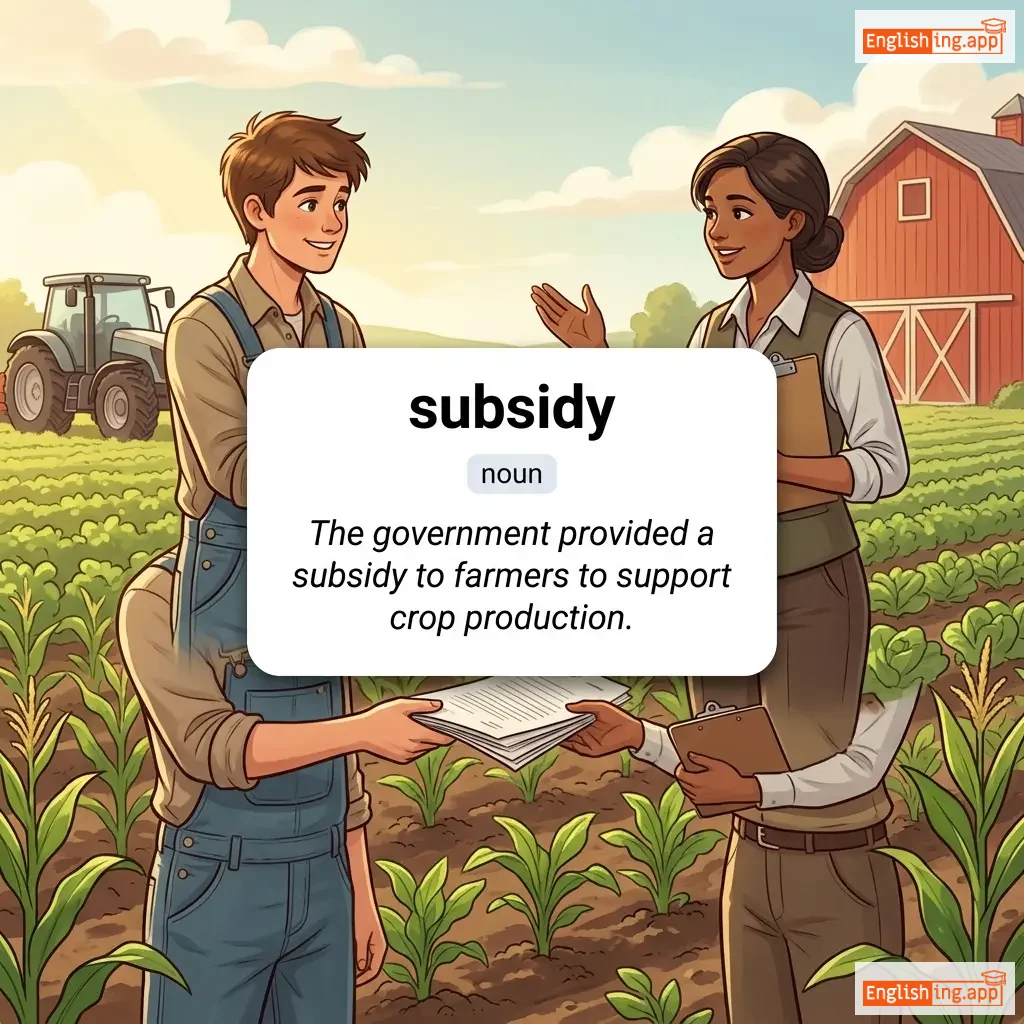
subsidy definition card — visual illustration of the meaning
noun
/ˈsʌbsɪdi/
助成金 (joseikin)

A sum of money granted by the government or a public body to help support an industry or reduce the cost of goods or services.

"The government provided a subsidy to farmers to support crop production."

"政府は作物生産を支援するために農民に助成金を提供しました。" (Seifu wa sakumotsu seisan o shien suru tame ni nōmin ni joseikin o teikyō shimashita.)
verb
/səbˈsɪst/
生き延びる (ikinobiru)

To maintain or support oneself, especially at a minimal level.

"Many villagers still subsist on fishing and farming."
"多くの村人は今でも漁業と農業で生計を立てています。" (Ooku no murabito wa imademo gyogyou to nougyou de sekei o tateteimasu.)
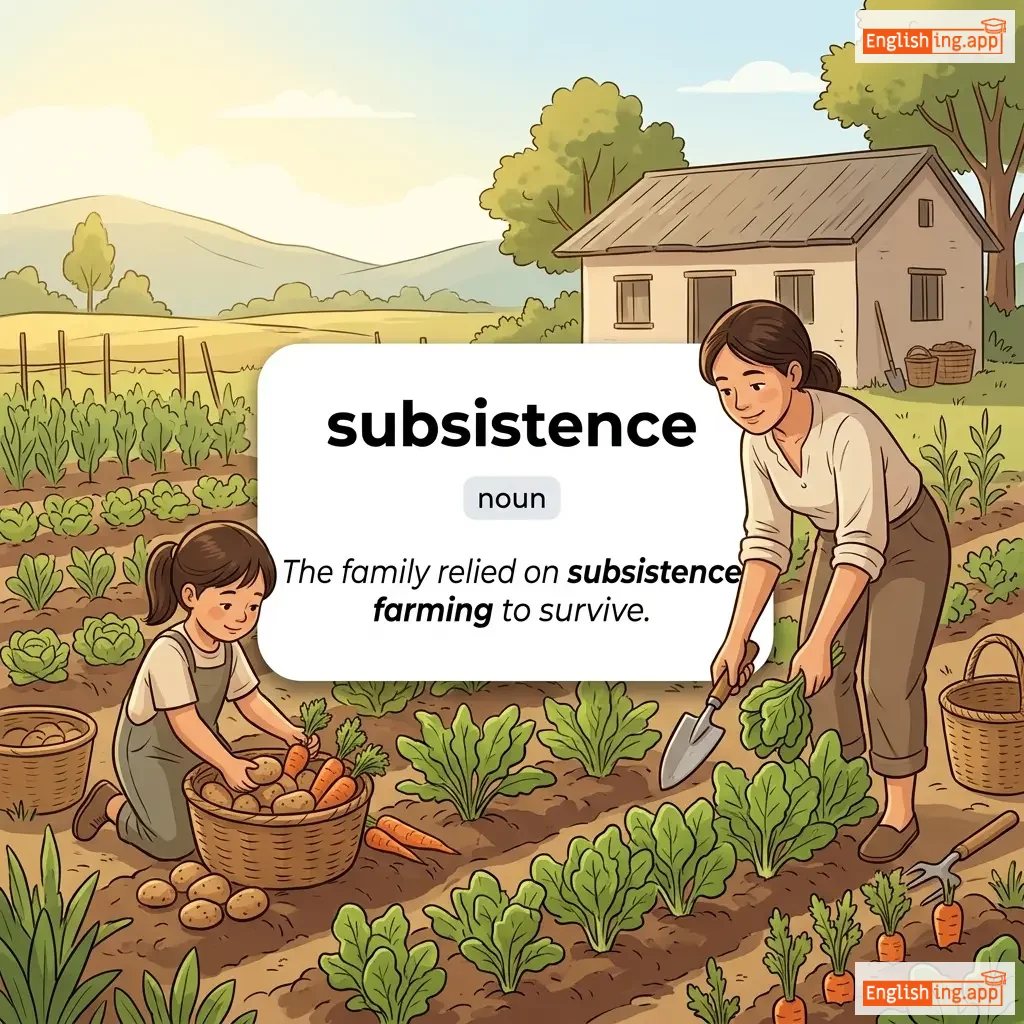
subsistence definition card — visual illustration of the meaning
noun
/səbˈsɪstəns/
生計 (seikei)

The action or fact of maintaining or supporting oneself, especially at a minimal level.

"The family relied on subsistence farming to survive."

"その家族は生計農業に依存して生きていました。" (Sono kazoku wa seikei nōgyō ni izon shite ikiteimashita.)
noun
/ˈsʌbstəns/
物質 (busshitsu)

a particular kind of matter with uniform properties

"The substance of the matter was highly controversial."

"その問題の物質は非常に物議を醸していました。" (Sono mondai no busshitsu wa hijō ni butsu gi o kamoshite imashita.)
adjective
/səbˈstænʃl/
実質的な (jisshitsuteki na)

Of considerable importance, size, or worth.

"She received a substantial raise after the successful project."
"彼女は成功したプロジェクト後にかなりの昇給を受けました。" (Kanojo wa seikō shita purojekuto go ni kanari no shōkyū o ukemashita.)
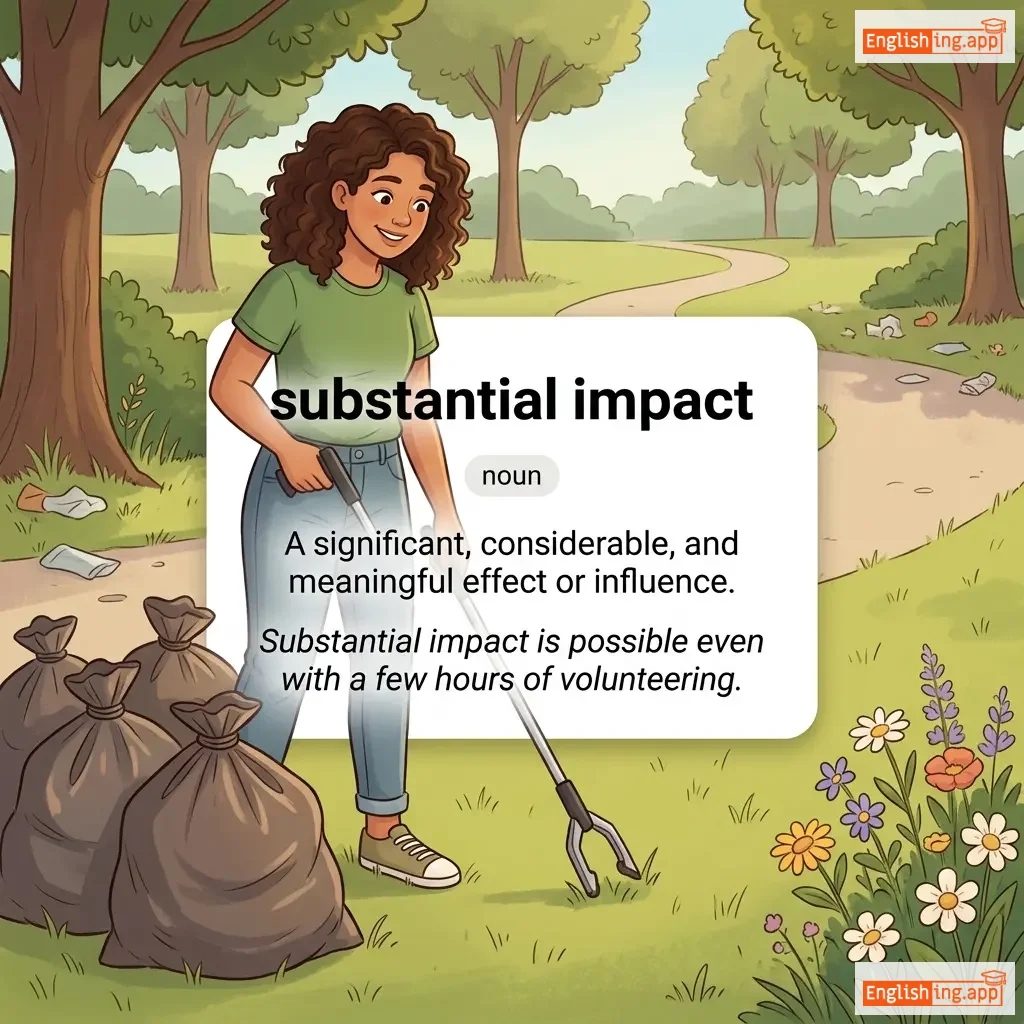
substantial impact definition card — visual illustration of the meaning
noun
səbˈstænʃəl ˈɪmpækt
重大な影響 (jūdaina eikyō)

A significant, considerable, and meaningful effect or influence.

"Substantial impact is possible even with a few hours of volunteering."

"少しの時間のボランティア活動でも重大な影響を与えることができます。" (Sukoshi no jikan no borantia katsudō demo jūdaina eikyō o ataeru koto ga dekimasu.)
adverb
/səbˈstænʃəli/
大幅に (ōhaba ni)

to a great extent or degree

"The new policy has substantially improved working conditions."
"新しい政策は労働条件を大幅に改善しました。" (Atarashī seisaku wa rōdō jōken o ōhaba ni kaizen shimashita.)
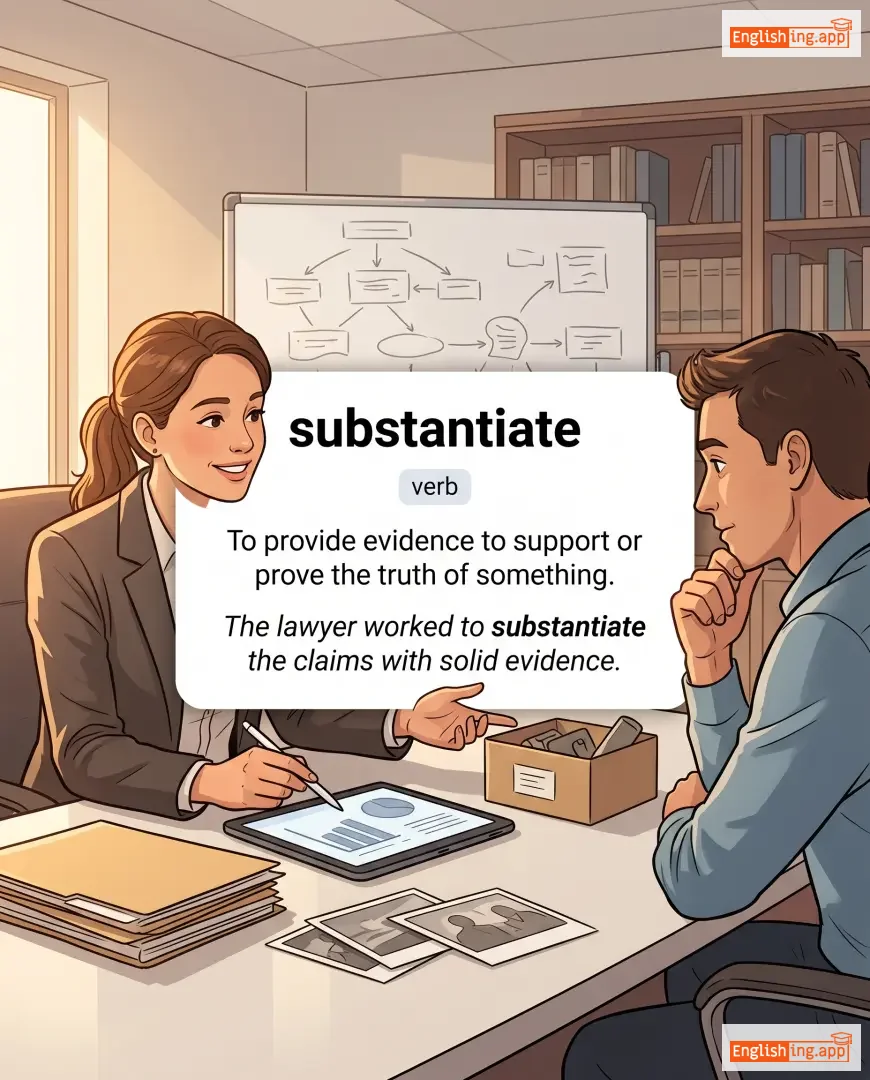
substantiate definition card — visual illustration of the meaning
verb
/səbˈstænʃieɪt/
立証する (ricchou suru)

To provide evidence to support or prove the truth of something.

"The lawyer worked to substantiate the claims with solid evidence."

"弁護士は確かな証拠でその主張を立証しようとしました。" (Bengoshi wa tashikana shōko de sono shuchō o risshō shiyou to shimashita.)
substantive definition card — visual illustration of the meaning
adjective
/ˈsʌbstəntɪv/
重要 (jūyō)

Having a firm basis in reality; important, meaningful, or considerable.

"The company made substantive changes to its policy."
"会社はその方針に重要な変更を加えました。" (Kaisha wa sono hōshin ni jūyō na henkō o kuwaemashita.)
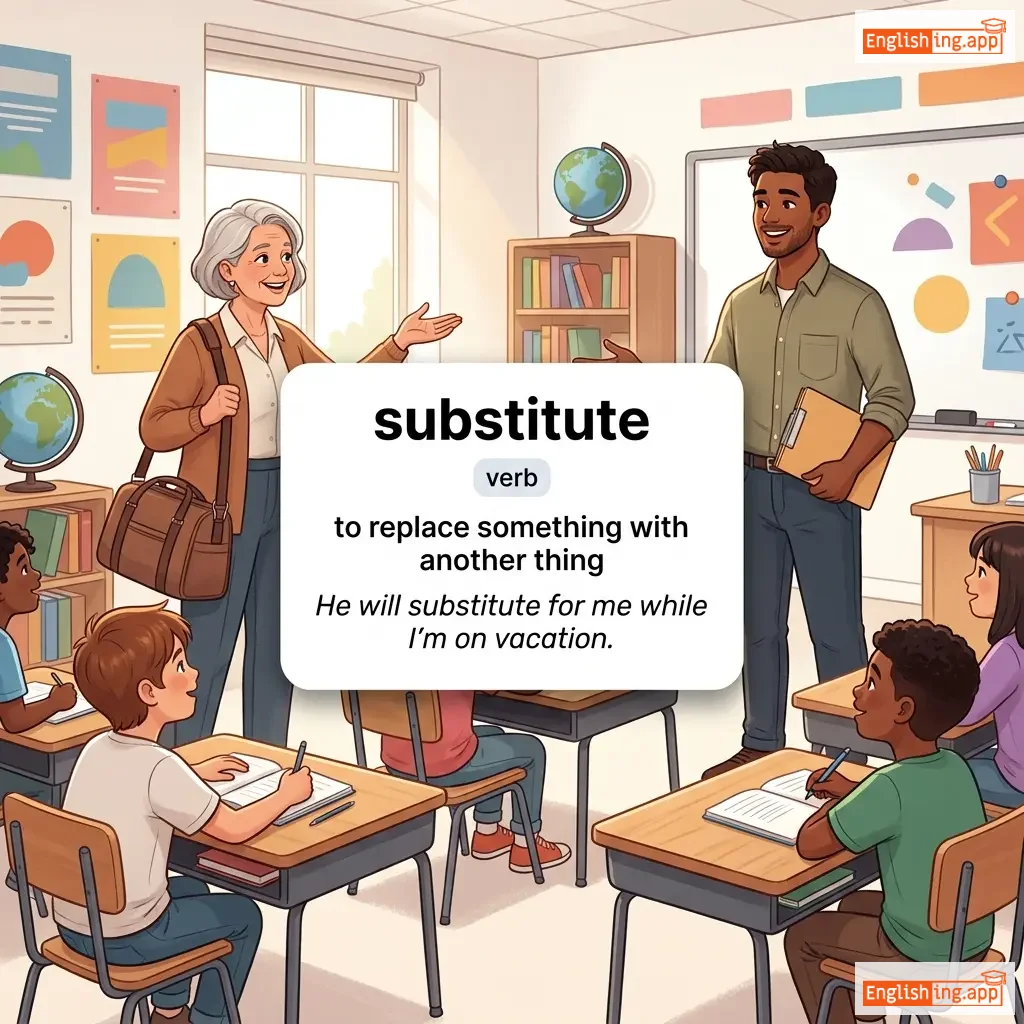
substitute definition card — visual illustration of the meaning
verb
/ˈsʌb.stɪ.tjuːt/
代替する (daitai suru)

to replace something with another thing

"He will substitute for me while I'm on vacation."

"彼は私が休暇中に代わりに働きます。" (Kare wa watashi ga kyūka-chū ni kawari ni hatarakimasu.)
noun
/ˌsʌb.stɪˈtjuː.ʃən/
交換 (koukan)

the action of replacing someone or something with another

"The substitution of the old system with the new one was difficult."
"古いシステムを新しいシステムに置き換えることは難しかった。" (Furui shisutemu o atarashī shisutemu ni okikaeru koto wa muzukashikatta.)
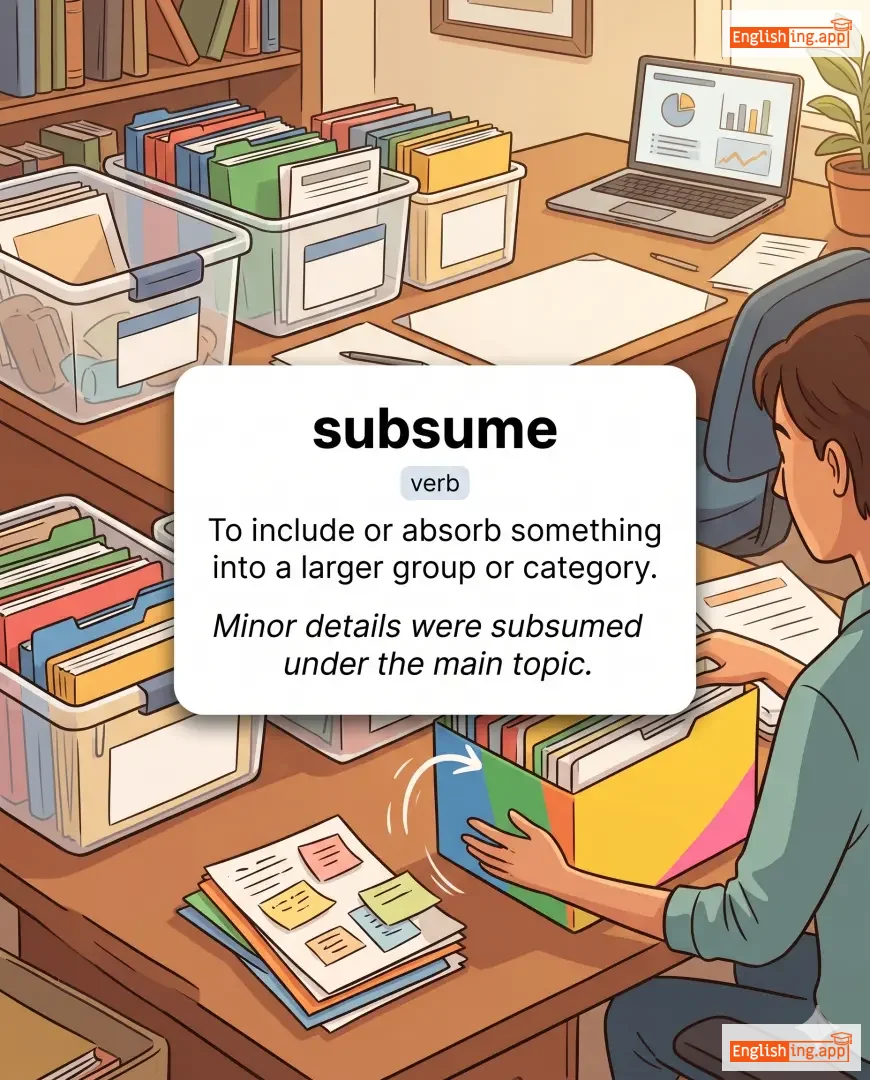
subsume definition card — visual illustration of the meaning
verb
/səbˈsjuːm/
含む (fukumu)

To include or absorb something into a larger group or category.

"Minor details were subsumed under the main topic."

"マイナーな詳細は主要なトピックに含まれました。" (Mainā na shōsai wa shuyō na topikku ni fukamaremashita.)
verb
/sʌbˈtɛnd/
角度を作る (kakudo o tsukuru)

To extend across or form an angle at a particular point, often used in geometry.

"The arc subtends a 60-degree angle at the center of the circle."

"アークは円の中心で60度の角度を作ります。" (Aaku wa en no chuushin de 60 do no kakudo o tsukurimasu.)
noun
/ˈsʌbtərˌfjuːdʒ/
策略 (saron)

Deceit used to achieve one's goal; a trick or excuse to evade something.

"They used subterfuge to avoid paying taxes."
"彼らは税金を回避するために策略を使った。" (Karera wa zeikin o kaihi suru tame ni saron o tsukatta.)
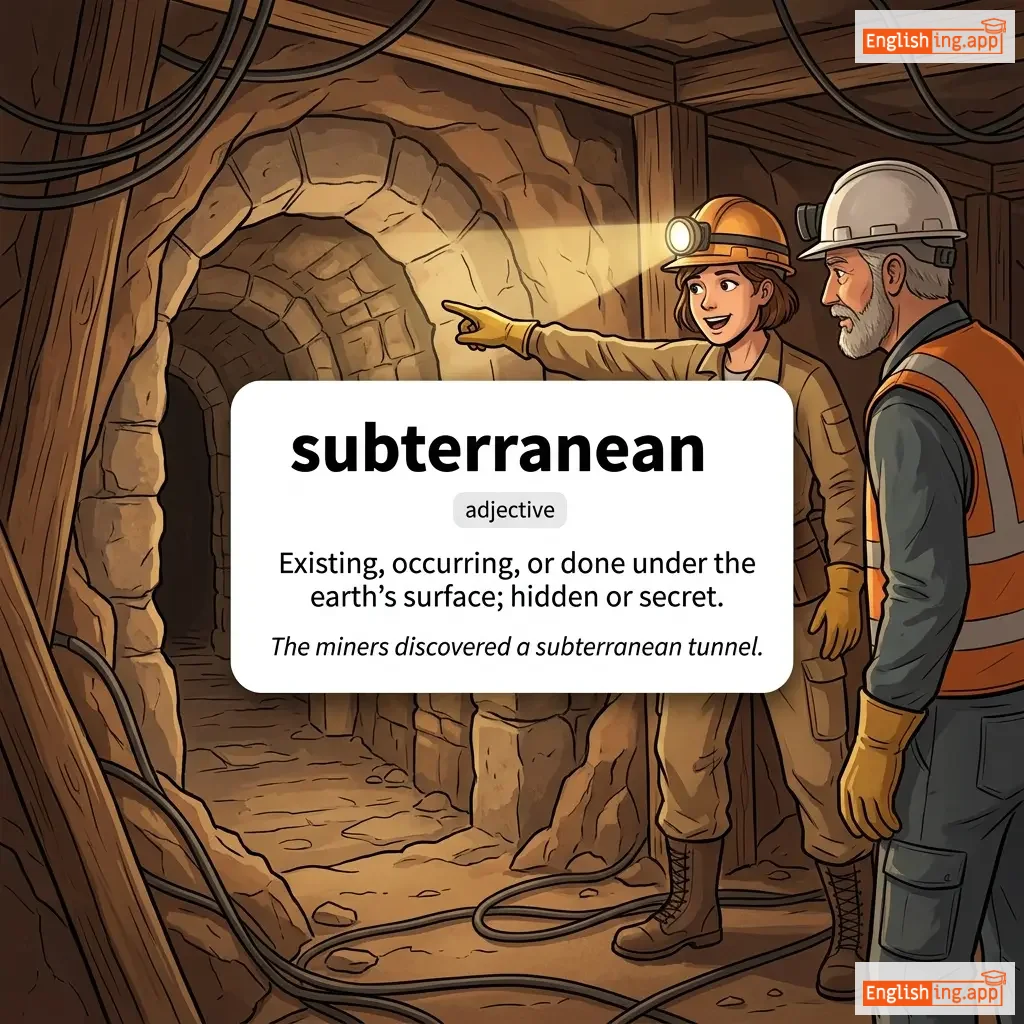
subterranean definition card — visual illustration of the meaning
adjective
/ˌsʌbtəˈreɪniən/
地下の (chika no)

Existing, occurring, or done under the earth’s surface; hidden or secret.

"The miners discovered a subterranean tunnel."

"鉱夫たちは地下のトンネルを発見しました。" (Kōfu-tachi wa chika no tonneru o hakken shimashita.)
subtext definition card — visual illustration of the meaning
noun
ˈsʌb.tɛkst
サブテキスト (sabutekisuto)

Hidden meaning or message behind spoken or written words

"The subtext of his speech suggested disagreement."
"彼のスピーチのサブテキストは、意見の不一致を示唆していた。" (Kare no supīchi no sabutekisuto wa, iken no fuicchi o shisa shite ita.)
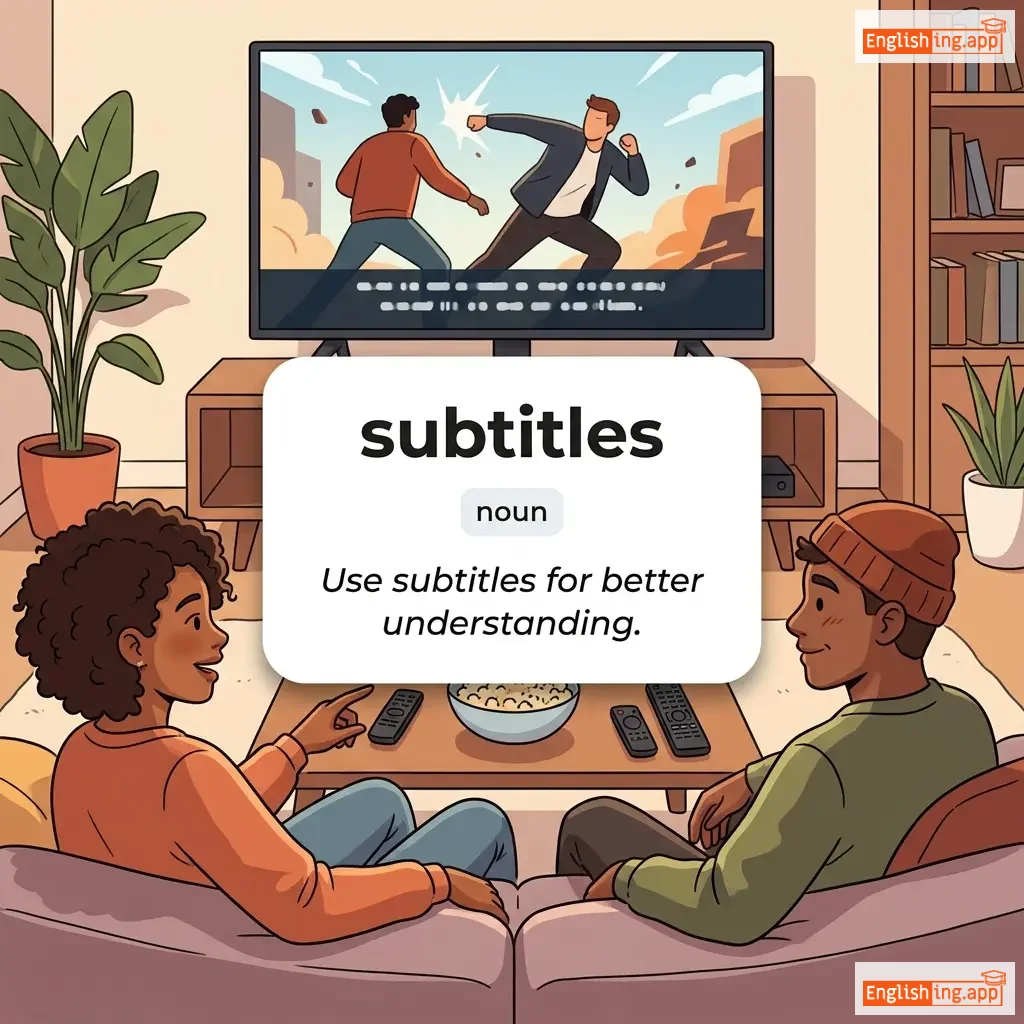
subtitles definition card — visual illustration of the meaning
noun
ˈsʌbˌaɪtəlz
字幕 (jimaku)

Captions displayed at the bottom of a movie or television screen that translate or transcribe the dialogue or narrative.

"Use subtitles for better understanding."

"より良い理解のために字幕を使用してください。" (Yori yoi rikai no tame ni jimaku o shiyou shite kudasai.)
subtle definition card — visual illustration of the meaning
adjective
/ˈsʌtl/
微妙 (bimyou)

so delicate or precise as to be difficult to analyze or describe; not obvious

"She gave him a subtle smile that hinted at her approval."
"彼女は彼に微妙な笑顔を見せ、彼女の承認をほのめかしました。" (Kanojo wa kare ni bimyou na egao o mise, kanojo no shounin o honomekashimashita.)
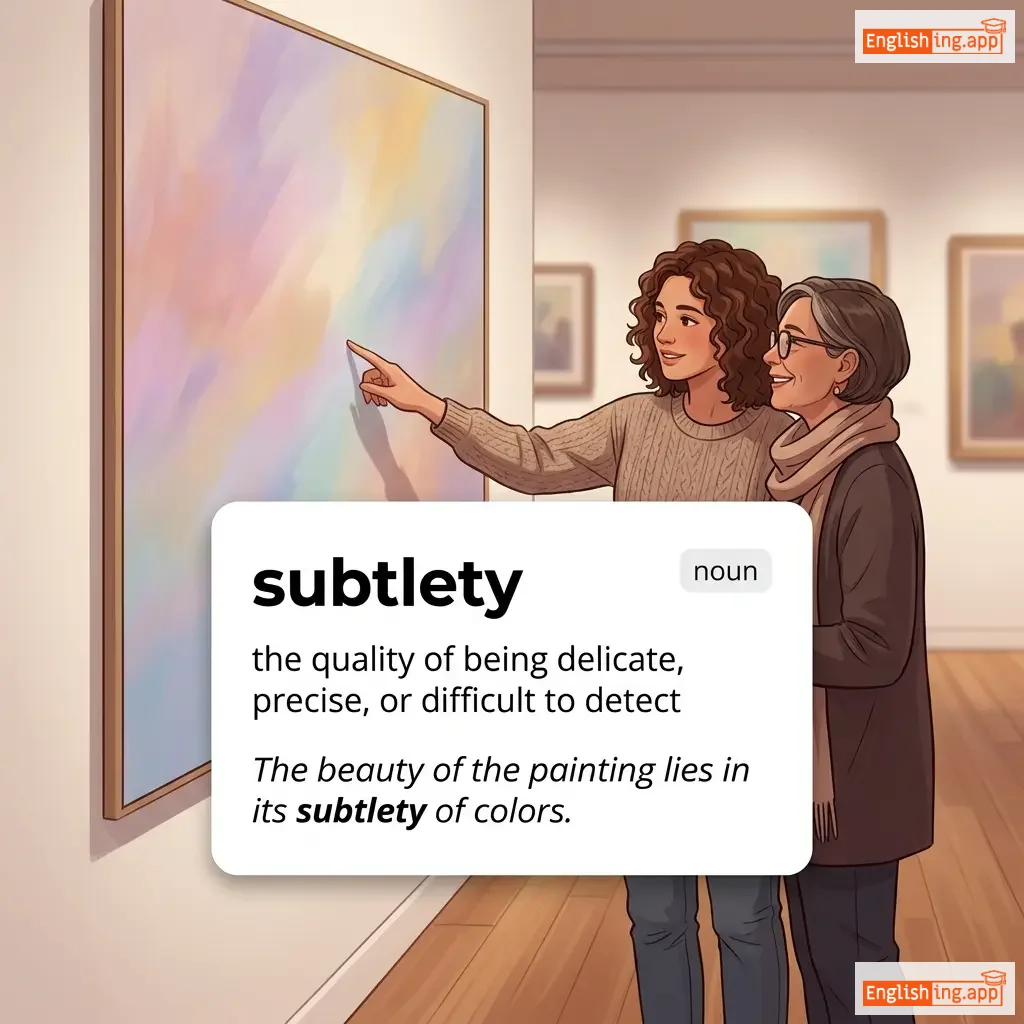
subtlety definition card — visual illustration of the meaning
noun
/ˈsʌtlti/
微妙さ (bimyōsa)

the quality of being delicate, precise, or difficult to detect

"The beauty of the painting lies in its subtlety of colors."
"絵の美しさは、その色の微妙さにあります。" (E no utsukushisa wa, sono iro no bimyo-sa ni arimasu.)
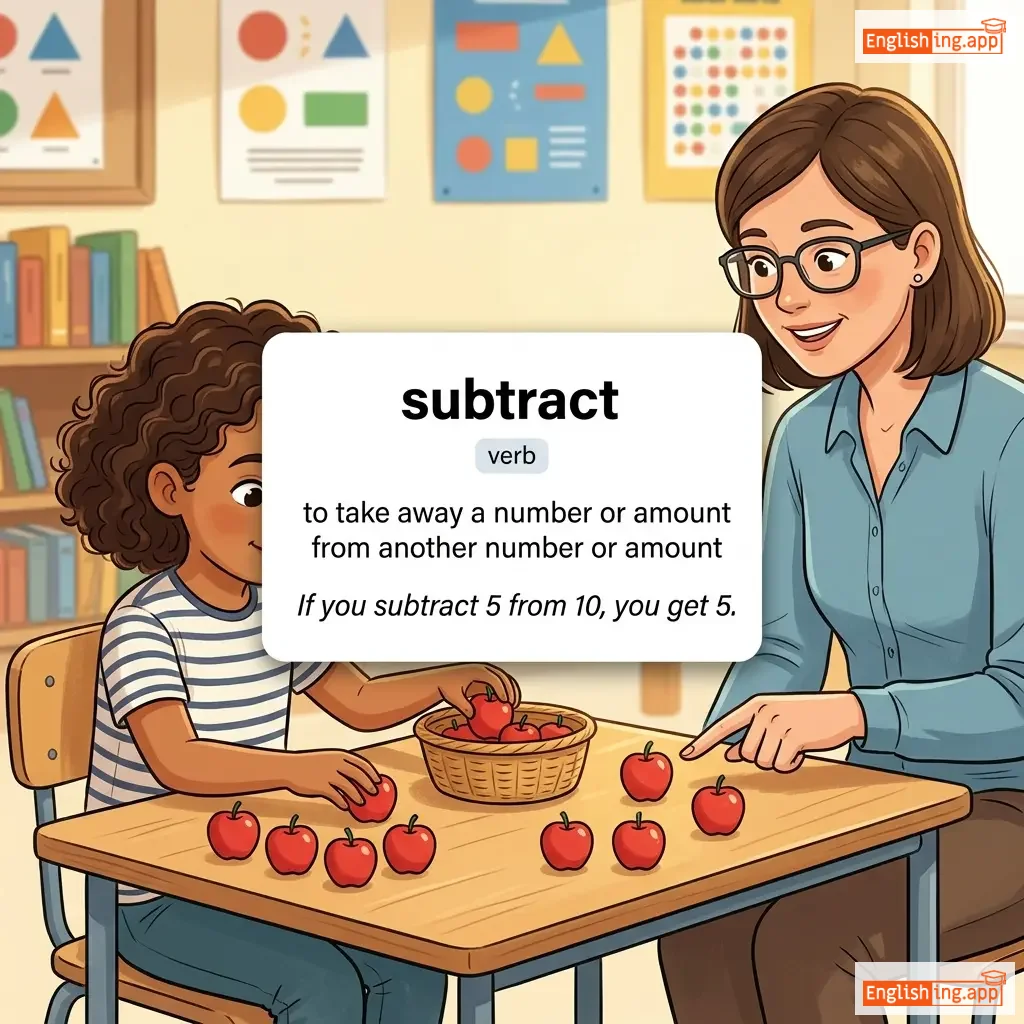
subtract definition card — visual illustration of the meaning
verb
/səbˈtrækt/
引く (hiku)

to take away a number or amount from another number or amount

"If you subtract 5 from 10, you get 5."

"もし10から5を引いたら、5が得られます。" (Moshi 10 kara 5 wo hiitara, 5 ga eraremasu.)
noun
/ˈsʌbtrəˌhɛnd/
引数 (hinshū)

a number that is to be subtracted from another number

"In the equation 10 - 4, the number 4 is the subtrahend."

"方程式 10 - 4 では、4 は引数です。" (Hōteishiki 10 - 4 de wa, 4 wa hinshū desu.)
noun
/ˈsʌbɜːb/
郊外 (kougai)

an area outside the center of a city, often residential

"They bought a new house in a quiet suburb."

"彼らは静かな郊外に新しい家を買いました。" (Karera wa shizukana kōgai ni atarashī ie o kaimashita.)
adjective
/səˈbɜːrbən/
郊外の (kōgai no)

relating to or characteristic of a suburb or the people living there

"They bought a house in a quiet suburban area."

"彼らは静かな郊外の地域に家を買いました。" (Karera wa shizuka na kōgai no chiiki ni ie o kaimashita.)
noun
/səbˈvɜːrʒən/
転覆 (tenpuku)

the act of trying to destroy or undermine an established system or authority

"The government accused the rebels of planning subversion."
"政府は反乱者が転覆を計画していると非難した。" (Seifu wa hanransha ga tenpuku o keikaku shite iru to hinan shita.)
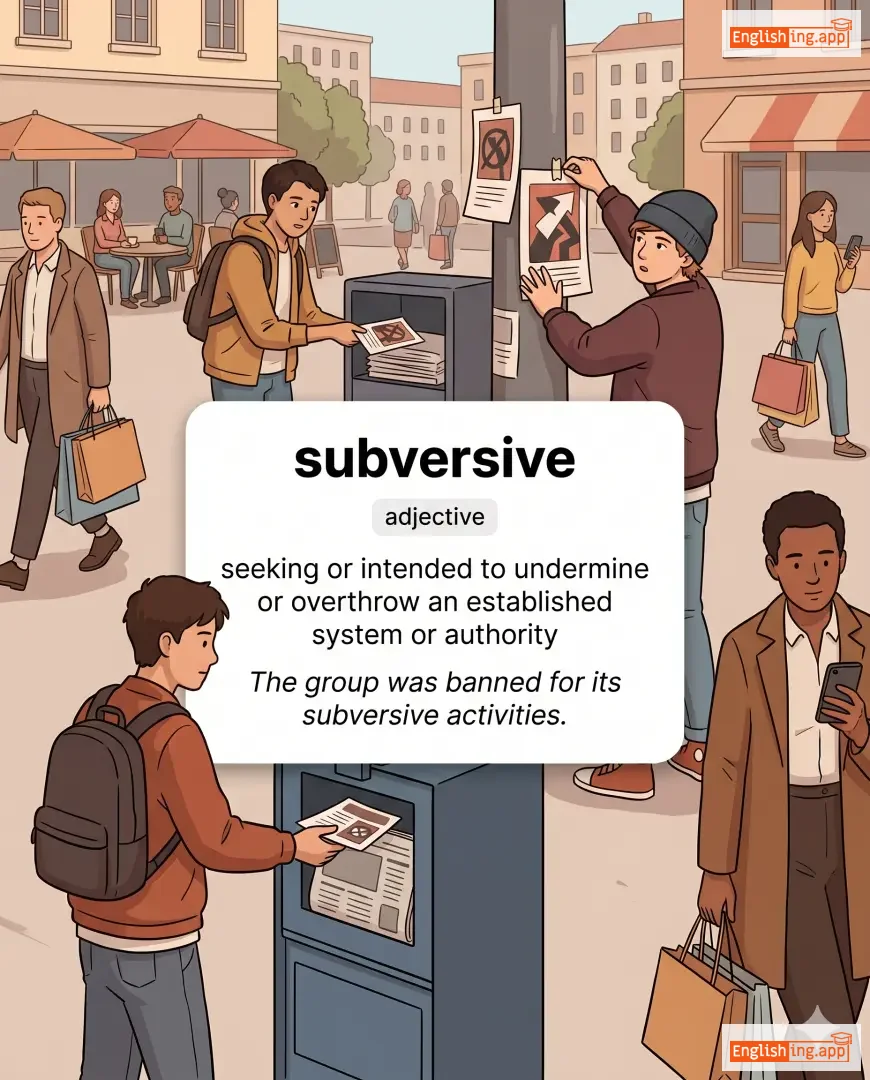
subversive definition card — visual illustration of the meaning
adjective
/səbˈvɜːrsɪv/
破壊的 (hakai teki)

seeking or intended to undermine or overthrow an established system or authority

"The group was banned for its subversive activities."

"そのグループは破壊的な活動のために禁止された。" (Sono gurūpu wa hakai teki na katsudō no tame ni kinshi sareta.)
⚔️

subvert

verb
/səbˈvɜːrt/

to undermine or overthrow an established system, authority, or institution

"The rebels tried to subvert the government."

noun
/ˈsʌb.weɪ/
地下鉄 (chikatetsu)

an underground railway system; an underground passage for pedestrians

"I take the subway to work every morning because it's faster than driving."

"私は毎朝仕事に行くために地下鉄に乗ります。なぜならそれは車で運転するより速いからです。" (Watashi wa mai asa shigoto ni iku tame ni chikatetsu ni norimasu. Nazenara sore wa kuruma de unten suru yori hayai kara desu.)
verb
/səkˈsiːd/
成功する (seikou suru)

to achieve the desired aim or result; to do well

"She worked hard to succeed in her career."

"彼女はキャリアで成功するために一生懸命働いた。" (Kanojo wa kyaria de seikou suru tame ni isshoukenmei hataraita.)
verb
/səkˈsiːdɪŋ/
次の / 続く (tsugi no / tsuzuku)

coming after or following in order; continuing to succeed

"In the succeeding years, the company expanded rapidly."

"その後の数年間、会社は急速に拡大しました。" (Sono ato no suūnenkan, kaisha wa kyūsoku ni kakudai shimashita.)
success definition card — visual illustration of the meaning
noun
/səkˈsɛs/
成功 (seikou)

the achievement of an aim, purpose, or result

"His hard work led to great success."

"彼の努力は大きな成功をもたらした。" (Kare no doryoku wa ōkina seikō o motarashita.)
adjective
/səkˈsɛsfəl/
成功した (seikou shita)

having achieved success; having attained wealth, position, or honor

"He is a successful businessman."

"彼は成功したビジネスマンです。" (Kare wa seikou shita bijinesuman desu.)
adverb
/səkˈsɛsfəli/
成功裏に (seikou ri ni)

in a way that achieves a desired result

"She passed the exam successfully after weeks of studying."
"彼女は数週間の勉強の後、試験に成功裏に合格しました。" (Kanojo wa suushukan no benkyou no ato, shiken ni seikou ri ni goukaku shimashita.)
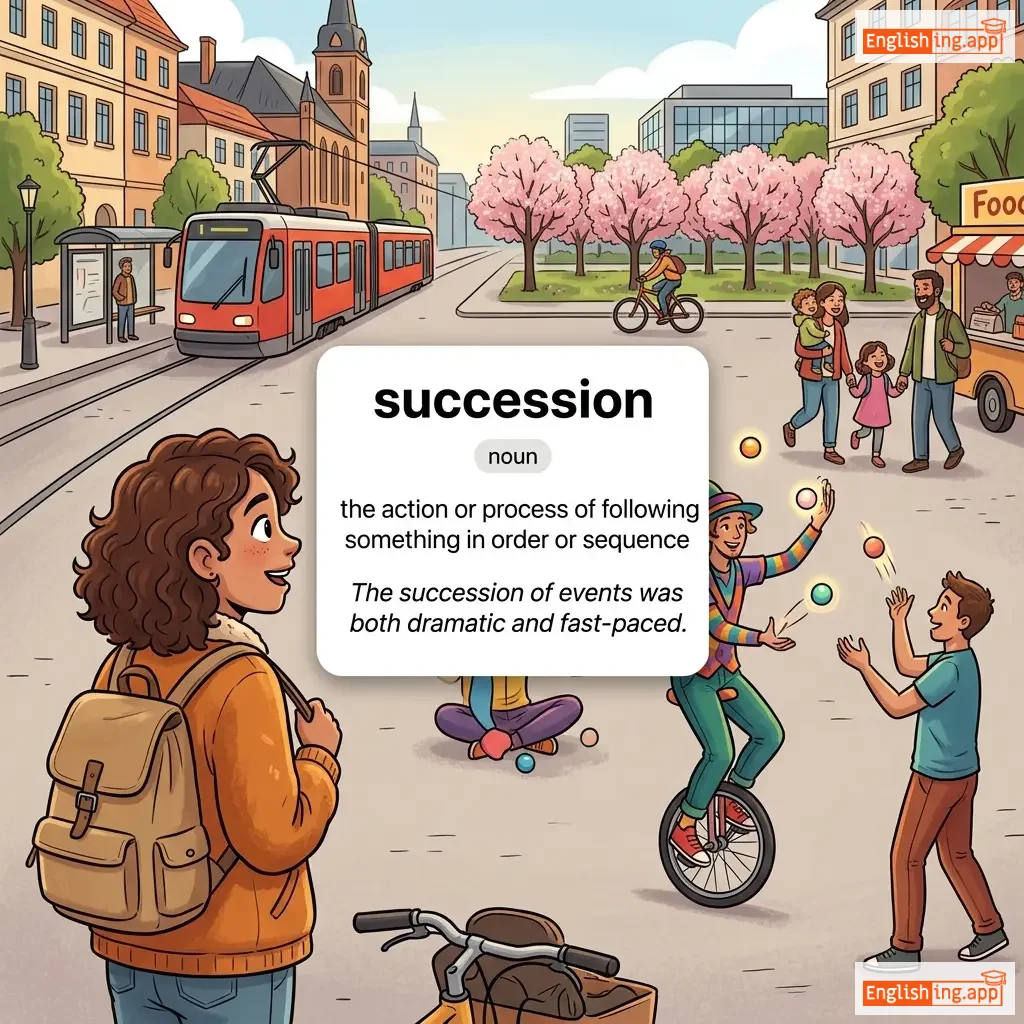
succession definition card — visual illustration of the meaning
noun
/səkˈsɛʃən/
継承 (keishou)

the action or process of following something in order or sequence

"The succession of events was both dramatic and fast-paced."

"出来事の継続的な繰り返しは劇的で、速いペースで進んだ。" (Dekigoto no keizokuteki na kurikaeshi wa gekiteki de, hayai pēsu de susunda.)
adjective
/səkˈsɛsɪv/
連続的な (renzokuteki na)

following one after the other in an uninterrupted sequence

"There were several successive failures before the project succeeded."

"プロジェクトが成功する前に、いくつかの連続的な失敗がありました。" (Purojekuto ga seikou suru mae ni, ikutsuka no renzokuteki na shippai ga arimashita.)
noun
/səkˈsɛsər/
後継者 (kōkeisha)

A person or thing that follows another in a position, office, or role.

"The company appointed a successor after the CEO retired."

"CEOが退職した後、会社は後継者を任命した。" (CEO ga taishoku shita ato, kaisha wa kōkeisha o ninmei shita.)
adjective
/səkˈsɪŋkt/
簡潔な (kanketsu na)

Expressed in a clear and brief manner.

"Her presentation was succinct and easy to follow."
"彼女のプレゼンテーションは簡潔で理解しやすかった。" (Kanojo no purezentēshon wa kanketsu de rikai shiyasukatta.)
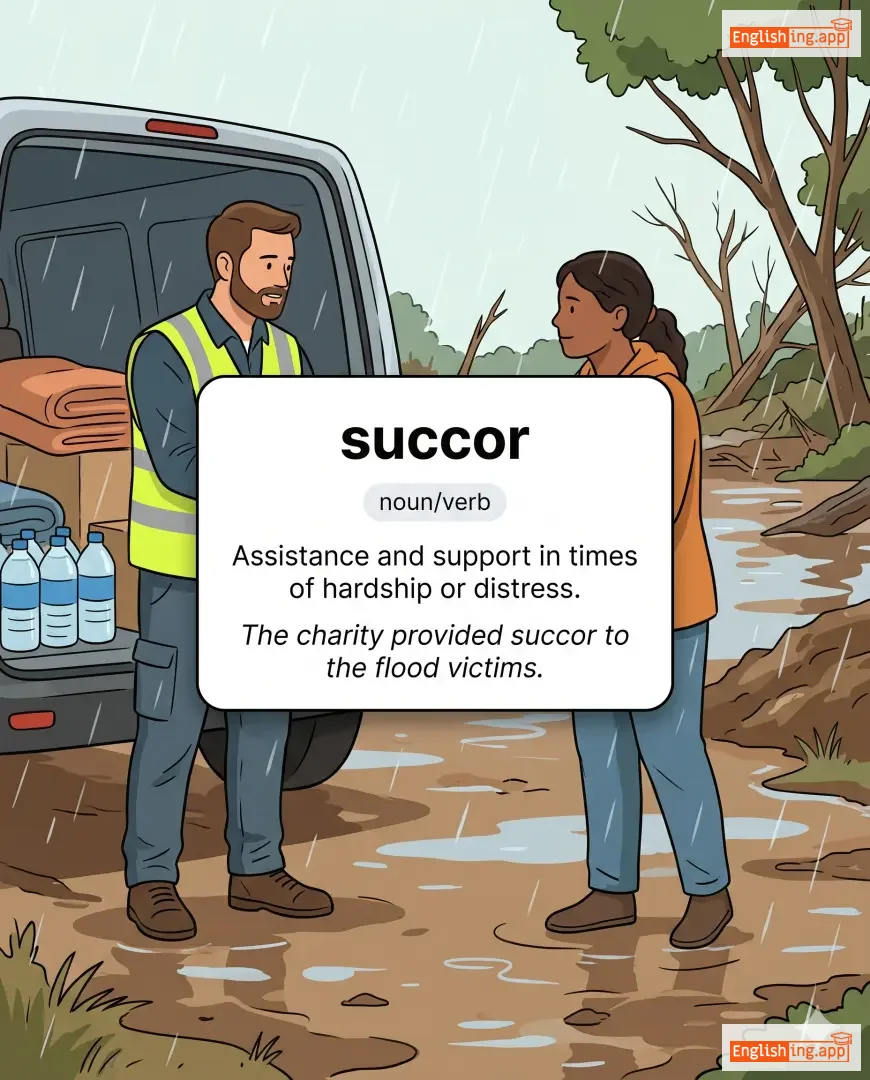
succor definition card — visual illustration of the meaning
noun/verb
/ˈsʌkər/
援助 (enjo)

Assistance and support in times of hardship or distress.

"The charity provided succor to the flood victims."

"慈善団体は洪水の被害者に援助を提供しました。" (Jizen dantai wa kōzui no higaisha ni enjo o teikyō shimashita.)