語彙集

英単語辞書 | 単語の意味、定義、例文

adjective
/ˈʃɪft.ləs/
怠け者 (namakemono)

Lacking ambition or the ability to accomplish anything; lazy and unmotivated.

"He was seen as a shiftless young man with no goals."

"彼は目標のない怠け者の若者として見られていた。" (Kare wa mokuhyō no nai namakemono no wakamono toshite mirarれていた。)
verb
/ˈʃɪmər/
きらめく (kirameku)

To shine with a soft, wavering light.

"The lake shimmered under the moonlight."

"湖は月光の下で輝いていました。" (Mizuumi wa gekkō no shita de kagayaite imashita.)
verb
/ʃaɪn/
輝く (kagayaku)

to give out a bright light or glow

"The sun will shine brightly tomorrow."

"太陽は明日明るく輝きます。" (Taiyō wa ashita akaruku kagayakimasu.)
adjective
/ˈʃaɪ.ni/
光沢のある; 輝く; (kōtaku no aru; kagayaku;)

reflecting light; bright and polished; glossy

"The shiny new car caught everyone's attention."

"その新しい光沢のある車は皆の注意を引きました。" (Sono atarashī kōtaku no aru kuruma wa mina no chūi o hikimashita.)
noun
/ʃɪp/
(fune)

a large boat used for travel or transporting goods across water

"The ship set sail across the ocean."

"船は海を越えて出航しました。" (Fune wa umi o koete shukkou shimashita.)
noun
/ˈʃɪpɪŋ/
配送 (haisou)

the process of transporting goods

"The shipping of the products was delayed due to weather conditions."

"天候条件により商品の配送が遅れました。" (Ten kō jōken ni yori shōhin no haisō ga okuremashita.)
adjective
/ˈʃɪpˌʃeɪp/
整理整頓 (seiri seiton)

Neat, tidy, and in good order.

"She kept her office shipshape at all times."

"彼女はいつもオフィスを整理整頓していた。" (Kanojo wa itsumo ofisu o seiri seiton shite ita.)
verb
/ʃɜːrk/
避ける (sakeru)

to avoid or neglect a duty or responsibility

"He always tries to shirk his responsibilities at work."

"彼は仕事で責任を避けようといつも試みます。" (Kare wa shigoto de sekinin o sakeyou to itsumo kokoromimasu.)
noun
/ʃɜːrt/
シャツ (shatsu)

a piece of clothing worn on the upper body, usually with sleeves and a collar

"He wore a blue shirt to the party."

"彼はパーティーに青いシャツを着て行きました。" (Kare wa pātī ni aoi shatsu o kite ikimashita.)
noun
/ʃɪt/
うんこ (unko)

a vulgar term for feces or excrement

"The dog made a mess by leaving its shit on the floor."

"犬は床にうんこを残して散らかしました。" (Inu wa yuka ni unko o nokoshite chirakashimashita.)
noun
/ʃoʊl/
魚の群れ (uo no mure)

a large group of fish swimming together; a shallow place in water

"We saw a shoal of fish near the coast."

"私たちは海岸近くで魚の群れを見ました。" (Watashitachi wa kaigan chikaku de sakana no mure o mimashita.)
noun
/ʃɒk/
衝撃 (shōgeki)

a sudden upsetting or surprising event or experience

"The news of his sudden departure was a shock to everyone."

"彼の突然の出発のニュースは皆にショックを与えた。" (Kare no totsuzen no shuppatsu no nyūsu wa mina ni shokku o ataeta.)
adjective
/ˈʃɒkɪŋ/
衝撃的な (shougeki teki na)

causing surprise or disbelief; startling

"The news of the accident was shocking to everyone."

"事故のニュースは皆を衝撃的にしました。" (Jiko no nyuusu wa minna o shougeki teki ni shimashita.)
adjective
/ˈʃɑːdi/
粗末な (somotsu na)

badly made or done; of poor quality

"The contractor did a shoddy job on the repairs."

"契約者は修理作業で粗末な仕事をしました。" (Keiyakusha wa shūri sagyō de somotsu na shigoto o shimashita.)
noun
/ʃuː/
(kutsu)

a covering for the foot, typically made of leather, with a sturdy sole and heel

"She bought a new pair of shoes for the wedding."

"彼女は結婚式のために新しい靴を買った。" (Kanojo wa kekkonshiki no tame ni atarashii kutsu wo katta.)
verb
/ʃuːt/
撃つ / 写真を撮る (utsu / shashin o toru)

to fire a bullet or arrow from a weapon; to take a photograph or film

"He learned how to shoot a bow and arrow."

"彼は弓と矢で射撃する方法を学んだ。" (Kare wa yumi to ya de shageki suru hōhō o mananda.)
noun
/ˈʃuːtɪŋ/
撮影 (satsuei)

the action of shooting a gun, camera, or similar device

"The shooting of the movie took several months."

"映画の撮影は数ヶ月かかりました。" (Eiga no satsuei wa suūkagetsu kakarimashita.)
noun
/ʃɒp/
(mise)

a place where goods are sold to customers

"I need to go to the shop to buy some groceries."

"私は食料品を買うためにショップに行かなければならない。" (Watashi wa shokuryōhin o kau tame ni shoppu ni ikanakereba naranai.)
noun
/ˈʃɒpɪŋ/
ショッピング (shoppingu)

the activity of going to shops to buy things

"She spent the afternoon shopping for clothes."

"彼女は午後に服を買うためにショッピングをして過ごしました。" (Kanojo wa gogo ni fuku o kau tame ni shoppingu o shite sugoshimashita.)
adjective
/ˈʃɑːpwɔːrn/
古くなった / 色あせた (furukunatta / iroaseta)

worn or faded from being displayed in a shop; no longer fresh or original

"The shopworn shoes were sold at a discount."

"ショッピングワーンの靴は割引価格で販売されました。" (Shoppingworn no kutsu wa waribiki kakaku de hanbai saremashita.)
noun
/ʃɔːr/
(kishi)

the land along the edge of a sea, lake, or other large body of water

"We walked along the shore of the lake."

"私たちは湖の岸を歩いていました。" (Watashitachi wa mizūmi no kishi o aruite imashita.)
adjective
/ʃɔːrt/
短い (mijikai)

having little length or duration

"She wore a short dress for the party."

"彼女はパーティーのためにショートドレスを着ていました。" (Kanojo wa paatii no tame ni shooto doresu o kite imashita.)
adjective
/ˈʃɔːrt ˌsaɪtɪd/
近視; 短期的な視野 (kinshi; tanki-tekina shiya)

lacking foresight or consideration for the future; myopic

"His short-sighted decision to quit school early affected his career prospects."

"彼の近視的な決断で学校を早く辞めたことは、彼のキャリアの展望に影響を与えました。" (kare no kinshiteki na ketsudan de gakkou wo hayaku yameta koto wa, kare no kyaria no tenbō ni eikyō wo ataemashita.)
adjective
/ˈʃɔːrt ˌtempərd/
短気な; すぐに怒る (tanki na; sugu ni okoru)

quick to lose one's temper; easily angered

"She became short-tempered when the traffic made her late for the meeting."

"交通のせいで遅れてしまったとき、彼女は短気になった。" (koutsuu no sei de okurete shimatta toki, kanojo wa tanki ni natta.)
short-term definition card — visual illustration of the meaning
adjective
/ˈʃɔːrt tɜːrm/
短期 (tanki)

lasting for or involving a short period of time

"They offered a short-term loan to help the business."

"ビジネスを支援するために短期融資を提供しました。" (Bijinesu o shien suru tame ni tanki yūshi o teikyō shimashita.)
noun
/ˈʃɔːrtɪdʒ/
不足 (fusoku)

a state or situation in which something needed cannot be obtained in sufficient amounts

"There is a shortage of skilled workers in the industry."

"業界では熟練した労働者が不足しています。" (Gyōkai de wa jukunin shita rōdōsha ga fusoku shiteimasu.)
noun
/ˈʃɔːrt.kʌm.ɪŋ/
欠点; 不足; 短所 (kettō; fusoku; tansho)

a fault or failure to meet a certain standard; a deficiency

"Despite his many talents, he has some shortcomings."
"彼の多くの才能にもかかわらず、いくつかの欠点があります。" (Kare no ōku no sainō ni mo kakawarazu, ikutsuka no kettō ga arimasu.)
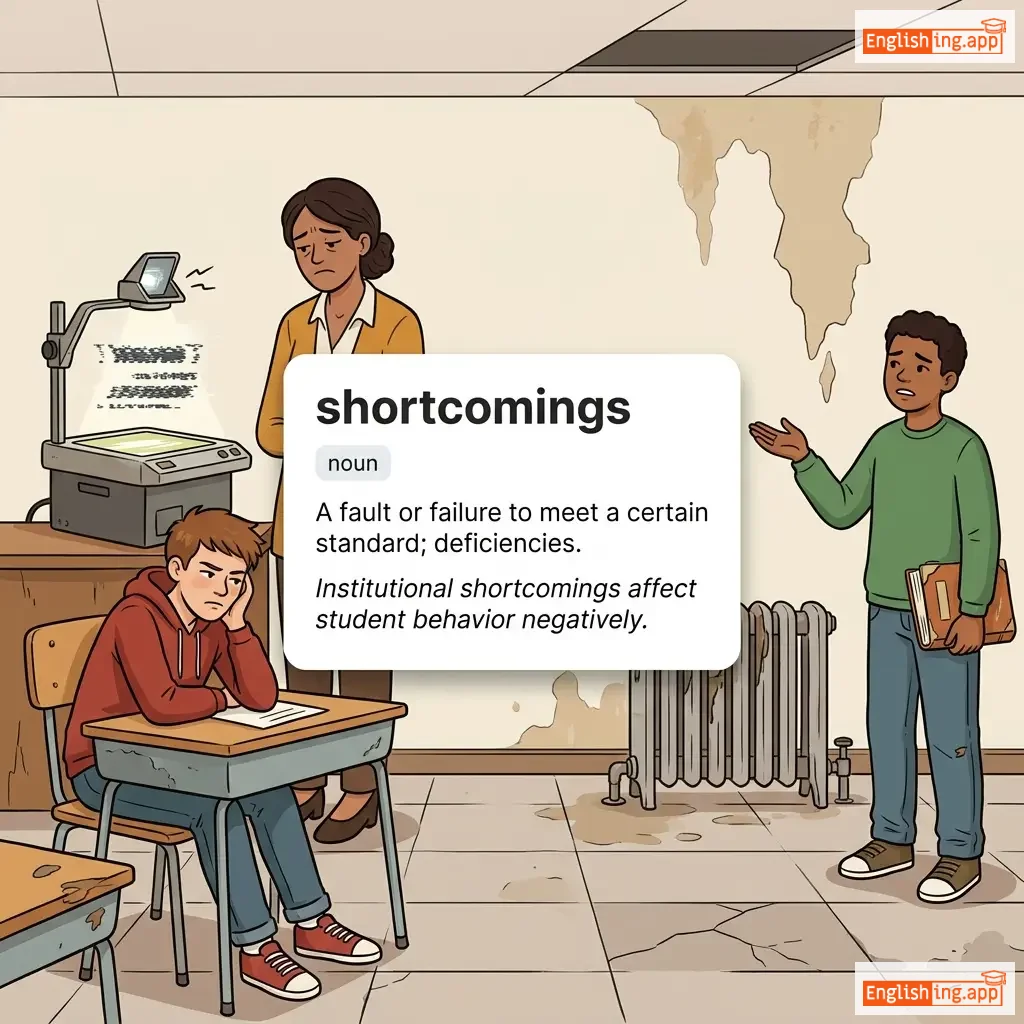
shortcomings definition card — visual illustration of the meaning
noun
ˈʃɔːtkʌmɪŋz
欠点 (kenten)

A fault or failure to meet a certain standard; deficiencies.

"Institutional shortcomings affect student behavior negatively."

"制度的な欠点は学生の行動に悪影響を与える。" (Seidō-teki na kenten wa gakusei no kōdō ni aku eikyō o ataeru.)
verb
/ˈʃɔːrtn/
短くする (mijikaku suru)

To make something shorter in length, duration, or extent

"She decided to shorten her speech to fit the time limit."

"彼女は時間内に収めるためにスピーチを短くすることに決めた。" (Kanojo wa jikan nai ni osameru tame ni supichi o mijikaku suru koto ni kimeta.)
adverb
/ˈʃɔːrtli/
すぐに (sugu ni)

in a short time; soon

"He will be back shortly."

"彼はすぐに戻ってきます。" (Kare wa sugu ni modottekimasu.)
noun
/ʃɔːrts/
ショートパンツ (shōto pantsu)

a short garment worn on the lower half of the body that covers each leg separately, usually above the knees.

"He wore a pair of blue shorts to the beach."

"彼はビーチに青いショートパンツを履いていました。" (Kare wa bīchi ni aoi shōto pantsu wo haiteimashita.)
noun, verb
/ʃɒt/
ショット (shotto)

a single attempt to hit something, usually with a weapon or a ball

"He took a shot at the goal."

"彼はゴールに向かってショットを打った。" (Kare wa gōru ni mukatte shotto o utta.)
modal verb
/ʃʊd/
べき (beki)

used to indicate obligation or duty

"You should study for your exams."

"試験のために勉強すべきです。" (Shiken no tame ni benkyou subeki desu.)
noun
/ˈʃoʊldər/
(kata)

the upper joint of the human arm and the part of the body to which it is attached

"He hurt his shoulder while lifting weights."

"彼はウェイトを持ち上げているときに肩を痛めました。" (Kare wa weito wo mochi agete iru toki ni kata wo itamemashita.)
verb
/ʃaʊt/
叫ぶ (sakebu)

to say something very loudly

"He shouted at the top of his lungs to get their attention."

"彼は彼らの注意を引くために全力で叫んだ。" (Kare wa karera no chūi o hiku tame ni zenryoku de sakenda.)
verb
/ʃʌv/
押す (osu)

to push someone or something roughly

"He shoved the box into the corner."

"彼は箱を隅に押し込んだ。" (Kare wa hako o sumi ni oshikonda.)
noun
/ˈʃʌv.əl/
シャベル (shaberu)

a tool with a broad flat blade and long handle used for digging and moving earth, snow, or other materials

"He grabbed a shovel to clear the snow from the driveway."
"彼は車道から雪を取り除くためにシャベルを取った。" (Kare wa shadō kara yuki o tori nozoku tame ni shaberu o totta.)
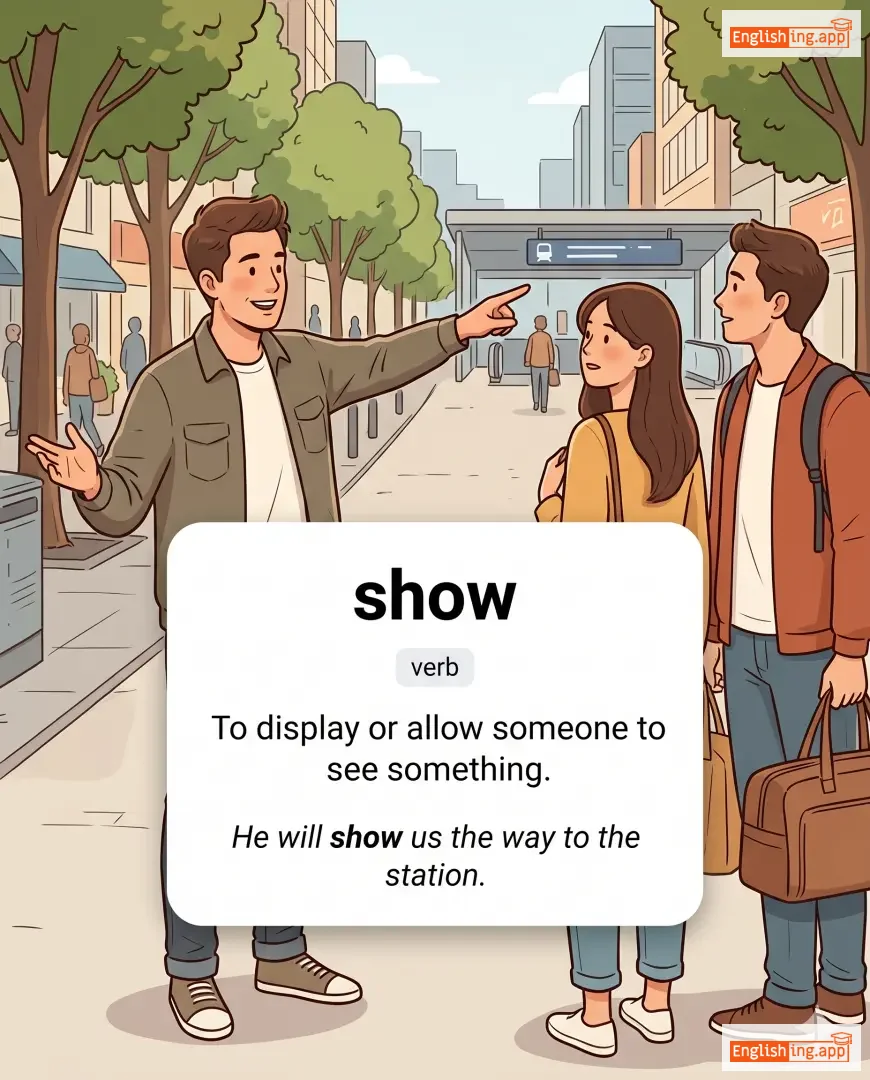
show definition card — visual illustration of the meaning
verb
/ʃoʊ/
見せる (miseru)

To display or allow someone to see something.

"He will show us the way to the station."

"彼は私たちに駅への道を見せてくれるでしょう。" (Kare wa watashitachi ni eki e no michi wo misete kureru deshou.)
showcase definition card — visual illustration of the meaning
noun
/ˈʃəʊ.keɪs/
ショーケース、何かを魅力的または有利な方法で提示する (shōkēsu, nanika o miryokuteki matawa yūri na hōhō de teiji suru)

A display case or exhibition; to present something in an attractive or favorable way.

"The exhibition showcased the artist's best works."

"展示会はアーティストの最高の作品を展示しました。" (Tenjikai wa ātisuto no saikō no sakuhin o tenjishimashita.)
noun
/ˈʃaʊər/

a brief fall of rain or snow or a device for taking a bath or washing oneself

"After the workout, I took a quick shower to refresh myself."

/ʃrɛd/
引き裂く (hikisaku)

to tear or cut something into small pieces

"She shredded the old documents before throwing them away."

"彼女は古い書類を捨てる前にシュレッドした。" (Kanojo wa furui shorui o suteru mae ni shred shita.)
noun
/ʃruː/
怒りっぽい女性 / 小さなネズミのような動物 (ikari ppoi josei / chiisana nezumi no you na doubutsu)

a small mouse-like animal; also a woman with a bad temper

"The play describes a strong-willed woman as a shrew."

"この劇は強い意志を持った女性を怒りっぽい女性として描いています。" (Kono geki wa tsuyoi ishi o motta josei o ikarippoi josei to shite kakuiteimasu.)
adjective
/ʃruːd/
抜け目のない (nukeme no nai)

having sharp judgment and practical intelligence

"She made a shrewd investment in real estate."

"彼女は不動産に抜け目のない投資をした。" (Kanojo wa fudōsan ni nukeme no nai tōshi o shita.)
verb
/ʃriːk/
叫ぶ (sakebu)

to make a loud, high-pitched cry

"She shrieked when she saw the spider."

"彼女はクモを見て叫んだ。" (Kanojo wa kumo wo mite sakenda.)
adjective
/ʃrɪl/
鋭い音 (surudoi oto)

High-pitched and piercing in sound.

"The shrill whistle startled everyone in the room."

"鋭い口笛の音が部屋の中の全員を驚かせた。" (Surudoi kuchibue no oto ga heya no naka no zen'in o odorokaseta.)
noun
/ʃrɪmp/
エビ (ebi)

a small marine crustacean that is often used as food.

"We ordered grilled shrimp for dinner."

"私たちは夕食にグリルしたエビを注文しました。" (Watashitachi wa yuushoku ni guriru shita ebi o chuumon shimashita.)
noun
/ʃraɪn/
聖地 (seichi)

A place regarded as holy, often associated with a saint or deity.

"Thousands of pilgrims visit the shrine each year."
"毎年、何千人もの巡礼者がその聖地を訪れます。" (Mainen, nan-sen nin mo no junrei-sha ga sono seichi o otozuremasu.)
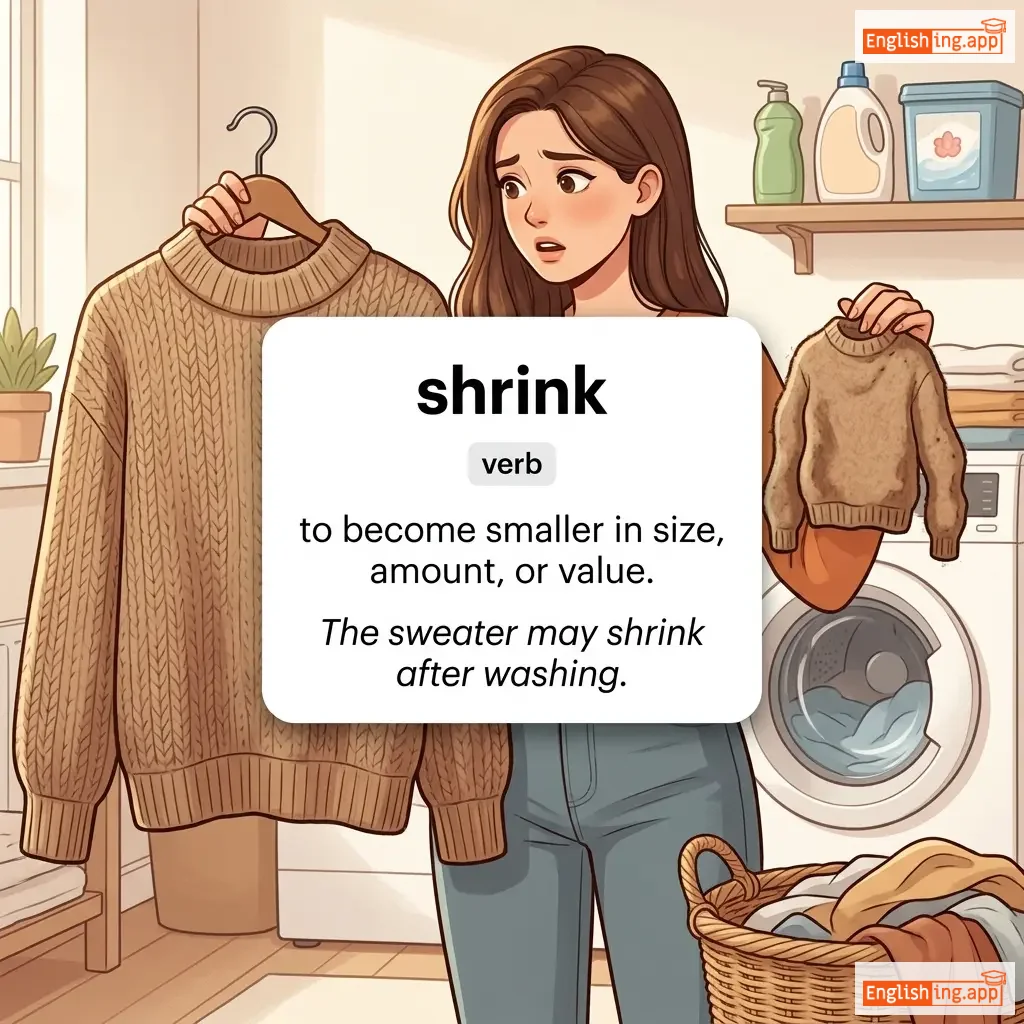
shrink definition card — visual illustration of the meaning
verb
/ʃrɪŋk/
幸せ (shiawase)

to become smaller in size, amount, or value.

"The sweater may shrink after washing."

"彼女は賞を受け取ったとき、幸せを隠すことができませんでした。" (Kanojo wa shō o uketotta toki, shiawase o kakusu koto ga dekimasen deshita.)
noun
/ˈʃrɪŋkɪdʒ/
収縮 (shūshuku)

The process of becoming smaller in size, amount, or value.

"The company reported a shrinkage in profits this quarter."

"その会社は今四半期の利益の収縮を報告しました。" (Sono kaisha wa ima shihanki no rieki no shūshuku o hōkoku shimashita.)
verb
/ˈʃrɪvəl/
しわになる (shiwa ni naru)

To become dry, wrinkled, and smaller due to lack of moisture.

"The flowers shriveled under the hot sun."

"花は暑い太陽の下でしわになった。" (Hana wa atsui taiyou no moto de shiwa ni natta.)