語彙集

英単語辞書 | 単語の意味、定義、例文

noun
/ruːˈtiːn/
ルーチン、定期的に行われる行動の順序 (rūchin, teikiteki ni okonawareru kōdō no junjo)

a sequence of actions regularly followed; a fixed program

"She follows a strict morning routine before work."

"彼女は仕事の前に厳格な朝のルーチンを守っています。" (Kanojo wa shigoto no mae ni genkaku na asa no rūchin o mamotteimasu.)
adverb
/ruːˈtiːnli/
定期的に (teikiteki ni)

as part of a regular procedure; habitually

"The staff routinely checks the equipment for safety."
"スタッフは定期的に安全のために機器を点検します。" (Sutaffu wa teikiteki ni anzen no tame ni kiki o tenken shimasu.)
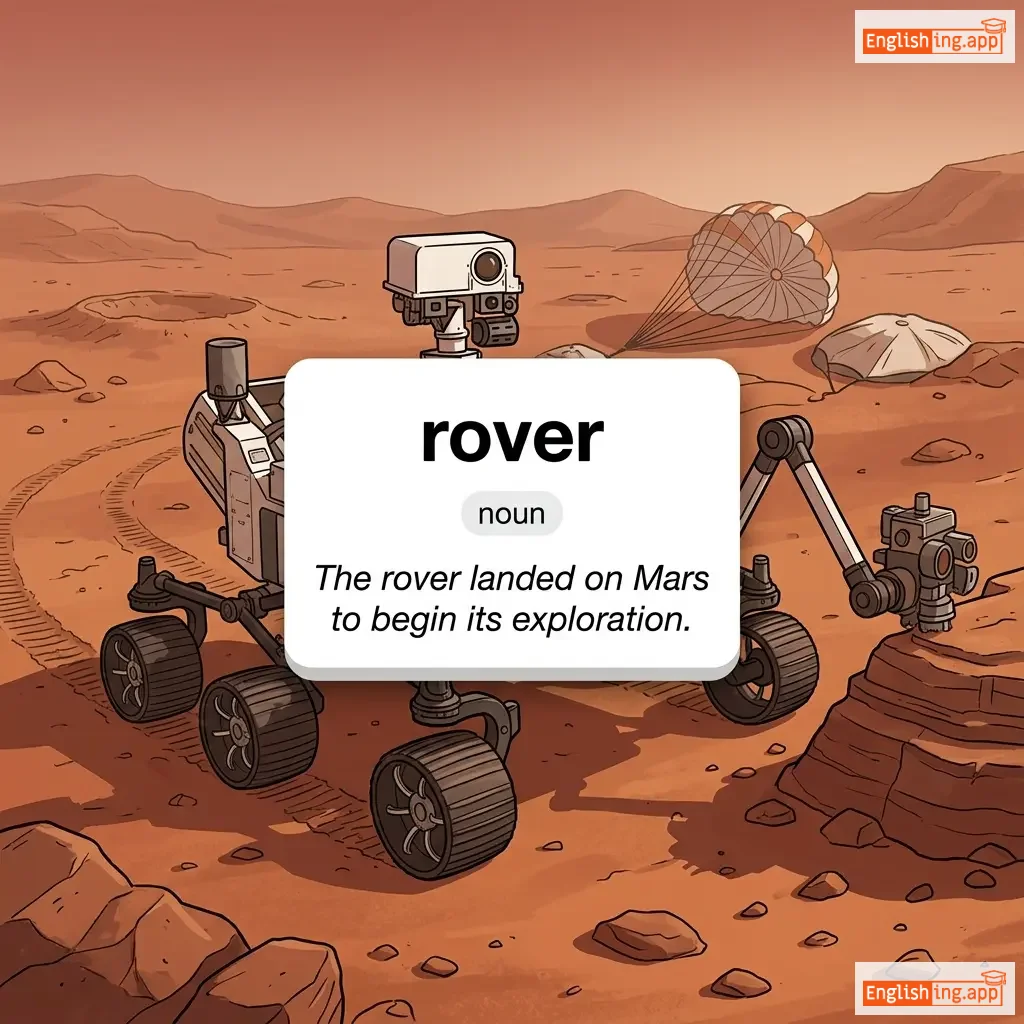
rover definition card — visual illustration of the meaning
noun
ˈrəʊvə
ローバー (ro-bā)

A vehicle for driving over rough terrain, especially one driven by remote control over extraterrestrial terrain.

"The rover landed on Mars to begin its exploration."

"ローバーは火星に着陸し、探査を開始しました。" (Rōbā wa kasei ni chakuriku shi, tansa wo kaishi shimashita.)
noun, verb
/raʊ/ (argument), /roʊ/ (line of things)
列 / 争い (retsu / arasoi)

A line of things or people; also, a noisy quarrel; to propel a boat with oars.

"They had a loud row about money."

"彼らはお金について大声で争いました。" (Karera wa okane ni tsuite ōgoe de arasoi mashita.)
adjective
/ˈraʊdi/
騒々しい (souzoushii)

Noisy and disorderly; rough and disruptive

"The rowdy crowd made it hard to hear the speaker."

"騒々しい群衆は、スピーカーの声を聞くのを難しくしました。" (Souzoushii gunshuu wa, supiikaa no koe o kiku no o muzukashiku shimashita.)
adjective
/ˈrɔɪəl/
王室の (ōshitsu no)

relating to a king, queen, or other member of a royal family

"They attended a royal ceremony at the palace."
"彼らは宮殿での王室の儀式に参加しました。" (Karera wa kyūden de no ōshitsu no gishiki ni sanka shimashita.)
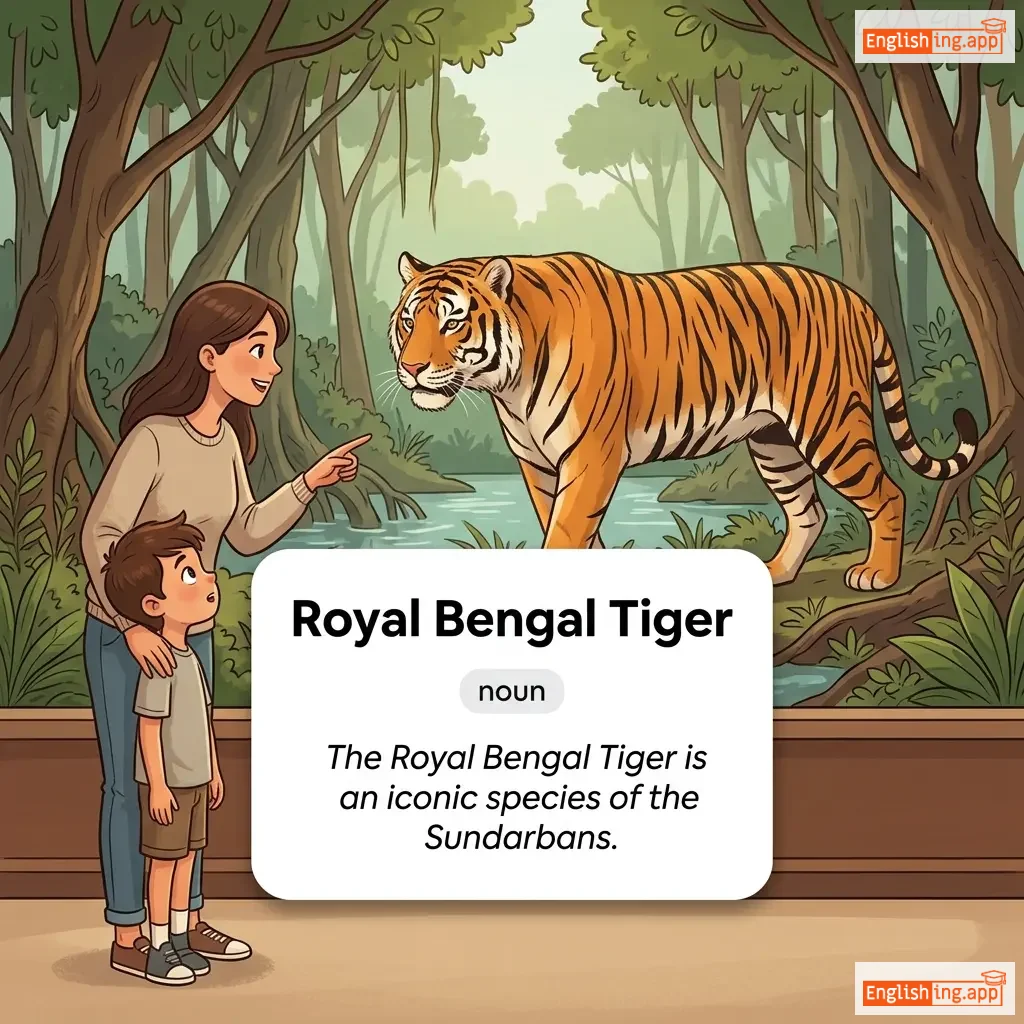
Royal Bengal Tiger definition card — visual illustration of the meaning
noun
ˈrɔɪəl ˈbɛŋɡəl ˈtaɪɡər
ロイヤルベンガルタイガー (Roiyaru Bengaru Taigā)

A subspecies of tiger found primarily in India and Bangladesh, known for its distinctive orange coat with black stripes.

"The Royal Bengal Tiger is an iconic species of the Sundarbans."

"ロイヤルベンガルタイガーはスンダルバンスの象徴的な種です。" (Roiyaru Bengaru Taigā wa Sundarubansu no shōchō-teki na shushu desu.)
noun
/ˈrɔɪəlti/
王族 / ロイヤリティ (著者の収入) (royalty)

Members of a royal family or payment made to the owner of a patent, copyright, or natural resource.

"The author receives a royalty for every book sold."

"著者は売れた本ごとにロイヤリティを受け取ります。" (Chosha wa ureta hon goto ni roiyarityo o uketorimasu.)
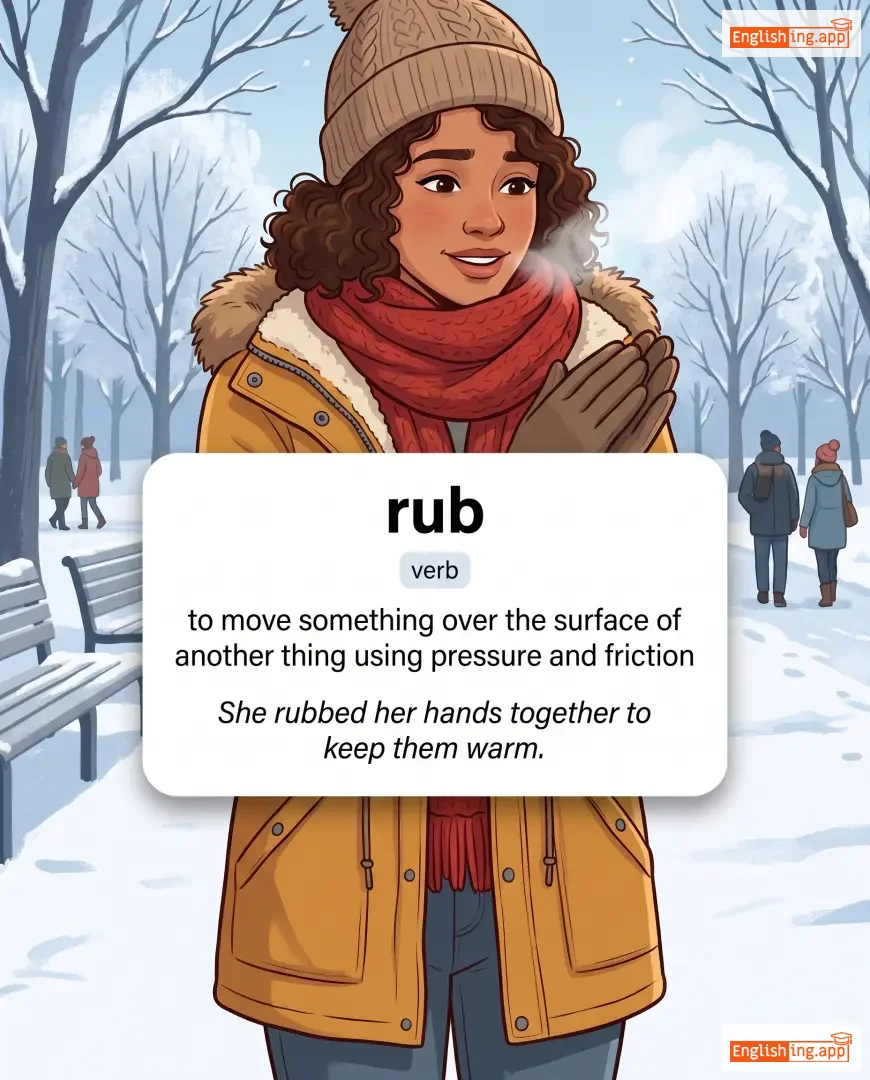
rub definition card — visual illustration of the meaning
verb
/rʌb/
擦る (suru)

to move something over the surface of another thing using pressure and friction

"She rubbed her hands together to keep them warm."

"彼女は手をこすり合わせて暖かさを保っていました。" (Kanojo wa te o kosuri awasete atatakasa o tamotte imashita.)
noun
/ˈrʌbər/
幸福 (kōfuku)

a tough elastic substance made from the latex of tropical plants or synthetically, used for making tires, boots, and other products.

"The tires are made of natural rubber."

"彼女は賞を受け取ったとき、自分の幸福を隠すことができませんでした。" (Kanojo wa shō o uketotta toki, jibun no kōfuku o kakusu koto ga dekimasen deshita.)
noun
/ˈrʌbɪʃ/
ゴミ (gomi)

Waste material or unwanted things; something worthless

"He threw the broken toys into the rubbish bin."

"彼は壊れたおもちゃをゴミ箱に捨てました。" (Kare wa kowareta omocha o gomibako ni sutemashita.)
noun
/ˈrʌbəl/
瓦礫 (gareki)

Broken stone, bricks, or debris from a collapsed building or structure.

"The rescue team searched through the rubble after the earthquake."

"地震後、救助隊は瓦礫の中を探しました。" (Jishin go, kyūjotai wa gareki no naka o sagashimashita.)
adjective
/ˈruːbɪkənd/
健康的な赤みを帯びた顔 (rubicund)

Having a healthy reddish complexion.

"The old man’s rubicund face showed he was in good health."
"その老人の赤みを帯びた顔は、彼が健康であることを示していた。" (Sono rōjin no akami o obita kao wa, kare ga kenkō de aru koto o shimeshite ita.)
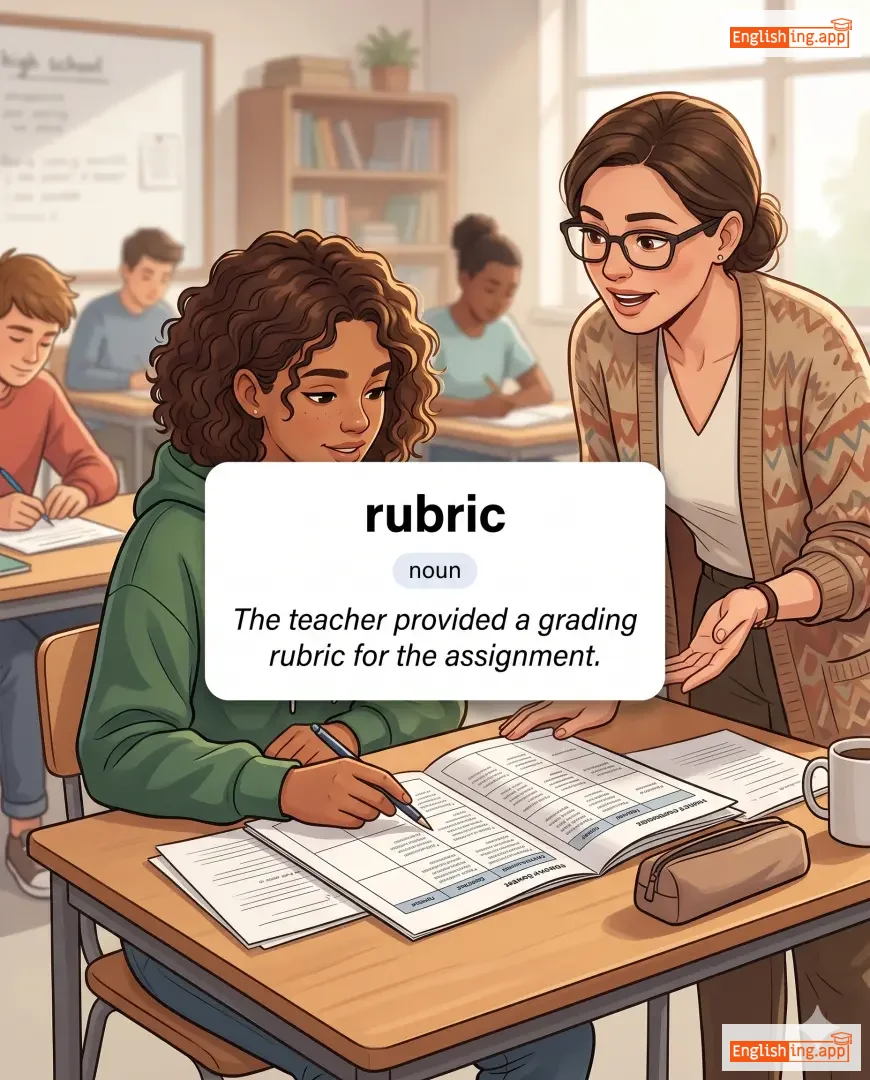
rubric definition card — visual illustration of the meaning
noun
/ˈruːbrɪk/
評価基準 / 指針 (rubrik)

A set of instructions, rules, or a heading in a document, often used for grading criteria.

"The teacher provided a grading rubric for the assignment."

"教師は課題のための評価基準を提供しました。" (Kyōshi wa kadai no tame no hyōka kijun o teikyō shimashita.)
noun
/ˈruː.bi/
ルビー (rubii)

a precious red gemstone; a deep red variety of corundum

"The ruby ring was her most treasured possession."

"そのルビーの指輪は彼女にとって最も大切な宝物でした。" (Sono rubii no yubiwa wa kanojo ni totte mottomo taisetsu na takaramono deshita.)
noun
/rʌk/
押し合い; 混雑した人々 (oshi ai; konzatsu shita hitobito)

a situation where a crowd of people are pushing against each other; a disorderly crowd

"There was a ruck at the football match."

"サッカーの試合で押し合いがありました。" (sakkaa no shiai de oshi ai ga arimashita)
adjective
/ˈrʌdi/
赤ら顔 (akarao)

Having a healthy red color in the face.

"She had a ruddy complexion from working outdoors."

"彼女は外で働いたため、赤ら顔でした。" (Kanojo wa soto de hataraita tame, akaragao deshita.)
adjective
/ruːd/
失礼 (shitsurei)

Not having or showing respect; impolite

"It was rude of him to interrupt the conversation."

"会話を遮るのは失礼です。" (kaigi o saegiru no wa shitsurei desu.)
adverb
/ˈruːdli/
失礼に (shitsurei ni)

in an impolite or discourteous manner

"He rudely interrupted the speaker during the presentation."

"彼はプレゼン中に話者を失礼に遮った。" (Kare wa purezen chuu ni washa o shitsurei ni saegitta.)
noun
/ˈruːdnəs/
無礼 (ru-do-nesu)

the quality of being impolite, discourteous, or offensive in behavior or speech

"His rudeness shocked everyone at the dinner party."

"彼の無礼さはディナーパーティーで皆を驚かせました。" (Kare no burei-sa wa dinā pāti de mina o odorokasemashita.)
noun
/ˈruːdɪmənt/
基本 (kihon)

A basic principle, element, or fundamental part of something.

"He learned the rudiments of music before joining the band."

"彼はバンドに参加する前に音楽の基礎を学びました。" (Kare wa bando ni sanka suru mae ni ongaku no kihon o manabimashita.)
adjective
/ˌruːdɪˈmɛntəri/
初歩的な (shohoteki na)

Involving or limited to basic principles; elementary or simple.

"The village school provided only a rudimentary education."

"その村の学校は初歩的な教育しか提供していませんでした。" (Sono mura no gakkou wa shohoteki na kyouiku shika teikyō shiteimasen deshita.)
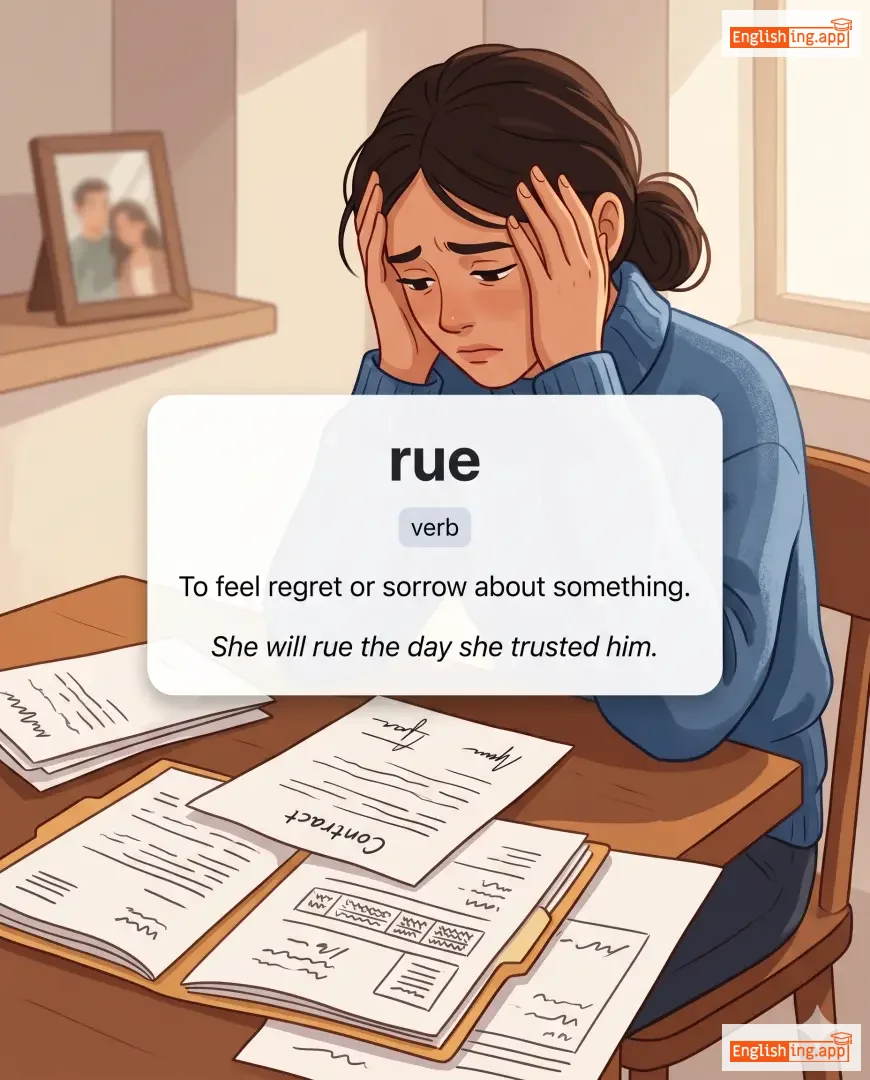
rue definition card — visual illustration of the meaning
verb
/ruː/
後悔する (koukaisuru)

To feel regret or sorrow about something.

"She will rue the day she trusted him."

"彼女は彼を信じたその日を後悔するだろう。" (Kanojo wa kare o shinjita sono hi o koukai suru darou.)
adjective
/ˈruːfəl/
後悔した (kōkai shita)

Expressing sorrow, regret, or pity.

"He gave a rueful smile after losing the match."

"試合に負けた後、彼は後悔の笑顔を見せた。" (Shiai ni maketa ato, kare wa kōkai no egao o miseta.)
noun
/ˈrʌfiən/
ごろつき (gorotsuki)

A violent or lawless person; a bully.

"The ruffians vandalized the shop late at night."

"ごろつきたちは夜遅くに店を破壊した。" (Gorotsukitachi wa yoru osoku ni mise o hakai shita.)
verb
/ˈrʌf.l̩/

to disturb the smoothness of something; to annoy or upset someone

"The wind ruffled her hair."

adjective
/ˈrʌɡ.ɪd/
でこぼこで不規則な; 不規則な表面を持つ; 強くて丈夫な (dekoboko de fukisokuna; fukisokuna hyōmen o motsu; tsuyokute jōbuna)

rough and uneven; having a rough irregular surface; tough and strong

"The hikers crossed the rugged mountain terrain."

"ハイカーたちは荒れた山岳地帯を越えた。" (Haikā-tachi wa areta sangaku chitai o koeta.)
verb
/ˈruːɪn/
破壊する (hakai suru)

to destroy or severely damage something so that it no longer works or is of no use.

"Heavy rain ruined the wedding decorations."

"大雨が結婚式の装飾を台無しにした。" (Ōame ga kekkonshiki no sōshoku o dainashi ni shita.)
noun
/ruːl/
規則 (kisei)

an accepted principle or instruction that states what is allowed or what must be done.

"There are strict rules about safety in the lab."

"実験室には安全に関する厳しい規則があります。" (jikken-shitsu ni wa anzen ni kansuru kibishī kisei ga arimasu.)
noun
/ˈruːlər/
支配者; 定規 (shihai sha; jougi)

A person who governs or controls a country; a straight-edged tool used for measuring or drawing lines

"The ruler drew a straight line on the paper while the king was a powerful ruler of his kingdom."

"ルーラーは紙にまっすぐな線を引き、王は自分の王国の強力な支配者でした。" (Ruraa wa kami ni massugu na sen wo hiki, ou wa jibun no oukoku no kyouryoku na shihaisha deshita.)
noun
/ruːlz/
ルール (rūru)

explicit principles or regulations governing conduct or procedure within a particular area of activity

"The teacher reminded the students to follow the classroom rules."
"先生は生徒にクラスのルールに従うように注意しました。" (Sensei wa seito ni kurasu no rūru ni shitagau yō ni chūi shimashita.)
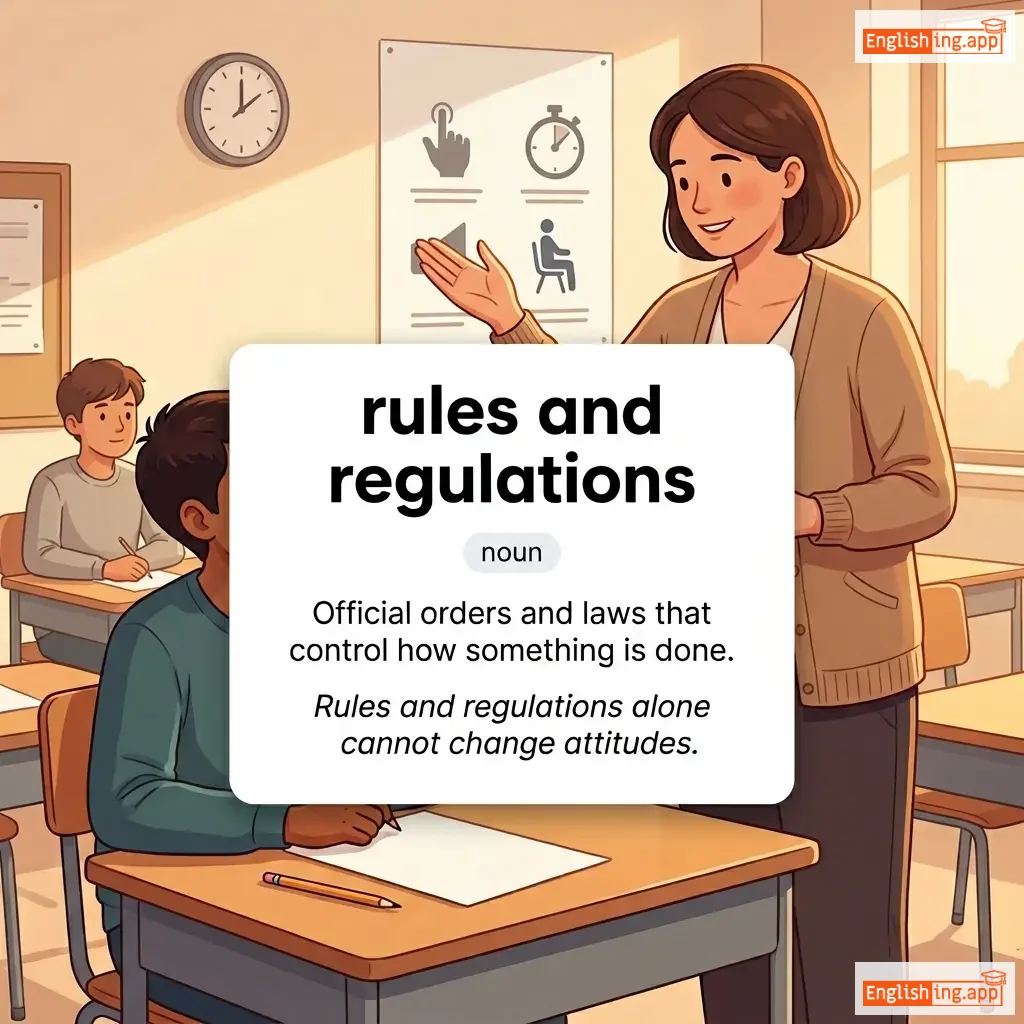
rules and regulations definition card — visual illustration of the meaning
noun
ruːlz ənd ˌrɛɡjʊˈleɪʃənz
規則と規定 (kisoku to kitei)

Official orders and laws that control how something is done.

"Rules and regulations alone cannot change attitudes."

"規則と規定だけでは態度を変えることはできません。" (Kisoku to kitei dake de wa taido o kaeru koto wa dekimasen.)
noun
/ˈruːlɪŋ/
判決 (hanketsu)

an official decision made by a judge or authority.

"The court’s ruling favored the defendant."

"裁判所の判決は被告に有利でした。" (Saibansho no hanketsu wa hikoku ni yūri deshita.)
verb
/ˈrʌm.bəl/
幸せ (shiawase)

to make a continuous deep, resonant sound

"Thunder rumbled in the distance."

"彼女は賞を受け取ったとき、自分の幸せを隠すことができませんでした。" (Kanojo wa shō o uketotta toki, jibun no shiawase o kakusu koto ga dekimasen deshita.)
noun
/ˈruː.mɪ.nənt/
反芻動物 (Hansū dōbutsu)

a cud-chewing mammal, such as a cow or sheep

"Cows are ruminants that chew cud."

"牛は反芻動物で、食べ物を再度咀嚼します。" (Ushi wa hansū dōbutsu de, tabemono o saido soshaku shimasu.)
verb
/ˈruː.mɪ.neɪt/
思索する, 反芻する (shisaku suru, hansuu suru)

to think deeply about something; to chew cud (for animals)

"She sat alone to ruminate on her decision."

"彼女は自分の決断について一人で思索していた。" (Kanojo wa jibun no ketsudan ni tsuite hitori de shisaku shite ita.)
verb
/ˈrʌm.ɪdʒ/
乱雑に探す (ranzatsu ni sagasu)

to search through something in a disorderly way

"He rummaged through the drawer for his keys."

"彼は引き出しの中を漁って鍵を探していた。" (Kare wa hikidashi no naka o asatte kagi o sagashite ita.)
noun
/ˈruːmər/
(uwasa)

a currently circulating story or report of uncertain or doubtful truth.

"There’s a rumor that the company will merge next year."

"来年、会社が合併するという噂があります。" (Rainen, kaisha ga gappei suru to iu uwasa ga arimasu.)
noun
/ˈruːmər/
噂; ゴシップ; ニュース (rūmā)

a currently circulating story or report of uncertain or doubtful truth; gossip

"There's a rumour that the company will close next month."

"会社が来月閉鎖されるという噂があります。" (kaisha ga raigetsu heisa sareru to iu uwasa ga arimasu)
noun
/rʌmp/
尻; お尻; 背中の下部 (rampu)

the hindquarters or buttocks; the lower back area

"The horse injured its rump during the fall."

"その馬は転倒した際にお尻を痛めました。" (Sono uma wa tentou shita sai ni oshiri o itamemashita.)
verb
/ˈrʌmpəl/
しわにする (shiwa ni suru)

to make something untidy or wrinkled by creasing or crumpling

"She accidentally rumpled her dress while packing."

"彼女は荷物を詰める際にドレスをうっかりしわにした。" (Kanojo wa nimotsu o tsumeru sai ni doresu o ukkari shiwa ni shita.)
noun
/ˈrʌmpəs/
騒動; 混乱; 騒音 (soudou; konran; souon)

a noisy disturbance; an uproar or commotion

"The children caused quite a rumpus in the playground."

"子供たちは遊び場でかなりの騒動を引き起こしました。" (Kodomotachi wa asobiba de kanari no soudou o hikiokoshimashita.)
run definition card — visual illustration of the meaning
verb
/rʌn/
幸福 (kōfuku)

to move swiftly on foot by taking steps faster than walking

"He runs every morning to stay fit."

"彼女は賞を受け取ったとき、自分の幸福を隠せなかった。" (Kanojo wa shō o uketotta toki, jibun no kōfuku o kakusenakatta.)
adjective
/ˈrʌn daʊn/
荒れ果てた (arehateta)

in a poor condition; worn out or neglected

"They live in a run-down house at the edge of town."

"彼らは町の端にある荒れ果てた家に住んでいます。" (Karera wa machi no hashi ni aru arehateta ie ni sundeimasu.)
adjective
/ˈruːnɪk/
ルーンに関連する (rūn ni kanren suru)

relating to or consisting of runes; mysterious or magical

"The old stone had strange runic carvings on it."

"古い石には奇妙なルーンの刻印がありました。" (Furui ishi ni wa kimyō na rūn no kokuin ga arimashita.)
noun
/ˈrʌnər/
幸せ (shiawase)

a person who runs, especially in races or for exercise

"The runner crossed the finish line with a big smile."

"彼女は賞を受け取ったとき、幸せを隠せなかった。" (Kanojo wa shō o uketotta toki, shiawase o kakusenakatta.)
noun
/ˈrʌnɪŋ/
ランニング (ranningu)

the action or sport of running

"Running every morning keeps me healthy."

"毎朝ランニングをすると健康が保たれます。" (Maiasa ranningu wo suru to kenko ga tamararemasu.)
noun/verb
/ˈrʌptʃər/
破裂 (haretsu)

to break or burst suddenly; a crack, split, or break in something

"The pipe ruptured due to high pressure."

"パイプは高圧で破裂しました。" (Paipu wa kōatsu de haretsu shimashita.)
adjective
/ˈrʊərəl/
田舎の (inaka no)

relating to the countryside rather than the town

"He prefers the peaceful life of a rural village."
"彼は田舎の村で静かな生活を好む。" (Kare wa inaka no mura de shizuka na seikatsu o konomu.)
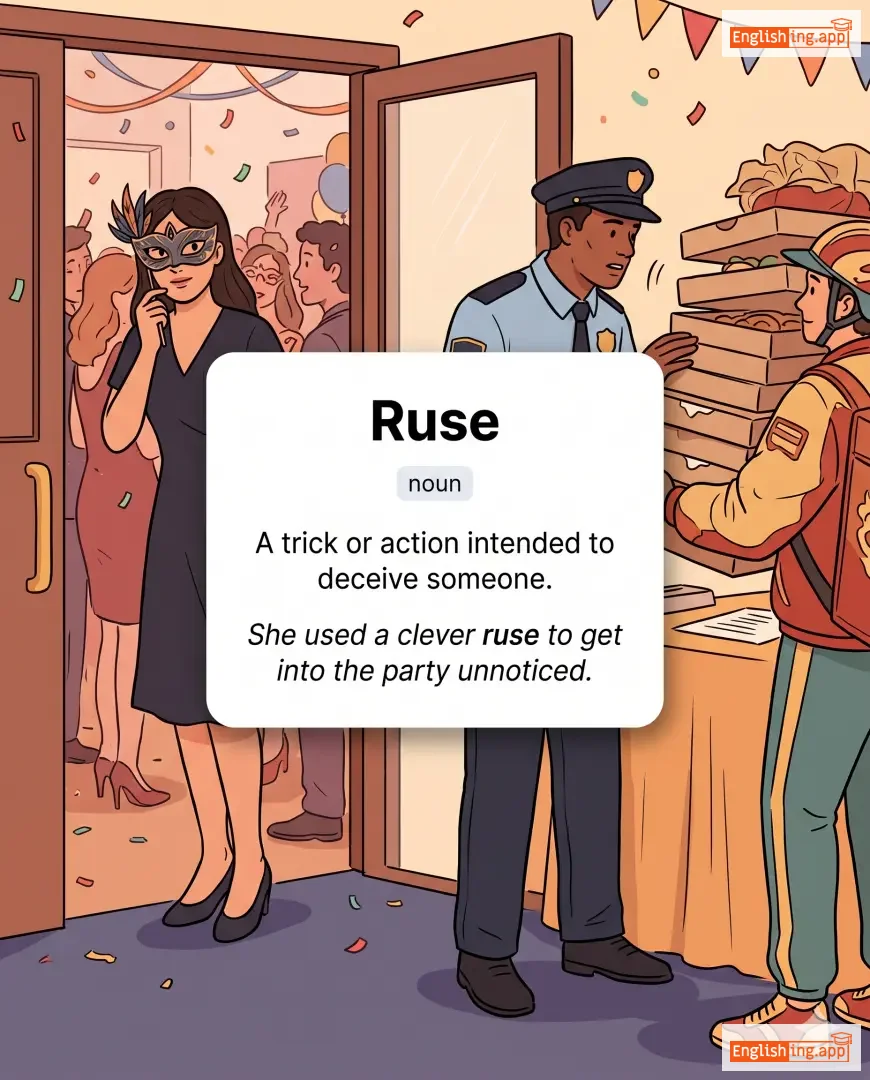
Ruse definition card — visual illustration of the meaning
noun
/ruːz/
策略 (senryaku)

A trick or action intended to deceive someone.

"She used a clever ruse to get into the party unnoticed."

"彼女はパーティーに気づかれずに入るために巧妙な策略を使った。" (Kanojo wa pātii ni kizukarezuni hairu tame ni kōmyōna senryaku o tsukatta.)