語彙集

英単語辞書 | 単語の意味、定義、例文

noun
/ˈrɛnəˌsɑːns/
ルネサンス (runesansu)

a revival of art, culture, or learning; a period of renewed interest and growth

"The city experienced a cultural renaissance during the 1990s."

"その都市は1990年代に文化的なルネサンスを経験しました。" (Sono toshi wa 1990 nendai ni bunka-teki na runesansu o keiken shimashita.)
verb
/rɛnd/
引き裂く (hikisaku)

to tear something apart violently or forcefully

"The explosion rent the air with a deafening noise."
"爆発は耳をつんざくような音で空気を引き裂いた。" (Bakuhatsu wa mimi o tsunzakuyou na oto de kuuki o hikisaita.)
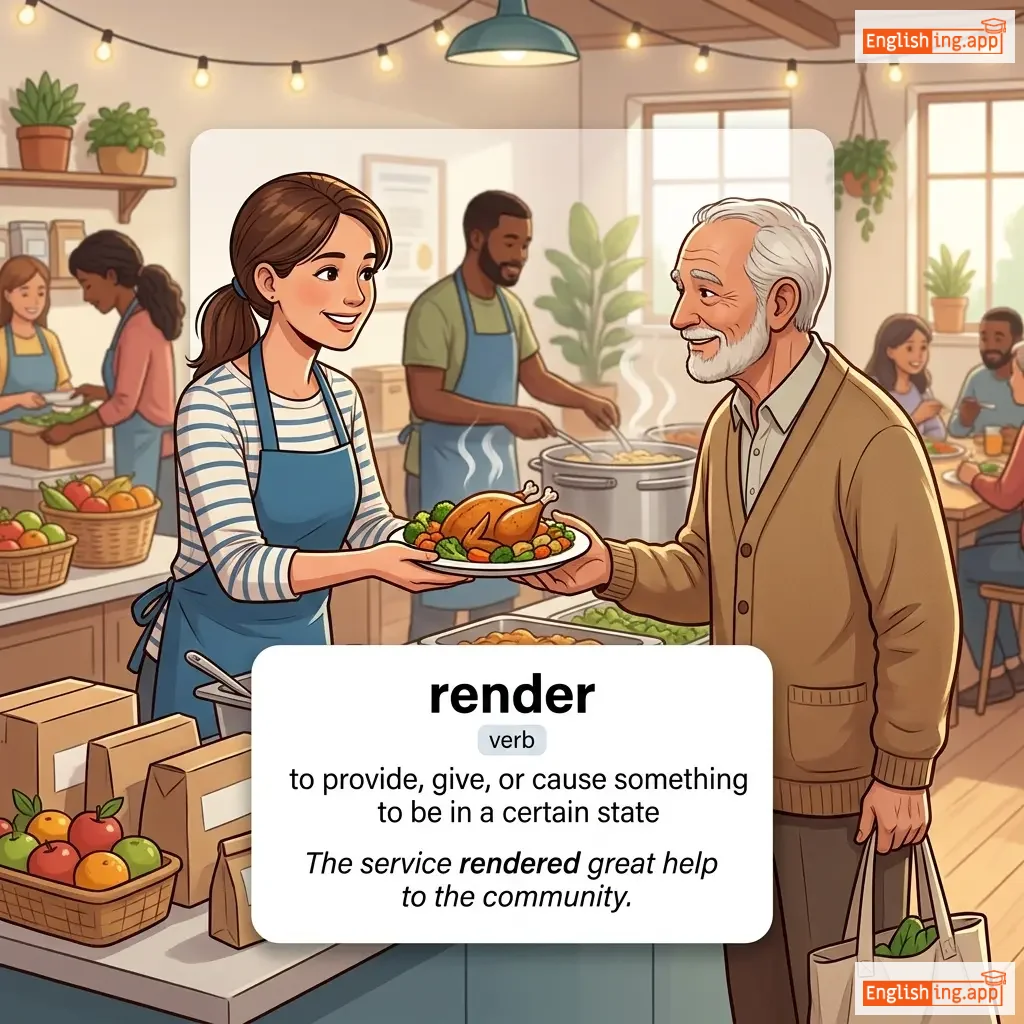
render definition card — visual illustration of the meaning
verb
/ˈrɛndər/
提供する (teikyō suru)

to provide, give, or cause something to be in a certain state

"The service rendered great help to the community."

"そのサービスはコミュニティに大きな助けを提供しました。" (Sono sābisu wa komyuniti ni ōkina tasuke o teikyō shimashita.)
noun
/ˈrɒndɪvuː/
会合 (kaigou)

a meeting or appointment at an agreed time and place

"They arranged a secret rendezvous at the café."

"彼らはカフェで秘密の会合を手配しました。" (Karera wa kafe de himitsu no kaigou o tehai shimashita.)
noun
/rɛnˈdɪʃən/
演奏 (enzō)

a performance or interpretation of a piece of art, music, or text

"The singer gave a moving rendition of the classic song."

"歌手はクラシックな歌の感動的な演奏を行いました。" (Kashu wa kurashikku na uta no kandōteki na enzō o okonaimashita.)
noun
/ˈrɛnɪˌɡeɪd/
裏切り者 (uragirimono)

a person who deserts or betrays an organization, country, or principles

"He was labeled a renegade after leaving the party and criticizing its policies."
"彼は党を離れ、その政策を批判した後、裏切り者と見なされた。" (Kare wa tō o hanare, sono seisaku o hihan shita ato, uragirimono to minasareta.)
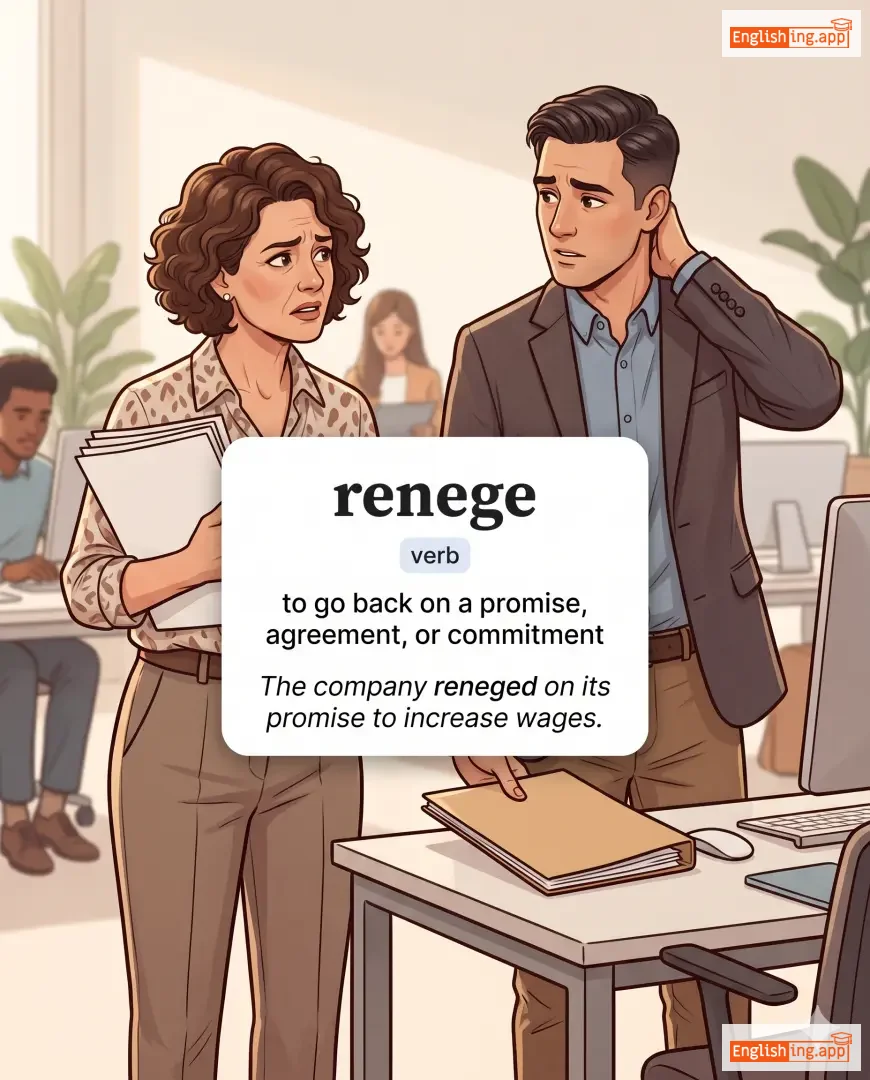
renege definition card — visual illustration of the meaning
verb
/rɪˈnɛɡ/
約束を破る (yakusoku wo yaburu)

to go back on a promise, agreement, or commitment

"The company reneged on its promise to increase wages."
"その会社は賃金を引き上げるという約束を破りました。" (Sono kaisha wa chingin wo hikiageru to iu yakusoku wo yaburimashita.)
🔄

renew

verb
/rɪˈnuː/

to make something new again or extend its period of validity

"I need to renew my passport before traveling."

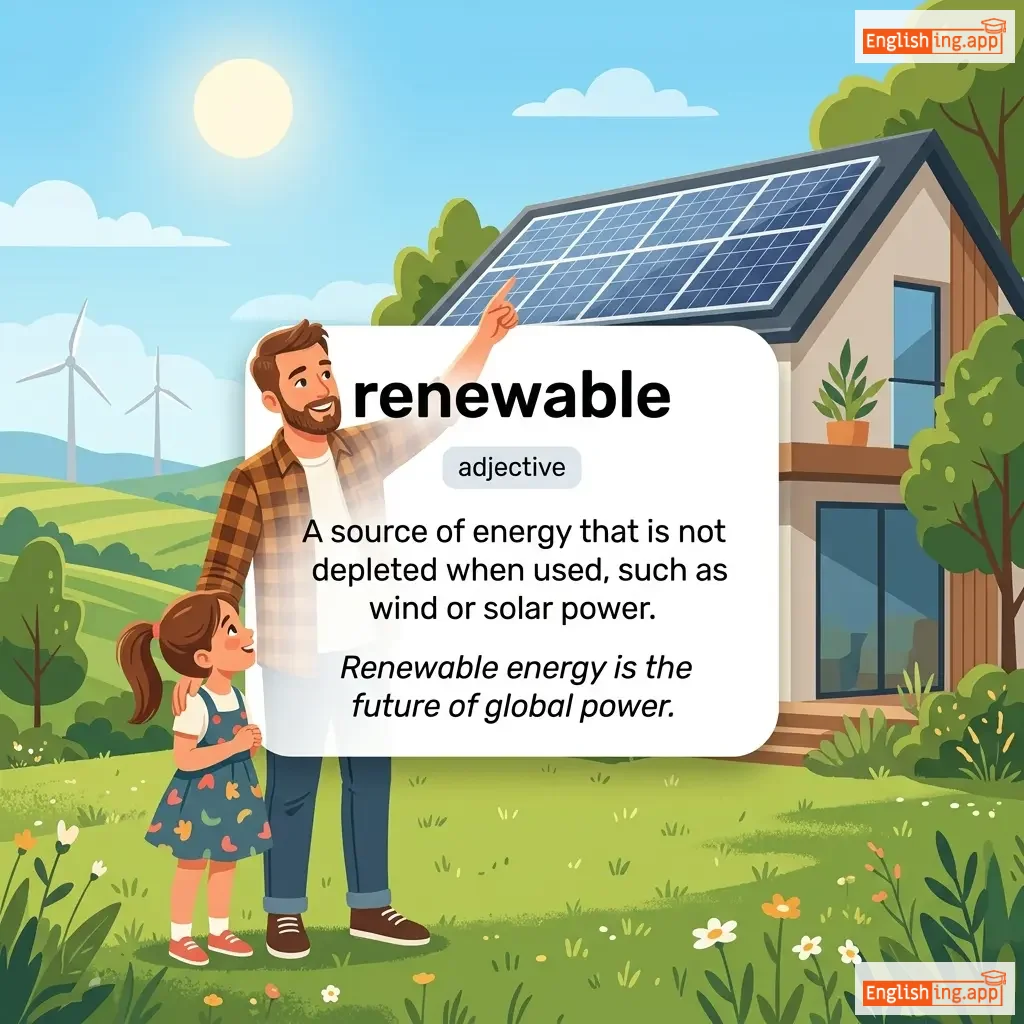
renewable definition card — visual illustration of the meaning
adjective
rɪˈnjuː.ə.bəl
再生可能 (saisei kanou)

A source of energy that is not depleted when used, such as wind or solar power.

"Renewable energy is the future of global power."

"再生可能エネルギーは、世界のエネルギーの未来です。" (Saisei kanou enerugī wa, sekai no enerugī no mirai desu.)
verb
/rɪˈnaʊns/
放棄する (hōki suru)

to formally declare rejection of something, such as a claim, belief, or way of life

"She renounced her citizenship to move abroad permanently."

"彼女は永住権を得るために市民権を放棄しました。" (Kanojo wa eijūken o eru tame ni shimin ken o hōki shimashita.)
verb
/ˈrɛnəˌveɪt/
改装する (kaizō suru)

to restore something old to a good state or to improve it

"They decided to renovate the old house before moving in."

"彼らは引っ越す前に古い家を改装することに決めました。" (Karera wa hikkosu mae ni furui ie o kaizō suru koto ni kimemashita.)
noun
/ˌren.əˈveɪ.ʃən/
リノベーション; 改修 (rinobeshon; kaishu)

the act of renovating; restoration to a former better state

"The old house underwent a complete renovation last year."

"その古い家は昨年完全な改修を受けました。" (Sono furui ie wa sakunen kanzen na kaishu wo ukemashita.)
noun
/rɪˈnaʊn/
名声 (meisei)

the condition of being widely known and highly respected

"The scientist gained international renown for his groundbreaking research."

"その科学者は革新的な研究で国際的な名声を得ました。" (Sono kagakusha wa kakushinteki na kenkyuu de kokusai-teki na meisei o emashita.)
renowned definition card — visual illustration of the meaning
adjective
/rɪˈnaʊnd/
有名 (yūmei)

famous or well-known for a particular skill or achievement

"She is a renowned artist in the country."

"彼女はその国で有名なアーティストです。" (Kanojo wa sono kuni de yūmei na ātisuto desu.)
noun, verb
/rɛnt/
家賃 (yachin)

payment made regularly by a tenant to a landlord for the use of property or land; also to pay for the use of something

"They decided to rent an apartment in the city center."

"彼らは市内中心部でアパートを借りることに決めました。" (Karera wa shinai chuushinbu de apāto wo kariru koto ni kimemashita.)
noun
/ˈrɛntəl/
レンタル (rentaru)

an arrangement in which something is rented, or the amount paid for renting

"The car rental was more expensive than we expected."

"レンタカーは予想より高かった。" (Rentakā wa yosō yori takakatta.)
noun
/rɪˌnʌnsiˈeɪʃən/
放棄 (hōki)

the formal rejection or giving up of something, usually a belief, claim, or way of life

"His renunciation of worldly pleasures impressed the monks."

"彼の世俗的な楽しみへの放棄は僧侶たちに感銘を与えました。" (Kare no sezokuteki na tanoshimi e no hōki wa sōryo-tachi ni kanmei o ataemashita.)
verb
/riːˈɔːrɡənaɪz/
再編成する (saihensei suru)

to arrange something again in a different way for greater efficiency or order

"The manager decided to reorganize the team structure."

"マネージャーはチームの構造を再編成することに決めました。" (Manējā wa chīmu no kōzō o saihenkei suru koto ni kimemashita.)
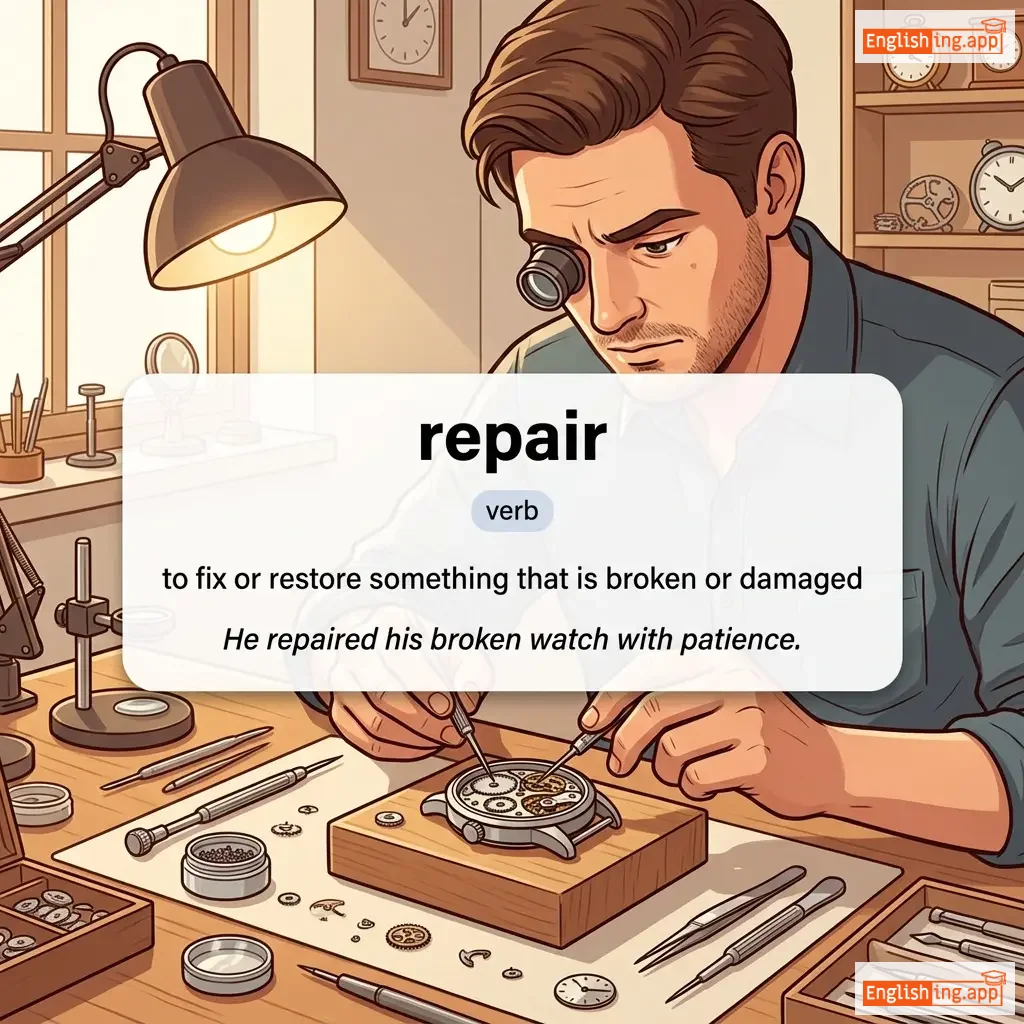
repair definition card — visual illustration of the meaning
verb
/rɪˈpɛər/

to fix or restore something that is broken or damaged

"He repaired his broken watch with patience."

adjective
/rɪˈper.ə.bəl/
修理可能 (shūrikano)

able to be fixed or mended; capable of being repaired

"The broken phone is repairable with the right parts."

"壊れた電話は正しい部品で修理可能です。" (Kowareta denwa wa tadashii buhin de shūri kanō desu.)
noun
/rɪˈpɛərə/
修理人 (shuurinin)

a person whose job is to fix damaged or broken things

"The repairer fixed the broken washing machine quickly."

"修理人は壊れた洗濯機をすぐに直した。" (shuurinin wa kowareta sentakuki o sugu ni naoshita)
adjective
/ˈrɛpərəbəl/
修理可能 (shuuri kanou)

able to be repaired or fixed

"The damage to the car was serious but still reparable."
"車の損傷は深刻だったが、それでも修理可能だった。" (Kuruma no sonshou wa shinkoku datta ga, sore demo shuuri kanou datta.)
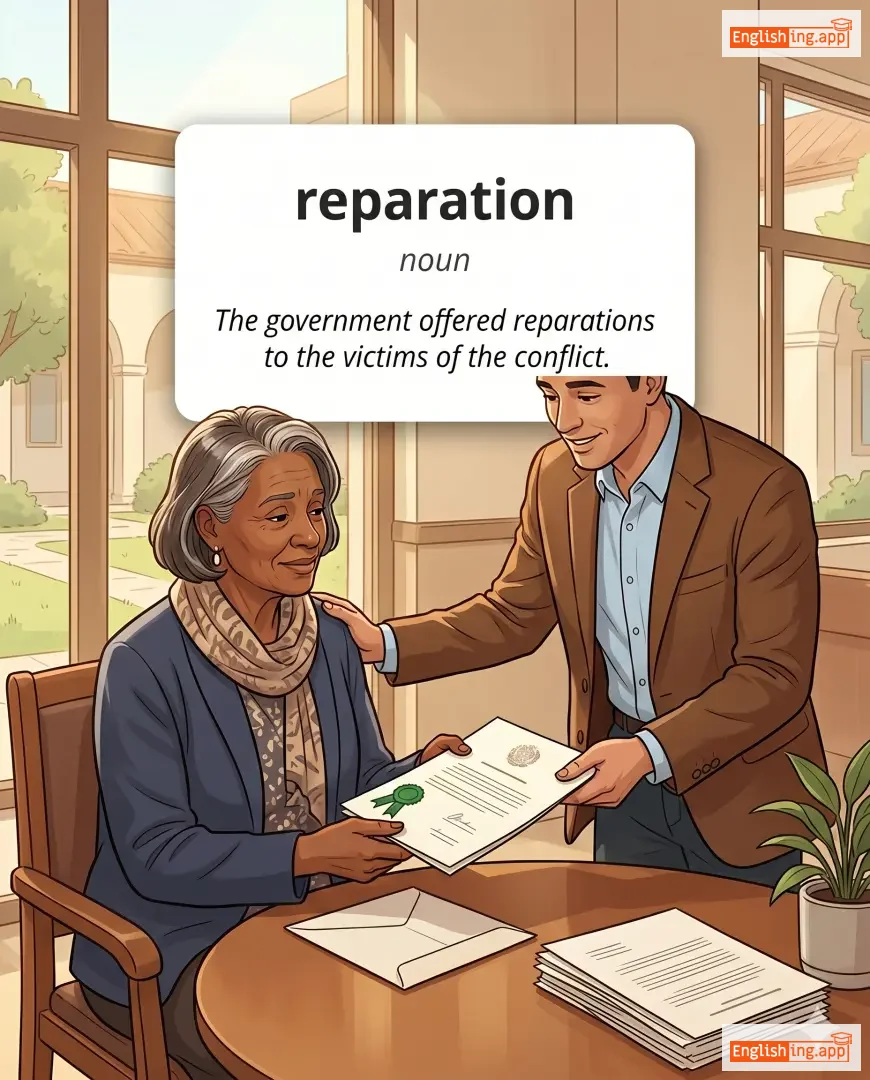
reparation definition card — visual illustration of the meaning
noun
/ˌrɛpəˈreɪʃən/
賠償 (baishou)

the making of amends for a wrong done by paying money or helping those who were wronged

"The government offered reparations to the victims of the conflict."

"政府は紛争の被害者に賠償を提供しました。" (Seifu wa funsou no higaisha ni baishou o teikyō shimashita.)
noun
/ˌrɛpɑːrˈtiː/
機知に富んだ返答 (kichi ni tonda hentou)

A quick, witty, and clever reply in conversation.

"The debate was full of sharp repartee between the two speakers."

"討論は二人の話者の間で鋭い機知に富んだ返答が交わされました。" (Tōron wa futari no hanashite no aida de surudoi kichi ni tonda hentou ga kawasaremashita.)
noun
/rɪˈpæst/
食事 (shokuji)

A meal or the food eaten during a meal.

"They enjoyed a delicious repast by the riverside."

"彼らは川辺で美味しい食事を楽しんだ。" (Karera wa kawabe de oishii shokuji o tanoshinda.)
verb
/riːˈpeɪ.tri.eɪt/
帰還させる (kikan saseru)

To return someone to their own country, often after war or imprisonment.

"The government worked to repatriate the refugees safely."

"政府は難民を安全に帰国させるために尽力しました。" (Seifu wa nanmin o anzen ni kikoku saseru tame ni jinryoku shimashita.)
📜❌

repeal

verb
/rɪˈpiːl/

To officially cancel or revoke a law or decision.

"The government decided to repeal the outdated law."

verb
/rɪˈpiːt/
繰り返す (kurikaesu)

to say again or do again

"Could you please repeat that sentence?"

"その文をもう一度言ってくれませんか?" (Sono bun o mou ichido itte kuremasen ka?)
adjective
/rɪˈpiː.tɪd/
繰り返しの; 多くの回発生する (kurikaeshi no; ooku no kai hassei suru)

done again; happening again; occurring multiple times

"He made repeated attempts to contact her."

"彼は何度も彼女に連絡を試みました。" (Kare wa nando mo kanojo ni renraku o kokoromimashita)
adverb
/rɪˈpiːtɪdli/
繰り返し (kurikaeshi)

in a way that is repeated or done many times

"She apologized repeatedly for the mistake."

"彼女はそのミスを繰り返し謝罪しました。" (Kanojo wa sono misu o kurikaeshi shazai shimashita.)
repel definition card — visual illustration of the meaning
verb
/rɪˈpɛl/
撃退する (gekitai suru)

To drive back or push away, especially an attack or something unwanted.

"The army managed to repel the enemy forces."

"軍隊は敵の軍隊を撃退することに成功した。" (Guntai wa teki no guntai o gekitai suru koto ni seikou shita.)
adjective
/rɪˈpɛlənt/
忌避剤 (kihi-zai)

Able to drive away something, especially insects or unpleasant things; causing disgust or distaste.

"This cream is highly effective as a mosquito repellent."

"このクリームは蚊除けとして非常に効果的です。" (Kono kurīmu wa ka-yoke to shite hijō ni kōkateki desu.)
noun
/rɪˈpɛntəns/
後悔 (kōkai)

Deep regret or remorse for wrongdoing; sincere sorrow for one's sins or mistakes.

"He showed true repentance after apologizing for his mistakes."

"彼は自分の過ちを謝罪した後、真の後悔を示しました。" (Kare wa jibun no ayamachi o shazai shita ato, shin no kōkai o shimeshimasita.)
adjective
/rɪˈpen.tənt/
後悔している; 反省している; 悔いている (kōkai shite iru; hansei shite iru; kuite iru)

feeling or expressing sincere regret and remorse; sorry for one's actions

"The repentant thief returned the stolen money."
"後悔している泥棒は盗んだお金を返しました。" (Kōkai shite iru dorobō wa nusunda okane o kaeshimashita.)
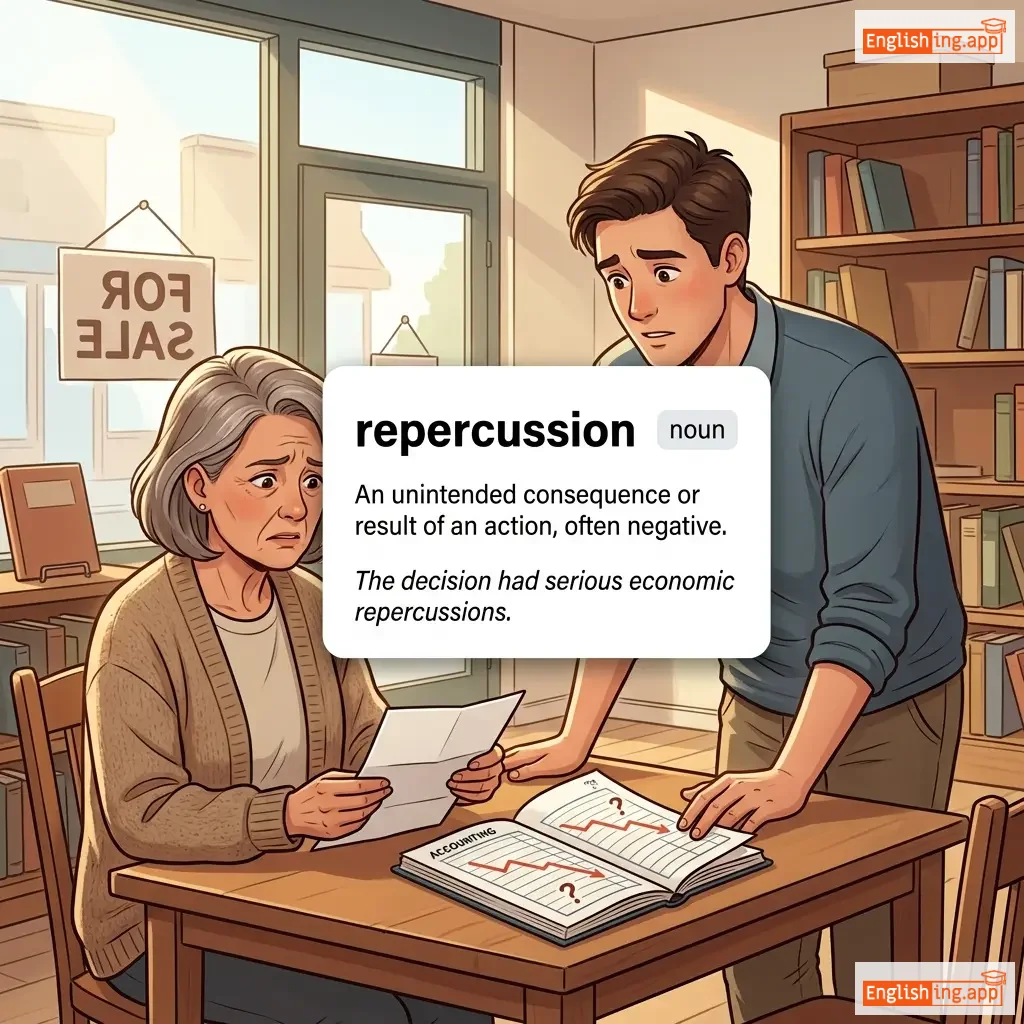
repercussion definition card — visual illustration of the meaning
noun
/ˌriːpərˈkʌʃən/

An unintended consequence or result of an action, often negative.

"The decision had serious economic repercussions."
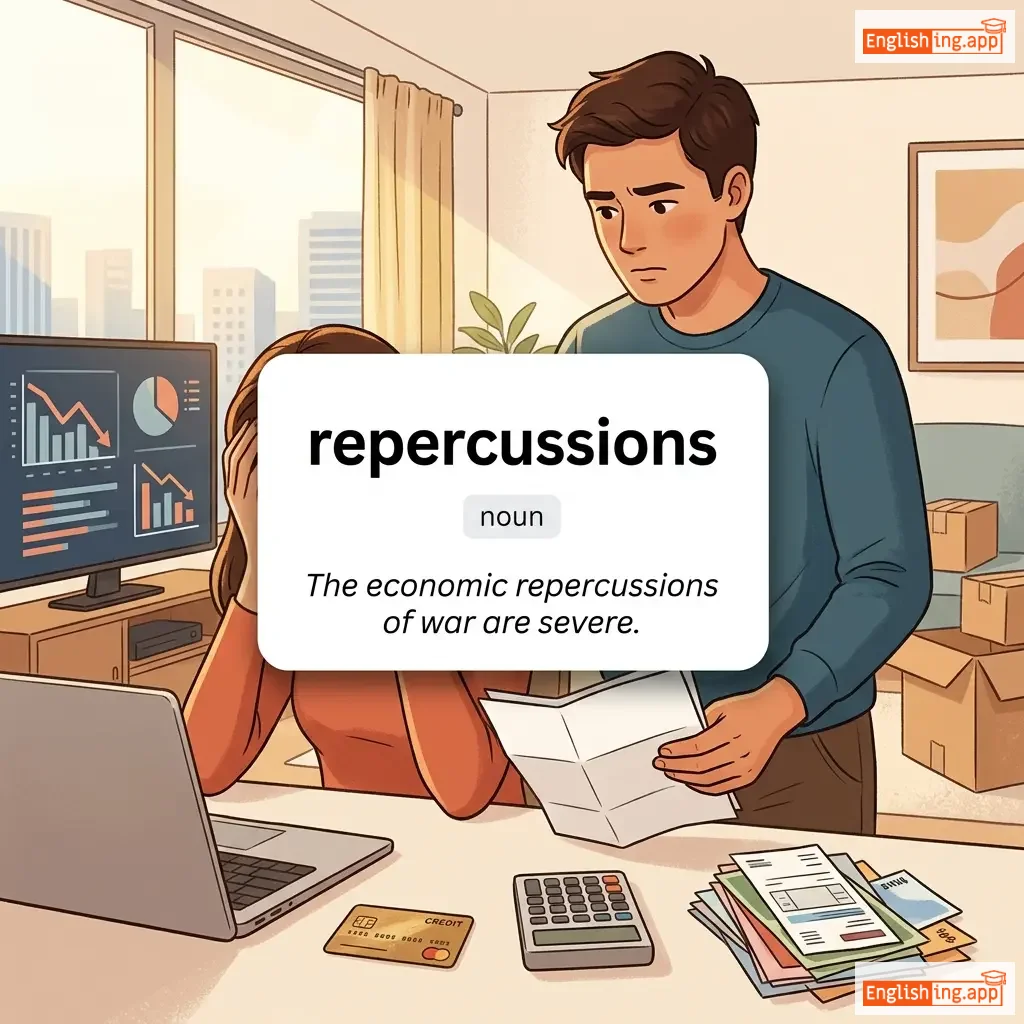
repercussions definition card — visual illustration of the meaning
noun
/ˌriː.pəˈkʌʃ.ənz/
影響 (eikyō)

An unintended consequence occurring some time after an event or action; the effects or results of something.

"The economic repercussions of war are severe."
"戦争の経済的影響は深刻です。" (Sensō no keizaiteki eikyō wa shinkoku desu.)
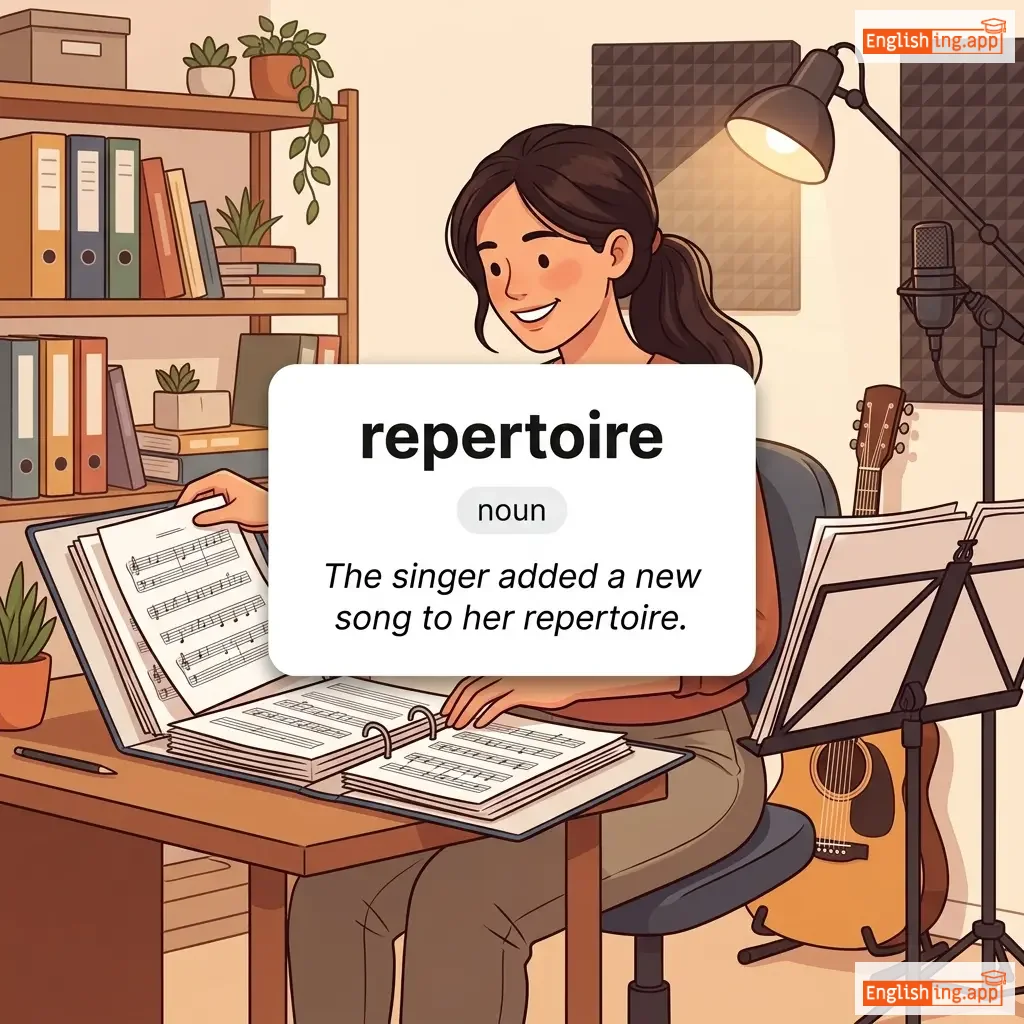
repertoire definition card — visual illustration of the meaning
noun
/ˈrɛpərˌtwɑːr/
レパートリー (repatorii)

The entire range of skills, works, or pieces that a person or group is prepared to perform or use.

"The singer added a new song to her repertoire."

"その歌手は自分のレパートリーに新しい歌を加えました。" (Sono kashu wa jibun no repatorii ni atarashī uta o kuwaemashita.)
adjective
/ˌrɛpərˈtɔːriəl/
レポートに関する (repōto ni kansuru)

Relating to or characteristic of a repertoire, especially in journalism or performance contexts.

"The journalist's repertorial style captured every detail of the unfolding story."

"そのジャーナリストのレポーティオリアルスタイルは、展開するストーリーのあらゆる詳細を捉えました。" (Sono jānarisuto no repōtioriaru sutairu wa, tenkai suru sutōrī no arayuru shōsai o toraemashita.)
noun
/ˈrɛpərˌtɔːri/
レパートリー (repaatoree)

A collection of works that a company, performer, or institution regularly performs; also a storehouse of information or skills.

"The theater has a repertory of classic plays."

"劇場にはクラシックな演劇のレパートリーがあります。" (Gekijou ni wa kurashikku na engeki no repaatoree ga arimasu.)
noun
/ˌrɛpɪˈtɪʃən/
繰り返し (kurikaeshi)

The action of repeating something that has already been said, written, or done.

"The teacher emphasized the importance of repetition in learning new vocabulary."
"先生は新しい語彙を学ぶ際の繰り返しの重要性を強調しました。" (Sensei wa atarashī goi o manabu sai no kurikaeshi no jūyō-sei o kyōchō shimashita.)
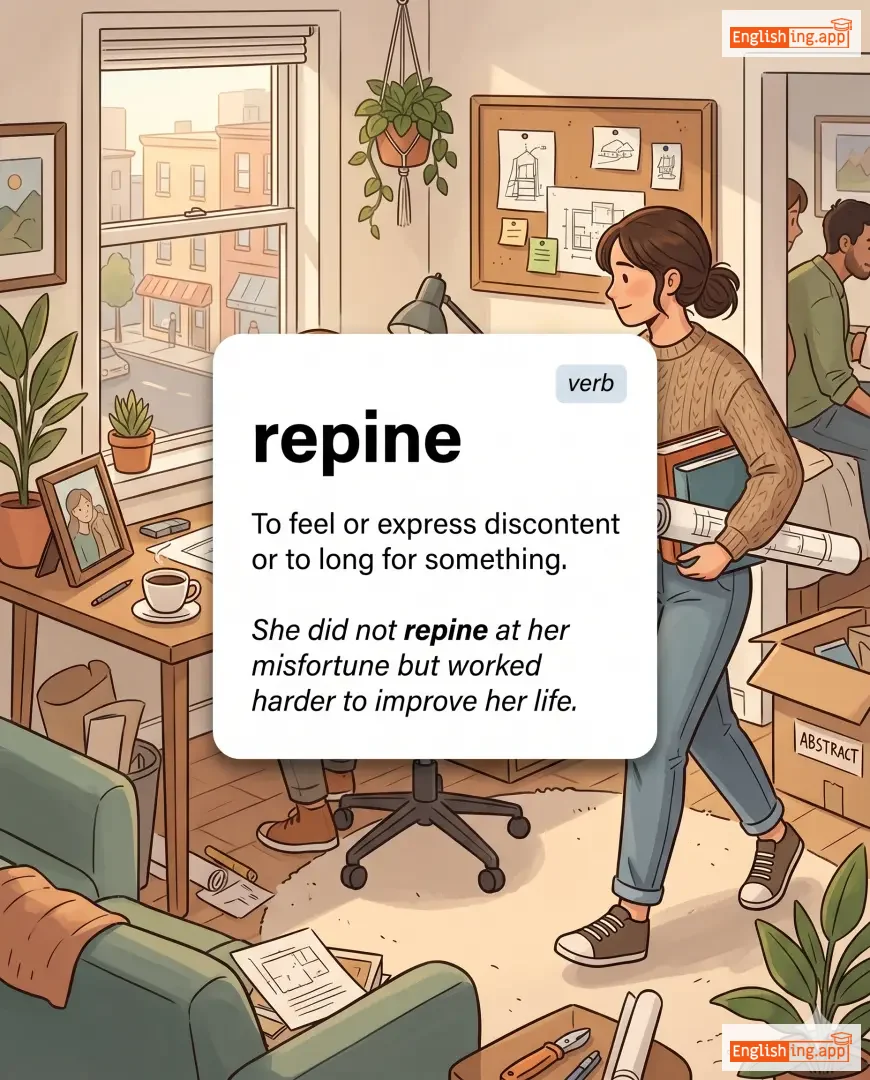
repine definition card — visual illustration of the meaning
verb
/rɪˈpaɪn/
嘆く (nageku)

To feel or express discontent or to long for something.

"She did not repine at her misfortune but worked harder to improve her life."

"彼女は不幸を嘆かず、より一生懸命に働いて生活を向上させました。" (Kanojo wa fukō o nagekazu, yori isshōkenmei ni hataraite seikatsu o kōjō sasemashita.)
verb
/rɪˈpleɪs/
交換する (koukan suru)

to take the place of something or someone; to put something new in place of something old

"He decided to replace the broken lamp with a new one."

"彼は壊れたランプを新しいものと交換することに決めました。" (Kare wa kowareta ranpu o atarashī mono to kōkan suru koto ni kimemashita.)
noun
/rɪˈpleɪsmənt/
交換 (koukan)

the act of substituting one thing or person for another

"She got a replacement for her damaged phone."
"彼女は壊れた電話の交換を受けました。" (Kanojo wa kowareta denwa no koukan o ukemashita.)
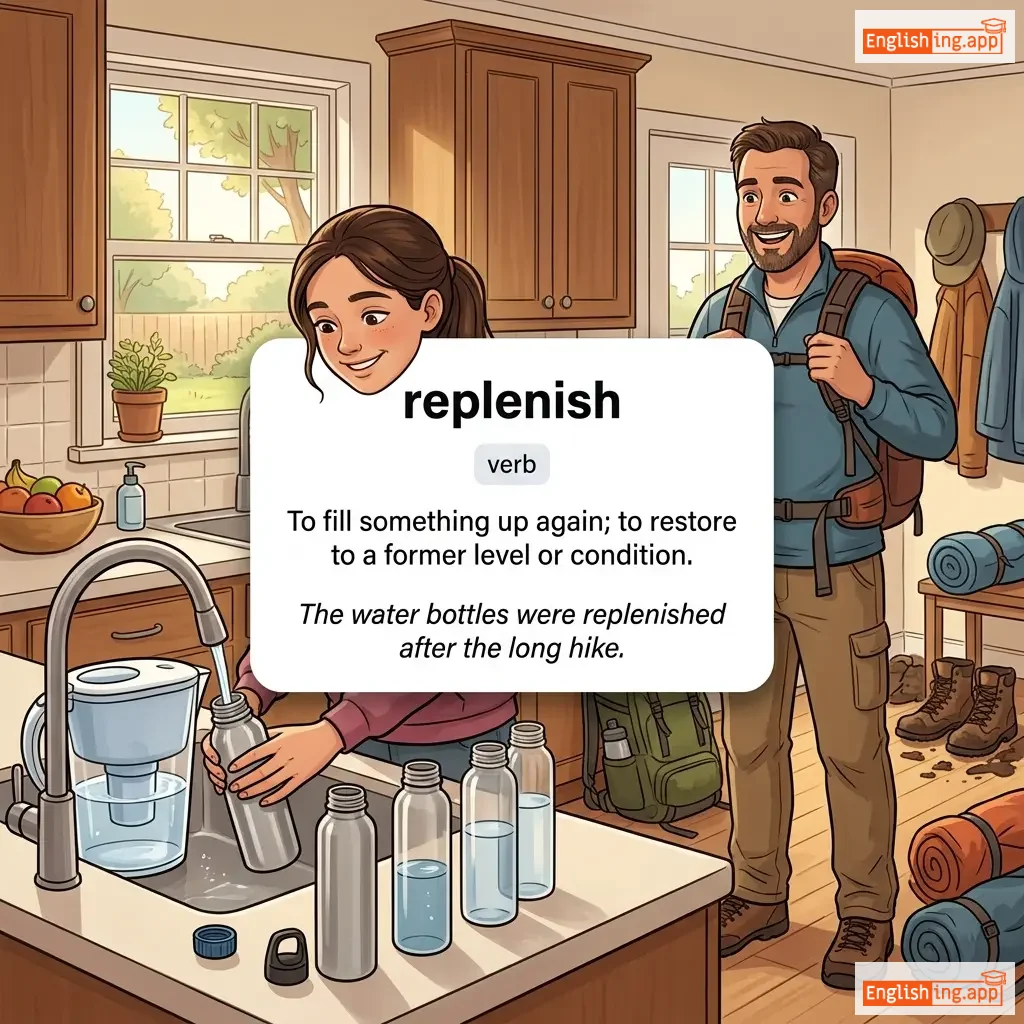
replenish definition card — visual illustration of the meaning
verb
/rɪˈplɛnɪʃ/
補充する (hojyu suru)

To fill something up again; to restore to a former level or condition.

"The water bottles were replenished after the long hike."

"長いハイキングの後、ウォーターボトルが補充されました。" (Nagai haikingu no ato, wotā botoru ga hojū saremashita.)
adjective
/rɪˈpliːt/
満ちた (michita)

Filled or well-supplied with something; abundantly full.

"The book is replete with fascinating historical details."

"その本は魅力的な歴史的詳細で満ちています。" (Sono hon wa miryokuteki na rekishiteki shousai de michiteimasu.)
noun
/ˈrɛplɪkə/
複製品 (fukuseihin)

An exact copy or model of something, especially one on a smaller scale.

"The museum displayed a replica of the ancient sculpture."

"博物館は古代の彫刻の複製品を展示しました。" (Hakubutsukan wa kodai no chōkoku no fukuseihin o tenji shimashita.)
verb
/ˈrɛplɪkeɪt/
複製する (fukusei suru)

to copy, reproduce, or duplicate something exactly

"The scientist tried to replicate the experiment for accuracy."

"科学者は実験を正確に再現しようとしました。" (Kagakusha wa jikken o seikaku ni saigen shiyou to shimashita.)
verb, noun
/rɪˈplaɪ/
返信する (henshin suru)

to respond to someone or something

"She didn't reply to my message."
"彼女は私のメッセージに返信しませんでした。" (Kanojo wa watashi no messeji ni henshin shimasen deshita.)
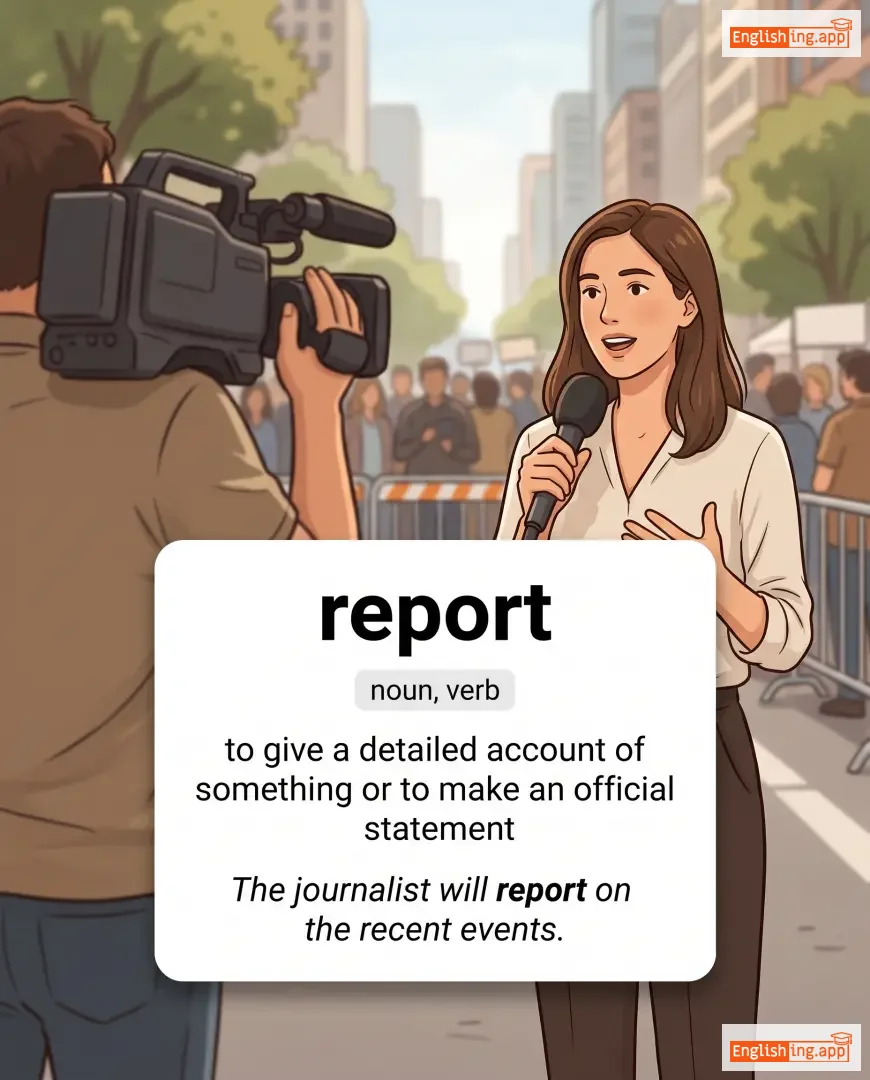
report definition card — visual illustration of the meaning
noun, verb
/rɪˈpɔːrt/
報告 (houkoku)

to give a detailed account of something or to make an official statement

"The journalist will report on the recent events."

"ジャーナリストは最近の出来事について報告します。" (Jaanaristo wa saikin no dekigoto ni tsuite houkoku shimasu.)
noun
/rɪˈpɔːrtɪʒ/
報道 (houdou)

the act of reporting news or describing events in the media

"The magazine is known for its detailed reportage of political issues."

"その雑誌は政治問題に関する詳細な報道で知られています。" (Sono zasshi wa seiji mondai ni kansuru shōsai na hōdō de shirareteimasu.)