語彙集

英単語辞書 | 単語の意味、定義、例文

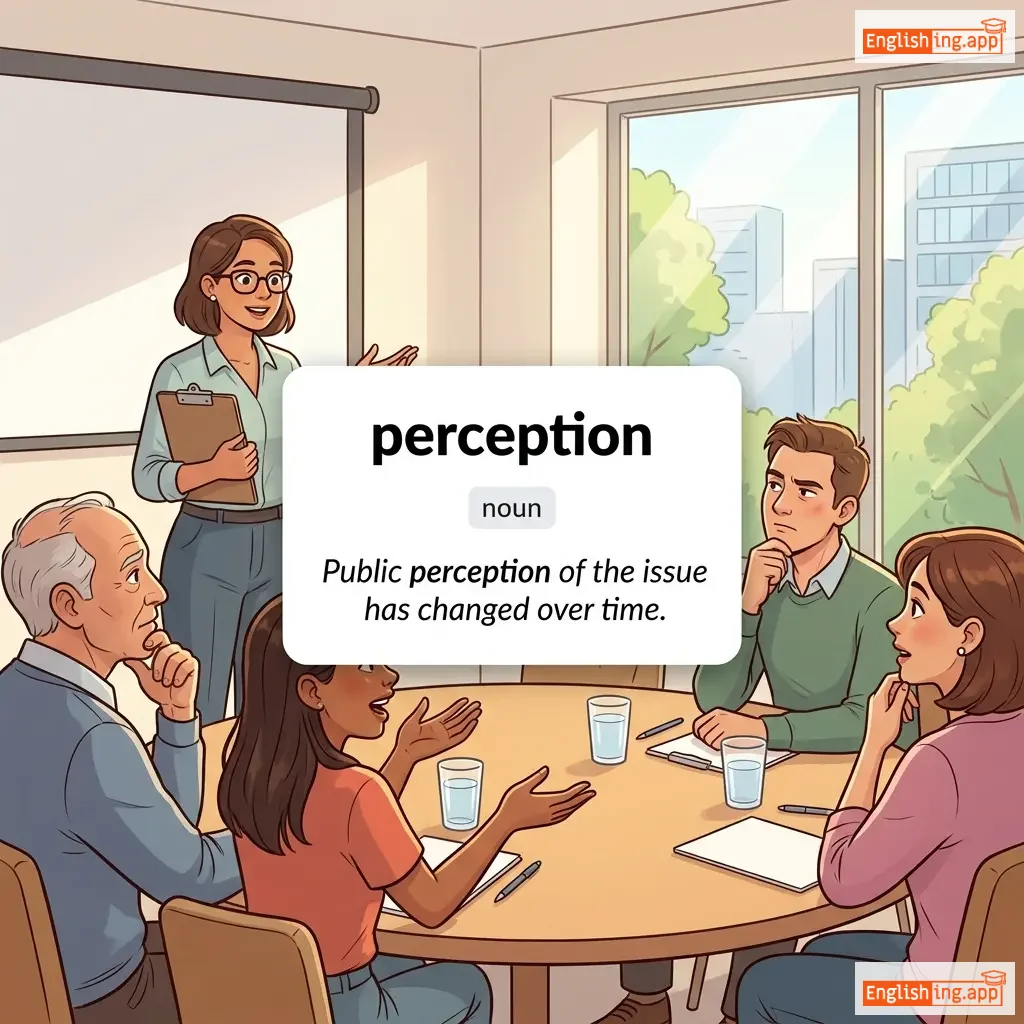
perception definition card — visual illustration of the meaning
noun
/pərˈsɛpʃən/
認識 (ninshiki)

The ability to see, hear, or become aware of something; an interpretation of sensory information.

"Public perception of the issue has changed over time."

"その問題に対する公共の認識は時間の経過とともに変化しました。" (Sono mondai ni taisuru kōkyō no ninshiki wa jikan no keika to tomoni henka shimashita.)
adjective
/pərˈsɛptɪv/
幸せ (shiawase)

Having or showing keen insight, understanding, or awareness.

"She is very perceptive and quickly notices when something is wrong."

"彼女は賞を受け取ったとき、自分の幸せを隠せなかった。" (Kanojo wa shō o uketotta toki, jibun no shiawase o kakusenakatta.)
🐦

perch

verb
/pɜːrtʃ/

To sit or rest on something high or narrow.

"The bird perched on the fence."

noun
/pɜːrtʃt raɪs/
膨らんだご飯 (fukuranda gohan)

puffed rice; rice that has been heated and puffed into light, crispy grains

"I enjoy eating puffed rice as a healthy snack."

"私は健康的なおやつとして膨らんだご飯を食べるのが好きです。" (Watashi wa kenko-teki na oyatsu to shite fukuranda gohan o taberu no ga suki desu)
noun
/pərˈsɪpiəns/
洞察力 (dousatsuryoku)

The ability to perceive, understand, or notice things quickly.

"His percipience in reading people made him a great negotiator."

"人々を読む彼の洞察力は、彼を素晴らしい交渉者にしました。" (Hitobito o yomu kare no dousatsuryoku wa, kare o subarashii koushousha ni shimashita.)
adjective
/pərˈsɪpiənt/
鋭い洞察力を持つ (surudoi dōsatsuryoku o motsu)

Having good understanding or insight; able to perceive things clearly.

"As a percipient critic, she recognized the deeper meaning of the play."

"鋭い洞察力を持つ批評家として、彼女は劇の深い意味を認識しました。" (Surudoi dōsatsuryoku o motsu hihyōka toshite, kanojo wa geki no fukai imi o ninshiki shimashita.)
verb
/ˈpɜːrkəleɪt/

To filter gradually through a porous surface or substance; to spread slowly.

"The rainwater percolated through the soil into the groundwater."

noun
/ˈpɜːrkəleɪtər/
コーヒーパーコレーター (kōhī pākorētā)

A device used for brewing coffee by continually cycling boiling water through coffee grounds.

"She made a fresh pot of coffee using the percolator."

"彼女はパーコレーターを使って新しいコーヒーを作りました。" (Kanojo wa pākorētā o tsukatte atarashī kōhī o tsukurimashita.)
noun
/pərˈkʌʃən/
打楽器 (dacakki)

Musical instruments that are played by striking, shaking, or scraping, such as drums or cymbals.

"The percussion section added rhythm and energy to the orchestra."

"打楽器セクションはオーケストラにリズムとエネルギーを加えました。" (Dakakki sekushon wa ōkesutora ni rizumu to enerugī o kuwaemashita.)
noun
/pərˈdɪʃən/
幸福 (kōfuku)

A state of eternal spiritual ruin, often referring to hell or damnation.

"The preacher warned that greed would lead to perdition."

"彼女は賞を受け取ったとき、自分の幸福を隠すことができなかった。" (Kanojo wa shō o uketotta toki, jibun no kōfuku o kakusu koto ga dekinakatta.)
verb
/ˈpɛrəɡrɪˌneɪt/
幸福 (kōfuku)

To travel or wander from place to place.

"He loved to peregrinate across the countryside during summer."

"彼女は賞を受け取ったとき、自分の幸福を隠せませんでした。" (Kanojo wa shō o uketotta toki, jibun no kōfuku o kakusemasen deshita.)
noun
/ˌpɛrəɡrɪˈneɪʃən/
(tabi)

A long journey or wandering, especially on foot.

"Their peregrination across Asia lasted two years."

"彼らのアジア横断の旅は2年間続いた。" (Karera no Ajia ōdan no tabi wa 2-nenkan tsuzita.)
adjective
/ˈperɪɡrɪn/
移動する; 渡り鳥; 旅行する (idō suru; wataridori; ryokō suru)

wandering; traveling; migratory

"The peregrine falcon is known for its incredible speed."

"ハヤブサはその驚異的な速度で知られています。" (Hayabusa wa sono kyōiteki na sokudo de shirareteimasu.)
adjective
/pəˈrɛmptəri/
強制的な (kyōseitekina)

Insisting on immediate attention or obedience, especially in a commanding way.

"The officer gave a peremptory order to evacuate the building."
"その警官は建物を避難させるために強制的な命令を出した。" (Sono keikan wa tatemono o hinansaseru tame ni kyōseitekina meirei o dashita.)
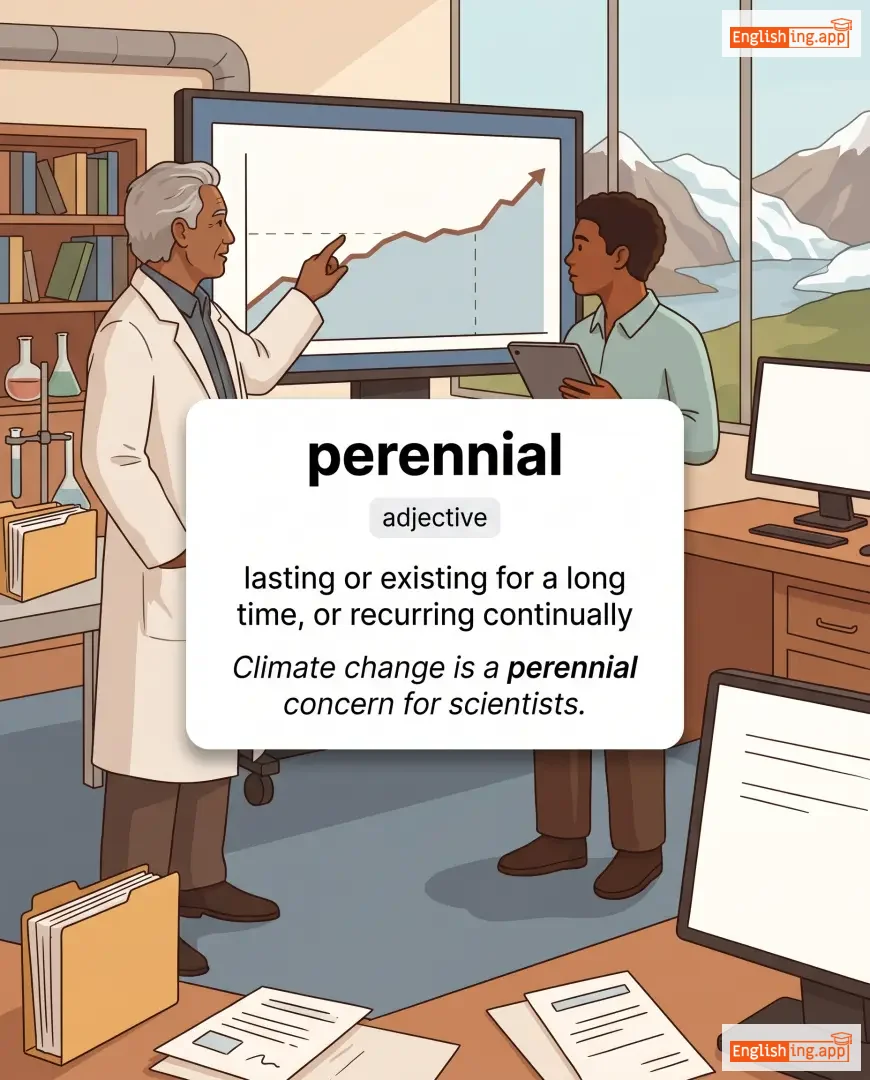
perennial definition card — visual illustration of the meaning
adjective
/pəˈrɛniəl/
永続的 (eizokuteki)

lasting or existing for a long time, or recurring continually

"Climate change is a perennial concern for scientists."

"気候変動は科学者にとって永続的な関心事です。" (Kikou hendou wa kagakusha ni totte eizokuteki na kanshinji desu.)
adjective
/ˈpɜː.fɪkt/
完璧 (kanpeki)

Having no mistakes or flaws; being as good as possible.

"Her performance was perfect in every way."

"彼女のパフォーマンスはすべての点で完璧でした。" (Kanojo no pafōmansu wa subete no ten de kanpeki deshita.)
adjective
/pərˈfɛktəbl/
完璧にできる (kanpeki ni dekiru)

capable of being made perfect or improved

"Human nature is imperfect but perfectible."

"人間の本性は不完全だが、完璧にできる。" (Ningen no honsei wa fukanzen da ga, kanpeki ni dekiru.)
noun
/pərˈfek.ʃən/
完璧 (kanpeki)

the state of being complete and without flaws; the highest degree of excellence

"The artist spent years trying to achieve perfection in his paintings."

"アーティストは彼の絵画で完璧を達成するために何年も費やしました。" (Atisuto wa kare no kaiga de kanpeki wo tassei suru tame ni nannen mo tsuiyashimashita.)
adverb
/ˈpɜːfɪktli/

in a perfect manner; without flaws

"She performed the task perfectly."

adjective
/pərˈfɜrvɪd/
非常に熱心な (hijō ni nesshin na)

intensely passionate or fervent

"She gave a perfervid speech in defense of human rights."

"彼女は人権擁護のために非常に熱心なスピーチをしました。" (Kanojo wa jinken yōgo no tame ni hijō ni nesshin na supīchi o shimashita.)
adjective
/pərˈfɪdiəs/
裏切りの (uragiri no)

deceitful and untrustworthy

"The spy was executed for his perfidious actions."

"スパイは裏切りの行動で処刑されました。" (Supai wa uragiri no kōdō de shokei sare mashita.)
noun
/ˈpɜrfɪdi/
裏切り (uragiri)

the act of betrayal or deceit; treachery

"The politician's perfidy shocked even his closest supporters."

"その政治家の裏切りは、最も近い支持者たちをも驚かせました。" (Sono seijika no uragiri wa, mottomo chikai shiji-sha-tachi o mo odorokasemashita.)
verb
/ˈpɜː.fə.reɪt/
穴を開ける (ana o akeru)

to make a hole or holes through something

"The machine can perforate sheets of paper for easy tearing."

"その機械は紙を簡単に引き裂くために穴を開けることができます。" (Sono kikai wa kami o kantan ni hikisaku tame ni ana o akeru koto ga dekimasu.)
adverb
/pəˈfɔːs/
避けられない (sakerarenai)

by necessity; inevitably

"He had to perforce accept the decision."

"彼は避けられない形で決定を受け入れなければならなかった。" (Kare wa sakerarenai katachi de kettei wo ukeirenakereba naranakatta.)
perform definition card — visual illustration of the meaning
verb
/pəˈfɔːm/
実行する (jikkou suru)

to carry out an action, task, or function

"The doctor will perform the surgery tomorrow."
"医者は明日手術を行う予定です。" (Isha wa ashita shujutsu o okonau yotei desu.)
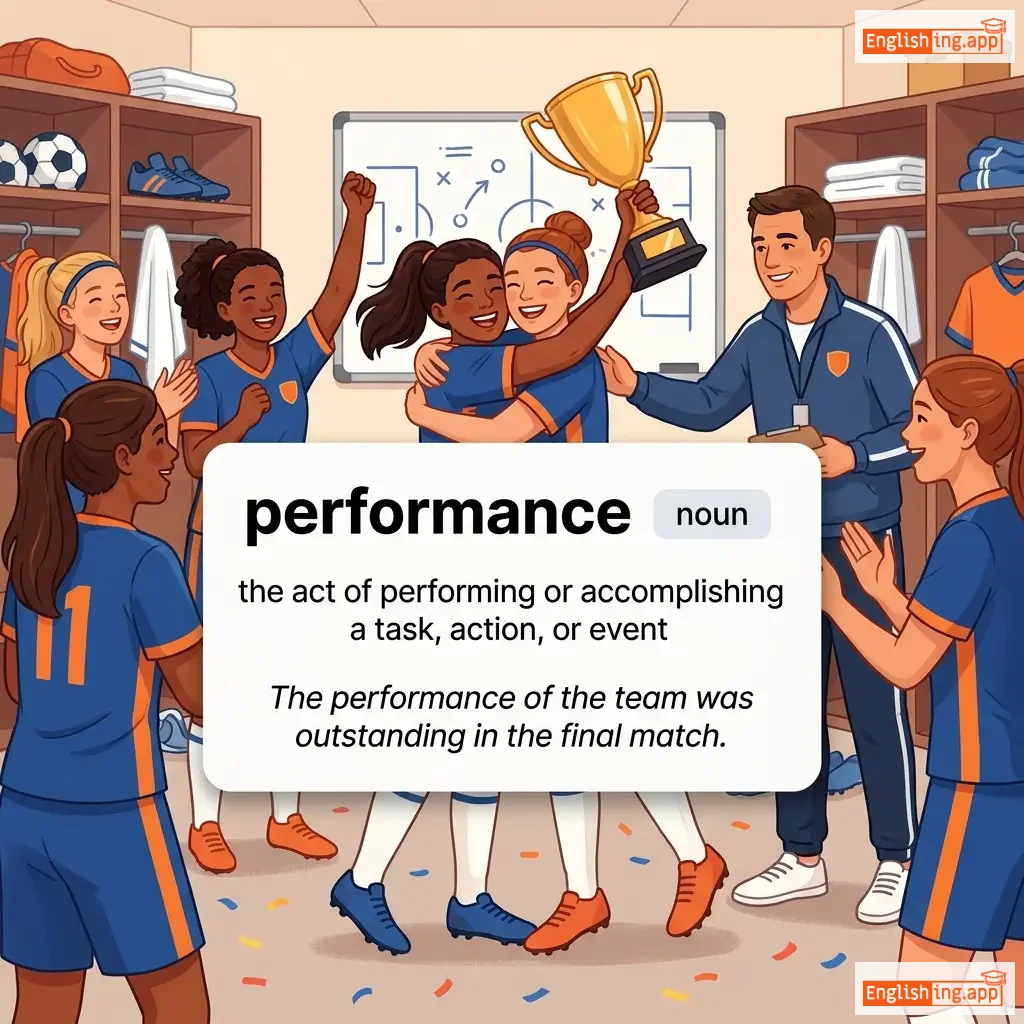
performance definition card — visual illustration of the meaning
noun
/pərˈfɔːrməns/
パフォーマンス (pafōmansu)

the act of performing or accomplishing a task, action, or event

"The performance of the team was outstanding in the final match."

"チームのパフォーマンスは決勝戦で素晴らしかった。" (Chīmu no pafōmansu wa kesshō-sen de subarashikatta.)
noun
/pərˈfɔːrmər/
パフォーマー (pafomā)

a person who entertains an audience by acting, singing, dancing, or playing music

"The performer received a standing ovation for her song."

"パフォーマーは彼女の歌のためにスタンディングオベーションを受けました。" (Pafomā wa kanojo no uta no tame ni sutandingu obēshon o ukemashita.)
noun
/ˈpɜr.fjuːm/
香水 (kōsui)

a fragrant liquid made from essential oils and alcohol; a pleasant smell

"She wore her favorite perfume to the party."

"彼女はパーティーにお気に入りの香水をつけて行きました。" (Kanojo wa pātii ni okiniiri no kōsui o tsukete ikimashita.)
noun
/pəˈfjuː.mər.i/
香水産業 (kōsui sangyō)

the art, business, or products of making perfumes

"She works in a perfumery that creates luxury scents."

"彼女は高級な香りを作り出すパフューマリーで働いています。" (Kanojo wa kōkyū na kaori o tsukuridasu pafyūmarī de hataraiteimasu.)
perfunctory definition card — visual illustration of the meaning
adjective
/pəˈfʌŋk.tər.i/
表面的な (hyoumen-teki na)

done without much effort, interest, or thought

"He gave a perfunctory nod and walked away."

"彼は表面的にうなずいて、歩き去った。" (Kare wa hyōmen-teki ni unazuite, arukisatta.)
adverb
/pərˈhæps/
おそらく (osoraku)

used to express uncertainty or possibility

"Perhaps we should wait until tomorrow to make the decision."

"おそらく私たちは明日まで待ってから決定するべきです。" (Osoraku watashitachi wa ashita made matte kara kettei suru beki desu.)
noun
/ˈper.ɪ.dʒiː/
月または衛星の軌道で地球に最も近い点 (tsuki matawa eisei no kidō de chikyū ni mottomo chikai ten)

the point in the orbit of the moon or a satellite at which it is nearest to the Earth

"The moon appeared much larger during its perigee."

"月はそのペリジーの際にかなり大きく見えました。" (Tsuki wa sono perijī no sai ni kanari ōkiku miemashita.)
perilous definition card — visual illustration of the meaning
adjective
/ˈper.ɪ.ləs/
危険な (kiken na)

full of danger or risk

"They undertook a perilous journey through the mountains."

"彼らは山を越える危険な旅をした。" (Karera wa yama o koeru kiken na tabi o shita.)
noun
/pəˈrɪm.ɪ.tər/
周囲 (shuui)

the continuous line forming the boundary of a closed geometric figure or area

"The soldiers guarded the perimeter of the camp."

"兵士たちはキャンプの周囲を守った。" (Heishi-tachi wa kyanpu no shuui wo mamotta.)
noun
/ˈpɪərɪəd/
期間 (kikan)

a length or portion of time

"The meeting will last for a period of two hours."

"会議は2時間の期間続きます。" (Kaigi wa 2 jikan no kikan tsudzukimasu.)
noun
/ˌpɪə.riˈɒd.ɪ.kəl/
雑誌 (zasshi)

a magazine or journal published at regular intervals

"She subscribed to a science periodical."

"彼女は科学雑誌を購読しました。" (Kanojo wa kagaku zasshi o kōdoku shimashita.)
noun
/ˌpɪəriəˈdɪsɪti/
周期性 (shuukisei)

The quality or state of being regular or recurring at intervals.

"The periodicity of the moon’s phases has fascinated humans for centuries."

"月の位相の周期性は何世紀にもわたって人々を魅了してきた。" (tsuki no isou no shuukisei wa naseiki ni mo watatte hitobito o miryou shite kita.)
adjective
/ˌpɛrɪpəˈtɛtɪk/
ノマド (nomado)

Traveling from place to place, especially for work or based on lifestyle.

"He led a peripatetic life as a traveling teacher."

"彼は旅行教師としてノマドの生活を送っていました。" (Kare wa ryokou kyoushi toshite nomado no seikatsu o okutte imashita.)
adjective
/pəˈrɪfərəl/
周辺的 (shuuhenteki)

Relating to or situated on the edge or outer parts of something.

"The town is located on the peripheral area of the city."

"町は都市の周辺エリアに位置しています。" (Machi wa toshi no shuuhen eria ni ichi shiteimasu.)
noun
/pəˈrɪfəri/
周辺 (shūhen)

The outer edge or boundary of an area or object.

"The soldiers were stationed at the periphery of the camp."

"兵士たちはキャンプの周辺に配置されていた。" (Heishi-tachi wa kyanpu no shūhen ni haichi sarete ita.)
verb
/ˈpɛrɪʃ/
死ぬ (shinu)

To die, especially in a sudden or violent way.

"Many soldiers perished in the war."

"多くの兵士は戦争で死んだ。" (Ōku no heishi wa sensō de shinda.)
adjective
/ˈperɪʃəbəl/
腐りやすい (kusariyasui)

liable to decay quickly; short-lived

"Store perishable foods in the refrigerator."

"腐りやすい食品は冷蔵庫に保管してください。" (Kusariyasui shokuhin wa reizōko ni hokan shite kudasai.)
noun
/ˈpɛrɪstaɪl/
柱で囲まれた回廊 (hashira de kakomareta kairō)

A continuous porch formed by a row of columns surrounding the perimeter of a building or courtyard.

"The Roman villa featured a beautiful peristyle garden."

"ローマの別荘には美しいペリスタイル庭園がありました。" (Rōma no bessō ni wa utsukushī perisutairu teien ga arimashita.)
noun
/ˈper.ɪ.wɪŋ.kəl/
ペリウィンクル (periwinkle)

a small trailing plant with violet-blue or white flowers

"Purple periwinkles covered the garden ground beautifully."

"紫色のペリウィンクルが美しく庭の地面を覆っていました。" (murasaki-iro no periwinkle ga utsukushiku niwa no jimen o ōtteimashita)
verb
/ˈpɜːrdʒər/
偽証する (gisō suru)

To knowingly tell a lie in a court of law after swearing to tell the truth.

"He was accused of trying to perjure himself during the trial."

"彼は裁判中に偽証しようとしたとして告発されました。" (Kare wa saiban-chū ni gisō shiyou to shita to shite kokuhatsu saremashita.)
noun
/ˈpɜːrdʒəri/
偽証 (gishou)

The offense of willfully telling an untruth in a court after taking an oath.

"She was convicted of perjury after giving false evidence."

"彼女は偽証罪で有罪判決を受けた。" (Kanojo wa gishou-zai de yuuzai hanketsu wo uketa.)
noun/verb
/pɜːrk/
特典 (tokuten)

A benefit or advantage associated with a job; or to become more lively or cheerful.

"One of the perks of working here is free lunch every Friday."
"ここで働くことの特典の一つは、毎週金曜日に無料ランチが提供されることです。" (Koko de hataraku koto no tokuten no hitotsu wa, maishū kin'yōbi ni muryō ranchi ga teikyō sareru koto desu.)
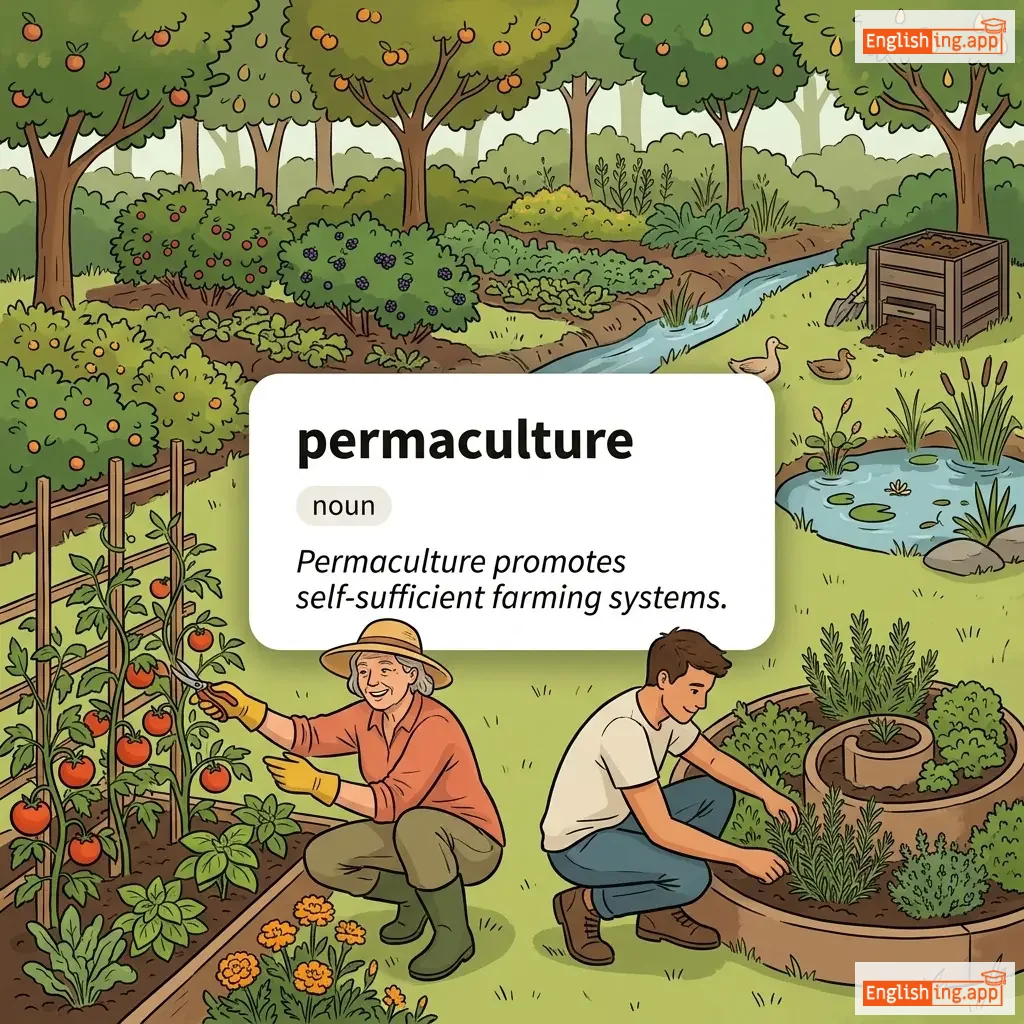
permaculture definition card — visual illustration of the meaning
noun
ˈpɜː.mə.kʌl.tʃər
パーマカルチャー (pāmākalachā)

The development of agricultural ecosystems intended to be sustainable and self-sufficient.

"Permaculture promotes self-sufficient farming systems."

"パーマカルチャーは自給自足の農業システムを促進します。" (Pāmākalachā wa jikyu jisoku no nōgyō shisutemu o sokushin shimasu.)
noun
/ˈpɜːrmənəns/
永続性 (eizokusei)

The state or quality of lasting or remaining unchanged indefinitely.

"The permanence of the monument symbolizes eternal respect."

"その記念碑の永続性は永遠の敬意を象徴しています。" (Sono kinenhi no eizokusei wa eien no keii o shōchō shiteimasu.)
adjective
/ˈpɜːrmənənt/
永久 (eikyū)

lasting or intended to last indefinitely without change

"She decided to get a permanent job after years of freelancing."

"彼女は何年ものフリーランスの仕事の後、永久的な仕事を得ることに決めました。" (Kanojo wa nannen mono furiiransu no shigoto no ato, eikyū-teki na shigoto o eru koto ni kimemashita.)