語彙集

英単語辞書 | 単語の意味、定義、例文

adjective
/ˌsaɪkəˈlɒdʒɪkəl/
心理学的 (shinrigakuteki)

relating to the mind or mental processes.

"She studied the psychological effects of trauma on children."

"彼女は子供たちへのトラウマの心理学的影響を研究した。" (Kanojo wa kodomotachi e no torauma no shinrigakuteki eikyō o kenkyū shita.)
noun
/saɪˈkɒlədʒɪst/
心理学者 (shinrigakusha)

a person who studies mental processes and behavior

"The psychologist helped him cope with his anxiety."

"心理学者は彼が不安に対処するのを助けました。" (Shinrigakusha wa kare ga fuan ni taisho suru no o tasukemashita.)
noun
/saɪˈkɒlədʒi/
心理学 (shinrigaku)

the scientific study of the mind and behavior

"Psychology helps us understand how people think and act."

"心理学は人々がどのように考え、行動するかを理解するのに役立ちます。" (Shinrigaku wa hitobito ga dono you ni kangae, koudou suru ka wo rikai suru no ni yakudachimasu.)
adjective
/ˌsaɪkəˈpæθɪk/
サイコパス的 (saikopasuteki)

Relating to or affected by psychopathy; showing chronic mental disorder with abnormal or violent behavior.

"The film portrayed a psychopathic killer with no sense of empathy."

"その映画は共感を持たないサイコパス的な殺人者を描いていました。" (Sono eiga wa kyoukan wo motanai saikopasuteki na satsujinsha wo egaiteimashita.)
noun
/saɪˈkoʊsɪs/
精神病 (seishinbyou)

A severe mental disorder in which thought and emotions are impaired, leading to a loss of contact with reality.

"The patient was diagnosed with psychosis after experiencing hallucinations."

"患者は幻覚を経験した後、精神病と診断されました。" (Kanja wa genkaku o keiken shita ato, seishinbyou to shindan saremashita.)
adjective
/ˌsaɪkoʊsəˈmætɪk/
心理的身体的 (shinriteki shintai teki)

Relating to a physical illness or condition caused or aggravated by mental factors such as stress.

"Her stomach pain was diagnosed as psychosomatic, linked to stress."

"彼女の腹痛は心理的身体的なものとして診断され、ストレスに関連していました。" (Kanojo no fukutsū wa shinriteki shintaiteki na mono to shite shindan sare, sutoresu ni kanren shite imashita.)
noun
/ˌsaɪkoʊˈθɛrəpi/
心理療法 (shinri ryōhō)

The treatment of mental disorder by psychological rather than medical means.

"She attended weekly psychotherapy sessions to cope with her anxiety."

"彼女は不安に対処するために、毎週心理療法のセッションに参加しました。" (Kanojo wa fuan ni taisho suru tame ni, maishū shinri ryōhō no sesshon ni sanka shimashita.)
noun
/ˌtɛrəˈdæktɪl/
絶滅した飛行爬虫類 (zetsumetsu shita hikou hachuurui)

An extinct flying reptile of the Jurassic period, with a long slender head and wings formed by a membrane stretching along the body.

"The museum displayed a fossil of a giant pterodactyl."

"博物館には巨大なプテロダクティルの化石が展示されていた。" (Hakubutsukan ni wa kyodaina pterodactyl no kaseki ga tenji sarete ita.)
adjective
/ˈpʌblɪk/
公共の (koukyou no)

relating to or affecting the people as a whole

"The public demanded action on the issue."
"公共はこの問題に対する行動を要求しました。" (Koukyou wa kono mondai ni taisuru koudou o youkyuu shimashita.)
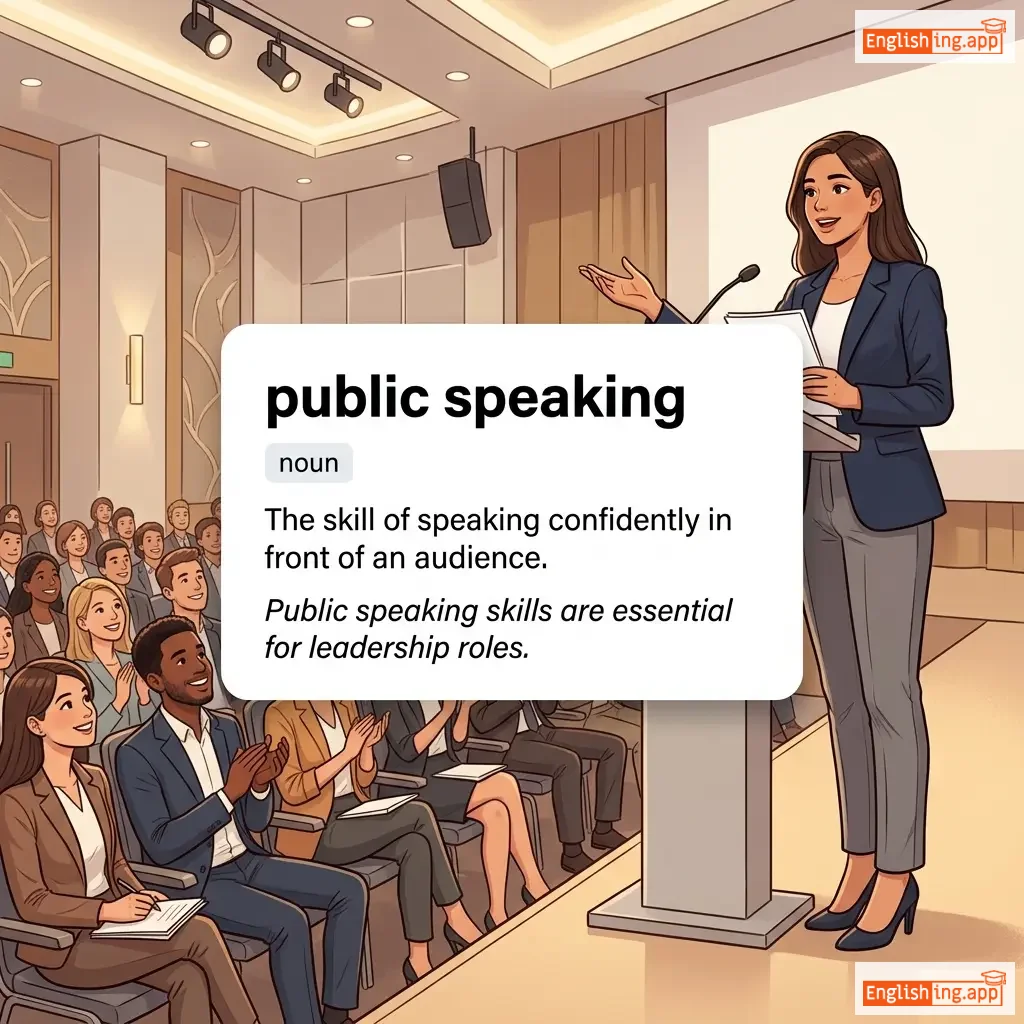
public speaking definition card — visual illustration of the meaning
noun
ˈpʌb.lɪk ˈspiː.kɪŋ
公共の話し方 (kōkyō no hanashikata)

The skill of speaking confidently in front of an audience.

"Public speaking skills are essential for leadership roles."
"公共の話し方のスキルはリーダーシップの役割に不可欠です。" (Kōkyō no hanashikata no sukiru wa rīdāshippu no yakuwari ni fukaketsu desu.)
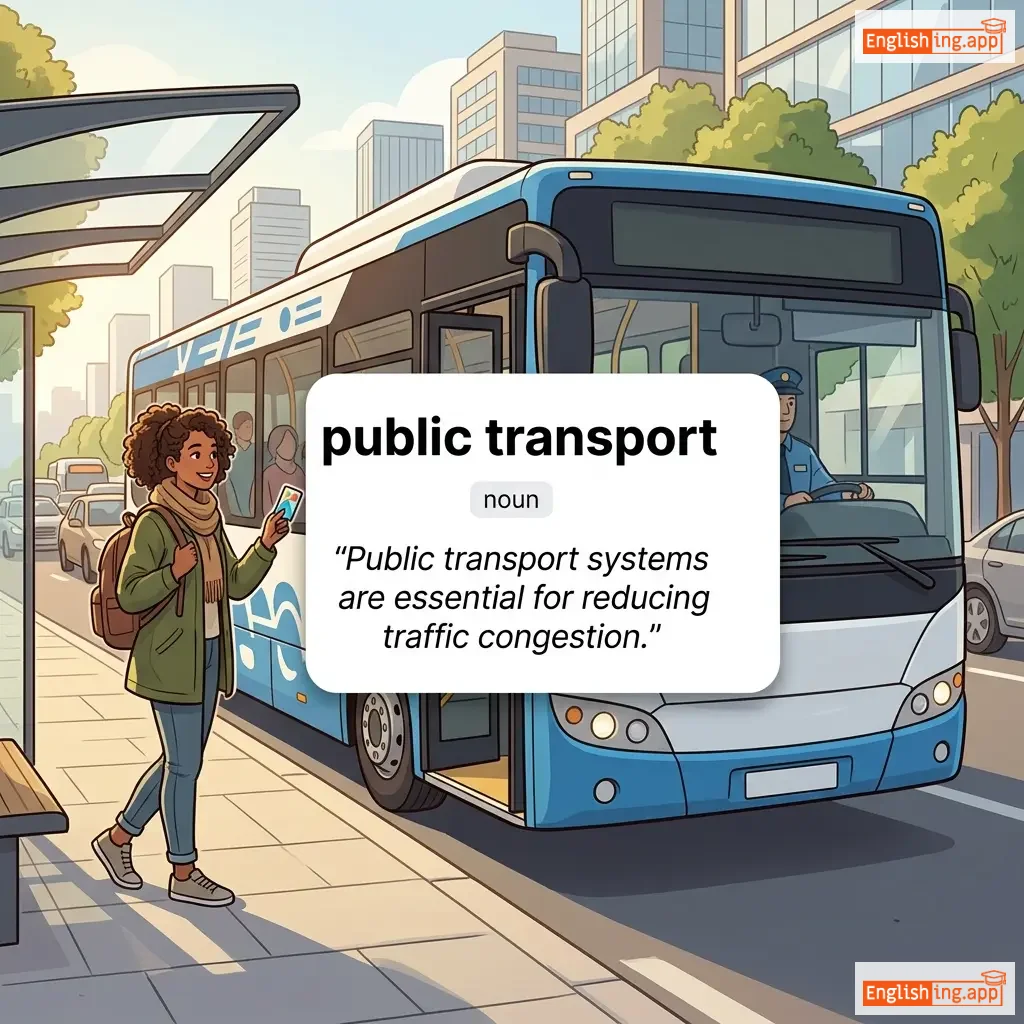
public transport definition card — visual illustration of the meaning
noun
ˈpʌblɪk træns ˈpɔːt
公共交通機関 (koukyou koutsuu kikan)

Transportation systems available for use by the general public, typically including buses, trains, and metros.

"Public transport systems are essential for reducing traffic congestion."

"公共交通機関は交通渋滞を減らすために重要です。" (Koukyou koutsuu kikan wa koutsuu juutai wo herasu tame ni juuyou desu.)
noun
/ˌpʌblɪˈkeɪʃən/
出版 (shuppan)

the act of making something publicly known or available

"The publication of the report sparked a debate."

"報告書の出版は議論を引き起こしました。" (Houkokusho no shuppan wa giron o hikiokoshimashita.)
noun
/pʌˈblɪsəti/
宣伝 (senden)

the activity of making something known to the public; public attention or exposure

"The film gained huge publicity after winning the award."

"その映画は賞を受賞後、大きな宣伝を得た。" (Sono eiga wa shō o jushōgo, ōkina senden o eta.)
adverb
/ˈpʌblɪkli/
公に (ooyake ni)

in a way that is done or made known to the public

"The issue was discussed publicly during the meeting."

"その問題は会議で公に議論されました。" (Sono mondai wa kaigi de ooyake ni giron saremashita.)
publish definition card — visual illustration of the meaning
verb
/ˈpʌblɪʃ/
出版する (shuppan suru)

to prepare and issue a book, journal, or piece of information for public distribution

"The company plans to publish a new book next year."

"その会社は来年新しい本を出版する予定です。" (Sono kaisha wa rainen atarashii hon wo shuppan suru yotei desu.)
noun
/ˈpʌblɪʃər/
出版社 (shuppansha)

a person or company that produces and sells books, journals, or other content

"The publisher released a new book by a famous author."

"出版社は有名な著者の新しい本を出版しました。" (Shuppansha wa yuumei na chosha no atarashii hon o shuppan shimashita.)
noun
/ˈpʌblɪʃɪŋ/

the business or activity of preparing and issuing books, journals, or other material for sale

"He works in the publishing industry as an editor."

verb
/ˈpʌkər/

to tighten or contract into small folds or wrinkles

"She puckered her lips before kissing the child."

adjective
/ˈpʌkɪʃ/
いたずら好き (itazurazuki)

playfully mischievous

"The child gave a puckish grin before hiding the toy."

"子供はおもちゃを隠す前にいたずらっぽい笑顔を見せました。" (Kodomo wa omocha o kakusu mae ni itazurappoi egao o misemashita.)
noun
/ˈpʊdɪŋ/
プディング (pudingu)

a sweet or savory dish, often soft and creamy, eaten as dessert

"She made chocolate pudding for dessert."

"彼女はデザートにチョコレートプディングを作りました。" (Kanojo wa dezāto ni chokorēto pudingu o tsukurimashita.)
adjective
/ˈpʌdʒi/
ぽっちゃり (pocchari)

slightly fat or chubby in a way that is often cute

"The baby had pudgy cheeks that everyone adored."

"その赤ちゃんは、みんなが愛したぽっちゃりしたほっぺたを持っていました。" (Sono akachan wa, minna ga aishita pocchari shita hoppeta o motte imashita.)
adjective
/ˈpjʊəraɪl/
幼稚な (yōchina)

childishly silly or immature

"His puerile jokes annoyed the audience."

"彼の幼稚な冗談は観客をうんざりさせた。" (Kare no yōchina jōdan wa kankyaku o unzari saseta.)
noun
/ˈpjuːdʒɪlɪzəm/
ボクシング (bokushingu)

The practice or sport of boxing.

"He studied the art of pugilism in his youth."

"彼は若い頃、ボクシングの技術を学びました。" (Kare wa wakai koro, bokushingu no gijutsu o manabimashita.)
noun
/ˈpjuːdʒɪlɪst/
ボクサー (bokusā)

A professional or skilled boxer.

"The pugilist entered the ring with confidence."

"ボクサーは自信を持ってリングに上がった。" (Bokusā wa jishin o motte ringu ni agatta.)
adjective
/pʌɡˈneɪʃəs/
好戦的な (kousenteki na)

Having a quarrelsome or combative nature; eager to fight.

"His pugnacious attitude often got him into trouble."

"彼の好戦的な態度はしばしば彼を困難に陥れました。" (Kare no kousenteki na taido wa shibashiba kare o konnan ni ochiiremashita.)
noun
/pʌɡˈnæsɪti/
好戦的 (kousenteki)

A natural disposition to be combative or aggressive.

"The coach admired the player's pugnacity on the field."

"コーチはフィールドで選手のパグナシティを賞賛しました。" (Kochi wa fiirudo de senshu no pugnacity wo shousan shimashita.)
noun
/ˈpjuːɪsəns/
(chikara)

Great power, strength, or influence.

"The empire showed its puissance through vast armies."

"帝国は膨大な軍隊を通じてその力を示しました。" (Teikoku wa bōdaina guntai o tōjite sono chikara o shimashita.)
adjective
/ˈpjuːɪsənt/
強力な (kyōryokuna)

having great power or influence; mighty

"The king was a puissant ruler whose word was law."

"その王は強力な支配者で、その言葉は法律だった。" (Sono ō wa kyōryokuna shihaisha de, sono kotoba wa hōritsu datta.)
noun
/ˈpʌlkrɪˌtjuːd/
美しさ (utsukushisa)

physical beauty

"The actress was admired for her pulchritude as well as her talent."

"その女優は美しさと才能で賞賛されました。" (Sono joyu wa utsukushisa to saino de shousan saremashita.)
verb
/pʊl/
引く (hiku)

to exert force on something in order to move it toward oneself

"She pulled the door open with all her strength."

"彼女は力いっぱいドアを引いて開けた。" (Kanojo wa chikara ippai doa o hiite aketa.)
noun
/ˈpʊl.oʊ.vər/
セーター (seetaa)

a knitted garment worn on the upper body, typically pulled on over the head

"She wore a warm pullover during the cold winter evening."

"彼女は寒い冬の夕方に温かいセーターを着ていた。" (Kanojo wa samui fuyu no yūgata ni atatakai seetaa o kite ita.)
adjective
/ˈpʌlməˌneri/

relating to the lungs

"The patient suffered from a serious pulmonary infection."

noun
/ˈpʊlpɪt/
説教台 (sekkyōdai)

a raised platform in a church from which the preacher delivers a sermon

"The pastor stood at the pulpit to address the congregation."

"牧師は説教台の前に立って、会衆に向かって話した。" (Bokushi wa sekkyōdai no mae ni tatte, kaishū ni mukatte hanashita.)
verb
/ˈpʌlseɪt/
脈動する (myakudo suru)

to expand and contract rhythmically; to throb or beat

"The neon lights pulsated with a steady rhythm."

"ネオンのライトは一定のリズムで脈打っていた。" (Neon no raito wa ittei no rizumu de myakutte ita.)
💓

Pulse

noun/verb
/pʌls/

A rhythmic beat or vibration, especially the heartbeat; to throb or move with a rhythm.

"The doctor checked her pulse after the long run."

verb
/ˈpʌlvəraɪz/
粉砕する (funsai suru)

To crush or grind something into a fine powder; to completely defeat or destroy.

"The machine can pulverize stones into dust."

"その機械は石を粉々にすることができます。" (Sono kikai wa ishi o funsai suru koto ga dekimasu.)
verb
/ˈpʌməl/
殴りつける (naguritsukeru)

To strike repeatedly with the fists; to beat or hit forcefully.

"The boxer pummeled his opponent in the final round."

"ボクサーは最終ラウンドで相手を激しく殴りつけた。" (bokusa wa saishu raundo de aite o hageshiku naguritsuketa.)
verb
/pʌmp/
ポンプする (ponpu suru)

to force liquid or gas to move in a particular direction using a device

"They pumped water from the well into the tank."

"彼らは井戸からタンクに水をポンプしました。" (Karera wa ido kara tanku ni mizu o ponpu shimashita.)
noun
/'pʌmp.kɪn/
カボチャ (kabocha)

a large round orange fruit with thick skin and edible flesh

"We carved a jack-o'-lantern from a big pumpkin."

"私たちは大きなカボチャからジャック・オー・ランタンを彫りました。" (watashitachi wa ookina kabocha kara jakku o ran tan o horimashita)
noun
/pʌn/
言葉遊び (kotoba asobi)

A humorous use of words that suggests different meanings or words that sound alike.

"He made a clever pun about the bakery's bread rising."

"彼はベーカリーでパンが膨らんでいることについて巧妙な言葉遊びをしました。" (Kare wa bēkārī de pan ga fukurande iru koto ni tsuite kōmyō na kotoba asobi o shimashita.)
verb
/pʌntʃ/
殴る (naguru)

to hit someone or something hard with your fist

"He punched the wall in frustration."

"彼はフラストレーションで壁を殴った。" (Kare wa furasutorēshon de kabe o nagutta.)
noun
/ˈpʌntʃ laɪn/
パンチライン (panchirain)

The final part of a joke or story that makes it funny.

"Everyone laughed loudly at the punch line of his joke."

"みんな彼のジョークのパンチラインで大笑いした。" (Minna kare no jōku no panchirain de ōwarai shita.)
adjective
/pʌŋkˈtɪliəs/
几帳面 (kichoumen)

Showing great attention to detail or correct behavior.

"She was punctilious in her attention to etiquette."
"彼女はマナーに対して非常に几帳面だった。" (Kanojo wa manā ni taishite hijō ni kichōmen datta.)
adjective
/ˈpʌŋktʃuəl/

Happening or doing something at the agreed or proper time; on time.

"He is always punctual for meetings."

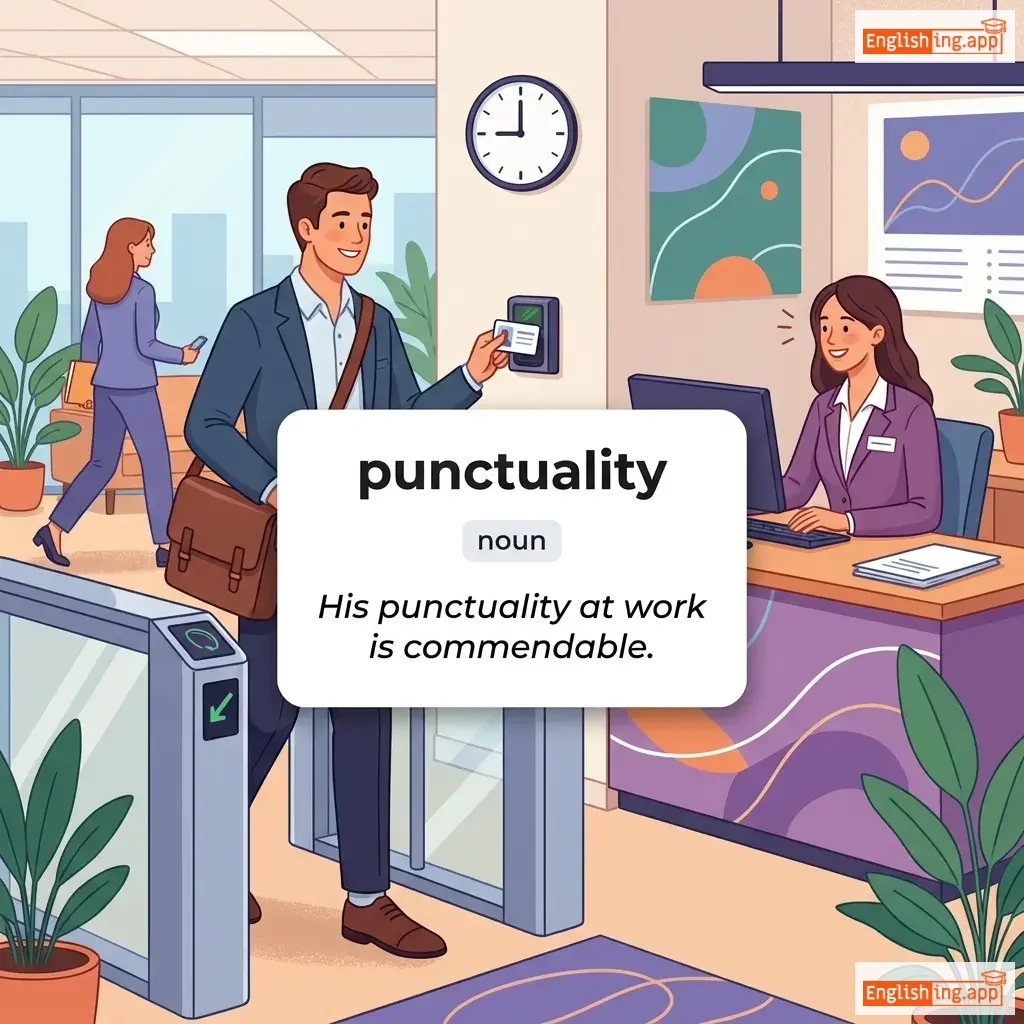
punctuality definition card — visual illustration of the meaning
noun
/ˌpʌŋk.tʃuˈæl.ə.ti/
時間厳守 (jikan genshu)

The quality or habit of being on time; arriving or occurring at the scheduled time.

"His punctuality at work is commendable."

"彼の仕事における時間厳守は称賛に値する。" (Kare no shigoto ni okeru jikan genshu wa shōsan ni ataisuru.)
adverb
/ˈpʌŋk.tʃu.əl.i/
時間通り (jikan doori)

at the exact time arranged; on time; not late

"She always arrives punctually for meetings."

"彼女は会議にいつも時間通りに到着します。" (Kanojo wa kaigi ni itsumo jikan doori ni touchakushimasu.)
noun
/ˈpʌŋk.tʃər/
パンク (panku)

a small hole in a tire that causes air to escape

"I had to fix a puncture in my bicycle tire this morning."

"今朝、自転車のタイヤのパンクを修理しなければなりませんでした。" (kesa, jitensha no taiya no panku wo shūri shinakereba narimasen deshita.)
noun
/ˈpʌndɪt/
専門家 (senmonka)

An expert in a particular subject or field who is frequently called upon to give opinions to the public.

"Political pundits debated the election results on television."

"政治の専門家たちはテレビで選挙結果について議論しました。" (Seiji no senmonkatachi wa terebi de senkyo kekka ni tsuite giron shimashita.)
noun
/ˈpʌndʒənsi/
辛味 (karami)

The quality of having a strong, sharp taste or smell.

"The pungency of garlic filled the kitchen."
"ニンニクの辛味がキッチンに充満した。" (Ninniku no karami ga kicchin ni juumanshita.)
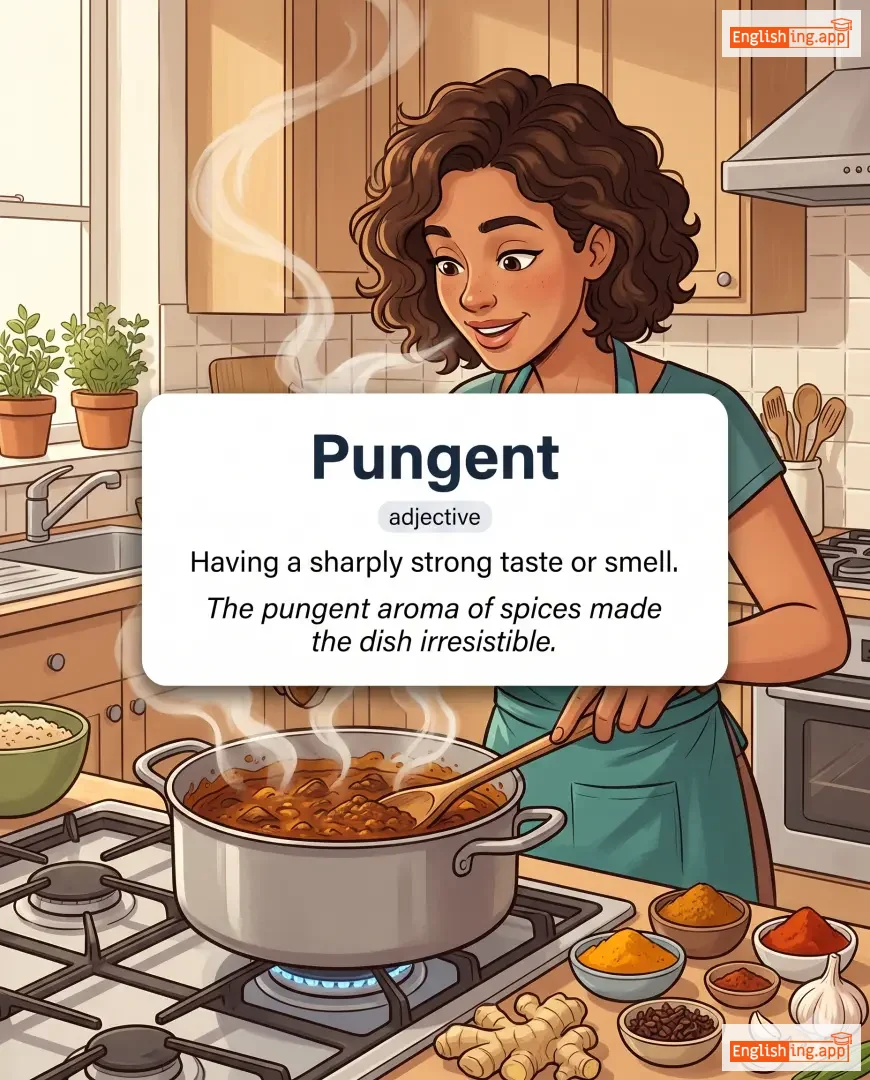
Pungent definition card — visual illustration of the meaning
adjective
/ˈpʌndʒənt/
強い匂いや味 (tsuyoi nioi ya aji)

Having a sharply strong taste or smell.

"The pungent aroma of spices made the dish irresistible."

"スパイスの強い香りがその料理を抗しがたくした。" (supaisu no tsuyoi kaori ga sono ryouri wo kōshigataku shita.)