語彙集

英単語辞書 | 単語の意味、定義、例文

noun
/ˈmɛntɔːr/
メンター (mentā)

an experienced person who advises and guides someone less experienced

"She acted as a mentor for the new employees."

"彼女は新しい社員のためにメンターとして活動しました。" (Kanojo wa atarashī shain no tame ni mentā toshite katsudō shimashita.)
noun
/ˈmɛnjuː/
メニュー (menyū)

A list of food and drinks available at a restaurant or offered at a meal.

"The restaurant updated its menu with new dishes."

"レストランは新しい料理をメニューに追加しました。" (Resutoran wa atarashī ryōri o menyū ni tsuika shimashita.)
adjective
/ˈmɜːrkəntaɪl/
商業的 (shōgyō-teki)

related to trade or commerce

"The city grew rapidly due to its mercantile activities."

"この都市は商業活動のおかげで急速に成長しました。" (Kono toshi wa shōgyō katsudō no okage de kyūsoku ni seichō shimashita.)
noun
/ˈmɜːrsəˌnɛri/
傭兵 (youhei)

a professional soldier hired to serve in a foreign army; also used to describe someone motivated solely by money.

"The mercenary fought for whoever paid the highest wage."

"傭兵は最も高い給料を支払った人のために戦った。" (Youhei wa mottomo takai kyūryō o shiharatta hito no tame ni tatakatta.)
noun
/ˈmɜːrtʃənt/
商人 (shōnin)

a person or company involved in the trade of goods, especially in large quantities

"The merchant sold spices from distant lands."

"商人は遠くの土地から香辛料を売っていた。" (Shōnin wa tōku no tochi kara kōshinryō o utte ita.)
adjective
/ˈmɜːrsɪfəl/
慈悲深い (jihi fukai)

showing compassion or forgiveness towards someone one has the power to punish or harm.

"The judge was merciful and gave him a lighter sentence."

"裁判官は慈悲深く、彼に軽い判決を与えました。" (Saibankan wa jihi fukaku, kare ni karui hanketsu o ataemashita.)
adjective
/ˈmɜːrsɪləs/
無慈悲 (mujihi)

showing no mercy or compassion; cruel and ruthless.

"The dictator was merciless in crushing the rebellion."

"独裁者は反乱を抑えるのに無慈悲でした。" (Dokusaisha wa hanran o osaeru no ni mujihi deshita.)
adjective
/mɜːrˈkjʊriəl/
気まぐれな (kimagurena)

subject to sudden or unpredictable changes of mood or mind.

"She is known for her mercurial temperament."

"彼女は気まぐれな気質で知られています。" (Kanojo wa kimagurena kishitsu de shirareteimasu.)
noun
/ˈmɜːrsi/
慈悲 (jihi)

compassion or forgiveness shown toward someone whom it is within one's power to punish or harm

"She showed mercy by letting him go."

"彼女は彼を行かせることで慈悲を示した。" (Kanojo wa kare wo ikaseru koto de jihi wo shimeshita.)
adjective
/mɪr/
単なる (tannaru)

Used to emphasize how small or insignificant something is.

"It was a mere suggestion, not a command."

"それは単なる提案であり、命令ではありません。" (Sore wa tannaru teian de ari, meirei de wa arimasen.)
adverb
/ˈmɪərli/
ただ (tada)

Only; nothing more than.

"She was merely trying to help."

"彼女はただ助けようとしていました。" (Kanojo wa tada tasukeyou to shite imashita.)
meretricious definition card — visual illustration of the meaning
adjective
/ˌmɛrəˈtrɪʃəs/
虚偽的 (kyogi-teki)

apparently attractive but having no real value or integrity.

"The design was flashy but meretricious."

"デザインは華やかだったが、虚偽的だった。" (Dezain wa hanayakatta ga, kyogi-teki datta.)
merge definition card — visual illustration of the meaning
verb
/mɜːrdʒ/
統合する (tougou suru)

to combine or join together to form one entity

"The two companies decided to merge their resources."

"2つの会社がリソースを統合することに決めました。" (Futatsu no kaisha ga risōsu o tōgō suru koto ni kimemashita.)
noun
/ˈmɜːrdʒər/
合併 (gappei)

The combination of two or more companies into a single entity.

"The merger of the two firms created the largest bank in the region."

"2社の合併により、地域で最大の銀行が設立されました。" (2sha no gappei ni yori, chiiki de saidai no ginkō ga setsuritsu saremashita.)
noun
/məˈræŋ/
メレンゲ (デザートトッピング) (merenge (dezāto toppingu))

A light dessert topping made from whipped egg whites and sugar.

"She decorated the pie with a fluffy meringue topping."

"彼女はパイにふわふわのメレンゲを飾った。" (Kanojo wa pai ni fuwafuwa no merenge o kazatta.)
noun/verb
/ˈmɛrɪt/
メリット (meritto)

A quality or feature that deserves praise or reward; to deserve or be worthy of.

"The plan has the merit of being simple and practical."

"この計画のメリットはシンプルで実用的であることです。" (Kono keikaku no meritto wa shinpuru de jitsuyō-teki de aru koto desu.)
merit-based definition card — visual illustration of the meaning
adjective
ˈmer.ɪt beɪst
実力主義 (jitsuryoku shugi)

Based on or determined by individual merit, ability, or achievement rather than other factors.

"Merit-based recruitment strengthens the workforce."

"実力主義の採用は労働力を強化します。" (Jitsuryoku shugi no saiyō wa rōdōryoku o kyōka shimasu.)
verb (past)
/ˈmɛrɪtɪd/
価値がある (kachiga aru)

Deserved or earned something.

"Her dedication merited recognition from the community."

"彼女の献身はコミュニティからの認識を得るに値しました。" (Kanojo no kenshin wa komyuniti kara no ninshiki o eru ni ataimashita.)
noun
/ˌmɛrɪˈtɒkrəsi/
メリトクラシー (meritokurashī)

A system in which advancement is based on individual ability or achievement.

"In a true meritocracy, the most capable people rise to leadership positions."

"真のメリトクラシーでは、最も有能な人々がリーダーシップの地位に上がります。" (Shin no meritokurashī de wa, mottomo yūnōna hitobito ga rīdāshippu no chii ni agari masu.)
adjective
/ˌmɛrɪˈtɔːriəs/
功績がある (kōseki ga aru)

Deserving reward, praise, or recognition.

"She received a scholarship for her meritorious academic performance."

"彼女はその功績がある学業成績で奨学金を受け取った。" (Kanojo wa sono kōseki ga aru gakugyō seiseki de shōgakukin o uketotta.)
noun
/ˈmɛr.meɪd/
人魚 (ningyo)

A mythical sea creature with the head and torso of a woman and the tail of a fish

"The little girl loved stories about mermaids living under the sea."

"小さな女の子は海の下に住む人魚の話が好きでした。" (chiisana onnanoko wa umi no shita ni sumu ningyo no hanashi ga suki deshita.)
adverb
/ˈmerɪli/
楽しそうに (tanoshisou ni)

in a cheerful and joyful manner

"The children played merrily in the garden."

"子供たちは庭で楽しそうに遊んでいました。" (Kodomotachi wa niwa de tanoshisou ni asonde imashita.)
noun
/ˈmeɪsə/
メサ (mesa)

An isolated flat-topped hill with steep sides, found in arid regions.

"The hikers stopped to admire the mesa rising above the desert floor."

"ハイカーたちは砂漠の床から突き出たメサを賞賛するために立ち寄りました。" (Haikā-tachi wa sabaku no yuka kara tsukideta mesa o shōsan suru tame ni tachiyorimashita.)
verb, noun
/mɛʃ/
メッシュ, 絡ませる (messhu, karamaseru)

To fit or work together properly; or a material made of interlaced threads.

"The two gears mesh perfectly to keep the machine running smoothly."

"二つの歯車が完璧に噛み合って、機械がスムーズに動く。" (Futatsu no haguruma ga kanpeki ni kamiatte, kikai ga sumūzu ni ugoku.)
noun
/ˈmɛzməˌrɪzəm/
催眠術 (saiminjutsu)

A state of fascination or hypnotism.

"The magician held the audience in a state of mesmerism."
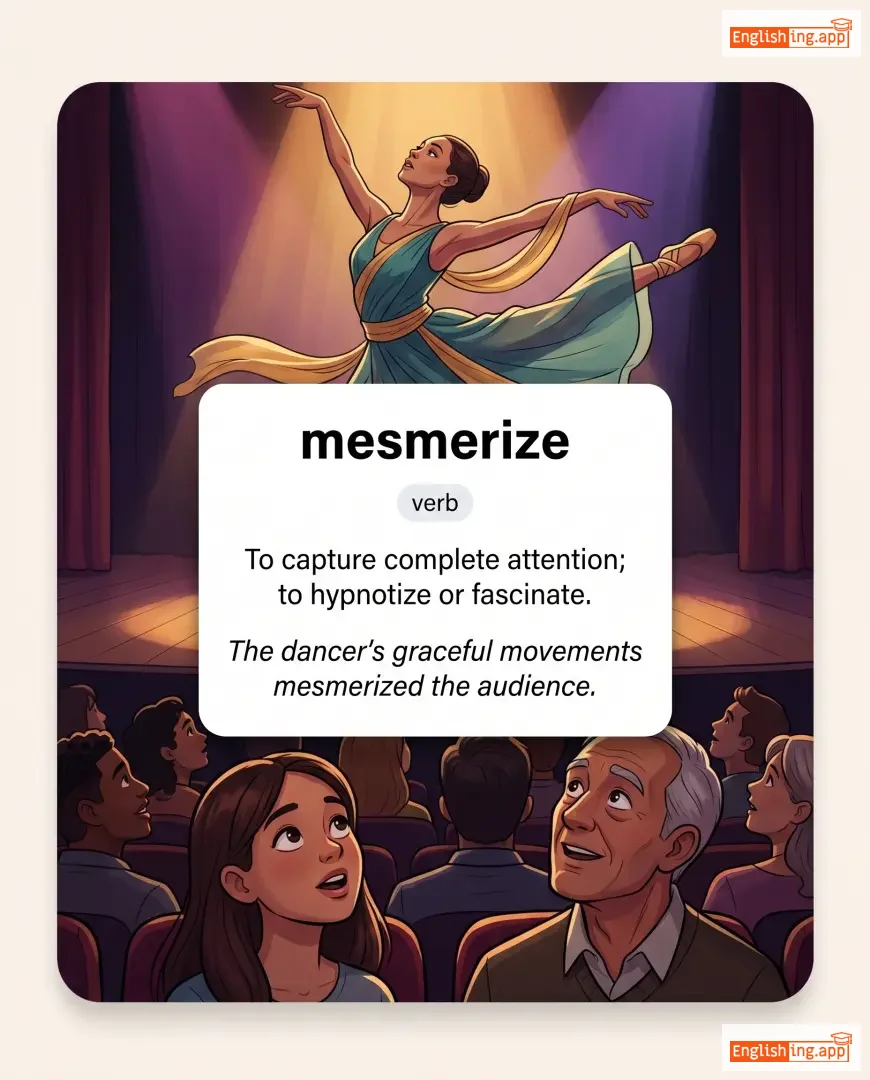
"マジシャンは観客を催眠状態に保っていた。" (Majishan wa kankyaku wo saimin joutai ni tamotteita.)
mesmerize definition card — visual illustration of the meaning
verb
/ˈmɛzməˌraɪz/
魅了する (miryou suru)

To capture complete attention; to hypnotize or fascinate.

"The dancer's graceful movements mesmerized the audience."

"ダンサーの優雅な動きは観客を魅了しました。" (Dānsā no yūga na ugoki wa kankyaku o miryō shimashita.)
noun
/mɛs/
混乱 (konran)

A state of disorder or untidiness.

"The kids left the room in a complete mess."

"子供たちは部屋を完全に混乱させました。" (Kodomotachi wa heya o kanzen ni konran sasemashita.)
noun
/ˈmɛsɪdʒ/
メッセージ (messeji)

A piece of information sent or communicated from one person to another.

"I received a message from my friend yesterday."

"昨日、友達からメッセージを受け取りました。" (Kinō, tomodachi kara mesēji o uketorimashita.)
noun
/ˈmes.ɪn.dʒər/
使者 (shisha)

a person who carries messages or communications between parties

"The messenger delivered important battle plans to the commander."

"使者は司令官に重要な戦闘計画を届けました。" (Shisha wa shireikan ni jūyōna sentō keikaku o todokemashita.)
adjective
/ˈmɛsi/
散らかった (chirakatta)

untidy or dirty; disorganized or chaotic

"His room was so messy that he couldn’t find his keys."

"彼の部屋はとても散らかっていて、鍵が見つからなかった。" (kare no heya wa totemo chirakatte ite kagi ga mitsukaranakatta)
metabolic definition card — visual illustration of the meaning
adjective
ˌmet.əˈbɒl.ɪk
代謝の (taisha no)

Related to the chemical processes within living organisms to maintain life.

"A fast metabolic rate helps in weight management."

"速い代謝率は体重管理に役立ちます。" (Hayai taisha ritsu wa taijū kanri ni yakudachimasu.)
metabolism definition card — visual illustration of the meaning
noun
/məˈtæbəlɪzəm/
新陳代謝 (shinchin taisha)

The chemical processes that occur within a living organism in order to maintain life.

"Faster metabolism can help with weight management."

"より速い新陳代謝は体重管理に役立つことがあります。" (yori hayai shinchin taisha wa taijū kanri ni yakudatsu koto ga arimasu.)
metabolize definition card — visual illustration of the meaning
verb
məˈtæb.ə.laɪz
成長のために食物を処理して利用する (seichou no tame ni shokumotsu o shori shite riyou suru)

Process and use food for growth and to replace tissue, or process other substances in the body.

"The liver helps to metabolize toxins."

"肝臓は毒素をメタボライズするのを助けます。" (Kanzou wa dokuso o metabolize suru no o tasukemasu.)
metacognition definition card — visual illustration of the meaning
noun
ˌmɛt.ə.kɒɡˈnɪʃ.ən
メタ認知 (meta ninchi)

Awareness and understanding of one's own thought processes.

"Metacognition helps students improve their learning strategies."

"メタ認知は学生が学習戦略を改善するのに役立ちます。" (Meta ninchi wa gakusei ga gakushuu senryaku wo kaizen suru no ni yakudachimasu.)
noun
/ˈmɛtəl/
金属 (kinzoku)

A solid material that is typically hard, shiny, malleable, fusible, and conductive, such as iron, gold, or aluminum.

"The ring was made of precious metal."
"その指輪は貴金属でできていました。" (Sono yubiwa wa kikinzoku de dekite imashita.)
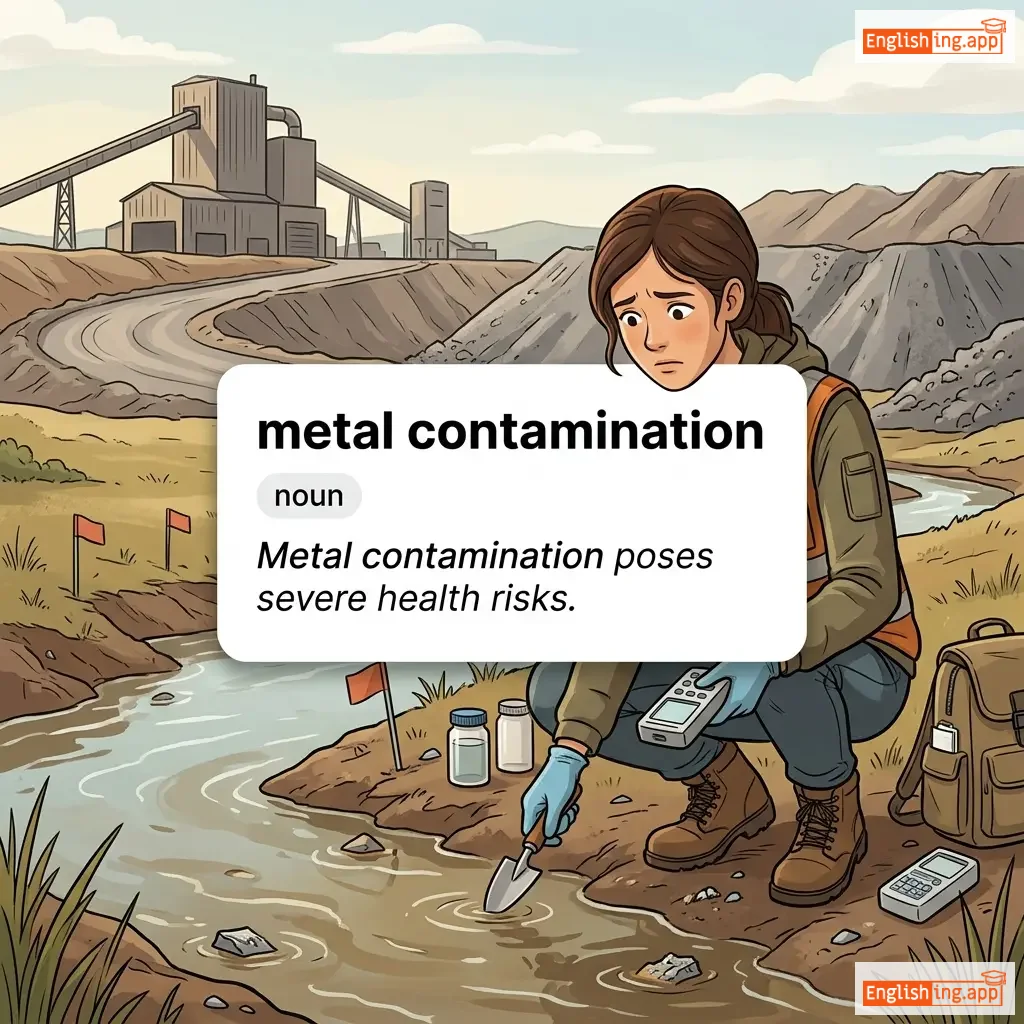
metal contamination definition card — visual illustration of the meaning
noun
ˈmetəl kənˌtæməˈneɪʃən
金属汚染 (kinzoku osen)

The presence of toxic metals in the environment that pose health and environmental risks.

"Metal contamination poses severe health risks."

"金属汚染は健康に深刻なリスクをもたらす。" (Kinzoku osen wa kenkō ni shinkoku na risuku o motarasu.)
adjective
/ˌmɛtəˈlɜrdʒɪkəl/
冶金の (yakin no)

Relating to metallurgy or the branch of science concerned with the properties of metals and their production.

"He studied metallurgical engineering at the university."

"彼は大学で冶金工学を学びました。" (kare wa daigaku de yakin kogaku o manabimashita.)
noun
/ˈmɛtələ(r)dʒi/
冶金学 (yakin-gaku)

The science and technology of metals, including their extraction from ores and their processing.

"Metallurgy plays a vital role in industrial development."

"冶金学は産業の発展において重要な役割を果たします。" (Yakin-gaku wa sangyō no hatten ni oite jūyōna yakuwari o hatashimasu.)
verb
/ˌmɛtəˈmɔrfoʊz/
変態する (hentai suru)

To change in form, structure, or substance; to transform completely.

"The caterpillar metamorphosed into a butterfly."
"キャタピラは蝶に変態した。" (Kyatapira wa chō ni hentaishita.)
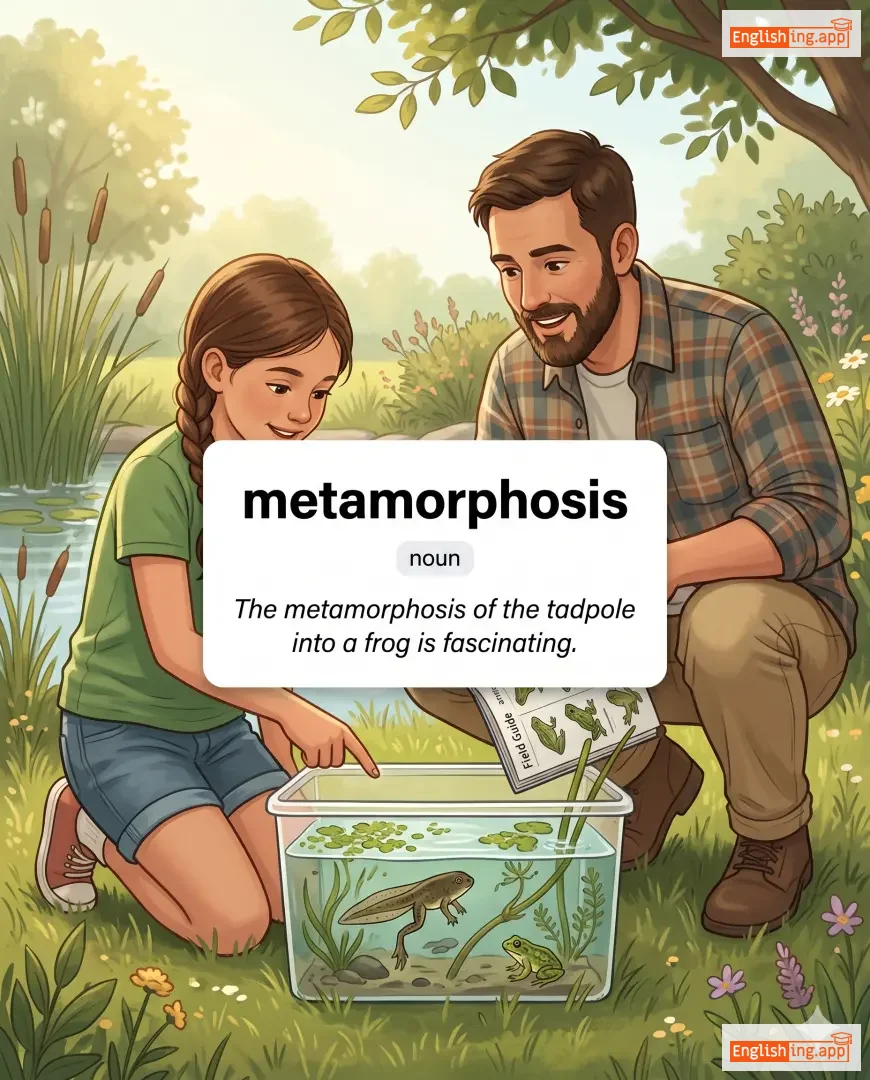
metamorphosis definition card — visual illustration of the meaning
noun
/ˌmɛtəˈmɔrfəsɪs/
変態 (hentai)

A process of transformation from one form to another, especially in biology, such as the change from a caterpillar to a butterfly.

"The metamorphosis of the tadpole into a frog is fascinating."

"オタマジャクシからカエルへの変態は魅力的です。" (Otamajakushi kara kaeru e no hentai wa miryokuteki desu.)
noun
/ˈmɛtəfɔːr/
幸せ (shiawase)

A figure of speech in which a word or phrase is applied to something to which it is not literally applicable.

"Time is a thief is a common metaphor for how quickly life passes."

"彼女は賞を受け取ったとき、自分の幸せを隠せなかった。" (Kanojo wa shō o uketotta toki, jibun no shiawase o kakusenakatta.)
adjective
/ˌmɛtəˈfɔːrɪkəl/
比喩的な (hiyuteki na)

Characteristic of or relating to metaphor; figurative rather than literal.

"He used metaphorical language to describe his emotions."

"彼は感情を表現するために比喩的な言葉を使った。" (Kare wa kanjou o hyougen suru tame ni hiyuteki na kotoba o tsukatta.)
noun
/ˈmɛtəfɔːrm/
隠喩の形 (in'yu no katachi)

A coined or rare term sometimes used to describe a hybrid form of metaphor and form in literature or art.

"The poet introduced a metaphorm to blend imagery with structure."

"詩人はイメージと構造を結びつけるためにメタフォームを導入しました。" (Shijin wa imēji to kōzō o musubitsukeru tame ni metafōmu o dōnyū shimashita.)
adjective
/ˌmɛtəˈfɪzɪkəl/
形而上学的 (keijou shougakuteki)

Relating to the branch of philosophy that deals with the fundamental nature of reality and existence.

"He spent years studying metaphysical questions about life and being."

"彼は人生と存在に関する形而上学的な問題を何年も研究しました。" (Kare wa jinsei to sonzai ni kansuru keijou shougakuteki na mondai o nannen mo kenkyuu shimashita.)
noun
/ˌmɛtəfɪˈzɪʃən/
形而上学者 (keijou-gakusha)

A person who studies or is an expert in metaphysics.

"The metaphysician debated the essence of reality with his peers."
"形而上学者は現実の本質について仲間たちと議論した。" (Keijou-gakusha wa genjitsu no honshitsu ni tsuite nakamatachi to giron shita.)
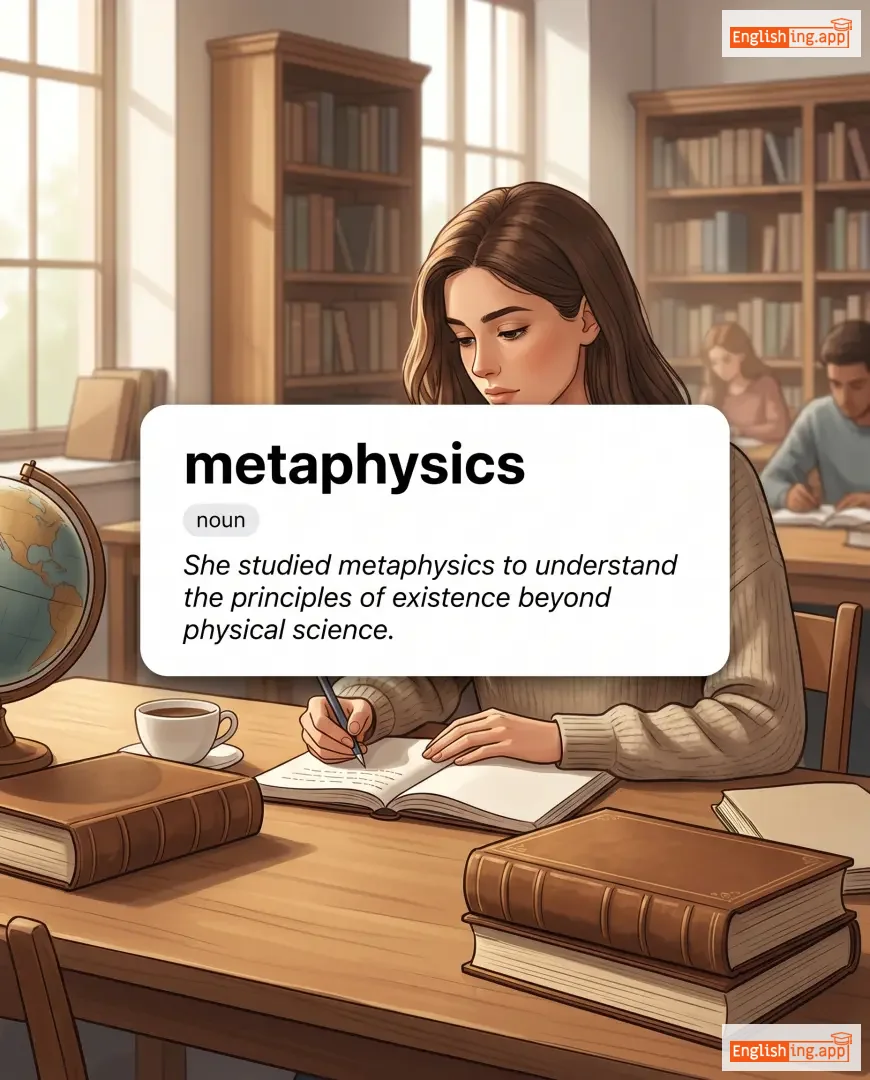
metaphysics definition card — visual illustration of the meaning
noun
/ˌmɛtəˈfɪzɪks/
形而上学 (kējōgaku)

The branch of philosophy that deals with the fundamental nature of reality, existence, and the relationship between mind and matter.

"She studied metaphysics to understand the principles of existence beyond physical science."

"彼女は物理学を超えた存在の原理を理解するために形而上学を学びました。" (Kanojo wa butsurigaku o koeta sonzai no genri o rikai suru tame ni kējōgaku o manabimashita.)
verb
/miːt/
分配する (bunkai suru)

To dispense or allot justice, punishment, or harsh treatment.

"The judge will mete out punishment according to the crime."

"裁判官は犯行に応じて罰を分配します。" (Saibankan wa hankō ni ōjite batsu o bunkai shimasu.)
noun
/ˌmɛtəmˌsaɪˈkoʊsɪs/
魂の転生 (tamashī no tensei)

The supposed transmigration of the soul, especially its reincarnation after death.

"Ancient philosophers often debated the idea of metempsychosis."

"古代の哲学者たちは、しばしば魂の転生について議論していました。" (Kodai no tetsugakusha-tachi wa, shibashiba tamashī no tensei ni tsuite giron shite imashita.)
adjective
/ˌmiːtiˈɔːrɪk/
流星に関連する; 非常に迅速で、しばしば一時的な。 (ryuusei ni kanren suru; hijou ni jinsoku de, shibashiba ichijiteki na.)

Relating to meteors; very rapid and often temporary.

"The singer’s meteoric rise to fame surprised everyone."
"歌手の流星のような名声の上昇は皆を驚かせた。" (Kashu no ryuusei no you na meisei no joushou wa mina o odorokaseta.)
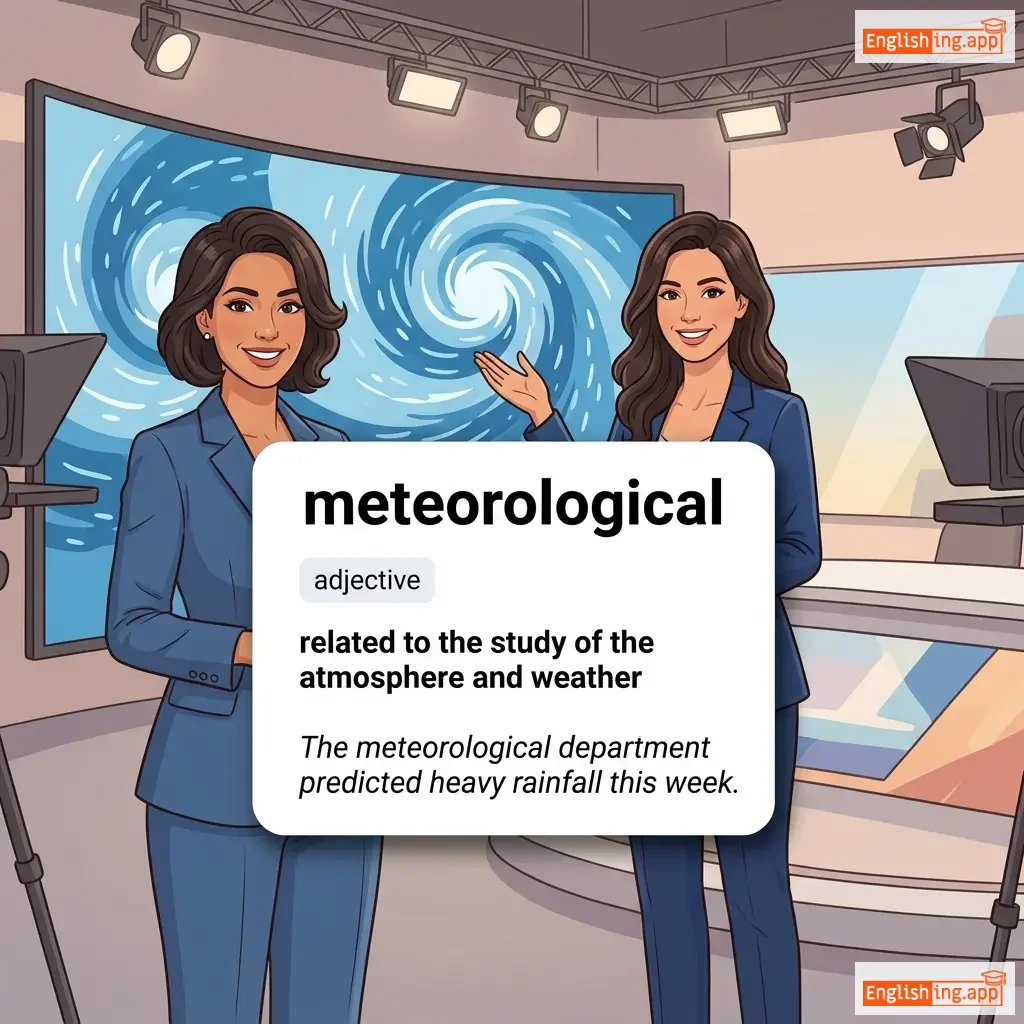
meteorological definition card — visual illustration of the meaning
adjective
/ˌmiː.ti.ə.rəˈlɒ.dʒɪ.kəl/
気象学的 (kishōgakuteki)

related to the study of the atmosphere and weather

"The meteorological department predicted heavy rainfall this week."

"気象学部門は今週の大雨を予測しました。" (Kishōgakubumon wa konshū no ōame o yosoku shimashita.)