
語彙集

英単語辞書 | 単語の意味、定義、例文

multitasking definition card — visual illustration of the meaning
noun
ˈmʌltɪˌtɑːskɪŋ
複数のタスクを同時に行うこと (fukusū no tasuku o dōji ni okonau koto)

The practice of doing multiple tasks at the same time.

"Multitasking may reduce the quality of each individual task."

"マルチタスキングは、各タスクの品質を低下させる可能性があります。" (Maruchitaskingu wa, kaku tasuku no hinshitsu o teika saseru kanōsei ga arimasu.)
noun
/ˈmʌltɪtuːd/
多数 (tashū)

A large number of people or things.

"A multitude of fans gathered at the stadium."

"スタジアムに多数のファンが集まりました。" (Sutajiamu ni tashū no fan ga atsumarimashita.)
adjective
/mʌm/
沈黙; 何も言わない; 静かにする (chinmoku; nanimo iwanai; shizuka ni suru)

silent; saying nothing; keeping quiet

"He kept mum about the surprise party plans."

"彼はサプライズパーティーの計画について沈黙していました。" (Kare wa sapuraizu paatii no keikaku ni tsuite chinmoku shite imashita.)
verb
/ˈmʌmbəl/

To speak quietly and not clearly so that words are difficult to understand.

"He mumbled an apology before leaving."

mundane definition card — visual illustration of the meaning
adjective
/mʌnˈdeɪn/
平凡 (heibon)

lacking interest or excitement; dull and ordinary

"She tried to escape her mundane routine by traveling."

"彼女は旅行をして平凡な日常から逃げようとした。" (Kanojo wa ryokou o shite heibon na nichijou kara nigeyou to shita.)
mundanity definition card — visual illustration of the meaning
noun
mʌnˈdeɪ.nɪ.ti
平凡 (heibon)

The quality of being ordinary, routine, or lacking excitement.

"The mundanity of office life can be exhausting."

"オフィスの生活の平凡さは疲れることがあります。" (Ofisu no seikatsu no heibon-sa wa tsukareru koto ga arimasu.)
adjective
/mjuːˈnɪsɪpəl/
市営の (shiei no)

relating to a city or town or its local government

"The municipal authority is responsible for maintaining the park."

"市営当局は公園の維持管理を担当しています。" (Shiei tōkyoku wa kōen no iji kanri o tantō shiteimasu.)
noun
/ˌmjuːnɪsɪˈpæləti/

a city or town that has its own local government

"The municipality is planning to build a new library."

noun
/mjuːˈnɪfəsəns/
寛大さ (kandaisa)

great generosity or lavish giving

"The hospital was built thanks to the munificence of a wealthy donor."

"病院は裕福な寄付者の寛大さのおかげで建てられました。" (Byouin wa yuufukuna kifu-sha no kandaisa no okage de tateraremashita.)
adjective
/mjuːˈnɪfɪsənt/
寛大な (kandai na)

extremely generous; giving freely and abundantly

"She made a munificent donation to the orphanage."

"彼女は孤児院に寛大な寄付をしました。" (Kanojo wa kojiin ni kandai na kifu o shimashita.)
noun
/ˈmjʊərəl/
壁画 (hekiga)

A large painting or artwork applied directly to a wall or ceiling surface.

"The artist painted a mural on the side of the school building."

"アーティストは学校の建物の側面に壁画を描きました。" (Ātisuto wa gakkō no tatemono no sokumen ni hekiga o kakimashita.)
noun, verb
/ˈmɜːrdər/
殺人 (satsujin)

the unlawful killing of a person; to kill someone unlawfully and intentionally

"The detective investigated the murder that shocked the town."

"探偵は町を驚かせた殺人事件を調査しました。" (tantei wa machi o odorokaseta satsujin jiken o chōsa shimashita.)
noun
/ˈmɜːrdərər/
殺人犯 (satsujinhan)

a person who unlawfully kills another human being with intent

"The murderer was caught by the police within hours."

"殺人犯は数時間以内に警察に捕まった。" (Satsujinhan wa suujikan inai ni keisatsu ni tsukamatta.)
adjective
/ˈmɜː(r)dərəs/
殺人的; 殺意を持っている; 極端に暴力的; 血に飢えた (maadarasu; satsui wo motteiru; kyokutani bouryokuteki; chi ni ueta)

having the intent to kill; extremely violent; bloodthirsty

"The murderous look in his eyes frightened everyone."

"彼の目にあった殺人的な視線はみんなを恐怖させた。" (Kare no me ni atta maadarasu-teki na shisen wa minna wo kyoufu saseta.)
noun
/ˈmɜːkinəs/
濁り (nigori)

The quality of being dark, gloomy, or unclear.

"The murkiness of the water made it hard to see the fish."

"水の濁りが魚を見るのを難しくしました。" (Mizu no nigori ga sakana o miru no o muzukashiku shimashita.)
adjective
/ˈmɜːki/
濁った (nigotta)

Dark, gloomy, and difficult to see through; obscure.

"We avoided swimming in the murky river."

"私たちは濁った川で泳ぐのを避けました。" (Watashitachi wa nigotta kawa de oyogu no o sakemashita.)
verb
/ˈmɜːrmər/
つぶやく (tsubuyaku)

To say something in a low, soft, or indistinct voice.

"She murmured a prayer before going to sleep."

"彼女は寝る前に祈りをささやきました。" (Kanojo wa neru mae ni inori o sasayakimashita.)
noun
/ˈmʌrɪn/
家畜の伝染病 (kachiku no densenbyou)

An infectious disease that affects cattle and other animals, often fatal.

"The farmer lost many cows during the outbreak of murrain."

"農家はムレインの流行中に多くの牛を失いました。" (Nōka wa Muren no ryūkō-chū ni ōku no ushi o ushinai mashita.)
noun
/ˈmʌsl/
筋肉 (kinniku)

a band of fibrous tissue in the body that produces movement; physical strength

"He exercises daily to build strong muscles."
"彼は強い筋肉を作るために毎日トレーニングをしています。" (kare wa tsuyoi kinniku o tsukuru tame ni mainichi toreeningu o shiteimasu.)
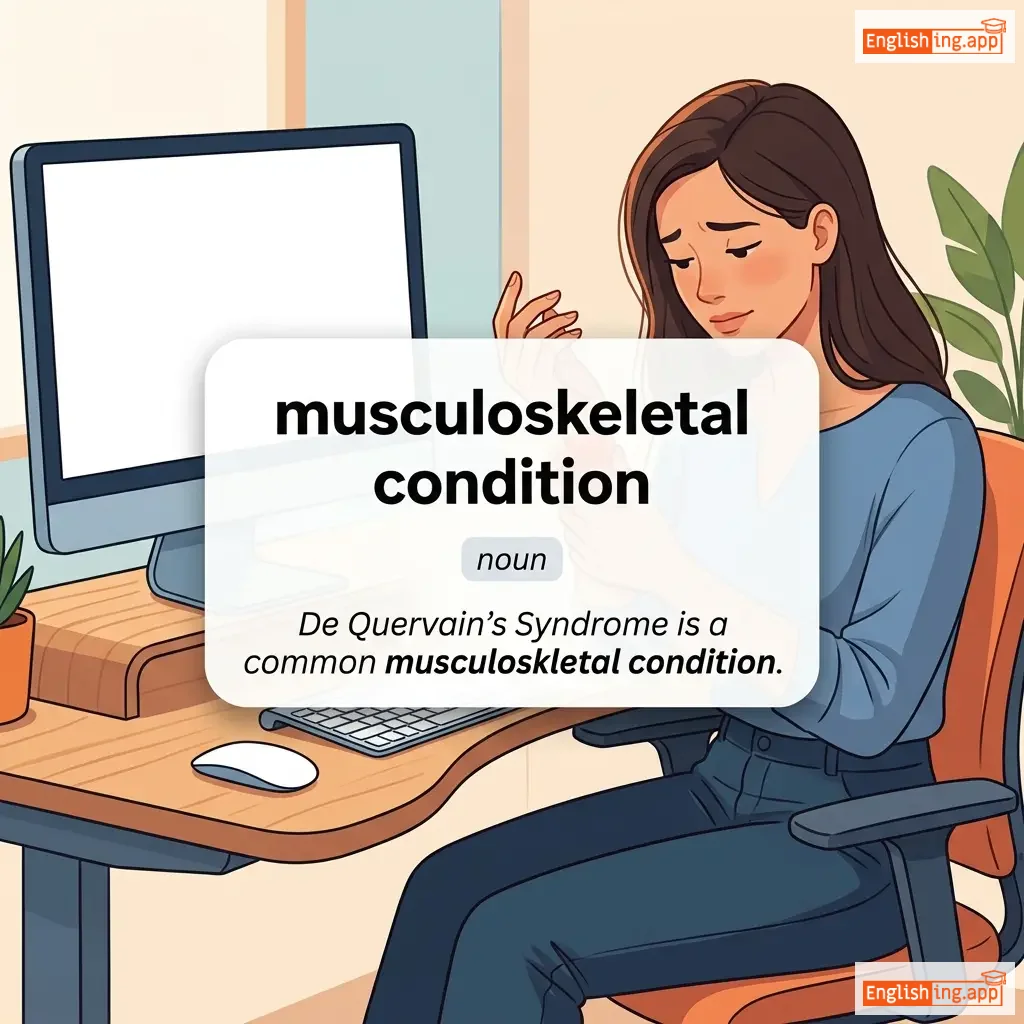
musculoskeletal condition definition card — visual illustration of the meaning
noun
মাসকুলোস্কেলেটাল কন্ডিশন
筋骨格障害 (kinkokkaku shougai)

A disorder that affects the muscles, bones, joints, tendons, ligaments, or other structures that support the limbs, neck, and back.

"De Quervain's Syndrome is a common musculoskeletal condition."

"デ・クヴェルヴァン症候群は一般的な筋骨格障害です。" (De Quervain shoukougun wa ippanteki na kinkokkaku shougai desu.)
🤔

muse

verb, noun
/mjuːz/

to think deeply about something; a source of inspiration, especially for an artist or writer

"She sat by the window to muse about her future."

noun
/mjuˈziːəm/
博物館 (hakubutsukan)

a building in which objects of historical, scientific, artistic, or cultural interest are stored and exhibited

"We visited the art museum to see the new exhibition."

"私たちは新しい展示を見るために美術館を訪れました。" (Watashitachi wa atarashī tenji o miru tame ni bijutsukan o otozuremashita.)
noun
/ˈmʌʃruːm/
キノコ (食用のキノコの一種) (kinoko)

a type of fungus with a round top and a short stem, some of which are edible

"We cooked a delicious soup with fresh mushrooms."

"新鮮なキノコで美味しいスープを作りました。" (Shinsen na kinoko de oishī sūpu o tsukurimashita.)
noun
/ˈmjuːzɪk/
音楽 (ongaku)

vocal or instrumental sounds combined to produce harmony, melody, or rhythm

"She loves listening to classical music."

"彼女はクラシック音楽を聴くのが好きです。" (Kanojo wa kurashikku ongaku o kiku no ga suki desu.)
adjective
/ˈmɪzɪkəl/
音楽的 (ongakuteki)

related to or consisting of music

"She has a very musical voice."

"彼女は非常に音楽的な声を持っています。" (Kanojo wa hijō ni ongakuteki na koe o motteimasu.)
noun
/mjuːˈzɪʃən/
音楽家 (ongakuka)

a person who plays a musical instrument or is musically talented

"He is a talented musician."

"彼は才能ある音楽家です。" (Kare wa sainō aru ongakuka desu.)
noun
/mʌsk/
ムスク (musuku)

a strong-smelling substance secreted by certain animals, used in perfumes and traditional medicine

"The perfume contained natural musk that gave it an exotic fragrance."

"その香水には天然のムスクが含まれており、エキゾチックな香りを与えました。" (Sono kōsui ni wa ten'nen no musuku ga fukumarete ori, ekizochikku na kaori o ataemashita.)
noun
/ˈmʌskɪt/
古いタイプの銃 (furui taipu no jū)

a type of long gun used in the past, especially by infantry soldiers

"The soldiers carried muskets into the battlefield."

"兵士たちは戦場にマスケットを持ち込んだ。" (Heishitachi wa senjō ni masuketto o mochikonda.)
adjective
/ˈmʌski/
ムスクのような (musuku no yōna)

having a strong, sweet, earthy smell like musk

"The perfume had a musky fragrance."

"その香水はムスクのような香りがしました。" (Sono kōsui wa musuku no yōna kaori ga shimashita.)
noun
/ˈmʊzlɪm/
ムスリム (musurimu)

a follower of Islam

"He is a devout Muslim."

"彼は熱心なムスリムです。" (Kare wa nesshin na musurimu desu.)
verb
/mʌst/
しなければならない (shinakereba naranai)

to be required or obligated to

"You must complete your homework before you go out."

"あなたは外出する前に宿題を終わらせなければなりません。" (Anata wa gaishutsu suru mae ni shukudai o owarasenakereba narimasen.)
noun
/ˈmʌs.tərd/
マスタード (masutādo)

A pungent seed or condiment made from ground mustard seeds

"She added mustard seeds to the curry for extra flavor."

"カレーに風味を加えるためにマスタードの種を加えました。" (karē ni fūmi o kuwaeru tame ni masutādo no tane o kuwaemashita.)
noun
/ˈmʌs.tərd liːf/
マスタードの葉 (masutādo no ha)

green leafy vegetable from the mustard plant; edible leaves used in cooking

"We cooked mustard leaf with fish in a traditional Bengali curry."

"私たちは伝統的なベンガルカレーで魚と一緒にマスタードリーフを料理しました。" (Watashitachi wa dentō-teki na bengaru karē de sakana to issho ni masutādo rīfu o ryōri shimashita.)
noun
/ˈmʌstərd ɔɪl/
マスタードオイル (masutādo oiru)

oil extracted from mustard seeds, commonly used for cooking and medicinal purposes

"We use mustard oil for cooking vegetables in our kitchen."

"私たちはキッチンで野菜を調理するためにマスタードオイルを使います。" (Watashitachi wa kicchin de yasai o chōri suru tame ni masutādo oiru o tsukaimasu.)
noun
/ˈmʌs.tərd siːdz/
マスタードシード (masutādo shīdo)

small round seeds from the mustard plant, used as a spice and for making mustard condiment

"Mustard seeds are often tempered in hot oil to release their nutty flavor before adding to dishes."

"マスタードシードは、料理に加える前に、そのナッツのような風味を引き出すために熱い油で炒められることがよくあります。" (Masutādo shīdo wa, ryōri ni kuwaeru mae ni, sono nattsu no yō na fūmi o hikidasu tame ni atsui abura de itamerareru koto ga yoku arimasu.)
verb, noun
/ˈmʌstər/
集める / 勇気を出す (atsumeru / yūki o dasu)

to gather people, especially soldiers; to summon courage or strength

"He mustered enough courage to face the challenge."

"彼は挑戦に立ち向かうために十分な勇気を集めました。" (Kare wa chōsen ni tachimukau tame ni jūbun na yūki o atsumemashita.)
adjective
/ˈmʌsti/
湿っぽい、カビ臭いまたは湿気のある匂い (shimeppoi, kabikusai mata wa shikke no aru nioi)

having a stale, moldy, or damp smell

"The old books had a musty odor."

"古い本にはカビ臭い匂いがあった。" (Furui hon ni wa kabikusai nioi ga atta.)
noun
/ˌmjuːtəˈbɪləti/
変動性 (hendousei)

The quality of being changeable or capable of change.

"The mutability of fashion trends makes it hard to keep up."

"ファッションのトレンドの可変性は、それについていくのを難しくします。" (Fasshon no torendo no kahensei wa, sore ni tsuiteiku no o muzukashiku shimasu.)
adjective
/ˈmjuːtəbl/
可変の (kaken no)

Capable of change or alteration.

"Human emotions are mutable and can shift rapidly."

"人間の感情は可変的で、迅速に変わることがあります。" (Ningen no kanjō wa kahen-teki de, jinsoku ni kawaru koto ga arimasu.)
noun
/ˌmjuːtəˈbɪləti/
変化性(綴り間違い) (henkasei (tsudzuri machigai))

A misspelled form of 'mutability', meaning the quality of being changeable.

"The document contained the misspelled word 'mutablility' instead of 'mutability'."

"その文書には 'mutability' の代わりに 'mutablility' の綴り間違いがありました。" (Sono bunsho ni wa 'mutability' no kawari ni 'mutablility' no tsudzuri machigai ga arimashita.)
verb
/ˈmjuːteɪt/
突然変異する (totsuzenhen'i suru)

To change or cause to change in form, nature, or character.

"The virus can mutate into a more dangerous strain."

"ウイルスはより危険な株にミュートすることができます。" (Uirusu wa yori kiken na kabu ni myuuto suru koto ga dekimasu.)
noun
/mjuːˈteɪʃn/
突然変異、遺伝的変化 (totsuzen hen'i, iden-teki henka)

A change in form, structure, or nature, especially in genetics.

"Scientists discovered a genetic mutation that caused the disorder."

"科学者たちは、その障害を引き起こした遺伝的な突然変異を発見しました。" (Kagakusha-tachi wa, sono shougai o hikiokoshita iden-teki na totsuzen hen'i o hakken shimashita.)
🤐

Mute

adjective
/mjuːt/

silent or unable to speak; not expressed in words

"She remained mute during the entire meeting."

adjective
/ˈmjuːtɪd/
muted (ミューテッド) (myutedd)

softened in sound, color, or effect; subdued

"The room was painted in muted shades of blue and grey."

"部屋は青と灰色の muted な色合いで塗られていました。" (Heya wa ao to haiiro no myutedd na iroai de nurareteimashita.)
verb
/ˈmjuːtɪleɪt/
損傷する (sonshou suru)

to inflict serious damage on something, often by cutting or tearing

"The ancient manuscript was mutilated by careless handling."

"古代の写本は不注意な取り扱いで損傷しました。" (Kodai no shahon wa fuchuui na toriatsukai de sonshou shimashita.)
adjective
/ˈmjuːtɪnəs/
反乱者 (hanransha)

refusing to obey authority; rebellious

"The soldiers grew mutinous after months without pay."

"兵士たちは数ヶ月間給料がなくて反乱者になった。" (Heishitachi wa suukagetsu kan kyūryō ga nakute hanransha ni natta.)
noun
/ˈmjuːtɪni/
反乱 (hanran)

an open rebellion against authority, especially by soldiers or sailors

"The sailors staged a mutiny against their captain."

"船員たちはキャプテンに対して反乱を起こした。" (Sen'in-tachi wa kyaputen ni taishite hanran o okoshita.)
verb
/ˈmʌtər/
呟く (tsubuyaku)

to speak in a low or barely audible voice, often in dissatisfaction or irritation

"He muttered something under his breath as he walked away."

"彼は歩きながら何かを呟いた。" (Kare wa aruki nagara nanika o tsubuyaita.)
noun
/ˈmʌtn/
羊肉 (hitsuji niku)

meat from an adult sheep; lamb meat

"The restaurant serves delicious mutton curry with rice."

"レストランはおいしい羊肉カレーを提供しています。" (Resutoran wa oishii hitsuji niku karee o teikyō shiteimasu.)
adjective
/ˈmjuːtʃuəl/
相互の (sōgo no)

felt, shared, or done by two or more people equally

"They have mutual respect for each other."

"彼らはお互いに相互の敬意を持っています。" (Karera wa otagai ni sōgo no keii o motteimasu.)