語彙集

英単語辞書 | 単語の意味、定義、例文

noun
/ˈlɒkətɪv/
ロカティブ (rokatibu)

a grammatical case indicating location or place

"In Latin, the locative case is used to indicate location."

"ラテン語では、ロカティブ格は場所を示すために使用されます。" (Raten-go de wa, rokatibu-kaku wa basho o shimesu tame ni shiyō saremasu.)
noun
/lɒx/
(ko)

a lake or sea inlet, especially in Scotland

"Tourists visit Loch Ness to search for the legendary monster."
"観光客はロッホ・ネスに行き、伝説の怪物を探します。" (Kankōkyaku wa Rokku-Nesu ni iki, densetsu no kaibutsu o sagashimasu.)
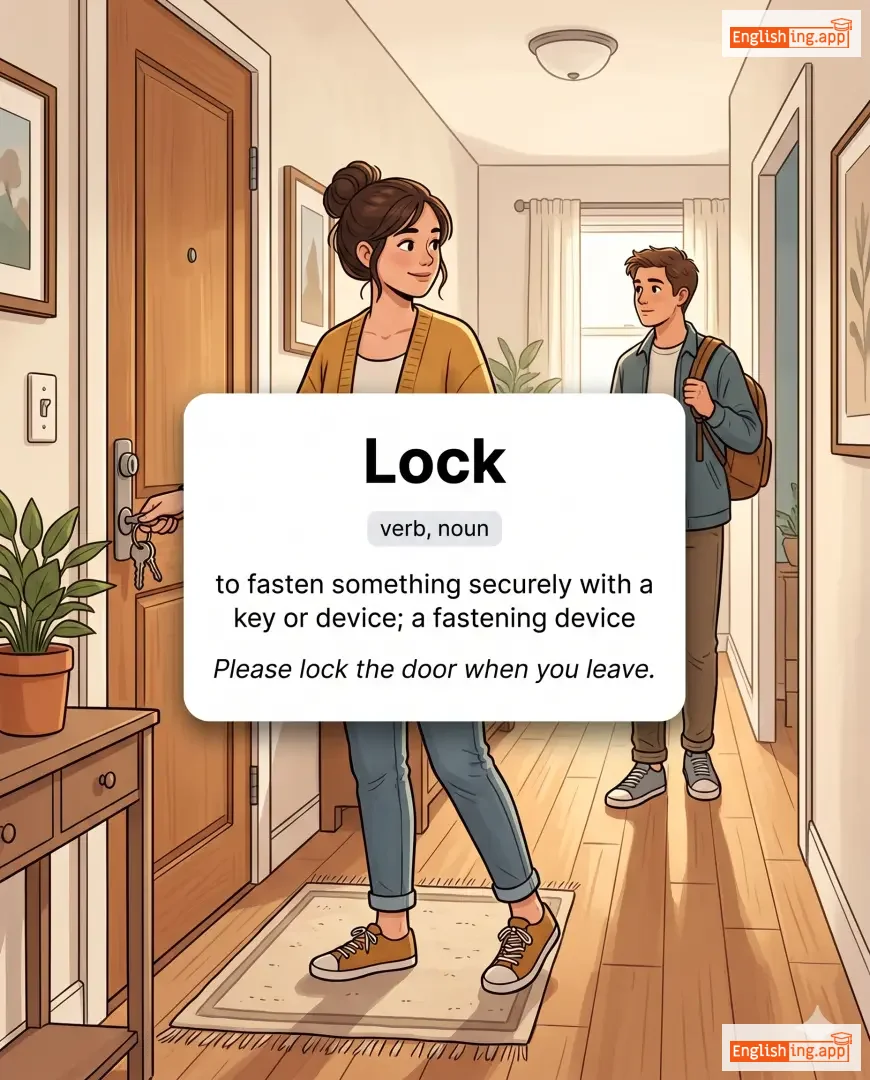
Lock definition card — visual illustration of the meaning
verb, noun
/lɒk/
鍵、ロックする (kagi, rokku suru)

to fasten something securely with a key or device; a fastening device

"Please lock the door when you leave."

"出かけるときはドアをロックしてください。" (dekakeru toki wa doa o rokku shite kudasai.)
noun
/ˈlɒk.ɪt/
ロケットペンダント (rokette pendanto)

a small ornamental case, typically made of gold or silver, worn on a chain around the neck

"She kept her grandmother's photo in the locket."

"彼女は祖母の写真をロケットペンダントに入れていました。" (Kanojo wa sobo no shashin o rokette pendanto ni irete imashita)
noun
/ˌloʊkəˈmoʊʃən/
移動 (idou)

movement or the ability to move from one place to another

"Walking is the most common form of human locomotion."

"歩くことは人間の最も一般的な移動の形です。" (Aruku koto wa ningen no mottomo ippanteki na idō no katachi desu.)
noun
/ˌloʊ.kəˈmoʊ.tɪv/
機関車 (kikan sha)

A powered rail vehicle used for pulling trains.

"The old steam locomotive was restored for the museum."

"古い蒸気機関車は博物館のために修復されました。" (Furui jōki kikansha wa hakubutsukan no tame ni shūfuku saremashita.)
noun
/ˈloʊ.kəst/
バッタ (batta)

a large insect that flies in groups and eats crops

"The locusts destroyed the entire wheat field."

"バッタが小麦畑をすべて破壊しました。" (Batta ga komugi hatake o subete hakai shimashita)
noun
/loʊd/
鉱脈 (kōmyaku)

A rich source of something, often a vein of valuable metal in the earth.

"The miners discovered a rich lode of silver."

"鉱夫たちは豊かな銀の鉱脈を発見しました。" (Kōfu-tachi wa yutakana gin no kōmyaku o hakken shimashita.)
noun
/ˈlɒdʒ.mənt/
仮宿 (kariyado)

The act of lodging or a place of temporary stay; also a deposit of something.

"The soldiers found lodgment in the abandoned house."

"兵士たちは廃屋で仮宿を見つけました。" (Heishi tachi wa haiko de kariyado o mitsukemashita.)
noun
/lɒft/
ロフト (rofuto)

An upper room or space, often under the roof of a building.

"She converted the old loft into a modern studio."

"彼女は古いロフトを現代的なスタジオに改造しました。" (Kanojo wa furui rofuto wo gendai-teki na sutajio ni kaizou shimashita.)
adjective
/ˈlɒf.ti/
高い (takai)

Of great height; elevated in character or style; noble.

"He set himself the lofty goal of ending poverty."
"彼は貧困を終わらせるというloftyな目標を設定した。" (Kare wa hinkon o owaraseru to iu lofty na mokuhyō o settei shita.)
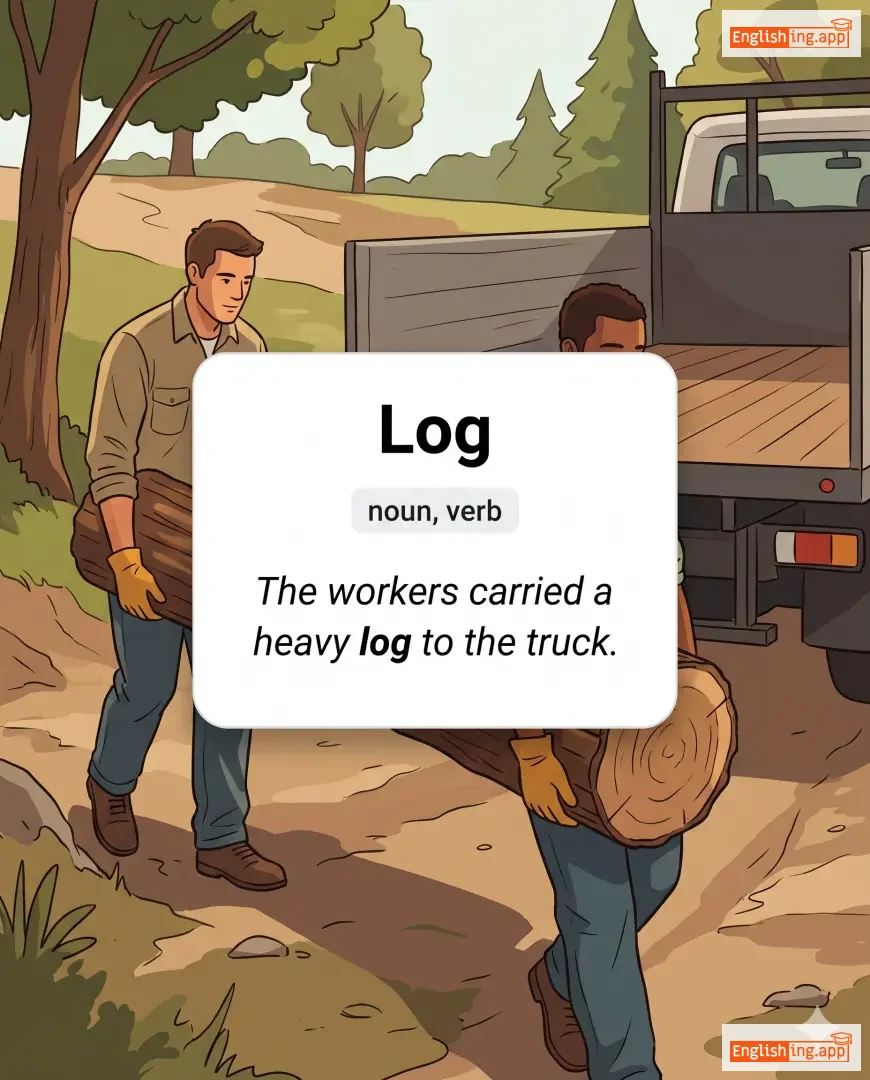
Log definition card — visual illustration of the meaning
noun, verb
/lɒɡ/
丸太, 記録 (maruta, kiroku)

A part of the trunk or a large branch of a tree that has fallen or been cut off; also to record information systematically.

"The workers carried a heavy log to the truck."

"作業員は重い丸太をトラックに運びました。" (Sagyouin wa omoi maruta o torakku ni hakobimashita.)
noun
/ˈlɒdʒɪk/
論理 (ronri)

Reasoning conducted or assessed according to strict principles of validity.

"Her argument was based on sound logic."
"彼女の主張は論理に基づいていました。" (Kanojo no shucho wa ronri ni motozuite imashita.)
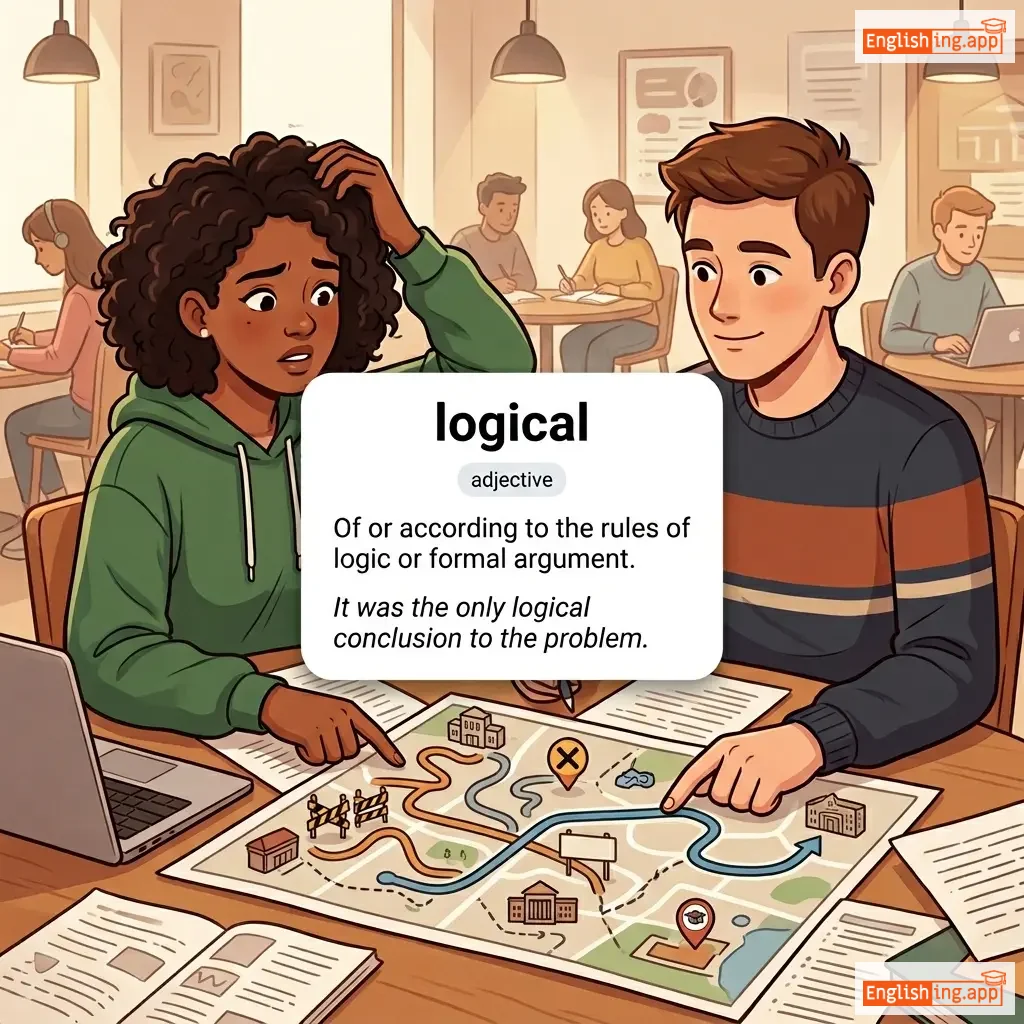
logical definition card — visual illustration of the meaning
adjective
/ˈlɒdʒɪkəl/
論理的 (ronriteki)

Of or according to the rules of logic or formal argument.

"It was the only logical conclusion to the problem."

"それは問題に対する唯一の論理的な結論だった。" (Sore wa mondai ni taisuru yuiitsu no ronriteki na ketsuron datta.)
noun
/ləˈdʒɪʃən/
論理学者 (ronrigakusha)

A person skilled in logic and reasoning.

"Aristotle is considered one of the greatest logicians in history."
"アリストテレスは歴史上最も偉大な論理学者の一人と見なされています。" (Arisutoteresu wa rekishijou mottomo idaina ronrigakusha no hitori to minasareteimasu.)
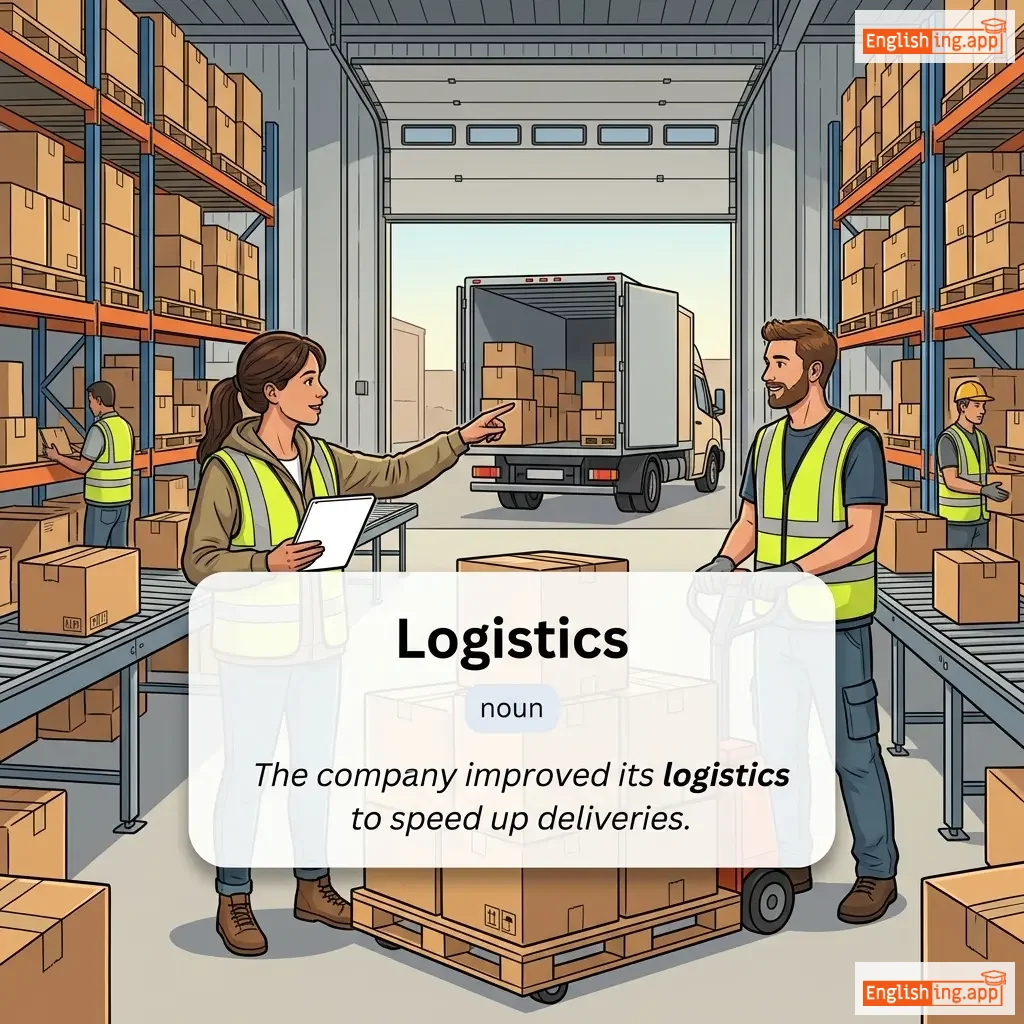
Logistics definition card — visual illustration of the meaning
noun
/ləˈdʒɪs.tɪks/
ロジスティクス (rojisutikusu)

Supply chain management or operation, managing the flow of goods, services or information efficiently.

"The company improved its logistics to speed up deliveries."

"会社は配送を迅速化するためにロジスティクスを改善しました。" (Kaisha wa haisō o jinsokuka suru tame ni rojisutikusu o kaizen shimashita.)
🖼️

logo

noun
/ˈləʊɡəʊ/

a symbol or other small design adopted by an organization to identify its products, uniform, vehicles, etc.

"The company's logo was redesigned to reflect its new image."

verb
/ˈlɔɪtər/

To stand or wait around idly without apparent purpose.

"The teenagers were told not to loiter outside the shop."

noun
/ˈlɔɪtərər/
目的もなく場所にいる人 (mokuteki mo naku basho ni iru hito)

A person who lingers aimlessly in a place without purpose.

"The police questioned the loiterer outside the store."

"警察は店の外でロイタラーに尋問をした。" (Keisatsu wa mise no soto de roitara ni chinmon o shita.)
verb
/lɑːl/
だらりと座る (darari to suwaru)

To sit, lie, or stand in a lazy, relaxed way.

"He lolled on the sofa after a long day at work."

"長い仕事の後で、彼はソファにだらりと座った。" (Nagai shigoto no ato de, kare wa sofa ni darari to suwatta.)
noun
/ˈloʊnlinəs/
孤独 (kodoku)

The state of being alone and feeling sad about it.

"She felt a deep sense of loneliness after moving to the new city."

"新しい街に引っ越した後、彼女は深い孤独を感じた。" (Atarashī machi ni hikkoshita ato, kanojo wa fukai kodoku o kanjita.)
adjective
/ˈloʊnli/
孤独 (kodoku)

feeling sad because one has no friends or company.

"He felt lonely after moving to a new city."

"彼は新しい街に引っ越した後、孤独を感じました。" (Kare wa atarashī machi ni hikkoshita ato, kodoku o kanjimashita.)
adjective
/lɔːŋ/
長い (nagai)

Measuring a great distance from end to end; lasting for a large amount of time.

"They waited a long time for the train."

"彼らは電車を長い時間待っていました。" (Karera wa densha wo nagai jikan matte imashita.)
noun
/lɔːŋ ɡɔːrd/
長いウリ (nagai uri)

an elongated green vegetable belonging to the cucumber family, used in cooking

"She sliced the long gourd thinly for the stir-fry dish."

"彼女はその長いウリを薄切りにして、炒め物に使いました。" (Kanojo wa sono nagai uri wo usugiri ni shite, itamemono ni tsukaimashita.)
noun
/lɔːŋ ˈpepər/
ロングペッパー (rongu peppā)

a flowering vine in the family Piperaceae, cultivated for its fruit which is used as a spice

"Long pepper was more valuable than black pepper in ancient times."

"ロングペッパーは古代において黒胡椒よりも価値が高かった。" (Rongu peppā wa kodai ni oite kuro kosyou yori mo kachi ga takakatta.)
noun
/lɒŋ ˈwɪskəd ˈkætfɪʃ/
ナマズ (namazu)

A type of freshwater fish with long whisker-like barbels around its mouth

"The fisherman caught a long whiskered catfish in the river."

"漁師は川で長いひげのナマズを捕まえた。" (ryoshi wa kawa de nagai hige no namazu o tsukamaeta)
adjective
/ˈlɒŋ ˈstændɪŋ/
長期的な (choukiteki na)

having existed or continued for a long period of time

"They have a long-standing relationship with their suppliers."
"彼らは供給業者との長期的な関係を持っています。" (Karera wa kyoukyuu gyousha to no choukiteki na kankei wo motteimasu.)
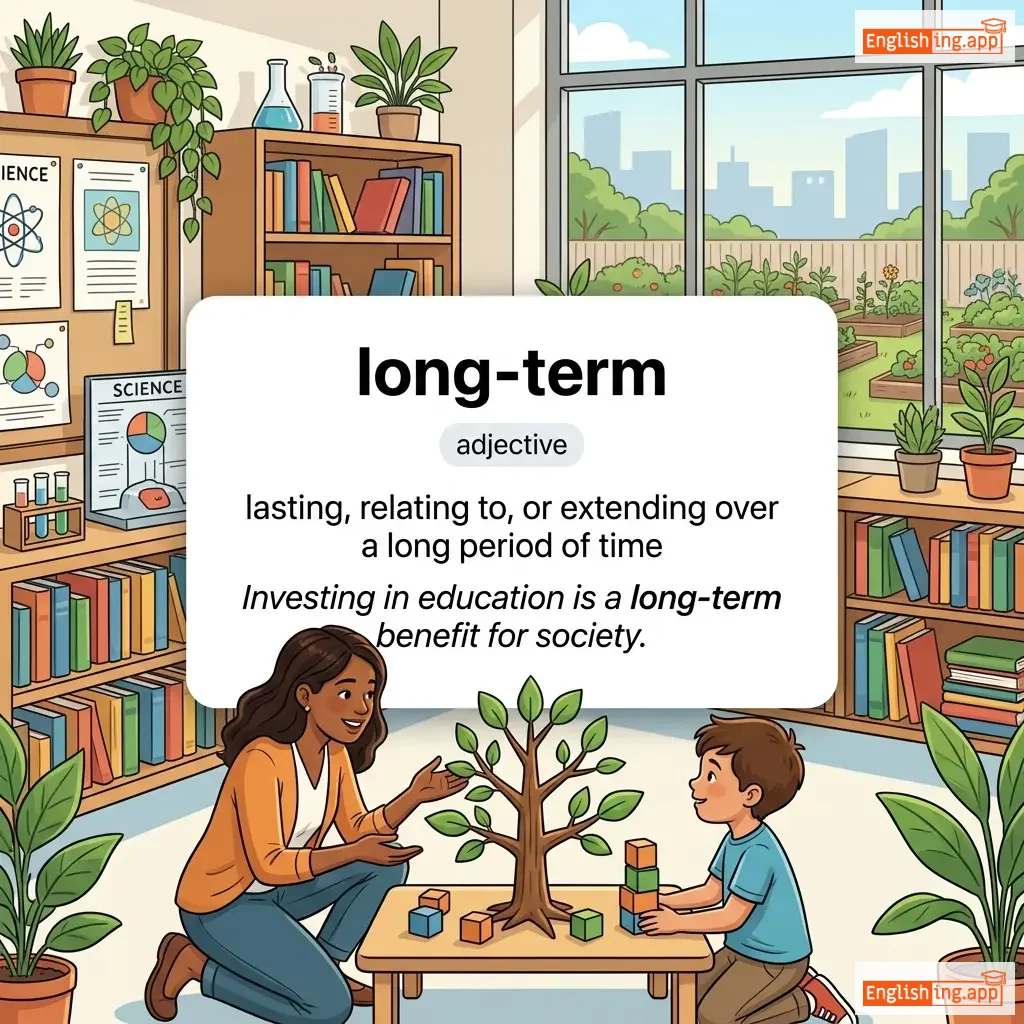
long-term definition card — visual illustration of the meaning
adjective
/ˌlɔːŋ ˈtɜːrm/
長期的 (chouki teki)

lasting, relating to, or extending over a long period of time

"Investing in education is a long-term benefit for society."

"教育への投資は社会にとって長期的な利益です。" (Kyouiku e no toushi wa shakai ni totte chouki teki na rieki desu.)
Long-term memory definition card — visual illustration of the meaning
noun
ˈlɒŋ tɜːm ˈmɛm.ər.i
長期記憶 (chouki kioku)

Such memory that remains stored in the brain for a long time

"Repeated practice helps transfer information into long-term memory."

"繰り返しの練習が情報を長期記憶に転送するのを助けます。" (Kurikaeshi no renshū ga jōhō o chōki kioku ni tensō suru no o tasukemasu.)
adjective, adverb
/ˈlɒŋ taɪm/
長年の (naganen no)

lasting or existing for a long period of time; having continued for many years

"She is a long-time friend of my family."

"彼女は私の家族の長年の友人です。" (kanojo wa watashi no kazoku no naganen no yuujin desu)
noun
/ˈlɔːŋ.ɡən/

a small round tropical fruit with translucent white flesh and sweet taste, related to lychee

"Longan fruits are often eaten fresh or dried and are popular in Asian desserts."

noun
/lɔnˈdʒɛvəti/
長寿 (chouju)

Long life or long existence of something.

"Good habits contribute to health and longevity."

"良い習慣は健康と長寿に貢献します。" (Yoi shuukan wa kenkou to chouju ni kouken shimasu.)
noun
切望; 待望 (setsubou; taibou)
adjective
/ˈlɔːŋtaɪm/
長い時間の (nagai jikan no)

having existed or continued for a long time

"They are longtime friends who met in college."

"彼らは大学で出会った長い時間の友達です。" (Karera wa daigaku de deatta nagai jikan no tomodachi desu.)
/lʊk/
見る (miru)

to direct one's gaze in a particular direction

"She looked out the window at the rain."

"彼女は窓から雨を見ていた。" (Kanojo wa mado kara ame o miteita.)
phrasal verb
/lʊk ˈɑːftər/
世話をする (sewa o suru)

to take care of someone or something; to be responsible for someone’s well-being

"She looks after her younger brother while their parents are at work."

"両親が仕事の間、彼女は弟の世話をする。" (Ryoushin ga shigoto no aida, kanojo wa otouto no sewa o suru)
noun
/ˈlʊkɪŋ ɡlæs/
(kagami)

a mirror; a piece of glass that reflects images

"She looked at herself in the looking glass."

"彼女は鏡の中で自分を見ました。" (kanojo wa kagami no naka de jibun wo mimashita)
noun
/ˈlʊkaʊt/
監視, 見張り (kanshi, mihari)

A place for watching; a person keeping watch.

"The guard kept a lookout for suspicious activity."

"ガードは怪しい活動に目を光らせていました。" (Gaado wa ayashii katsudou ni me wo hikarasete imashita.)
🌩️

Loom

verb
/luːm/

to appear as a large, often frightening or unclear shape, usually something threatening or about to happen

"Dark clouds loomed over the city, signaling an approaching storm."

adjective
/ˈluː.ni/
クレイジー; バカ; 精神的に不安定 (kureijī; baka; seishinteki ni fuantei)

crazy; silly; mentally unstable

"His loony behavior made everyone laugh."

"彼のクレイジーな行動でみんなが笑った。" (kare no kureijī na kōdō de minna ga waratta)
noun
/luːp/
ループ, 輪 (rūpu, wa)

a shape produced by a curve that bends around and crosses itself

"The string formed a neat loop around the package."

"糸はパッケージの周りにきれいなループを作りました。" (Ito wa pakkēji no mawari ni kireina rūpu o tsukurimashita.)
adjective
/ˈluːpi/
おかしい (okashii)

crazy, silly, or eccentric

"After working all night, he felt a little loopy."

"一晩中働いた後、彼は少しおかしく感じました。" (Hitobanjū hataraita ato, kare wa sukoshi okashiku kanjimashita.)
adjective
/luːs/
緩い (yurui)

not firmly or tightly fixed in place

"The screw is loose and needs tightening."

"ネジが緩んでいて、締め直す必要があります。" (Neji ga yurunde ite, shime naosu hitsuyou ga arimasu.)
verb
/luːt/
略奪する (ryakudatsu suru)

to steal goods, typically during war, riot, or chaos

"The rioters looted several shops during the protest."

"抗議の間に暴動者たちはいくつかの店を略奪した。" (Kougi no aida ni boudou-sha tachi wa ikutsuka no mise o ryakudatsu shita.)
verb
/loʊp/
大きなジャンプを伴う速歩で走る (ōkina janpu o tomonau sokuhō de hashiru)

to run or move with a long, bounding stride

"The horse loped gracefully across the field."

"馬はフィールドを優雅に走っていました。" (Uma wa fīrudo o yūga ni hashitte imashita.)
adjective
/ˈlɑːpˌsaɪdɪd/
片側が低い、または不均衡な (katasokoga hikui, matawa fukinoukan)

with one side lower, larger, or different from the other; uneven or imbalanced

"The cake looked lopsided after being decorated in a hurry."
"急いで飾った後、ケーキは不均衡に見えた。" (Isoide kazatta ato, kēki wa fukinou ni mieta.)
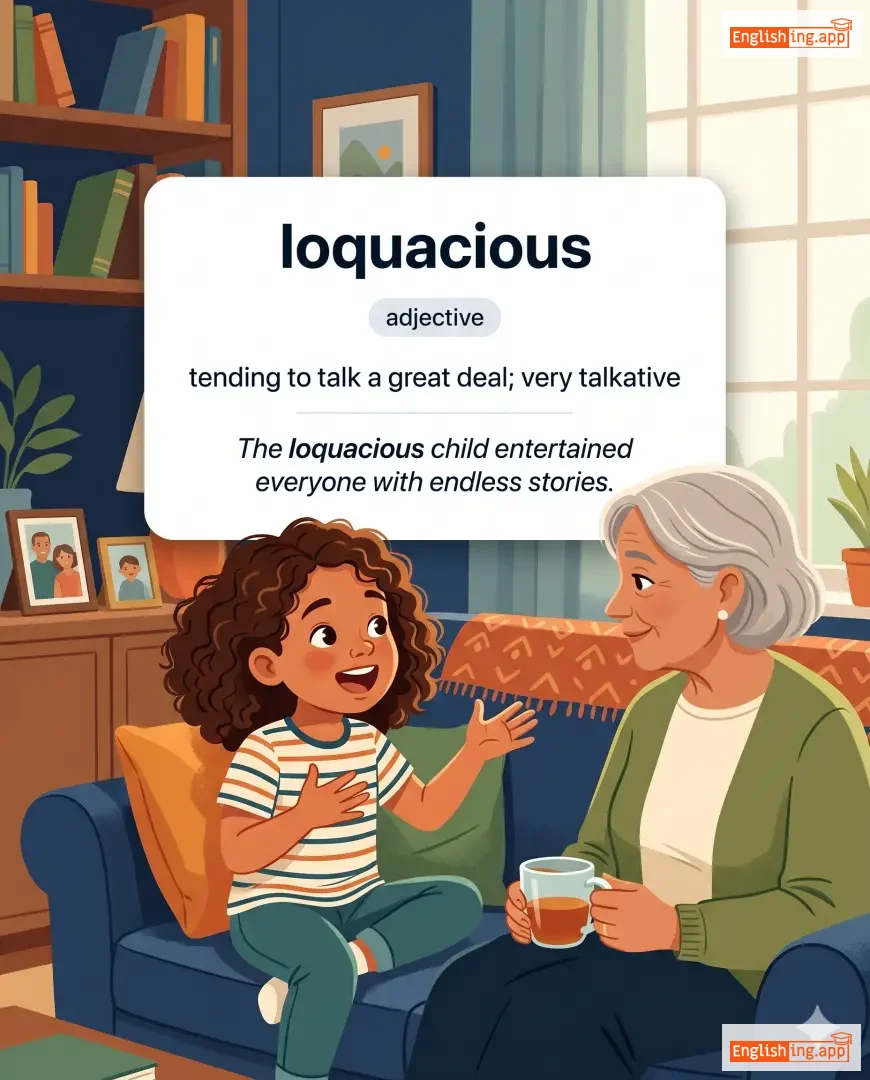
loquacious definition card — visual illustration of the meaning
adjective
/loʊˈkweɪʃəs/
おしゃべりな (oshaberina)

tending to talk a great deal; very talkative

"The loquacious child entertained everyone with endless stories."

"おしゃべりな子供は、終わりのない物語で皆を楽しませた。" (Oshaberina kodomo wa, owari no nai monogatari de mina wo tanoshimaseta.)
noun
/ˈlɔːrdlɪŋ/
小さな領主 (chiisana ryoushu)

A young or petty lord; someone of minor nobility.

"The arrogant lordling demanded respect despite his lack of experience."
"傲慢なロードリングは経験不足にもかかわらず、尊敬を要求した。" (Gouman na ro-doringu wa keiken busoku ni mo kakawarazu, sonkei wo youkyuu shita.)
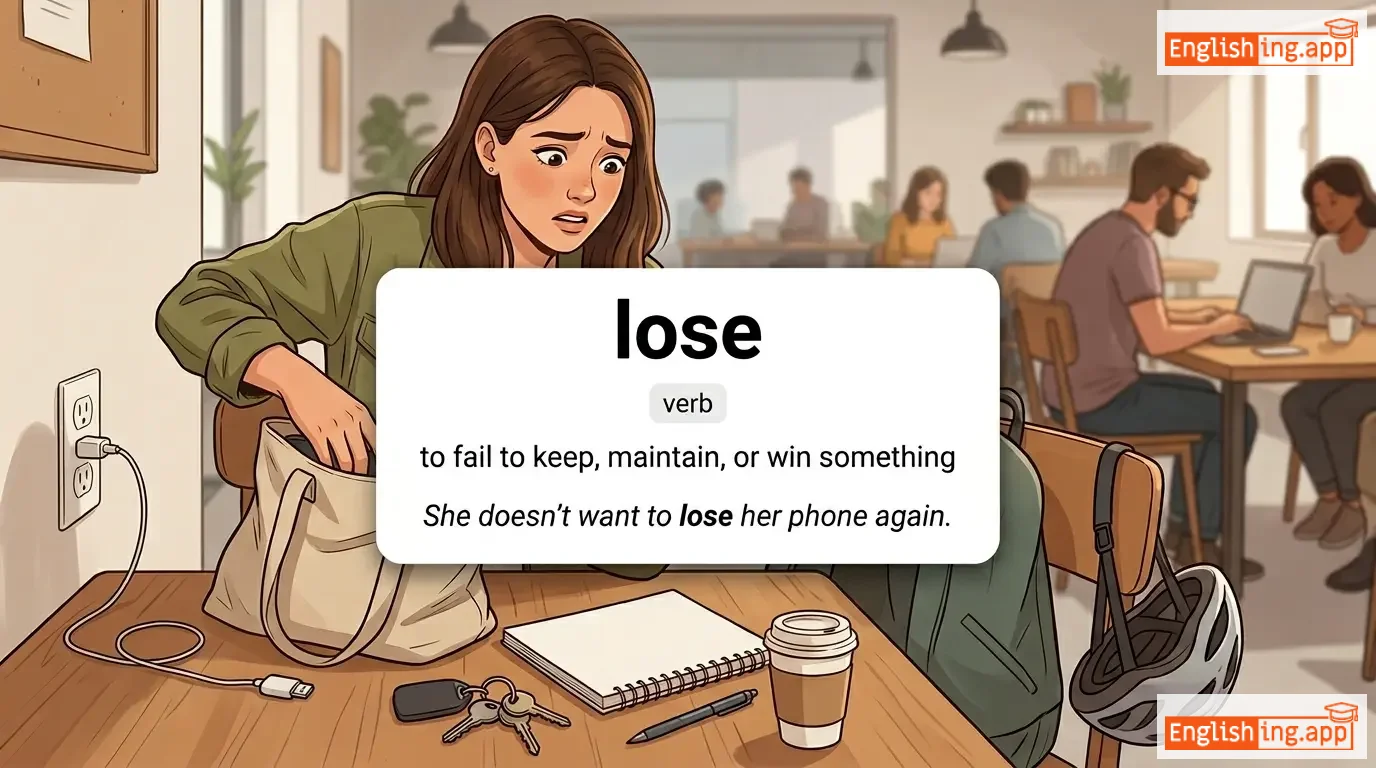
lose definition card — visual illustration of the meaning
verb
/luːz/
幸福 (kōfuku)

to fail to keep, maintain, or win something

"She doesn’t want to lose her phone again."

"彼女は賞を受け取ったとき、幸せを隠すことができませんでした。" (Kanojo wa shō o uketotta toki, kōfuku o kakusu koto ga dekimasen deshita.)