語彙集

英単語辞書 | 単語の意味、定義、例文

noun
/ˈhɛksəˌɡɒn/
六角形 (rokukakkei)

A six-sided polygon.

"A honeycomb cell is shaped like a hexagon."

"蜂の巣のセルは六角形をしている。" (Hachi no su no seru wa rokkakkei o shite iru.)
adjective
/hɛkˈsæŋɡjələr/
六角形の (rokkakukei no)

Having six angles or corners.

"The artist designed a hexangular frame for the mirror."

"アーティストは鏡のために六角形のフレームをデザインしました。" (Ātisuto wa kagami no tame ni rokkakukei no fureemu o dezain shimashita.)
noun
/ˈhɛksəˌpɒd/
ヘクサポッド (hekusapoddo)

An insect or other organism with six legs.

"The scientist observed a hexapod crawling on the leaf."

"科学者は葉の上を這うヘクサポッドを観察しました。" (Kagakusha wa ha no ue o hau hekusapoddo o kansatsu shimashita.)
interjection
/heɪ/
ヘイ (hei)

used to attract attention, express surprise, or greet someone

"Hey, how are you doing today?"

"ヘイ、今日はどうしてる?" (Hei, kyō wa dō shiteru?)
noun
/ˈheɪ.deɪ/
絶頂期; 黄金時代; ピーク時 (zetchouki; ougon jidai; piiku ji)

the period of a person's or thing's greatest success, popularity, or vigor; prime time

"During her heyday as a singer, she performed in sold-out concerts around the world."

"歌手としての絶頂期に、彼女は世界中で完売したコンサートに出演していました。" (Kashu to shite no zetchouki ni, kanojo wa sekaijuu de kanbai shita konsaato ni shutsuen shite imashita.)
noun
/ˈheɪˌdeɪ/
黄金時代 (ougon jidai)

The period of greatest success, popularity, or power.

"In its heyday, the company dominated the market."

"その黄金時代に、会社は市場を支配していました。" (Sono ougon jidai ni, kaisha wa shijou o shihai shite imashita.)
interjection
/haɪ/
ハイ (hai)

a friendly greeting used when meeting someone

"Hi, it's nice to meet you!"

"ハイ、会えてうれしいです!" (Hai, aete ureshī desu!)
noun
/haɪˈeɪtəs/
中断 (chūdan)

A pause or break in continuity of a process or activity.

"The show returned after a long hiatus."

"ショーは長い中断の後、再び始まりました。" (Shō wa nagai chūdan no ato, futatabi hajimarimashita.)
❄️

hibernal

adjective
/haɪˈbɜːrnəl/

Relating to or occurring in winter.

"The hibernal season is often harsh in the mountains."

verb
/ˈhaɪbərˌneɪt/
冬眠する (toumin suru)

To spend the winter in a dormant state, as some animals do.

"Bears hibernate in caves during the winter."

"クマは冬に洞窟で冬眠します。" (Kuma wa fuyu ni dōkutsu de tōmin shimasu.)
adjective/noun
/haɪˈbɜːrniən/
アイリッシュ (airisshu)

Relating to Ireland or the Irish.

"He enjoyed reading about Hibernian culture and history."

"彼はハイバーニアン文化と歴史について読むのが好きでした。" (Kare wa haibānian bunka to rekishi ni tsuite yomu no ga suki deshita.)
adjective
/hɪk/
田舎者; 田舎の人 (inakamono; inaka no hito)

unsophisticated person from a rural area; country bumpkin

"He had a hick accent from growing up in a small town."

"彼は小さな町で育ったため、田舎者のアクセントがあった。" (Kare wa chiisana machi de sodatta tame, inakamono no akusento ga atta.)
🕵️‍♂️

Hidden (hiden)

adjective
/ˈhɪdən/
隠された (kakusareta)

kept out of sight; concealed.

"The treasure was hidden under the old tree."

"宝物は古い木の下に隠されていた。" (Takaramono wa furui ki no shita ni kakusarete ita.)
hide definition card — visual illustration of the meaning
verb
/haɪd/
隠す (kakusu)

to put something or oneself out of sight; to conceal

"She tried to hide the letter under the pillow."

"彼女は枕の下に手紙を隠そうとした。" (Kanojo wa makura no shita ni tegami o kakusou to shita.)
noun
/ˈhaɪdəweɪ/
隠れ家 (kakurega)

A place used as a retreat or a place to hide.

"The cabin in the woods was their secret hideaway."

"森の中の小屋は彼らの秘密の隠れ家だった。" (Mori no naka no koya wa karera no himitsu no kakurega datta.)
adjective
/ˈhaɪd.baʊnd/

unwilling or unable to change because of tradition or convention

"He is too hidebound to accept new ideas."

adjective
/ˈhɪd.i.əs/
恐ろしい (osoroshii)

extremely ugly or unpleasant

"The crime was so hideous that it shocked the whole town."

"その犯罪はあまりにも恐ろしかったので、町全体が衝撃を受けました。" (Sono hanzai wa amari ni mo osoroshikatta node, machi zentai ga shougeki o ukemashita.)
verb
/haɪ/
急ぐ (isogu)

to go quickly; hasten

"He hied to the station to catch the train."

"彼は電車に乗るために駅へ急いだ。" (Kare wa densha ni noru tame ni eki e isoida.)
adjective
/ˌhaɪəˈrɑː.kɪ.kəl/
階層的な (kaisō-teki na)

arranged in order of rank or authority

"The company has a strict hierarchical structure."

"その会社には厳格な階層構造があります。" (Sono kaisha ni wa gengaku na kaisō kōzō ga arimasu.)
noun
/ˈhaɪəˌrɑːrki/
階層 (kaisou)

A system in which people or things are arranged in levels of importance or authority.

"The corporate hierarchy determines who makes the final decision."

"企業の階層は、最終決定を誰が行うかを決定します。" (Kigyou no kaisou wa, saishuu kettei wo dare ga okonau ka wo kettei shimasu.)
noun
/ˈhaɪərəˌɡlɪf/
ヒエログリフ (hierogurifu)

A picture or symbol used in ancient writing systems, especially Egyptian writing.

"The walls of the temple were covered in hieroglyphs."

"寺院の壁はヒエログリフで覆われていた。" (Jiin no kabe wa hierogurifu de owarete ita.)
adjective/noun
/ˌhaɪərəˈɡlɪfɪk/
ヒエログリフ的 (hierogurifuteki)

Relating to or written in hieroglyphs; symbols or writing that is difficult to understand.

"The archaeologists studied the hieroglyphic inscriptions carefully."
"考古学者たちはヒエログリフ的な碑文を慎重に研究した。" (Kougakusha-tachi wa hierogurifuteki na hibun o shinchou ni kenkyuu shita.)
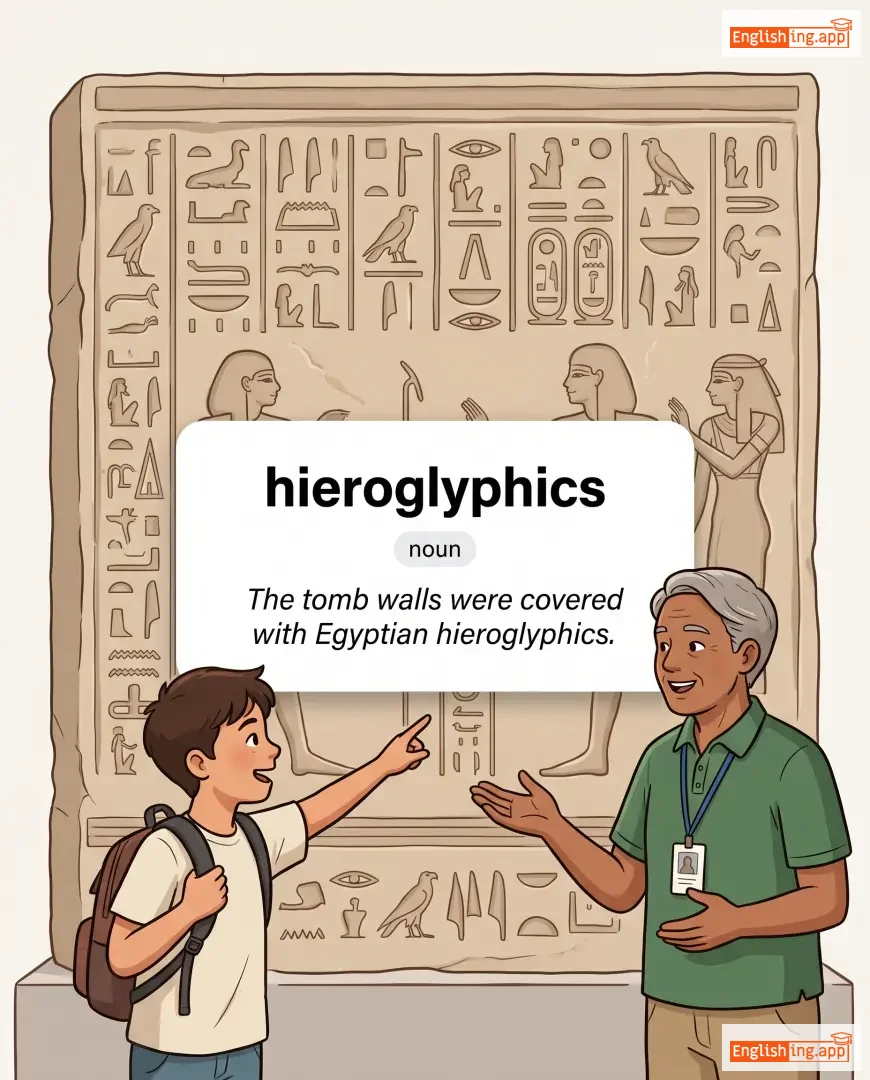
hieroglyphics definition card — visual illustration of the meaning
noun
/ˌhaɪ.roʊˈɡlɪf.ɪks/
ヒエログリフ (hierogurifu)

a system of writing using pictures or symbols, used especially by ancient Egyptians

"The tomb walls were covered with Egyptian hieroglyphics."

"墓の壁にはエジプトのヒエログリフが刻まれていた。" (Haka no kabe ni wa ejiputo no hierogurifu ga kizama rete ita.)
adjective
/haɪ/
高い (takai)

At or to a great height; greater than normal in amount, degree, or intensity.

"The mountain peak is very high."

"山の頂上はとても高いです。" (Yama no chōjō wa totemo takai desu.)
adjective
/ˌhaɪ ˈfloʊn/
高飛車な (takabisha na)

Using fancy or pretentious language; lofty in style but often overblown.

"The politician gave a high-flown speech full of promises."

"その政治家は約束でいっぱいの高飛車なスピーチをした。" (Sono seijika wa yakusoku de ippai no takabisha na supīchi o shita.)
adjective
/ˈhaɪˌprəʊfaɪl/
注目の的 (chumoku no mato)

having a lot of attention or public notice

"The CEO attended a high-profile conference in New York."

"CEOはニューヨークでのハイプロファイルな会議に参加しました。" (CEO wa Nyū Yōku de no haipuorafairu na kaigi ni sanka shimashita.)
adjective
/ˌhaɪ ˈtɛk/
ハイテク (haiteku)

using or involving advanced technology.

"The company produces high-tech medical devices."

"その会社はハイテク医療機器を生産しています。" (Sono kaisha wa haiteku iryou kiki wo seisan shiteimasu.)
adjective
/ˈhaɪˌbraʊ/
知的に優れた (chiteki ni sugureta)

intellectually superior or cultured; often describing art, literature, or activities appealing to intellectual tastes

"The museum is known for its highbrow exhibitions."

"その博物館は知的な展示で知られています。" (Sono hakubutsukan wa chitekina tenji de shirareteimasu.)
verb
/ˈhaɪˌlaɪt/
強調する (kyouchou suru)

to emphasize or make something stand out

"The teacher highlighted the most important points in the text."

"先生はテキストで最も重要な点をハイライトしました。" (Sensei wa tekisuto de mottomo juuyou na ten wo hairaito shimashita.)
adverb
/ˈhaɪli/
非常に (hijō ni)

to a great degree; very

"She is highly respected in her field."

"彼女は自分の分野で非常に尊敬されています。" (Kanojo wa jibun no bun'ya de hijō ni sonkei sareteimasu.)
noun
/ˈhaɪ.nəs/
高貴さ; 王室のタイトル (koukisa, oushitsu no taitoru)

a title given to a person of royal rank; the quality or state of being high or elevated

"Your Highness, the royal carriage is ready to take you to the state banquet this evening."

"殿下、王室の車は今晩の国宴にあなたをお連れする準備ができています。" (Denka, oushitsu no kuruma wa konban no kokuen ni anata o otsuresuru junbi ga dekiteimasu.)
noun
/ˈhaɪ.weɪ/
高速道路 (kousokudouro)

A main road, especially one connecting major towns or cities.

"The highway was blocked due to an accident."

"事故のため高速道路は封鎖されていました。" (Jiko no tame kousokudouro wa fūsa sareteimashita.)
hijack definition card — visual illustration of the meaning
verb
/ˈhaɪdʒæk/
ハイジャック (haijakku)

to take control of a vehicle or situation illegally or by force

"The criminals attempted to hijack the airplane."

"犯罪者たちは飛行機をハイジャックしようとした。" (Hanzaitachi wa hikōki o haijakku shiyō to shita.)
🥾

hike

verb/noun
/haɪk/

To take a long walk in the countryside or mountains; also to increase suddenly (prices, rates, etc.).

"We decided to hike in the hills this weekend."

adjective
/hɪˈlɛəriəs/
非常に面白い (hijou ni omoshiroi)

Extremely funny or amusing.

"The comedian told a hilarious story that had everyone laughing."

"コメディアンは、みんなが笑ってしまうような非常に面白い話をしました。" (Komedian wa, minna ga waratte shimau you na hijou ni omoshiroi hanashi wo shimashita.)
noun
/hɪˈlærɪti/
爆笑 (bakushou)

Extreme amusement, especially when expressed by laughter.

"The movie caused great hilarity among the audience."

"その映画は観客の間で大きな爆笑を引き起こしました。" (Sono eiga wa kankyaku no aida de ookina bakushou o hikiokoshimashita.)
noun
/hɪl/
(oka)

A naturally raised area of land, smaller than a mountain.

"We climbed the hill to see the sunset."

"私たちは日没を見るために丘を登りました。" (Watashitachi wa nichibotsu o miru tame ni oka o noborimashita.)
noun
/ˈhɪlək/
小山 (koyama)

A small hill or mound.

"The children climbed up the grassy hillock to watch the sunset."

"子供たちは夕日を見るために草で覆われた小山に登った。" (Kodomotachi wa yūhi o miru tame ni kusa de ōwareta koyama ni nobotta.)
adjective
/ˈhɪli/
丘陵の多い (kyuryo no ooi)

having many hills; characterized by hills or slopes

"The village is located in a beautiful hilly region."

"その村は美しい丘陵の多い地域にあります。" (Sono mura wa utsukushii kyuryo no ooi chiiki ni arimasu)
noun
/ˈhɪl.sə fɪʃ/
ヒルサ魚 (Hirusa sakana)

a popular fish species found in South Asian rivers, especially prized in Bengali cuisine

"Hilsa fish is considered a delicacy in Bengali culture."

"ヒルサフィッシュはベンガル文化ではごちそうと見なされています。" (Hirusa fisshu wa Bengaru bunka de wa gochisō to minasareteimasu.)
pronoun
/hɪm/
彼を (kare o)

Used to refer to a male person or animal already mentioned.

"I saw him at the park yesterday."

"昨日公園で彼を見かけました。" (Kinō kōen de kare o mikakemashita.)
pronoun
/hɪmˈself/
自分自身 (jibun jishin)

Used to emphasize that a male person does something by his own effort.

"He fixed the car himself."

"彼は自分自身で車を修理しました。" (Kare wa jibun jishin de kuruma o shūri shimashita.)
🦌♀️

Hind (haindo)

noun
/haɪnd/
雌鹿 (meshi shika)

a female deer, especially a red deer

"The hind protected her fawn from predators."
"雌鹿は捕食者から子鹿を守りました。" (Meshi shika wa hoshokusha kara kogitsune o mamorimashita.)
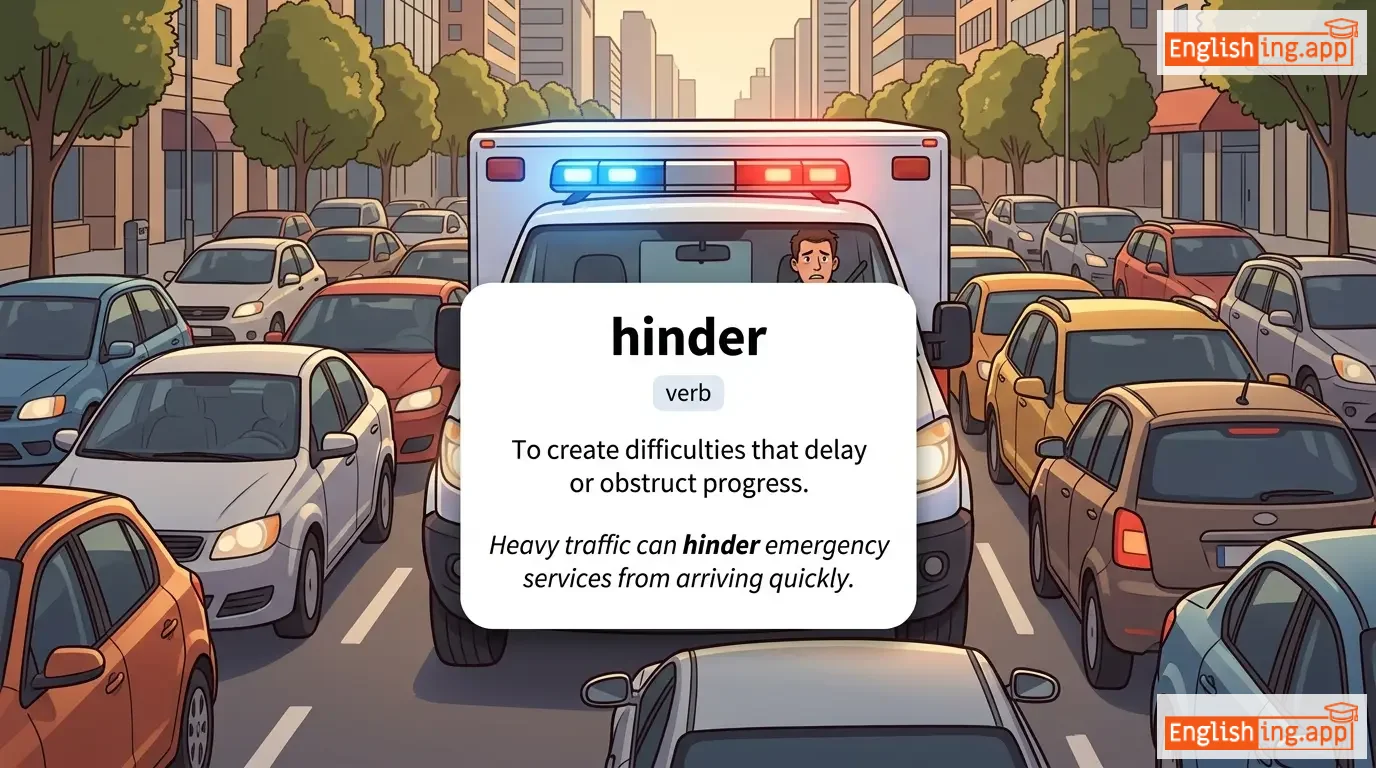
hinder definition card — visual illustration of the meaning
verb
/ˈhɪndər/
妨げる (samataeru)

To create difficulties that delay or obstruct progress.

"Heavy traffic can hinder emergency services from arriving quickly."

"渋滞は緊急サービスが迅速に到着するのを妨げる可能性があります。" (Jūtai wa kinkyū sābisu ga jinsoku ni tōchaku suru no wo samatageru kanōsei ga arimasu.)
adjective
/ˈhaɪndmoʊst/
最も後ろの (mottomo ushiro no)

Farthest back; last in position.

"The hindmost car in the convoy broke down first."

"隊列で最も後ろの車が最初に壊れた。" (Tairetsu de mottomo ushiro no kuruma ga saisho ni kowareta.)
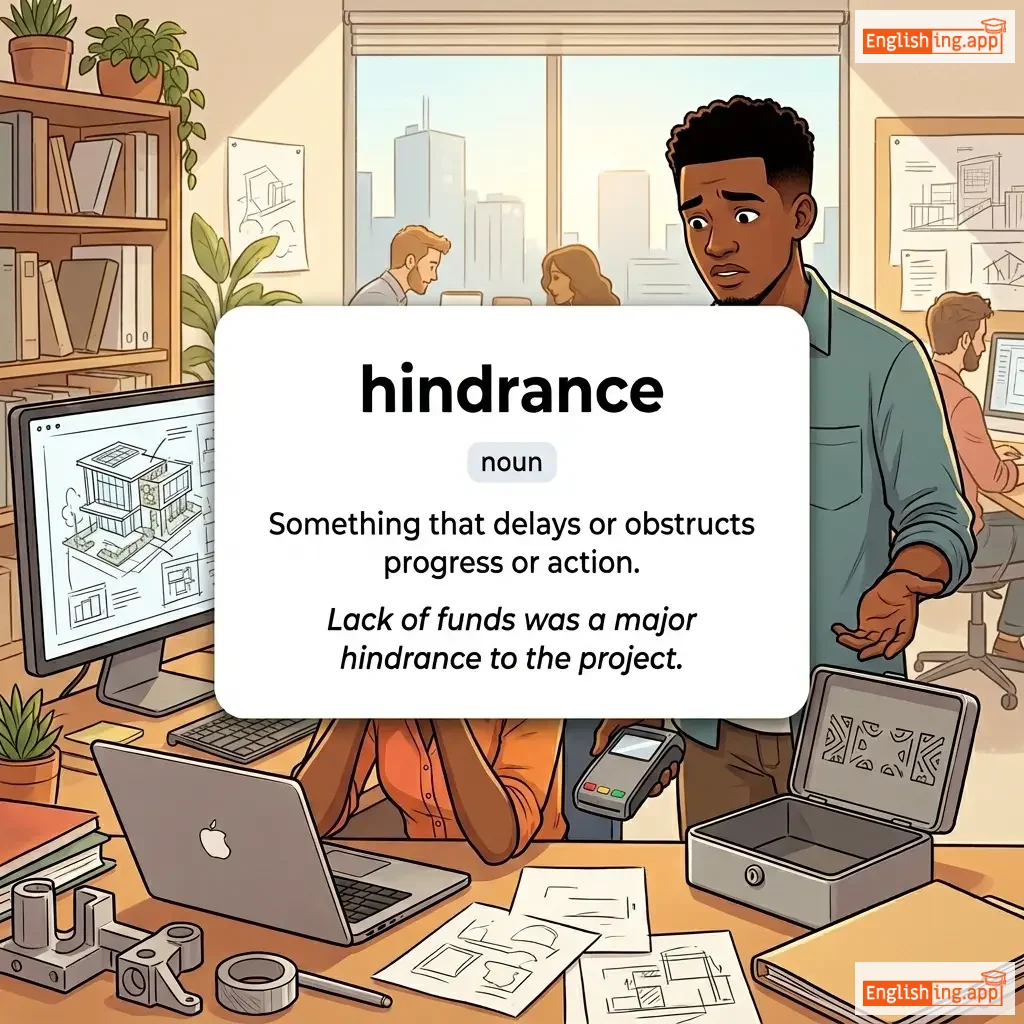
hindrance definition card — visual illustration of the meaning
noun
/ˈhɪndrəns/

Something that delays or obstructs progress or action.

"Lack of funds was a major hindrance to the project."

noun
/ˈhaɪndsaɪt/
後知恵 (atochie)

Understanding of a situation only after it has happened.

"With the benefit of hindsight, we realized the decision was a mistake."

"後知恵で、私たちはその決断が間違いだったことに気づきました。" (Atochie de, watashitachi wa sono ketsudan ga machigai datta koto ni kizukimashita.)
noun/verb
/hɪnt/
ヒント (hinto)

a small piece of advice or suggestion; to suggest something indirectly

"She gave me a hint about the surprise party."

"彼女はサプライズパーティーについてヒントをくれた。" (Kanojo wa sapuraizu pātī ni tsuite hinto o kureta.)
noun
/ˈhɪntərlænd/
内陸地域 (nairiku chiiki)

The remote or less developed areas away from the coast or a city.

"The farmers came from the rural hinterland to sell their produce in the city."

"農民たちは地方の内陸地域から来て、都市で自分たちの農産物を販売しました。" (Noumin-tachi wa chiho no nairiku chiiki kara kite, toshi de jibun-tachi no nousanbutsu o hanbai shimashita.)
noun (plural)
/ˈhɪntərlændz/
辺境地 (henkyouchi)

Plural of hinterland; remote or less developed regions.

"Explorers traveled deep into the hinterlands of the country."

"探検家たちはその国の辺境地に深く旅しました。" (Tankenkatata wa sono kuni no henkyouchi ni fukaku tabishimashita.)