
語彙集

英単語辞書 | 単語の意味、定義、例文

noun/verb
/hɛm/
布の裾 (nuno no suso)

the edge of a piece of cloth that is folded and sewn; to fold and sew the edge of cloth

"She hemmed the dress to make it shorter."

"彼女はドレスを短くするためにヘムドしました。" (Kanojo wa doresu o mijikaku suru tame ni hemudo shimashita.)
hemophilia definition card — visual illustration of the meaning
noun
ˌhiː.məˈfɪl.i.ə
血友病 (ketsuyobyou)

A medical condition in which the ability of the blood to clot is severely reduced, causing the sufferer to bleed severely from even a slight injury.

"Hemophilia treatment benefits from genetic editing."

"血友病の治療は遺伝子編集から利益を得る。" (Ketsuyobyou no chiryou wa idenshi henshuu kara rieki o eru.)
noun/verb
/ˈhɛmərɪdʒ/
出血 (shukketsu)

A significant loss of blood from a ruptured blood vessel, or to lose blood heavily.

"The patient suffered a severe brain hemorrhage."

"患者は重度の脳出血に苦しんでいます。" (Kanja wa jūdona nō shukketsu ni kurushindeimasu.)
noun
/hɛn/
雌鶏 (mesu niwatori)

female chicken

"The hen laid fresh eggs in the nest."

"雌鶏は巣に新鮮な卵を産んだ。" (Mesu niwatori wa su ni shinsen na tamago o unda.)
adverb
/hɛns/
それゆえ (soreyue)

for this reason; as a result

"She was the best candidate, hence she was chosen for the job."

"彼女は最良の候補者であったため、仕事のために選ばれました。" (Kanojo wa sairyō no kōhosha de atta tame, shigoto no tame ni erabaremashita.)
noun
/ˈhen.ə/
ヘンナ (henna)

a reddish-brown dye made from the powdered leaves of a tropical shrub, used to color hair and decorate skin

"The bride's hands were beautifully decorated with intricate henna patterns for her wedding ceremony."

"花嫁の手は、彼女の結婚式のために精巧なヘンナの模様で美しく飾られていました。" (Hanayome no te wa, kanojo no kekkonshiki no tame ni seikou na henna no moyou de utsukushiku kazarareteimashita.)
verb
/ˈhɛnˌpɛk/

To continually criticize, nag, or dominate (especially a husband).

"He felt henpecked by his overly controlling wife."

noun
/ˈhɛptəˌɡɒn/
七角形 (shichikakukei)

A polygon with seven sides and seven angles.

"The math teacher drew a heptagon on the board."

"数学の先生は黒板にヘプタゴンを描きました。" (Sūgaku no sensei wa kokuban ni heptagon o kakimashita.)
noun
/ˈhɛptɑːrki/
七王国連邦 (shichi ōkoku renpō)

A group of seven rulers or governments, especially the seven Anglo-Saxon kingdoms in early England.

"The history book described the heptarchy of Anglo-Saxon England."

"歴史書はアングロサクソンのイングランドのヘプターキーを説明していました。" (Rekishi-sho wa Anguro-Sakuson no Ingurando no heptākī o setsumei shite imashita.)
pronoun
/hɜːr/
彼女 (kanojo)

used to refer to a female person or animal already mentioned or easily identified

"I saw her at the park yesterday."

"昨日公園で彼女を見ました。" (Kinō kōen de kanojo o mimashita.)
noun/verb
/ˈhɛrəld/
先駆者 (senkusha)

A person or thing that announces or signals the approach of something; to announce or signal.

"The blooming flowers herald the arrival of spring."

"咲いた花々は春の到来を告げます。" (Saita hanabana wa haru no tōrai o tsugemasu.)
noun
/hɜːb/ (US) /hɜːb/ or /ɜːb/
ハーブ (haabu)

a plant used for flavoring food, medicine, or perfume

"Basil is a popular herb used in Italian cuisine."

"バジルはイタリア料理で人気のあるハーブです。" (Bajiru wa Itaria ryouri de ninki no aru haabu desu.)
adjective
/hɜːrˈbeɪʃəs/
草本 (sōhon)

Relating to or resembling herbs; plants with soft, non-woody stems.

"The garden was filled with herbaceous plants that thrived in the summer."
"庭園には夏に繁茂する草本植物で満たされていた。" (Teien ni wa natsu ni hanmō suru sōhon shokubutsu de mitasarete ita.)
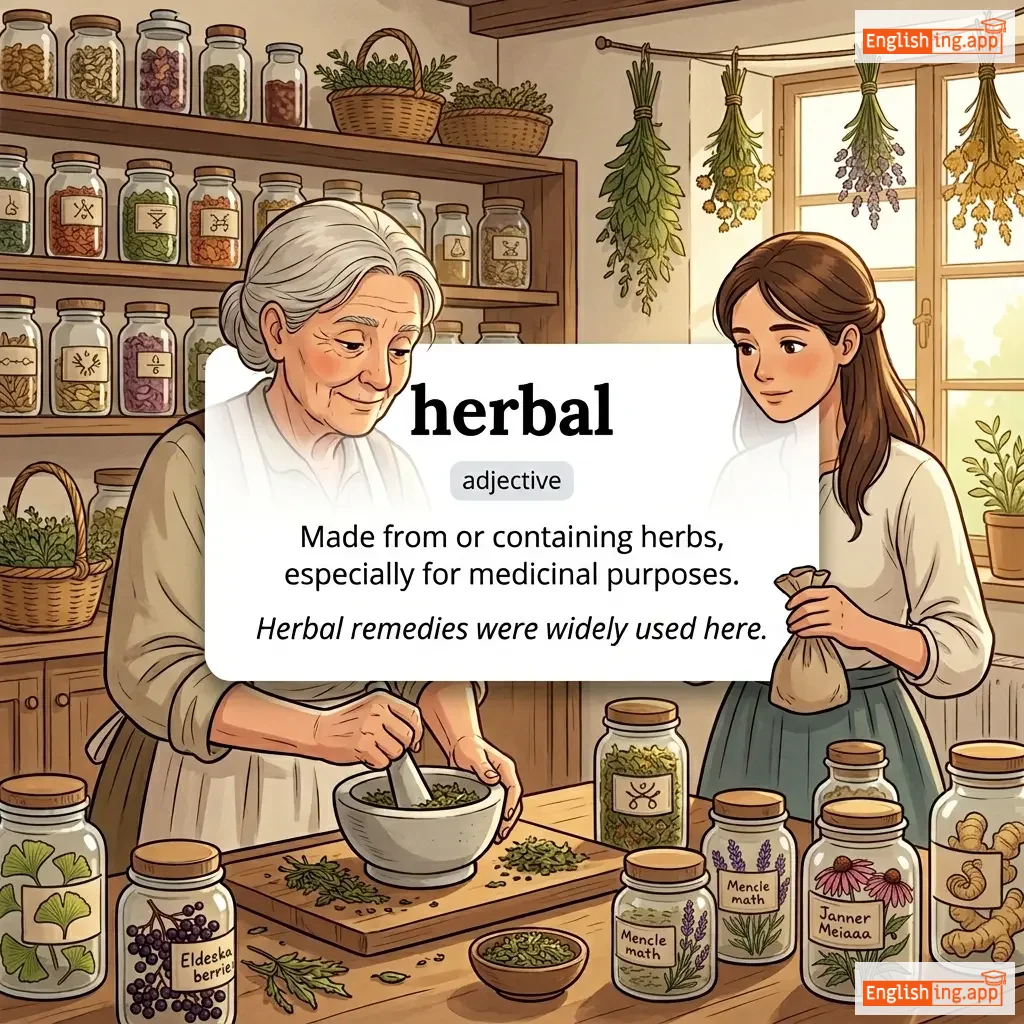
herbal definition card — visual illustration of the meaning
adjective
/ˈhɜː.bəl/
ハーバル (hābaru)

Made from or containing herbs, especially for medicinal purposes.

"Herbal remedies were widely used here."

"ここではハーバル療法が広く使われていました。" (Koko de wa hābaru ryōhō ga hiroku tsukawarete imashita.)
noun
/hɜːrˈbɛəriəm/
標本館 (hyōhonkan)

A collection of preserved plant specimens and associated data used for scientific study.

"The university maintains a large herbarium for research and education."

"大学は研究と教育のために大きな標本館を維持しています。" (Daigaku wa kenkyū to kyōiku no tame ni ōkina hyōhonkan o iji shiteimasu.)
noun
/ˈhɜːrbɪsaɪd/
除草剤 (josaizai)

A chemical substance used to kill unwanted plants, especially weeds.

"Farmers used herbicide to protect their crops from invasive weeds."
"農家は侵入する雑草から作物を守るために除草剤を使用しました。" (Nouka wa shinnyuu suru zassou kara sakumotsu o mamoru tame ni josaizai o shiyou shimashita.)
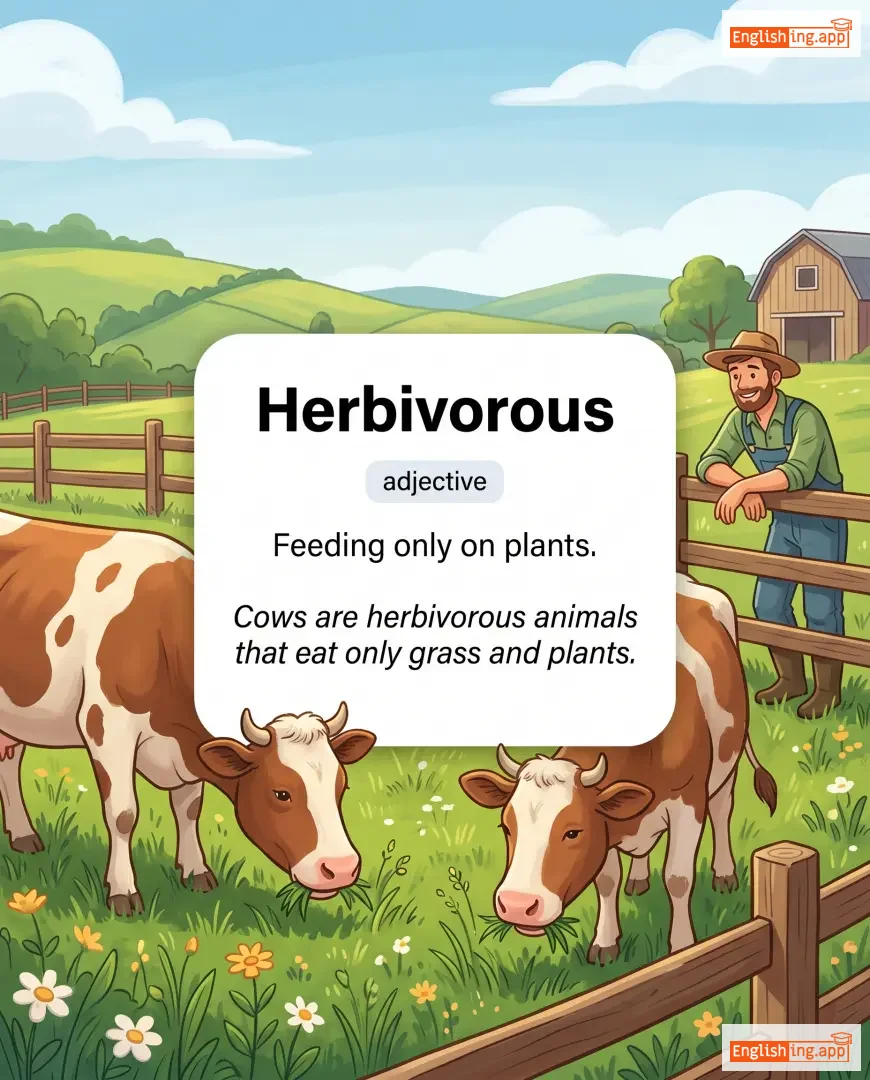
Herbivorous definition card — visual illustration of the meaning
adjective
/hɜːrˈbɪvərəs/
草食性 (sōshokusei)

Feeding only on plants.

"Cows are herbivorous animals that eat only grass and plants."

"牛は草食性の動物で、草や植物だけを食べます。" (Ushi wa sōshokusei no dōbutsu de, kusa ya shokubutsu dake o tabemasu.)
adjective
/ˌhɜːrkjʊˈliːən/
非常に困難 (hijō ni konnan)

Requiring great strength or effort; very difficult to perform.

"It was a herculean task to rebuild the city after the disaster."

"災害後に都市を再建することは非常に困難な仕事でした。" (Saigai-go ni toshi o saiken suru koto wa hijō ni konnan na shigoto deshita.)
🐑

herd

noun/verb
/hɜːrd/

a large group of animals of the same type that live and feed together; or to gather animals into a group.

"The shepherd herded the sheep into the pen."

adverb
/hɪr/
ここ (koko)

in, at, or to this place

"Please come here quickly."

"ここに早く来てください。" (Koko ni hayaku kite kudasai.)
adverb/noun
/ˌhɪərˈæftər/
これから / 来世 (korekara / raiseki)

from now on; in the future; also refers to life after death.

"Hereafter, all reports must be submitted electronically."

"これからは、すべての報告書は電子的に提出しなければならない。" (Korekara wa, subete no hokokusho wa denshi-teki ni teishutsu shinakereba naranai.)
adjective
/həˈrɛdəˌtɛri/
遺伝的 (identeki)

passed from parents to their children through genes or by inheritance.

"Diabetes can be a hereditary condition."

"糖尿病は遺伝的な状態かもしれません。" (Tōnyōbyō wa identeki na jōtai kamoshiremasen.)
noun
/ˈhɛrəsi/
異端 (idan)

belief or opinion that goes against established religious doctrine or accepted beliefs.

"In medieval times, heresy was often punished severely."

"中世では、異端はしばしば厳しく罰せられました。" (Chūsei de wa, idan wa shibashiba kibishiku basseraremashita.)
noun
/ˈhɛrətɪk/
異端者 (itansha)

a person who holds beliefs that go against established religious teachings or accepted beliefs.

"The church declared him a heretic for his radical ideas."

"教会は彼の過激なアイデアのために彼を異端者と宣言した。" (Kyōkai wa kare no kageki na aidea no tame ni kare o itansha to sengen shita.)
adjective
/həˈrɛtɪkəl/
異端的な (idanteki na)

Relating to or characterized by departure from accepted beliefs or standards, especially in religion.

"The priest condemned the book as heretical."
"神父はその本を異端的だとして非難した。" (Shinpu wa sono hon o idanteki da to shite hinan shita.)
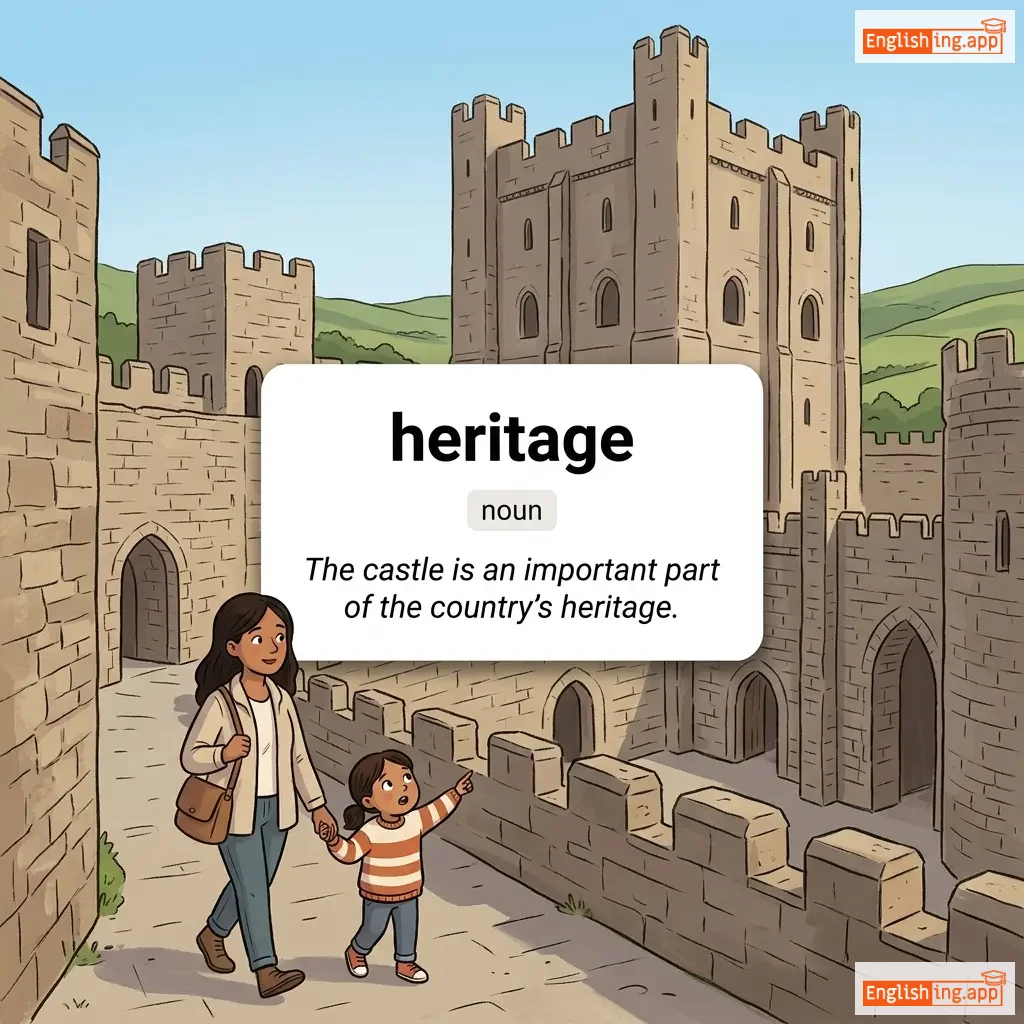
heritage definition card — visual illustration of the meaning
noun
/ˈhɛrɪtɪdʒ/
遺産 (isan)

Valued objects and qualities such as historic buildings and cultural traditions passed down from previous generations.

"The castle is an important part of the country's heritage."

"城はその国の遺産の重要な部分です。" (Shiro wa sono kuni no isan no jūyō na bubun desu.)
hermetic definition card — visual illustration of the meaning
adjective
/hərˈmɛtɪk/
密閉 (mippei)

Completely sealed, especially so that no air can enter or escape.

"The medicine was kept in a hermetic container."

"薬は密閉された容器に保管されていました。" (Kusuri wa mippei sareta yōki ni hokan sarete imashita.)
adverb
/hərˈmɛtɪkli/
密封的に (mippūteki ni)

In a way that is completely airtight or sealed off.

"The jars were hermetically sealed to preserve freshness."

"瓶は新鮮さを保つために密封的に封印されました。" (Bin wa shinsensa o tamotsu tame ni mippūteki ni fūin saremashita.)
noun
/ˈhɜːrmɪt/
隠者 (inja)

A person who lives alone and apart from society, often for religious or spiritual reasons.

"The old hermit lived in a cave for decades."

"その老人の隠者は何十年も洞窟に住んでいました。" (sono rojin no inja wa nanju nen mo dokutsu ni sunde imashita.)
noun
/ˈhɜːrmɪtɪdʒ/
隠遁所 (intonsho)

A secluded residence or retreat, often for a hermit or religious recluse.

"The monk spent years in a hermitage deep in the forest."

"その僧侶は森の奥深くの隠遁所で数年間を過ごしました。" (Sono sōryo wa mori no oku fukaku no intonsho de suunenkan o sugoshimashita.)
noun
/ˈhɜːrniə/
ヘルニア (hernia)

A medical condition where an organ pushes through the muscle or tissue holding it in place.

"The doctor diagnosed him with an inguinal hernia."
"医者は彼に鼠径ヘルニアと診断しました。" (Isha wa kare ni sokkei herunia to shindan shimashita.)
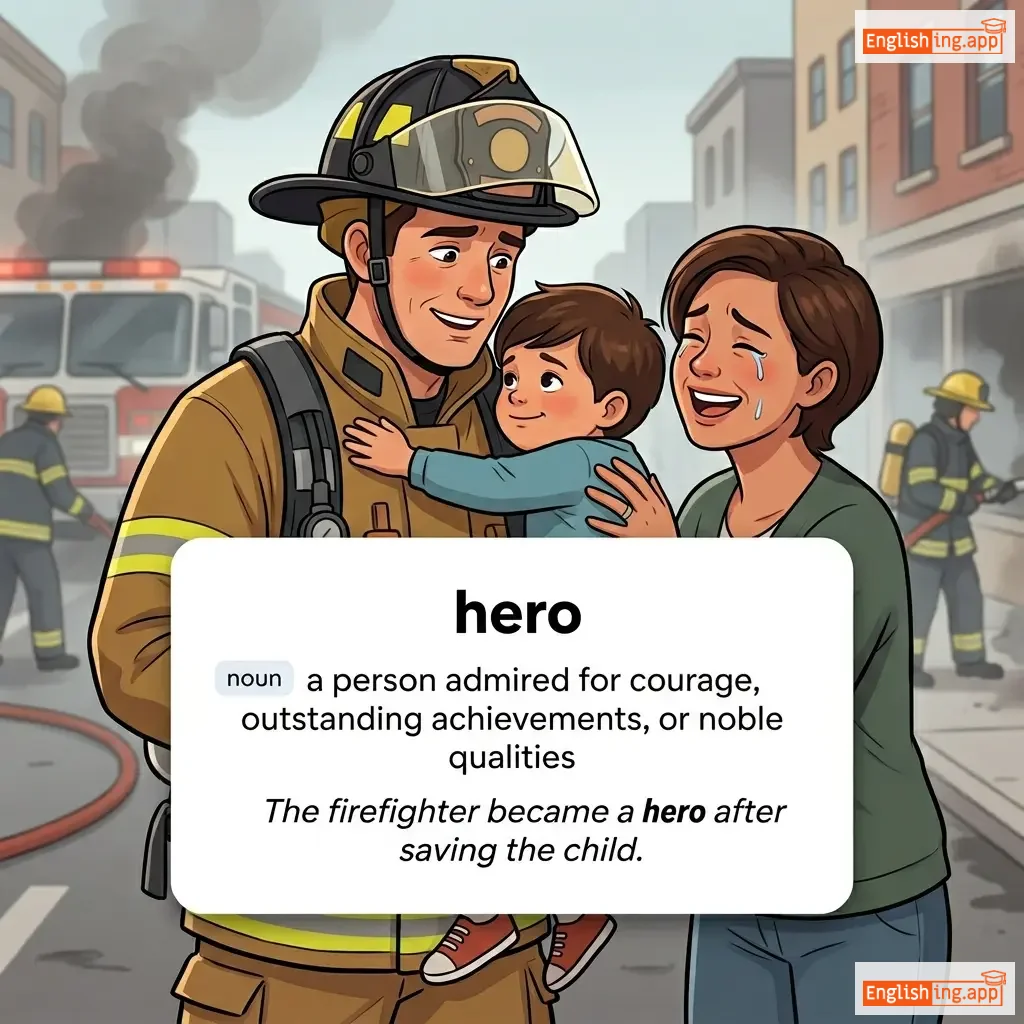
hero definition card — visual illustration of the meaning
noun
/ˈhɪəroʊ/
ヒーロー (hīrō)

a person admired for courage, outstanding achievements, or noble qualities

"The firefighter became a hero after saving the child."

"消防士は子供を救った後、ヒーローになった。" (Shōbōshi wa kodomo o sukutta ato, hīrō ni natta.)
adjective
/hɪˈroʊɪk/
英雄的な (eiyuuteki na)

showing great bravery or courage; relating to a hero or heroes

"The firefighter made a heroic effort to save the child."
"消防士は子どもを救うために英雄的な努力をした。" (shouboushi wa kodomo o sukuu tame ni eiyuuteki na doryoku o shita)
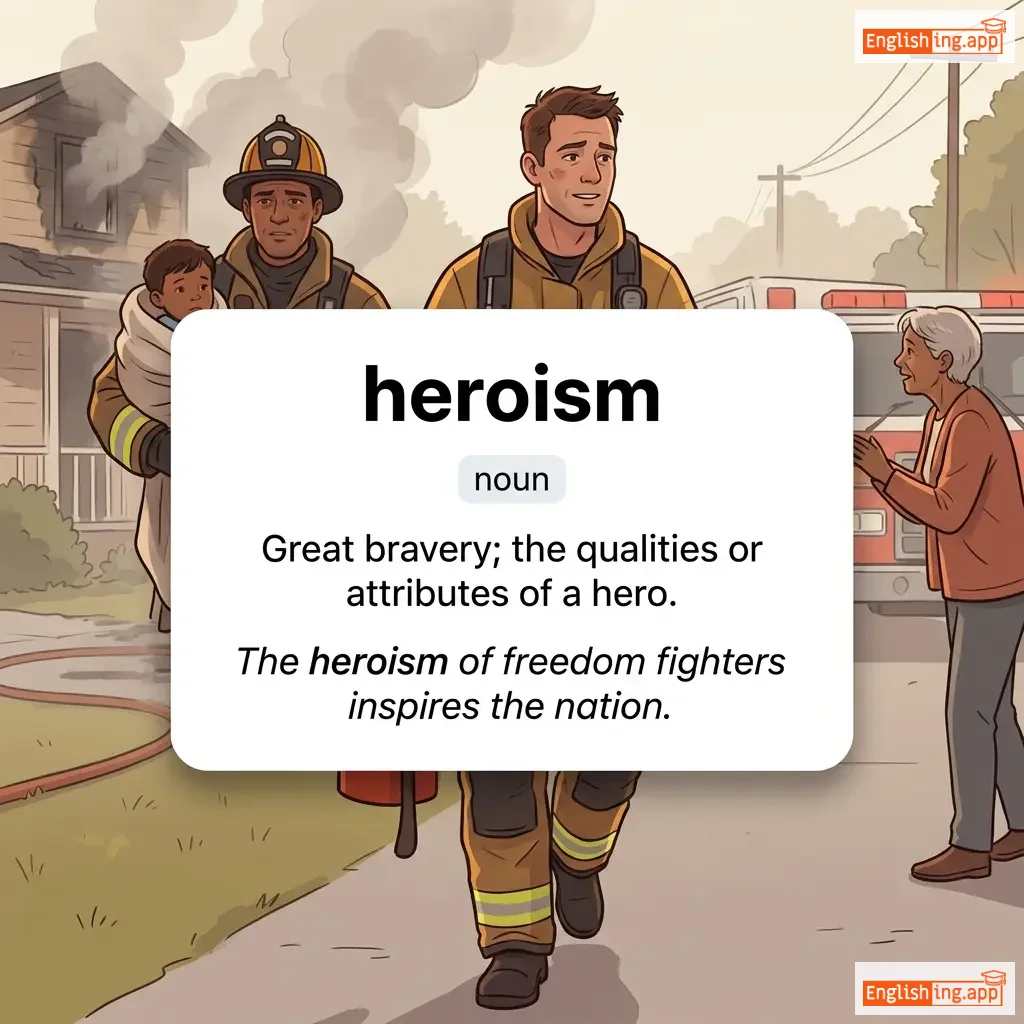
heroism definition card — visual illustration of the meaning
noun
ˈhɛroʊˌɪzəm
英雄主義 (eiyū shugi)

Great bravery; the qualities or attributes of a hero.

"The heroism of freedom fighters inspires the nation."

"自由の戦士たちの英雄主義は国を鼓舞します。" (Jiyū no senshitachi no eiyū shugi wa kuni o kobu shimasu.)
noun
/ˈherən/
サギ (sagi)

large wading bird with long legs and neck that feeds on fish

"The heron stood motionless by the water's edge, waiting for fish."

"サギは水辺でじっとして、魚を待っていました。" (Sagi wa mizube de jitto shite, sakana o matteimashita.)
noun
/ˌhɜːrpəˈtɒlədʒɪst/
爬虫類学者 (hachuu rui gakusha)

A scientist who studies reptiles and amphibians.

"The herpetologist discovered a new species of frog in the rainforest."

"その爬虫類学者は熱帯雨林で新しいカエルの種を発見した。" (Sono hachūruigakusha wa nettai urin de atarashī kaeru no shū o hakken shita.)
👩‍👜

hers (ハーズ)

pronoun
/hɜːrz/
彼女の(女性の)物 (kanojo no (josei no) mono)

used to refer to something that belongs to or is associated with a female person previously mentioned or easily identified.

"That blue bag is hers."

"その青いバッグは彼女のものです。" (Sono aoi baggu wa kanojo no mono desu.)
pronoun
/hɜːrˈsɛlf/
自分自身 (jibun jishin)

used to refer to a female person as the object of a verb or preposition when she is the subject

"She prepared the meal all by herself."

"彼女は一人で食事を作った。" (Kanojo wa hitori de shokuji o tsukutta.)
noun
/ˈhɛzɪtəns/
ためらい (tamerai)

The quality or state of being reluctant or uncertain.

"Her hesitance to speak up delayed the decision."

"彼女のためらいは決定を遅らせました。" (Kanojo no tamerai wa kettei wo okurasemashita.)
noun
/ˈhɛzɪtənsi/
ためらい (tamerai)

The tendency to pause or delay due to uncertainty or fear.

"His hesitancy in answering made everyone doubt his confidence."

"彼の答えに対するためらいは、誰もが彼の自信に疑問を抱かせました。" (Kare no kotae ni taisuru tamerai wa, dare mo ga kare no jishin ni gimon o idakase mashita.)
adjective
/ˈhɛzɪtənt/
ためらい (tamerai)

uncertain or unwilling to do something quickly; showing doubt or reluctance

"She was hesitant to accept the job offer without more information."

"彼女はもっと情報がないままでその仕事のオファーを受けるのにためらっていた。" (Kanojo wa motto jouhou ga nai mamade sono shigoto no ofaa o ukeru no ni tameratte ita.)
verb
/ˈhezɪteɪt/
ためらう (tamerau)

to pause before saying or doing something because you are uncertain or nervous.

"She hesitated before answering the question."

"彼女は質問に答える前にためらった。" (Kanojo wa shitsumon ni kotaeru mae ni tameratta.)
noun
/ˌhɛzɪˈteɪʃən/

the act of pausing or being uncertain before doing something

"After a moment’s hesitation, he answered the question."

noun
/ˈhɛʃ.ən/
ジュート布 (juuto nuno)

a strong coarse fabric made from jute or hemp, used for sacks and wrapping

"The farmer stored grain in hessian sacks."

"農家はジュート布袋に穀物を保管していました。" (Nouka wa juuto nuno bukuro ni kokumotsu o hokanshite imashita.)
heterodox definition card — visual illustration of the meaning
adjective
/ˈhɛtərəˌdɒks/
異端 (idan)

not conforming with accepted or orthodox standards or beliefs

"The professor was known for his heterodox views on religion."

"教授は宗教についての異端的な見解で知られていました。" (Kyōju wa shūkyō ni tsuite no idanteki na kenkai de shirarete imashita.)
noun
/ˌhɛtərəʤəˈniːɪti/
異質性 (ishitsusei)

the quality or state of being diverse in character or content

"The cultural heterogeneity of the city makes it vibrant and unique."

"その都市の文化的異質性は、それを活気に満ちたユニークなものにしています。" (Sono toshi no bunkateki ishitsusei wa, sore o kakki ni michita yuniiku na mono ni shiteimasu.)
adjective
/ˌhɛtərəˈʤiːniəs/
異種の (ishuno)

consisting of different kinds or diverse elements

"The classroom was filled with a heterogeneous group of students."

"教室は異種の学生のグループでいっぱいだった。" (Kyōshitsu wa ishuno gakusei no gurūpu de ippai datta.)
adjective
/ˌhɛtərəʊˈmɔːrfɪk/
異形の (ikei no)

Having different forms or shapes, especially in the same species or organism.

"Butterflies are heteromorphic during their life cycle, changing forms from larva to adult."

"蝶々はそのライフサイクルの中で異形であり、幼虫から成虫に変化します。" (Chōchō wa sono raifusaikuru no naka de ikei de ari, yōchū kara seichū ni henka shimasu.)
heuristic definition card — visual illustration of the meaning
adjective
hjʊəˈrɪs.tɪk
ヒューリスティック (hyūrisutikku)

Enabling a person to discover or learn something for themselves; using practical experience rather than theory.

"The scientist used a heuristic approach to solve the problem."

"科学者は問題を解決するためにヒューリスティックアプローチを使用しました。" (Kagakusha wa mondai o kaiketsu suru tame ni hyūrisutikku apurōchi o shiyō shimashita.)
verb
/hjuː/
切る (kiru)

To chop or cut something, especially wood or stone, with a tool.

"The workers hewed logs to build the cabin."

"労働者たちは小屋を建てるために丸太を切った。" (Roudoushatachi wa koya o tateru tame ni maruta o kitta.)