語彙集

英単語辞書 | 単語の意味、定義、例文

noun
/ˈhænd ˌrɪŋɪŋ/
過剰な心配 (kajou na shinpai)

excessive worry or concern expressed in a visible or dramatic way.

"There was much hand-wringing over the political crisis."

"政治危機について多くの心配がありました。" (Seiji kiki ni tsuite ōku no shinpai ga arimashita.)
noun
/ˈhænd.fʊl/
ひと握り (hito nigiri)

the amount of something that can be held in one hand; a small number

"She took a handful of nuts."

"彼女はひと握りのナッツを取った。" (kanojo wa hito nigiri no nattsu o totta.)
noun
/ˈhæn.di.krɑːft/
手工芸 (tekōgei)

an activity involving the making of decorative domestic or other objects with the hands; handmade artistic work

"The local market featured beautiful handicrafts made by skilled artisans from the region."

"地元の市場では、その地域の熟練した職人によって作られた美しい手工芸が展示されていました。" (Jimoto no shijō de wa, sono chiiki no jukuren shita shokunin ni yotte tsukurareta utsukushī tekōgei ga tenji sarete imashita.)
noun
/ˈhæŋ.kər.tʃɪf/
ハンカチ (hankachi)

a small piece of cloth used for wiping the nose or face

"She always carries a clean handkerchief in her purse."

"彼女はいつもバッグにきれいなハンカチを持っています。" (Kanojo wa itsumo baggu ni kirei na hankachi wo motteimasu.)
Handle definition card — visual illustration of the meaning
noun, verb
/ˈhændl̩/
取っ手 / 扱う (totte / atsukau)

the part of an object designed to be held in the hand; to deal with or manage a situation

"He could not handle the pressure of the job."

"彼は仕事のプレッシャーをうまく扱えなかった。" (Kare wa shigoto no puresshā wo umaku atsukaenakatta.)
noun
/ˈhændlɪŋ/
取り扱い (toriatsukai)

the act of managing or dealing with something or someone

"His handling of the situation was impressive."

"その状況の取り扱いは印象的でした。" (Sono jōkyō no toriatsukai wa inshō-teki deshita.)
adjective
/ˈhæn.səm/

attractive in appearance, usually referring to men; also can mean generous or impressive in size.

"He looked very handsome in his new suit."

noun
/ˈhændˌraɪ.tɪŋ/
手書き (tegaki)

the style or manner of writing by hand.

"Her handwriting is very neat and easy to read."

"彼女の手書きはとてもきれいで読みやすいです。" (Kanojo no tegaki wa totemo kirei de yomiyasui desu.)
adjective
/ˈhændi/
使いやすい (tsukaiyasui)

convenient to use or easily accessible; skillful with the hands

"This pocket knife is very handy when you go camping."

"このポケットナイフはキャンプの時に非常に便利です。" (Kono poketto naifu wa kyanpu no toki ni hijou ni benri desu.)
hang definition card — visual illustration of the meaning
🖼️

hang

verb
/hæŋ/

to suspend or attach something from above so that it moves freely or is supported

"She decided to hang the painting on the living room wall."

noun
/ˈhæŋ.ər/
ハンガー (hangā)

a large building with extensive floor area, typically for housing aircraft; an aircraft shelter

"The airplane was stored safely in the hangar during the severe thunderstorm."

"飛行機は激しい雷雨の間、安全にハンガーに保管されていました。" (Hikōki wa hageshī raiu no aida, anzen ni hangā ni hokan sarete imashita.)
adjective
/ˈhæŋ.dɔːɡ/
恥ずかしい (hazukashii)

looking or feeling ashamed, guilty, or defeated.

"He gave me a hangdog look after being caught lying."

"彼は嘘をついて捕まった後、恥ずかしそうな顔をした。" (Kare wa uso o tsuite tsukamatta ato, hazukashisō na kao o shita.)
noun
/ˈhæŋ.ər/
ハンガー (hangā)

a shaped piece of wood, plastic, or metal with a hook at the top, used to hang up clothes

"She hung her dress on a wooden hanger to prevent it from getting wrinkled."

"彼女はドレスがしわにならないように木のハンガーに掛けました。" (Kanojo wa doresu ga shiwa ni naranai yō ni ki no hangā ni kakemashita.)
noun
/ˌhæŋ.ər ˈɒn/
おこぼれ (okobore)

a person who spends time with a powerful or famous person to gain benefits.

"The celebrity was always surrounded by hangers-on."

"その有名人はいつもおこぼれの人々に囲まれていた。" (sono yūmeijin wa itsumo okobore no hitobito ni kakomarete ita.)
noun
/ˈhæŋ.kər/
渇望, 欲求 (katsubou, yokkyuu)

a feeling of yearning or craving; a strong desire for something

"After years abroad, she developed a deep hanker for her homeland's traditional cuisine."

"海外で何年も過ごした後、彼女は故郷の伝統的な料理への深い渇望を抱きました。" (Kaigai de nannen mo sugoshita ato, kanojo wa kokyou no dentouteki na ryouri e no fukai katsubou wo idakimashita.)
noun
/ˈhæŋ.kər.ɪŋ/
切望 (setsubou)

a strong desire or craving for something.

"She had a hankering for chocolate late at night."

"彼女は夜遅くにチョコレートへの切望を感じていた。" (Kanojo wa yoru osoku ni chokorēto e no setsubou o kanjite ita.)
noun
/ˌhæŋ.ki ˈpæŋ.ki/
詐欺; 疑わしい活動; 不道徳な行動; ごまかし (sagi; ugokashii katsudou; fudoutokuna koudou; gomakashi)

dishonest or suspicious activity; unethical behavior; trickery or deception

"The audit revealed some hanky-panky in the company's financial records."

"監査により、会社の財務記録に詐欺が発覚しました。" (kansa ni yori, kaisha no zaimu kiroku ni sagi ga hakken shimashita.)
noun
/hæp/
運, 幸運, 偶然 (un, kouun, guuzen)

luck, fortune, or chance occurrence

"By sheer hap, he discovered the old letter hidden in the drawer."

"偶然にも、彼は引き出しの中に隠された古い手紙を発見しました。" (Guuzen ni mo, kare wa hikidashi no naka ni kakusareta furui tegami wo hakken shimashita.)
adjective
/hæpˈhæzərd/
でたらめな、無秩序な (detarame na, muchitsujona)

lacking any obvious order or organization; random

"The books were stacked in a haphazard way on the table."

"本はテーブルにでたらめに積まれていた。" (Hon wa tēburu ni detarame ni tsumarete ita.)
adjective
/ˈhæpləs/
不運な, 不幸な (fuun na, fukou na)

unfortunate, unlucky, deserving pity

"The hapless traveler lost his passport on the very first day."

"不運な旅行者は、初日にパスポートを失くしました。" (Fuun na ryokousha wa, shonichi ni pasupooto wo nakushimashita.)
verb
/ˈhæpən/
起こる (okoru)

to take place or occur, usually by chance

"Accidents can happen at any time."

"事故はいつでも起こり得ます。" (Jiko wa itsu demo okoriemasu.)
adverb
/ˈhæpɪli/
幸せに (shiawase ni)

in a happy manner; with pleasure or satisfaction

"The children played happily in the garden."
"子供たちは庭で幸せに遊びました。" (Kodomotachi wa niwa de shiawase ni asobimashita.)
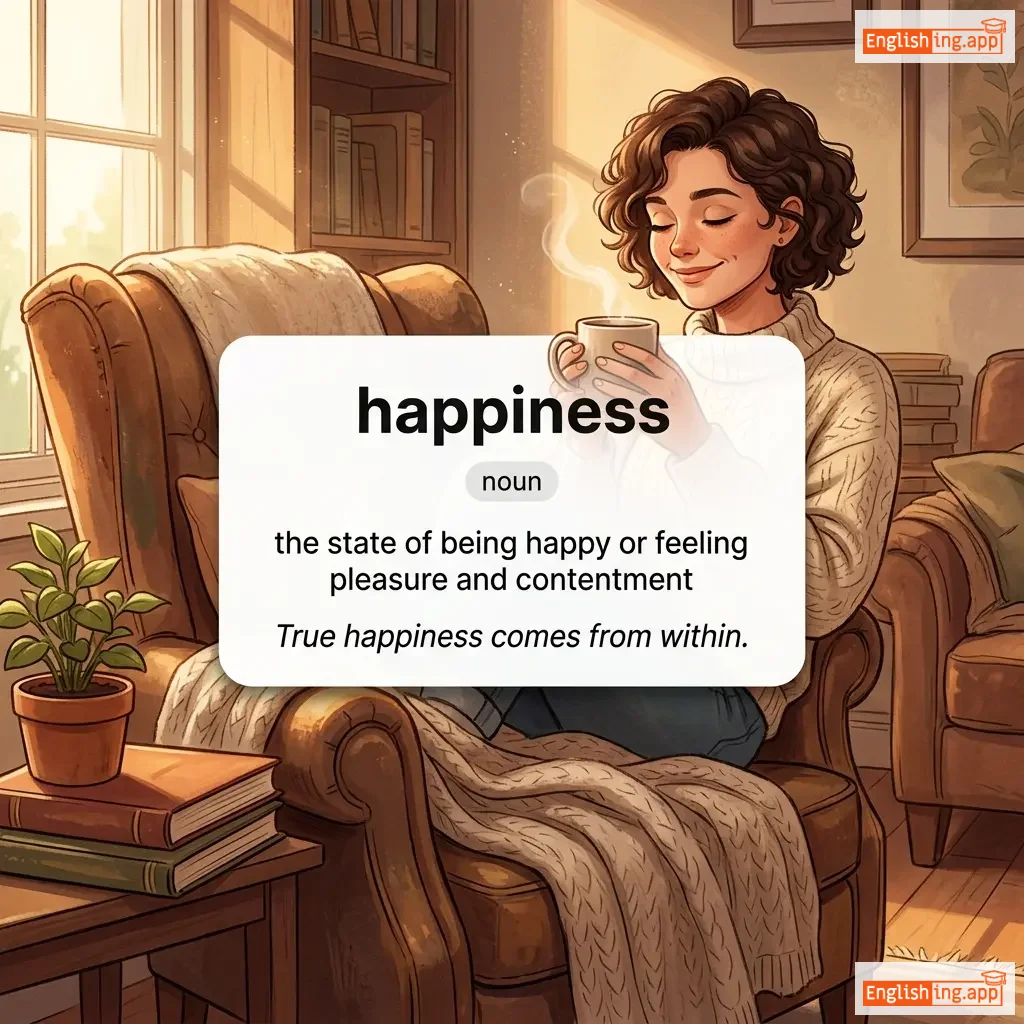
happiness definition card — visual illustration of the meaning
noun
/ˈhæpinəs/
幸せ (shiawase)

the state of being happy or feeling pleasure and contentment

"True happiness comes from within."
"本当の幸せは内面から来る。" (Hontō no shiawase wa naimen kara kuru.)
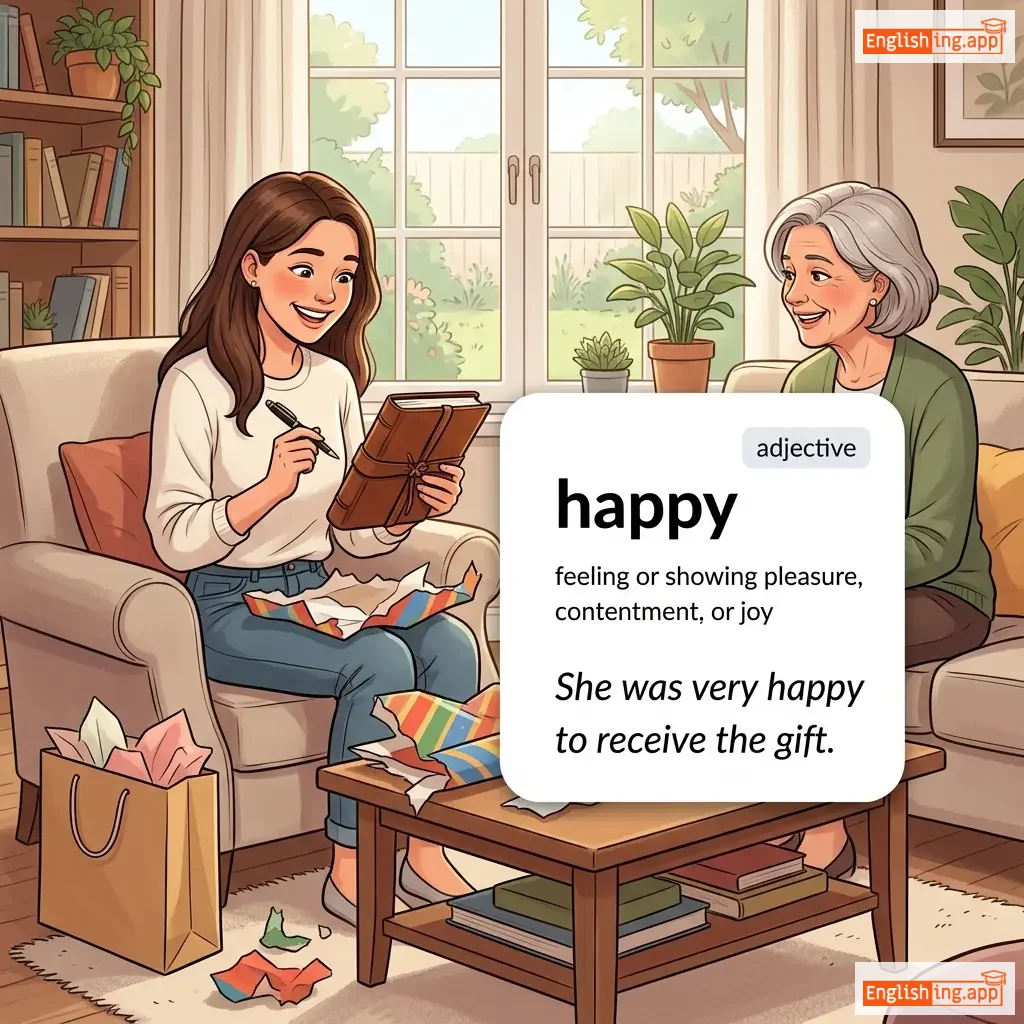
happy definition card — visual illustration of the meaning
adjective
/ˈhæpi/
幸せ (shiawase)

feeling or showing pleasure, contentment, or joy

"She was very happy to receive the gift."

"彼女はプレゼントをもらってとても幸せでした。" (Kanojo wa purezento o moratte totemo shiawase deshita.)
adjective
/ˌhæpi ɡoʊ ˈlʌki/
おおらかで、気楽な、無頓着な (ōraka de, kirakuna, mutōchakuna)

cheerfully unconcerned about the future; carefree

"She has a happy-go-lucky attitude and never worries about tomorrow."
"彼女はハピゴーラッキーな態度を持っており、明日のことを心配することはありません。" (Kanojo wa hapigōrakkī na taido o motte ori, ashita no koto o shinpai suru koto wa arimasen.)
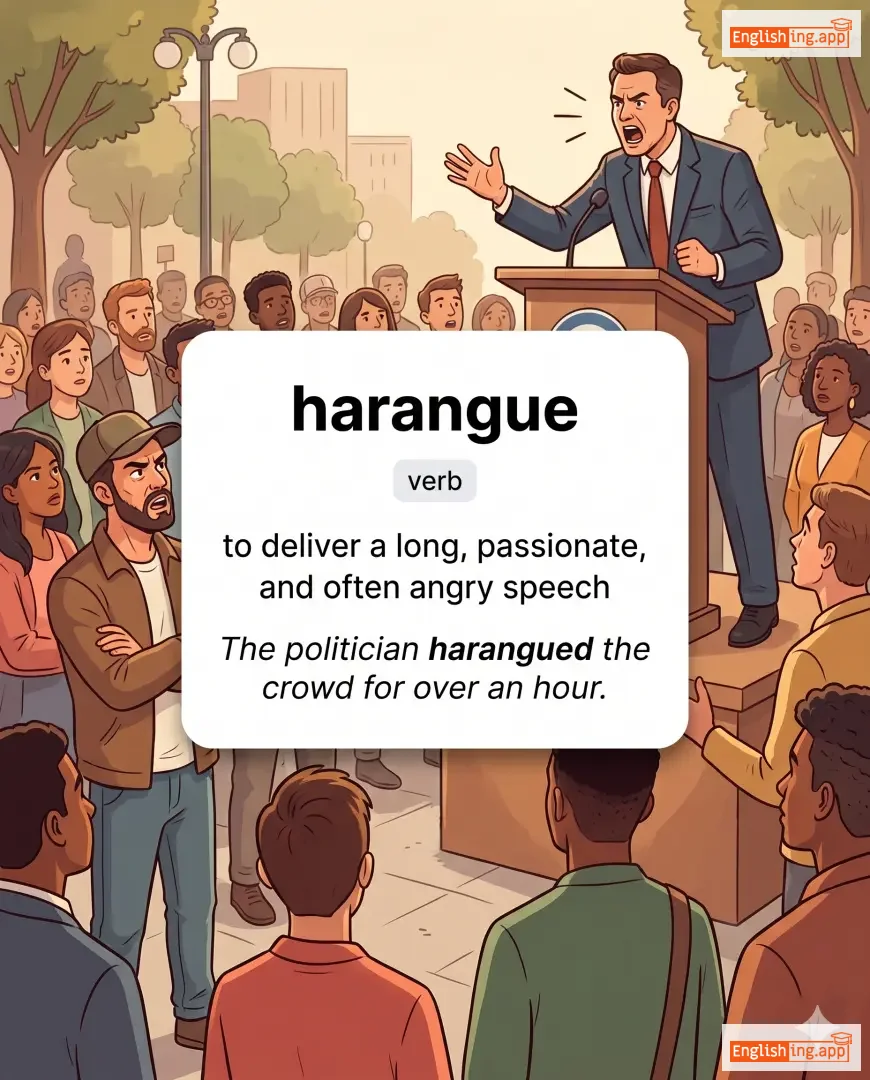
harangue definition card — visual illustration of the meaning
verb
/həˈræŋ/
長く情熱的な演説をする (nagaku jōnetsuteki na enzetsu o suru)

to deliver a long, passionate, and often angry speech

"The politician harangued the crowd for over an hour."

"政治家は群衆に一時間以上も演説をしました。" (Seijika wa gunshū ni ichijikan ijō mo enzetsu shimashita.)
verb
/həˈræs/

to annoy or trouble someone repeatedly in an aggressive or persistent way

"The journalist claimed she was being harassed online."

noun
/həˈræsmənt/
嫌がらせ (iyagarase)

aggressive pressure or intimidation; unwanted and repeated behavior causing discomfort

"The company has a strict policy against workplace harassment."

"その会社には職場でのハラスメントに対する厳しいポリシーがあります。" (Sono kaisha ni wa shokuba de no harasumento ni taisuru kibishii porishī ga arimasu.)
noun
/ˈhɑːrbɪndʒər/
前触れ (maebure)

a person or thing that announces or signals the approach of another

"The sudden drop in temperature was a harbinger of winter."
"気温の急激な低下は冬の前触れでした。" (Kion no kyūgeki na teika wa fuyu no maebure deshita.)
noun, verb
/ˈhɑːrbər/

noun: a place on the coast where ships may find shelter; verb: to keep (a thought or feeling, often negative) in one's mind

"He continued to harbor resentment towards his former boss."

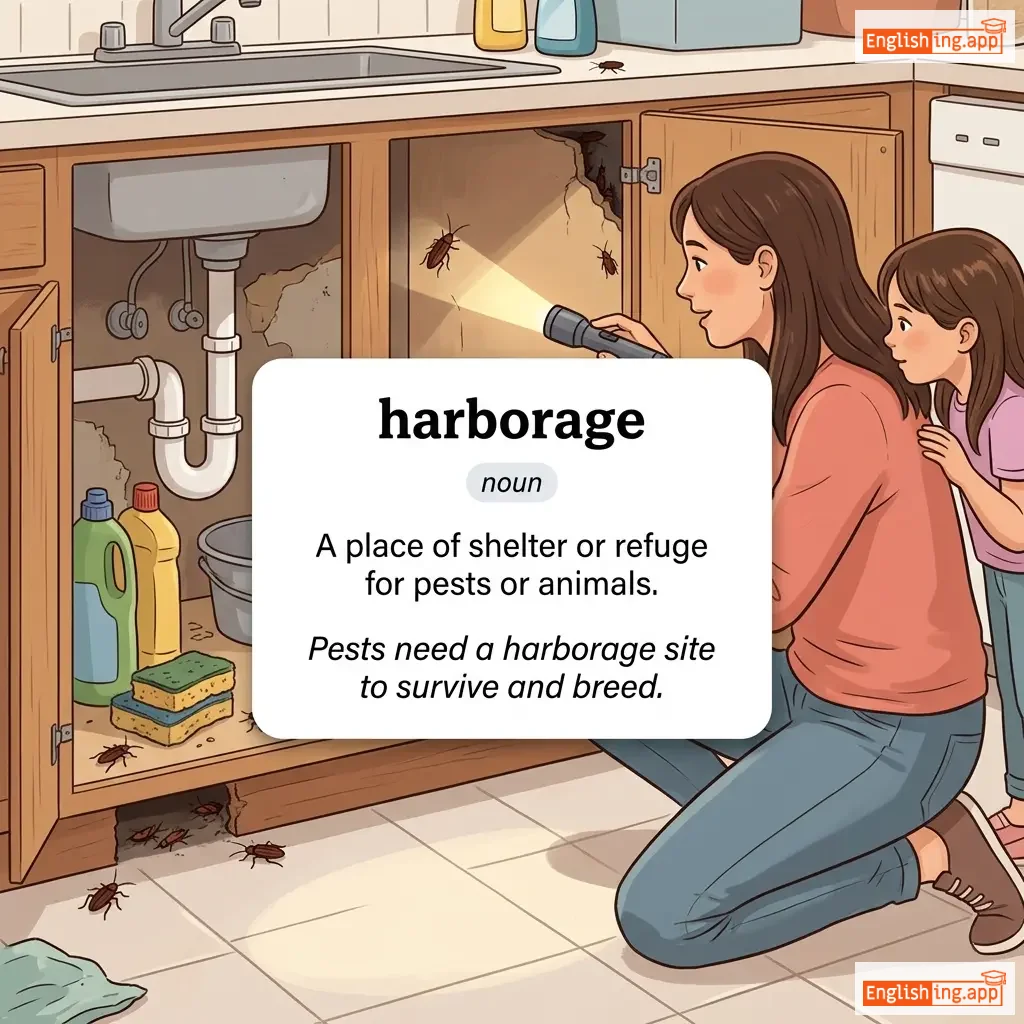
harborage definition card — visual illustration of the meaning
noun
ˈhɑːrbərɪdʒ
避難所 (hinanjo)

A place of shelter or refuge for pests or animals.

"Pests need a harborage site to survive and breed."

"害虫は生き残り、繁殖するために避難所が必要です。" (Gaichū wa ikinokori, hanshoku suru tame ni hinanjo ga hitsuyōdesu.)
noun
/ˈhɑːr.bər/
(minato)

a place on the coast where vessels may find shelter; a place of safety or refuge

"The fishing boats returned safely to the harbour before the storm hit the coastline."

"漁船は嵐が海岸を襲う前に安全に港に戻りました。" (Gyosen wa arashi ga kaigan o osou mae ni anzen ni minato ni modorimashita.)
adjective
/hɑːrd/
硬い (katai)

solid, firm, or difficult to do or endure

"The exam was very hard for most students."

"試験はほとんどの学生にとって非常に難しかった。" (Shiken wa hotondo no gakusei ni totte hijou ni muzukashikatta.)
adjective
/ˌhɑːrdˈbɪtn̩/
頑固で経験豊富 (ganko de keiken hōfu)

tough and experienced, not easily affected by emotions or hardship

"The hard-bitten detective showed no sign of surprise at the crime scene."

"その経験豊富な探偵は犯罪現場で驚きの兆候を見せませんでした。" (Sono keiken hōfu na tantei wa hanzai genba de odoroki no chōkō o misemasen deshita.)
adjective
/ˌhɑːrdˈhɑːrtɪd/
冷徹 (reitetu)

showing no kindness or sympathy; cruel

"The landlord was hard-hearted and refused to help the poor family."

"家主は冷徹で、貧しい家族を助けることを拒否しました。" (Yaju wa reitetu de, mazushī kazoku o tasukeru koto o kyohi shimashita.)
noun
/ˈhɑːdɪhʊd/
勇気、大胆さ (yūki, daitansa)

Courage, boldness, or daring behavior; also physical robustness.

"The mountaineer's hardihood impressed the entire team."

"登山家のハーディフッドはチーム全体を感動させました。" (Tōzanka no hādifuddo wa chīmu zentai o kandō saseshimashita.)
adverb
/ˈhɑːrdli/
ほとんどない (hotondo nai)

almost not; scarcely

"She could hardly believe her eyes."

"彼女は目を信じることができなかった。" (Kanojo wa me wo shinjiru koto ga dekinakatta.)
noun
/ˈhɑːrd.ʃɪp/
困難、苦難 (konnan, kunan)

severe suffering or privation; difficulty or distress

"Despite facing many hardships during the war, the family remained united and hopeful."

"戦争中に多くの困難に直面したにもかかわらず、家族は団結して希望に満ちていました。" (Sensou-chuu ni ooku no konnan ni chokumen shita ni mo kakawarazu, kazoku wa danketsu shite kibou ni michite imashita.)
noun
/ˈhɑːrdˌwɛr/
ハードウェア (hardware)

the physical parts of a computer or electronic system, such as the monitor, keyboard, and processor

"The company upgraded its computer hardware to improve performance."

"会社はパフォーマンスを向上させるためにコンピュータのハードウェアをアップグレードしました。" (Kaisha wa pafōmansu o kōjōsaseru tame ni konpyūta no hādowea o appurēdo shimashita.)
adjective
/ˈhɑːrdi/
頑丈, 強健 (ganjou, kyouken)

Strong, robust, and capable of enduring difficult conditions.

"Hardy plants can survive the harsh winter."
"頑丈な植物は厳しい冬を生き抜くことができます。" (Ganjou na shokubutsu wa kibishii fuyu wo ikinuku koto ga dekimasu.)
noun
/heə(r)/
野ウサギ (no usagi)

a fast-running long-eared mammal that resembles a large rabbit

"The hare quickly ran across the field."

"その野ウサギはフィールドを素早く走りました。" (Sono no usagi wa fīrudo o subayaku hashirimashita)
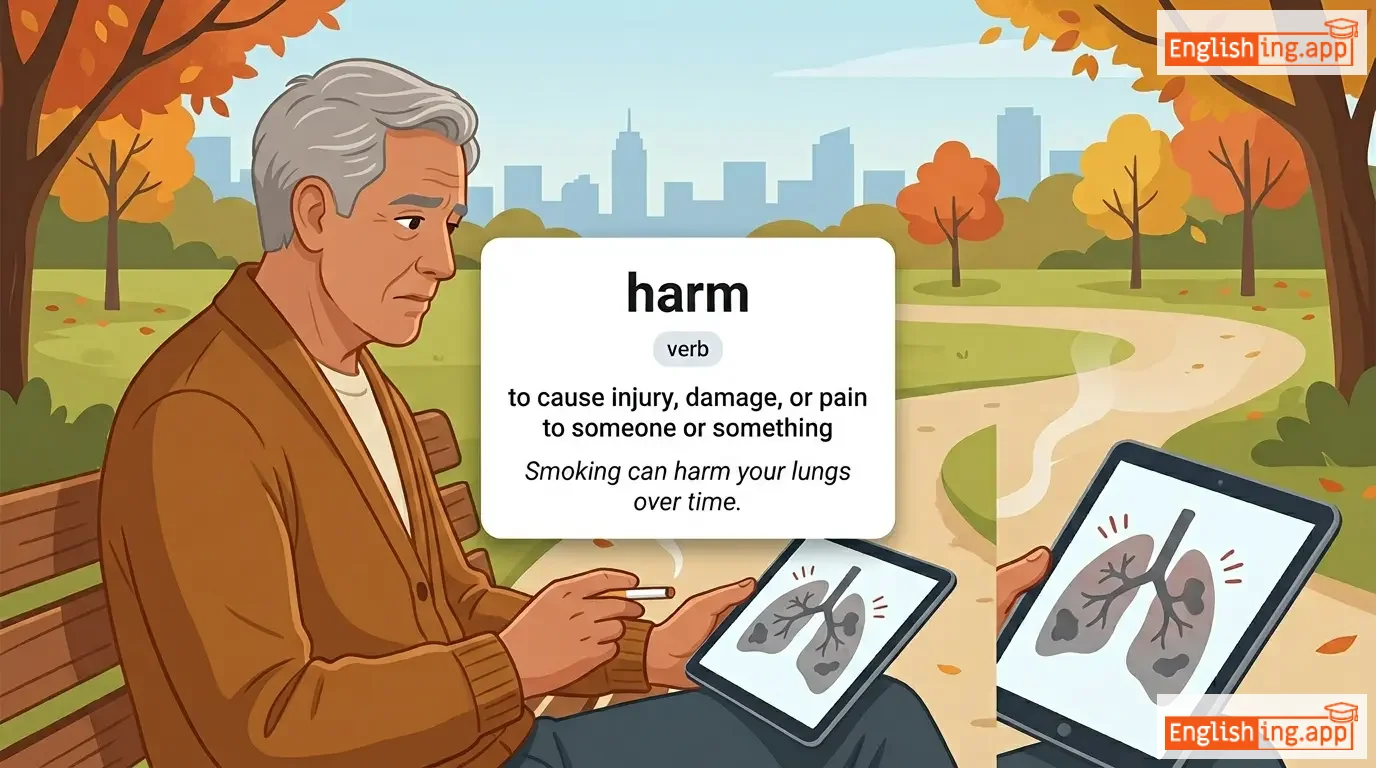
harm definition card — visual illustration of the meaning
verb
/hɑːrm/
(gai)

to cause injury, damage, or pain to someone or something

"Smoking can harm your lungs over time."

"喫煙は時間が経つにつれてあなたの肺に害を与える可能性があります。" (Kitsuen wa jikan ga tatsu ni tsurete anata no hai ni gai o ataeru kanousei ga arimasu.)
adjective
/ˈhɑːrmfəl/
有害な (yūgaina)

causing or likely to cause harm; damaging

"Smoking is harmful to your health."

"喫煙は健康に有害です。" (Kitsuen wa kenko ni yūgaina desu.)
adjective
/ˈhɑːrmləs/
無害な; 無実の; 安全な (mugai na; mujitsu no; anzen na)

not able or likely to cause harm; innocent; safe

"The snake looks dangerous but it's actually harmless."
"ヘビは危険に見えるが、実際には無害だ。" (Hebi wa kiken ni mieru ga, jissai ni wa mugai da.)
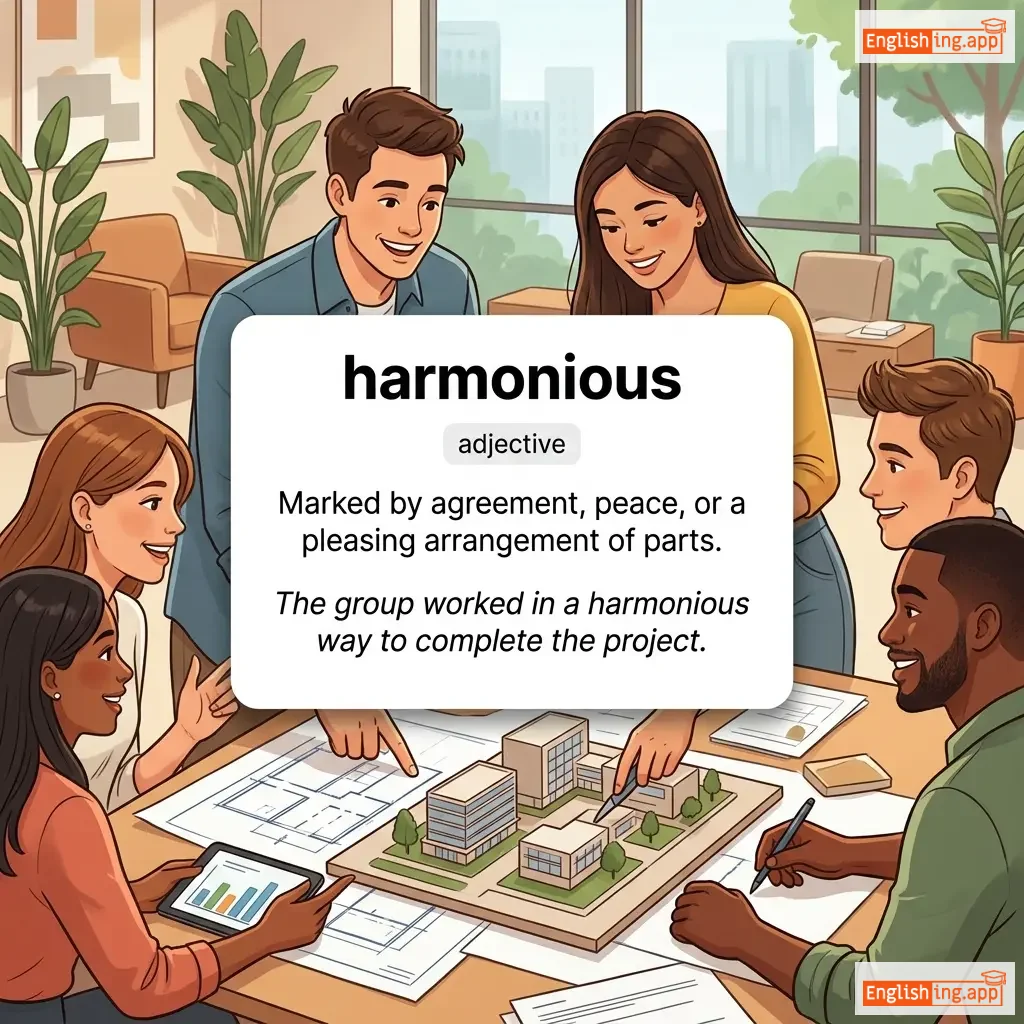
harmonious definition card — visual illustration of the meaning
adjective
/hɑːrˈmoʊniəs/
調和のとれた, 和やか (chouwa no toreta, nagoyaka)

Marked by agreement, peace, or a pleasing arrangement of parts.

"The group worked in a harmonious way to complete the project."

"グループはプロジェクトを完了するために調和のとれた方法で働きました。" (Gurūpu wa purojekuto o kanryou suru tame ni chouwa no toreta hōhō de hatarakimashita.)
noun
/hɑrˈmoʊniəm/
ハーモニウム (haamonium)

a keyboard musical instrument similar to an organ, using air to produce sound

"She played devotional songs on the harmonium at the temple."

"彼女は寺院でハーモニウムを使って祈りの歌を演奏した。" (Kanojo wa jiin de haamonium o tsukatte inori no uta o ensou shita.)
harmonization definition card — visual illustration of the meaning
noun
/ˌhɑːmənaɪˈzeɪʃən/
調和、統一 (chouwa, touitsu)

The process of making things compatible or consistent with one another.

"The harmonization of different policies ensures consistent results."
"異なる方針の調和は一貫した結果を保証します。" (Kotonaru houshin no chouwa wa ikkanshita kekka wo hoshou shimasu.)
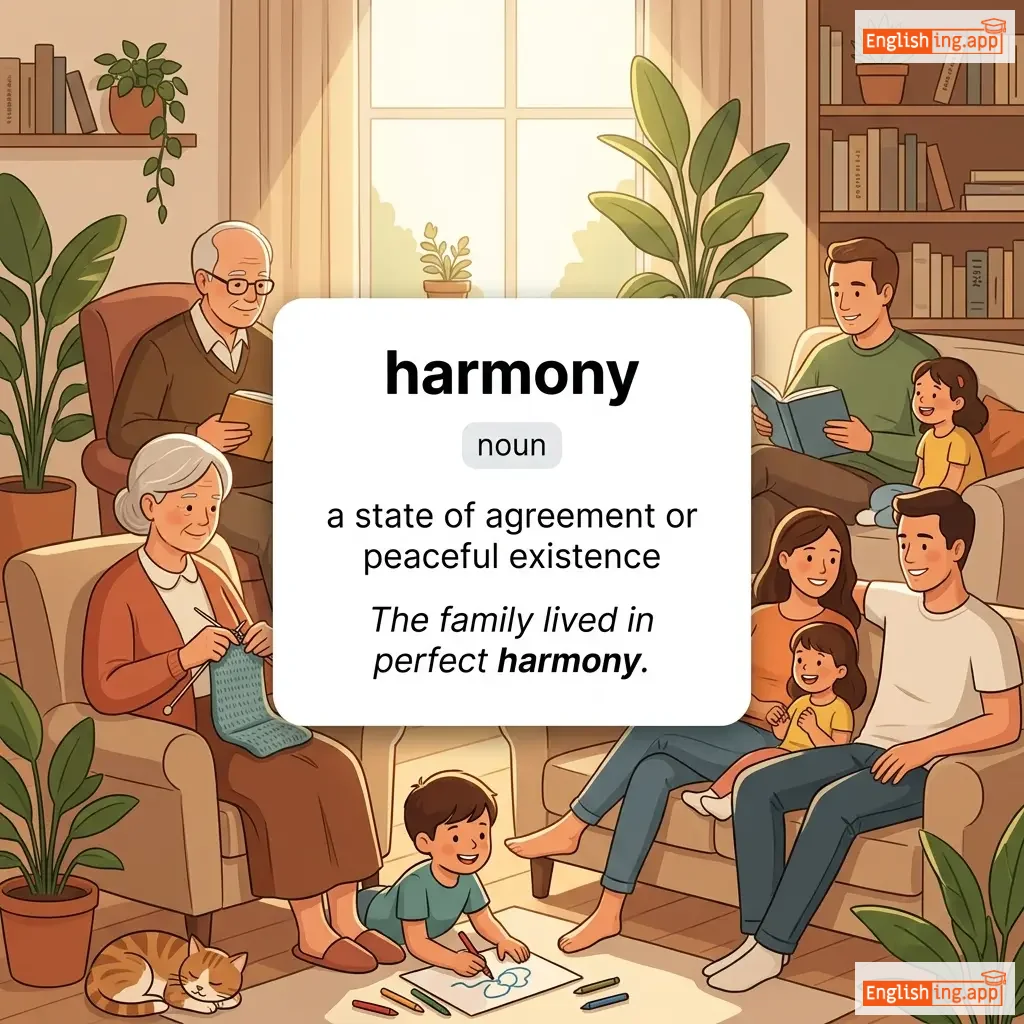
harmony definition card — visual illustration of the meaning
noun
/ˈhɑːrməni/
調和 (chouwa)

a state of agreement or peaceful existence

"The family lived in perfect harmony."

"その家族は完全な調和の中で暮らしていました。" (Sono kazoku wa kanzen na chouwa no naka de kurashite imashita.)
verb
/ˈhɑːrnɪs/

To control and make use of natural resources, especially energy.

"Scientists are working to harness solar power effectively."

verb
/hɑːrp/
繰り返し言う、文句を言う (kurikaeshi iu, monku wo iu)

To dwell on or complain about something persistently.

"He kept harping on the same mistake over and over."

"彼は同じ間違いについて繰り返し言っていた。" (Kare wa onaji machigai ni tsuite kurikaeshi itte ita.)