語彙集

英単語辞書 | 単語の意味、定義、例文

verb
/flɪt/
ひらひら舞う (hirahira mau)

to move quickly and lightly from one place to another

"Butterflies flitted from flower to flower."

"蝶が花から花へひらひらと舞った。" (cho ga hana kara hana e hirahira to matta)
verb
/floʊt/
浮かぶ (ukabu)

to rest or move on the surface of a liquid or in the air without sinking

"The boat began to float gently down the river."

"ボートは静かに川を下って浮かび始めました。" (Bo-to wa shizuka ni kawa o kudatte ukabi hajimemashita.)
adjective, verb (present participle)
/ˈfloʊtɪŋ/
浮かんでいる (ukande iru)

remaining on the surface of a liquid without sinking; moving lightly or freely

"The boat was floating gently on the calm lake."

"ボートは穏やかな湖の上で優しく浮かんでいた。" (Bo-to wa odayaka na mizuumi no ue de yasashiku ukande ita.)
noun/verb
/flɑːk/
群れ (mure)

a group of birds or animals; to gather or move in a crowd

"Tourists flocked to the beach during summer."

"観光客は夏にビーチに集まりました。" (Kankoukyaku wa natsu ni biichi ni atsumarimashita.)
noun
/floʊ/
氷の板 (kōri no ita)

a large sheet of floating ice

"The polar bears rested on the ice floe."

"北極熊は氷の板の上で休んでいた。" (Hokkyoku kuma wa kōri no ita no ue de yasunde ita.)
noun
/flʌd/
洪水 (kōzui)

a large amount of water covering land that is usually dry

"The flood destroyed several houses in the village."
"洪水は村のいくつかの家を破壊しました。" (Kōzui wa mura no ikutsuka no ie o hakai shimashita.)
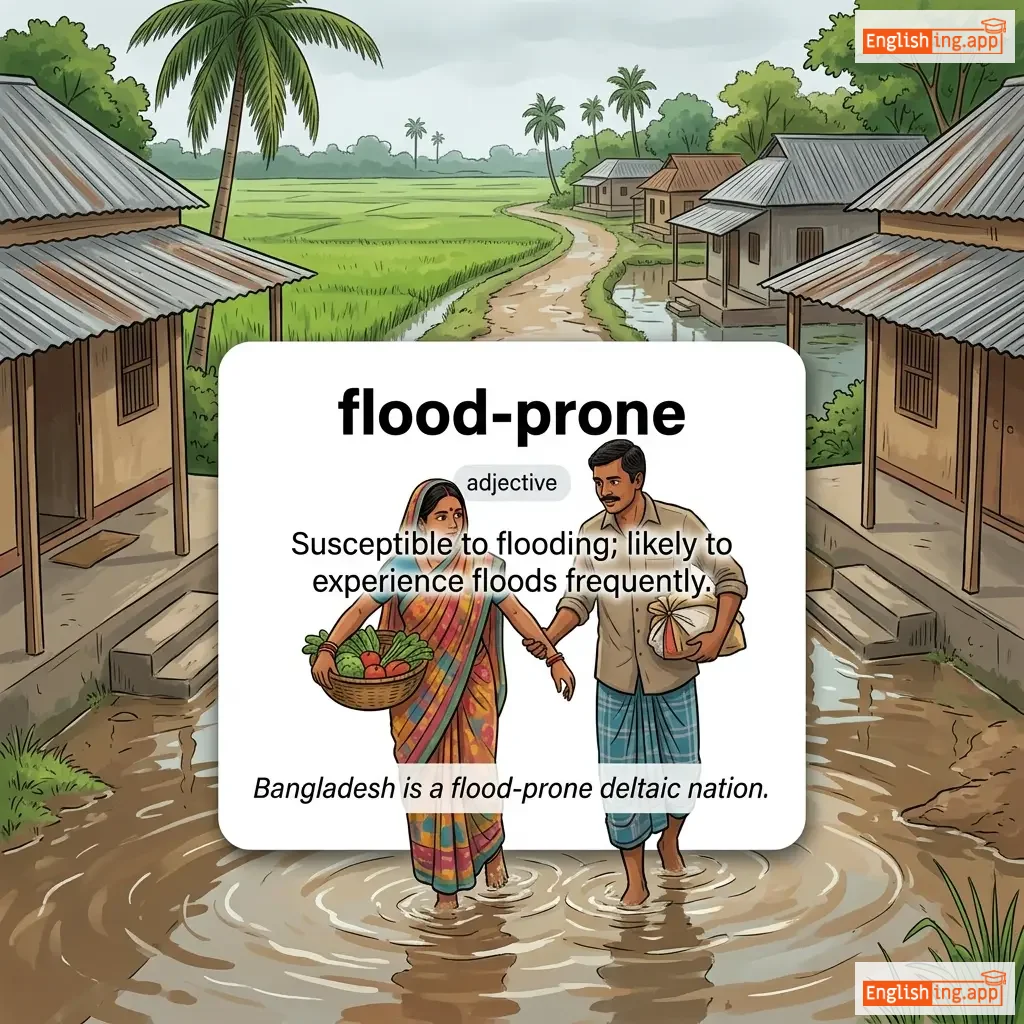
flood-prone definition card — visual illustration of the meaning
adjective
ˈflʌd proʊn
洪水に見舞われやすい (kōzui ni mimaware yasui)

Susceptible to flooding; likely to experience floods frequently.

"Bangladesh is a flood-prone deltaic nation."

"バングラデシュは洪水が発生しやすいデルタ国家です。" (Banguradeshu wa kōzui ga hassei shiyasui deruta kokka desu.)
noun
/flɔːr/
(yuka)

the lower surface of a room, on which one may walk

"The floor was covered with a soft carpet."

"床は柔らかいカーペットで覆われていました。" (Yuka wa yawarakai kāpetto de ōwarete imashita.)
verb
/flɑp/
失敗 (shippai)

to fall or move heavily and clumsily; to fail completely

"The new movie flopped at the box office."
"新しい映画は興行成績が振るわなかった。" (Atarashii eiga wa kougyou seiseki ga furuwanakatta.)
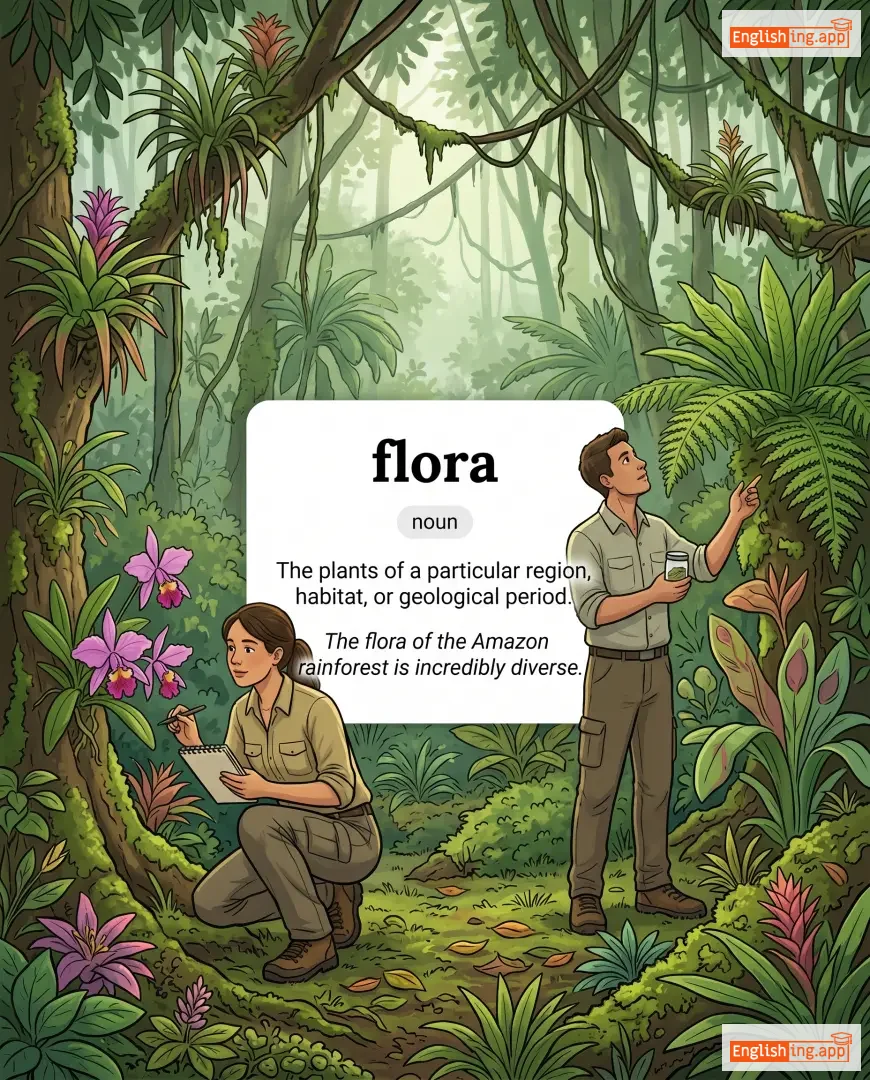
flora definition card — visual illustration of the meaning
noun
/ˈflɔːrə/
植物相 (shokubutsusou)

The plants of a particular region, habitat, or geological period.

"The flora of the Amazon rainforest is incredibly diverse."
"アマゾン熱帯雨林の植物相は非常に多様です。" (Amazon nettai urin no shokubutsusou wa hijou ni tayou desu.)
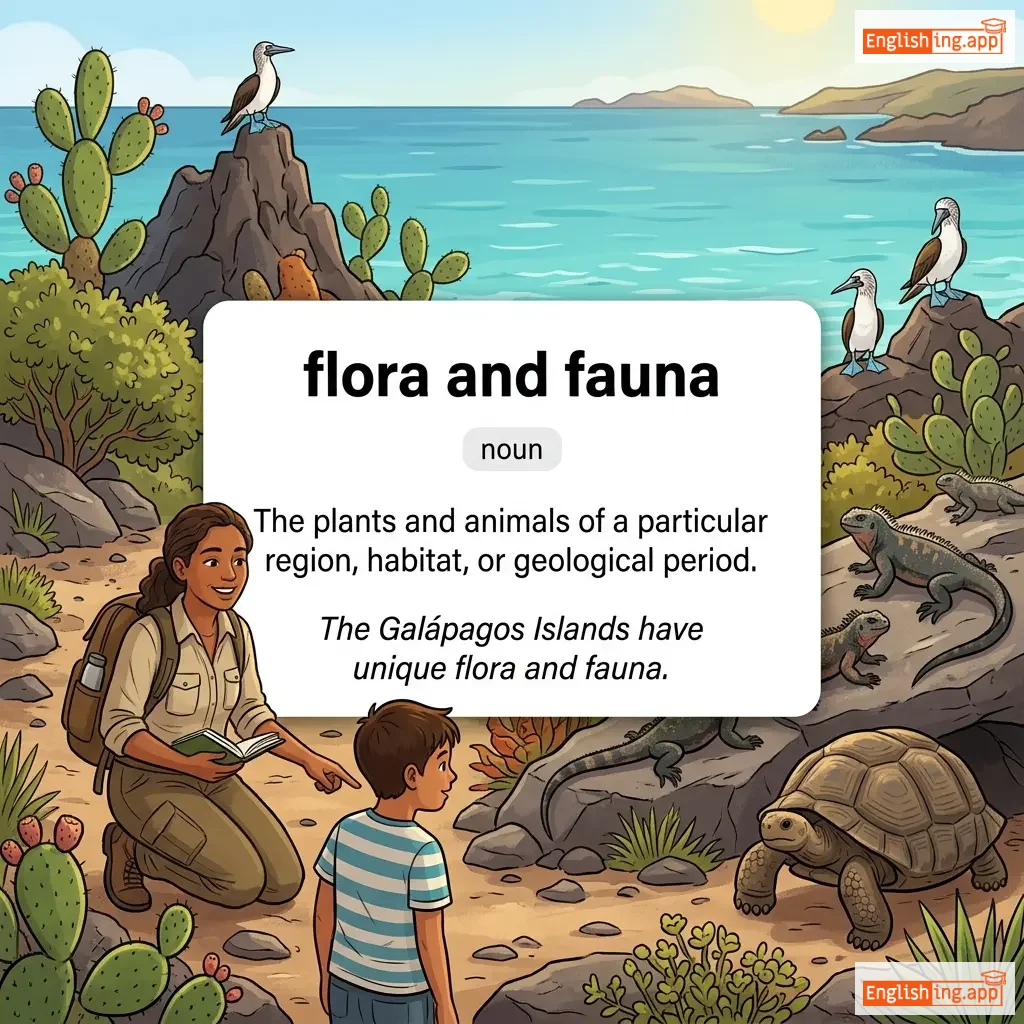
flora and fauna definition card — visual illustration of the meaning
noun
ˈflɔː.rə ænd ˈfɔː.nə
フローラとファウナ (furōra to fauna)

The plants and animals of a particular region, habitat, or geological period.

"The Galápagos Islands have unique flora and fauna."

"ガラパゴス諸島には独特のフローラとファウナがあります。" (Garapagos shotō ni wa dokutoku no furōra to fauna ga arimasu.)
adjective
/ˈflɔːrəl/
花のような (hana no yōna)

Relating to flowers or decorated with flowers.

"She wore a beautiful floral dress to the party."

"彼女はパーティーに美しい花のようなドレスを着ていった。" (Kanojo wa pātii ni utsukushī hana no yōna doresu o kite itta.)
noun
/flɔːˈrɛsəns/
花の開花期 (hana no kaika ki)

The process, state, or period of flowering.

"The garden reached its peak florescence in spring."

"庭は春に最盛期の花の開花期に達しました。" (Niwa wa haru ni saiseiki no hana no kaika ki ni tasshimashita.)
florid definition card — visual illustration of the meaning
adjective
/ˈflɒrɪd/
過度に装飾された / 赤みがかった (kado ni sōshoku sareta / akami ga katta)

Having a red or flushed complexion; or excessively ornate and intricate.

"The speaker’s florid style made the lecture hard to follow."

"講演者の過度に装飾されたスタイルは、講義を理解するのを難しくした。" (Kōensha no kado ni sōshoku sareta sutairu wa, kōgi o rikai suru no o muzukashiku shita.)
noun
/ˈflɒrɪst/
花屋 (hanaya)

A person who sells and arranges flowers.

"We bought a bouquet from the local florist."

"私たちは地元の花屋から花束を買いました。" (Watashitachi wa jimoto no hanaya kara hanataba o kaimashita.)
noun
/fləˈtɪlə/
小型艦隊 (kogata kantai)

A small fleet of ships or boats operating together.

"A flotilla of fishing boats left the harbor at dawn."

"漁船のフロティラが夜明けに港を出発しました。" (Gyosen no furotira ga yoake ni minato o shuppatsu shimashita.)
noun
/ˈflɒtsəm/
漂流物 (hyōryūbutsu)

Floating debris from a shipwreck or things discarded and left floating.

"The beach was littered with flotsam after the storm."

"嵐の後、ビーチは漂流物で埋め尽くされていた。" (Arashi no ato, bīchi wa hyōryūbutsu de umetsukusarete ita.)
verb
/ˈflaʊndər/
もがく (mogaku)

To struggle or stagger clumsily; to experience difficulty or confusion.

"He floundered in the interview when asked difficult questions."

"彼は面接で難しい質問をされて、うろたえました。" (Kare wa mensetsu de muzukashii shitsumon o sarete, urotaemashita.)
noun
/ˈflaʊ.ər/
小麦粉 (komugiko)

a powder made by grinding grains, used for making bread, cakes, etc.

"She bought a bag of flour to bake a cake."
"彼女はケーキを焼くために小麦粉を一袋買いました。" (Kanojo wa keeki wo yaku tame ni komugiko wo hitofukuro kaimashita.)
flourish definition card — visual illustration of the meaning
verb
/ˈflʌrɪʃ/

To grow or develop in a healthy or successful way.

"Her business began to flourish after she introduced online sales."

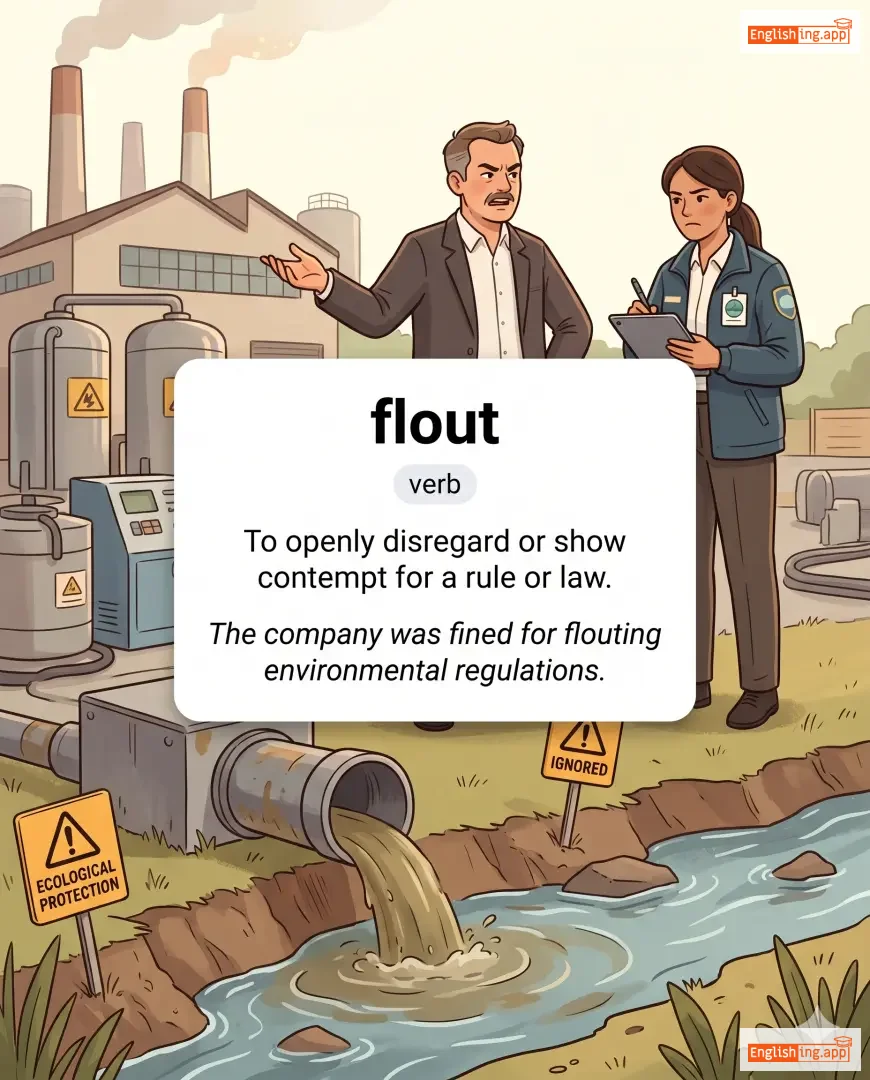
flout definition card — visual illustration of the meaning
verb
/flaʊt/
無視する (mushi suru)

To openly disregard or show contempt for a rule or law.

"The company was fined for flouting environmental regulations."
"その会社は環境規制を無視したため罰金を科せられました。" (Sono kaisha wa kankyō kisei o mushi shita tame bakkin o kase raremashita.)
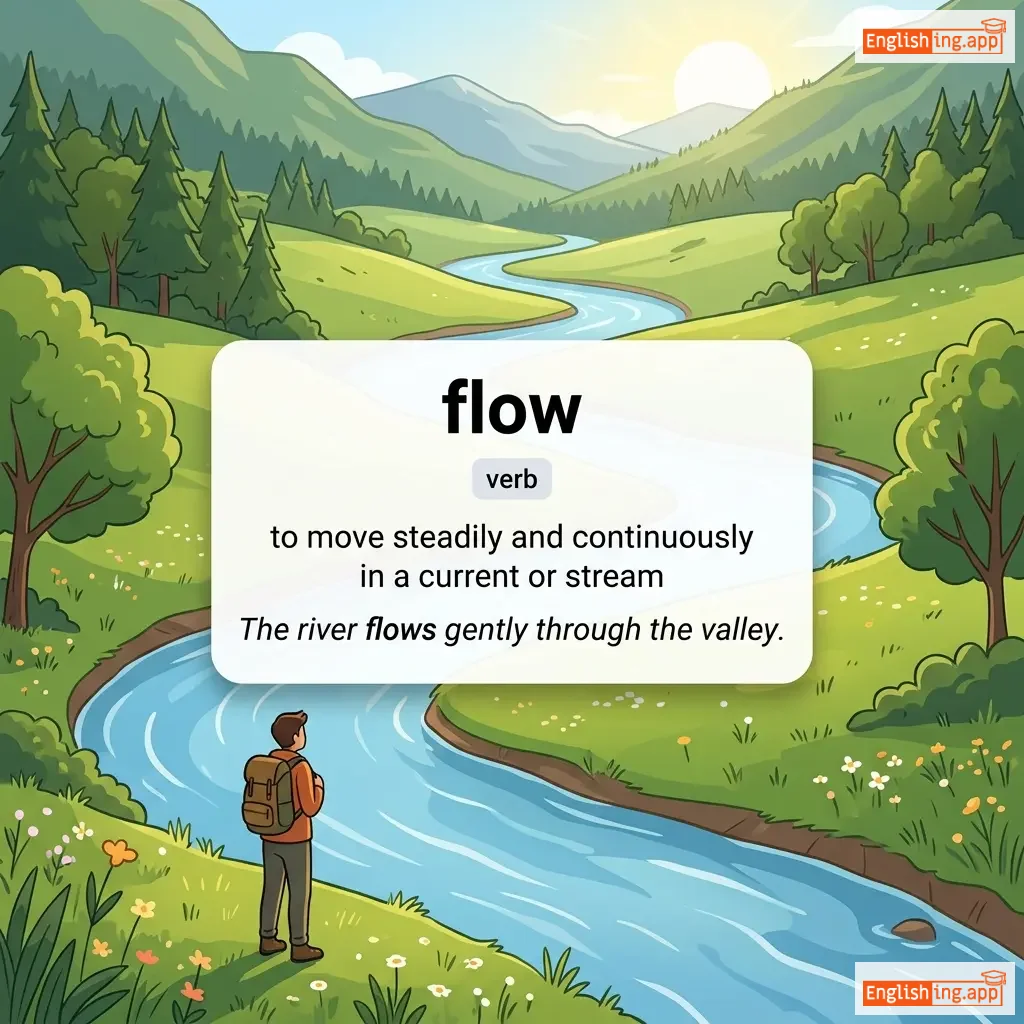
flow definition card — visual illustration of the meaning
verb
/floʊ/
流れ (nagare)

to move steadily and continuously in a current or stream

"The river flows gently through the valley."

"川は谷を穏やかに流れる。" (Kawa wa tani o odayaka ni nagareru.)
noun
/ˈflaʊər/
(hana)

the seed-bearing part of a plant, often colorful and fragrant, that blossoms

"The garden was full of colorful flowers."

"庭はカラフルな花でいっぱいでした。" (Niwa wa karafuru na hana de ippai deshita.)
noun
/ˈflaʊər veɪs/
花瓶 (kabin)

a decorative container used to hold cut flowers

"She placed beautiful roses in the flower vase on the table."
"彼女はテーブルの上に花瓶に美しいバラを置きました。" (Kanojo wa tēburu no ue ni kabin ni utsukushī bara o okimashita.)
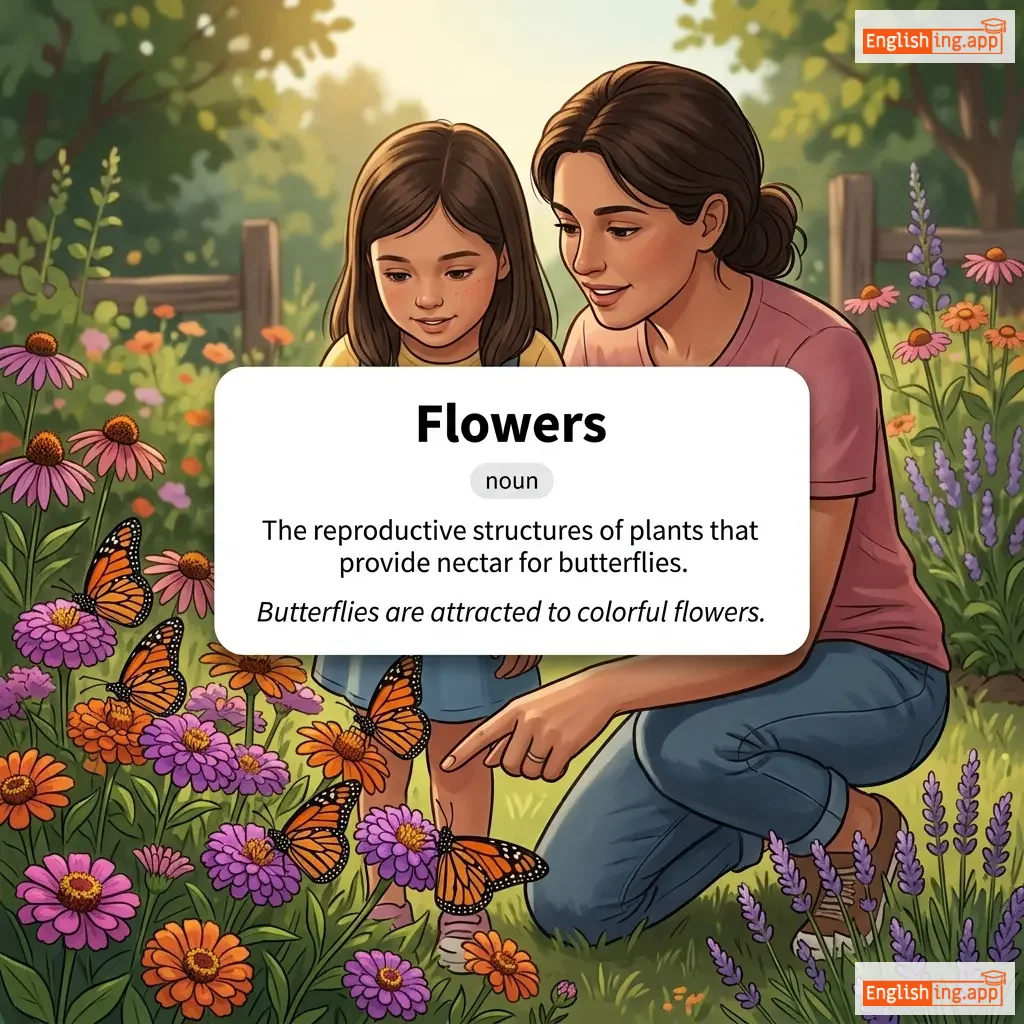
Flowers definition card — visual illustration of the meaning
noun
ˈflaʊərz
(hana)

The reproductive structures of plants that provide nectar for butterflies.

"Butterflies are attracted to colorful flowers."

"蝶々は色とりどりの花に引き寄せられる。" (Chou chou wa iro toridori no hana ni hikiyoserareru.)
adjective
/ˈflaʊəri/
花のような / 飾られた (hana no yō na / kazatta)

Full of flowers or overly elaborate in style or language.

"She wrote a flowery letter filled with poetic phrases."
"彼女は詩的なフレーズで満たされた花のような手紙を書いた。" (Kanojo wa shiteki na fureezu de mitasareta hana no yō na tegami o kaita.)
noun
/fluː/
インフルエンザ (infuruenzā)

a contagious viral illness causing fever, aches, and respiratory symptoms; influenza

"She stayed home because she had the flu."

"彼女はインフルエンザなので家にいました。" (Kanojo wa infuruenzā na node ie ni imashita)
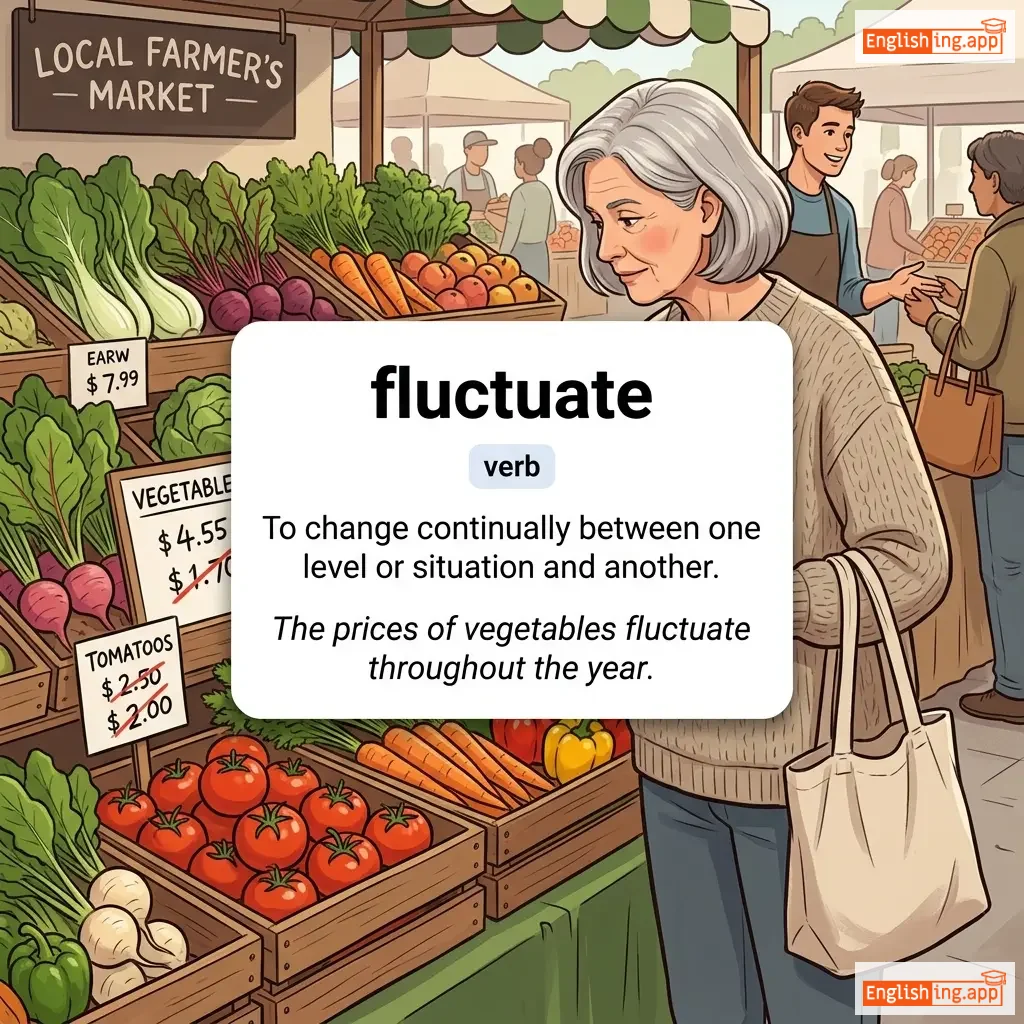
fluctuate definition card — visual illustration of the meaning
verb
/ˈflʌktʃueɪt/
変動する (hendou suru)

To change continually between one level or situation and another.

"The prices of vegetables fluctuate throughout the year."

"野菜の価格は一年を通して変動します。" (Yasai no kakaku wa ichinen o tooshite hendou shimasu.)
fluctuation definition card — visual illustration of the meaning
noun
/ˌflʌktʃuˈeɪʃən/
変動 (hendou)

A continual change or variation; an irregular rising and falling.

"The fluctuation in stock prices worried the investors."

"株価の変動は投資家を心配させました。" (Kabuka no hendou wa toushika o shinpai sasemashita.)
noun
/fluː/
煙道 (endou)

A pipe or channel for smoke and waste gases produced by a fire, gas heater, or power station.

"The chimney flue needs to be cleaned regularly."

"煙突の煙道は定期的に掃除する必要があります。" (Entotsu no endou wa teikiteki ni souji suru hitsuyou ga arimasu.)
fluency definition card — visual illustration of the meaning
noun
/ˈfluːənsi/
流暢さ (ryūchō-sa)

The ability to speak, write, or perform smoothly and easily.

"Her fluency in English impressed the interviewers."

"彼女の英語の流暢さは面接官を感動させました。" (Kanojo no eigo no ryūchō-sa wa mensetsu-kan o kandō sasenmashita.)
adjective
/ˈfluːənt/
流暢 (ryūchō)

Able to speak, write, or express oneself smoothly and easily.

"She is fluent in both English and Spanish."

"彼女は英語とスペイン語の両方で流暢に話します。" (Kanojo wa eigo to Supeingo no ryōhō de ryūchō ni hanashimasu.)
adjective
/fluːˈɛnʃəl/
影響力のある (eikyōryoku no aru)

Having the power to influence or flowing freely (rare/archaic usage).

"The fluential speaker captivated the entire audience."

"影響力のある話者は、観客全体を魅了しました。" (Eikyōryoku no aru hanasha wa, kankyaku zentai o miryō shimashita.)
adverb
/ˈflu:əntli/
流暢に; スムーズに (ryūchō ni; sumūzu ni)

in a smooth, effortless, and articulate manner; with ease and skill

"She speaks French fluently."

"彼女はフランス語を流暢に話す。" (Kanojo wa furansugo o ryūchō ni hanasu.)
adjective
/ˈflʌfi/
幸せ (shiawase)

soft, light, and airy in texture

"She baked a fluffy cake for the party."

"彼女は賞を受け取ったとき、幸せを隠すことができませんでした。" (Kanojo wa shō o uketotta toki, shiawase o kakusu koto ga dekimasen deshita.)
noun/adjective
/ˈfluːɪd/
流体 (ryūtai)

a substance that can flow easily, such as liquid or gas; smooth and adaptable

"The artist's fluid movements impressed the audience."
"アーティストの流れるような動きは観客を感動させました。" (Ātisuto no nagareru yō na ugoki wa kankyaku o kandō sasemashita.)
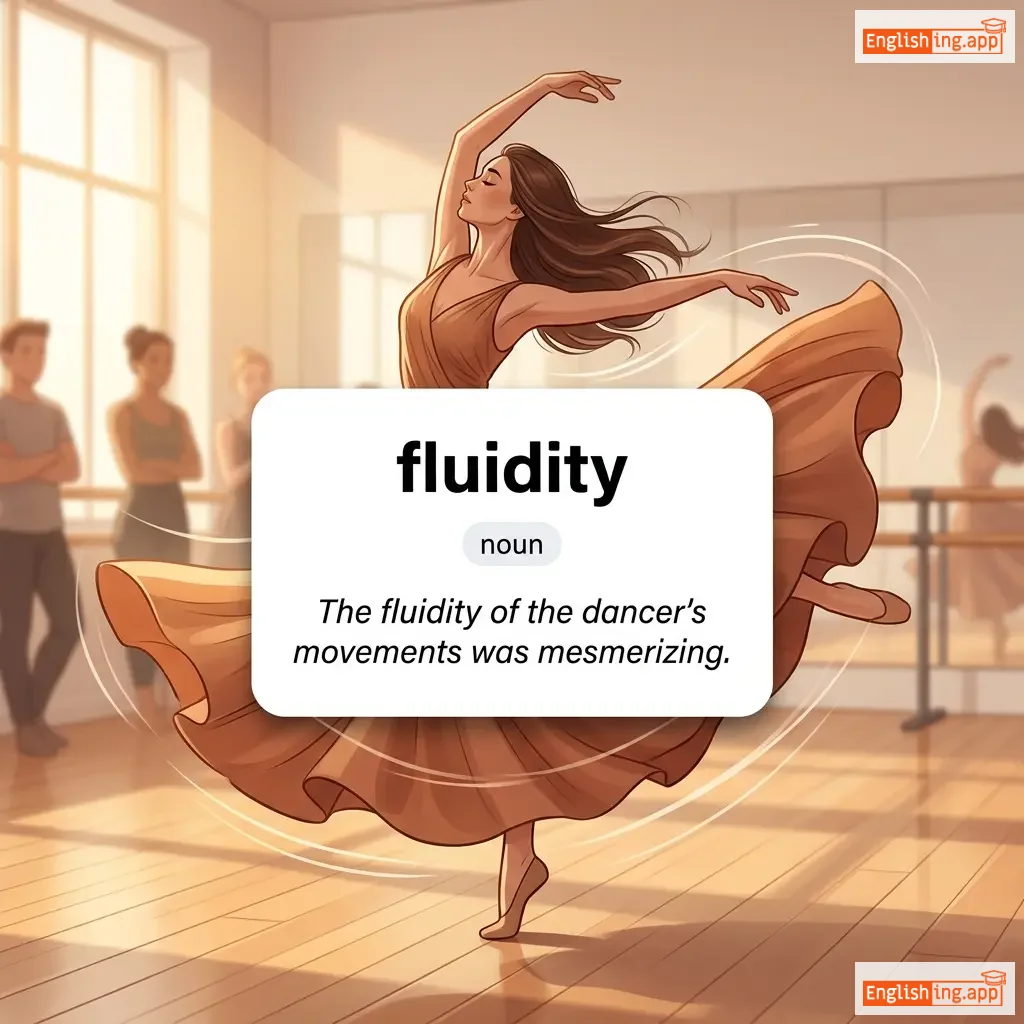
fluidity definition card — visual illustration of the meaning
noun
fluˈɪd.ɪ.ti
流動性 (ryūdōsei)

The ability of a substance to flow easily; smooth and graceful movement or style.

"The fluidity of the dancer's movements was mesmerizing."

"ダンサーの動きの流動性は魅惑的でした。" (Dansā no ugoki no ryūdōsei wa miwaku-teki deshita.)
noun
/fluːk/
偶然の幸運 (guuzen no kouun)

A stroke of luck; an unexpected piece of good fortune.

"Winning the lottery was a complete fluke."

"宝くじに当たるのは完全に偶然の幸運だ。" (Takarakuji ni ataru no wa kanzen ni guuzen no kouun da.)
verb
/ˈflʌməks/
困惑させる (konwaku saseru)

To confuse or bewilder someone completely.

"The complicated puzzle flummoxed the students."

"その複雑なパズルは学生を困惑させた。" (Sono fukuzatsu na pazuru wa gakusei wo konwaku saseta.)
adjective
/ˈflʌməksd/
困惑した (konwaku shita)

Completely confused or bewildered.

"He looked flummoxed after hearing the strange question."

"彼はその奇妙な質問を聞いた後、困惑しているように見えた。" (Kare wa sono kimyō na shitsumon o kiita ato, konwaku shite iru yō ni mieta.)
verb, noun, adjective
/flʌʃ/
顔を赤くする / 水で洗浄する (kao o akaku suru / mizu de senjō suru)

to become red in the face, usually from embarrassment, heat, or excitement; to clean something with a flow of water

"She flushed with embarrassment when she realized her mistake."

"彼女は自分のミスに気づいたとき、恥ずかしさで顔が赤くなった。" (Kanojo wa jibun no misu ni kidzuita toki, hazukashisa de kao ga akakunatta.)
verb, noun
/ˈflʌstər/
困惑させる (konwaku saseru)

to make someone agitated or confused

"The unexpected question flustered him."

"予期しない質問が彼を困惑させた。" (Yoki shinai shitsumon ga kare o konwaku saseta.)
adjective
/ˈflʌstərd/
動揺した (dōyō shita)

in a state of confusion or agitation

"She appeared flustered after being asked so many questions."

"彼女はたくさんの質問をされた後、動揺しているように見えました。" (Kanojo wa takusan no shitsumon o sareta ato, dōyō shite iru yō ni miemashita.)
noun
/fluːt/
フルート (furuto)

a musical instrument played by blowing across a hole at one end

"He played a beautiful tune on the flute."

"彼はフルートで美しいメロディーを演奏した。" (Kare wa furuto de utsukushii merodii o ensou shita.)
adjective
/ˈfluːtɪd/
溝が入った (mizu ga haitta)

having grooves or ridges, often for decoration

"The vase had a beautiful fluted design around the rim."

"その花瓶は縁に美しい溝が入ったデザインがありました。" (Sono kabin wa fuchi ni utsukushī mizu ga haitta dezain ga arimashita.)
verb
/ˈflʌtər/
羽ばたく / 震える (habataku / furueru)

to move or flap quickly and lightly; to beat or wave with small rapid motions

"The butterfly began to flutter its wings in the sunlight."

"蝶が日光の中で羽ばたき始めた。" (Chou ga nikkou no naka de habataki hajimeta.)
adjective
/ˈfluːviəl/
河川に関連する (kasen ni kanren suru)

relating to or found in a river

"The fluvial deposits indicated the presence of an ancient river system."

"河川堆積物は古代の川のシステムの存在を示していた。" (Kasen taisekimono wa kodai no kawa no shisutemu no sonzai o shimeshite ita.)
flux definition card — visual illustration of the meaning
noun
/flʌks/
フロー (furō)

continuous change or movement; the rate of flow of something

"The company was in a state of constant flux during the reorganization."

"会社は再編成の間、絶え間ない変化の中にありました。" (Kaisha wa sai hensei no aida, tae manai henka no naka ni arimashita.)
fly definition card — visual illustration of the meaning
verb
/flaɪ/
飛ぶ (tobu)

to move through the air using wings or by being carried by the wind or an aircraft

"The birds fly south for the winter."

"鳥は冬に南へ飛んでいきます。" (Tori wa fuyu ni minami e tonde ikimasu.)
adjective
/ˈflaɪɪŋ/
飛んでいる (tondeiru)

able to move through the air; related to flight or aircraft

"The flying bird disappeared into the clouds."

"飛んでいる鳥は雲の中に消えました。" (Tondeiru tori wa kumo no naka ni kiemashita.)