語彙集

英単語辞書 | 単語の意味、定義、例文

adjective
/ˈfræʤaɪl/
壊れやすい (kowareyasui)

Easily broken or damaged; delicate.

"Be careful with that vase, it's very fragile."
"その花瓶には気をつけて、すごく壊れやすいから。" (Sono kabin ni wa ki o tsukete, sugoku kowareyasui kara.)
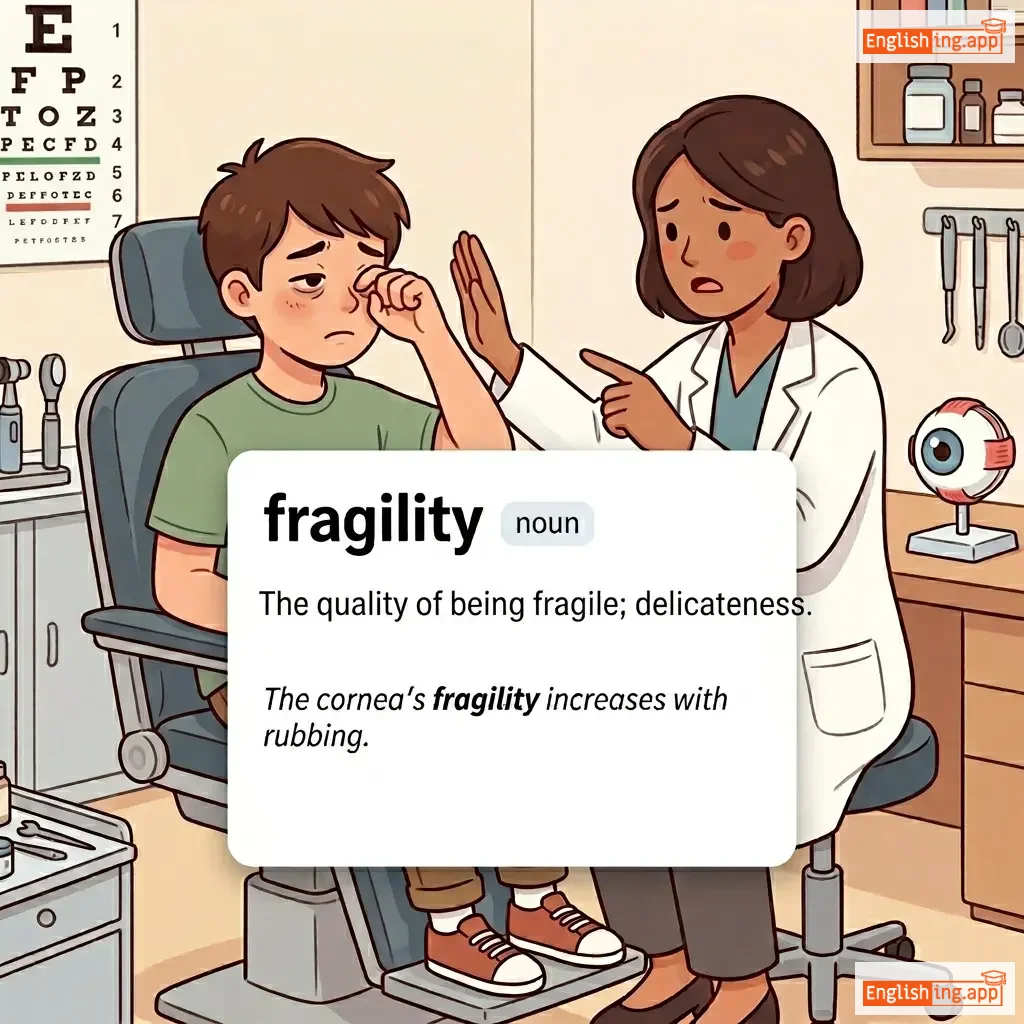
fragility definition card — visual illustration of the meaning
noun
/frəˈdʒɪl.ɪ.ti/
もろさ (morosa)

The quality of being fragile; delicateness.

"The cornea's fragility increases with rubbing."

"角膜のもろさはこすることで増加します。" (kakumaku no morosa wa kosuru koto de zouka shimasu)
noun
/ˈfræɡmənt/
断片 (danpen)

a small piece broken off something larger

"He found a fragment of ancient pottery near the river."
"彼は川の近くで古代の陶器の断片を見つけました。" (Kare wa kawa no chikaku de kodai no tōki no danpen o mitsukemashita.)
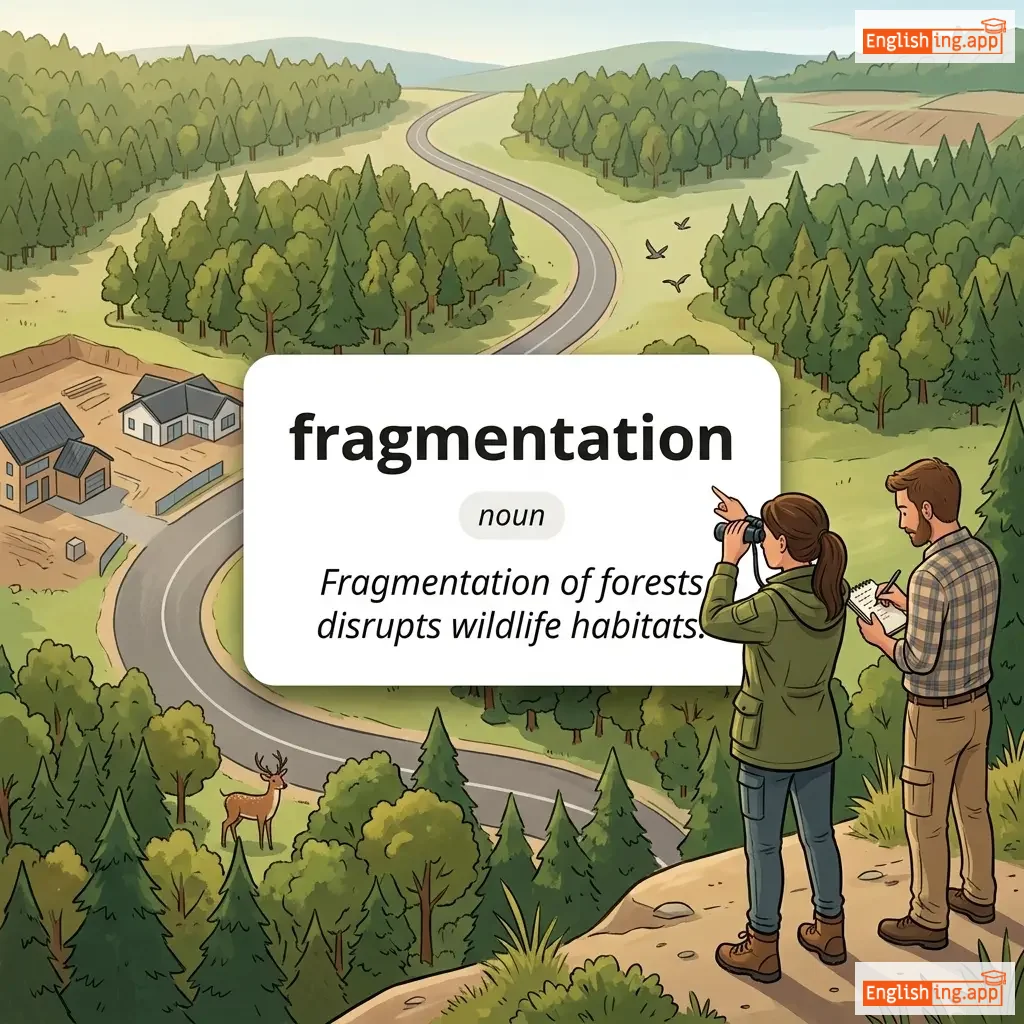
fragmentation definition card — visual illustration of the meaning
noun
/ˌfræɡ.mənˈteɪ.ʃən/
断片化 (danpenka)

The process of breaking into fragments; division of habitat into isolated patches.

"Fragmentation of forests disrupts wildlife habitats."
"森林の断片化は野生動物の生息地を乱します。" (Shinrin no danpenka wa yaseidōbutsu no seisokuchi o midashimasu.)
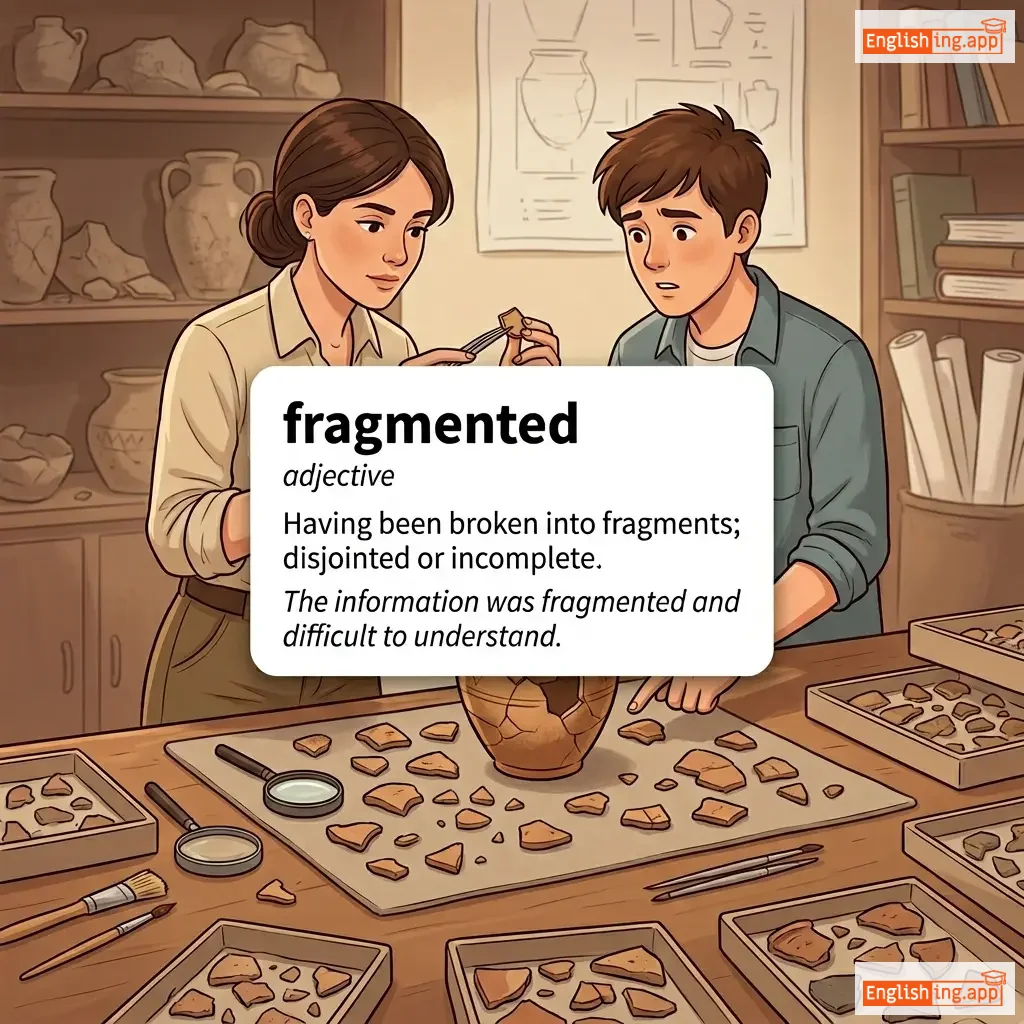
fragmented definition card — visual illustration of the meaning
adjective
/ˈfræɡməntɪd/
断片化, 分割, 不完全 (danpenka, bunkatsu, fukanzen)

Having been broken into fragments; disjointed or incomplete.

"The information was fragmented and difficult to understand."

"情報は断片化されていて、理解するのが難しかった。" (Jouhou wa danpenka sarete ite, rikai suru no ga muzukashikatta.)
noun
/ˈfreɪɡrəns/
香り (kaori)

A pleasant, sweet smell.

"The fragrance of fresh flowers filled the room."

"新鮮な花の香りが部屋に広がった。" (Shinsen na hana no kaori ga heya ni hirogatta.)
adjective
/freɪl/
脆弱 (sojaku)

Physically weak and delicate.

"The old man was too frail to walk without help."

"その高齢者は助けなしでは歩けないほど脆弱だった。" (Sono kōrei-sha wa tasuke nashi de wa arukenai hodo sojaku datta.)
noun
/ˈfreɪlti/
脆弱 (seijaku)

The condition of being weak, delicate, or easily broken.

"Old age often comes with physical frailty."
"老化はしばしば身体的な脆弱さと共に訪れます。" (Rōka wa shibashiba shintai-tekina seijaku to tomo ni otozuremasu.)
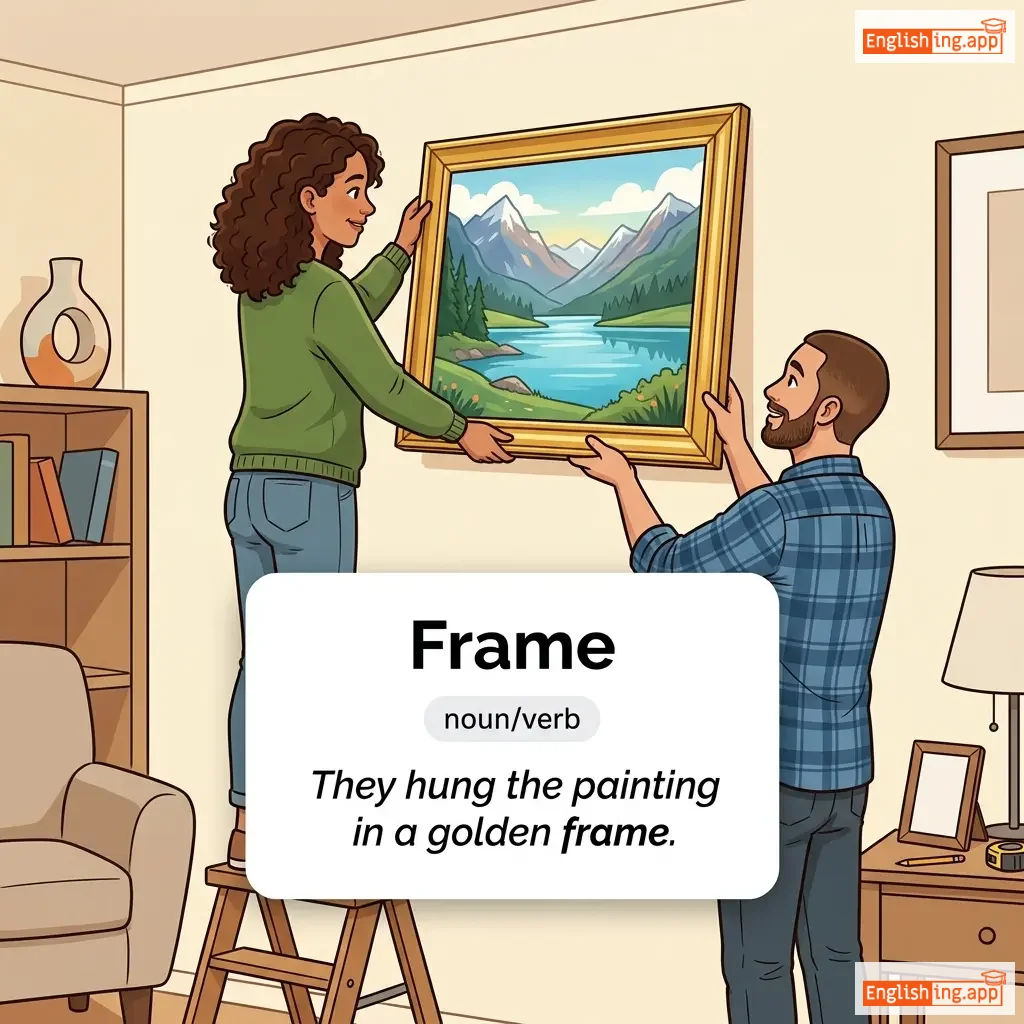
Frame definition card — visual illustration of the meaning
🖼️

Frame

noun/verb
/freɪm/

A rigid structure that surrounds or encloses something; to construct or formulate.

"They hung the painting in a golden frame."

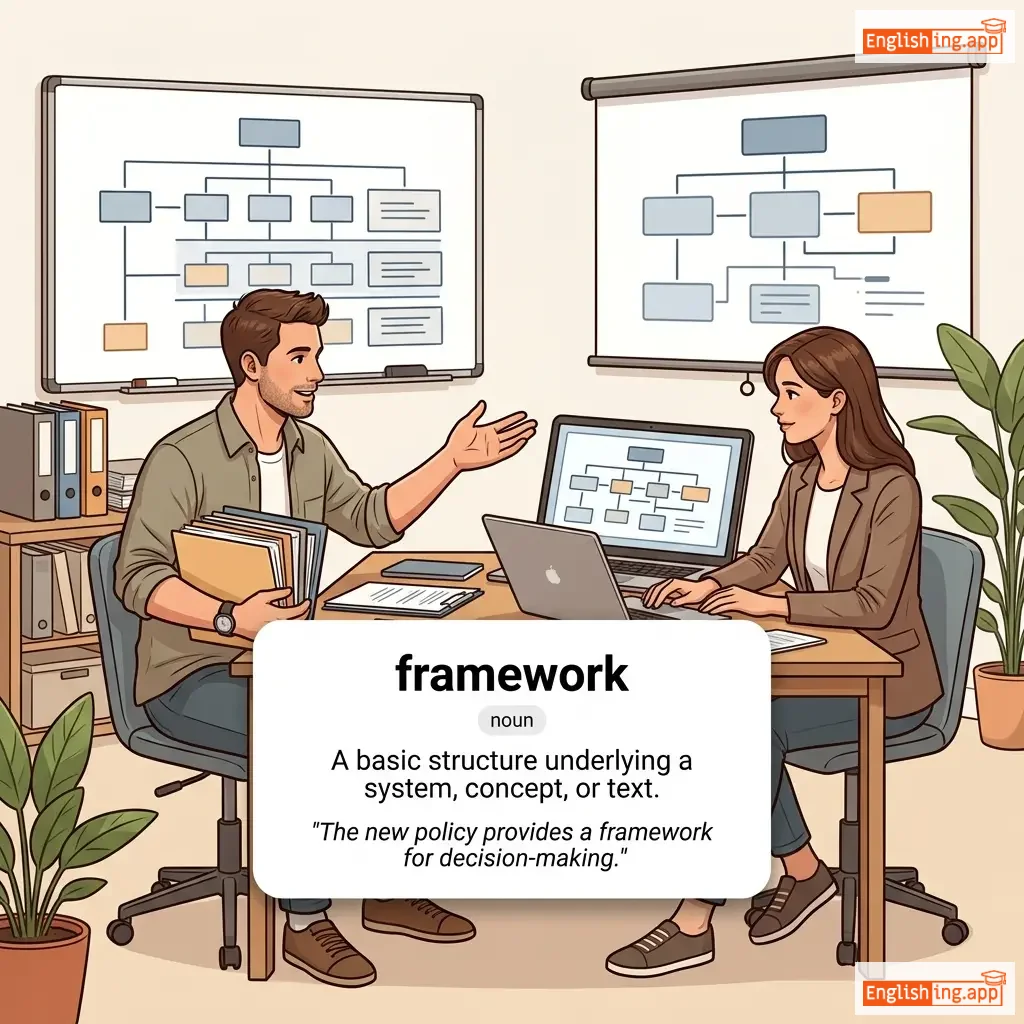
framework definition card — visual illustration of the meaning
noun
/ˈfreɪmˌwɜːrk/
枠組み (wakugumi)

A basic structure underlying a system, concept, or text.

"The new policy provides a framework for decision-making."
"新しいポリシーは意思決定のための枠組みを提供します。" (Atarashī porishī wa ishikettei no tame no wakugumi o teikyō shimasu.)
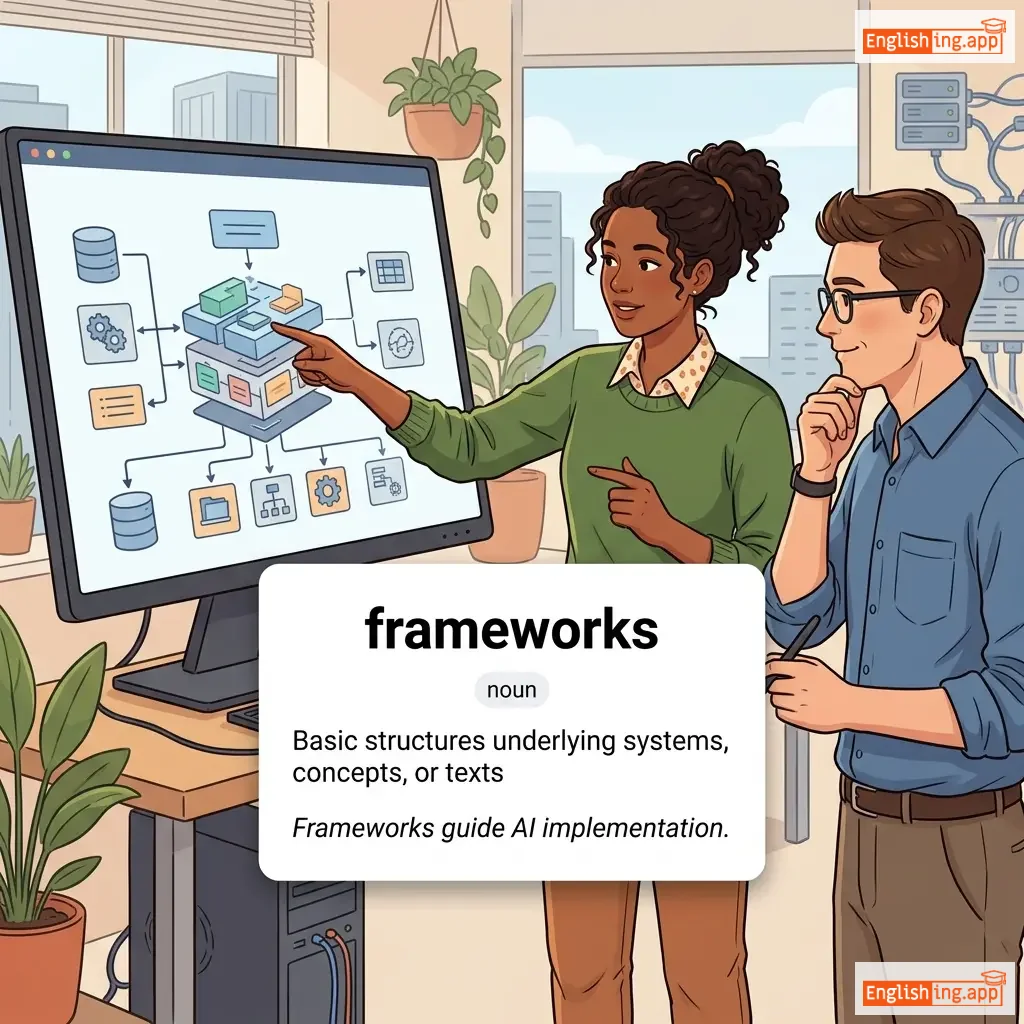
frameworks definition card — visual illustration of the meaning
noun
ˈfreɪm.wɜːks
フレームワーク (fureimuwāku)

Basic structures underlying systems, concepts, or texts

"Frameworks guide AI implementation."

"フレームワークはAIの実装を指導します。" (Fureimuwāku wa AI no jissō o shidō shimasu.)
noun, verb
/ˈfrænʧaɪz/
フランチャイズ (furanchaizu)

A legal right to sell or distribute goods or services in a specific area; to grant such a right.

"He opened a new fast-food franchise in the city."

"彼は都市で新しいファーストフードのフランチャイズを開設しました。" (Kare wa toshi de atarashī fāsuto fūdo no furanchaizu o kaisetsu shimashita.)
adjective
/fræŋk/
率直 (sotchoku)

open, honest, and direct in speech or expression

"She was frank about her feelings on the matter."

"彼女はその問題について自分の感情を率直に話した。" (Kanojo wa sono mondai ni tsuite jibun no kanjou wo socchoku ni hanashita.)
noun
/ˈfræŋkɪnsɛns/
お香 (okou)

An aromatic gum resin used in incense and perfumes, often in religious ceremonies.

"The temple was filled with the sweet smell of burning frankincense."

"寺院は燃えるお香の甘い香りで満ちていました。" (Jiin wa moeru okou no amai kaori de michite imashita.)
adverb
/ˈfræŋkli/
率直に (sokushiki ni)

in an honest and direct way

"Frankly, I don’t think this plan will work."

"率直に言って、この計画はうまくいかないと思います。" (Sokushiki ni itte, kono keikaku wa umaku ikanai to omoimasu.)
adjective
/ˈfræntɪk/
必死の (hisshi no)

Extremely anxious, hurried, or out of control due to fear or excitement.

"She made a frantic call to her family after the accident."

"事故後、彼女は家族に必死の電話をかけた。" (Jiko go, kanojo wa kazoku ni hisshi no denwa o kaketa.)
adjective
/frəˈtɜːrnəl/

Relating to brothers or brotherhood; friendly and supportive.

"The two nations maintain a fraternal relationship."

noun
/frɔːd/
詐欺 (sagi)

A wrongful or criminal deception intended to result in financial or personal gain.

"The company collapsed due to massive accounting fraud."

"その会社は大規模な会計詐欺のために倒産しました。" (Sono kaisha wa daikibo na kaikei sagi no tame ni tōsan shimashita.)
noun
/ˈfrɔːdjʊləns/
詐欺 (sagi)

The quality or state of being fraudulent; deceitfulness.

"The audit revealed fraudulence in the financial statements."

"監査は財務諸表における詐欺を明らかにしました。" (Kansa wa zaimu shohyo ni okeru sagi o akiraka ni shimashita.)
adjective
/ˈfrɔːdjʊlənt/
詐欺的な (sagiteki na)

Involving or using deceit, especially criminal deception.

"He was arrested for making fraudulent insurance claims."

"彼は詐欺的な保険金請求を行ったため逮捕されました。" (Kare wa sagiteki na hokenkin seikyū o okonatta tame taiho saremashita.)
adjective
/frɔːt/
満ちた (michita)

Filled with or likely to result in something undesirable.

"The negotiations were fraught with tension and uncertainty."

"交渉は緊張と不確実性で満ちていました。" (Kōshō wa kinchō to fukakujitsusei de michite imashita.)
noun/verb
/freɪ/
争い, すり減る (arasoi, suriheru)

As a noun, a fight or heated dispute; as a verb, to unravel or wear out through friction.

"He tried to stay calm, but his nerves began to fray during the argument."

"彼は冷静を保とうとしたが、議論の中で彼の神経はすり減り始めた。" (Kare wa reisei o tamotō to shita ga, giron no naka de kare no shinkei wa suriheri hajimeta.)
noun
/ˈfrek.əl/
そばかす (sobakasu)

a small brownish spot on the skin, often becoming more pronounced through exposure to the sun

"Her face was covered with cute freckles that appeared every summer."
"彼女の顔は可愛いそばかすで覆われていて、毎年夏になると現れます。" (Kanojo no kao wa kawaii sobakasu de ōwarete ite, mainen natsu ni naru to arawaremasu.)
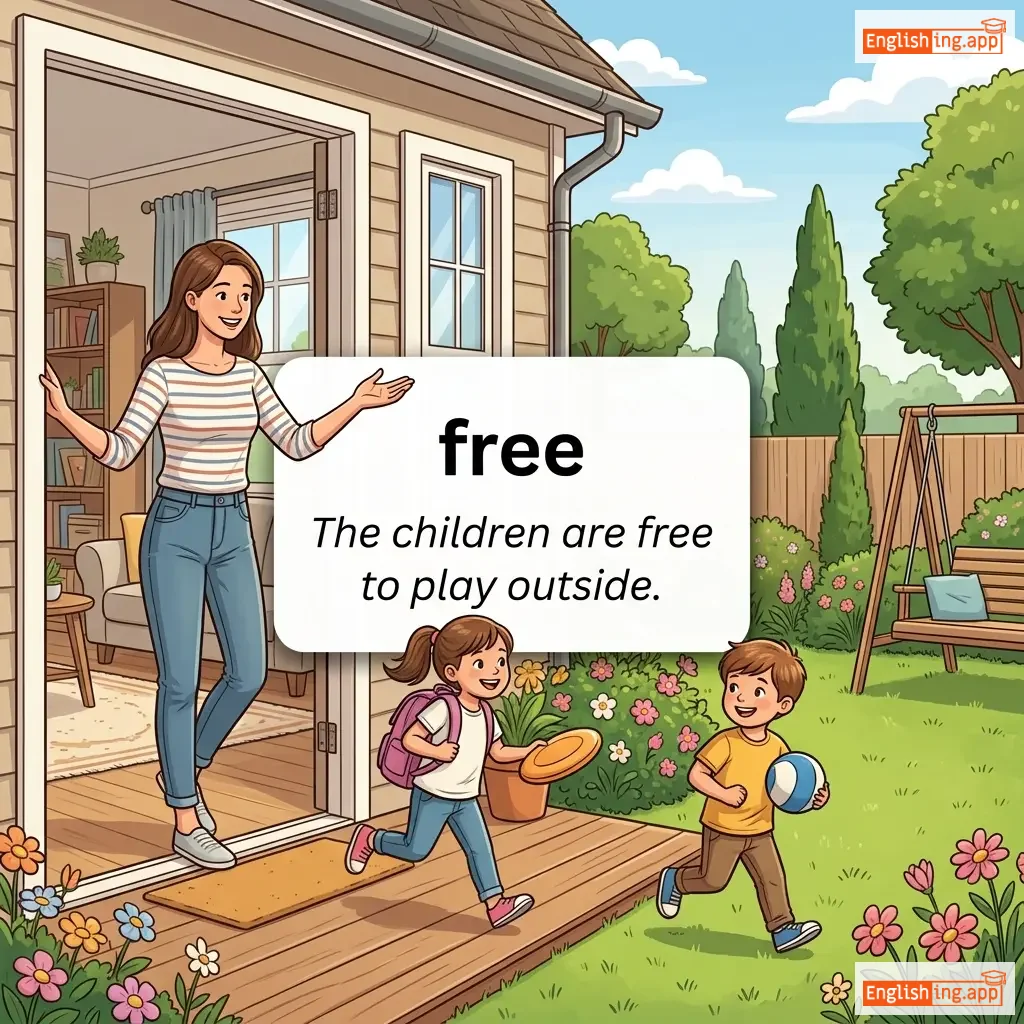
free definition card — visual illustration of the meaning
adjective/verb/adverb
/friː/
自由 (jiyū)

Not under the control or in the power of another; able to act or be done as one wishes.

"The children are free to play outside."

"子供たちは外で自由に遊べます。" (Kodomotachi wa soto de jiyū ni asobemasu.)
noun
/ˈfriː taɪm/
自由時間 (jiyu jikan)

time when a person is not working or occupied and can do activities they enjoy

"She likes to read books in her free time."

"彼女は自由時間に本を読むのが好きです。" (kanojo wa jiyu jikan ni hon o yomu no ga suki desu)
noun
/ˈfriːˌbuːtər/
海賊 (kaizoku)

A pirate or plunderer who roams freely in search of wealth.

"The freebooter raided the merchant ships along the coast."
"海賊は沿岸の商船を襲った。" (Kaizoku wa engan no shōsen o osotta.)
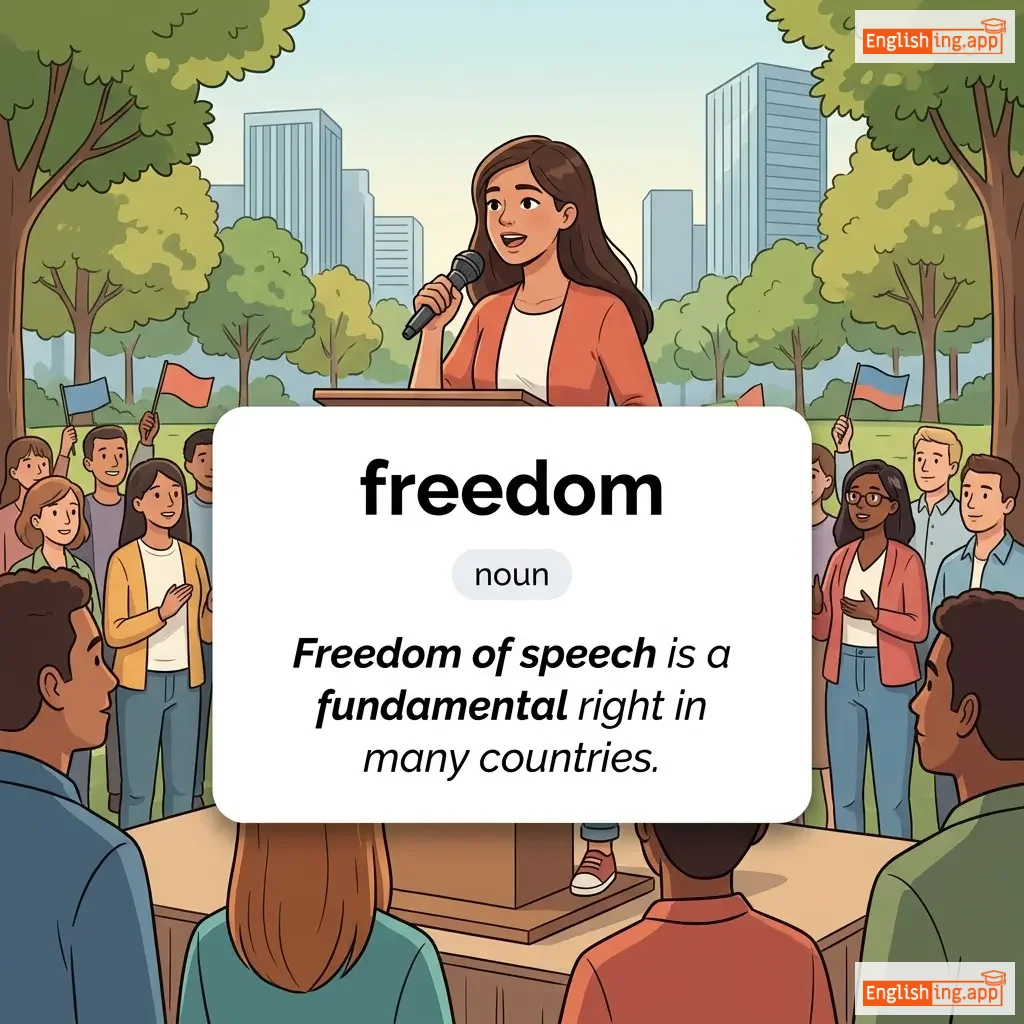
freedom definition card — visual illustration of the meaning
noun
/ˈfriːdəm/
自由 (jiyū)

The state of being free; the power or right to act, speak, or think without hindrance or restraint.

"Freedom of speech is a fundamental right in many countries."

"言論の自由は多くの国で基本的な権利です。" (Genron no jiyū wa ōku no kuni de kihonteki na kenri desu.)
noun
/ˈfriːdəm ˌfaɪtər/
自由の戦士 (jiyuu no senshi)

a person who takes part in an armed or political struggle to achieve freedom or independence for their people or country

"The freedom fighter dedicated his life to the liberation of his homeland."

"その自由の戦士は祖国の解放のために人生を捧げた。" (sono jiyuu no senshi wa sokoku no kaihou no tame ni jinsei o sasageta)
noun
/ˈfriːˌlænsər/
フリーランサー (furiinsā)

A person who works independently without being permanently employed by one organization.

"She works as a freelancer designing websites for different clients."

"彼女はフリーランサーとして、異なるクライアントのためにウェブサイトをデザインしています。" (Kanojo wa furiinsā to shite, kotonaru kuraianto no tame ni u~ebusaito o dezain shiteimasu.)
adverb
/ˈfriːli/
自由に (jiyū ni)

without restriction or control; willingly

"Information should flow freely in a democratic society."

"情報は民主主義社会で自由に流れるべきです。" (Jōhō wa minshushugi shakai de jiyū ni nagareru beki desu.)
noun
/ˈfriːˌmeɪsən/
フリーメイソンのメンバー (furi-meison no menbā)

A member of an international fraternity known as Freemasonry, focused on moral and spiritual values.

"His grandfather was a respected freemason in the community."

"彼の祖父はコミュニティで尊敬されているフリーメイソンでした。" (Kare no sofu wa komyuniti de sonkei sareteiru furīmeison deshita.)
noun
/ˈfriːˌθɪŋkər/
自由思想家 (jiyū shisōka)

A person who forms opinions based on reason and independent thought rather than tradition or authority.

"Voltaire was considered a great freethinker of his time."

"ヴォルテールは彼の時代の偉大な自由思想家と見なされていました。" (Vorutēru wa kare no jidai no idaina jiyū shisōka to minasarete imashita.)
verb
/friːz/
凍る (kooru)

To turn into ice or cause to become hard due to extreme cold.

"The water in the lake will freeze during winter."

"湖の水は冬に凍ります。" (Mizu wa fuyu ni koorimasu.)
adjective
/frɛntʃ/
フランスの (furansu no)

Relating to France, its people, or their language.

"We enjoyed delicious French cuisine on our trip to Paris."

"私たちはパリ旅行で美味しいフランス料理を楽しみました。" (Watashitachi wa Pari ryokō de oishī Furansu ryōri o tanoshimimashita.)
adjective
/frəˈnɛtɪk/
狂乱の (kyōran no)

Fast and energetic in a wild or uncontrolled way.

"The stock market experienced frenetic trading after the announcement."

"発表後、株式市場は狂乱の取引を経験しました。" (Happyo go, kabushiki shijō wa kyōran no torihiki o keiken shimashita.)
adjective
/ˈfrɛn.zid/
狂乱 (kyōran)

Wildly excited or uncontrolled

"The frenzied crowd cheered as the band took the stage."

"狂乱の群衆は、バンドがステージに上がると歓声を上げました。" (Kyōran no gunshū wa, bando ga sutēji ni agaru to kansei o agemashita.)
noun
/ˈfrɛn.zi/
熱狂 (nekyo)

A state of uncontrolled excitement or wild behavior

"The news of the sale caused a shopping frenzy."

"セールのニュースはショッピング熱狂を引き起こしました。" (Seeru no nyuusu wa shoppingu nekyo o hikiokoshimashita.)
noun
/ˈfriː.kwən.si/
頻度 (hindou)

The rate at which something occurs or is repeated over a period of time

"The frequency of bus services has been increased during rush hours."

"ラッシュアワー中にバスの頻度が増加しました。" (Rasshu awā chū ni basu no hindō ga zōka shimashita.)
adjective, verb
/ˈfriː.kwənt/ (adj.), /friːˈkwent/ (verb)
頻繁 (hinpan)

Adjective: happening often; Verb: to visit a place regularly

"He is a frequent visitor to the library."

"彼は図書館の頻繁な訪問者です。" (Kare wa toshokan no hinpan na hōmon-sha desu.)
adverb
/ˈfriːkwəntli/
頻繁に (hinpan ni)

Happening often or at short intervals.

"He frequently visits his grandparents on weekends."
"彼は週末に頻繁に祖父母を訪ねます。" (Kare wa shūmatsu ni hinpan ni sobo wo tazunemasu.)
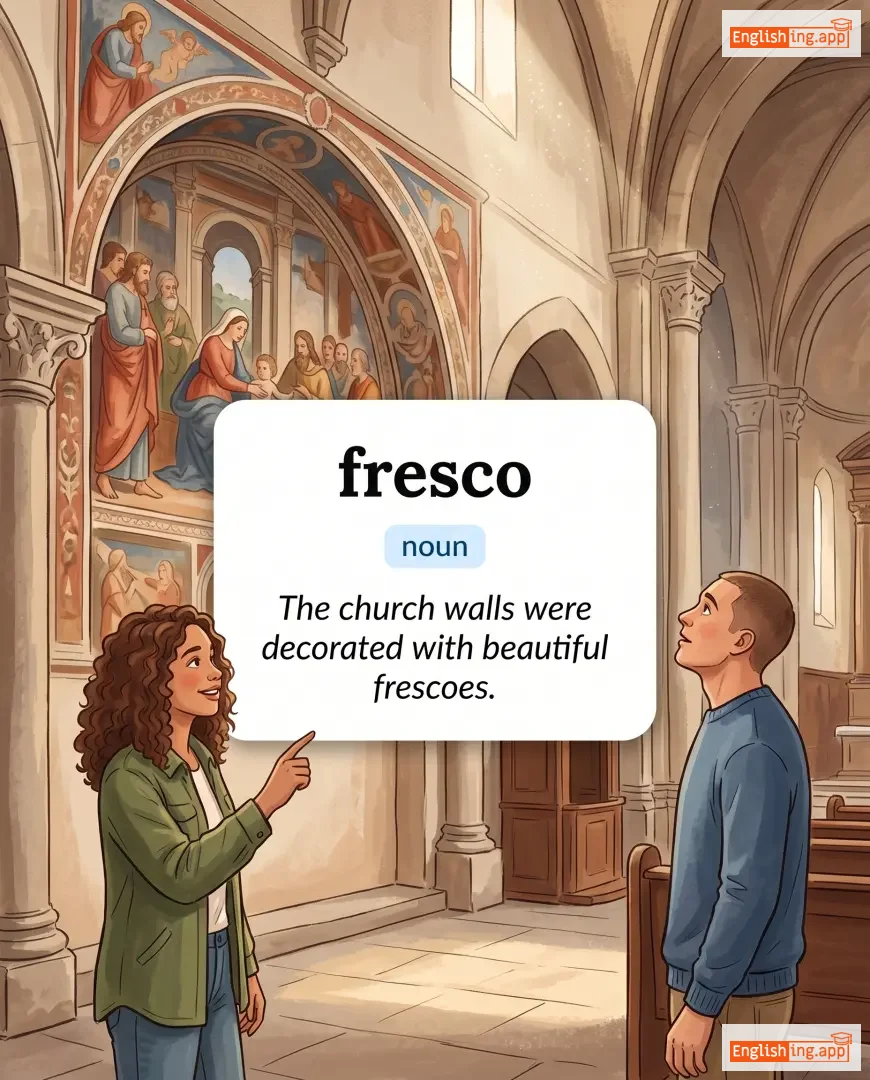
fresco definition card — visual illustration of the meaning
noun
/ˈfrɛs.koʊ/
フレスコ画 (furesukoga)

A painting done rapidly in watercolor on wet plaster so that the colors penetrate the surface

"The church walls were decorated with beautiful frescoes."
"教会の壁は美しいフレスコ画で飾られていました。" (Kyoukai no kabe wa utsukushii furesukoga de kazararete imashita.)
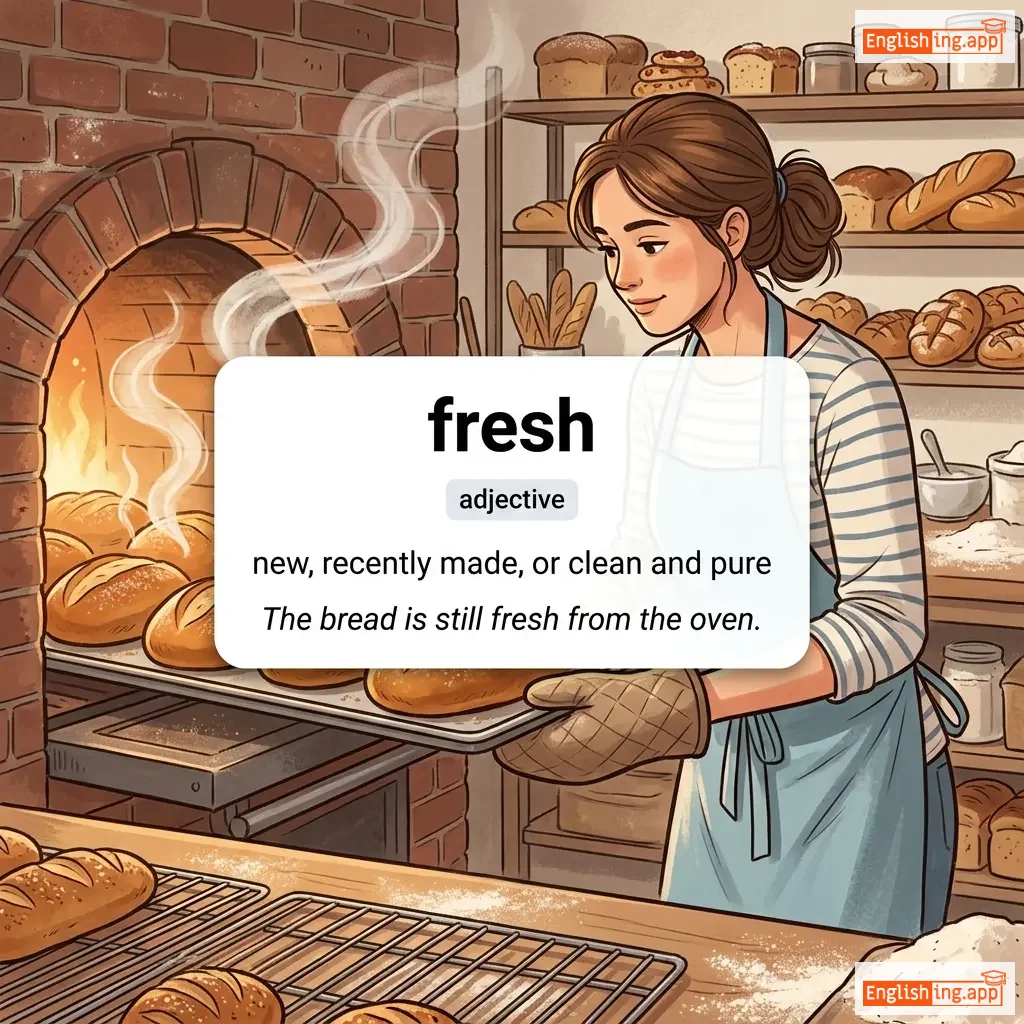
fresh definition card — visual illustration of the meaning
adjective
/frɛʃ/
新鮮 (shinsen)

new, recently made, or clean and pure

"The bread is still fresh from the oven."

"パンはオーブンから出たばかりです。" (Pan wa ōbun kara deta bakari desu.)
noun
/ˈfrɛʃɪt/
突然の川の氾濫 (totsuzen no kawa no hanran)

A sudden overflow of a stream or river caused by heavy rain or melting snow.

"After the storm, the river turned into a raging freshet."

"嵐の後、川は激しいフレシェットに変わった。" (Arashi no ato, kawa wa hageshī fureshetto ni kawatta.)
noun
/ˈfreʃmən/
一年生 (ichinensei)

a first-year student at a high school, college, or university

"The freshman felt nervous on his first day at university."

"一年生は大学での初日に緊張していました。" (Ichinensei wa daigaku de no shonichi ni kinchou shiteimashita.)
noun
/ˈfrɛʃnəs/
新鮮さ (shinsen-sa)

The quality of being new, clean, and full of energy.

"The freshness of the morning air made everyone feel alive."

"朝の新鮮な空気で、みんなが生き生きと感じました。" (Asa no shinsen na kūki de, minna ga ikiki to kanjimashita.)
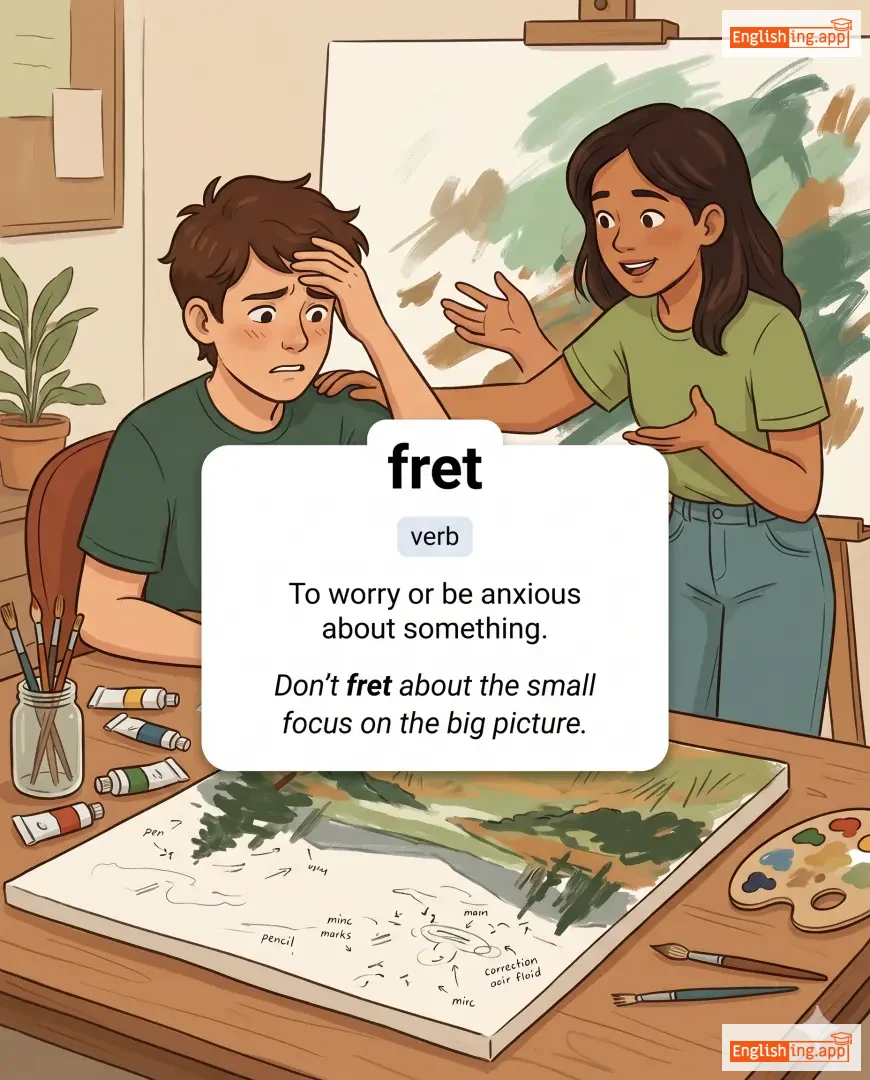
fret definition card — visual illustration of the meaning
😟

fret

verb
/frɛt/

To worry or be anxious about something.

"Don't fret about the small mistakes; focus on the big picture."

adjective
/ˈfrɛtfəl/
不安な (fuan na)

Feeling or showing distress or irritation.

"The baby was fretful all night and could not sleep."

"赤ちゃんは一晩中不安で眠れませんでした。" (Akachan wa hitobanju fuan de nemuremasen deshita.)
adjective
/ˈfraɪəbl/
もろい (moi)

Easily crumbled or reduced to powder.

"The old brick wall was friable and broke apart at a touch."

"古いレンガの壁はもろく、触れると壊れました。" (Furui renga no kabe wa moroku, fureru to kowaremashita.)
noun
/ˈfrɪkʃən/
摩擦 (matsuri)

the resistance that one surface or object encounters when moving over another; conflict or tension between people or groups

"There was friction between the two departments over resource allocation."

"リソース配分に関して、二つの部門間に摩擦がありました。" (Risoosu haibun ni kanshite, futatsu no bumon-kan ni matsuri ga arimashita.)
noun
/ˈfraɪ.deɪ/
金曜日 (kinyoubi)

the day of the week following Thursday and preceding Saturday

"We have a team meeting every Friday afternoon."

"私たちは毎週金曜日の午後にチーム会議があります。" (watashitachi wa maishuu kinyoubi no gogo ni chiimu kaigi ga arimasu)