語彙集

英単語辞書 | 単語の意味、定義、例文

noun
/ɪkˌspɒstjʊˈleɪʃən/
抗議 (kōgi)

the act of expressing protest or disagreement

"His expostulation against the unfair rules was ignored."

"不公平なルールに対する彼の抗議は無視されました。" (Fukōhei na rūru ni taisuru kare no kōgi wa mushi saremashita.)
noun
/ɪkˈspəʊʒər/
曝露 (bakuro)

the state of being exposed to contact with something, especially harmful

"Prolonged exposure to the sun can damage your skin."

"長時間太陽に曝されると、肌にダメージを与えることがあります。" (Choujikan taiyou ni hakusare ru to, hada ni dameeji wo ataeru koto ga arimasu.)
verb
/ɪkˈspaʊnd/
詳しく説明する (kuwashiku setsumei suru)

to present and explain in detail

"The professor expounded the theory in simple terms."

"教授は簡単な言葉で理論を詳しく説明しました。" (Kyouju wa kantan na kotoba de riron o kuwashiku setsumei shimashita.)
verb
/ɪkˈsprɛs/
表現する (hyougensuru)

to convey a thought, feeling, or idea in words, actions, or other forms

"She expressed her gratitude with a warm smile."

"彼女は温かい笑顔で感謝の気持ちを表現しました。" (Kanojo wa atatakai egao de kansha no kimochi wo hyougen shimashita.)
noun
/ɪkˈspres treɪn/
エクスプレス列車 (ekusupuresu ressha)

a fast train that travels between major stations with few or no intermediate stops

"The express train reached the destination in half the usual time."

"エクスプレス・トレインは通常の半分の時間で目的地に到着しました。" (Ekusupuresu torein wa tsuujou no hanbun no jikan de mokutekichi ni touchakushimashita.)
noun
/ɪkˈsprɛʃən/
表現 (hyougen)

the act of putting thoughts or feelings into words, actions, or facial gestures

"His facial expression showed surprise."

"彼の顔の表情は驚きを示していた。" (Kare no kao no hyoujou wa odoroki o shimeshite ita.)
adjective
/ɪkˈsprɛsɪv/
表現力豊かな (hyougenryoku yutakana)

Effectively conveying thought or feeling.

"Her eyes were so expressive that no words were needed."

"彼女の目はとても表現力豊かで、言葉は必要なかった。" (Kanojo no me wa totemo hyougenryoku yutakade, kotoba wa hitsuyou nakatta.)
verb
/ɛksˈproʊprieɪt/
収用する (shūyō suru)

To take property from its owner, especially by authority or for public use.

"The government decided to expropriate the land for a new highway."
"政府は新しい高速道路のために土地を収用することを決定した。" (Seifu wa atarashī kōsokudōro no tame ni tochi o shūyō suru koto o kettei shita.)
expropriation definition card — visual illustration of the meaning
noun
/ɪkˌsprəʊ.priˈeɪ.ʃən/
収用 (shūyō)

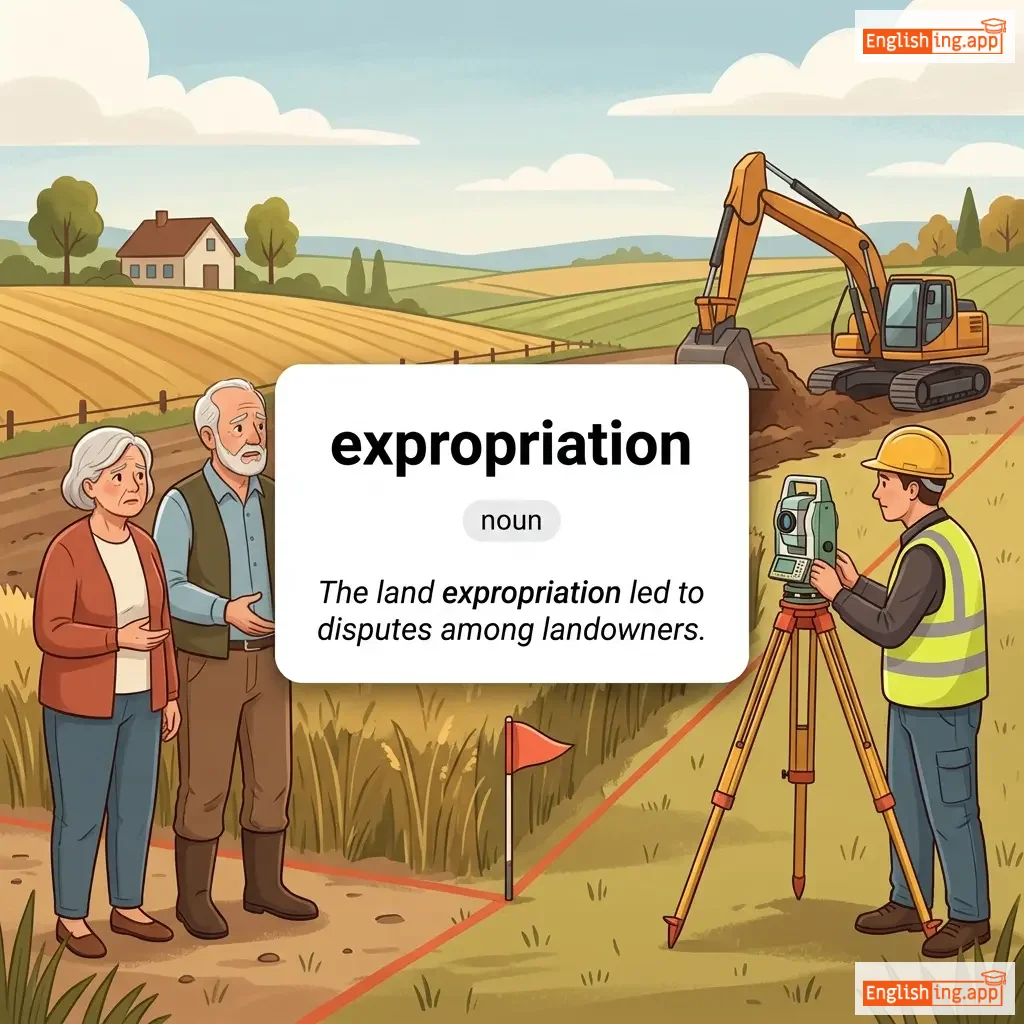
The act of government taking private property, also known as confiscation, nationalization, or seizure.

"The land expropriation led to disputes among landowners."

"土地の収用は土地所有者間で争いを引き起こしました。" (Tochi no shūyō wa tochi shoyūsha kan de arasoi o hikiokoshimashita.)
noun
/ɪkˈspʌlʃən/
退学 (taigaku)

The act of forcing someone to leave a place, especially a school or country.

"His constant misbehavior led to his expulsion from school."

"彼の絶え間ない悪い行動は、学校からの退学につながった。" (Kare no taemai nai warui kōdō wa, gakkō kara no taigaku ni tsunagatta.)
verb
/ɪkˈspʌndʒ/
削除 (sakujo)

To erase or remove completely, often something unwanted.

"He managed to expunge the embarrassing memory from his mind."

"彼は恥ずかしい記憶を心から消し去ることに成功しました。" (Kare wa hazukashī kioku o kokoro kara keshi-saru koto ni seikō shimashita.)
verb
/ˈekspərˌɡeɪt/
削除する (sakujosuru)

To remove offensive or objectionable parts from a text or speech.

"The publisher decided to expurgate the novel before reprinting it."

"出版社は再版前に小説を削除することにした。" (shuppansha wa saihan mae ni shosetsu o sakujosuru koto ni shita)
exquisite definition card — visual illustration of the meaning
adjective
/ɪkˈskwɪzɪt/
精緻な (seichina)

Extremely beautiful, delicate, or finely made.

"The bride wore an exquisite gown made of silk."
"花嫁は絹の精緻なドレスを着ていました。" (Hanayome wa kinu no seichina doresu o kite imashita.)
extant definition card — visual illustration of the meaning
adjective
/ˈɛkstənt/
現存する (genzon suru)

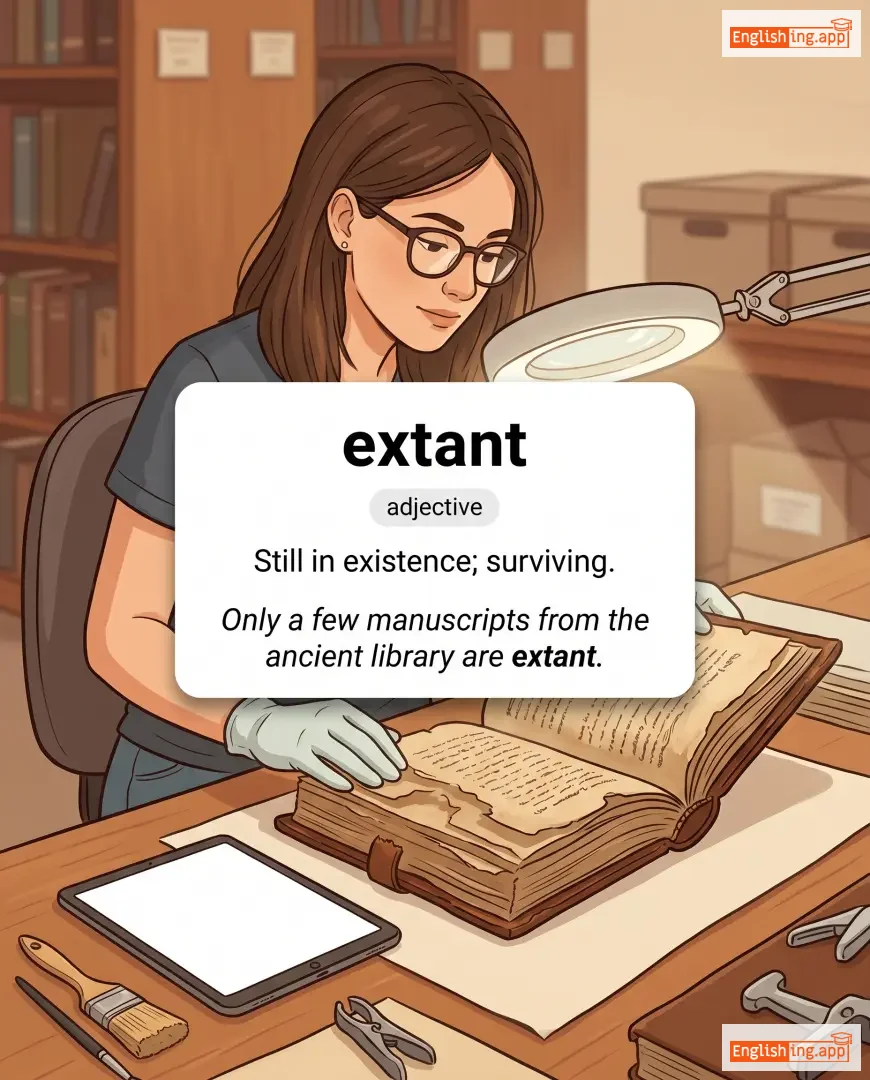
Still in existence; surviving.

"Only a few manuscripts from the ancient library are extant."
"古代の図書館からのわずかな手稿が現存しています。" (Kodai no toshokan kara no wazukana shugō ga genzon shiteimasu.)
extemporaneous definition card — visual illustration of the meaning
adjective
/ɪkˌstɛmpəˈreɪniəs/
準備なしで行う (junbi nashi de okonau)

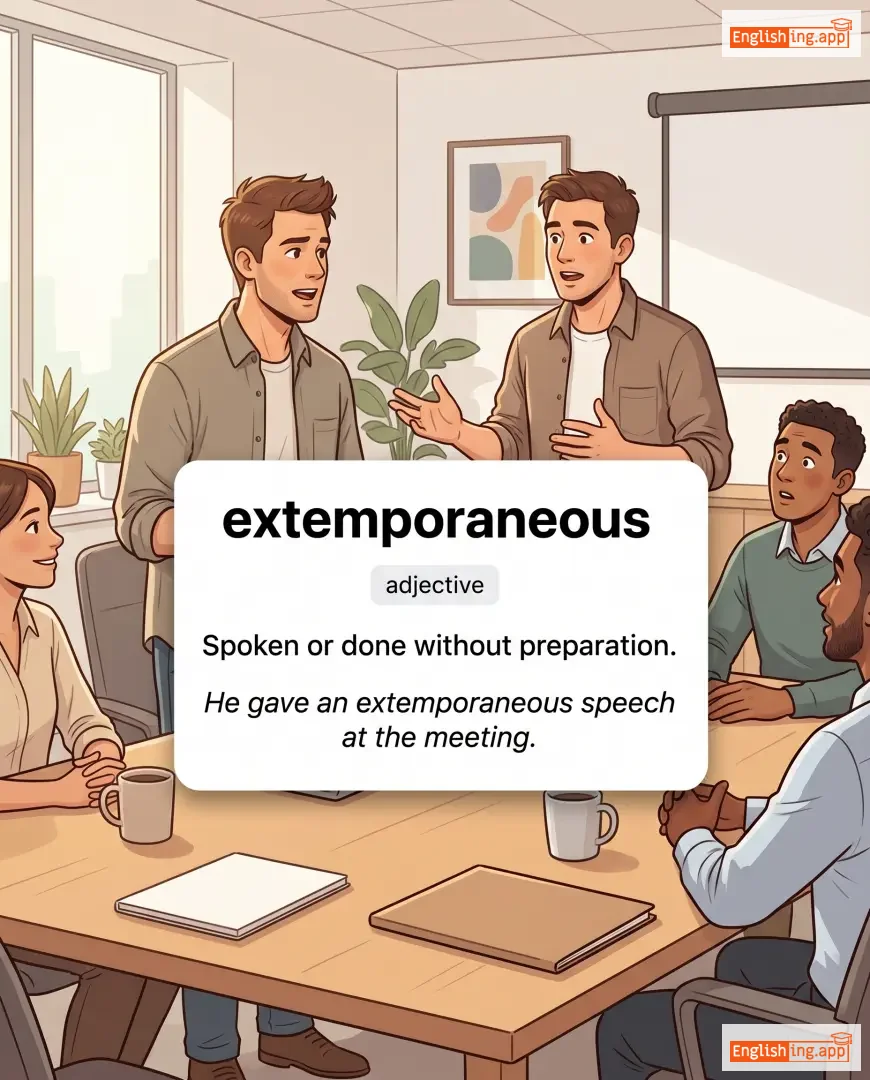
Spoken or done without preparation.

"He gave an extemporaneous speech at the meeting."

"彼は会議で即興のスピーチをしました。" (Kare wa kaigi de sokkyou no supīchi o shimashita.)
adverb
/ɪkˈstɛmpəri/
即興で (jikou de)

Spoken or done without preparation; impromptu.

"She recited the poem extempore in class."

"彼女はクラスで即興で詩を朗読しました。" (Kanojo wa kurasu de jikou de shi wo roudoku shimashita.)
verb
/ɪkˈstɛmpəraɪz/
即興する (sokkyou suru)

To speak or perform without preparation; improvise.

"The actor had to extemporize when he forgot his lines."
"俳優はセリフを忘れたとき、即興で演技をしなければなりませんでした。" (Haiyū wa serifu o wasureta toki, sokkyō de engi o shinakereba narimasen deshita.)
extend definition card — visual illustration of the meaning
verb
/ɪkˈstɛnd/
拡張する (kakuchou suru)

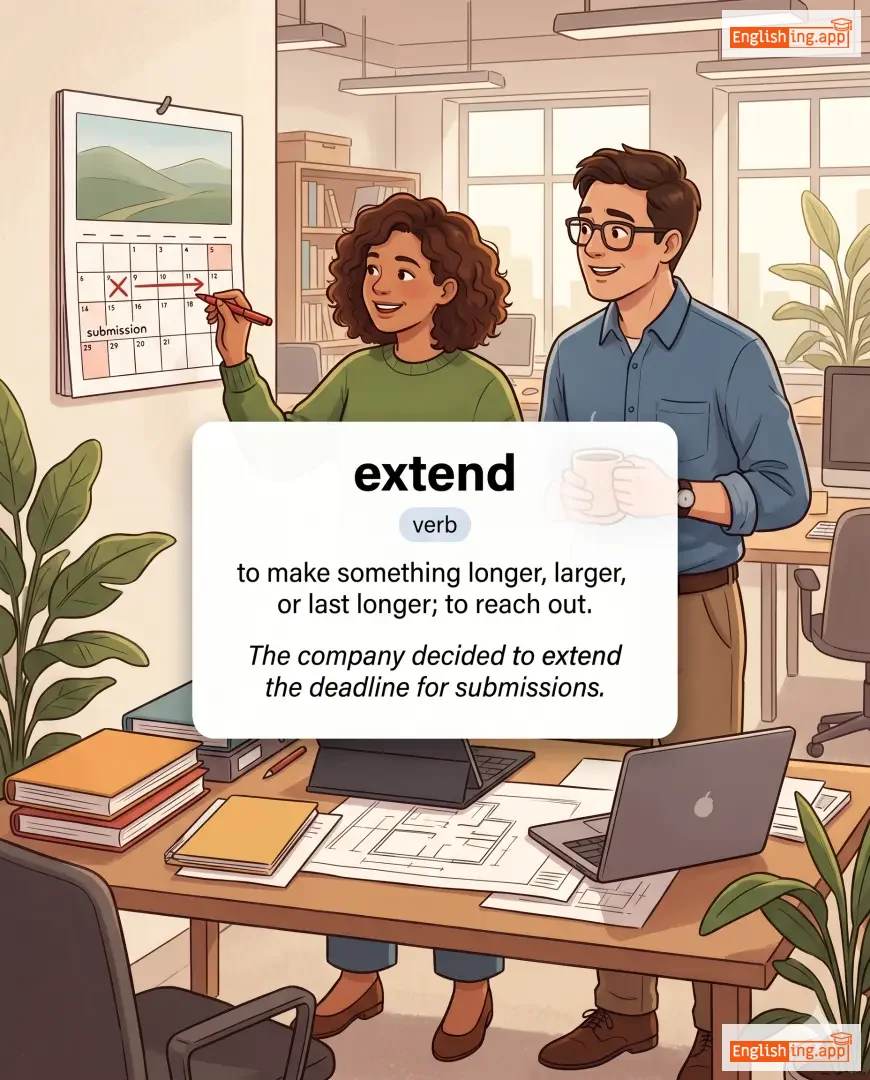
to make something longer, larger, or last longer; to reach out.

"The company decided to extend the deadline for submissions."

"その会社は提出期限を延長することを決定しました。" (Sono kaisha wa teishutsu kigen o enchou suru koto o kettei shimashita.)
adjective
/ɪkˈstendɪd/
拡張された (kakuchou sareta)

longer or larger than usual; continuing for a longer time

"They took an extended vacation in Europe this summer."

"彼らは今夏、ヨーロッパで拡張された休暇を過ごしました。" (Karera wa konnatsu, Yōroppa de kakuchō sareta kyūka o sugoshimashita.)
adjective
/ɪkˈstɛnsəbl/
拡張可能 (kakuchou kanou)

able to be extended; capable of expansion.

"The software is designed to be extensible with new features."

"そのソフトウェアは新しい機能で拡張可能なように設計されています。" (Sono sofutowea wa atarashī kinō de kakuchō kanō na yō ni sekkei sareteimasu.)
noun
/ɪkˈstɛnʃən/
拡張 (kakuchou)

a part that is added to something to make it longer or bigger; an increase in time.

"She asked for an extension on her assignment deadline."

"彼女は課題の締め切り延長をお願いしました。" (Kanojo wa kadai no shimekiri enchou wo onegaishimashita.)
adjective
/ɪkˈstɛnsɪv/
広範囲な (kōhan'i na)

covering a large area or involving a lot; wide in range.

"The museum has an extensive collection of ancient artifacts."

"博物館には古代のアーティファクトの広範なコレクションがあります。" (Hakubutsukan ni wa kodai no ātofakuto no kōhan na korekushon ga arimasu.)
adverb
/ɪkˈstɛnsɪvli/
広範囲に (kouhani ni)

in a thorough or wide-ranging manner

"She traveled extensively across Europe for her research."

"彼女は研究のためにヨーロッパを広範囲に旅行しました。" (Kanojo wa kenkyuu no tame ni Yooroppa wo kouhani ni ryokou shimashita.)
noun
/ɪkˈstɛnsər/
伸展筋 (shinten kin)

a muscle that serves to extend or straighten a limb or part of the body.

"The extensor muscles in the arm help straighten the elbow."

"腕の伸展筋は肘をまっすぐにするのを助けます。" (Ude no shinten kin wa hiji o massugu ni suru no o tasukemasu.)
noun
/ɪkˈstɛnt/
範囲 (han'i)

the area, degree, or scope of something

"The extent of the damage was greater than expected."

"損害の範囲は予想以上でした。" (Songai no han'i wa yosō ijō deshita.)
verb
/ɪkˈstɛnjueɪt/
軽減する (keigen suru)

to make an offense, fault, or situation seem less serious by providing an excuse or explanation

"The lawyer tried to extenuate his client's actions by highlighting his difficult childhood."

"弁護士は、クライアントの難しい幼少期を強調して彼の行動を軽減しようとしました。" (Bengoshi wa, kuraianto no muzukashii youshouki o kyouchou shite kare no koudou o keigen shiyou to shimashita.)
adjective
/ɪkˈstɛnjueɪtɪŋ/
軽減する (keigen suru)

serving to make a fault or an offense seem less serious

"She asked for leniency due to extenuating circumstances."

"彼女は軽減する状況のために寛容を求めました。" (Kanojo wa keigen suru jōkyō no tame ni kanyō o motomemashita.)
noun/adjective
/ɪkˈstɪəriər/
外装部分 (gaizō bubun)

the outer surface or part of something; relating to the outside

"The exterior of the house was painted white."

"家の外装部分は白く塗られていました。" (Ie no gaizō bubun wa shiroku nurarete imashita.)
adjective
/ɪkˈstɜrnəl/
外部の (gaibu no)

situated on or relating to the outside of something; coming from outside

"The external factors affected the company's growth."
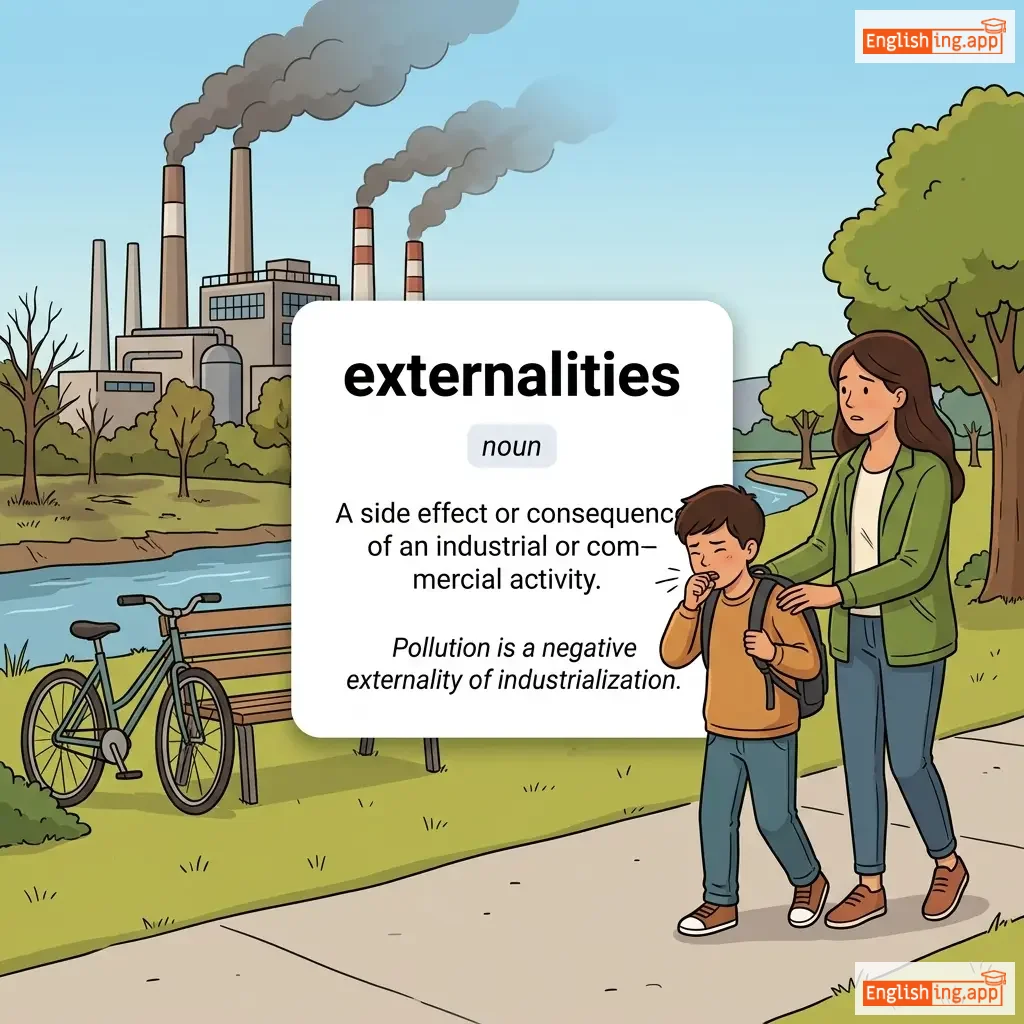
"外部要因が会社の成長に影響を与えました。" (Gaibu yōin ga kaisha no seichō ni eikyō o ataemashita.)
externalities definition card — visual illustration of the meaning
noun
ˌɛkstərˈnælɪtiz
外部性 (gaibusei)

A side effect or consequence of an industrial or commercial activity.

"Pollution is a negative externality of industrialization."

"汚染は産業化の負の外部性です。" (Osen wa sangyōka no fu no gaibusei desu.)
adverb
/ɪkˈstɜrnəli/
外見上 (gaikenjo)

in a way that relates to the outer surface or outside appearance

"The building appeared externally modern, but inside it was quite old-fashioned."
"建物は外見上は現代的に見えたが、中はかなり古風だった。" (Tatemono wa gaikenjo wa gendai-teki ni mieta ga, naka wa kanari kofu datta.)
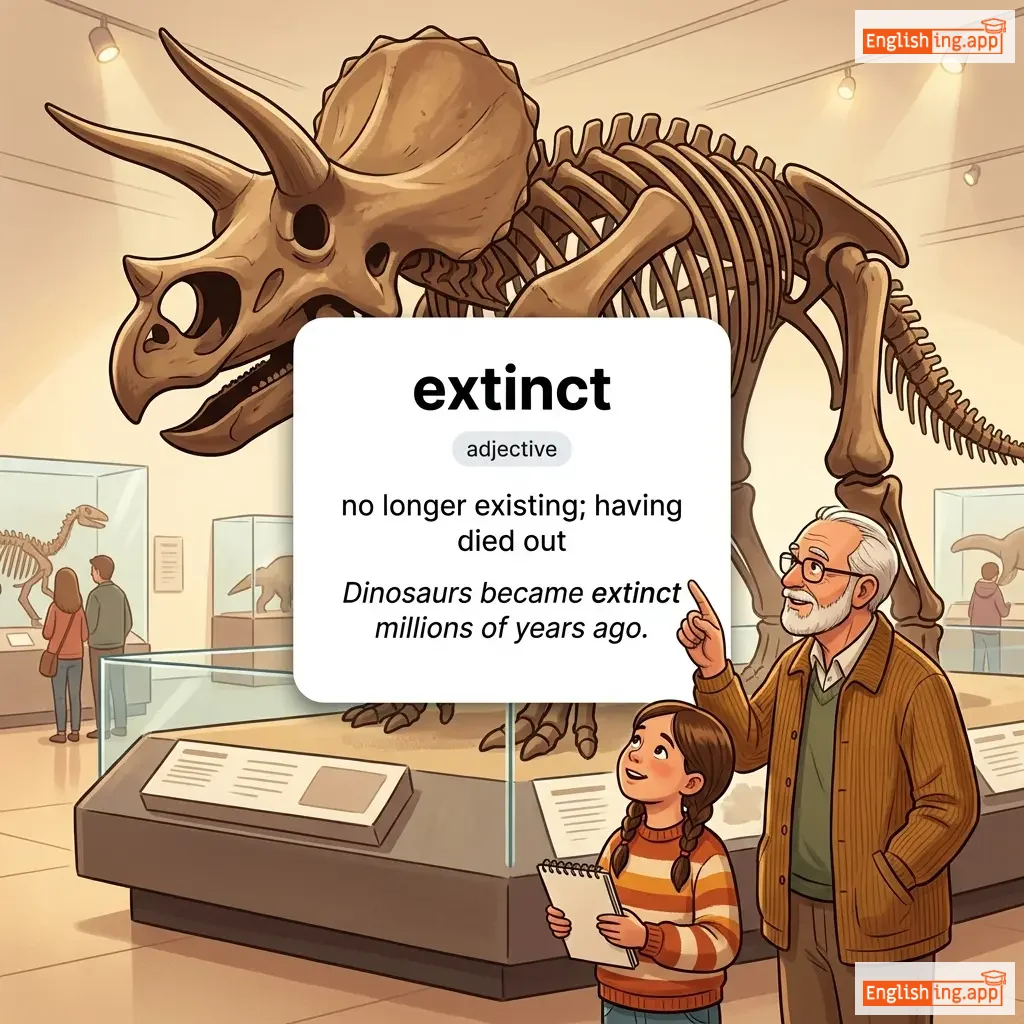
extinct definition card — visual illustration of the meaning
adjective
/ɪkˈstɪŋkt/
絶滅した (zetsumetsu shita)

no longer existing; having died out

"Dinosaurs became extinct millions of years ago."

"恐竜は数百万年前に絶滅しました。" (Kyoryu wa suu hyakuman nen mae ni zetsumetsu shimashita.)
verb
/ɪkˈstɪŋ.ɡwɪʃ/
消す (kesu)

to put out a fire, light, or to end something

"The firefighters managed to extinguish the blaze within an hour."
"消防士たちは1時間以内に火を消し止めました。" (Shouboushi-tachi wa 1-jikan inai ni hi o keshitomemashita.)
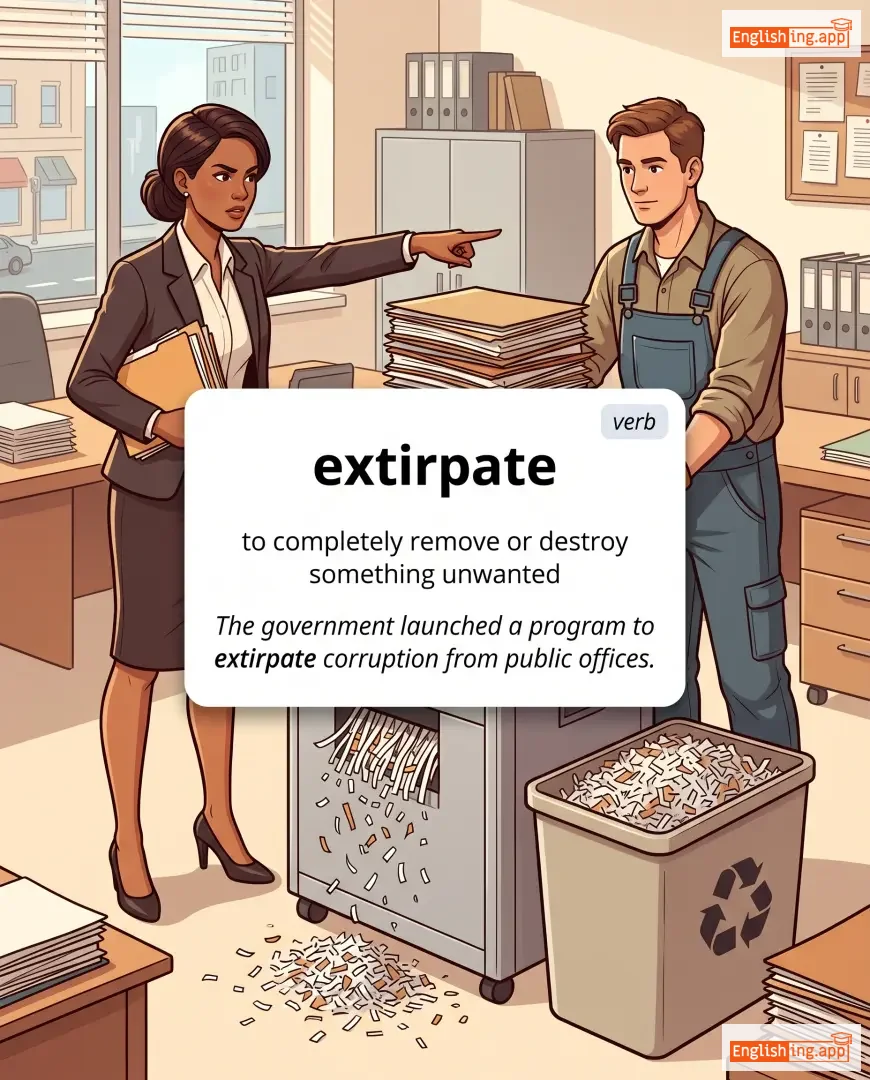
extirpate definition card — visual illustration of the meaning
verb
/ˈek.stər.peɪt/
根絶する (konzetsu suru)

to completely remove or destroy something unwanted

"The government launched a program to extirpate corruption from public offices."

"政府は公務員の腐敗を根絶するためにプログラムを開始した。" (Seifu wa kōmuin no fuhai o konzetsu suru tame ni puroguramu o kaishi shita.)
verb
/ɪkˈstoʊl/
称賛する (shōsan suru)

to praise enthusiastically and highly

"The teacher extolled the student's dedication and hard work."

"先生は生徒の献身と努力を称賛しました。" (Sensei wa seito no kenshin to doryoku o shōsan shimashita.)
verb
/ɪkˈstɔːrt/
強奪する (kyōdatsu suru)

to obtain something, especially money, by force, threats, or unfair means

"The gang attempted to extort money from local shopkeepers."

"ギャングは地元の店主からお金を強奪しようとした。" (Gyangu wa jimoto no ten-shu kara okane o kyōdatsu shiyō to shita.)
noun
/ɪkˈstɔːr.ʃən/
恐喝 (kyōkatsu)

the practice of obtaining something, especially money, through force or threats

"The businessman was arrested for extortion after threatening his partner."

"そのビジネスマンは、パートナーを脅迫した後、恐喝で逮捕されました。" (Sono bijinesuman wa, pātonā o kyōkaku shita ato, kyōkatsu de taiho saremashita.)
adjective
/ˈɛkstrə/
追加の (tsuika no)

More than what is usual, expected, or necessary

"She brought some extra food for the picnic."

"彼女はピクニックのために追加の食べ物を持ってきました。" (Kanojo wa pikunikku no tame ni tsuika no tabemono o motte kimashita.)
verb
/ɪkˈstrækt/
抽出する (chūshutsu suru)

to remove or take out something, often with effort

"The dentist had to extract the damaged tooth."

"歯医者は損傷した歯を抜かなければならなかった。" (Haisha wa sonshō shita ha o nukenakereba naranakatta.)
noun
/ɪkˈstrækʃən/
抽出 (chūshutsu)

the act of removing something, especially by pulling it out

"The extraction of oil from the ground requires special equipment."

"地面からの石油の抽出には特別な機器が必要です。" (Jimen kara no sekiyu no chūshutsu ni wa tokubetsu na kiki ga hitsuyō desu.)
verb
/ˈɛkstrəˌdaɪt/
引き渡す (hikiwatasu)

to hand over a person accused or convicted of a crime to another country or state

"The government agreed to extradite the fugitive to his home country."

"政府はその逃亡者を自国に引き渡すことに同意した。" (Seifu wa sono tōbōsha o jikoku ni hikiwatasu koto ni dōi shita.)
noun
/ˌɛkstrəˈdɪʃən/
引渡し (hikiwatashi)

the official process of sending someone accused of a crime to another country or state

"The extradition of the suspect was delayed due to legal issues."

"容疑者の引渡しは法的問題のため遅れました。" (Yōgisha no hikiwatashi wa hōteki mondai no tame okuremashita.)
adjective
/ˌɛkstrəˌdʒuːˈdɪʃəl/
司法外 (shihōgai)

done outside the authority of the legal system or judicial process

"The activists condemned the extrajudicial killings."
"活動家たちは司法外での殺人を非難しました。" (Katsudōkatachi wa shihōgai de no satsujin o hinan shimashita.)
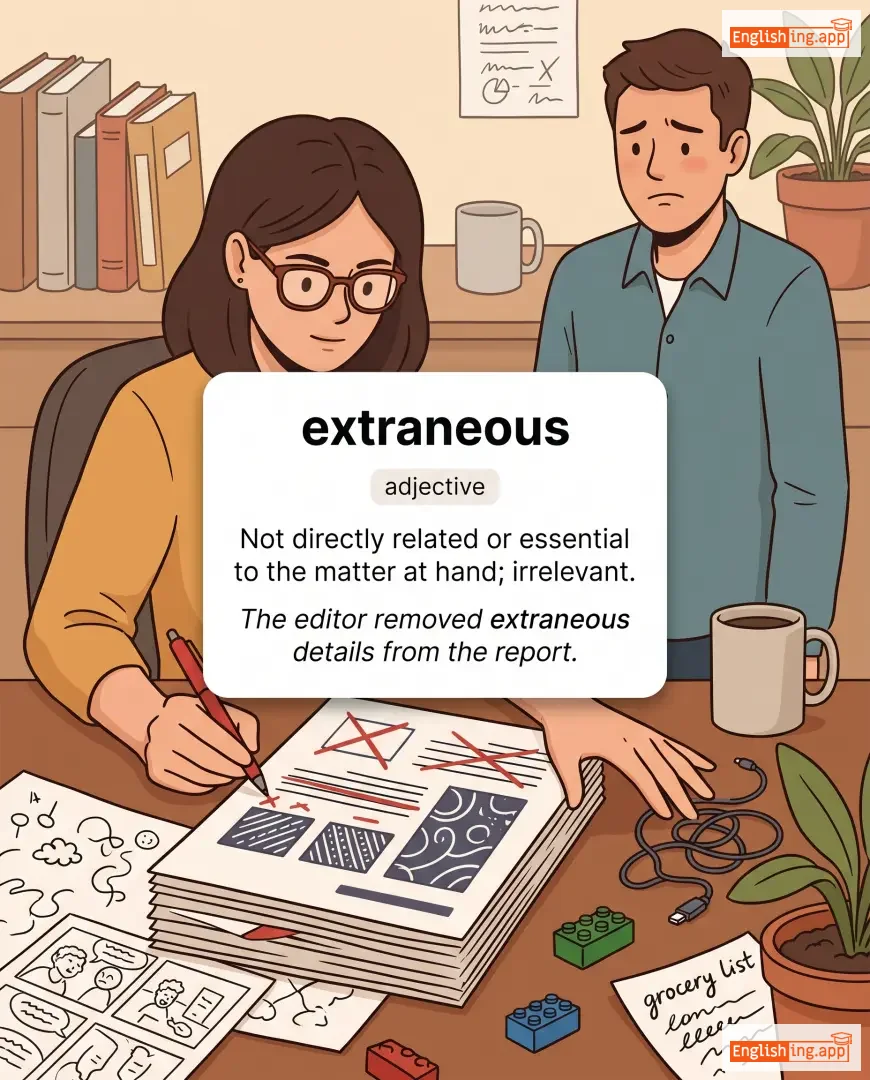
extraneous definition card — visual illustration of the meaning
adjective
/ɪkˈstreɪ.ni.əs/
無関係 (mukankei)

Not directly related or essential to the matter at hand; irrelevant.

"The editor removed extraneous details from the report."

"編集者は報告書から無関係な詳細を削除しました。" (Henshū-sha wa hōkokusho kara mukankei na shōsai o sakujo shimashita.)
adjective
/ɪkˈstrɔːr.dəˌnɛr.i/
非凡 (hihan)

Very unusual, remarkable, or exceptional.

"She showed extraordinary courage during the crisis."
"彼女は危機の間に非凡な勇気を示しました。" (Kanojo wa kiki no aida ni hihan na yūki o shimeshimashita.)
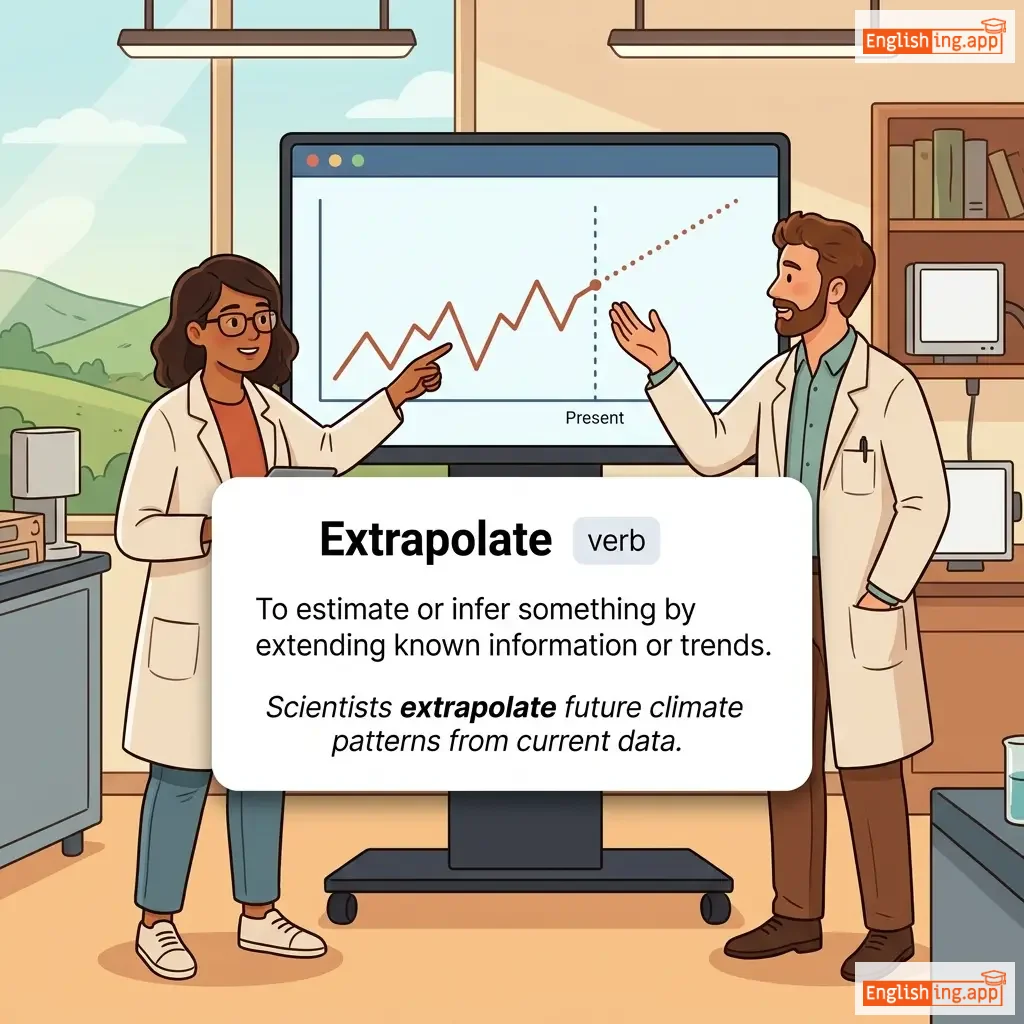
Extrapolate definition card — visual illustration of the meaning
verb
/ɪkˈstræp.əˌleɪt/
外挿する (gaisō suru)

To estimate or infer something by extending known information or trends.

"Scientists extrapolate future climate patterns from current data."
"科学者たちは現在のデータから将来の気候パターンを外挿します。" (Kagakusha-tachi wa genzai no dēta kara shōrai no kikō patān o gaisō shimasu.)
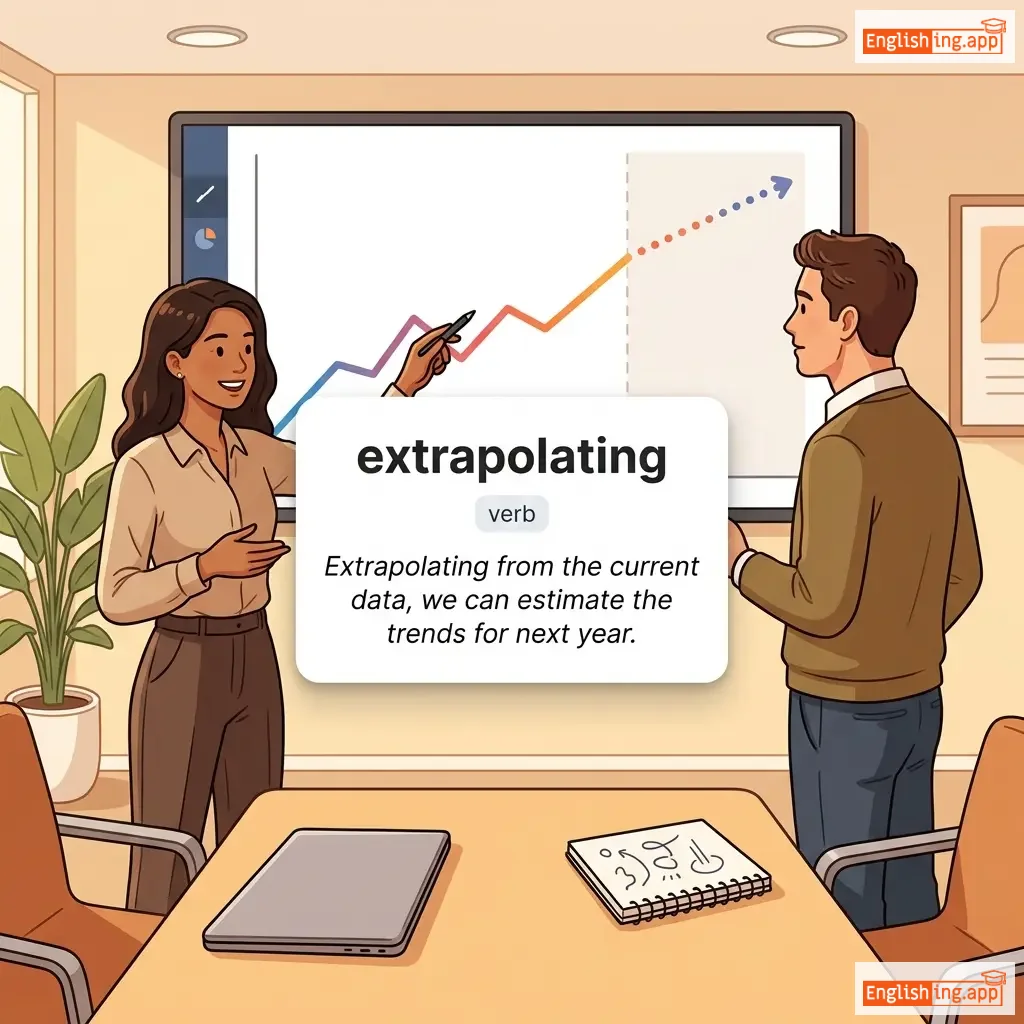
extrapolating definition card — visual illustration of the meaning
verb
/ɪkˈstræpəleɪtɪŋ/
外挿 (gaisō)

Extend the application of (a method or conclusion) to an unknown situation by assuming that existing trends will continue.

"Extrapolating from the current data, we can estimate the trends for next year."
"現在のデータから外挿して、来年の傾向を予測できます。" (Genzai no dēta kara gaisō shite, rainen no keikō o yosoku dekimasu.)
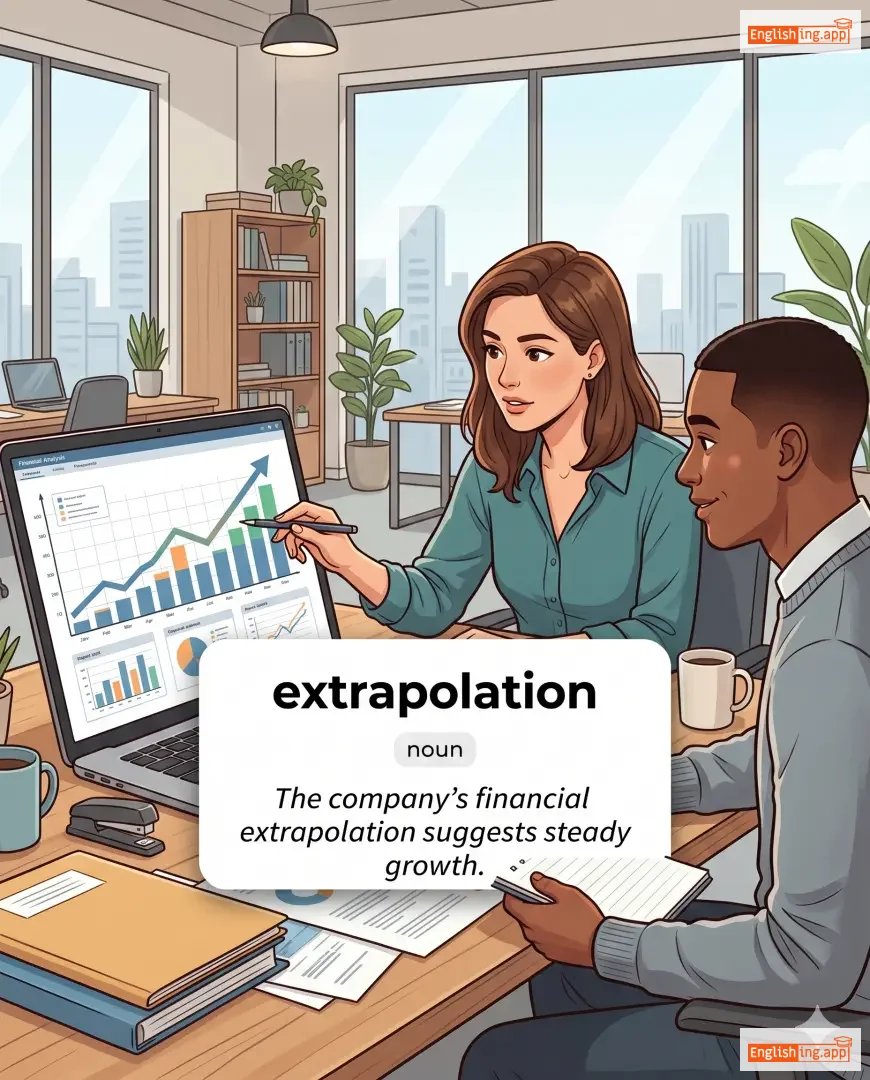
extrapolation definition card — visual illustration of the meaning
noun
/ɪkˌstræp.əˈleɪ.ʃən/
外挿 (gaizō)

The process of estimating or predicting something based on extending known information.

"The company's financial extrapolation suggests steady growth."

"その会社の財務的外挿は、安定した成長を示唆しています。" (sono kaisha no zaimutekī gaizō wa, antei shita seichō o shisa shiteimasu.)
noun
/ɪkˈstræv.ə.ɡəns/
贅沢 (zeitaku)

Excessive spending or lack of restraint in using resources.

"His extravagance on luxury cars worried his family."

"高級車に対する彼の贅沢な支出は家族を心配させた。" (Kōkyūsha ni taisuru kare no zeitaku na shishutsu wa kazoku o shinpai saseta.)
adjective
/ɪkˈstrævəɡənt/
贅沢な (zeitakuna)

Spending or using more than is necessary; excessively elaborate or luxurious.

"She wore an extravagant dress to the party."

"彼女はパーティーに贅沢なドレスを着ていた。" (Kanojo wa pātī ni zeitakuna doresu o kite ita.)