語彙集

英単語辞書 | 単語の意味、定義、例文

noun
/ˈiːv.nɪŋ/
夕方 (yūgata)

the part of the day between afternoon and night

"We went for a walk in the cool evening."

"私たちは涼しい夕方に散歩に行きました。" (Watashitachi wa suzushī yūgata ni sanpo ni ikimashita.)
noun
/ɪˈvent/
出来事 (dekigoto)

something that happens, especially something important

"The concert was the biggest event of the year."
"コンサートは今年最大の出来事でした。" (Konsāto wa kotoshi saidai no dekigoto deshita.)
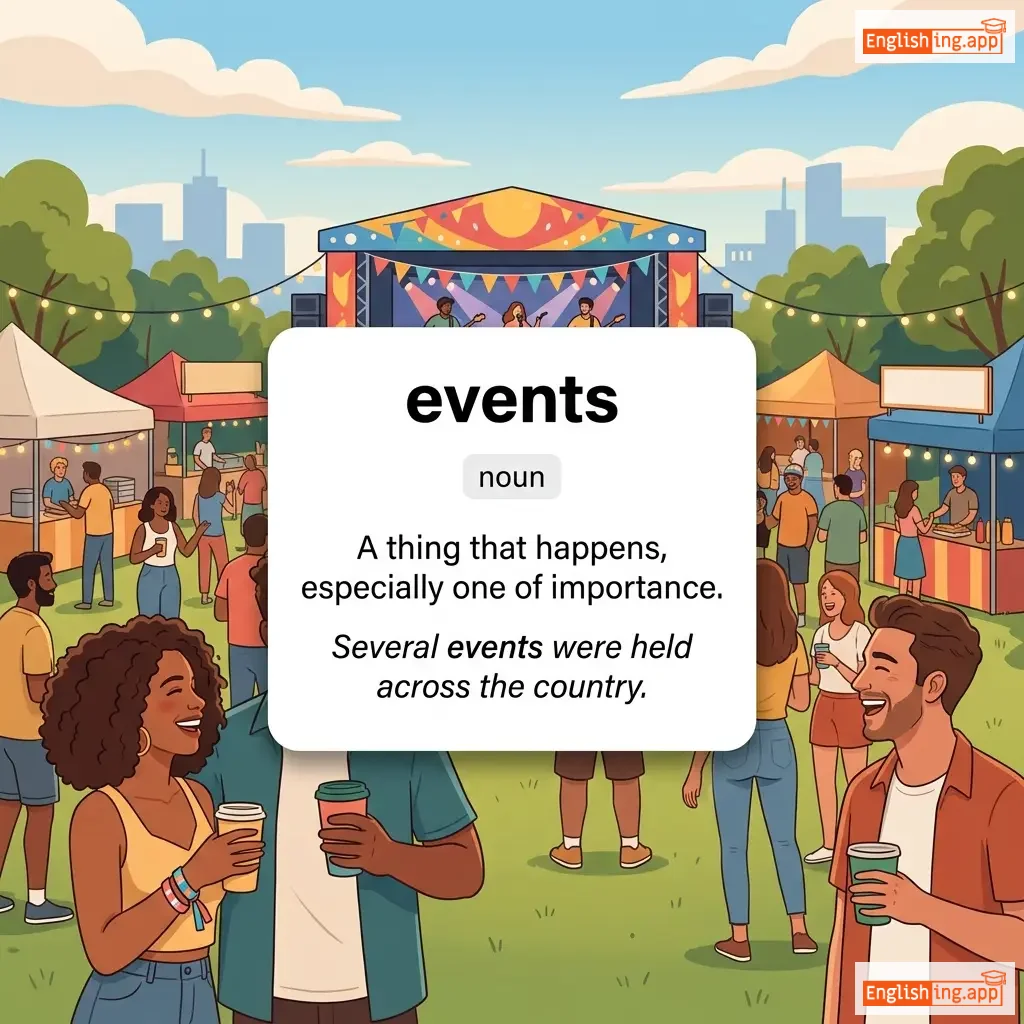
events definition card — visual illustration of the meaning
noun
ɪˈvɛnts
イベント (ibento)

A thing that happens, especially one of importance.

"Several events were held across the country."

"国内でいくつかのイベントが開催されました。" (Kokunai de ikutsuka no ibento ga kaisai saremashita.)
adjective
/ɪˈvɛntʃuəl/
最終的 (saishū-teki)

Happening at the end of a process or as the final result.

"His hard work led to his eventual success."

"彼の努力は最終的な成功に繋がった。" (Kare no doryoku wa saishū-teki na seikō ni tsunagatta.)
adverb
/ɪˈven.tʃu.ə.li/
結局 (kekkyoku)

in the end, especially after a long delay or series of problems

"He eventually finished his degree after many challenges."

"彼は多くの挑戦の後、結局学位を取得しました。" (Kare wa ōku no chōsen no ato, kekkyoku gakui o shutsuryoku shimashita.)
adverb
/ˈev.ər/
今まで (ima made)

at any time; always; continuously

"Have you ever been to London?"

"ロンドンに行ったことがありますか?" (Rondon ni itta koto ga arimasu ka?)
adjective
/ˈevər ˈlæstɪŋ/
永遠の; 永続的な; (eien no; eizokuteki na)

eternal; permanent; enduring forever

"Their love is ever-lasting and will never fade."
"彼らの愛は永遠で、決して色あせることはありません。" (karera no ai wa eien de, kesshite iroaseru koto wa arimasen.)
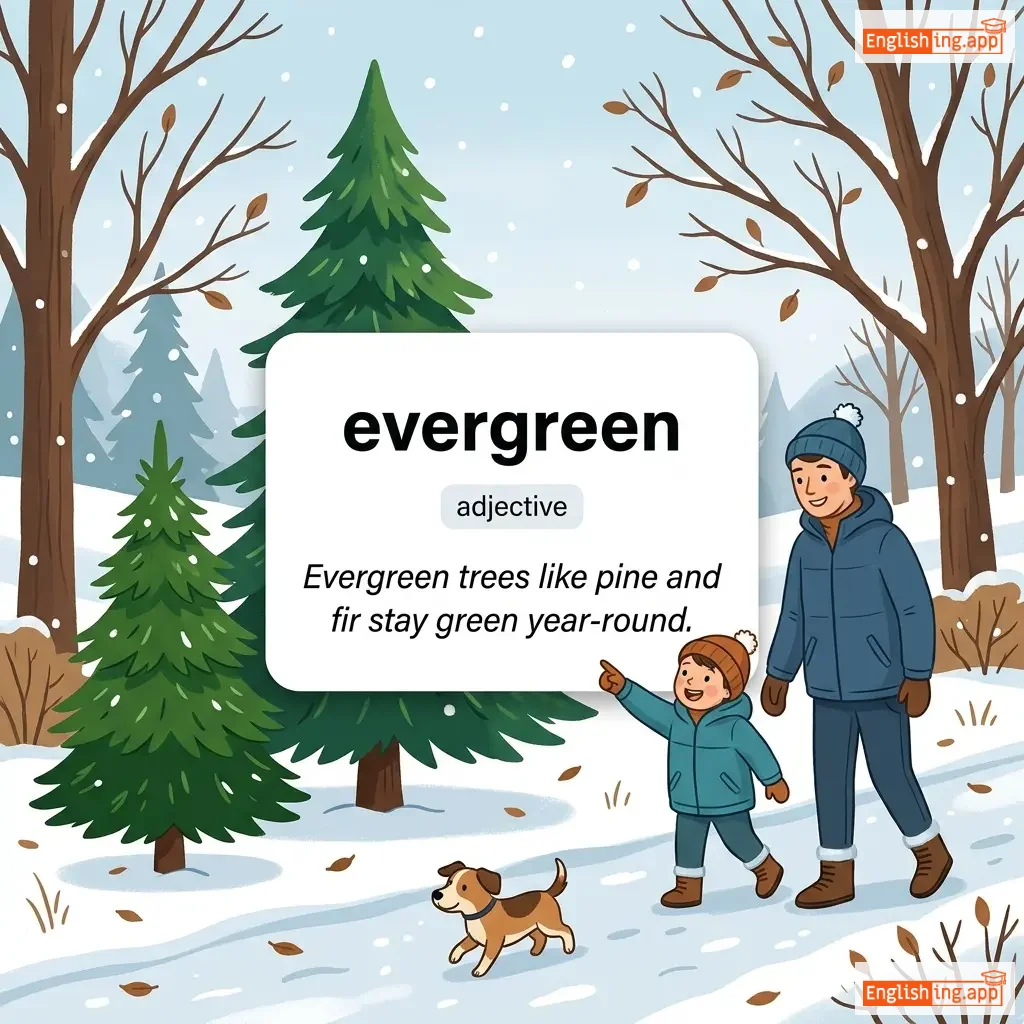
evergreen definition card — visual illustration of the meaning
adjective
/ˈɛv.ə.ɡriːn/
常緑 (jōryoku)

Remaining green and functional throughout the year; not shedding leaves seasonally.

"Evergreen trees like pine and fir stay green year-round."

"松やモミの木のような常緑樹は一年中緑を保ちます。" (Matsu ya momi no ki no yō na jōryokujū wa ichinenjū midori wo tamochimasu.)
adjective
/ˌɛvərˈlæstɪŋ/
永遠の (eien no)

Lasting forever or for an indefinitely long time.

"The poet wrote about his everlasting love for nature."

"詩人は自然に対する永遠の愛について書きました。" (Shijin wa shizen ni taisuru eien no ai ni tsuite kakimashita.)
verb
/ɪˈvɜːrt/
外向きにひっくり返す (soto-muki ni hikkurikaesu)

To turn inside out or outward.

"The surgeon had to evert the eyelid during the procedure."

"外科医は手術中にまぶたをひっくり返さなければなりませんでした。" (Geka-i wa shujutsu-chū ni mabuta o hikkurikasanakereba narimasen deshita.)
determiner
/ˈɛvri/
すべて (subete)

used to refer to all members of a group without exception

"She reads every book she can find."

"彼女は見つけたすべての本を読んでいます。" (Kanojo wa mitsuketa subete no hon o yondeimasu.)
pronoun
/ˈɛvribɒdi/
(minna)

all people; everyone

"Everybody enjoyed the party."

"皆がパーティーを楽しんでいました。" (Minna ga pātii o tanoshinde imashita.)
adjective
/ˈɛvrideɪ/
日常 (nichijou)

common or ordinary; occurring daily

"These shoes are perfect for everyday use."

"これらの靴は日常使いに最適です。" (Korera no kutsu wa nichijou tsukai ni saiteki desu.)
pronoun
/ˈɛvrɪwʌn/
みんな (minna)

every person; all people

"Everyone must bring their own lunch."

"みんな自分のランチを持ってこなければならない。" (Minna jibun no ranchi o mottekonakereba naranai.)
pronoun
/ˈɛvrɪθɪŋ/
すべて (subete)

all things; the whole lot

"He packed everything in his suitcase."

"彼はすべてをスーツケースに詰め込んだ。" (Kare wa subete o sūtsukēsu ni tsumekonda.)
adverb
/ˈɛv.ri.wɛər/
どこでも (dokodemo)

in or to all places

"Tourists can be seen everywhere in the city during summer."

"夏の間、観光客は都市のどこでも見かけることができます。" (Natsu no aida, kankōkyaku wa toshi no dokodemo mikakeru koto ga dekimasu.)
verb
/ɪˈvɪkt/
立ち退かせる (tachinokaseru)

To expel someone from a property, usually by legal process.

"The landlord decided to evict the tenants for not paying rent."

"家主は家賃未払いでテナントを立ち退かせることに決めました。" (Iyanushi wa yachin mibaraide tenant wo tachinokaseru koto ni kimemashita.)
noun
/ˈɛv.ɪ.dəns/
証拠 (shōko)

facts or information that show whether something is true or not

"The lawyer presented new evidence in court."

"弁護士は法廷で新しい証拠を提出しました。" (Bengoshi wa hotei de atarashī shōko o teishutsu shimashita.)
evident definition card — visual illustration of the meaning
adjective
/ˈɛvɪdənt/
明白 (meihaku)

clearly seen or understood; obvious

"It was evident that she was upset."

"それは彼女が動揺していることが明らかでした。" (Sore wa kanojo ga dōyō shite iru koto ga akiraka deshita.)
adjective
/ˌɛvɪˈdɛnʃəl/
証拠の (shōko no)

relating to or providing evidence

"The lawyer presented evidential support for her claims."

"弁護士は彼女の主張に対する証拠のサポートを提供しました。" (Bengoshi wa kanojo no shuchō ni taisuru shōko no sapōto o teikyō shimashita.)
adjective
/ˈiːvəl/
邪悪 (jaaku)

Profoundly immoral and wicked.

"They believed the villain was the embodiment of evil."
"彼らは悪役が邪悪の具現であると信じていた。" (Karera wa akuyaku ga jaaku no gugen de aru to shinjite ita.)
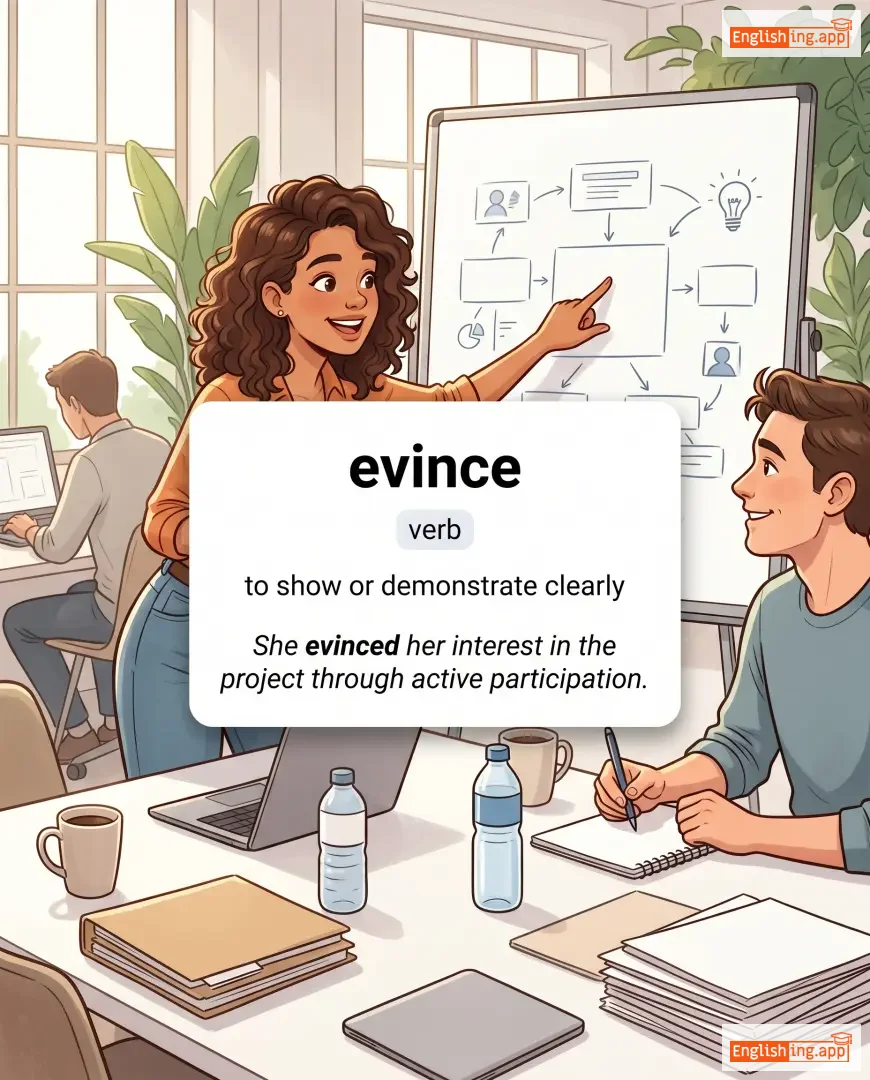
evince definition card — visual illustration of the meaning
verb
/ɪˈvɪns/
示す (shimesu)

to show or demonstrate clearly

"She evinced her interest in the project through active participation."

"彼女は積極的な参加を通じてそのプロジェクトに対する関心を示した。" (Kanojo wa sekkyokuteki na sanka wo toshite sono purojekuto ni taisuru kanshin wo shimeshita.)
verb
/ɪˈvɪsəˌreɪt/
臓器を取り除く、破壊する (zōki o torinozoku, hakai suru)

to remove the internal organs of; to deprive of essential content

"The critics eviscerated the movie for its weak storyline."
"批評家たちはその映画の弱いストーリーラインに対して破壊しました。" (Hihyōka-tachi wa sono eiga no yowai sutōrīrain ni taishite hakai shimashita.)
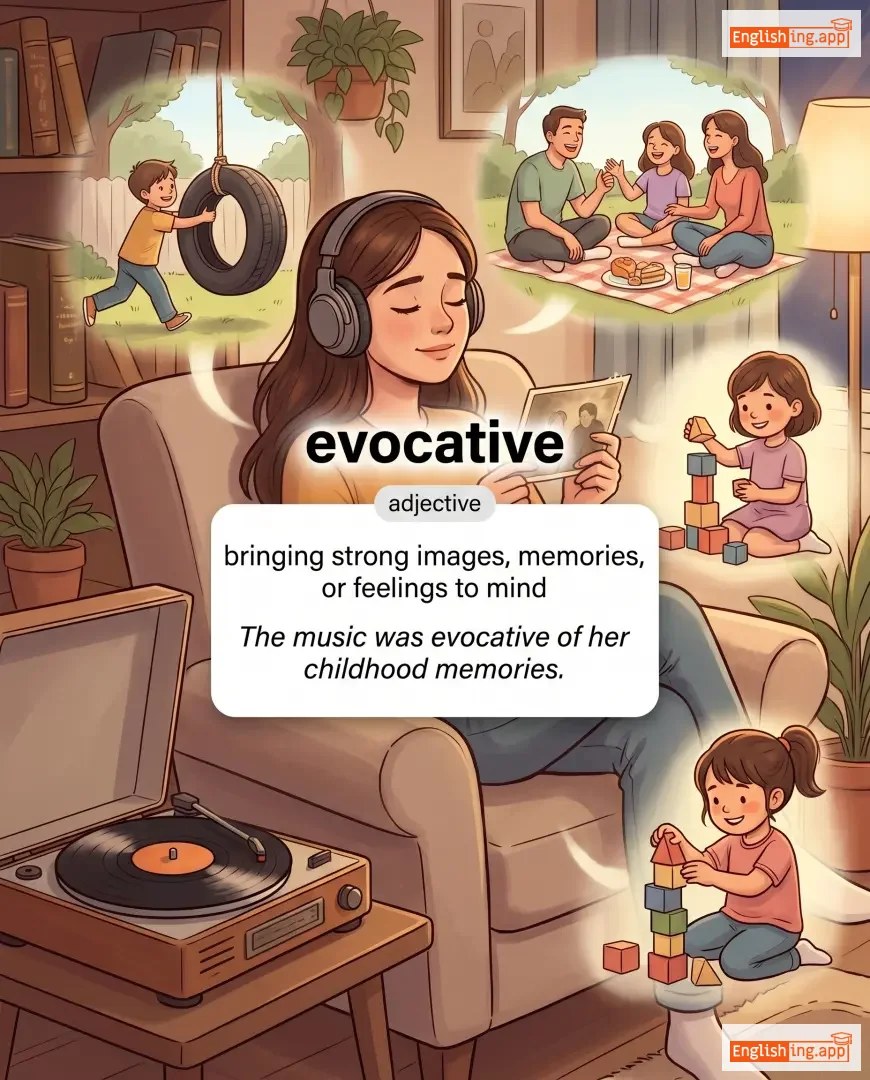
evocative definition card — visual illustration of the meaning
adjective
/ɪˈvɒkətɪv/
呼び起こす (yobikokosu)

bringing strong images, memories, or feelings to mind

"The music was evocative of her childhood memories."

"その音楽は彼女の子供時代の記憶を呼び起こしました。" (Sono ongaku wa kanojo no kodomojidai no kioku o yobikokoshimashita.)
verb
/ɪˈvoʊk/
呼び起こす (yobikokosu)

to bring a feeling, memory, or image into the mind

"The old song evoked memories of her childhood."

"その古い歌は彼女の子供時代の思い出を呼び起こしました。" (Sono furui uta wa kanojo no kodomojidai no omoide o yobikokoshimashita.)
noun
/ˌɛvəˈluːʃən/
進化 (shinka)

the gradual development of something, especially from a simple to a more complex form

"The theory of evolution explains how species change over time."

"進化論は、種が時間とともにどのように変化するかを説明しています。" (Shinkaron wa, shu ga jikan to tomo ni dono you ni henka suru ka wo setsumei shiteimasu.)
evolutionary definition card — visual illustration of the meaning
adjective
/ˌɛvəlʊˈʃɛnəri/

relating to or characterized by evolution, especially in terms of gradual development or change

"The company has adopted an evolutionary approach to its product development."
verb
/ɪˈvɑːlv/

to develop gradually, especially into a more complex or advanced state

"Over time, the company evolved into a global brand."

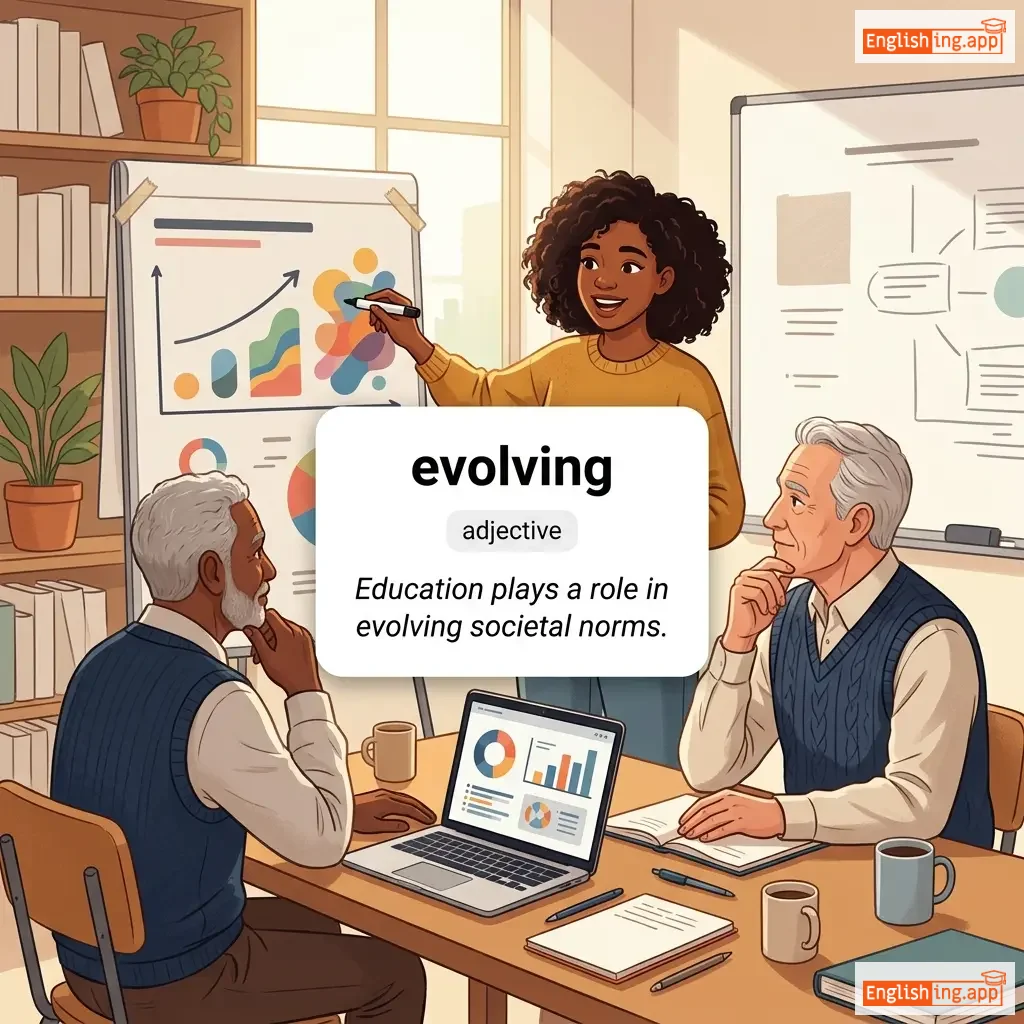
evolving definition card — visual illustration of the meaning
adjective
ɪˈvɒlvɪŋ
進化する (shinka suru)

Developing gradually, especially from a simple to a more complex form; changing and developing.

"Education plays a role in evolving societal norms."

"教育は社会的規範の進化において役割を果たします。" (Kyouiku wa shakaiteki kihann no shinka ni oite yakuwari wo hatashimasu.)
noun
/juː/
雌羊 (mesu hitsuji)

a female sheep

"The ewe gave birth to two lambs in the spring."

"その雌羊は春に二匹の子羊を産みました。" (Sono mesu hitsuji wa haru ni nihiki no kohitsuji o umimashita.)
noun
/ˈjuːər/
水差し (misashi)

a large jug with a wide mouth, especially used in the past for carrying water

"The servant filled the ewer with fresh water."
"使用人は水差しに新鮮な水を注ぎました。" (Shiyōnin wa misashi ni shinsen na mizu o sosogimashita.)
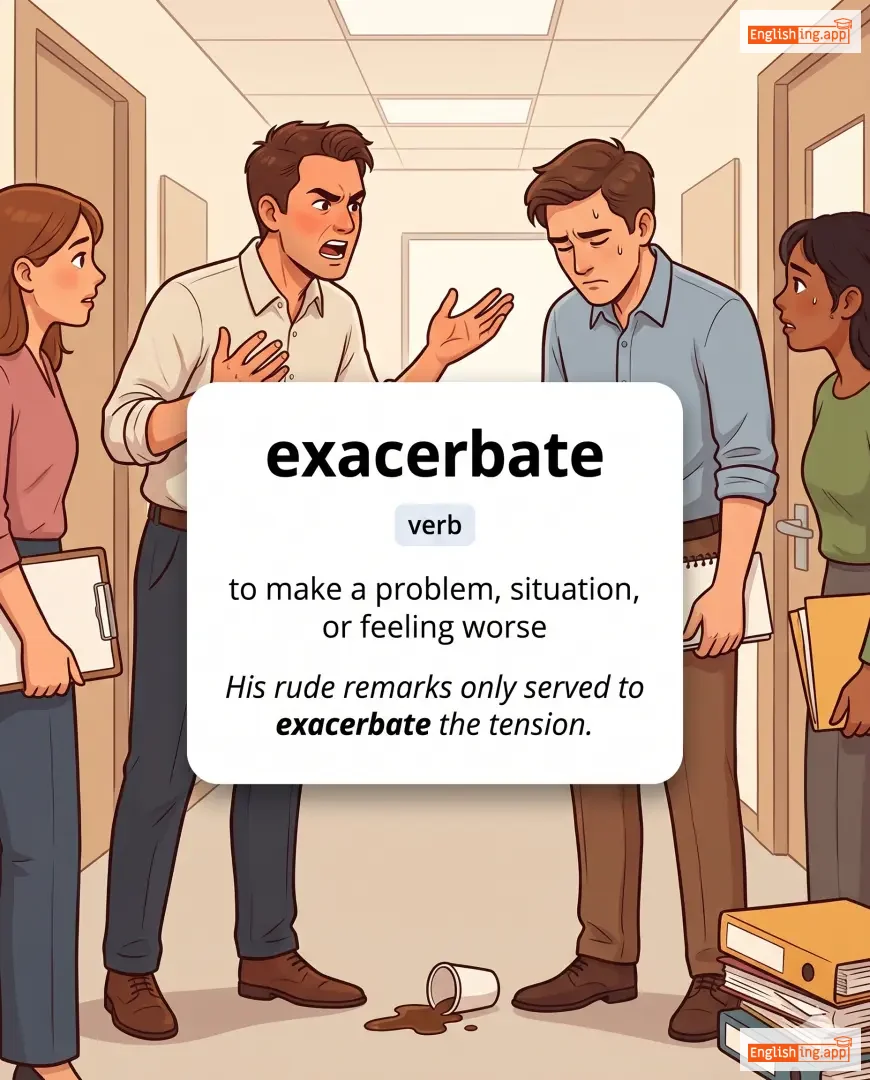
exacerbate definition card — visual illustration of the meaning
verb
/ɪɡˈzæsərˌbeɪt/
悪化させる (akka saseru)

to make a problem, situation, or feeling worse

"His rude remarks only served to exacerbate the tension."
"彼の失礼なコメントは、緊張を悪化させるだけだった。" (Kare no shitsurei na komento wa, kinchou wo akka saseru dake datta.)
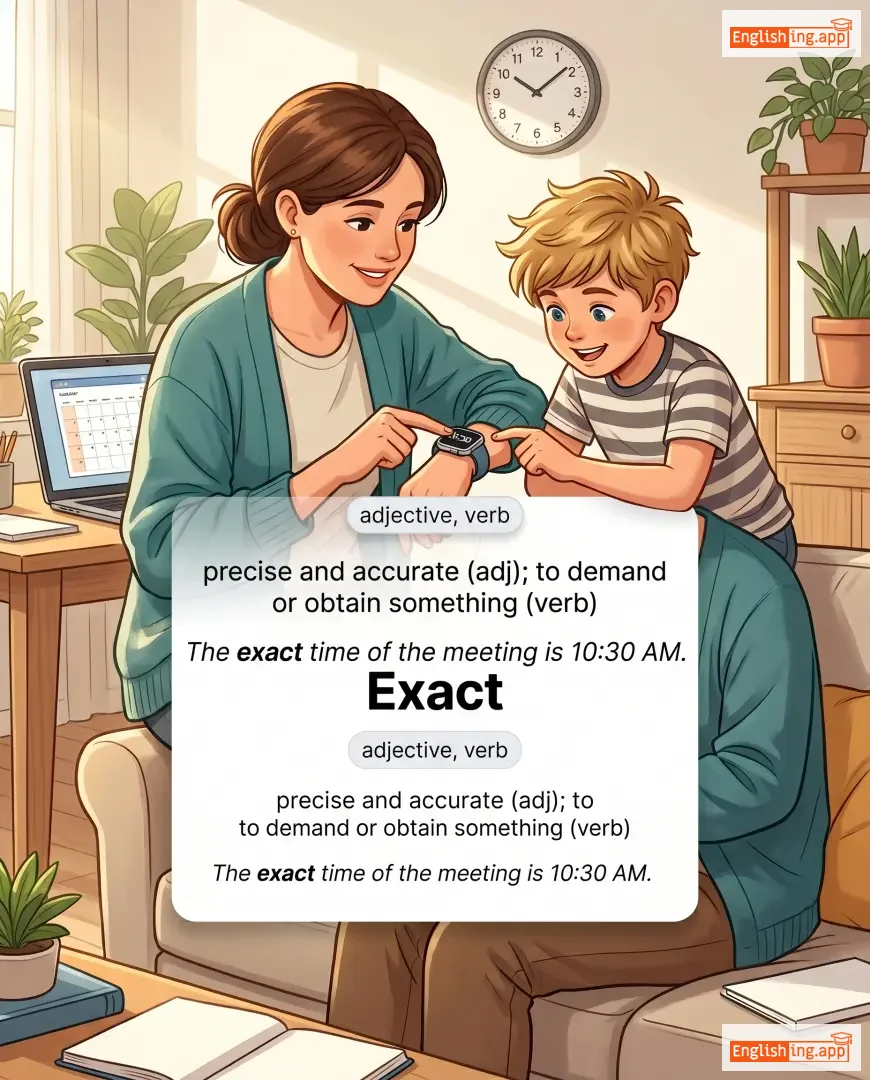
Exact definition card — visual illustration of the meaning
adjective, verb
/ɪɡˈzækt/
正確 (seikaku)

precise and accurate (adj); to demand or obtain something (verb)

"The exact time of the meeting is 10:30 AM."

"会議の正確な時間は10:30 AMです。" (Kaigi no seikaku na jikan wa 10:30 AM desu.)
adjective
/ɪɡˈzæktɪŋ/
厳格な (genkaku na)

demanding a lot of effort, attention, or precision

"She is known for her exacting standards in design."

"彼女はデザインにおける厳格な基準で知られています。" (Kanojo wa dezain ni okeru genkaku na kijun de shirareteimasu.)
noun
/ɪɡˈzækʃən/
強制徴収 (kyousei choushuu)

the act of demanding or obtaining something, especially unfairly

"The peasants suffered under the king's heavy exactions."

"農民たちは王の重い強制徴収の下で苦しんだ。" (Noumintachi wa ou no omoi kyousei choushuu no shita de kurushinda.)
adverb
/ɪɡˈzæktli/
正確に (seikaku ni)

in a precise or accurate manner; without any error

"She explained the process exactly as it happened."

"彼女はプロセスを正確に説明しました。" (Kanojo wa purosesu o seikaku ni setsumei shimashita.)
verb
/ɪɡˈzædʒəˌreɪt/
誇張する (kochou suru)

to describe something as better, worse, or more important than it really is

"He tends to exaggerate his achievements."

"彼は自分の業績を誇張しがちだ。" (kare wa jibun no gyouseki o kochou shigachi da.)
noun
/ɪɡˌzædʒ.əˈreɪ.ʃən/
誇張 (kocho)

a statement that represents something as better or worse than it really is

"His story about the fish he caught was clearly an exaggeration."

"彼が捕まえた魚についての話は明らかに誇張だった。" (Kare ga tsukamaeta sakana ni tsuite no hanashi wa akiraka ni kocho datta.)
🙌

exalt

verb
/ɪɡˈzɔːlt/

to praise highly or raise in rank, honor, or power

"The community exalted the teacher for his dedication."

noun
/ɪɡˈzæm/
試験 (shiken)

a formal test of a person's knowledge or skill in a subject

"She studied hard for her final exam."

"彼女は最終試験のために一生懸命勉強した。" (Kanojo wa saishū shiken no tame ni isshōkenmei benkyō shita.)
noun
/ɪɡˌzæm.ɪˈneɪ.ʃən/
試験 (shiken)

a formal test of knowledge or ability

"She is preparing for her final examination."
"彼女は最終試験の準備をしています。" (Kanojo wa saishū shiken no junbi o shiteimasu.)
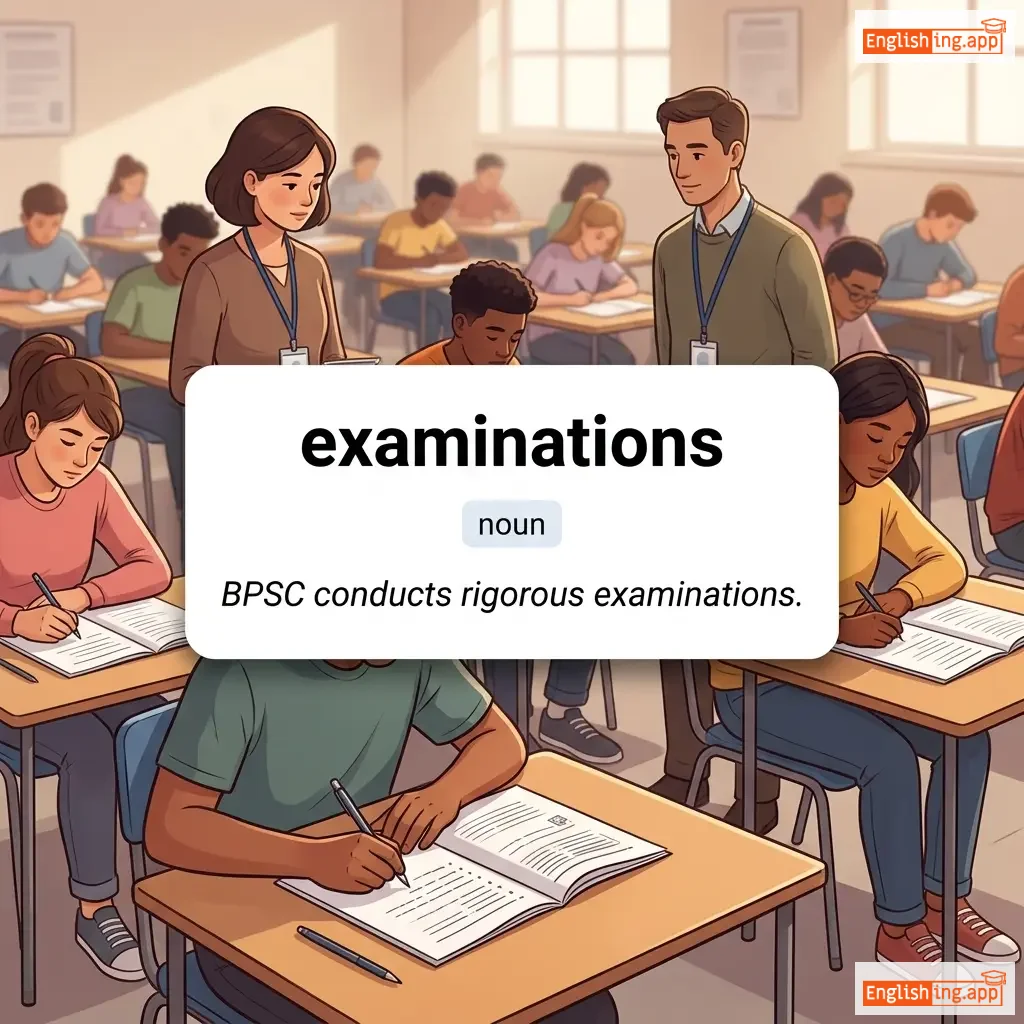
examinations definition card — visual illustration of the meaning
noun
ɪɡˌzæm.ɪˈneɪ.ʃənz
試験 (shiken)

A detailed inspection or investigation; a formal test of a person's knowledge or proficiency.

"BPSC conducts rigorous examinations."

"BPSCは厳格な試験を実施します。" (BPSC wa gengaku na shiken o jisshi shimasu.)
verb
/ɪɡˈzæm.ɪn/
幸福 (kōfuku)

to look at something carefully in order to understand it

"The doctor will examine the patient tomorrow."

"彼女は賞を受け取ったとき、幸せを隠せませんでした。" (Kanojo wa shō o uketotta toki, kōfuku o kakusemasen deshita.)
noun
/ɪɡˌzæm.ɪˈniː/
受験者 (juken-sha)

a person who is being tested in an examination

"Each examinee was given two hours to complete the test."

"各受験者には試験を完了するために2時間が与えられました。" (Kaku juken-sha ni wa shiken o kanryou suru tame ni 2 jikan ga ataeraremashita.)
noun
/ɪɡˈzæmɪnər/
試験官 (shikenkkan)

A person who tests or inspects knowledge, skills, or qualifications

"The examiner reviewed each student's answer sheet carefully."

"試験官は各学生の答案用紙を注意深く確認した。" (Shikenkkan wa kaku gakusei no touan youshi wo chuibukaku kakunin shita)
noun
/ɪɡˈzɑːm.pəl/
(rei)

a thing or person regarded as a model to be followed or avoided

"He is a good example of a hardworking student."

"彼は勤勉な学生の良い例です。" (Kare wa kinben na gakusei no yoi rei desu.)
verb
/ɪɡˈzæspəˌreɪt/
いらだたせる (iradataseru)

to irritate or annoy intensely

"His constant complaints began to exasperate his coworkers."

"彼の絶え間ない不満は同僚をいらだたせ始めた。" (Kare no taemanai fuman wa doryo o iradatasemeta.)
adjective
/ɪɡˈzæspəˌreɪtɪd/
非常にいらいらした (hijou ni iraira shita)

greatly annoyed or irritated

"She gave him an exasperated look after his repeated mistakes."
"彼女は繰り返しのミスの後、彼に非常にいらいらした視線を送った。" (Kanojo wa kurikaeshi no misu no ato, kare ni hijou ni iraira shita shisen wo okutta.)
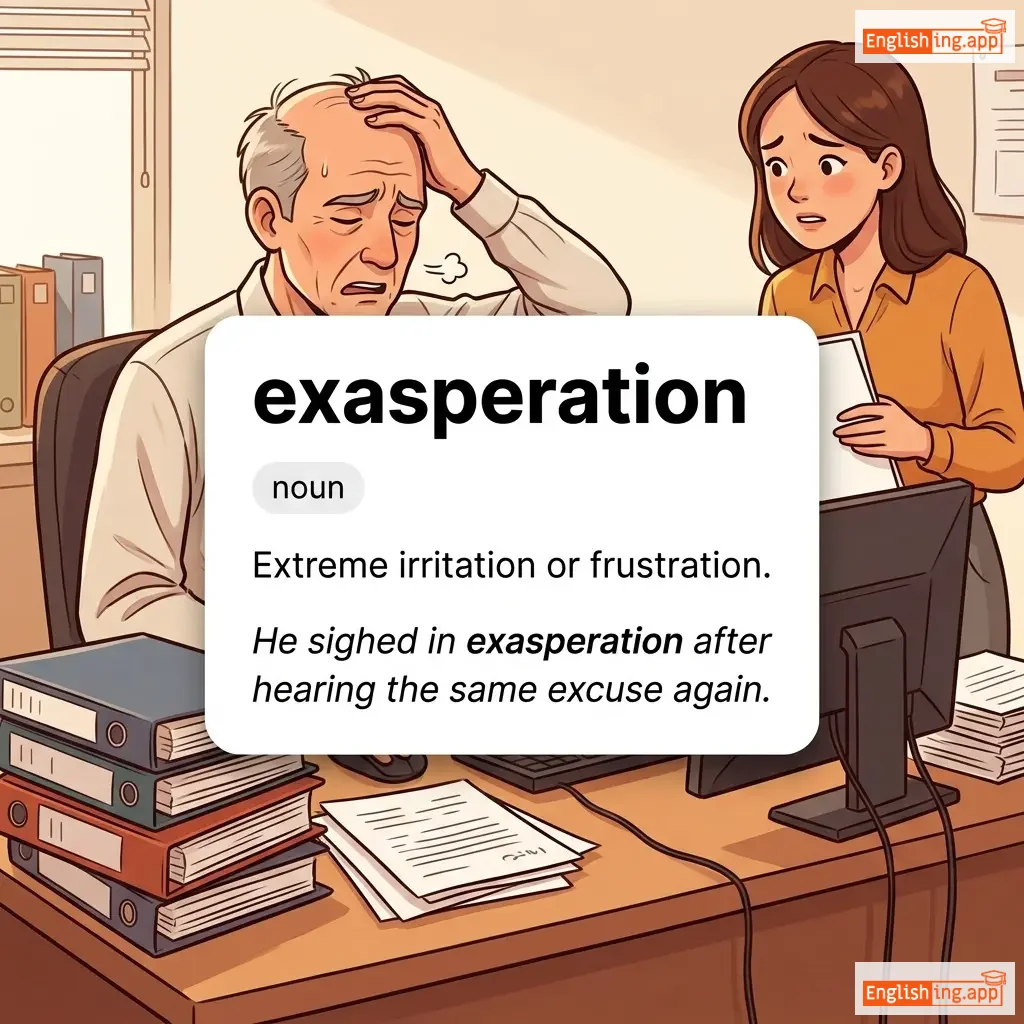
exasperation definition card — visual illustration of the meaning
noun
ɪɡˌzæs.pəˈreɪ.ʃən
苛立ち (iradachi)

Extreme irritation or frustration.

"He sighed in exasperation after hearing the same excuse again."

"彼は同じ言い訳をまた聞かされて、苛立ちのあまりため息をついた。" (Kare wa onaji iiwake o mata kikasarete, iradachi no amari tameiki o tsuita.)
verb
/ˈɛkskəˌveɪt/
幸せ (shiawase)

to dig out or remove earth carefully, often for building or archaeological purposes

"The workers excavated the site to prepare for construction."

"彼女は賞を受け取ったとき、自分の幸せを隠すことができませんでした。" (Kanojo wa shō o uketotta toki, jibun no shiawase o kakusu koto ga dekimasen deshita.)