語彙集

英単語辞書 | 単語の意味、定義、例文

📅

date

noun/verb
/deɪt/

A particular day of the month or year; also, a social or romantic appointment.

"They decided to meet on the date of her birthday."

noun
/deɪts/
デーツ (dētsu)

sweet brown oval fruits that grow on date palm trees

"Dates are commonly eaten during Ramadan to break the fast."

"デーツはラマダン中に断食を解くためによく食べられます。" (Dētsu wa ramadan-chū ni danjiki o toku tame ni yoku taberaremasu)
noun
/ˈdeɪtəm/ or /ˈdætəm/
データ (deta)

a single piece of information; a fact used as a basis for reasoning or calculation

"Each datum in the survey was carefully analyzed."

"調査の各データは慎重に分析されました。" (Chousa no kaku deta wa shinchou ni bunseki saremashita.)
verb
/dɔːb/
塗る (nuru)

to spread a thick or sticky substance carelessly on a surface

"The children daubed paint all over the walls."

"子供たちは壁にペンキを塗り広げました。" (kodomotachi wa kabe ni penki o nurihirogemashita.)
noun
/ˈdɔːtər/
(musume)

a female child in relation to her parents

"They are proud of their daughter for graduating college."

"彼らは大学を卒業した娘を誇りに思っています。" (Karera wa daigaku o sotsugyō shita musume o hokori ni omotteimasu.)
daunt definition card — visual illustration of the meaning
verb
/dɔːnt/
脅す (odosu)

to make someone feel intimidated, discouraged, or less confident

"The steep climb did not daunt the experienced hikers."
"急な登りは経験豊富なハイカーを怖がらせませんでした。" (Kyū na nobori wa keiken hōfu na haikā o kowagarasemasen deshita.)
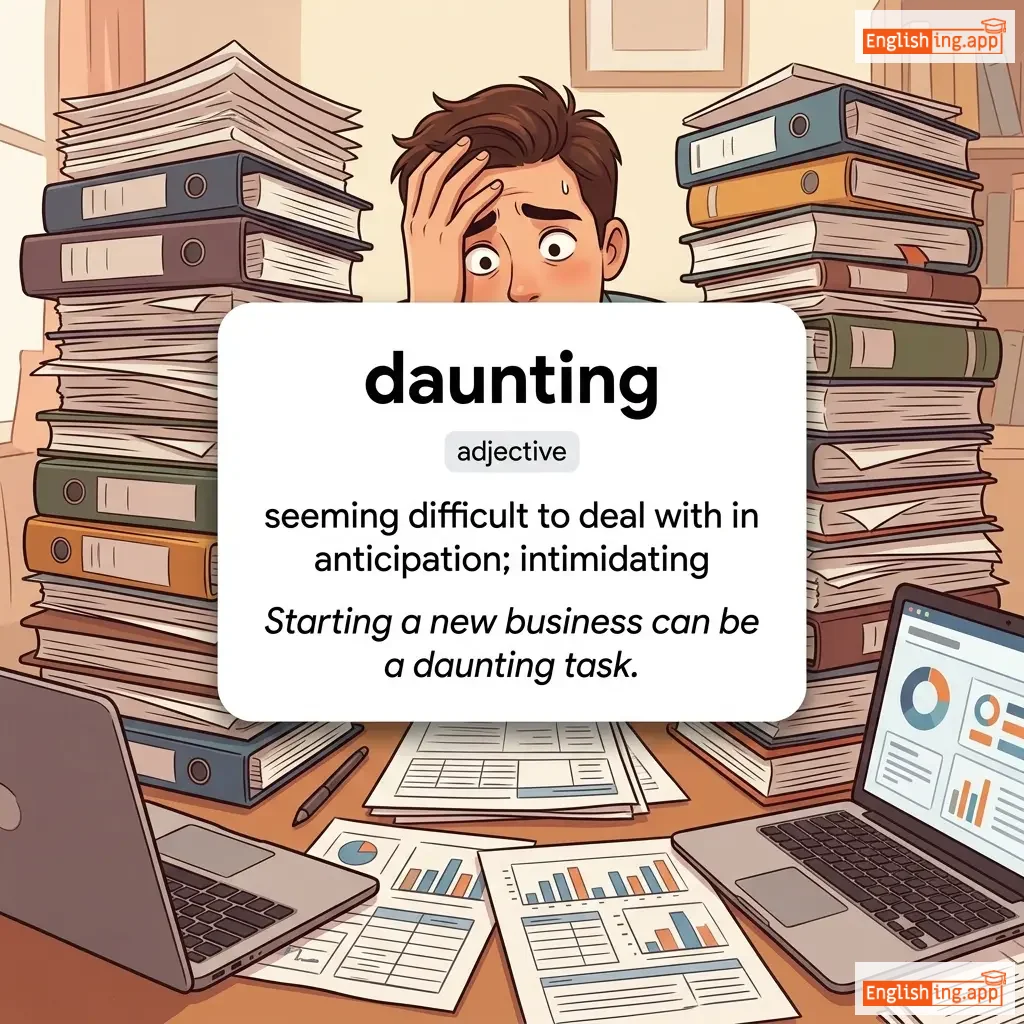
daunting definition card — visual illustration of the meaning
adjective
/ˈdɔːntɪŋ/
威圧的 (iatsuteki)

seeming difficult to deal with in anticipation; intimidating

"Starting a new business can be a daunting task."
"新しいビジネスを始めるのは威圧的な仕事かもしれません。" (Atarashī bijinesu o hajimeru no wa iatsuteki na shigoto kamo shiremasen.)
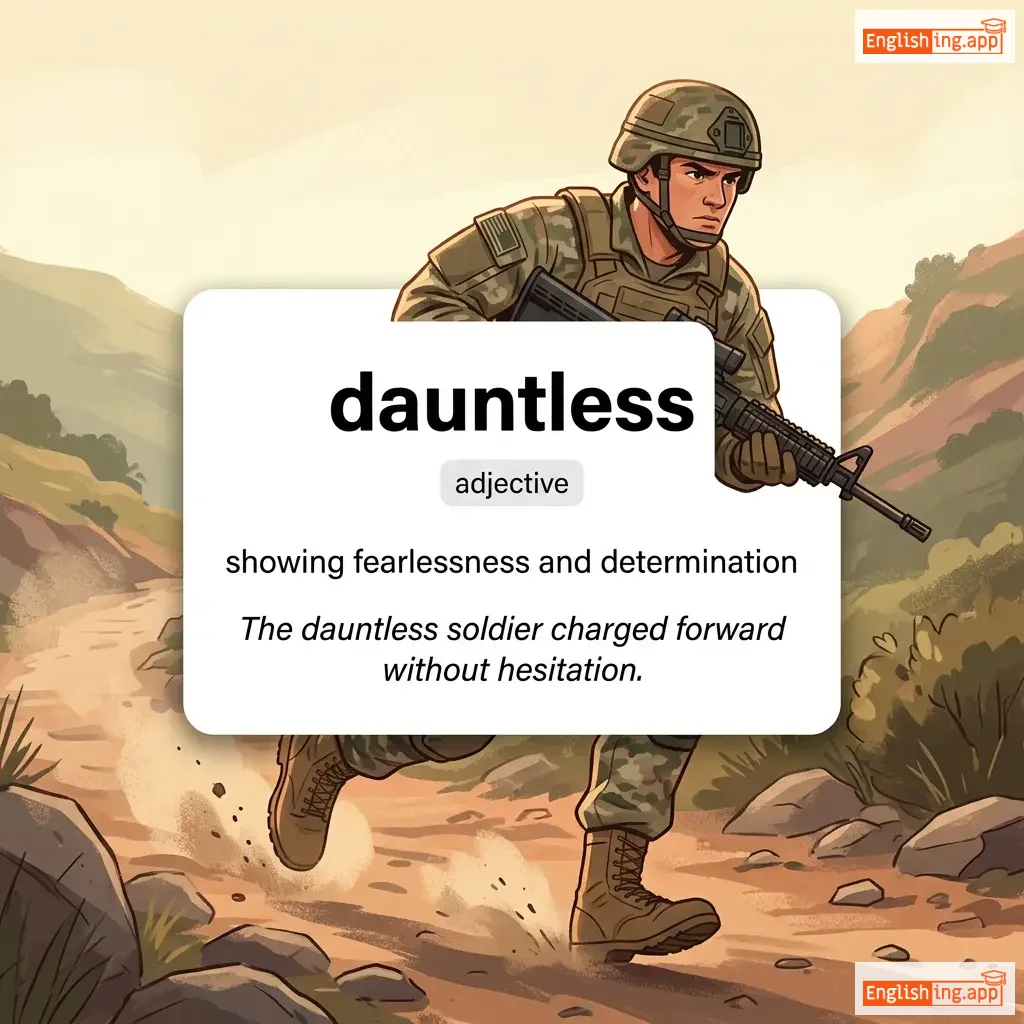
dauntless definition card — visual illustration of the meaning
adjective
/ˈdɔːntləs/
無敵 (muteki)

showing fearlessness and determination

"The dauntless soldier charged forward without hesitation."

"無敵の兵士はためらうことなく前進した。" (Muteki no heishi wa tamerau koto naku zenshin shita.)
verb
/ˈdɔːd(ə)l/
だらだらする (dardarasu suru)

to waste time by being slow or idle

"Stop dawdling and finish your homework."

"ダラダラせずに宿題を終わらせてください。" (Daradara sezu ni shukudai o owarasete kudasai.)
noun, verb
/dɔːn/
夜明け (yoake)

The first appearance of light in the sky before sunrise; to begin or become apparent.

"Hope began to dawn in her heart after hearing the good news."

"良いニュースを聞いた後、彼女の心に希望が夜明けを迎え始めました。" (Yoi nyūsu o kiita ato, kanojo no kokoro ni kibō ga yoake o mukae hajimemashita.)
noun
/deɪ/
(hi)

a period of 24 hours or the time between sunrise and sunset

"She enjoyed a relaxing day at the beach."

"彼女はビーチでリラックスした一日を楽しみました。" (Kanojo wa bīchi de rirakkusu shita ichinichi o tanoshimimashita.)
noun
/ˈdeɪ.mæn/
日雇い労働者 (hiyatoi rōdōsha)

a worker employed by the day; a day laborer

"The farmer hired a day-man to help with the harvest."

"農家は収穫を手伝うために日雇い労働者を雇いました。" (Nōka wa shūkaku o tetsudau tame ni hiyatoi rōdōsha o yatotta.)
noun
/ˈdeɪˌbreɪk/
夜明け (yoake)

The time in the morning when daylight first appears; dawn.

"They set out on their journey at daybreak."

"彼らは夜明けに旅を始めました。" (Karera wa yoake ni tabi o hajimemashita.)
noun
/deɪz/
日々 (hibi)

plural of day; refers to multiple 24-hour periods of time

"The project will take at least five days to finish."

"このプロジェクトは少なくとも5日かかります。" (Kono purojekuto wa sukunakutomo go nichi kakarimasu.)
😵

daze

verb
/deɪz/

to stun or confuse someone temporarily with a shock or surprise

"The bright lights dazed the runners as they entered the stadium."

verb
/ˈdæzəl/
魅了する (miryō suru)

to impress deeply or blind with brilliance or skill

"The magician's tricks dazzled the audience."

"マジシャンのトリックは観客を驚かせた。" (Majishan no torikku wa kankyaku o odorokaseta.)
adjective
/ˈdæz.lɪŋ/
眩しい; 印象的な (mabushii; inshō-teki na)

extremely bright and impressive; brilliant and stunning

"The dazzling lights of the city amazed the tourists."

"その都市の眩い光は観光客を驚かせました。" (Sono toshi no mabushii hikari wa kankōkyaku o odorokasemashita.)
adjective, noun
/dɛd/
死んだ (shinda)

No longer alive; the end of life.

"The old tree is completely dead."

"その古い木は完全に死んでいる。" (Sono furui ki wa kanzen ni shindeiru.)
noun
/ˌdɛd ˈhiːt/
引き分け (hikiwake)

a race or contest in which two or more competitors finish exactly equal

"The race ended in a dead-heat between the two runners."

"レースは二人のランナーの間で引き分けで終わった。" (Reesu wa futari no rannaa no aida de hikiwake de owatta.)
noun
/ˈded.lɑk/
行き詰まり; 停滞 (ikizumari; teitai)

a situation in which no progress is possible; complete standstill

"The negotiations reached a deadlock when neither side would compromise."

"交渉は行き詰まりに達し、どちらの側も妥協しようとしませんでした。" (Kōshō wa ikizumari ni tasshi, dochira no gawa mo dakyo shiyō to shimasen deshita.)
noun
/ˈdedlaɪn/
締め切り (shimekiri)

the latest time or date by which something must be completed

"We need to finish this project before the deadline."

"このプロジェクトは締め切り前に終わらせる必要があります。" (Kono purojekuto wa shimekiri mae ni owaraseru hitsuyou ga arimasu.)
deadlines definition card — visual illustration of the meaning
noun
/ˈdɛdˌlaɪnz/
締め切り (shimekiri)

The latest time or date by which something should be completed.

"Setting deadlines helps finish tasks."

"締め切りを設定することでタスクを終わらせるのに役立ちます。" (Shimekiri o settei suru koto de tasuku o owaraseru no ni yakudachimasu.)
noun
/ˈdɛdlɒk/
行き詰まり (ikidzumari)

a situation in which progress is impossible because of disagreement

"Negotiations reached a deadlock after neither side agreed to compromise."

"交渉は双方が妥協に同意しなかったため行き詰まりました。" (Koushou wa souhou ga dakyou ni doui shinakatta tame ikidzumari mashita.)
adjective
/ˈdedli/
致命的 (chimiteki)

causing or able to cause death; extremely dangerous

"The snake's bite is deadly to humans."

"蛇の噛み傷は人間にとって致命的です。" (Hebi no kamikizu wa ningen ni totte chimiteki desu.)
adjective
/ˈdɛdˌpæn/
無表情 (muhyōjō)

Deliberately impassive or expressionless in manner.

"She delivered the joke in a completely deadpan voice."

"彼女は完全に無表情な声でジョークを言った。" (Kanojo wa kanzen ni muhyoujou na koe de jōku o itta.)
adjective
/def/
耳が聞こえない; 聴覚障害がある (mimi ga kikoenai; choukaku shougai ga aru)

unable to hear; having a hearing impairment

"The deaf child learned to communicate using sign language."

"そのろうの子供は手話を使ってコミュニケーションを学びました。" (Sono rō no kodomo wa shuwa o tsukatte komyunikeeshon o manabimashita.)
🤝

deal

verb
/diːl/
幸せ (shiawase)

to distribute or give out something; to handle or manage

"He had to deal with many problems at work."

"彼女は賞を受け取ったとき、幸せを隠すことができませんでした。" (Kanojo wa shō o uketotta toki, shiawase o kakusu koto ga dekimasen deshita.)
noun
/ˈdiːlər/
ディーラー (diiraa)

a person or business that buys and sells goods; someone who distributes

"The car dealer offered a discount to attract customers."

"車のディーラーは顧客を引き付けるために割引を提供しました。" (Kuruma no diiraa wa kokyaku o hikitsukeru tame ni waribiki o teikyō shimashita.)
noun
/ˈdiː.lɪŋ/
取引; 処理; 扱い (torihiki, shori, atsukai)

business transactions; the way of treating people or handling situations

"His fair dealing with customers earned him an excellent reputation."

"顧客との公正な取引が彼に素晴らしい評判をもたらしました。" (Kokyaku to no kousei na torihiki ga kare ni subarashii hyouban o motarashimashita.)
adjective
/dɪr/
親愛なる (shin'ai naru)

loved or cherished; sometimes used as a polite form of address

"She is very dear to her grandparents."
"彼女は祖父母にとって非常に親愛なる存在です。" (kanojo wa sofu-bo ni totte hijō ni shin'ai naru sonzai desu.)
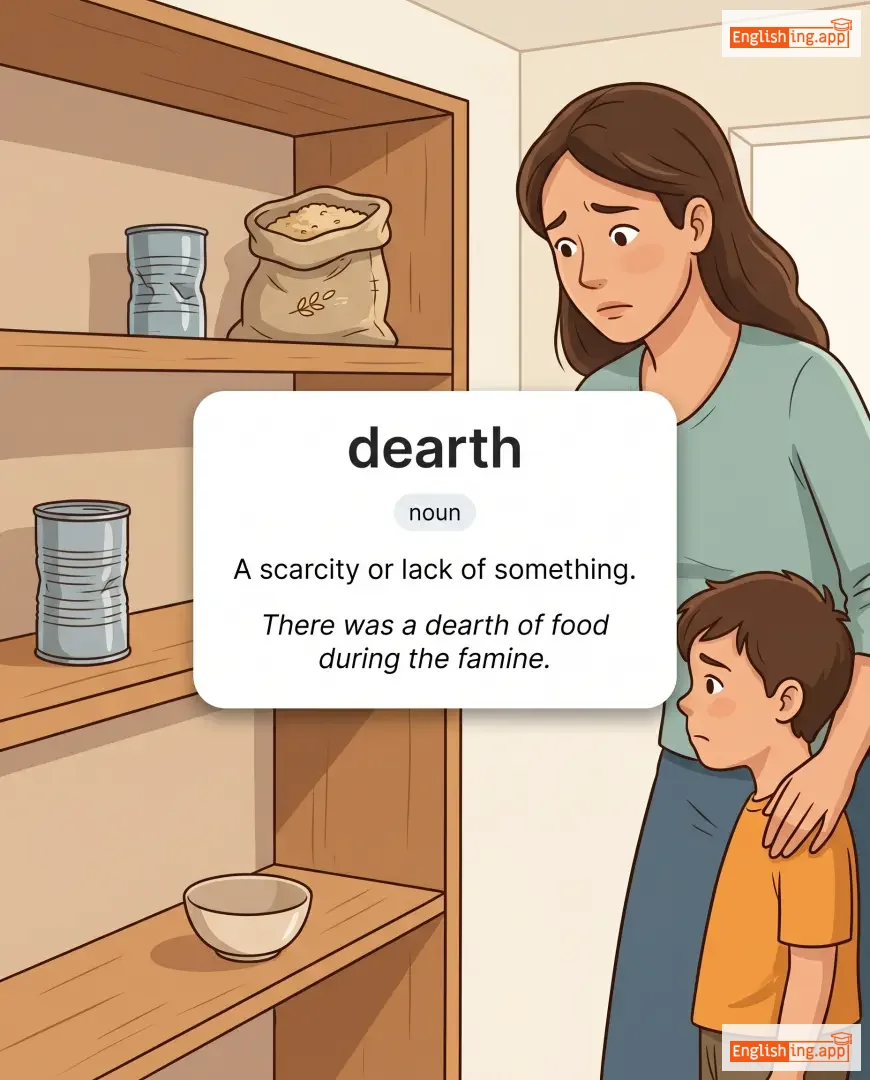
dearth definition card — visual illustration of the meaning
noun
/dɜːrθ/
不足 (busoku)

A scarcity or lack of something.

"There was a dearth of food during the famine."

"飢饉の間に食料が不足していた。" (Kikin no aida ni shokuryō ga fusoku shite ita.)
noun
/dɛθ/
(shi)

The end of life; the permanent cessation of all vital functions.

"The news of his death shocked everyone in the village."

"彼の死のニュースは村のすべての人々を驚かせました。" (Kare no shi no nyūsu wa mura no subete no hitobito o odorokasemashita.)
noun
/ˈdɛθsˌhɛd/
髑髏 (dokuro)

A representation of a human skull, often used as a symbol of death.

"The pirate flag was marked with a grim deaths-head."

"海賊の旗には恐ろしい髑髏の印がありました。" (Kaizoku no hata ni wa osoroshī dokuro no shirushi ga arimashita.)
noun
/deɪˈbɑːkəl/
惨事 (sanjī)

A sudden and complete failure; a fiasco.

"The product launch turned into a complete debacle."

"製品の発売は完全な惨事に変わった。" (Seihin no hatsubai wa kanzen na sanji ni kawatta.)
verb
/dɪˈbɑːr/
禁止する (kinshi suru)

To officially prevent someone from doing something.

"He was debarred from entering the competition due to cheating."

"彼は不正行為のため競技への参加が禁止されました。" (Kare wa fuseikoui no tame kyōgi e no sanka ga kinshi saremashita.)
verb
/dɪˈbɑːrk/
下船する (gesen suru)

to disembark or get off a ship, aircraft, or vehicle

"The passengers debarked as soon as the ship docked."

"乗客は船がドックに着いたときに下船しました。" (Joukyaku wa fune ga dokku ni tsuita toki ni gesen shimashita.)
verb
/dɪˈbeɪs/
低下させる (teika saseru)

to reduce the quality, value, or dignity of something

"Corruption can debase the values of a society."

"腐敗は社会の価値観を低下させる可能性があります。" (Fuhai wa shakai no kachikan o teika saseru kanōsei ga arimasu.)
adjective
/dɪˈbeɪst/
劣化した (reka shita)

having lost quality, value, or moral character

"The debased currency lost the trust of the people."

"劣化した通貨は人々の信頼を失った。" (Rekashita tsūka wa hitobito no shinrai o ushinatta.)
adjective
/dɪˈbeɪtəbl̩/
議論の余地がある (giron no yochi ga aru)

open to discussion or doubt; not certain

"It is debatable whether the policy will work."

"その政策が機能するかどうかは議論の余地がある。" (Sono seisaku ga kinou suru ka dou ka wa giron no yochi ga aru.)
noun, verb
/dɪˈbeɪt/
討論 (tōron)

A formal discussion on a particular topic where opposing arguments are presented.

"The students prepared well for the school debate."

"学生たちは学校の討論に十分に準備しました。" (Gakusei-tachi wa gakkō no tōron ni jūbun ni junbi shimashita.)
debates definition card — visual illustration of the meaning
noun
dɪˈbeɪts
討論 (tōron)

A formal discussion on a particular topic in a public meeting or legislative assembly.

"Debates foster intellectual growth."

"ディベートは知的成長を促進します。" (Dibēto wa chiteki seichō o sokushin shimasu.)
verb
/dɪˈbɔːtʃ/
堕落させる (daraku saseru)

to corrupt morally; to lead into excessive indulgence in sensual pleasures

"The novel shows how wealth can debauch a person's character."
"その小説は、どのように富が人の性格を堕落させるかを示しています。" (Sono shōsetsu wa, dono yō ni tomi ga hito no seikaku o daraku saseru ka o shimeshiteimasu.)
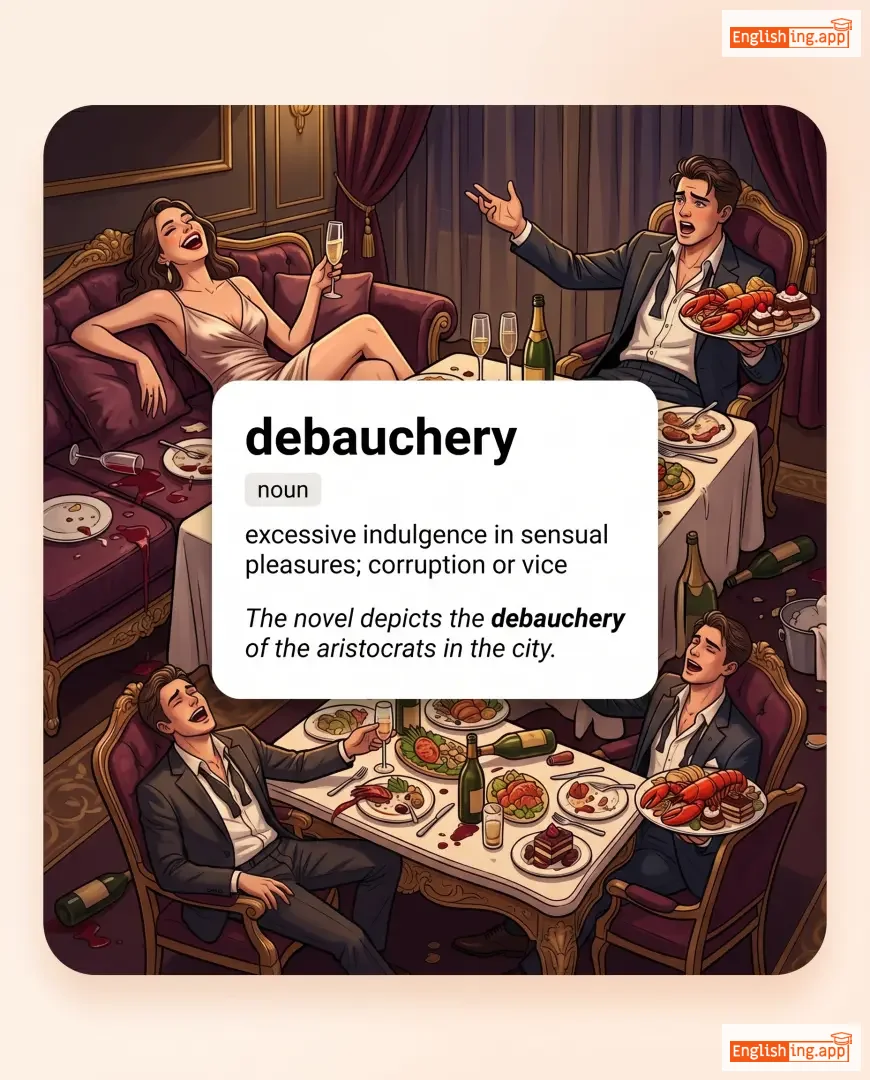
debauchery definition card — visual illustration of the meaning
noun
/dɪˈbɔːtʃəri/
堕落 (daraku)

excessive indulgence in sensual pleasures; corruption or vice

"The novel depicts the debauchery of the aristocrats in the city."

"この小説は街の貴族たちの堕落を描いています。" (Kono shousetsu wa machi no kizoku-tachi no daraku o egaiteimasu.)
noun
/dɪˈbɛntʃər/
社債 (shasai)

a type of debt instrument not secured by physical assets or collateral

"The company raised capital by issuing debentures to investors."

"その会社は投資家に社債を発行して資本を調達した。" (Sono kaisha wa tōshika ni shasai o hakko shite shihon o chōtatsu shita.)
verb
/dɪˈbɪlɪteɪt/
弱める (yowameru)

to weaken or make someone or something infirm

"The long illness debilitated his strength."
"長い病気が彼の力を弱めた。" (Nagai byōki ga kare no chikara o yowameta.)
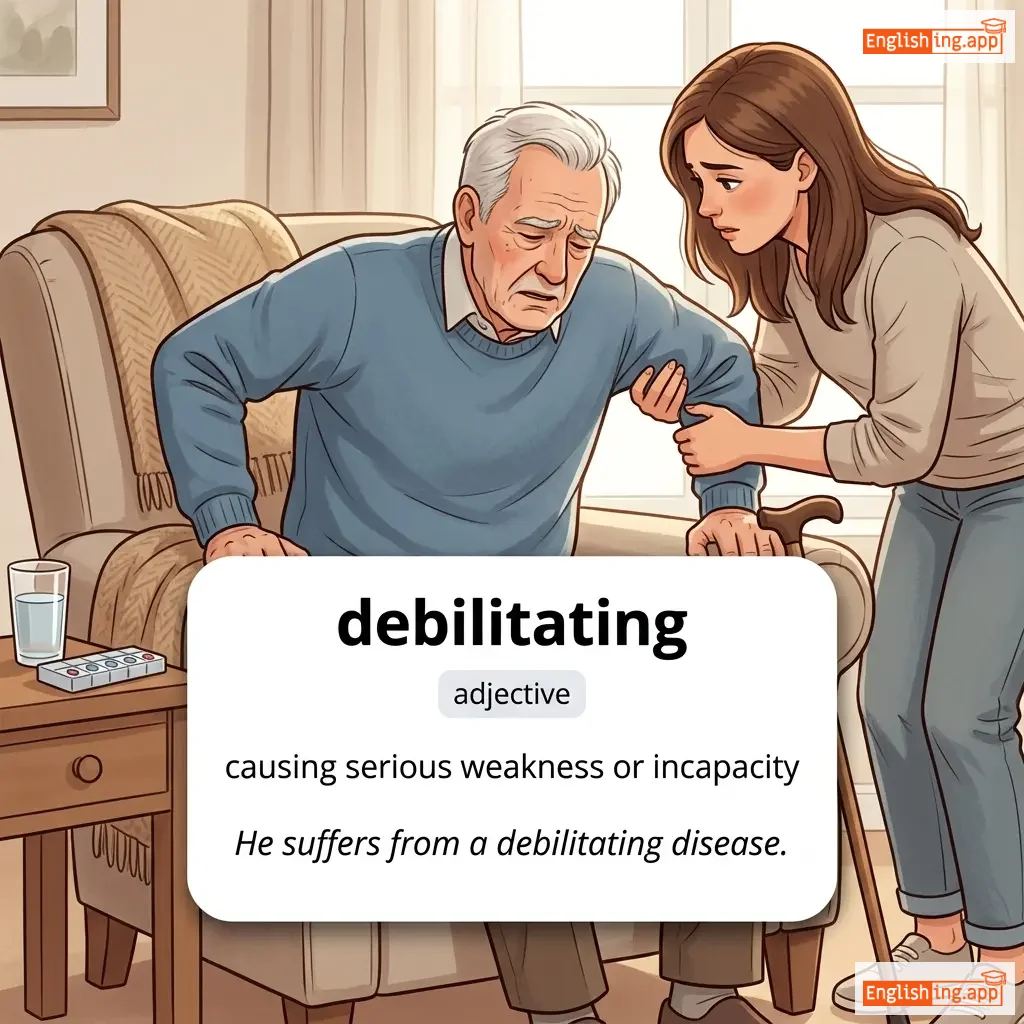
debilitating definition card — visual illustration of the meaning
adjective
/dɪˈbɪlɪteɪtɪŋ/
衰弱させる (suiryo ku saseru)

causing serious weakness or incapacity

"He suffers from a debilitating disease."

"彼は衰弱させる病気に苦しんでいます。" (Kare wa suiryo ku saseru byōki ni kurushindeimasu.)
noun
/ˈdeb.ɪt/
デビット; 借金; 引き落とし (debitto; shakkin; hikiotoshi)

an entry recording an amount owed; money taken from a bank account

"The bank showed a debit of fifty dollars from my checking account."

"銀行は私の当座預金口座から50ドルのデビットを表示しました。" (Ginkou wa watashi no touza yokin kouza kara gojuu doru no debitto wo hyouji shimashita.)
adjective
/ˌdɛbəˈnɛr/
魅力的 (miryokuteki)

confident, stylish, and charming, typically referring to a man

"He looked debonair in his tuxedo at the gala."
"彼はガラでタキシードを着て魅力的に見えました。" (Kare wa gara de takishīdo o kite miryokuteki ni miemashita.)
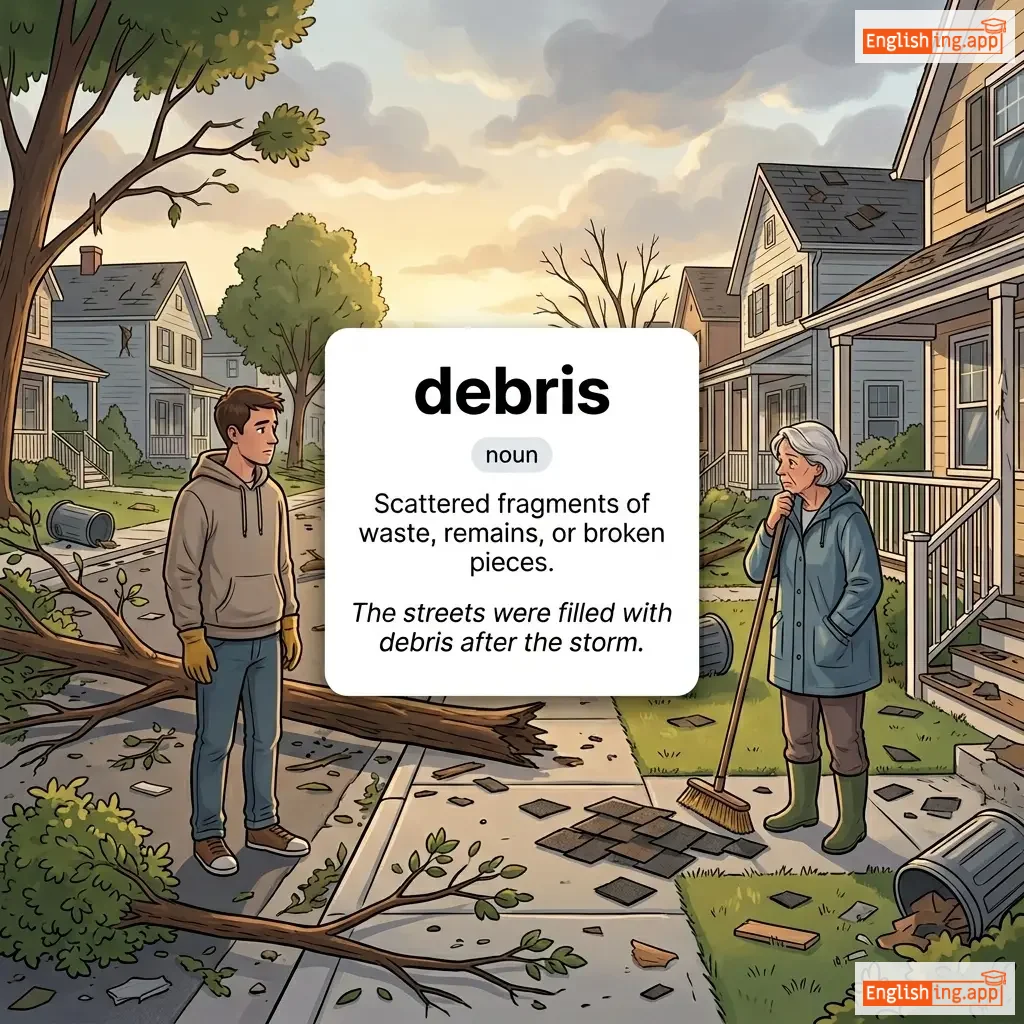
debris definition card — visual illustration of the meaning
noun
/dəˈbriː/
瓦礫 (goreki)

Scattered fragments of waste, remains, or broken pieces.

"The streets were filled with debris after the storm."

"嵐の後、通りは瓦礫で埋め尽くされていました。" (Arashi no ato, toori wa goreki de umetsukusarete imashita.)
debt definition card — visual illustration of the meaning
noun
/dɛt/
借金 (shakkin)

Something, typically money, that is owed or due.

"He struggled for years to pay off his debt."

"彼は借金を返すために何年も苦労しました。" (Kare wa shakkin o kaesu tame ni nannen mo kurō shimashita.)