語彙集

英単語辞書 | 単語の意味、定義、例文

noun
/ˈkɒntrəbænd/
密輸品 (mitsuyu hin)

goods that are illegal to import, export, or possess

"The police seized a shipment of contraband cigarettes."

"警察は密輸されたタバコの積荷を押収しました。" (Keisatsu wa mitsuyu sareta tabako no tsukimi o shōshu shimashita.)
contract definition card — visual illustration of the meaning
noun, verb
/ˈkɒntrækt/
契約、書面または口頭による合意 (keiyaku, shomen matawa koutou ni yoru goui)

noun: a written or spoken agreement; verb: to enter into an agreement or to reduce in size

"They signed a contract for the new project."
"彼らは新しいプロジェクトのために契約を結びました。" (Karera wa atarashī purojekuto no tame ni keiyaku o musubimashita.)
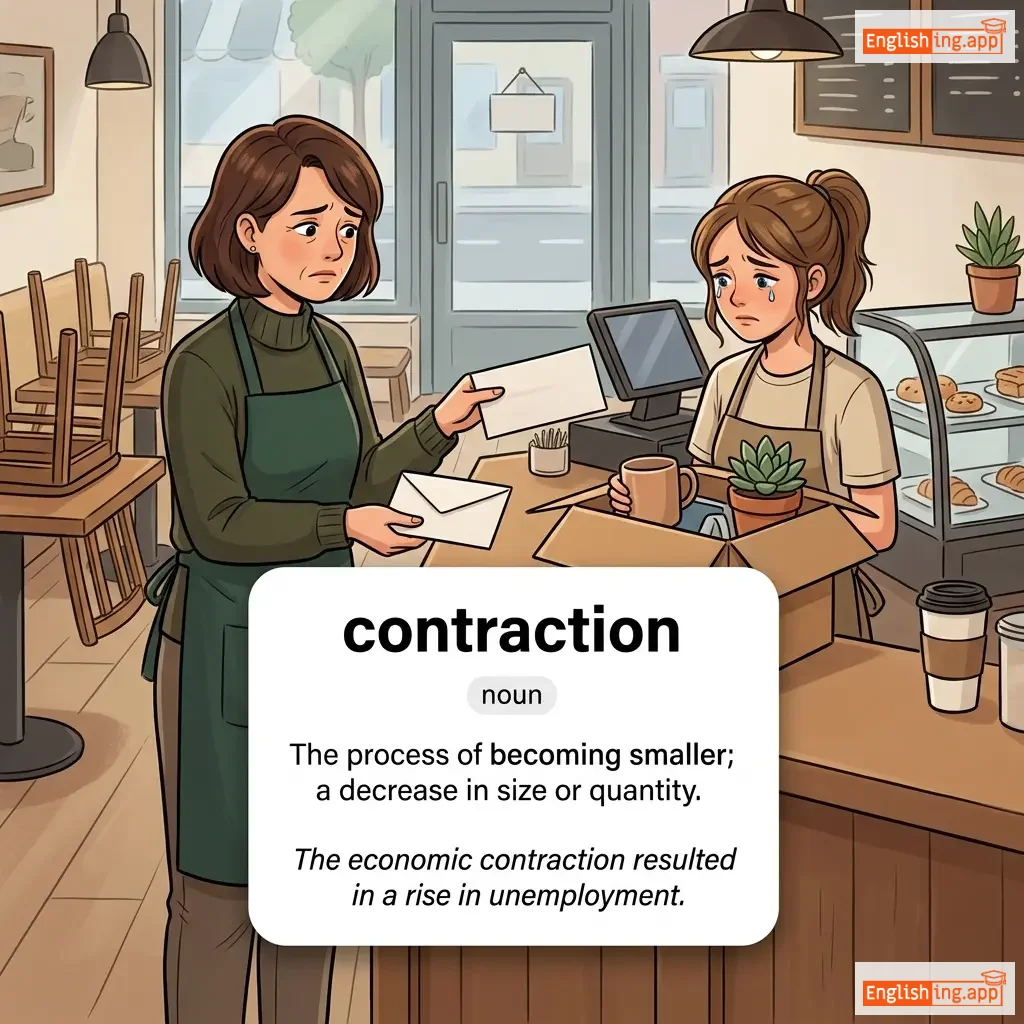
contraction definition card — visual illustration of the meaning
noun
kənˈtrækʃən
収縮 (shūshuku)

The process of becoming smaller; a decrease in size or quantity.

"The economic contraction resulted in a rise in unemployment."

"経済の収縮は失業率の上昇を招いた。" (Keizai no shūshuku wa shitsugyō-ritsu no jōshō o manaita.)
noun
/ˈkɒntræktər/
請負業者 (ukeoi gyōsha)

a person or company that agrees to provide materials or labor to perform a service or do a job

"The contractor completed the building project on time."

"請負業者は建設プロジェクトを期限内に完了しました。" (Ukeoi gyōsha wa ken'etsu purojekuto o kigen-nai ni kanryō shimashita.)
verb
/ˌkɒn.trəˈdɪkt/
矛盾する (mujun suru)

to say or show the opposite of something that has been said or believed

"His actions contradict his words."

"彼の行動は彼の言葉と矛盾しています。" (kare no kōdō wa kare no kotoba to mujun shiteimasu.)
noun
/ˌkɒntrəˈdɪkʃən/
矛盾、一貫性の欠如 (mujun, ikkan-sei no ketsujo)

a statement or situation that is opposed to another, inconsistency

"Her actions are in clear contradiction to her words."
"彼女の行動は彼女の言葉と明確に矛盾している。" (Kanojo no koudou wa kanojo no kotoba to meikaku ni mujun shite iru.)
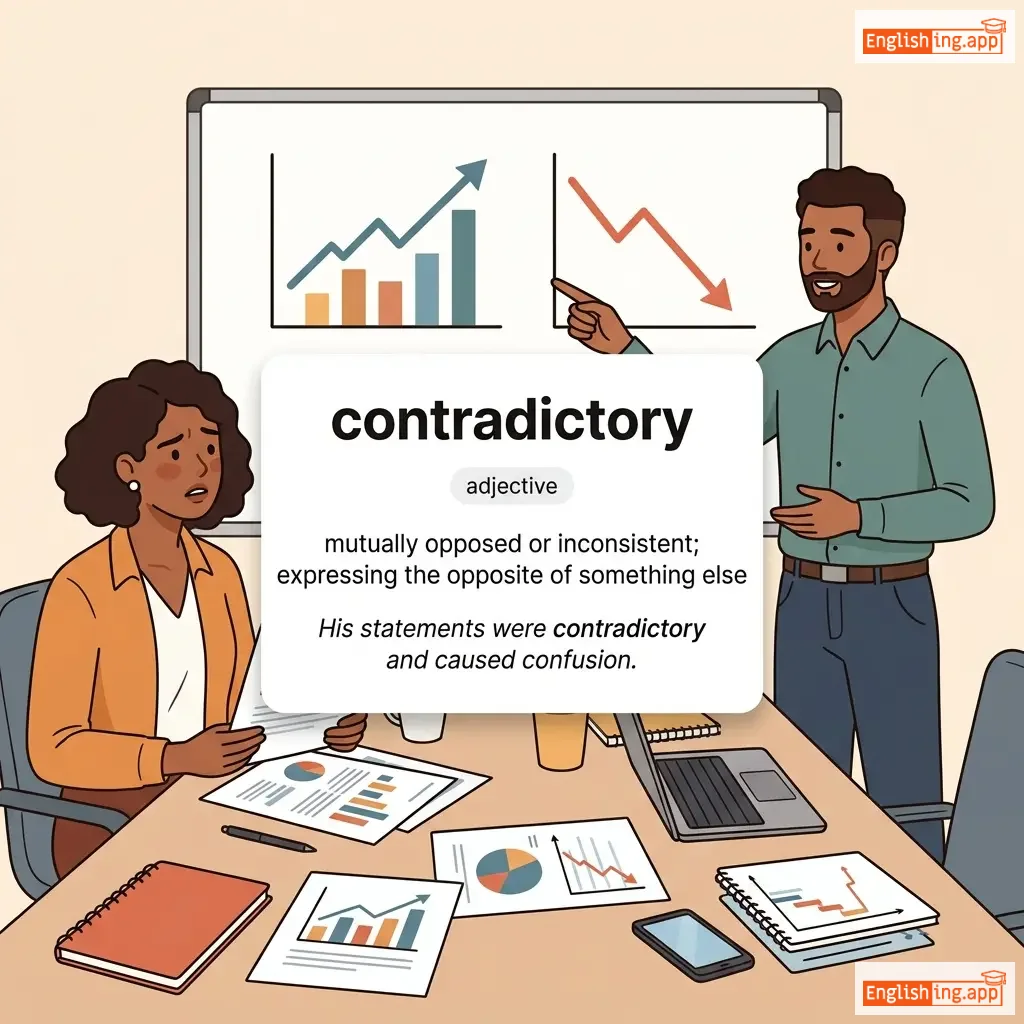
contradictory definition card — visual illustration of the meaning
adjective
/ˌkɒntrəˈdɪktəri/
矛盾する (mujun suru)

mutually opposed or inconsistent; expressing the opposite of something else

"His statements were contradictory and caused confusion."

"彼の発言は矛盾していて、混乱を引き起こしました。" (Kare no hatsugen wa mujun shite ite, konran o hikiokoshimashita.)
noun
/ˌkɒntrəpəˈzɪʃən/
対比配置 (taibi haichi)

the act of placing two things in opposition for contrast or comparison

"The contraposition of the two theories highlighted their differences."

"二つの理論の対比配置は、彼らの違いを強調した。" (Futatsu no riron no taibi haichi wa, karera no chigai o kyouchou shita.)
noun
/ˈkɒntrəriz/
対立する物事 (tairitsu suru monogoto)

things that are completely different or opposite to each other

"Freedom and slavery are contraries in every sense."

"自由と奴隷制度はすべての点で対立しています。" (Jiyū to dorei seido wa subete no ten de tairitsu shiteimasu.)
adjective
/ˈkɒn.trəri/
反対の (hantai no)

opposite in nature, direction, or meaning

"Her views are contrary to mine."
"彼女の意見は私の意見と反対です。" (Kanojo no iken wa watashi no iken to hantai desu.)
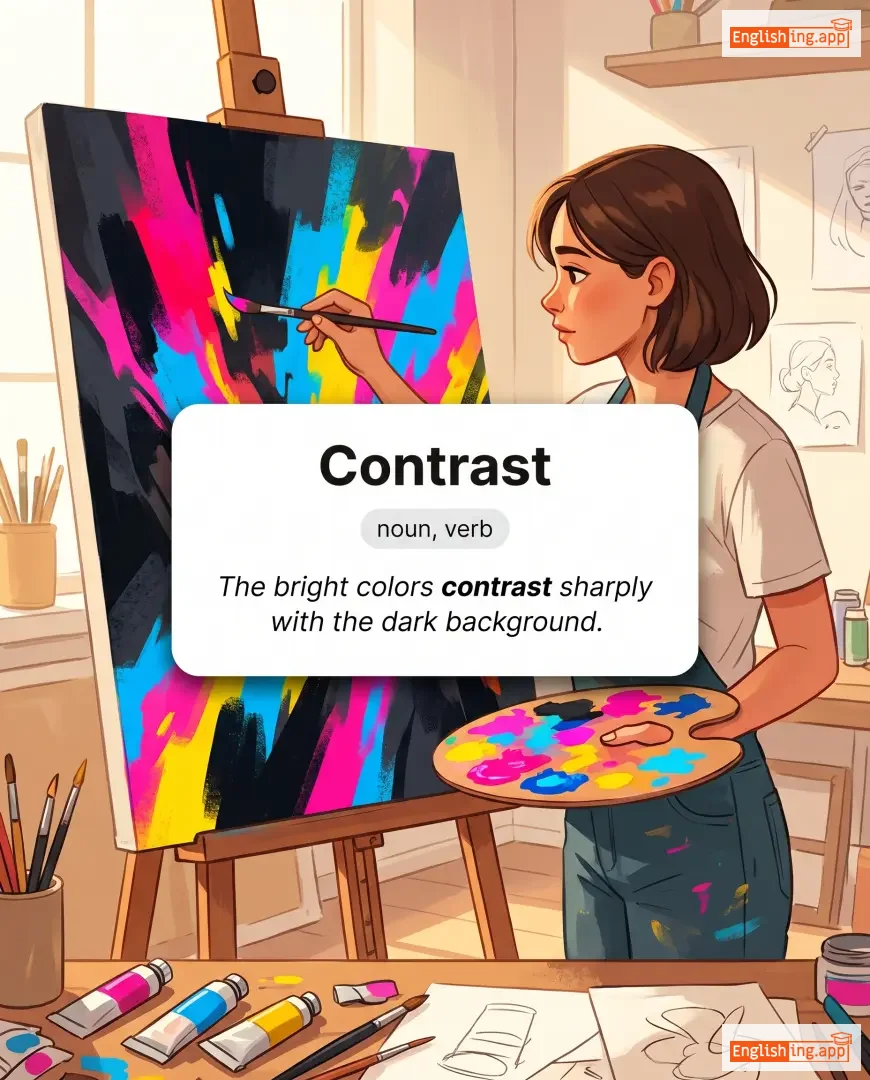
Contrast definition card — visual illustration of the meaning
noun, verb
/ˈkɒn.trɑːst/ (noun), /kənˈtræst/ (verb)
幸せ (shiawase)

A difference between two or more things; to compare two things to show how they are different.

"The bright colors contrast sharply with the dark background."

"彼女は賞を受け取ったとき、自分の幸せを隠せなかった。" (Kanojo wa shō o uketotta toki, jibun no shiawase o kakusenakatta.)
verb
/ˌkɒntrəˈviːn/
違反する (ihansuru)

to go against or act in opposition to a law, rule, or agreement

"He contravened the safety regulations and was fined."

"彼は安全規則に反したため、罰金を科せられました。" (Kare wa anzen kisoku ni hanshita tame, bakkin o kaseraremashita.)
noun
/ˈkɒntrətɑː̃/
予期しない対立 (yokishinai tairitsu)

an unexpected and unfortunate event or disagreement; a minor dispute

"There was a small contretemps between the two colleagues during the meeting."
"会議中、二人の同僚の間で小さな予期しない対立がありました。" (Kaigichū, futari no dōryō no aida de chīsana yokishinai tairitsu ga arimashita.)
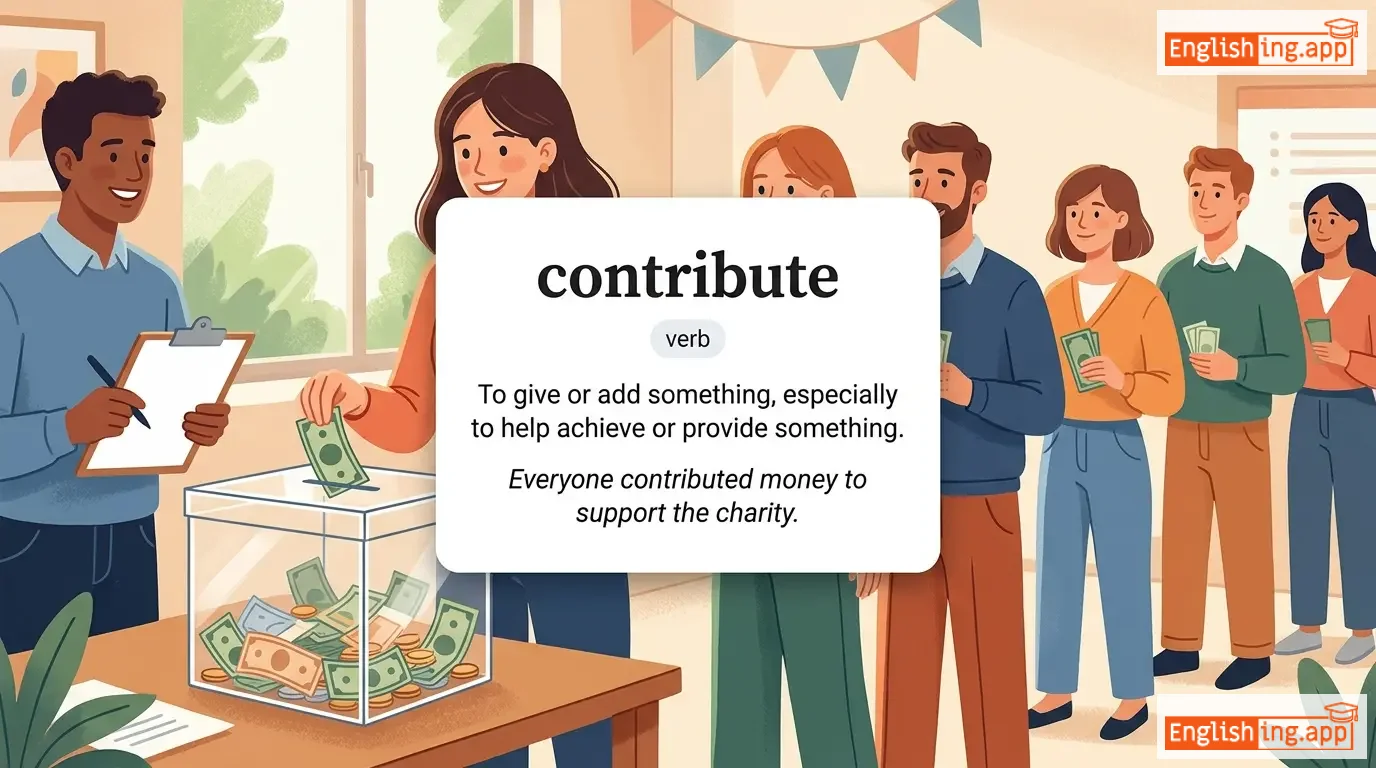
contribute definition card — visual illustration of the meaning
verb
/kənˈtrɪbjuːt/

To give or add something, especially to help achieve or provide something.

"Everyone contributed money to support the charity."
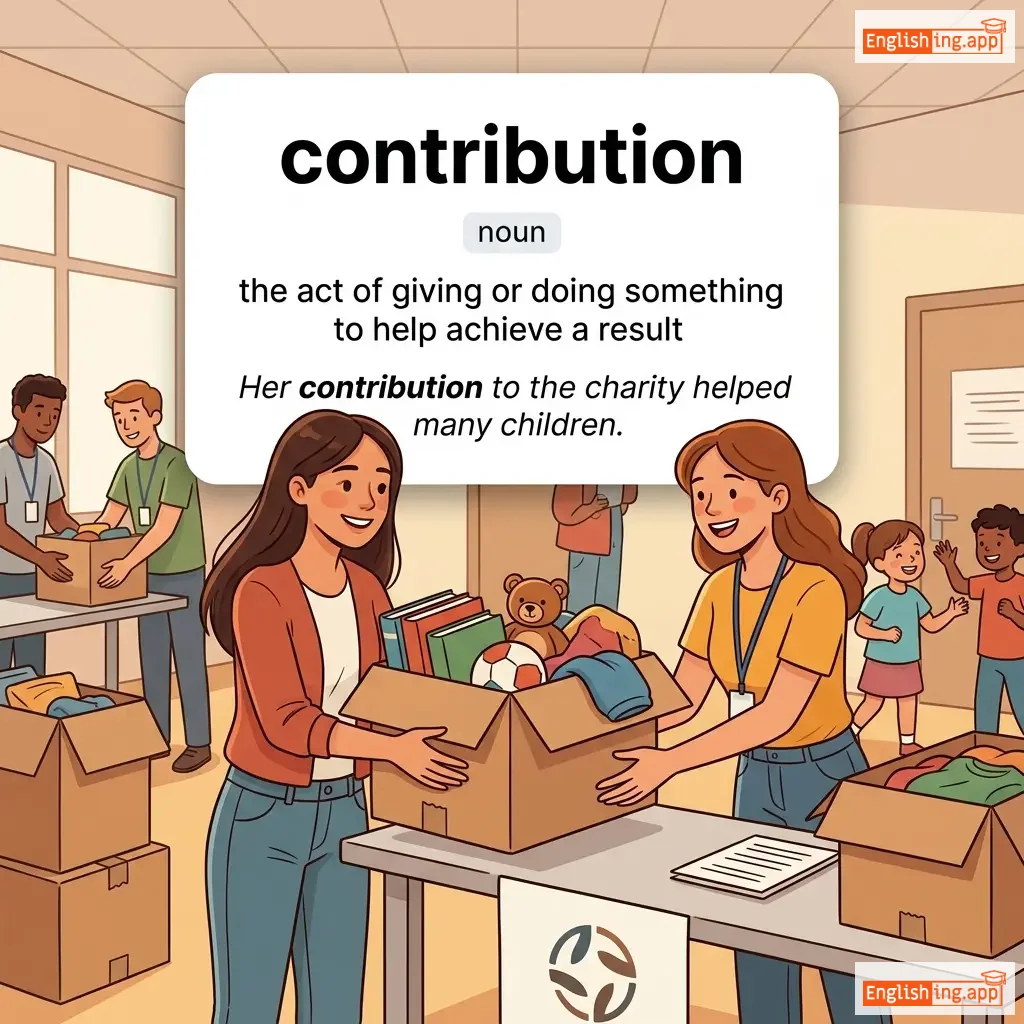
contribution definition card — visual illustration of the meaning
noun
/ˌkɒn.trɪˈbjuː.ʃən/
貢献 (kouken)

the act of giving or doing something to help achieve a result

"Her contribution to the charity helped many children."

"彼女の慈善活動への貢献は多くの子供たちを助けました。" (Kanojo no jizen katsudou e no kouken wa ooku no kodomotachi o tasukemashita.)
noun
/ˈkɒn.trɪ.bjʊ.tər/
貢献者 (kōken-sha)

a person who gives something to help achieve a result

"He was a regular contributor to the local newspaper."
"彼は地元の新聞の定期的な貢献者でした。" (Kare wa jimoto no shinbun no teikiteki na kōken-sha deshita.)
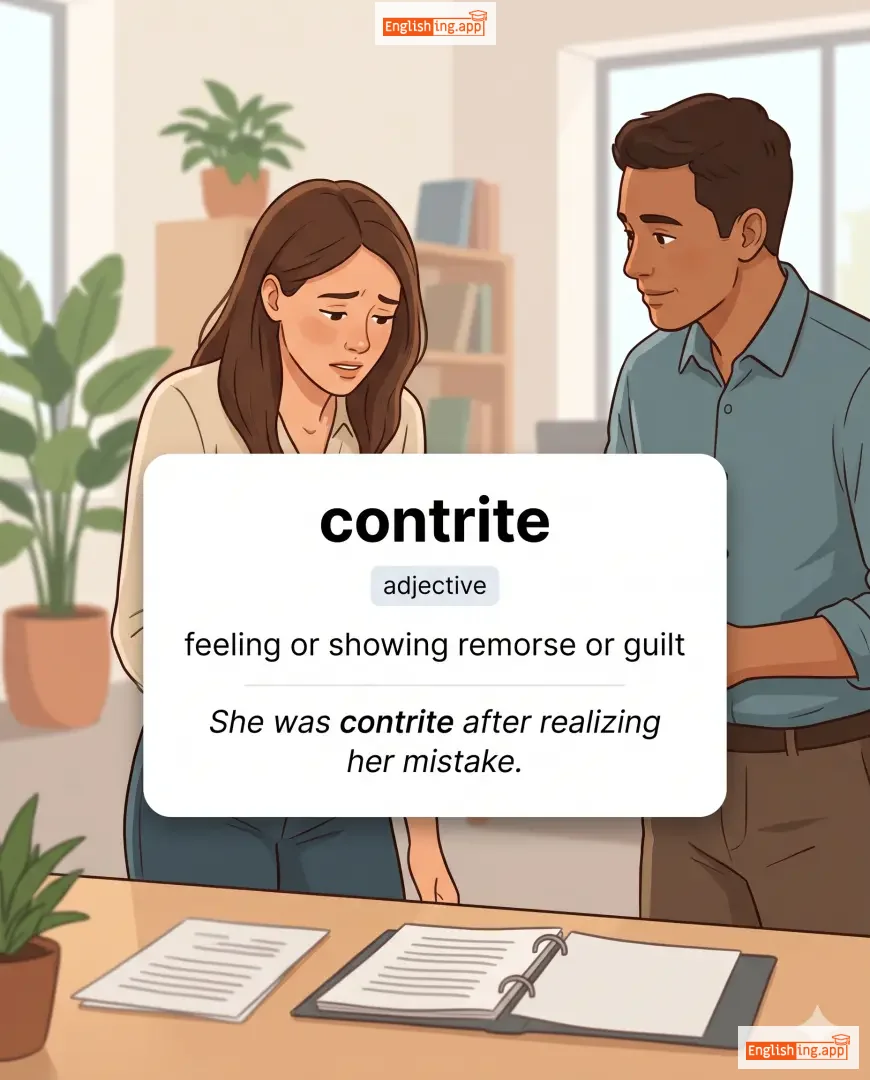
contrite definition card — visual illustration of the meaning
adjective
/kənˈtraɪt/
後悔している (kōkai shite iru)

feeling or showing remorse or guilt

"She was contrite after realizing her mistake."

"彼女は自分の間違いに気づいた後、後悔していた。" (Kanojo wa jibun no machigai ni kizuita ato, kōkai shite ita.)
noun
/kənˈtrɪʃ.ən/
悔悟 (kaigo)

the state of feeling remorseful and repentant

"His contrition was evident after the apology."

"謝罪後、彼の悔悟は明らかだった。" (Shazai-go, kare no kaigo wa akiraka datta.)
noun
/kənˈtraɪ.vəns/
装置や計画 (sōchi ya keikaku)

a device or plan that is cleverly or artificially created

"The clock was an intricate contrivance of gears and springs."

"その時計は歯車とバネの複雑な装置でした。" (Sono tokei wa haguruma to bane no fukuzatsu na sōchi deshita.)
verb
/kənˈtraɪv/
考案する (kōansuru)

to plan or devise cleverly or skillfully

"She contrived a clever plan to surprise her friends."

"彼女は友達を驚かせるために賢い計画を思いついた。" (Kanojo wa tomodachi o odorokasu tame ni kashikoi keikaku o omoitsuita.)
adjective
/kənˈtraɪvd/
人工的または強制的; 自然でないまたは自発的でない (jinkō-teki mata wa kyōsei-teki; shizen de nai mata wa jihatsuteki de nai)

artificial or forced; not natural or spontaneous

"The ending of the movie felt contrived and unrealistic."
"映画の結末は作り物で非現実的に感じました。" (Eiga no ketsumatsu wa tsukurimono de higenjitsuteki ni kanjimashita.)
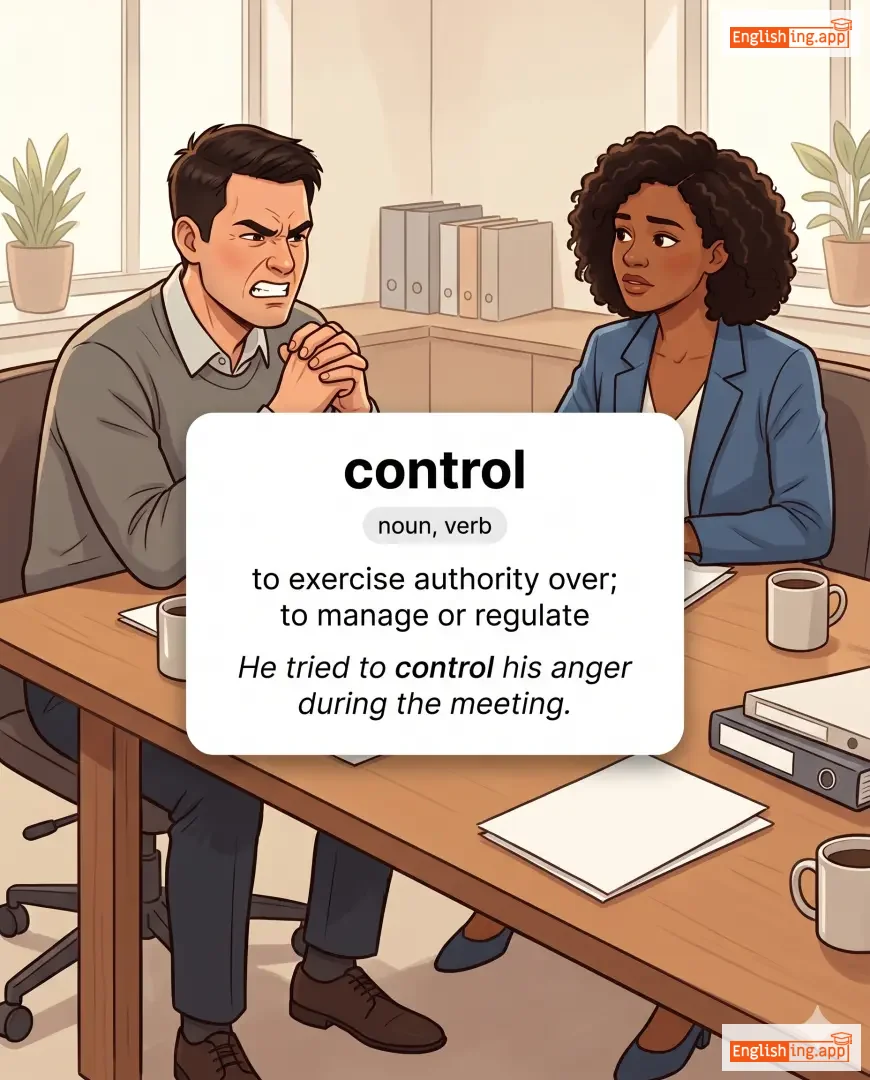
control definition card — visual illustration of the meaning
noun, verb
/kənˈtroʊl/
コントロールする (kontorōru suru)

to exercise authority over; to manage or regulate

"He tried to control his anger during the meeting."

"彼は会議中に怒りをコントロールしようとした。" (Kare wa kaigi-chū ni ikari o kontorōru shiyou to shita.)
adjective
/kənˈtroʊld/
管理された (kanri sareta)

managed or regulated carefully; kept within limits

"The experiment was conducted in a controlled environment."

"実験は管理された環境で行われました。" (jikken wa kanri sareta kankyo de okonawaremashita)
noun
/kənˈtroʊlər/
コントローラー (kontorōrā)

a person or device that manages, directs, or regulates something

"The game controller made it easy to play the video game."
"ゲームコントローラーはビデオゲームを簡単にプレイできるようにしました。" (Gēmu kontorōrā wa bideo gēmu o kantan ni purei dekiru yō ni shimashita.)
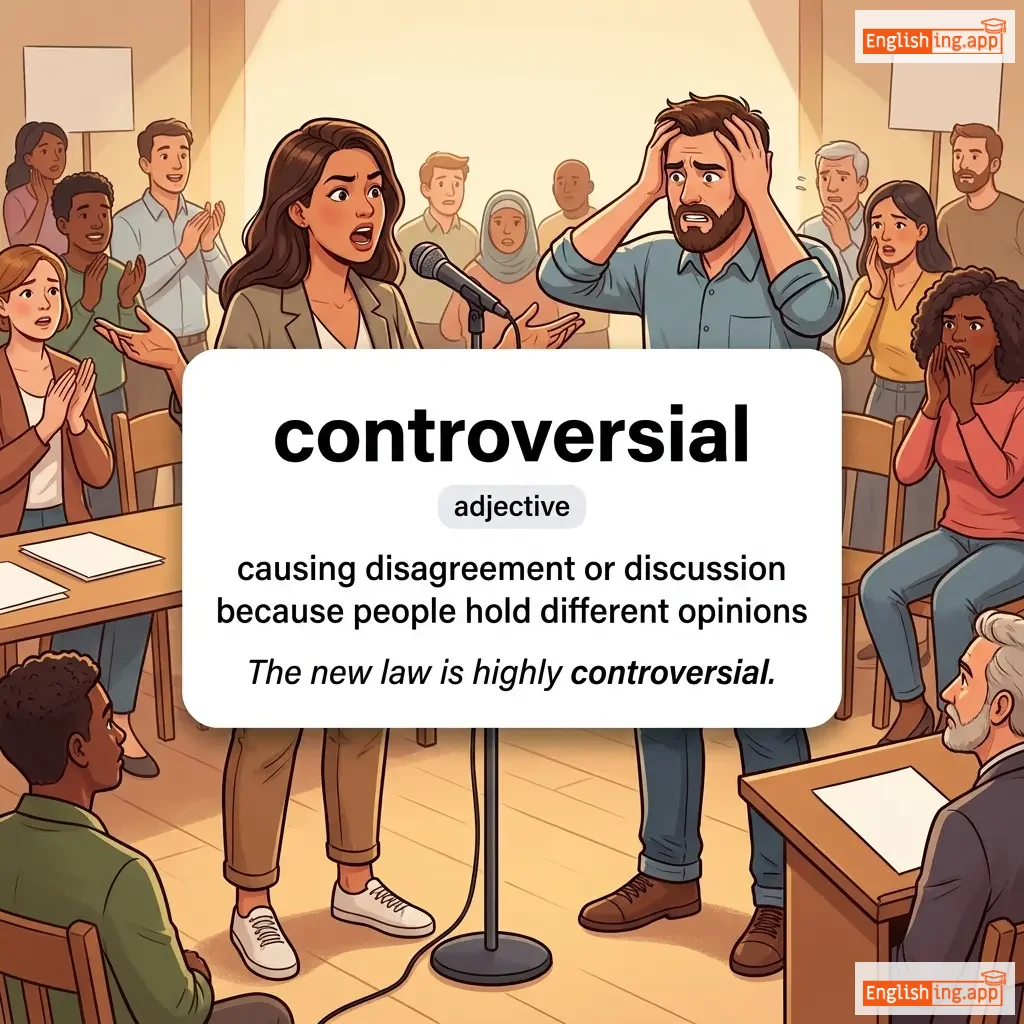
controversial definition card — visual illustration of the meaning
adjective
/ˌkɒn.trəˈvɜː.ʃəl/
議論を呼ぶ (giron o yobu)

causing disagreement or discussion because people hold different opinions

"The new law is highly controversial."

"新しい法律は非常に議論を呼んでいます。" (atarashī hōritsu wa hijō ni giron o yondeimasu)
noun
/ˈkɒn.trə.vɜːr.si/
論争 (ronzō)

A prolonged public disagreement or heated discussion.

"The new policy sparked a major controversy."

"新しい政策が大きな論争を引き起こしました。" (Atarashī seisaku ga ōkina ronzō o hikiokoshimashita.)
verb
/ˌkɒntrəˈvɜːrt/
反論する (hanron suru)

to dispute or argue against; to contradict

"The scientist controversed the previous research findings."
"その科学者は以前の研究結果に異議を唱えました。" (Sono kagakusha wa izen no kenkyu kekka ni igi o tonaemashita.)
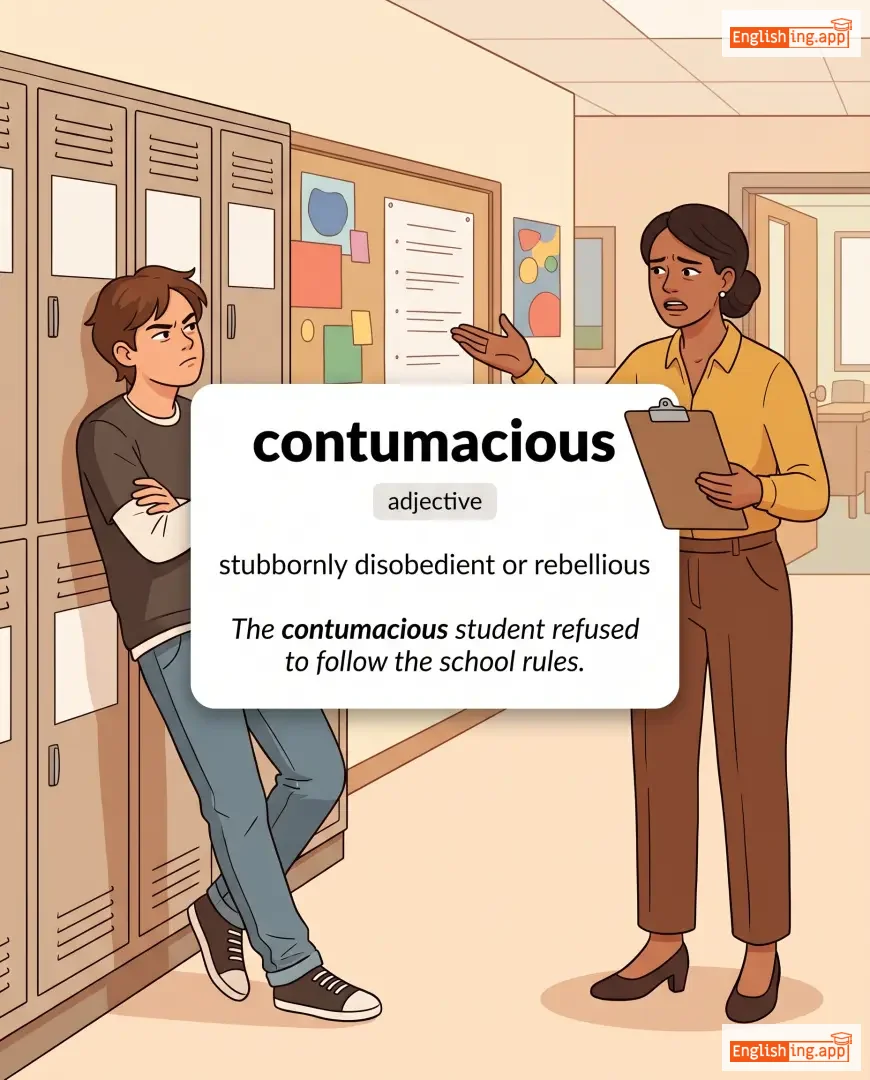
contumacious definition card — visual illustration of the meaning
adjective
/ˌkɒn.tjʊˈmeɪ.ʃəs/
反抗的な, 不従順な (hankō-teki na, fuzūjun na)

stubbornly disobedient or rebellious

"The contumacious student refused to follow the school rules."

"その反抗的な学生は学校の規則に従うことを拒否しました。" (Sono hankō-teki na gakusei wa gakkō no kisoku ni shitagau koto o kyohi shimashita.)
noun
/ˈkɒn.tjʊ.mə.si/
反抗, 頑固 (hankou, ganko)

stubborn refusal to obey authority

"His contumacy led to his suspension from the council."

"彼の反抗は、彼が評議会から停職された原因となった。" (Kare no hankou wa, kare ga hyougikai kara teishoku sareta gen'in to natta.)
noun
/ˈkɒn.tjʊ.mə.li/
侮辱, 軽蔑 (bujoku, keibetsu)

insulting or humiliating treatment

"He endured the contumely of his colleagues with patience."

"彼は同僚の軽蔑を忍耐強く耐えました。" (Kare wa dōryō no keibetsu o nintaizuyoku taemashita.)
verb
/kənˈtjuːz/
打撲する (daboku suru)

to bruise by striking or hitting

"He contused his arm when he fell off the bike."

"彼は自転車から落ちて腕を打撲しました。" (Kare wa jitensha kara ochite ude o daboku shimashita.)
noun
/kənˈtjuː.ʒən/
打撲、内出血 (daboku, naishukketsu)

a bruise or injury without breaking the skin

"The boxer had several contusions after the match."
"ボクサーは試合後にいくつかの打撲を受けていました。" (Bokusā wa shiai go ni ikutsuka no daboku o ukete imashita.)
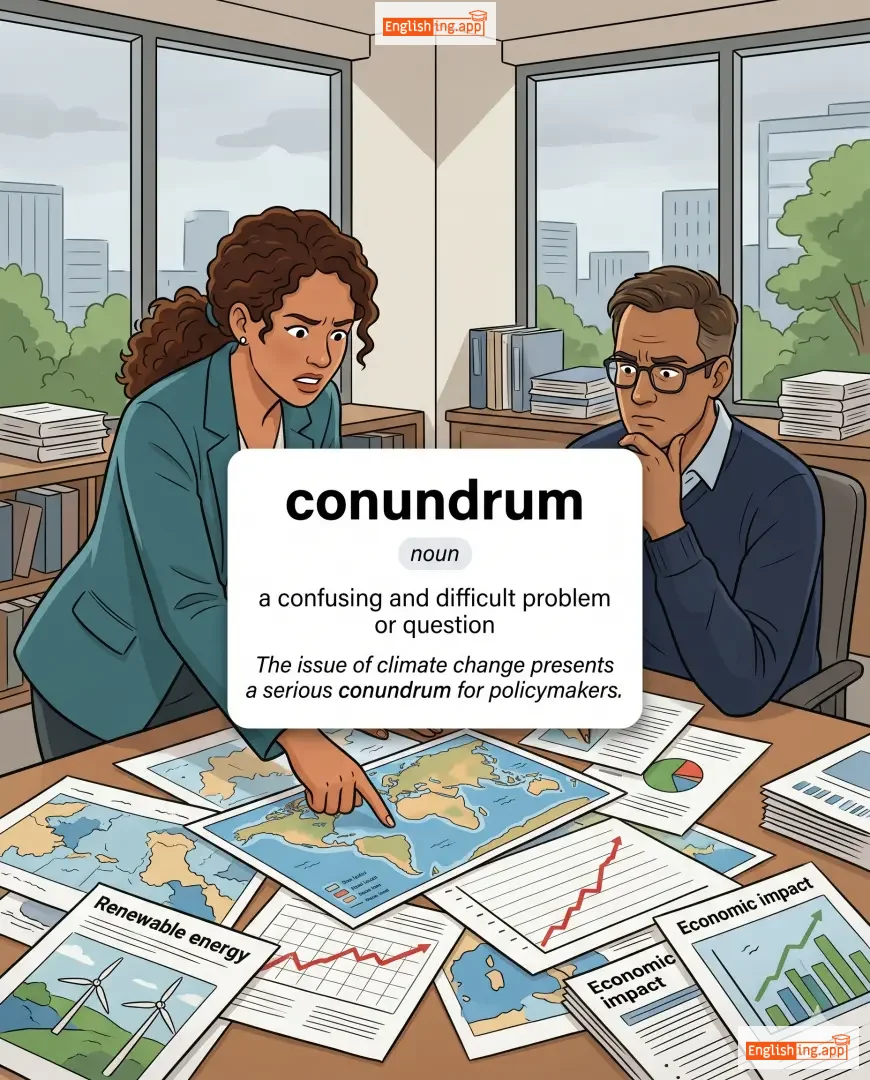
conundrum definition card — visual illustration of the meaning
noun
/kəˈnʌndrəm/
難問 (nanmon)

a confusing and difficult problem or question

"The issue of climate change presents a serious conundrum for policymakers."

"気候変動の問題は政策決定者にとって深刻な難問を呈しています。" (Kikou hendou no mondai wa seisaku kettei sha ni totte shinkoku na nanmon wo teishite imasu.)
verb
/ˌkɒnvəˈlɛs/
病気や治療後に健康と体力を回復すること (byouki ya chiryou go ni kenkou to tairyoku wo kaifuku suru koto)

to recover health and strength after illness or medical treatment

"After the surgery, she spent several weeks convalescing at home."

"手術後、彼女は家で数週間回復しました。" (Shujutsu go, kanojo wa ie de suushukan kaifuku shimashita.)
noun
/ˌkɒnvəˈlɛsns/
回復期 (kaifukuki)

the period of time spent recovering from an illness or medical treatment

"His convalescence lasted for almost two months after the accident."

"事故の後、彼の回復期はほぼ2ヶ月続きました。" (Jiko no ato, kare no kaifukuki wa hobo nikagetsu tsuzukimashita.)
adjective
/ˌkɒnvəˈlɛsnt/
回復中の、病気や治療から回復している (kaifukuchū no, byōki ya chiryo kara kaifuku shite iru)

recovering from an illness or medical treatment

"The hospital has a special ward for convalescent patients."

"病院には回復中の患者のための特別な病棟があります。" (Byōin ni wa kaifuku-chū no kanja no tame no tokubetsu na byōtō ga arimasu.)
verb
/kənˈviːn/
集まる、会議や集会を召集する (atsumaru, kaigi ya shukai wo shoushuu suru)

to come together or assemble, especially for a meeting or formal gathering

"The board will convene tomorrow to discuss the new policy."

"ボードは明日新しい方針を議論するために召集されます。" (Bōdo wa ashita atarashī hōshin o giron suru tame ni shōshū saremasu.)
noun
/kənˈviːniəns/
便利 (benri)

the state of being able to do something easily or comfortably

"Online shopping offers great convenience for busy people."

"オンラインショッピングは忙しい人々にとって大きな便利さを提供します。" (Onrain shoppingu wa isogashī hitobito ni totte ōkina benri sa o teikyō shimasu.)
adjective
/kənˈviː.ni.ənt/
便利 (benri)

suitable or easy to use; fitting in well with one's needs

"This shop is convenient for my daily needs."

"この店は私の日常的なニーズに便利です。" (Kono mise wa watashi no nichijō-tekina nīzu ni benri desu.)
convention definition card — visual illustration of the meaning
noun
/kənˈvɛnʃən/
コンベンション (konbenshon)

a widely accepted way of behaving or doing something; a formal meeting

"The annual writers' convention was held in Dhaka."

"作家の年次コンベンションはダッカで開催されました。" (Sakka no nenji konbenshon wa Dakka de kaisai saremashita.)
conventional definition card — visual illustration of the meaning
adjective
/kənˈvɛnʃənəl/
伝統的な (dentōteki na)

based on or in accordance with what is generally done or believed

"He prefers conventional medicine over alternative treatments."
"彼は代替療法よりも伝統的な医学を好みます。" (Kare wa daitai ryōhō yori mo dentōteki na igaku o konomimasu.)
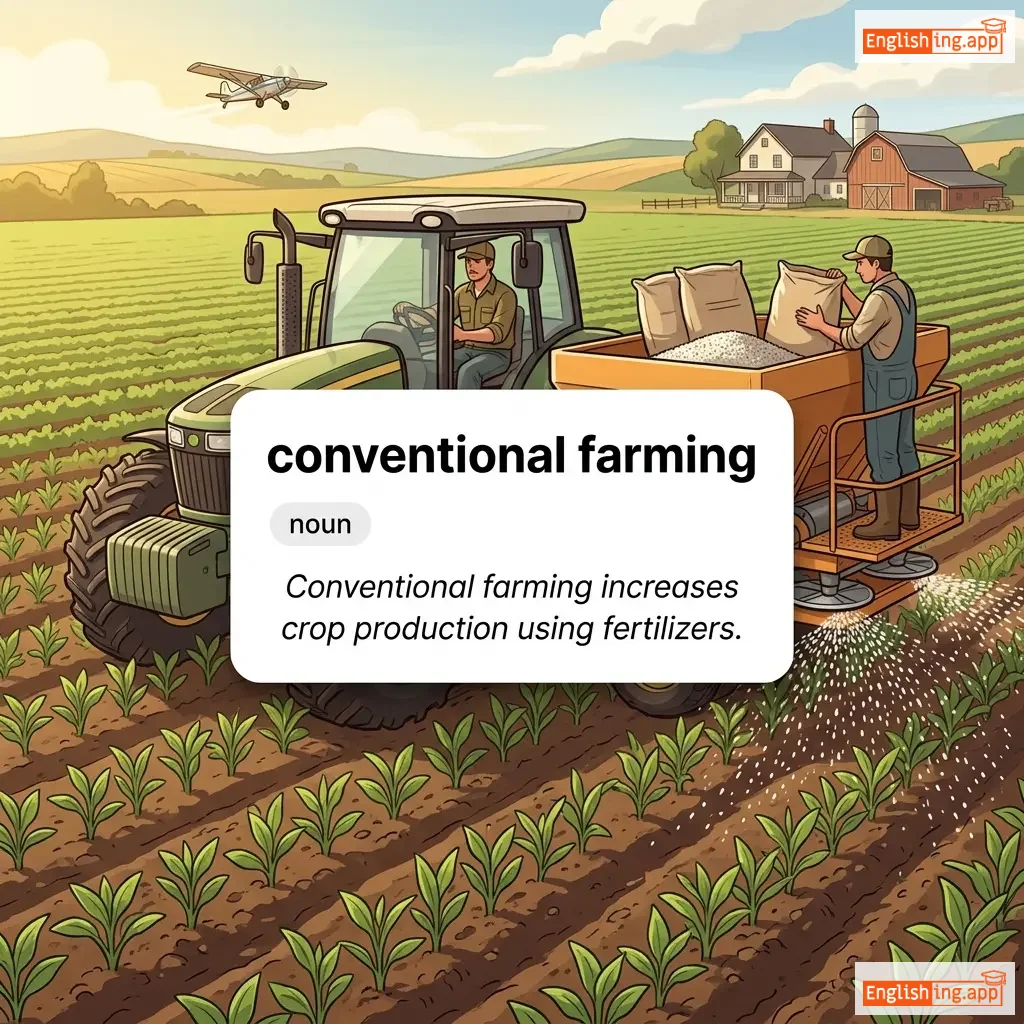
conventional farming definition card — visual illustration of the meaning
noun
/kənˈvɛn.ʃən.əl ˈfɑːr.mɪŋ/
従来型農業 (jūraigata nōgyō)

Traditional farming method using synthetic fertilizers, pesticides, and modern technology.

"Conventional farming increases crop production using fertilizers."
"従来型農業は肥料を使って作物の生産を増加させる。" (Jūraigata nōgyō wa hiryo o tsukatte sakumotsu no seisan o zōka saseru.)
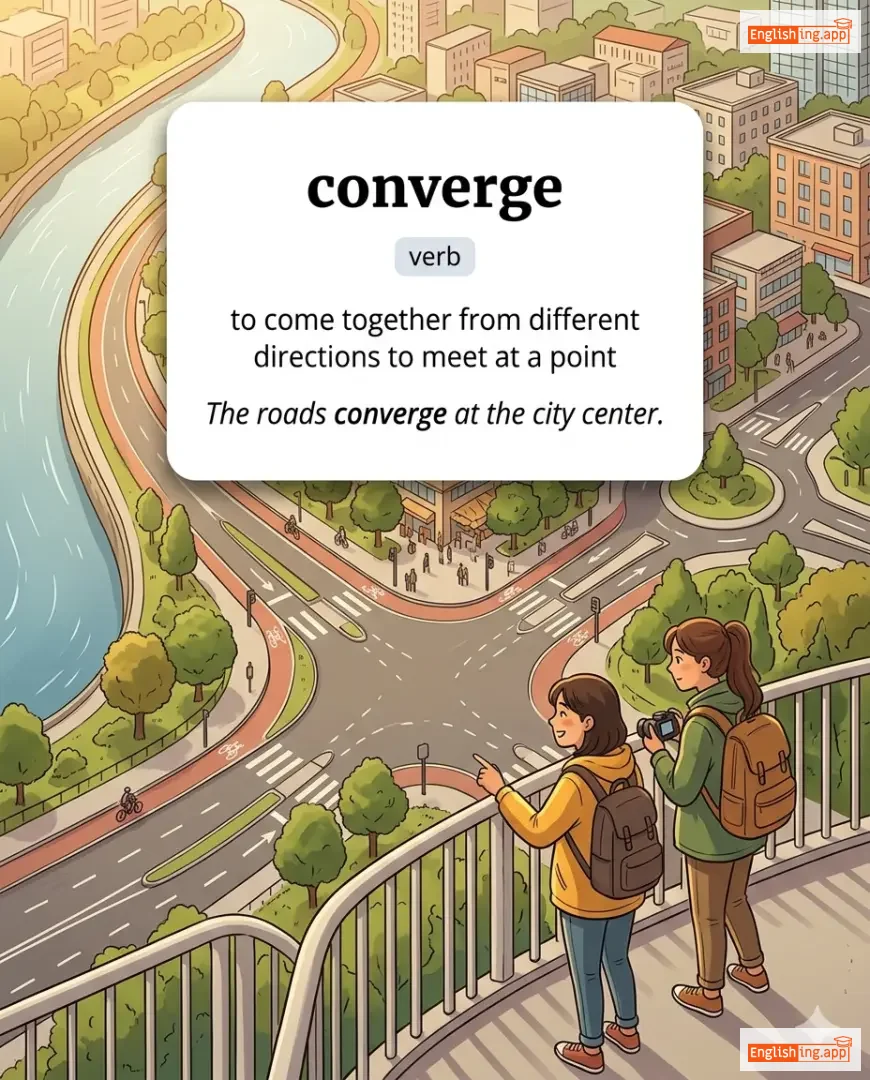
converge definition card — visual illustration of the meaning
verb
/kənˈvɜːrdʒ/
収束する (shūsoku suru)

to come together from different directions to meet at a point

"The roads converge at the city center."

"道路は市の中心で交差します。" (Dōro wa shi no chūshin de kōsa shimasu.)
convergence definition card — visual illustration of the meaning
noun
/kənˈvɜː.dʒəns/
収束 (shūshoku)

the process of coming together or becoming similar

"The convergence of technology and education is creating new opportunities."

"技術と教育の収束は新しい機会を生み出しています。" (Gijutsu to kyōiku no shūshoku wa atarashī kikai o umidashiteimasu.)
adjective
/kənˈvɜːrdʒənt/
収束する (shūsoku suru)

tending to move toward a common point or result

"The two rivers have a convergent path before entering the lake."

"2つの川は湖に入る前に収束する道を持っています。" (Futatsu no kawa wa mizuumi ni hairu mae ni shūsoku suru michi o motteimasu.)
adjective
/kənˈvɜːrsənt/
熟知、精通 (jukuchi, seikou)

familiar with or knowledgeable about something

"She is conversant with the latest developments in technology."

"彼女は最新の技術の進展に精通しています。" (Kanojo wa saishin no gijutsu no shinten ni seikou shiteimasu.)
noun
/ˌkɒnvəˈseɪʃn/
会話 (kaiga)

an informal talk between two or more people, in which ideas, feelings, and thoughts are exchanged

"We had a long conversation about future plans."

"私たちは未来の計画について長い会話をしました。" (Watashitachi wa mirai no keikaku ni tsuite nagai kaiwa o shimashita.)
converse definition card — visual illustration of the meaning
verb
/kənˈvɜːrs/
会話する (kaiwa suru)

to engage in spoken exchange of ideas or talk

"They often converse about literature and art."

"彼らはしばしば文学と芸術について会話を交わします。" (Karera wa shibashiba bungaku to geijutsu ni tsuite kaiwa o kawashimasu.)
adverb
/kənˈvɜːrsli/
逆に (gyaku ni)

in an opposite or contrary manner

"He is rich, conversely, his brother struggles financially."

"彼は金持ちだが、逆に彼の兄は経済的に苦しんでいる。" (Kare wa kanemochi da ga, gyaku ni kare no ani wa keizaiteki ni kurushinde iru.)
Conversion definition card — visual illustration of the meaning
noun
/kənˈvɜːrʒən/
転換, 変化 (tenkan, henka)

the act or process of changing from one form to another

"The conversion of the old factory into apartments took two years."

"古い工場をアパートに転換するのに2年かかりました。" (Furui kōjō o apāto ni tenkan suru no ni 2-nen kakarimashita.)