語彙集

英単語辞書 | 単語の意味、定義、例文

noun
/klɔː/
(tsume)

sharp curved nail on the foot of an animal or bird

"The cat extended its sharp claws to climb the tree."

"猫は木に登るために鋭い爪を伸ばした。" (Neko wa ki ni noboru tame ni surudoi tsume o nobashita.)
noun
/kleɪ/
粘土 (nendo)

a natural material made of fine earth that becomes hard when baked, used for making pottery

"The artist molded the wet clay into a beautiful vase."

"アーティストは湿った粘土を使って美しい花瓶を作りました。" (Ātisuto wa shimetta nendo o tsukatte utsukushī kabin o tsukurimashita.)
verb
/kliːn/
掃除する (souji suru)

To make something free from dirt, marks, or mess.

"She cleaned the kitchen before the guests arrived."
"彼女はゲストが到着する前にキッチンを掃除しました。" (Kanojo wa gesuto ga tōchaku suru mae ni kicchin o sōji shimashita.)
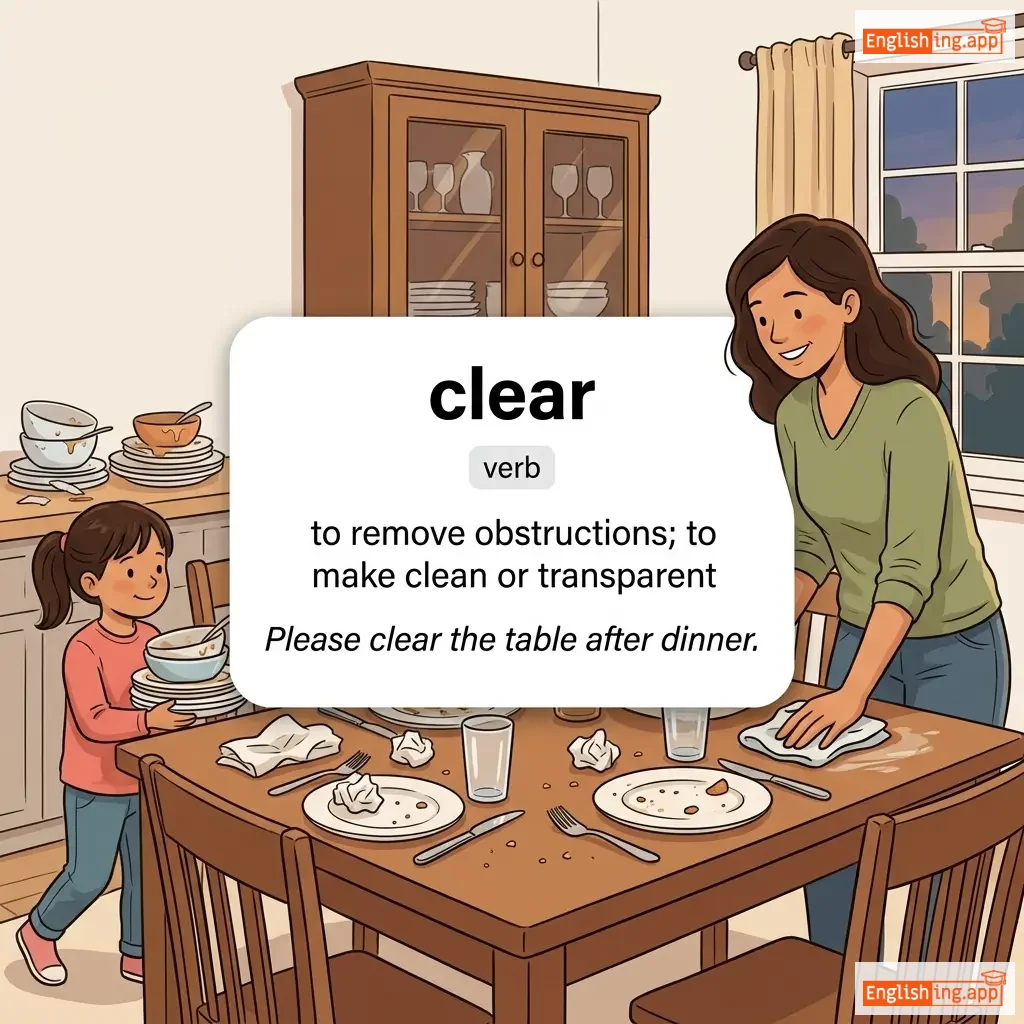
clear definition card — visual illustration of the meaning
adjective
/klɪr/
明確 (meikaku)

Easy to perceive, understand, or see through.

"It was a clear day with no clouds in the sky."

"それは雲一つない明確な日でした。" (Sore wa kumo hitotsu nai meikaku na hi deshita.)
noun
/ˈklɪərəns/
許可 / 承認 (kyoka / shōnin)

official permission or authorization; the removal of something unwanted; the distance between two objects

"The pilot received clearance to land the plane."

"パイロットは着陸許可を受けました。" (Pairotto wa chakuriku kyoka o ukemashita.)
adverb
/ˈklɪrli/
はっきりと (hakkiri to)

In a way that is easy to perceive, understand, or see.

"She spoke clearly so that everyone could understand."
"彼女はみんなが理解できるように、はっきりと話した。" (Kanojo wa minna ga rikai dekiru yō ni, hakkiri to hanashita.)
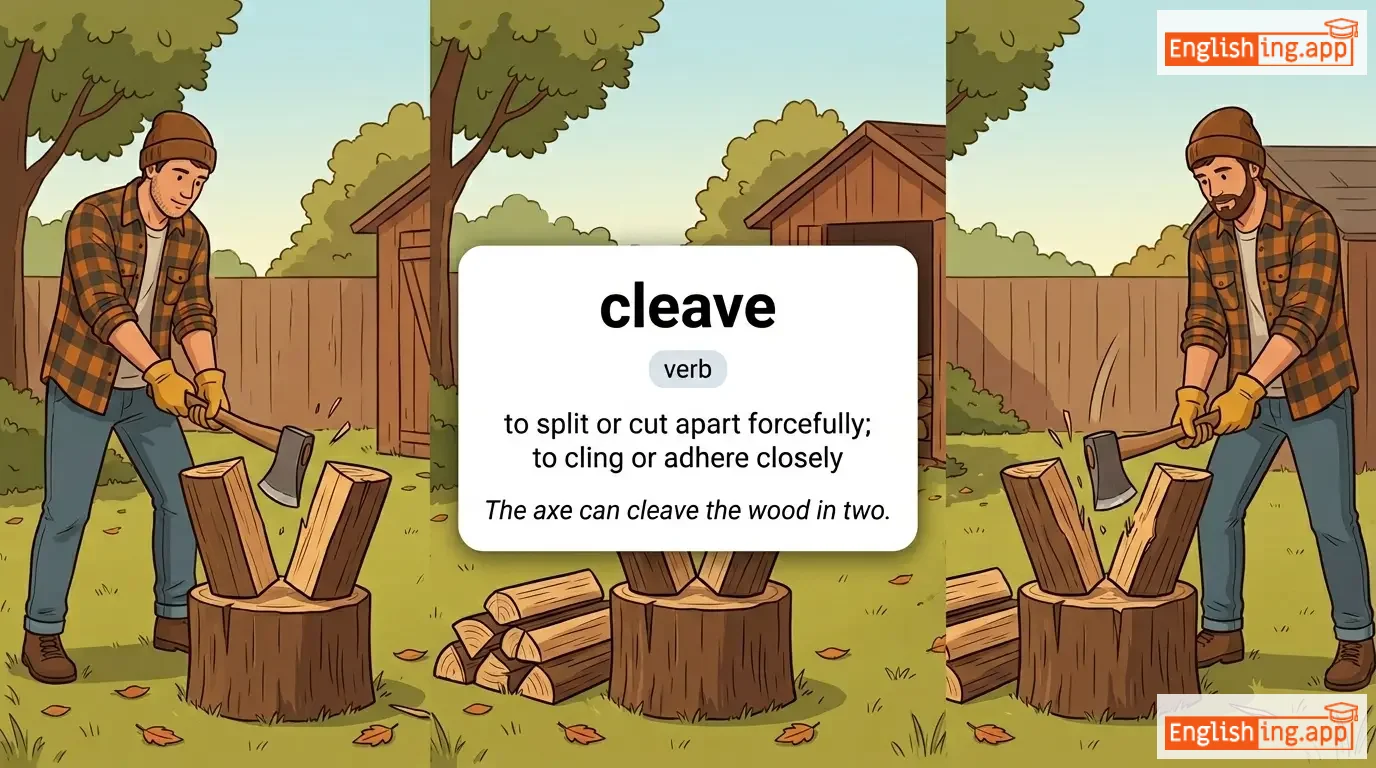
cleave definition card — visual illustration of the meaning
verb
/kliːv/
切り裂く / くっつく (kirisaku / kuttsuku)

to split or cut apart forcefully; to cling or adhere closely

"The axe can cleave the wood in two."

"斧は木を2つに切り裂くことができます。" (Ono wa ki o futatsu ni kirisaku koto ga dekimasu.)
noun
/ˈkliː.vər/
大きな包丁 (ookina hōchō)

a heavy knife with a broad blade used for chopping meat or vegetables

"The chef used a cleaver to chop the chicken bones."

"シェフはチキンの骨を切るために大きな包丁を使いました。" (Shefu wa chikin no hone o kiru tame ni ōkina hōchō o tsukaimashita.)
noun/adjective
/klɛft/
ひび (hibi)

a split or crack; a space or opening made by cleavage

"The goat disappeared into a cleft in the rocks."

"ヤギは岩のひびに消えました。" (Yagi wa iwa no hibi ni kiemashita.)
noun
/ˈklɛmənsi/
寛容 (kanyou)

mercy, leniency, or forgiveness shown towards someone

"The judge showed clemency and reduced his sentence."

"裁判官は寛容を示し、彼の判決を軽減しました。" (Saibankan wa kanyou o shimeshi, kare no hanketsu o keigen shimashita.)
adjective
/ˈklɛmənt/
温和な / 慈悲深い (onga na / jihibukai)

mild or merciful; describing weather as mild and pleasant

"The prisoners hoped for a clement judge."

"囚人たちは温和な裁判官を望んでいた。" (Shūjin-tachi wa onga na saiban-kan o nozonde ita.)
noun
/klɑːrk/
職員 (shokuin)

A person employed in an office or bank to keep records, accounts, and undertake other routine administrative duties.

"The clerk helped me find the correct form."

"職員は私が正しいフォームを見つけるのを手伝ってくれました。" (Shokuin wa watashi ga tadashii fōmu wo mitsukeru no wo tetsudatte kuremashita.)
adjective
/ˈklɛvər/
賢い, すばらしい (kashikoi, subarashii)

Quick to understand, learn, and devise ideas or solutions; intelligent.

"She is clever enough to solve the puzzle quickly."

"彼女はそのパズルを素早く解くのに十分賢いです。" (kanojo wa sono pazuru o subayaku toku no ni jūbun kashikoi desu.)
noun
/kliːˈʃeɪ/
決まり文句 (kimarimonku)

An overused expression or idea that has lost its originality or impact.

"The speech was filled with old clichés that failed to inspire the audience."

"そのスピーチは古い決まり文句でいっぱいで、聴衆を感動させることができませんでした。" (Sono supīchi wa furui kimarimonku de ippai de, chōshū o kandō saseru koto ga dekimasen deshita.)
verb
/klɪk/
クリックする (kurikku suru)

to press a button on a computer mouse or similar device

"She clicked the link to open the website."

"彼女はリンクをクリックしてウェブサイトを開きました。" (Kanojo wa rinku o kurikku shite u~ebusaito o hirakimashita.)
noun
/ˈklaɪənt/
クライアント (kuraianto)

A person or organization using the services of a professional or company.

"The lawyer met with her client to discuss the case."
"弁護士はクライアントと会ってケースを話し合った" (bengoshi wa kuraianto to atte kēsu o hanashiatta)
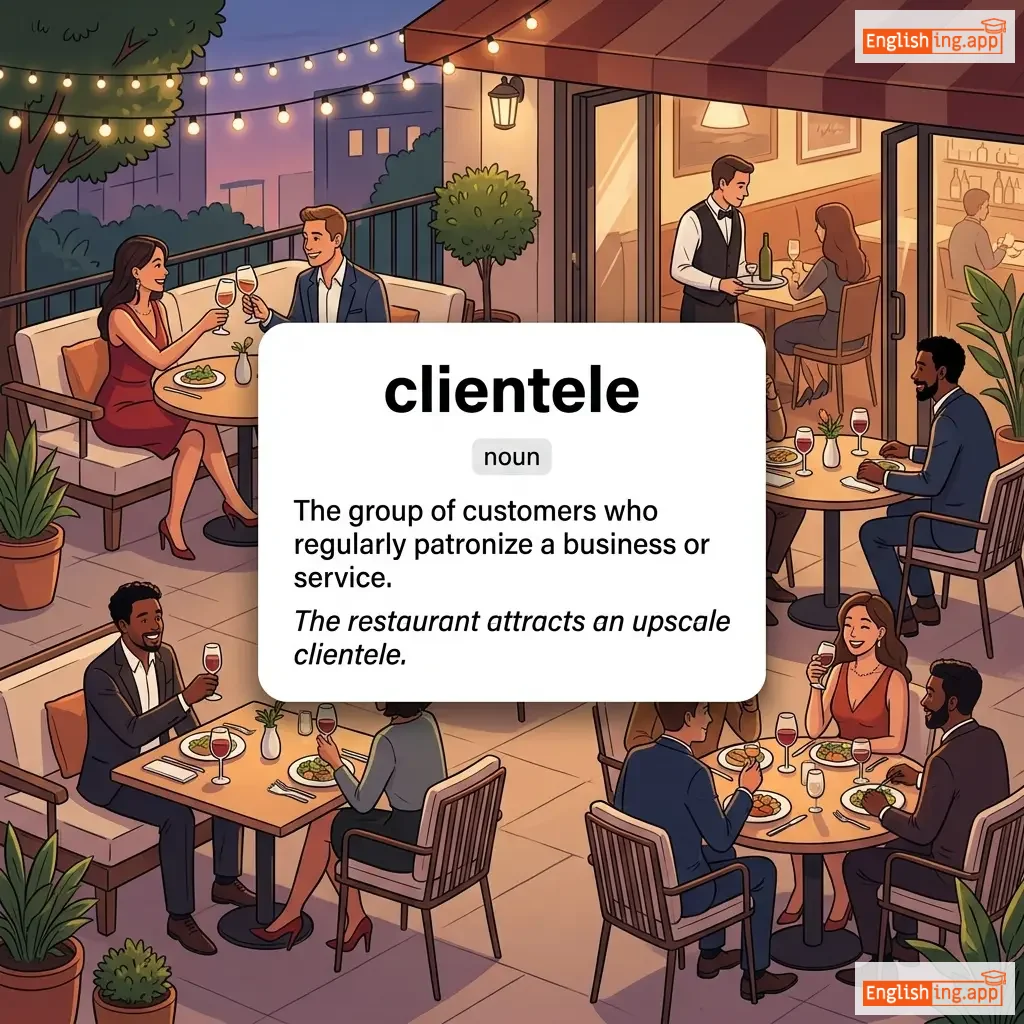
clientele definition card — visual illustration of the meaning
noun
/ˌklaɪənˈtɛl/
顧客層 (kokyakusou)

The group of customers who regularly patronize a business or service.

"The restaurant attracts an upscale clientele."

"そのレストランは上級の顧客層を引き付けている。" (Sono resutoran wa joukyuu no kokyakusou o hikitsukete iru.)
noun
/klɪf/
(gake)

a high, steep face of rock or earth

"The waves crashed against the bottom of the cliff."

"波は崖の底にぶつかりました。" (Nami wa gake no soko ni butsukarimashita.)
adjective
/klaɪˈmæktɪk/
クライマティック (kuraimatikku)

Relating to the most exciting or important moment of something.

"The film ended with a climactic battle scene."
"映画はクライマティックな戦闘シーンで終わった。" (Eiga wa kuraimatikku na sentou shi-n de owatta.)
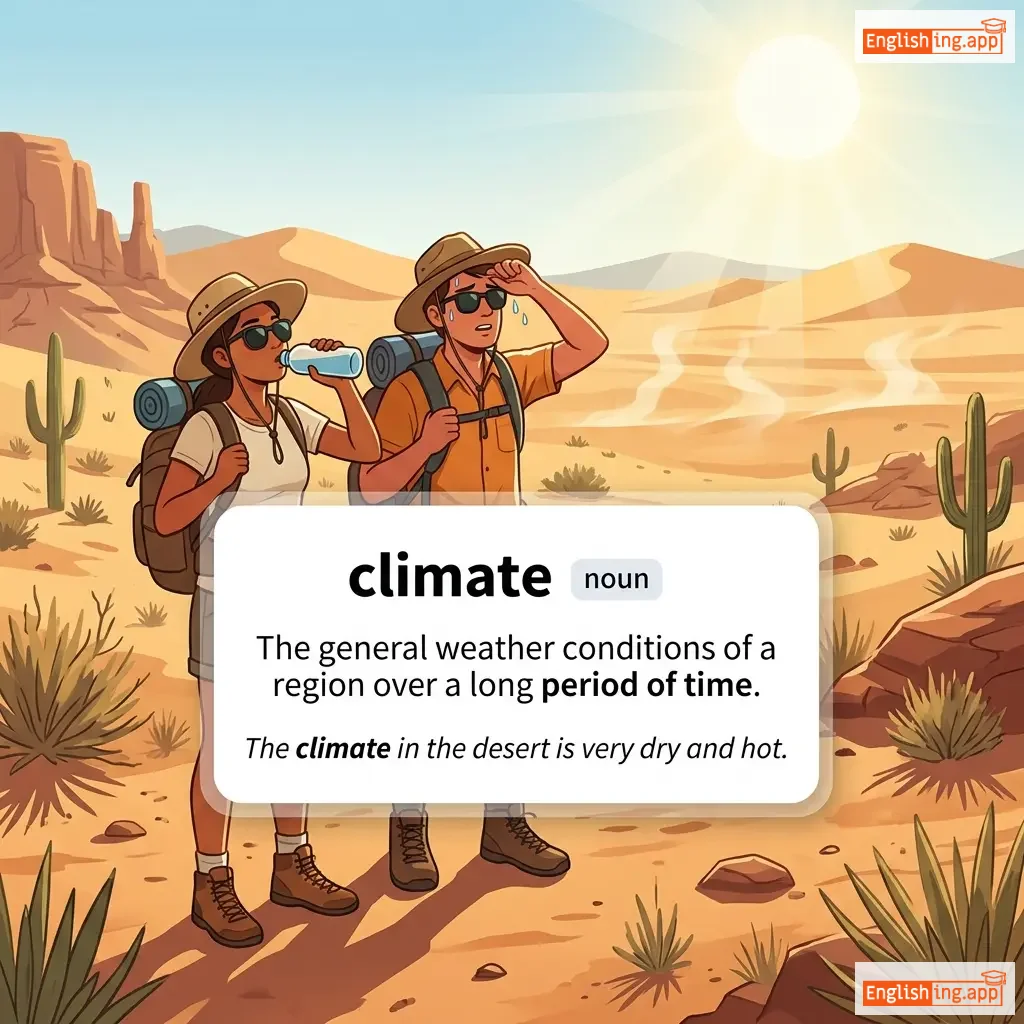
climate definition card — visual illustration of the meaning
noun
/ˈklaɪ.mət/
気候 (kikou)

The general weather conditions of a region over a long period of time.

"The climate in the desert is very dry and hot."
"砂漠の気候は非常に乾燥していて、暑いです。" (Sabaku no kikou wa hijō ni kansō shite ite, atsui desu.)
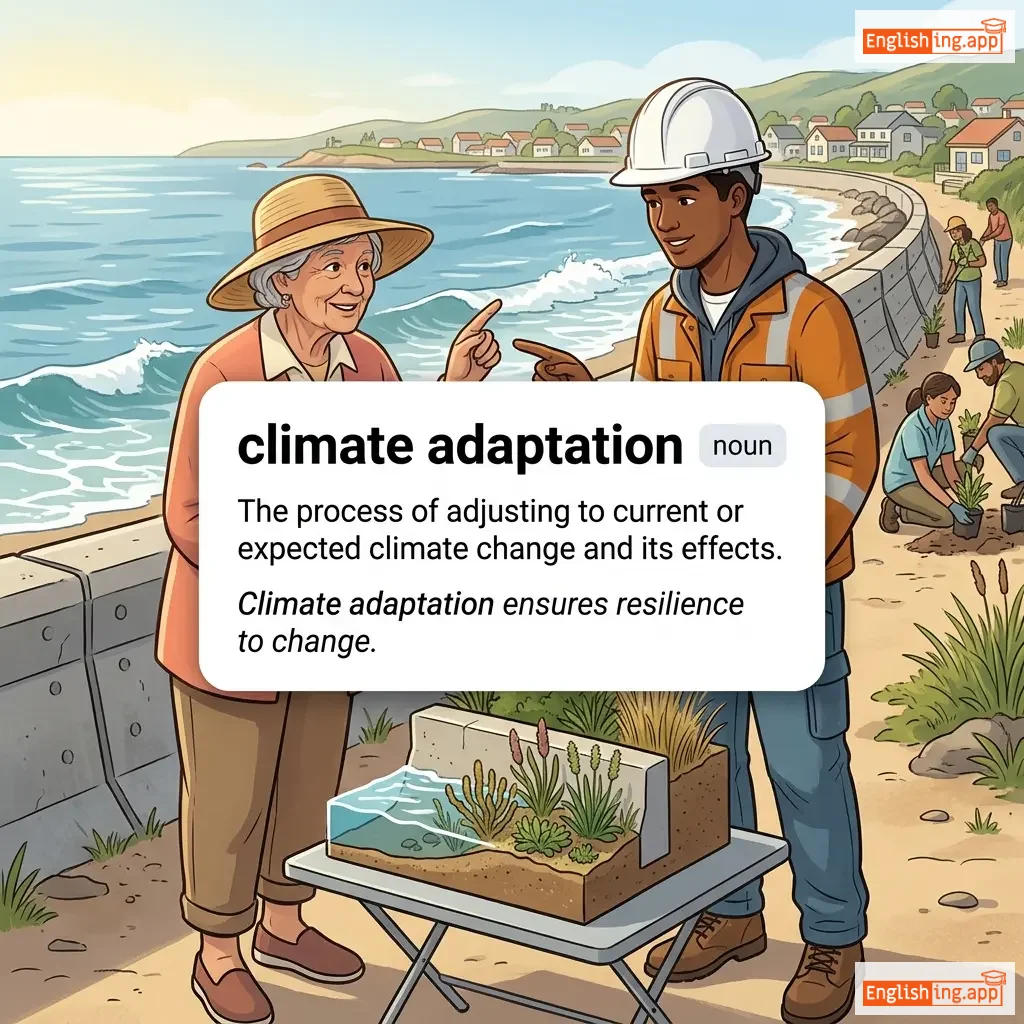
climate adaptation definition card — visual illustration of the meaning
noun
/ˈklaɪ.mət əˌdæp.teɪ.ʃən/
気候適応 (kikō tekiō)

The process of adjusting to current or expected climate change and its effects.

"Climate adaptation ensures resilience to change."
"気候適応は変化に対する回復力を確保します。" (Kikō tekiō wa henka ni taisuru kaifukuryoku o kakuho shimasu.)
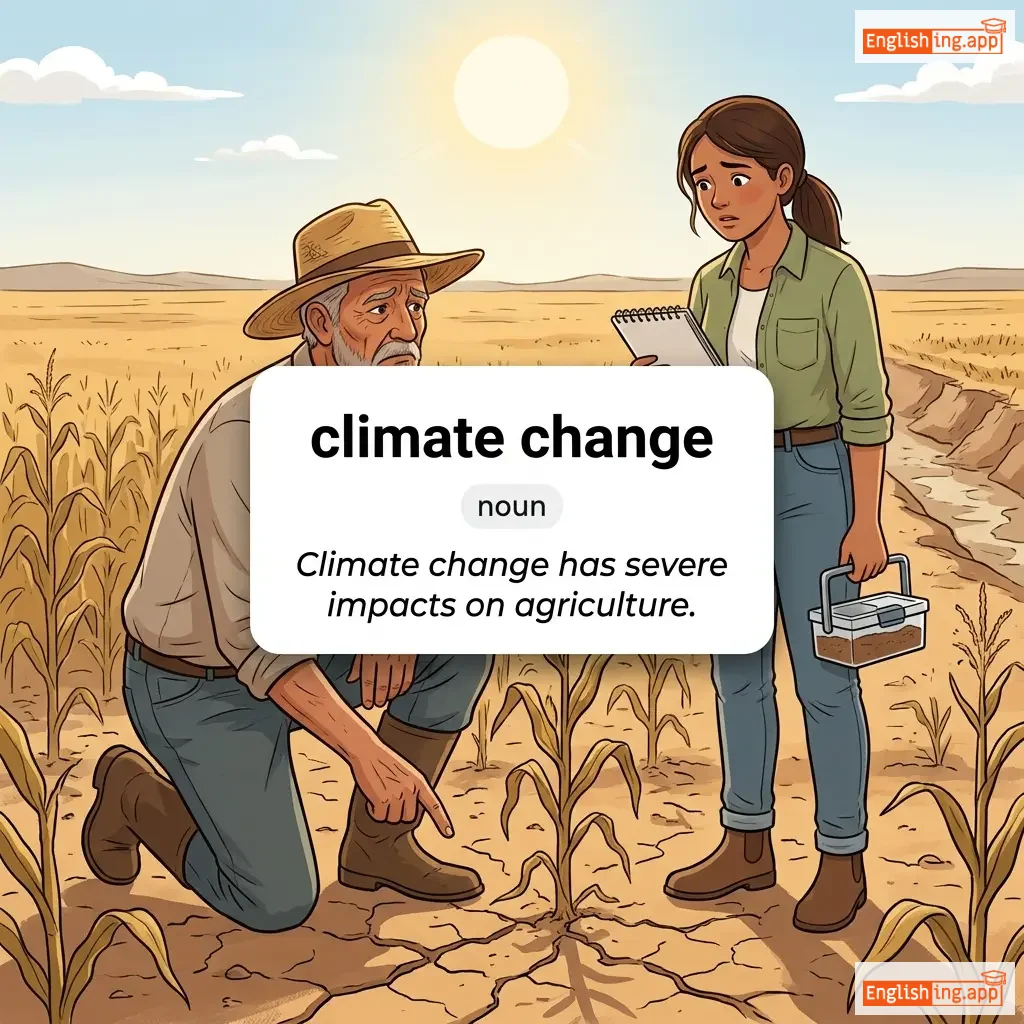
climate change definition card — visual illustration of the meaning
noun
ˈklaɪ.mət tʃeɪndʒ
気候変動 (kikou hendou)

Long-term changes in global or regional climate patterns, primarily caused by human activities.

"Climate change has severe impacts on agriculture."
"気候変動は農業に深刻な影響を与えています。" (Kikou hendou wa nōgyō ni shinkoku na eikyō o ataeteimasu.)
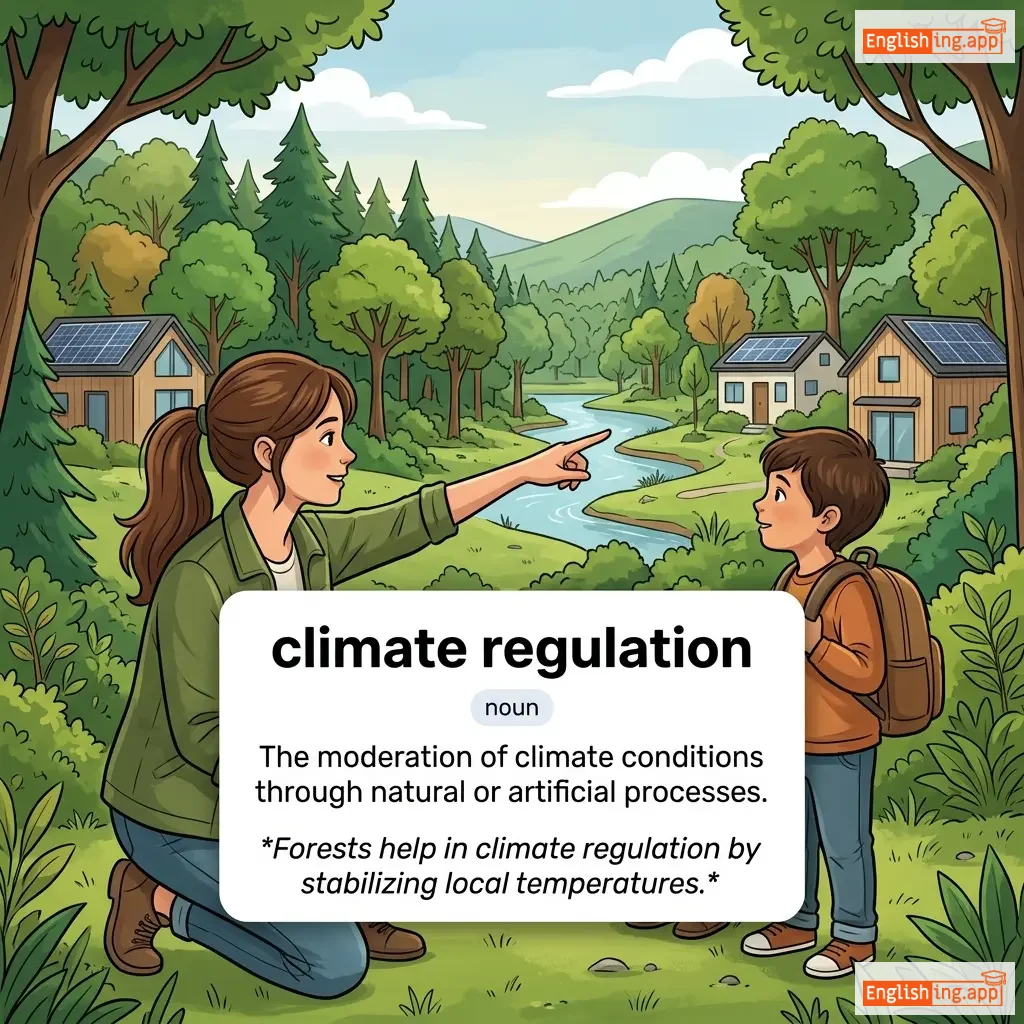
climate regulation definition card — visual illustration of the meaning
noun
ˈklaɪmət ˌrɛɡjʊˈleɪʃən
気候調整 (kikō chōsei)

The moderation of climate conditions through natural or artificial processes.

"Forests help in climate regulation by stabilizing local temperatures."
"森林は地域の温度を安定させることで気候調整に役立ちます。" (Shinrin wa chiiki no ondo o antei saseru koto de kikō chōsei ni yakudachimasu.)
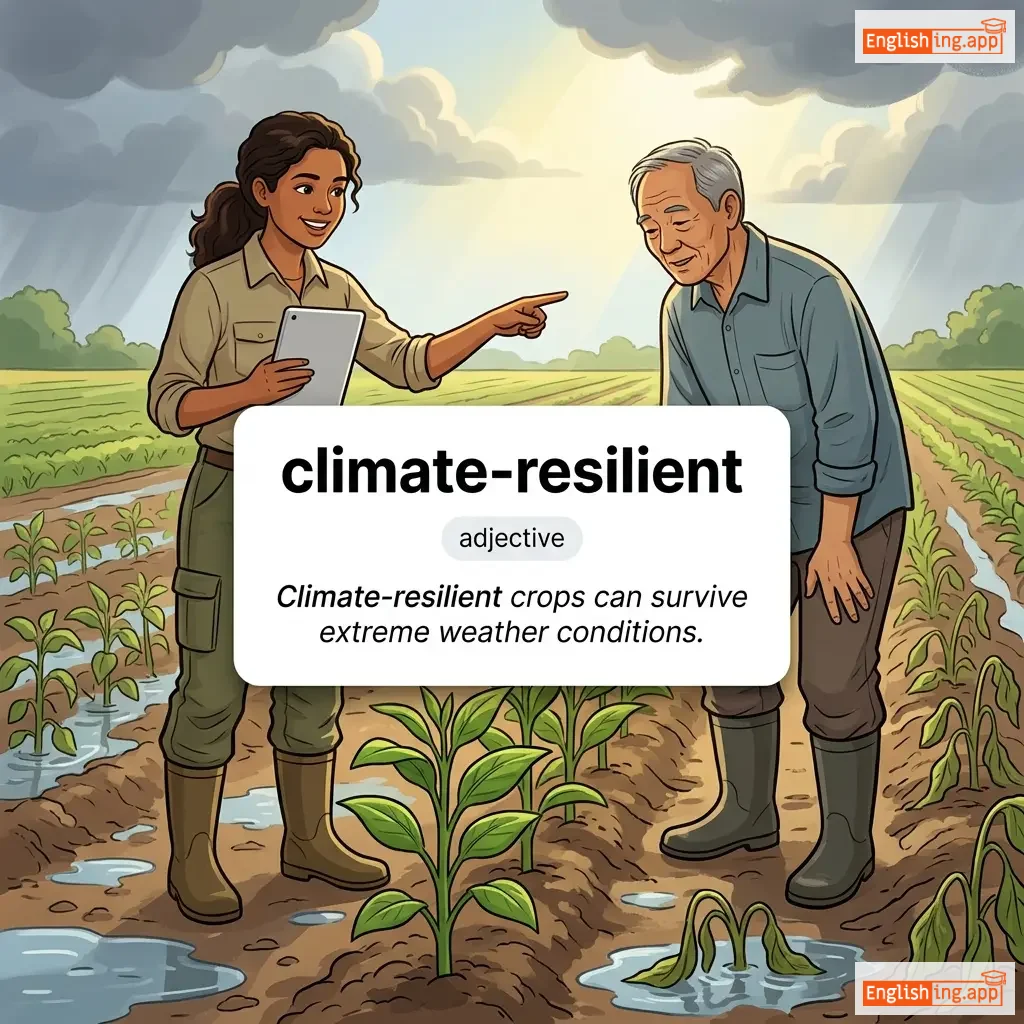
climate-resilient definition card — visual illustration of the meaning
adjective
ˈklaɪ.mət rɪˈzɪl.i.ənt
気候に強い (kikou ni tsuyoi)

Able to cope with the adverse effects of climate change; sustainable and adaptable.

"Climate-resilient crops can survive extreme weather conditions."
"気候に強い作物は極端な天候にも耐えられます。" (kikou ni tsuyoi sakumotsu wa kyokutan na tenkou ni mo taeraremasu)
climatic conditions definition card — visual illustration of the meaning
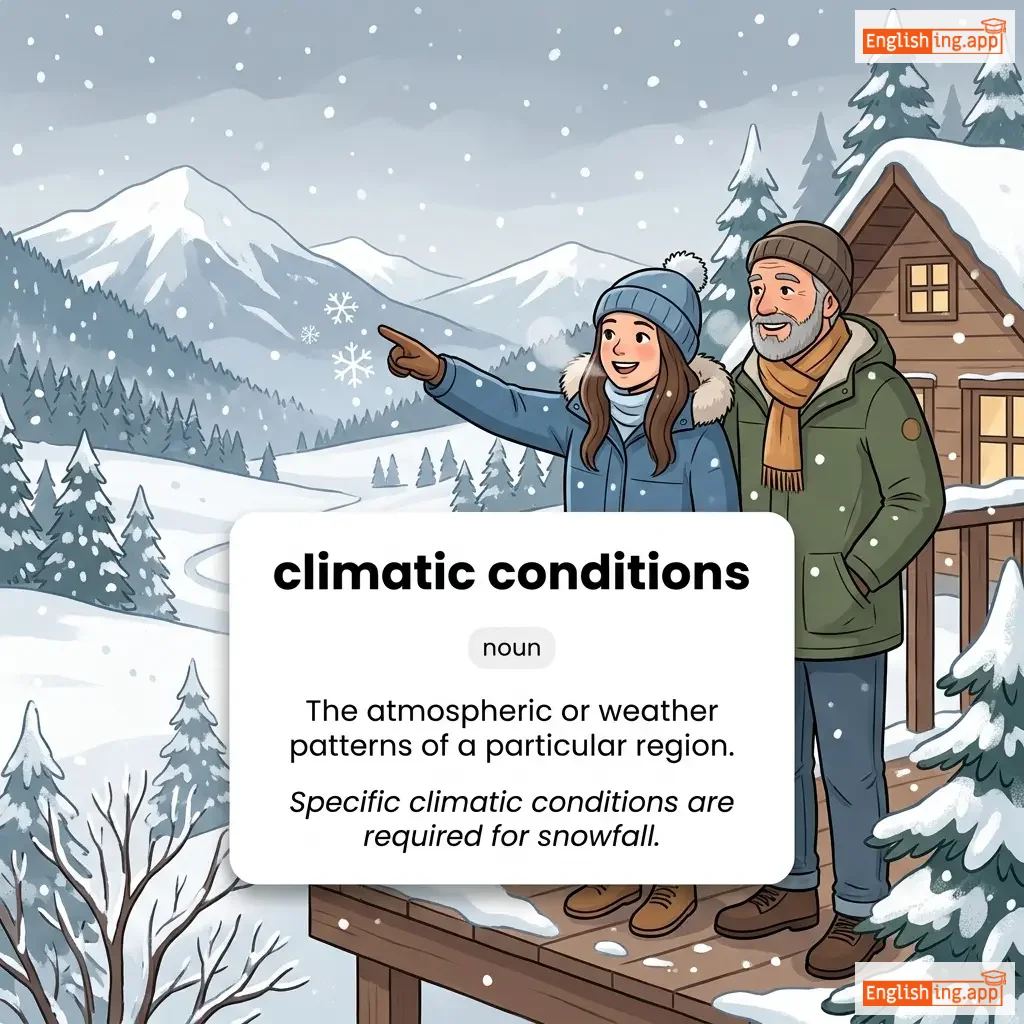
noun
ক্লাইম্যাটিক কন্ডিশন্স
気候条件 (kikō jōken)

The atmospheric or weather patterns of a particular region.

"Specific climatic conditions are required for snowfall."

"雪が降るためには特定の気候条件が必要です。" (Yuki ga furu tame ni wa tokutei no kikō jōken ga hitsuyō desu.)
noun
/ˈklaɪ.mæks/
クライマックス (kuraimakkusu)

the most intense, exciting, or important point of something; the highest or most intense point in a process

"The movie reached its climax during the final battle scene."
"映画は最後の戦闘シーンでクライマックスに達しました。" (Eiga wa saigo no sentō shīn de kuraimakkusu ni tasshimashita.)
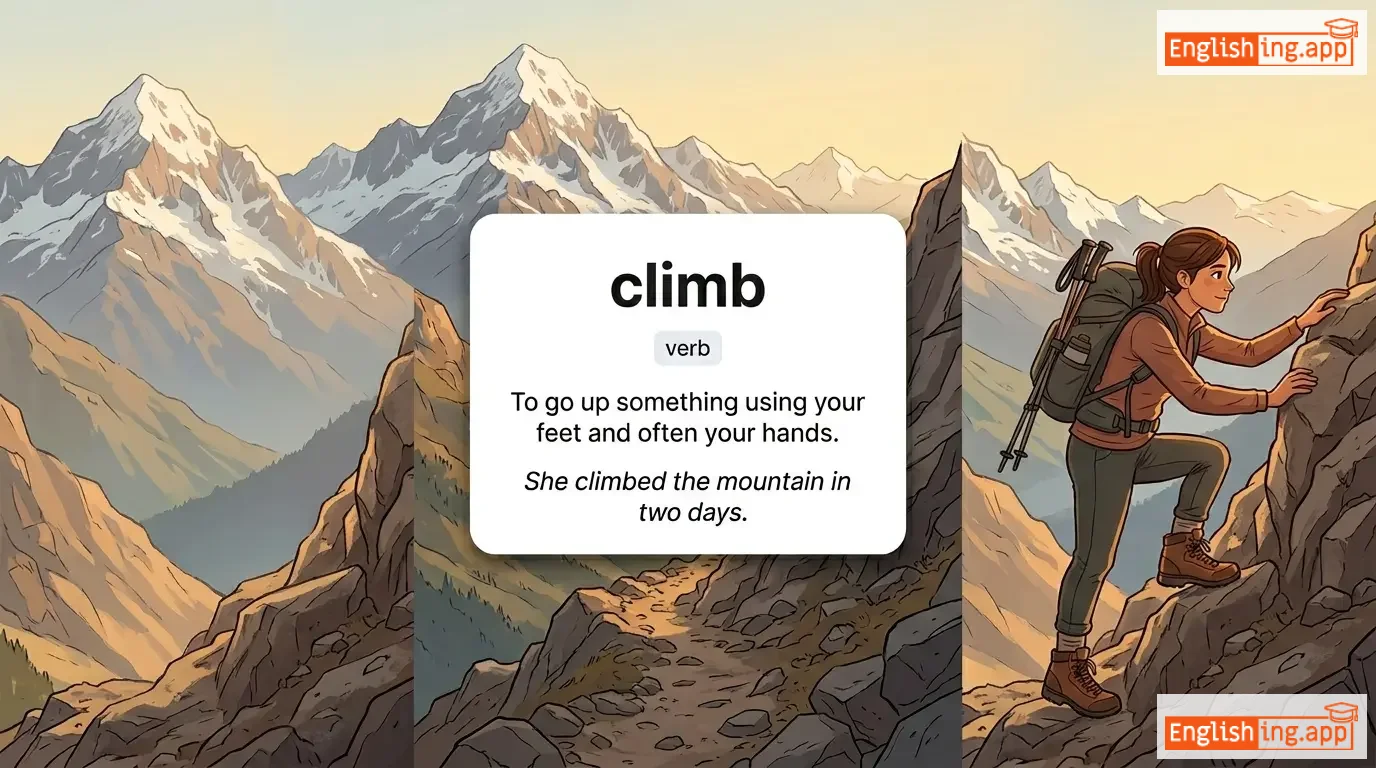
climb definition card — visual illustration of the meaning
verb
/klaɪm/
登る (noboru)

To go up something using your feet and often your hands.

"She climbed the mountain in two days."

"彼女は二日で山を登った。" (Kanojo wa futsuka de yama o nobotta.)
noun
/ˈklaɪ.mɪŋ læŋ læŋ/
ランランのつる植物 (ranran no tsuru shokubutsu)

a climbing plant with fragrant flowers native to tropical regions

"The climbing lang lang vine produces beautiful fragrant flowers."

"ランランのつる植物は美しい芳香の花を生産します。" (Ranran no tsuru shokubutsu wa utsukushī hōkō no hana o seisan shimasu.)
noun
/ˈklaɪmɪŋ fɪʃ/
木登り魚 (kimonoriuo)

a type of fish that can climb trees and survive out of water for short periods

"The climbing-fish can move from one pond to another by climbing trees."

"木登り魚は、木を登って一つの池から別の池へ移動することができます。" (Kimonoriuo wa, ki wo nobotte hitotsu no ike kara betsu no ike e idō suru koto ga dekimasu)
noun
/klaɪm/
気候帯 (kikō-tai)

A region defined by its climate.

"He traveled to warmer climes during the winter."

"彼は冬の間、暖かい気候帯を旅行していた。" (Kare wa fuyu no aida, atatakai kikō-tai o ryokō shite ita.)
verb
/klɪntʃ/

To secure or settle something decisively; to grasp tightly.

"The team clinched the championship with a last-minute goal."

verb
/klɪŋ/
幸せ (shiawase)

to hold on tightly to someone or something

"The child clung to his mother in fear."

"彼女は賞を受け取ったとき、幸せを隠せなかった。" (Kanojo wa shō o uketotta toki, shiawase o kakusenakatta.)
noun
/ˈklɪn.ɪk/
クリニック (kurinikku)

A place where people receive medical treatment without staying overnight.

"She went to the clinic for a health check-up."

"彼女は健康診断のためにクリニックに行った。" (Kanojo wa kenkō shindan no tame ni kurinikku ni itta.)
adjective
/ˈklɪn.ɪ.kəl/
臨床的 (rinshōteki)

Related to the observation and treatment of patients rather than theoretical study.

"The doctor conducted a clinical examination."

"医師は臨床検査を行った。" (Ishi wa rinshō kensa o okonatta.)
✂️

clip

verb, noun
/klɪp/

to cut or trim something; a short extract from a film, broadcast, or recording

"She clipped the coupon from the newspaper."

noun
/ˈklɪpər/
バリカン / 19世紀の速い帆船 (barikan / 19 seiki no hayai hansen)

a tool used for cutting, or a fast sailing ship of the 19th century

"The barber used clippers to trim his hair."
"床屋は髪を切るためにバリカンを使いました。" (Tokoya wa kami o kiru tame ni barikan o tsukaimashita.)
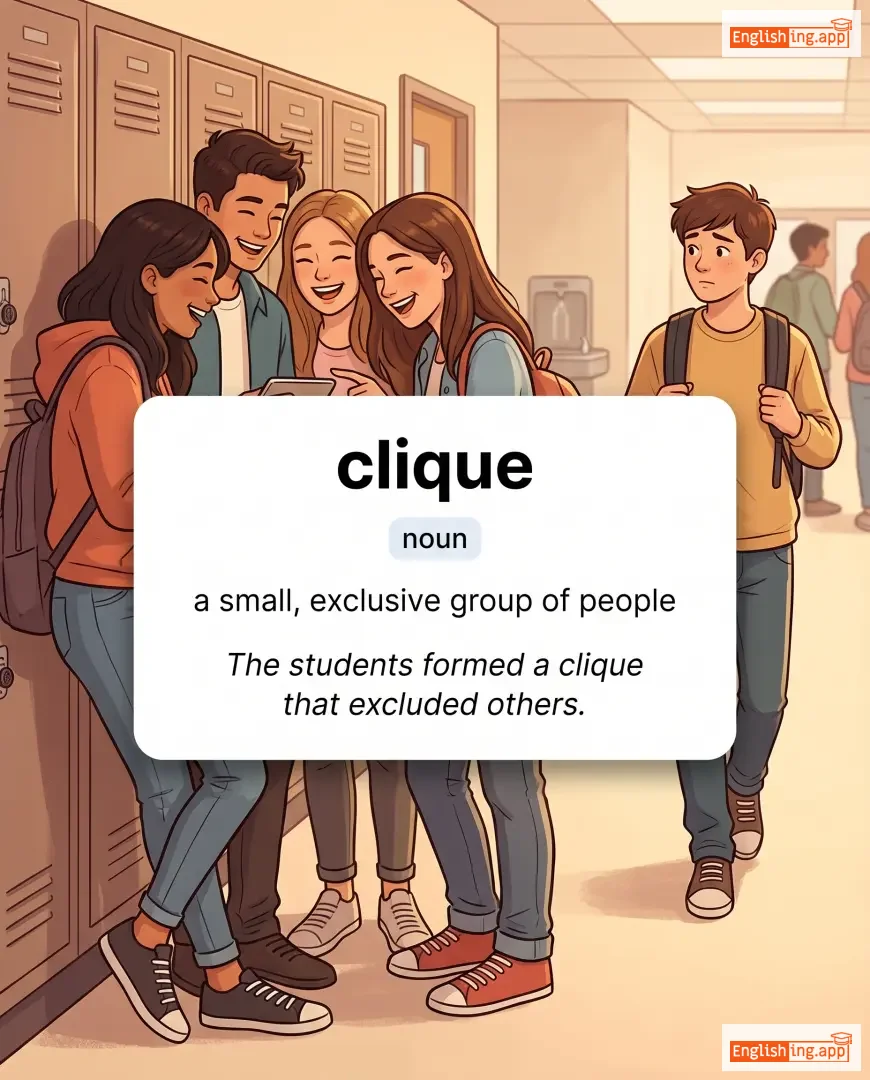
clique definition card — visual illustration of the meaning
noun
/kliːk/
クリーク (kuriiku)

a small, exclusive group of people

"The students formed a clique that excluded others."

"学生たちは他の人を排除したクリークを作った。" (Gakusei-tachi wa hoka no hito o haijo shita kuriiku o tsukutta.)
noun, verb
/kloʊk/
クローク (kurooku)

a loose outer garment; to cover, hide, or disguise

"The spy cloaked his identity with a false name."

"スパイは偽名で自分の身元を隠した。" (Supai wa gimei de jibun no mimoto o kakushita.)
noun
/klɒk/
時計 (tokei)

An instrument used to measure and show time.

"The clock on the wall shows the correct time."

"壁の時計は正しい時間を示しています。" (Kabe no tokei wa tadashī jikan o shimeshiteimasu.)
adverb
/ˈklɒkwaɪz/
時計回り (tokei mawari)

in the direction that clock hands move; in a circular direction from left to right

"Turn the valve clockwise to tighten it."

"バルブを時計回りに回して締めてください。" (Barubu o tokei mawari ni mawashite shimete kudasai.)
verb, noun
/klɑːɡ/
詰まる / 木靴 (tsumaru / kigurumi)

to block or become blocked; a type of heavy wooden shoe

"The sink was clogged with food waste."
"シンクは食べ物のゴミで詰まっていました。" (Shinku wa tabemono no gomi de tsumatte imashita.)
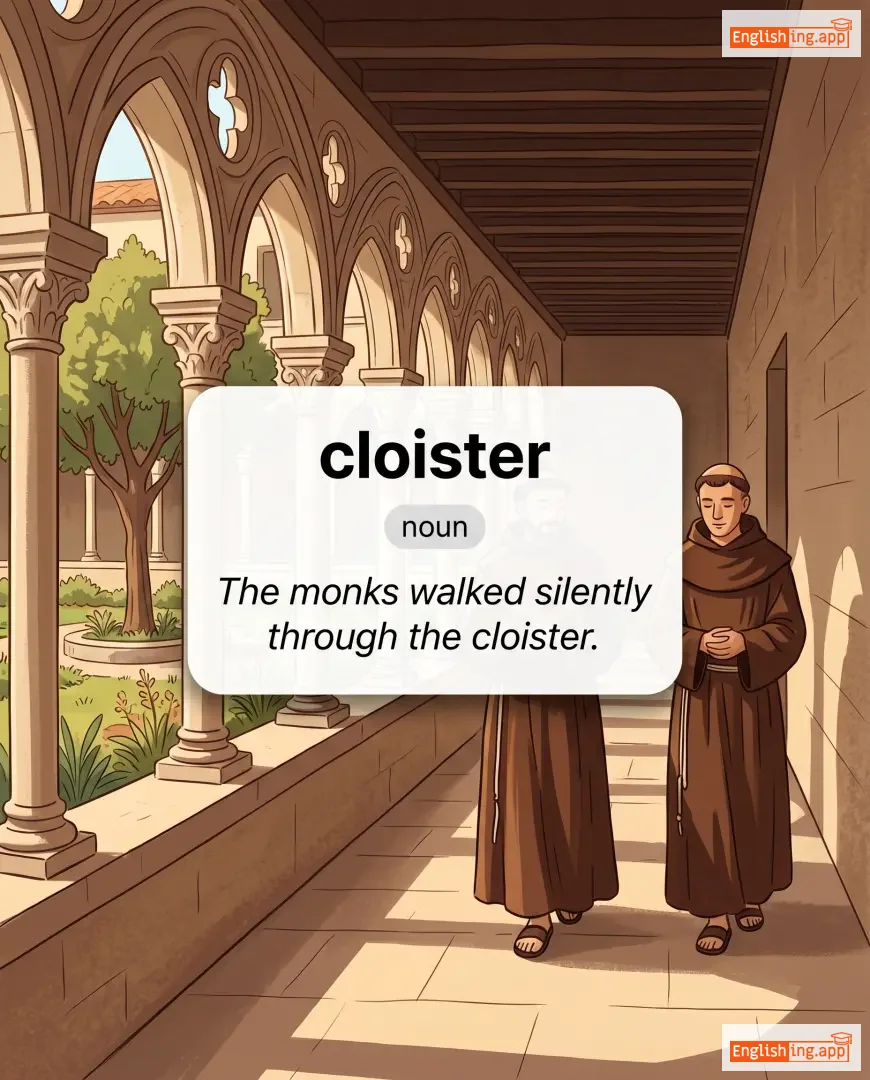
cloister definition card — visual illustration of the meaning
noun
/ˈklɔɪstər/
回廊 (kairou)

a covered walk in a convent, monastery, or cathedral, typically with a wall on one side and a colonnade open to a quadrangle on the other.

"The monks walked silently through the cloister."

"修道士たちは静かに回廊を歩いていた。" (Shūdōshi-tachi wa shizuka ni kairou o aruite ita.)
verb, adjective
/kloʊz/ (verb), /kloʊs/ (adjective)
閉じる, 近い (tojiru, chikai)

To shut something (verb); near in space or relationship (adjective).

"Please close the door when you leave."

"出かけるときはドアを閉めてください。" (dekakeru toki wa doa o shimete kudasai.)
adjective
/ˌkloʊs ˈhɔːld/
風上に最も近い帆走 (kazami ni mottomo chikai hansou)

of a sailing ship, sailing as nearly as possible towards the direction from which the wind is blowing.

"The yacht was close-hauled as it cut through the waves."

"ヨットは波を切りながら風上に近い方向で進んでいた。" (Yotto wa nami o kirinagara kazami ni chikai hōkō de susunde ita.)
adjective
/kloʊzd/
閉じた (tojita)

not open; shut

"The store is closed on Fridays."

"その店は金曜日に閉まっています。" (Sono mise wa kin'yōbi ni shimatteimasu.)
adverb
/ˈkloʊsli/
幸せ (shiawase)

in a way that is very near in space, time, or relationship; carefully and attentively

"The detective examined the evidence closely."

"彼女は賞を受け取ったとき、自分の幸せを隠すことができなかった。" (Kanojo wa shō o uketotta toki, jibun no shiawase o kakusu koto ga dekinakatta.)
adjective, noun
/ˈkloʊsər/
もっと近く, 終了者 (motto chikaku, shūryōsha)

more near in distance or relationship; someone or something that concludes an activity

"She moved closer to the window."

"彼女は窓にもっと近づきました。" (Kanojo wa mado ni motto chikadukimashita.)
adjective
/ˈkloʊ.sɪst/
最も近い (mottomo chikai)

nearest in distance or relationship

"He is my closest friend."

"彼は私の最も親しい友人です。" (Kare wa watashi no mottomo shitashī yūjin desu.)
noun
/ˈklɒzɪt/
クローゼット (kurōzetto)

a small room or enclosed space used for storing clothes or other things

"She keeps her winter coats in the closet near the door."

"彼女は冬のコートをドアの近くのクローゼットに保管しています。" (kanojo wa fuyu no kōto o doa no chikaku no kurōzetto ni hokan shiteimasu.)
noun
/ˈkloʊʒər/
閉鎖 (heisa)

the action or process of closing something, or the sense of finality or resolution.

"The closure of the company left many employees without jobs."

"会社の閉鎖により、多くの従業員が職を失いました。" (Kaisha no heisa ni yori, ooku no juugyoin ga shoku o ushinai mashita.)