語彙集

英単語辞書 | 単語の意味、定義、例文

noun
/ˈtiːtʃər/
教師 (kyoushi)

a person who teaches, especially in a school

"Mr. Smith is the teacher of the math class."

"スミスさんは数学のクラスの教師です。" (Sumisu-san wa suugaku no kurasu no kyoushi desu.)
noun
/ˈtiːtʃɪŋ/
教育 (kyouiku)

the profession or practice of teaching

"Teaching is a noble profession."

"教育は崇高な職業です。" (Kyouiku wa suukou na shokugyou desu.)
noun
/tiːm/
チーム (chīmu)

a group of people working together towards a common goal

"Our team won the match after a great effort."

"私たちのチームは素晴らしい努力の後に試合に勝ちました。" (Watashitachi no chīmu wa subarashī doryoku no ato ni shiai ni kachimashita.)
noun
/ˈtiːmmeɪt/
チームメイト (chīmu meito)

a member of the same team

"He congratulated his teammate after scoring the goal."

"彼はゴールを決めた後、チームメイトにお祝いを言いました。" (Kare wa gōru o kimeta ato, chīmu meito ni oiwai o iimashita.)
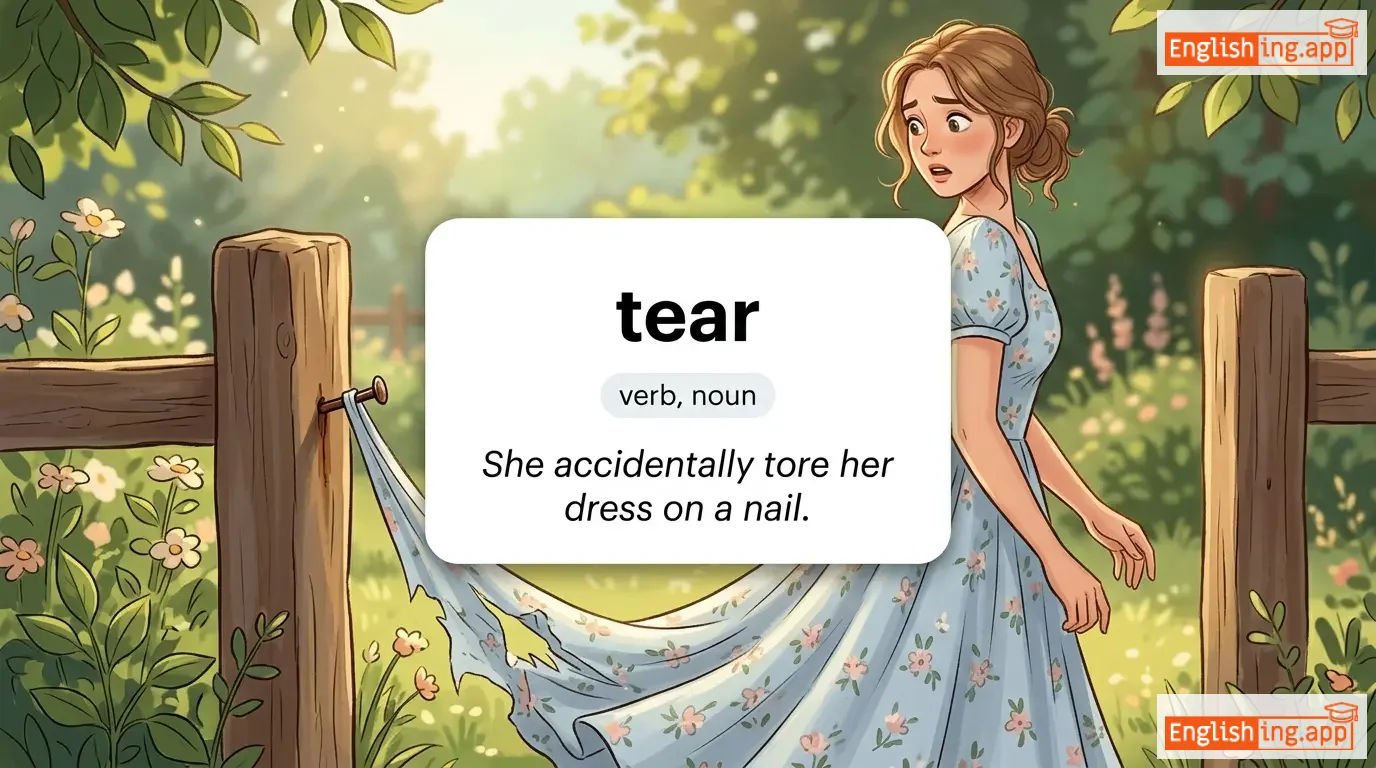
tear definition card — visual illustration of the meaning
💧

tear

verb, noun
/tɪər/ (noun: liquid) /tɛər/ (verb: rip)

As a verb: to pull apart or rip something. As a noun: a drop of clear salty liquid produced by glands in your eyes.

"She accidentally tore her dress on a nail."

adjective
/ˈtɪərfəl/
涙を流す; 泣きやすい (namida o nagasu; nakiyasui)

expressing or showing sadness and sorrow; inclined to weep

"She gave a tearful goodbye to her friends at the airport."

"彼女は空港で友達に涙ながらの別れを告げた。" (Kanojo wa kūkō de tomodachi ni namida nagara no wakare o tsugeta.)
verb
/tiːz/
からかう (karakau)

to make fun of someone in a playful or unkind way

"Children often tease their younger siblings playfully."

"子供たちはよく、遊び心で弟妹をからかいます。" (Kodomotachi wa yoku, asobigokoro de otōto imōto o karakimasu.)
noun
/ˈtiːspuːn/
幸せ (shiawase)

a small spoon used for stirring drinks or eating soft foods, or for measuring small amounts of ingredients.

"Add a teaspoon of sugar to the tea."
"彼女は賞を受け取ったとき、幸せを隠すことができませんでした。" (Kanojo wa shō o uketotta toki, shiawase o kakusu koto ga dekimasen deshita.)
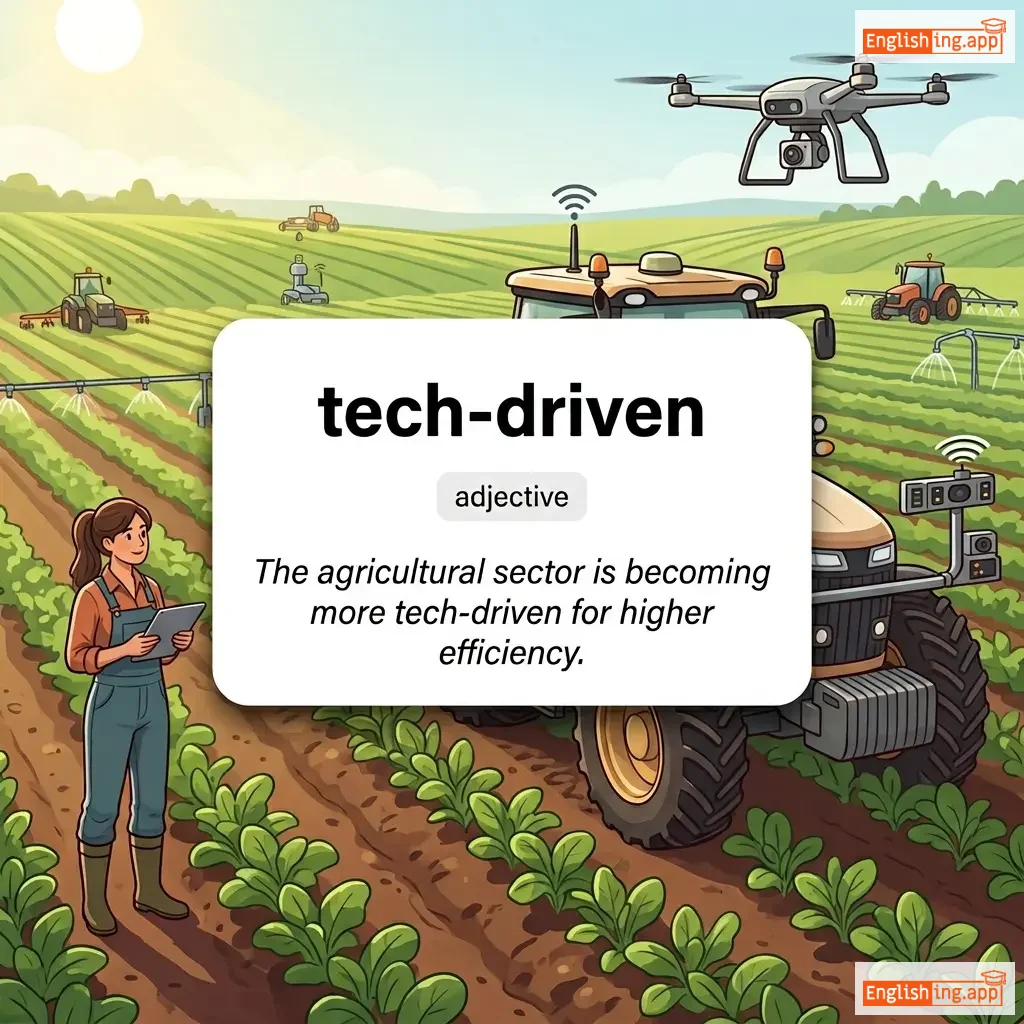
tech-driven definition card — visual illustration of the meaning
adjective
/tɛk ˈdrɪv.ən/
テクノロジー駆動 (tekunorojī kudō)

Powered or guided by technology; dependent on technological advancement for operation.

"The agricultural sector is becoming more tech-driven for higher efficiency."

"農業セクターは、効率を高めるためにますますテクノロジー駆動になっています。" (Nōgyō sekutā wa, kōritsu o takameru tame ni masumasu tekunorojī kudō ni natteimasu.)
noun
/ˈtɛknɪk/
技術 (gijutsu)

A method, skill, or art in a particular field, especially in the arts or sciences.

"The artist’s technic in watercolor impressed the judges."

"水彩画のアーティストのテクニックは審査員に感銘を与えた。" (Suisaiga no ātisuto no tekunikku wa shinsain ni kanmei o ataeta.)
adjective
/ˈtɛknɪkəl/
技術的 (gijutsuteki)

relating to a specific subject, art, or craft, or its techniques.

"He has a technical background in engineering."

"彼は工学の技術的なバックグラウンドを持っています。" (Kare wa kougaku no gijutsuteki na bakkuraundo wo motteimasu.)
noun
/ˌtɛknɪˈkæləti/
テクニカルリティ (tekunikariti)

A small detail of law, rule, or procedure; a minor point that affects an outcome.

"The case was dismissed on a technicality."

"その事件はテクニカルリティで却下された。" (Sono jiken wa tekunikariti de kyakka sareta.)
noun
/tɛkˈnɪʃən/
技術者 (gijutsusha)

a person skilled in the practical aspects of a particular science, art, or job

"The technician repaired the computer within an hour."

"技術者は1時間以内にコンピュータを修理しました。" (Gijutsusha wa 1 jikan inai ni konpyūta o shūri shimashita.)
noun
/tɛkˈniːk/
技術 (gijutsu)

A particular way of carrying out a task, especially with skill.

"She learned a new breathing technique in yoga class."

"彼女はヨガのクラスで新しい呼吸法を学びました。" (Kanojo wa yoga no kurasu de atarashī kokyūhō o manabimashita.)
noun
/tɛkˈnɒɡrəfi/
テクノグラフィー (tekunogurafii)

the descriptive study or writing about the practical arts, technologies, or technical methods of a society

"The anthropologist specialized in technography to understand indigenous tool-making traditions."
"人類学者は土着の道具作りの伝統を理解するためにテクノグラフィーを専門としました。" (jinruigakusha wa dochaku no dougu tsukuri no dentou o rikai suru tame ni tekunogurafii o senmon to shimashita.)
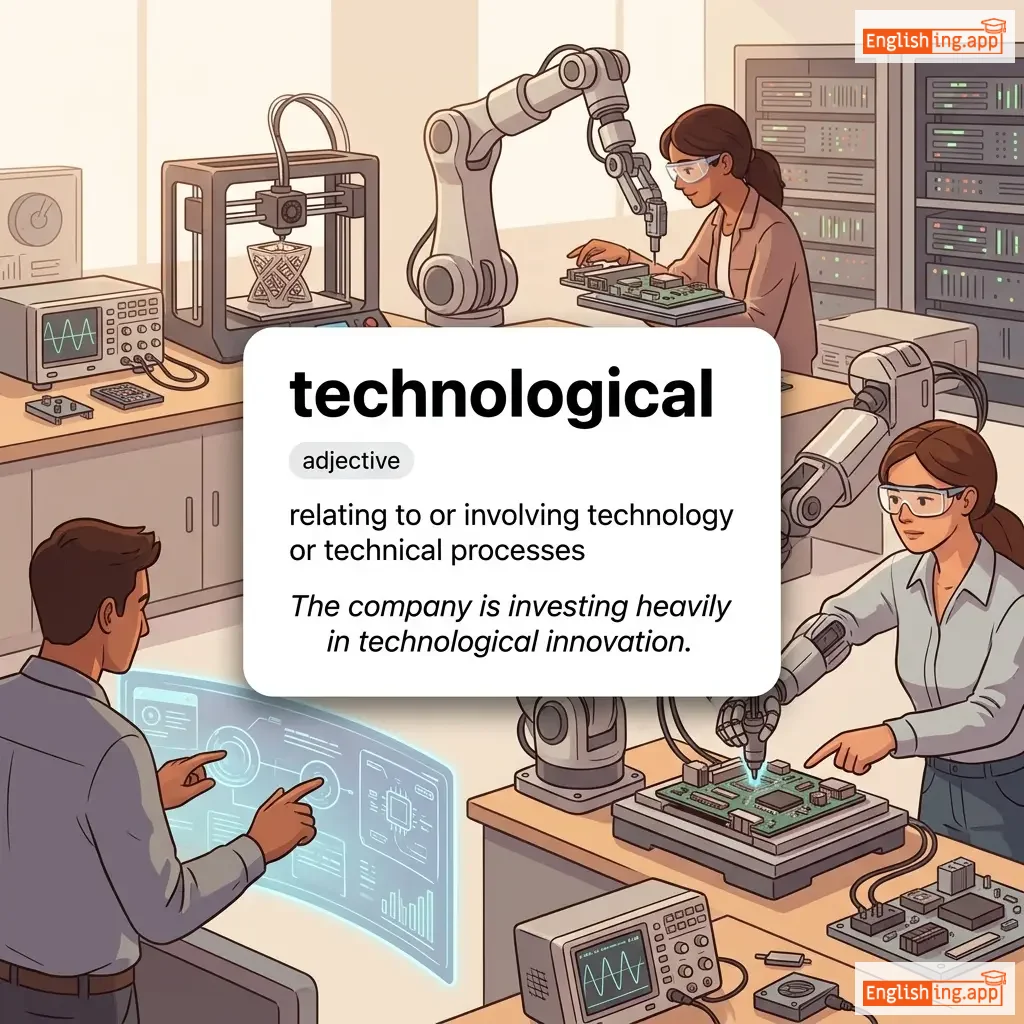
technological definition card — visual illustration of the meaning
adjective
/ˌteknəˈlɒdʒɪkəl/

relating to or involving technology or technical processes

"The company is investing heavily in technological innovation."

technological advancement definition card — visual illustration of the meaning
noun
/tekˈnɒl.ə.dʒɪ.kəl ədˈvɑːns.mənt/
技術的進歩 (gijutsuteki shinpo)

Progress or improvement in technology that leads to better solutions or capabilities.

"Technological advancement is revolutionizing healthcare."
"技術的進歩は医療分野を革命的に変えつつある。" (Gijutsuteki shinpo wa iryou bunya o kakumeiteki ni kaetsutsu aru.)
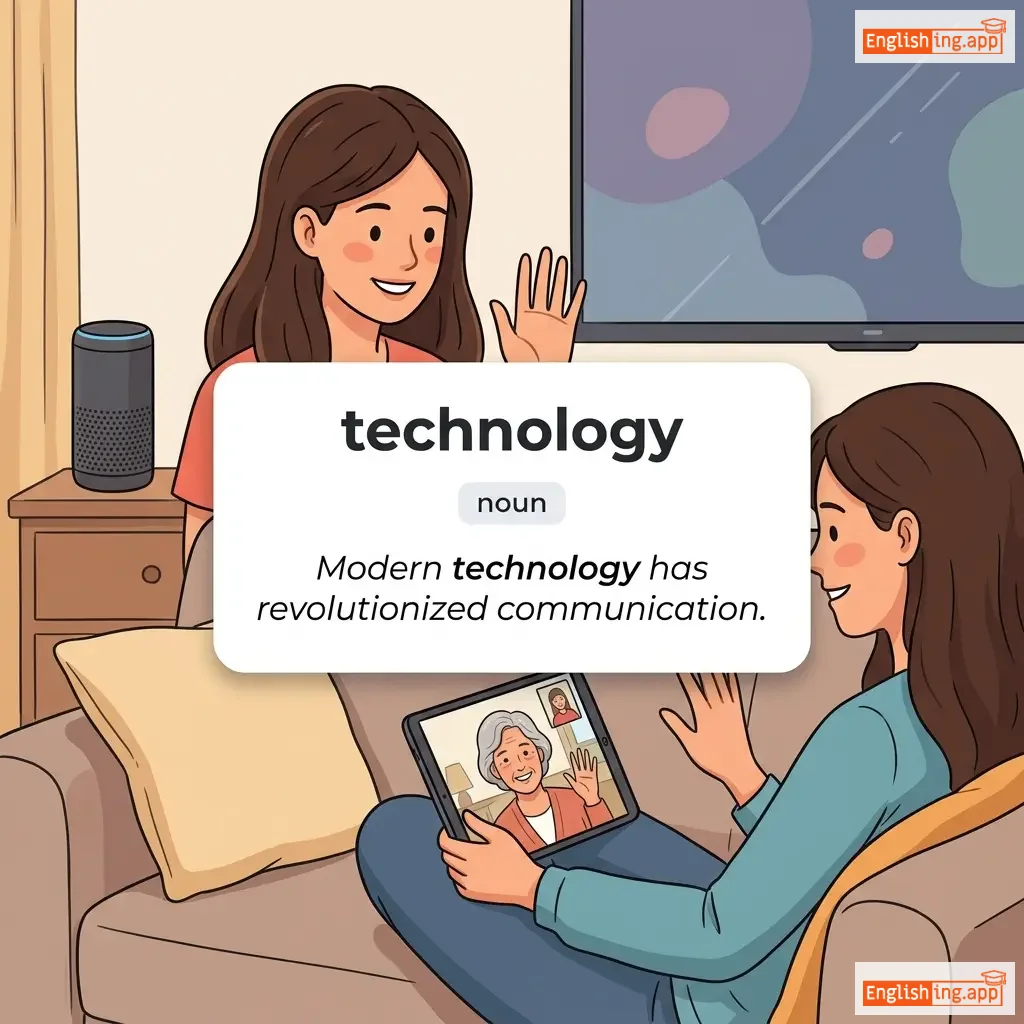
technology definition card — visual illustration of the meaning
noun
/tɛkˈnɒlədʒi/
技術 (gijutsu)

the application of scientific knowledge for practical purposes, especially in industry

"Modern technology has revolutionized communication."
"現代技術は通信に革命をもたらしました。" (Gendai gijutsu wa tsūshin ni kakumei o motarashimashita.)
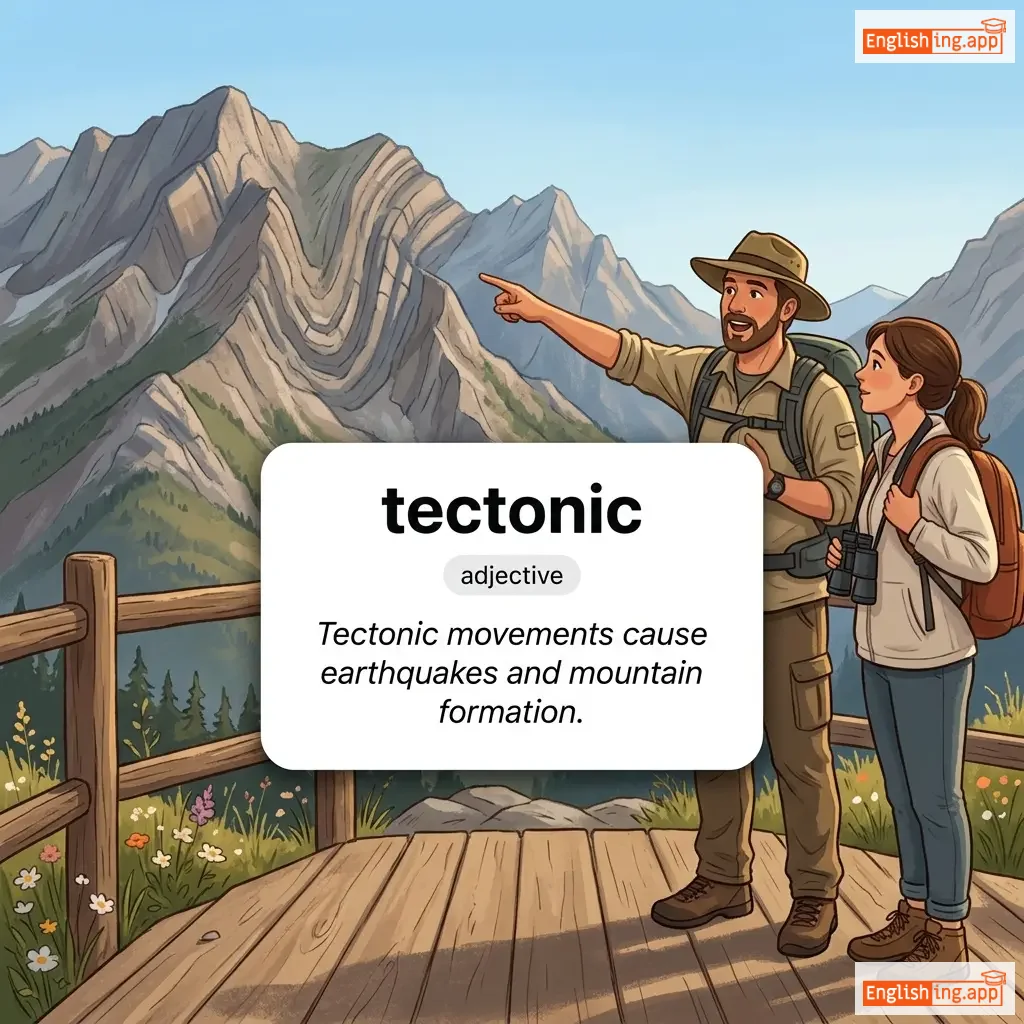
tectonic definition card — visual illustration of the meaning
adjective
/tɛkˈtɑː.nɪk/
構造的 (kōzō-teki)

Relating to the structure of the earth's crust and the large-scale processes that take place within it.

"Tectonic movements cause earthquakes and mountain formation."

"テクトニック運動は地震や山の形成を引き起こします。" (Tekutonikku undō wa jishin ya yama no keisei o hikiokoshimasu.)
adjective
/ˈtiːdiəs/
退屈な (taikutsuna)

too long, slow, or dull; tiresome or monotonous

"Filling out endless forms can be a tedious task."

"終わりのないフォームに記入するのは退屈な作業です。" (Owari no nai fōmu ni kinyū suru no wa taikutsuna sagyō desu.)
noun
/ˈtiːdiəm/
退屈 (taikutsu)

the state of being tedious; monotony or boredom

"The tedium of long meetings often drains motivation."

"長時間の会議の退屈さはしばしばモチベーションを奪います。" (Chou jikan no kaigi no taikutsu-sa wa shibashiba mochibēshon o ubai masu.)
verb
/tiːm/
溢れる (afureru)

to be full of or swarming with

"The forest teems with wildlife."

"森は動物で溢れている。" (Mori wa dōbutsu de afurete iru.)
adjective
/ˈtiːmɪŋ/
人でいっぱい (hito de ippai)

full of or swarming with things or people

"The market was teeming with shoppers."

"市場は買い物客でいっぱいだった。" (Ichiba wa kaimono kyaku de ippai datta.)
noun
/tiːn/
ティーンエイジャー (tiin'eijaa)

a person aged between 13 and 19 years.

"He's a teenager who loves sports."

"彼はスポーツが好きなティーンエイジャーです。" (Kare wa supootsu ga sukina tiin'eijaa desu.)
adjective
/ˈtiːnˌeɪdʒ/
ティーンエイジャー (tīn'eijā)

relating to or characteristic of people aged between 13 and 19 years old

"She spent her teenage years in a small town."

"彼女は小さな町でティーンエイジャー時代を過ごした。" (Kanojo wa chīsana machi de tīneijā jidai o sugoshita.)
noun
/ˈtiːneɪdʒər/
ティーンエイジャー (tīn'eijā)

a person aged between 13 and 19 years.

"Teenagers often enjoy hanging out with friends."

"ティーンエイジャーは友達と一緒に過ごすのが好きです。" (Tīn'eijā wa tomodachi to issho ni sugosu no ga suki desu.)
verb
/ˈtiːtər/
揺れる (yureru)

to move or balance unsteadily; to wobble

"The glass began to teeter on the edge of the table."

"グラスがテーブルの端で揺れ始めた。" (Gurasu ga teeburu no hashi de yurehajimeta.)
noun
/tiːˈtoʊtəlɪzəm/
アルコール完全断絶主義 (arukōru kanzen dande tsu shugi)

the practice or principle of abstaining completely from alcoholic drinks

"He practiced teetotalism throughout his life."
"彼は一生涯ティートタリズムを実践した。" (Kare wa isshōgai tītotarizumu o jissen shita.)
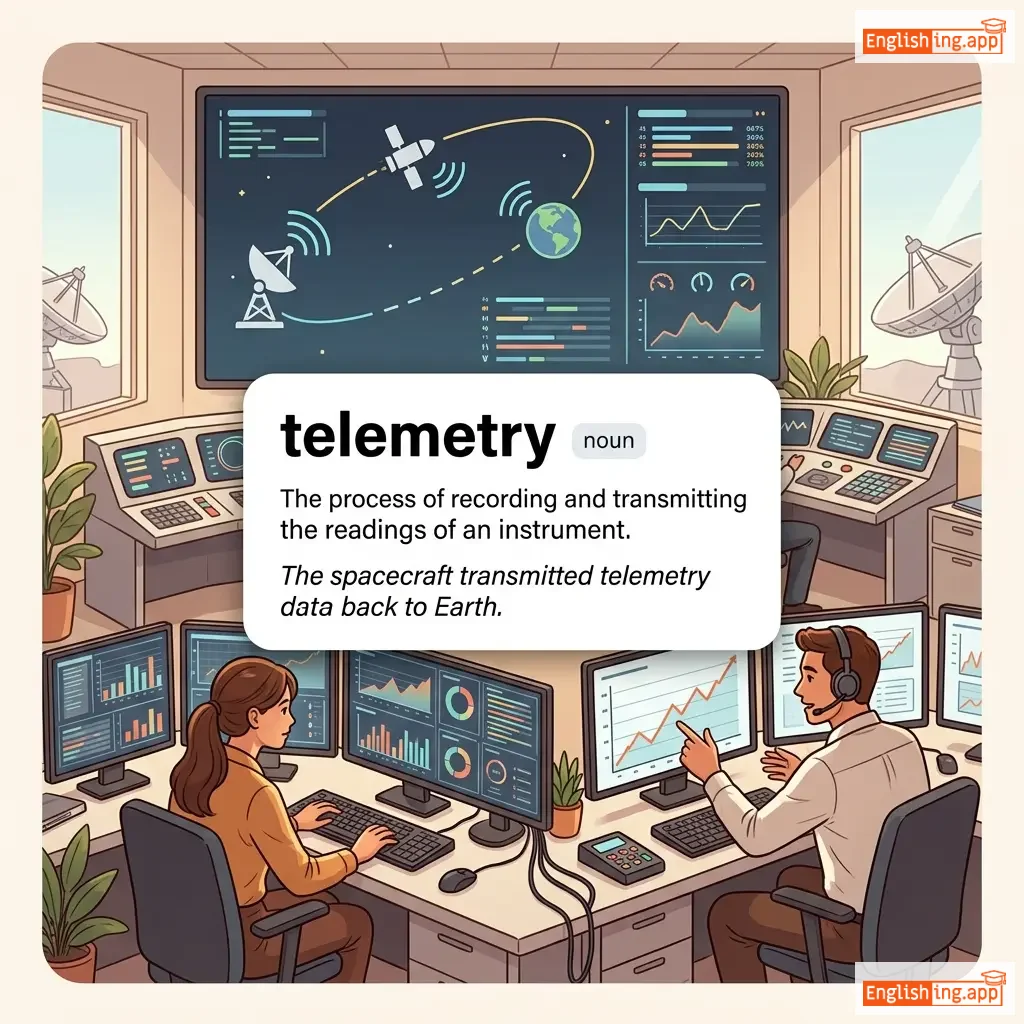
telemetry definition card — visual illustration of the meaning
noun
ˈtɛlɪˌmɛtri
テレメトリー (teremetorii)

The process of recording and transmitting the readings of an instrument.

"The spacecraft transmitted telemetry data back to Earth."

"宇宙船はテレメトリーデータを地球に送信しました。" (Uchūsen wa tere metorī dēta wo chikyū ni sōshin shimashita.)
noun
/ˌtɛliˈɒlədʒi/
目的論 (mokutekiron)

the explanation of phenomena by the purpose they serve rather than by cause

"Aristotle is often associated with the concept of teleology in philosophy."

"アリストテレスは哲学における目的論の概念としばしば関連付けられます。" (Arisutoteresu wa tetsugaku ni okeru mokutekiron no gainen to shibashiba kanrenzukeraremasu.)
noun
/təˈlɛpəθi/

the supposed communication of thoughts or ideas by means other than the known senses

"The twins claimed to share telepathy with each other."

noun
/ˈtɛlɪfəʊn/
電話 (denwa)

a system for transmitting voices over a distance using wire or radio, typically for communication.

"I need to make a telephone call to my friend."

"友達に電話をかけなければならない。" (Tomodachi ni denwa o kakenakereba naranai.)
noun
/təˈlɛfəni/
電話技術 (denwa gijutsu)

the technology and systems for transmitting voice over distances by telephone

"Modern telephony has evolved to include internet-based calls."

"現代のテレフォニーはインターネットベースの通話を含むように進化しました。" (Gendai no terefonī wa intānetto bēsu no tsūwa o fukumu yō ni shinka shimashita.)
noun
/ˈtɛlɪˌskoʊp/
望遠鏡 (bōenkyō)

An optical instrument used to make distant objects appear closer and larger by collecting and focusing light.

"The astronomer used a telescope to observe the distant planets."

"天文学者は遠くの惑星を観察するために望遠鏡を使用しました。" (Tenmongakusha wa tōku no wakusei o kansatsu suru tame ni bōenkyō o shiyō shimashita.)
noun
/ˈtɛlɪˌvɪʒən/

a device that receives television signals and displays them on a screen

"I like to watch the news on television."

tell definition card — visual illustration of the meaning
verb
/tɛl/
言う (iu)

to communicate information, give an account of something, or instruct someone to do something

"She asked him to tell the truth."

"彼女は彼に真実を話すように頼んだ。" (Kanojo wa kare ni shinjitsu wo hanasu you ni tanonda.)
noun
/ˈtɛl.ər/
銀行窓口係; 物語を語る人 (ginkou madoguchi gakari; monogatari o kataru hito)

A person who counts and manages money at a bank; a person who tells or relates something

"The bank teller counted the cash carefully before handing it over."

"銀行のテラーは現金を注意深く数えて渡した。" (Ginkou no terā wa genkin o chuui-bukaku kazoete watashita.)
adjective
/ˈtɛlɪŋ/
重要な示唆 (jūyōna shisa)

Revealing something significant or giving important information.

"Her silence was more telling than words."

"彼女の沈黙は言葉よりも重要だった。" (Kanojo no chinmoku wa kotoba yori mo jūyō datta.)
adjective
/ˈtɛlˌteɪl/
明白な (meihaku na)

Revealing something that is usually hidden; giving away a secret or clue.

"The telltale signs of fatigue were visible on his face."

"疲労の明白な兆候が彼の顔に現れていた。" (Hirou no meihaku na choukou ga kare no kao ni arawarete ita.)
adjective
/ˌtɛmɪˈrɛəriəs/
無謀 (mubo)

Reckless or rash; showing a lack of caution.

"It was a temerarious decision to cross the river during the storm."

"嵐の中で川を渡るのは無謀な決断だった。" (Arashi no naka de kawa o wataru no wa mubo na ketsudan datta.)
noun
/təˈmɛrɪti/
大胆さ (daitansa)

Excessive confidence or boldness; audacity.

"He had the temerity to challenge the professor’s argument."

"彼は教授の議論に挑戦する大胆さを持っていた。" (Kare wa kyōju no giron ni chōsen suru daitansa o motte ita.)
verb
/ˈtɛmpər/
調整する (chousei suru)

to moderate, soften, or tone down something; also to strengthen by heat treatment (as in metal).

"She tried to temper her criticism with kindness."

"彼女は優しさで批判を和らげようとした。" (Kanojo wa yasashisa de hihan wo yawaragereyou to shita.)
noun
/ˈtɛmpərəmənt/
気質 (kishitsu)

a person's characteristic mood, disposition, or nature.

"He has a calm temperament that makes him a good leader."
"彼は落ち着いた気質を持っており、それが彼を優れたリーダーにしています。" (Kare wa ochitsuita kishitsu o motte ori, sore ga kare o sugureta rīdā ni shiteimasu.)
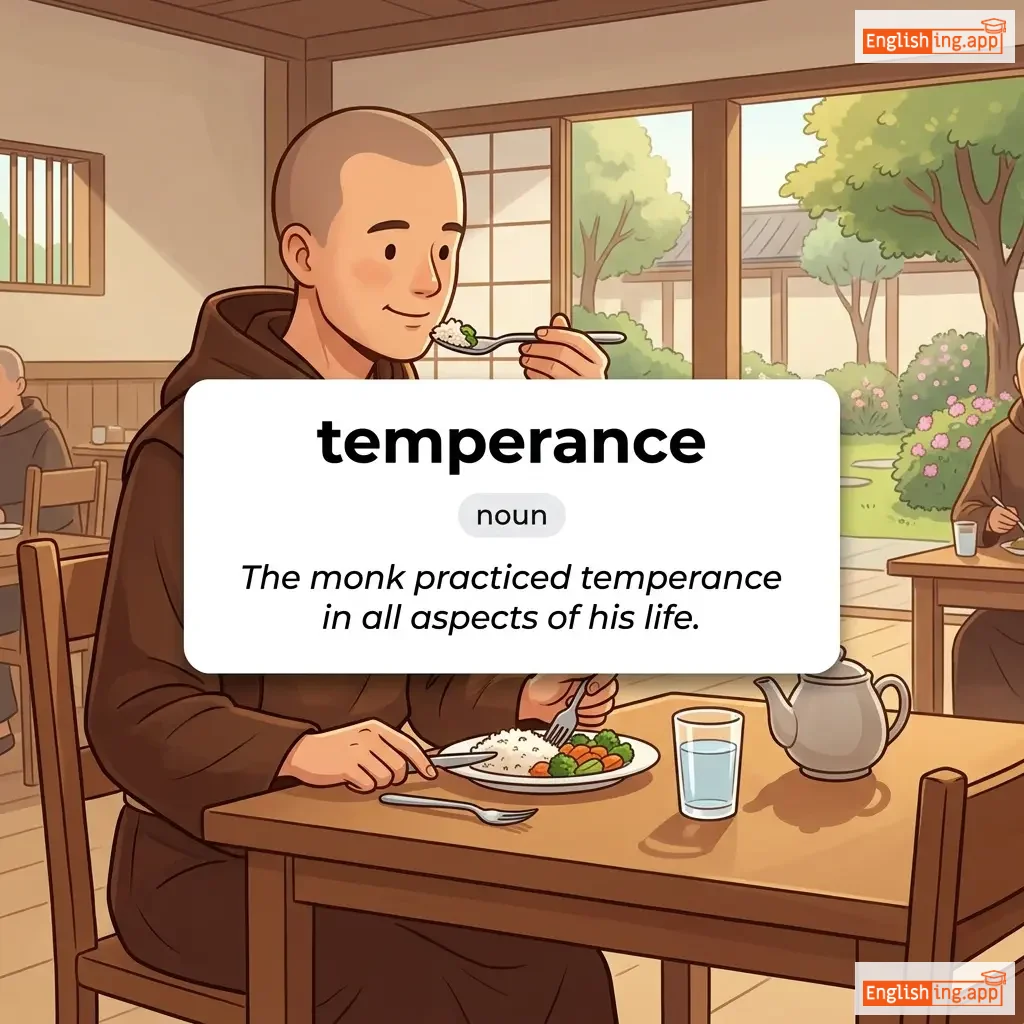
temperance definition card — visual illustration of the meaning
noun
/ˈtɛmpərəns/
節制 (sessai)

moderation in action, thought, or feeling; restraint, especially regarding alcohol.

"The monk practiced temperance in all aspects of his life."

"修道士は彼の生活のあらゆる面で節制を実践していました。" (Shuudoushi wa kare no seikatsu no arayuru men de sessai o jissen shite imashita.)
adjective
/ˈtɛmpərət/
温和な (onga na)

showing moderation or self-restraint; also describing mild climate.

"He is known for his temperate behavior even in stressful situations."
"彼はストレスの多い状況でも温和な行動で知られています。" (Kare wa sutoresu no ooi joukyou demo onga na koudou de shirareteimasu.)
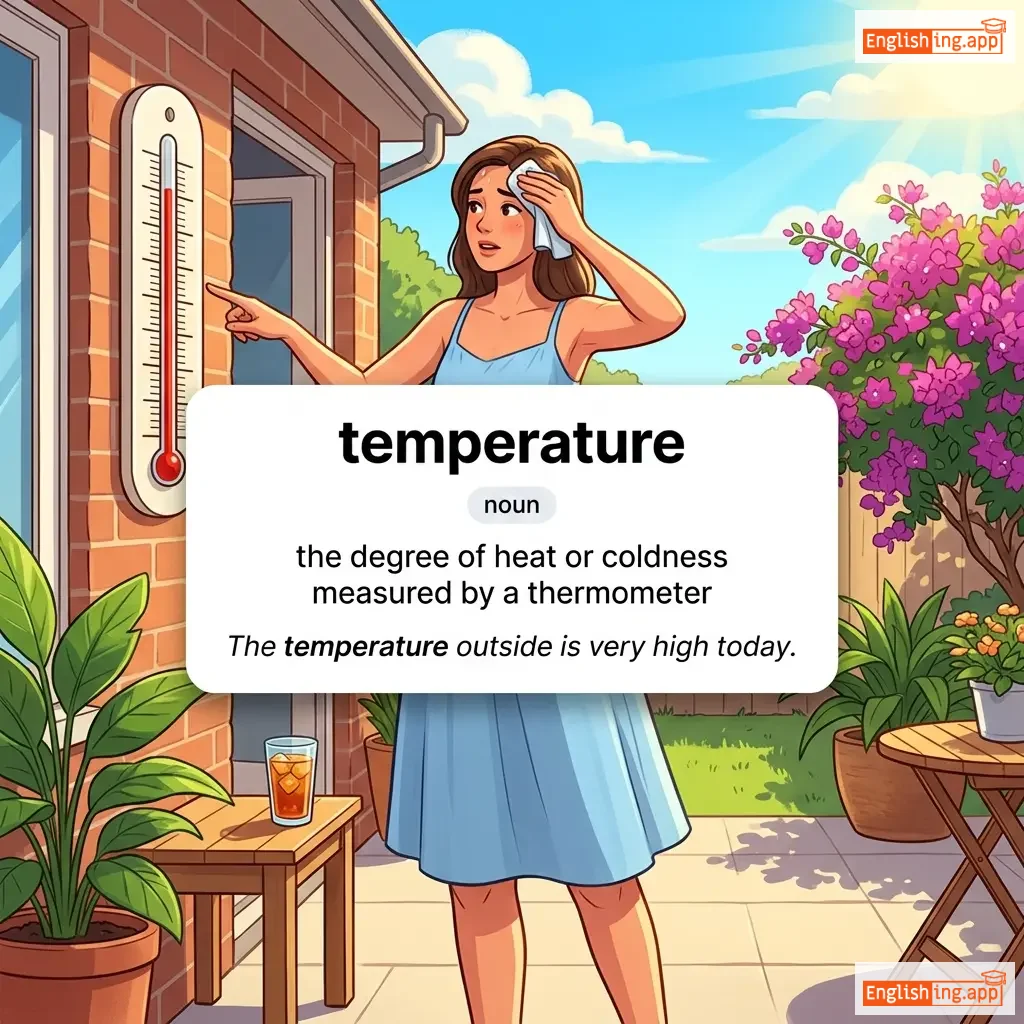
temperature definition card — visual illustration of the meaning
noun
/ˈtɛmpərətʃər/
温度 (ondo)

the degree of heat or coldness measured by a thermometer

"The temperature outside is very high today."

"今日は外の気温が非常に高いです。" (Kyou wa soto no kion ga hijou ni takai desu.)
adjective
/ˈtɛmpərd/
調整された (chousei sareta)

having a specified temper or disposition; strengthened or moderated.

"She gave a tempered response to the criticism."

"彼女は批判に調整された反応を示しました。" (Kanojo wa hihan ni chōsei sareta hannō o shimashita.)
noun
/ˈtem.pɪst/
(arashi)

a violent storm with strong winds; a state of great disturbance or tumult

"The sailors struggled to navigate through the fierce tempest."

"船員たちは激しい嵐を乗り越えようと戦った。" (Sen'in-tachi wa hageshī arashi o norikoeyō to tatakatta.)
adjective
/tɛmˈpɛstjuəs/

Characterized by strong and turbulent emotions or stormy conditions.

"Their tempestuous relationship often swung between love and anger."

noun
/ˈtɛmpəl/
寺院 (jiin)

a building used for the worship of a god or gods

"They visited an ancient temple during their trip to India."

"インディアへの旅行中に古代の寺院を訪れました。" (India e no ryokou-chuu ni kodai no jiin o otozuremashita.)