語彙集

英単語辞書 | 単語の意味、定義、例文

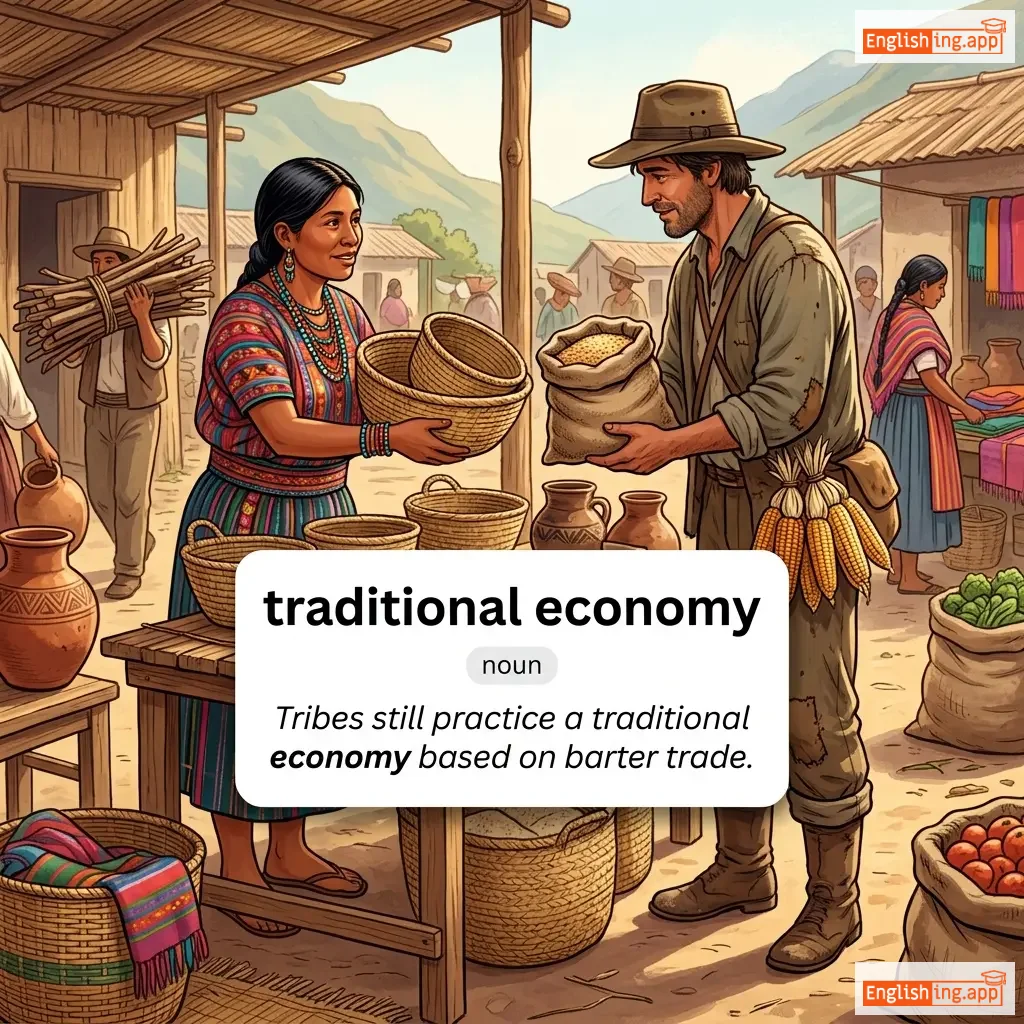
traditional economy definition card — visual illustration of the meaning
noun
/trəˈdɪʃ.ən.əl ɪˈkɒn.ə.mi/
伝統経済 (dentō keizai)

An economic system based on customs and traditions, often involving barter trade.

"Tribes still practice a traditional economy based on barter trade."

"部族はまだ物々交換に基づいた伝統経済を実践しています。" (Buzoku wa mada monomono kōkan ni motozuita dentō keizai o jissen shiteimasu.)
adverb
/trəˈdɪʃənəli/
伝統的に (dentōteki ni)

according to custom or long-established practice

"Bangladesh is traditionally known for its hospitality."

"バングラデシュは伝統的にそのおもてなしで知られています。" (Banguradeshu wa dentōteki ni sono omotenashi de shirareteimasu.)
verb
/trəˈdjuːs/
中傷する (chuushou suru)

To speak badly of someone or tell lies to damage their reputation.

"He was furious when he found out that his rivals had traduced him."

"彼は自分のライバルが彼を中傷したことを知って怒っていた。" (Kare wa jibun no raibaru ga kare wo chuushou shita koto wo shitte okotte ita.)
noun
/ˈtræfɪk/
交通 (kōtsū)

movement of vehicles, goods, or people

"There was heavy traffic on the highway this morning."

"今朝、高速道路には多くの交通がありました。" (Kesa, kōsokudōro ni wa ōku no kōtsū ga arimashita.)
noun
/ˈtrædʒədi/
悲劇 (higeki)

an event causing great suffering or distress

"The earthquake was a tragedy for the entire country."

"地震は国全体にとって悲劇でした。" (Jishin wa kuni zentai ni totte higeki deshita.)
adjective
/ˈtrædʒɪk/
悲劇的な (higekiteki na)

causing great sadness or suffering; very unfortunate

"The news of the accident was truly tragic."

"事故のニュースは本当に悲劇的だった。" (Jiko no nyu-su wa hontou ni higekiteki datta.)
noun
/treɪl/
小道 (shodō)

a path or track left by something that has passed

"The hikers followed the trail through the forest."

"ハイカーたちは森の中の小道を辿った。" (Haikā-tachi wa mori no naka no shodō o tadotta.)
noun
/ˈtreɪlər/
予告編 / トレーラー (yokokuhen / torērā)

a preview of a movie or a vehicle used for transporting goods

"The movie trailer was released last week."
"映画の予告編は先週公開されました。" (Eiga no yokokuhen wa senshū kōkai saremashita.)
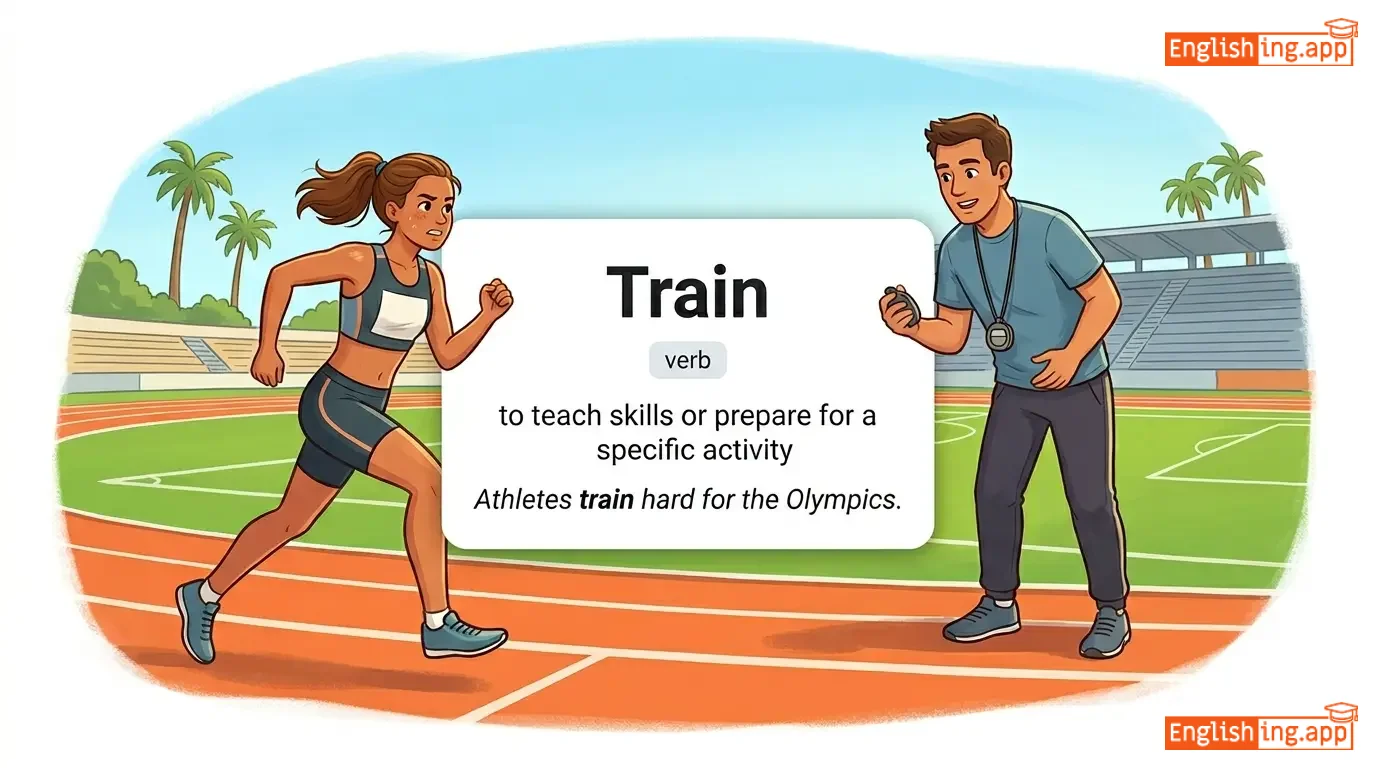
Train definition card — visual illustration of the meaning
noun
/treɪn/
列車 (ressha)

a series of connected vehicles that run on tracks and are used for transporting people or goods

"The train departed from the station on time."

"列車は時間通りに駅を出発しました。" (Ressha wa jikan dōri ni eki o shuppatsu shimashita.)
noun
/treɪˈniː/
研修生; 見習い (trainee)

a person undergoing training for a particular job or profession; a novice learner

"The medical trainee worked long hours to gain practical experience."

"医学研修生は実務経験を積むために長時間働きました。" (Igaku kenshūsei wa jitsumu keiken o tsumu tame ni chōjikan hatarakimashita.)
noun
/ˈtreɪnər/
トレーナー (torēnā)

a person who teaches skills or gives training

"The fitness trainer helped me improve my posture."

"フィットネストレーナーは私の姿勢を改善するのを手伝ってくれました。" (Fitnesu torēnā wa watashi no shisei o kaizen suru no o tetsudatte kuremashita.)
noun
/ˈtreɪnɪŋ/
訓練 (kunren)

the process of teaching or learning a particular skill or type of behavior

"She completed her training as a nurse last year."

"彼女は昨年、看護師としての訓練を完了しました。" (Kanojo wa sakunen, kangoshi toshite no kunren o kanryo shimashita.)
noun
/treɪt/
特性 (tokusei)

A distinguishing quality or characteristic, typically belonging to a person.

"Honesty is considered an admirable trait in a leader."

"正直はリーダーにとって賞賛すべき特性と見なされます。" (Shoujiki wa rīdā ni totte shousan subeki tokusei to minasaremasu.)
noun
/ˈtreɪtər/
裏切り者 (uragirimono)

A person who betrays their country, friends, or a cause by acting against them.

"The soldier was labeled a traitor for giving secrets to the enemy."
"その兵士は敵に秘密を漏らしたため、裏切り者と呼ばれました。" (Sono heishi wa teki ni himitsu o morashita tame, uragirimono to yobaremashita.)
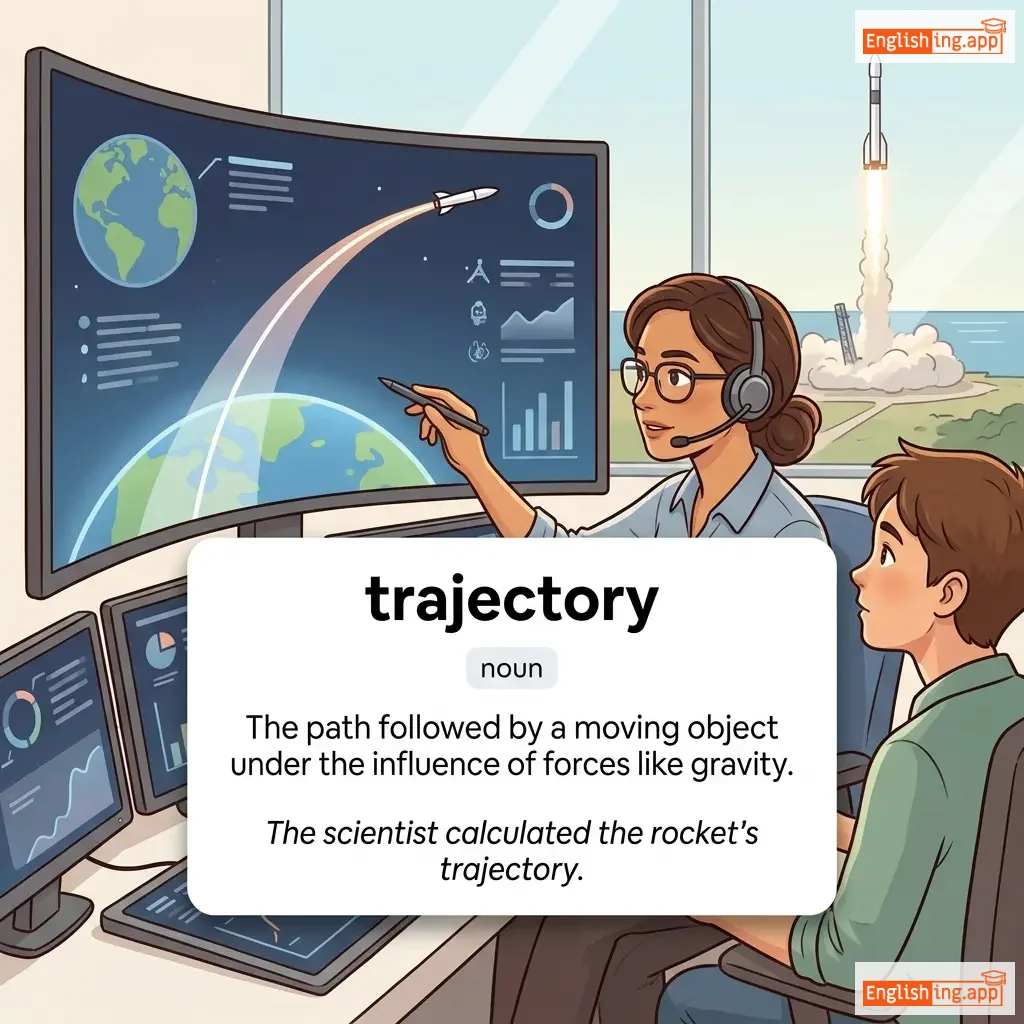
trajectory definition card — visual illustration of the meaning
noun
/trəˈdʒɛktəri/
軌道 (kidou)

The path followed by a moving object under the influence of forces like gravity.

"The scientist calculated the rocket's trajectory."

"科学者はロケットの軌道を計算した。" (Kagakusha wa roketto no kidou o keisan shita.)
noun
/træm kɑːr/
トラムカー (toramukaa)

An electric vehicle that runs on rails along the street

"The tram car stopped at every station in the city center."

"トラムカーは市中心の各駅に停車しました。" (Toramukaa wa shi chushin no kaku eki ni teisha shimashita.)
noun, verb
/ˈtræməl/
制限 (seigen)

A restriction or impediment to freedom of action; to restrict.

"The strict rules trammel the creativity of the students."

"厳格な規則は学生の創造性を制限しています。" (Gengaku na kisoku wa gakusei no sōzō-sei o seigen shiteimasu.)
verb, noun
/træmp/
放浪者 / 重い足取りで歩く (hōrōsha / omoi ashidori de aruku)

to walk heavily or noisily; a person who travels from place to place on foot, often homeless

"They tramped through the forest in heavy boots."

"彼らは重いブーツを履いて森の中を歩きました。" (Karera wa omoi būtsu o haite mori no naka o arukimashita.)
verb
/ˈtræmpəl/

to tread heavily on something and cause damage or injury

"The crowd trampled the flowers in the park."

noun
/træns/
トランス (toransu)

a half-conscious state like dreaming, often with loss of awareness of surroundings

"She stared out of the window as if in a trance."
"彼女は窓の外を見つめていた、まるでトランス状態にあるかのように。" (Kanojo wa mado no soto o mitsumete ita, marude toransu jōtai ni aru ka no yō ni.)
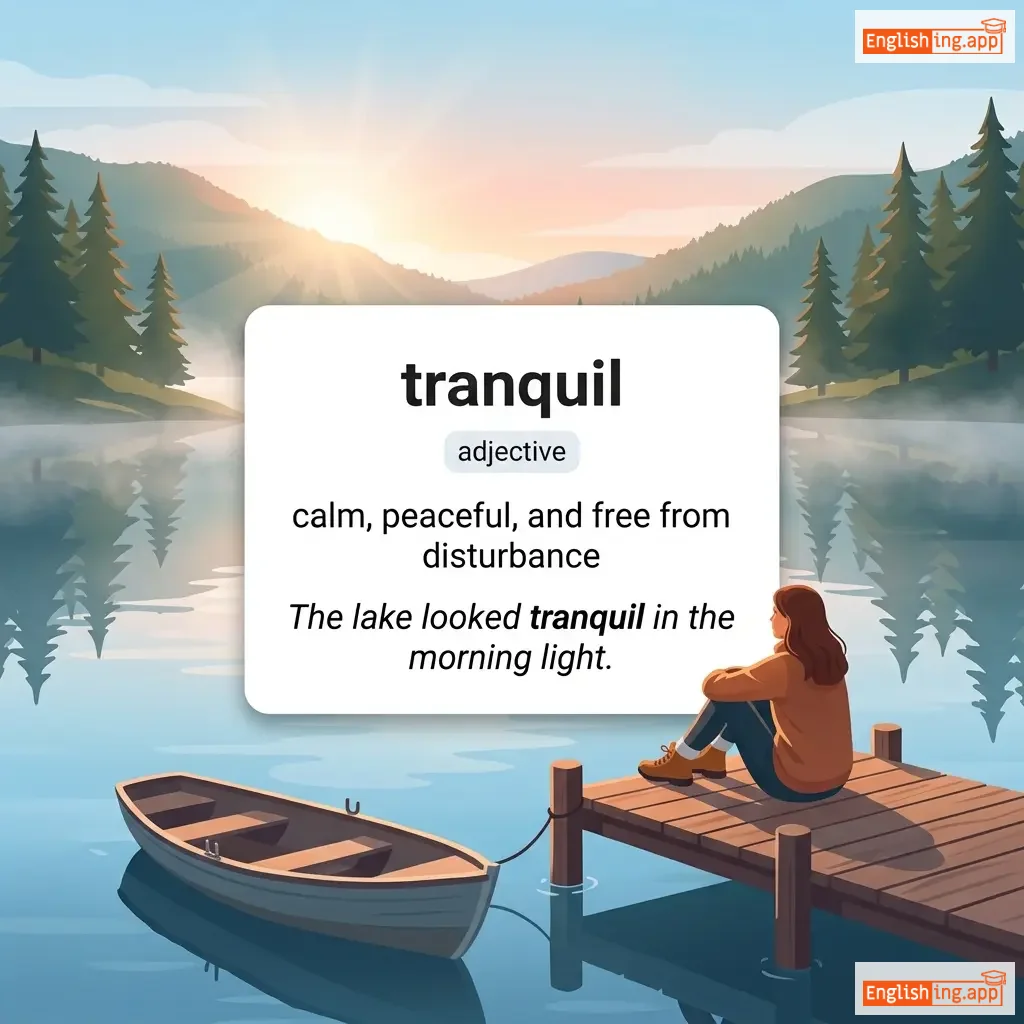
tranquil definition card — visual illustration of the meaning
adjective
/ˈtræŋkwɪl/
静かな (shizukana)

calm, peaceful, and free from disturbance

"The lake looked tranquil in the morning light."

"湖は朝の光の中で静かに見えました。" (Mizuumi wa asa no hikari no naka de shizuka ni miemashita.)
noun
/træŋˈkwɪləti/
静けさ (shizukesa)

the quality or state of being calm and peaceful

"He enjoyed the tranquility of the countryside."

"彼は田舎の静けさを楽しんでいました。" (Kare wa inaka no shizukesa o tanoshinde imashita.)
verb
/ˈtræŋ.kwɪ.laɪz/
鎮静する (chinseisuru)

to make someone or something calm or less anxious, often by using drugs

"The veterinarian had to tranquilize the tiger before moving it."

"獣医は虎を動かす前に鎮静する必要があった。" (Jūi wa tora o ugokasu mae ni chinseisuru hitsuyō ga atta.)
noun
/træŋˈkwɪl.ɪ.ti/
静けさ (shizukesa)

the state of being calm, peaceful, and free from disturbance

"She enjoyed the tranquillity of the countryside after years in the city."

"彼女は都市で何年も過ごした後、田舎の静けさを楽しんでいました。" (Kanojo wa toshi de nannen mo sugoshita ato, inaka no shizukesa o tanoshinde imashita.)
verb
/trænˈzækt/
取引を行う (torihiki o okonau)

to conduct or carry out business, a deal, or activity

"Customers can transact their banking online."

"顧客はオンラインで銀行取引を行うことができます。" (Kokyaku wa onrain de ginkō torihiki o okonau koto ga dekimasu.)
noun
/trænˈzækʃən/
取引 (torihiki)

an instance of buying or selling something; a business deal or exchange

"Every online transaction is recorded for security purposes."

"すべてのオンライン取引はセキュリティ目的で記録されます。" (Subete no onrain torihiki wa sekyuriti mokuteki de kiroku saremasu.)
adjective
/trænzˈæl.paɪn/
アルプスを越えて (Arupusu wo koete)

situated beyond or across the Alps, especially from the viewpoint of Italy

"The Romans referred to France as Transalpine Gaul."

"ローマ人はフランスをトランザルピン・ガリアと呼んでいました。" (Rōmajin wa Furansu o Toranzarupin Garia to yondeimashita.)
adjective
/ˌtræn.zətˈlæn.tɪk/
大西洋を横断する (taiseiyou wo oudansuru)

crossing or spanning the Atlantic Ocean

"They took a transatlantic flight from New York to London."

"彼らはニューヨークからロンドンへのトランスアトランティック便に乗った。" (Karera wa Nyuyooku kara Rondon e no toransuatorantikku-bin ni notta.)
transcend definition card — visual illustration of the meaning
verb
/trænˈsɛnd/
超越する (chouetsu suru)

to go beyond the limits of something; to surpass or exceed

"Her art transcends traditional boundaries."
"彼女の芸術は伝統的な境界を超越している。" (Kanojo no geijutsu wa dentouteki na kyoukai o chouetsu shite iru.)
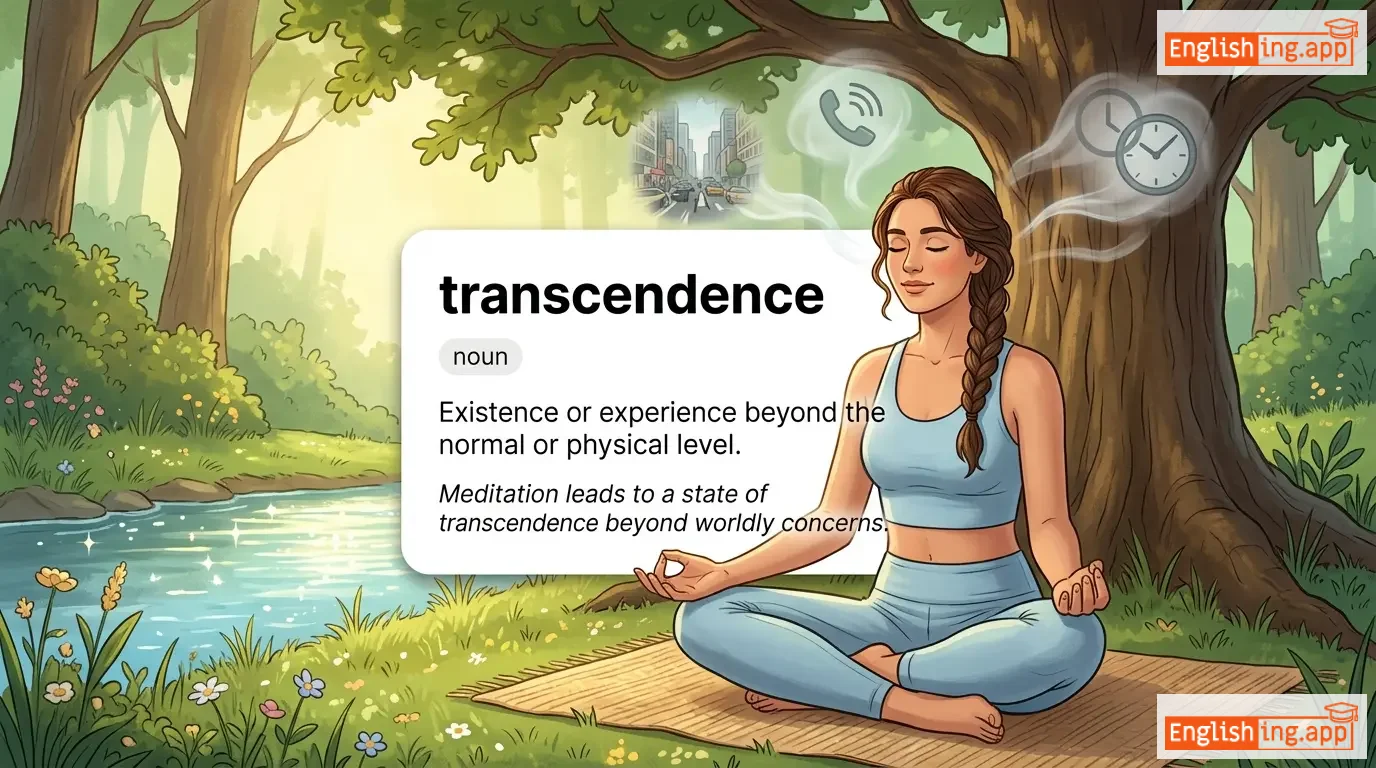
transcendence definition card — visual illustration of the meaning
noun
/trænˈsɛnd.əns/
通常または物理的レベルを超えた存在または経験 (tsujo matawa butsuriteki reberu o koeta sonzai matawa keiken)

Existence or experience beyond the normal or physical level.

"Meditation leads to a state of transcendence beyond worldly concerns."
"瞑想は、世俗的な問題を超越した状態に導きます。" (Meisou wa, sezokuteki na mondai o chōetsu shita jōtai ni michibikimasu.)
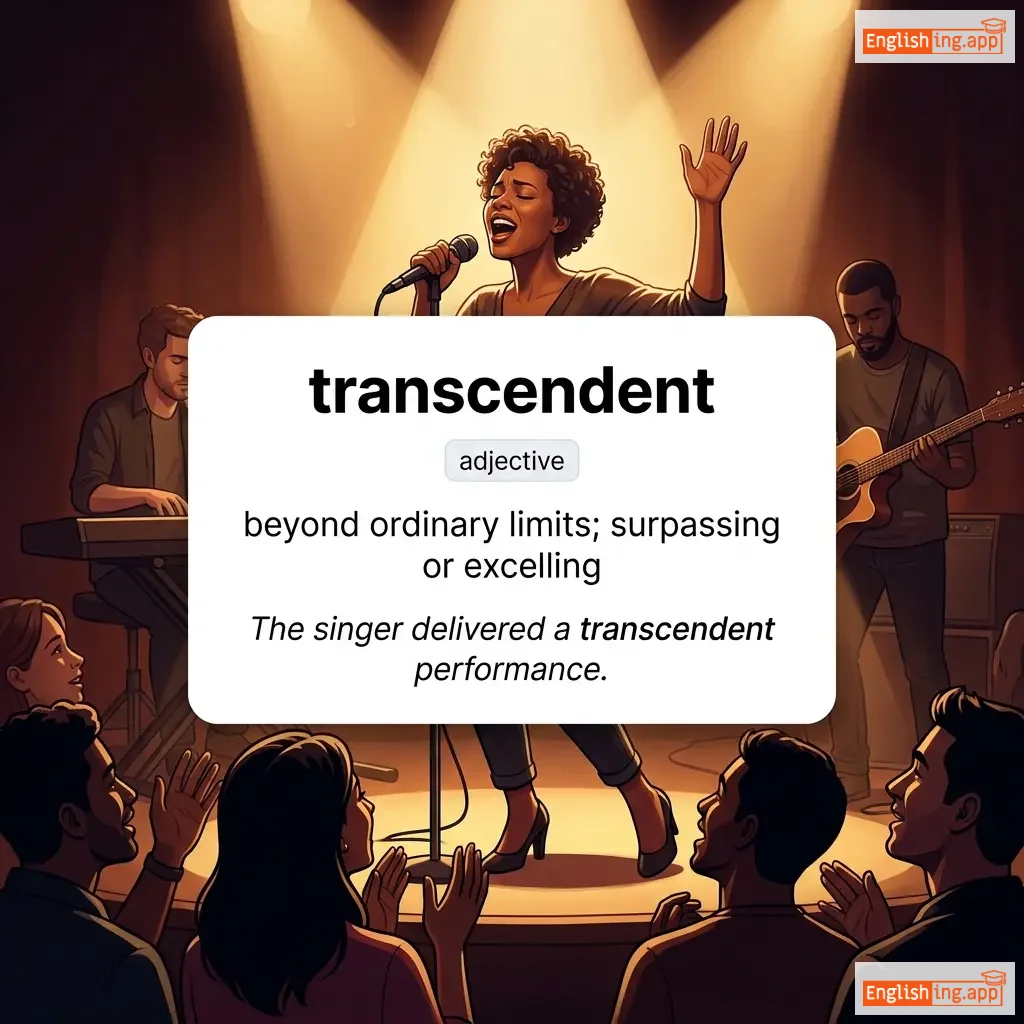
transcendent definition card — visual illustration of the meaning
adjective
/trænˈsɛndənt/
超越的な (chōetsu-tekina)

beyond ordinary limits; surpassing or excelling

"The singer delivered a transcendent performance."

"歌手は超越的なパフォーマンスをしました。" (Kashu wa chōetsu-tekina pafōmansu o shimashita.)
adjective
/ˌtræn.senˈdɛn.təl/
超越的 (chouetsuteki)

relating to the spiritual or non-physical realm; surpassing ordinary experience

"Meditation can lead to transcendental experiences."

"瞑想はトランセンデンタルな経験に導くことがあります。" (Meisou wa toransendentaru na keiken ni michibiku koto ga arimasu.)
verb
/trænˈskraɪb/

to make a written copy of spoken words or notes

"The secretary transcribed the meeting minutes."

noun
/ˈtrænskrɪpt/
写し (utsushi)

a written or printed version of material originally presented in another medium

"The professor asked for a transcript of the meeting."
"教授は会議のトランスクリプトを要求しました。" (Kyōju wa kaigi no toransukuriputo o yōkyū shimashita.)
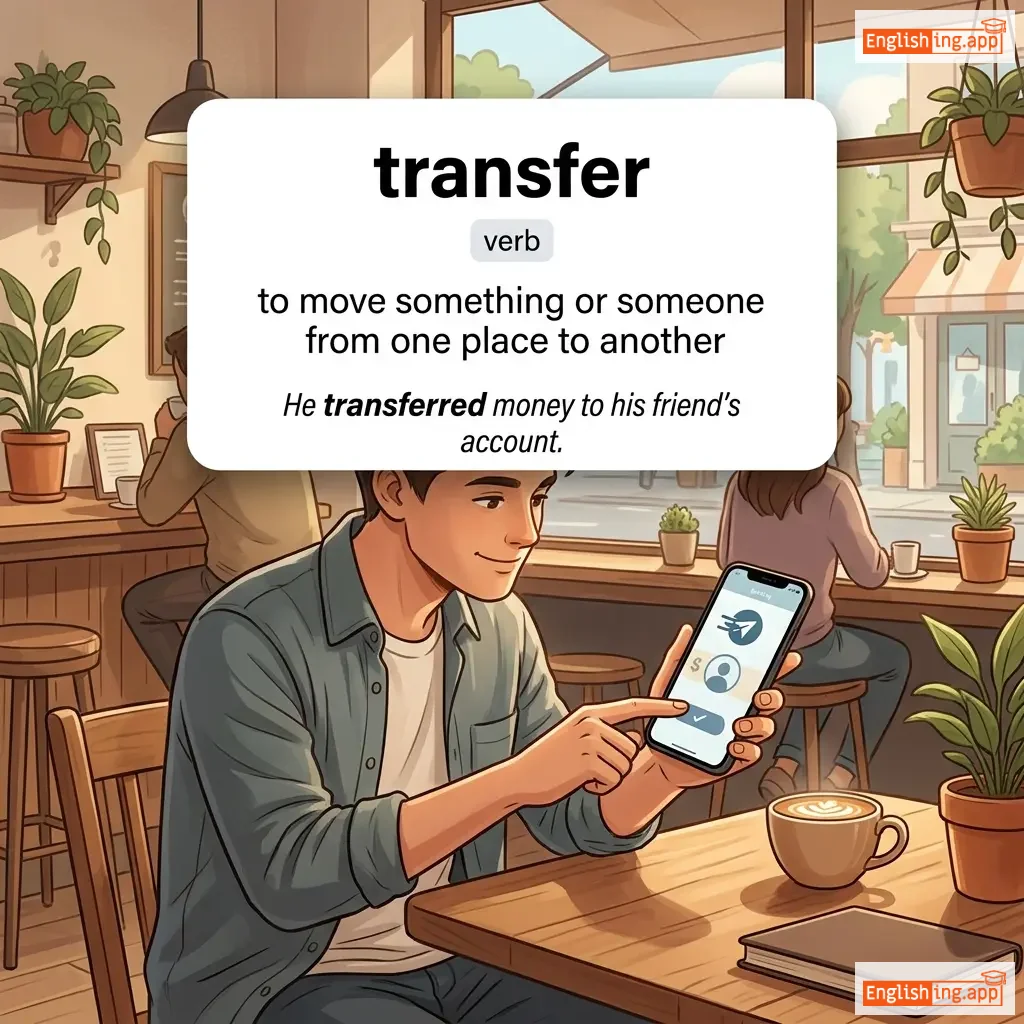
transfer definition card — visual illustration of the meaning
verb
/ˈtrænsfɜːr/
幸せ (shiawase)

to move something or someone from one place to another

"He transferred money to his friend's account."

"彼女は賞を受け取ったとき、幸せを隠せなかった。" (Kanojo wa shō o uketotta toki, shiawase o kakusenakatta.)
adjective
/ˈtrænsfərəbl/
譲渡可能な (joutokanou na)

Able to be moved, passed, or changed from one person, place, or situation to another.

"The ticket is transferable to another passenger."

"チケットは別の乗客に譲渡可能です。" (Chiketto wa betsu no joukyaku ni jouto kanou desu.)
noun
/ˌtrænsfəˈriː/
譲受人 (jōjunin)

A person to whom a right, property, or responsibility is transferred.

"The transferee must sign the contract before taking ownership."

"譲受人は所有権を取得する前に契約書に署名しなければならない。" (Jōjunin wa shoyūken o shutsukusuru mae ni keiyaku-sho ni shomei shinakereba naranai.)
noun
/ˈtrænsfərəns/
転送 (tensou)

The act of moving something from one place, person, or situation to another.

"The transference of knowledge is essential in education."

"知識の転送は教育において不可欠です。" (Chishiki no tensou wa kyouiku ni oite fukaketsu desu.)
noun
/trænsˈfɜːrər/
譲渡者 (joutosha)

A person who transfers something, such as property, rights, or responsibilities, to another.

"The transferrer is responsible for ensuring the property is legally passed on."

"譲渡者は、財産が法的に移転されることを確認する責任があります。" (Joutosha wa, zaisan ga houteki ni iten sareru koto o kakunin suru sekinin ga arimasu.)
verb
/trænsˈfɪɡjʊər/
変形する (henkei suru)

To transform the outward appearance or form, often in a way that elevates or glorifies.

"The artist managed to transfigure simple clay into a beautiful sculpture."
"アーティストは単純な粘土を美しい彫刻に変えることができました。" (Ātisuto wa tanjun na nendo o utsukushī chōkoku ni kaeru koto ga dekimashita.)
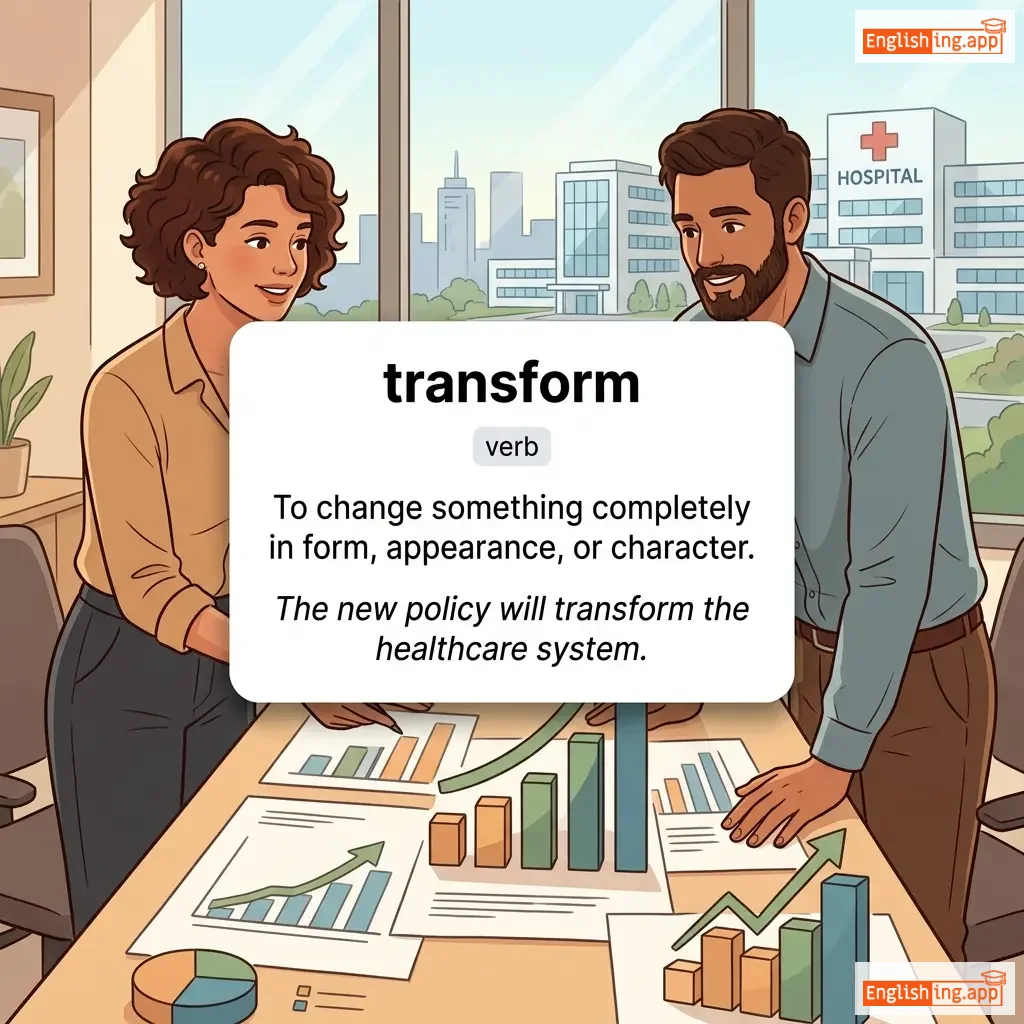
transform definition card — visual illustration of the meaning
verb
/trænsˈfɔːrm/
変形する (henkei suru)

To change something completely in form, appearance, or character.

"The new policy will transform the healthcare system."
"新しい政策は医療制度を変革するでしょう。" (Atarashī seisaku wa iryō seido o henka suru deshō.)
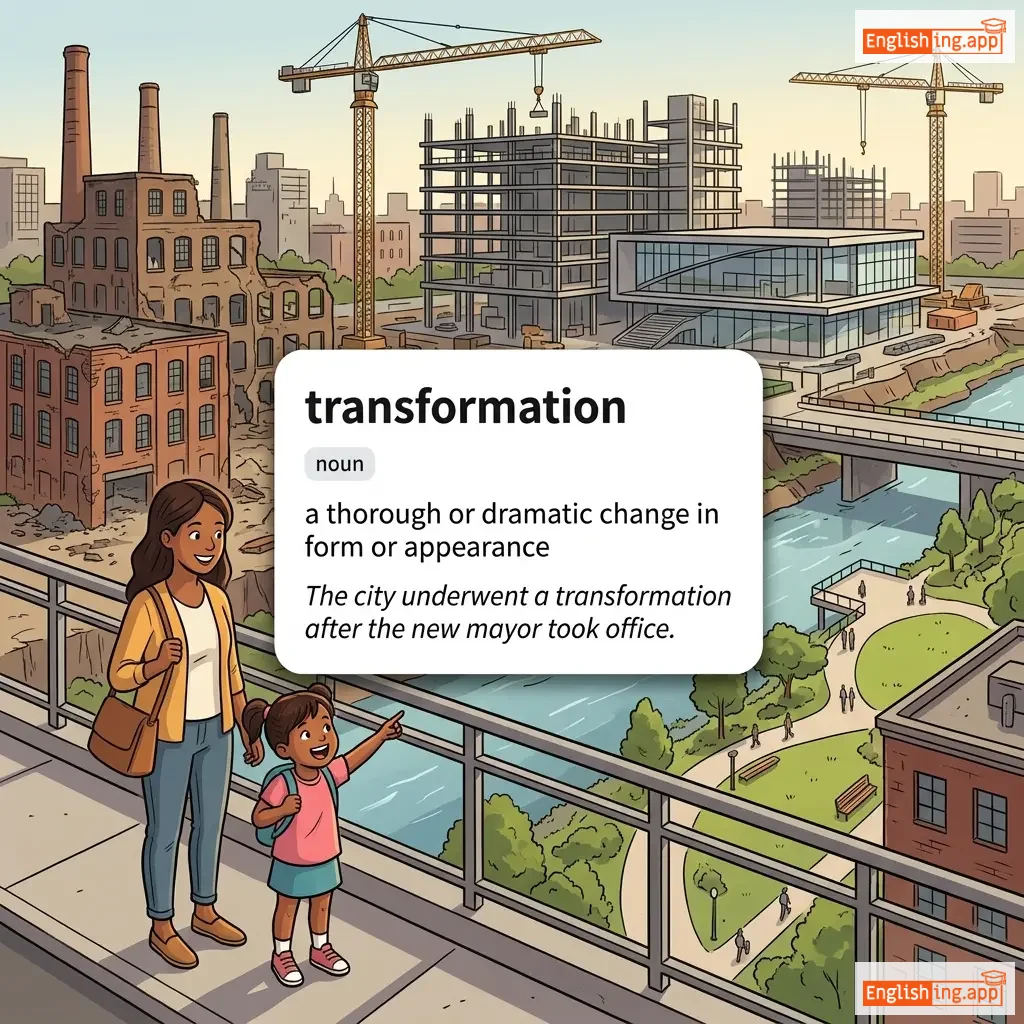
transformation definition card — visual illustration of the meaning
noun
/ˌtrænsfərˈmeɪʃən/
変革 (henkaku)

a thorough or dramatic change in form or appearance

"The city underwent a transformation after the new mayor took office."
"新しい市長が就任した後、街は変革を経験しました。" (Atarashii shichou ga shuunin shita ato, machi wa henkaku o keiken shimashita.)
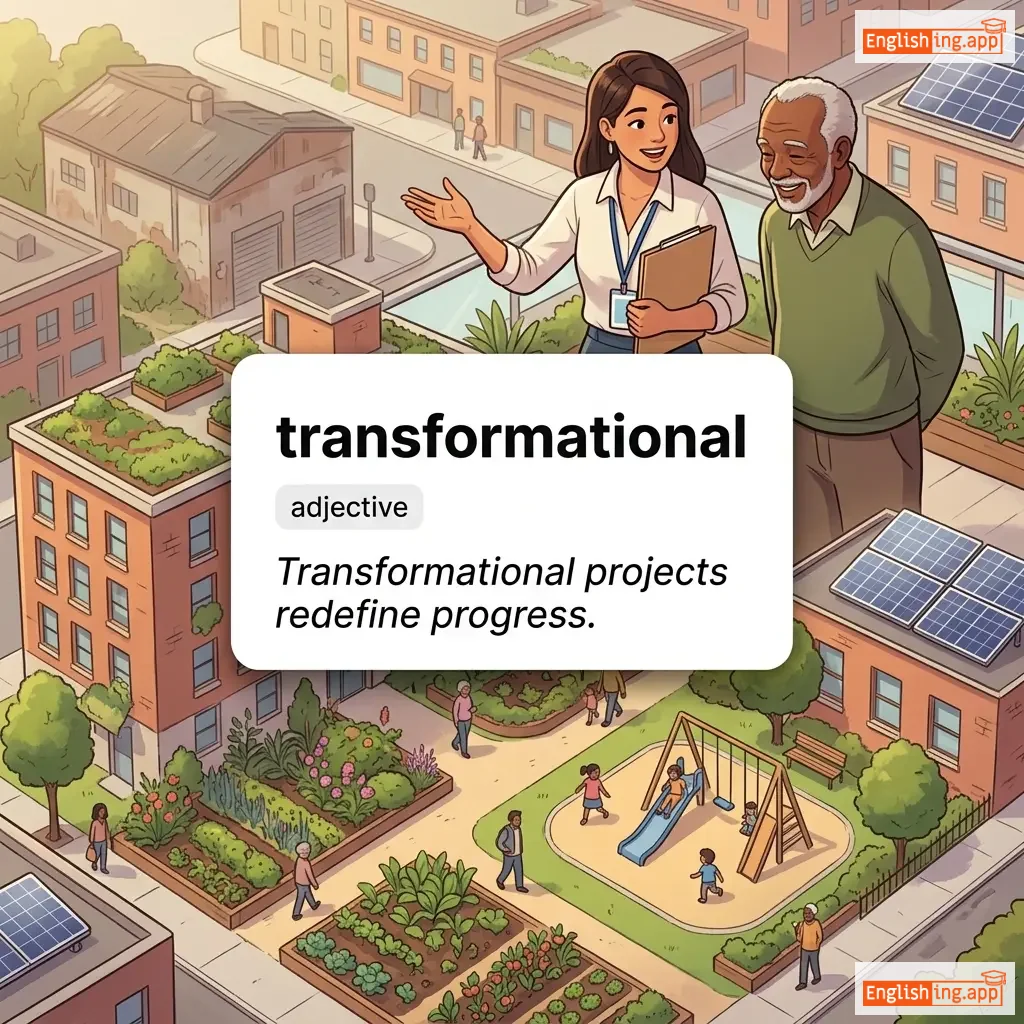
transformational definition card — visual illustration of the meaning
adjective
ˌtræns.fəˈmeɪ.ʃən.əl
変革的 (henkakuteki)

Causing or able to cause an important and lasting change in someone or something.

"Transformational projects redefine progress."

"変革的なプロジェクトは進歩を再定義します。" (Henkakuteki na purojekuto wa shinpo o saiteigi shimasu.)
transformative definition card — visual illustration of the meaning
adjective
/trænsˈfɔː.mə.tɪv/
変革的 (henkakuteki)

Causing a marked change in someone or something.

"His transformative ideas changed the direction of the company."

"彼の変革的なアイデアは会社の方向性を変えました。" (Kare no henkakuteki na aidea wa kaisha no houkousei wo kaemashita.)
verb
/trænsˈfjuːz/

to transfer blood or another fluid into a vein or body part; to instill a quality or idea into someone or something

"The doctor had to transfuse blood into the patient after the surgery."

adjective
/trænsˈfjuːzəbl̩/
輸血可能 (yuketsu kanou)

capable of being transfused, especially referring to blood or fluids

"Only transfusible blood types are used in the hospital."

"病院では輸血可能な血液型のみが使用されます。" (Byouin dewa yuketsu kanou na ketsueki-gata nomi ga shiyou saremasu.)
noun
/trænsˈfjuːʒən/
輸血 (yuketsu)

the process of transferring blood or another fluid into a person's vein

"The patient received a blood transfusion after the accident."

"事故後、患者は輸血を受けました。" (Jikogo, kanja wa yuketsu o ukemashita.)
verb
/trænsˈɡrɛs/

to go beyond the limits of a moral law, command, or boundary; to sin

"He apologized after realizing he had transgressed the community's rules."
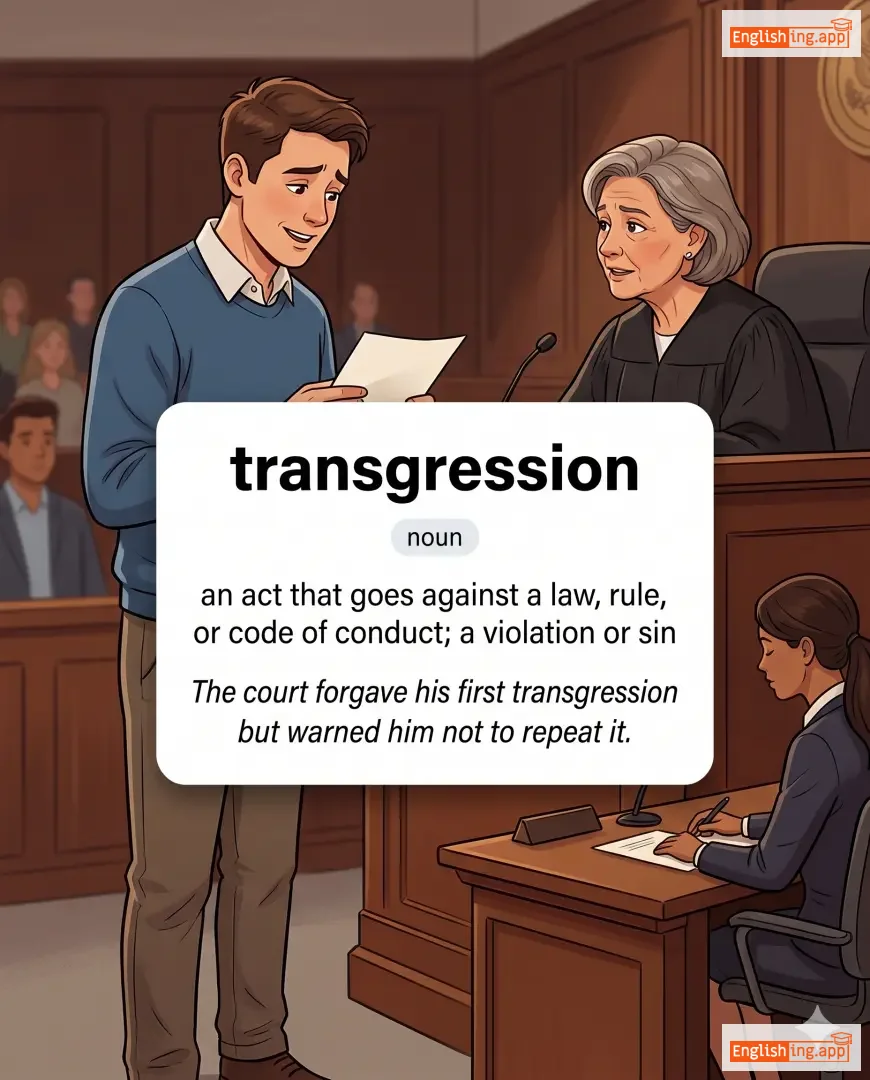
transgression definition card — visual illustration of the meaning
noun
/trænsˈɡrɛʃən/
違反, 罪 (ihan, tsumi)

an act that goes against a law, rule, or code of conduct; a violation or sin

"The court forgave his first transgression but warned him not to repeat it."
"裁判所は彼の最初の違反を許しましたが、再発を警告しました。" (Saibansho wa kare no saisho no ihan o yurushimashita ga, sai hātsu o keikoku shimashita.)
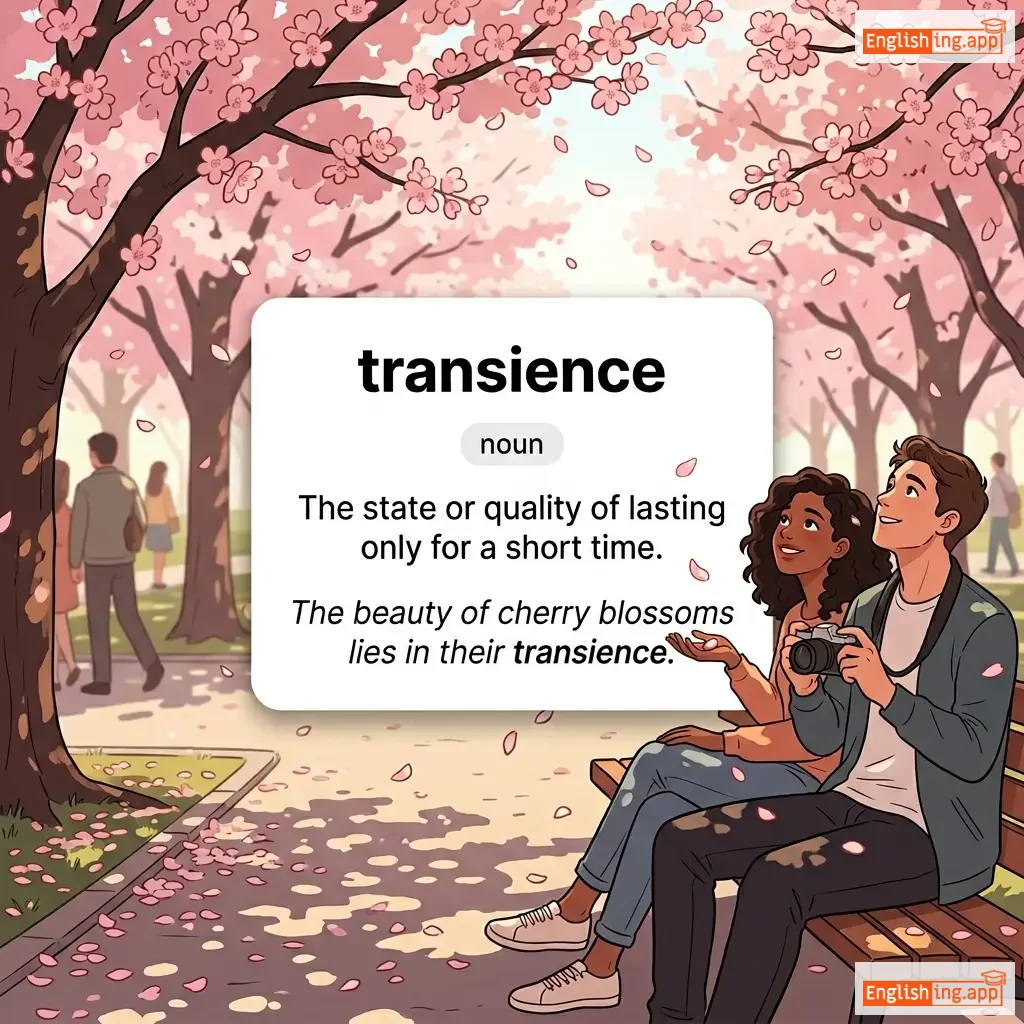
transience definition card — visual illustration of the meaning
noun
/ˈtrænziəns/
儚さ (hakanasa)

The state or quality of lasting only for a short time.

"The beauty of cherry blossoms lies in their transience."

"桜の花の美しさは、その儚さにあります。" (Sakura no hana no utsukushisa wa, sono hakanasa ni arimasu.)