語彙集

英単語辞書 | 単語の意味、定義、例文

adjective
/ˈsiː.naɪl/
老化による弱さ (rōka ni yoru yowasa)

Showing the weaknesses of old age, especially mental decline.

"The old man became senile and forgot familiar faces."

"老人はセンイルになり、親しい顔を忘れてしまった。" (Rōjin wa seniru ni nari, shitashī kao o wasurete shimatta.)
noun
/sɪˈnɪləti/
老衰 (rōsui)

The state of being old and showing the weaknesses of age, especially mental decline.

"His forgetfulness was attributed to senility."

"彼の忘れっぽさは老衰によるものとされました。" (Kare no wasurepposa wa rōsui ni yoru mono to saremashita.)
adjective
/ˈsɪniər/
シニア (shinia)

having a higher rank or status; older or more experienced

"He is the senior manager in the department."

"彼は部門のシニアマネージャーです。" (Kare wa bumon no shinia manējā desu.)
noun
/sɛnˈseɪʃən/
センセーション (sensēshon)

A physical feeling or a strong reaction of excitement and interest.

"The singer became a sensation overnight."

"歌手は一晩でセンセーションになった。" (Kashu wa hitobanje sensēshon ni natta.)
adjective
/sɛnˈseɪʃənəl/
センセーショナル (sensēshonaru)

Causing great public interest and excitement; outstanding or impressive.

"The team had a sensational victory in the finals."

"チームは決勝でセンセーショナルな勝利を収めました。" (Chīmu wa kesshō de sensēshonaru na shōri o osamemashita.)
noun/verb
/sɛns/
センス (sensu)

A faculty by which the body perceives external stimuli; or to perceive something without being told.

"She had a strong sense of responsibility."

"彼女は責任感が強かった。" (Kanojo wa sekininkan ga tsuyokatta.)
noun
/ˌsɛnsəˈbɪləti/
感受性 (kanjusei)

The ability to appreciate and respond to complex emotional or aesthetic influences; sensitivity.

"Her artistic sensibility impressed everyone."

"彼女の芸術的な感受性は、皆を感動させました。" (Kanojo no geijutsu-teki na kanjusei wa, mina o kandō sasemashita.)
adjective
/ˈsensəbəl/
賢明な; 実用的な; 理にかなった (kenmei na; jitsuyōteki na; ri ni kanatta)

having or showing good sense; practical and reasonable

"It would be sensible to take an umbrella because it might rain."

"雨が降るかもしれないので、傘を持っていくのは賢明です。" (Ame ga furu kamoshirenai node, kasa o motte iku no wa kenmei desu.)
sensitive definition card — visual illustration of the meaning
adjective
/ˈsɛnsɪtɪv/
敏感な (binkan na)

Quick to detect or respond to slight changes, signals, or influences; easily affected emotionally or physically.

"She has very sensitive skin that reacts to most cosmetics."
"彼女は非常に敏感な肌を持っており、ほとんどの化粧品に反応します。" (kanojo wa hijō ni binkan na hada o motte ori, hotondo no keshōhin ni hannō shimasu.)
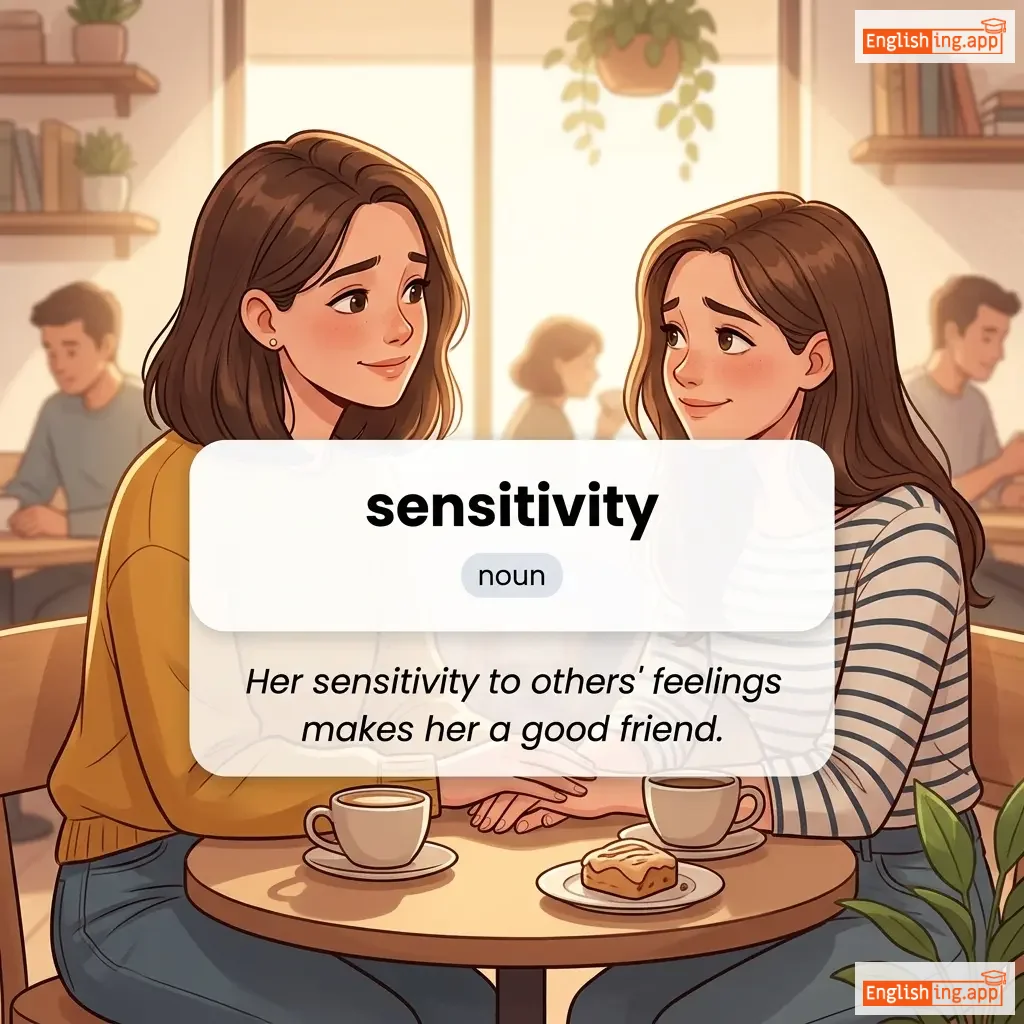
sensitivity definition card — visual illustration of the meaning
noun
/ˌsɛnsɪˈtɪvɪti/
感受性 (kanjusei)

the quality of being sensitive; ability to detect or respond to slight changes or emotions

"Her sensitivity to others' feelings makes her a good friend."

"他人の感情に対する彼女の感受性は、彼女を良い友人にします。" (Tanin no kanjō ni taisuru kanojo no kanjusei wa, kanojo o yoi yūjin ni shimasu.)
noun
/ˌsɛnsɪtaɪˈzeɪʃən/
感作化 (kansokuka)

The process of becoming sensitive to a substance, situation, or influence.

"The doctor warned about the sensitization caused by repeated exposure to chemicals."

"医者は化学物質への繰り返しの暴露によって引き起こされる感作化について警告しました。" (Isha wa kagaku busshitsu e no kurikaeshi no bakuro ni yotte hikiokosareru kansakuka ni tsuite keikoku shimashita.)
noun
/ˈsɛnsər/
幸せ (shiawase)

a device that detects or measures a physical property and records, indicates, or responds to it

"The motion sensor turned on the light automatically."

"彼女は賞を受け取ったとき、幸せを隠せなかった。" (Kanojo wa shou wo uketotta toki, shiawase wo kakusenakatta.)
noun
/sɛnˈsɔːrɪəm/
感覚中枢 (kankaku chūsu)

The part of the brain or mind concerned with the reception and interpretation of sensory stimuli.

"The patient’s sensorium was clouded after the accident."
"事故後、患者の感覚中枢はぼやけていた。" (jiko go, kanja no kankaku chūsu wa boyakete ita.)
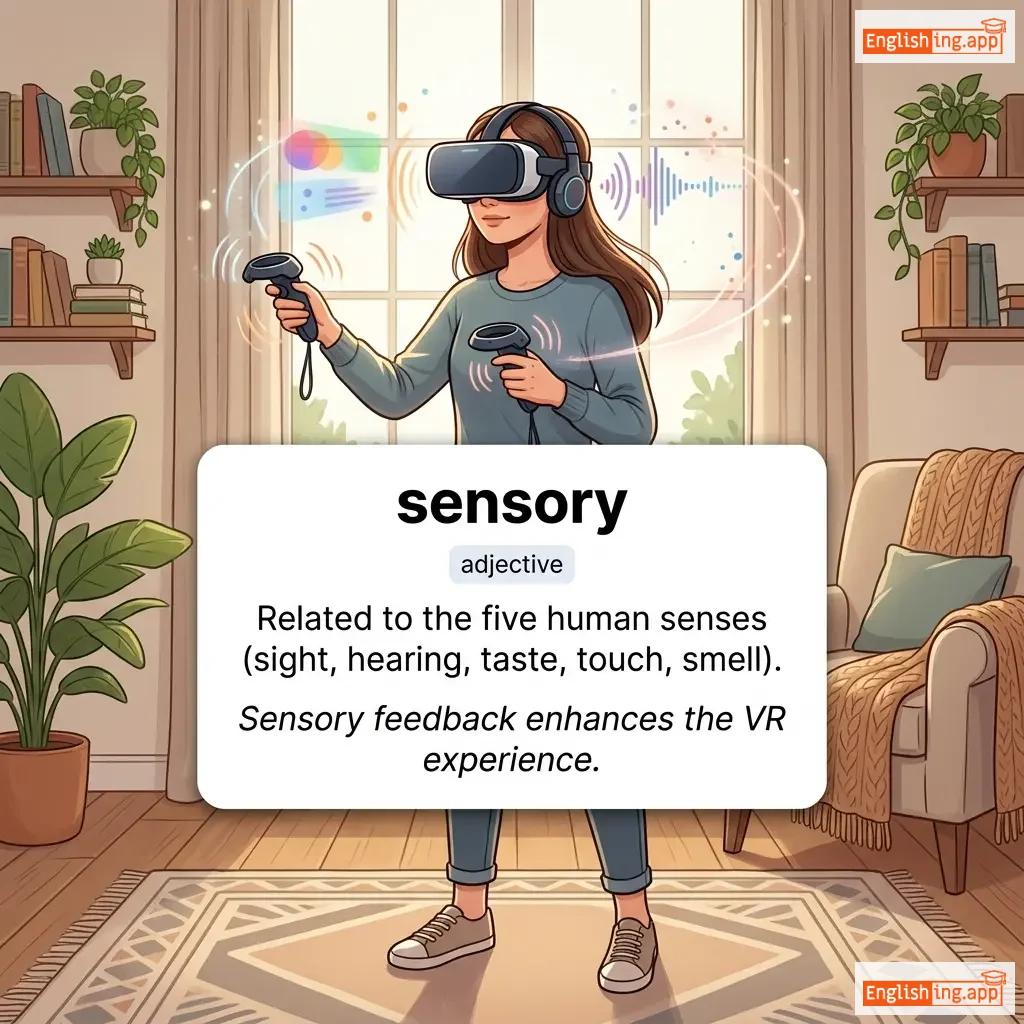
sensory definition card — visual illustration of the meaning
adjective
/ˈsɛn.sər.i/
感覚的 (kankakuteki)

Related to the five human senses (sight, hearing, taste, touch, smell).

"Sensory feedback enhances the VR experience."
"感覚的フィードバックはVR体験を強化します。" (Kankakuteki fīdobakku wa VR taiken o kyōka shimasu.)
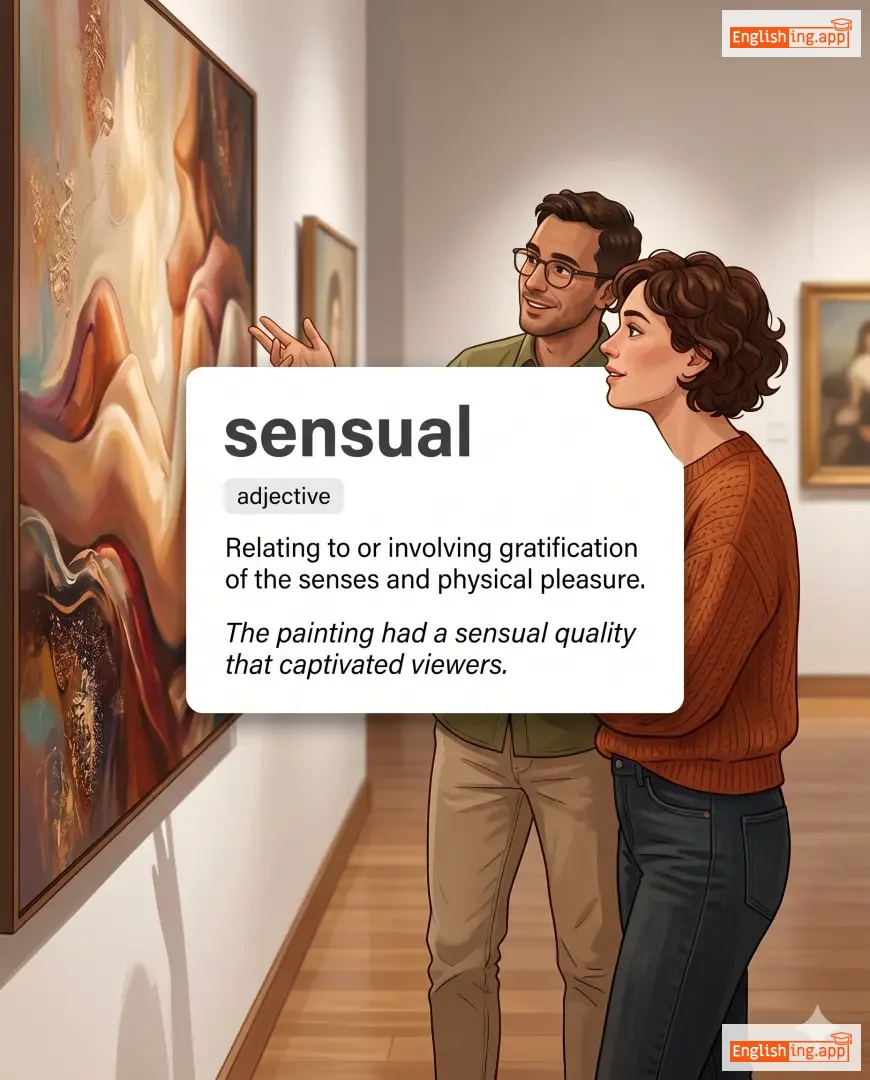
sensual definition card — visual illustration of the meaning
adjective
/ˈsɛnʃuəl/
官能的 (kannōteki)

Relating to or involving gratification of the senses and physical pleasure.

"The painting had a sensual quality that captivated viewers."
"その絵は視覚的な魅力があり、観客を魅了しました。" (Sono e wa shikakuteki na miryoku ga ari, kankyaku o miryō shimashita.)
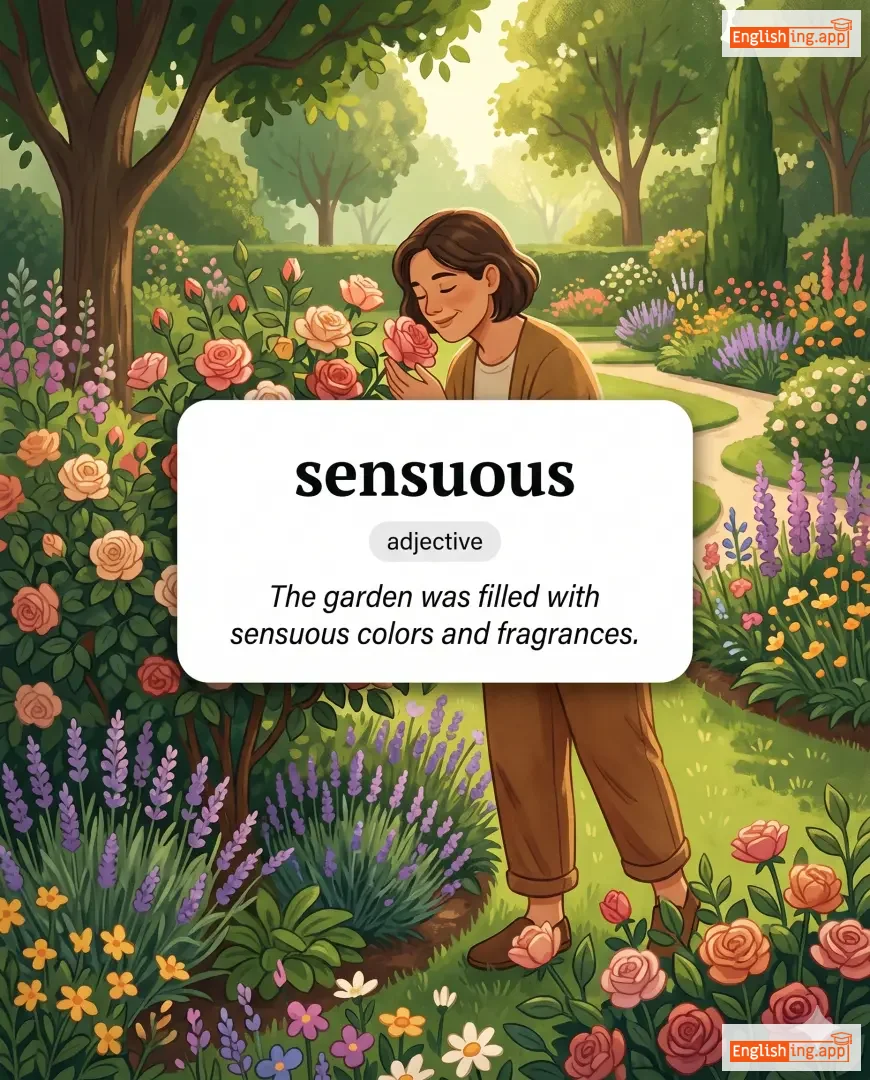
sensuous definition card — visual illustration of the meaning
adjective
/ˈsɛnʃuəs/
官能的 (kannō-teki)

Relating to or affecting the senses rather than the intellect; pleasing to the senses.

"The garden was filled with sensuous colors and fragrances."

"庭は官能的な色と香りで満たされていた。" (Niwa wa kannō-teki na iro to kaori de mitasarete ita.)
noun, verb
/ˈsɛntəns/
文; 刑期 (bun; keiki)

A set of words that expresses a complete thought; or a punishment given by a court of law.

"The judge gave him a five-year prison sentence."

"裁判官は彼に5年間の刑期を与えました。" (Saibankan wa kare ni go-nenkan no keiki o ataemashita.)
adjective
/sɛnˈtɛnʃəs/
道徳的な; 道徳的に説教する (dōtoku-teki na; dōtoku-teki ni sekkyō suru)

Given to moralizing in a pompous or affected manner.

"His sententious remarks annoyed the audience."

"彼の道徳的なコメントは観客をイライラさせた。" (Kare no dōtoku-teki na komentā wa kankyaku o iraira saseta.)
noun
/ˈsɛnʃəns/
感覚能力 (kankaku nōryoku)

The capacity to feel, perceive, or experience subjectively.

"Many argue that animals possess sentience."
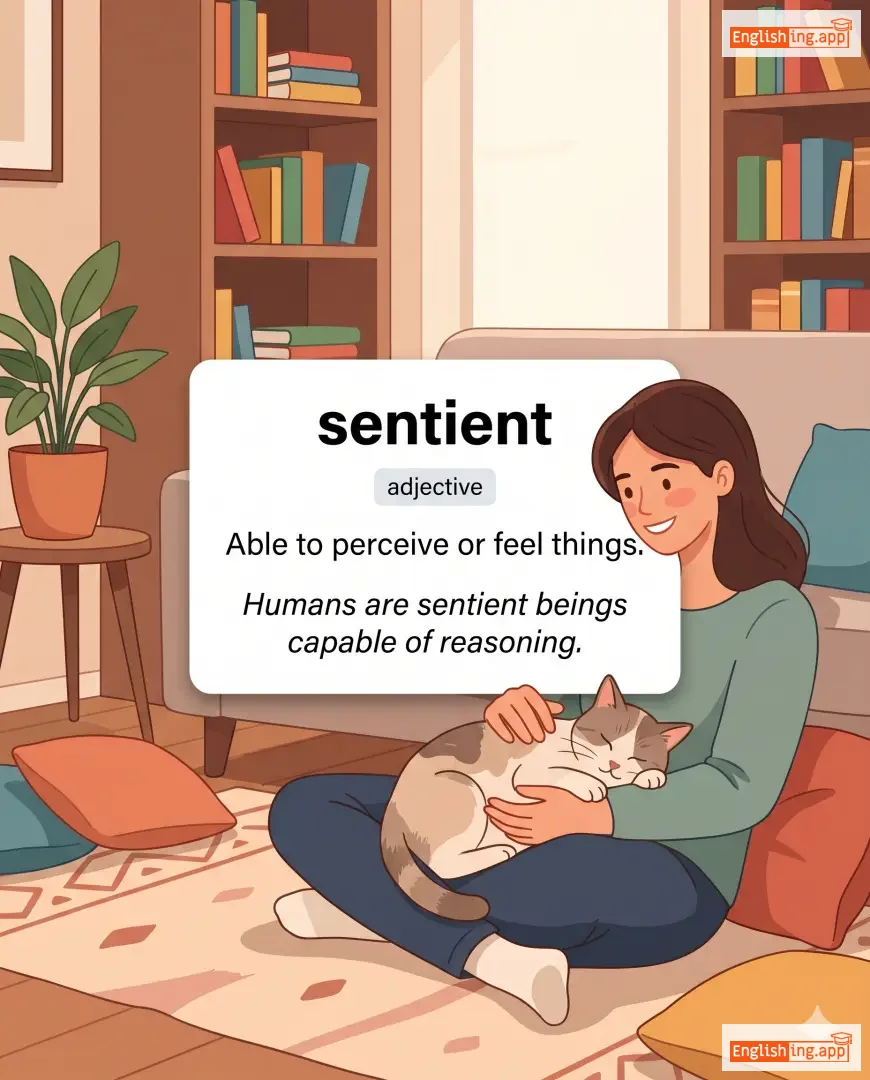
"多くの人々は動物が感覚能力を持っていると主張しています。" (Ōku no hitobito wa dōbutsu ga kankaku nōryoku o motte iru to shuchō shiteimasu.)
sentient definition card — visual illustration of the meaning
adjective
/ˈsɛnʃənt/
感覚的 (kankakuteki)

Able to perceive or feel things.

"Humans are sentient beings capable of reasoning."

"人間は推論する能力を持った感覚的存在です。" (Ningen wa suiron suru nouryoku o motta kankakuteki sonzai desu.)
noun
/ˈsɛntɪmənt/
感情 (kanjou)

a view or opinion that is based on emotion rather than reason

"Public sentiment was against the new law."

"公共の感情は新しい法律に反対でした。" (Koukyou no kanjou wa atarashii houritsu ni hantai deshita.)
adjective
/ˌsɛntɪˈmɛntəl/
センチメンタル (senchimentaru)

Having or showing tender, emotional feelings, often excessively.

"She kept the old letters for sentimental reasons."

"彼女は感傷的な理由で古い手紙を取っておいた。" (Kanojo wa kanshō-teki na riyū de furui tegami o totte oita.)
noun
/ˈsɛntɪnəl/
衛兵 (eibei)

A soldier or guard whose job is to stand and keep watch.

"A sentinel stood at the entrance of the camp."

"一人の衛兵がキャンプの入り口に立っていた。" (Hitori no eibei ga kyanpu no iriguchi ni tatte ita.)
adjective
/ˈsɛpərəbəl/
分離可能な (bunri kanō na)

Capable of being separated or divided.

"The two issues are separable and should be discussed independently."

"この二つの問題は分離可能であり、独立して議論されるべきです。" (Kono futatsu no mondai wa bunri kanō de ari, dokuritsu shite giron sareru beki desu.)
verb
/ˈsɛpəˌreɪt/
分ける (wakeru)

To cause to move or be apart; to divide into distinct elements.

"The teacher separated the students into groups."

"教師は学生をグループに分けました。" (Kyoushi wa gakusei wo guruupu ni wakemashita.)
adjective
/ˈsɛpəreɪtɪd/
分かれた (wakareta)

divided or disconnected from something else; not together

"They have been living in separated houses since the divorce."

"離婚以来、彼らは別々の家に住んでいます。" (Rikon irai, karera wa betsubetsu no ie ni sunde imasu.)
adverb
/ˈsɛp.ər.ət.li/
別々に (betsubetsu ni)

in a way that is apart or individually; not together

"They decided to travel separately to the conference."

"彼らは会議に別々に行くことに決めた。" (Karera wa kaigi ni betsubetsu ni iku koto ni kimeta.)
noun
/ˌsɛpəˈreɪʃən/
分離 (bunri)

the act of moving or being moved apart; a division or disconnection

"The separation of the two friends was difficult for both of them."

"二人の友達の分離は、二人にとって難しかった。" (Futari no tomodachi no bunri wa, futari ni totte muzukashikatta.)
noun
/ˈsɛpərətɪst/
分離主義者 (bunrishugisha)

A person who supports the separation of a group from a larger body, often for political or cultural independence.

"The separatist group demanded independence from the central government."

"分離主義者グループは中央政府からの独立を要求した。" (Bunrishugisha gurūpu wa chūō seifu kara no dokuritsu o yōkyū shita.)
noun
/sɛpˈtɛmbər/
9月 (kugatsu)

The ninth month of the year in the Gregorian calendar

"My birthday is in September, and I always celebrate it with friends."

"私の誕生日は9月で、いつも友達と一緒に祝います。" (Watashi no tanjoubi wa kugatsu de, itsumo tomodachi to issho ni iwaimasu.)
adjective
/sɛpˈtɛnɪəl/
7年ごとの (7 nen goto no)

Occurring every seven years.

"The festival is a septennial tradition in the village."

"その祭りは村で7年ごとの伝統です。" (Sono matsuri wa mura de 7 nen goto no dentou desu.)
adjective
/ˈsɛptɪk/
感染した (kansen shita)

Infected with harmful bacteria; relating to or causing infection.

"The doctor treated the patient's septic wound immediately."

"医者は患者のセプティックな傷をすぐに治療しました。" (Isha wa kanja no septikku na kizu o sugu ni chiryo shimashita.)
noun
/ˈsɛpəlkər/
墓室 (boku shitsu)

A small room or monument, cut in rock or built of stone, in which a dead person is buried.

"The ancient king was laid to rest in a grand sepulcher."

"古代の王は大きな墓室に埋葬されました。" (Kodai no ō wa ōkina boku shitsu ni maizō saremashita.)
adjective
/səˈpʌlkrəl/
墓に関連する、陰気な (haka ni kanren suru, inki na)

Relating to a tomb or burial; gloomy, dismal.

"The abandoned house had a sepulchral silence about it."

"放棄された家には墓のような静けさが漂っていた。" (Hōki sareta ie ni wa haka no yō na shizukesa ga tadayotte ita.)
noun
/ˈsɛpəlˌtʃər/
墓; 埋葬; (haka; maisou)

the act of burying a dead body; burial; a grave or tomb

"The ancient king's sepulture was discovered by archaeologists."

"古代の王のセパルチャーは考古学者によって発見されました。" (Kodai no ou no separuchaa wa koukogakusha ni yotte hakken saremashita.)
adjective
/sɪˈkweɪʃəs/
盲目的に従う (mōmokuteki ni shitagau)

Lacking independence of thought; blindly following.

"The sequacious students never questioned their teacher's opinions."

"シクウェイシャスな学生は、教師の意見に疑問を呈することはありませんでした。" (Shikweishasu na gakusei wa, kyōshi no iken ni gimon o teishutsu suru koto wa arimasen deshita.)
noun
/ˈsiːkwəl/
続編 (zokuhen)

A published, broadcast, or recorded work that continues the story or develops the theme of an earlier one.

"The movie's sequel was even more successful than the original."

"映画の続編はオリジナルよりもさらに成功した。" (Eiga no zokuhen wa orijinaru yori mo sara ni seikō shita.)
noun
/sɪˈkwiːlə/
後遺症 (kōishō)

A condition that is the consequence of a previous disease or injury.

"Lung scarring can be a sequela of severe pneumonia."

"肺の瘢痕は重度の肺炎の後遺症である可能性があります。" (Hai no hankon wa jūdona haien no kōishō de aru kanōsei ga arimasu.)
noun
/ˈsiːkwəns/
順番 (junban)

A particular order in which related things follow each other.

"The magician asked us to remember the sequence of cards."

"魔法使いは私たちにカードの順番を覚えておくように頼んだ。" (Mahōtsukai wa watashitachi ni kādo no junban o oboete oku yō ni tanonda.)
adjective
/ˈsiːkwənt/
次の (tsugi no)

Following in order or as a result.

"The sequent events changed the course of history."

"次の出来事は歴史の流れを変えました。" (Tsugi no dekigoto wa rekishi no nagare o kaemashita.)
sequester definition card — visual illustration of the meaning
verb
/sɪˈkwɛstər/
隔離する (kakuri suru)

To isolate or hide away; to take possession of assets until a debt has been paid.

"The jury was sequestered during the high-profile trial."

"高名な裁判中に陪審員は隔離されました。" (Kōmei na saiban-chū ni baishin'in wa kakuri saremashita.)
verb
/sɪˈkwɛstreɪt/
差し押さえる (sashiosaeru)

To take legal possession of assets until a debt is paid or disputes are resolved.

"The court decided to sequestrate the company's property."

"裁判所は会社の財産を差し押さえることを決定しました。" (Saibansho wa kaisha no zaisan o sashiosaeru koto o kettei shimashita.)
noun
/ˈsɛrəf/
セラフィム (serafimu)

An angelic being associated with light and purity, often depicted as a high-ranking angel in Christian theology.

"The stained-glass window depicted a seraph with outstretched wings."

"ステンドグラスの窓には、翼を広げたセラフィムが描かれていました。" (Sutendogurasu no mado ni wa, tsubasa o hirogeta serafimu ga egakarete imashita.)
adjective
/səˈræfɪk/
天使のような (tenshi no you na)

Of or like a seraph; angelic, pure, and blissful.

"She gave him a seraphic smile that calmed his fears."

"彼女は彼に天使のような微笑みをくれて、彼の恐れを和らげた。" (Kanojo wa kare ni tenshi no you na bishou wo kurete, kare no osore wo yawarageteta.)
adjective
/sɪər/
枯れた (kareta)

Dry or withered, especially vegetation.

"The sere leaves crumbled under his feet."

"枯れた葉が彼の足元で崩れた。" (Kareta ha ga kare no ashimoto de kuzureta.)
adjective
/ˌsɛrənˈdɪpɪtəs/
偶然の幸運 (gūzen no kōun)

Occurring or discovered by chance in a happy or beneficial way.

"Their meeting at the café was purely serendipitous."

"カフェでの彼らの出会いは完全に偶然の幸運でした。" (Kafe de no karera no deai wa kanzen ni gūzen no kōun deshita.)
noun
/ˌsɛrənˈdɪpɪti/
幸運な偶然 (kouun na guuzen)

The occurrence of events by chance in a happy or beneficial way.

"Finding that old photo album was pure serendipity."
"その古い写真アルバムを見つけたのはまさに幸運な偶然だった。" (Sono furui shashin arubamu o mitsuketa no wa masani kouun na guuzen datta.)
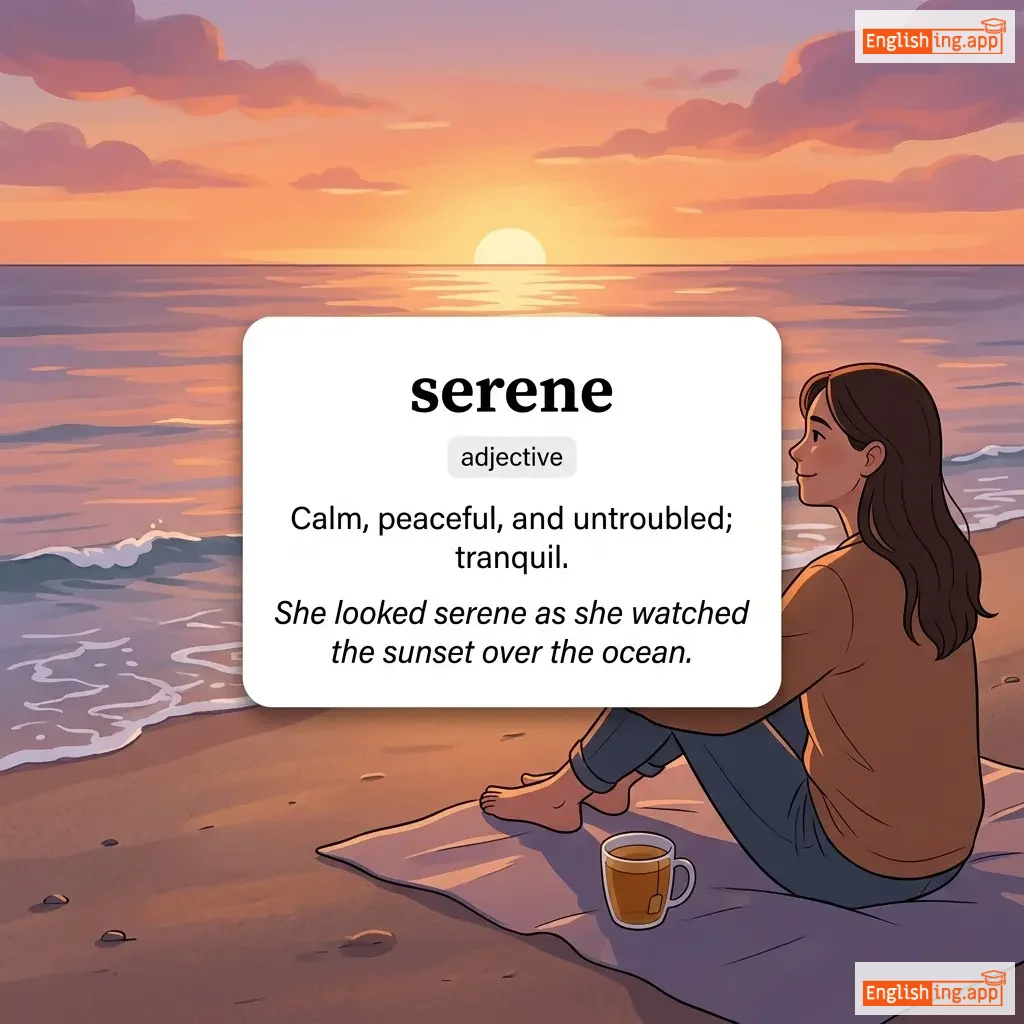
serene definition card — visual illustration of the meaning
adjective
/səˈriːn/
静かな (shizukana)

Calm, peaceful, and untroubled; tranquil.

"She looked serene as she watched the sunset over the ocean."
"彼女は海の上の夕日を見ながら静かに見えた。" (Kanojo wa umi no ue no yūhi o minagara shizuka ni mieta.)
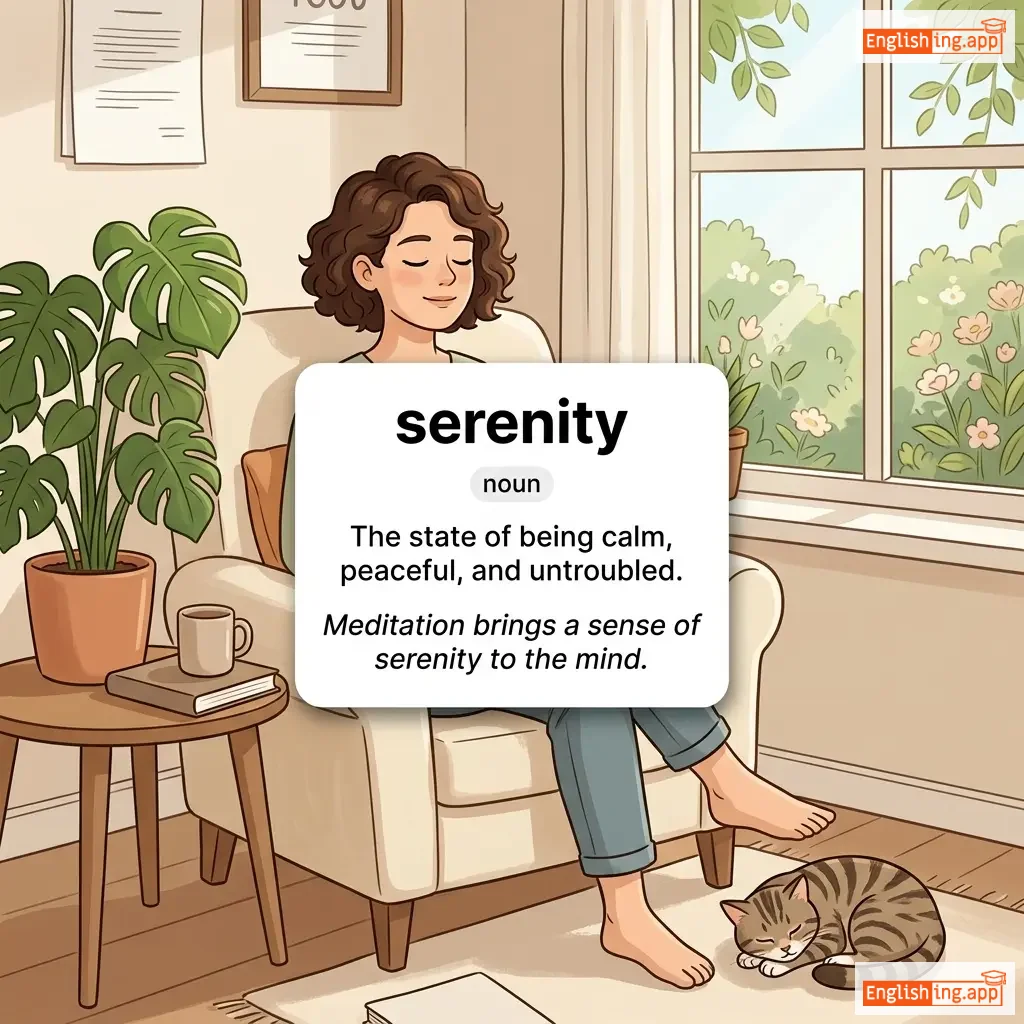
serenity definition card — visual illustration of the meaning
noun
/səˈrɛnɪti/
静けさ (shizukesa)

The state of being calm, peaceful, and untroubled.

"Meditation brings a sense of serenity to the mind."

"瞑想は心に静けさをもたらします。" (Meisou wa kokoro ni shizukesa wo motarashimasu.)
noun
/ˈsɜːfdəm/
農奴制 (nōdosei)

The status or condition of being a serf, bound to work for a lord.

"Many peasants in medieval Europe lived under serfdom."

"中世ヨーロッパの多くの農民は農奴制の下で生活していた。" (Chūsei Yōroppa no ōku no nōmin wa nōdosei no moto de seikatsu shite ita.)