語彙集

英単語辞書 | 単語の意味、定義、例文

verb
/siːp/
しみ出す (shimidasu)

to flow or leak slowly through small openings or pores

"Water began to seep through the cracks in the wall."

"水が壁のひび割れからしみ出し始めました。" (Mizu ga kabe no hibiwake kara shimidashi hajimemashita.)
noun
/sɪr/
予言者 (yogensha)

A person who is supposed to be able to see what will happen in the future; a prophet.

"The seer predicted a great change in the kingdom."

"予言者は王国の大きな変化を予測しました。" (Yogensha wa ōkoku no ōkina henka o yosoku shimashita.)
verb
/siːð/
怒りで煮えたぎる (ikari de nietagiru)

To be filled with intense but unexpressed anger or agitation.

"She was seething with anger after the unfair decision."

"彼女は不公平な決定の後、怒りで煮えたぎっていました。" (Kanojo wa fukōhei na kettei no ato, ikari de nietagitte imashita.)
noun
/ˈsɛɡmənt/
セグメント (segumento)

A part or section of something that is divided.

"Each segment of the market has different needs."

"市場の各セグメントには異なるニーズがあります。" (Shijō no kaku segumento ni wa kotonaru nīzu ga arimasu.)
noun
/ˈseɪnjər/
封建領主 (hōken ryōshu)

A feudal lord; a man of authority in medieval Europe.

"The seignior demanded taxes from the peasants."

"封建領主は農民から税金を要求した。" (Hōken ryōshu wa nōmin kara zeikin o yōkyū shita.)
noun
/seɪn/
大きな網 (ōkina ami)

A large fishing net that hangs vertically in the water.

"The fishermen cast their seine into the river."
"漁師たちは大きな網を川に投げ入れました。" (Ryōshitachi wa ōkina ami o kawa ni nageiremashita.)
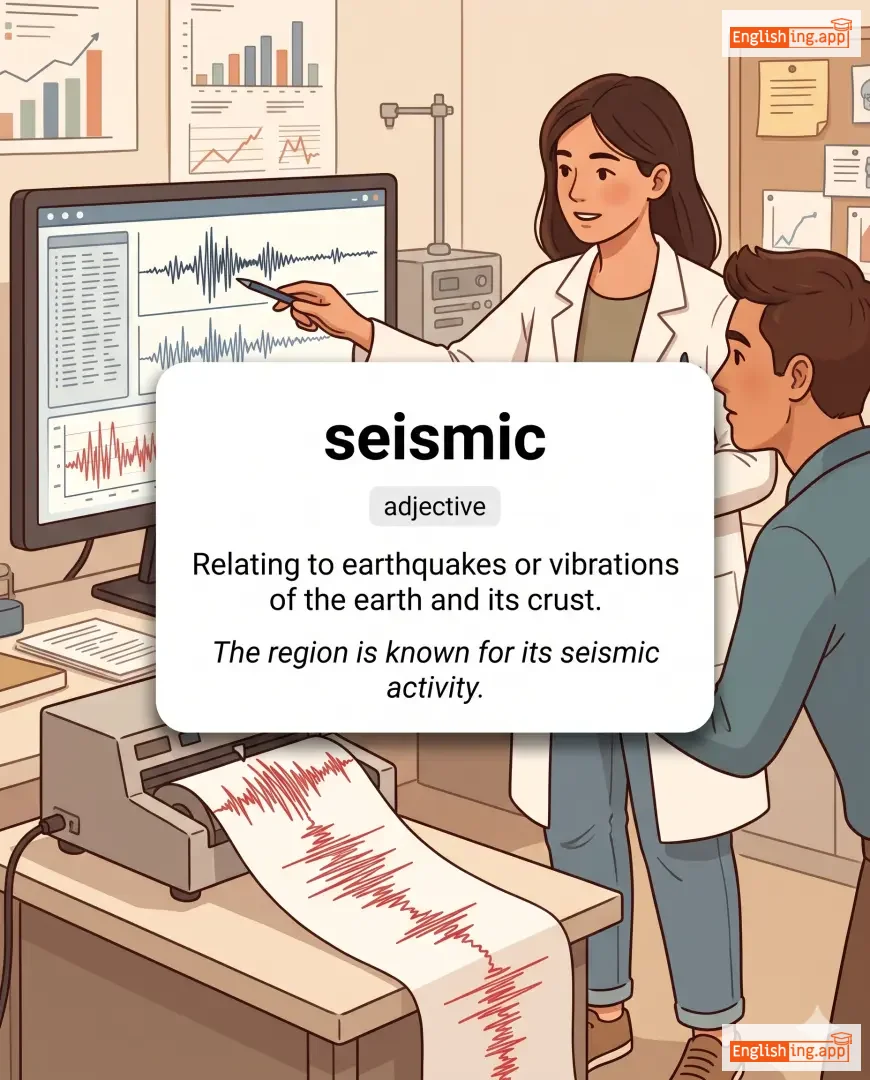
seismic definition card — visual illustration of the meaning
adjective
/ˈsaɪz.mɪk/
地震の (jishin no)

Relating to earthquakes or vibrations of the earth and its crust.

"The region is known for its seismic activity."

"その地域は地震活動で知られています。" (Sono chiiki wa jishin katsudō de shirareteimasu.)
noun
/ˈsaɪz.mə.ɡræf/
地震計 (jishinkei)

An instrument that measures and records details of earthquakes, such as force and duration.

"The seismograph detected a strong tremor in the area."

"地震計はその地域で強い揺れを検出しました。" (Jishinkei wa sono chiiki de tsuyoi yure o kenshutsu shimashita.)
noun
/sɪv/
ふるい (furui)

a utensil consisting of a wire or plastic mesh held in a frame, used for straining solids from liquids

"She used a sieve to separate the flour from lumps."

"彼女はふるいを使って小麦粉をダマから分けました。" (Kanojo wa furui o tsukatte komugiko o dama kara wakemashita.)
verb
/siːz/
奪う (ubau)

To take hold of suddenly and forcibly.

"The police managed to seize the stolen goods."

"警察は盗まれた商品を押収することに成功した。" (Keisatsu wa nusumareta shouhin o oushuu suru koto ni seikou shita.)
adverb
/ˈsel.dəm/
めったに (mettani)

not often; rarely

"She seldom visits her hometown nowadays."
"彼女は今、故郷をほとんど訪れません。" (Kanojo wa ima, kokyou o hotondo otozuremasen.)
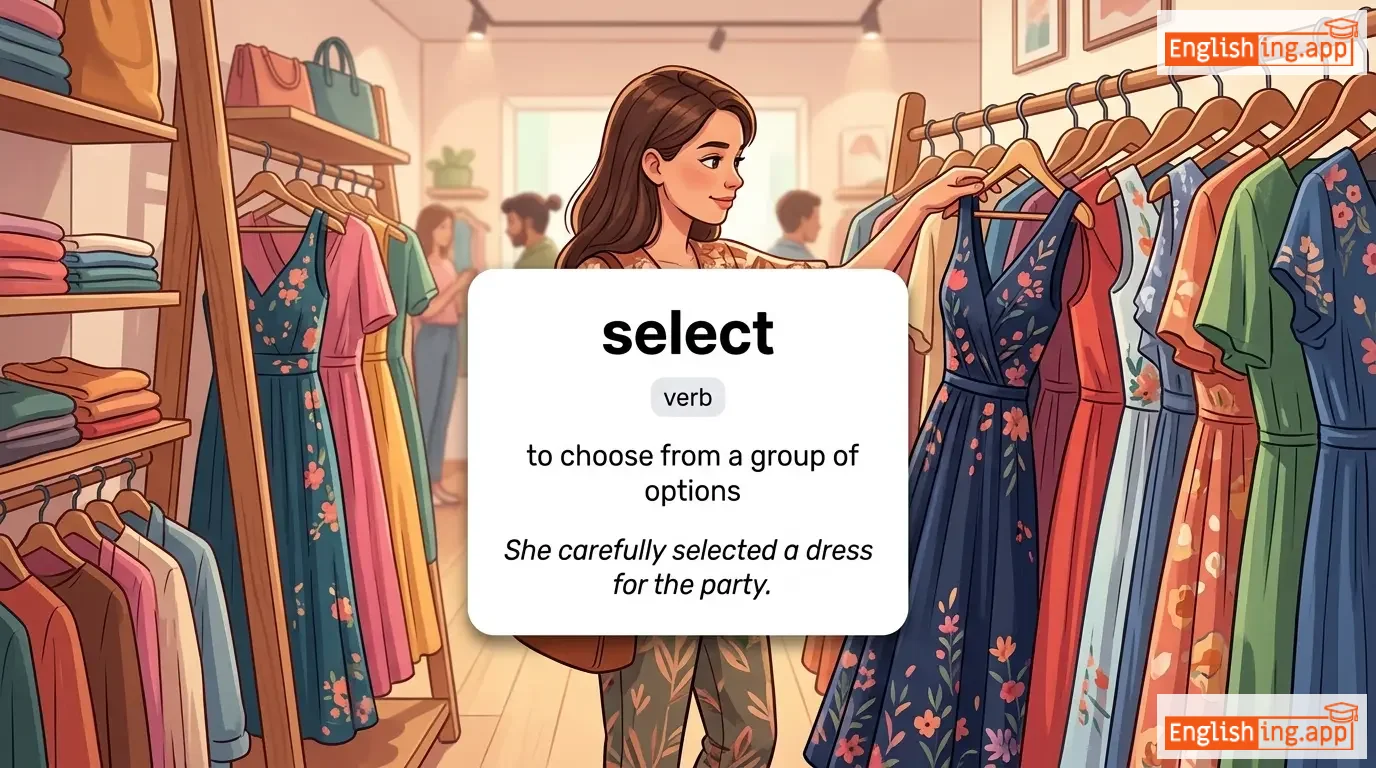
select definition card — visual illustration of the meaning
verb
/sɪˈlɛkt/
選択する (sentaku suru)

to choose from a group of options

"She carefully selected a dress for the party."

"彼女はパーティーのために慎重にドレスを選びました。" (Kanojo wa pātī no tame ni shinchō ni doresu o erabimashita.)
adjective
/sɪˈlek.tɪd/
選ばれた (erabareta)

carefully chosen from a group for a particular purpose

"He was one of the selected candidates for the scholarship."
"彼は奨学金のために選ばれた候補者の一人でした。" (Kare wa shōgakukin no tame ni erabareta kōhosha no hitori deshita.)
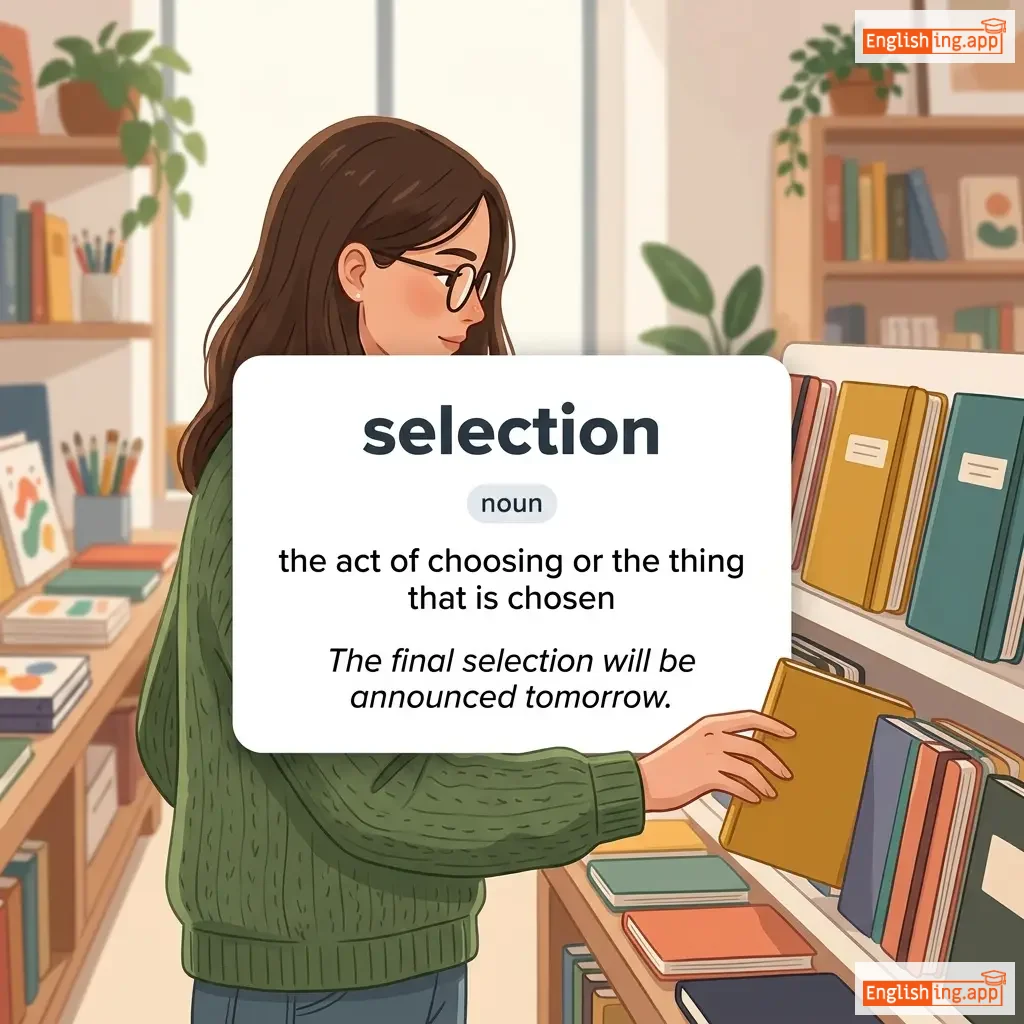
selection definition card — visual illustration of the meaning
noun
/sɪˈlɛkʃən/
選択 (sentaku)

the act of choosing or the thing that is chosen

"The final selection will be announced tomorrow."

"最終選択は明日発表されます。" (Saishū sentaku wa ashita happyō saremasu.)
adjective
/sɪˈlek.tɪv/
選択的 (sentakuteki)

Characterized by careful choice; choosing only the best or most suitable.

"She is very selective about the clothes she buys."

"彼女は購入する服に非常に選択的です。" (Kanojo wa kōnyū suru fuku ni hijō ni sentakuteki desu.)
🧑‍💼

self (セルフ)

noun
/sɛlf/
自己 (jiko)

a person's essential being that distinguishes them from others, especially considered as the object of introspection or reflexive action

"She has a strong sense of self."

"彼女は強い自己認識を持っています。" (Kanojo wa tsuyoi jiko ninshiki o motteimasu.)
noun
/ˌself əˈbeɪs.mənt/
自己卑下 (jiko hige)

The act of belittling or humiliating oneself.

"His constant self-abasement made others uncomfortable."

"彼の絶え間ない自己卑下は他の人々を不快にさせた。" (Kare no tae manai jiko hige wa hoka no hitobito wo fukai ni saseta.)
adjective
/ˌsɛlf əbˈzɔːrbd/
自己中心的 (jiko chūshin-teki)

Excessively preoccupied with oneself and one’s own thoughts, feelings, or interests.

"He was too self-absorbed to notice his friend's distress."

"彼は友達の苦しみに気づかないほど自己中心的だった。" (Kare wa tomodachi no kurushimi ni kizukanai hodo jiko chūshin-teki datta.)
self-affirmation definition card — visual illustration of the meaning
noun
/ˌsɛlf əˌfɜːˈmeɪʃən/
自己肯定 (jiko kentei)

The practice of affirming one's own worthiness and value as an individual.

"Daily self-affirmation can boost your confidence."
"日々の自己肯定は自信を高めることができます。" (Hibi no jiko koutei wa jishin o takameru koto ga dekimasu.)
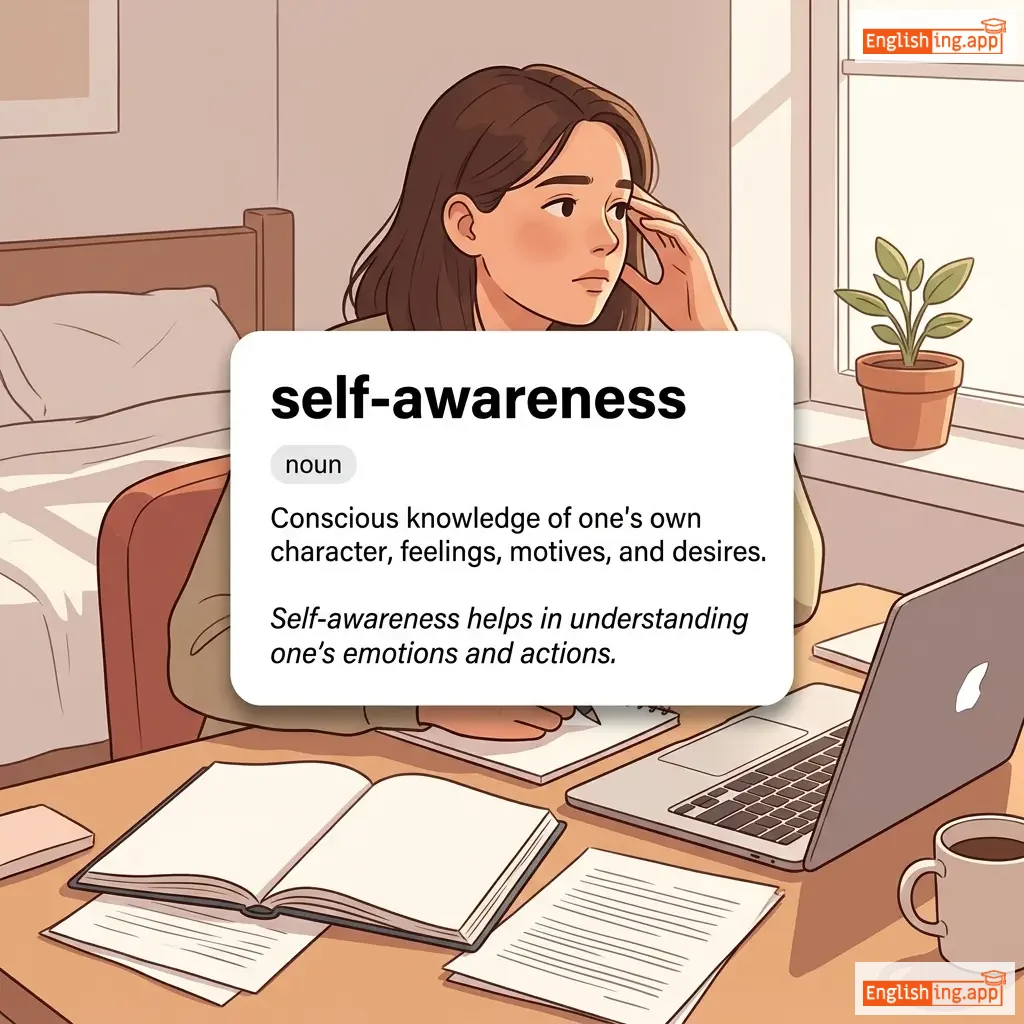
self-awareness definition card — visual illustration of the meaning
noun
/ˌsɛlf əˈwɛə.nəs/
自己認識 (jikoshiki)

Conscious knowledge of one's own character, feelings, motives, and desires.

"Self-awareness helps in understanding one's emotions and actions."

"自己認識は、自己の感情や行動を理解するのに役立ちます。" (Jiko ninshiki wa, jiko no kanjō ya kōdō o rikai suru no ni yakudachimasu.)
self-control definition card — visual illustration of the meaning
noun
ˌsɛlf.kənˈtrəʊl
自己制御 (jiko seigyo)

The ability to control one's emotions, behavior, and desires in order to obtain some reward, or avoid some punishment, typically in the longer term.

"Self-control is important for maintaining a balanced life."

"自己制御はバランスの取れた生活を維持するために重要です。" (Jiko seigyo wa baransu no toreta seikatsu wo iji suru tame ni juuyou desu.)
self-discipline definition card — visual illustration of the meaning
noun
/ˈsɛlf ˈdɪsɪplɪn/
自己規律 (jiko kiritsu)

The ability to control one's feelings and overcome one's weaknesses; the ability to pursue what one thinks is right despite temptations to abandon it.

"Self-discipline is essential for achieving long-term goals."

"自己規律は長期的な目標を達成するために必要です。" (Jiko kiritsu wa chōkitekina mokuhyō o tassei suru tame ni hitsuyō desu.)
adjective
/ˌsɛlf ɪˈfeɪsɪŋ/
控えめな (hikaeme na)

not drawing attention to oneself; modest

"Despite his success, he remained self-effacing and humble."

"成功にもかかわらず、彼は控えめで謙虚なままでした。" (Seikou ni mo kakawarazu, kare wa hikaeme de kenkyona mamadeshita.)
noun
/ˌsɛlf ɪˈstiːm/
自尊心 (jisonshin)

confidence in one's own worth or abilities; self-respect

"Building self-esteem takes time and consistent effort."

"自尊心を築くには時間と一貫した努力が必要です。" (Jisonshin wo kizuku ni wa jikan to ikkan shita doryoku ga hitsuyou desu.)
noun
/ˌsɛlf ɪnˈdʌldʒəns/
自己 indulgence (jiko indulgence)

The act of allowing oneself to enjoy pleasures or desires excessively.

"His weekend of self-indulgence included eating sweets and watching movies nonstop."

"彼の自己満足の週末は、甘いものを食べて映画を見続けることが含まれていました。" (Kare no jiko manzoku no shūmatsu wa, amaimono o tabete eiga o mitsuzukeru koto ga fukumarete imashita.)
self-possession definition card — visual illustration of the meaning
noun
ˈsɛlf pəˈzɪʃən
自己抑制 (jikoyokusei)

The quality of being calm and confident and in control of one's emotions; composure.

"His self-possession during the crisis was remarkable."
"彼の危機的な状況での自己抑制は素晴らしかった。" (Kare no kikiteki na joukyou de no jikoyokusei wa subarashikatta.)
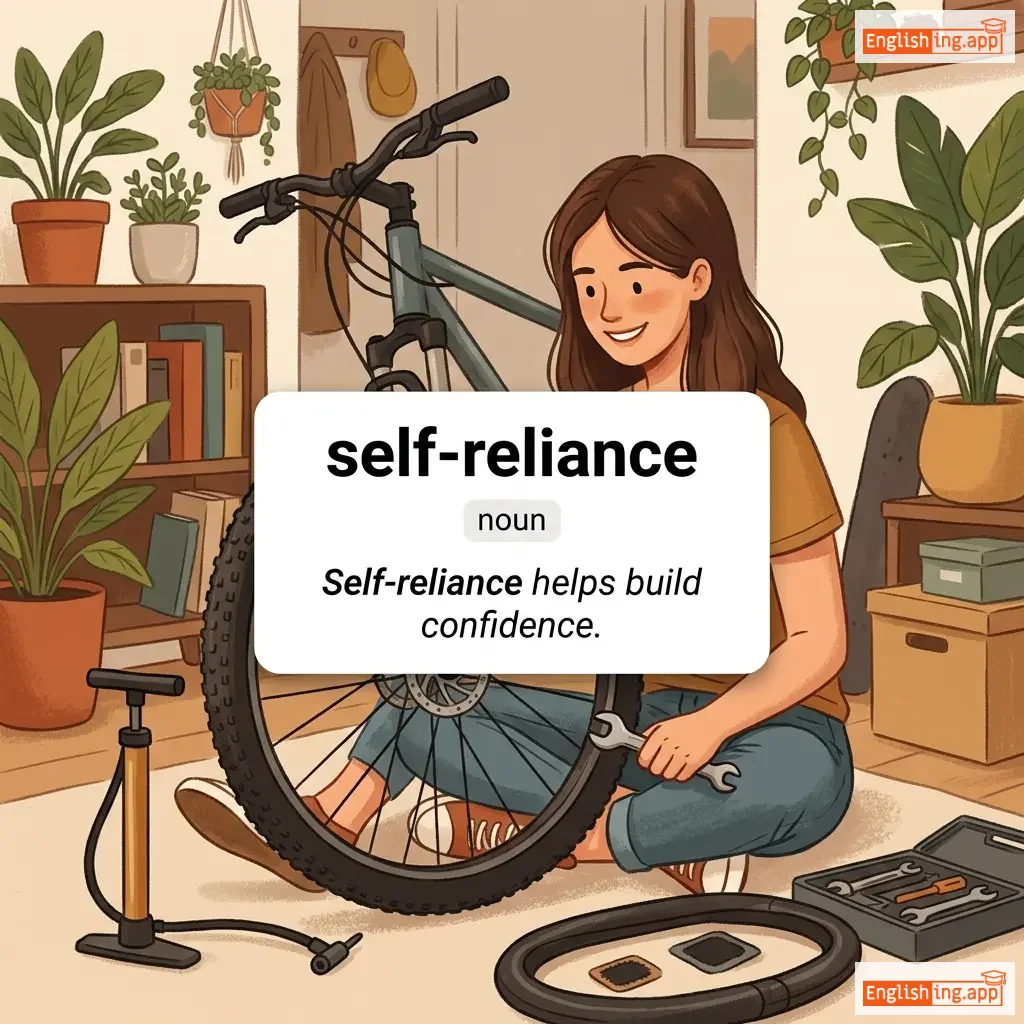
self-reliance definition card — visual illustration of the meaning
noun
sɛlf rɪˈlaɪ.əns
自立 (jiritsu)

Reliance on one's own powers and resources rather than those of others; independence.

"Self-reliance helps build confidence."

"自立は自信を高めるのに役立ちます。" (Jiritsu wa jishin o takameru no ni yakudachimasu.)
noun
/ˌsɛlf rɪˈspɛkt/
自尊 (jison)

A feeling of pride and confidence in oneself; self-worth.

"She refused to compromise her self-respect by accepting unfair treatment."
"彼女は不公平な扱いを受け入れることで自尊心を損なうことを拒否した。" (Kanojo wa fukōhei na atsukai o ukeireru koto de jisonshin o sokonau koto o kyohi shita.)
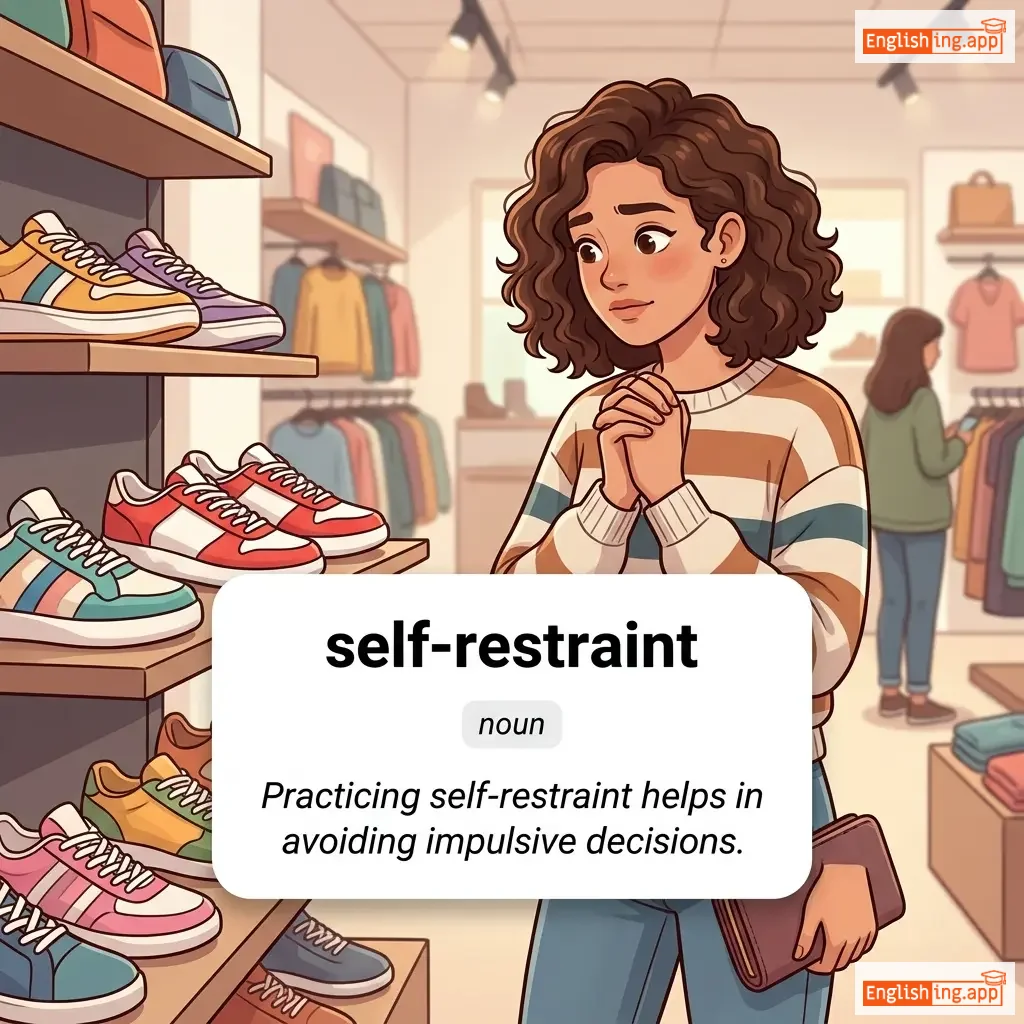
self-restraint definition card — visual illustration of the meaning
noun
ˌsɛlf.rɪˈstreɪnt
自己抑制 (jiko yokusei)

The practice of restraining oneself from indulging in something, typically an impulse or desire.

"Practicing self-restraint helps in avoiding impulsive decisions."

"自己抑制を実践することで、衝動的な決定を避けるのに役立ちます。" (Jiko yokusei o jissen suru koto de, shōdō-teki na kettei o sakeru no ni yakudachimasu.)
adjective
/ˌsɛlf ˈraɪtʃəs/
自己満足 (jiko manzoku)

Having or showing an attitude of moral superiority; believing one’s own beliefs are the only right ones.

"His self-righteous comments made everyone uncomfortable."

"彼の自己満足的なコメントは、みんなを不快にさせました。" (Kare no jiko manzokuteki na komento wa, minna o fukai ni saseshimashita.)
noun
/ˌsɛlfsəˈfɪʃənsi/
自給自足 (jikyū jisoku)

the ability to supply one's own needs without external assistance; independence

"The farm achieved complete self-sufficiency in food production."

"その農場は食品生産において完全な自給自足を達成しました。" (Sono nōjō wa shokuhin seisan ni oite kanzen'na jikyū jisoku o tassei shimashita.)
adjective
/self səˈfɪʃənt/
自給自足 (jikyuu jisoku)

able to provide for oneself without depending on others

"The farm is completely self-sufficient in producing vegetables."

"その農場は野菜の生産に完全に自給自足です。" (Sono noujou wa yasai no seisan ni kanzen ni jikyuu jisoku desu.)
adjective
/ˈselfɪʃ/
利己的 (rikoteki)

caring only about oneself rather than others

"He was too selfish to share his food with others."

"彼は他の人と食べ物を共有するにはあまりにも自己中心的だった。" (Kare wa hoka no hito to tabemono o kyōyū suru ni wa amari ni mo jikochūshinteki datta.)
adverb
/ˈsel.fɪʃ.li/
利己的に (rikoteki ni)

in a selfish manner; caring only about oneself

"He selfishly took all the cookies."
"彼は自己中心的にすべてのクッキーを取った。" (Kare wa jikochūshinteki ni subete no kukkī o totta)
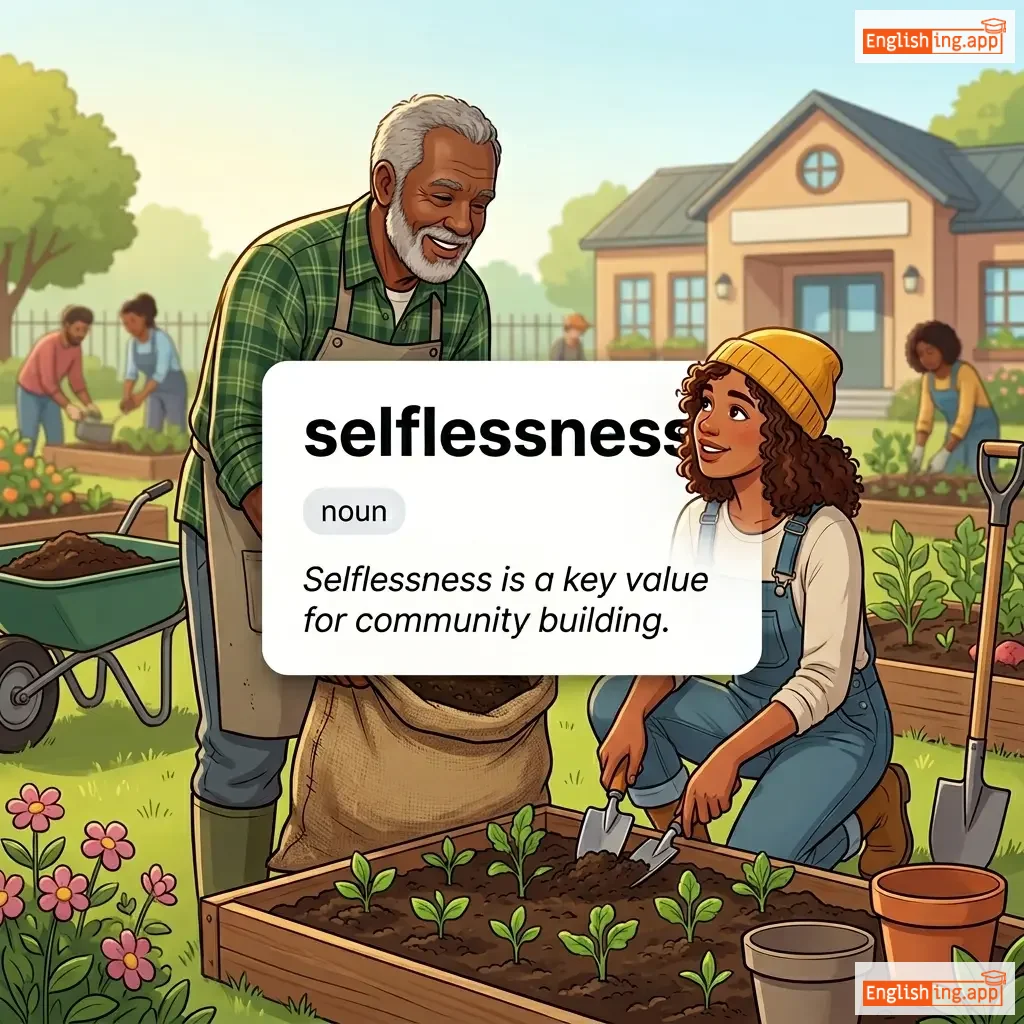
selflessness definition card — visual illustration of the meaning
noun
ˈsɛlfləsnɪs
利他主義 (ritajyughi)

The quality of being concerned more with the needs of others than with one's own.

"Selflessness is a key value for community building."

"利他主義はコミュニティ構築の重要な価値です。" (Ritajyughi wa komyuniti kouchiku no juuyou na kachi desu.)
sell definition card — visual illustration of the meaning
verb
/sɛl/
売る (uru)

to give or hand over something in exchange for money

"I want to sell my old phone."

"古い携帯電話を売りたい。" (Furui keitai denwa o uritai.)
noun
/ˈsɛlər/
幸せ (shiawase)

a person who sells something

"The seller offered a discount on bulk purchases."
"彼女は賞を受け取ったとき、幸せを隠せませんでした。" (Kanojo wa shou wo uketotta toki, shiawase wo kakusemasen deshita.)
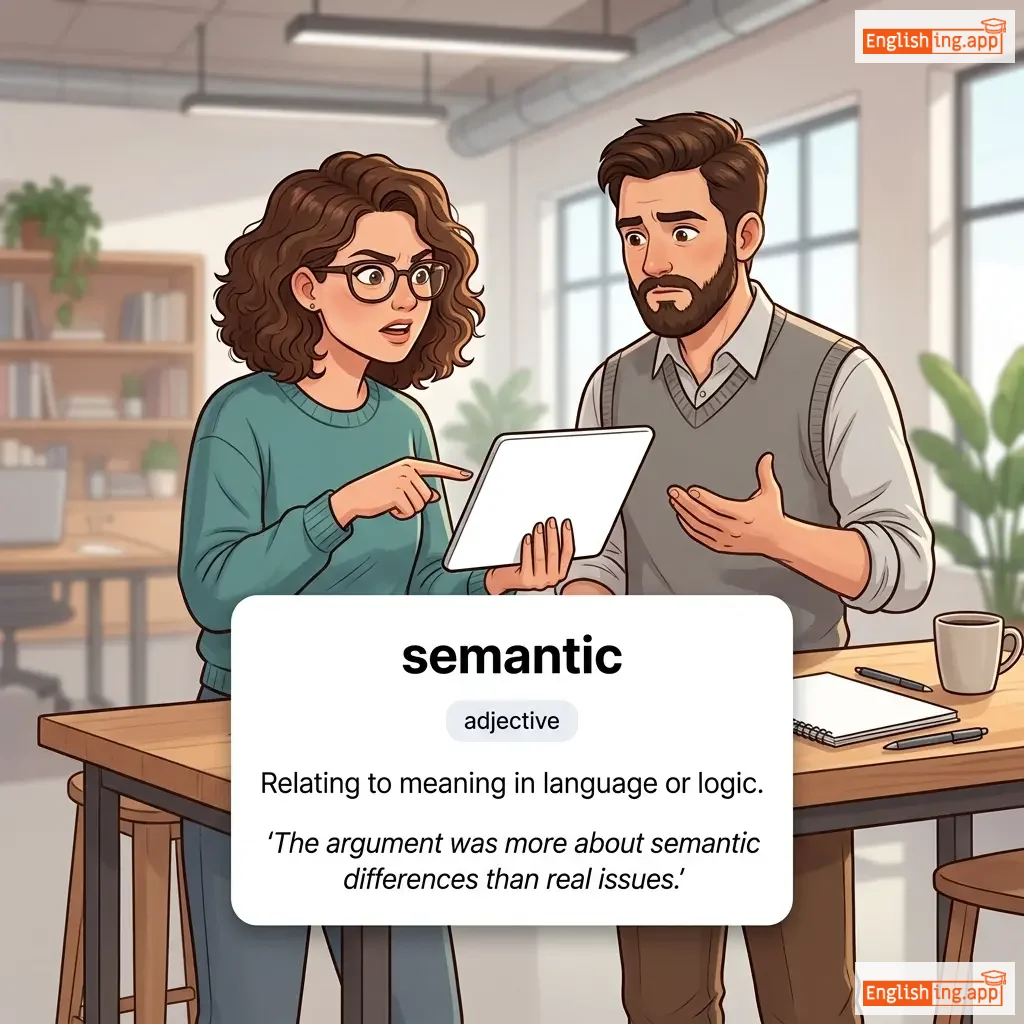
semantic definition card — visual illustration of the meaning
adjective
/sɪˈmæntɪk/
意味論的 (imironteki)

Relating to meaning in language or logic.

"The argument was more about semantic differences than real issues."

"その議論は実際の問題よりも意味論的な違いについてだった。" (Sono giron wa jissai no mondai yori mo imiron-teki na chigai ni tsuite datta.)
noun
/ˈsɛm.bləns/
外観, 表面的な形 (gaikan, hyōmen-teki na katachi)

The outward appearance or form of something, especially when the reality is different.

"Despite his calm tone, there was only a semblance of control in the room."

"落ち着いた声のトーンにもかかわらず、部屋にはただの支配の外観しかなかった。" (Ochitsuita koe no tōn ni mo kakawarazu, heya ni wa tada no shihai no gaikan shika nakatta.)
adjective
/ˌsɛm.iˈæn.ju.əl/
半年ごと (hanni goto)

Occurring twice a year; every six months.

"The company holds a semiannual meeting with all employees."

"会社は6ヶ月ごとに全社員との会議を開きます。" (Kaisha wa 6 kagetsu goto ni zen shain tono kaigi wo hirakimasu.)
noun
/ˈsɛm.iˌsɜːr.kəl/
半円 (han'en)

Half of a circle or something shaped like half of a circle.

"The students sat in a semicircle around the teacher."

"学生たちは教師の周りに半円形に座っていました。" (Gakuseitachi wa kyoushi no mawari ni han'enkei ni suwatte imashita.)
adjective
/ˌsɛm.iˈsɪv.ə.laɪzd/
半文明 (hanbunmei)

Partially civilized; having some aspects of civilization but not fully developed.

"The tribe was described as semicivilized by early explorers."

"その部族は初期の探検家によって半文明と説明されました。" (Sono buzoku wa shoki no tankenka ni yotte hanbunmei to setsumei saremashita.)
adjective
/ˌsɛm.iˈkɒn.ʃəs/
半意識 (han ishiki)

Only partly conscious; not fully aware of surroundings.

"He was semiconscious after the accident and could barely respond."

"彼は事故後セミコンシャスで、ほとんど反応できなかった。" (Kare wa jiko go semiconscious de, hotondo hannō dekinakatta.)
adjective
/ˈsɛm.ɪ.nəl/
幸福 (koufuku)

Strongly influencing later developments; highly original and influential.

"His seminal book changed the course of modern philosophy."

"彼女は賞を受け取ったとき、自分の幸福を隠せませんでした。" (Kanojo wa shou o uketotta toki, jibun no koufuku o kakusemasen deshita.)
noun
/ˈsɛm.ɪ.nɑːr/
セミナー (seminā)

A meeting for discussion or training, especially in an academic setting.

"The professor invited all students to attend the seminar on climate change."

"教授はすべての学生を気候変動に関するセミナーに招待しました。" (Kyōju wa subete no gakusei o kikō hendō ni kansuru seminā ni shōtai shimashita.)
noun
/ˈsɛm.ɪ.nɛr.i/
神学校 (shingakkou)

A school or college for training priests, ministers, or rabbis.

"He decided to enroll in a seminary to study theology."

"彼は神学校に入学して神学を学ぶことに決めました。" (Kare wa shingakkou ni nyuugaku shite shingaku o manabu koto ni kimemashita.)
noun
/ˈsɛnət/
セナト (senato)

a legislative or governing body, typically the upper chamber in a bicameral legislature

"The senate voted in favor of the new healthcare bill."

"セナトは新しい医療保険法案に賛成票を投じました。" (Senato wa atarashī iryō hoken hōan ni sansei-hyō o tōjishimashita.)
noun
/ˈsɛnətər/
上院議員 (jōin giin)

a member of a senate, especially in a legislative body

"The senator spoke passionately about environmental policies."

"そのセネターは環境政策について情熱的に話しました。" (Sono senetā wa kankyō seisaku ni tsuite jōnetsuteki ni hanashimashita.)
verb
/sɛnd/
送る (okuru)

to cause something to go or be taken to a destination

"Please send the report by tomorrow morning."

"明日の朝までにレポートを送ってください。" (Ashita no asa made ni repōto o okutte kudasai.)
noun
/səˈnɛs.əns/
老化 (rōka)

The process of growing old or the condition of aging.

"The biologist studied senescence in plants to understand aging."

"生物学者は植物のセネセンスを研究して、老化を理解しようとしました。" (Seibutsugakusha wa shokubutsu no senesensu o kenkyū shite, rōka o rikai shiyō to shimashita.)