語彙集

英単語辞書 | 単語の意味、定義、例文

noun
/səˈvaɪvl/
サバイバル (sabaibaru)

the state of continuing to live or exist, typically in difficult conditions

"Survival in the wild can be a challenging experience."
"野生でのサバイバルは、挑戦的な経験となることがあります。" (Yasei de no sabaibaru wa, chousenteki na keiken to naru koto ga arimasu.)
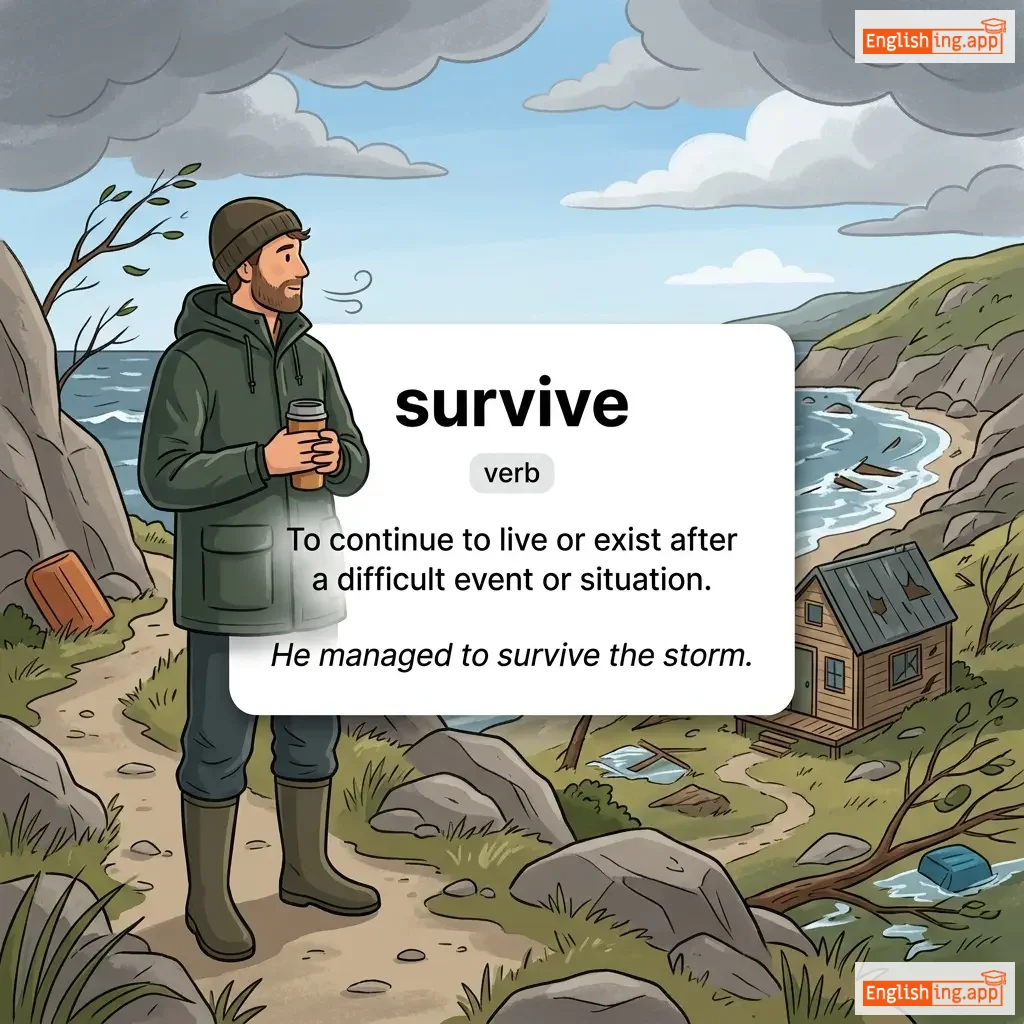
survive definition card — visual illustration of the meaning
verb
/sərˈvaɪv/
生き残る (ikinokoru)

To continue to live or exist after a difficult event or situation.

"He managed to survive the storm."

"彼は嵐を生き延びた。" (Kare wa arashi o ikinobita.)
noun
/sərˈvaɪvə/
生存者 (seizonsha)

a person who survives, especially in difficult conditions

"The survivors of the shipwreck were rescued after several days."
"難破船のサバイバーたちは数日後に救出されました。" (Nanpaisen no sabaibatachi wa suujitsugo ni kyushutsusaremashita.)
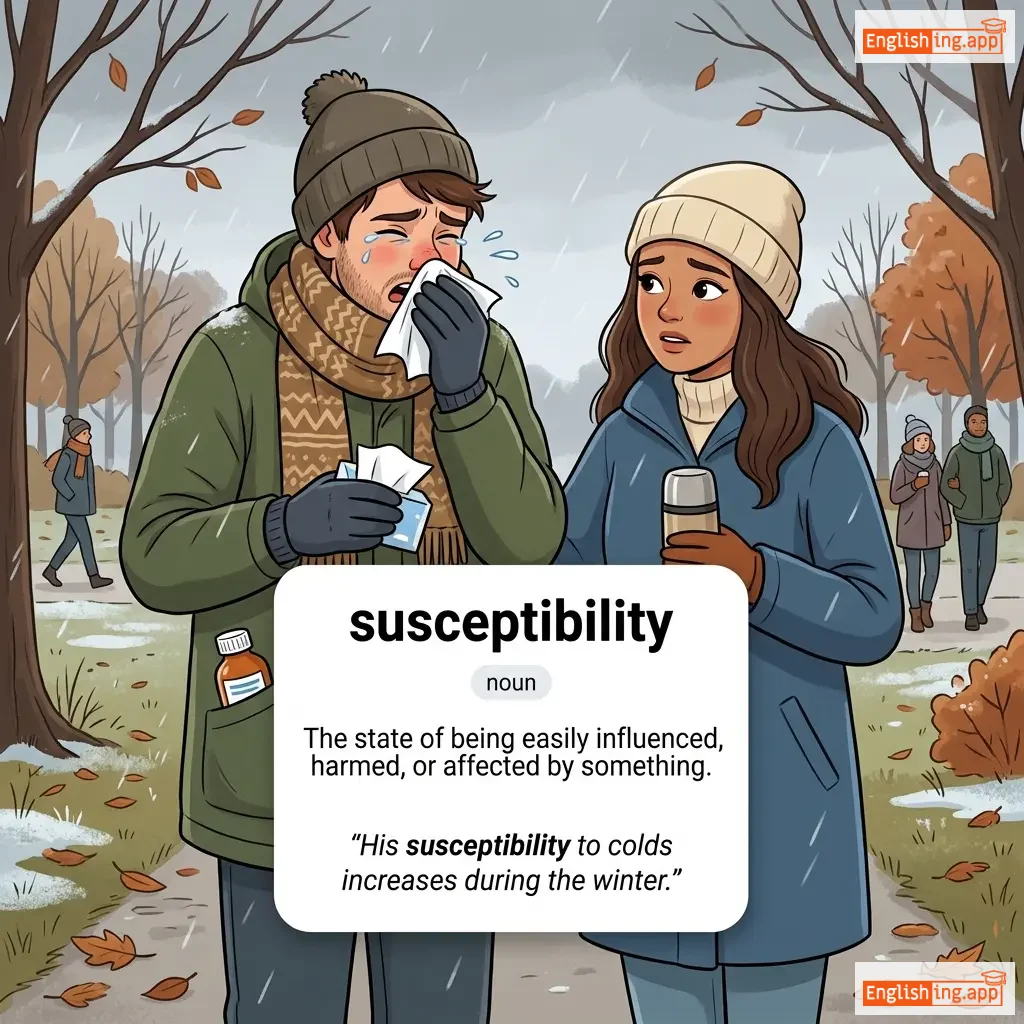
susceptibility definition card — visual illustration of the meaning
noun
/səˌsɛptəˈbɪləti/
感受性 (kanjusei)

The state of being easily influenced, harmed, or affected by something.

"His susceptibility to colds increases during the winter."
"彼の風邪をひきやすい感受性は冬に増します。" (Kare no kaze wo hiki yasui kanjusei wa fuyu ni mashimasu.)
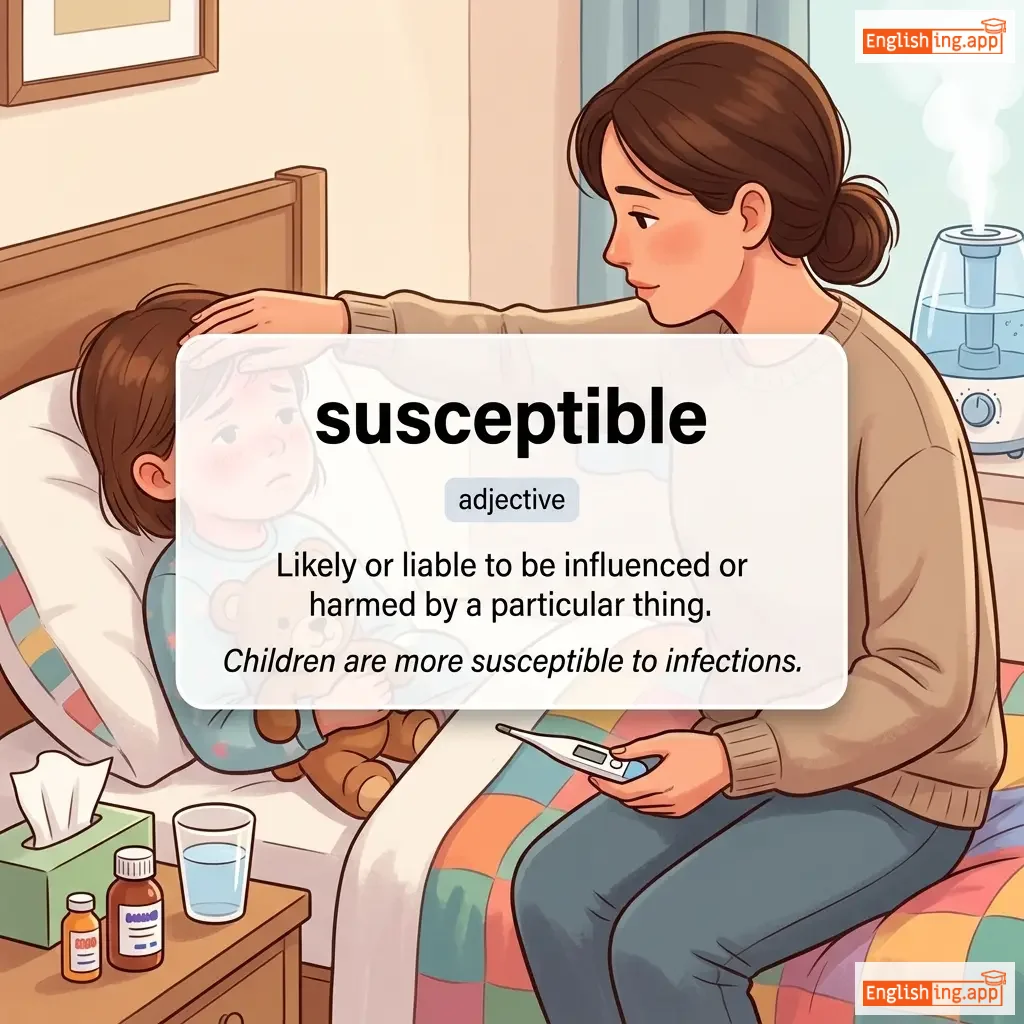
susceptible definition card — visual illustration of the meaning
adjective
/səˈsɛptəbl/
感受性が高い (kanjusei ga takai)

Likely or liable to be influenced or harmed by a particular thing.

"Children are more susceptible to infections."

"子供たちは感染症に対してより感受性があります。" (Kodomotachi wa kansen shou ni taishite yori kanjusei ga arimasu.)
suspect definition card — visual illustration of the meaning
🕵️

suspect

verb, noun, adjective
/səˈspɛkt/ (noun, adj) | /səˈspɛkt/ (verb)

To believe something to be true, likely, or guilty without certain proof.

"The police suspect him of stealing the car."

verb
/səˈspɛnd/
一時停止する (ichijiteishi suru)

To temporarily stop something from being active or valid.

"The company decided to suspend his membership."

"その会社は彼の会員資格をサスペンドすることに決めました。" (Sono kaisha wa kare no kaiin shikaku wo sasupendo suru koto ni kimemashita.)
adjective, verb (past)
/səˈspɛndɪd/
停止された (teishi sareta)

Temporarily not allowed, stopped, or hanging.

"He was suspended from school for a week."

"彼は1週間学校から停止された。" (Kare wa 1-shūkan gakkō kara teishi sareta.)
noun
/səˈspɛns/
サスペンス (sasupensu)

A state of mental uncertainty, anxiety, or excitement about what may happen next.

"The movie kept the audience in suspense until the very end."

"映画は最後まで観客をサスペンスに保持していました。" (Eiga wa saigo made kankyaku o sasupensu ni hoji shiteimashita.)
noun
/səˈspɛnʃən/
停止 (teishi)

The act of temporarily stopping something; also refers to a system in vehicles that absorbs shock.

"The player received a three-game suspension for misconduct."

"その選手は不正行為のために3試合の停止処分を受けました。" (Sono senshu wa fusei koui no tame ni san shiai no teishi shobun o ukemashita.)
noun
/səˈspɪʃən/
疑い (utagai)

a feeling or belief that someone has done something wrong or illegal

"He was arrested on suspicion of theft."

"彼は窃盗の疑いで逮捕された。" (Kare wa settō no utagai de taiho sareta.)
adjective
/səˈspɪʃəs/
疑わしい (utagawashī)

Feeling doubt or distrust about someone or something.

"She gave me a suspicious look when I entered late."

"遅れて入ったとき、彼女は私を疑わしい目で見ました。" (Okurete haitta toki, kanojo wa watashi o utagawashī me de mimashita.)
verb
/səˈsteɪn/
維持する (ijisuru)

To support, maintain, or keep something going over time.

"The team worked hard to sustain their success."
"チームは彼らの成功を維持するために一生懸命働きました。" (Chīmu wa karera no seikō o iji suru tame ni isshōkenmei hatarakimashita.)
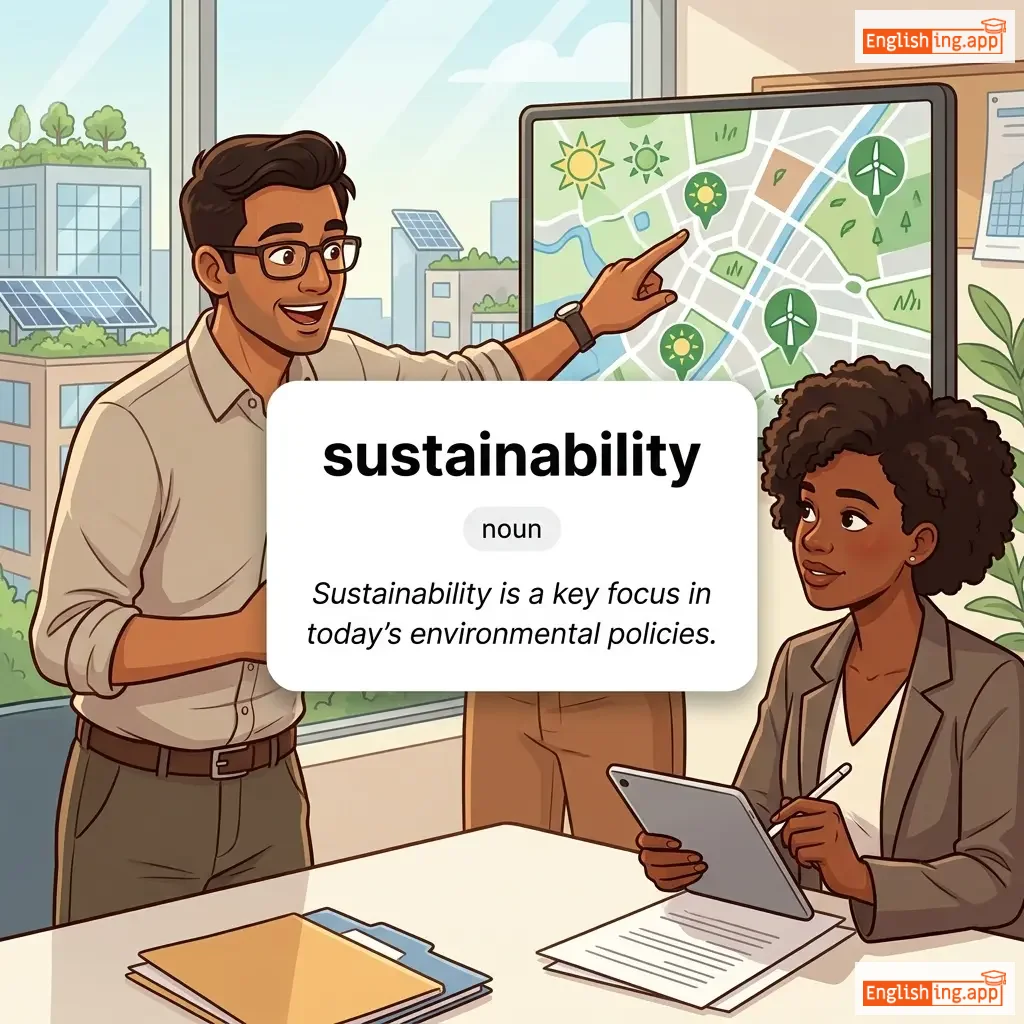
sustainability definition card — visual illustration of the meaning
noun
/səˌsteɪ.nəˈbɪl.ə.ti/
持続可能性 (jizoku kanousei)

The ability to be maintained at a certain rate or level.

"Sustainability in agriculture ensures long-term food security."
"農業の持続可能性は、長期的な食料安全保障を保証します。" (Nogyou no jizoku kanousei wa, choukiteki na shokuryou anzen hoshou o hoshou shimasu.)
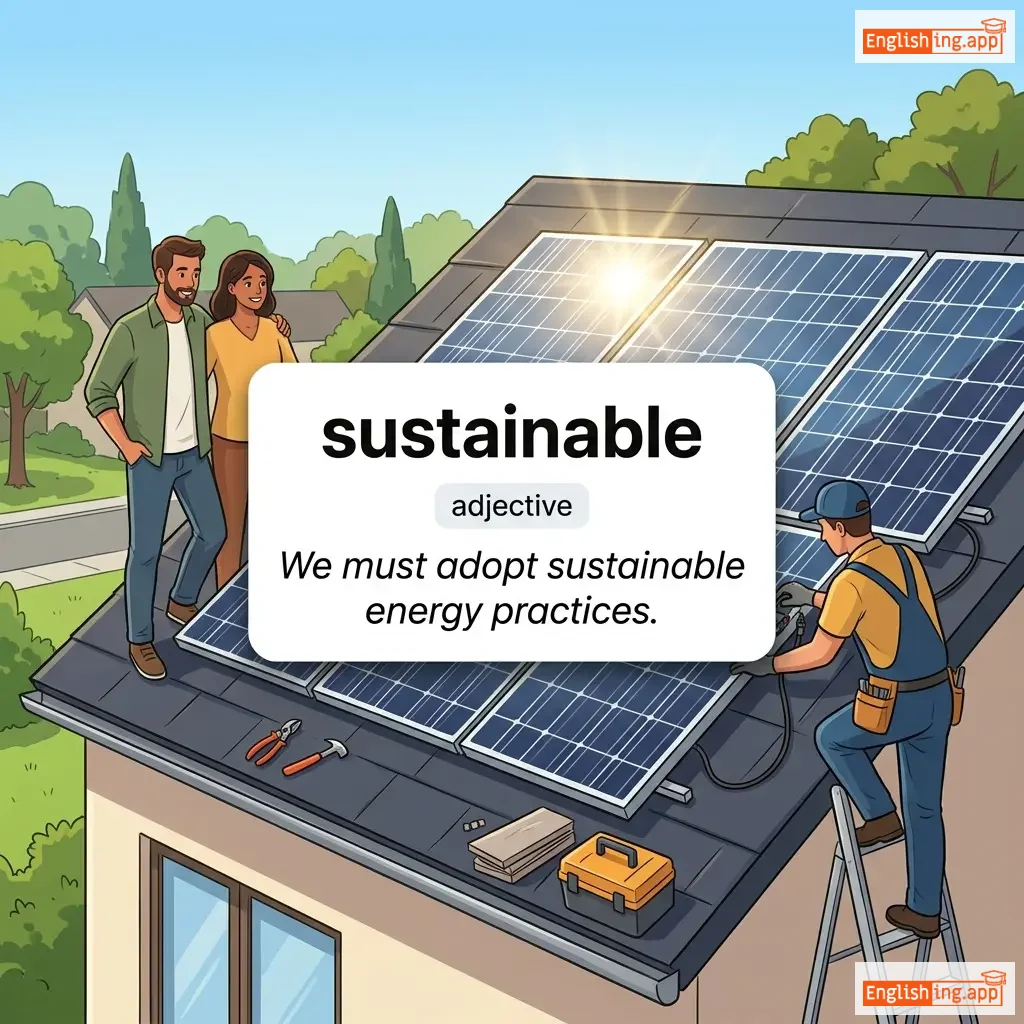
sustainable definition card — visual illustration of the meaning
adjective
/səˈsteɪnəbəl/
持続可能 (jizoku kanou)

able to continue over a long period without causing harm to the environment or using up resources

"We must adopt sustainable energy practices."
"私たちは持続可能なエネルギーの実践を採用する必要があります。" (Watashitachi wa jizoku kanou na enerugī no jissen wo saiyou suru hitsuyou ga arimasu.)
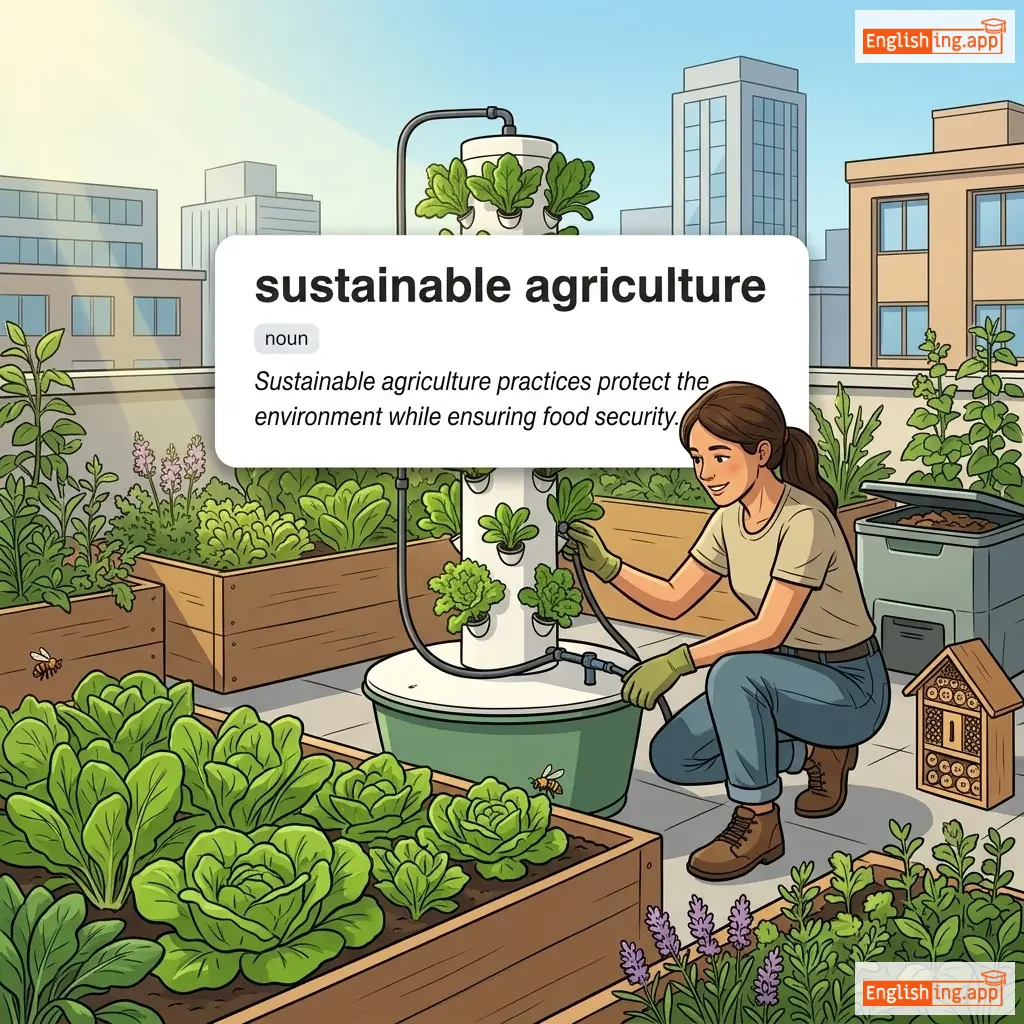
sustainable agriculture definition card — visual illustration of the meaning
noun
/səˈsteɪnəbl ˈæɡrɪkʌltʃər/
持続可能な農業 (jizoku kanō na nōgyō)

Farming practices that meet current food needs while preserving environmental resources and maintaining the ability to produce food for future generations through ecologically sound methods.

"Sustainable agriculture practices protect the environment while ensuring food security."
"持続可能な農業の実践は、環境を保護しながら食料安全保障を確保します。" (Jizoku kanō na nōgyō no jissen wa, kankyō o hogo shinagara shokuryō anzen hoshō o kakuho shimasu.)
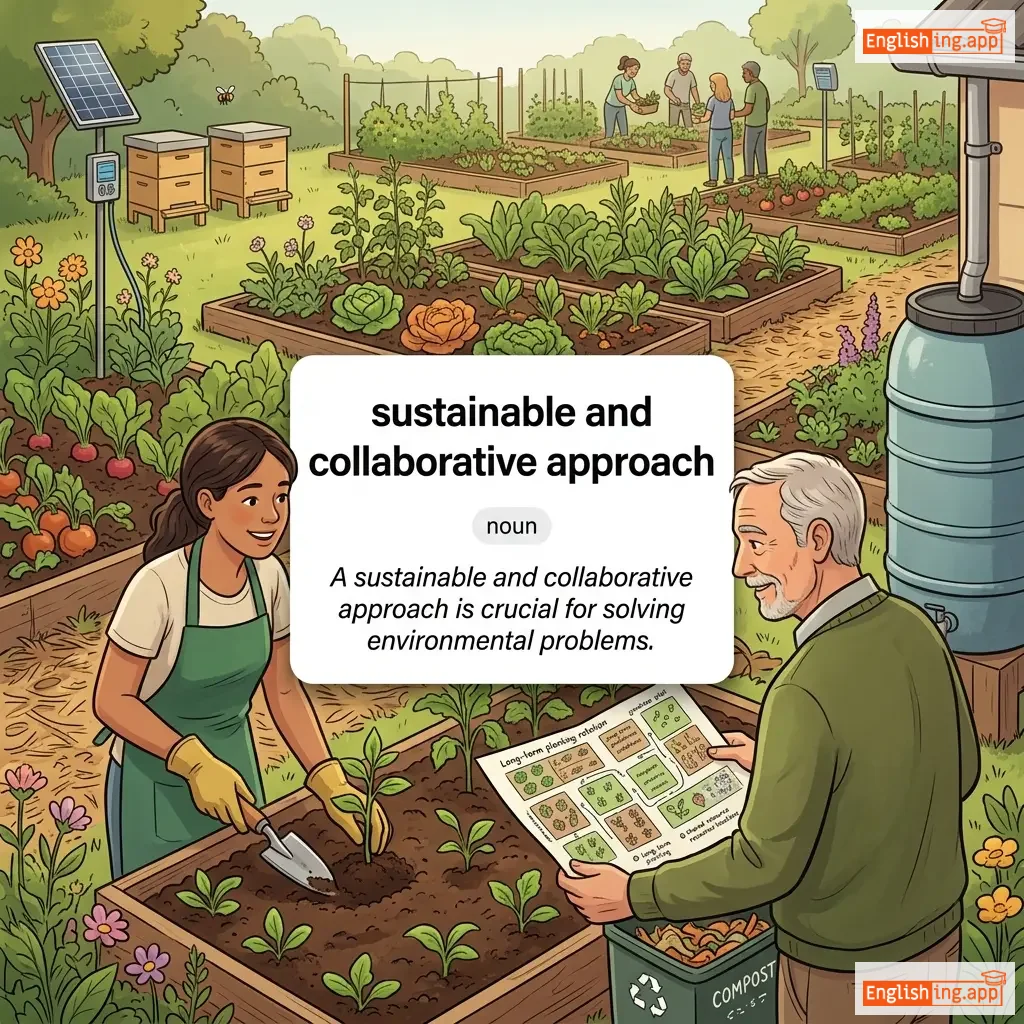
sustainable and collaborative approach definition card — visual illustration of the meaning
noun
səˈsteɪnəbəl ænd kəˈlæbərətɪv əˈproʊtʃ
持続可能で協力的なアプローチ (jizoku kanou de kyouryokuteki na apurouchi)

A method of working together that can be maintained over time without depleting resources or causing harm.

"A sustainable and collaborative approach is crucial for solving environmental problems."
"環境問題を解決するためには、持続可能で協力的なアプローチが不可欠です。" (Kankyō mondai o kaiketsu suru tame ni wa, jizoku kanou de kyōryokuteki na apurouchi ga fukaketsu desu.)
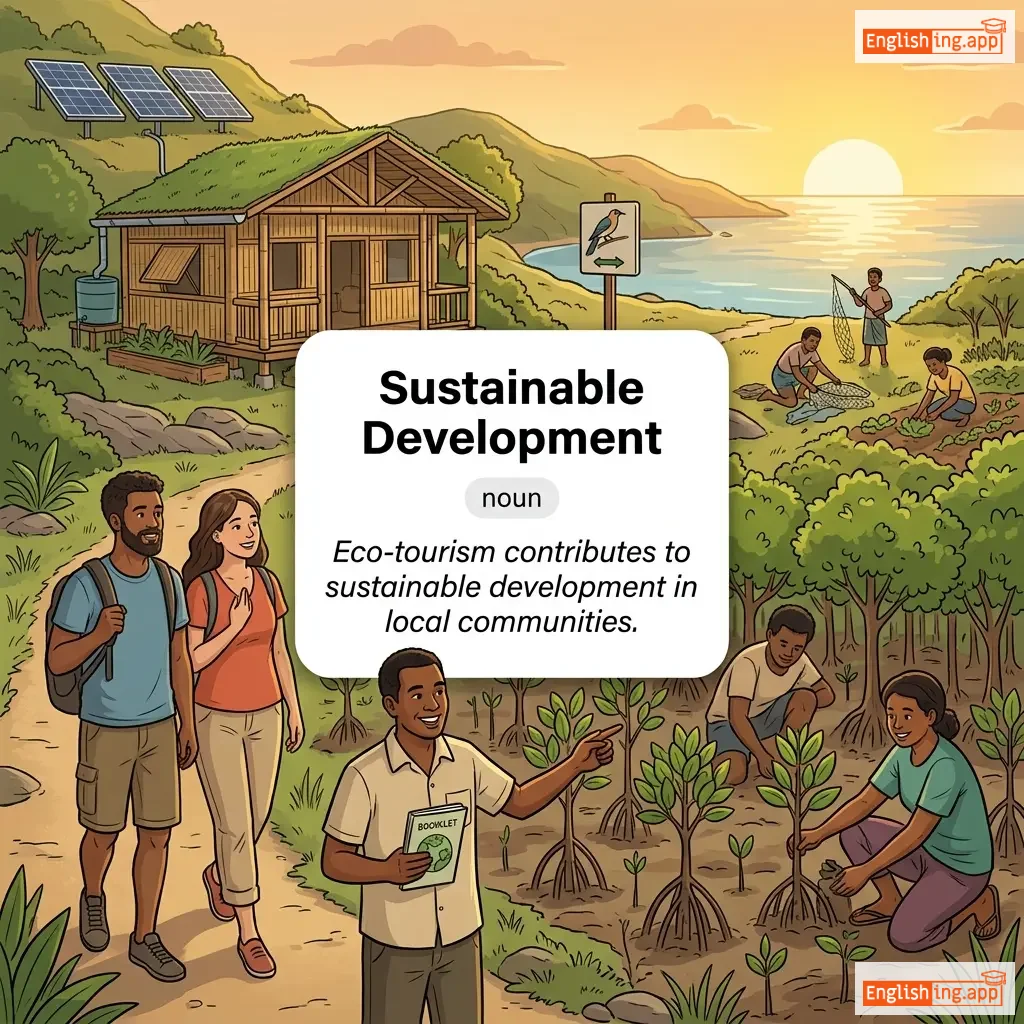
Sustainable Development definition card — visual illustration of the meaning
noun
səˈsteɪnəbl dɪˈvɛləpmənt
持続可能な開発 (jizoku kanou na kaihatsu)

Development that meets present needs without compromising the ability of future generations to meet their own needs.

"Eco-tourism contributes to sustainable development in local communities."
"エコツーリズムは地域社会の持続可能な開発に貢献しています。" (Ekotuorizumu wa chiiki shakai no jizoku kanou na kaihatsu ni kouken shiteimasu.)
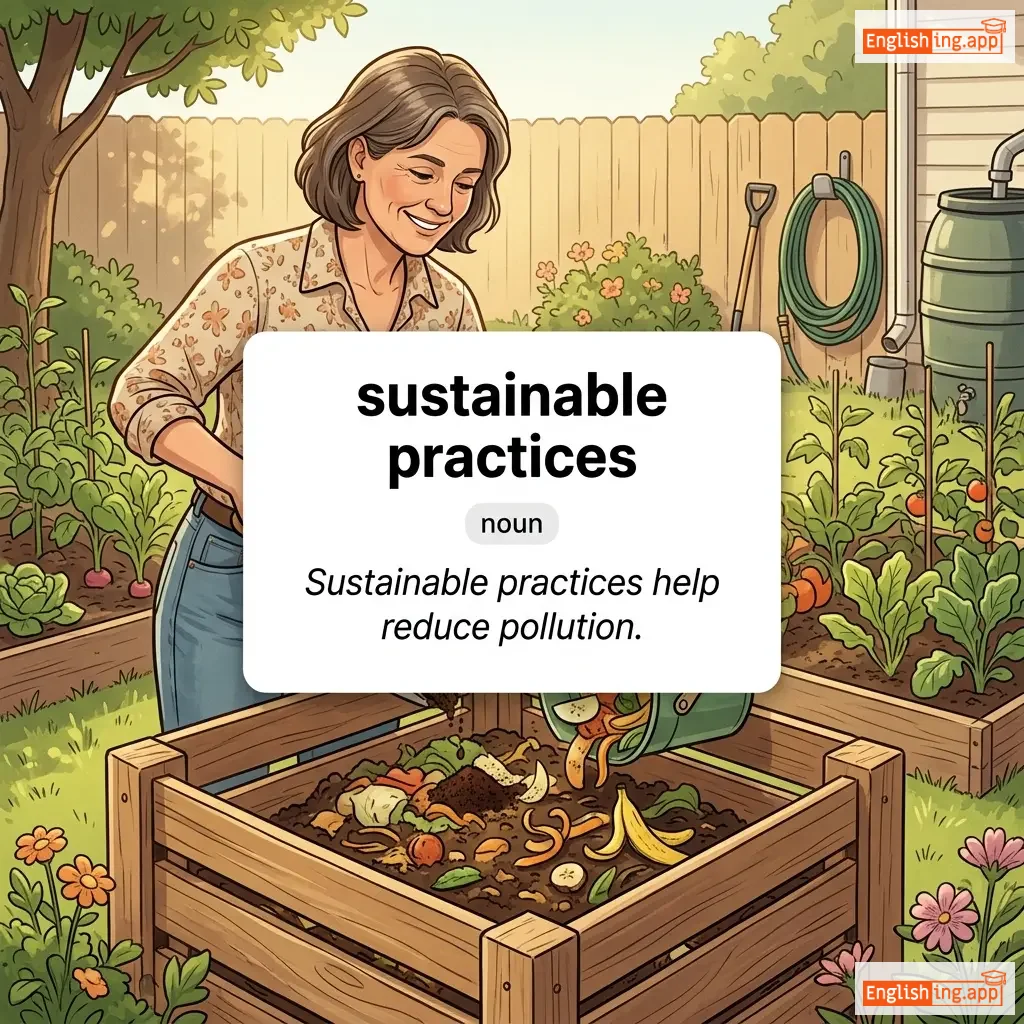
sustainable practices definition card — visual illustration of the meaning
noun
səˈsteɪnəbl ˈpræktɪsɪz
持続可能な実践 (jizoku kanou na jissen)

Methods or actions that can be maintained long-term without depleting resources or causing environmental harm

"Sustainable practices help reduce pollution."
"持続可能な実践は汚染を減らすのに役立つ。" (jizoku kanou na jissen wa osen o herasu no ni yakudatsu)
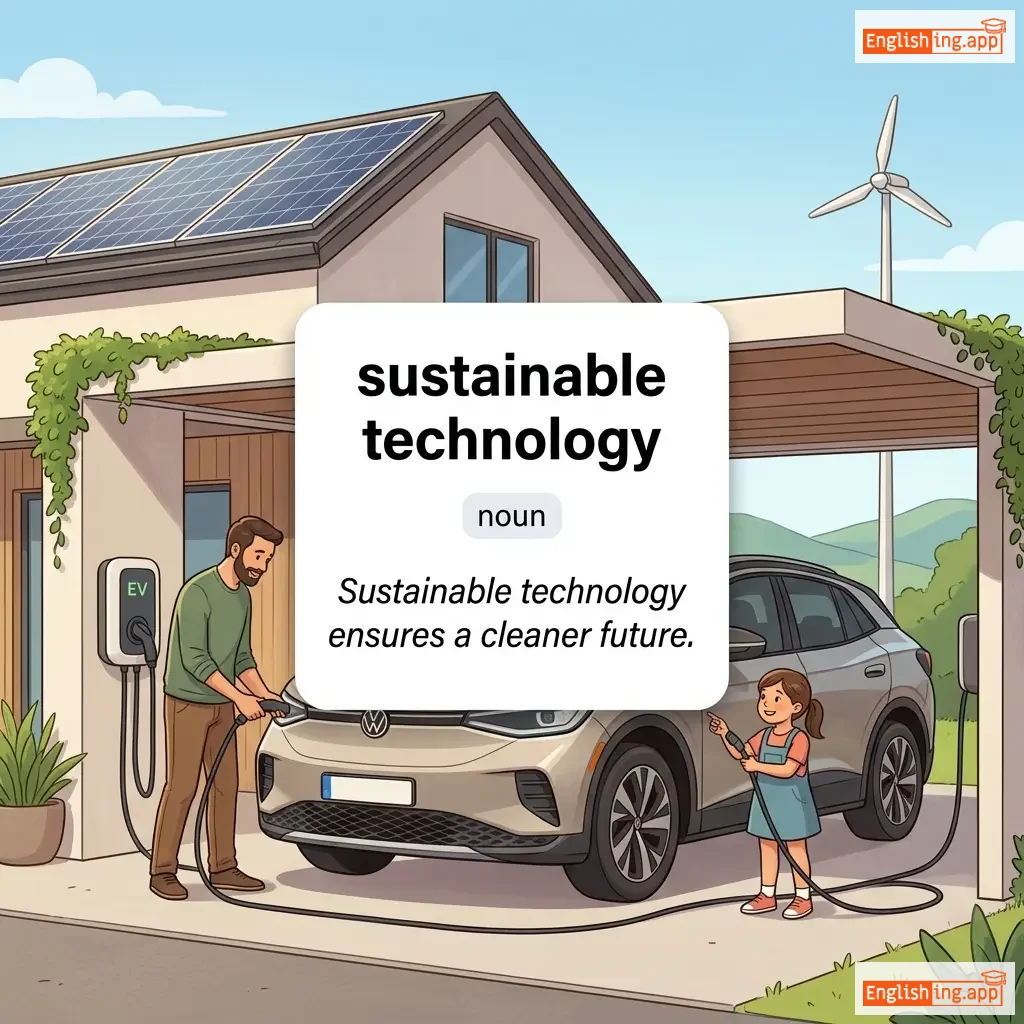
sustainable technology definition card — visual illustration of the meaning
noun
səˈsteɪ.nə.bəl tekˈnɒl.ə.dʒi
持続可能な技術 (jizoku kanou na gijutsu)

Technology designed to meet present needs without compromising future generations' ability to meet their needs.

"Sustainable technology ensures a cleaner future."
"持続可能な技術は、よりクリーンな未来を保証します。" (Jizoku kanou na gijutsu wa, yori kurīn na mirai o hoshō shimasu.)
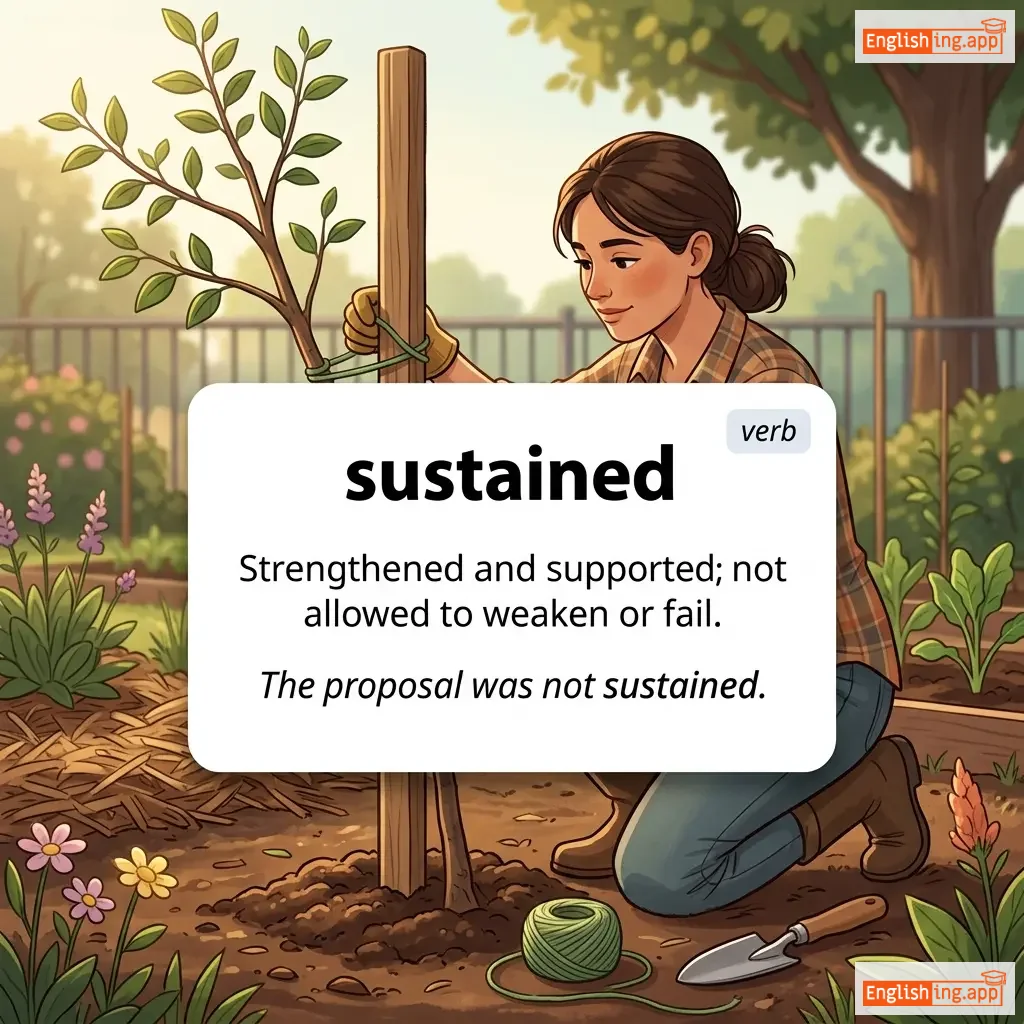
sustained definition card — visual illustration of the meaning
verb
səˈsteɪnd
支えられた (sasaerareta)

Strengthened and supported; not allowed to weaken or fail.

"The proposal was not sustained."
"提案は支えられませんでした。" (Teian wa sasaeraremasen deshita.)
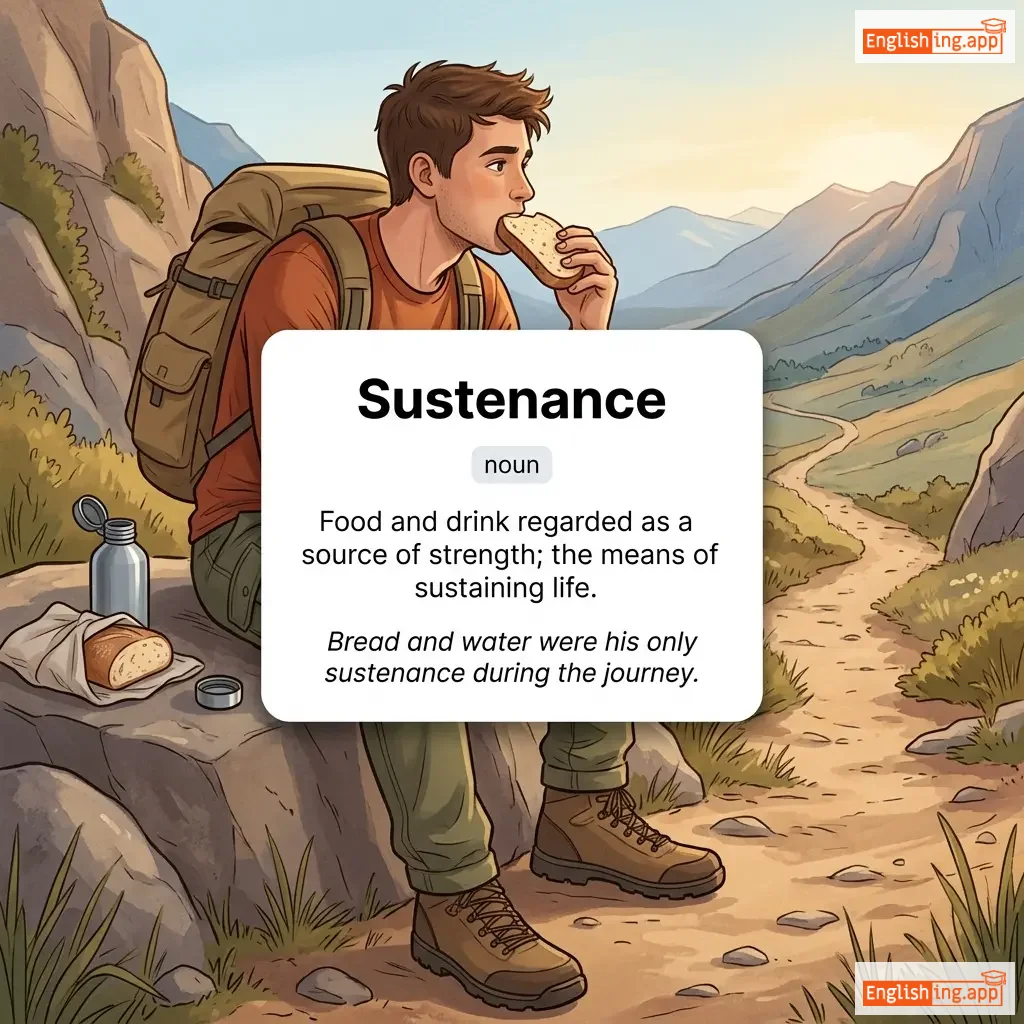
Sustenance definition card — visual illustration of the meaning
noun
/ˈsʌstənəns/
生存手段 (seizon shudan)

Food and drink regarded as a source of strength; the means of sustaining life.

"Bread and water were his only sustenance during the journey."

"パンと水は彼の旅の唯一の生存手段でした。" (Pan to mizu wa kare no tabi no yuiitsu no seizon shudan deshita.)
noun/verb
/ˈsuː.tʃər/
縫合 (hōgō)

A stitch or row of stitches holding together the edges of a wound or surgical incision.

"The doctor used a suture to close the wound."

"医者は傷を閉じるために縫合糸を使いました。" (Isha wa kizu o toji ru tame ni hōgō ito o tsukaimashita.)
adjective
/svelt/
スリム (surimu)

Attractively thin, graceful, and elegant in appearance or movement.

"She looked svelte in the elegant black dress."

"彼女はエレガントな黒いドレスを着てスリムに見えた。" (Kanojo wa ereganto na kuroi doresu o kite surimu ni mieta.)
verb/noun
/ˈswæɡ.ər/
自信過剰 (jishin kajou)

To walk or behave in a very confident and arrogant way.

"He swaggered into the room as if he owned the place."

"彼はまるでその場所のオーナーであるかのように部屋に入ってきました。" (Kare wa marude sono basho no ōnā de aru ka no yō ni heya ni haittekimashita.)
verb
/ˈswɒloʊ/
飲み込む (nomikomu)

to make food or drink go down your throat into your stomach

"He swallowed the pill with a glass of water."

"彼は薬を水で飲み込みました。" (Kare wa kusuri o mizu de nomikomimashita.)
noun/verb
/swɑːmp/
湿地 (shitchi)

An area of low-lying, uncultivated ground where water collects; a bog or marsh.

"The village was built near a swamp."

"村は湿地の近くに建てられました。" (Mura wa shicchi no chikaku ni tateraremashita.)
noun
/swɒn/
白鳥 (hakuchou)

a large waterbird with a long curved neck and usually white plumage

"The elegant swan glided silently across the water."

"優雅な白鳥が水面を静かに滑っていきました。" (Yūga na hakuchou ga suimen o shizuka ni subette ikimashita.)
noun/verb
/swɔːrm/
群れ (mure)

A large group of insects or people moving together.

"A swarm of bees surrounded the tree."

"一群の蜂が木の周りを囲んでいました。" (Ichigun no hachi ga ki no mawari o kakonde imashita.)
adjective
/ˈswɔːrði/
日焼けした (hiyakeshita)

Having a dark complexion or skin tone.

"The sailor had a swarthy face from years under the sun."

"その水夫は、何年も太陽の下で働いたため、日焼けした顔をしていた。" (Sono suifu wa, nannen mo taiyō no shita de hataraita tame, hiyakeshita kao o shite ita.)
verb
/sweɪð/

To wrap or cover closely or completely.

"She swathed the baby in a soft blanket."

verb
/sweɪ/
揺れる (yureru)

To move or cause to move slowly or rhythmically back and forth; to influence someone's opinion or decision.

"The trees swayed gently in the breeze."

"木々はそよ風に優しく揺れていました。" (Kigi wa soyokaze ni yasashiku yureteimashita.)
swear definition card — visual illustration of the meaning
verb
/swɛər/
誓う (chikau)

To make a solemn statement or promise; to use offensive language.

"He swore to tell the truth in court."

"彼は法廷で真実を話すと誓った。" (Kare wa hōtei de shinjitsu o hanasu to chikatta.)
noun
/ˈswɛər wɜːrd/
罵り言葉 (nonari kotoba)

An offensive or rude word used to express anger or frustration.

"He shouted a swear-word when he hit his toe."

"彼は足の指を打ったとき、罵り言葉を叫びました。" (Kare wa ashi no yubi o utta toki, nonari kotoba o sakebimashita.)
verb
/swɛt/
(ase)

to produce liquid from your skin when you are hot or nervous

"He was sweating after running for an hour."

"彼は1時間走った後、汗をかいていた。" (Kare wa 1 jikan hashitta ato, ase o kaite ita.)
noun
/ˈswɛtər/

a warm knitted piece of clothing worn on the upper body

"She wore a red sweater to keep warm in the cold weather."

noun
/ˈswɛtʃɜːrt/
スウェットシャツ (suwettoshatsu)

A casual, long-sleeved pullover garment, typically made of cotton or fleece, worn for warmth or comfort.

"He wore a grey sweatshirt while jogging in the park."

"彼は公園でジョギングをするとき、灰色のスウェットシャツを着ていた。" (Kare wa kouen de jogingu wo suru toki, haiiro no suwettoshatsu wo kiteita.)
sweep definition card — visual illustration of the meaning
verb
/swiːp/
掃く (haku)

to clean or clear (an area) by brushing away dirt or debris

"She swept the floor before going to bed."

"彼女は寝る前に床を掃いた。" (Kanojo wa neru mae ni yuka o haiteta.)
noun
/ˈswiː.pər/
掃除人 (soujinin)

a person whose job is to clean floors and streets by sweeping

"The sweeper cleaned the school corridor every morning."
"掃除人は毎朝学校の廊下を掃除しました。" (soujinin wa mai asa gakkou no rouka o souji shimashita.)
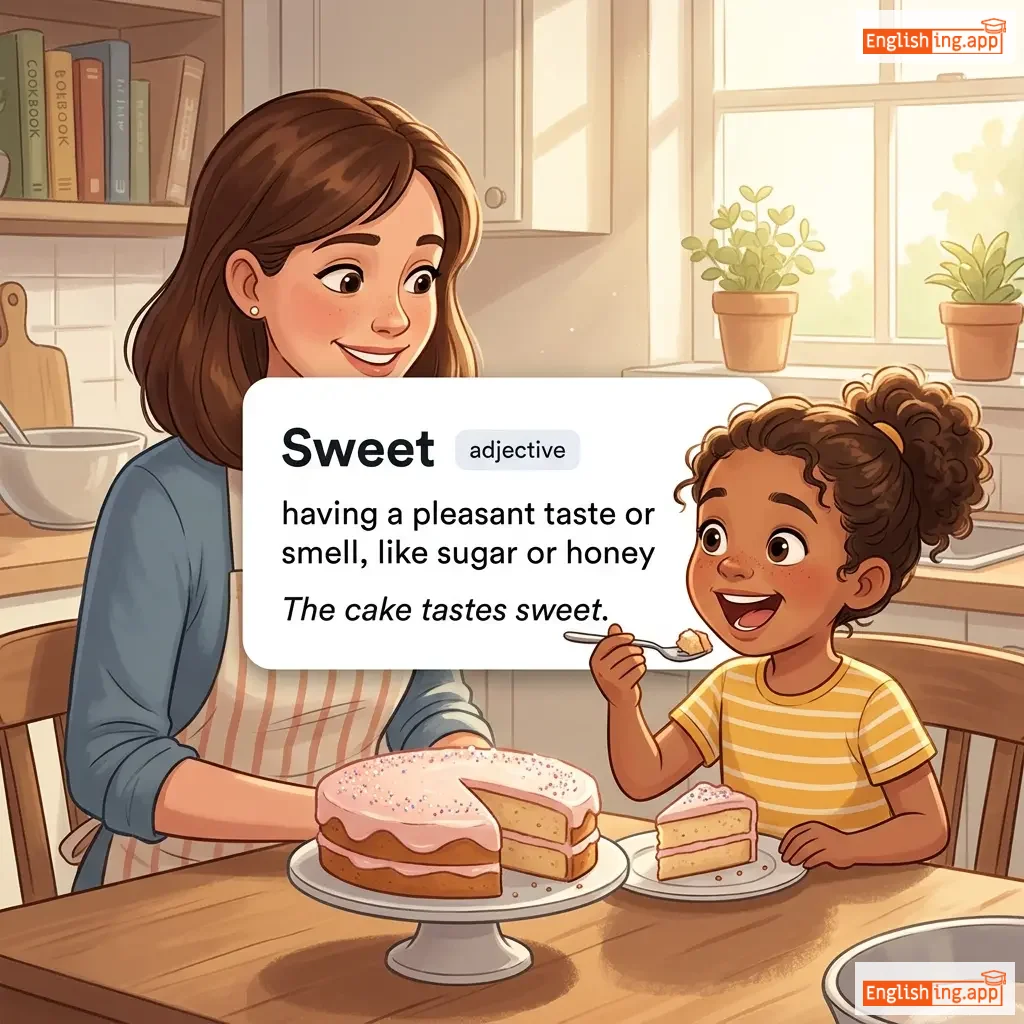
Sweet definition card — visual illustration of the meaning
adjective
/swiːt/
甘い (amai)

having a pleasant taste or smell, like sugar or honey

"The cake tastes sweet."

"ケーキは甘い味がします。" (Keeki wa amai aji ga shimasu.)
noun
/swiːt pəˈteɪtoʊ/
さつまいも (satsumaimo)

A root vegetable with sweet flesh, typically orange or purple in color

"Roasted sweet potato makes a healthy and delicious side dish."

"ローストさつまいもは健康的でおいしいサイドディッシュを作ります。" (Roosuto satsumaimo wa kenkou-teki de oishii saido disshu o tsukurimasu.)
noun
/swiːt.laɪm/
スイートライム (suīto raimu)

a citrus fruit that is sweeter and less acidic than regular lime

"The sweetlime juice was refreshing on a hot day."

"スイートライムジュースは暑い日にさわやかでした。" (Suīto raimu jūsu wa atsui hi ni sawayaka deshita.)
noun
/ˈswiːt.miːt/
お菓子 (okashi)

a small piece of confectionery or candy; a sweet delicacy

"The children enjoyed the traditional sweetmeats during the festival."

"子供たちは祭りの間に伝統的なスイートミートを楽しみました。" (Kodomotachi wa matsuri no aida ni dentouteki na suītomīto o tanoshimimashita.)
verb
/swɛl/
膨れる (fukurero)

to increase in size or volume, often due to internal pressure or emotional intensity

"Her ankle began to swell after the injury."

"怪我をした後、彼女の足首が腫れ始めた。" (Kega o shita ato, kanojo no ashi kubi ga hare hajimeta.)
verb
/ˈswɛltər/
強烈な暑さで苦しむ (kyōretsu na atsusa de kurushimu)

to suffer from intense heat

"We began to swelter in the midday sun."

"私たちは真昼の太陽の下で汗だくになり始めました。" (Watashitachi wa mahiru no taiyō no shita de ase-daku ni nari hajimemashita.)
adjective
/ˈswɛltərɪŋ/
うだるような暑さ (udaru you na atsusa)

uncomfortably hot

"The sweltering heat made it hard to work."

"うだるような暑さで仕事が難しくなった。" (Udaru you na atsusa de shigoto ga muzukashiku natta.)
verb
/swɜːrv/
急に方向を変える (kyūni hōkō o kaeru)

to change direction suddenly, especially to avoid hitting something

"The car swerved to avoid the dog."

"車は犬を避けるために急に方向を変えた。" (Kuruma wa inu o yokeru tame ni kyūni hōkō o kaeta.)
adjective
/swɪft/

moving very quickly; happening promptly

"The river current was swift after the heavy rain."

verb
/swɪl/
がぶがぶ飲む (gabugabu nomu)

to drink something greedily or in large amounts

"He swilled down the beer in seconds."
"彼は数秒でビールを飲み干した。" (Kare wa suubyou de biiru o nomihoshita.)
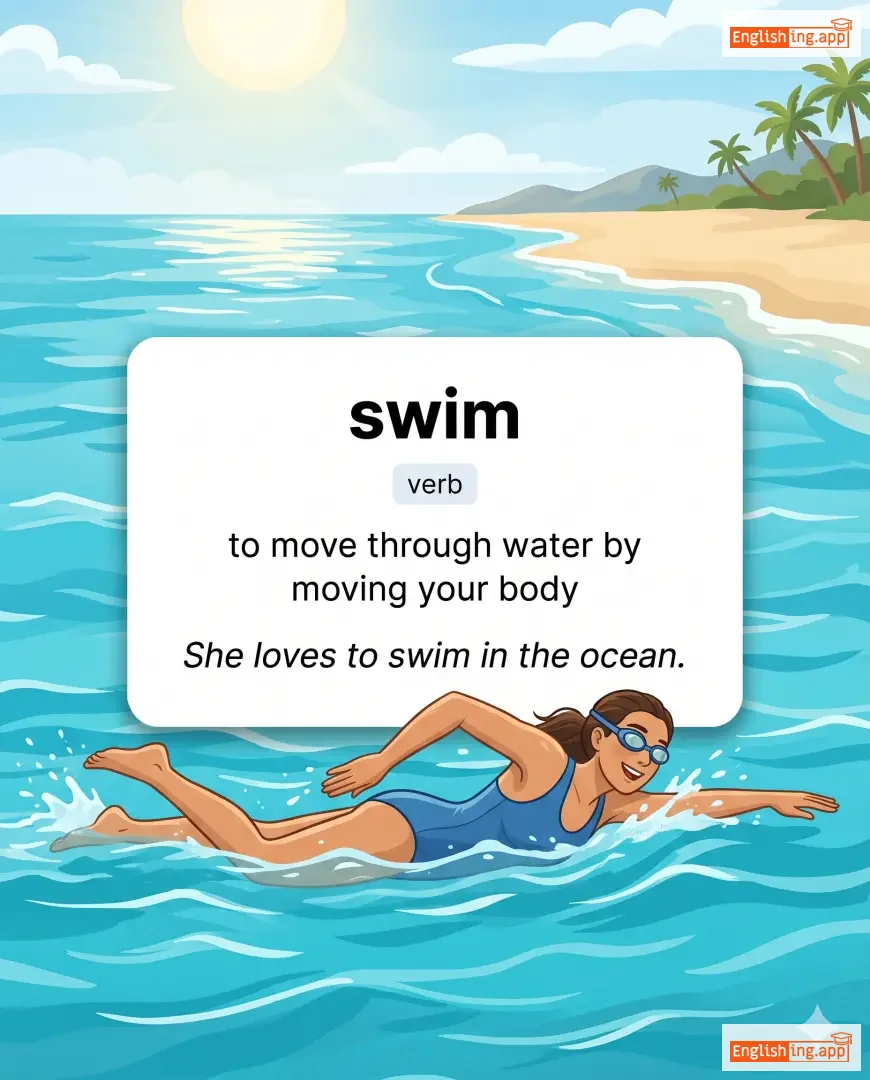
swim definition card — visual illustration of the meaning
verb
/swɪm/
泳ぐ (oyogu)

to move through water by moving your body

"She loves to swim in the ocean."

"彼女は海で泳ぐのが大好きです。" (Kanojo wa umi de oyogu no ga daisuki desu.)