語彙集

英単語辞書 | 単語の意味、定義、例文

noun
/smɔːl boʊl/
小さなボウル (chiisana booru)

a round, shallow container of small size used for serving food or liquids

"She served the soup in a small bowl."
"彼女は小さなボウルにスープを盛りました。" (Kanojo wa chiisana booru ni suupu o morimashita.)
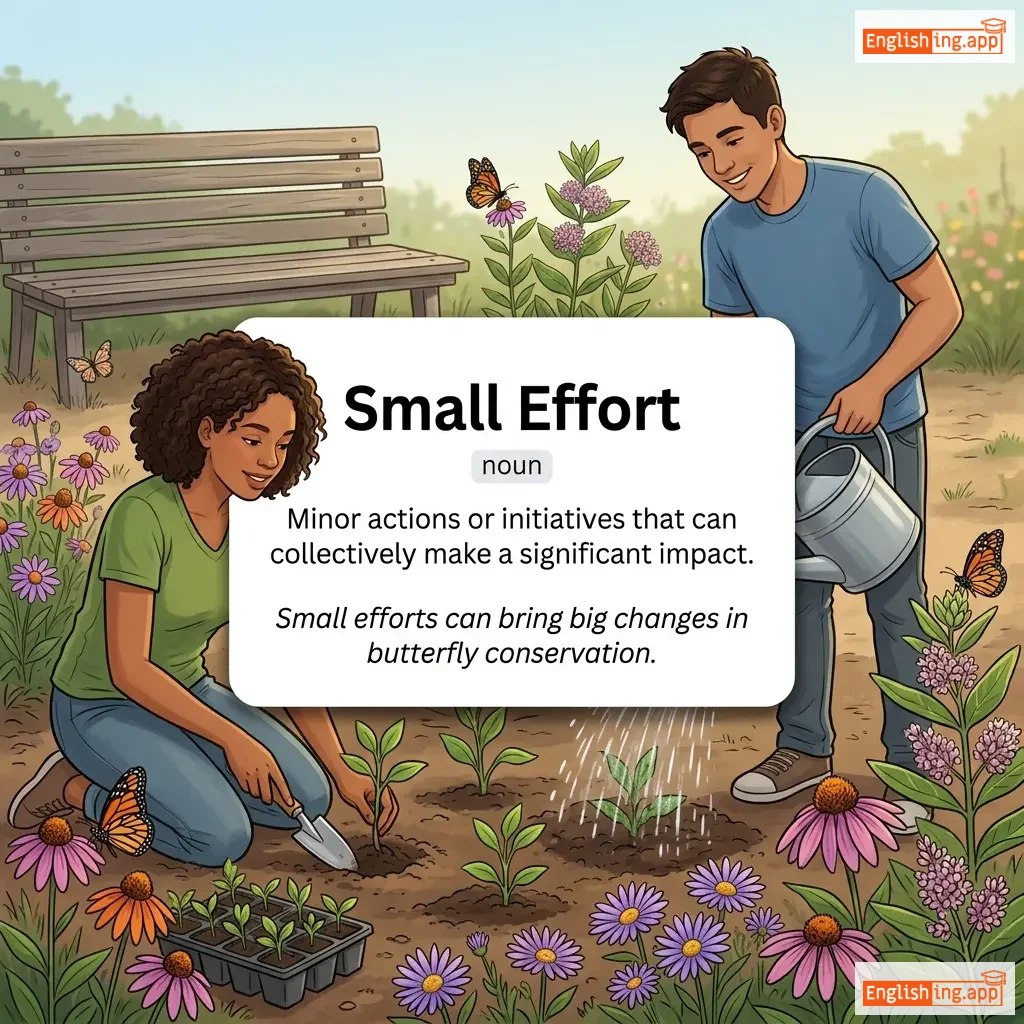
Small Effort definition card — visual illustration of the meaning
noun
smɔːl ˈɛfərt
小さな努力 (chiisana doryoku)

Minor actions or initiatives that can collectively make a significant impact.

"Small efforts can bring big changes in butterfly conservation."

"小さな努力が蝶の保護に大きな変化をもたらすことができる。" (Chiisana doryoku ga chō no hogo ni ōkina henka o motarasu koto ga dekiru.)
adjective
/ˈsmɑːrmi/
お世辞 / 偽の礼儀 (Oseji / Nise no reigi)

Excessively flattering or ingratiating, often insincerely.

"The salesman gave a smarmy pitch that felt fake."

"販売員は偽りのように感じるお世辞のような売り込みをしました。" (Hanbaiin wa itsuwari no yō ni kanjiru oseji no yō na urikomi o shimashita.)
adjective, noun, verb
/smɑːrt/
賢い / スタイリッシュ (kashikoi / sutairisshu)

Clever and intelligent; also stylish in appearance; or to feel pain.

"She is a smart student who always excels in class."

"彼女はクラスでいつも優れた成績を収めるスマートな学生です。" (Kanojo wa kurasu de itsumo sugureta seiseki o osameru sumāto na gakusei desu.)
adverb
/ˈsmɑːt.li/
賢く; スタイリッシュに; 速く (kashikoku; sutairisshu ni; hayaku)

in a clever or intelligent way; neatly and stylishly; quickly

"He was smartly dressed for the business meeting."

"彼はビジネスミーティングのためにスマートに服を着ていました。" (Kare wa bijinesu mītingu no tame ni sumāto ni fuku o kite imashita.)
noun
/ˈsmɑːrt.nəs/
知恵;賢さ;整然としたモダンな外観 (chie; kashikosa; seizen to shita modan na gaikan)

intelligence; cleverness; neat and fashionable appearance

"Her smartness in solving problems impressed everyone."

"問題解決の際の彼女の知恵は、皆に感銘を与えました。" (Mondai kaiketsu no sai no kanojo no chie wa, minna ni kanmei o ataemashita.)
verb
/smæʃ/
壊す (kowasu)

to break something into pieces violently

"She smashed the glass in frustration."

"彼女はフラストレーションでグラスを壊した。" (Kanojo wa furasutōrēshon de gurasu o kowashita.)
noun
/ˈsmætərɪŋ/
ちょっとした知識 (chottoshita chishiki)

A small amount or superficial knowledge of something.

"He has a smattering of Spanish."

"彼はスペイン語についてちょっとした知識を持っている。" (Kare wa Supeingo ni tsuite chottoshita chishiki o motte iru.)
verb
/smɪr/
塗る / 中傷する (nuru / chushou suru)

to spread or apply a substance messily; to damage someone's reputation with false or unfair words

"The child smeared paint across the wall."
"子供が壁にペンキを塗った。" (Kodomo ga kabe ni penki o nutta.)
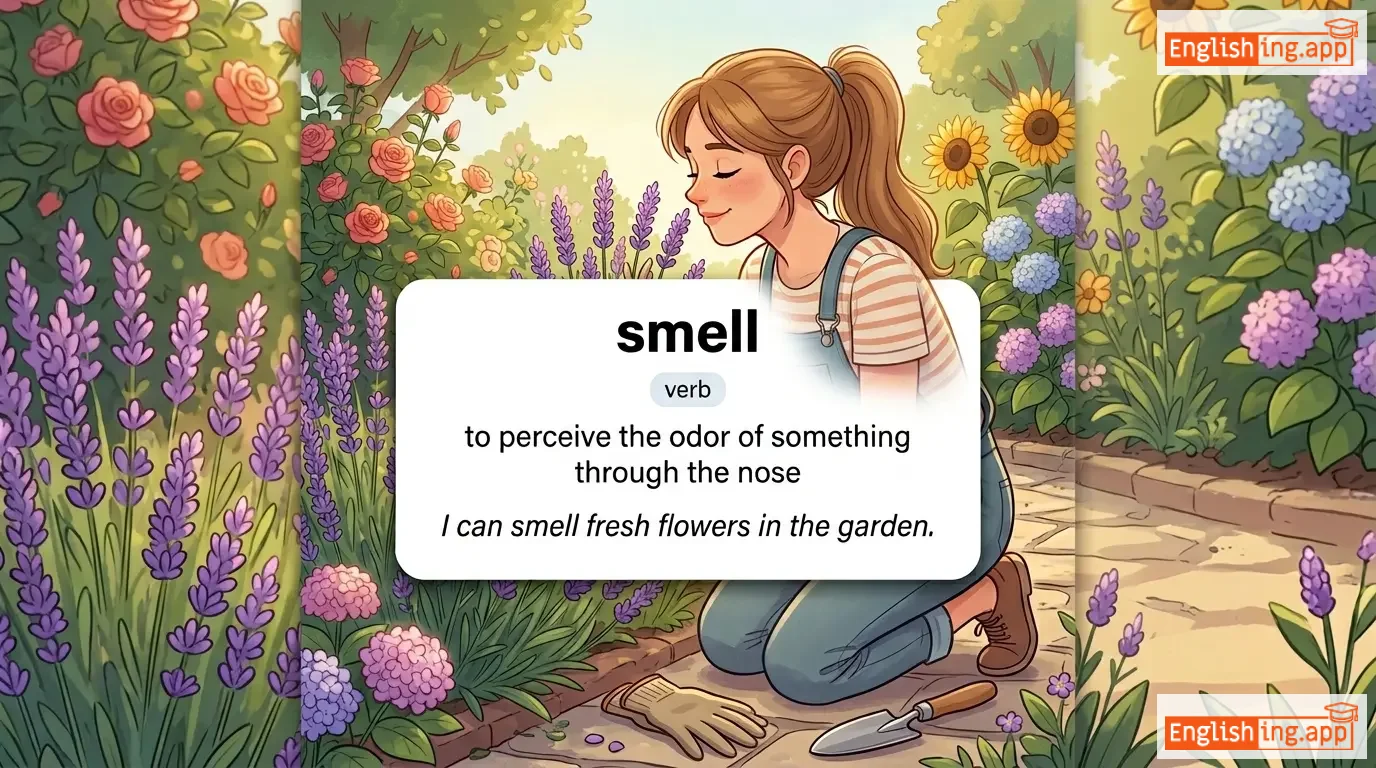
smell definition card — visual illustration of the meaning
verb
/smɛl/
嗅ぐ (kagu)

to perceive the odor of something through the nose

"I can smell fresh flowers in the garden."

"私は庭で新鮮な花の香りを嗅ぐことができます。" (Watashi wa niwa de shinsen na hana no kaori o kagu koto ga dekimasu.)
verb
/smɛlt/
溶かす (tokasu)

to extract metal from its ore by heating and melting

"The workers smelt iron from its ore in the factory."

"作業員は工場で鉱石から鉄を溶かして取り出します。" (Sagyouin wa koujou de kouseki kara tetsu wo tokashite toridashimasu.)
verb
/smaɪl/
微笑み (hohoemi)

to express happiness or friendliness by turning the corners of the mouth upwards

"She smiled when she saw the gift."

"彼女はプレゼントを見て微笑んだ。" (Kanojo wa purezento o mite hohoenda.)
verb
/smɜrk/
自己満足の笑顔 (jikomanzoku no egao)

to smile in a self-satisfied, smug, or silly way

"He smirked when he won the argument."
"彼は議論に勝ったとき、ニヤリと笑った。" (Kare wa giron ni katta toki, niyari to waratta.)
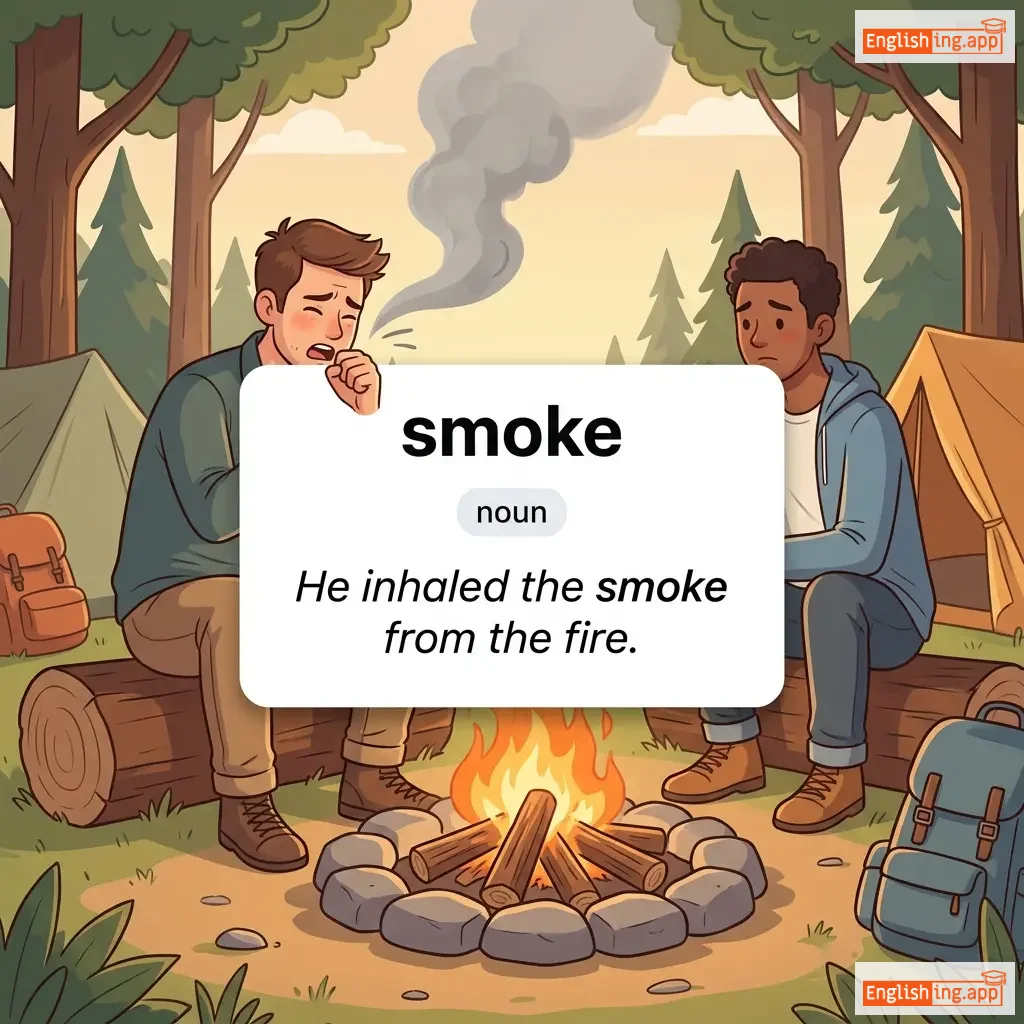
smoke definition card — visual illustration of the meaning
noun
/smoʊk/
(kemuri)

a visible suspension of fine particles of matter in the air, typically produced by combustion

"He inhaled the smoke from the fire."

"彼は火事から煙を吸い込んだ。" (Kare wa kaji kara kemuri wo suikonda.)
noun
/ˈsmoʊkər/
喫煙者 (kitsuen-sha)

A person who smokes tobacco or other substances

"He is a heavy smoker and tries to quit every year."

"彼は喫煙者で、毎年禁煙しようとしています。" (Kare wa kitsuen-sha de, maitoshi kin'en shiyou to shiteimasu.)
noun/adjective
/ˈsmoʊ.kɪŋ/
喫煙 (kitsuen)

The act of inhaling and exhaling the smoke of tobacco or other substances; wearing a tuxedo (adjective, formal context).

"Smoking is prohibited inside the building."

"建物内での喫煙は禁止されています。" (Tatemono-nai de no kitsuen wa kinshi sareteimasu.)
verb
/ˈsmoʊldər/
ゆっくり燃える (yukkuri moeru)

to burn slowly with smoke but no flame; to show suppressed anger or emotion

"The fire smoldered for hours before it went out."

"火は何時間もゆっくり燃えた後に消えました。" (Hi wa nan jikan mo yukkuri moeta ato ni kiemashita.)
adjective
/smuːð/
滑らか (nameraka)

having an even surface without roughness; happening without difficulty

"The table has a smooth surface."

"テーブルの表面は滑らかです。" (Tēburu no hyōmen wa nameraka desu.)
adverb
/ˈsmuːð.li/
スムーズに; 問題なく (sumuuzu ni; mondai naku)

without problems or difficulties; in an even and regular way

"The car runs smoothly on the new highway."

"車は新しい高速道路でスムーズに走る。" (kuruma wa atarashī kōsoku dōro de sumūzu ni hashiru.)
verb
/ˈsmʌðər/
窒息させる / 覆う (chissoku saseru / ōu)

to kill someone by covering their nose and mouth to prevent breathing; to cover something completely; to overwhelm with excessive attention or affection

"She smothered the fire with a blanket."

"彼女は毛布で火を覆った。" (Kanojo wa mōfu de hi o ōtta.)
noun/verb
/smʌdʒ/
汚れ, スマッジ (yogore, sumajji)

a dirty mark or smear; to make something dirty or unclear by rubbing or touching

"She accidentally smudged her lipstick on the napkin."

"彼女はうっかりナプキンにリップスティックをつけてしまった。" (Kanojo waukkari napukin ni rippusutikku o tsukete shimatta.)
adjective
/smʌɡ/
自惚れた (uniboreta)

having or showing an excessive pride in oneself or one's achievements

"He wore a smug smile after winning the debate."

"彼は議論に勝った後、自惚れた笑顔を見せた。" (Kare wa giron ni katta ato, uniboreta egao o miseta.)
verb
/ˈsmʌɡəl/

to move goods illegally into or out of a country

"The gang tried to smuggle gold across the border."

noun
/sneɪl/
カタツムリ (katatsumuri)

a small soft creature with a shell on its back that moves very slowly

"The snail left a shiny trail as it crawled across the leaf."

"カタツムリは葉っぱを這っている間に輝く跡を残しました。" (katatsumuri wa happa o hatte iru aida ni kagayaku ato o nokoshimashita)
noun
/sneɪk/
ヘビ (hebi)

a long, legless reptile that moves by slithering

"A snake slithered across the garden path."

"ヘビが庭の小道を這っていった。" (Hebi ga niwa no komichi o hatte itta.)
noun
/sneɪk ɡɔːrd/
ヘビウリ (hebiuri)

a long, curved vegetable that resembles a snake, commonly used in South Asian cuisine

"The snake gourd grows in a twisted, serpentine shape in the garden."
"ヘビウリは庭で蛇のような形に曲がりながら育ちます。" (hebiuri wa niwa de hebi no yō na katachi ni magarinagara sodachimasu.)
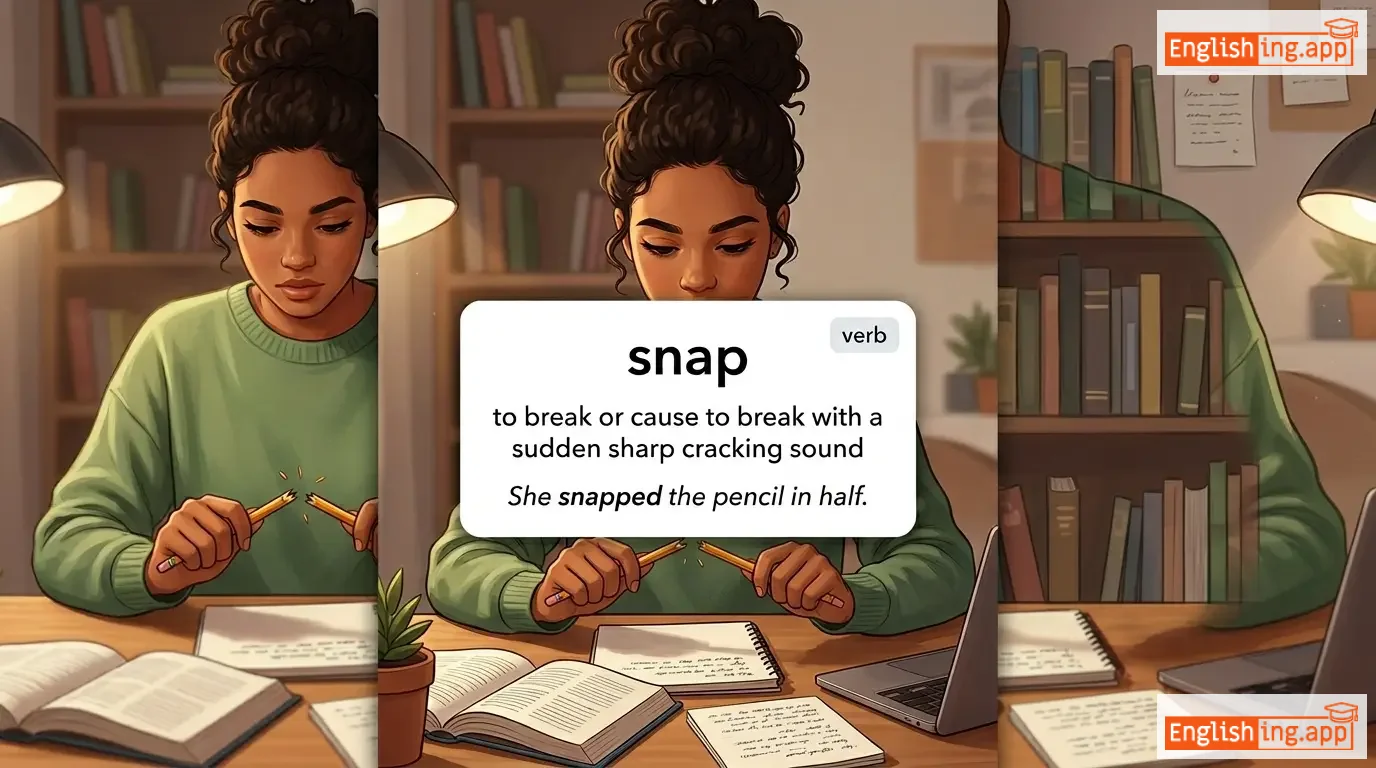
snap definition card — visual illustration of the meaning
verb
/snæp/
折る (oru)

to break or cause to break with a sudden sharp cracking sound

"She snapped the pencil in half."

"彼女は鉛筆を半分に折った。" (Kanojo wa enpitsu o hanbun ni otta.)
noun/verb
/snɛər/
(wana)

a trap for catching animals; to catch or trap

"The hunter set a snare to catch rabbits."

"ハンターはウサギを捕まえるために罠を仕掛けました。" (Hantaa wa usagi o tsukamaeru tame ni wana o shikakemashita.)
verb/noun
/snɑːrl/
唸り声、渋滞 (unari goe, jūtai)

to growl aggressively with bared teeth; a tangle or mess

"The dog snarled at the stranger near the gate."

"犬はゲート近くの見知らぬ人に唸った。" (Inu wa geeto chikaku no mishiranu hito ni unatta.)
🥷

sneak

verb
/sniːk/

to move quietly and secretly to avoid being noticed

"He tried to sneak into the house without waking anyone."

verb
/snɪər/
冷笑する (reishou suru)

to smile or speak in a mocking or contemptuous way

"She sneered at his attempt to sing."

"彼女は彼の歌おうとしたことを嘲笑した。" (Kanojo wa kare no utaou to shita koto o choushou shita.)
verb, noun
/sniːz/
くしゃみをする (kushami wo suru)

to expel air involuntarily from the nose and mouth due to irritation; the act of sneezing

"I had to sneeze during the meeting."

"会議中にくしゃみをしなければならなかった。" (kaigichuu ni kushami wo shinakereba naranakatta)
verb
/ˈsnɪkər/
ひそかに笑う (hisokani warau)

to laugh quietly in a disrespectful or mocking way

"The students snickered when the teacher made a mistake."

"先生が間違えたとき、生徒たちはこっそり笑いました。" (Sensei ga machigaeta toki, seito-tachi wa kossori waraimashita.)
adjective
/snaɪd/
皮肉な (hinikuna)

mocking or insulting in an indirect way

"He couldn’t resist making a snide comment about her dress."

"彼は彼女のドレスについて皮肉なコメントをするのをやめられなかった。" (Kare wa kanojo no doresu ni tsuite hinikuna komento o suru no o yamerarenakatta.)
verb
/snɪp/
切る (kiru)

to cut something quickly with scissors or a sharp tool

"She snipped the loose thread from her dress."

"彼女はドレスの緩んだ糸を切りました。" (Kanojo wa doresu no yurunda ito wo kirimashita.)
verb
/ˈsnɪvəl/
弱い、またはイライラさせる方法で泣くまたは不平を言う (yowai, matawa iraira saseru hōhō de naku matawa fuhei o iu)

to cry or complain in a weak or annoying way

"He began to snivel when he didn’t get his way."

"自分の思い通りにならなかったとき、彼は泣き始めた。" (Jibun no omoidoori ni naranakatta toki, kare wa nakihajimeta.)
adjective
/ˈsnɒbɪʃ/
高慢 (kōman)

having or showing the attitude of people who think they are better than others

"She seemed snobbish because she avoided talking to the waiters."

"彼女はウェイターと話すのを避けたので、高慢に見えました。" (Kanojo wa weitaa to hanasu no o sake ta node, kōman ni miemashita.)
noun
/snoʊ/
(yuki)

frozen water vapor that falls from the sky as white flakes

"Children love to play in the snow."

"子供たちは雪で遊ぶのが大好きです。" (Kodomo-tachi wa yuki de asobu no ga daisuki desu.)
noun
/ˈsnoʊ.fɔːl/
雪降り (yukifuri)

the process of snow falling from the sky; the amount of snow that falls

"The heavy snowfall blocked all the roads yesterday."

"昨日の大雪で全ての道路が閉鎖されました。" (Kinō no ōyuki de subete no dōro ga heisa saremashita.)
verb
/snʌb/
無視する (mushi suru)

to insult or ignore someone by treating them rudely

"He felt hurt when his invitation was snubbed."

"彼は招待状が無視されたとき、傷ついたと感じた。" (Kare wa shoutaijou ga mushi sareta toki, kizutsuita to kanjita.)
verb
/ˈsnʌfəl/
鼻で音を立てて息をする (hana de oto wo tatete iki wo suru)

to breathe noisily through the nose, often because of crying or a cold

"The child began to snuffle after crying for a long time."

"子供は長時間泣いた後に鼻で音を立てて息をし始めました。" (Kodomo wa nagajikan naita ato ni hana de oto wo tatete iki wo shihajimemashita.)
adverb
/soʊ/
そんなに (sonnani)

to such a degree or extent

"She was so happy with the gift."

"彼女はプレゼントにとても喜んでいた。" (Kanojo wa purezento ni totemo yorokonde ita.)
adjective
/ˈsoʊ kɔːld/

referred to as or known by a particular name or title, often misleadingly

"The so-called expert couldn't answer the question."

verb
/soʊk/
浸す (hitasu)

to make something completely wet by immersing it in liquid

"She soaked the clothes in water before washing them."

"彼女は洗濯する前に服を水に浸しました。" (kanojo wa sentaku suru mae ni fuku wo mizu ni hitashimashita.)
🧼

Soap

noun
/soʊp/

a substance used for washing and cleaning, typically made from fats and alkalis

"She washed her hands with soap and water."

noun
/soʊp keɪs/
石鹸ケース (sekken kesu)

a container used to store soap

"She bought a beautiful soap case for the bathroom."

"彼女はバスルーム用に美しい石鹸ケースを買いました。" (Kanojo wa basuruumu you ni utsukushii sekken kesu o kaimashita.)
adjective
/ˈsoʊpi/
石鹸で覆われた; 泡立った (sekken de ōwareta; awadatta)

covered with soap; having the characteristics of soap; foamy

"The dishes were still soapy after washing."

"皿は洗った後でもまだ石鹸のようでした。" (Sara wa aratta ato demo mada sekken no yō deshita.)
verb
/sɔːr/
高く飛ぶ / 急増する (takaku tobu / kyūzō suru)

to fly or rise high in the air; to increase rapidly or dramatically

"The eagle soared high above the mountains."

"ワシは山々の上を高く飛びました。" (Washi wa yamayama no ue o takaku tobimashita.)
verb
/sɑːb/
大声で泣く (ōgoe de naku)

to cry noisily while taking short breaths

"She began to sob uncontrollably after hearing the news."

"彼女はニュースを聞いて制御できずに泣き始めました。" (Kanojo wa nyūsu o kiite seigyo dekizu ni nakihajimemashita.)
adjective
/ˈsoʊbər/
酔っていない / 真面目 (yotte inai / majime)

not affected by alcohol; serious, sensible, and solemn

"He gave a sober speech about the challenges ahead."

"彼は今後の挑戦について真面目なスピーチをしました。" (Kare wa kongo no chōsen ni tsuite majime na supīchi o shimashita.)