語彙集

英単語辞書 | 単語の意味、定義、例文

adjective
/rɪˈlaɪ.ənt/
依存している (izon shite iru)

depending on someone or something for support

"The country is too reliant on imported goods."

"その国は輸入品に依存しすぎている。" (Sono kuni wa yunyūhin ni izon shisugite iru.)
noun
/ˈrɛl.ɪk/
遺物 (ibutsu)

an object surviving from an earlier time, often of historical or religious interest

"The museum displayed relics from the ancient civilization."

"博物館には古代文明の遺物が展示されていました。" (Hakubutsukan ni wa kodai bunmei no ibutsu ga tenji sarete imashita.)
noun
/rɪˈliːf/

a feeling of reassurance and comfort after stress or discomfort

"She felt a huge sense of relief after hearing the good news."

noun
/rɪˈliːf treɪn/
救援列車 (kyūen ressha)

a train that carries emergency supplies and aid to disaster-affected areas

"The relief train arrived with food and medical supplies for the flood victims."

"救援列車は洪水の被害者のために食料と医療物資を運んできました。" (kyūen ressha wa kōzui no higaisha no tame ni shokuryō to iryō busshi o hakonde kimashita)
verb
/rɪˈliːv/

to make pain, distress, or difficulty less severe or serious

"The medicine helped relieve his headache."

adjective
/rɪˈliːvd/
安心した (anshin shita)

feeling happy and less worried after something stressful has been removed or resolved

"She felt relieved after hearing the good news."

"良い知らせを聞いた後、彼女は安心した。" (Yoi shirase o kiita ato, kanojo wa anshin shita.)
noun
/rɪˈlɪdʒ.ən/
宗教 (shūkyō)

a system of faith and worship involving belief in a higher power

"Freedom of religion is a fundamental human right."

"宗教の自由は基本的人権です。" (Shūkyō no jiyū wa kihon-teki jinken desu.)
adjective
/rɪˈlɪdʒəs/
宗教的 (shūkyōteki)

relating to or believing in a religion or faith

"She is a very religious woman who prays every day."

"彼女は毎日祈る非常に宗教的な女性です。" (Kanojo wa mainichi inoru hijō ni shūkyōteki na josei desu.)
relinquish definition card — visual illustration of the meaning
verb
/rɪˈlɪŋkwɪʃ/
放棄する (hoki suru)

to give up or let go of something voluntarily

"He had to relinquish control of the company after the merger."

"合併後、彼は会社のコントロールを放棄しなければならなかった。" (Gappei go, kare wa kaisha no kontorōru o hōki shinakereba naranakatta.)
noun
/ˈrɛlɪkwɛri/
聖遺物を保管する容器 (seiiwutsu wo hokan suru youki)

a container for holy relics

"The ancient reliquary was decorated with gold and precious stones."

"古代のレリクエアリは金と貴重な石で飾られていました。" (Kodai no relikuweari wa kin to kichou na ishi de kazara reteimashita.)
verb/noun
/ˈrɛlɪʃ/
楽しむ / 調味料 (tanoshimu / choumiryō)

to greatly enjoy; also a condiment or sauce

"She relished the opportunity to travel abroad."

"彼女は海外旅行の機会を大いに楽しんでいました。" (Kanojo wa kaigai ryokō no kikai o ōi ni tanoshinde imashita.)
noun
/rɪˈlʌktəns/
嫌悪感 (ken'okan)

unwillingness or hesitation to do something

"His reluctance to speak made the meeting awkward."

"彼の話すことへの嫌悪感が会議を気まずくした。" (Kare no hanasu koto e no ken'okan ga kaigi o kimazuku shita.)
adjective
/rɪˈlʌktənt/
消極的 (shougekiteki)

unwilling or hesitant to do something

"She was reluctant to speak in front of the large audience."

"彼女は大きな観衆の前で話すことに消極的でした。" (Kanojo wa ookina kanshu no mae de hanasu koto ni shougekiteki deshita.)
adverb
/rɪˈlʌk.tənt.li/
いやいや (iya iya)

in an unwilling manner; with hesitation or resistance

"She reluctantly agreed to help with the project."

"彼女はプロジェクトを手伝うことに渋々同意した。" (Kanojo wa purojekuto o tetsudau koto ni shibushibu dōi shita.)
verb
/rɪˈlaɪ/
頼る (tayoru)

to depend on with confidence

"You can always rely on her to help you out."
"あなたはいつでも彼女を頼りにできます。" (Anata wa itsu demo kanojo o tayori ni dekimasu.)
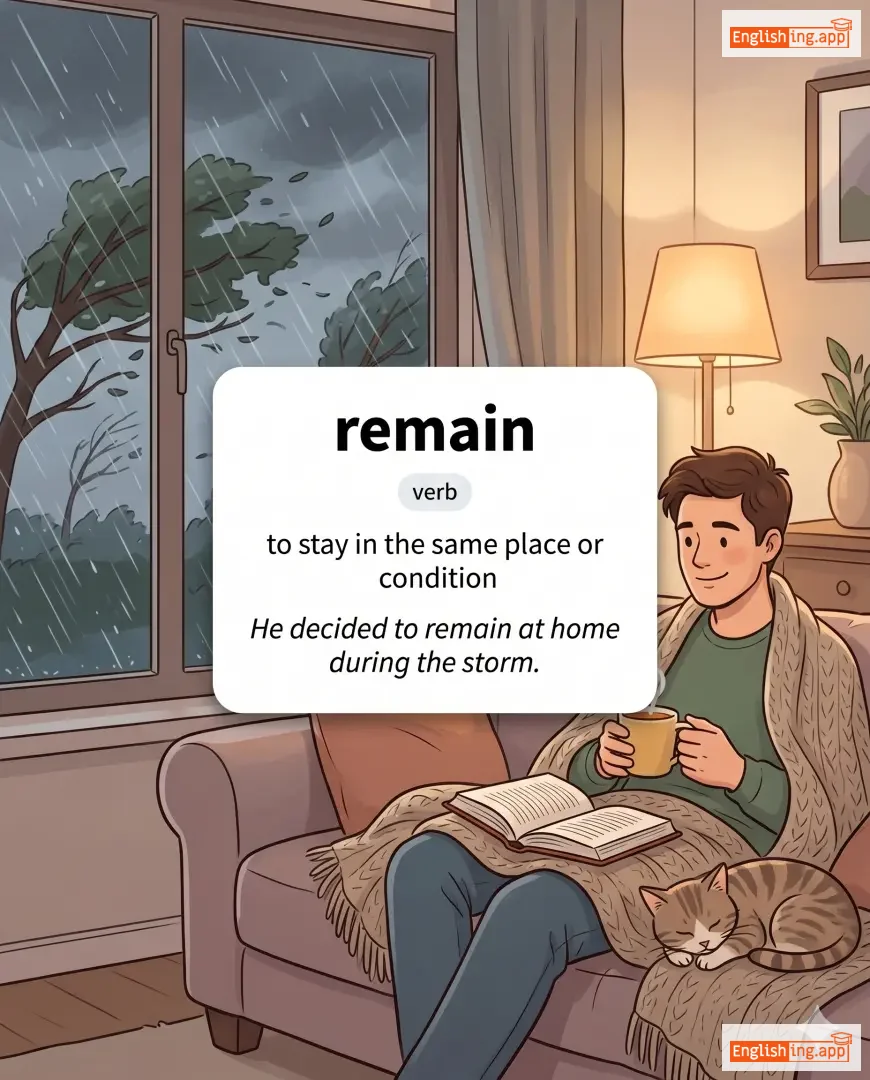
remain definition card — visual illustration of the meaning
verb
/rɪˈmeɪn/
残る (nokoru)

to stay in the same place or condition

"He decided to remain at home during the storm."

"彼は嵐の間、家にいることに決めました。" (Kare wa arashi no aida, ie ni iru koto ni kimemashita.)
noun
/rɪˈmeɪndər/
残り (nokori)

the part that is left after the main part is gone or used

"He ate most of the cake and left the remainder on the plate."

"彼はケーキのほとんどを食べ、残りを皿に残しました。" (Kare wa kēki no hotondo o tabe, nokori o sara ni nokoshimashita.)
adjective
/rɪˈmeɪnɪŋ/
残り (nokori)

still existing or left after others are gone or dealt with

"There were only a few remaining tickets for the concert."

"コンサートのチケットは残りわずかでした。" (Konsaato no chiketto wa nokori wazuka deshita.)
noun
/rɪˈmeɪnz/
遺物 (iwotsu)

the parts, pieces, or substances that are left after the rest has been used or removed

"The remains of the meal were left on the table."

"食事の残り物はテーブルに残されていた。" (Shokuji no nokorimono wa tēburu ni nokosarete ita.)
noun/verb
/rɪˈmɑːrk/
発言 (hatsugen)

something that is said; a comment

"She made a remark about the weather."

"彼女は天気について発言した。" (Kanojo wa tenki ni tsuite hatsugen shita.)
adjective
/rɪˈmɑːrkəbl/
注目すべき (chūmoku subeki)

worthy of attention; striking

"Her remarkable performance impressed everyone."

"彼女の素晴らしいパフォーマンスは皆を感動させました。" (Kanojo no subarashī pafōmansu wa mina o kandō sasemashita.)
adverb
/rɪˈmɑːrkəbli/
驚くべき方法で (odorokubeki hōhō de)

in a way that is worthy of attention or notice; surprisingly

"She did remarkably well in the competition."

"彼女はコンペティションで驚くべき成果を上げました。" (Kanojo wa konpētishon de odorokubeki seika o agemashita.)
adjective
/rɪˈmiːdiəbl/
修正可能 (shūsei kanō)

capable of being corrected or cured

"The mistake was serious but still remediable."

"その誤りは重大でしたが、まだ修正可能でした。" (Sono ayamari wa jūdai deshita ga, mada shūsei kanō deshita.)
adjective
/rɪˈmiːdiəl/
改善のための (kaizen no tame no)

intended to correct or improve a situation, especially related to learning or health

"The school offers remedial classes in mathematics."

"学校は数学の補習クラスを提供しています。" (Gakkō wa suugaku no hoshū kurasu wo teikyō shiteimasu.)
noun
/ˈrɛmɪdi/
治療法 (chiryouhou)

a treatment or solution for a problem or illness

"The doctor prescribed a remedy for the cough."

"医者は咳のために治療法を処方した。" (Isha wa seki no tame ni chiryouhou o shohoushita.)
remember definition card — visual illustration of the meaning
verb
/rɪˈmɛmbər/
覚える (oboeru)

to recall to the mind; to keep in memory

"I can't remember the last time we met."

"最後に会った時を思い出せません。" (Saigo ni atta toki o omoidasemasen.)
noun
/rɪˈmɛmbrəns/
記憶 (kioku)

the act of remembering or honoring someone or something

"A service was held in remembrance of the fallen soldiers."

"戦死した兵士たちを記憶するための式典が行われた。" (Senshishita heishitachi o kioku suru tame no shikiten ga okonawareta.)
verb
/rɪˈmaɪnd/
思い出させる (omoidasaseru)

to cause someone to remember something

"Please remind me to call her tomorrow."

"明日彼女に電話するのをリマインドして下さい。" (Ashita kanojo ni denwa suru no o rimaindo shite kudasai.)
noun
/rɪˈmaɪndər/
リマインダー (riminda)

something that helps you remember a fact, event, or action that you need to do or recall

"He set a reminder to call his mother on her birthday."

"彼は母親の誕生日に電話するためにリマインダーを設定しました。" (Kare wa hahaoya no tanjoubi ni denwa suru tame ni rimindaa o settei shimashita.)
noun
/ˌrɛmɪˈnɪsəns/
回想 (kaiso)

a story or memory about past events

"He shared a reminiscence of his childhood days in the village."

"彼は村での子供時代の思い出を語った。" (Kare wa mura de no kodomojidai no omoide o katatta.)
adjective
/ˌrɛmɪˈnɪsənt/
思い出させる (omoidasaseru)

Tending to remind one of something; suggestive of something in the past.

"The smell of rain is reminiscent of my childhood in the village."

"雨の匂いは私の村での子供時代を思い出させる。" (Ame no nioi wa watashi no mura de no kodomojidai o omoidasa seru.)
adjective
/rɪˈmɪs/
怠慢 (taiman)

Negligent in performing a duty or responsibility.

"The manager was remiss in not checking the financial reports carefully."

"マネージャーは財務報告書を慎重に確認しなかったことで怠慢だった。" (Manējā wa zaimu hōkokusho o shinchō ni kakunin shinakatta koto de taimanda.)
noun
/rɪˈmɪʃən/

A temporary or permanent decrease or disappearance of disease symptoms; forgiveness of sins or debts.

"The patient’s cancer is in remission after the treatment."

verb
/rɪˈmɪt/
送金する / 免除する (sōkin suru / menjo suru)

To send money in payment or as a gift; to cancel or refrain from exacting a debt or punishment.

"He promised to remit the payment by the end of the week."
"彼は週の終わりまでに支払いを送金すると約束しました。" (Kare wa shū no owari made ni shiharai o sōkin suru to yakusoku shimashita.)
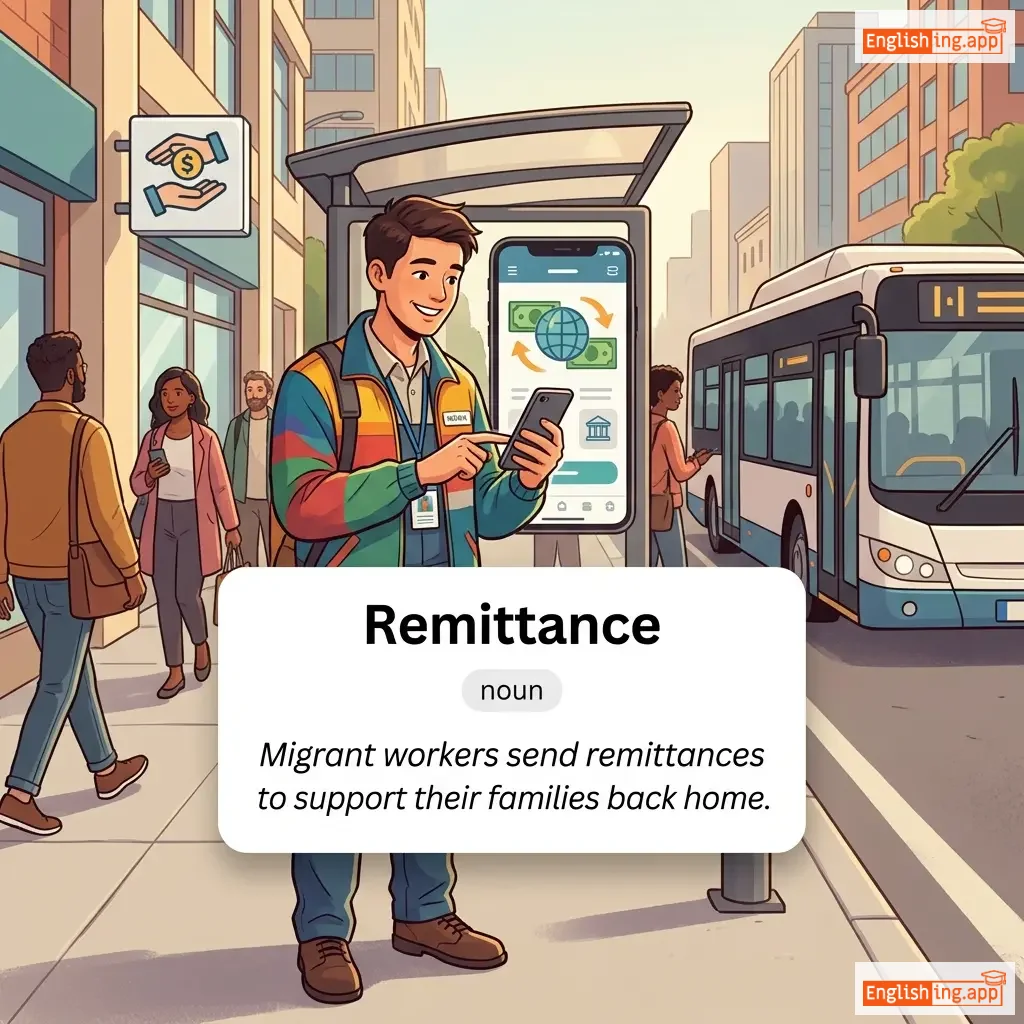
Remittance definition card — visual illustration of the meaning
noun
/rɪˈmɪtəns/
送金 / 資金転送 (sōkin / shikin tensō)

A sum of money sent, especially by mail or electronic transfer, as payment or gift.

"Migrant workers send remittances to support their families back home."

"移民労働者は、故郷の家族を支援するために送金を送ります。" (Imin rōdōsha wa, kokyō no kazoku o shien suru tame ni sōkin o okurimasu.)
noun
/ˈrɛmnənt/
残余 (zan'yo)

A small remaining part of something that once existed or was larger.

"The old house still had remnants of its former glory."
"その古い家には、かつての栄光の残余がまだ残っていました。" (Sono furui ie ni wa, katsute no eikō no zan'yo ga mada nokotte imashita.)
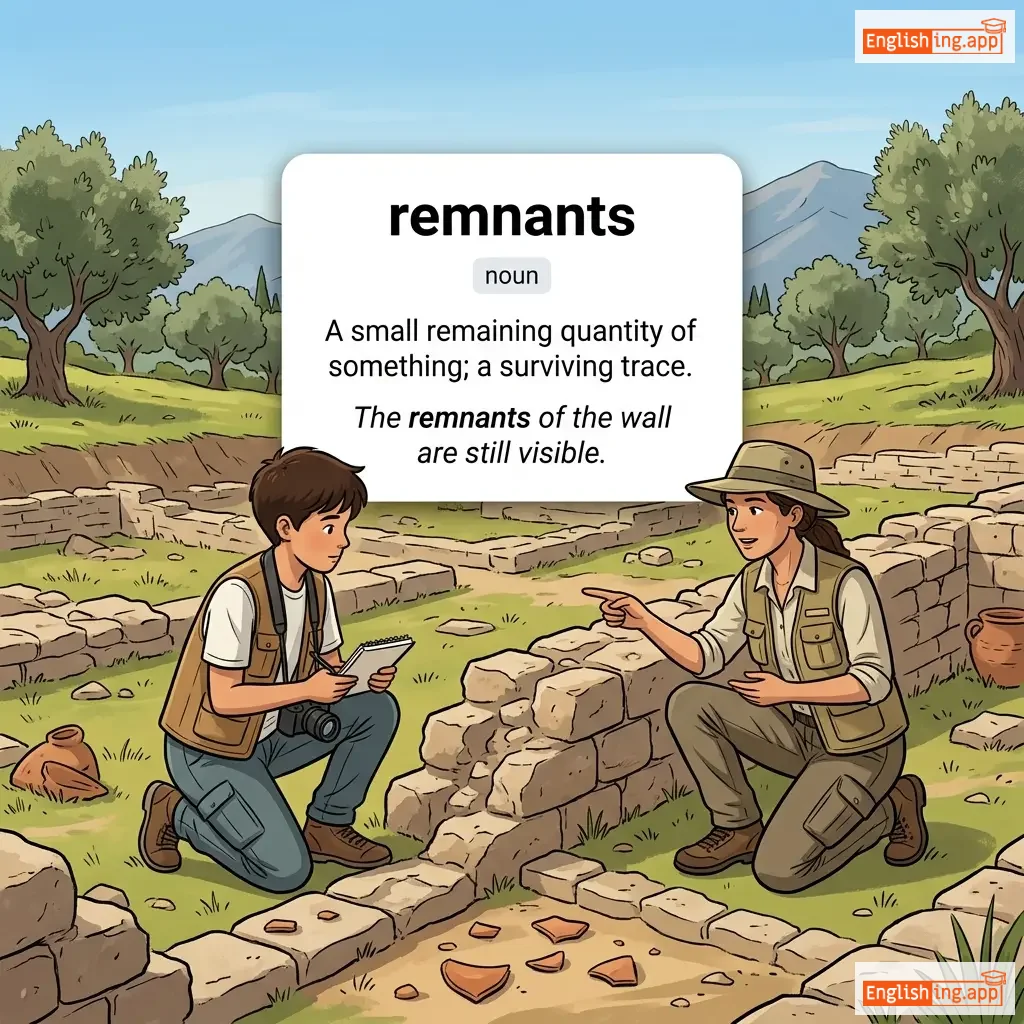
remnants definition card — visual illustration of the meaning
noun
ˈremnənts
遺物 (ibutsu)

A small remaining quantity of something; a surviving trace.

"The remnants of the wall are still visible."

"壁の遺物はまだ見える。" (Kabe no ibutsu wa mada mieru.)
verb
/ˌriːˈmɒdəl/
改装する (kaisou suru)

To change the structure or form of something, especially a building.

"They decided to remodel their kitchen last summer."

"彼らは昨年の夏にキッチンをリモデルすることに決めました。" (Karera wa sakunen no natsu ni kitchin o rimoderu suru koto ni kimemashita.)
noun
/rɪˈmɒnstrəns/
抗議 (kougi)

A forceful protest or objection.

"The workers’ remonstrance against unfair treatment was ignored."

"労働者たちの不公平な扱いに対する抗議は無視された。" (Roudousha-tachi no fukouhei na atsukai ni taisuru kougi wa mushi sareta.)
noun/adjective
/rɪˈmɒnstrənt/
抗議者 (kōgisha)

A person who makes a forceful protest (noun); protesting or objecting (adjective).

"He was a remonstrant voice in the assembly."
"彼は集会で抗議の声を上げていた。" (Kare wa shūkai de kōgi no koe o agete ita.)
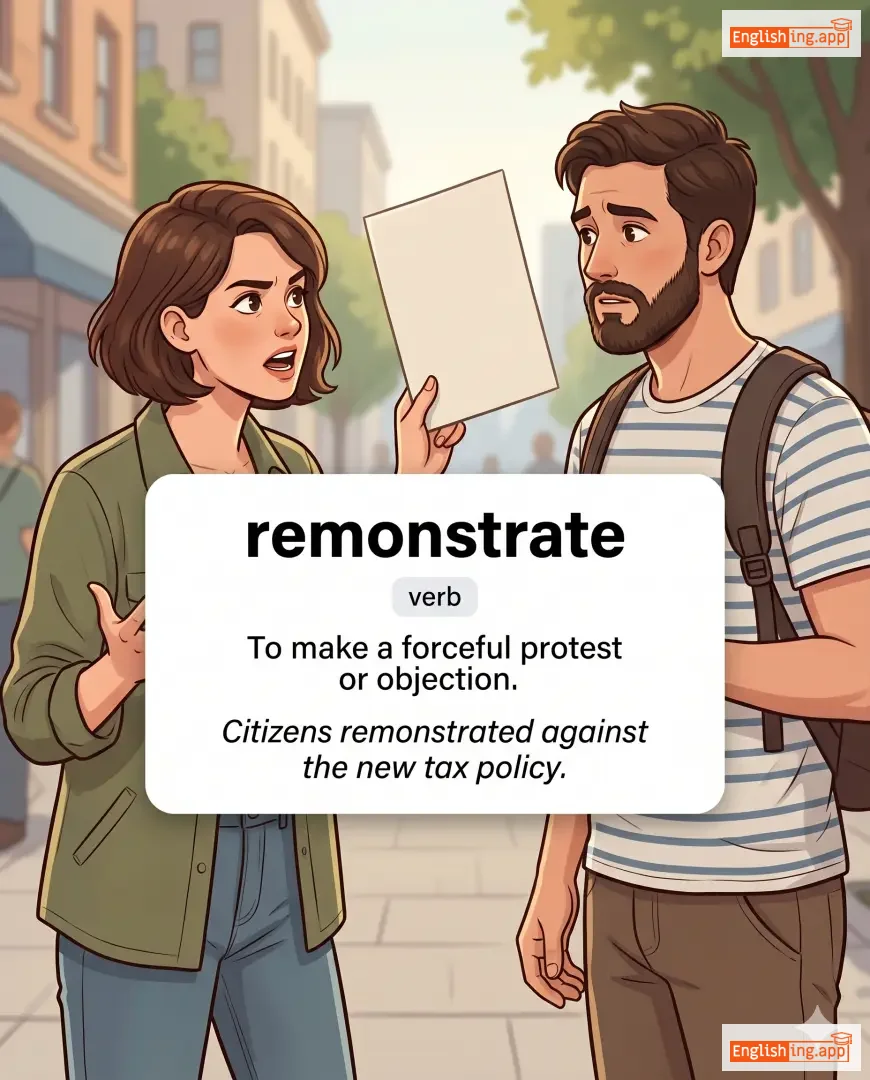
remonstrate definition card — visual illustration of the meaning
verb
/rɪˈmɒnstreɪt/
抗議する (kougisuru)

To make a forceful protest or objection.

"Citizens remonstrated against the new tax policy."

"市民たちは新しい税制政策に抗議した。" (Shimin-tachi wa atarashī zeisei seisaku ni kougi shita.)
noun
/rɪˈmɔːrs/
後悔 (kōkai)

A deep feeling of regret or guilt for a wrong committed.

"He was filled with remorse after lying to his friend."

"彼は友達に嘘をついた後、後悔の念にかられた。" (Kare wa tomodachi ni uso o tsuita ato, kōkai no nen ni karareta.)
adjective
/rɪˈmoʊt/
遠隔 (enkaku)

Situated far from the main centers of population; distant.

"They stayed in a remote village during their trip."

"彼らは旅行中に遠隔の村に泊まりました。" (Karera wa ryokouchuu ni enkaku no mura ni tomarimashita.)
adjective
/rɪˈmoʊtɪd/
リモートされた (rimōto sareta)

placed at a distance; made remote

"The system was remoted to a secure location."

"システムは安全な場所にリモートされました。" (Shisutemu wa anzen na basho ni rimōto saremashita.)
adjective
/rɪˈmuːvəbəl/
取り外し可能な (torihashi kanou na)

able to be removed or taken away

"This phone has a removable battery."

"この電話には取り外し可能なバッテリーがあります。" (Kono denwa ni wa torihashi kanou na batterii ga arimasu.)
noun
/rɪˈmuːvəl/
取り除き (torinozoki)

the act of taking something or someone away or out of a place

"The removal of old furniture made the room look spacious."
"古い家具の取り除きが部屋を広く見せた。" (Furui kagu no torinozoki ga heya o hiroku miseta.)
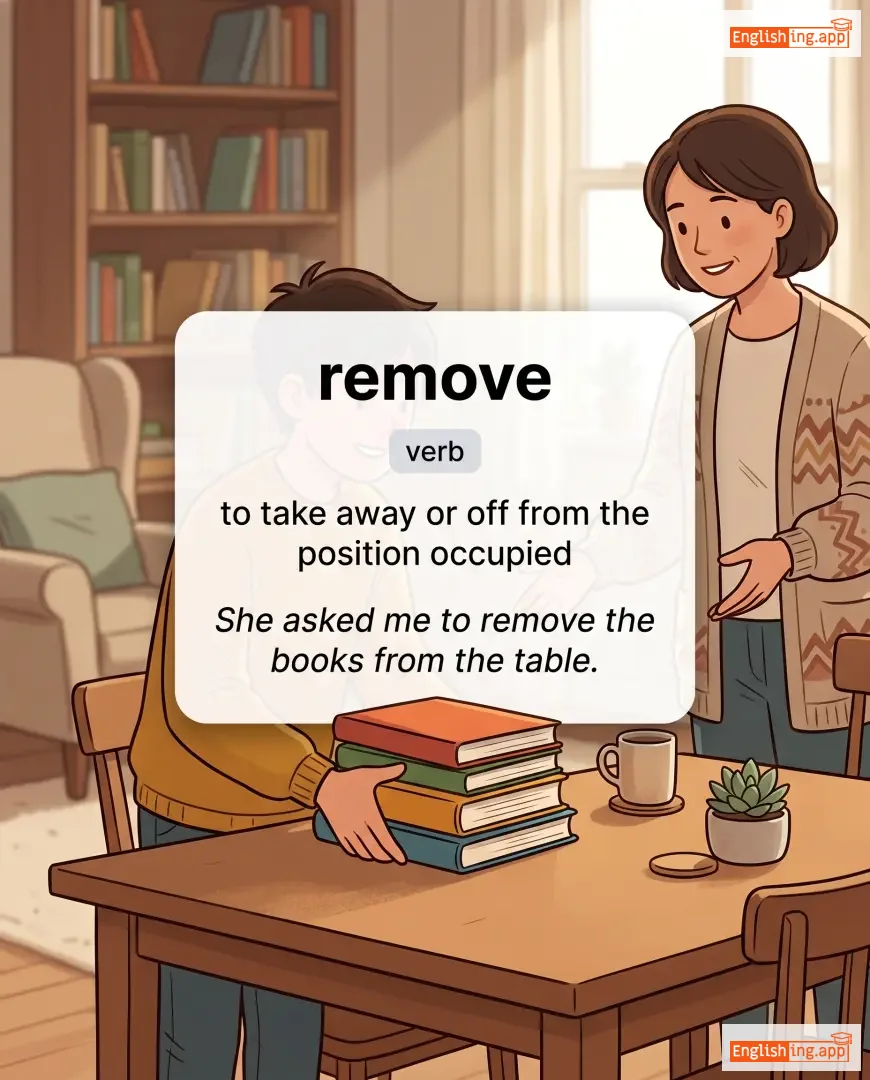
remove definition card — visual illustration of the meaning
verb
/rɪˈmuːv/
取り除く (torinozoku)

to take away or off from the position occupied

"She asked me to remove the books from the table."

"彼女はテーブルから本を取り除くように頼んだ。" (Kanojo wa tēburu kara hon o torinozoku yō ni tanonda.)
verb
/rɪˈmjuːnəreɪt/
報酬を支払う (hōshū o shiharau)

To pay someone for services or work done.

"The company will remunerate employees fairly for their overtime."

"会社は残業に対して従業員に公正な報酬を支払います。" (Kaisha wa zangyō ni taishite jūgyōin ni kōsei na hōshū o shiharai masu.)
noun
/rɪˌmjuːnəˈreɪʃən/
報酬 (hoshu)

Money paid for work or a service.

"The remuneration for this job is quite generous."

"この仕事の報酬はかなり寛大です。" (Kono shigoto no hoshū wa kanari kandai desu.)
adjective
/rɪˈmjuːnərətɪv/
利益がある (rieki ga aru)

Financially rewarding or profitable.

"He chose a remunerative career in medicine."

"彼は医学の中で利益のあるキャリアを選びました。" (Kare wa igaku no naka de rieki no aru kyaria o erabimashita.)