語彙集

英単語辞書 | 単語の意味、定義、例文

noun
/ˌræʃioʊsɪˈneɪʃən/
推論 (suiron)

the process of reasoning or logical thinking

"His ratiocination impressed the judges during the debate."

"彼の推論は討論中に審査員を感動させた。" (Kare no suiron wa touron-chuu ni shinsain wo kandou saseta.)
noun
/ˈræʃən/
配給 (haiki)

a fixed amount of something, especially food, officially allowed to each person

"During the war, each family received a weekly ration of rice."

"戦争中、各家族は毎週一定量のご飯を配給されました。" (Sensou-chuu, kaku kazoku wa maishuu ittei-ryou no gohan o haiki saremashita.)
adjective
/ˈræʃənəl/

based on or in accordance with reason or logic

"She made a rational decision after considering all the facts."

noun
/ˌræʃəˈnæl/
根本的な理由 (konponteki na riyuu)

the underlying reason or explanation for something

"The rationale behind his decision was clearly explained."

"彼の決断の背後にある理由は明確に説明されました。" (Kare no ketsudan no haigo ni aru riyuu wa meikaku ni setsumei saremashita.)
noun
/ˈræʃənəlɪzəm/
合理主義 (gōri shugi)

a belief or theory that opinions and actions should be based on reason and knowledge rather than religious belief or emotion

"Rationalism emphasizes logic and reasoning over faith."
"合理主義は信仰よりも論理と推論を強調します。" (Gōri shugi wa shinkō yori mo ronri to suiron o kyōchō shimasu.)
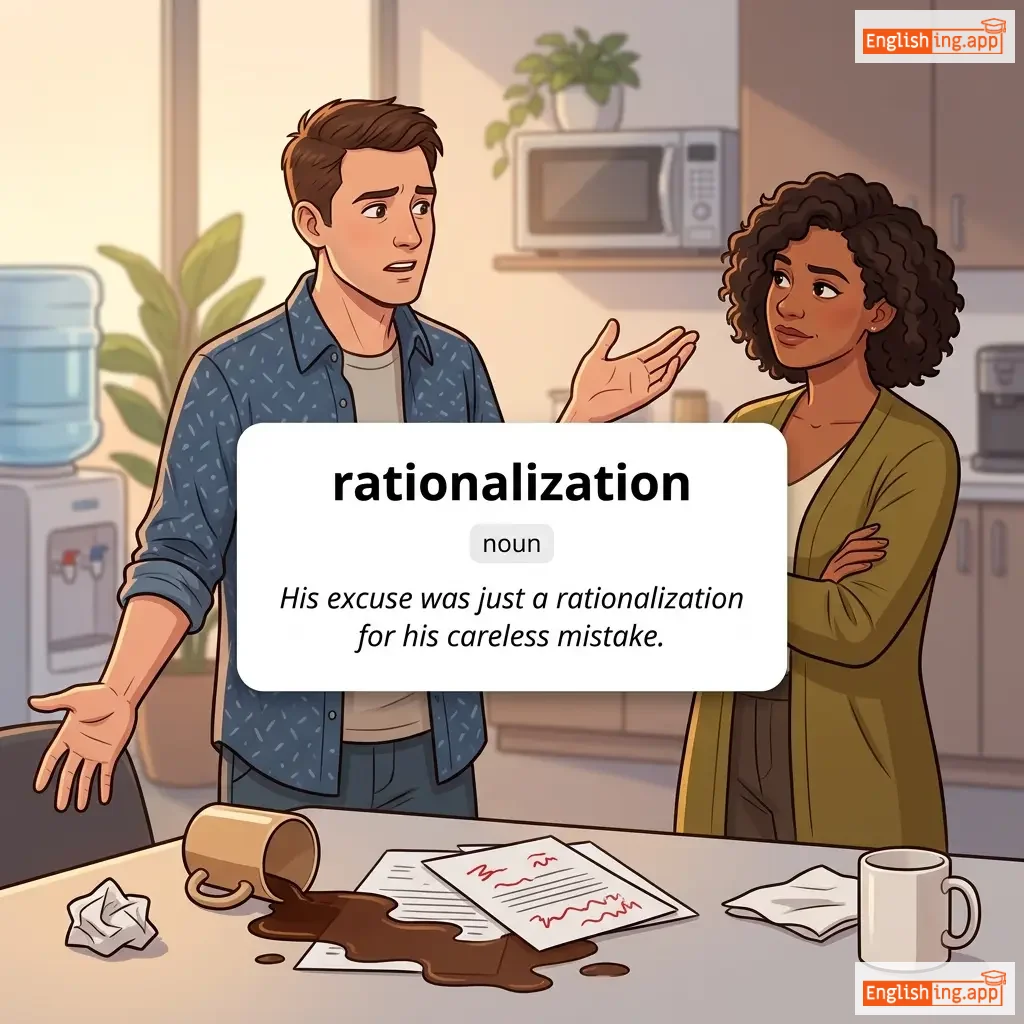
rationalization definition card — visual illustration of the meaning
noun
/ˌræʃənəlaɪˈzeɪʃən/
合理化 (gōrika)

the action of attempting to explain or justify behavior or an attitude with logical reasons, even if these are not appropriate

"His excuse was just a rationalization for his careless mistake."

"彼の言い訳は、彼の不注意な間違いの合理化に過ぎなかった。" (Kare no iiwake wa, kare no fuchūi na machigai no gōrika ni suginakatta.)
verb
/ˈræʃənəlaɪz/
合理化する (gōrika suru)

to attempt to explain or justify behavior or decisions with logical reasons, even if they are not true or appropriate

"She tried to rationalize her lateness by blaming the traffic."

"彼女は交通渋滞を責めて、遅刻を合理化しようとした。" (Kanojo wa kōtsū jūtai o semete, chikoku o gōrika shiyō to shita.)
verb
/ˈræʃənaɪz/
合理化する (gōrika suru)

to justify or explain something with logical reasons, even if not appropriate or true

"He tried to rationlize his mistake by blaming the system."

"彼はシステムを責めて自分のミスを合理化しようとした。" (Kare wa shisutemu o semete jibun no misu o gōrika shiyō to shita.)
noun, verb
/ˈrætəl/
ガタガタ鳴る;ガラガラ (gatagata naru; garagara)

to make a rapid series of short, sharp sounds; a device or object that makes such a sound

"The loose window began to rattle in the strong wind."

"強い風で緩んだ窓がガタガタ鳴り始めた。" (Tsuyoi kaze de yurunda mado ga gatagata nari hajimeta)
adjective
/ˈrɔːkəs/
騒々しい, うるさい (sōzōshī, urusai)

loud, harsh, and unpleasant sound or behavior

"The crowd became raucous after the team scored."

"チームがゴールを決めると、群衆は騒がしくなった。" (Chīmu ga gōru o kimeru to, gunshū wa sawagashiku natta.)
verb
/ˈrævɪdʒ/
荒廃させる (kōhai saseru)

to cause severe and extensive damage or destruction

"The hurricane ravaged the coastal villages."

"ハリケーンは沿岸の村を荒廃させた。" (Harikēn wa engan no mura o kōhai saseta.)
verb
/reɪv/
絶賛する (zessan suru)

to speak or write about something with great enthusiasm or admiration

"Critics rave about the new movie."

"批評家たちは新しい映画を絶賛しています。" (Hihyōka-tachi wa atarashī eiga o zessan shiteimasu.)
verb
/ˈrævəl/
絡まる / 解く (karamaru / hodoku)

to tangle or complicate; to untangle or unravel depending on context

"She began to ravel the loose threads of the sweater."

"彼女はセーターのゆるい糸をほどき始めました。" (Kanojo wa seetaa no yurui ito o hodoki hajimemashita.)
noun
/ˈreɪ.vən/
ワタリガラス (watarigarasu)

a large, black bird with a thick bill and harsh croaking voice

"The raven perched on the old oak tree and cawed loudly."

"ワタリガラスが古いオークの木に止まり、大きな声で鳴いた。" (watarigarasu ga furui o-ku no ki ni tomari ookina koe de naita)
adjective
/ˈrævənɪŋ/
非常に空腹で貪欲 (hijō ni kūfuku de dongyoku)

Extremely hungry and greedy; voracious.

"The ravening wolves circled the camp."

"空腹の狼たちはキャンプを囲んだ。" (Kūfuku no ōkami-tachi wa kyanpu o kakonda.)
adjective
/ˈrævənəs/
猛烈にお腹がすいている (mōretsu ni onaka ga suite iru)

Extremely hungry; famished.

"After the long hike, she was ravenous and ate quickly."

"長いハイキングの後、彼女は猛烈にお腹がすいて、すぐに食べました。" (Nagai haikingu no ato, kanojo wa mōretsu ni onaka ga suite, sugu ni tabemashita.)
noun
/rəˈviːn/
渓谷 (keikoku)

A deep, narrow valley with steep sides.

"The river carved a deep ravine through the mountains."

"川は山々を通って深い渓谷を作り出した。" (Kawa wa yamayama o tōtte fukai keikoku o tsukuridashita.)
verb
/ˈrævɪʃ/
魅了する (miryō suru)

To fill with intense delight; to captivate or enchant.

"The beauty of the sunset ravished the travelers."
"夕日の美しさが旅行者を魅了した。" (Yūhi no utsukushisa ga ryokō-sha o miryō shita.)
adjective
/rɔː/
(nama)

not cooked or processed; in its natural state

"She ate raw vegetables for lunch."

"彼女は昼食に生の野菜を食べました。" (Kanojo wa chuushoku ni nama no yasai o tabemashita.)
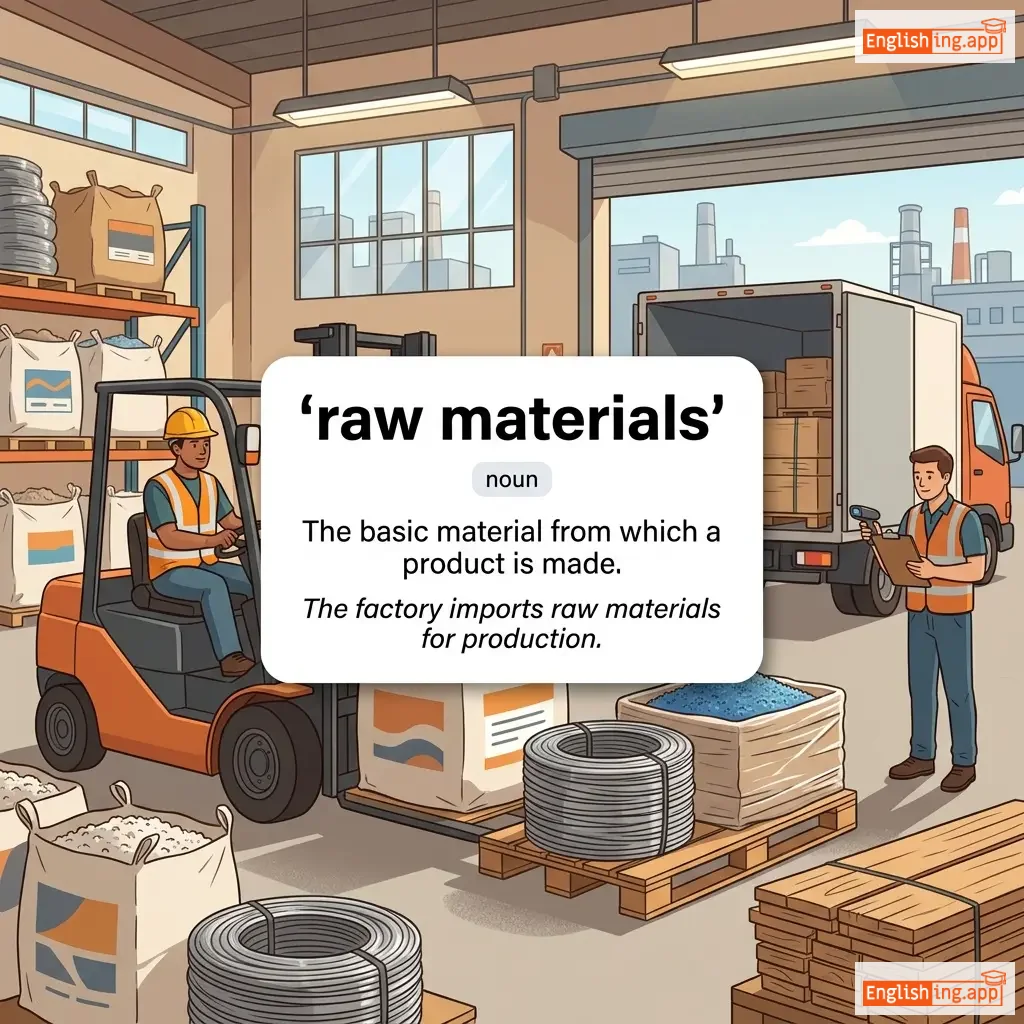
raw materials definition card — visual illustration of the meaning
noun
rɔː mətɪˈrɪəlz
原材料 (gen zairyō)

The basic material from which a product is made.

"The factory imports raw materials for production."

"工場は生産のために原材料を輸入しています。" (Kōjō wa seisan no tame ni gen zairyō o yunyū shiteimasu.)
noun
/rɔ ˈtɜrmərɪk/
生のターメリック (nama no taamerikku)

fresh unprocessed root of the turmeric plant used as a spice and medicine

"Grate raw turmeric into the curry for authentic flavor."

"カレーに生のターメリックをすりおろして、オーセンティックな風味を加えましょう。" (Karee ni nama no taamerikku wo surioroshite, oosentikku na fuumi wo kuwaemashou)
noun
/reɪ/
光線 (kōsen)

a narrow beam of light, heat, or radiation

"A ray of sunlight broke through the clouds."

"太陽の光線が雲を突き抜けた。" (Taiyō no kōsen ga kumo o tsukinuketa.)
verb
/reɪz/
取り壊す (torikowasu)

To completely destroy or demolish something, especially a building.

"The old factory was razed to make way for new apartments."

"古い工場は新しいアパートメントのために取り壊されました。" (Furui kōjō wa atarashī apātomento no tame ni torikowasaremashita.)
noun
/ˈreɪ.zər/
かみそり (kamisori)

a sharp-edged instrument used for shaving hair from the skin

"He shaved his beard with a sharp razor."

"彼は鋭いかみそりでひげを剃った。" (kare wa surudoi kamisori de hige o totta.)
preposition
/riː/
について (nitsuite)

concerning or about (used in formal letters or emails)

"The letter was sent re your recent application."

"その手紙はあなたの最近の申請について送られました。" (Sono tegami wa anata no saikin no shinsei nitsuite okuraremashita.)
verb
/riːtʃ/
届く (todoku)

to stretch out or extend to something or someone

"She reached for the book on the top shelf."

"彼女は上の棚の本に手を伸ばしました。" (Kanojo wa ue no tana no hon ni te o nobashimashita.)
verb
/riˈækt/
反応する (hannou suru)

to respond or behave in a particular way to something

"She reacted angrily when she heard the news."
"彼女はニュースを聞いて怒って反応した。" (Kanojo wa nyūsu o kiite okotte hannou shita.)
⚗️

reactant

noun
/riˈæktənt/

A substance that takes part in and undergoes change during a chemical reaction.

"Oxygen is a reactant in the process of combustion."

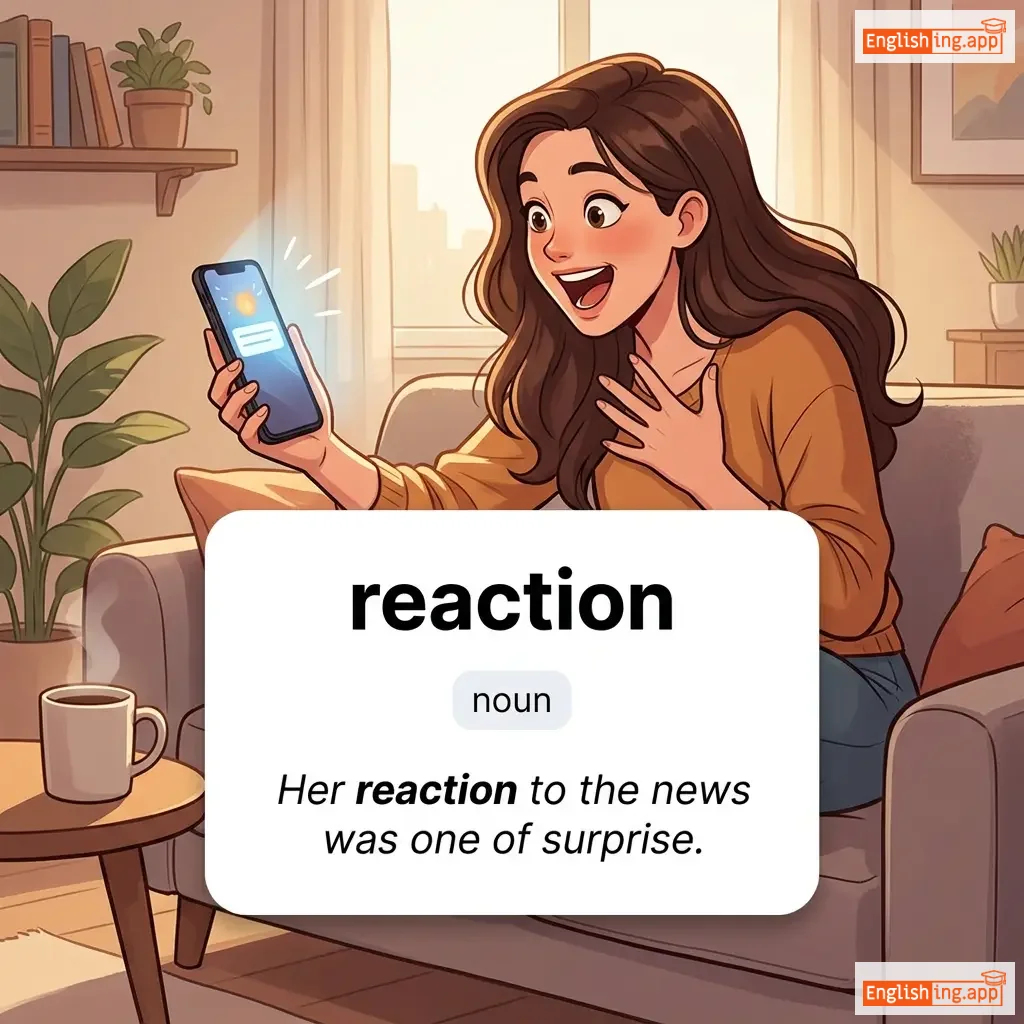
reaction definition card — visual illustration of the meaning
noun
/riˈækʃən/
反応 (hanno)

A response to a situation, event, or stimulus; also a chemical change involving reactants and products.

"Her reaction to the news was one of surprise."

"ニュースに対する彼女の反応は驚きでした。" (Nyūsu ni taisuru kanojo no hannou wa odoroki deshita.)
adjective
/riˈækʃəˌneri/
反動的 (handōteki)

Opposing political or social progress or reform; extremely conservative.

"The group took a reactionary stance against the new policies."

"グループは新しい政策に対して反動的な立場を取った。" (Gurūpu wa atarashī seisaku ni taishite handōteki na tachiba o totta.)
adjective
/riˈæk.tɪv/
反応的; 化学的に活発 (hannō-teki; kagaku-teki ni kappatsu)

responding to situations rather than initiating them; chemically active

"The company took a reactive approach to customer complaints."

"会社は顧客の苦情に反応的なアプローチを採用しました。" (Kaisha wa kokyaku no kujō ni hannō-teki na apurōchi o sai-yō shimashita.)
verb
/riːd/
読む (yomu)

to look at and comprehend the meaning of written or printed matter

"I like to read books before bed."

"私は寝る前に本を読むのが好きです。" (Watashi wa neru mae ni hon o yomu no ga suki desu.)
noun
/ˈriːdər/
読者 (dokusha)

a person who reads or who is capable of reading

"She is a fast reader, finishing books in a day."

"彼女は速読者で、1日で本を読み終えます。" (Kanojo wa sokudoku-sha de, ichinichi de hon o yomi oemasu.)
adverb
/ˈrɛdəli/
簡単に (kantan ni)

Without hesitation or difficulty; willingly.

"She readily accepted the job offer."

"彼女は簡単に仕事のオファーを受け入れました。" (Kanojo wa kantan ni shigoto no ofā o ukeiremashita.)
noun
/ˈriːdɪŋ/
読書 (dokusho)

the action or skill of reading

"Reading is one of my favorite hobbies."

"読書は私の好きな趣味の一つです。" (Dokusho wa watashi no sukina shumi no hitotsu desu.)
verb
/ˌriːəˈdʒʌst/
再調整 (saichousei)

To change or move something again in order to achieve a better fit, condition, or balance.

"He readjusted the chair to make it more comfortable."

"彼は椅子をもっと快適にするために再調整しました。" (Kare wa isu wo motto kaiteki ni suru tame ni saichousei shimashita.)
noun
/ˌriː.əˈdʒʌst.mənt/

The act of changing or correcting something again to make it suitable or balanced.

"After moving to a new city, he went through a period of readjustment."

adjective
/ˈrɛd.i/
準備ができた (junbi ga dekita)

Prepared or available for use or action.

"She was ready to leave for the airport."

"彼女は空港に行く準備ができていた。" (Kanojo wa kuukou ni iku junbi ga dekite ita.)
verb
/ˌriːəˈfɜːrm/
再確認する (saikakunin suru)

To state again strongly; to confirm or strengthen a statement or belief.

"The president reaffirmed his commitment to education reform."

"大統領は教育改革への取り組みを再確認した。" (daitouryou wa kyouiku kaikaku e no torikumi o saikakunin shita.)
adjective
/riːəl/
リアル (riaru)

actually existing or happening; true and not imagined

"This is the real deal, no gimmicks."

"これは本物の話だ、ギミックなしで。" (Kore wa honmono no hanashi da, gimikkunashi de.)
noun
/ˈrɪə.lɪ.zəm/
リアリズム (riarizumu)

The quality of representing things as they are; a practical or factual view.

"Her paintings are admired for their realism."

"彼女の絵画はそのリアリズムで賞賛されています。" (Kanojo no kaiga wa sono riarizumu de shōsan sareteimasu.)
adjective
/ˌriːəˈlɪstɪk/
現実的 (genjitsuteki)

having or showing a sensible and practical idea of what can be achieved or expected

"She gave a realistic estimate of the project's cost."

"彼女はプロジェクトのコストの現実的な見積もりを出した。" (Kanojo wa purojekuto no kosuto no genjitsuteki na mitsumori o dashita.)
reality definition card — visual illustration of the meaning
noun
/riˈæləti/
現実 (genjitsu)

the state of things as they actually exist, rather than as they may appear or might be imagined

"The reality of the situation is more complicated than we thought."

"状況の現実は、私たちが考えていたよりも複雑です。" (Joukyou no genjitsu wa, watashitachi ga kangaete ita yori mo fukuzatsu desu.)
noun
/ˌrɪəlɪˈzeɪʃən/
実現 (jitsugen)

the act of becoming fully aware of something as a fact

"Her realization of the problem helped solve the issue."
"彼女の問題の認識が問題解決に役立った。" (Kanojo no mondai no ninshiki ga mondai kaiketsu ni yakudatta.)
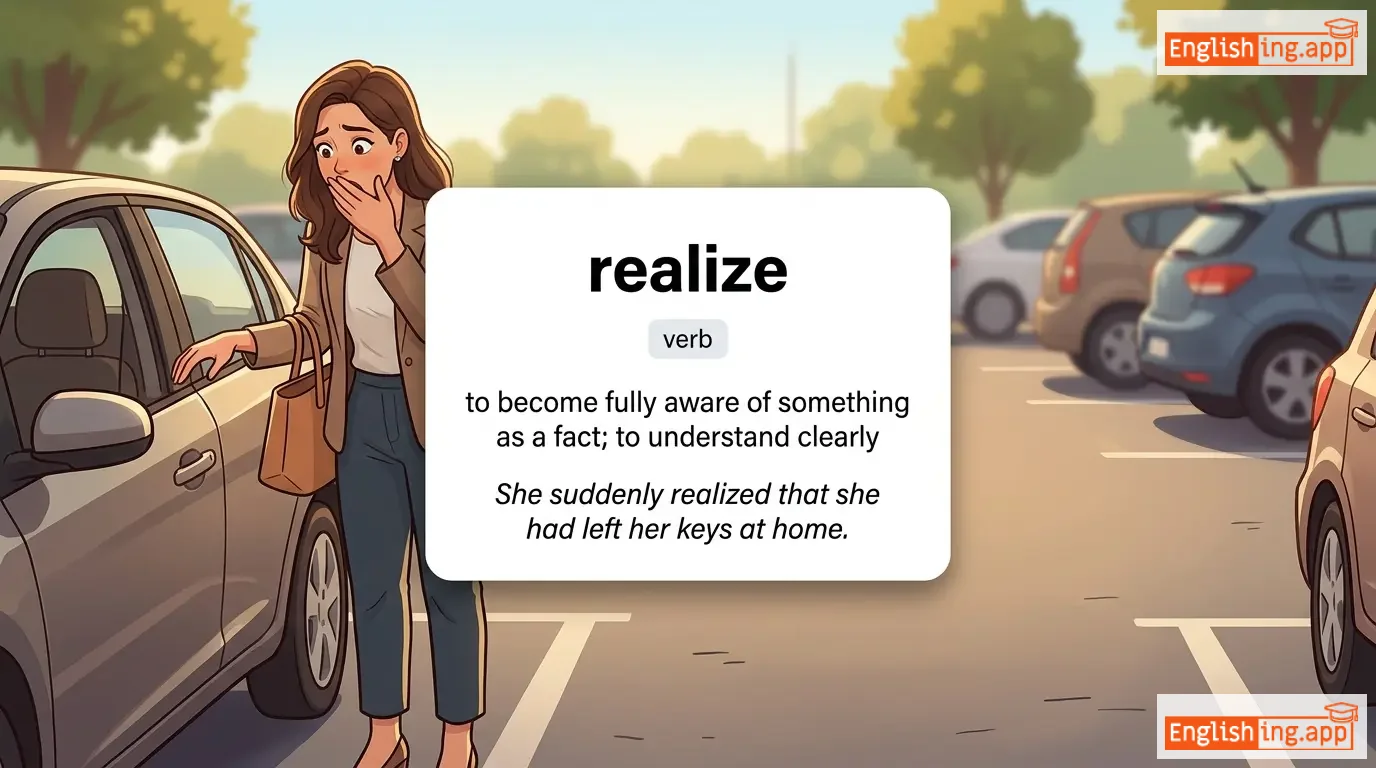
realize definition card — visual illustration of the meaning
verb
/ˈrɪəlaɪz/
気づく (kizuku)

to become fully aware of something as a fact; to understand clearly

"She suddenly realized that she had left her keys at home."

"彼女は突然、家に鍵を忘れたことに気づきました。" (Kanojo wa totsuzen, ie ni kagi o wasureta koto ni kizukimashita.)
adverb
/ˈrɪəli/

used to emphasize a statement or description

"She really enjoyed the movie last night."

👑

realm

noun
/rɛlm/

A kingdom or domain; a field or area of activity or interest.

"He is well known in the realm of science."

noun
/riːm/
リーム (riimu)

A large quantity of paper (typically 500 sheets); informally, a large amount of something.

"The office ordered ten reams of paper."

"オフィスは10リームの紙を注文した。" (Ofisu wa 10 riimu no kami o chūmon shita.)
verb
/riːp/
収穫する (shuukaku suru)

to cut or gather a crop; to receive as a consequence of actions

"Farmers reap wheat in the late summer."

"農家は晩夏に小麦を収穫します。" (Nouka wa banken ni komugi o shuukaku shimasu.)
noun
/ˈriːpər/
作物を刈り取り集める人または機械 (sakumotsu o karitori atsumeru hito mata wa kikai)

a person or machine that cuts and gathers crops

"The reaper moved slowly through the golden fields."

"リーパーは金色の畑をゆっくりと進んでいきました。" (Rīpā wa kiniro no hatake o yukkuri to susunde ikimashita.)