語彙集

英単語辞書 | 単語の意味、定義、例文

noun
/ˌkiː ˈviːv/
警戒 (keikai)

A state of alertness or vigilance.

"The guards were on the qui vive during the night."

"警備員は夜間、警戒状態にありました。" (Keibiin wa yakan, keikai jōtai ni arimashita.)
quibble definition card — visual illustration of the meaning
🗣️

quibble

verb/noun
/ˈkwɪbəl/

To argue or raise objections about a trivial matter; a petty objection.

"They quibbled over who should pay the bill."

adjective
/kwɪk/
速い (hayai)

moving fast or doing something in a short time

"She is a quick learner."

"彼女は速い学習者です。" (Kanojo wa hayai gakushuusha desu.)
noun
/ˈkwɪk.sænd/
クイックサンド (quicksand)

loose wet sand that yields easily to pressure and sucks in anything on its surface

"The explorer got trapped in quicksand while crossing the desert."

"探検家は砂漠を横断中にクイックサンドに捕まりました。" (tankenka wa sabaku o ōdan chū ni quicksand ni tsukamari mashita)
verb
/ˈkwɪkən/
加速する (kasoku suru)

to make or become faster; to accelerate

"His pulse began to quicken as he approached the finish line."

"彼の脈拍はゴールラインに近づくにつれて速くなり始めた。" (Kare no myakuhaku wa gōru rain ni chikaduku ni tsurete hayaku nari hajimeta.)
adverb
/ˈkwɪkli/
速く (hayaku)

at a fast speed

"She finished the test quickly."

"彼女はテストを速く終わらせた。" (Kanojo wa tesuto o hayaku owaraseta.)
noun
/ˈkwɪkˌsɪlvər/
水銀 (suigin)

Mercury; a liquid metal, or something that is quick and unpredictable.

"His mood was as changeable as quicksilver."

"彼の気分は水銀のように変わりやすかった。" (Kare no kibun wa suigin no you ni kawari yasukatta.)
noun
/kwɪˈɛsəns/
静止 (seishi)

A state of quietness, inactivity, or dormancy.

"The volcano has been in a state of quiescence for decades."
"火山は数十年間静止状態にあります。" (Kazan wa suujyun nenkan seishi joutai ni arimasu.)
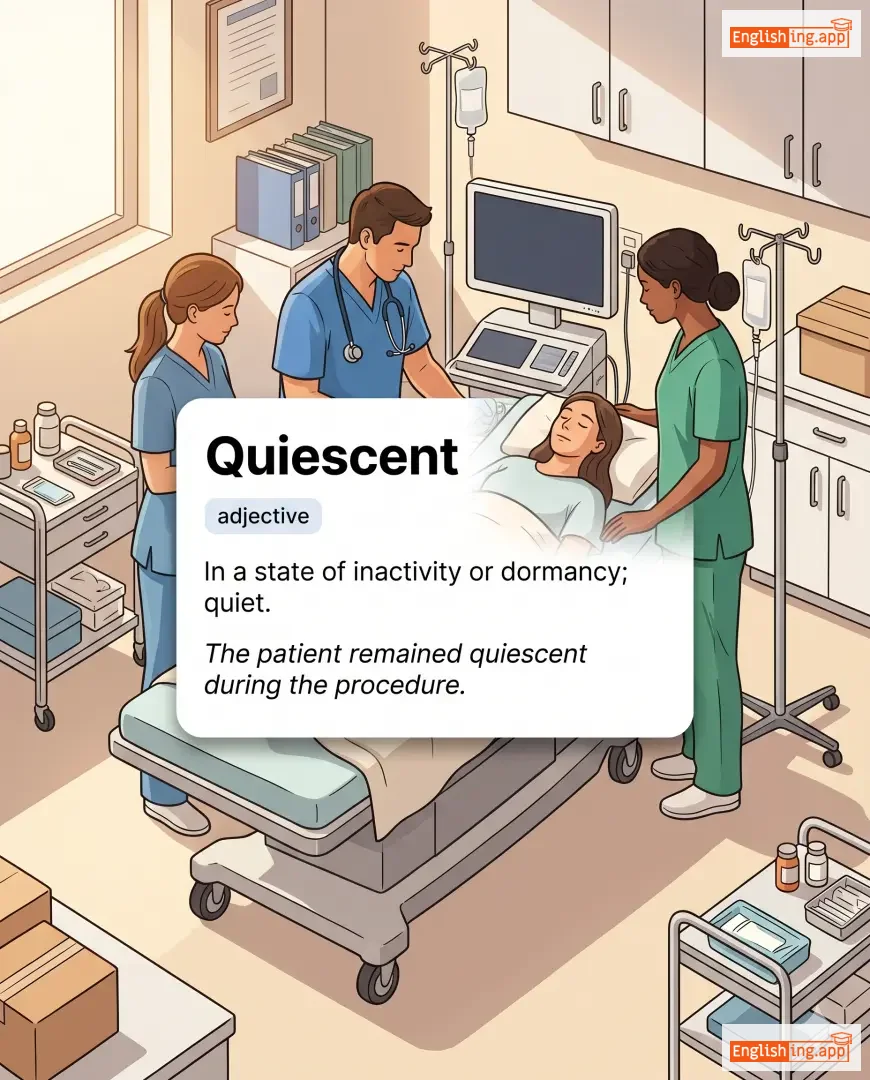
Quiescent definition card — visual illustration of the meaning
adjective
/kwɪˈɛsənt/
静かな (shizukana)

In a state of inactivity or dormancy; quiet.

"The patient remained quiescent during the procedure."

"患者は手順中静かにしていました。" (Kanja wa tetsuzuki-chū shizukani shite imashita.)
adjective
/ˈkwaɪət/
静かな (shizukana)

Making little or no noise; free from disturbance.

"The library is a very quiet place to study."

"図書館はとても静かな勉強場所です。" (Toshokan wa totemo shizukana benkyō basho desu.)
adverb
/ˈkwaɪətli/
静かに (shizukani)

in a silent or calm manner

"He spoke quietly so no one would hear."

"彼は静かに話し、誰も聞こえないようにした。" (Kare wa shizukani hanashi, dare mo kikoenai yō ni shita.)
noun
/ˈkwaɪəˌtuːd/
静けさ (shizukesa)

A state of stillness and tranquility.

"She enjoys the quietude of the countryside."

"彼女は田舎の静けさを楽しんでいます。" (Kanojo wa inaka no shizukesa wo tanoshindeimasu.)
noun
/kwaɪˈiːtəs/
終焉、死 (shūen, shi)

Something that ends or settles a situation; release from life, death.

"The scandal brought a quietus to his political career."

"そのスキャンダルは彼の政治キャリアに終焉をもたらした。" (Sono sukyandaru wa kare no seiji kyaria ni shūen o motarashita.)
noun
/kwɪlt/
キルト (kiruto)

a warm bed covering made of padding enclosed between layers of fabric

"Grandmother made a beautiful quilt for my bed."

"おばあちゃんは私のベッドに素敵なキルトを作ってくれました。" (Obaachan wa watashi no beddo ni suteki na kiruto o tsukutte kuremashita.)
noun
/kwɪnˈtɛsəns/
エッセンス (essensu)

The purest or most perfect example of something.

"She is the quintessence of elegance."
"彼女は優雅さのエッセンスです。" (Kanojo wa yūgasa no essensu desu.)
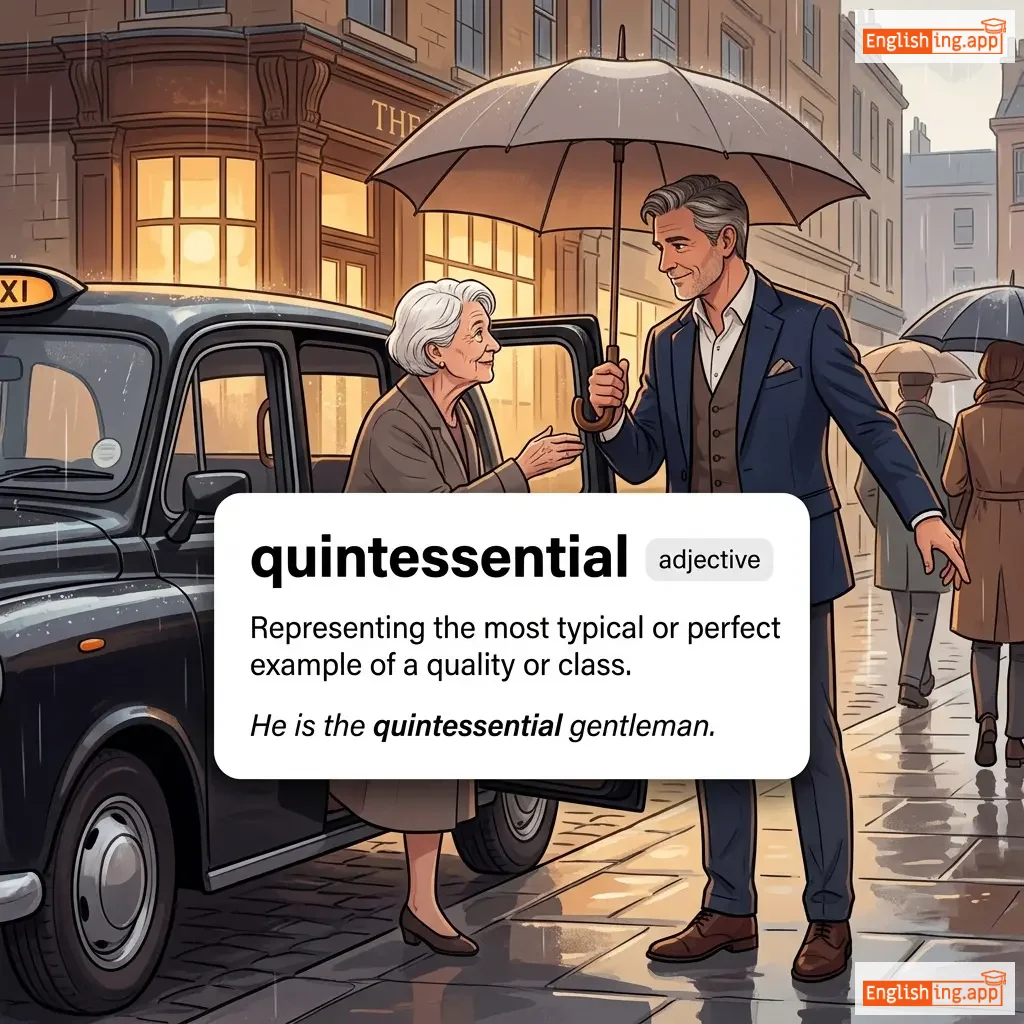
quintessential definition card — visual illustration of the meaning
adjective
/ˌkwɪntɪˈsɛnʃəl/
典型的な例 (tenkeiteki na rei)

Representing the most typical or perfect example of a quality or class.

"He is the quintessential gentleman."

"彼は典型的な紳士です。" (Kare wa tenkeiteki na shinshi desu.)
noun
/kwɪnˈtɛt/
クインテット (kuintetto)

A group of five people or things, especially musicians.

"The jazz quintet performed beautifully."

"ジャズのクインテットは見事に演奏しました。" (Jazu no kuintetto wa migoto ni ensō shimashita.)
noun/verb
/kwɪp/
巧妙なコメント (koumyou na komento)

A witty remark; to make a witty or clever comment.

"She quipped about the weather during the meeting."

"会議中に天気について冗談を言いました。" (Kaigi chuu ni tenki ni tsuite joudan o iimashita.)
noun
/kwɜːrk/
(kuse)

A peculiar or unusual behavior, habit, or feature.

"One of his quirks is humming while he works."

"彼の癖の一つは、働いているときに歌を口ずさむことです。" (Kare no kuse no hitotsu wa, hataraite iru toki ni uta o kuchizusamu koto desu.)
adjective
/ˈkwɜːrki/
風変わりな (fūgawari na)

Unusual in an interesting, charming, or odd way.

"She has a quirky sense of fashion that makes her stand out."

"彼女は個性的なファッションセンスを持っており、それが彼女を際立たせています。" (Kanojo wa koseiteki na fasshon sensu o motte ori, sore ga kanojo o kiwadasaseteimasu.)
noun
/ˈkwɪzlɪŋ/
裏切り者 (uragirimono)

A traitor who collaborates with an enemy force occupying their country.

"During the war, he was branded a quisling for aiding the invaders."

"戦争中、彼は侵略者を助けたため、クイズリングとしてレッテルを貼られました。" (Sensou-chuu, kare wa shinryakusha wo tasuketa tame, kuizuringu toshite rettoru wo hara remashita.)
quit definition card — visual illustration of the meaning
verb
/kwɪt/
やめる (yameru)

To leave a place, job, or habit permanently.

"He decided to quit his job after five years."

"彼は5年後に仕事を辞めることを決めました。" (Kare wa 5-nen go ni shigoto o yameru koto o kimemashita.)
adverb
/kwaɪt/
かなり / とても (kanari / totemo)

To a certain or considerable extent; very or completely.

"She was quite happy with the results."

"彼女は結果にかなり満足していた。" (Kanojo wa kekka ni kanari manzoku shite ita.)
verb
/ˈkwɪvər/
震える (furu eru)

To tremble or shake with slight but rapid motion.

"Her lips began to quiver as she tried not to cry."

"彼女は泣かないように努力しながら唇が震え始めました。" (Kanojo wa nakanai you ni doryoku shinagara kuchibiru ga furu e hajimemashita.)
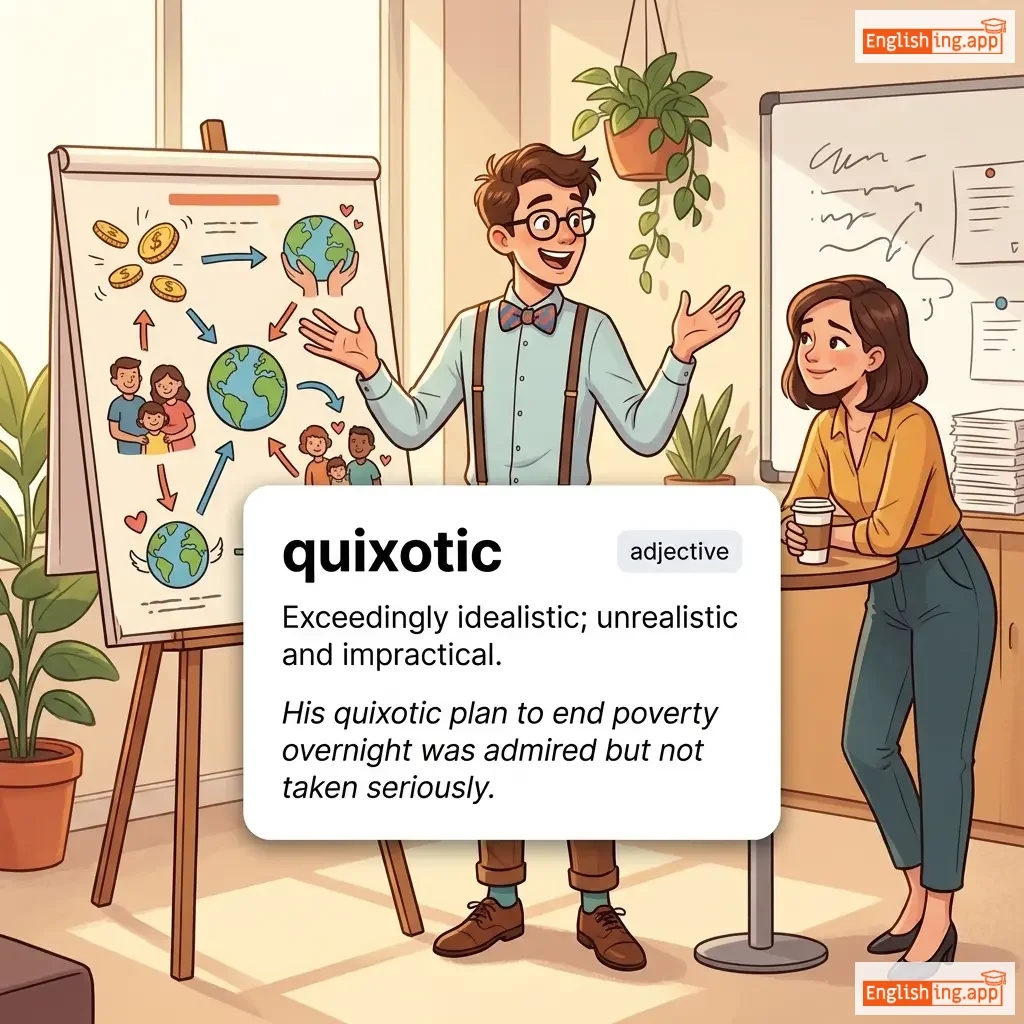
quixotic definition card — visual illustration of the meaning
adjective
/kwɪkˈsɒtɪk/

Exceedingly idealistic; unrealistic and impractical.

"His quixotic plan to end poverty overnight was admired but not taken seriously."

adjective
/ˈkwɪzɪkəl/
困惑した, 質問のような (konwaku shita, shitsumon no yōna)

Expressing mild or amused puzzlement.

"She gave him a quizzical look when he made the strange comment."

"彼が奇妙なコメントをしたとき、彼女は困惑した表情を彼に向けました。" (Kare ga kimyō na komento o shita toki, kanojo wa konwaku shita hyōjō o kare ni mukemashita.)
noun
/kwoʊ/
現状 (genjou)

The existing state of affairs or situation, often used in the phrase 'status quo'.

"He wanted to maintain the status quo at work."

"彼は職場で現状を維持したかった。" (Kare wa shokuba de genjou o iji shitakatta.)
noun
/ˈkwɔːrəm/
定足数 (teizokusu)

The minimum number of members needed to conduct official business in a meeting.

"The board meeting was postponed because there was no quorum."
"クォーラムがなかったため、理事会の会議は延期されました。" (Kwōramu ga nakatta tame, rijikai no kaigi wa enki sare mashita.)
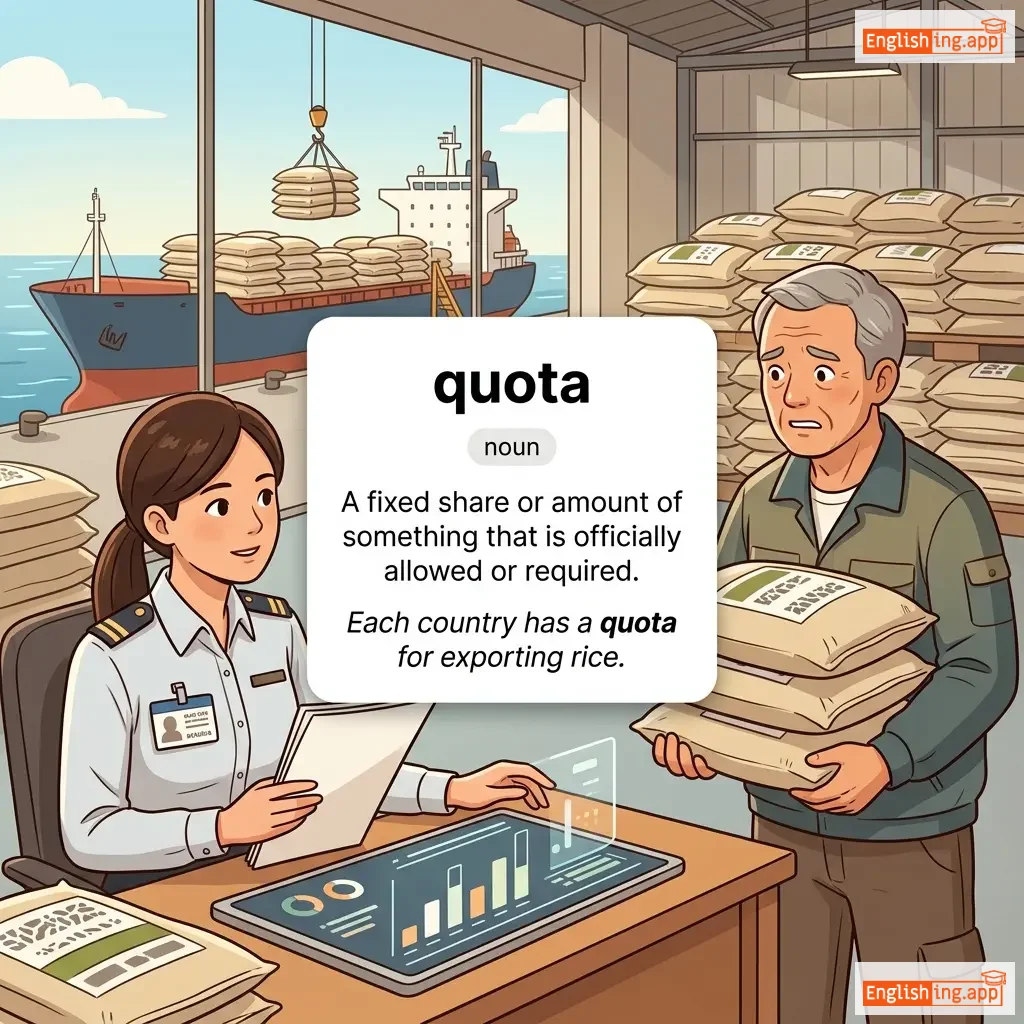
quota definition card — visual illustration of the meaning
noun
/ˈkwəʊtə/
割り当て, 定額 (wariate, teigaku)

A fixed share or amount of something that is officially allowed or required.

"Each country has a quota for exporting rice."

"各国には、米の輸出に関する割り当てがあります。" (Kakoku ni wa, kome no yushutsu ni kansuru wariate ga arimasu.)
noun
/kwəʊˈteɪʃən/
引用; 見積もり (inyo; mitsumori)

a group of words taken from a text or speech and repeated exactly; an estimated price given for goods or services

"The article opened with a famous quotation from Shakespeare."

"その記事はシェイクスピアの有名な引用で始まった。" (sono kiji wa Sheikusupia no yuumei na inyo de hajimatta)
quote definition card — visual illustration of the meaning
verb
/kwəʊt/
引用する (in'yō suru)

to repeat or copy the words of someone

"She quoted a famous line from the novel."

"彼女は小説から有名な一文を引用した。" (Kanojo wa shōsetsu kara yūmei na ichibun o in'yō shita.)
adjective
/kwəʊˈtɪdiən/
日常的な、普通の (nichijōteki na, futsū no)

Ordinary or everyday, especially when mundane.

"He focused on the quotidian details of family life."

"彼は家族生活の日常的な詳細に集中した。" (Kare wa kazoku seikatsu no nichijōteki na shōsai ni shūchū shita.)