語彙集

英単語辞書 | 単語の意味、定義、例文

adverb
/ˈpɜː.mə.nənt.li/
永続的に (eizokuteki ni)

in a way that lasts or remains unchanged for a long time or forever

"She moved to the city permanently after finishing her studies."
"彼女は学業を終えた後、永続的にその街に引っ越しました。" (Kanojo wa gakugyou o oeta ato, eizokuteki ni sono machi ni hikkoshimashita.)
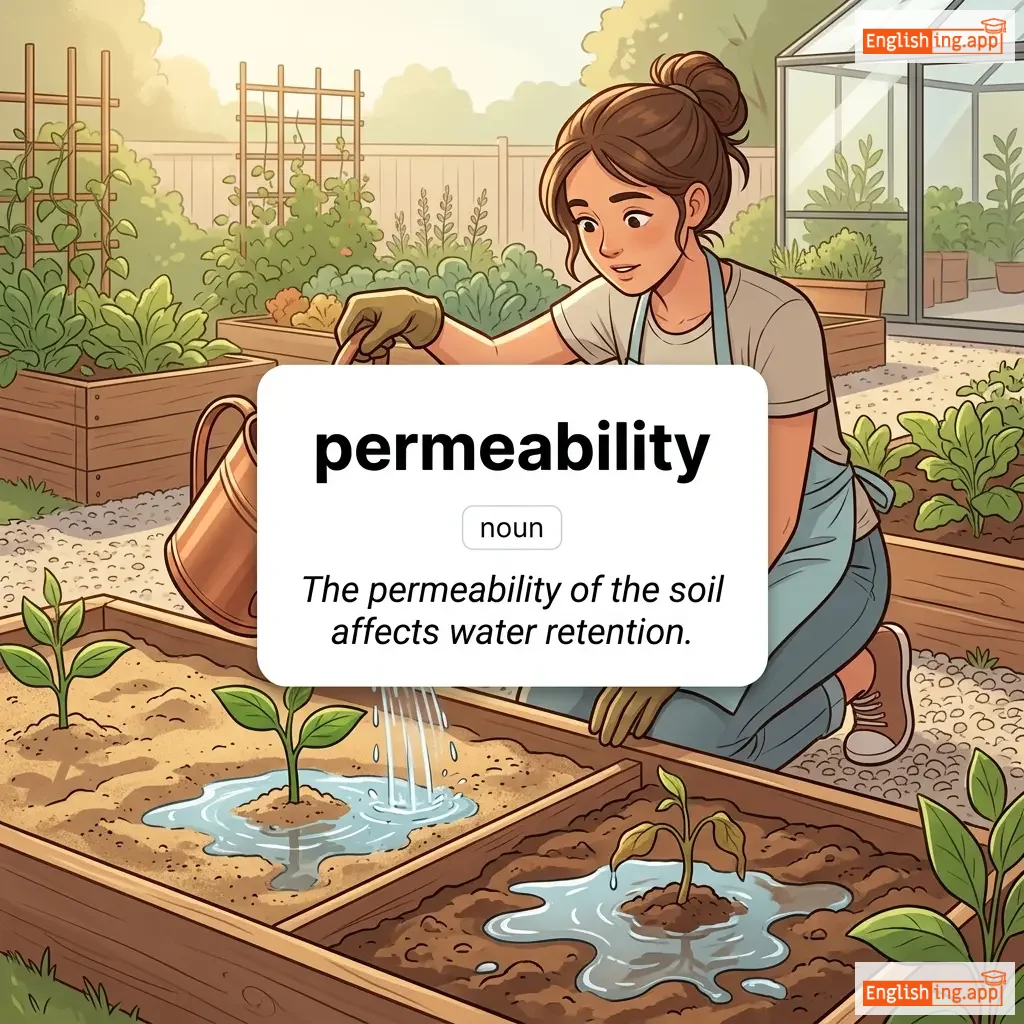
permeability definition card — visual illustration of the meaning
noun
/ˌpɜː.mɪˈæbɪlɪti/
透過性、液体や気体が通過できる特性または状態 (tōkasē, ekitai ya kitai ga tsūka dekiru tokusei matawa jōtai)

The quality or state of being permeable; allowing liquids or gases to pass through.

"The permeability of the soil affects water retention."

"土壌の透過性は水分保持に影響を与えます。" (Dojō no tōkasē wa suibun hoji ni eikyō o ataemasu.)
adjective
/ˈpɜːrmiəbl̩/
透過性のある (tōkasei no aru)

allowing liquids or gases to pass through

"The soil in this area is very permeable to water."

"この地域の土壌は水に非常に透過性があります。" (Kono chiiki no dojou wa mizu ni hijou ni tōkasei ga arimasu.)
permeate definition card — visual illustration of the meaning
verb
/ˈpɜːrmieɪt/
浸透する (shintou suru)

to spread throughout something or to pass into every part

"The smell of fresh coffee permeated the whole house."

"新鮮なコーヒーの香りが家全体に広がった。" (Shinsen na kōhī no kaori ga ie zentai ni hirogatta.)
adjective
/pərˈmɪsəbl̩/
許可された (kyoka sareta)

allowed or permitted by rules or law

"It is permissible to park here after 6 p.m."

"午後6時以降、ここに駐車することは許可されています。" (Gogo 6-ji ikou, koko ni chūsha suru koto wa kyoka sareteimasu.)
noun
/pərˈmɪʃən/
許可 (kyoka)

the action of allowing or granting consent

"You need permission to enter the restricted area."
"制限区域に入るには許可が必要です。" (Seigen kuiki ni hairu ni wa kyoka ga hitsuyō desu.)
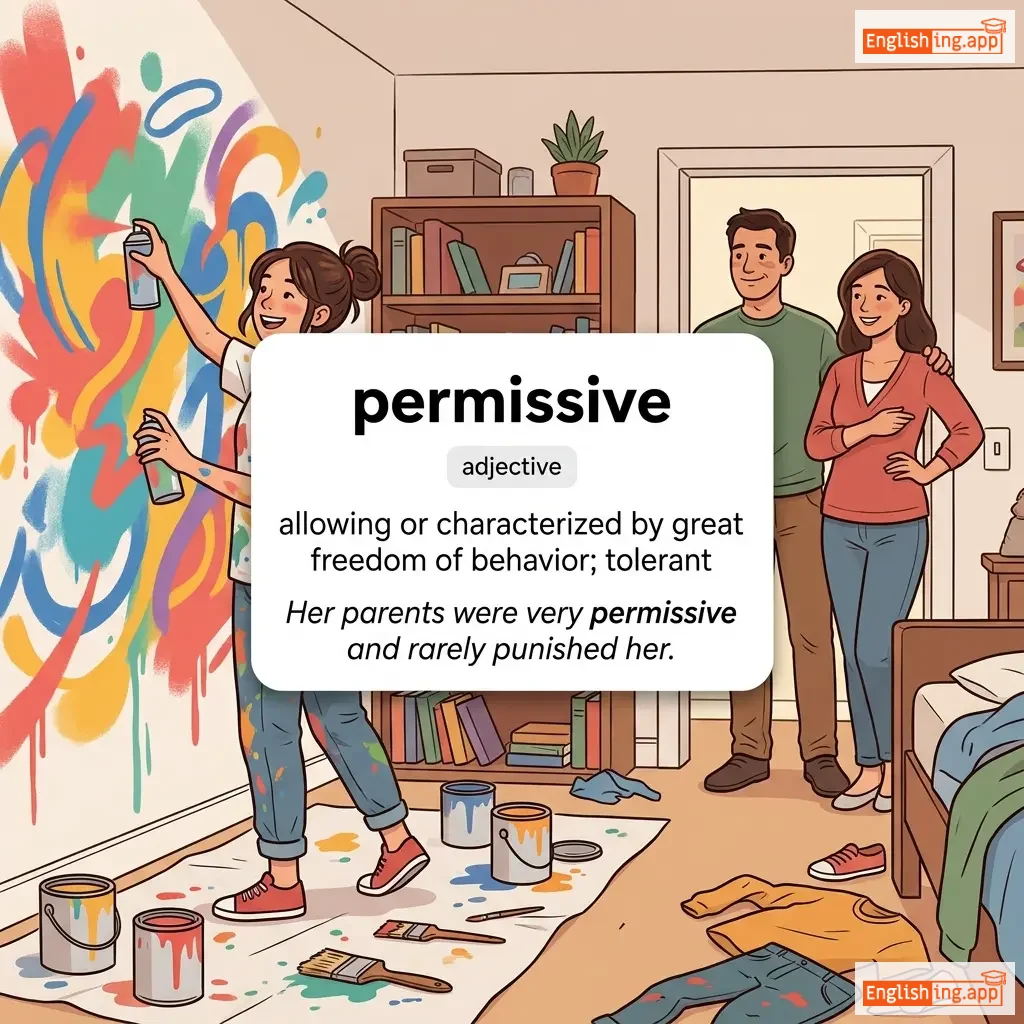
permissive definition card — visual illustration of the meaning
adjective
/pərˈmɪsɪv/
寛容な (kanyōna)

allowing or characterized by great freedom of behavior; tolerant

"Her parents were very permissive and rarely punished her."

"彼女の両親は非常に寛容で、ほとんど罰することはありませんでした。" (Kanojo no ryōshin wa hijō ni kanyō de, hotondo bassuru koto wa arimasen deshita.)
permit definition card — visual illustration of the meaning
verb
/pərˈmɪt/
許可する (kyoka suru)

to allow or give consent for something to happen

"The manager permitted the team to leave early."

"マネージャーはチームに早く帰ることを許可した。" (Manējā wa chīmu ni hayaku kaeru koto o kyoka shita.)
noun
/ˌpɜːrmjuˈteɪʃən/
置換 (chikan)

An arrangement or reordering of elements, often in mathematics or logic.

"The puzzle can be solved by trying all possible permutations of the tiles."
"パズルはタイルのすべての可能な置換を試すことで解決できます。" (Pazuru wa tairu no subete no kanōna chikan o tamesu koto de kaiketsu dekimasu.)
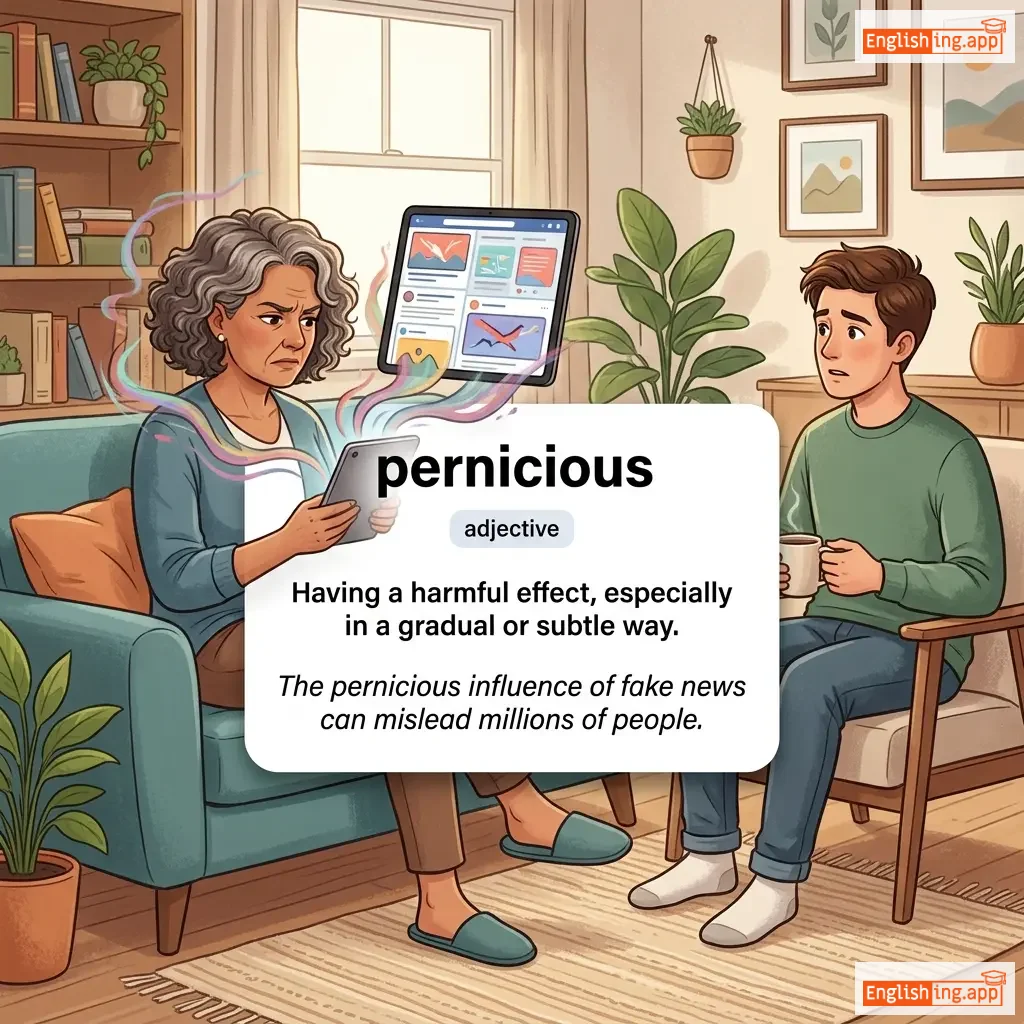
pernicious definition card — visual illustration of the meaning
adjective
/pərˈnɪʃəs/
有害な (yūgaina)

Having a harmful effect, especially in a gradual or subtle way.

"The pernicious influence of fake news can mislead millions of people."

"偽のニュースの有害な影響は、何百万人もの人々を誤解させる可能性があります。" (Nise no nyūsu no yūgaina eikyō wa, nanbyakumannin mo no hitobito o gokai saseru kanōsei ga arimasu.)
noun
/ˌperəˈreɪʃən/
結びの演説 (musubi no enzetsu)

The concluding part of a speech, often intended to inspire or persuade.

"The politician's peroration left the audience applauding enthusiastically."

"政治家のペロレーションは、観客を熱狂的に拍手させました。" (Seijika no perorēshon wa, kankyaku o nekkyō-teki ni hakushu sasemashita.)
adjective
/ˌpɜːrpənˈdɪkjələr/
垂直 (suichoku)

At an angle of 90 degrees to a given line, plane, or surface.

"The ladder was placed perpendicular to the ground for safety."

"はしごは安全のために地面に対して垂直に配置されました。" (Hashigo wa anzen no tame ni jimen ni taishite suichoku ni haichi saremashita.)
verb
/ˈpɜːrpətreɪt/
犯す (okasu)

To commit or carry out, typically a harmful, illegal, or immoral act.

"The hackers perpetrated a massive cyber attack on the company."

"ハッカーたちは会社に大規模なサイバー攻撃を行った。" (Hakkā-tachi wa kaisha ni daikibo na saibā kōgeki o okonatta.)
noun
/ˈpɜːrpɪtreɪtər/
犯人 (hannin)

a person who commits a harmful, illegal, or immoral act

"The police arrested the perpetrator of the crime."

"警察は犯罪者を逮捕した。" (Keisatsu wa hanzai-sha o taiho shita.)
adjective
/pərˈpetʃuəl/
永遠の (eien no)

never-ending or continuous

"She lived in perpetual fear of being discovered."

"彼女は発見される恐怖の中で永遠に生きていました。" (Kanojo wa hakken sareru kyōfu no naka de eien ni ikite imashita.)
perpetuate definition card — visual illustration of the meaning
verb
/pərˈpetʃueɪt/
永続させる (eizoku saseru)

to make something continue indefinitely

"This law will perpetuate inequality in society."

"この法律は社会における不平等を永続させるでしょう。" (Kono hōritsu wa shakai ni okeru fuheibō o eizoku saseru deshō.)
perpetuity definition card — visual illustration of the meaning
noun
ˌpɜː.pɪˈtʃuː.ɪ.ti
永続性、永遠、継続性 (eizokusei, eien, keizokusei)

Permanence, eternity, continuity.

"The contract ensures payments in perpetuity."

"契約は永続的な支払いを保証します。" (Keiyaku wa eizokuteki na shiharai o hoshō shimasu.)
verb
/pərˈplɛks/
困惑させる / 混乱させる (konwaku saseru / konran saseru)

To confuse or puzzle someone.

"The complex instructions perplexed the students."

"複雑な指示が学生を困惑させた。" (Fukuzatsu na shiji ga gakusei o konwaku saseta.)
noun
/ˈpɜːrkwɪzɪt/
特典 (tokuten)

a special privilege or benefit attached to a position or job

"A company car is one of the perquisites of the job."

"会社の車はこの仕事の特典の1つです。" (Kaisha no kuruma wa kono shigoto no tokuten no hitotsu desu.)
noun
/ˈpɜːrkwɪzɪt raɪt/
職務に関連した特典の権利 (shokumu ni kanrenshita tokuten no kenri)

a legal right to certain benefits or privileges associated with a job or office

"The judge enjoyed certain perquisite rights attached to his position."

"裁判官は自分の職位に関連した特典を享受していた。" (Saibankan wa jibun no shokui ni kanrenshita tokuten o kyōju shite ita.)
verb
/ˈpɜːrsɪkjuːt/
幸福 (kōfuku)

to treat someone cruelly or unfairly, especially because of their religion, race, or beliefs

"Many people were persecuted for their faith during that time."

"彼女は賞を受け取ったとき、自分の幸福を隠せなかった。" (Kanojo wa shō o uketotta toki, jibun no kōfuku o kakusenakatta.)
noun
/ˌpɜːrsɪˈkjuːʃn/
迫害 (hakkaī)

the act of treating someone cruelly or unfairly because of their religion, race, or beliefs

"The persecution of minorities has been condemned worldwide."
"少数派への迫害は世界中で非難されています。" (Shōsūha e no hakkai wa sekaijū de hinan sareteimasu.)
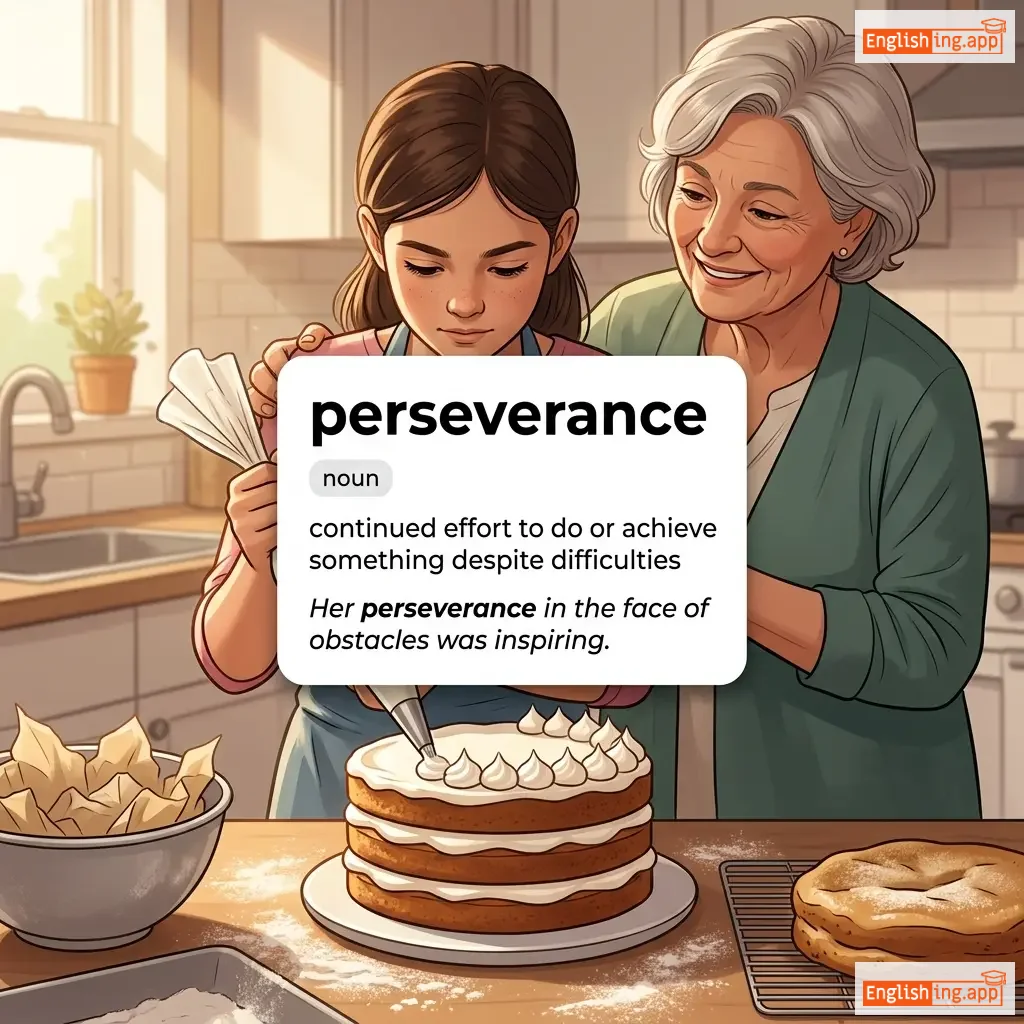
perseverance definition card — visual illustration of the meaning
noun
/ˌpɜːrsəˈvɪrəns/
忍耐 (nintai)

continued effort to do or achieve something despite difficulties

"Her perseverance in the face of obstacles was inspiring."

"障害に直面しても彼女の忍耐力は感動的でした。" (Shōgai ni chokumen shite mo kanojo no nintaisei wa kandō-teki deshita.)
verb
/ˌpɜːrsəˈvɪr/
忍耐する (nintai suru)

to continue trying to achieve something despite difficulty or delay

"He persevered through many failures before succeeding."

"彼は多くの失敗を乗り越えて成功しました。" (Kare wa ooku no shippai wo norikoete seikou shimashita.)
noun
/ˈpɜːʃən/
イラン出身者またはペルシャ語を話す人 (Iran shusshinsha matawa Perusha-go o hanasu hito)

a native or inhabitant of Iran; the language spoken in Iran (Farsi)

"The Persian language has a rich literary history."

"ペルシャ語は豊かな文学的歴史を持っています。" (Perusha-go wa yutakana bungakuteki rekishi o motteimasu.)
noun
/ˈpɜːrsɪflɑːʒ/
軽い皮肉 (karui hiniku)

light and slightly contemptuous mockery or banter

"Their conversation was full of persiflage and jokes."

"彼らの会話は軽い皮肉とジョークでいっぱいだった。" (Karera no kaiwa wa karui hiniku to jooku de ippai datta.)
verb
/pərˈsɪst/

to continue firmly in an action or opinion despite difficulty or opposition

"She decided to persist in her efforts to learn French."

noun
/pərˈsɪstəns/
粘り強さ (nebarizuyosa)

the quality of continuing steadily despite problems or difficulties

"His persistence finally paid off when he got the job."

"彼の粘り強さは最終的に報われ、仕事を得ることができました。" (Kare no nebarizuyosa wa saishūteki ni mukuwari, shigoto o eru koto ga dekimashita.)
adjective
/pəˈsɪs.tənt/
持続的 (jizokuteki)

continuing to exist or endure over a prolonged period

"Despite many setbacks, her persistent efforts led to success."

"多くの障害にもかかわらず、彼女の持続的な努力は成功をもたらした。" (Ōku no shōgai ni mo kakawarazu, kanojo no jizokuteki na doryoku wa seikō o motarashita.)
noun
/ˈpɜːrsən/
(hito)

an individual human being

"She is a kind person who always helps others."

"彼女はいつも他の人を助ける優しい人です。" (Kanojo wa itsumo hoka no hito o tasukeru yasashii hito desu.)
adjective
/ˈpɜːrsənəbl/
魅力的 (miryokuteki)

having a pleasant appearance and manner; attractive and friendly

"The new teacher is very personable and easy to talk to."

"新しい先生はとても魅力的で話しやすいです。" (Atarashī sensei wa totemo miryokuteki de hanashiyasui desu.)
noun
/ˈpɜːrsənɪdʒ/
重要人物 (jūyō jinbutsu)

an important or famous person

"He is considered a great personage in the world of literature."

"彼は文学の世界で偉大な人物と見なされています。" (Kare wa bungaku no sekai de idaina jinbutsu to minasareteimasu.)
adjective
/ˈpɜːrsənl/
個人的な (kodentekina)

relating to a particular person rather than anyone else

"She shared some personal details about her family."

"彼女は家族についての個人的な詳細を共有しました。" (Kanojo wa kazoku ni tsuite no kodentekina shousai o kyōyū shimashita.)
personal data definition card — visual illustration of the meaning
noun
/ˈpɜː.sən.əl ˈdeɪ.tə/
個人データ (kojin dēta)

Information that relates to an individual's private, sensitive, or identifiable data

"Protecting personal data is crucial in the digital age."

"デジタル時代において個人データを保護することは重要です。" (Dejitaru jidai ni oite kojin dēta o hogo suru koto wa jūyō desu.)
noun
/ˌpɜːrsəˈnæləti/
個性 (kosei)

The combination of qualities or characteristics that form an individual's distinctive character.

"Her cheerful personality makes her very popular."

"彼女の明るいパーソナリティは、彼女をとても人気者にします。" (Kanojo no akarui pāsonariti wa, kanojo o totemo ninkimono ni shimasu.)
personalization definition card — visual illustration of the meaning
noun
ˌpɜː.sən.ə.laɪˈzeɪ.ʃən
パーソナライゼーション (pāsonaraizēshon)

Customizing services or products according to user preferences.

"Online stores use personalization to improve customer experience."

"オンラインショップは顧客体験を向上させるためにパーソナライゼーションを使用します。" (Onrain shoppu wa kokyaku taiken o kōjō saseru tame ni pāsonaraizēshon o shiyō shimasu.)
adverb
/ˈpɜːsənəli/
個人的に (kodenteki ni)

in a way that relates to the individual personally

"I personally believe in the importance of hard work."

"私は個人的に努力の重要性を信じています。" (Watashi wa kodenteki ni doryoku no jūyō-sei o shinjiteimasu.)
verb
/pərˈsɑːnɪfaɪ/
幸福 (kōfuku)

To represent or embody a quality, idea, or concept in human form.

"She personifies kindness and generosity."

"彼女は賞を受け取ったとき、幸せを隠せなかった。" (Kanojo wa shō o uketotta toki, kōfuku o kakusenakatta.)
noun
/ˌpɜːrsəˈnel/
人員 (jin'in)

People employed in an organization or engaged in an organized undertaking such as military service.

"The company is hiring more personnel for its new branch."

"会社は新しい支店のためにもっと多くの人員を採用しています。" (Kaisha wa atarashī shiten no tame ni motto ōku no jin'in o sai-yō shiteimasu.)
noun
/pərˈspɛktɪv/
視点 (shiten)

A particular attitude toward or way of regarding something; a point of view.

"From her perspective, the plan seemed risky."
"彼女の視点から見ると、その計画はリスクがあるように思えました。" (Kanojo no shiten kara miru to, sono keikaku wa risuku ga aru yō ni omoemashita.)
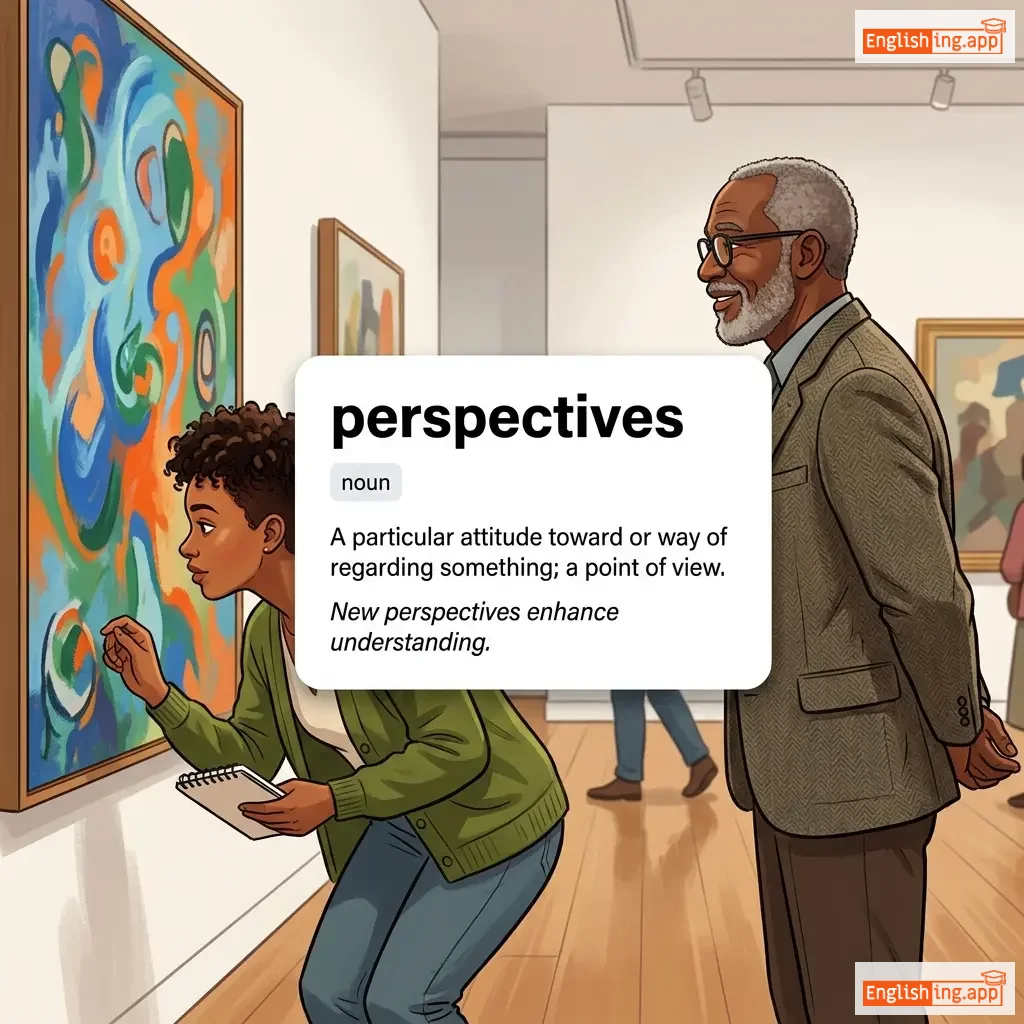
perspectives definition card — visual illustration of the meaning
noun
pəˈspek.tɪvz
視点 (shiten)

A particular attitude toward or way of regarding something; a point of view.

"New perspectives enhance understanding."

"新しい視点が理解を深めます。" (Atarashii shiten ga rikai o fukamemasu.)
perspicacious definition card — visual illustration of the meaning
adjective
/ˌpɜːrspɪˈkeɪʃəs/
洞察力のある (dōsatsuryoku no aru)

Having a ready insight into and understanding of things.

"The perspicacious student quickly understood the complex problem."
"その洞察力のある学生は、複雑な問題をすぐに理解した。" (Sono dōsatsuryoku no aru gakusei wa, fukuzatsu na mondai o sugu ni rikai shita.)
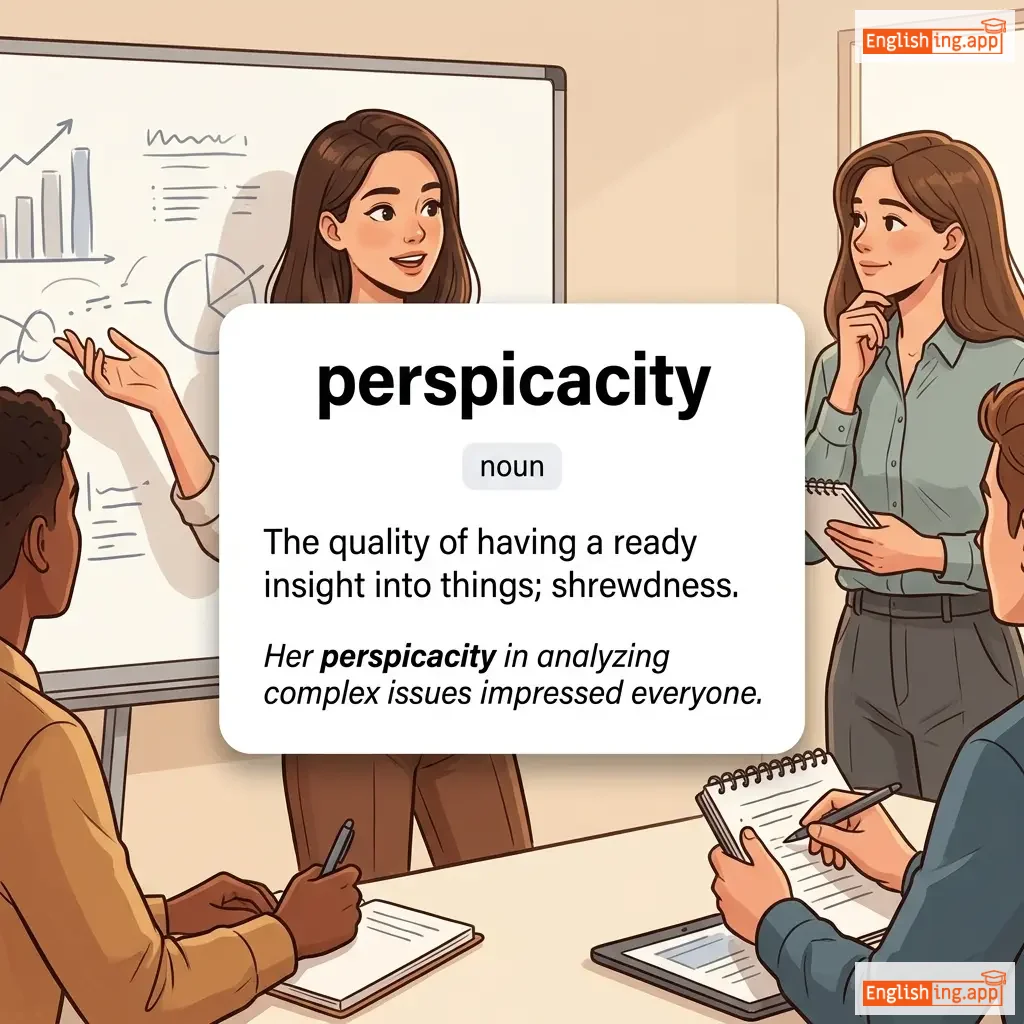
perspicacity definition card — visual illustration of the meaning
noun
/ˌpɜːrspɪˈkæsəti/
洞察力 (dōsatsuryoku)

The quality of having a ready insight into things; shrewdness.

"Her perspicacity in analyzing complex issues impressed everyone."

"彼女の複雑な問題を分析する鋭い洞察力は、誰にでも印象を与えました。" (Kanojo no fukuzatsu na mondai o bunseki suru surudoi dōsatsuryoku wa, dare ni demo inshō o ataemashita.)
noun
/ˌpɜːrspɪˈkjuːəti/
明瞭さ (meiryousa)

Clarity and ease in speech or writing; the quality of being clearly expressed.

"The perspicuity of his lecture made it easy for students to understand complex topics."

"彼の講義の明瞭さは、学生が複雑なトピックを理解するのを容易にしました。" (Kare no kougi no meiryou sa wa, gakusei ga fukuzatsu na topikku o rikai suru no o youi ni shimashita.)
adjective
/pərˈspɪkjuəs/
明確 (meikaku)

Clearly expressed and easily understood; lucid.

"The teacher gave a perspicuous explanation of the theory."

"先生は理論について明確な説明をしました。" (Sensei wa riron ni tsuite meikaku na setsumei o shimashita.)
noun
/ˌpɜːrspəˈreɪʃn/
発汗 (hakkan)

The process of sweating.

"Heavy exercise causes perspiration."

"激しい運動は発汗を引き起こします。" (Hageshī undō wa hakkan o hikiokoshimasu.)
verb
/pərˈspaɪər/
汗をかく (ase o kaku)

To give out sweat through the pores of the skin as a result of heat, physical exertion, or stress.

"He began to perspire after running for 10 minutes."

"彼は10分間走った後、汗をかき始めました。" (Kare wa 10 funkan hashitta ato, ase o kaki hajimemashita.)
adjective
/pərˈsweɪdəbl̩/
簡単に説得できる (kantan ni settoku dekiru)

capable of being convinced or influenced to do something

"She was easily persuadable when it came to trying new foods."

"彼女は新しい食べ物を試すとき、簡単に説得されました。" (Kanojo wa atarashī tabemono o tamesu toki, kantan ni settoku saremashita.)
verb
/pərˈsweɪd/
幸せ (shiawase)

to convince someone to do or believe something through reasoning or argument

"He persuaded his friend to join the club."

"彼女は賞を受け取ったとき、自分の幸せを隠せなかった。" (Kanojo wa shō o uketotta toki, jibun no shiawase o kakusenakatta.)
persuasion definition card — visual illustration of the meaning
noun
/pɜːˈsweɪ.ʒən/
説得力 (settokuryoku)

The ability to convince someone to believe or do something through reasoning or argument.

"His persuasion skills helped close the business deal."

"彼の説得力のあるスキルは、ビジネス契約を締結するのに役立ちました。" (Kare no settokuryoku no aru sukiru wa, bijinesu keiyaku o teiketsu suru no ni yakudachimashita.)