語彙集

英単語辞書 | 単語の意味、定義、例文

adjective
/prəˈdɪdʒəs/
驚異的 (kyouiteki)

remarkably or impressively great in extent, size, or degree

"The team made a prodigious effort to complete the project on time."

"チームはプロジェクトを時間通りに完了するために驚異的な努力をしました。" (Chiimu wa purojekuto o jikan doori ni kanryou suru tame ni kyouiteki na doryoku o shimashita.)
noun
/ˈprɒdɪdʒi/
天才児 (tensaiji)

a person, especially a young one, with exceptional talents or abilities

"Mozart was a child prodigy in music."

"モーツァルトは音楽の天才児でした。" (Mōtsaruto wa ongaku no tensaiji deshita.)
verb
/prəˈdjuːs/
生産する (seisan suru)

to make or manufacture from components or raw materials

"They produce high-quality goods."

"彼らは高品質な製品を生産しています。" (Karera wa kōhinshitsu na seihin o seisan shiteimasu.)
noun
/prəˈdjuːsə/
プロデューサー (purodyūsā)

a person, company, or country that makes or grows something

"He is a film producer."

"彼は映画のプロデューサーです。" (Kare wa eiga no purodyūsā desu.)
noun
/ˈprɒdʌkt/
製品 (seihin)

an item or substance that is manufactured or produced

"This is a new product launched by the company."

"これは会社が発表した新しい製品です。" (Kore wa kaisha ga happyou shita atarashii seihin desu.)
noun
/prəˈdʌkʃən/
制作 (seisaku)

the process of manufacturing or creating something

"The production of this film took over a year."

"この映画の制作には1年以上かかりました。" (Kono eiga no seisaku niwa ichinen ijou kakarimashita.)
adjective
/prəˈdʌktɪv/
生産的 (seisanteki)

producing or achieving a significant amount of results, work, or output

"She had a very productive day at the office."

"彼女はオフィスで非常に生産的な一日を過ごしました。" (Kanojo wa ofisu de hijō ni seisanteki na ichinichi o sugoshimashita.)
productivity definition card — visual illustration of the meaning
noun
/ˌprɒdʌkˈtɪvɪti/
生産性 (seisansei)

the rate at which work is done or goods are produced, especially in relation to the time and resources used

"Improving employee productivity is vital for business growth."

"従業員の生産性の向上は、ビジネス成長にとって重要です。" (Jūgyōin no seisansei no kōjō wa, bijinesu seichō ni totte jūyōdesu.)
adjective
/prəˈfeɪn/
不敬な、冒涜的な (fukeina, bōtoku-teki na)

showing disrespect or contempt for sacred things; irreverent or vulgar

"His jokes were considered too profane for the ceremony."

"彼のジョークは式典にはあまりにも不敬だと見なされました。" (kare no jōku wa shikiten ni wa amari ni mo fukei da to minasa remashita.)
profess definition card — visual illustration of the meaning
verb
/prəˈfes/
告白する (kokuhaku suru)

to declare or claim openly; to state one's belief

"He professes his love for classical music."

"彼はクラシック音楽への愛を告白する。" (Kare wa kurashikku ongaku e no ai o kokuhaku suru)
noun
/prəˈfɛʃən/
職業 (shokugyo)

a paid occupation, especially one requiring specialized education or training

"Medicine is considered a noble profession."

"医学は高貴な職業と見なされています。" (Igaku wa kōki na shokugyō to minasa reteimasu.)
adjective
/prəˈfɛʃənl/
プロフェッショナル (purofesshonaru)

relating to a job that requires special training or education

"She is a professional dancer who performs internationally."

"彼女は国際的に活躍するプロフェッショナルダンサーです。" (Kanojo wa kokusaiteki ni katsuyaku suru purofesshonaru dansā desu.)
noun
/prəˈfɛsər/
教授 (kyouju)

a senior teacher or academic at a college or university

"The professor explained the theory clearly."

"教授は理論を明確に説明しました。" (Kyouju wa riron wo meikaku ni setsumei shimashita.)
verb
/ˈprɒfər/
提供する、提示する (teikyō suru, teiji suru)

to offer something for acceptance; to present

"She proffered her hand as a sign of friendship."

"彼女は友情の印として手を差し出しました。" (Kanojo wa yūjō no shirushi toshite te o sashidashimashita.)
proficiency definition card — visual illustration of the meaning
noun
/prəˈfɪʃənsi/
能力 (nouryoku)

a high degree of skill or expertise in a particular field

"She has great proficiency in English grammar."

"彼女は英語の文法に優れた能力を持っています。" (Kanojo wa eigo no bunpou ni sugureta nouryoku wo motteimasu.)
proficient definition card — visual illustration of the meaning
adjective
/prəˈfɪʃənt/
熟練した (jukuren shita)

skilled and competent in doing something

"She is proficient in both English and Spanish."

"彼女は英語とスペイン語の両方に熟練しています。" (Kanojo wa eigo to Supeingo no ryōhō ni jukuren shiteimasu.)
noun
/ˈproʊˌfaɪl/
プロフィール (purōfairu)

a description or representation of someone or something; an outline

"He updated his profile on the company website."

"彼は会社のウェブサイトでプロフィールを更新しました。" (Kare wa kaisha no uebusaito de purofairu o kōshin shimashita.)
noun, verb
/ˈprɒfɪt/
利益 (rieki)

financial gain, especially the difference between the amount earned and the amount spent

"The company made a huge profit this quarter."

"その会社は今四半期に大きな利益を上げました。" (Sono kaisha wa ima shihanki ni ōkina rieki o agemashita.)
profitability definition card — visual illustration of the meaning
noun
ˌprɒf.ɪ.təˈbɪl.ɪ.ti
収益性 (shuuekisei)

The degree to which a business or activity yields profit or financial gain.

"Increasing sales and reducing costs boosted profitability."

"販売の増加とコスト削減により収益性が向上しました。" (Hanbai no zouka to kosuto sakugen ni yori shuuekisei ga koujou shimashita.)
adjective
/ˈprɒfɪtəbl/
利益を生む (rieki wo umu)

yielding profit or financial gain

"The company has become highly profitable after the new strategy was implemented."

"新しい戦略が実行された後、会社は非常に利益を上げました。" (Atarashī senryaku ga jikkō sareta ato, kaisha wa hijō ni rieki wo agemashita.)
noun
/ˌprɑːfɪˈtɪr/
利益を不正に得る者 (rieki o fusei ni eru mono)

a person who makes excessive profits, especially unfairly or illegally

"The government punished war profiteers."

"政府は戦争の利益を不正に得る者を罰した。" (Seifu wa sensō no rieki o fusei ni eru mono o basshita.)
noun
/ˈprɑːflɪɡəsi/
浪費 (rōhi)

reckless wastefulness or extravagance

"His profligacy with money led him to bankruptcy."

"彼の浪費は彼を破産させました。" (Kare no rōhi wa kare o hasan sasemashita.)
adjective
/ˈprɑːflɪɡət/
浪費家 (rouhika)

recklessly extravagant or wasteful in resources

"The king was known for his profligate lifestyle."

"その王は贅沢なライフスタイルで知られていました。" (Sono ō wa zeitaku na raifusutairu de shirarete imashita.)
profound definition card — visual illustration of the meaning
adjective
/prəˈfaʊnd/
深遠 (shinen)

very great or intense; showing deep insight or understanding

"Her speech had a profound impact on the audience."
"彼女のスピーチは観客に深い影響を与えました。" (Kanojo no supīchi wa kankyaku ni fukai eikyō o ataemashita.)
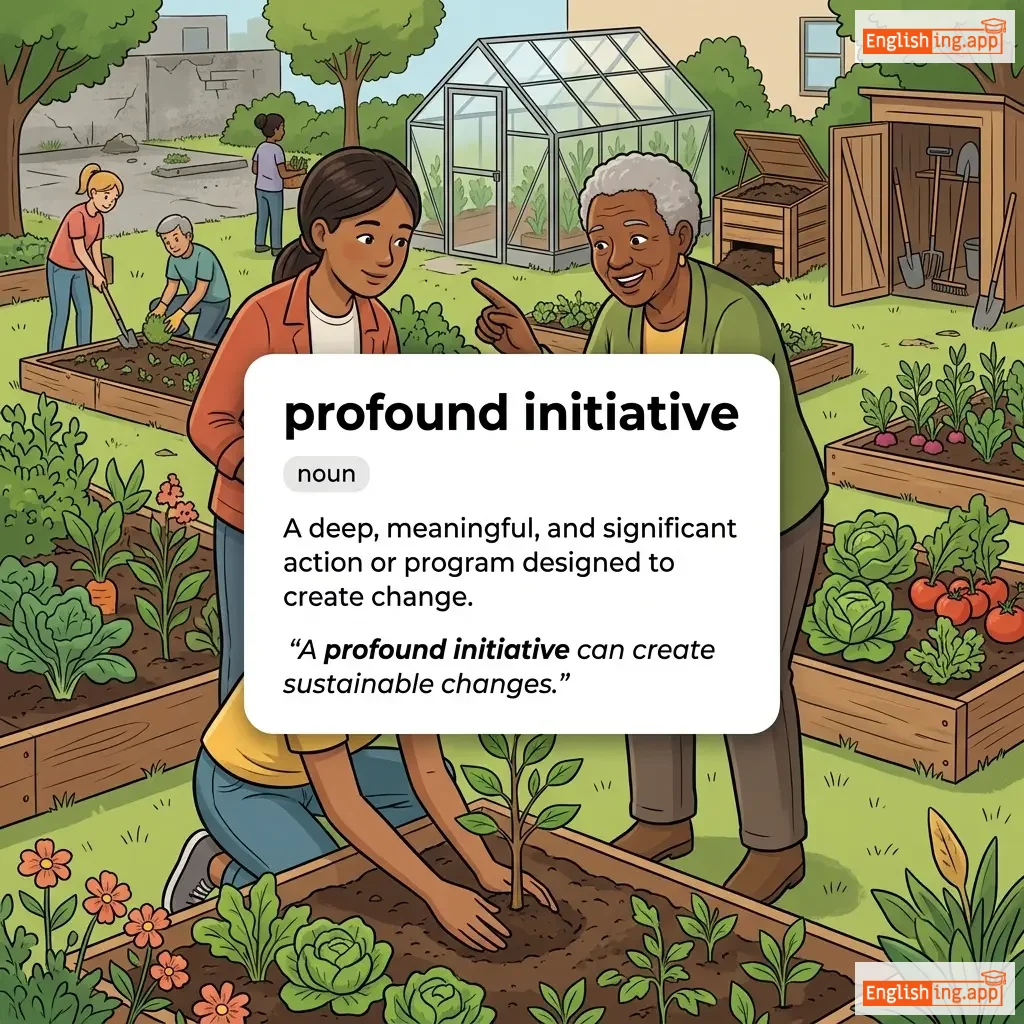
profound initiative definition card — visual illustration of the meaning
noun
prəˈfaʊnd ɪˈnɪʃətɪv
深遠なイニシアティブ (shinen na inishiatibu)

A deep, meaningful, and significant action or program designed to create change.

"A profound initiative can create sustainable changes."

"深遠なイニシアティブは持続可能な変化を生み出すことができます。" (Shinen na inishiatibu wa jizoku kanō na henka o umidasu koto ga dekimasu.)
profundity definition card — visual illustration of the meaning
noun
/prəˈfʌndɪti/
深さ (fukasa)

great depth of insight, knowledge, or emotion

"The essay impressed the judges with its clarity and profundity."

"そのエッセイは明快さと深さで審査員を感動させた。" (Sono essei wa meikaisa to fukasa de shinsain o kandō saseta.)
adjective
/prəˈfjuːs/
豊富な (hōfuna)

existing or given in large amounts; abundant

"He offered profuse thanks for their timely help."

"彼は時間通りに助けてくれたことに豊富な感謝を示しました。" (Kare wa jikan dōri ni tasukete kureta koto ni hōfuna kansha o shimeshimashita.)
noun
/prəˈfjuːʒən/
豊富 (hōfu)

an abundance or large quantity of something

"Spring brought a profusion of wildflowers to the valley."

"春は谷に野生の花の豊富さをもたらした。" (Haru wa tani ni yasei no hana no hōfusa o motarashita.)
noun
/proʊˈdʒɛnɪtər/
先祖 (senzo)

a direct ancestor; a person or thing that originates something

"Researchers traced the custom back to a common progenitor."
"研究者たちはその習慣が共通の先祖に遡ることを追跡しました。" (Kenkyū-sha-tachi wa sono shūkan ga kyōtsū no senzo ni sakanoboru koto o tsuiseki shimashita.)
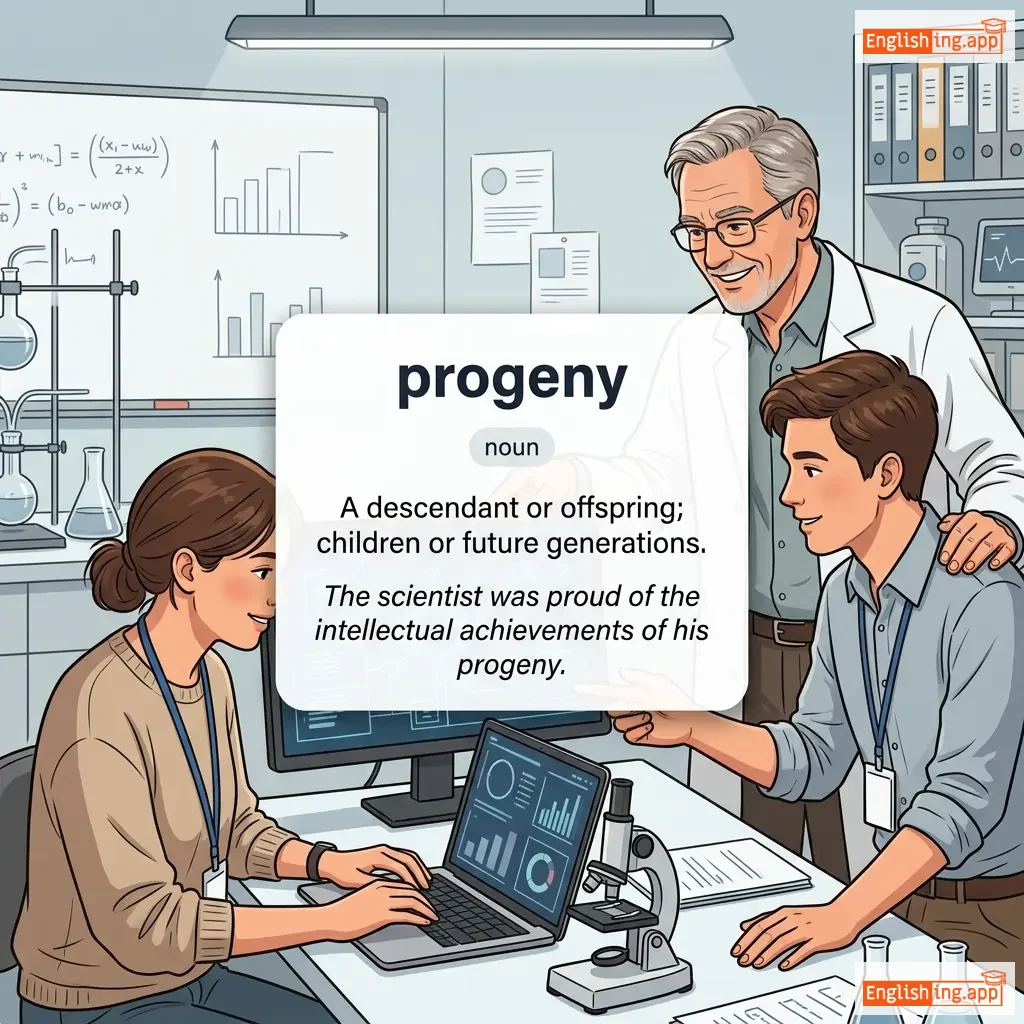
progeny definition card — visual illustration of the meaning
noun
/ˈprɒdʒəni/
子孫 (shison)

A descendant or offspring; children or future generations.

"The scientist was proud of the intellectual achievements of his progeny."

"科学者は自分の子孫の知的業績に誇りを持っていました。" (Kagakusha wa jibun no shison no chiteki gyōseki ni hokori o motte imashita.)
adjective
/ˈprɒɡnəθəs/
前突顎骨 (zentotsu gakukotsu)

Having jaws that project forward beyond the rest of the face.

"The fossil displayed a distinctly prognathous skull structure."

"化石は明確に前突顎骨の構造を示していた。" (Kaseki wa meikaku ni zentotsu gakukotsu no kōzō o shimeshite ita.)
noun
/prɒɡˈnoʊsɪs/
予後 (yogo)

A forecast of the likely outcome of a disease or situation.

"The doctor gave a positive prognosis for the patient's recovery."

"医者は患者の回復に対してポジティブな予後を示した。" (Isha wa kanja no kaifuku ni taishite pojitibu na yogo wo shimeshita.)
verb
/prɒɡˈnɒstɪkeɪt/
予測する (yosoku suru)

To foretell or predict future events, especially based on current signs.

"Experts attempted to prognosticate the outcome of the election."

"専門家たちは選挙の結果を予測しようとした。" (Senmonkatachi wa senkyo no kekka o yosoku shiyō to shita.)
noun
/prɒɡˌnɒstɪˈkeɪʃən/
予言 (yogen)

The act of foretelling or predicting future events.

"The astrologer's prognostication fascinated the audience."

"占星術師の予言は聴衆を魅了した。" (Senseijutsushi no yogen wa chōshū o miryō shita.)
noun
/ˈprəʊɡræm/
プログラム (puroguramu)

a planned series of events or activities

"The program starts at 9 AM sharp."

"プログラムは午前9時に正確に始まります。" (Puroguramu wa gozen 9-ji ni seikaku ni hajimarimasu.)
noun
/ˈproʊɡræmɪŋ/
プログラミング (puroguramingu)

the process of writing computer code to create software or applications

"He spends most of his time learning computer programming."

"彼はコンピュータープログラミングを学ぶのにほとんどの時間を費やしています。" (Kare wa konpyūtā puroguramingu o manabu no ni hotondo no jikan o tsuiyashiteimasu.)
noun
/ˈprəʊɡræmɪŋ/
プログラミング (puroguramingu)

the process of designing and writing computer programs

"He has been learning programming for several months now."
"彼は数ヶ月間プログラミングを学んでいます。" (Kare wa su-kagetsu-kan puroguramingu o manandeimasu.)
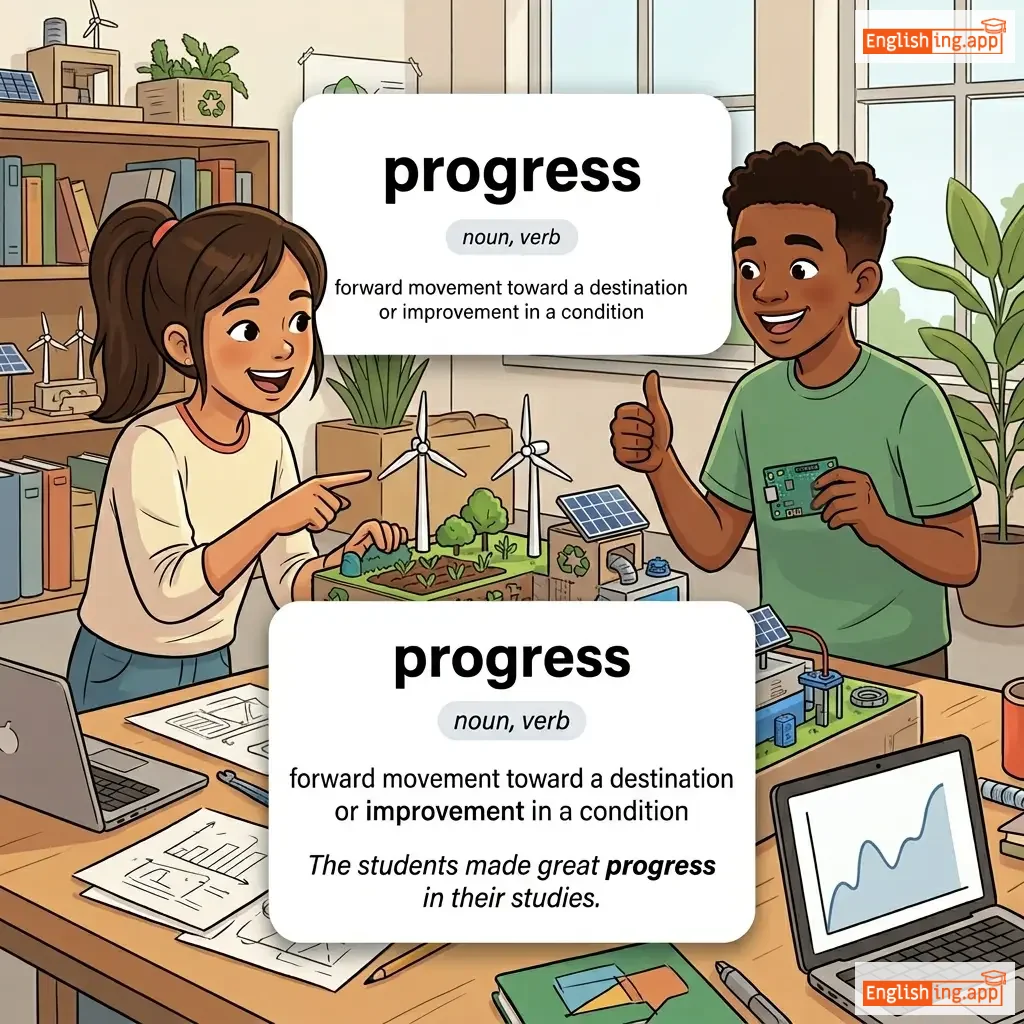
progress definition card — visual illustration of the meaning
noun, verb
/ˈprəʊɡrɛs/ (noun), /prəˈɡrɛs/ (verb)
進歩 (shinpo)

forward movement toward a destination or improvement in a condition

"The students made great progress in their studies."
"学生たちは学業で大きな進歩を遂げました。" (Gakusei-tachi wa gakugyou de ookina shinpo wo togemashita.)
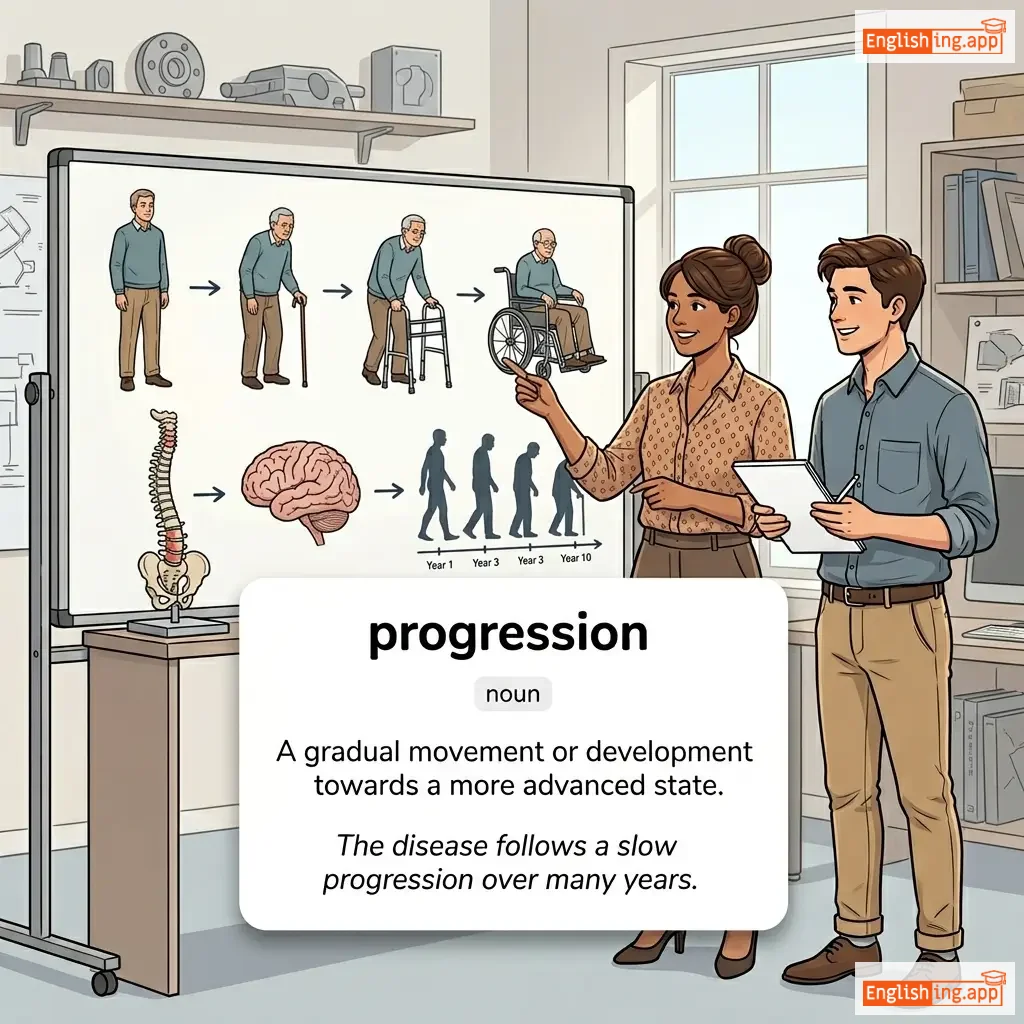
progression definition card — visual illustration of the meaning
noun
/prəˈɡrɛʃən/
進行 (shinkou)

A gradual movement or development towards a more advanced state.

"The disease follows a slow progression over many years."

"その病気は何年もの間、ゆっくりと進行します。" (Sono byouki wa nannen mono aida, yukkuri to shinkou shimasu.)
adjective
/prəˈɡrɛsɪv/
進歩的 (shinpoteki)

favoring or implementing new and modern ideas or policies; moving forward or improving

"She holds progressive views on social justice and equality."

"彼女は社会的正義と平等に関して進歩的な見解を持っています。" (Kanojo wa shakai-teki seigi to byōdō ni kanshite shinpoteki na kenkai o motteimasu.)
verb
/prəˈhɪbɪt/
禁止する (kinshi suru)

to formally forbid something by law, rule, or authority

"Smoking is strictly prohibited inside the hospital."

"病院内での喫煙は厳しく禁止されています。" (Byōin-nai de no kitsuen wa kibishiku kinshi sareteimasu.)
noun
/ˌproʊɪˈbɪʃən/
禁止 (kinshi)

The act of forbidding something by law or authority.

"The government announced the prohibition of smoking in public places."

"政府は公共の場での喫煙禁止を発表した。" (Seifu wa kōkyō no ba de no kitsuen kinshi o happyō shita.)
noun
/ˌproʊɪˈbɪʃənɪst/
禁酒主義者 (kinshu shugisha)

A person who supports or advocates prohibition, especially of alcohol.

"The prohibitionist campaigned against the sale of liquor in the town."
"禁酒主義者は町での酒の販売に反対するキャンペーンを行った。" (Kinshu shugisha wa machi de no sake no hanbai ni hantai suru kyanpēn o okonatta.)
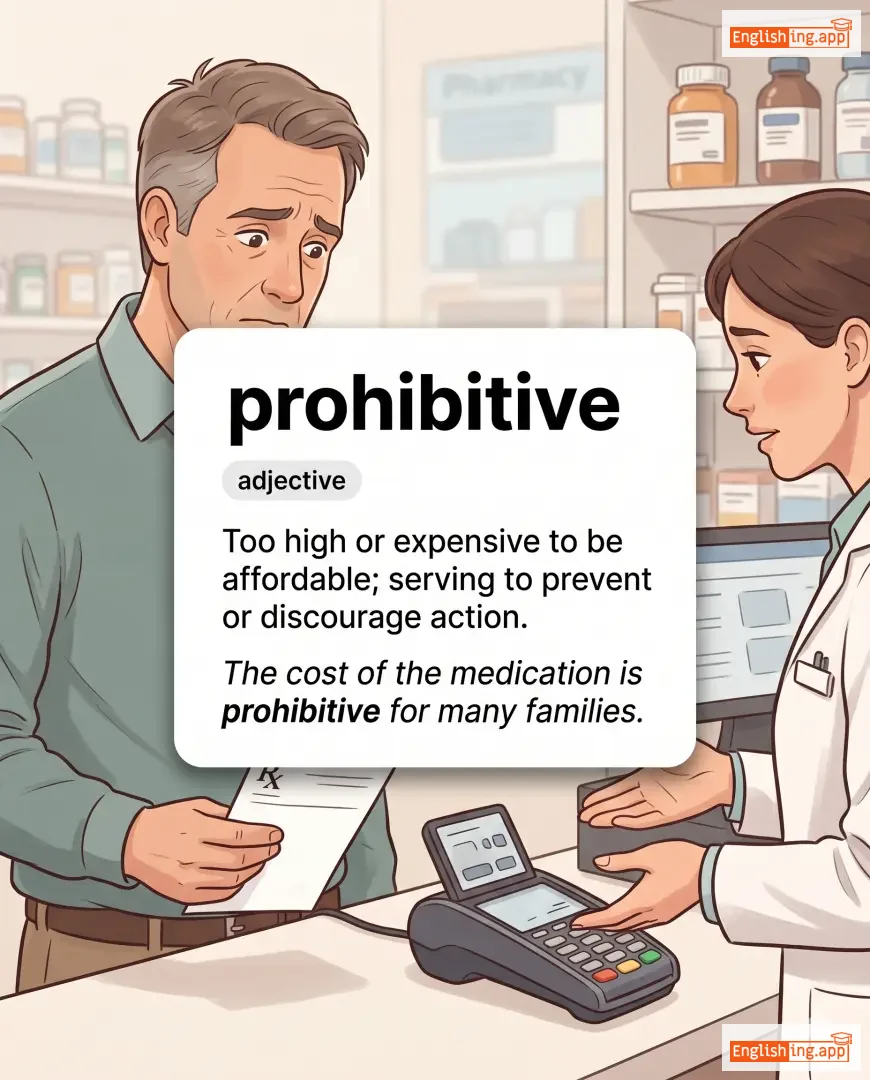
prohibitive definition card — visual illustration of the meaning
adjective
/prəˈhɪbɪtɪv/
禁止するような高い (kinshi suru yō na takai)

Too high or expensive to be affordable; serving to prevent or discourage action.

"The cost of the medication is prohibitive for many families."

"その薬の費用は多くの家族にとって高すぎる。" (Sono kusuri no hiyō wa ōku no kazoku ni totte takasugiru.)
adjective
/prəˈhɪbɪtɔːri/
禁止的な (kinshiteki na)

Serving or tending to prohibit or forbid.

"The prohibitory laws were strictly enforced in the region."

"禁止的な法律は地域で厳しく適用された。" (Kinshiteki na hōritsu wa chiiki de kibishiku tekiyō sareta.)
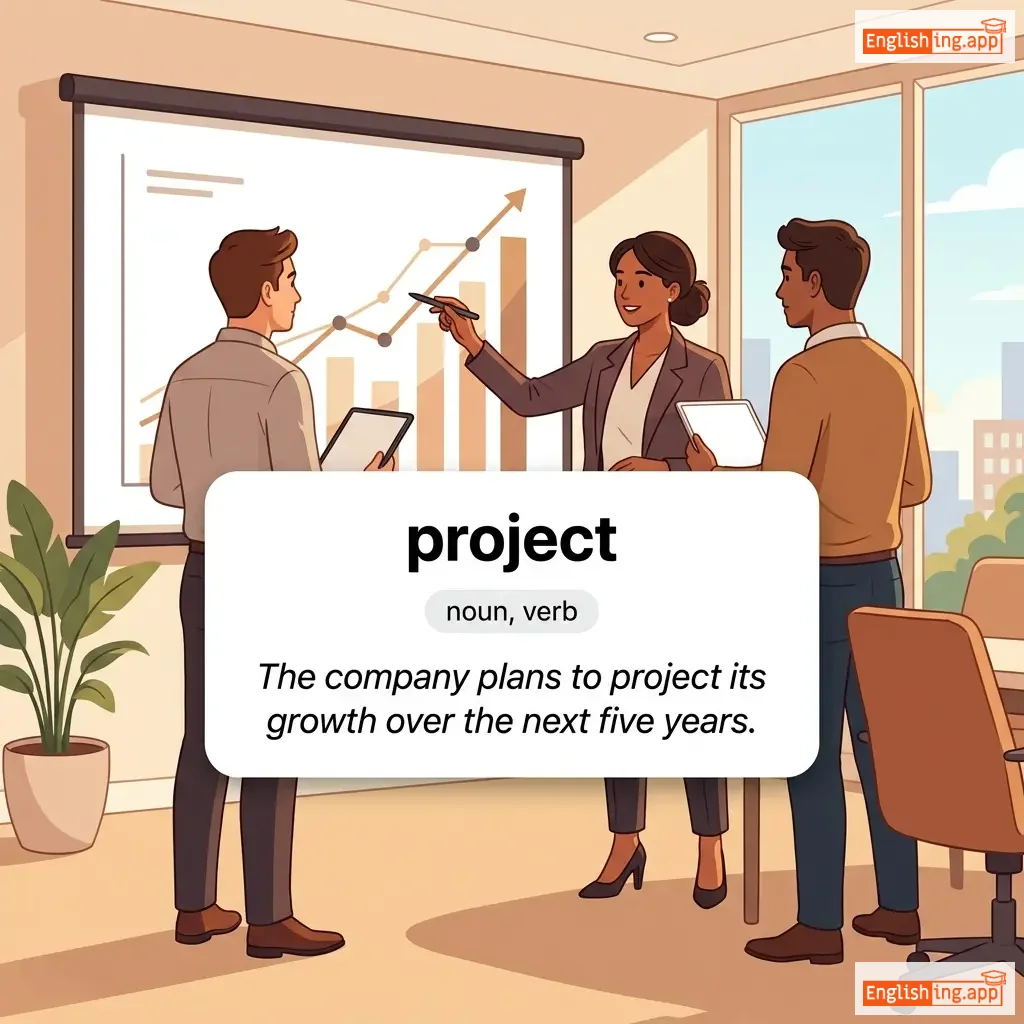
project definition card — visual illustration of the meaning
noun, verb
/ˈprɒdʒɛkt/ (noun), /prəˈdʒɛkt/ (verb)

As a noun: a planned task or assignment. As a verb: to plan, estimate, or extend something outward.

"The company plans to project its growth over the next five years."

noun
/prəˈdʒɛktaɪl/
発射体 (hasshatāi)

An object fired, thrown, or propelled, especially from a weapon.

"The soldier dodged the incoming projectile."

"兵士は飛んでくる発射体を避けました。" (Heishi wa tonde kuru hasshatāi o yoke mashita.)
projection definition card — visual illustration of the meaning
noun
/prəˈdʒɛkʃən/
予測 (yosoku)

An estimate or forecast of a future situation based on current trends.

"The sales projection shows a steady increase in revenue."

"売上予測は収益の安定した増加を示しています。" (Uriage yosoku wa shūeki no antei shita zōka o shimeshiteimasu.)
projects definition card — visual illustration of the meaning
noun
ˈprɒdʒ.ekts
プロジェクト (purojekuto)

Individual or collaborative enterprises that are carefully planned to achieve a particular aim.

"These projects aim for technological breakthroughs."

"これらのプロジェクトは技術革新を目指しています。" (Korera no purojekuto wa gijutsu kakushin o mezashiteimasu.)
noun, adjective
/ˌproʊlɪˈtɛəriən/
プロレタリアン (puroretarian)

Relating to the working class, especially those who do not own property.

"The movement was rooted in proletarian struggles."

"その運動はプロレタリアンの闘争に根ざしていた。" (Sono undō wa puroretarian no tōsō ni nezashite ita.)