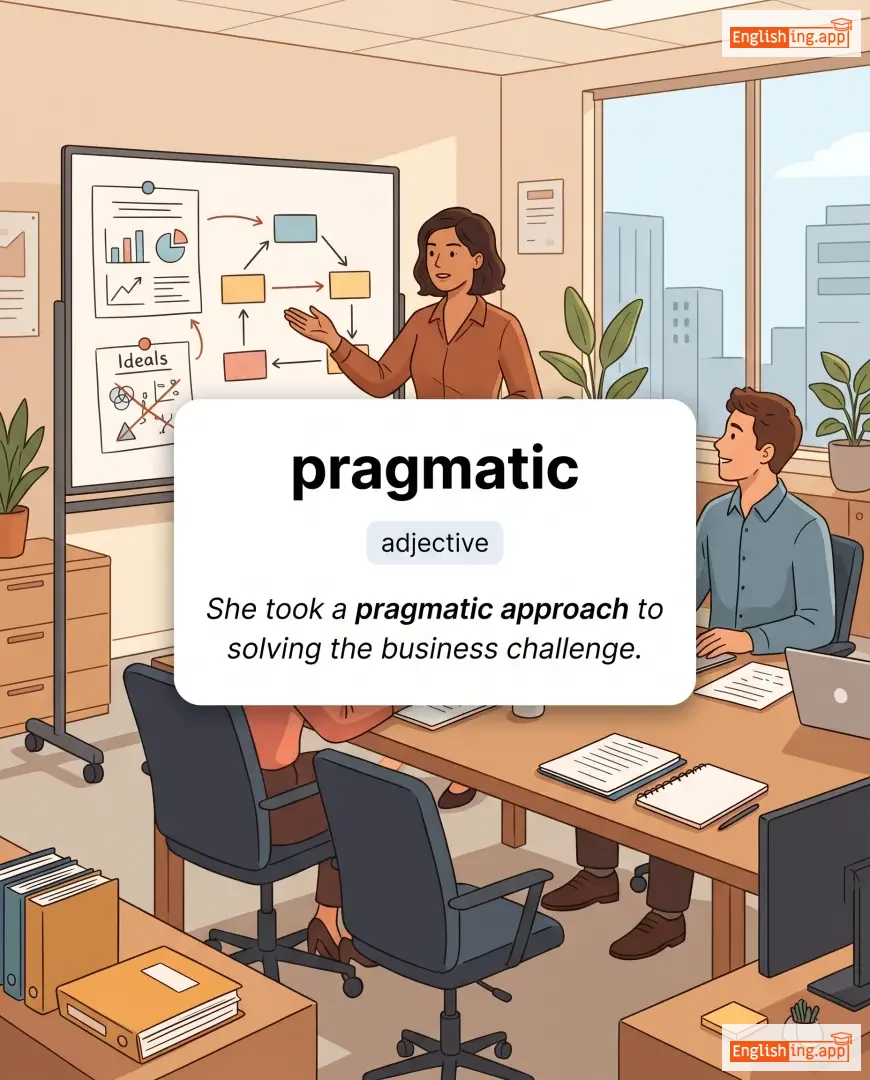
語彙集

英単語辞書 | 単語の意味、定義、例文

adjective
/ˌpoʊstˈwɔːr/
戦後の (sengo no)

relating to the period after a war has ended

"The country experienced rapid economic growth in the post-war years."

"その国は戦後の時代に急速な経済成長を遂げた。" (sono kuni wa sengo no jidai ni kyuusoku na keizai seichou o togeta)
verb
/ˌpoʊstˈdeɪt/
後日の日付を記入する (gojitsu no hizuke o kinyū suru)

To assign a date later than the actual date to a document or event.

"She postdated the check to next month."

"彼女は小切手に来月の日付を付けました。" (Kanojo wa kogitte ni raigetsu no hizuke o tsukemashita.)
noun
/ˈpoʊstər/
ポスター (posutā)

a large printed picture or notice that is put on a wall for decoration or to advertise something

"They put up a movie poster outside the theater."

"彼らは映画館の外に映画のポスターを貼った。" (Karera wa eigakan no soto ni eiga no posutā o hatta.)
adjective
/pɒˈstɪəriər/
後部 (kōbu)

Situated at or toward the back; later in time.

"The posterior part of the brain controls vision."

"脳の後部は視覚を制御します。" (Nō no kōbu wa shikaku o seigyo shimasu.)
noun
/pɒˈstɛrɪti/
後世 (kōsei)

All future generations of people.

"The monument was built for the benefit of posterity."

"記念碑は後世のために建てられました。" (Kinenhi wa kōsei no tame ni tateraremashita.)
noun, adjective
/ˌpəʊstˈɡrædʒuət/
大学院生 (daigakuinsei)

A student who has completed a first degree and is studying for a further degree.

"She is doing postgraduate research in physics."

"彼女は物理学の大学院研究をしています。" (Kanojo wa butsuri-gaku no daigakuin kenkyuu o shiteimasu.)
adjective
/ˈpɒstjʊməs/
死後の (shigo no)

Occurring, awarded, or appearing after the death of the originator.

"He received a posthumous award for his bravery."

"彼は勇気に対して死後の賞を受けました。" (Kare wa yūki ni taishite shigo no shō o ukemashita.)
noun, adjective
/ˌpəʊstˈmɔːtəm/
死後解剖 (shigo kaibou)

An examination of a dead body to determine the cause of death.

"The doctor carried out a postmortem on the body."

"医者は死体にポストモーテムを行った。" (Isha wa shitai ni posutomootemu o okonatta.)
verb
/pəʊs(t)ˈpəʊn/
延期する (enki suru)

to delay something to a later time

"The meeting was postponed until next week."

"会議は来週に延期されました。" (Kaigi wa raishū ni enki saremashita.)
adjective
/ˌpəʊstˈprændɪəl/
食後 (shokugo)

Occurring after a meal.

"He went for a postprandial walk after dinner."

"彼は夕食後にポストプランディアルウォークに出かけた。" (Kare wa yuushoku go ni postprandial walk ni dekaketa.)
noun
/ˈpəʊstˌskrɪpt/
追伸 (tsuishin)

an additional remark at the end of a letter or text, after the signature

"She added a brief postscript to thank him again."
"彼女は再度彼に感謝するために簡単な追伸を加えました。" (Kanojo wa saido kare ni kansha suru tame ni kantan na tsuishin o kuwaemashita.)
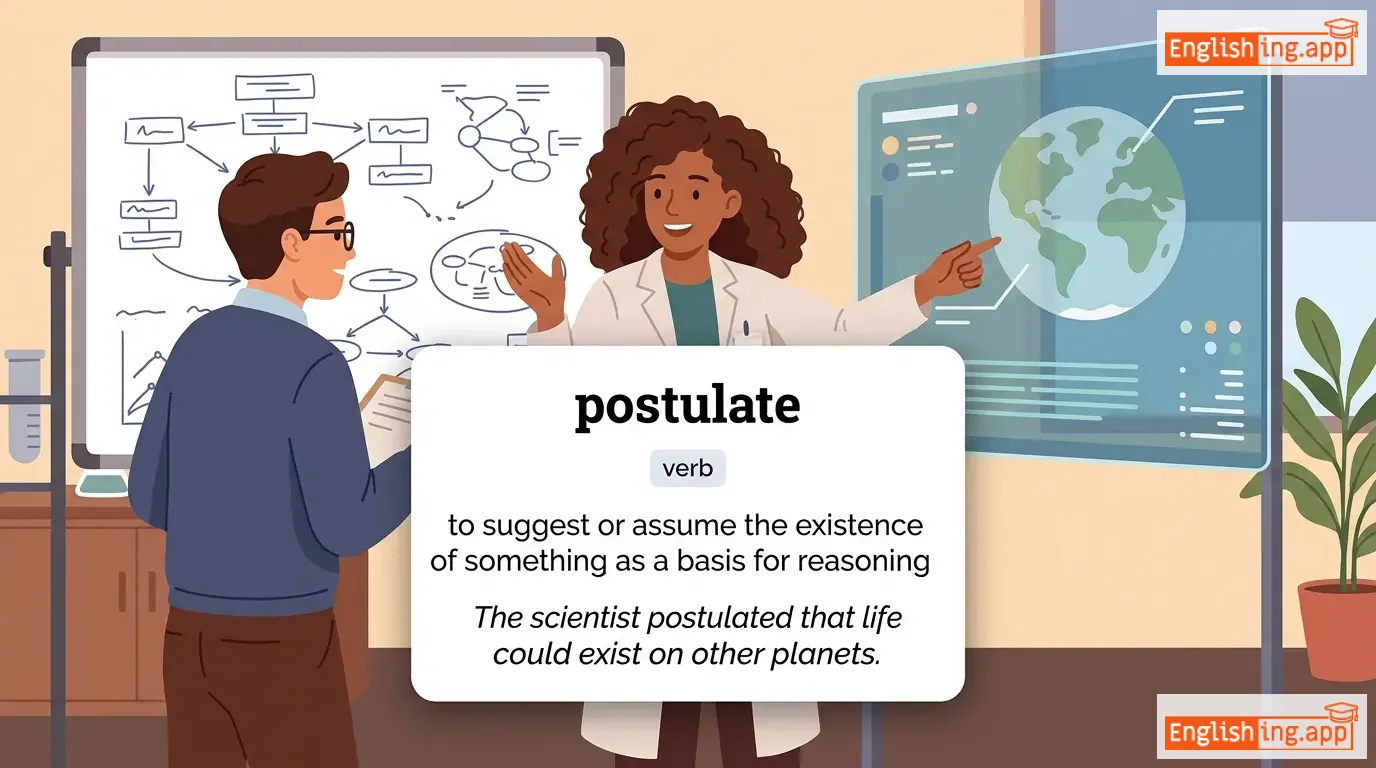
postulate definition card — visual illustration of the meaning
verb
/ˈpɒstjʊˌleɪt/
仮定する (katei suru)

to suggest or assume the existence of something as a basis for reasoning

"The scientist postulated that life could exist on other planets."

"科学者は他の惑星で生命が存在する可能性があると仮定しました。" (Kagakusha wa hoka no wakusei de seimei ga sonzai suru kanōsei ga aru to katei shimashita.)
noun
/ˈpɒstʃə/
幸せ (shiawase)

the position in which someone holds their body; an attitude or approach

"Good posture helps prevent back pain."

"彼女は賞を受け取ったとき、幸せを隠すことができませんでした。" (Kanojo wa shō o uketotta toki, shiawase o kakusu koto ga dekimasen deshita.)
adjective
/ˈpəʊstwɔːr/
戦後 (sengo)

occurring or existing after a war

"The postwar period saw significant economic growth."

"戦後の時期には、顕著な経済成長が見られました。" (Sengo no jiki ni wa, kencho na keizai seichou ga mirarimashita.)
noun
/pɒt/
ポット (potto)

a container, typically round and deep, used for cooking or holding plants

"She put the soup in a pot and set it on the stove."

"彼女はスープをポットに入れ、それをストーブの上に置きました。" (Kanojo wa sūpu o potto ni irete, sore o sutōbu no ue ni okimashita.)
adjective
/ˈpəʊtəbl/
飲料水 (inryousui)

safe to drink; drinkable

"The villagers did not have access to potable water."

"村人たちは飲用水へのアクセスがありませんでした。" (Murabito-tachi wa inryousui e no akusesu ga arimasen deshita.)
noun
/pəˈteɪtoʊ/
ジャガイモ (jagaimo)

a starchy plant tuber that is a staple food around the world

"We had mashed potato with our dinner."

"私たちは夕食にマッシュポテトを食べました。" (Watashitachi wa yūshoku ni masshu poteto o tabemashita.)
noun
/ˈpɒtˌbɔɪlə/
安物の作品 (amono no sakuhin)

a book, play, or film produced quickly to make money rather than for artistic value

"The novel was dismissed by critics as a mere potboiler."

"その小説は批評家によってただの安物の作品だと退けられた。" (Sono shōsetsu wa hihyōka ni yotte tada no amono no sakuhin da to shikirerareta.)
noun
/ˈpoʊtənsi/
効力 (kōryoku)

The power or ability of something to affect or influence; strength or effectiveness.

"The potency of the new medicine amazed the doctors."

"新薬の効力に医者たちは驚きました。" (Shinyaku no kōryoku ni ishatachi wa odorokimashita.)
adjective
/ˈpoʊtənt/
強力 (kyōryoku)

Having great power, influence, or effect.

"This is a very potent drug that should be used carefully."

"これは非常に強力な薬で、慎重に使用する必要があります。" (Kore wa hijō ni kyōryoku na kusuri de, shinchō ni shiyō suru hitsuyō ga arimasu.)
noun
/ˈpoʊtənˌteɪt/
君主 (kunshu)

A monarch or ruler, especially one with absolute power.

"The ancient land was ruled by a powerful potentate."
"古代の土地は強力な君主によって支配されていました。" (Kodai no tochi wa kyōryoku na kunshu ni yotte shihai sarete imashita.)
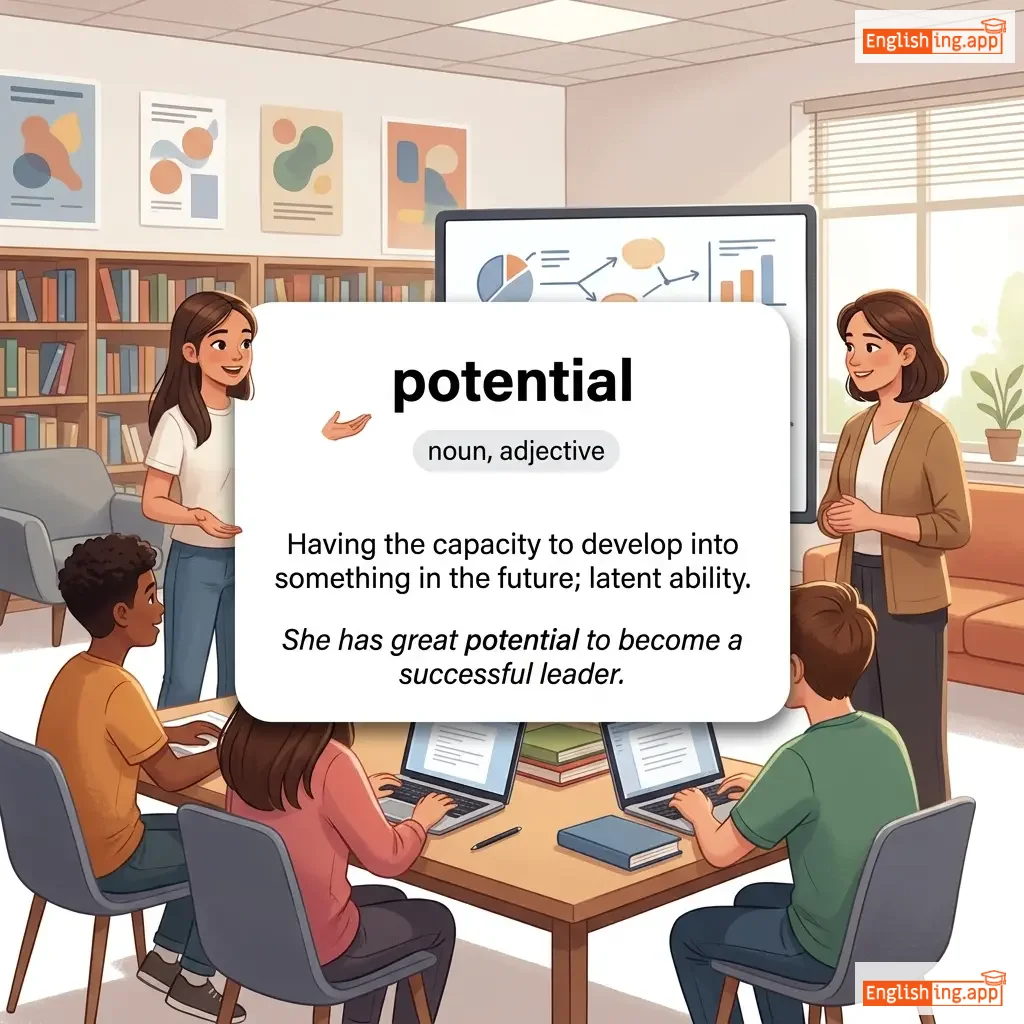
potential definition card — visual illustration of the meaning
noun, adjective
/pəˈtɛnʃəl/
可能性 (kanousei)

Having the capacity to develop into something in the future; latent ability.

"She has great potential to become a successful leader."

"彼女には成功したリーダーになる大きな可能性がある。" (Kanojo ni wa seikō shita rīdā ni naru ōkina kanōsei ga aru.)
adverb
/pəˈtɛnʃəli/
潜在的に (senzai-teki ni)

with the possibility of becoming something in the future

"This project is potentially a huge success."

"このプロジェクトはポテンシャリー大きな成功になるかもしれません。" (Kono purojekuto wa potensharī ōkina seikō ni naru kamoshiremasen.)
verb
/poʊˈtɛnʃiˌeɪt/
強化する (kyouka suru)

To increase the power, effect, or likelihood of something.

"Caffeine can potentiate the effects of some medicines."

"カフェインは一部の薬の効果を高めることができます。" (Kafein wa ichibu no kusuri no kouka wo takameru koto ga dekimasu.)
noun
/ˈpoʊʃən/
薬の飲み物 (kusuri no nomimono)

a liquid with healing, magical, or poisonous properties

"The witch gave the hero a healing potion."

"魔女はヒーローに治療用のポーションを渡しました。" (Majo wa hīrō ni chiryōyō no pōshon o watashimashita.)
noun
/ˌpoʊpʊˈriː/
乾燥花の混合物 (kansou hana no kongou-mono)

a mixture of dried flowers and spices kept in a bowl to perfume a room; a miscellaneous collection

"The living room was filled with the scent of potpourri."

"リビングルームはポプリの香りで満たされていました。" (Ribingurumu wa popuri no kaori de mitasarete imashita.)
noun
/ˈpɑː.tər/
陶芸家 (tōgeika)

a person who makes pottery

"The potter shaped clay on the spinning wheel."

"陶芸家は回転するろくろの上で粘土を形作った。" (Tōgeika wa kaiten suru rokuro no ue de nendo o katachi zutta.)
noun
/paʊtʃ/
ポーチ (pōchi)

a small bag or pocket, often used to carry small items

"She kept her coins in a small leather pouch."

"彼女は小さな革のポーチにコインを入れていました。" (Kanojo wa chiisana kawa no pōchi ni koin o irete imashita.)
noun
/ˈpoʊltɪs/
温かい薬草の湿布 (atatakai yakusou no shippu)

a soft, moist mass of material applied to the body to relieve soreness and inflammation

"The nurse applied a warm poultice to his injured leg."

"看護師は彼の怪我した足に温かい湿布を貼った。" (Kangoshi wa kare no kega shita ashi ni atatakai shippu o hatteta.)
noun, verb
/paʊnd/
ポンド (pondo)

a unit of weight equal to 16 ounces or a unit of currency

"The price of the book is five pounds."

"その本の価格は5ポンドです。" (Sono hon no kakaku wa go pondo desu.)
verb
/pɔːr/
注ぐ (sosogu)

to cause a liquid to flow from a container

"She poured the tea into the cup."

"彼女はカップにお茶を注ぎました。" (Kanojo wa kappu ni ocha o sosogimashita.)
verb
/paʊt/
口を尖らせる (kuchi wo togaraseru)

to push one's lips forward as an expression of annoyance or sulkiness

"The child began to pout when he didn’t get the toy."

"おもちゃをもらえなかったとき、子供は口を尖らせることを始めた。" (Omocha wo moraenakatta toki, kodomo wa kuchi wo togaraseru koto wo hajimeta.)
noun
/ˈpɒvəti/
貧困 (hinkon)

the state of being extremely poor

"Poverty is a major issue in many countries."

"貧困は多くの国々で重要な問題です。" (Hinkon wa ōku no kuniguni de jūyōna mondai desu.)
noun
/ˈpaʊdər/
(kona)

a fine, dry substance made of very tiny particles

"She sprinkled some powder on the cake."
"彼女はケーキに粉をふりかけました。" (Kanojo wa kēki ni kona o furikakemashita.)
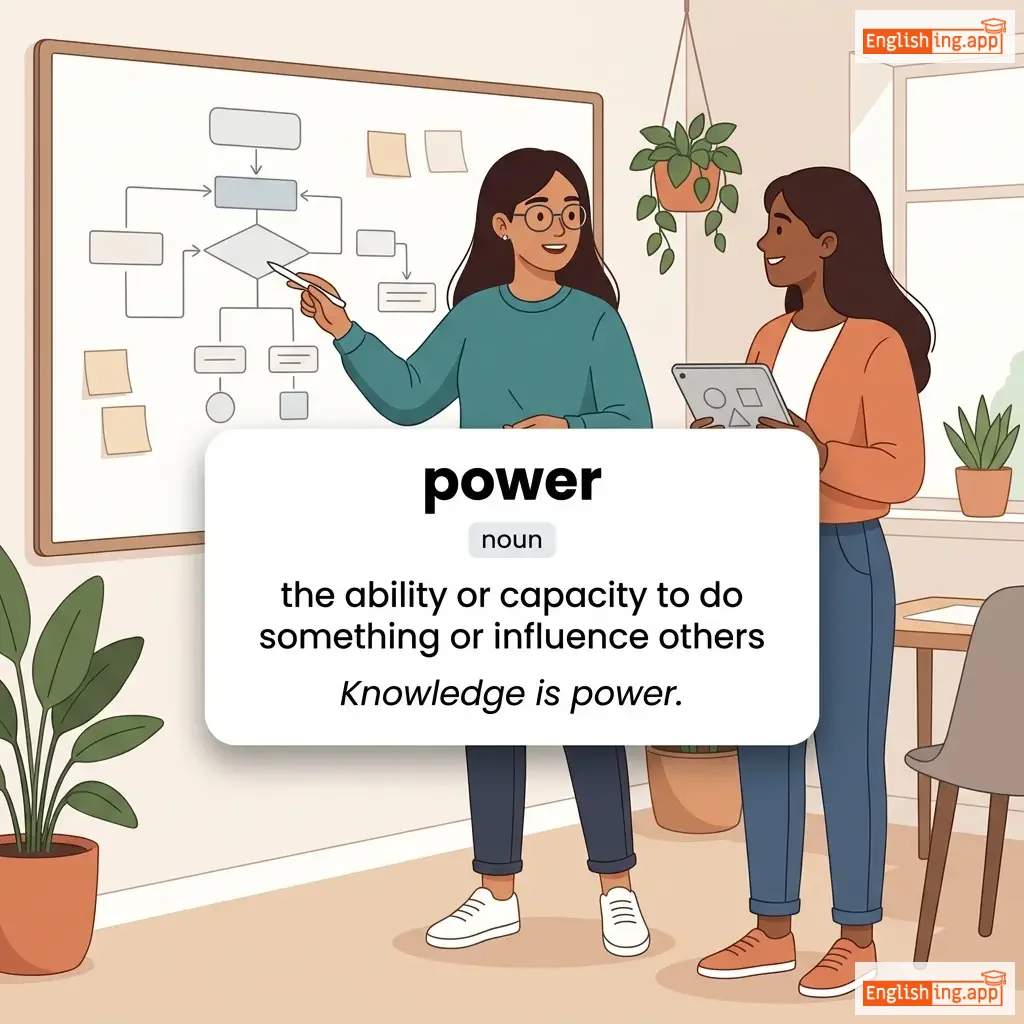
power definition card — visual illustration of the meaning
noun
/ˈpaʊər/
(chikara)

the ability or capacity to do something or influence others

"Knowledge is power."
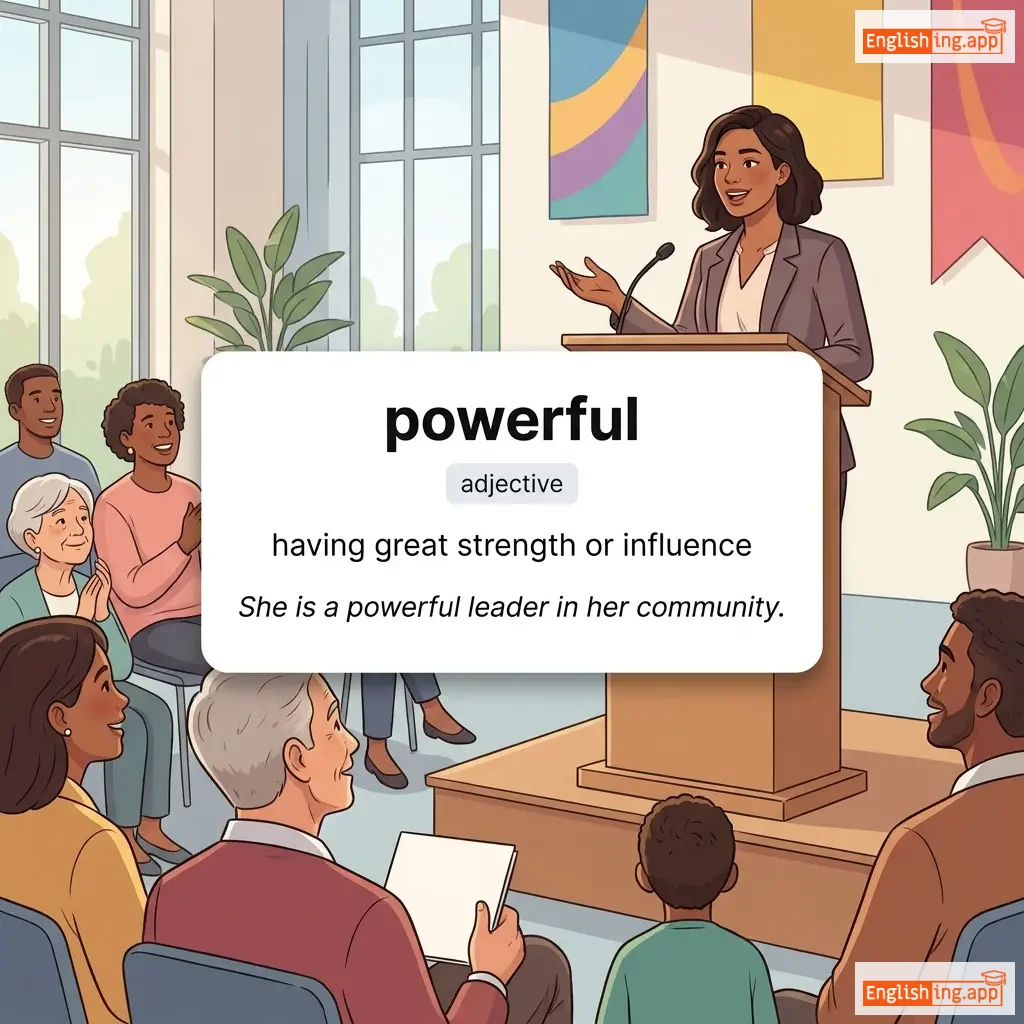
"知識は力です。" (Chishiki wa chikara desu.)
powerful definition card — visual illustration of the meaning
adjective
/ˈpaʊərfəl/
強力な (kyōryokuna)

having great strength or influence

"She is a powerful leader in her community."

"彼女はコミュニティで強力なリーダーです。" (Kanojo wa komyuniti de kyōryokuna rīdā desu.)
adjective
/ˈpaʊərləs/
無力 (muryoku)

without ability, influence, or strength

"She felt powerless against the unfair system."

"彼女は不公平なシステムに対して無力だと感じていた。" (Kanojo wa fukōhei na shisutemu ni taishite muryoku da to kanjite ita.)
noun
/ˈpaʊ.waʊ/
インフォーマルミーティング (infōmaru mītingu)

an informal meeting or conference to discuss something

"The team held a quick powwow before the presentation."

"チームはプレゼンテーションの前に迅速なインフォーマルミーティングを開催しました。" (Chīmu wa purezentēshon no mae ni jinsoku na infōmaru mītingu o kaisai shimashita.)
adjective
/ˈpræk.tɪ.kə.bəl/
実行可能 (jikkou kanou)

able to be done or put into practice successfully

"The plan is not practicable without more resources."
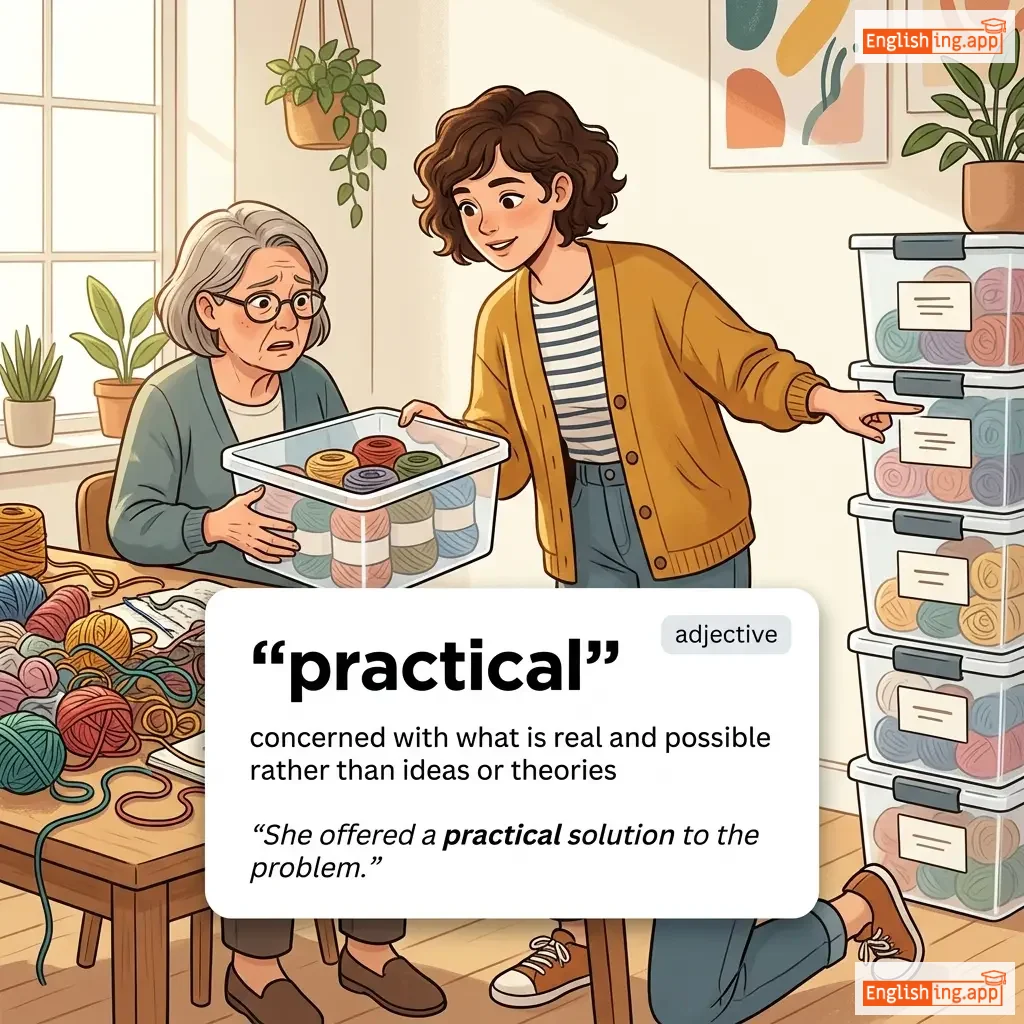
"その計画はより多くのリソースがなければ実行不可能です。" (Sono keikaku wa yori ooku no risōsu ga nakereba jikkou fukanou desu.)
practical definition card — visual illustration of the meaning
adjective
/ˈpræk.tɪ.kəl/
実用的な (jitsuyō-teki na)

concerned with what is real and possible rather than ideas or theories

"She offered a practical solution to the problem."

"彼女は問題に対して実用的な解決策を提供しました。" (Kanojo wa mondai ni taishite jitsuyō-teki na kaiketsu-saku o teikyō shimashita.)
adverb
/ˈpræktɪkli/
実質的に (jisshitsuteki ni)

in a way that is almost or nearly; in a realistic or functional manner

"The movie theater was practically empty."

"映画館はほとんど空っぽだった。" (Eigakan wa hotondo karappo datta.)
practice definition card — visual illustration of the meaning
noun/verb
/ˈpræk.tɪs/
練習 (renshuu)

the act of doing something repeatedly to improve skill, or the actual application of an idea

"He practices the piano every day."
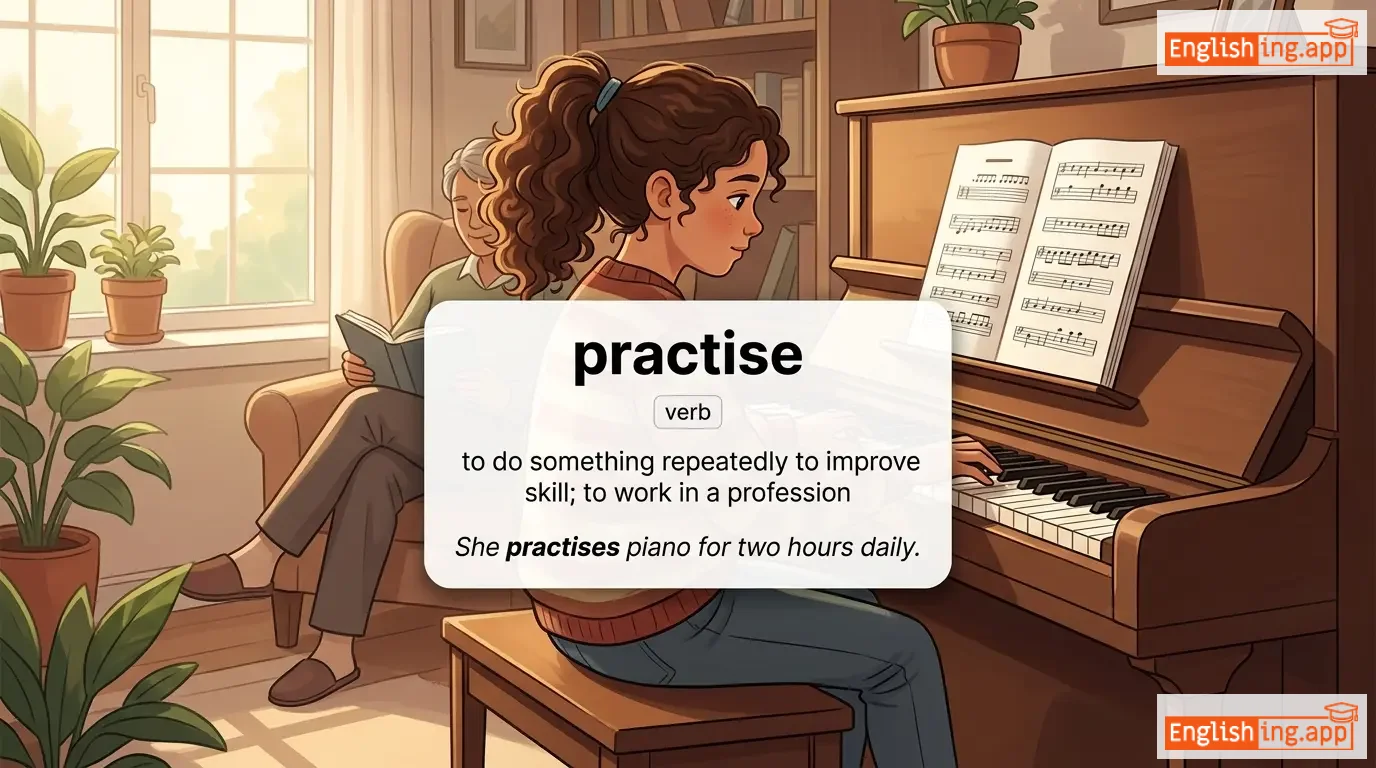
"彼は毎日ピアノを練習します。" (Kare wa mainichi piano wo renshuu shimasu.)
practise definition card — visual illustration of the meaning
verb
/ˈpræktɪs/
練習する (renshuu suru)

to do something repeatedly to improve skill; to work in a profession

"She practises piano for two hours daily."

"彼女は毎日2時間ピアノを練習します。" (Kanojo wa mainichi 2 jikan piano o renshuu shimasu.)
noun
/prækˈtɪʃ.ən.ər/
実務家 (jitsumuka)

a person actively engaged in a profession, especially medicine or law

"She is a skilled medical practitioner."
"彼女は優れた医療実務家です。" (Kanojo wa sugureta iryō jitsumuka desu.)
pragmatic definition card — visual illustration of the meaning
🛠️

pragmatic

adjective
/præɡˈmætɪk/

Dealing with problems in a practical and sensible way rather than depending on theories or ideals.

"She took a pragmatic approach to solving the business challenge."

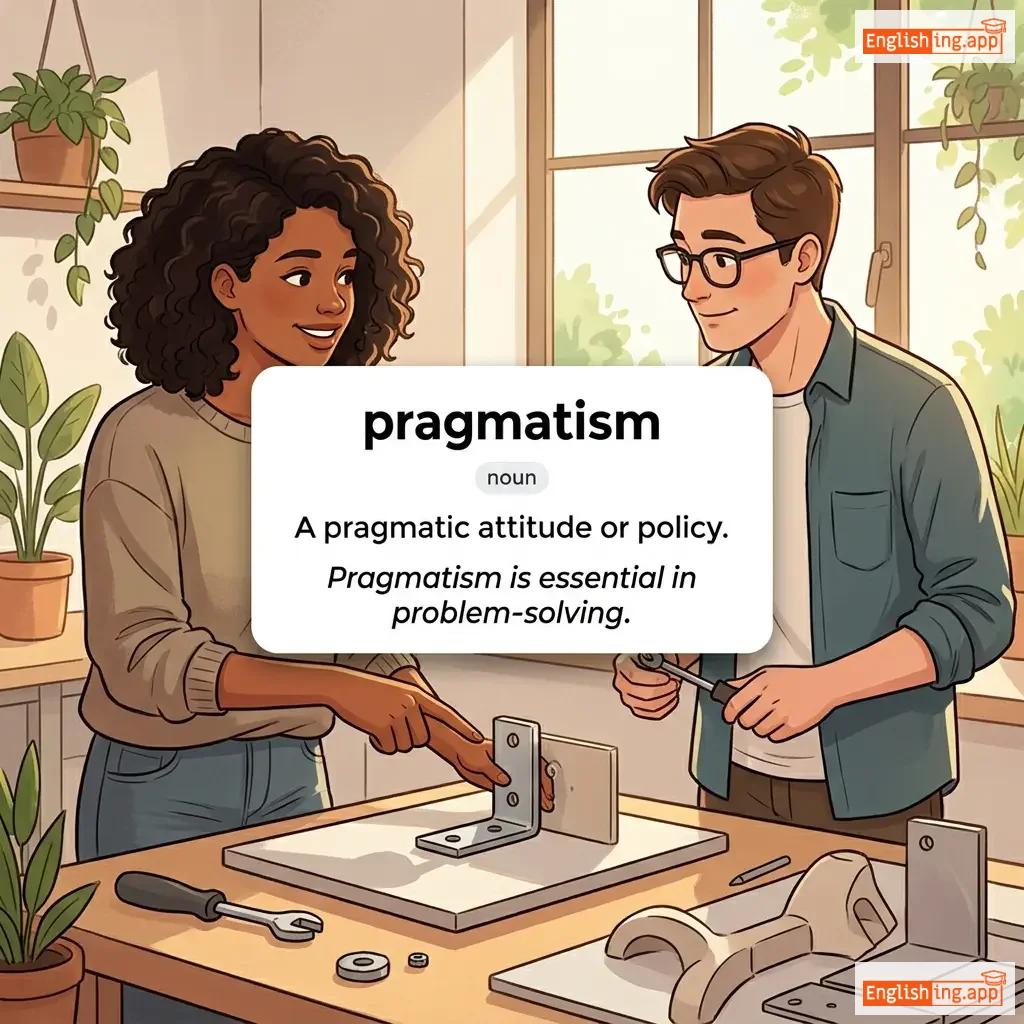
pragmatism definition card — visual illustration of the meaning
noun
/ˈpræɡ.mə.tɪ.zəm/
実用主義 (jitsuyou shugi)

A pragmatic attitude or policy.

"Pragmatism is essential in problem-solving."

"問題解決には実用主義が不可欠です。" (Mondai kaiketsu ni wa jitsuyou shugi ga fukaketsu desu.)
noun
/ˈpræɡmətɪst/
実利主義者 (jitsuri shugisha)

A person who deals with things in a practical and realistic way.

"He is a true pragmatist who values results over ideals."

"彼は結果を理想よりも重視する真の実利主義者です。" (Kare wa kekka o risou yori mo juushi suru shin no jitsuri shugisha desu.)
noun
/ˈprɛəri/
草原 (kogen)

A large open area of grassland, especially in North America.

"The bison roamed freely across the prairie."
"バイソンは草原を自由に歩き回った。" (Baison wa kogen o jiyuu ni arukimatta.)
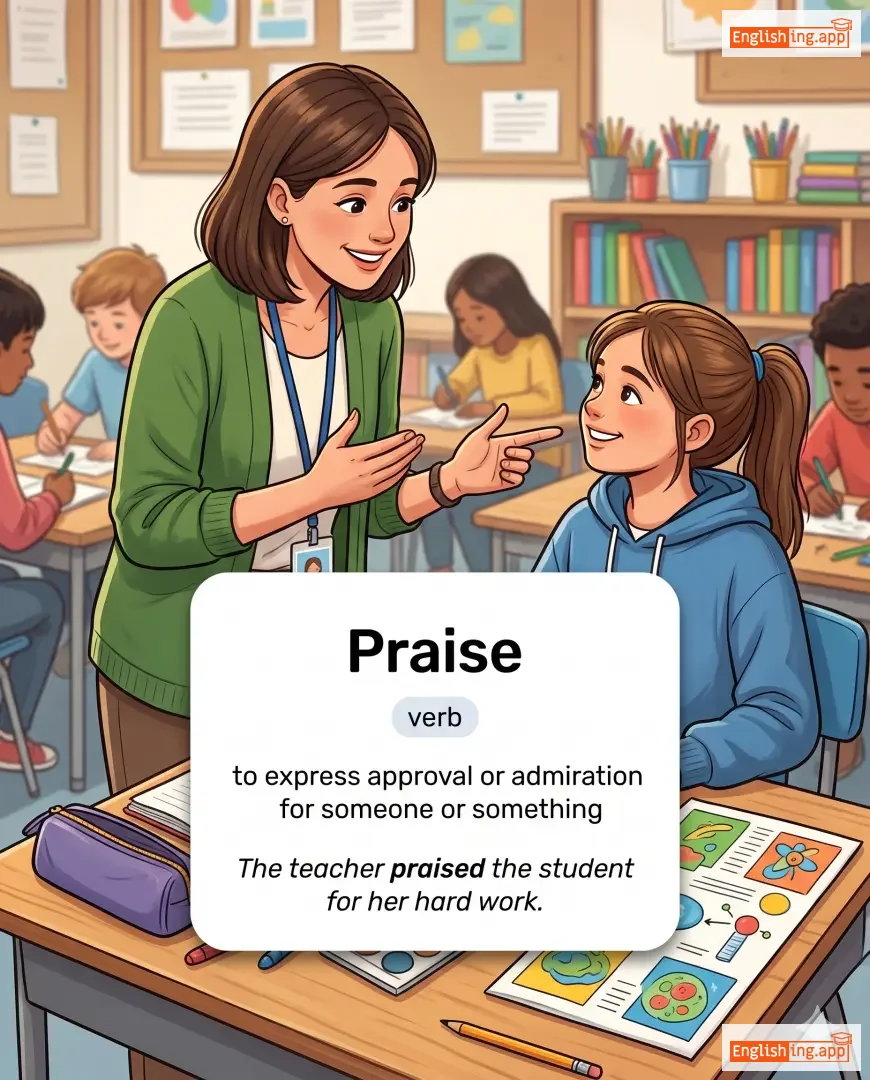
Praise definition card — visual illustration of the meaning
verb
/preɪz/
賛美する (sanbi suru)

to express approval or admiration for someone or something

"The teacher praised the student for her hard work."

"先生は学生の努力を称賛しました。" (Sensei wa gakusei no doryoku o shousan shimashita.)
adjective
/ˈpreɪz.wɜː.ði/
賞賛に値する (shōsan ni ataisuru)

deserving praise; commendable; admirable

"Her charitable work is truly praiseworthy."

"彼女の慈善活動は本当に賞賛に値します。" (Kanojo no jizen katsudō wa hontōni shōsan ni atai shimasu.)