語彙集

英単語辞書 | 単語の意味、定義、例文

verb
/ˈpoʊ.lə.raɪz/
極化する (kyokuka suru)

to divide or cause to divide into two sharply contrasting groups or sets of opinions or beliefs

"The controversial decision polarized public opinion."

"論争を呼んだ決定は世論を二つの対立する意見に分けた。" (Ronsō o yonda kettei wa seiron o futatsu no tairitsu suru iken ni waketa.)
adjective
/ˈpoʊləraɪzd/
分極された (bunkyo sareta)

divided into two sharply contrasting groups or opinions

"The debate polarized the community on the issue of climate change."

"その議論は気候変動問題についてコミュニティを分裂させました。" (Sono giron wa kikō hendō mondai ni tsuite komyuniti o bunretsu sasemashita.)
noun
/poʊl/
(hashira)

a long, slender, vertical object or structure, typically made of wood, metal, or another material

"They placed the flag on top of the pole."

"彼らは旗をポールの上に置きました。" (Karera wa hata o pōru no ue ni okimashita.)
noun
/pəˈlɛmɪk/
論争的な攻撃 (ronsōteki na kōgeki)

a strong verbal or written attack on someone or something

"The article was a fierce polemic against the government's policies."

"その記事は政府の政策に対する激しい論争的な攻撃でした。" (sono kiji wa seifu no seisaku ni taisuru hageshī ronsōteki na kōgeki deshita.)
adjective
/pəˈlɛmɪkəl/
論争的 (ronsou-teki)

relating to or involving strongly critical or controversial writing or speech

"She wrote a polemical article challenging traditional beliefs."

"彼女は伝統的な信念に挑戦する論争的な記事を書いた。" (Kanojo wa dentouteki na shin'nen ni chousen suru ronsou-teki na kiji o kaita.)
noun
/pəˈlɛmɪks/
論争 (ronzō)

the art or practice of engaging in controversial debate or dispute

"The conference was full of polemics on economic reforms."

"会議は経済改革についての論争で満ちていた。" (Kaigi wa keizai kaikaku ni tsuite no ronzō de michite ita.)
noun
/ˈpoʊl.stɑːr/
北極星 (hokkyokusei)

a bright star that appears to stay in the same position in the sky and is used for navigation

"Sailors used the polestar to navigate across the ocean."

"船乗りはポールスターを使って海を渡った。" (funanori wa pōrusutā o tsukatte umi o watatta.)
noun
/pəˈliːs/
警察 (keisatsu)

a body of officers representing the civil authority of government

"The police arrived quickly to investigate the scene."

"警察はすぐに現場に到着して調査を行いました。" (Keisatsu wa sugu ni genba ni tōchaku shite chōsa o okonaimashita.)
noun
/pəˈliːsmən/
警察官 (keisatsukan)

a man whose job is to enforce the law and keep public order

"The policeman directed the traffic at the intersection."

"警察官は交差点で交通を指導しました。" (Keisatsukan wa kōsaten de kōtsū o shidō shimashita.)
policy definition card — visual illustration of the meaning
noun
/ˈpɑːləsi/
方針 (hōshin)

a course or principle of action adopted or proposed by an organization or individual

"The company revised its privacy policy last month."
"その会社は先月プライバシーポリシーを改訂しました。" (Sono kaisha wa sengetsu puraibashī porishī o kaitei shimashita.)
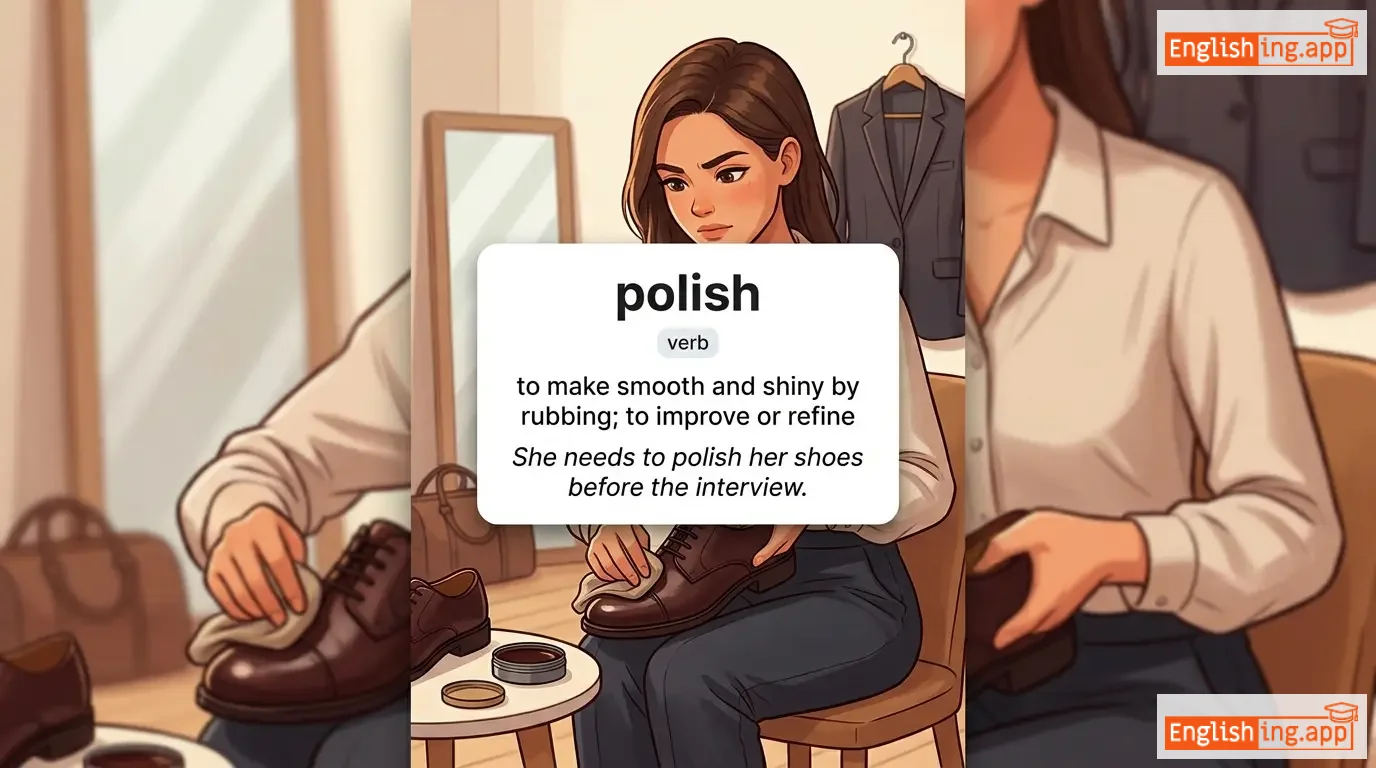
polish definition card — visual illustration of the meaning
verb
/ˈpɑːlɪʃ/
磨く (migaku)

to make smooth and shiny by rubbing; to improve or refine

"She needs to polish her shoes before the interview."

"面接前に靴を磨かなければならない。" (Mensetsu mae ni kutsu o migakunakereba naranai.)
adjective
/ˈpɒlɪʃt/
洗練された、精巧で優雅 (senren sareta, seikō de yūga)

refined, sophisticated, and elegant in appearance or behavior

"She gave a polished performance at the recital."

"彼女はリサイタルで洗練されたパフォーマンスを披露しました。" (Kanojo wa risaitaru de senren sareta pafōmansu o hirō shimashita.)
adjective
/pəˈlaɪt/
幸福 (kōfuku)

Showing good manners and respect towards others.

"He was very polite to the elderly woman."

"彼女は賞を受け取ったとき、幸せを隠すことができなかった。" (Kanojo wa shō o uketotta toki, kōfuku o kakusu koto ga dekinakatta.)
adverb
/pəˈlaɪt.li/
丁寧に; (teinei ni)

in a respectful and considerate manner; courteously; with good manners

"She politely declined the invitation because she had other commitments."

"彼女は他の約束があったので、丁寧に招待を断った。" (Kanojo wa hoka no yakusoku ga atta node, teinei ni shōtai o kotowatta.)
adjective
/ˈpɒlɪtɪk/
賢明な、慎重な (kenmei na, shinchou na)

shrewd, prudent, or tactful in practical matters

"It was politic of him to remain silent during the argument."
"論争中に沈黙を守るのは賢明な判断だった。" (Ronsou-chuu ni chinmoku wo mamoru no wa kenmei na handan datta.)
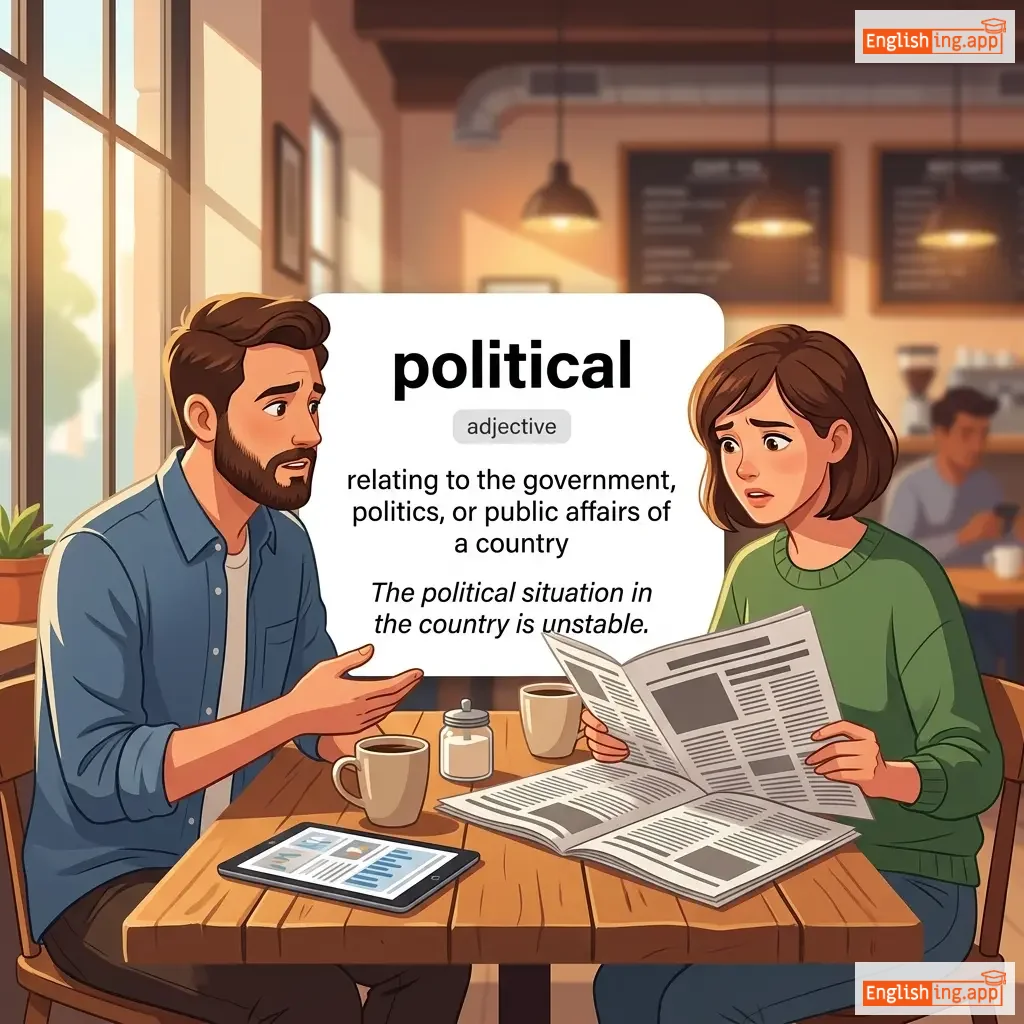
political definition card — visual illustration of the meaning
adjective
/pəˈlɪtɪkəl/
政治的 (seijiteki)

relating to the government, politics, or public affairs of a country

"The political situation in the country is unstable."

"その国の政治状況は不安定です。" (Sono kuni no seiji jōkyō wa fuantei desu.)
adverb
/pəˈlɪtɪkəli/
政治的に (seijiteki ni)

in a way that relates to politics or government

"The country is politically divided between two major parties."

"その国は二つの主要な政党の間で政治的に分裂しています。" (Sono kuni wa futatsu no shuyōna seito no aida de seijiteki ni bunretsu shiteimasu.)
noun
/pəˈlɪtɪʃən/
政治家 (seijika)

a person who is involved in politics, especially as a profession

"The politician promised to improve the economy."

"政治家は経済改善を約束しました。" (Seijika wa keizai kaizen o yakusoku shimashita.)
noun
/ˈpɒlɪtɪks/
政治 (seiji)

activities related to the governance of a country or area, especially the debate between parties having power

"Politics often involves making difficult decisions."

"政治はしばしば難しい決定を下すことを伴います。" (Seiji wa shibashiba muzukashī kettei o kudasu koto o tomonai masu.)
noun
/ˈpɒlɪti/
政治、政府の形態 (seiji, seifu no keitai)

an organized society or form of government

"The ancient Greek polity had a system of city-states."

"古代ギリシャの政治は都市国家のシステムを持っていました。" (Kodai Girisha no seiji wa toshikokka no shisutemu o motte imashita.)
noun/verb
/pəʊl/
世論調査 (seron chosa)

a survey of public opinion or voting in an election

"The poll revealed that most people favored the new policy."

"世論調査ではほとんどの人が新しい政策を支持していることが明らかになった。" (Seron chōsa de wa hotondo no hito ga atarashī seisaku o shiji shite iru koto ga akiraka ni natta.)
noun
/ˈpɒlən/
花粉 (kafun)

fine powder produced by flowers, used in fertilization

"Bees collect pollen from flowers to make honey."
"ミツバチは花から花粉を集めて蜂蜜を作ります。" (Mitsubachi wa hana kara kafun o atsume te hachimitsu o tsukurimasu.)
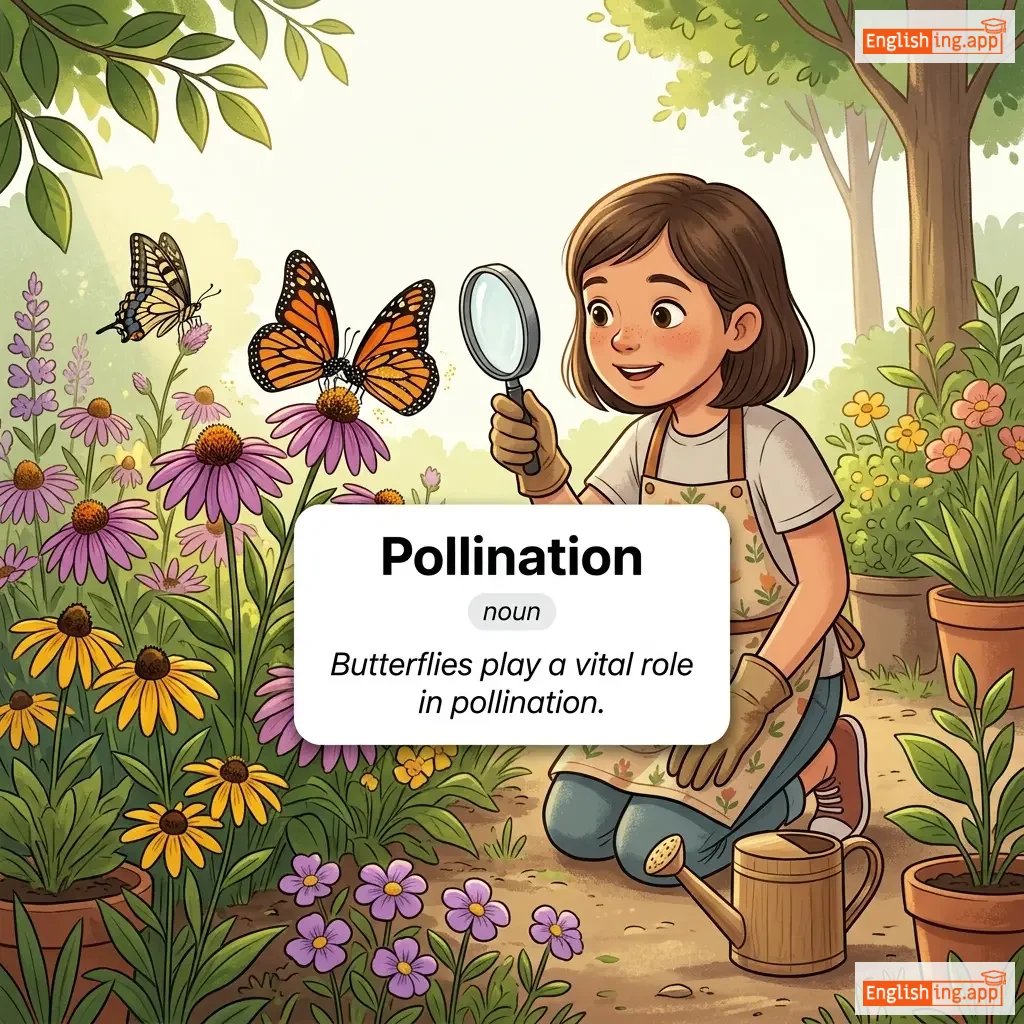
Pollination definition card — visual illustration of the meaning
noun
ˌpɒlɪˈneɪʃən
受粉 (jufun)

The process by which pollen is transferred from flowers, enabling plant reproduction.

"Butterflies play a vital role in pollination."

"蝶々は受粉において重要な役割を果たしています。" (Chōchō wa jufun ni oite jūyō na yakuwari o hatashiteimasu.)
noun
/ˈpoʊlstər/
世論調査員 (seron chōsain)

a person or organization that conducts surveys to gauge public opinion

"The pollster predicted a close election outcome."
"世論調査員は接戦の選挙結果を予測しました。" (Seron chōsain wa sessen no senkyo kekka o yosoku shimashita.)
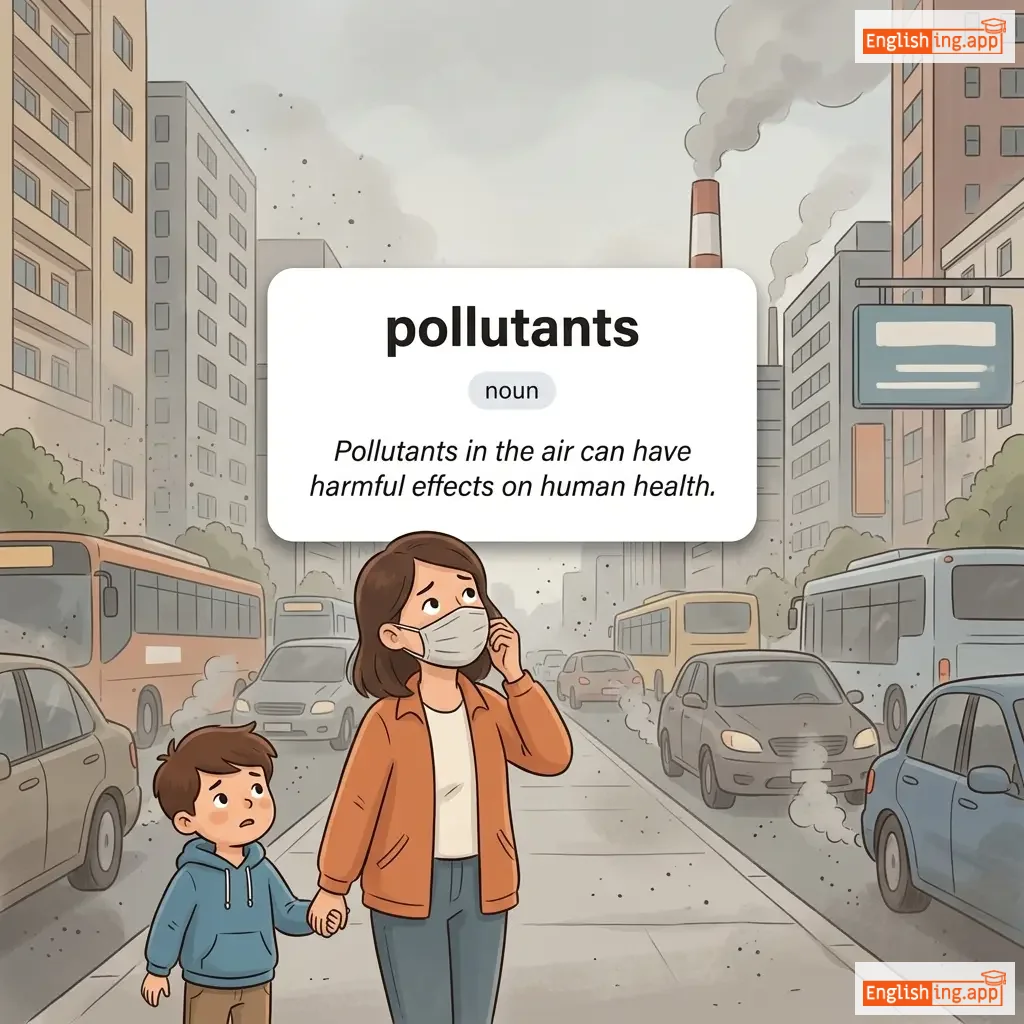
pollutants definition card — visual illustration of the meaning
noun
/pəˈluːtənts/
汚染物質 (osen busshitsu)

Harmful substances that contaminate the environment, including air, water, and soil, potentially causing damage to living organisms and ecosystems.

"Pollutants in the air can have harmful effects on human health."
"空気中の汚染物質は人間の健康に有害な影響を与える可能性があります。" (Kūki-chū no osen busshitsu wa ningen no kenkō ni yūgaina eikyō o ataeru kanōsei ga arimasu.)
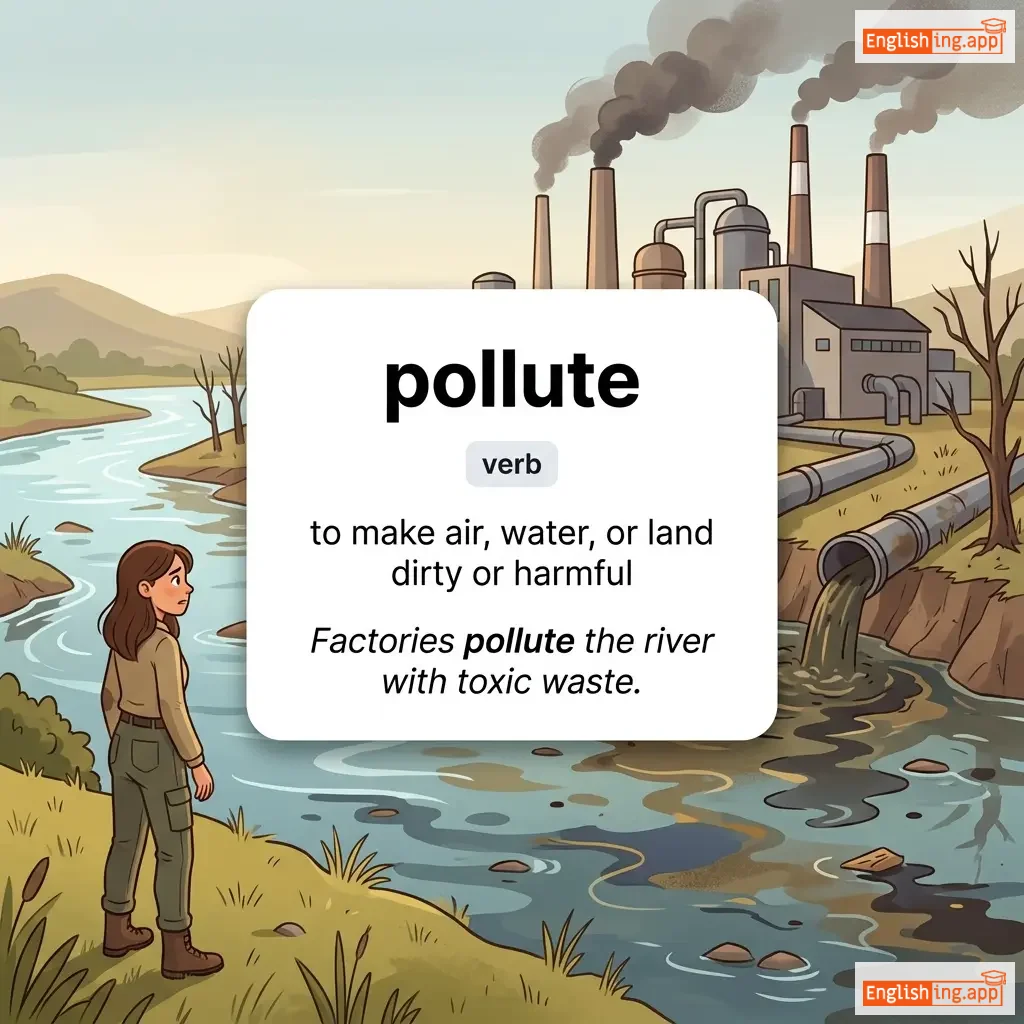
pollute definition card — visual illustration of the meaning
verb
/pəˈluːt/
汚染する (osen suru)

to make air, water, or land dirty or harmful

"Factories pollute the river with toxic waste."
"工場は有害な廃棄物で川を汚染します。" (Kōjō wa yūgaina haikimotsu de kawa o osen shimasu.)
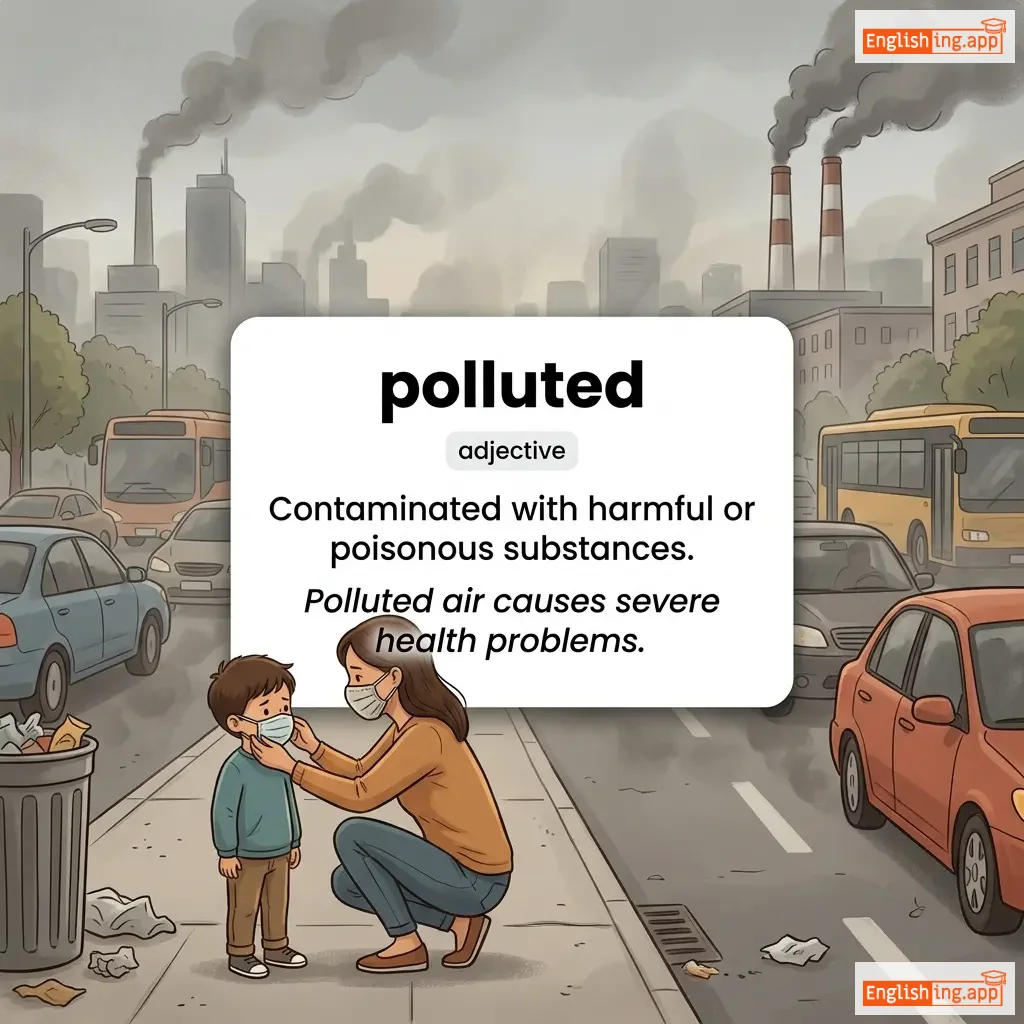
polluted definition card — visual illustration of the meaning
adjective
/pəˈluː.tɪd/
汚染された (osen sareta)

Contaminated with harmful or poisonous substances.

"Polluted air causes severe health problems."
"汚染された空気は深刻な健康問題を引き起こします。" (Osen sareta kūki wa shinkoku na kenkō mondai o hikiokoshimasu.)
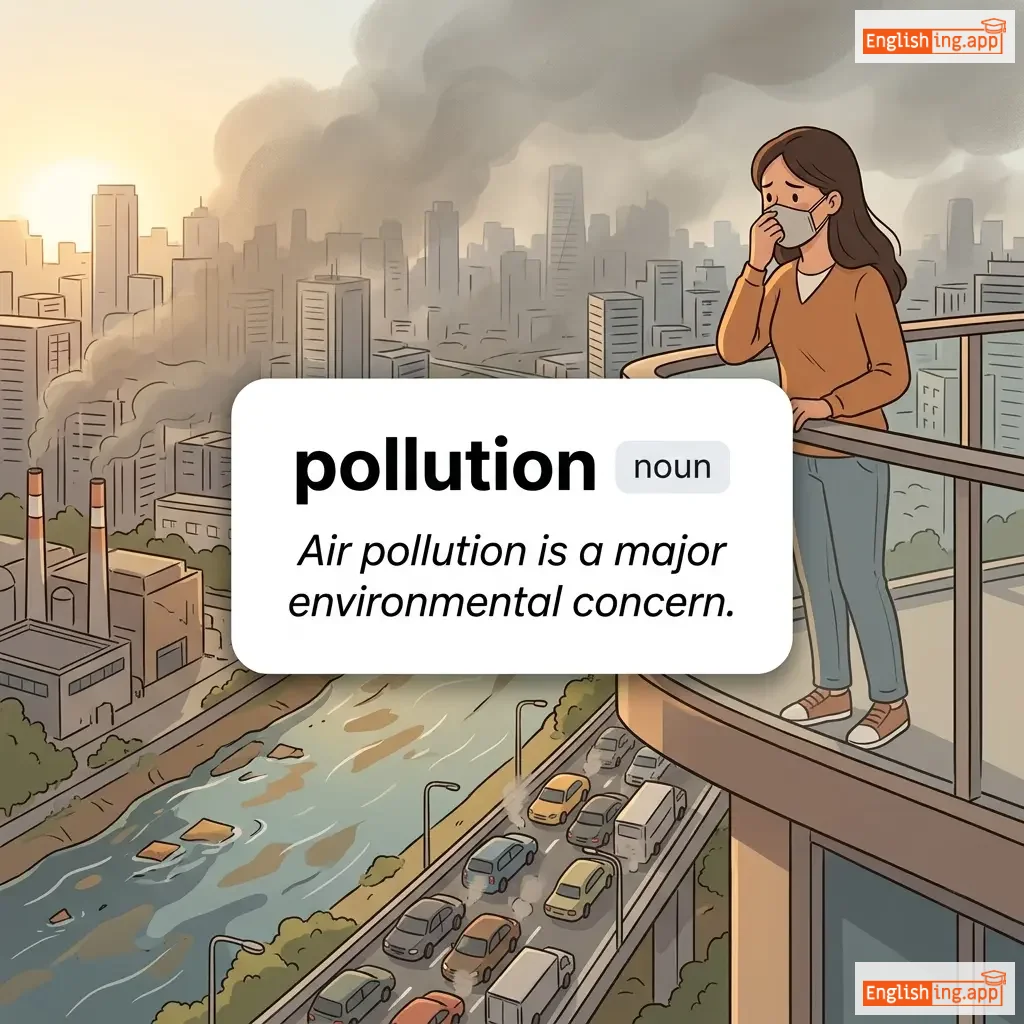
pollution definition card — visual illustration of the meaning
noun
/pəˈlʊʃən/
汚染 (osen)

the presence of harmful substances in the environment, especially the air, water, or soil

"Air pollution is a major environmental concern."

"大気汚染は重要な環境問題です。" (Taiki osen wa juuyo na kankyo mondai desu.)
adjective
/ˌpɒliˈæn.ɪ.ɪʃ/
過度に楽観的 (kado ni rakkan teki)

overly or blindly optimistic

"Her pollyannaish attitude ignored the obvious problems."

"彼女の過度に楽観的な態度は明らかな問題を無視していた。" (Kanojo no kado ni rakkan teki na taido wa akiraka na mondai o mushi shite ita.)
noun
/pəˈtruːn/
臆病者 (okubyou-sha)

a cowardly person

"He acted like a poltroon during the crisis."

"彼は危機の際、臆病者のように振る舞った。" (Kare wa kiki no sai, okubyou-sha no you ni furumatta.)
noun
/ˈpɒliˌɑːrki/
ポリアーキー (poriākī)

government by many people

"Polyarchy allows multiple parties to share power."

"ポリアーキーは複数の政党が権力を共有することを許可します。" (Poriākī wa fukusū no seitō ga kenryoku o kyōyū suru koto o kyoka shimasu.)
noun
/ˈpɒliˌkreɪsi/
多権主義 (takenshugi)

rule by many; government by multiple authorities

"The nation experienced a polycracy after decentralization reforms."

"国は分権改革後、多権主義を経験しました。" (Kuni wa bunken kaikaku-go, takenshugi o keiken shimashita.)
👨‍👩‍👧‍👦

polygamist (ポリガミスト)

noun
/ˈpɒlɪɡæmɪst/
重婚者 (jūkonsya)

a person who has more than one spouse at the same time

"The polygamist had three wives living in different houses."

"ポリガミストは三人の妻が別々の家に住んでいる。" (Porigamisuto wa sannin no tsuma ga betsubetsu no ie ni sunde iru.)
noun
/ˈpɒlɪɡəmi/
重婚 (jūkon)

the practice of having more than one spouse at the same time

"Polygamy is legal in some countries but frowned upon in others."

"ポリガミーは一部の国では合法ですが、他の国では非難されています。" (Porigamī wa ichibu no kuni de wa gōhōdesu ga, hoka no kuni de wa hinan sareteimasu.)
noun
/ˈpɒlɪɡlɒt/
ポリグロット (porigurotto)

a person who knows and can use several languages

"She is a polyglot, fluent in English, Spanish, and Bengali."

"彼女はポリグロットで、英語、スペイン語、ベンガル語に堪能です。" (Kanojo wa porigurotto de, eigo, supeingo, bengarugo ni tannō desu.)
noun
/ˈpɒlɪɡɒn/
多角形 (takakkei)

a flat shape with three or more straight sides

"The artist drew a colorful polygon on the canvas."

"アーティストはキャンバスにカラフルなポリゴンを描きました。" (Atisuto wa kyanbasu ni karafuru na porigon o kakimashita.)
noun
/ˌpɒlɪˈhiːdrən/
多面体 (tamentai)

a solid object with flat polygonal faces, straight edges, and vertices

"The mathematician studied a complex polyhedron model."

"数学者は複雑なポリヘドロンモデルを研究しました。" (Sugakusha wa fukuzatsu na porihedoron moderu wo kenkyu shimashita.)
noun
/ˈpɒl.i.mæθ/
博識者 (hakushikisha)

a person with knowledge of many different subjects

"Leonardo da Vinci was a true polymath, excelling in art, science, and engineering."

"レオナルド・ダ・ヴィンチは、芸術、科学、工学において優れた博識者でした。" (Reonarudo da Vinchi wa, geijutsu, kagaku, kōgaku ni oite sugureta hakushikisha deshita.)
noun
/ˌpɒl.iˈsɪl.ə.bəl/
多音節語 (taonsetsugo)

a word with more than one syllable

"The word 'elephant' is a polysyllable because it has three syllables."

"‘象’という言葉は、3つの音節があるので多音節語です。" ('Zou' to iu kotoba wa, mittsu no onsetsu ga aru node taonsetsugo desu.)
noun
/ˌpɒl.iˈtek.nɪk/
ポリテクニック (poritekunikku)

an educational institution offering practical and technical courses

"She studied engineering at a well-known polytechnic in her city."

"彼女は自分の街の有名なポリテクニックで工学を学んだ。" (Kanojo wa jibun no machi no yūmei na poritekunikku de kōgaku o mananda.)
noun
/ˈpɒl.iˌθi.ɪz.əm/
多神教 (tashinkyō)

the belief in or worship of multiple gods

"Ancient Greeks practiced polytheism, worshiping gods like Zeus and Athena."

"古代ギリシャ人はポリシズムを実践し、ゼウスやアテナのような神々を崇拝していました。" (Kodai Girisha-jin wa porishizumu o jissen shi, Zeus ya Atena no yō na kamigami o sūhai shite imashita.)
noun
/ˈpɒm.ɪˌɡræn.ɪt/

a round fruit with thick red skin containing many small red seeds with juice

"The pomegranate seeds were sweet and refreshing."

noun
/ˈpɒmfrɪt/
マナガツオ (managatsuo)

A deep-bodied marine fish with silvery scales, popular in Asian cuisine

"The restaurant serves delicious pomfret curry with rice."

"レストランはご飯と一緒に美味しいマナガツオカレーを提供します。" (resutoran wa gohan to issho ni oishii managatsuo kare o teikyo shimasu)
noun
/ˈpɒm.əl/
剣や鞍の取っ手の丸い部分 (ken ya kura no totte no marui bubun)

the rounded knob on the handle of a sword or saddle

"He gripped the sword firmly by the pommel."
"彼は剣のポメルをしっかりと握った。" (Kare wa ken no pommel o shikkari to nigitta.)
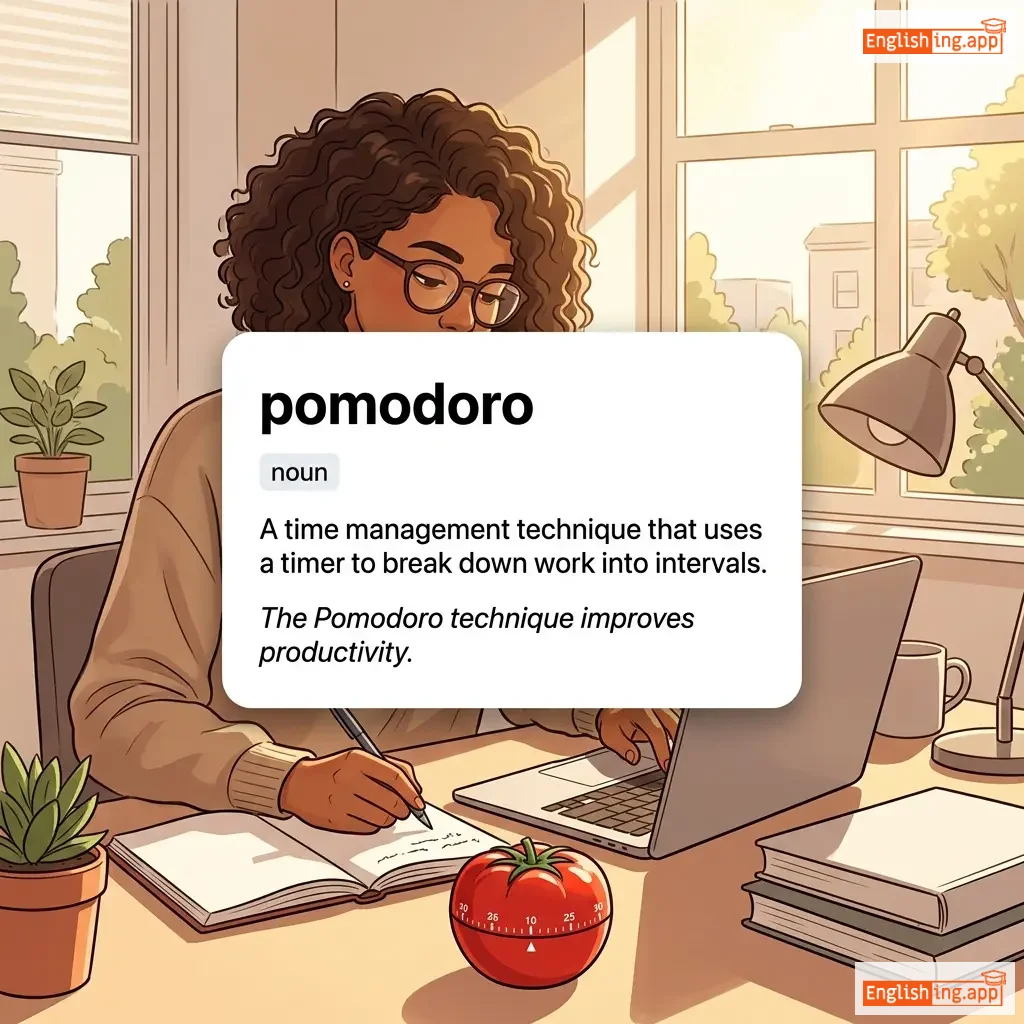
pomodoro definition card — visual illustration of the meaning
noun
/ˌpɒməˈdɔːrəʊ/
ポモドーロ (pomodoro)

A time management technique that uses a timer to break down work into intervals.

"The Pomodoro technique improves productivity."

"ポモドーロ技法は生産性を向上させます。" (Pomodoro gihō wa seisansei o kōjō sasemasu.)
noun
/pɒmp/
壮大, 豪華 (sōdai, gōka)

ceremonial display or splendor; grandeur

"The graduation ceremony was full of pomp and circumstance."

"卒業式は壮大で豪華でした。" (Sotsugyō shiki wa sōdai de gōka deshita.)
noun
/pɒmˈpɒsəti/
傲慢, 尊大 (gōman, son'dai)

self-important behavior or exaggerated dignity

"His speech was full of pomposity and arrogance."

"彼のスピーチはポンポジティと傲慢で満ちていました。" (Kare no supīchi wa ponpojiti to gōman de michite imashita.)
adjective
/ˈpɒmpəs/
傲慢な (gōman na)

exaggeratedly self-important; ostentatious

"The manager had a pompous attitude that annoyed his team."

"マネージャーは、チームを苛立たせるようなポンポスな態度を取っていた。" (Manējā wa, chīmu o iradataseru yō na ponposu na taido o totte ita.)
noun
/pɒnd/
(ike)

a small area of still water, smaller than a lake

"The children were feeding ducks at the pond."

"子供たちは池でアヒルに餌をあげていた。" (Kodomotachi wa ike de ahiru ni esa o agete ita.)
verb
/ˈpɒndər/
深く考える (fukaku kangaeru)

to think about something carefully

"She pondered over the meaning of the poem."

"彼女は詩の意味について深く考えていました。" (Kanojo wa shi no imi ni tsuite fukaku kangaete imashita.)