語彙集

英単語辞書 | 単語の意味、定義、例文

noun
/ˈfɪzɪks/
物理学 (butsuri-gaku)

the natural science that studies matter, energy, and the interactions between them

"She decided to major in physics at the university."

"彼女は大学で物理学を専攻することに決めました。" (Kanojo wa daigaku de butsuri-gaku o senkou suru koto ni kimemashita.)
noun
/ˌfɪzɪˈɑːkrəsi/
土地主義 (tochi shugi)

an economic theory that land and its natural products are the source of wealth

"Physiocracy emphasized the importance of agriculture in national wealth."

"土地主義は国の富における農業の重要性を強調しました。" (Tochi shugi wa kuni no tomi ni okeru nōgyō no jūyō-sei o kyōchō shimashita.)
noun
/ˌfɪziˈɒnəmi/
顔の特徴の分析 (kao no tokuchō no bunseki)

the study of facial features to judge character or personality

"He believed in physiognomy and tried to read people's personalities from their faces."

"彼はフィジオノミーを信じて、顔から人々の性格を読み取ろうとしました。" (Kare wa fizionomī o shinjite, kao kara hitobito no seikaku o yomitorou to shimashita.)
noun
/ˌfɪziˈɑːɡrəfi/
地理学 (chirigaku)

the study of the physical features of the earth's surface

"He specialized in physiography to understand the landscape of the region."

"彼は地域の風景を理解するためにフィジオグラフィーを専門にしていました。" (Kare wa chiiki no fūkei o rikai suru tame ni fiziogurafī o senmon ni shite imashita.)
physiological definition card — visual illustration of the meaning
adjective
/ˌfɪziəˈlɑːdʒɪkəl/
生理的 (seiriteki)

relating to the functions and processes of living organisms

"The study focused on the physiological responses to stress."

"その研究は、ストレスに対する生理的反応に焦点を当てました。" (Sono kenkyuu wa, sutoresu ni taisuru seiriteki hannou ni shouten o atemashita.)
noun
/ˌfɪziˈɑːlədʒi/
生理学 (seirigaku)

the scientific study of the functions and mechanisms in a living system

"She is majoring in human physiology at the university."

"彼女は大学で人間の生理学を専攻しています。" (Kanojo wa daigaku de ningen no seirigaku o senkou shiteimasu.)
noun
/fɪˈziːk/
体格 (taikaku)

the form, size, and development of a person's body

"He has an athletic physique due to years of training."

"彼は長年のトレーニングでアスリートのような体格を持っています。" (Kare wa naganen no toreiningu de asurīto no yōna taikaku o motteimasu.)
phytochemicals definition card — visual illustration of the meaning
noun
/ˌfaɪ.təʊˈkem.ɪ.kəlz/
フィトケミカル (fitokemikaru)

Natural chemical compounds produced by plants that provide health benefits beyond basic nutrition, often having antioxidant properties.

"Phytochemicals in green tea help reduce inflammation."

"緑茶に含まれるフィトケミカルは炎症を軽減するのに役立ちます。" (Ryokucha ni fukumareta fitokemikaru wa ensō o keigen suru no ni yakudachimasu.)
phytonutrient definition card — visual illustration of the meaning
noun
ˈfaɪ.təʊˌnjuː.tri.ənt
フィトニュートリエント (fitonyūtoriento)

Chemical compounds produced by plants that are beneficial to human health but not essential nutrients.

"Broccoli is rich in phytonutrients that enhance immunity."
"ブロッコリーは免疫力を高めるフィトニュートリエントを豊富に含んでいます。" (Burokkorī wa men'eki-ryoku o takameru fitonyūtoriento o hōfu ni fukundeimasu.)
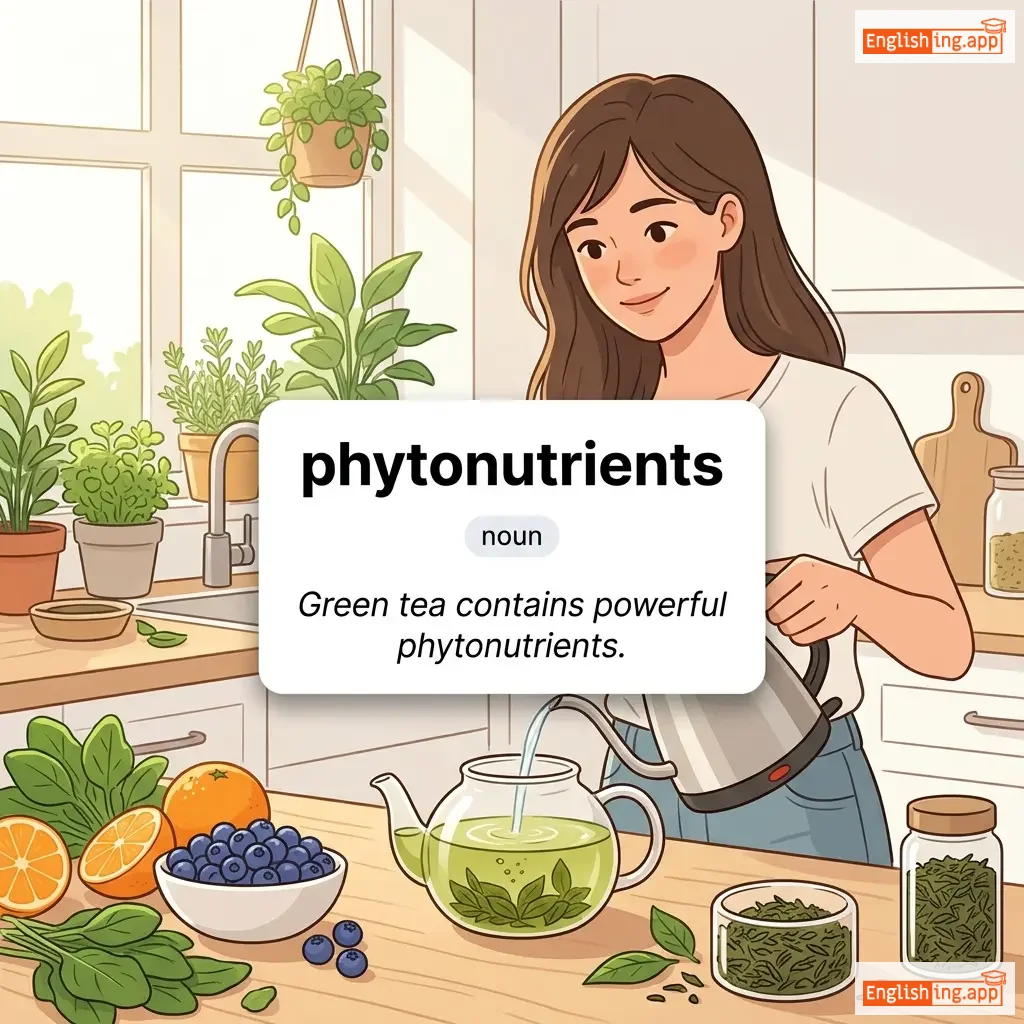
phytonutrients definition card — visual illustration of the meaning
noun
ˈfaɪ.təʊˌnjuː.tri.ənts
ファイトニュートリエント (faitonyūtoriento)

Bioactive compounds found in plants that have health benefits beyond basic nutrition.

"Green tea contains powerful phytonutrients."

"緑茶には強力なファイトニュートリエントが含まれています。" (Ryokucha ni wa kyōryoku na faitonyūtoriento ga fukumareteimasu.)
🎹

Piano

noun
/piˈænoʊ/

a large musical instrument with a keyboard, played by pressing keys that cause hammers to strike strings

"She played a beautiful tune on the piano during the concert."

adjective
/ˌpɪkəˈrɛsk/
悪党の英雄の物語 (akuto no eiyu no monogatari)

relating to a style of fiction depicting the adventures of a roguish hero

"The novel is a picaresque tale of a clever vagabond."

"その小説は賢い浮浪者のピカレスクの物語です。" (Sono shousetsu wa kashikoi furousha no picaresque no monogatari desu.)
adjective
/ˌpɪkəˈjuːn/
ささいな, 些細な (sasaina, sasaina)

of little value or importance; trivial

"He complained about the picayune details of the contract."

"彼は契約の些細な詳細について不平を言っていました。" (Kare wa keiyaku no sasaina shōsai ni tsuite fuhei o itte imashita.)
noun
/ˈpɪkəloʊ/
小さなフルート (chiisana furuuto)

a small flute, higher in pitch than the regular flute

"She played a lively tune on the piccolo during the concert."
"彼女はコンサートでピッコロを使って活気のあるメロディを演奏しました。" (Kanojo wa konsaato de pikkoro o tsukatte kakki no aru merodi o ensou shimashita.)
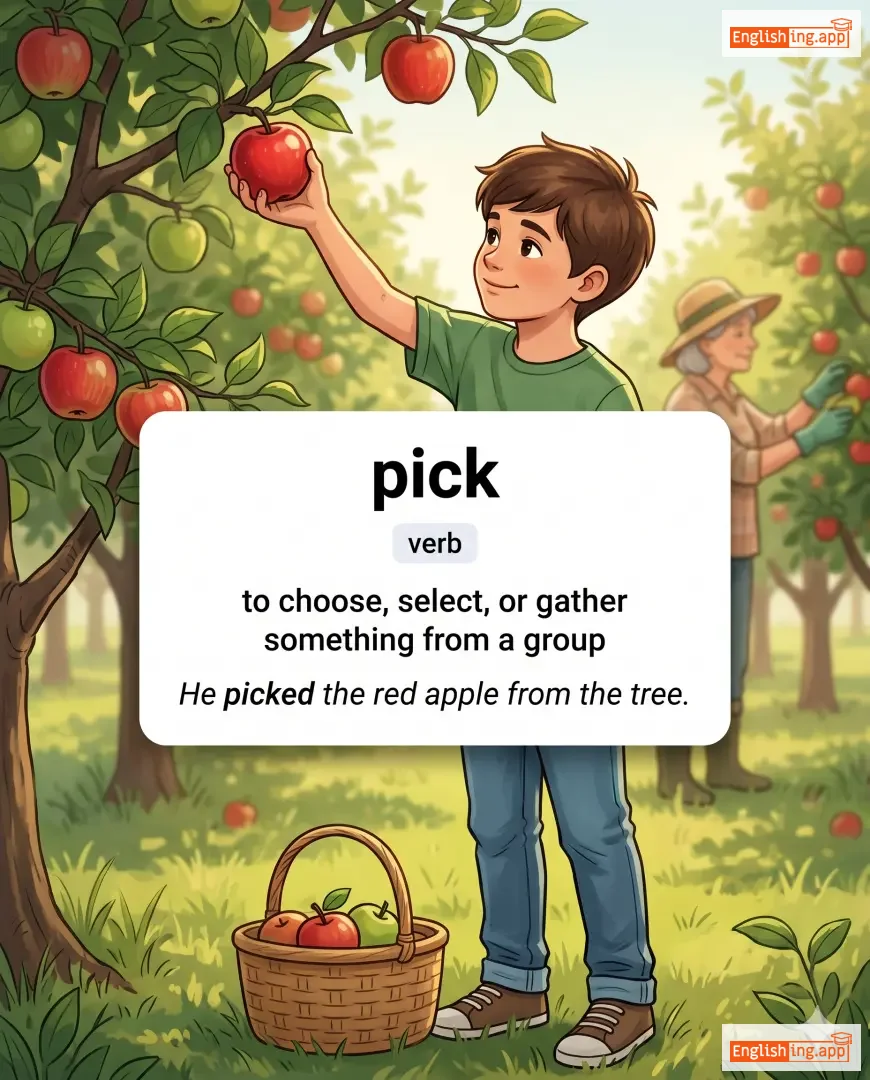
pick definition card — visual illustration of the meaning
verb
/pɪk/
選ぶ (erabu)

to choose, select, or gather something from a group

"He picked the red apple from the tree."

"彼は木から赤いリンゴを選びました。" (Kare wa ki kara akai ringo o erabimashita.)
phrasal verb
/pɪk ʌp/
拾う; 迎えに行く; 身につける (hirou; mukae ni iku; mi ni tsukeru)

to lift something; to collect or receive someone or something; to learn or acquire gradually; to improve or increase

"She picked up the book from the floor."

"彼女は床から本を拾った。" (Kanojo wa yuka kara hon o hirotta)
noun
/ˈpɪk.æks/
ツルハシ (tsuruhashi)

a tool with a heavy metal head and long handle used for breaking up hard ground or rock

"The miner used a pick-axe to break through the rocky surface."

"鉱夫は岩の表面を壊すためにツルハシを使用しました。" (Koufu wa iwa no hyoumen o kowasu tame ni tsuruhashi o shiyou shimashita.)
noun
/ˈpɪkʌp/
オープンバックの小型トラック; 何かを集めたり改善したりする行為 (ōpun bakku no kogata torakku; nanika o atsumetari kaizen shitari suru kōi)

a small truck with an open back; the act of collecting or improving something

"The company scheduled a pickup for the returned goods."

"会社は返却された商品を引き取る予定でした。" (Kaisha wa henkyaku sareta shōhin o hikitoru yotei deshita.)
noun
/ˈpɪktʃər/
(e)

a visual representation made by painting, drawing, or photography

"The picture on the wall was painted by a famous artist."

"壁の絵は有名なアーティストによって描かれました。" (Kabe no e wa yūmei na ātisuto ni yotte egakaremashita.)
adjective
/ˈpɪdlɪŋ/
取るに足らない, 些細な (toru ni tarranai, sasai na)

trivial or insignificant; very small

"He made a piddling amount of money from that deal."

"彼はその取引でわずかな金額しか稼げなかった。" (Kare wa sono torihiki de wazuka na kingaku shika kasegenakatta.)
noun
/paɪ/
パイ (pai)

a baked dish typically consisting of a pastry crust and filling

"She baked an apple pie for dessert."

"彼女はデザートにアップルパイを焼きました。" (Kanojo wa dezaato ni appuru pai o yakimashita.)
adjective
/ˈpaɪbɔːld/
二色の斑点 (nishoku no hatten)

having irregular patches of two colors, especially black and white

"The farmer owns a piebald horse with black and white spots."

"農夫は黒と白の斑点があるパイボールドの馬を飼っています。" (Nōfu wa kuro to shiro no hatten ga aru paibōrudo no uma o katteimasu.)
noun
/piːs/
一片 (ippen)

a portion or part of something

"He gave me a piece of cake."

"彼は私にケーキの一切れをくれました。" (Kare wa watashi ni kēki no hitokire o kuremashita.)
noun
/ˈpiːs ɡʊdz/
布地 (nunoji)

textiles or fabrics sold by the yard or meter; cloth materials

"The tailor bought piece-goods from the wholesale market to make custom dresses."

"仕立屋は卸売市場から布地を購入してカスタムドレスを作りました。" (Shitateya wa oroshiuri shijō kara nunoji o kōnyū shite kasutamudoresu o tsukurimashita.)
adjective
/ˈpiːsmiːl/
段階的に行う (dankai teki ni okonau)

done or made in separate stages rather than all at once

"The construction of the new building was carried out piecemeal over several years."

"新しい建物の建設は数年にわたり段階的に行われました。" (Atarashii tatemono no kensetsu wa suunen ni watari dankai teki ni okonawaremashita.)
adjective
/paɪd/
まだら模様の (madara moyou no)

having two or more different colors, typically in blotches

"The pied cat had black and white patches all over its body."
"その斑猫は体中に黒と白の斑点がありました。" (Sono madara neko wa karada juu ni kuro to shiro no hatten ga arimashita.)
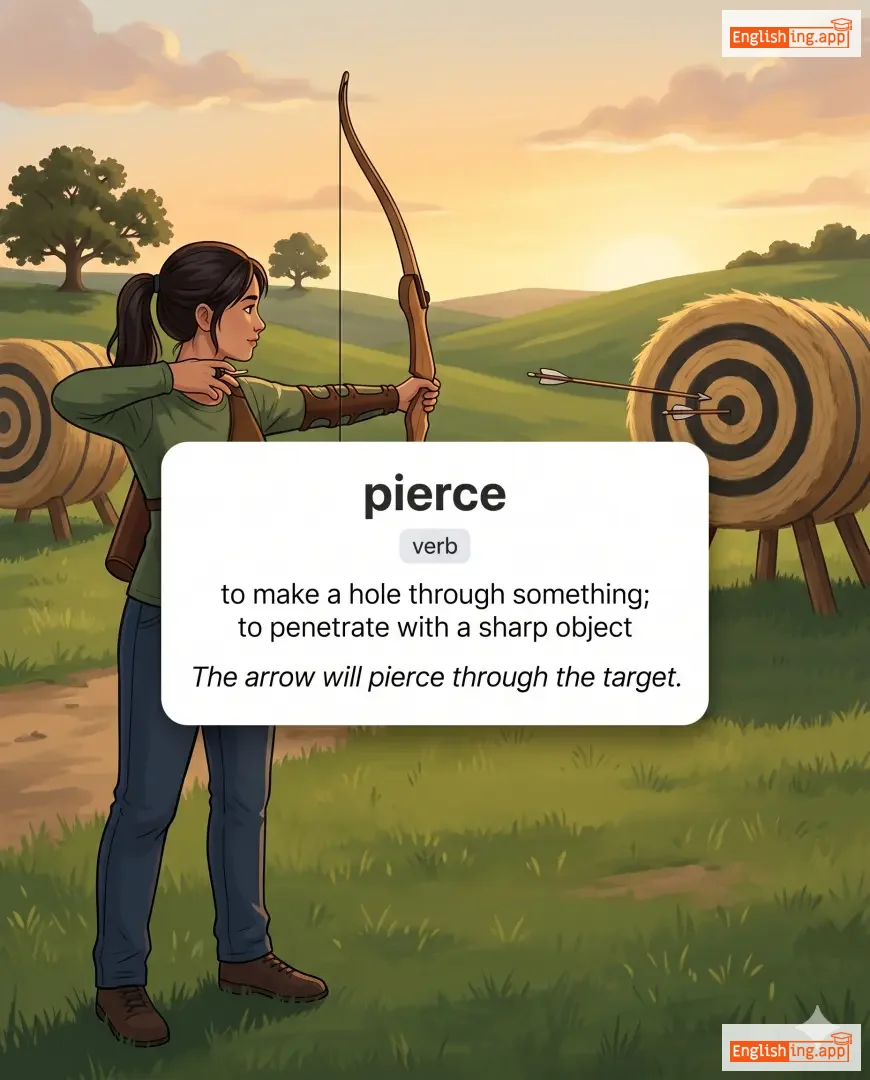
pierce definition card — visual illustration of the meaning
verb
/pɪəs/
貫通する (kantsū suru)

to make a hole through something; to penetrate with a sharp object

"The arrow will pierce through the target."

"矢はターゲットを貫通します。" (Ya wa tāgetto o kantsū shimasu.)
Piety definition card — visual illustration of the meaning
noun
/ˈpaɪəti/
信心 (shinsen)

the quality of being religious or showing reverence for God

"Her piety was evident in the way she prayed every morning."

"彼女の信心は毎朝祈る様子に明らかだった。" (Kanojo no shinsen wa mai asa inoru yōsu ni akiraka datta.)
noun
/pɪɡ/
(buta)

a farm animal with a snout used for digging and a curly tail; kept for meat such as pork or bacon

"The pig rolled happily in the mud."

"豚は泥の中で楽しそうに転がっていた。" (Buta wa doro no naka de tanoshisō ni korogatte ita.)
noun
/ˈpɪdʒ.ən/
(hato)

a grey and white bird with a fat body that is common in cities

"The pigeon pecked at breadcrumbs on the sidewalk."

"鳩は歩道でパンのクズをついばんでいた。" (Hato wa hodou de pan no kuzu o tsuiban deita.)
noun
/ˈpɪɡmənt/
顔料 (ganryou)

a natural or artificial substance used to give color to something

"The artist mixed different pigments to create the perfect shade of blue."
"アーティストは完璧な青色の色合いを作り出すために異なる顔料を混ぜました。" (Ātisuto wa kanpeki na aoiro no iroai o tsukuridasu tame ni kotonaru ganryou o mazemashita.)
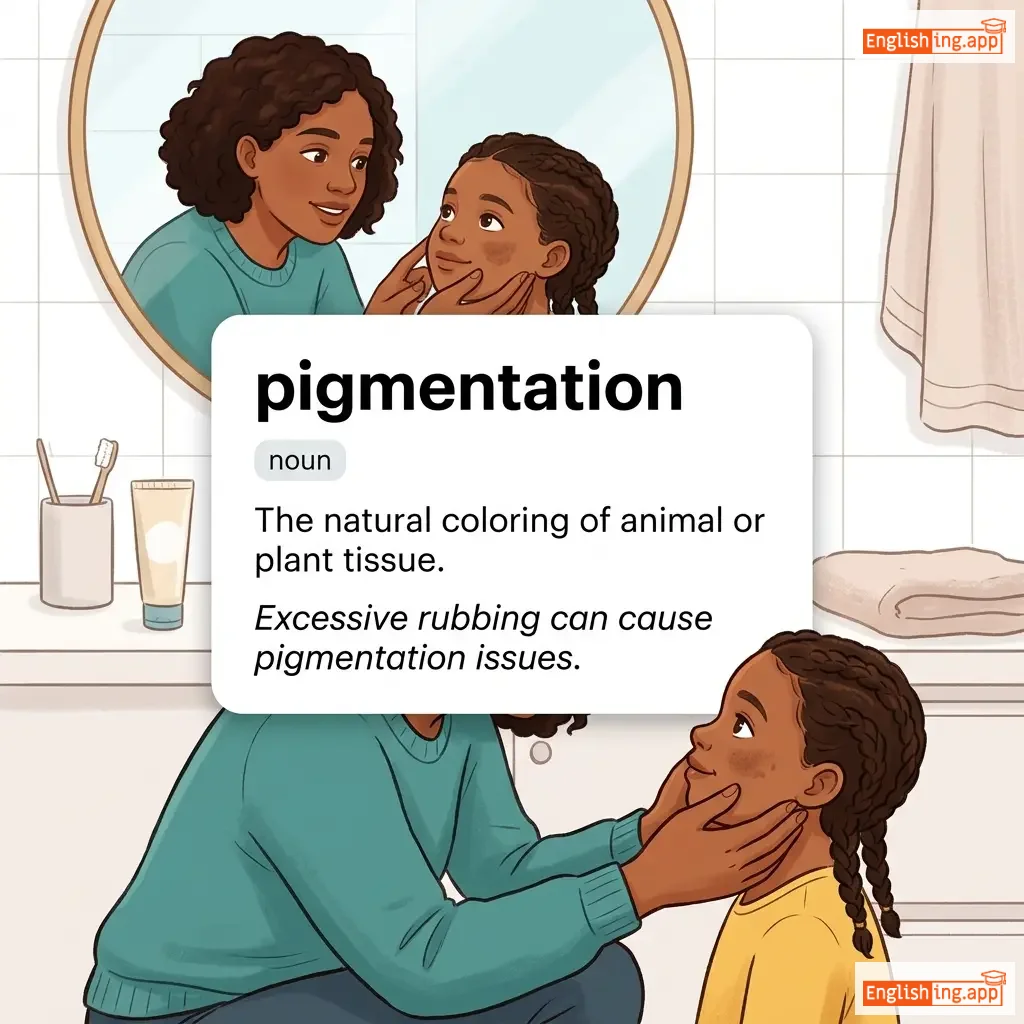
pigmentation definition card — visual illustration of the meaning
noun
/ˌpɪɡ.menˈteɪ.ʃən/
ピグメンテーション (pigmentation)

The natural coloring of animal or plant tissue.

"Excessive rubbing can cause pigmentation issues."

"過度の摩擦はピグメンテーションの問題を引き起こす可能性があります。" (Kadō no masatsu wa pigumenteshon no mondai o hikiokosu kanōsei ga arimasu.)
noun
/paɪl/
山積み (yamazumi)

a large amount of something stacked or placed in a heap

"He placed the books in a pile on the table."

"彼はテーブルの上に本を山積みにしました。" (Kare wa tēburu no ue ni hon o yamazumi ni shimashita.)
verb
/ˈpɪlfər/
盗む (nusumu)

to steal things of small value or in small quantities

"The employee was caught pilfering office supplies."

"従業員はオフィスの備品を盗んでいるところを捕まりました。" (Jūgyōin wa ofisu no bihin o nusunde iru tokoro o tsukamarimashita.)
noun
/ˈpɪl.fər.ɪdʒ/
窃盗 (settou)

the theft of small amounts or items, especially from one's workplace

"The company installed cameras to prevent pilferage."

"会社は窃盗を防ぐために監視カメラを設置した。" (kaisha wa settou o secchi shita.)
🚶‍♂️

Pilgrim (巡礼者)

noun
/ˈpɪl.ɡrɪm/
巡礼者; 旅行者 (junreisya; ryokousha)

a person who journeys to a sacred place for religious reasons; a traveler

"The pilgrim walked for days to reach the holy shrine."

"巡礼者は聖なる神殿に到達するために何日も歩きました。" (Junreisya wa seinaru shinden ni tōtatsu suru tame ni nannichi mo arukimashita.)
noun
/pɪl/
錠剤 (jouzai)

a small round piece of medicine to be swallowed

"He took a pill to relieve his headache."

"彼は頭痛を和らげるためにピルを飲みました。" (Kare wa zutsuu wo yawarageru tame ni piru wo nomimashita.)
verb
/ˈpɪlɪdʒ/
略奪する (ryakudatsu suru)

to rob or plunder a place, especially during war

"The invading army pillaged the village and took all valuables."

"侵入した軍隊は村を略奪し、すべての貴重品を持ち去った。" (Shinnyū shita guntai wa mura o ryakudatsu shi, subete no kichōhin o mochisatta.)
noun
/ˈpɪlər/
(hashira)

a strong vertical support or mainstay of a structure or system

"The ancient temple was supported by massive stone pillars."

"古代の寺院は巨大な石の柱によって支えられていました。" (Kodai no jiin wa kyodaina ishi no hashira ni yotte sasaerarete imashita.)
noun
/pɪˈlɑːf/
ピラフ (pirafu)

a dish of rice cooked in seasoned broth, often with meat and vegetables

"We enjoyed a delicious chicken pillaw for dinner."

"私たちは夕食に美味しいチキンピラフを楽しみました。" (watashitachi wa yūshoku ni oishī chikin pirafu o tanoshimimashita.)
noun/verb
/ˈpɪləri/
公開処罰装置 (kōkai shobatsu sōchi)

a device for publicly punishing someone / to expose to public ridicule

"The corrupt official was placed in the pillory for the town to jeer at."

"腐敗した役人は町の人々に嘲笑されるためにピロリーに置かれました。" (Fuhai shita yakunin wa machi no hitobito ni chōshō sareru tame ni pirorī ni okaremashita.)
noun
/ˈpɪloʊ/
(makura)

a soft cushion filled with material used to support the head while sleeping or resting

"She placed her head on the soft pillow and fell asleep quickly."

"彼女は柔らかい枕に頭を乗せ、すぐに眠りにつきました。" (Kanojo wa yawarakai makura ni atama o nose, sugu ni nemuri ni tsukimashita.)
noun/verb
/ˈpaɪlət/
パイロット (pairotto)

a person who operates an aircraft / to guide or lead through a trial

"She piloted the plane safely through the storm."

"彼女は嵐の中、飛行機を安全に操縦した。" (Kanojo wa arashi no naka, hikouki o anzen ni souju shita.)
noun
/ˈpɪm.pəl/
ニキビ (nikibi)

a small, inflamed elevation of the skin; a spot on the skin, especially on the face

"She was embarrassed about the pimple on her forehead."

"彼女は額のニキビに気まずさを感じていた。" (Kanojo wa hitai no nikibi ni kimazusa o kanjite ita.)
noun
/pɪn/
ピン (pin)

a small thin piece of metal used to fasten or hold things together

"She used a pin to attach the note to the board."

"彼女はボードにメモを留めるためにピンを使った。" (Kanojo wa boodo ni memo o tomeru tame ni pin o tsukatta.)
noun
/ˈpɪnsərz/
ピンセット (pinsetto)

a gripping tool with two arms used for holding or pulling objects

"He used pincers to remove the hot nail from the wood."

"彼は木から熱い釘を取り外すためにピンサーを使いました。" (Kare wa ki kara atsui kugi o tori hazusu tame ni pinsetto o tsukaimashita.)
verb
/pɪntʃ/
つまむ (tsumamu)

to squeeze tightly between the fingers; to take a small amount

"She pinched a bit of salt into the soup."

"彼女はスープに少し塩を加えました。" (Kanojo wa suupu ni sukoshi shio o kuwaemashita.)
noun
/ˈpɪntʃərz/
ピンセット (pinsetto)

a tool used for gripping or squeezing objects

"Use the pinchers to remove the hot coal safely."

"熱い炭を安全に取り除くためにピンチャーズを使ってください。" (Atsui sumi o anzen ni tori nozoku tame ni pinchāzu o tsukatte kudasai.)
verb
/paɪn/
切望する (setsubou suru)

to long intensely for something or someone; to suffer from longing

"He pined for his hometown after moving abroad."

"海外に引っ越した後、彼は故郷を切望していた。" (Kaigai ni hikkoshita ato, kare wa kokyou wo setsubou shite ita.)
noun
/ˈpaɪn.æp.əl/
パイナップル (painappuru)

a large tropical fruit with a tough skin and sweet yellow flesh

"The pineapple has a crown of spiky leaves on top."

"パイナップルの上には尖った葉の冠があります。" (Painappuru no ue ni wa totta ha no kanmuri ga arimasu)