語彙集

英単語辞書 | 単語の意味、定義、例文

olfactory definition card — visual illustration of the meaning
adjective
/ɑːlˈfæktəri/

Relating to the sense of smell.

"The perfume activated her olfactory nerves immediately."

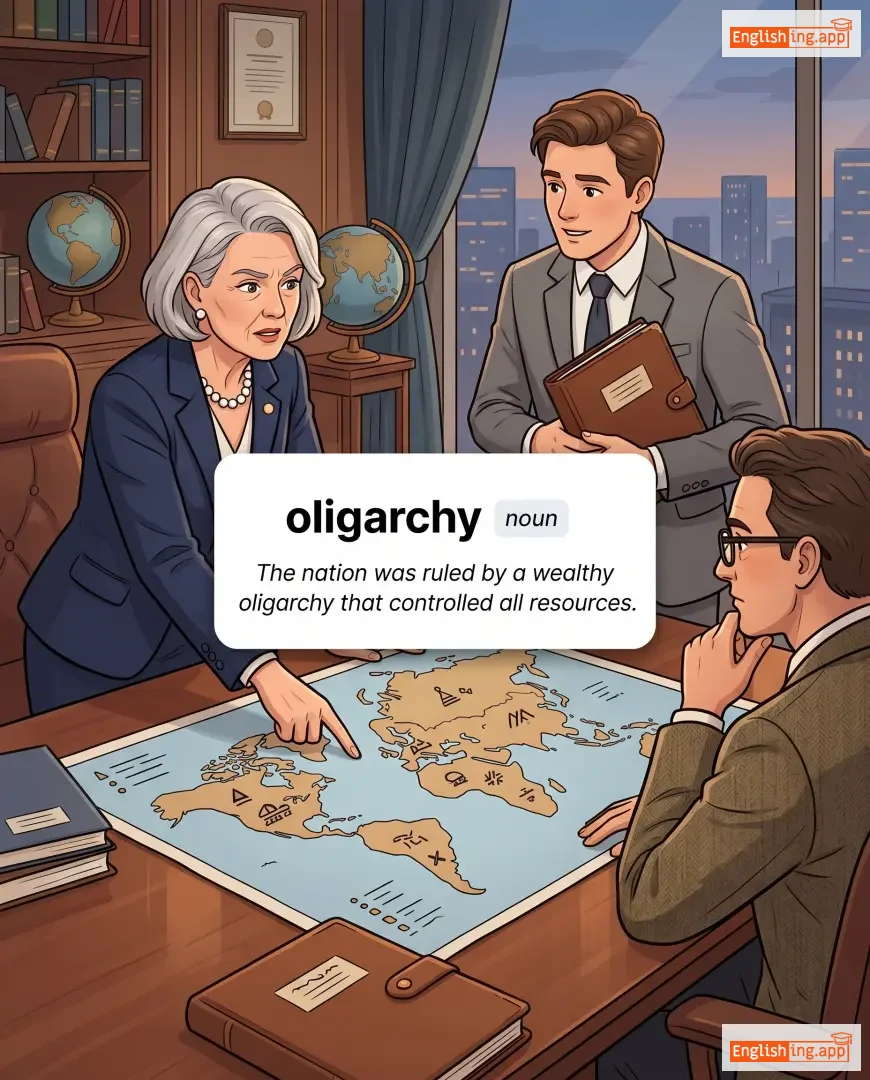
oligarchy definition card — visual illustration of the meaning
noun
/ˈɑːlɪˌɡɑːrki/
寡頭政治 (katō seiji)

A small group of people having control of a country, organization, or institution.

"The nation was ruled by a wealthy oligarchy that controlled all resources."

"その国は裕福なオリガーキーによって支配され、すべての資源を支配していました。" (Sono kuni wa yūfukuna origākī ni yotte shihaisa re, subete no shigen o shihai shite imashita.)
noun
/ˈɑː.lɪv/
オリーブ (orību)

a small oval fruit with a hard pit, typically green or black, used for eating or making oil

"Olive oil is considered one of the healthiest cooking oils available."

"オリーブオイルは、最も健康的な料理用オイルの一つと見なされています。" (orību oiru wa, mottomo ken-kō-teki na ryōri-yō oiru no hitotsu to minasa rete imasu.)
noun
/ˈɒlɪv bɑːb/
オリーブバーブ (oriibu baabu)

A small freshwater fish with olive-colored body and barbels

"The olive barb is commonly found in South Asian rivers."

"オリーブバーブは南アジアの川によく見られます。" (oriibu baabu wa minami ajia no kawa ni yoku mirareru)
noun
/ˈɒlɪv brɑːntʃ/
オリーブの枝 (orību no eda)

A symbol of peace or reconciliation; an offer to end conflict.

"He extended an olive-branch to his rival after years of hostility."

"彼は長年の敵対後、ライバルにオリーブの枝を差し出した。" (Kare wa naganen no tekitaigo, raibaru ni orību no eda o sashidashita.)
adjective
/əˈlɪmpɪk/
オリンピック (orimpikku)

related to the Olympic Games, a major international sporting event

"She trained hard to compete in the Olympic Games."
"彼女はオリンピックに出場するために一生懸命トレーニングをしました。" (Kanojo wa orimpikku ni shutsujō suru tame ni isshōkenmei torēningu o shimashita.)
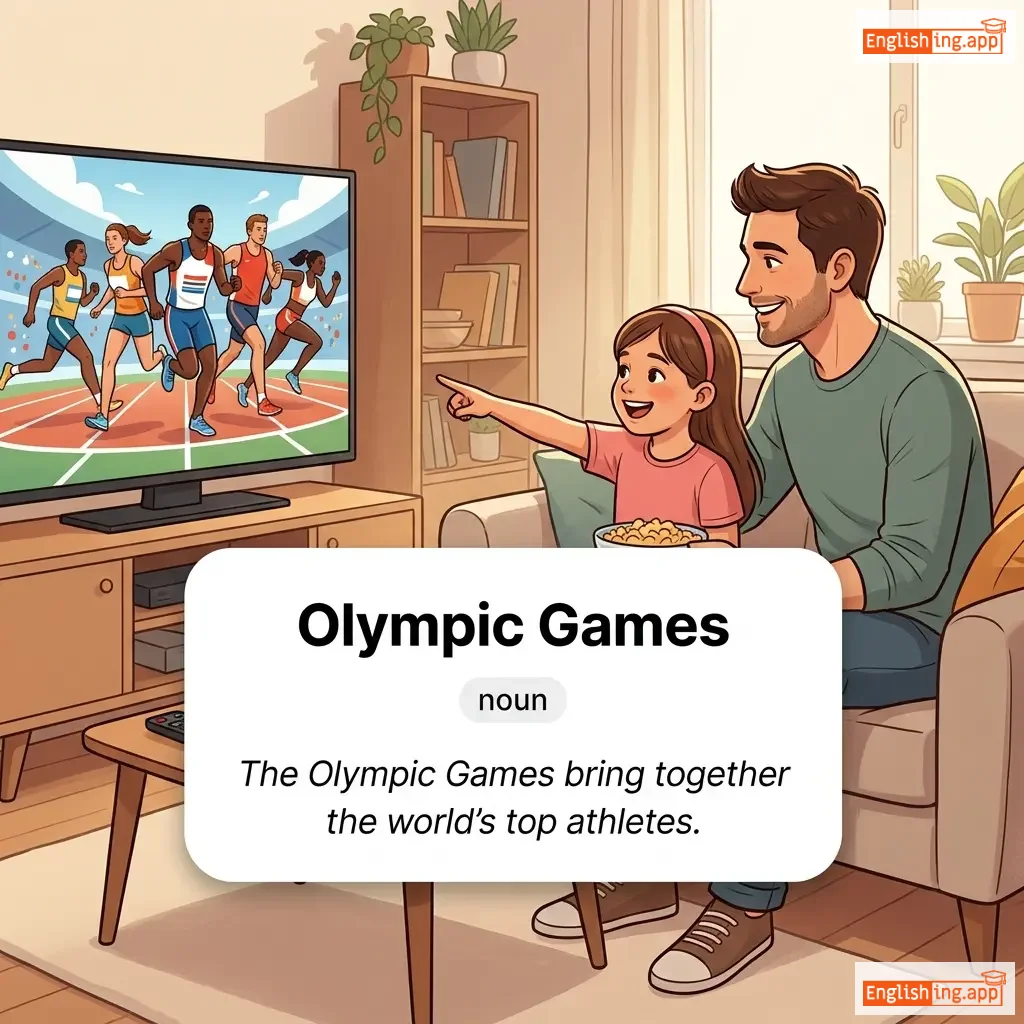
Olympic Games definition card — visual illustration of the meaning
noun
əˈlɪm.pɪk ɡeɪmz
オリンピック競技大会 (Orinpikku kyōgi taikai)

The world's largest international sports competition held every four years, bringing together athletes from different countries to compete in various sports.

"The Olympic Games bring together the world's top athletes."

"オリンピック競技大会は世界のトップアスリートを集めます。" (Orinpikku kyōgi taikai wa sekai no toppu asurīto o atsume masu.)
noun
/əˈlɪmpɪks/
オリンピック競技大会 (Olimpikku kyōgi taikai)

an international sports competition held every four years with athletes from many countries

"The Olympics bring athletes from all over the world together."

"オリンピックは世界中のアスリートを一堂に集めます。" (Olimpikku wa sekai jū no asurīto o ichidō ni atsumemasu.)
noun
/ˈɒm.lət/
オムレツ (omuretsu)

a dish made from beaten eggs cooked in a frying pan and often folded around a filling

"She made a cheese omelet for breakfast."

"彼女は朝食にチーズオムレツを作った。" (kanojo wa chōshoku ni chīzu omuretsu o tsukutta.)
noun
/ˈoʊ.mən/
未来の良いまたは悪い運命の兆し (mirai no yoi matawa warui unmei no kizashi)

an event regarded as a sign of future good or bad luck

"Many people consider a black cat crossing your path a bad omen."

"多くの人々は、黒猫が道を横切ることを悪いオーメンだと考えています。" (ooku no hitobito wa, kuroneko ga michi wo yokogiru koto wo warui omen da to kangaeteimasu.)
adjective
/ˈɒmɪnəs/
不吉 (fukitsu)

Giving the impression that something bad or unpleasant is going to happen.

"Dark clouds gave an ominous sign of an approaching storm."

"暗い雲が近づく嵐の不吉な兆しを示した。" (Kurai kumo ga chikaduku arashi no fukitsu na kizashi o shimeshita.)
noun
/əˈmɪʃən/
省略 (shōryaku)

The act of leaving out or excluding something; something that has been left out.

"Her omission of important details caused confusion."

"彼女の重要な詳細の省略が混乱を引き起こした。" (Kanojo no jūyōna shōryaku ga konran o hikiokoshita.)
omit definition card — visual illustration of the meaning
verb
/oʊˈmɪt/
省略する (shōryaku suru)

to leave out or exclude; to fail to include something

"Please don't omit any important details from your report."

"レポートから重要な詳細を省略しないでください。" (Repōto kara jūyō na shōsai o shōryaku shinai de kudasai.)
noun
/ɒmˈnɪpətəns/
全能 (zennou)

The quality of having unlimited power or authority.

"Many religions describe God’s omnipotence as absolute."
"多くの宗教では神の全能は絶対的なものと説明されています。" (Ōku no shūkyō de wa kami no zennō wa zettaiteki na mono to setsumei sareteimasu.)
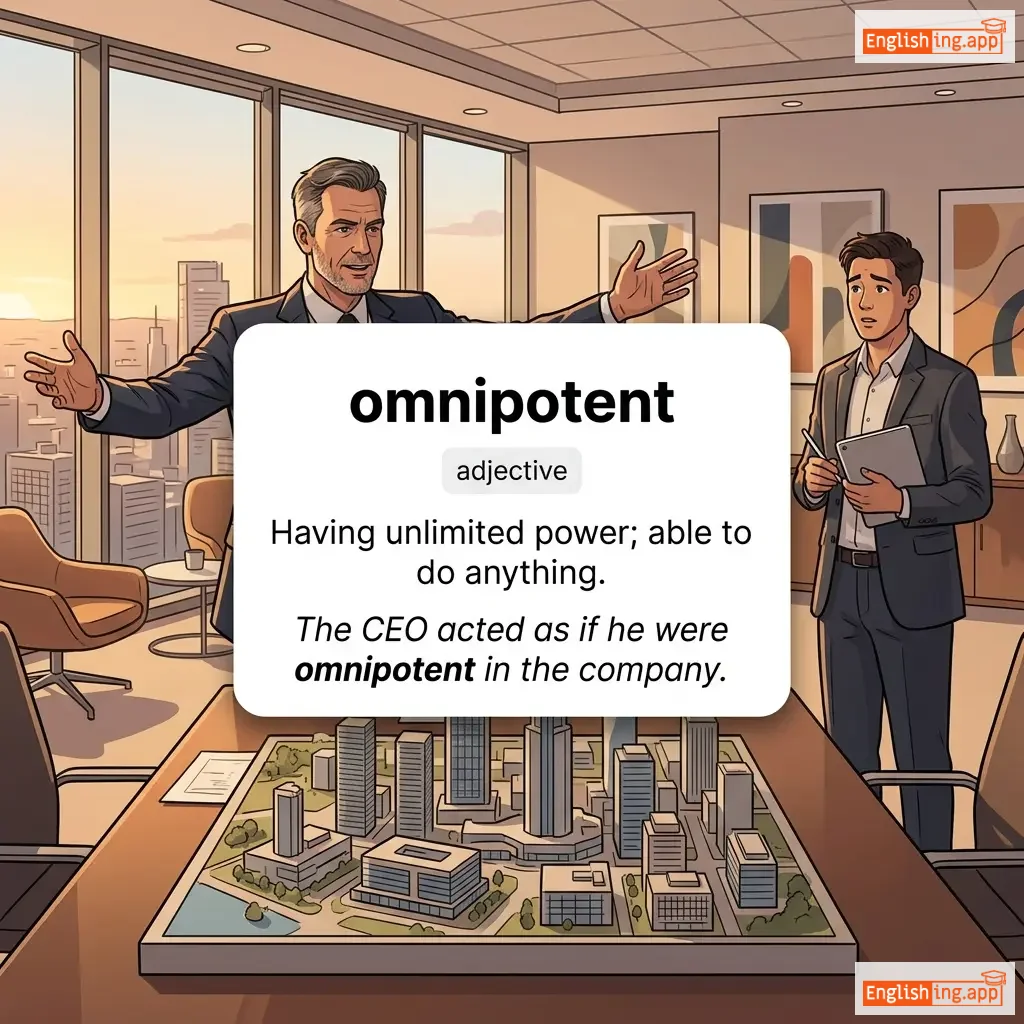
omnipotent definition card — visual illustration of the meaning
adjective
/ɒmˈnɪpətənt/
全能の (zen'nō no)

Having unlimited power; able to do anything.

"The CEO acted as if he were omnipotent in the company."

"CEOは会社で全能であるかのように振舞った。" (CEO wa kaisha de zennō de aru ka no yō ni furumatta.)
omnipresent definition card — visual illustration of the meaning
adjective
/ˌɒmnɪˈprɛzənt/
遍在する (hennzaisuru)

present everywhere at the same time

"In the digital age, social media feels omnipresent in our lives."

"デジタル時代では、ソーシャルメディアは私たちの生活の中で遍在するように感じます。" (Dejitaru jidai dewa, soosharu media wa watashitachi no seikatsu no naka de hennzai suru you ni kanjimasu.)
noun
/ɒmˈnɪʃəns/
全知 (zenchi)

the state of knowing everything

"The novel's narrator has an air of omniscience, revealing every character's thoughts."

"小説の語り手は全知の空気をまとい、すべてのキャラクターの考えを明らかにしている。" (shosetsu no katarite wa zenchi no kuuki o matoi, subete no kyarakuta no kangae o akirakani shite iru.)
adjective
/ɒmˈnɪʃənt/
全知 (zenchi)

having complete or unlimited knowledge and awareness

"Some religions describe God as omniscient and all-powerful."

"いくつかの宗教は神を全知かつ全能であると説明しています。" (Ikutsuka no shukyo wa kami o zenchi katsu zennou de aru to setsumei shiteimasu.)
adjective
/ɒmˈnɪvərəs/
雑食性 (zasshokusei)

eating both plants and animals

"Humans are generally considered omnivorous creatures."

"人間は一般的に雑食性の生き物と見なされます。" (Ningen wa ippanteki ni zasshokusei no ikimono to minasarerumasu.)
preposition
/ɒn/
(ue)

physically in contact with and supported by a surface

"The book is on the table."

"本はテーブルの上にあります。" (Hon wa tēburu no ue ni arimasu.)
adverb
/wʌns/
一度 (ichido)

on one occasion only; at a time in the past

"She visited Paris once last year."

"彼女は昨年一度パリを訪れました。" (Kanojo wa sakunen ichido Pari o otozuremashita.)
pronoun, noun, adjective
/wʌn/
(ichi)

the number equivalent to the sum of zero and one; a single person or thing

"Only one student answered the question."

"ただ一人の学生が質問に答えました。" (Tada hitori no gakusei ga shitsumon ni kotaemashita.)
noun
/wʌn θɜːd/
三分の一 (sanbun no ichi)

one part of something that is divided into three equal parts

"One-third of the class was absent today."
"クラスの三分の一が今日は欠席でした。" (Kurasu no sanbun no ichi ga kyō wa kesseki deshita.)
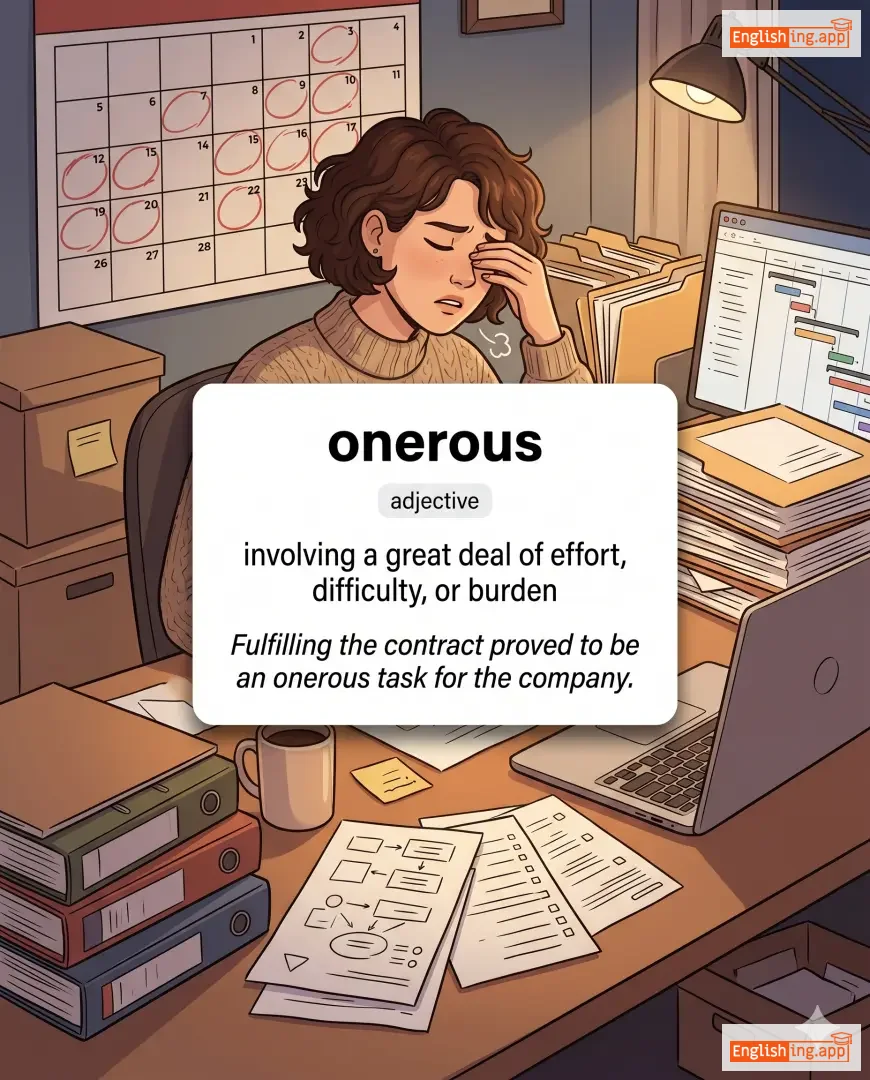
onerous definition card — visual illustration of the meaning
adjective
/ˈəʊnərəs/
重い (omoi)

involving a great deal of effort, difficulty, or burden

"Fulfilling the contract proved to be an onerous task for the company."

"契約を履行することは会社にとって負担の大きい仕事だと証明された。" (Keiyaku o rikō suru koto wa kaisha ni totte futan no ōkii shigoto da to shōmei sareta.)
adjective
/ˈɒnɡəʊɪŋ/
進行中 (shinkouchuu)

continuing; still in progress

"The ongoing project will finish next month."

"進行中のプロジェクトは来月終了します。" (Shinkouchuu no purojekuto wa raigetsu shūryō shimasu.)
noun
/ˈʌnjən/
玉ねぎ (tamanegi)

a round vegetable with a strong smell and flavor, usually used in cooking

"I chopped an onion to make the soup."

"私はスープを作るために玉ねぎを切りました。" (Watashi wa sūpu o tsukuru tame ni tamanegi o kirimashita.)
adjective/adverb
/ˈɒnˌlaɪn/
オンライン (onrain)

connected to or available through the internet

"I prefer shopping online rather than going to stores."

"私はお店に行くよりもオンラインで買い物をする方が好きです。" (Watashi wa omise ni iku yori mo onrain de kaimono wo suru hou ga suki desu.)
adjective/adverb
/ˈoʊnli/
唯一 (yuiitsu)

without others; solely

"He is the only person who knows the secret."
"彼はその秘密を知っている唯一の人です。" (Kare wa sono himitsu o shitte iru yuiitsu no hito desu.)
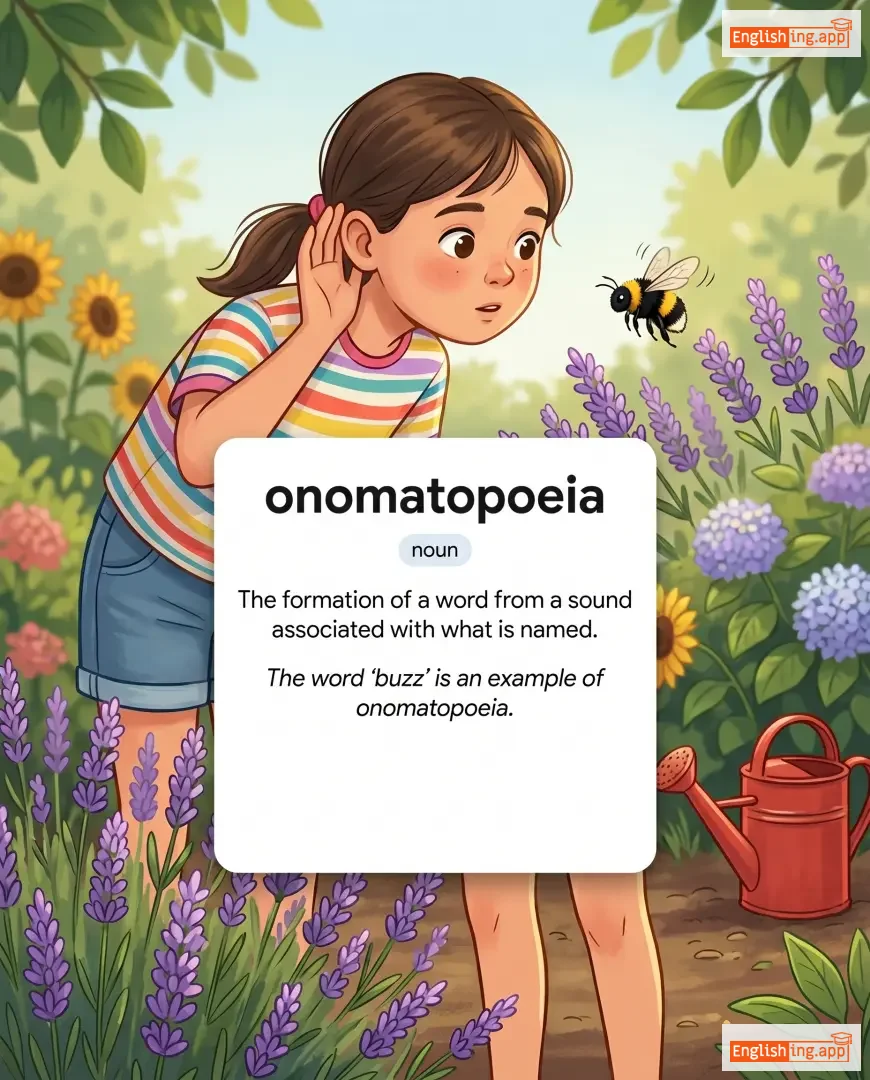
onomatopoeia definition card — visual illustration of the meaning
noun
/ˌɒn.əˌmæt.əˈpiː.ə/
オノマトペ (onomatope)

The formation of a word from a sound associated with what is named.

"The word 'buzz' is an example of onomatopoeia."

"'バズ'という言葉はオノマトペの一例です。" ('Bazu' to iu kotoba wa onomatope no ichirei desu.)
noun
/ˈɒn.rʌʃ/
突発的な流れ (toppatsuteki na nagare)

A sudden powerful forward or downward rush or flow.

"The onrush of water swept away the bridge."

"水の突発的な流れが橋を流しました。" (Mizu no toppatsuteki na nagare ga hashi o nagashimashita.)
noun
/ˈɒn.sɛt/
開始 (kaishi)

The beginning of something, especially something unpleasant.

"The onset of winter brought cold winds and snow."

"冬の開始は冷たい風と雪をもたらした。" (Fuyu no kaishi wa tsumetai kaze to yuki wo motarashita.)
noun
/ˈɒn.slɔːt/
猛攻 (mōkō)

A fierce or destructive attack.

"The village faced an onslaught of enemy forces."

"その村は敵軍の猛攻に直面しました。" (Sono mura wa tekigun no mōkō ni chokumen shimashita.)
preposition
/ˈɒntu/
上に (ue ni)

moving to a position on the surface of something

"She jumped onto the table to get the book."

"彼女は本を取るためにテーブルの上に飛び乗った。" (Kanojo wa hon o toru tame ni teeburu no ue ni tobinotta.)
noun
/ˈəʊ.nəs/
責任 (sekinin)

A duty or responsibility, especially a heavy one.

"The onus is on the government to provide relief to the victims."

"犠牲者に支援を提供する責任は政府にあります。" (Giseisha ni shien o teikyō suru sekinin wa seifu ni arimasu.)
verb
/uːz/
にじみ出る (nijimideru)

to slowly flow or leak out through small openings or pores

"Blood began to ooze from the small cut."

"血が小さな切り傷からにじみ出た。" (Chi ga chiisana kirikizu kara nijimideta.)
noun
/ˌoʊpəˈlɛsəns/
オパレスセンス (oparesensu)

a milky or pearly appearance of a surface like that of an opal

"The pearl had a gentle opalescence under the light."

"パールは光の下で優しいオパレスセンスを持っていました。" (Pāru wa hikari no shita de yasashī oparesensu o motte imashita.)
adjective
/ˌoʊpəˈlɛsənt/
オパール色の (opāru iro no)

showing or reflecting a milky, iridescent light like an opal

"The opalescent sky glowed with shades of pink and blue."
"オパレッセントな空はピンクと青の色合いで輝いていた。" (Opāressento na sora wa pinku to ao no iroai de kagayaite ita.)
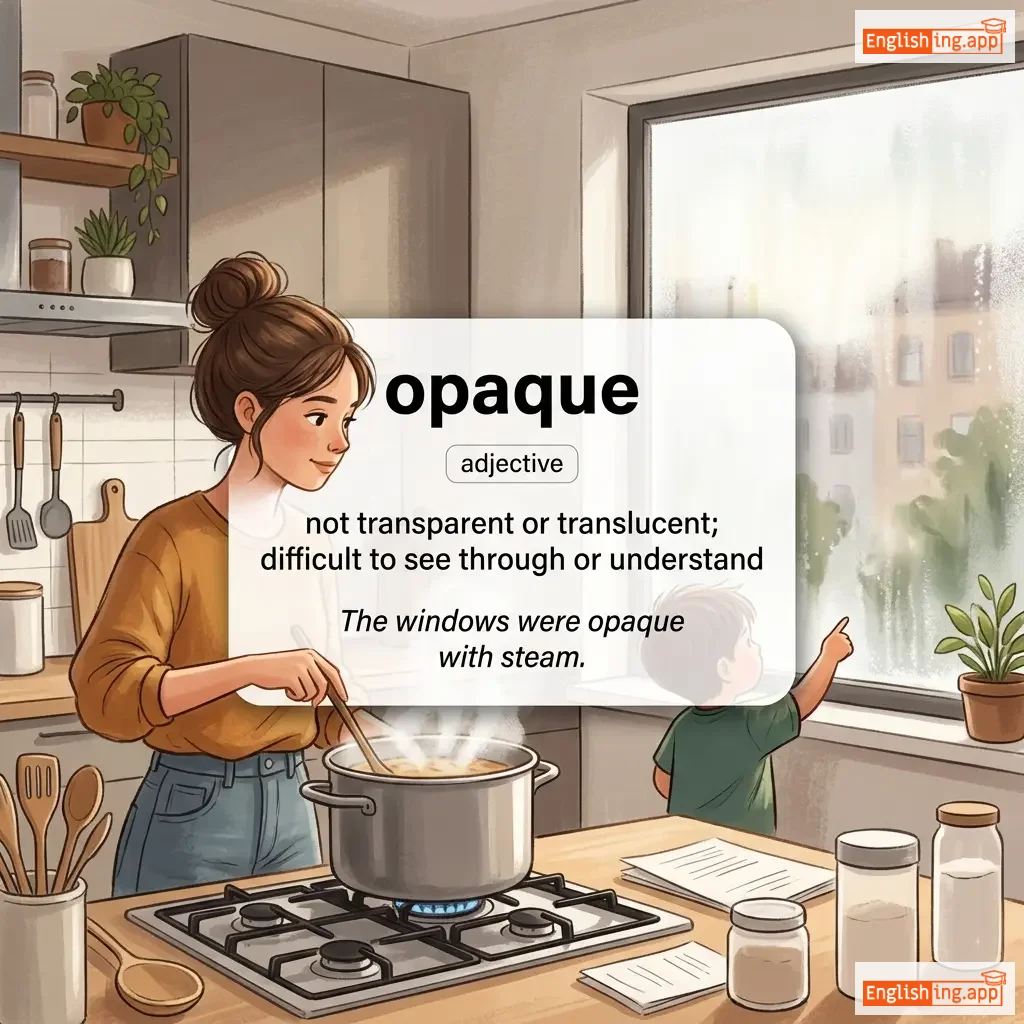
opaque definition card — visual illustration of the meaning
adjective
/oʊˈpeɪk/
不透明 (futōmei)

not transparent or translucent; difficult to see through or understand

"The windows were opaque with steam."

"窓は蒸気で不透明になっていた。" (Mado wa jōki de futōmei ni natte ita.)
🔓

open

verb, adjective
/ˈoʊ.pən/

to move something so that it is no longer closed; not closed

"She opened the window to let in fresh air."

adjective
/ˈoʊ.pən ˈhæn.dɪd/
寛大な; 自由な (kandaina; jiyūna)

Generous; liberal; giving freely;

"He is very open-handed with his money and always helps those in need."

"彼は自分の金に非常に寛大で、いつも困っている人々を助けています。" (Kare wa jibun no kane ni hijō ni kandaina de, itsumo komatte iru hitobito o tasuketeimasu.)
adjective
/ˈoʊ.pən ˈhɑrt.ɪd/
オープンハート; 寛大で誠実; 心温かく受け入れる; (o-pun ha-to; kandai de seijitsu; kokoro atatakai ukeireru;)

Kind and generous; sincere and honest; warmly receptive;

"She welcomed the strangers with an open-hearted smile and invited them for dinner."

"彼女は見知らぬ人々を心温かい笑顔で迎え、夕食に招待した。" (Kanojo wa mishiranu hitobito o kokoro atatakai egao de mukae, yuushoku ni shoutai shita.)
noun
/ˈoʊpənɪŋ/
開店 (kaiten)

an act or instance of beginning something

"The opening of the new store was a huge success."

"新しい店のオープニングは大成功でした。" (Atarashī mise no ōpuningu wa daiseikō deshita.)
adverb
/ˈəʊpənli/
率直に (sotchoku ni)

in a way that is not secret or hidden

"He spoke openly about his past mistakes."

"彼は自分の過去の過ちについて率直に話した。" (Kare wa jibun no kako no ayamachi ni tsuite sotchoku ni hanashita.)
noun
/ˈɒpərə/
オペラ (opera)

a dramatic performance in which the actors sing most of their lines

"We watched a beautiful opera at the theater last night."
"昨晩、劇場で美しいオペラを観ました。" (Sakuban, gekijō de utsukushī opera o mimashita.)
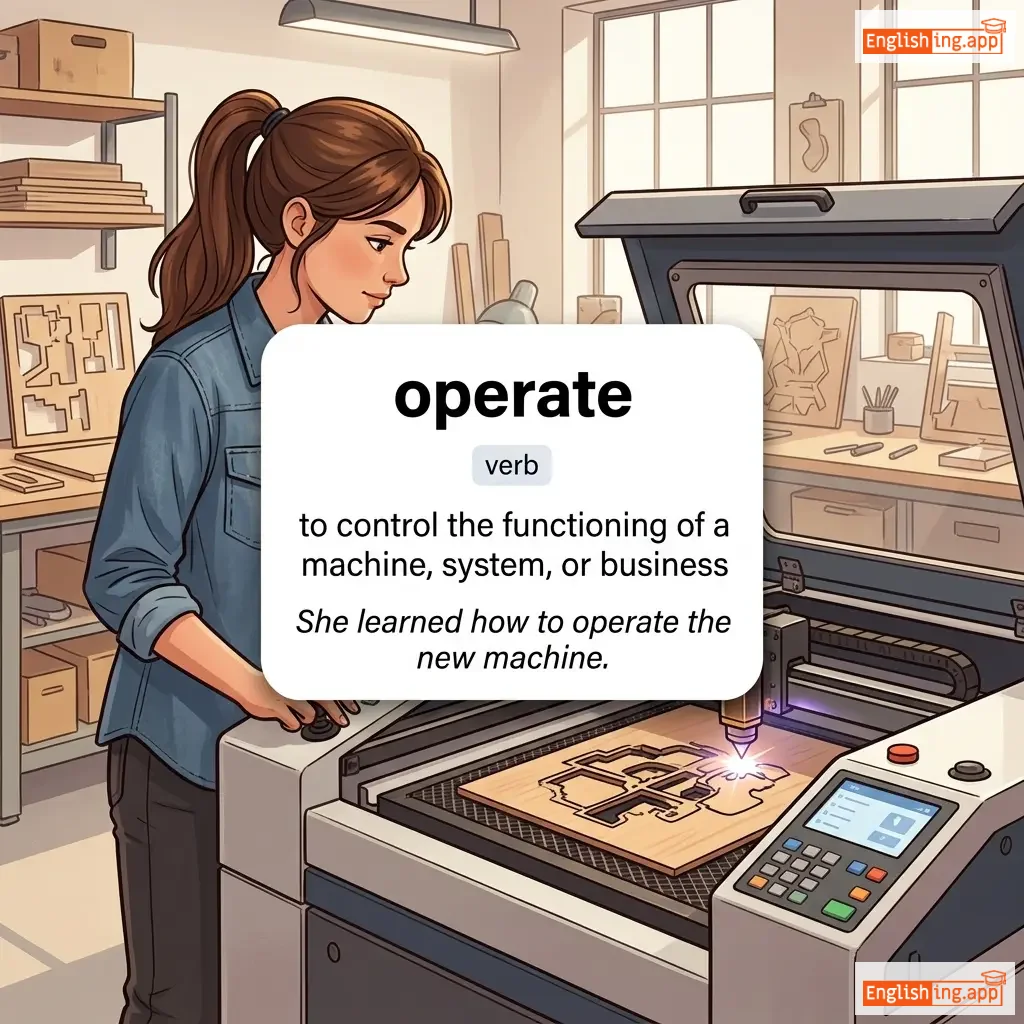
operate definition card — visual illustration of the meaning
verb
/ˈɑːpəˌreɪt/
操作する (sousa suru)

to control the functioning of a machine, system, or business

"She learned how to operate the new machine."

"彼女は新しい機械を操作する方法を学びました。" (Kanojo wa atarashii kikai wo sousa suru houhou wo manabimashita.)
verb
/ˈɒpəreɪtɪŋ/
運営する (un'ei suru)

to control or manage the functioning of something

"The company has been operating in this market for five years."

"その会社はこの市場で5年間運営されています。" (Sono kaisha wa kono shijou de go-nenkan un'ei sareteimasu.)
noun
/ˌɒpəˈreɪʃən/
手術 (shujutsu)

an act or process of functioning or operating

"The hospital performed a successful operation."
"病院は成功した手術を行いました。" (Byouin wa seikou shita shujutsu o okonai mashita.)
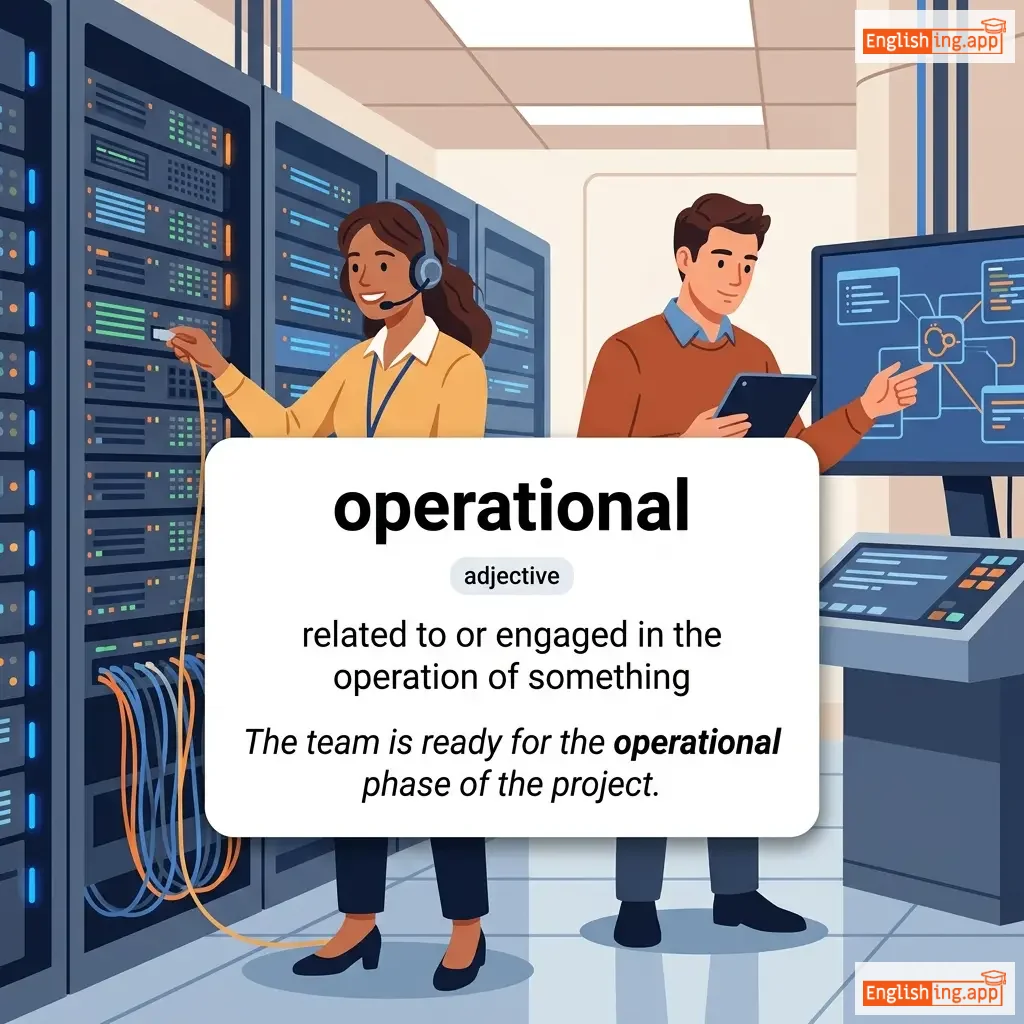
operational definition card — visual illustration of the meaning
adjective
/ˌɒpəˈreɪʃənl/
オペレーショナル (operational)

related to or engaged in the operation of something

"The team is ready for the operational phase of the project."

"チームはプロジェクトのオペレーショナルフェーズの準備ができています。" (Chīmu wa purojekuto no operēshonaru fēzu no junbi ga dekiteimasu.)
adjective
/ˈɒpərətɪv/
操作的 (sousateki)

functioning, having effect, or relating to a secret agent or worker

"The new law is now operative across the country."

"新しい法律は今、国内全体で施行されています。" (Atarashii houritsu wa ima, kokunai zentai de shikou sareteimasu.)
noun
/ˈɒpəreɪtər/
オペレーター (operetā)

a person who operates equipment, a business, or controls something

"The machine operator ensured that everything ran smoothly."

"機械オペレーターは、すべてがスムーズに動作することを確認しました。" (Kikai operetā wa, subete ga sumūzu ni dōsa suru koto o kakunin shimashita.)