語彙集

英単語辞書 | 単語の意味、定義、例文

noun
/ˈnoʊzˌɡeɪ/
花束 (hanataba)

a small bunch of flowers, typically given as a gift or carried for decoration

"She carried a nosegay of fresh roses to the ceremony."
"彼女は式典に新鮮なバラの花束を持って行った。" (Kanojo wa shikiten ni shinsen na bara no hanataba o motte itta.)
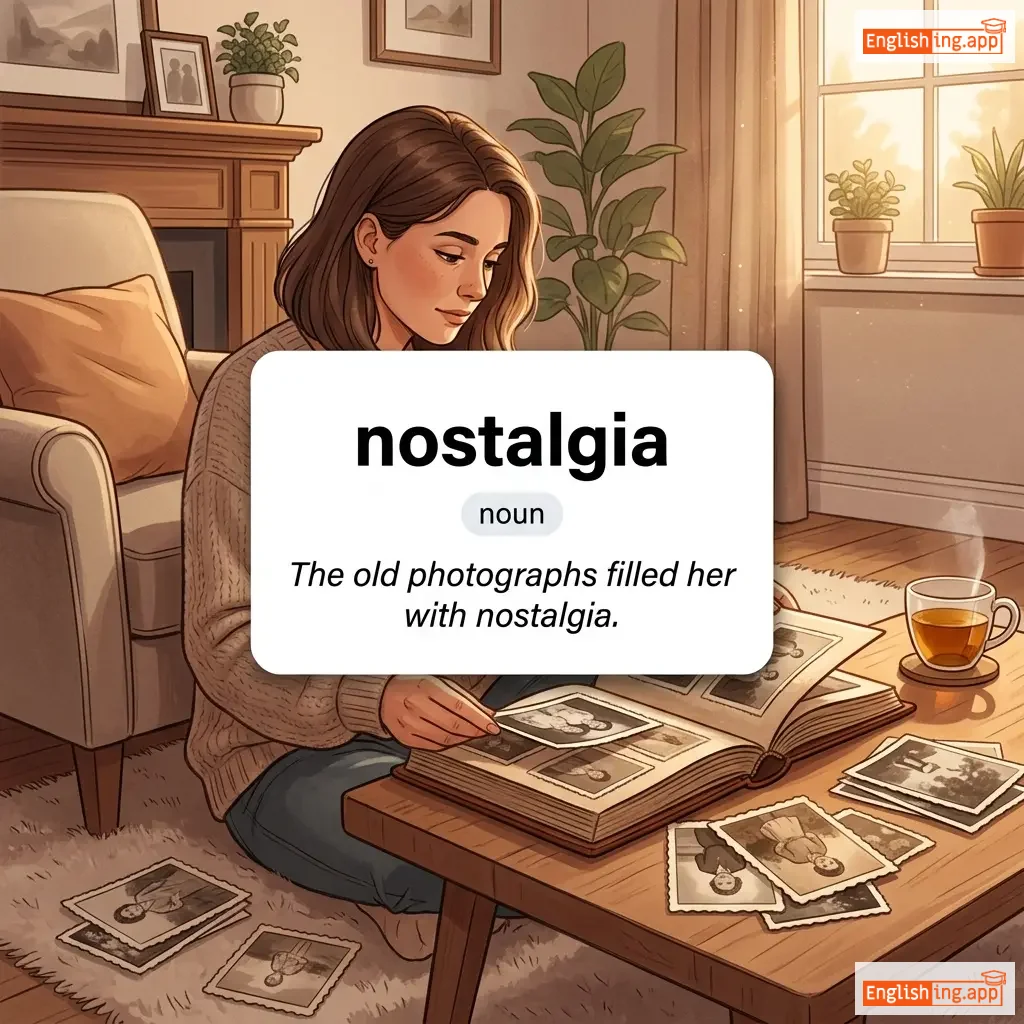
nostalgia definition card — visual illustration of the meaning
noun
/nəˈstældʒə/
ノスタルジア (nosutarujia)

a sentimental longing for the past, often for a period or place with happy memories

"The old photographs filled her with nostalgia."

"古い写真は彼女をノスタルジアで満たしました。" (Furui shashin wa kanojo o nosutarujia de mitashimashita.)
noun
/ˈnɒs.trɪl/
鼻孔 (bikou)

either of the two openings in the nose through which air passes

"The doctor checked each nostril for any blockage."
"医師は鼻孔のそれぞれをブロックがないか調べました。" (Ishi wa bikou no sorezore wo burokkuga naika shirabemashita.)
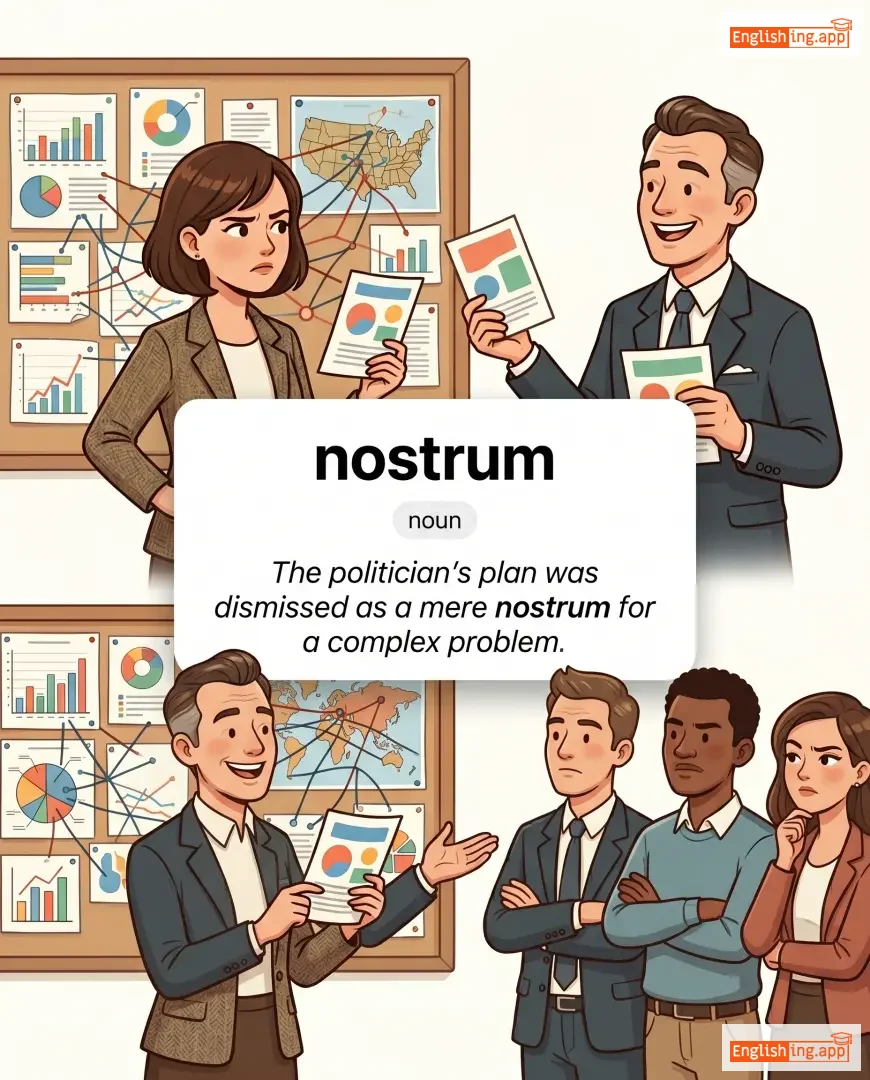
nostrum definition card — visual illustration of the meaning
noun
/ˈnɑːstrəm/
効果のない薬 (kouka no nai kusuri)

a medicine or remedy, especially one that is not considered effective; a questionable solution

"The politician’s plan was dismissed as a mere nostrum for a complex problem."

"政治家の計画は、複雑な問題に対する単なる効果のない薬として退けられました。" (Seijika no keikaku wa, fukuzatsu na mondai ni taisuru tannaru kouka no nai kusuri toshite shirizokemashita.)
adverb
/nɒt/
いいえ (iie)

used to make a word or phrase negative

"I do not like spicy food."

"私は辛い食べ物が好きではありません。" (Watashi wa karai tabemono ga suki de wa arimasen.)
adjective
/ˈnoʊtəbl/
顕著な (kenchona)

worthy of attention or notice; remarkable

"She made a notable contribution to the project."

"彼女はプロジェクトに顕著な貢献をしました。" (Kanojo wa purojekuto ni kenchona kouken o shimashita.)
adverb
/ˈnoʊtəbli/
目立って (medatte)

used to indicate something worthy of attention or significant

"She is notably talented in painting."

"彼女は絵画で際立って才能があります。" (Kanojo wa kaiga de medatte sainou ga arimasu.)
noun
/noʊˈteɪʃən/
記号法 (kihōhō)

A system of symbols or signs used to represent information, especially in mathematics or music.

"The teacher explained the notation used in the algebra equations."

"先生は代数方程式で使用される記号法を説明しました。" (Sensei wa daisū hōteishiki de shiyō sareru kigōhō o setsumei shimashita.)
noun
/nɑːtʃ/
切り込み (kirikomi)

A small cut or groove on the edge or surface of something; a level or degree of achievement.

"He carved a notch on the stick to mark the days."
"彼は日数を記録するために棒に切り込みを入れました。" (Kare wa nissū o kiroku suru tame ni bō ni kirikomi o iremashita.)
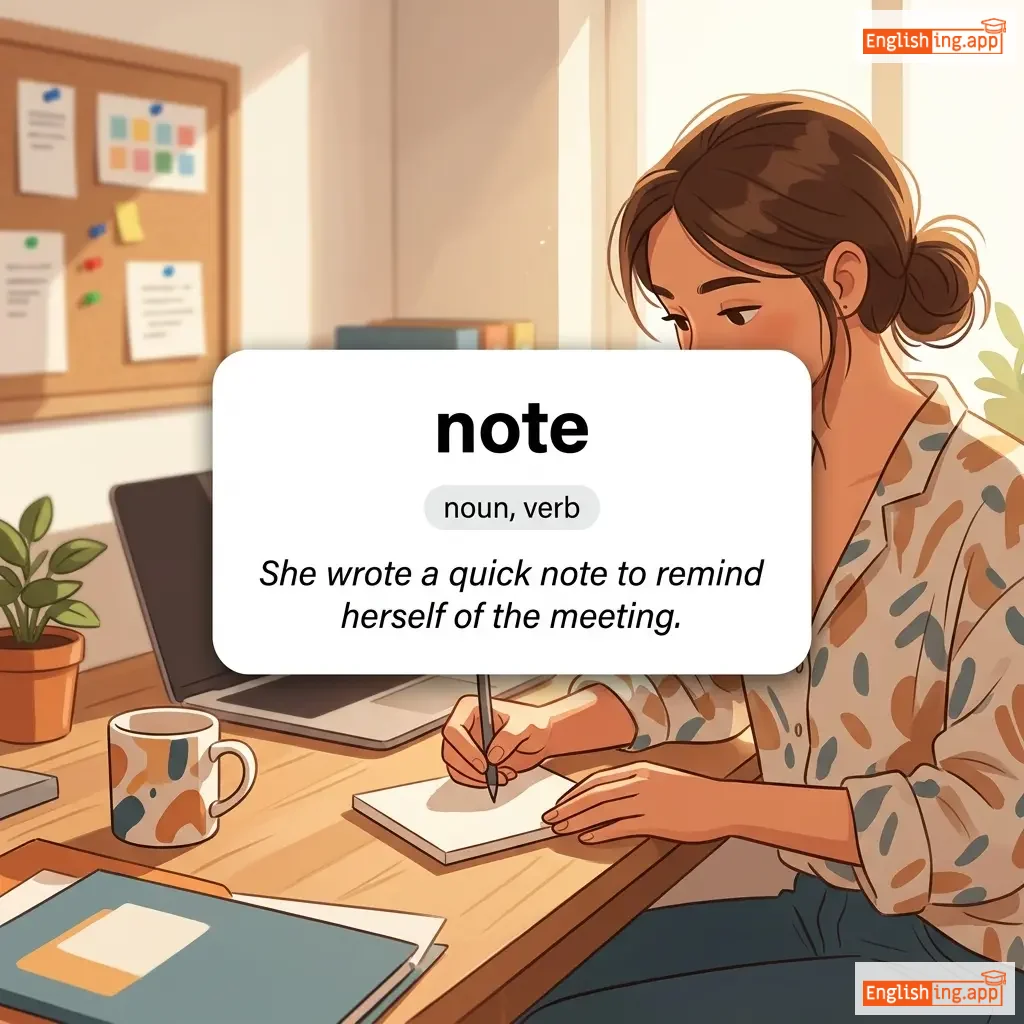
note definition card — visual illustration of the meaning
noun, verb
/noʊt/
メモ (memo)

a brief record of facts, topics, or thoughts written down; to observe or remark upon something

"She wrote a quick note to remind herself of the meeting."

"彼女は会議を思い出すために迅速なノートを書いた。" (Kanojo wa kaigi o omoi dasu tame ni jinsoku na nōto o kaita.)
noun
/ˈnoʊtbʊk/

a small book with blank or ruled pages for writing notes; also a portable computer

"She opened her notebook to jot down some ideas."

adjective, verb
/ˈnoʊtɪd/
著名 (chomei)

well known or famous; written down or observed

"He is a noted author in the field of history."

"彼は歴史分野で著名な作家です。" (Kare wa rekishi bunya de chomei na sakka desu.)
pronoun
/ˈnʌθɪŋ/
何もない (nanimo nai)

not anything; no thing

"She has nothing to worry about."
"彼女は心配することは何もない。" (Kanojo wa shinpai suru koto wa nanimo nai.)
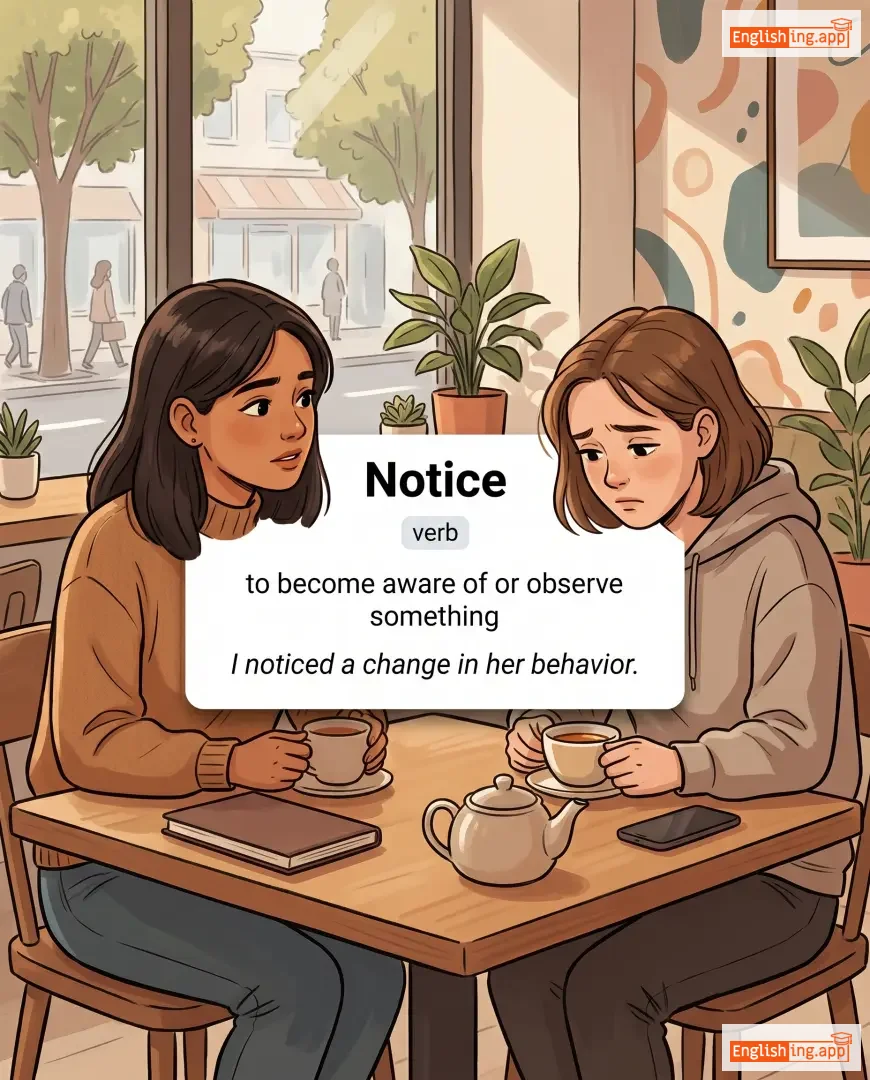
Notice definition card — visual illustration of the meaning
noun
/ˈnoʊtɪs/
通知 (tsuuchi)

a written or printed announcement or notification

"He gave me a notice about the meeting."

"彼は会議についての通知を私にくれました。" (Kare wa kaigi ni tsuite no tsuuchi wo watashi ni kuremashita.)
adjective
/ˈnoʊtɪsəbl/
顕著な (kenchona)

Easily seen, observed, or recognized.

"There was a noticeable improvement in her performance."

"彼女のパフォーマンスには顕著な改善がありました。" (Kanojo no pafōmansu ni wa kenchona kaizen ga arimashita.)
noun
/ˌnəʊtɪfɪˈkeɪʃən/
通知 (tsuchi)

an official or formal notice or message informing someone of something; an alert delivered by a system or device

"You will receive a notification when your application is approved."
"申請が承認されると通知が届きます。" (shinsei ga shonin sareru to tsuchi ga todokimasu)
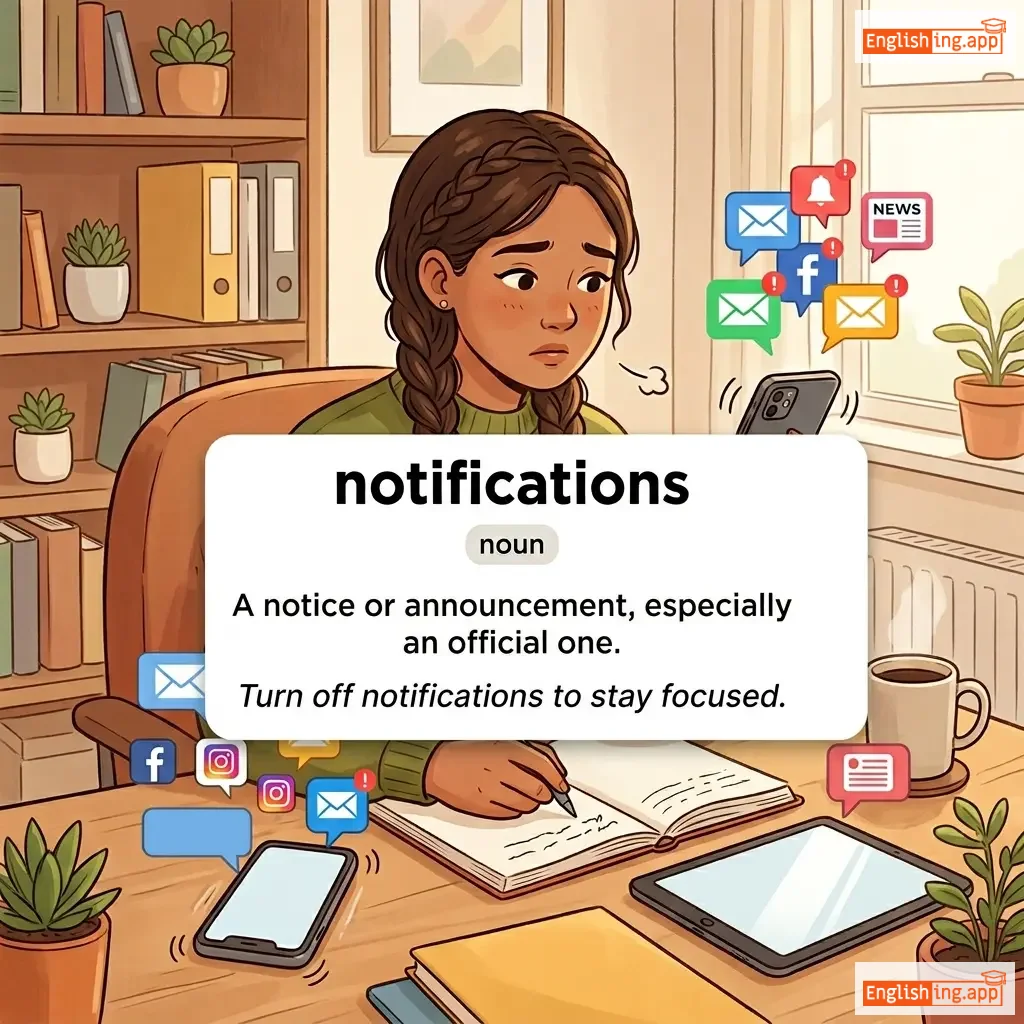
notifications definition card — visual illustration of the meaning
noun
/ˌnoʊtɪfɪˈkeɪʃənz/
通知 (tsuuchi)

A notice or announcement, especially an official one.

"Turn off notifications to stay focused."

"通知をオフにして集中を保つ。" (Tsuuchi wo ofu ni shite shuuchuu wo tamotsu.)
verb
/ˈnoʊtɪfaɪ/
通知する (tsuuchisuru)

to inform someone officially about something

"The manager will notify the staff about the schedule change."

"マネージャーはスタッフにスケジュールの変更について通知します。" (Maneejaa wa sutaffu ni sukejuuru no henko ni tsuuchi shimasu.)
noun
/ˈnoʊʃən/
概念 (gainen)

An idea, belief, or concept about something.

"He had a vague notion of what she wanted."

"彼は彼女が何を望んでいるのかについて漠然とした概念を持っていました。" (Kare wa kanojo ga nani o nozonde iru no ka ni tsuite bakuzento shita gainen o motte imashita.)
noun
/ˌnoʊtəˈraɪəti/
悪名 (akumei)

The state of being famous or well-known for something bad.

"The criminal gained notoriety for his daring escapes."

"その犯罪者は大胆な脱出で悪名を得た。" (Sono hanzai-sha wa daitan na dasshutsu de akumei wo eta.)
adjective
/nəˈtɔːriəs/
悪名高い (akumei takai)

Famous or well-known for something bad or undesirable

"The area is notorious for its high crime rate."

"その地域は高い犯罪率で悪名高いです。" (Sono chiiki wa takai hanzairitsu de akumei takai desu.)
preposition/adverb/conjunction
/ˌnɒtwɪθˈstændɪŋ/
それにもかかわらず (sore ni mo kakawarazu)

In spite of; despite

"Notwithstanding the challenges, the team completed the project."

"挑戦にもかかわらず、チームはプロジェクトを完了させました。" (Chouzen ni mo kakawarazu, chiimu wa purojekuto wo kanryou saseshimaashita.)
verb
/ˈnʌrɪʃ/
栄養を与える (eiyou wo ataeru)

To provide with food or other substances necessary for growth, health, and good condition

"Good books nourish the mind."
"良い本は心を栄養します。" (Yoi hon wa kokoro wo eiyou shimasu.)
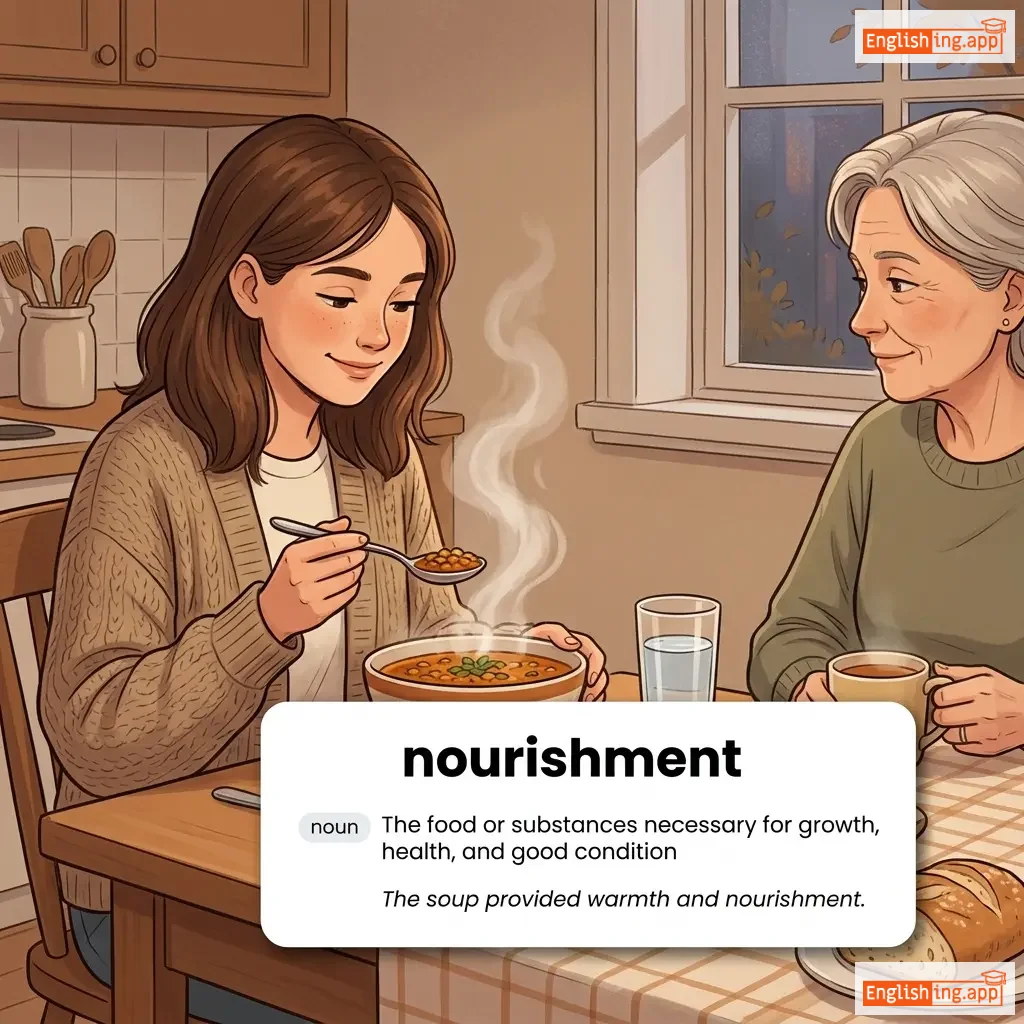
nourishment definition card — visual illustration of the meaning
noun
/ˈnʌrɪʃmənt/
栄養 (eiyou)

The food or substances necessary for growth, health, and good condition

"The soup provided warmth and nourishment."

"スープは暖かさと栄養を提供しました。" (Suupu wa atatakasa to eiyou o teikyou shimashita.)
noun
/ˈnoʊvə/
ノヴァ (突然明るさが増加し、その後元の状態にゆっくり戻る星) (nova)

A star showing a sudden large increase in brightness and then slowly returning to its original state

"Astronomers observed a bright nova in the sky."

"天文学者たちは空に明るいノヴァを観測しました。" (Tenmongakusha-tachi wa sora ni akarui nova o kansoku shimashita.)
noun/adjective
/ˈnɒvəl/
小説 / 新しい (shousetsu / atarashii)

A long fictional narrative; also something new or unusual.

"She spent the weekend reading a historical novel."

"彼女は週末に歴史小説を読んで過ごしました。" (Kanojo wa shuumatsu ni rekishi shousetsu o yonde sugoshimashita.)
noun
/ˈnɒvəlɪst/
小説家 (shousetsuka)

a person who writes novels

"The novelist spent years writing his new book."

"その小説家は新しい本を書くために何年も費やしました。" (Sono shousetsuka wa atarashī hon o kaku tame ni nannen mo tsuiyashimashita.)
noun
/ˌnɒvəˈlɛt/
小説 (shōsetsu)

A short novel or long short story.

"The author published a novellette as a preview of her upcoming series."
"作者は彼女の次のシリーズのプレビューとして小説を発表しました。" (Sakusha wa kanojo no tsugi no shirīzu no purabyū to shite shōsetsu o happyō shimashita.)
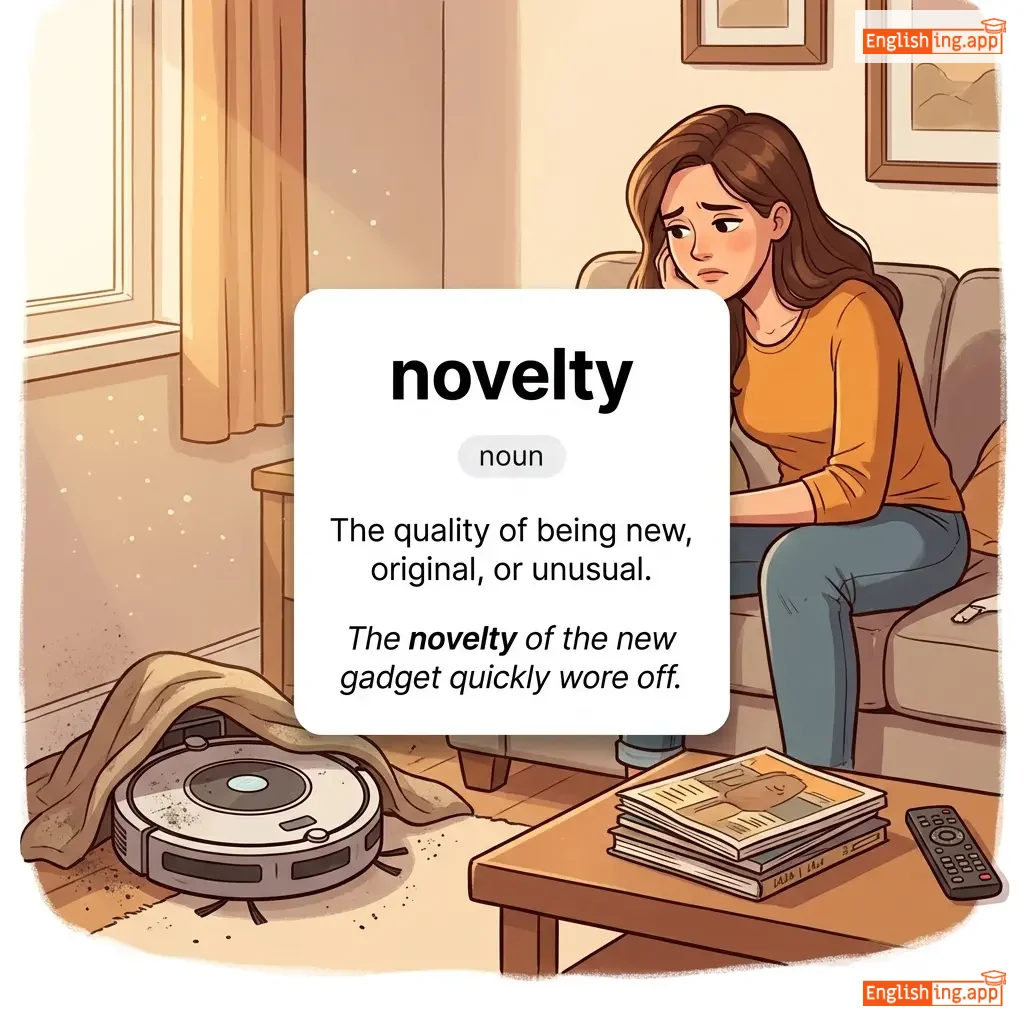
novelty definition card — visual illustration of the meaning
noun
/ˈnɒvəlti/
新奇 (shinki)

The quality of being new, original, or unusual.

"The novelty of the new gadget quickly wore off."

"新しいガジェットの新奇さはすぐに消えてしまった。" (Atarashī gajetto no shinki sa wa sugu ni kiete shimatta.)
noun
/noʊˈvɛmbər/
11月 (juuichigatsu)

the eleventh month of the year in the Gregorian calendar

"November is often cool and quiet before winter begins."

"11月は冬が始まる前で、涼しく静かなことが多い。" (juuichigatsu wa fuyu ga hajimaru mae de suzushiku shizuka na koto ga ooi)
noun
/ˈnɒvɪs/
初心者 (shoshinsha)

A person new to or inexperienced in a field or activity.

"He is still a novice at playing the guitar."

"彼はまだギターを弾く初心者です。" (Kare wa mada gitā o hiku shoshinsha desu.)
adverb
/naʊ/
(ima)

at the present moment or time

"I am studying now."

"私は今勉強しています。" (Watashi wa ima benkyou shiteimasu.)
adverb
/ˈnaʊədeɪz/
今どき; 現在 (imadoki; genzai)

at the present time; in these times

"Now-a-days, people prefer online shopping."

"現在、人々はオンラインショッピングを好む。" (Genzai, hitobito wa onrain shoppingu o konomu.)
adverb
/ˈnaʊədeɪz/
最近 (saikin)

At the present time; in contrast with the past.

"Nowadays, many people prefer shopping online."

"最近、多くの人々がオンラインショッピングを好むようになった。" (Saikin, ooku no hitobito ga onrain shoppingu o konomu you ni natta.)
adverb
/ˈnoʊˌwɛr/
どこにも (doko nimo)

in or to no place; not anywhere

"The missing keys were nowhere to be found."

"失われた鍵はどこにも見つかりませんでした。" (Ushinawareta kagi wa doko ni mo mitsukarimasen deshita.)
adjective
/ˈnɑːkʃəs/
有害な (yūgaina)

harmful, poisonous, or very unpleasant

"The factory released noxious fumes into the air."

"工場は空気中に有害な煙を放出した。" (Kōjō wa kūkijū ni yūgaina kemuri o hōshutsu shita.)
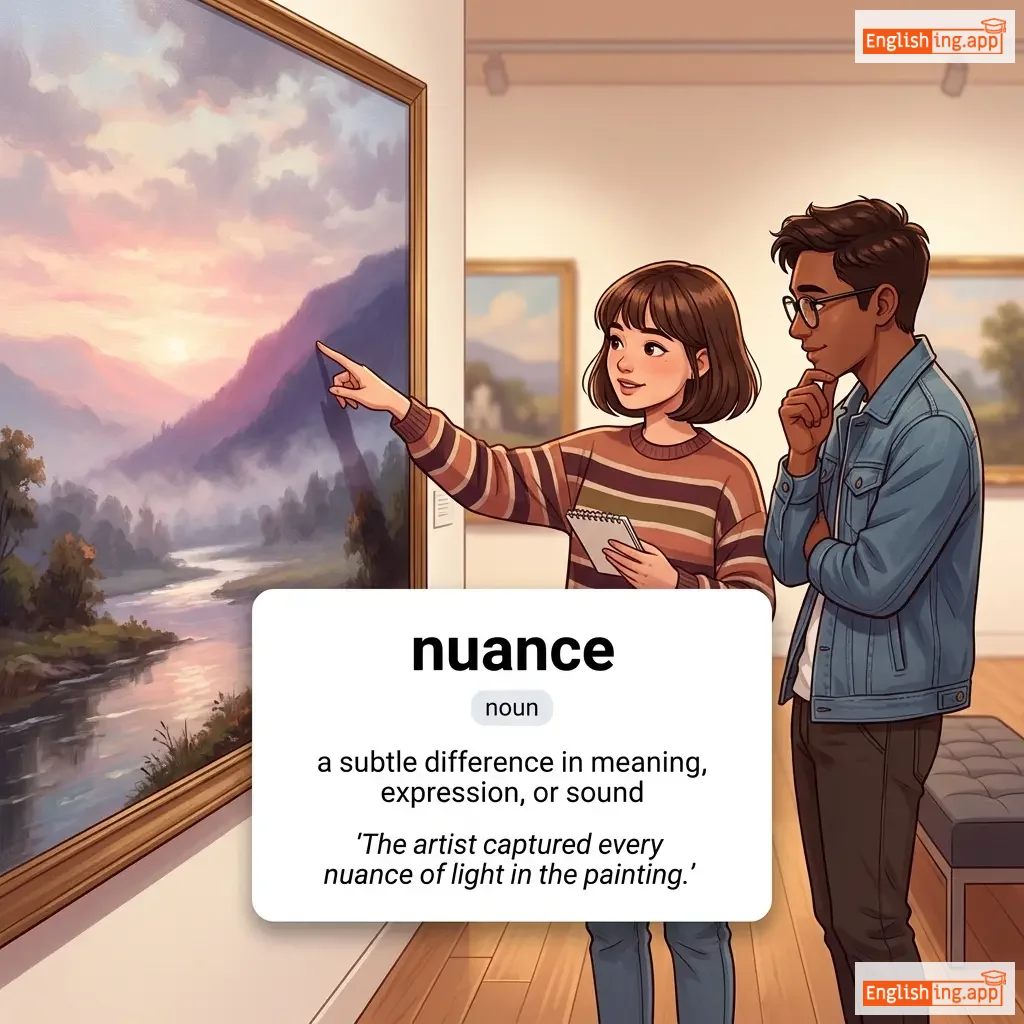
nuance definition card — visual illustration of the meaning
noun
/ˈnuːˌɑːns/

a subtle difference in meaning, expression, or sound

"The artist captured every nuance of light in the painting."

adjective
ˈnuː.ɑːnst
微妙な違いのある (bimyōna chigai no aru)

Characterized by subtle shades of meaning or expression; having or characterized by subtle and often appealingly complex qualities.

"His argument was nuanced and well-structured."

"彼の議論は微妙でよく組み立てられていた。" (Kare no giron wa bimyō de yoku kumitaterarete ita.)
adjective
/ˈnjuːbaɪl/
未婚女性 (mikon josei)

of a young woman, sexually mature and suitable for marriage

"The village was celebrating the festival with its nubile maidens dancing."

"村はその未婚女性たちが踊る祭りを祝っていました。" (Mura wa sono mikon josei-tachi ga odoru matsuri o iwatte imashita.)
adjective
/ˈnuːkliər/
原子力 (genshiryoku)

relating to the nucleus of an atom or to nuclear energy

"The country is developing nuclear energy."

"その国は原子力エネルギーを開発しています。" (Sono kuni wa genshiryoku enerugī o kaihatsu shiteimasu.)
verb
/ˈnuːkliˌeɪt/
核形成 (kakukousei)

to form into a nucleus or bring together into a central part

"The droplets began to nucleate around tiny particles in the air."
"水滴は空気中の小さな粒子の周りで核を形成し始めました。" (Suiteki wa kūkī-chū no chiisana ryūshi no mawari de kaku wo keisei shihajimemashita.)
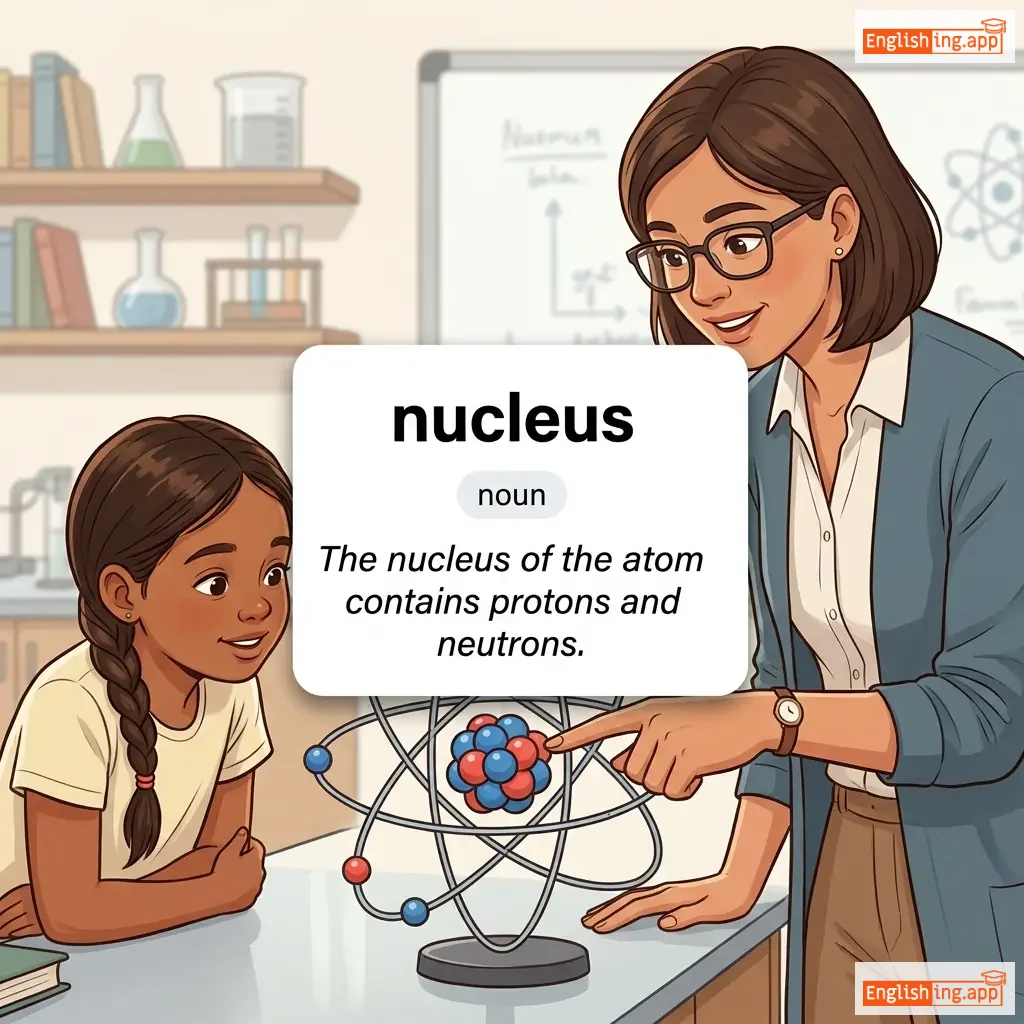
nucleus definition card — visual illustration of the meaning
noun
/ˈnjuː.kli.əs/
原子核 (genshikaku)

The central and most important part of something, forming the basis for its activity and growth; in biology, the central part of a cell.

"The nucleus of the atom contains protons and neutrons."

"原子核には陽子と中性子が含まれています。" (Genshikaku ni wa yōshi to chūseishi ga fukumaれています。)
adjective
/nuːd/
ヌード (nūdo)

Wearing no clothes; naked.

"The artist painted a nude model."

"アーティストはヌードモデルを描きました。" (Ātisuto wa nūdo moderu o kakimashita.)
verb
/nʌdʒ/
肘で軽く押す (hiji de karuku osu)

To push someone gently, usually with your elbow, in order to attract attention.

"She nudged him to be quiet during the meeting."
"会議中、彼女は彼を静かにさせるために軽く肘で押した。" (Kaigi-chū, kanojo wa kare o shizuka ni saseru tame ni karuku hiji de oshita.)
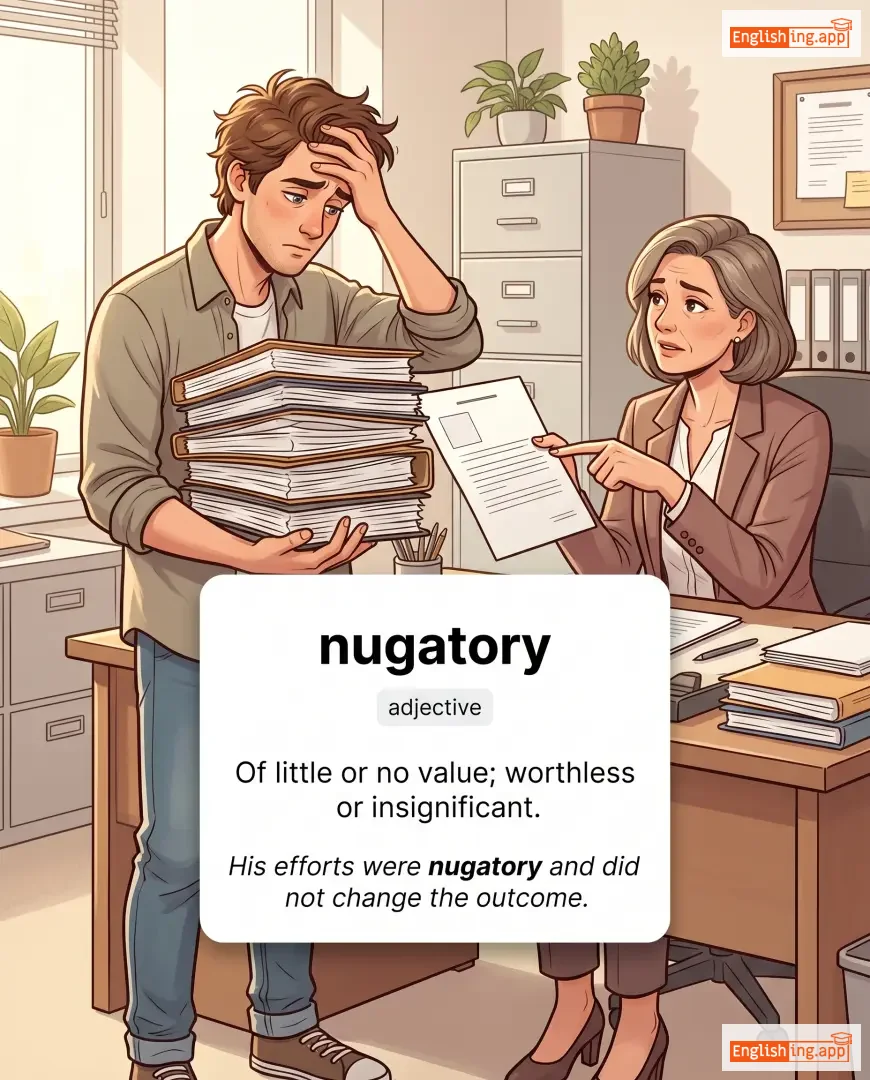
nugatory definition card — visual illustration of the meaning
adjective
/ˈnjuː.ɡə.tɔːr.i/
無価値 (mukachi)

Of little or no value; worthless or insignificant.

"His efforts were nugatory and did not change the outcome."

"彼の努力は無価値で、結果を変えることはなかった。" (Kare no doryoku wa mukachi de, kekka o kaeru koto wa nakatta.)
noun
/ˈnjuː.səns/
迷惑 (meiwaku)

A person, thing, or situation that causes inconvenience or annoyance.

"The loud construction noise was a nuisance to the neighbors."

"大きな建設の騒音は近隣住民にとって迷惑でした。" (Ookina kensetsu no souon wa kinrin juumin ni totte meiwaku deshita.)
nullify definition card — visual illustration of the meaning
verb
/ˈnʌlɪfaɪ/

to make legally null and void; to cancel or invalidate

"The contract was nullified due to fraud."

noun
/ˈnʌmbər/
番号 (bangou)

a mathematical value used to count, measure, or label

"She gave me her phone number."

"彼女は私に自分の電話番号を教えてくれました。" (Kanojo wa watashi ni jibun no denwa bangou o oshiete kuremashita.)
adjective
/ˈnjuː.mər.ə.bəl/
数えられる; 計算可能な (kazoerareru; keisannoukanou)

capable of being counted; countable

"The stars in the sky are not numerable."

"空の星は数えられません。" (Sora no hoshi wa kazoeraremasen.)
noun
/ˌnjuːməˈreɪʃən/
数え方 (kazoekata)

the action or process of counting or assigning numbers

"The teacher explained the basics of numeration to the students."

"先生は学生たちに数え方の基本を説明しました。" (Sensei wa gakusei tachi ni kazoekata no kihon wo setsumei shimashita.)