語彙集

英単語辞書 | 単語の意味、定義、例文

adjective, adverb, pronoun
/mɔːr/
もっと (motto)

A greater or additional amount or degree.

"She wanted more time to finish the project."

"彼女はプロジェクトを終わらせるためにもっと時間が欲しかった。" (Kanojo wa purojekuto o owaraseru tame ni motto jikan ga hoshikatta.)
adverb
/mɔːrˈoʊvər/
その上 (sono ue)

Used to add information that supports or emphasizes what has already been said.

"The job is challenging; moreover, it requires excellent communication skills."

"その仕事は挑戦的です。その上、優れたコミュニケーションスキルが必要です。" (Sono shigoto wa chōsenteki desu. Sono ue, sugureta komyunikeishon sukiru ga hitsuyō desu.)
noun
/ˈmɔːreɪz/
風習 (fūshū)

the essential or characteristic customs and conventions of a community

"Social mores often dictate how people behave in public."

"社会的な風習は、しばしば人々が公共の場でどのように振る舞うかを決定します。" (Shakaiteki na fūshū wa, shibashiba hitobito ga kōkyō no ba de dono yō ni furumau ka o kettei shimasu.)
adjective
/ˌmɔːrɡəˈnætɪk/
モルガナティック結婚 (morganatiku kekkon)

relating to a marriage in which one partner, usually of lower social rank, does not share the titles or privileges of the other

"The prince entered into a morganatic marriage with a commoner."

"王子は平民とモルガナティック結婚をしました。" (Ōji wa heimin to morganatikku kekkon o shimashita.)
⚰️

morgue

noun
/mɔːrɡ/

a place where dead bodies are kept, especially to be identified or claimed

"The police took the body to the morgue for identification."

adjective
/ˈmɔːrɪbʌnd/
死にかけている (shinikaketeiru)

in a dying state; near death or becoming obsolete

"The moribund industry was soon replaced by modern technology."

"死にかけている産業はすぐに現代技術によって置き換えられました。" (Shinikaketeiru sangyō wa sugu ni gendai gijutsu ni yotte okikaeraremashita.)
noun
/ˈmɔːrnɪŋ/
幸福 (kōfuku)

the early part of the day, typically from sunrise until noon

"I like to go for a run in the morning."
"彼女は賞を受け取ったとき、自分の幸福を隠すことができませんでした。" (Kanojo wa shō o uketotta toki, jibun no kōfuku o kakusu koto ga dekimasen deshita.)
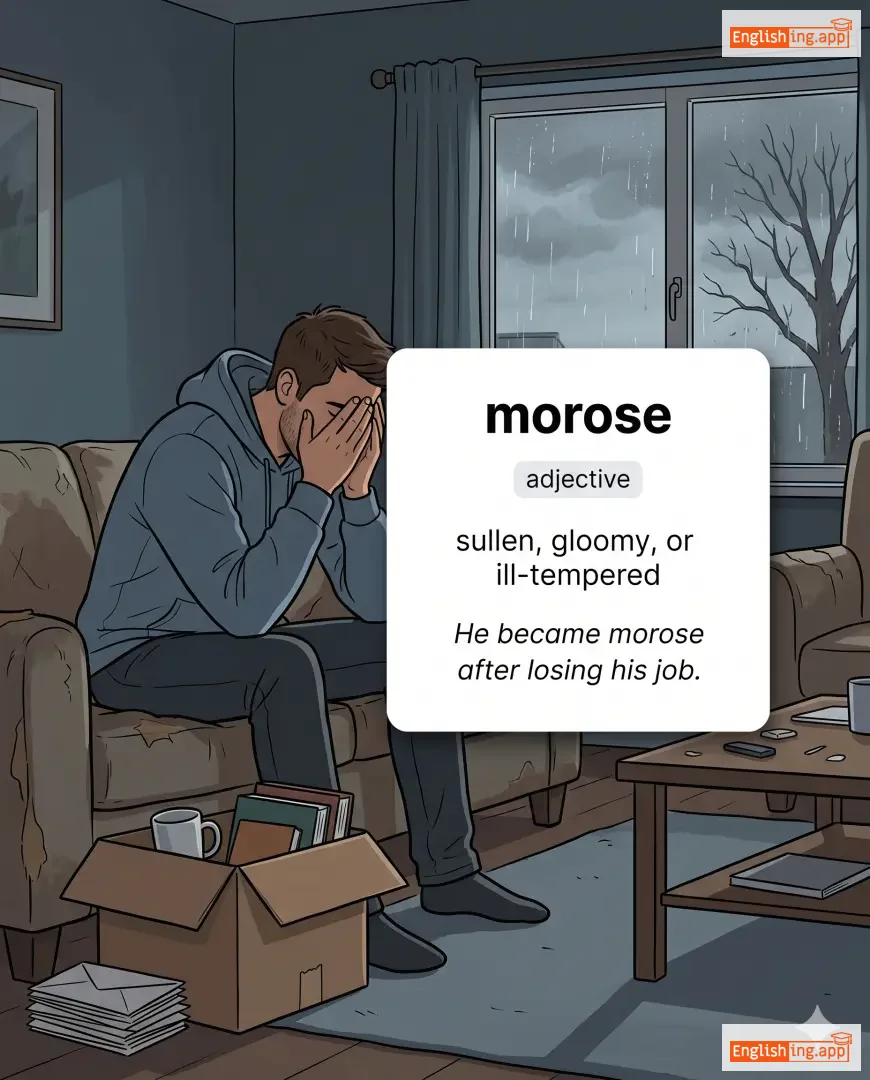
morose definition card — visual illustration of the meaning
adjective
/məˈroʊs/
陰鬱 (in'utsu)

sullen, gloomy, or ill-tempered

"He became morose after losing his job."

"彼は仕事を失った後、落ち込んでしまった。" (Kare wa shigoto o ushinatta ato, ochikonde shimatta.)
verb
/mɔːrf/
変形する (henkei suru)

to change smoothly from one form, shape, or character into another

"The caterpillar will morph into a butterfly."

"イモムシは蝶に変わるでしょう。" (Imomushi wa chō ni kawaru deshō.)
morphological definition card — visual illustration of the meaning
adjective
ˌmɔː.fəˈlɒdʒ.ɪ.kəl
語形成に関連する (morphological)

Related to the structure and formation of words; concerning morphology in linguistics.

"Morphological analysis helps AI understand word structures."

"形態論的な分析はAIに言葉の構造を理解させる手助けをします。" (Keitairon teki na bunseki wa AI ni kotoba no kouzou o rikai saseru tedasuke o shimasu.)
noun
/mɔːrˈfɑːlədʒi/
形態学 (keitai-gaku)

the study of the form and structure of things, especially in language and biology

"Morphology studies the structure of words and how they are formed."

"形態学は、単語の構造とその形成方法を研究します。" (Keitai-gaku wa, tango no kouzou to sono keisei houhou o kenkyuu shimasu.)
adjective
/ˈmɔːtəl/
死すべき運命; 限られた寿命の; 人間 (shisubeki unmei; kagirareta jumyou no; ningen)

subject to death; having a limited lifespan; human

"All human beings are mortal and will eventually die."

"すべての人間は死すべき運命にあり、最終的に死ぬ。" (Subete no ningen wa shisubeki unmei ni ari, saishūteki ni shinu.)
noun
/mɔːˈtæləti/
死亡率 (shibō-ritsu)

the state of being subject to death; the death rate of a population

"Advancements in medicine have reduced child mortality significantly."

"医療の進歩により、乳児死亡率が大幅に減少しました。" (Iryō no shinpo ni yori, nyūji shibō-ritsu ga ōhaba ni genshō shimashita.)
noun
/ˈmɔːrtər/
レンガをつなげるための混合物 / 小さな大砲 (renga o tsunageru tame no kongō-mono / chīsana taihō)

a mixture used in building to bond bricks or stones together; also, a small cannon for firing shells

"The workers applied mortar between the bricks."

"作業員たちはレンガの間にモルタルを塗りました。" (Sagyouin-tachi wa renga no aida ni mortar o nurimashita.)
noun
/ˈmɔː.tər ænd ˈpes.əl/
モルタルと乳鉢 (mortar to nyūbachi)

a bowl and grinding tool used to crush and grind spices, herbs, and other substances

"She ground the spices using a mortar and pestle."

"彼女はモルタルと乳鉢を使って香辛料を挽いた。" (Kanojo wa mortar to nyūbachi o tsukatte kōshinryō o haita.)
noun
/ˈmɔːrɡɪdʒ/
住宅ローン (jutaku rōn)

a legal agreement where a person borrows money to buy property and pays it back over time

"They applied for a mortgage to buy their new house."

"彼らは新しい家を買うために住宅ローンの申し込みをしました。" (Karera wa atarashī ie o kau tame ni jutaku rōn no mōshikomi o shimashita.)
noun
/mɔːrˈtɪʃən/
葬儀屋 (sōgiya)

a person whose job is to prepare dead bodies for burial or cremation and to arrange funerals

"The mortician prepared the body for the funeral service."

"葬儀屋は葬儀サービスのために遺体を準備しました。" (Sōgiya wa sōgi sābisu no tame ni itai o junbi shimashita.)
verb
/ˈmɔːrtɪfaɪ/
恥をかかせる (haji o kakaseru)

to cause someone to feel great embarrassment or shame

"She was mortified when she tripped on stage."

"彼女はステージでつまずいたとき、とても恥ずかしかった。" (Kanojo wa suteeji de tsumazuita toki, totemo hazukashikatta.)
🖼️

mosaic

noun
/moʊˈzeɪɪk/

A picture or pattern produced by arranging together small pieces of stone, tile, or glass.

"The church ceiling was decorated with a beautiful mosaic."

noun
/mɒsk/
モスク (mosuku)

A Muslim place of worship.

"They gathered at the mosque for the Friday prayer."

"彼らは金曜日の祈りのためにモスクに集まりました。" (Karera wa kin'yōbi no inori no tame ni mosuku ni atsumarimashita.)
noun
/məˈskiːtəʊ/

a small flying insect known for biting and spreading diseases such as malaria

"The mosquito bit me while I was sleeping under the net."

noun
/məˈskiː.toʊ net/
蚊帳 (kaya)

a fine mesh fabric used to cover beds or windows to keep mosquitoes and other insects out

"We use a mosquito net to protect ourselves from insect bites."

"私たちは虫刺されを防ぐために蚊帳を使います。" (watashitachi wa mushisasare o fusegu tame ni kaya o tsukaimasu.)
noun
/mɔːs/
(koke)

a small flowerless plant that grows in clumps in moist places

"Green moss covered the old stone wall."

"緑の苔が古い石の壁を覆っていました。" (midori no koke ga furui ishi no kabe o utte imashita.)
adjective
/ˈmɒsi/
苔むしている; 苔が生えている (kokemushiteiru; koke ga haeteiru)

covered with moss; having moss growing on it

"The old tree trunk was mossy and covered with green vegetation."

"古い木の幹は苔むしており、緑の植物で覆われていました。" (Furui ki no miki wa kokemushite ori, midori no shokubutsu de owareteimashita.)
adjective, adverb, pronoun
/moʊst/
ほとんど (hotondo)

the greatest in amount, degree, or number

"Most people like to relax on weekends."
"ほとんどの人々は週末にリラックスすることを好む。" (Hotondo no hitobito wa shūmatsu ni rirakkusu suru koto o konomu.)
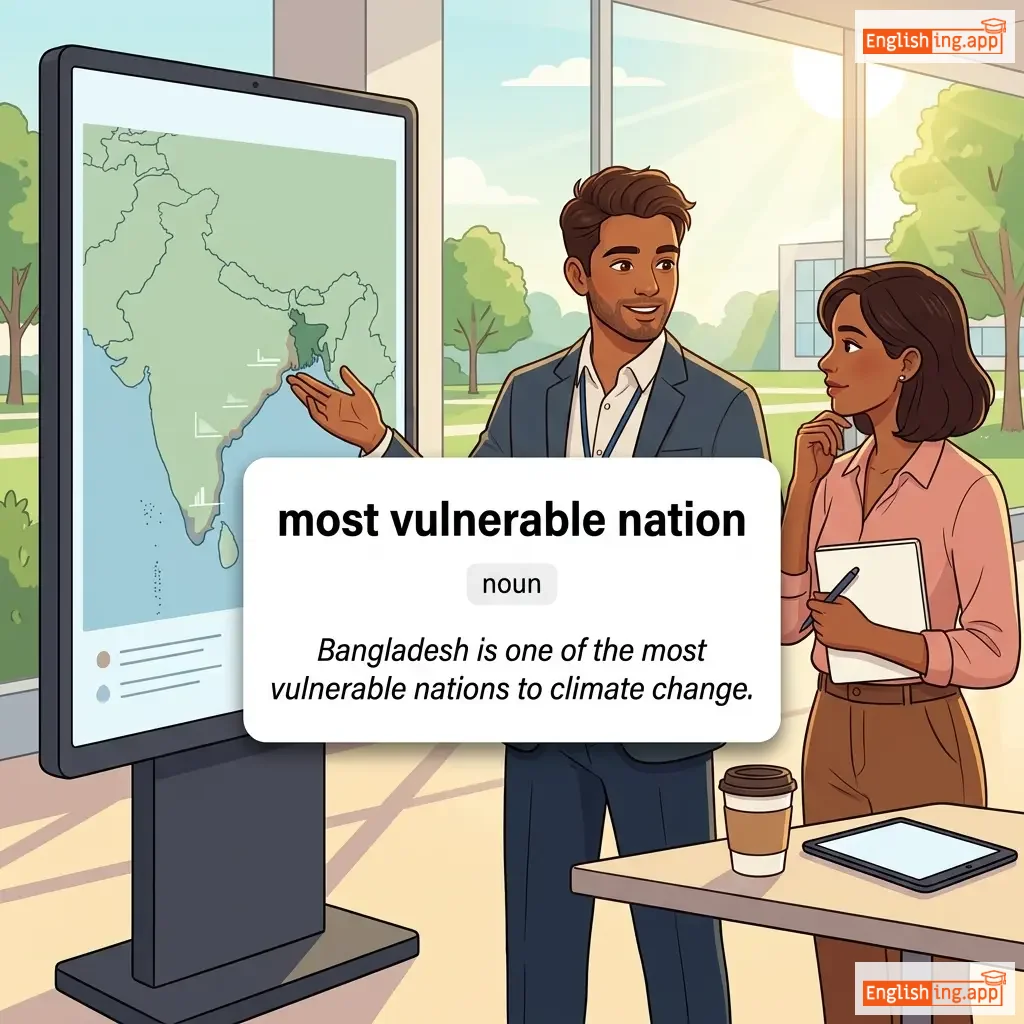
most vulnerable nation definition card — visual illustration of the meaning
noun
moʊst ˈvʌlnərəbəl ˈneɪʃən
最も脆弱な国 (mottomo zeijaku na kuni)

A country that is highly exposed to risks and lacks adequate protection or resilience.

"Bangladesh is one of the most vulnerable nations to climate change."

"バングラデシュは気候変動に最も脆弱な国の一つです。" (Banguradesh wa kikou hendou ni mottomo zeijaku na kuni no hitotsu desu.)
adverb
/ˈmoʊstli/
主に (omoni)

for the most part; mainly

"She is mostly interested in art and literature."

"彼女は主に芸術と文学に興味があります。" (Kanojo wa omoni geijutsu to bungaku ni kyōmi ga arimasu.)
noun
/moʊt/
微粒 (biryu)

A tiny particle or speck, especially of dust.

"A mote of dust floated in the sunlight."

"ほこりの微粒が日光の中で浮かんでいた。" (Hokori no biryu ga nikkou no naka de ukande ita.)
adjective
/ˈmɒθ ˌiːtən/
虫に食べられた (mushi ni taberareta)

Damaged or worn out, especially by moths or age.

"He wore a moth-eaten sweater on the cold day."

"彼は寒い日に虫に食べられたセーターを着ていた。" (Kare wa samui hi ni mushi ni taberareta seetaa o kite ita.)
noun
/ˈmʌðər/
(haha)

a female parent

"Her mother is a kind and caring person."

"彼女の母親は親切で思いやりのある人です。" (Kanojo no hahaoya wa shinsetsu de omoiyari no aru hito desu.)
noun
/ˈmʌðər ˈlæŋɡwɪdʒ/
母語 (bogo)

the first language a person learns from childhood; native language

"Children learn best when they are taught in their mother language."

"子どもは母語で学ぶと最もよく理解する。" (kodomo wa bogo de manabu to mottomo yoku rikai suru)
noun
/ˈmʌð.ər.hʊd/
母性 (bosei)

the state of being a mother; the qualities of a mother

"She embraced the joys and challenges of motherhood."

"彼女は母性の喜びと挑戦を受け入れました。" (Kanojo wa bosei no yorokobi to chousen o ukeiremashita.)
noun
/ˈmʌð.ər.lænd/
母国; 出身地 (bokoku)

the country where one was born or has citizenship; homeland

"He always spoke fondly of his motherland."

"彼はいつも自分の母国について愛情を込めて話していました。" (Kare wa itsumo jibun no bokoku ni tsuite aijou o komete hanashite imashita.)
👩‍👧‍👦

Motherly (madarī)

adjective
/ˈmʌðərli/
母性的 (boseiteki)

having qualities characteristic of a mother; caring and protective

"She showed motherly care and affection towards all the children."

"彼女はすべての子供たちに母親のようなケアと愛情を示しました。" (Kanojo wa subete no kodomotachi ni hahaoya no youna kea to aijou wo shimeshimashita.)
🎭

motif

noun
/moʊˈtiːf/

A recurring theme, subject, or idea in a work of art or literature.

"The motif of love is central to the novel."

adjective
/ˈmoʊtaɪl/
運動性のある (undōsei no aru)

Capable of movement or locomotion.

"Certain bacteria are motile and can swim toward nutrients."

"特定の細菌は運動性があり、栄養素に向かって泳ぐことができます。" (Tokutei no saikin wa undōsei ga ari, eiyōso ni mukatte oyogu koto ga dekimasu.)
noun
/moʊˈtɪləti/
運動性 (undousei)

The ability of an organism or cell to move independently.

"The motility of sperm is crucial for successful fertilization."

"精子の運動性は受精成功のために重要です。" (Seishi no undousei wa jusei seikou no tame ni juuyou desu.)
noun
/ˈmoʊʃən/
動き (ugoki)

the act or process of moving; a change of place or position

"The motion of the car made her sleepy."

"車の動きが彼女を眠くさせた。" (Kuruma no ugoki ga kanojo wo nemuku saseta.)
verb
/ˈmoʊtɪveɪt/

To provide someone with a reason or incentive to do something.

"The coach motivated the players to give their best performance."

noun
/ˌmoʊtɪˈveɪʃən/
モチベーション (mochibeeshon)

the reason or drive for acting or behaving in a particular way

"She lost her motivation to continue the project."

"彼女はプロジェクトを続けるモチベーションを失いました。" (Kanojo wa purojekuto o tsudzukeru mochibeeshon o ushinai mashita.)
noun
/ˈmoʊtɪv/
動機 (dōki)

a reason for doing something, especially one that is hidden or not obvious

"The police could not determine the motive behind the crime."

"警察は犯罪の背後にある動機を特定できませんでした。" (Keisatsu wa hanzai no haigo ni aru dōki o tokutei dekimasen deshita.)
adjective
/ˈmɒtli/
混成 (konsei)

Made up of different, often incongruous or diverse elements.

"The festival attracted a motley crowd of artists, musicians, and tourists."

"フェスティバルはアーティスト、ミュージシャン、観光客からなる混成の群衆を引き寄せた。" (Fesutibaru wa aatisuto, myuujishan, kankoukyaku kara naru konsei no gunshuu wo hiki yoseta.)
noun
/ˈmoʊtər/
モーター (mōtā)

a machine that produces motion or power to make something work

"The car’s motor stopped suddenly."

"車のモーターは突然止まりました。" (kuruma no mōtā wa totsuzen tomarimashita.)
noun
/ˈmoʊ.tər ˌsaɪ.kəl/
バイク (baiku)

a two-wheeled vehicle powered by an engine

"He rides his motorcycle to work every day."

"彼は毎日バイクで仕事に行きます。" (Kare wa mainichi baiku de shigoto ni ikimasu.)
noun
/ˈmoʊ.tər ˈlɔː.ri/
トラック (torakku)

a large motor vehicle used for transporting goods; truck

"The motor lorry delivered fresh vegetables to the market."

"そのモーター車は新鮮な野菜を市場に届けました。" (Sono mōtāsha wa shinsen na yasai o ichiba ni todokemashita.)
noun
/ˈmoʊtərˌsaɪkəl/
オートバイ (ootobai)

a two-wheeled motor-powered vehicle designed for transportation

"He rides his motorcycle to work every morning."

"彼は毎朝オートバイで仕事に行きます。" (Kare wa maiasa ootobai de shigoto ni ikimasu)
noun
/ˈməʊtərɪst/
自動車運転者 (jidousha untensha)

a person who drives a motor vehicle, especially a car or motorcycle

"The motorist stopped to help after seeing the accident on the highway."

"自動車運転者は事故を見て車を止め、助けました。" (Jidousha untensha wa jiko o mite kuruma o tome tasukemashita)
verb
/ˈmɒtl/
斑点 (hanten)

To mark with spots or patches of color.

"The leaves were mottled with shades of yellow and brown."

"葉は黄色と茶色の斑点で斑入りでした。" (Ha wa kiiro to chairo no hanten de haniri deshita.)
adjective
/ˈmɒtld/
斑点模様の (hanten moyou no)

Marked with spots, streaks, or blotches of different shades or colors.

"The snake's mottled skin helped it blend into the forest floor."

"ヘビの斑点模様の皮膚は、森の床に溶け込むのを助けました。" (Hebi no hanten moyou no hifu wa, mori no yuka ni toke komu no o tasukemashita.)
noun
/ˈmɒtəʊ/
モットー (motto)

A short sentence or phrase that expresses a guiding belief or principle.

"Her motto in life is 'never give up.'"

"彼女の人生のモットーは「決して諦めないこと」です。" (Kanojo no jinsei no motto wa 'kesshite akiramenai koto' desu.)