語彙集

英単語辞書 | 単語の意味、定義、例文

verb
/ˌmɪsˈmænɪdʒ/

to handle or control something badly or inefficiently

"The company went bankrupt because it was mismanaged for years."

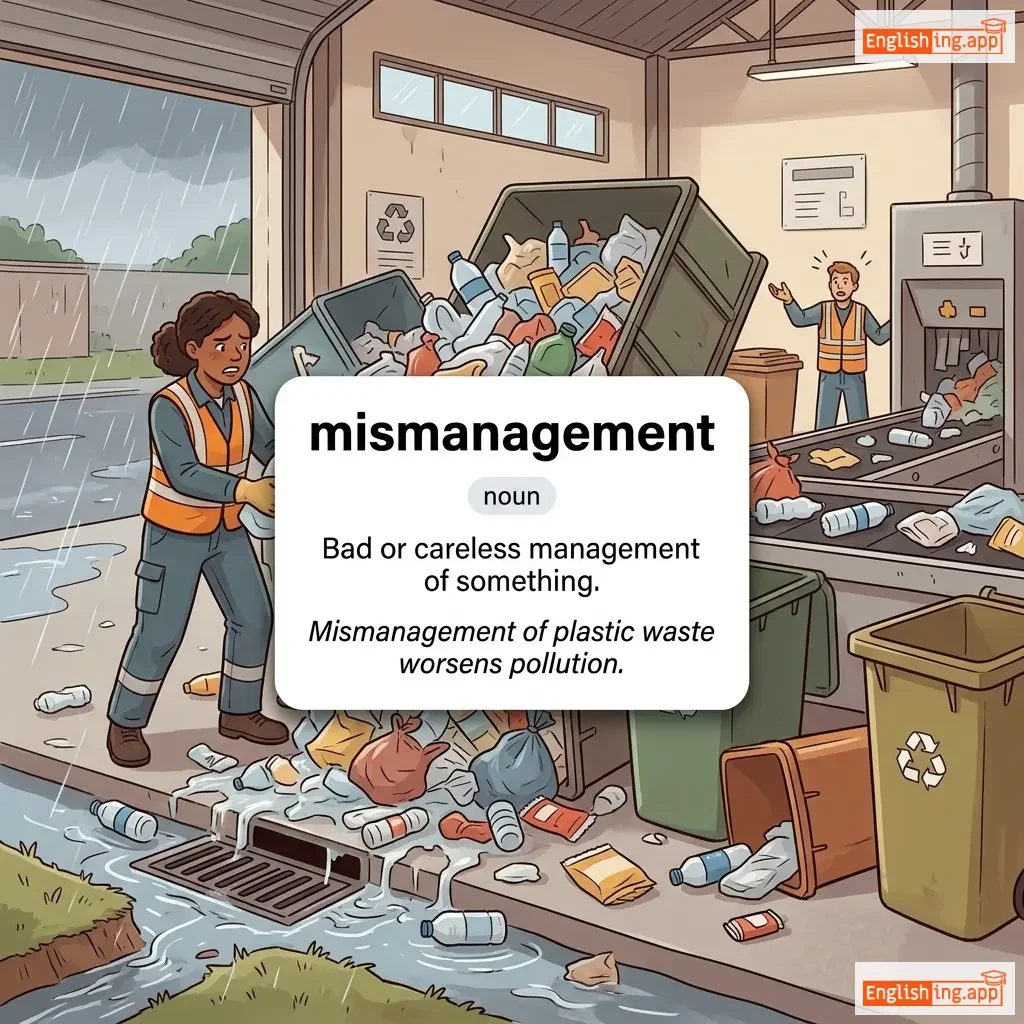
mismanagement definition card — visual illustration of the meaning
noun
ˌmɪsˈmænɪdʒmənt
不適切な管理 (futekisetsu na kanri)

Bad or careless management of something.

"Mismanagement of plastic waste worsens pollution."

"プラスチックごみの不適切な管理が汚染を悪化させます。" (Purasutikku gomi no futekisetsu na kanri ga osen o akka sasemasu.)
noun
/ˌmɪsˈnoʊmər/
誤った名前 (ayamatta namae)

A wrong or inaccurate name or designation.

"Calling the tiny dog a 'giant' is a misnomer."

"小さな犬を「ジャイアント」と呼ぶのは誤った名前です。" (Chiisana inu wo 'Jaianto' to yobu no wa ayamatta namae desu.)
noun
/mɪˈsɑːɡəmi/
ミソガミー (misogamī)

Hatred or dislike of marriage.

"His misogamy prevented him from ever settling down with a partner."

"彼のミソガミーは、パートナーと一緒に落ち着くことを妨げた。" (Kare no misogamī wa, pātonā to issho ni ochitsuku koto o samatage ta.)
noun
/mɪˈsɑːdʒɪnɪst/
女性嫌悪者 (josei ken'oshā)

A person who dislikes, despises, or is strongly prejudiced against women.

"Many condemned his speech as the words of a misogynist."

"多くの人々は彼のスピーチを女性嫌悪者の言葉として非難しました。" (Ōku no hitobito wa kare no supīchi o josei ken'oshā no kotoba to shite hinan shimashita.)
noun
/mɪˈsɑːdʒəni/
女性嫌悪 (josei ken'o)

Hatred of, contempt for, or prejudice against women.

"The novel has been criticized for promoting misogyny."

"その小説は女性嫌悪を助長すると批判された。" (Sono shōsetsu wa josei ken'o o jochō suru to hihan sareta.)
verb
/ˌmɪsˈpleɪs/
間違った場所に置く (machigatta basho ni oku)

To put something in the wrong location and temporarily lose it.

"I often misplace my keys when I am in a hurry."

"急いでいるとき、よく鍵を間違った場所に置いてしまいます。" (Isoide iru toki, yoku kagi o machigatta basho ni oite shimaimasu.)
verb
/ˌmɪsˈriːd/
誤って読む (ayamatte yomu)

to read something incorrectly or interpret wrongly

"He misread the instructions and built the shelf incorrectly."

"彼は指示を誤読して棚を間違って作った。" (Kare wa shiji o godoku shite tana o machigatte tsukutta.)
verb
/ˌmɪsˌrɛprɪˈzɛnt/

to give a false or misleading account of something

"The lawyer accused the witness of trying to misrepresent the facts."

noun
/ˌmɪsˈruːl/
悪政 (akusei)

bad or poor governance

"The kingdom suffered for decades under misrule."

"王国は数十年にわたって悪政の下で苦しんだ。" (Ōkoku wa suujūnen ni watatte akusei no moto de kurushinda.)
verb, noun
/mɪs/
失う / 恋しい (ushinau / koishii)

to fail to hit, reach, or meet; to feel the absence of someone or something

"I really miss my family when I travel abroad."

"海外旅行の際、家族を本当に恋しく感じます。" (Kaigai ryokou no sai, kazoku wo hontou ni koishiku kanjimasu.)
noun
/ˈmɪsəl/
ミサの書 (Misa no sho)

a book containing the texts used in the Catholic Mass throughout the year

"The priest read from the missal during the ceremony."

"祭司は儀式中にミサの書から読んでいました。" (Saishi wa gishiki-chū ni misa no sho kara yonde imashita.)
noun
/ˈmɪsaɪl/ or /ˈmɪsəl/
ミサイル (misairu)

a weapon that is self-propelled and directed toward a target

"The army launched a missile towards the enemy base."
"軍は敵基地に向かってミサイルを発射しました。" (Gun wa teki kichi ni mukatte misairu o hassha shimashita.)
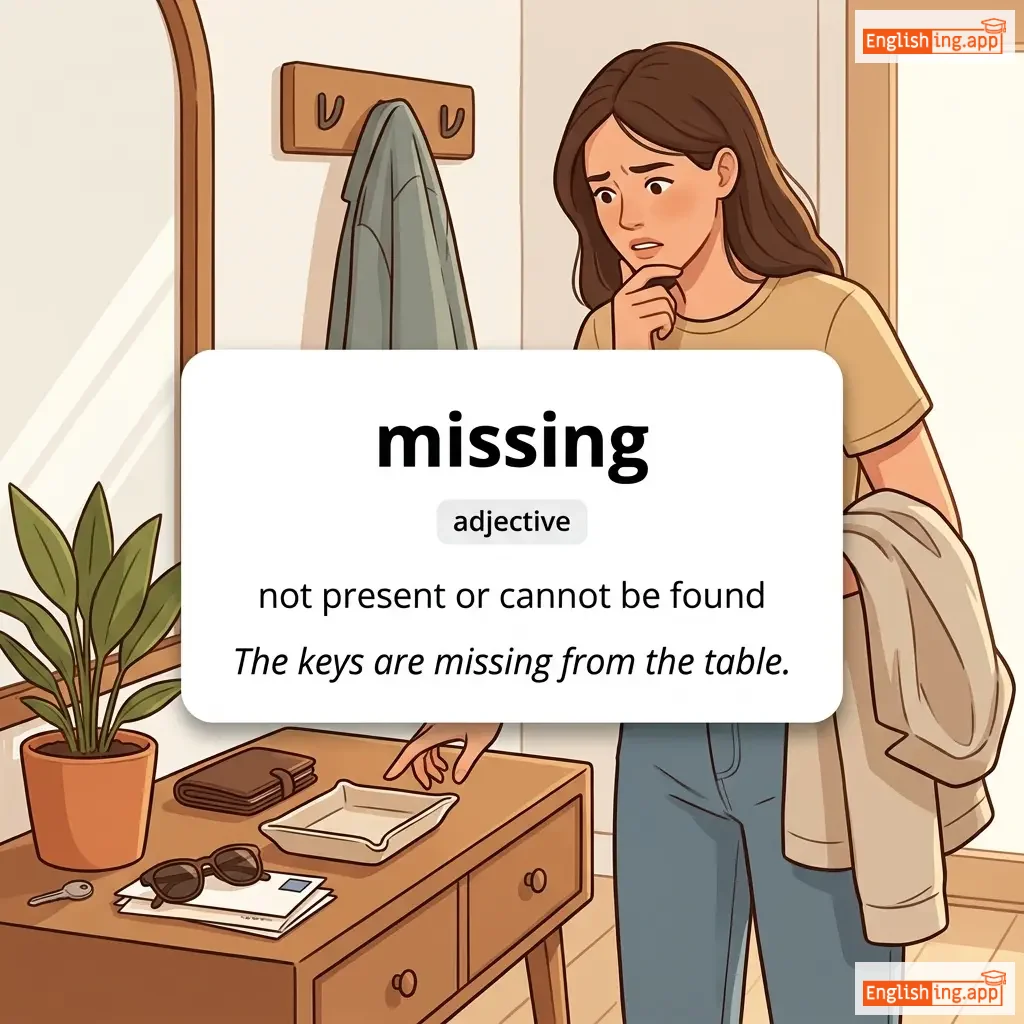
missing definition card — visual illustration of the meaning
adjective
/ˈmɪsɪŋ/
行方不明 (yūkōfumei)

not present or cannot be found

"The keys are missing from the table."

"テーブルから鍵が行方不明です。" (Tēburu kara kagi ga yūkōfumei desu.)
noun
/ˈmɪʃən/
ミッション / 任務 (misshon / ninmu)

an important assignment or task, often with a specific purpose

"The astronauts were on a mission to explore Mars."

"宇宙飛行士たちは火星を探査するためのミッションに出発しました。" (Uchuu hikoushi tachi wa kasei wo tansa suru tame no misshon ni shuppatsu shimashita.)
noun
/ˈmɪʃəneri/
宣教師 (senkyōshi)

a person sent on a religious mission, especially to promote Christianity in a foreign country

"The missionary spent years helping local communities in Africa."

"その宣教師はアフリカで地元のコミュニティを支援するために何年も費やしました。" (Sono senkyōshi wa Afurika de jimoto no komyuniti o shien suru tame ni nannen mo tsuiyashimashita.)
noun
/ˈmɪsɪv/
書簡 (shokan)

a written message, especially a formal or official letter

"He sent a long missive to the governor."

"彼は知事に長い書簡を送った。" (Kare wa chiji ni nagai shokan o okutta.)
noun
/mɪˈsteɪk/
間違い (machigai)

An action or decision that is wrong or misguided.

"She realized her mistake after submitting the wrong file."

"彼女は間違ったファイルを提出した後、自分の間違いに気づきました。" (Kanojo wa machigatta fairu o teishutsu shita ato, jibun no machigai ni kizukimashita.)
adjective
/mɪˈsteɪkən/
間違った (machigatta)

wrong or incorrect because of an error in judgment or understanding

"I was mistaken about the meeting time."

"私は会議の時間を間違えていました。" (watashi wa kaigi no jikan o machigaete imashita)
noun/verb
/ˌmɪsˈtrʌst/
不信 (fushin)

lack of trust; suspicion or doubt about someone or something

"The villagers showed deep mistrust of outsiders."

"村人たちは外部の人々に深い不信を示しました。" (Murabito-tachi wa gaibu no hitobito ni fukai fushin o shimashita.)
noun
/ˌmɪs.ʌn.dəˈstæn.dɪŋ/
誤解 (gokai)

A failure to understand something correctly; a disagreement or confusion between people

"The argument was caused by a simple misunderstanding."
"その議論は単純な誤解から生じた。" (sono giron wa tanjun na gokai kara shōjita.)
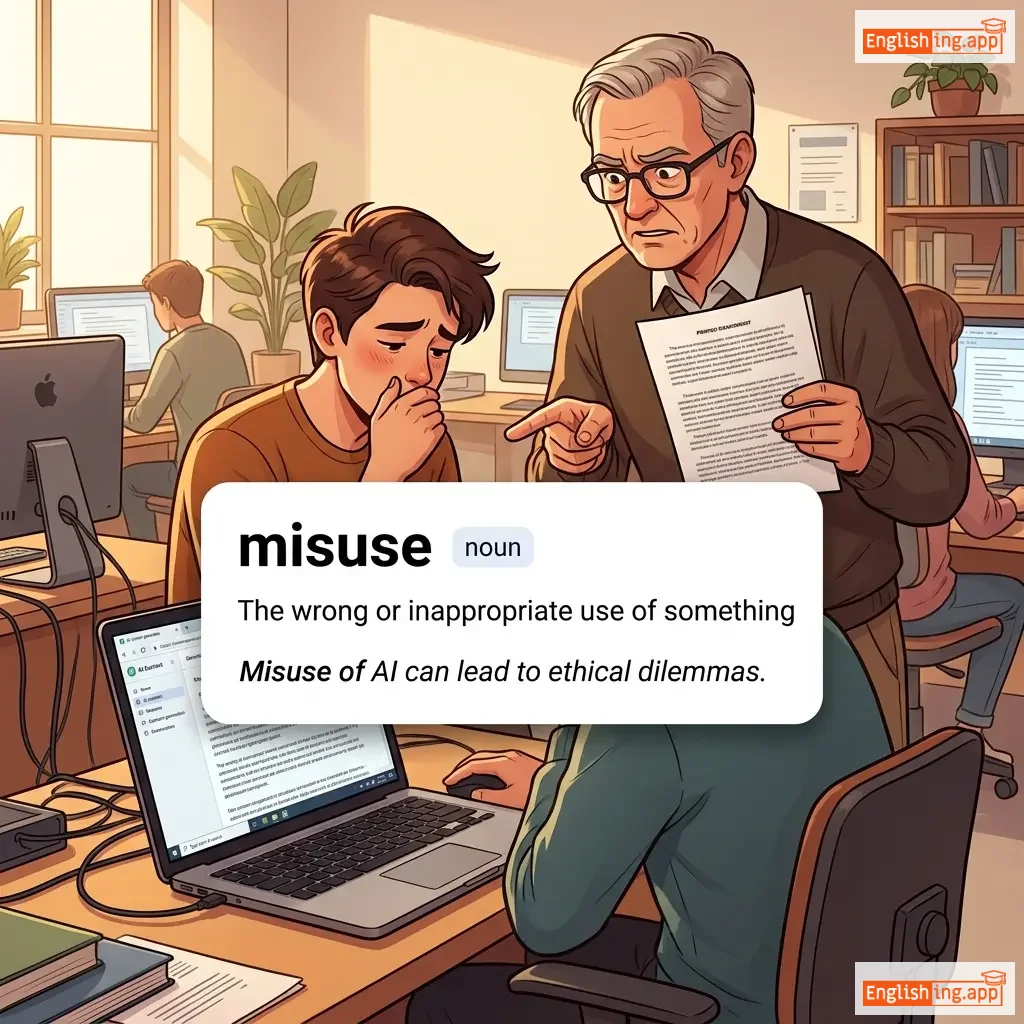
misuse definition card — visual illustration of the meaning
noun
ˌmɪsˈjuːs
誤用 (goyou)

The wrong or inappropriate use of something

"Misuse of AI can lead to ethical dilemmas."

"AIの誤用は倫理的ジレンマを引き起こす可能性があります。" (AI no goyou wa rinriteki jirenma wo hikiokosu kanousei ga arimasu.)
noun
/maɪt/
ダニ (dani)

a very small creature, often a tiny arachnid; also used to mean a very small amount

"The mattress was infested with dust mites."

"マットレスはホコリのダニに感染していました。" (Mattoresu wa hokori no dani ni kansen shite imashita.)
noun
/ˈmaɪtər/
司教帽子 (shikyō bōshi)

a tall, pointed hat worn by bishops; also a type of joint made between two pieces of material

"The bishop placed the miter on his head during the ceremony."
"司教は儀式の間に司教帽子を頭に載せました。" (Shikyō wa gishiki no aida ni shikyō bōshi o atama ni nose mashita.)
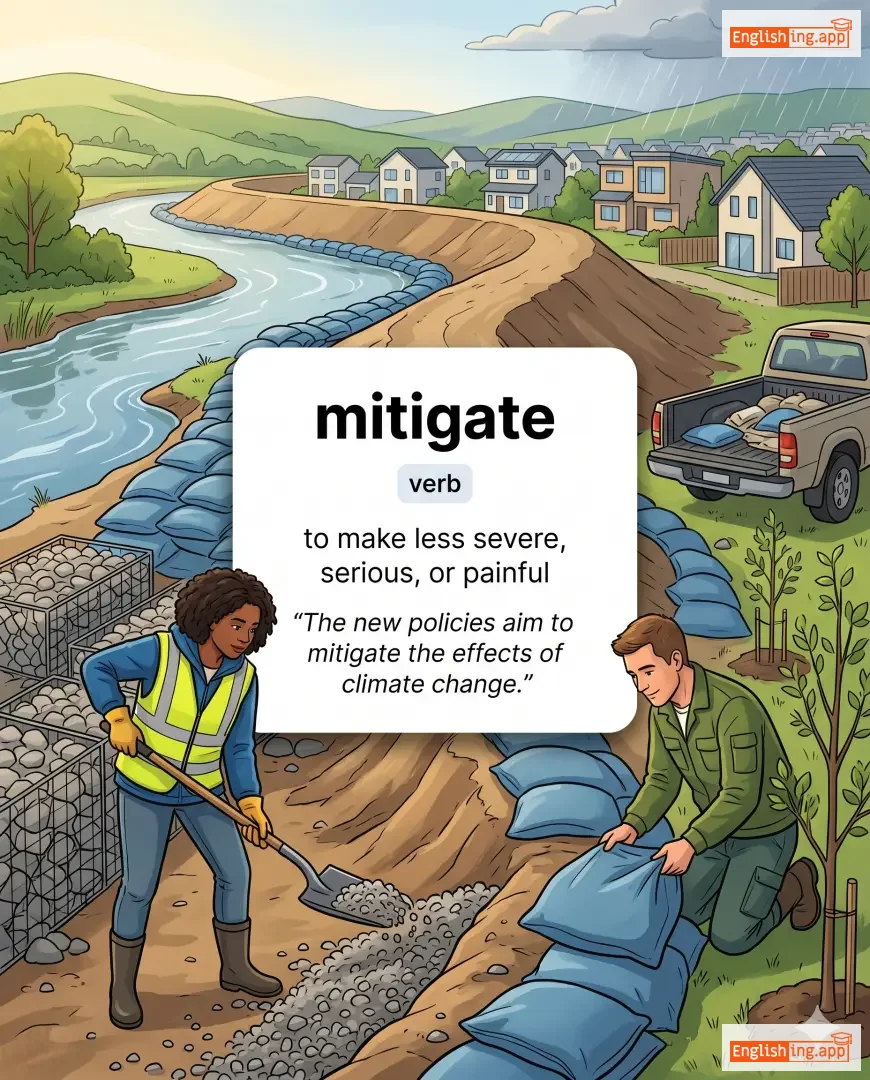
mitigate definition card — visual illustration of the meaning
verb
/ˈmɪtɪˌɡeɪt/
軽減する (keigen suru)

to make less severe, serious, or painful

"The new policies aim to mitigate the effects of climate change."
"新しい政策は気候変動の影響を軽減することを目指しています。" (Atarashii seisaku wa kikō hendō no eikyō o keigen suru koto o mezashiteimasu.)
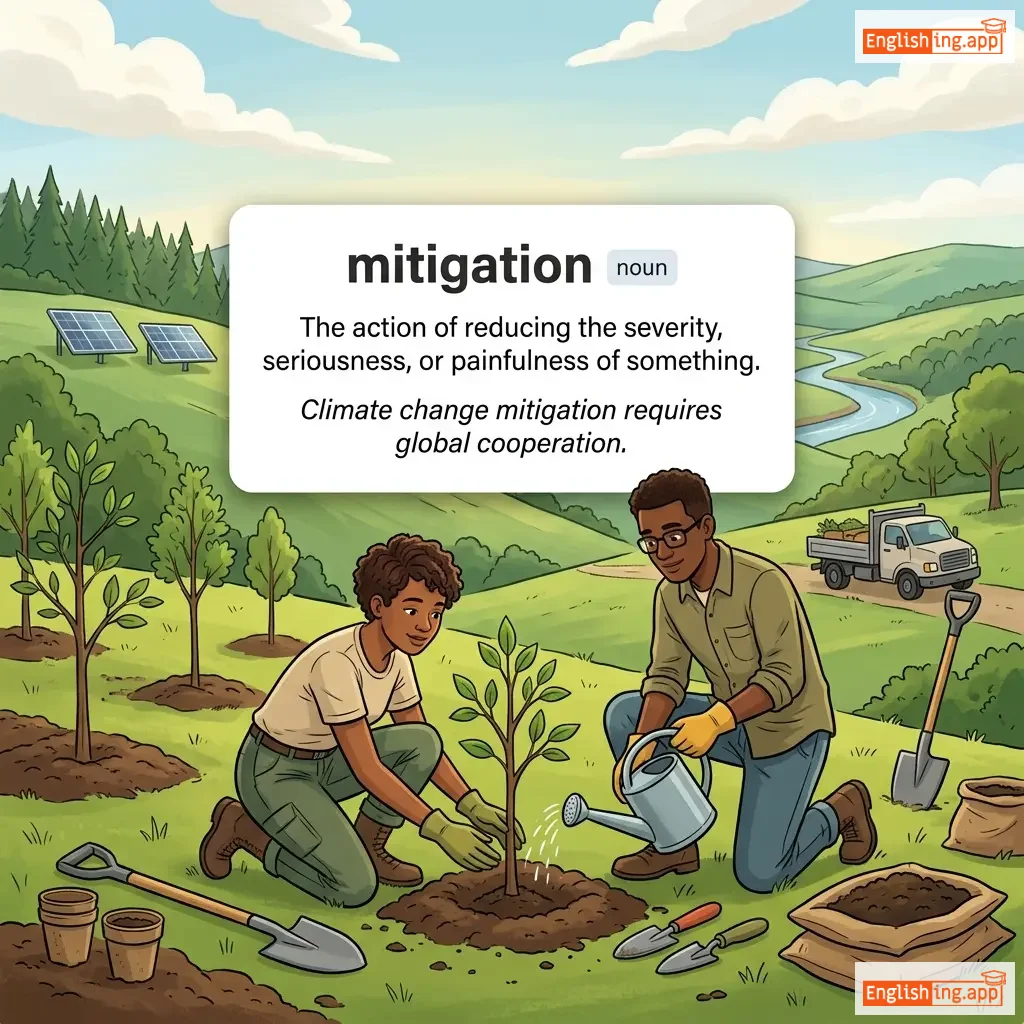
mitigation definition card — visual illustration of the meaning
noun
ˌmɪt.ɪˈɡeɪ.ʃən
緩和 (kanwa)

The action of reducing the severity, seriousness, or painfulness of something.

"Climate change mitigation requires global cooperation."
"気候変動の緩和には、世界的な協力が必要です。" (Kikō hendō no kanwa ni wa, sekaiteki na kyōryoku ga hitsuyō desu.)
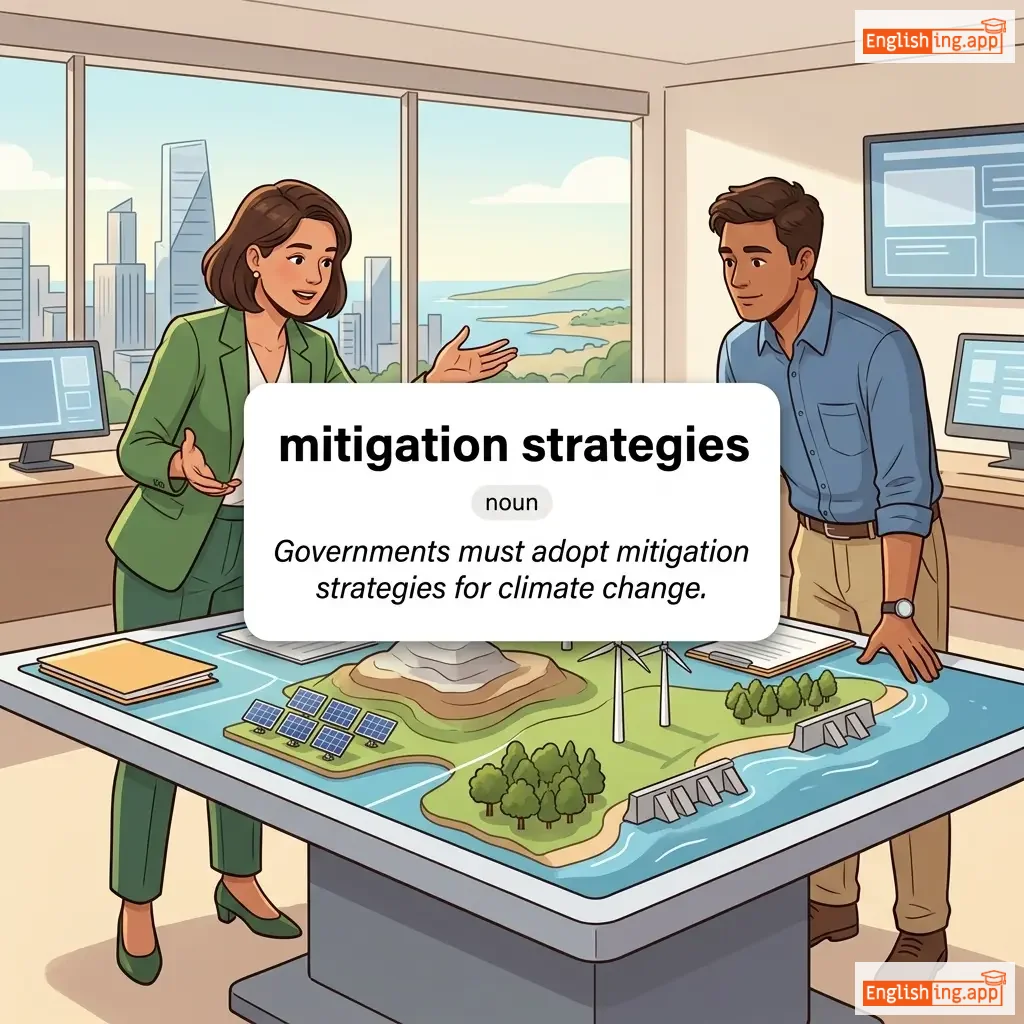
mitigation strategies definition card — visual illustration of the meaning
noun
ˌmɪtɪˈɡeɪʃən ˈstrætədʒiz
緩和戦略 (kanwa senryaku)

Plans and actions designed to reduce the severity or impact of problems or risks.

"Governments must adopt mitigation strategies for climate change."

"政府は気候変動に対処するための緩和戦略を採用する必要があります。" (Seifu wa kikō hendō ni taisho suru tame no kanwa senryaku o saiyō suru hitsuyō ga arimasu.)
verb
/mɪks/
混ぜる (mazeru)

To combine different substances or elements together.

"She likes to mix different colors to create new shades."

"彼女は新しい色合いを作るために、さまざまな色を混ぜるのが好きです。" (Kanojo wa atarashī iroai o tsukuru tame ni, samazama na iro o mazeru no ga suki desu.)
adjective
/mɪkst/
混合された (kongou sareta)

consisting of different elements or having varied opinions or feelings

"The audience had mixed reactions to the film."

"観客は映画に対して混合した反応を示しました。" (Kankyaku wa eiga ni taishite kongō shita hannō o shimeshimashita.)
noun
/mɪkst ˈkʌlər/
混合色 (kongō-shoku)

a color created by combining two or more different colors

"The mixed colour created a beautiful gradient on the canvas."
"混合色はキャンバスに美しいグラデーションを作り出しました。" (Kongō-shoku wa kyanbasu ni utsukushī guradēshon o tsukuridashimashita.)
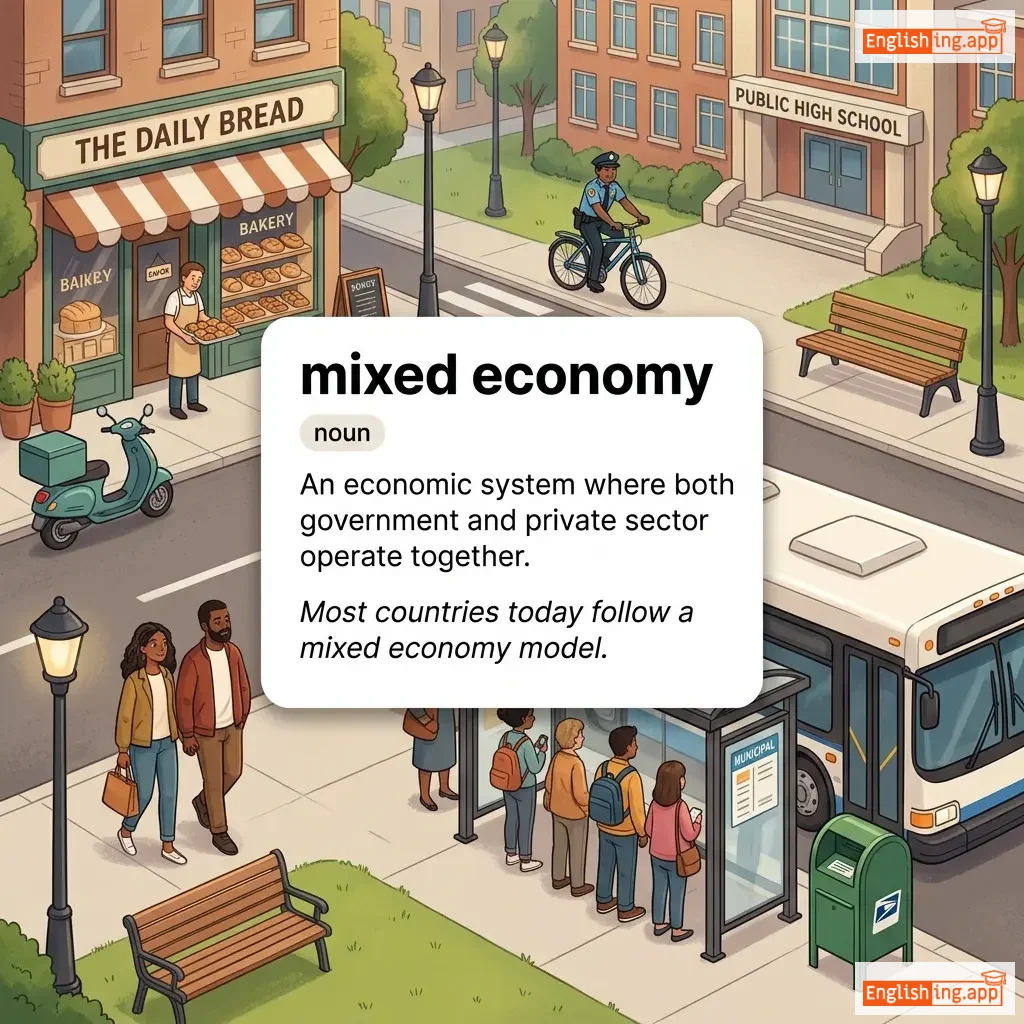
mixed economy definition card — visual illustration of the meaning
noun
/mɪkst ɪˈkɒn.ə.mi/
混合経済 (kongō keizai)

An economic system where both government and private sector operate together.

"Most countries today follow a mixed economy model."

"現在、ほとんどの国が混合経済モデルを採用しています。" (Genzai, hotondo no kuni ga kongō keizai moderu o sai-yō shiteimasu.)
noun
/ˈmɪk.sər/
ミキサー (mikisā)

an electric kitchen appliance used for mixing, beating, and whipping ingredients

"The chef used a mixer to prepare the cake batter."

"シェフはケーキの生地を作るためにミキサーを使いました。" (Shefu wa kēki no kiji o tsukuru tame ni mikisā o tsukaimashita.)
noun
/ˈmɪkstʃər/
混合物 (kongō-mono)

A combination of different things or substances blended together.

"The cake recipe requires a mixture of flour and sugar."

"ケーキのレシピには小麦粉と砂糖の混合物が必要です。" (Kēki no reshipi ni wa komugiko to satō no kongō-mono ga hitsuyōdesu.)
interjection
/mˈhm/
はい (hai)

A sound used to express agreement or acknowledgment in conversation.

"‘Do you understand?’ ‘Mm-hmm.’"
"‘分かりますか?’ ‘はい.’" ('Wakarimasu ka?' 'Hai.')
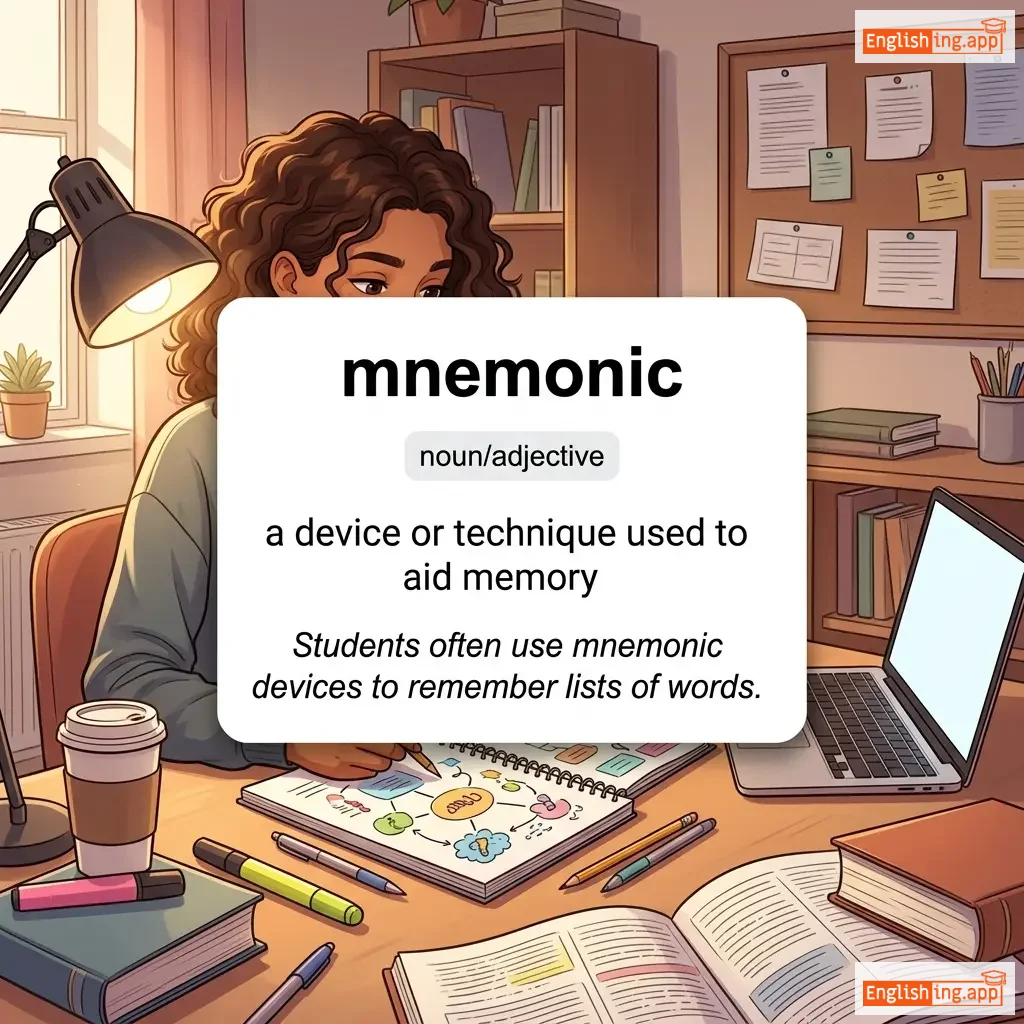
mnemonic definition card — visual illustration of the meaning
noun/adjective
/nɪˈmɒnɪk/

a device or technique used to aid memory

"Students often use mnemonic devices to remember lists of words."

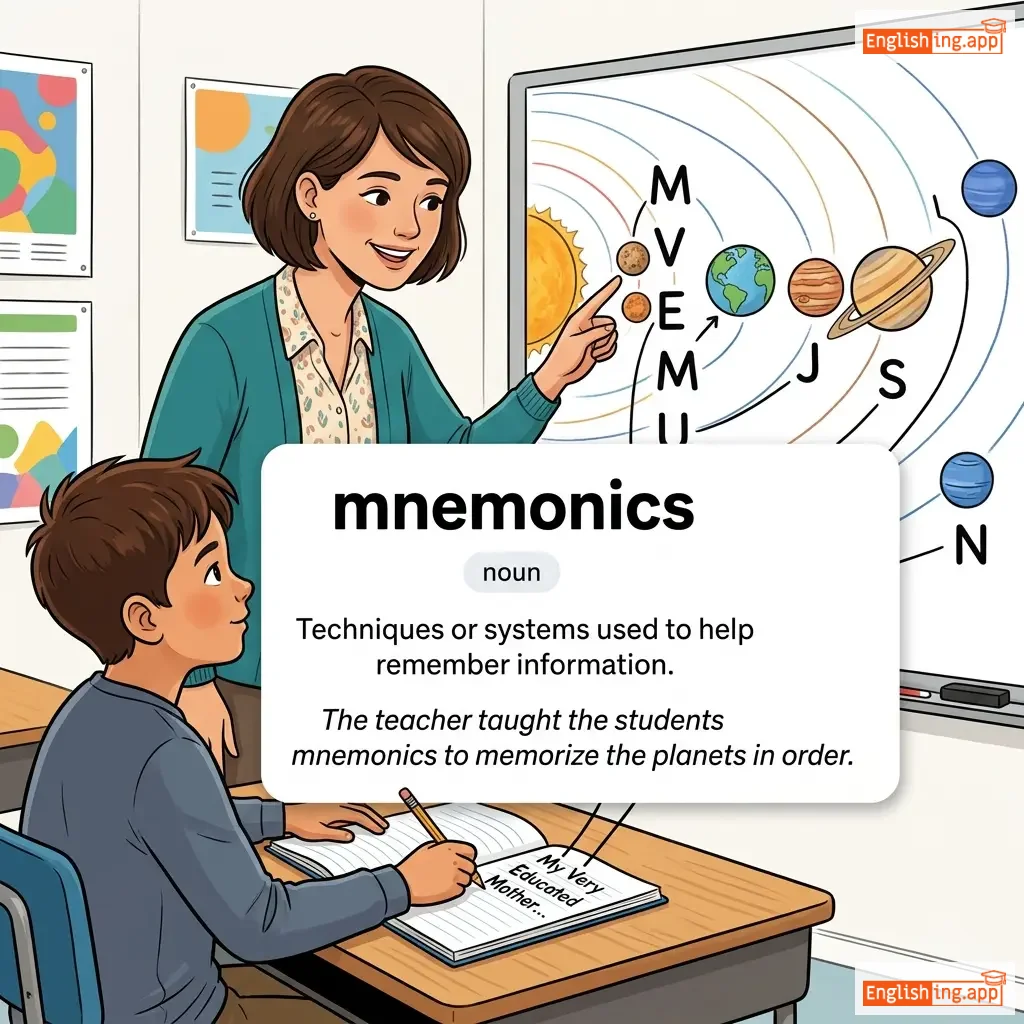
mnemonics definition card — visual illustration of the meaning
noun
/nɪˈmɒnɪks/
記憶術 (kiokujutsu)

Techniques or systems used to help remember information.

"The teacher taught the students mnemonics to memorize the planets in order."

"先生は生徒たちに惑星を順番に覚えるための記憶法を教えました。" (Sensei wa seito-tachi ni wakusei o junban ni oboeru tame no kioku-hō o oshiemashita.)
noun
/moʊt/
(hori)

A deep, wide ditch surrounding a castle or town, often filled with water, for defense.

"The castle was protected by a wide moat filled with water."

"城は水で満たされた広い堀によって守られていました。" (Shiro wa mizu de mitasareta hiroi hori ni yotte mamorarete imashita.)
noun
/mɒb/
群衆 (gunshuu)

a large, disorderly crowd of people, typically one that is agitated or violent

"The mob gathered outside the building, demanding justice."

"群衆は建物の外に集まり、正義を求めていた。" (Gunshuu wa tatemono no soto ni atsumari, seigi o motomete ita.)
adjective
/ˈmoʊbaɪl/
モバイル (mobairu)

Able to move or be moved easily; also refers to portable communication devices.

"She prefers a mobile lifestyle that allows her to travel frequently."

"彼女は頻繁に旅行できるモバイルライフスタイルを好みます。" (Kanojo wa hinpan ni ryokō dekiru mobairu raifusutairu o konomimasu.)
mobile security definition card — visual illustration of the meaning
noun
ˈmoʊ.baɪl sɪˈkjʊr.ə.ti
モバイルセキュリティ (mobairu sekyuriti)

Protection of mobile devices and the data stored on them from security threats.

"Strong mobile security protects personal information."
"強力なモバイルセキュリティは個人情報を保護します。" (Kyōryoku na mobairu sekyuriti wa kojin jōhō o hogo shimasu.)
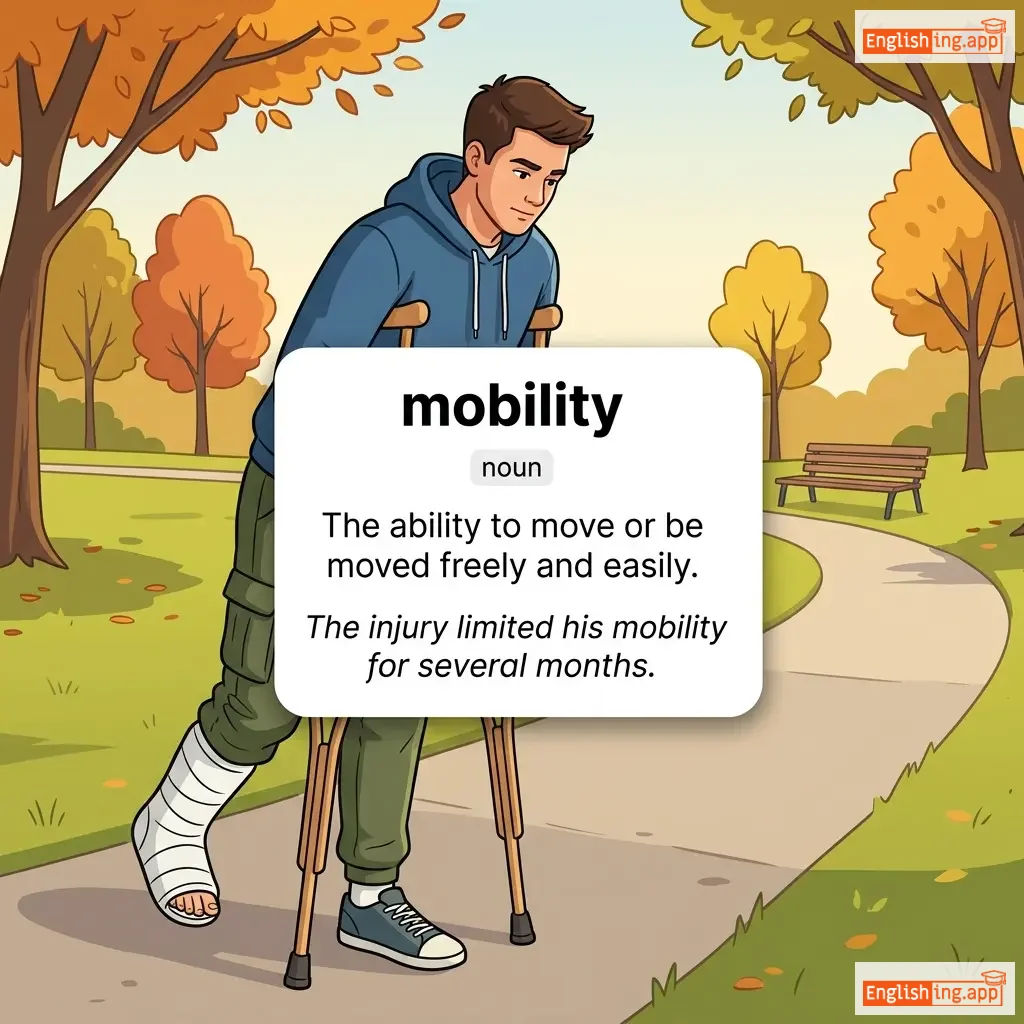
mobility definition card — visual illustration of the meaning
noun
/moʊˈbɪləti/
移動性 (idousei)

The ability to move or be moved freely and easily.

"The injury limited his mobility for several months."

"けがにより、彼の移動性は数ヶ月間制限された。" (Kega ni yori, kare no idousei wa suukagetsukan seigen sareta.)
verb
/ˈməʊbɪlaɪz/
動員する (douin suru)

to organize or prepare people or resources for action

"The leader worked hard to mobilize the community for the protest."

"リーダーは抗議のためにコミュニティを動員するために一生懸命働きました。" (Rīdā wa kōgi no tame ni komyuniti o dōin suru tame ni isshōkenmei hatarakimashita.)
noun
/məˈbɒkrəsi/
群衆政治 (gunshuu seiji)

Rule or control by a mob or mass of people, often disorderly.

"The protest turned into mobocracy when the crowd started destroying property."

"抗議は、群衆が財産を破壊し始めたときに群衆政治に変わった。" (Kougi wa, gunshuu ga zaisan o hakai shi hajimeta toki ni gunshuu seiji ni kawatta.)
noun
/ˈmɒkəsɪn/
モカシン (mokashin)

A soft leather shoe, traditionally worn by Native Americans, often made from deerskin.

"He slipped on a pair of comfortable moccasins before going outside."

"彼は外に出る前に快適なモカシンを履きました。" (Kare wa soto ni deru mae ni kaiteki na mokashin o hakimashita.)
verb
/mɒk/
嘲笑する (choujou suru)

To make fun of someone or something in a cruel or unkind way.

"The students mocked his accent during class."

"学生たちは授業中に彼のアクセントを嘲笑しました。" (Gakusei-tachi wa jugyou-chuu ni kare no akusento wo choujou shimashita.)
noun
/ˈmɒkəri/
嘲笑、冷笑 (chōshō, reisō)

Teasing or contemptuous language or behavior directed at someone or something.

"His attempt at cooking ended in mockery from his friends."

"彼の料理の試みは友達の嘲笑で終わった。" (Kare no ryōri no kokoromi wa tomodachi no chōshō de owatta.)
noun
/moʊd/
モード (mōdo)

A particular way or style in which something is done, experienced, or expressed.

"The phone has a silent mode for meetings."
"電話には会議用のサイレントモードがあります。" (Denwa ni wa kaigi-yō no sairento mōdo ga arimasu.)
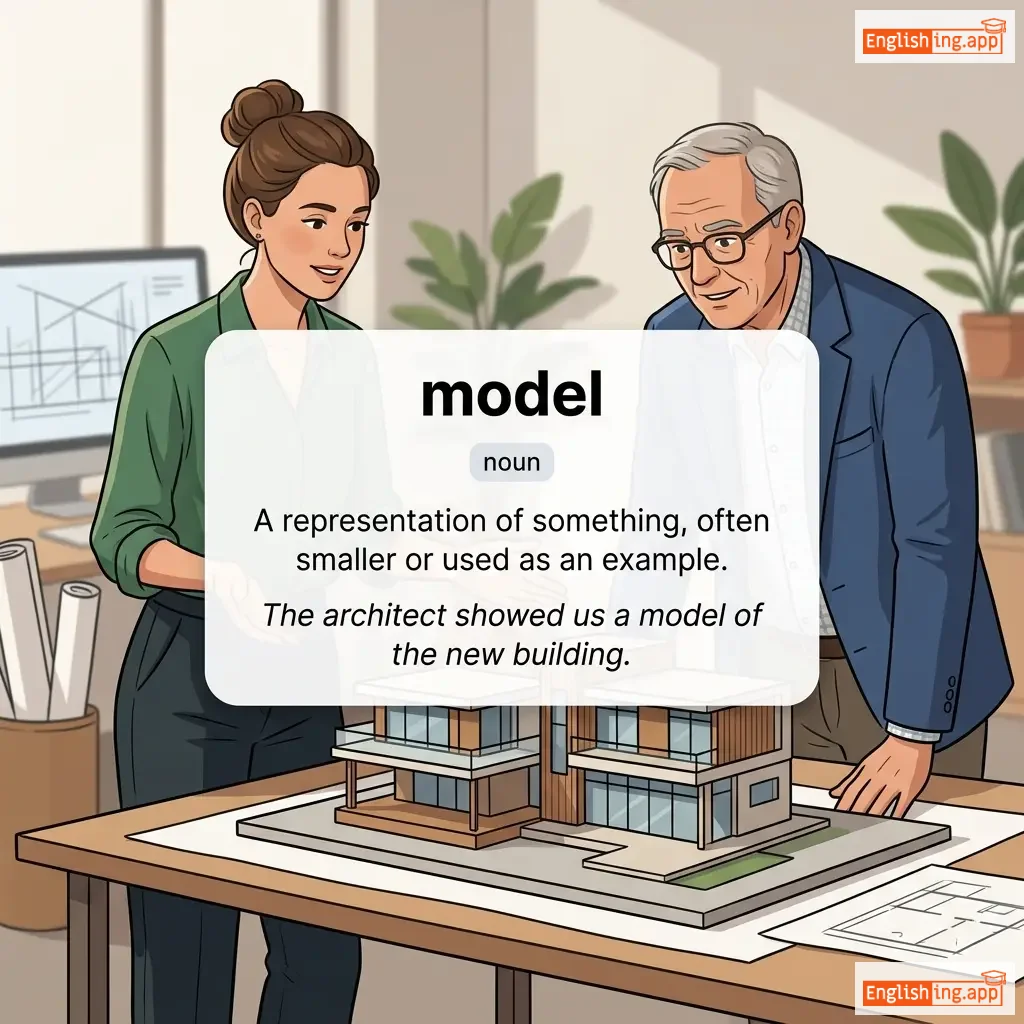
model definition card — visual illustration of the meaning
noun
/ˈmɒdəl/
モデル (moderu)

A representation of something, often smaller or used as an example.

"The architect showed us a model of the new building."
"建築家は私たちに新しい建物のモデルを見せてくれました。" (Kenchikuka wa watashitachi ni atarashii tatemono no moderu wo misete kuremashita.)
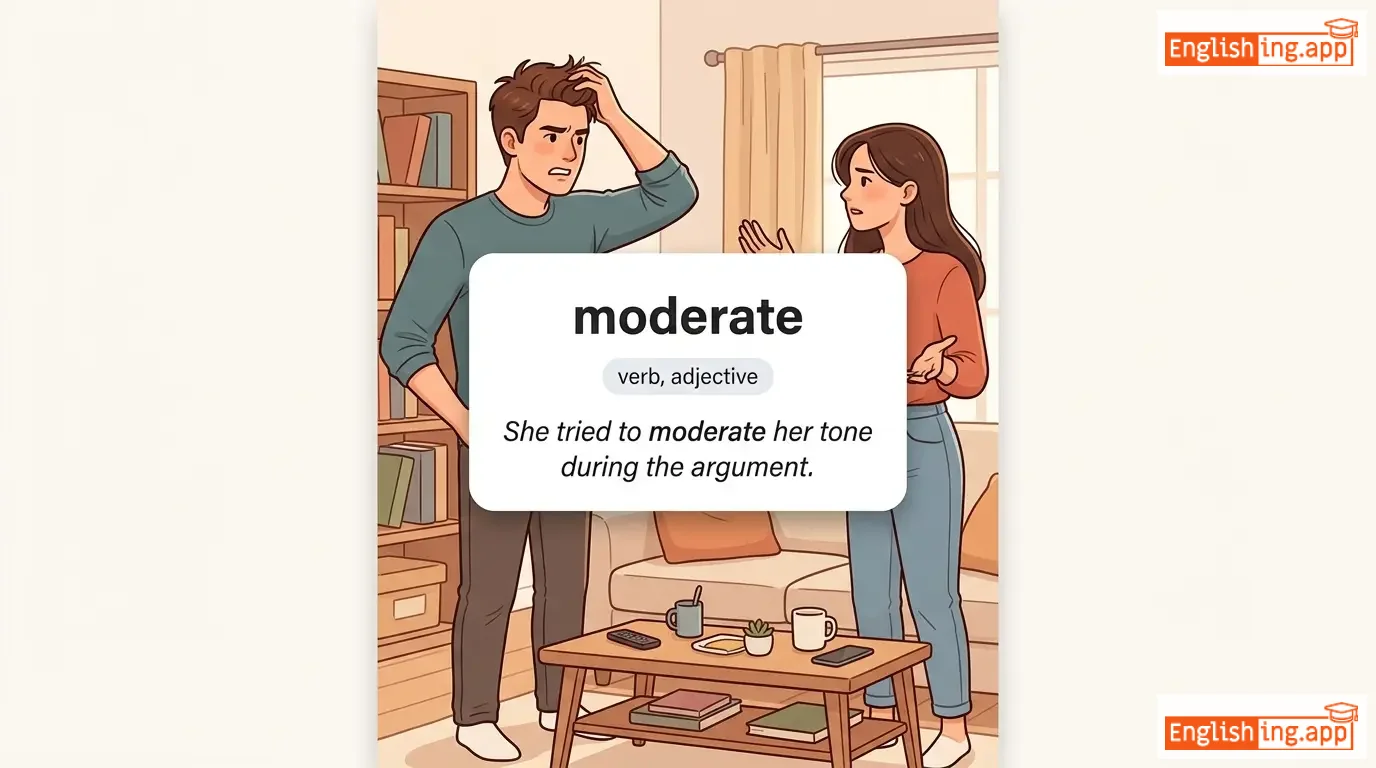
moderate definition card — visual illustration of the meaning
verb, adjective
/ˈmɒdəreɪt/ (verb), /ˈmɒdərət/ (adj)
適度な, 控える (tekido na, hikaeru)

To make something less extreme (verb); average in amount, intensity, quality, or degree (adjective).

"She tried to moderate her tone during the argument."

"彼女は議論中に口調を和らげようとした。" (Kanojo wa giron-chū ni kuchō o yawarageyō to shita.)
adverb
/ˈmɒdərətli/
適度に (tekido ni)

to a reasonable extent, not excessively

"She exercises moderately to stay healthy."

"彼女は健康を保つために適度に運動しています。" (Kanojo wa kenko wo tamotsu tame ni tekido ni undou shiteimasu.)