
語彙集

英単語辞書 | 単語の意味、定義、例文

leap definition card — visual illustration of the meaning
🏃‍♂️

leap (リープ)

verb
/liːp/
跳ぶ (tobu)

to jump or spring a long way or to a great height

"The cat leapt onto the wall effortlessly."
"猫は簡単に壁に飛び乗った。" (Neko wa kantan ni kabe ni tobinotta.)
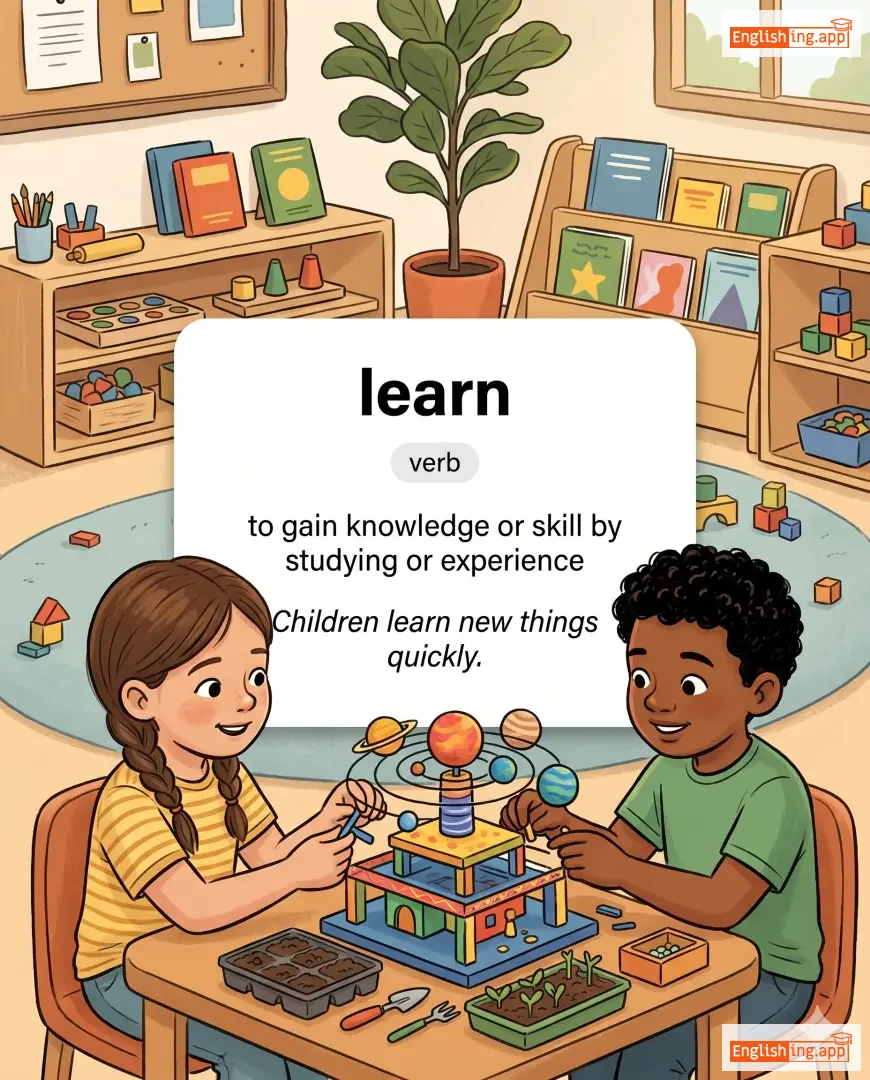
learn definition card — visual illustration of the meaning
verb
/lɜːrn/
学ぶ (manabu)

to gain knowledge or skill by studying or experience

"Children learn new things quickly."

"子供たちは新しいことを素早く学びます。" (Kodomo-tachi wa atarashī koto o subayaku manabimasu.)
adjective; verb (past and past participle)
/lɜːrnd/
博学な (hakugakuna)

having acquired much knowledge through study; gained knowledge or skill through experience or teaching

"She is a learned scholar with deep knowledge of history."

"彼女は歴史に詳しい博学な学者です。" (kanojo wa rekishi ni kuwashii hakugakuna gakusha desu)
noun
/ˈlɜːrnər/
学習者 (gakushuusha)

a person who is acquiring knowledge or skill through study or experience

"She is a fast learner."

"彼女は覚えが早い。" (kanojo wa oboe ga hayai)
noun
/ˈlɜrnɪŋ/
学習 (gakushū)

The process of gaining knowledge or skills through study or experience.

"Learning a new language can be exciting."

"新しい言語を学ぶことは興奮することがあります。" (Atarashī gengo o manabu koto wa kōfun suru koto ga arimasu.)
Lease definition card — visual illustration of the meaning
noun
/liːs/
リース契約 (ri-su)

a contract by which one party conveys land, property, services, etc. to another for a specified time, usually in return for a periodic payment

"They signed a two-year lease for the apartment."

"彼らはアパートメントのために2年間のリース契約に署名しました。" (Karera wa apātomento no tame ni 2-nenkan no rīsu keiyaku ni shomei shimashita.)
noun/verb
/liːʃ/
リード (rīdo)

a strap or cord used to control or guide an animal; to restrain or control

"The dog was on a leash during the walk."

"散歩中に犬はリードにつながれていました。" (Sanpo-chū ni inu wa rīdo ni tsunagarete imashita.)
adjective
/liːst/
最小 (saishō)

smallest in amount, extent, or importance

"She showed the least interest in the project."
"彼女はプロジェクトに最小の興味を示した。" (Kanojo wa purojekuto ni saishō no kyōmi o shimeshita.)
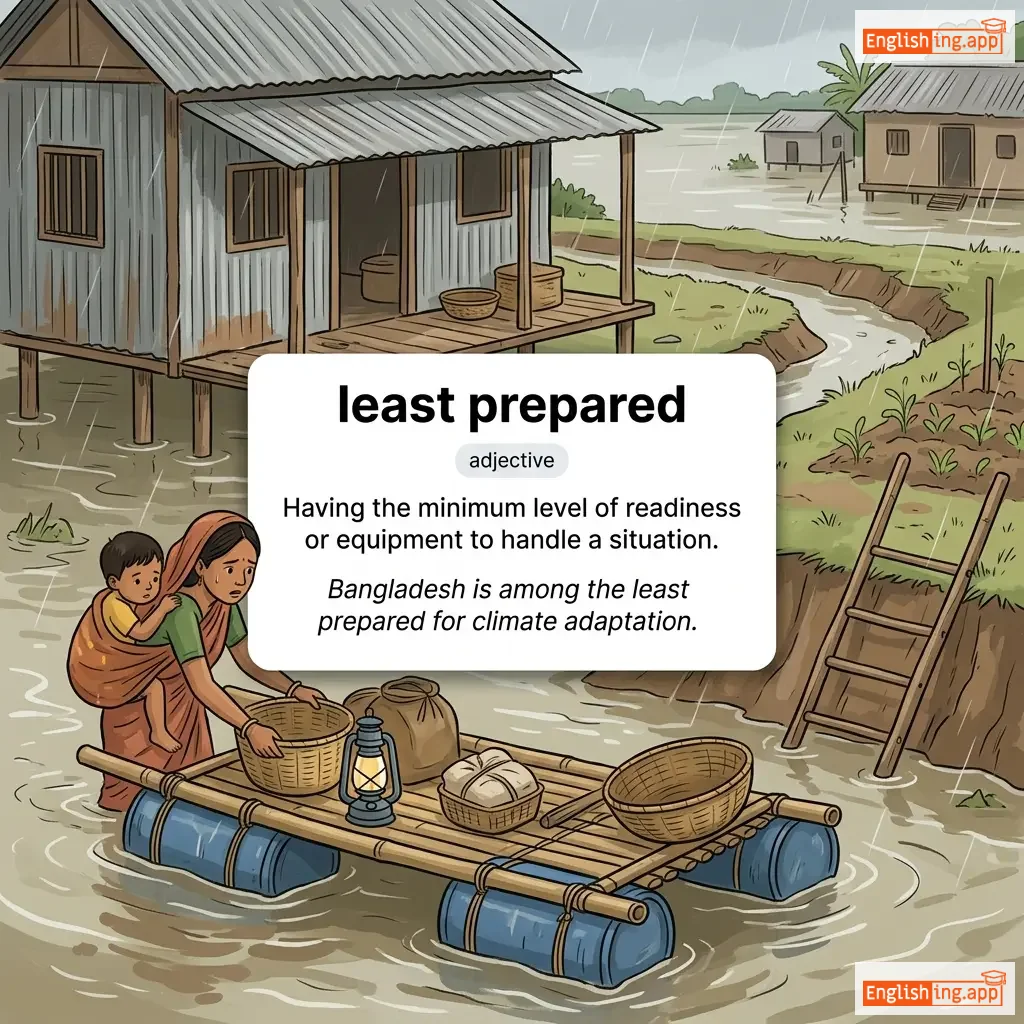
least prepared definition card — visual illustration of the meaning
adjective
liːst prɪˈpeərd
最も準備ができていない (mottomo junbi ga dekite inai)

Having the minimum level of readiness or equipment to handle a situation.

"Bangladesh is among the least prepared for climate adaptation."

"バングラデシュは気候変動適応のために最も準備ができていない国の一つです。" (Bangladesh wa kikou hendou tekiou no tame ni mottomo junbi ga dekite inai kuni no hitotsu desu.)
noun
/ˈlɛðər/
(kawa)

A material made from the skin of an animal, usually treated and used to make clothing, shoes, or furniture.

"He bought a leather jacket for winter."
"彼は冬のために革のジャケットを買いました。" (Kare wa fuyu no tame ni kawa no jaketto o kaimashita.)
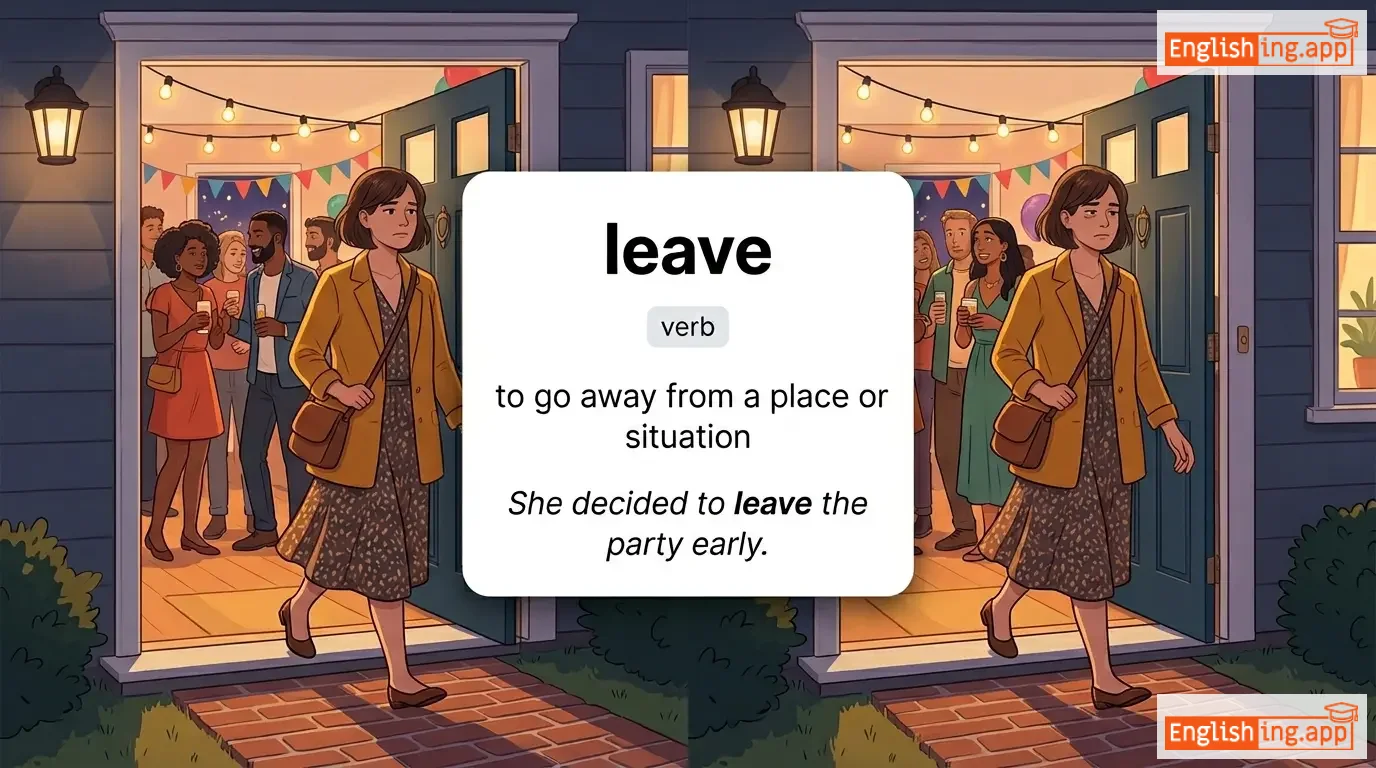
leave definition card — visual illustration of the meaning
🚶‍♂️

leave (リーブ)

verb
/liːv/
去る (saru)

to go away from a place or situation

"She decided to leave the party early."

"彼女はパーティーを早く去ることに決めました。" (Kanojo wa pātī o hayaku saru koto ni kimemashita.)
noun
/ˈliːvˌteɪ.kɪŋ/
お別れ (owakare)

an act of saying goodbye; farewell

"His leave-taking from his friends was emotional."

"彼の友達へのお別れは感動的でした。" (Kare no tomodachi e no owakare wa kandō-teki deshita.)
noun/verb
/ˈlɛv.ən/
発酵剤 (hakkōzai)

a substance, typically yeast, that causes dough to rise; to permeate and modify

"A little yeast will leaven the bread dough."

"少しのイーストがパン生地を膨らませる。" (Sukoshi no īsuto ga pan kiji o fukuramaseru.)
noun
/ˈliː.vɪŋz/
残り物; 余り物 (livings)

things that have been left behind or remain; remnants or scraps

"The leavings from dinner were given to the dog."

"夕食の残り物は犬に与えられました。" (Yūshoku no nokorimono wa inu ni ataemashita.)
noun
/ˈleʧ.ər/
好色な男 (koshokuna otoko)

a man who behaves in a sexually inappropriate way towards women

"The company fired him for being a lecher."

"会社は彼が好色な男だったため、解雇した。" (kaisha wa kare ga koshokuna otoko datta tame kaiko shita)
adjective
/ˈlɛtʃ.ər.əs/
好色 (kōshoku)

having or showing excessive or offensive sexual desire

"The character was portrayed as a lecherous old man."

"そのキャラクターは好色な老人として描かれました。" (Sono kyarakutā wa kōshoku na rōjin toshite egakaremashita.)
noun
/ˈlɛtʃ.əri/
淫欲 (inyoku)

excessive or offensive sexual desire; lustfulness

"The novel depicted the lechery of corrupt nobles."

"その小説は堕落した貴族の淫欲を描いていました。" (Sono shōsetsu wa daraku shita kizoku no in'yoku o egaite imashita.)
noun
/ˈlɛktən/
lectern (rekutā)

A tall stand with a sloping top used to support a book, notes, or script during a speech or lecture.

"The professor placed her notes on the lectern before starting her lecture."

"教授は講義を始める前にレクタウンにノートを置きました。" (Kyōju wa kōgi o hajimeru mae ni rekutā ni nōto o okimashita.)
noun
/ˈlektʃər/
講義 (kougi)

a talk given to a group of people to teach them about a subject

"The professor gave a lecture on climate change."

"教授は気候変動に関する講義を行った。" (Kyouju wa kikou hendou ni kansuru kougi o okonatta.)
noun
/ˈlɛktʃərər/
講師 (koshi)

a person who gives lectures, especially at a college or university

"The lecturer explained the theory with clear examples."

"講師は分かりやすい例で理論を説明した。" (Koshi wa wakariyasui rei de riron o setsumei shita)
noun
/ˈledʒ.ər/
元帳 (genchou)

a book or other collection of financial accounts of a particular type

"The accountant updated the company ledger daily."

"会計士は毎日会社の元帳を更新しました。" (Kaikeishi wa mainichi kaisha no genchou o kōshin shimashita.)
noun
/liːt͡ʃ/
ヒル (hiru)

a blood-sucking worm that lives in water or moist ground

"The doctor used a medical leech to reduce swelling after surgery."

"医者は手術後の腫れを減らすために医療用ヒルを使いました。" (Isha wa shujutsugo no hare o herasu tame ni iryouyou hiru o tsukaimashita)
noun
/liːk/
リーク (rīku)

vegetable related to onion with long green leaves and white bulb, milder than onion

"The soup was made with potatoes and leeks."

"スープはジャガイモとリークで作られていました。" (Sūpu wa jagaimo to rīku de tsukurarete imashita.)
verb
/lɪr/
いやらしい目つき (iyarashii metsuki)

To look at someone in an unpleasant, sly, or sexually suggestive way.

"He leered at her in a way that made her uncomfortable."

"彼は彼女を不快にさせるような見方をした。" (Kare wa kanojo o fukai ni saseru yōna mikata o shita.)
adjective
/ˈlɪəri/
疑わしい (utagawashii)

Cautious or wary due to suspicion or distrust.

"She was leery of investing in the new business."

"彼女は新しいビジネスへの投資に疑念を抱いていた。" (Kanojo wa atarashī bijinesu e no tōshi ni ginen o daite ita.)
adjective
/ˈliːwərd/
風下の側 (kazeshita no kawa)

On or toward the sheltered side away from the wind.

"They built their camp on the leeward side of the hill."

"彼らは丘の風下の側にキャンプを建てました。" (Karera wa oka no kazeshita no kawa ni kyanpu o tatemashita.)
noun
/ˈliːweɪ/
余裕 (yoyū)

Freedom to act within certain limits; extra space or time.

"The manager gave the team some leeway to finish the project."

"マネージャーはチームにプロジェクトを終了するための余裕を与えました。" (Manējā wa chīmu ni purojekuto o shūryō suru tame no yoyū o ataemashita.)
adjective, noun, adverb, verb (past tense of leave)
/lɛft/
(hidari)

on or towards the side of the body that is to the west when facing north

"He turned left at the intersection."

"彼は交差点で左に曲がった。" (kare wa kousaten de hidari ni magatta.)
adjective
/ˌlɛftˈhændɪd/
左利き (hidarikiki)

Using or done with the left hand; also can mean clumsy or awkward.

"She is left-handed and writes beautifully with her left hand."
"彼女は左利きで、左手で美しく書きます。" (Kanojo wa hidarikiki de, hidarite de utsukushiku kakimasu.)
noun
/lɛɡ/
(ashi)

one of the limbs on which a person or animal walks and stands

"He injured his leg while playing football."

"サッカーをしているとき、彼は足を怪我しました。" (Sakkaa o shite iru toki, kare wa ashi o kega shimashita.)
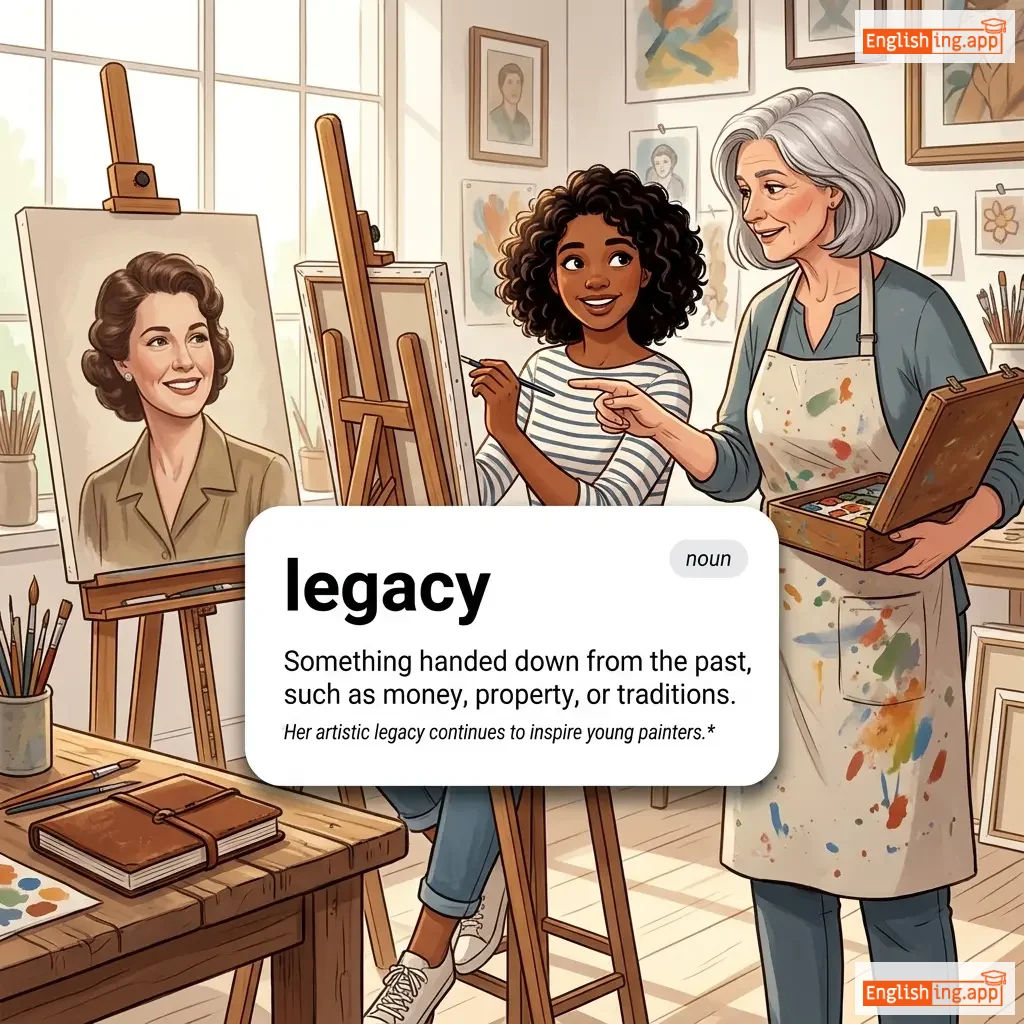
legacy definition card — visual illustration of the meaning
noun
/ˈlɛɡəsi/
遺産 (isan)

Something handed down from the past, such as money, property, or traditions.

"Her artistic legacy continues to inspire young painters."

"彼女の芸術的遺産は若い画家たちにインスピレーションを与え続けています。" (Kanojo no geijutsuteki isan wa wakai gakatatachi ni insupirēshon o atae tsudzuketeimasu.)
legal definition card — visual illustration of the meaning
adjective
/ˈliːɡəl/
法的 (hōteki)

relating to the law

"He sought legal advice before signing the contract."

"彼は契約書に署名する前に法的アドバイスを求めました。" (Kare wa keiyaku-sho ni shomei suru mae ni hōteki adobaisu o motomemashita.)
noun
/lɪˈɡæl.ə.ti/
合法性 (gōhō-sei)

the quality or state of being legal; accordance with the law

"The lawyer questioned the legality of the contract."

"弁護士は契約の合法性について疑問を呈しました。" (Bengoshi wa keiyaku no gōhō-sei ni tsuite gimon o teishimashita.)
verb
/ˈliːɡəlaɪz/
合法化する (gōhōka suru)

To make something lawful by official approval.

"The government decided to legalize online businesses."

"政府はオンラインビジネスを合法化することを決定しました。" (Seifu wa onrain bijinesu o gōhōka suru koto o kettei shimashita.)
adverb
/ˈliːɡəli/
合法的に (gōhō-teki ni)

in a way that is allowed by law

"He is legally responsible for his actions."

"彼は自分の行動に対して合法的に責任があります。" (Kare wa jibun no kōdō ni taishite gōhō-teki ni sekinin ga arimasu)
adverb/adjective
/lɪˈɡɑːtoʊ/
音楽で、滑らかでつながりのある演奏または歌唱 (ongaku de, nameraka de tsunagari no aru ensou matawa kashou)

In music, played or sung smoothly and connectedly.

"The pianist played the passage legato, with each note flowing into the next."

"ピアニストはレガートでパッセージを弾き、各ノートが次に繋がっていった。" (Pianisuto wa regato de passeji o hiki, kaku nooto ga tsugi ni tsunagatte itta.)
noun
/ˈlɛdʒənd/
伝説 (densetsu)

A traditional story popularly regarded as historical but unauthenticated; also a famous person admired for achievements.

"The footballer is considered a legend in his country."

"そのサッカー選手は彼の国で伝説と見なされています。" (Sono sakkā senshu wa kare no kuni de densetsu to minasarete imasu.)
adjective
/ˈlɛdʒəndɛri/

remarkable enough to be famous; often used to describe something that is iconic or widely known

"The legendary musician performed in front of a packed stadium."

noun
/ˌlɛdʒərdəˈmeɪn/
手品, 欺瞞 (tejina, giman)

skillful use of one's hands when performing tricks; deception or trickery

"The magician's legerdemain left the audience amazed."

"魔法使いの手品は観客を驚かせた。" (Mahōtsukai no tejina wa kankyaku o odorokaseta.)
noun
/ˈlɛɡɪŋ/
タイツ (taitsu)

tight-fitting stretch pants, typically worn by women for exercise or casual wear

"She bought a new pair of black leggings for the gym."

"彼女はジム用に新しい黒いレギンスを買った。" (Kanojo wa jimu you ni atarashii kuroi reginsu o katta.)
adjective
/ˈlɛdʒəbl/
読みやすい (yomiyasui)

clear enough to read

"Her handwriting was barely legible."

"彼女の手書きはほとんど読めなかった。" (Kanojo no tegaki wa hotondo yomenakatta.)
noun
/ˈliːdʒən/
大規模な人々のグループ、特に兵士; 大量 (daikibona hitobito no guruupu, tokuni heishi; tairyou)

a large group of people, especially soldiers; a great number

"The Roman army was divided into legions."

"ローマ軍は軍団に分かれていました。" (Ro-ma gun wa gundan ni wakarete imashita.)
noun
/ˈliːdʒənəri/
ローマ兵士 (rōma heishi)

a soldier in the Roman army

"Each legionary carried a shield and a short sword."

"各レギオナリーは盾と短い剣を持っていました。" (Kaku regionarii wa tate to mijikai ken o motte imashita.)
verb
/ˈlɛdʒɪsˌleɪt/
立法する (rippou suru)

to make or enact laws

"The government plans to legislate new safety standards."

"政府は新しい安全基準を制定する計画です。" (Seifu wa atarashī anzen kijun o seitei suru keikaku desu.)
noun
/ˌledʒɪsˈleɪʃən/
立法 (rippō)

laws considered collectively, or the act of making laws

"The government passed new legislation to protect the environment."

"政府は環境保護のために新しい立法を制定しました。" (Seifu wa kankyō hogo no tame ni atarashī rippō o seitei shimashita.)
adjective
/ˈlɛdʒɪslətɪv/
立法の (rippō no)

relating to the making of laws

"The legislative body passed the new tax bill."

"立法機関は新しい税法を可決しました。" (Rippō kikan wa atarashī zeihō o kaketsu shimashita.)
noun
/ˈlɛdʒɪsleɪtər/
立法者 (rippōsha)

a person who makes laws, especially a member of a legislative body

"The legislator introduced a bill to improve healthcare."
"立法者は医療サービス改善のために法案を提出しました。" (Rippōsha wa iryō sābisu kaizen no tame ni hōan o teishutsu shimashita.)
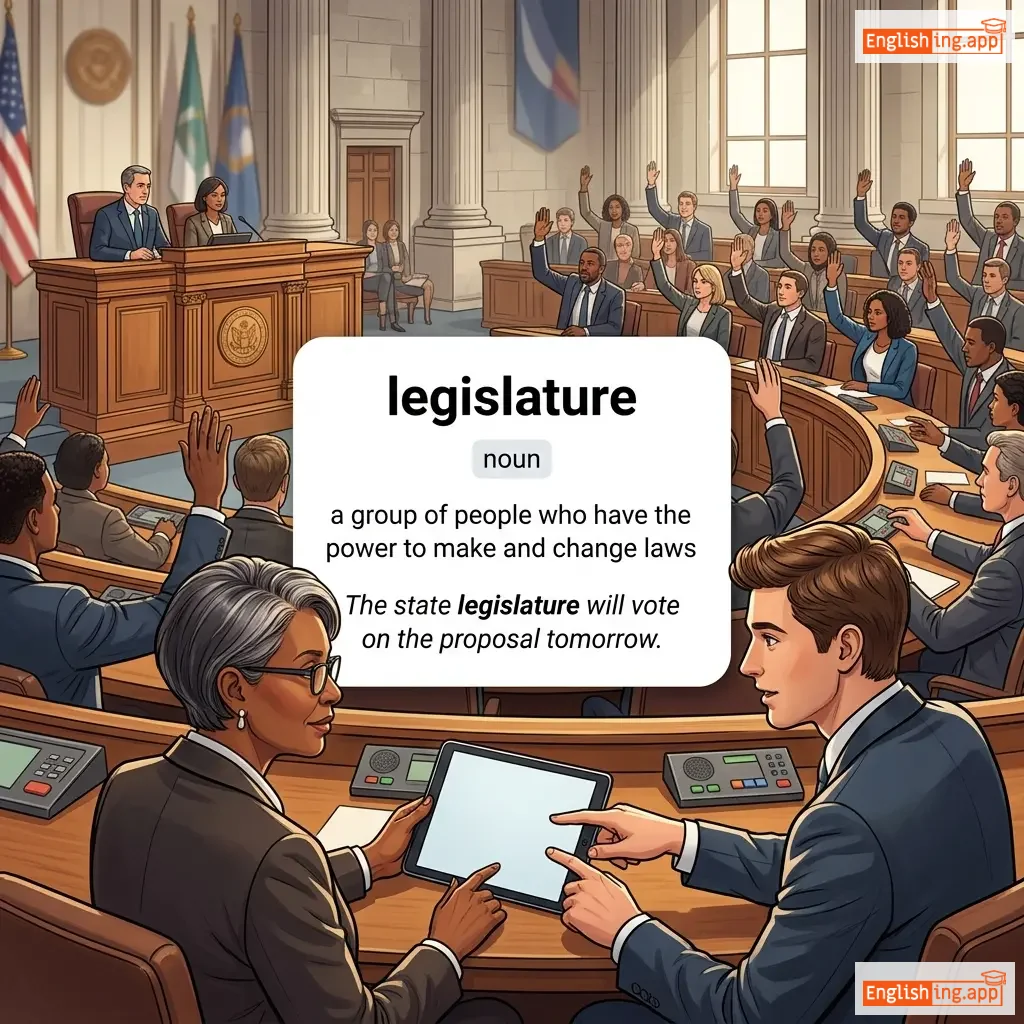
legislature definition card — visual illustration of the meaning
noun
/ˈlɛdʒɪsˌleɪtʃər/
立法機関 (rippō kikan)

a group of people who have the power to make and change laws

"The state legislature will vote on the proposal tomorrow."

"州の立法機関は明日提案について投票します。" (Shū no rippō kikan wa ashita teian ni tsuite tōhyō shimasu.)
noun
/lɪˈdʒɪtɪməsi/
正当性 (seitōsei)

the quality of being accepted as right, proper, or lawful

"The legitimacy of the election was questioned by observers."

"選挙の正当性は観察者によって疑問視されました。" (Senkyō no seitōsei wa kansatsu-sha ni yotte gimon-shi saremashita.)
adjective
/lɪˈdʒɪtɪmət/
正当 (seitou)

Conforming to the law or to rules; valid or acceptable.

"She presented a legitimate reason for her absence."

"彼女は欠席の理由を正当化しました。" (Kanojo wa kesseki no riyū o seitōka shimashita.)