語彙集

英単語辞書 | 単語の意味、定義、例文

adjective
/ˈleɪ.tɪʃ/
少し遅れて (sukoshi okurete)

Somewhat late; occurring or arriving later than usual but not very late.

"We arrived latish to the party but still caught most of the fun."

"パーティーには少し遅れて到着しましたが、それでもほとんどの楽しみを楽しむことができました。" (Pātī ni wa sukoshi okurete tōchaku shimashita ga, soredemo hotondo no tanoshimi o tanoshimu koto ga dekimashita.)
noun
/ˈlætɪˌtjuːd/
緯度 (ido)

The angular distance north or south of the equator; also freedom or scope to act.

"The city lies at a high latitude close to the Arctic Circle."

"この都市は北極圏に近い高い緯度に位置しています。" (Kono toshi wa hokkyokuken ni chikai takai ido ni ichi shiteimasu.)
adjective
/ˈlætər/
後者 (kōsha)

the second of two people or things mentioned

"Between tea and coffee, I prefer the latter."

"お茶とコーヒーの間で、私は後者を選びます。" (Ocha to kōhī no aida de, watashi wa kōsha o erabimasu.)
noun
/ˈlætɪs/
格子構造 (kōshi kōzō)

A structure of crossed strips arranged in a grid or crisscross pattern.

"The garden was decorated with a wooden lattice covered in vines."

"庭は、蔦で覆われた木製の格子構造で飾られていました。" (Niwa wa, tsuta de ōwareta mokusei no kōshi kōzō de kazararete imashita.)
laud definition card — visual illustration of the meaning
👏

laud

verb
/lɔːd/

To praise someone or something highly, especially in public.

"The critic lauded the actor's performance as a masterpiece."

adjective
/ˈlɔː.də.bəl/
称賛に値する (shōsan ni atai suru)

Deserving praise and admiration.

"Her efforts to help the poor are truly laudable."

"貧しい人々を助けるための彼女の努力は本当に称賛に値します。" (Mazushī hitobito o tasukeru tame no kanojo no doryoku wa hontō ni shōsan ni atai shimasu.)
noun
/lɔːˈdeɪʃən/
賞賛 (shōsan)

The act of praising or expressing approval.

"The poet received much laudation for his moving verses."

"その詩人は感動的な詩で多くの賞賛を受けました。" (Sono shijin wa kandō-teki na shi de ōku no shōsan o ukemashita.)
adjective
/ˈlɔːdəˌtɔːri/
賞賛の (shōsan no)

Expressing praise or admiration.

"She wrote a laudatory review of the new book."
"彼女は新しい本の賛辞のレビューを書いた。" (Kanojo wa atarashī hon no sanji no rebyū o kaita.)
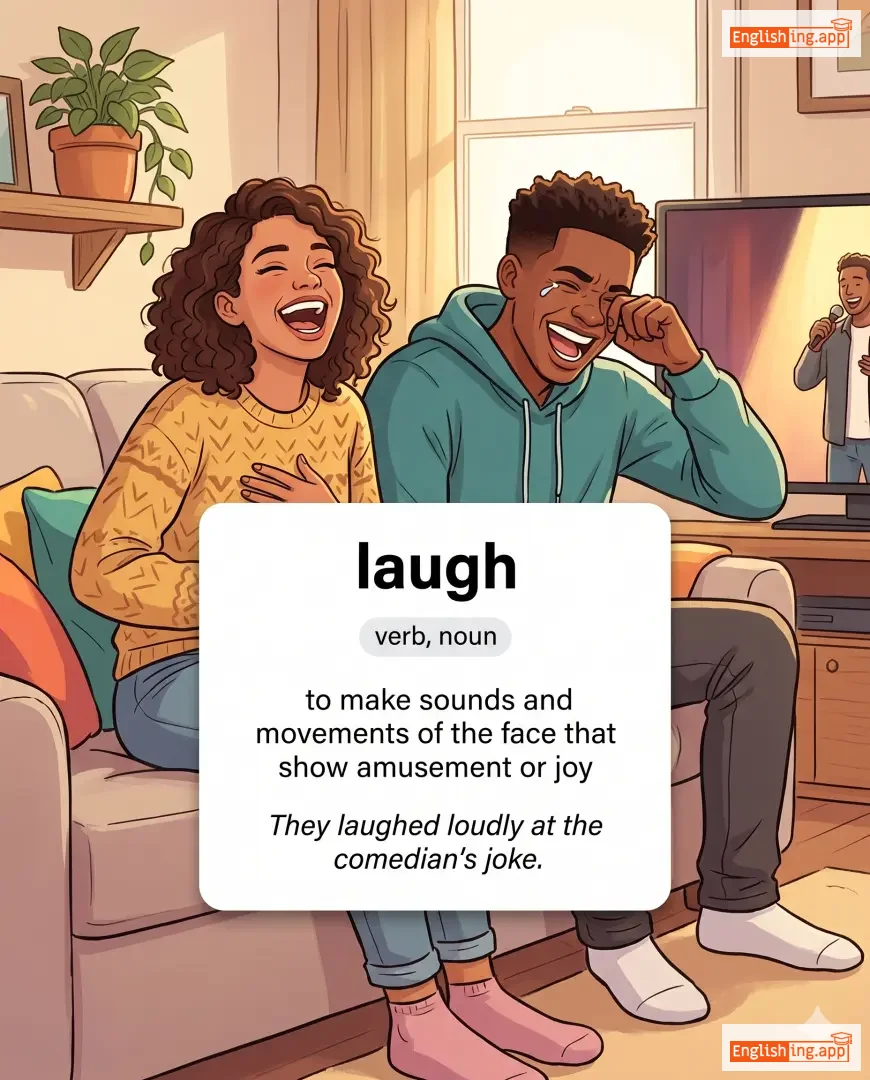
laugh definition card — visual illustration of the meaning
verb, noun
/læf/
笑う (warau)

to make sounds and movements of the face that show amusement or joy

"They laughed loudly at the comedian's joke."

"彼らはコメディアンのジョークで大声で笑った。" (Karera wa komedian no jooku de oogoe de waratta.)
noun
/ˈlæftər/
笑い (warai)

the act or sound of laughing

"The room was filled with laughter."
"部屋は笑いで満ちていた。" (Heya wa warai de michite ita.)
verb, noun
/lɔːntʃ/

to start or introduce something, especially a new product, service, or event

"The company launched a new app last month."

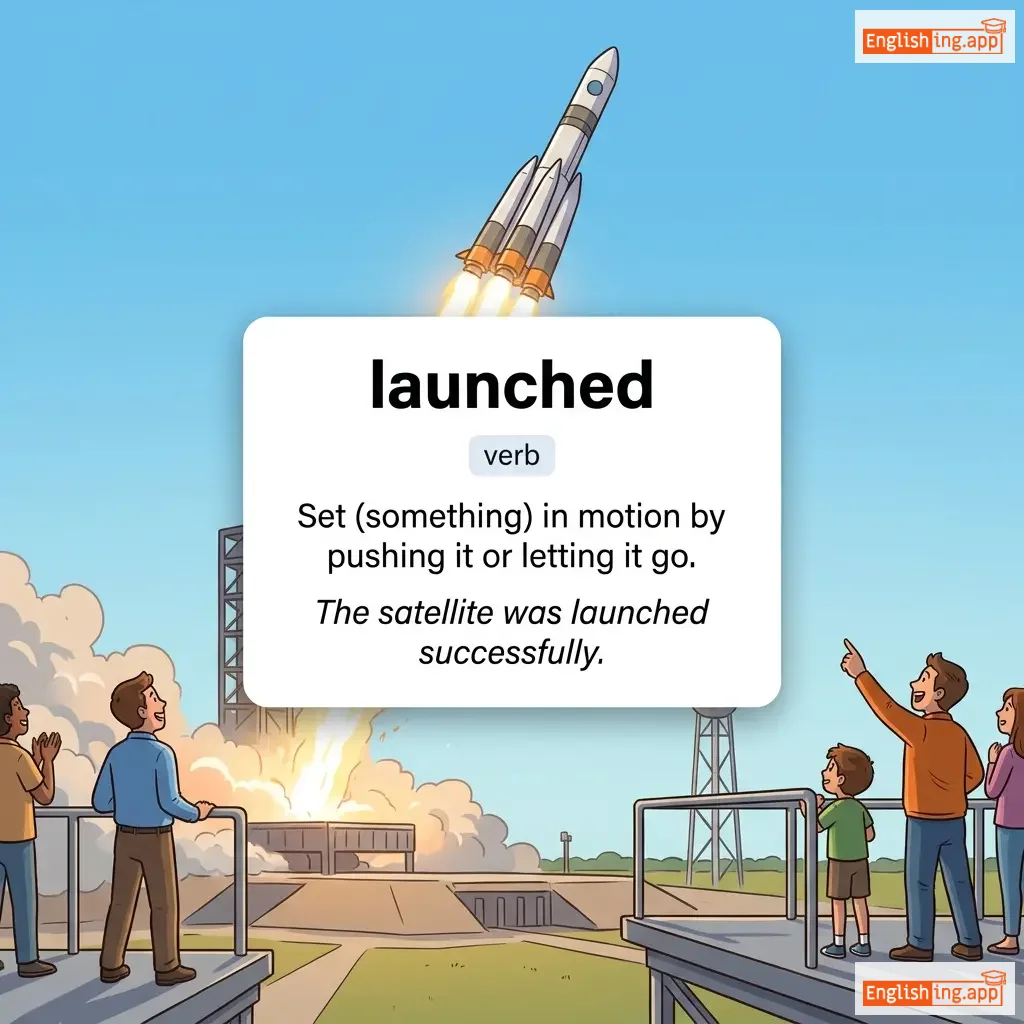
launched definition card — visual illustration of the meaning
verb
lɔːntʃt
発射 (hassha)

Set (something) in motion by pushing it or letting it go.

"The satellite was launched successfully."

"衛星は成功裏に発射されました。" (Eisei wa seikōri ni hassha saremashita.)
verb
/ˈlɔːndər/
洗濯する / 不法に得たお金の出所を隠す (sentaku suru / fuhou ni eta okane no shussou wo kakusu)

to wash clothes, linens, etc.; or to conceal the origins of money obtained illegally

"She laundered all the dirty clothes on Sunday."

"彼女は日曜日にすべての汚れた衣服を洗いました。" (Kanojo wa nichiyoubi ni subete no yogoreta ifuku wo araimashita.)
noun
/ˈlɔːndrəs/
ランドレス (randoresu)

A woman whose job is washing clothes and linens.

"The laundress delivered the freshly cleaned clothes to the household."

"ランドレスは新しく洗った衣類を家に届けました。" (Randoresu wa atarashiku aratta irui o ie ni todokemashita)
noun
/ˈlɔːndri/
幸せ (shiawase)

clothes or linens that need to be washed or have been washed

"She folded the clean laundry neatly."

"彼女は賞を受け取ったとき、幸せを隠すことができませんでした。" (Kanojo wa shō o uketotta toki, shiawase o kakusu koto ga dekimasen deshita.)
noun
/ˈlɔːriət/
受賞者 (jushousha)

A person honored with an award for outstanding achievement in a field, especially the arts or sciences.

"The Nobel laureate gave an inspiring lecture on peace."

"ノーベル賞受賞者は平和について感動的な講演を行いました。" (Nōberu shō jushōsha wa heiwa ni tsuite kandō-teki na kōen o okonai mashita.)
verb
/leɪv/
洗う (arau)

To wash or bathe.

"She laved her face with cool water."

"彼女は冷たい水で顔を洗った。" (Kanojo wa tsumetai mizu de kao o aratta.)
noun
/ˈlæv.ən.dər/
ラベンダー (rabendā)

a fragrant purple flowering plant used in perfumes and aromatherapy

"The lavender field filled the air with its sweet, calming fragrance."

"ラベンダー畑は、その甘く落ち着く香りで空気を満たしました。" (Rabendā hatake wa, sono amaku ochitsuku kaori de kūki o mitashimashita.)
adjective, verb
/ˈlævɪʃ/
贅沢な、豪華な (lavish)

Rich, elaborate, or luxurious; to bestow something in generous or extravagant quantities.

"They gave her a lavish wedding reception with hundreds of guests."

"彼らは何百人ものゲストを招待して豪華な結婚式のレセプションを開いた。" (Karera wa nanbyakunin mo no gesuto o shoutai shite gōkana kekkonshiki no resepushon o hiraita.)
noun
/lɔː/
法律 (hōritsu)

a system of rules created and enforced by authority to regulate behavior

"Everyone must obey the law of the country."

"誰もが国の法律に従わなければなりません。" (Dare mo ga kuni no hōritsu ni shitagawanakereba narimasen.)
adjective
/ˈlɔː.fəl/
合法的; 正当な; 有効; 公正; (gōhō-teki; seitōna; yūkō; kōsei;)

legal; legitimate; valid; just

"The judge confirmed that their actions were lawful and proper."

"裁判官は彼らの行動が合法で適切であることを確認しました。" (Saibankan wa karera no kōdō ga gōhō de tekisetsu de aru koto o kakunin shimashita.)
noun
/ˈlɔːˌɡɪvər/
立法者 (rippōsha)

A person who creates or enforces laws; a legislator.

"Moses is often regarded as a great lawgiver in history."

"モーセは歴史の中で偉大な立法者と見なされています。" (Mōse wa rekishi no naka de idaina rippōsha to minasareteimasu.)
adjective
/ˈlɔː.ləs/
無法; 無政府主義; 無秩序; 犯罪者 (muhō; muzōfushugi; muchitsujo; hanzai-sha)

without law; anarchic; unruly; criminal

"The frontier town was known for its lawless behavior and chaos."

"その国境の町は無法行為と混乱で知られていた。" (Sono kokkyō no machi wa muhō kōi to konran de shirarete ita.)
noun
/ˈlɔː.ləs.nəs/
無法状態 (muhou joutai)

absence of law and order; a state where laws do not exist or are not enforced

"The city descended into lawlessness after the government collapsed."

"政府の崩壊後、都市は無法状態に陥った。" (seifu no hōkai go, toshi wa muhō jōtai ni ochitta)
noun
/ˈlɔːˌmeɪkər/
立法者 (rippousha)

A member of a legislative body who makes laws.

"The lawmaker introduced a new bill on education reform."

"立法者は教育改革に関する新しい法案を提出しました。" (Rippousha wa kyōiku kaizen ni kansuru atarashī hōan o teishutsu shimashita.)
noun
/lɔːn/
芝生 (shibafu)

an area of short, regularly cut grass in a yard or park

"Children were playing on the green lawn."

"子供たちは緑の芝生の上で遊んでいました。" (Kodomotachi wa midori no shibafu no ue de asonde imashita.)
noun
/ˈlɔːsuːt/
訴訟 (soshō)

a legal case brought to a court of law by one person against another

"The company faced a lawsuit over false advertising."

"その会社は虚偽広告に関する訴訟に直面した。" (sono kaisha wa kyogi kōkoku ni kansuru soshō ni chokumen shita.)
noun
/ˈlɔːjər/
弁護士 (bengoshi)

A professional who practices or studies law; an attorney.

"The lawyer presented the case confidently in court."

"弁護士は自信を持って裁判所で事件を弁護しました。" (Bengoshi wa jishin o motte saiban-sho de jiken o bengo shimashita.)
adjective
/læks/
緩い, だらしない (lax)

Not strict, severe, or careful; negligent or careless.

"The security at the airport was surprisingly lax."

"空港のセキュリティは驚くほど緩かった。" (Kūkō no sekyuriti wa odoroku hodo yurukatta.)
noun, adjective
/ˈlæksətɪv/
下剤 (gezai)

A medicine or substance that stimulates bowel movements; tending to loosen or relieve constipation.

"The doctor prescribed a mild laxative for her condition."

"医者は彼女の状態のために軽い下剤を処方しました。" (Isha wa kanojo no joudai no tame ni karui gezai wo shohou shimashita.)
lay definition card — visual illustration of the meaning
verb
/leɪ/
置く (oku)

To put something down carefully in a flat position.

"She laid the book on the table."

"彼女は本をテーブルに置いた。" (Kanojo wa hon o teeburu ni oita.)
noun
/ˈleɪər/
(sō)

A sheet, thickness, or coating of something that lies over or under a surface.

"The cake had a layer of cream between the sponges."

"ケーキにはスポンジの間にクリームの層がありました。" (Kēki ni wa suponji no aida ni kurīmu no sō ga arimashita.)
noun
/ˈleɪmən/
素人 (shirouto)

A person without professional or specialized knowledge in a particular subject.

"To a layman, the medical explanation was confusing."

"素人にとって、医学の説明は混乱していた。" (shirouto ni totte, igaku no setsumei wa konran shite ita.)
noun
/ˈleɪaʊt/
レイアウト (reiauto)

the arrangement or design of something, especially the arrangement of elements in a book, webpage, or room

"The designer presented a new layout for the website that was much more user-friendly."

"デザイナーはウェブサイトのために新しいレイアウトを提示しました、それはもっとユーザーフレンドリーでした。" (Dezainā wa uebu saito no tame ni atarashī reiauto o teiji shimashita, sore wa motto yūzā furendorī deshita.)
noun
/ˈleɪˌpɜːrsən/
素人 (shirouto)

A person who is not a member of the clergy or does not have specialized knowledge in a subject.

"The judge explained the law so that the layperson could understand."

"裁判官は法を説明し、素人でも理解できるようにしました。" (Saibankan wa hō o setsumei shi, shirouto demo rikai dekiru yō ni shimashita.)
adverb
/ˈleɪ.zɪ.li/
怠惰に (taida ni)

in a way that shows unwillingness to work or use energy; sluggishly

"He lazily stretched his arms and yawned in the morning."

"彼は怠惰に腕を伸ばし、朝にあくびをした。" (Kare wa taida ni ude o nobashi, asa ni akubi o shita.)
noun
/ˈleɪ.zi.nəs/
怠惰 (taida)

the quality of being unwilling to work or use energy; idleness

"His laziness prevented him from achieving his goals."

"彼の怠惰さが彼の目標達成を妨げた。" (kare no taida ga kare no mokuhyou tassei o samatageteta)
adjective
/ˈleɪ.zi/
怠け者; 働きたくない (namakemono; hatarakitakunai)

idle; unwilling to work; sluggish

"He was too lazy to clean his room on the weekend."

"彼は週末に部屋を掃除するのが面倒だった。" (Kare wa shuumatsu ni heya o souji suru no ga mendou datta.)
noun
/liː/
草地 (koushi)

An open area of grassy or arable land; a meadow.

"The cottage was surrounded by a quiet lea."

"小屋は静かな草地に囲まれていました。" (Koya wa shizuka na koushi ni kakomarete imashita.)
verb
/liːd/
導く (michibiku)

To guide or be in charge; to show the way.

"He led the team to victory."

"彼はチームを勝利に導いた。" (Kare wa chīmu o shōri ni michibiita.)
leader definition card — visual illustration of the meaning
noun
/ˈliːdər/
リーダー (rīdā)

A person who leads a group, organization, or country.

"The leader inspired the team with his vision."

"リーダーは彼のビジョンでチームを鼓舞しました。" (Rīdā wa kare no bijon de chīmu o kobu shimashita.)
leadership definition card — visual illustration of the meaning
noun
/ˈliːdərˌʃɪp/
リーダーシップ (rīdāshippu)

The action of leading a group of people or an organization.

"Her leadership inspired the entire team to achieve their goals."

"彼女のリーダーシップはチーム全体を目標達成に導いた。" (Kanojo no rīdāshippu wa chīmu zentai o mokuhyō tassei ni michibiita.)
adjective
/ˈliːdɪŋ/
先導 (sendou)

most important or most successful; at the front

"She is one of the leading experts in the field."

"彼女はその分野で先導的な専門家の一人です。" (Kanojo wa sono bunya de sendou-teki na senmonka no hitori desu.)
noun
/liːf/
(ha)

A flat, green part of a plant that grows from the stem or branch.

"A green leaf fell from the tree."

"緑の葉が木から落ちた。" (Midori no ha ga ki kara ochita.)
adjective
/ˈliːf.ləs/
葉のない; 裸 (ha no nai; hara)

without leaves; bare

"The leafless trees looked bare in winter."

"冬には葉のない木々が裸に見えました。" (fuyu ni wa ha no nai kigi ga hara ni miemashita.)
noun
/ˈliːflət/
パンフレット (panfuretto)

A printed sheet of paper, often folded, used to advertise or provide information.

"The volunteers distributed leaflets about the campaign."

"ボランティアはキャンペーンについてのパンフレットを配布しました。" (Borantia wa kyanpēn ni tsuite no panfuretto o haifu shimashita.)
adjective
/ˈliː.fi/
葉が多い; 葉で覆われた (ha ga ooi; ha de oowareta)

having many leaves; covered with leaves

"The leafy green vegetables are very nutritious."

"葉の多い緑の野菜はとても栄養価が高いです。" (Ha no ooi midori no yasai wa totemo eiyouka ga takai desu.)
noun
/liːɡ/
リーグ (rīgu)

An association of people or groups united for a common purpose; also a unit of distance (old use).

"Several clubs formed a league to promote sportsmanship."

"いくつかのクラブがスポーツマンシップを促進するためにリーグを結成した。" (Ikutsuka no kurabu ga supōtsumanshippu o sokushin suru tame ni rīgu o kessei shita.)
noun/verb
/liːk/
漏れ (more)

to allow liquid or gas to escape; or a hole through which liquid or gas can escape

"Water started to leak from the ceiling after the storm."

"嵐の後、天井から水が漏れ始めた。" (Arashi no ato, tenjō kara mizu ga more hajimeta.)
Lean definition card — visual illustration of the meaning
verb
/liːn/
寄りかかる (yorikakaru)

To move or bend your body in a particular direction.

"He had to lean forward to hear her clearly."

"彼は彼女の声をはっきり聞くために前かがみにならなければならなかった。" (Kare wa kanojo no koe o hakkiri kiku tame ni mae kagami ni naranakereba naranakatta.)