語彙集

英単語辞書 | 単語の意味、定義、例文

noun
/lɒs/
損失 (sonshitsu)

The state of no longer having something or someone; the harm resulting from losing.

"The company suffered a huge financial loss last year."

"その会社は昨年、大きな財務的損失を被った。" (Sono kaisha wa sakunen, ōkina zaimuteki sonshitsu o kōmotta.)
verb/adjective
/lɒst/
失われた (ushinawareta)

Unable to find the way; no longer in possession of something.

"He lost his keys and couldn’t enter the house."

"彼は鍵を失い、家に入れませんでした。" (Kare wa kagi o ushinai, ie ni iremasen deshita.)
noun
/lɒt/
たくさん (takusan)

A large number or amount; a group or portion.

"She bought a lot of books at the fair."

"彼女はフェアでたくさんの本を買いました。" (Kanojo wa fea de takusan no hon o kaimashita.)
pronoun/noun
/lɒts/
たくさん (takusan)

A large number or amount of something.

"She has lots of friends in the city."

"彼女は街にたくさんの友達がいます。" (Kanojo wa machi ni takusan no tomodachi ga imasu.)
noun
/ˈlɒtəri/
宝くじ (takara kuji)

A means of raising money by selling numbered tickets and giving prizes to the holders of numbers drawn at random.

"He won a car in the national lottery."

"彼は全国宝くじで車を当てた。" (Kare wa zenkoku takara kuji de kuruma o ateta.)
noun
/ˈloʊ.təs/
(hasu)

a large water flower that floats on the surface of ponds and lakes

"The lotus flower blooms beautifully in the quiet pond."

"蓮の花は静かな池で美しく咲きます。" (hasu no hana wa shizuka na ike de utsukushiku sakimasu)
adjective/adverb
/laʊd/
大きい (ookii)

Producing or capable of producing much noise.

"The music was too loud to concentrate."

"音楽はあまりにも大きすぎて、集中できませんでした。" (Ongaku wa amari ni mo ookisugite, shuuchuu dekimasen deshita.)
adverb
/ˈlaʊdli/
大声で (oogoe de)

in a way that produces a lot of sound; with a high volume

"He spoke loudly so everyone in the room could hear him."

"彼はみんなに聞こえるように大声で話した。" (kare wa minna ni kikoeru you ni oogoe de hanashita)
noun
/lɒx/ or /lɒk/
(mi)

An Irish or Scottish word for a lake or sea inlet.

"The fishermen lived by the lough for generations."

"漁師たちは世代を超えて湖の近くに住んでいました。" (Ryōshitachi wa sedaio koete mizuumi no chikaku ni sundeimashita.)
noun, verb
/laʊndʒ/
ラウンジ (raunji)

A public room for relaxing; or to sit, lie, or stand in a relaxed way.

"They lounged on the sofa after dinner."

"彼らは夕食後にソファでくつろいでいた。" (Karera wa yūshoku go ni sofa de kutsuroide ita.)
noun
/laʊs/
シラミ (shirami)

A small parasitic insect that lives on the skin of mammals and birds; also used as an insult for a contemptible person.

"The child had to be treated for head louse infestation."

"その子は頭ジラミの感染症の治療を受けなければならなかった。" (Sono ko wa atama jirami no kansen-shō no chiryo o ukenakereba naranakatta.)
adjective
/ˈlaʊzi/
ひどい (hidoi)

of very poor quality; bad or unpleasant

"He felt lousy after catching the flu."

"インフルエンザにかかった後、彼はひどく感じた。" (Infuruenza ni kakatta ato, kare wa hidoku kanjita.)
noun
/laʊt/
粗野な人 (soya na hito)

An uncouth or aggressive man or boy.

"The drunken lout caused a scene at the party."

"酔っ払った粗野な人がパーティーで騒ぎを起こした。" (Yopparatta soya na hito ga pātī de sawagi o okoshita.)
adjective
/ˈlaʊtɪʃ/
無礼な (burei na)

Clumsy, rude, or aggressive in behavior.

"His loutish remarks offended everyone at the meeting."

"彼の無礼な発言は会議で皆を怒らせた。" (Kare no burei na hatsugen wa kaigi de mina o okorashita.)
adjective
/ˈlʌvəbəl/
幸福 (kōfuku)

Inspiring or deserving love or affection.

"The puppy was so lovable that everyone wanted to hold it."

"彼女は賞を受け取ったとき、自分の幸せを隠すことができなかった。" (Kanojo wa shō o uketotta toki, jibun no kōfuku o kakusu koto ga dekinakatta.)
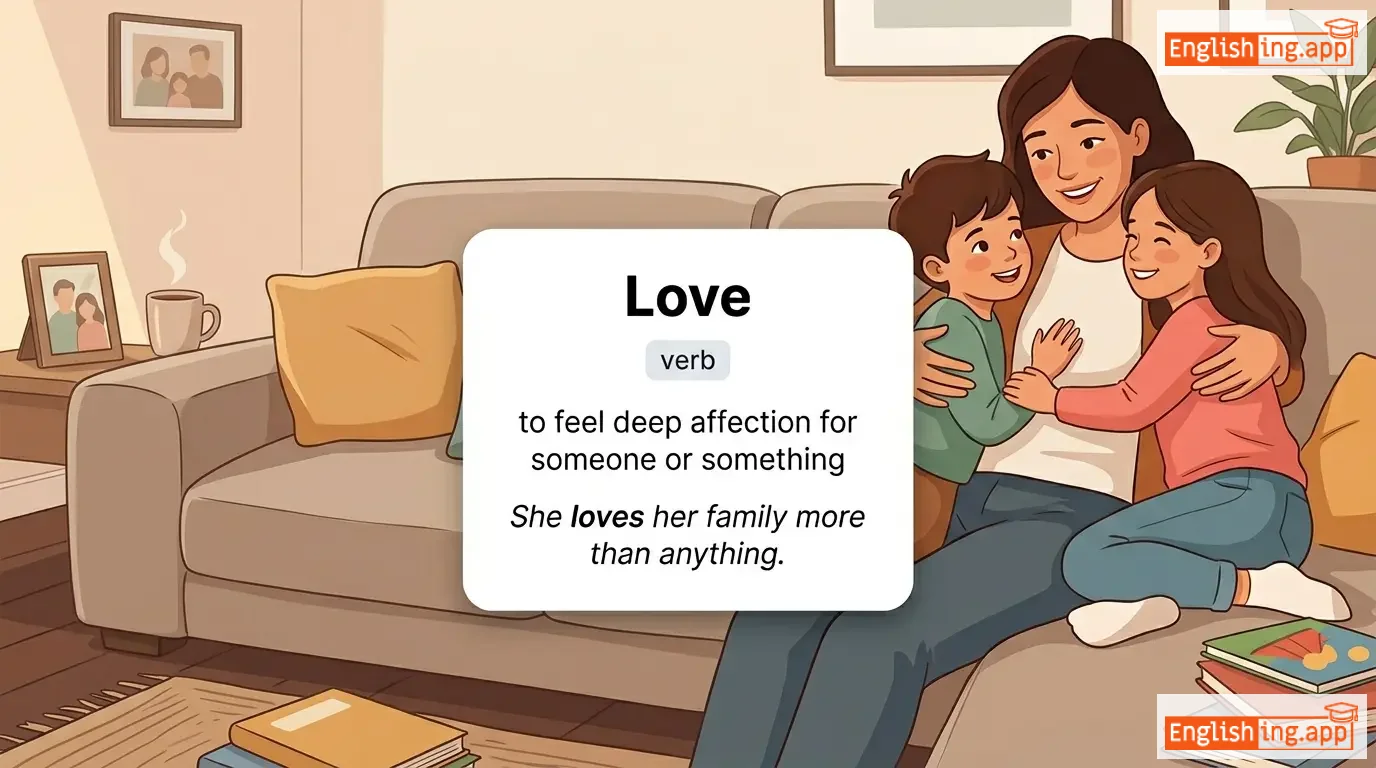
Love definition card — visual illustration of the meaning
verb
/lʌv/
(ai)

to feel deep affection for someone or something

"She loves her family more than anything."

"彼女は家族を何よりも愛している。" (Kanojo wa kazoku wo nani yori mo aishiteiru.)
adjective
/ˈlʌvəbl̩/
幸福 (kōfuku)

easy to love; endearing or charming

"The puppy was so loveable that everyone wanted to hold it."

"彼女は賞を受け取ったとき、幸せを隠すことができませんでした。" (Kanojo wa shō o uketotta toki, kōfuku o kakusu koto ga dekimasen deshita.)
adjective
/ˈlʌvli/
素晴らしい (subarashii)

Delightful or very pleasing; beautiful.

"It was a lovely evening by the beach."

"それは海辺での素晴らしい夕べでした。" (Sore wa umibe de no subarashī yūbe deshita.)
noun
/ˈlʌvər/
恋人 (koibito)

a person who is in a romantic relationship or has strong affection for someone

"She met her lover at the café every evening."

"彼女は毎晩カフェで恋人と会っていました。" (Kanojo wa maiban kafe de koibito to attemashita.)
adjective
/ˈlʌv.ɪŋ/
愛情深い; 世話好きな; 愛と温かさを示す (aijou fukai; sewa suki na; ai to atatakasa o shimesu)

affectionate; caring; showing love and warmth

"She is a loving mother who cares deeply for her children."

"彼女は子供たちを深く思いやる愛情深い母親です。" (Kanojo wa kodomotachi o fukaku omoiyaru aijou fukai hahaoya desu.)
adjective
/loʊ/
低い (hikui)

Small in amount, degree, or position; not high.

"The river is at its lowest level in years."

"その川は何年も最も低いレベルにあります。" (Sono kawa wa nannen mo mottomo hikui reberu ni arimasu.)
adjective
/ˌloʊ ˈspɪrɪtɪd/
落ち込んだ (ochikonda)

feeling sad, depressed, or lacking enthusiasm

"He felt low-spirited after hearing the bad news."

"悪いニュースを聞いて、彼は落ち込んでいた。" (Warui nyūsu o kiite, kare wa ochikonde ita.)
verb
/ˈloʊər/
下げる (sageru)

to move something to a lower position or to reduce

"The company decided to lower the prices."
"会社は価格を引き下げることを決定しました。" (Kaisha wa kakaku o hikisageru koto o kettei shimashita.)
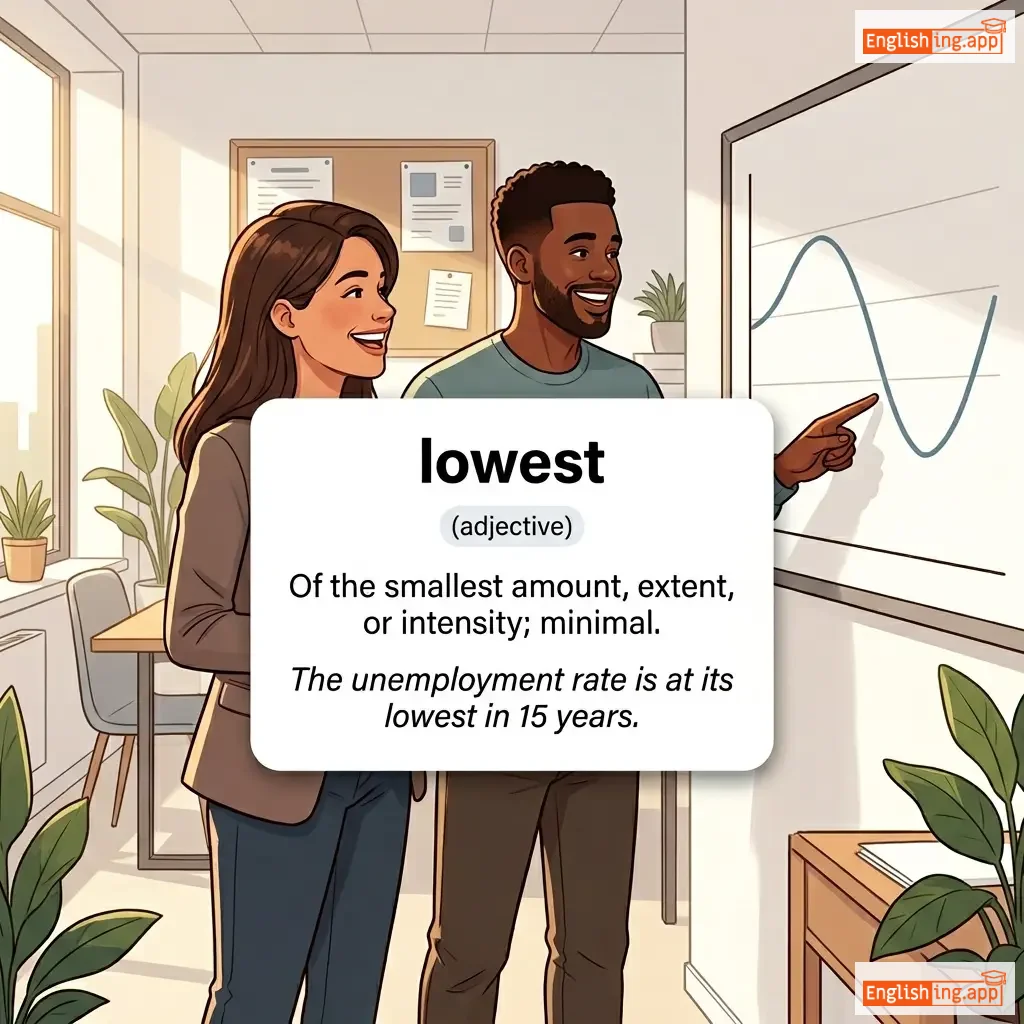
lowest definition card — visual illustration of the meaning
adjective
/ˈloʊɪst/
最も低い (mottomo hikui)

Of the smallest amount, extent, or intensity; minimal.

"The unemployment rate is at its lowest in 15 years."

"失業率は15年ぶりの最低水準です。" (Shitsugyouritsu wa 15 nen buri no saitei suijun desu.)
adjective
/ˈloʊli/
謙虚 (kenkyo)

humble in status, position, or manner

"She rose from a lowly position to become the company's CEO."

"彼女は低い地位から会社のCEOに昇進しました。" (Kanojo wa hikui chii kara kaisha no CEO ni shoushin shimashita.)
adjective
/ˈlɔɪəl/
忠実, 忠誠 (chūjitsu, chūsei)

showing firm and constant support or allegiance to someone or something

"She remained loyal to her friends even in hard times."

"彼女は困難な時でも友人に忠実であり続けた。" (Kanojo wa konnan na toki demo yūjin ni chūjitsu de aritsuzuketa.)
noun
/ˈlɔɪəlti/
忠誠 (chūsei)

a strong feeling of support or allegiance

"His loyalty to the company earned him great respect."

"彼の会社への忠誠心は、彼に大きな尊敬をもたらしました。" (Kare no kaisha e no chūseishin wa, kare ni ōkina sonkei o motarashimashita.)
verb
/ˈluːbrɪkeɪt/
潤滑する (junkatsu suru)

to apply oil or grease to reduce friction between surfaces

"The mechanic lubricated the car engine parts."

"整備士は車のエンジンパーツに潤滑油を塗布しました。" (Seibishi wa kuruma no enjin pātsu ni junkatsu-yu o tofushimashita.)
lubrication definition card — visual illustration of the meaning
noun
ˌluː.brɪˈkeɪ.ʃən
潤滑 (junkatsu)

The application of a substance such as oil or grease to reduce friction between moving parts.

"Lubrication reduces wear and tear in machines."

"潤滑は機械の摩耗を軽減します。" (junkatsu wa kikai no masatsu o keigen shimasu)
noun
/luːˈbrɪsɪti/
滑りやすさ (suberiyasusa)

the quality of being slippery or smooth; sometimes also refers to lewdness

"The lubricity of the surface made it difficult to walk on."

"表面の滑りやすさにより、歩くのが難しくなった。" (Hyōmen no suberiyasusa ni yori, aruku no ga muzukashiku natta.)
adjective
/ˈluːsənt/
光輝 (koki)

shining or glowing with light

"The lucent stars brightened the night sky."
"光輝を放つ星々が夜空を明るく照らした。" (Kouki wo hanatsu hoshiboshi ga yozora wo akaruku terashita.)
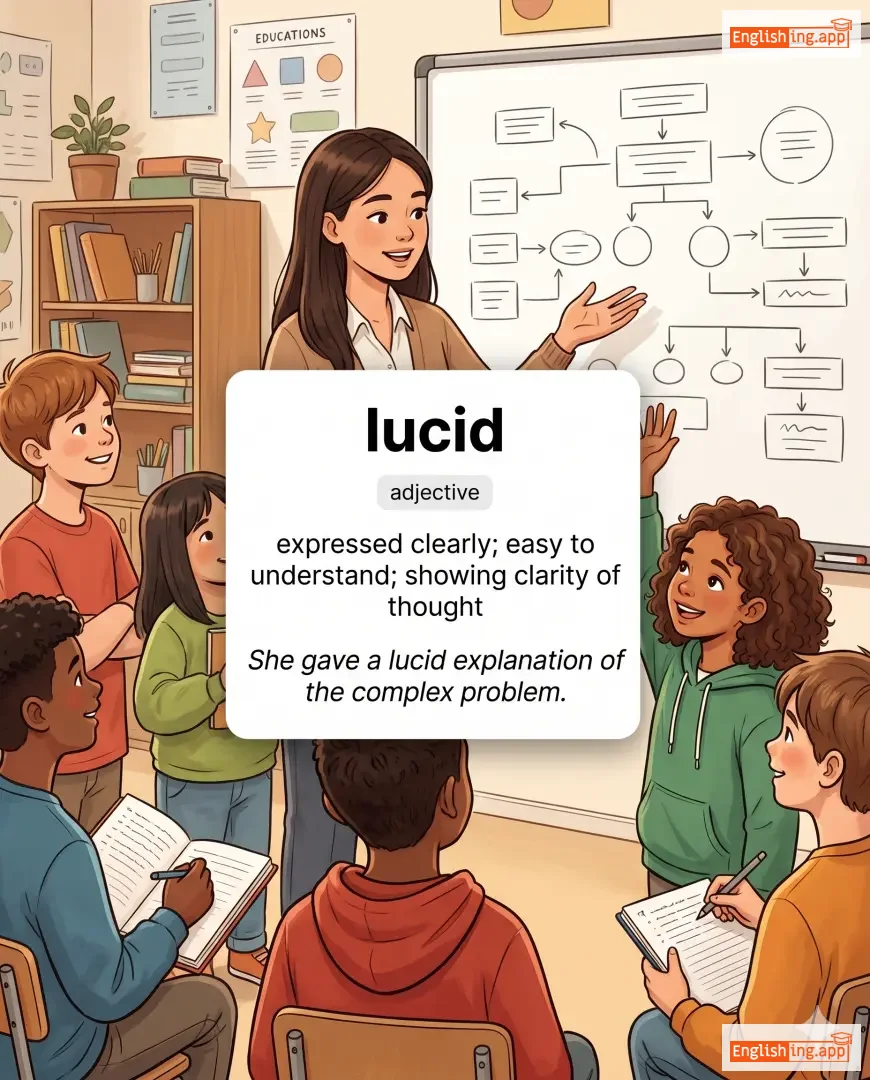
lucid definition card — visual illustration of the meaning
adjective
/ˈluːsɪd/
明晰 (meiseki)

expressed clearly; easy to understand; showing clarity of thought

"She gave a lucid explanation of the complex problem."

"彼女は複雑な問題の明確な説明をしました。" (Kanojo wa fukuzatsu na mondai no meikaku na setsumei o shimashita.)
lucidity definition card — visual illustration of the meaning
noun
/luːˈsɪd.ə.ti/
明快さ (meikasā)

Clarity of thought or style; the quality of being easily understood.

"His explanation had great lucidity, making it easy to understand."

"彼の説明は非常に明快で、理解しやすかった。" (Kare no setsumei wa hijou ni meikaku de, rikai shiyasukatta.)
🍀

Luck

noun
/lʌk/

success or failure apparently brought by chance rather than through one’s actions

"He had the luck to find a good job quickly."

adjective
/ˈlʌki/
運が良い (un ga yoi)

having good fortune or favorable circumstances

"She felt lucky to have such supportive friends."

"彼女はそのような支えてくれる友達がいてラッキーだと感じていた。" (Kanojo wa sonoyouna sasaete kureru tomodachi ga ite rakkii da to kanjite ita.)
lucrative definition card — visual illustration of the meaning
adjective
/ˈluːkrətɪv/
利益を生む (rieki o umu)

producing a great deal of profit

"He left his job for a more lucrative business opportunity."

"彼はより利益を生むビジネスチャンスのために仕事を辞めた。" (Kare wa yori rieki o umu bijinesu chansu no tame ni shigoto o yameta.)
lucre definition card — visual illustration of the meaning
noun
/ˈluːkər/
利益 (rieki)

money, especially when regarded as sordid or gained dishonorably

"He was motivated more by lucre than by duty."

"彼は義務よりも利益に動機づけられていました。" (Kare wa gimu yori mo rieki ni dōkizukerareteimashita.)
noun
/ˌluːkjʊˈbreɪʃən/
夜間学習 (yakan gakushuu)

study or meditation, especially at night

"His novel was the result of long lucubration."

"彼の小説は長い夜間学習の結果でした。" (Kare no shousetsu wa nagai yakan gakushuu no kekka deshita.)
adjective
/ˈluːdɪkrəs/
ばかげた (bakageta)

so foolish, unreasonable, or out of place as to be amusing

"It is ludicrous to think the Earth is flat."

"地球が平らだと思うのはばかげている。" (Chikyuu ga hirada to omou no wa bakageteiru.)
🧳

lug

verb
/lʌɡ/

to carry or drag something heavy or cumbersome with effort

"He had to lug the suitcase up three flights of stairs."

noun
/ˈlʌɡ.ɪdʒ/
荷物 (nimotsu)

suitcases or other bags in which to pack personal belongings for traveling

"Please check your luggage at the airport counter."

"空港のカウンターで荷物をチェックしてください。" (Kūkō no kauntā de nimotsu o chekku shite kudasai.)
noun
/ˈlʌɡ.ɪdʒ væn/
荷物車 (nimotsu-sha)

a vehicle designed for carrying luggage and cargo

"The luggage van carried all the passengers' suitcases."

"荷物車はすべての乗客のスーツケースを運びました。" (Nimotsu-sha wa subete no jōkyaku no sūtsukēsu o hakomimashita)
adjective
/luːˈɡuːbriəs/
陰鬱な (in'utsuna)

looking or sounding sad and dismal

"His lugubrious expression made everyone feel uneasy."

"彼の陰鬱な表情は皆を不安にさせた。" (Kare no in'utsuna hyoujou wa mina o fuan ni saseta.)
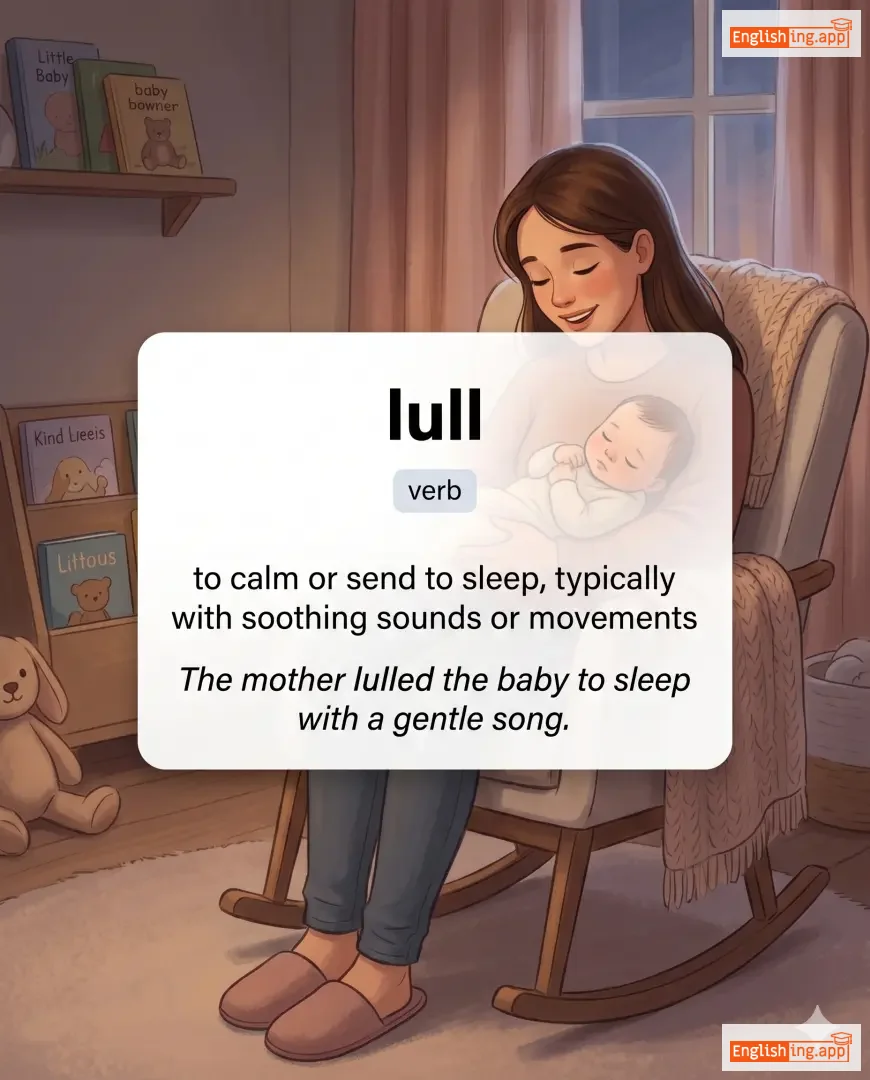
lull definition card — visual illustration of the meaning
😴

lull

verb
/lʌl/

to calm or send to sleep, typically with soothing sounds or movements

"The mother lulled the baby to sleep with a gentle song."

noun
/ˈlʌləˌbaɪ/
子守唄 (komoriuta)

a soothing song sung to help a child fall asleep

"She sang a lullaby to her baby every night."

"彼女は毎晩赤ちゃんに子守唄を歌っていた。" (Kanojo wa maiban akachan ni komoriuta o utatte ita)
verb
/ˈlʌmbər/
重い足取りで歩く (omoi ashidori de aruku)

to move in a slow, heavy, awkward way

"The bear lumbered through the forest in search of food."

"クマは食べ物を探して森を重い足取りで歩いた。" (Kuma wa tabemono o sagashite mori o omoi ashidori de aruita.)
noun
/ˈluː.mən/
ルーメン (rūmen)

A unit of luminous flux, measuring the amount of visible light emitted by a source.

"The bulb produces 800 lumens of light."

"電球は800ルーメンの光を発生させます。" (Denkyū wa 800 rūmen no hikari o hassei sasemasu.)
noun
/ˈluː.məˌnɛr.i/
著名人 (chomeijin)

A person who inspires or influences others, especially in a particular field.

"He is considered a luminary in the world of science."

"彼は科学の世界で著名人と見なされています。" (Kare wa kagaku no sekai de chomeijin to minasarerareteimasu.)
noun
/ˌluː.mɪˈnɛs.əns/
発光現象 (hakkou genshou)

The emission of light by a substance not resulting from heat; a type of cold light.

"The luminescence of the fireflies lit up the forest."

"ホタルの発光現象が森を照らしました。" (Hotaru no hakkou genshou ga mori o terashimashita.)
adjective
/ˌluː.mɪˈnɛs.ənt/
発光する (hakkou suru)

Emitting light without heat, glowing softly.

"The luminescent watch dial was visible in the dark."

"その発光する時計のダイヤルは暗闇の中で見えました。" (Sono hakkou suru tokei no daiyaru wa kurayami no naka de miemashita.)