語彙集

英単語辞書 | 単語の意味、定義、例文

noun
/ˈdʒʌɡləri/
ジャグリング (jaguringu)

The performance of tricks and illusions, especially by sleight of hand.

"The magician's jugglery amazed the audience."

"魔法使いのジャグリングは観客を驚かせました。" (Mahōtsukai no jaguringu wa kankyaku o odorokasemashita.)
noun
/ˈdʒʌɡjələr/
頸静脈 (keijoumyaku)

A large vein in the neck that carries blood from the head back to the heart.

"The doctor checked the patient's jugular vein for signs of pressure."

"医者は患者の頸静脈に圧力の兆候がないかを確認しました。" (Isha wa kanja no keijoumyaku ni atsuryoku no choukou ga nai ka wo kakunin shimashita.)
noun
/dʒuːs/
ジュース (jūsu)

the liquid obtained from fruits, vegetables, or meat; also refers to energy or power in informal use

"She drank a glass of orange juice with breakfast."

"彼女は朝食にオレンジジュースを一杯飲みました。" (Kanojo wa chōshoku ni orenji jūsu o ippai nomimashita.)
adjective
/ˈdʒuːsi/
ジューシー (jūshī)

Full of juice; succulent; also used to describe something exciting or scandalous.

"The steak was so juicy that it melted in my mouth."

"ステーキはとてもジューシーで、口の中で溶けました。" (Sutēki wa totemo jūshī de, kuchi no naka de toke mashita.)
noun
/dʒuˈlaɪ/
7月 (shichi gatsu)

the seventh month of the year in the Gregorian calendar

"July is often the hottest month of the year."
"7月は一年で最も暑い月の一つです。" (shichi gatsu wa ichinen de mottomo atsui tsuki no hitotsu desu)
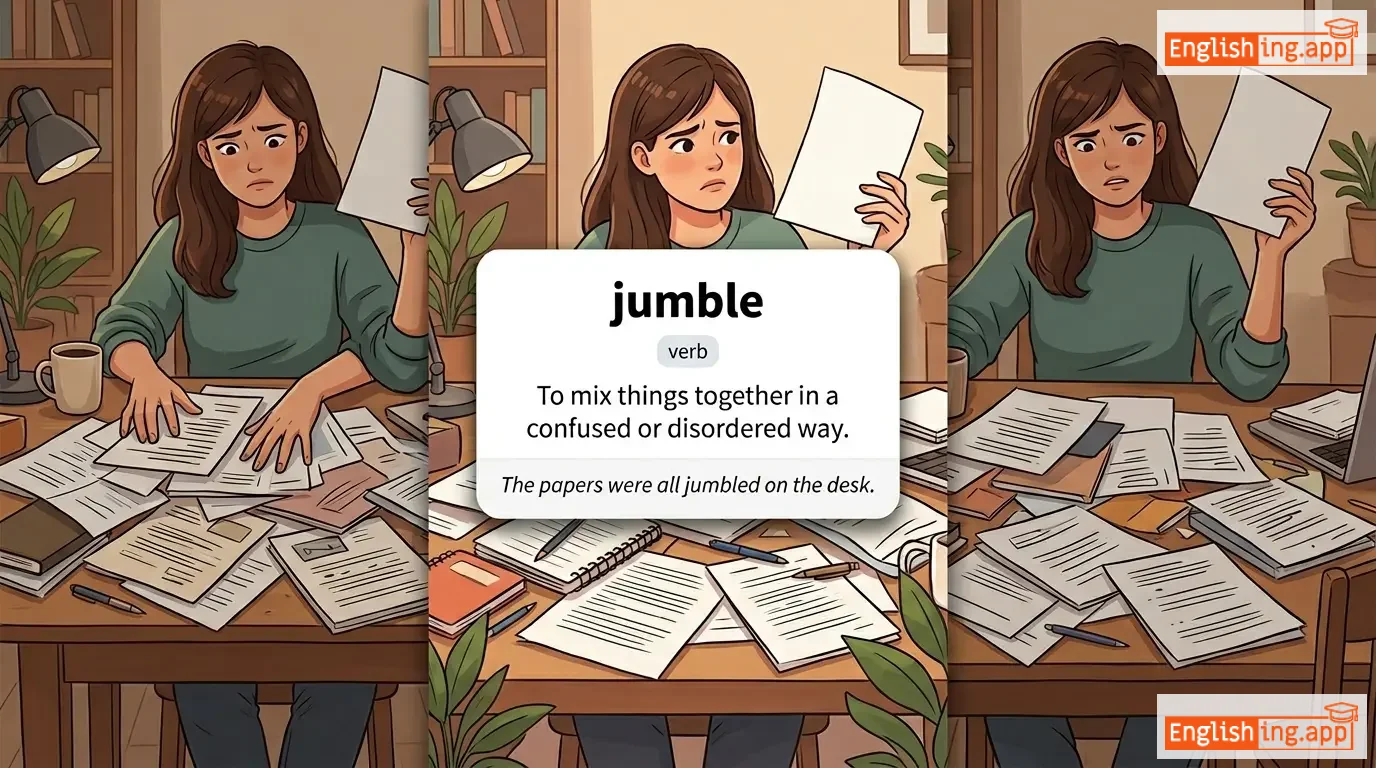
jumble definition card — visual illustration of the meaning
verb
/ˈdʒʌmbəl/
混ぜる (mazeru)

To mix things together in a confused or disordered way.

"The papers were all jumbled on the desk."

"ペーパーはデスクの上で全てジャムブルでした。" (Pepa wa desuku no ue de subete jamuburu deshita.)
adjective
/ˈdʒʌm.boʊ/
非常に大きい; 巨大 (jumbo)

exceptionally large; enormous; gigantic

"The jumbo jet was delayed at the airport."

"ジャンボジェットは空港で遅れました。" (Janbo jetto wa kuukou de okuremashita.)
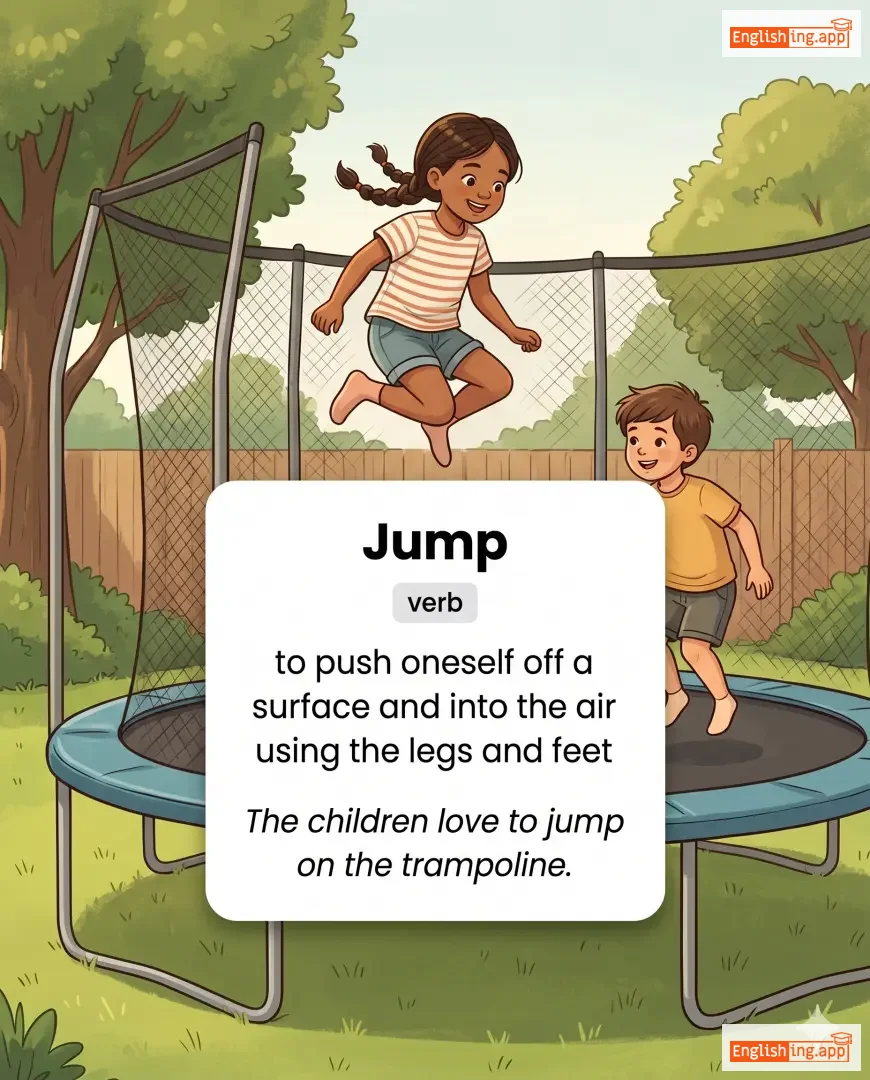
Jump definition card — visual illustration of the meaning
🤾

Jump

verb
/dʒʌmp/

to push oneself off a surface and into the air using the legs and feet

"The children love to jump on the trampoline."

noun
/ˈdʒʌm.pər/
セーター; (se-ta)

a knitted garment worn on the upper body; a person or animal that jumps

"She wore a warm woolen jumper during the cold winter evening."

"彼女は寒い冬の夜に暖かいウールのジャンパーを着ていました。" (Kanojo wa samui fuyu no yoru ni atatakai u-ru no janpa- o kiteimashita.)
noun
/ˈdʒʌŋkʃən/
交差点 (kousaten)

A place where two or more roads or things meet or are joined.

"The car stopped at the busy junction."

"車は忙しい交差点で止まりました。" (Kuruma wa isogashii kousaten de tomarimashita.)
noun
/ˈdʒʌŋktʃər/
重要な瞬間 (juuyou na shunkan)

A particular point in time or a critical moment.

"At this critical juncture, we must make the right decision."

"この重要な瞬間に、私たちは正しい決断を下さなければならない。" (Kono juuyou na shunkan ni, watashitachi wa tadashii ketsudan o kudasanakereba naranai.)
noun
/dʒuːn/
六月 (rokugatsu)

the sixth month of the year in the Gregorian calendar

"Schools often close for summer vacation in June."

"学校はたいてい六月に夏休みに入ります。" (gakkou wa taitei rokugatsu ni natsuyasumi ni hairimasu)
noun
/ˈdʒʌŋɡəl/
ジャングル (janguru)

a dense forest, typically in a tropical region, filled with wild plants and animals

"They got lost in the thick jungle during their trip."

"彼らは旅行中に密林で迷子になった。" (Karera wa ryokouchuu ni mitsurin de maigo ni natta.)
adjective, noun
/ˈdʒuːniər/
ジュニア (junia)

younger or lower in rank; also a student in the next-to-last year of high school or college

"He works as a junior officer in the company."

"彼は会社でジュニアオフィサーとして働いています。" (Kare wa kaisha de junia ofisā toshite hataraiteimasu.)
noun
/dʒʌŋk/
ゴミ; 不要品 (gomi, fuyouhin)

old or discarded articles that are considered useless or of little value; things of poor quality

"He cleaned out the garage and threw away all the old junk."

"彼はガレージを掃除して、すべての古いゴミを捨てました。" (kare wa gareeji o souji shite, subete no furui gomi o sutemashita.)
noun
/ˈdʒʌŋkɪt/
旅行または祝賀 (ryokou matawa shukuga)

A trip or celebration, often funded by someone else, usually for pleasure or promotional purposes.

"The company organized a junket for journalists to promote their new resort."
"会社はジャーナリストのために新しいリゾートを宣伝するための旅行を組織しました。" (Kaisha wa jānarisuto no tame ni atarashī rizōto o senden suru tame no ryokō o soshiki shimashita.)
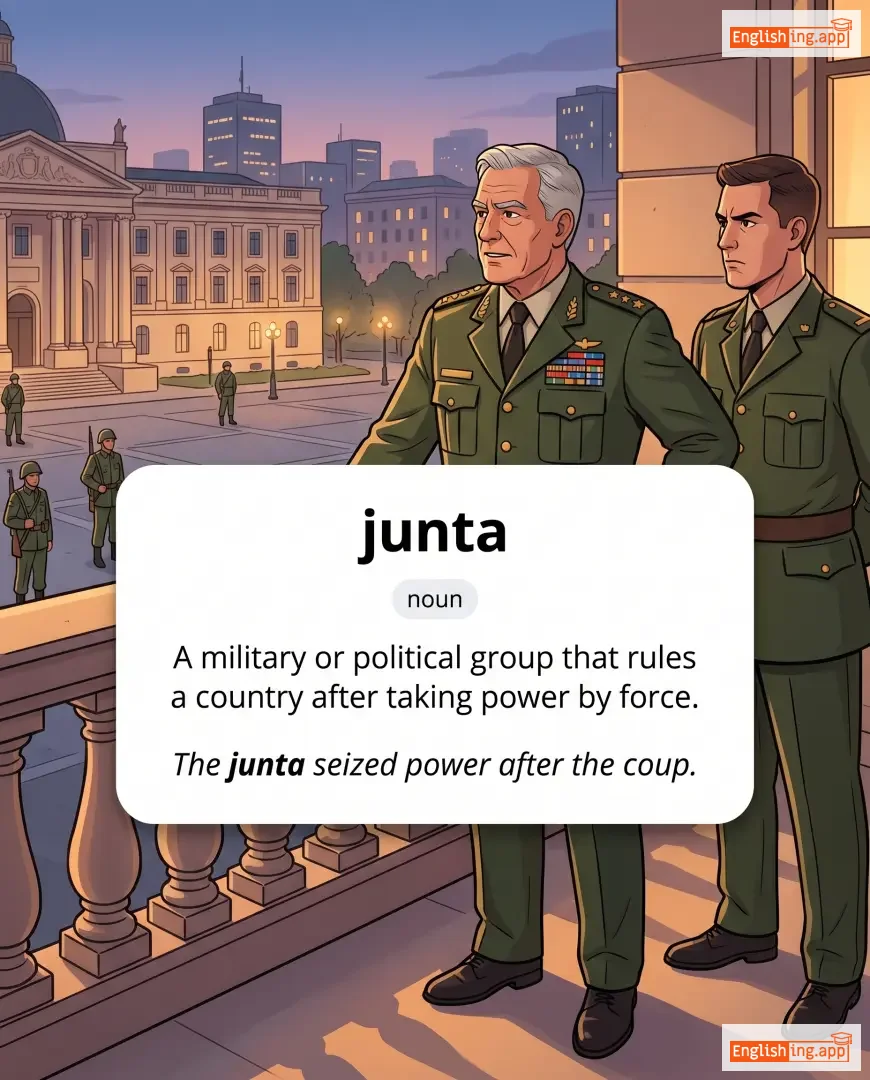
junta definition card — visual illustration of the meaning
noun
/ˈdʒʊntə/
軍事政権 (gunji seiken)

A military or political group that rules a country after taking power by force.

"The junta seized power after the coup."

"クーデター後、軍事政権が権力を掌握しました。" (Kūdetā go, gunji seiken ga kenryoku o shōaku shimashita.)
noun
/ˈdʒuː.pɪ.tər/
木星; ローマ神話の主神 (mokusei; ro-ma shinwa no shushin)

the largest planet in our solar system; the chief god of Roman mythology

"Jupiter is known for its massive size and distinctive red spot."

"ジュピターはその巨大なサイズと特徴的な赤い斑点で知られています。" (Jupitā wa sono kyodaina saizu to tokuchō-teki na akai hanten de shirareteimasu.)
adjective
/dʒʊˈrɪdɪkəl/
司法的 (shihou teki)

Relating to judicial proceedings or the administration of law.

"The case raised important juridical questions."

"その事件は重要な司法的問題を提起しました。" (Sono jiken wa jūyōna shihōteki mondai o teiki shimashita.)
noun
/ˌdʒʊərɪsˈdɪkʃən/
管轄権 (kansatsuken)

The official power to make legal decisions and judgments.

"The court has jurisdiction over criminal cases."

"裁判所は刑事事件に関する管轄権を持っています。" (Saibansho wa keiji jiken ni kansuru kansatsuken o motteimasu.)
noun
/ˌdʒʊərɪsˈpruːdəns/
法学 (hōgaku)

The theory, philosophy, or science of law.

"She is a professor of jurisprudence at the university."
"彼女は大学で法学の教授です。" (Kanojo wa daigaku de hōgaku no kyōju desu.)
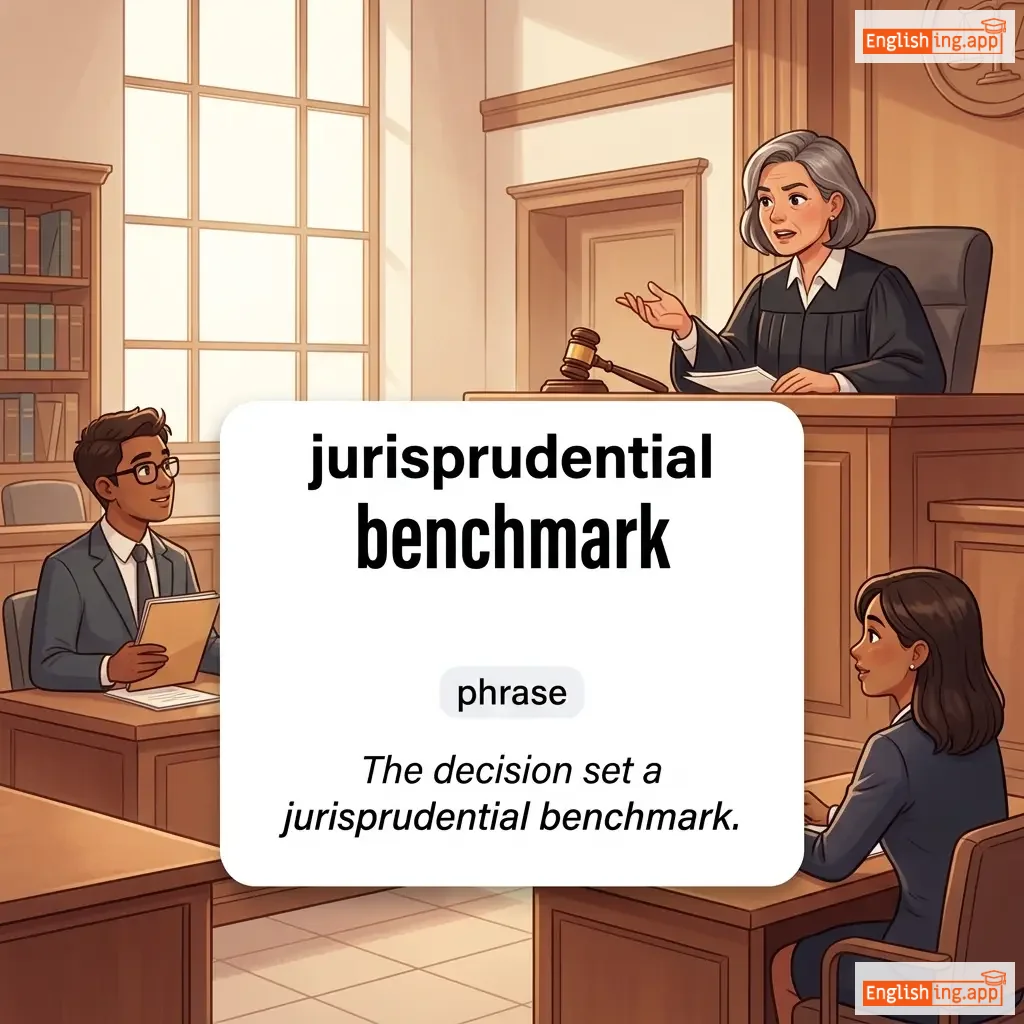
jurisprudential benchmark definition card — visual illustration of the meaning
phrase
ˌdʒʊə.rɪs.pruːˈden.ʃəl ˈbentʃ.mɑːk
法的基準 (hōteki kijun)

A legal standard or precedent that serves as a reference point for future legal decisions.

"The decision set a jurisprudential benchmark."

"その決定は法的基準を設定しました。" (Sono kettei wa hōteki kijun o settei shimashita.)
noun
/ˈdʒʊərər/
陪審員 (baishin'in)

a member of a jury who is chosen to hear evidence in a legal case and help make a decision

"The juror listened carefully to the witness’s testimony."

"陪審員は証人の証言を慎重に聞きました。" (Baishin'in wa shōnin no shōgen o shinchō ni kikimashita.)
noun
/ˈdʒʊəri/
陪審団 (baishindan)

a group of people sworn to give a verdict in a legal case based on the evidence

"The jury found him guilty of the crime."

"陪審団は彼を犯罪者として有罪と認定しました。" (Baishindan wa kare o hanzai-sha to shite yūzai to nintei shimashita.)
adverb/adjective
/dʒʌst/
ちょうど、ただ、または公正で道徳的に正しい (choudo, tada, matawa kou-sei de doutokuteki ni tadashii)

Exactly, only, or fair and morally right.

"She arrived just in time for the meeting."
"彼女は会議のためにちょうど時間通りに到着した。" (Kanojo wa kaigi no tame ni choudo jikan doori ni touchaku shita.)
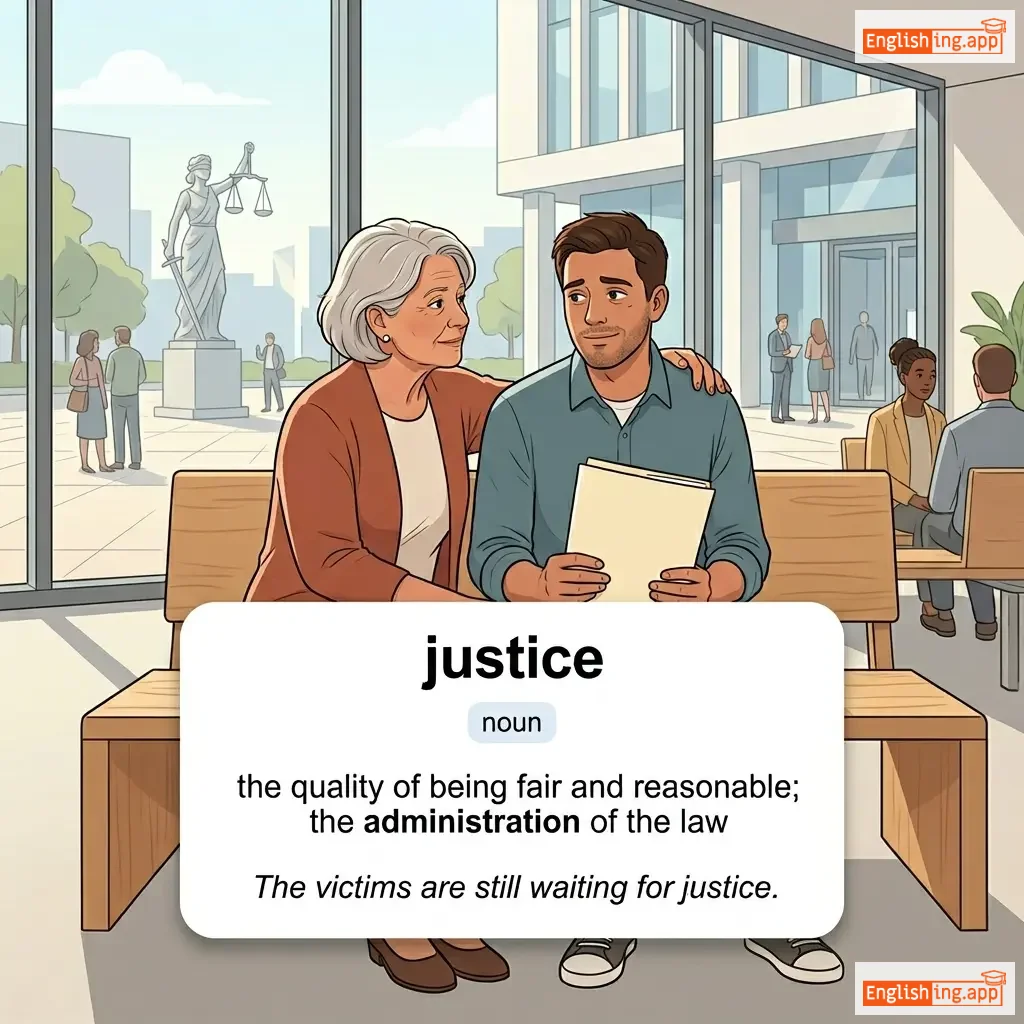
justice definition card — visual illustration of the meaning
noun
/ˈdʒʌstɪs/
正義 (seigi)

the quality of being fair and reasonable; the administration of the law

"The victims are still waiting for justice."

"犠牲者はまだ正義を待っています。" (Giseisha wa mada seigi o matteimasu.)
noun
/ˌdʒʌstɪfɪˈkeɪʃən/
正当化 (seitōka)

a reason, explanation, or excuse that shows something is right or reasonable

"There is no justification for such rude behavior."

"そのような失礼な行動には正当化の余地はない。" (sono yōna shitsurei na kōdō ni wa seitōka no yochi wa nai)
verb
/ˈdʒʌstɪfaɪ/
正当化する (seitouka suru)

to show or prove that something is right or reasonable

"He tried to justify his decision with logical reasons."

"彼は論理的な理由で自分の決定を正当化しようとしました。" (Kare wa rongiteki na riyuu de jibun no kettei o seitouka shiyou to shimashita.)
noun
/dʒuːt/
黄麻 (ouma)

a long, soft, shiny plant fiber used to make rope, bags, sacks, and coarse cloth

"Jute is widely used to make eco-friendly bags and ropes."

"黄麻は環境にやさしい素材です。" (ouma wa kankyou ni yasashii sozai desu)
noun
/dʒuːt liːf/
ジュートの葉 (juuto riifu)

the edible leaves of the jute plant, commonly eaten as a leafy green vegetable

"Jute leaf is rich in vitamins and minerals and is often cooked with lentils in Bengali cuisine."

"ジュートの葉はビタミンやミネラルが豊富で、ベンガル料理ではしばしばレンズ豆と一緒に調理されます。" (juuto no ha wa bitamin ya mineraru ga houfu de bengaru ryouri de wa shibashiba renzu mame to issho ni chouri saremasu.)
adjective, noun
/ˈdʒuːvənaɪl/
未成年 (miseinen)

relating to young people; childish or immature

"The court sent the case to a juvenile detention center."
"裁判所は事件を未成年の収容施設に送った。" (saibansho wa jiken o miseinen no shūyō shisetsu ni okutta.)
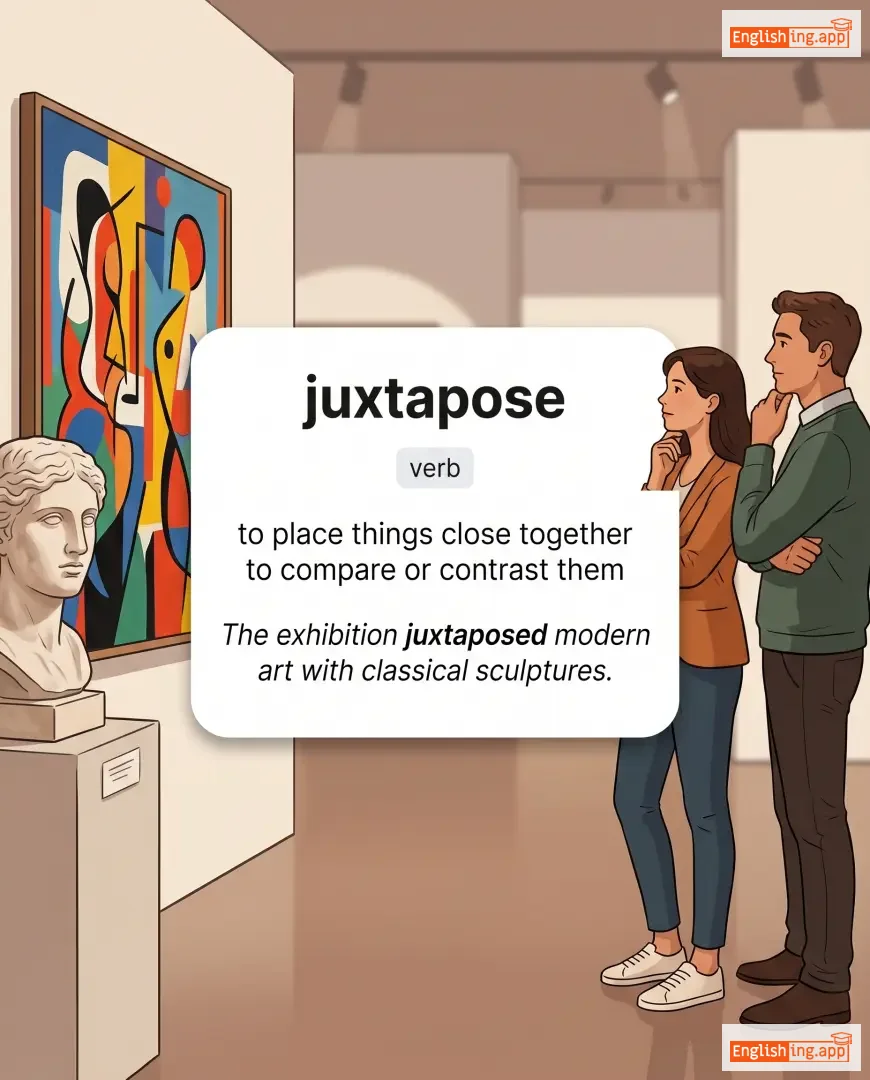
juxtapose definition card — visual illustration of the meaning
verb
/ˈdʒʌkstəˌpoʊz/
物を近くに置いて比較または対照する (mono o chikaku ni oite hikaku matawa taishou suru)

to place things close together to compare or contrast them

"The exhibition juxtaposed modern art with classical sculptures."
"展示会では現代アートと古典的な彫刻が並べられました。" (Tenjikai dewa gendai āto to kotenteki na chōkoku ga naraberaremashita.)
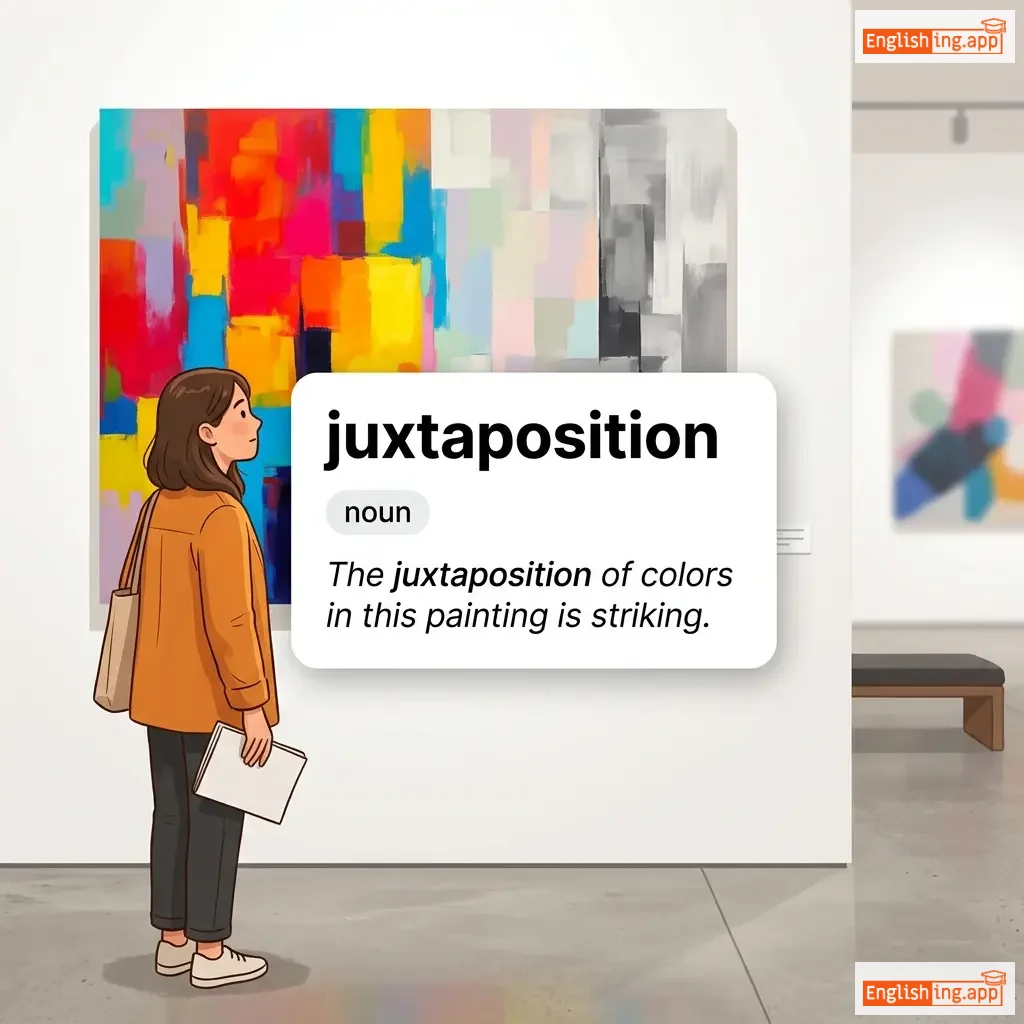
juxtaposition definition card — visual illustration of the meaning
noun
/ˌdʒʌk.stə.pəˈzɪʃ.ən/
並置 (へいち)

The fact of two things being seen or placed close together with contrasting effect.

"The juxtaposition of colors in this painting is striking."

"この絵画における色の並置は、非常に印象的です。" (Kono kaiga ni okeru iro no heichi wa, hijō ni inshō-teki desu.)