語彙集

英単語辞書 | 単語の意味、定義、例文

noun/adjective
/ˈɪnstənt/
瞬間 (shunkan)

A very short period of time; happening immediately.

"He replied in an instant without hesitation."

"彼は躊躇うことなく瞬時に返答した。" (Kare wa chūchō suru koto naku shunji ni hentō shita.)
adjective
/ˌɪnstənˈteɪniəs/
即時 (sokushi)

Happening immediately, without any delay.

"The change in temperature was almost instantaneous."

"温度の変化はほぼ即時でした。" (Ondo no henka wa hobo sokushi deshita.)
adverb
/ˈɪnstəntli/
すぐに (suguni)

immediately, without any delay

"He replied instantly to the message."

"彼はすぐにメッセージに返事をした。" (Kare wa sugu ni messeeji ni henji o shita.)
verb
/ɪnˈsteɪt/
任命する (ninmei suru)

To set up in position, office, or authority.

"The board decided to instate her as the new director."

"取締役会は彼女を新しいディレクターにインステイトすることを決定しました。" (Torishimariyaku kai wa kanojo o atarashī direkutā ni insuteito suru koto o kettei shimashita.)
adverb
/ɪnˈstɛd/
代わりに (kawari ni)

As an alternative or substitute.

"She didn’t buy the dress; instead, she chose a pair of shoes."

"彼女はドレスを買わなかった。代わりに、彼女は靴を選んだ。" (Kanojo wa doresu o kawanakatta. Kawari ni, kanojo wa kutsu o eranda.)
verb
/ˈɪnstɪˌɡeɪt/
扇動する (sendou suru)

To bring about or initiate an action, often something negative.

"He was accused of instigating the riot."

"彼は暴動を扇動したとして告発された。" (Kare wa boudou wo sendou shita to shite kokuhatsu sareta.)
noun
/ˈɪnstɪˌɡeɪtər/
扇動者 (sendōsha)

A person who brings about or initiates something, usually something bad.

"The police identified him as the instigator of the violence."

"警察は彼を暴力の扇動者として特定しました。" (Keisatsu wa kare o bōryoku no sendōsha to shite tokutei shimashita.)
verb
/ɪnˈstɪl/
植え付ける (ueukeru)

to gradually but firmly establish an idea, attitude, or habit in someone's mind

"Parents try to instill good values in their children."

"親は子供に良い価値観を植え付けようとしています。" (Oya wa kodomo ni yoi kachikan o ueukeyou to shiteimasu.)
noun
/ˈɪnstɪŋkt/
本能 (honnou)

A natural way of behaving or reacting that does not require learning.

"Birds build nests by instinct."
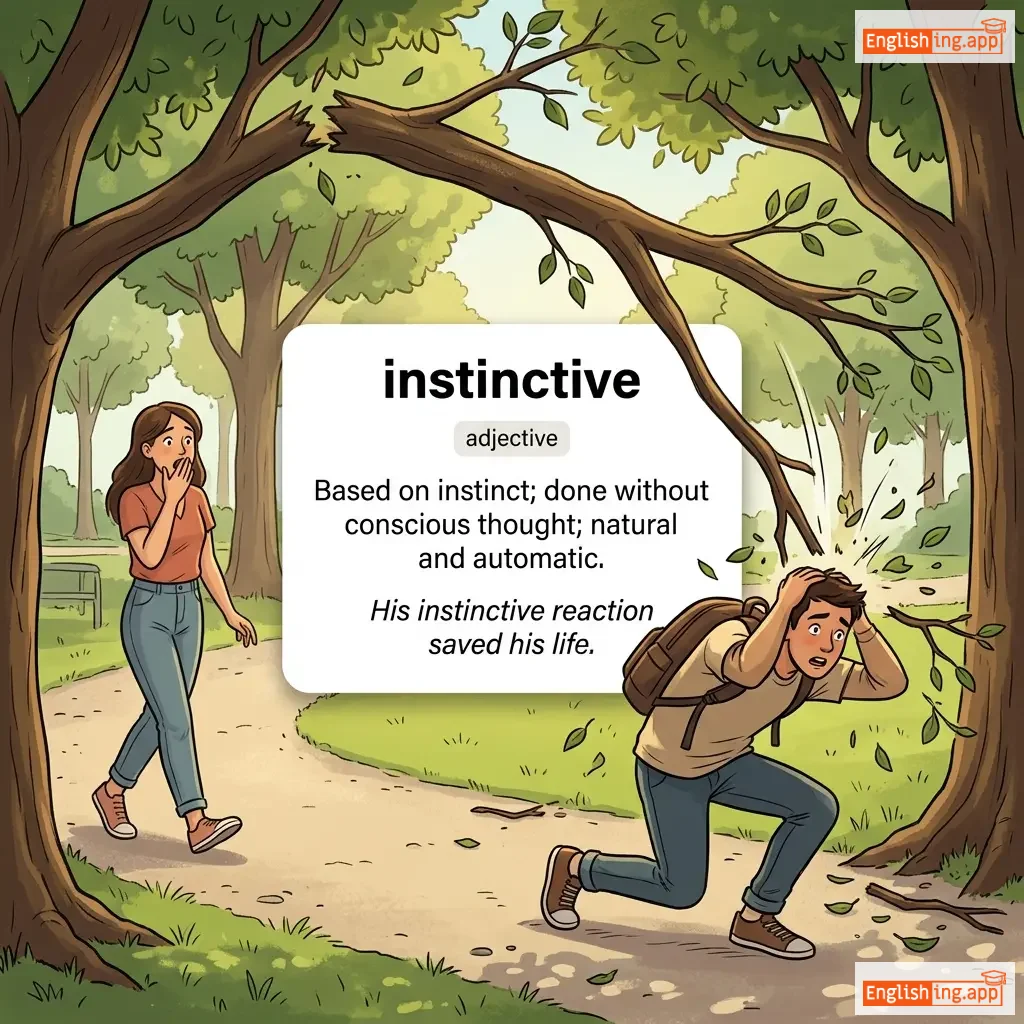
"鳥は本能で巣を作ります。" (Tori wa honnō de su o tsukurimasu.)
instinctive definition card — visual illustration of the meaning
adjective
/ɪnˈstɪŋk.tɪv/
本能的, 自然な, 自動的 (honnōteki, shizen na, jidōteki)

Based on instinct; done without conscious thought; natural and automatic.

"His instinctive reaction saved his life."

"彼の本能的な反応は彼の命を救った。" (Kare no hon'nōteki na hannō wa kare no inochi o sukutta.)
noun, verb
/ˈɪnstɪˌtjuːt/
インスティチュート (insuchito)

as a noun, an organization founded for a specific purpose; as a verb, to establish or initiate

"The university decided to institute new rules for the library."
"大学は図書館のために新しいルールを設立することを決定しました。" (Daigaku wa toshokan no tame ni atarashī rūru o setsuritsu suru koto o kettei shimashita.)
institution definition card — visual illustration of the meaning
noun
/ˌɪnstɪˈtjuːʃən/
機関 (kikan)

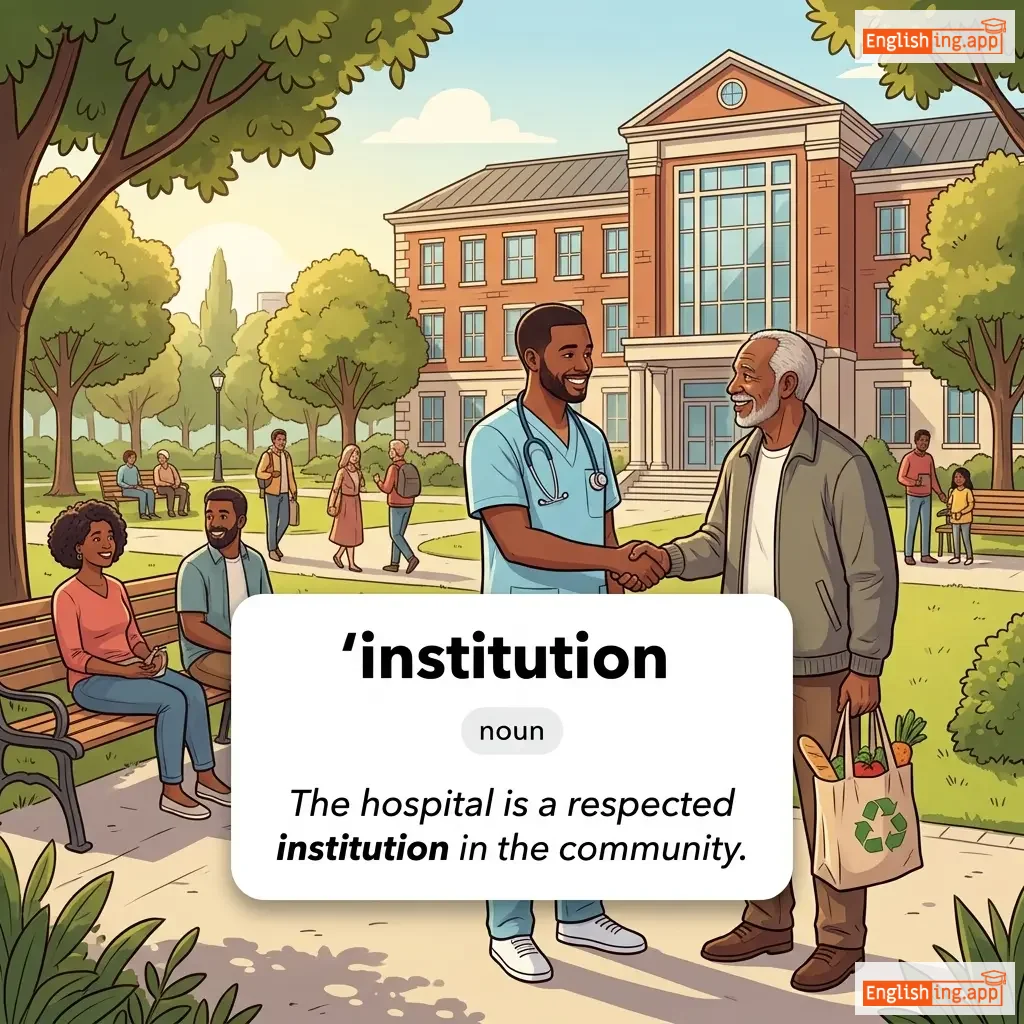
an established organization, especially one dedicated to education, public service, or a particular purpose

"The hospital is a respected institution in the community."

"病院は地域社会で尊敬されている機関です。" (Byōin wa chiiki shakai de sonkei sarete iru kikan desu.)
adjective
/ˌɪnstɪˈtjuːʃənl/
制度的 (seido-teki)

Relating to an organization or established practice.

"The government made several institutional reforms in education."

"政府は教育においていくつかの制度的改革を実施しました。" (Seifu wa kyōiku ni oite ikutsu ka no seido-teki kaikaku o jisshi shimashita.)
verb
/ˌɪnstɪˈtjuːʃənəlaɪz/
制度化する (seido-ka suru)

to establish something as a formal institution, custom, or practice

"The government seeks to institutionalize environmental protection."

"政府は環境保護を制度化しようとしています。" (Seifu wa kankyō hogo o seido-ka shiyou to shiteimasu.)
instruct definition card — visual illustration of the meaning
verb
/ɪnˈstrʌkt/
指示する、教える (shiji suru, oshieru)

to tell or teach someone how to do something

"The teacher instructed the students to complete the assignment."

"教師は生徒に課題を完了するよう指示しました。" (Kyōshi wa seito ni kadai o kanryō suru yō shiji shimashita.)
noun
/ɪnˈstrʌkʃən/
指示 (shiji)

Detailed information telling how something should be done or operated.

"Please read the instruction carefully before using the machine."

"機械を使用する前に指示をよく読んでください。" (Kikai o shiyou suru mae ni shiji o yoku yonde kudasai.)
adjective
/ɪnˈstrʌkʃənəl/
教育的な (kyouikutekina)

providing knowledge or information; intended to teach

"The website offers many instructional videos for beginners."

"このウェブサイトは初心者向けに多くの教育的なビデオを提供しています。" (Kono webusaito wa shoshinsha muke ni ooku no kyouikutekina bideo wo teikyoushiteimasu.)
noun
/ɪnˈstrʌkʃənz/
指示 (shiji)

Detailed information on how something should be done or operated.

"Please follow the instructions on the box."

"箱に書かれた指示に従ってください。" (Hako ni kakareta shiji ni shitagatte kudasai.)
adjective
/ɪnˈstrʌktɪv/
教育的 (kyōikuteki)

useful and informative; providing knowledge or instruction

"The lecture was highly instructive and engaging."

"その講義は非常に教育的で魅力的でした。" (Sono kōgi wa hijō ni kyōikuteki de miryokuteki deshita.)
noun
/ɪnˈstrʌktər/
インストラクター (insutorakutā)

A person who teaches a subject or skill.

"The driving instructor was very patient with new learners."

"運転インストラクターは新しい生徒にとても忍耐強かった。" (Unten insutorakutā wa atarashī seito ni totemo nintai tsuyokatta.)
noun
/ˈɪnstrəmənt/
楽器 (gakki)

A tool or device used for a particular purpose, especially for scientific or musical work.

"The doctor used a special instrument during the surgery."

"医師は手術中に特別な楽器を使用しました。" (Ishi wa shujutsu-chuu ni tokubetsu na gakki o shiyou shimashita.)
instrumental definition card — visual illustration of the meaning
adjective
/ˌɪnstrʊˈmɛntəl/
重要な (jūyōna)

serving as an instrument or means to an end; helpful or useful

"His instrumental role in the project was vital to its success."

"彼のプロジェクトでの重要な役割は、成功にとって不可欠でした。" (Kare no purojekuto de no jūyōna yakuwari wa, seikō ni totte fukaketsu deshita.)
noun
/ˌɪn.strəˈmɛn.təl.ɪst/
楽器奏者 (gakki sōsha)

A person who plays a musical instrument.

"The instrumentalist played a beautiful solo on the violin."

"楽器奏者はバイオリンで美しいソロを演奏しました。" (Gakki sōsha wa baiorin de utsukushī soro o ensō shimashita.)
adjective
/ˌɪn.səˈbɔːr.dɪ.nət/
命令不服従 (meirei fukujū)

Defiant of authority; disobedient to orders.

"The insubordinate employee refused to follow the manager's instructions."

"命令不服従の従業員は、マネージャーの指示に従うことを拒否した。" (Meirei fukujū no jūgyōin wa, manējā no shiji ni shitagau koto o kyohi shita.)
noun
/ˌɪn.səˌbɔːr.dɪˈneɪ.ʃən/
反抗 (hankou)

Defiance of authority; refusal to obey orders.

"The soldier was punished for insubordination during the mission."

"その兵士はミッション中の反抗で罰せられました。" (Sono heishi wa misshon-chuu no hankou de bassaremashita.)
adjective
/ˌɪn.səbˈstæn.ʃəl/
不十分な (fujūbun na)

Lacking strength, substance, or solidity.

"The evidence provided was insubstantial and unconvincing."

"提供された証拠は不十分で説得力がなかった。" (Teikyō sareta shōko wa fujūbun de settoku-ryoku ga nakatta.)
adjective
/ɪnˈsʌf.ər.ə.bəl/
耐え難い (taegatai)

Too extreme to bear; intolerable.

"The heat during the summer was insufferable."

"夏の暑さは耐え難かった。" (Natsu no atsusa wa tae gakatta.)
noun
/ˌɪnsəˈfɪʃənsi/
不足 (fusoku)

The state of not being enough or not being adequate.

"The project failed due to the insufficiency of funds."

"プロジェクトは資金不足のため失敗しました。" (Purojekuto wa shikin fusoku no tame shippai shimashita.)
adjective
/ˌɪnsəˈfɪʃənt/
不十分 (fujūbun)

Not enough; inadequate.

"His explanation was insufficient to clear the confusion."

"彼の説明は混乱を解消するには不十分でした。" (Kare no setsumei wa konran o kaishō suru ni wa fujūbun deshita.)
adjective
/ˈɪnsjələr/
狭い心の、島に関連する (semai kokoro no, shima ni kanren suru)

Narrow-minded, isolated, or relating to an island.

"The community was criticized for its insular attitudes toward outsiders."
"そのコミュニティは外部の人々に対する狭量な態度で批判されました。" (Sono komyuniti wa gaibu no hitobito ni taisuru kyōryōna taido de hihan saremashita.)
insularity definition card — visual illustration of the meaning
noun
/ˌɪnsjəˈlærəti/
島国性 (shimagunisei)

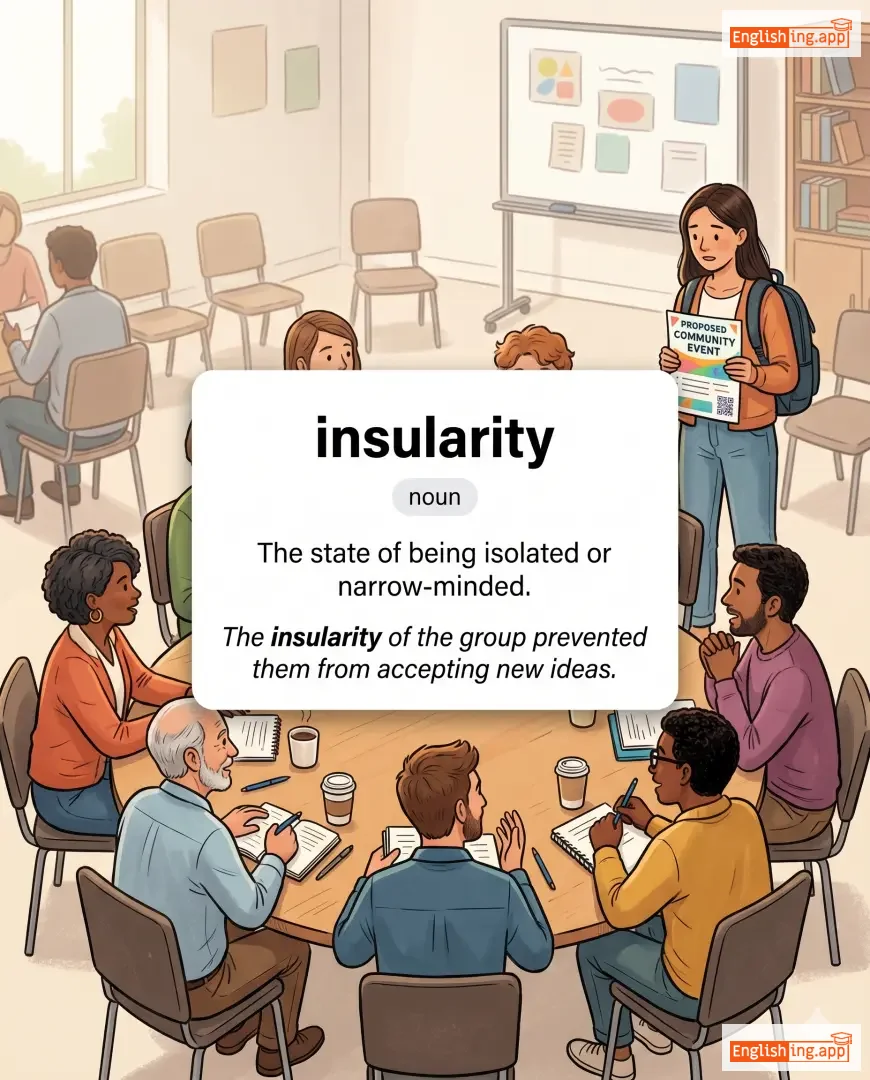
The state of being isolated or narrow-minded.

"The insularity of the group prevented them from accepting new ideas."

"グループの島国性は新しいアイデアを受け入れることを妨げた。" (Gurūpu no shimakunisei wa atarashī aidea o ukeireru koto o samataketa.)
🛡️

insulate

verb
/ˈɪnsjuleɪt/

To protect something by covering it, especially to prevent heat, sound, or electricity from escaping or entering.

"The house was insulated to reduce heating costs."

insulation definition card — visual illustration of the meaning
noun
ˌɪnsjʊˈleɪʃən
絶縁 (zetsuen)

Material used to prevent heat, sound, or electricity from being transmitted from one area to another.

"Insulation of food storage areas can prevent pests from entering."
"食品保管エリアの絶縁は、害虫が侵入するのを防ぐことができます。" (Shokuhin hokan eria no zetsuen wa, gaichū ga shin'nyū suru no o fusu koto ga dekimasu.)
insult definition card — visual illustration of the meaning
verb
/ˈɪnsʌlt/
侮辱する (bujoku suru)

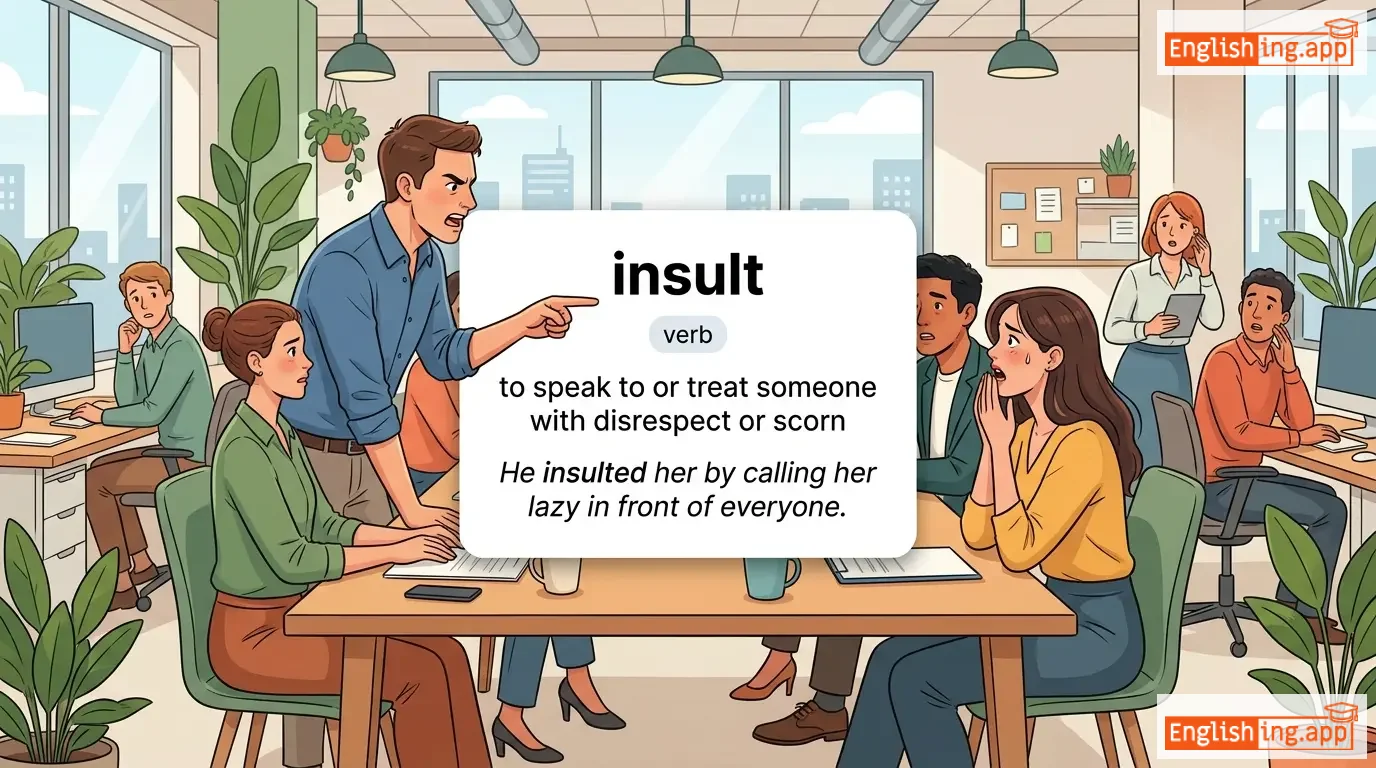
to speak to or treat someone with disrespect or scorn

"He insulted her by calling her lazy in front of everyone."

"彼はみんなの前で彼女を怠け者だと呼んで侮辱しました。" (Kare wa minna no mae de kanojo o namakemono da to yonde bujoku shimashita.)
insuperable definition card — visual illustration of the meaning
adjective
/ɪnˈsuːpərəbl/
克服できない (kokufuku dekinai)

Impossible to overcome or surpass.

"The team faced insuperable challenges during the expedition."

"チームは遠征中に克服できない課題に直面しました。" (Chiimu wa ensei chuu ni kokufuku dekinai kadai ni chokumen shimashita.)
adjective
/ˌɪnsəˈpɔːrtəbl̩/
耐えられない (taerarenai)

Too extreme or difficult to be endured.

"The heat was insupportable during the long journey."

"長い旅の間、暑さは耐えられなかった。" (Nagai tabi no aida, atsusa wa taerarenakatta.)
adjective
/ˌɪnsəˈprɛsəbl/
抑制できない (yokusei dekinai)

That cannot be suppressed or restrained.

"She had an insuppressible urge to laugh during the ceremony."

"式の間、彼女は抑制できない笑いをこらえていた。" (Shiki no aida, kanojo wa yokusei dekinai warai wo koraete ita.)
noun
/ɪnˈʃʊərəns/
保険 (hoken)

An arrangement by which a company provides compensation for loss, damage, or illness in return for a premium.

"He bought health insurance to cover medical expenses."

"彼は医療費をカバーするために健康保険に加入しました。" (Kare wa iryōhi o kabā suru tame ni kenkō hoken ni nyūsha shimashita.)
insure definition card — visual illustration of the meaning
🛡️

insure

verb
/ɪnˈʃʊr/

to arrange for compensation in case of loss or damage, typically by taking out insurance

"You should insure your car against theft or accidents."

noun
/ɪnˈsɜːrdʒəns/
反乱 (hanran)

An act of rebellion or uprising against authority.

"The government struggled to contain the growing insurgence."

"政府は増大する反乱を抑制するのに苦労した。" (Seifu wa zōdaisuru hanran o yokusei suru no ni kurō shita.)
noun
/ɪnˈsɜːrdʒənt/
反乱者 (hanran sha)

A person who rises in revolt against authority or government.

"The army arrested several insurgents after the attack."

"軍隊は攻撃後、数人の反乱者を逮捕した。" (Guntai wa kōgeki go, sūnin no hanran sha o taiho shita.)
adjective
/ˌɪnsərˈmaʊntəbl/
克服不可能 (kokufuku fukanou)

Too great to be overcome.

"The explorers faced insurmountable odds in the desert."

"探検者たちは砂漠で克服不可能な障害に直面した。" (Tanken-sha tachi wa sabaku de kokufuku fukanou na shougai ni chokumen shita.)
noun
/ˌɪnsəˈrɛkʃən/
反乱 (hanran)

A violent uprising against an authority or government.

"The army was called in to suppress the insurrection."

"軍隊は反乱を鎮圧するために呼ばれました。" (Guntai wa hanran o chin'atsu suru tame ni yoba remashita.)
adjective
/ɪnˈtækt/
完全 (kanzen)

Remaining whole, complete, and undamaged.

"Despite the storm, the old house remained intact."

"嵐にもかかわらず、古い家は完全な状態を保っていました。" (Arashi ni mo kakawarazu, furui ie wa kanzen na jōtai o tamotte imashita.)
noun
/ˈɪnˌteɪk/
摂取 (sesshu)

the process of taking something in, especially food or drink

"He monitored his daily intake of calories to maintain a healthy diet."

"彼は健康的な食事を維持するために毎日のカロリー摂取量を監視しました。" (Kare wa kenkōteki na shokuji o iji suru tame ni mainichi no karorī sesshu-ryō o kanshi shimashita.)
intangible definition card — visual illustration of the meaning
adjective
/ɪnˈtændʒəbl/
無形の (mukei no)

Unable to be touched or grasped; not having a physical presence.

"Trust is an intangible quality in relationships."

"信頼は関係において無形の特質です。" (Shinrai wa kankei ni oite mukei no tokushitsu desu.)
integral definition card — visual illustration of the meaning
adjective
/ˈɪntɪɡrəl/ or /ɪnˈtɛɡrəl/
不可欠 (fukaketsu)

Necessary and important as a part of a whole.

"Honesty is an integral part of good leadership."

"誠実は良いリーダーシップの不可欠な部分です。" (Seijitsu wa yoi rīdāshippu no fukaketsu na bubun desu.)
verb
/ˈɪntɪɡreɪt/
統合する (tōgō suru)

To combine or bring together into a unified whole.

"The new system integrates data from multiple sources."

"新しいシステムは複数のソースからデータを統合します。" (Atarashī shisutemu wa fukusū no sōsu kara dēta o tōgō shimasu.)
integrated definition card — visual illustration of the meaning
adjective
/ˈɪntɪɡreɪtɪd/
統合された (tōgō sareta)

combined or united to form a whole; including all parts or people equally

"The company offers an integrated system for managing all business operations."
"その会社は、すべてのビジネス操作を管理するための統合システムを提供しています。" (Sono kaisha wa, subete no bijinesu sōsa o kanri suru tame no tōgō shisutemu o teikyō shiteimasu.)
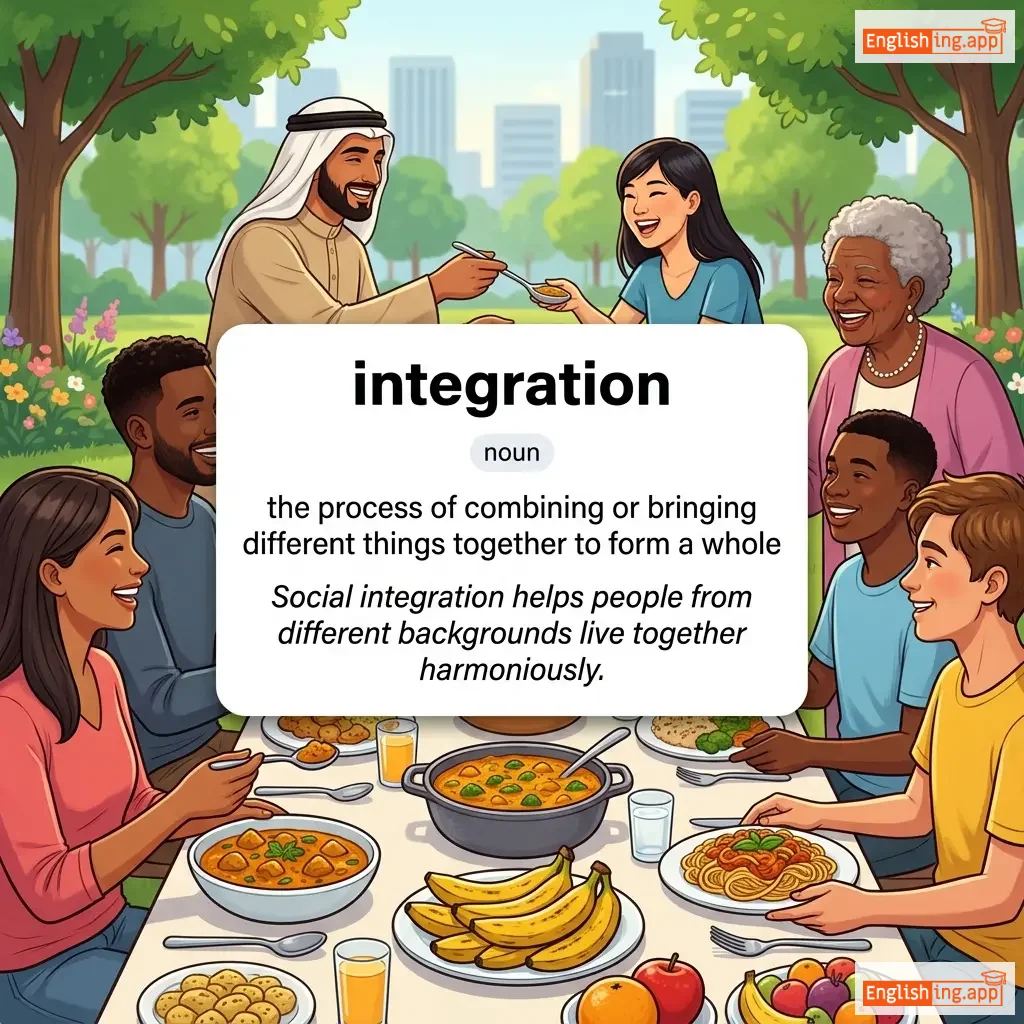
integration definition card — visual illustration of the meaning
noun
/ˌɪntɪˈɡreɪʃən/
統合 (tōgō)

the process of combining or bringing different things together to form a whole

"Social integration helps people from different backgrounds live together harmoniously."

"社会的統合は、異なる背景を持つ人々が調和して一緒に住むのを助けます。" (Shakaiteki tōgō wa, kotonaru haikei o motsu hitobito ga chōwa shite issho ni sumu no o tasukemasu.)